
You never see the real story when you search for business-class flights. Booking sites show you the fare, but not the forces that shape it. Behind every number is a system of fare buckets, code-share agreements, and “married segments” that quietly determines which seats appear, when they open, and how long they remain at a certain price.
Airlines release business-class inventory in carefully timed windows and adjust fares differently depending on the region you search from. These decisions explain why the best prices surface only briefly and why most travelers never notice them.
Once you understand these hidden mechanics, you stop depending on luck. You begin to read the market with intention and choose the moments that genuinely offer smart value.
Read in this post:
What Fare Buckets Tell You About When to Book Business Class

You might notice something puzzling when you search for flights. Two seats offer the same business-class comfort, yet their prices differ dramatically. It feels inconsistent, but there is a structured system behind every number. Airlines divide seats into fare buckets, or seat categories, each with its own rules, flexibility levels, and mileage-earning potential.
Some buckets give you complete freedom to change or cancel. Others offer a more appealing price but come with firmer conditions. You do not choose which buckets appear. The airline decides when to open or close them based on demand and revenue goals for that specific route. The moment you understand how fare buckets behave, the market becomes easier to read.
Here are examples of the signals you may observe. They are not precise indicators, although they reveal the patterns that often influence how availability shifts in the background:
- A sudden drop during a quiet period often reflects a lower bucket opening briefly. You usually notice this when the price feels unexpectedly soft compared with the surrounding days. These moments usually vanish quickly.
- Prices rising steadily over several days signal that the airline is closing lower buckets because demand is building. You see this as a smooth upward trend rather than a single spike.
- A small price dip during a busy season suggests the airline is testing availability, not fully releasing its lower buckets, which means better fares may still appear.
- Multiple airlines raising prices at the same time usually reflect coordinated closures, meaning availability is tightening across the route.
- A fare that includes more flexibility than usual often means a higher bucket has been adjusted downward. This can be a smart choice if you value freedom over the lowest possible fare.
With these cues, price movements stop feeling random. You begin to understand what the airline is signaling and can choose your booking moment with clarity and purpose.
Why Codeshare Business-Class Flights May Cost Less Than You Expect
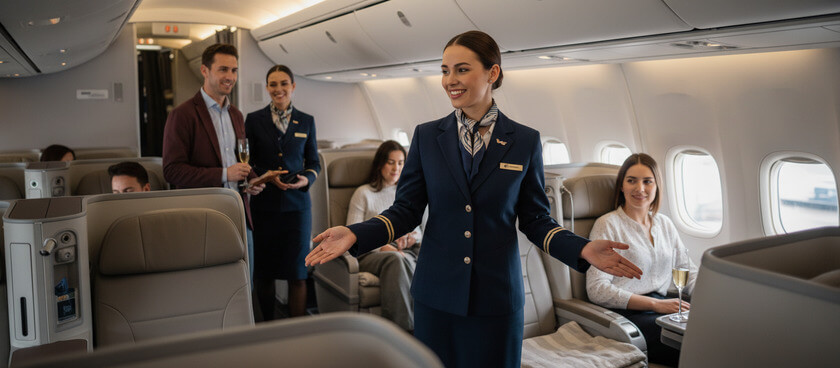
Codeshare business-class flights reveal another secret that booking engines often hide. When two partner airlines sell seats on each other’s flights, each partner prices those seats according to its own strategy. As a result, Airline A may sell a seat for considerably more than Airline B, even though the physical seat is identical.
Many travelers assume booking sites automatically display the lower-priced partner tickets. They do not. Some platforms prioritize the operating carrier, while others hide partner options unless you refine the search.
This is why it is worth comparing partner airlines alongside the main carrier. At AranGrant, we read these patterns for you and highlight the partner options that align with your comfort and travel needs.
Married Segments and Hidden Business-Class Opportunities

Another quiet rule that shapes business-class pricing is the concept of “married segments.” Airlines sometimes link two flight legs together and treat them as a single unit. Certain fares appear only when you book the full pair. If you try to book one leg separately, that same fare disappears.
This creates situations where a connecting itinerary costs less than the nonstop option, because the airline uses these linked segments to fill seats on specific routes while protecting demand on others.
Here is how this helps you in a practical way:
- If a connecting itinerary is noticeably cheaper than the nonstop, the airline may have opened lower buckets only for the combined trip. This can be a genuine opportunity.
- If each leg is far more expensive when searched on its own, you are likely seeing a married segment. The value exists only when you book the itinerary as a whole.
- If a fare vanishes the moment you adjust a segment, for example, trying multi-city or checking one leg alone, it means the airline is signaling that the segments are linked.
- If switching booking sites or exploring nearby airports reveals different routings, you may uncover combinations that the first site did not show. Some of these unlock fares that the nonstop never displays.
You do not need to know the airline’s network to benefit from this. Small adjustments to your search can reveal opportunities that booking sites tend to hide, and understanding these patterns helps you recognize when a fare reflects true value rather than coincidence.
When Business-Class Tickets Drop in Price: Key Windows to Watch

There is no single best time to book business class, but there are windows when ticket prices dip. These appear when demand shifts or when airlines adjust their inventories. You often see more favorable conditions during moments like these:
- Shoulder seasons. Most destinations have high and low tourism seasons. The periods between them are known as shoulder seasons, and that is when airlines may offer tickets at lower prices to attract more travelers. In practical terms, this often means spring and early fall in the United States, April to June and September to October across Europe, and post-holiday periods or late spring across much of Asia.
- Moderate-demand periods. On routes like those from the U.S. to London, Zurich, Hong Kong, or Shanghai, airlines often reassess their business-class inventory two to three months before departure. If demand softens, they may open lower-priced fare buckets that were not available earlier. This is not a guaranteed drop, but it is a moment when you sometimes see more appealing fares because airlines finally adjust to real booking patterns.
- Sunday and overnight flights. These flights are not usually convenient or appealing for corporate travelers, who are the target audience of business travel. Thus, airlines might offer them at smaller prices to attract leisure travelers who would otherwise fly in economy class.
- Flights from secondary airports or through major hubs. Secondary airports sometimes have flights at better prices than flights from hubs. Additionally, you can opt for a flight that has a layover in a major hub. Since airlines compete intensely for connecting passengers, your chances of finding business tickets at advantageous prices increase.
- Last-minute shifts. If the economy cabin fills faster than expected, airlines may adjust the prices of business-class tickets so they don’t fly with a partially empty plane. This happens more often on long routes.
Final Insights
Booking sites reveal only part of the story: the ticket prices and nothing more. The real clarity comes from understanding the quiet mechanics beneath the surface, from how airlines control business-class inventory to how airline partnerships create the kind of hidden business-class deals you rarely see online. Once you understand these secrets, your search for the right flight feels easier, more focused, and far more intentional.
If you are planning your next trip and want guidance rooted in expertise rather than guesswork, you can rely on us. At AranGrant, we offer thoughtful, human-first support that helps you make informed choices. We make the entire experience feel effortless, long before you step on board.