

Chapters:

Need help with your trip?
Our support team is available 24/7. Request a callback or call us directly at (833) 619-0908
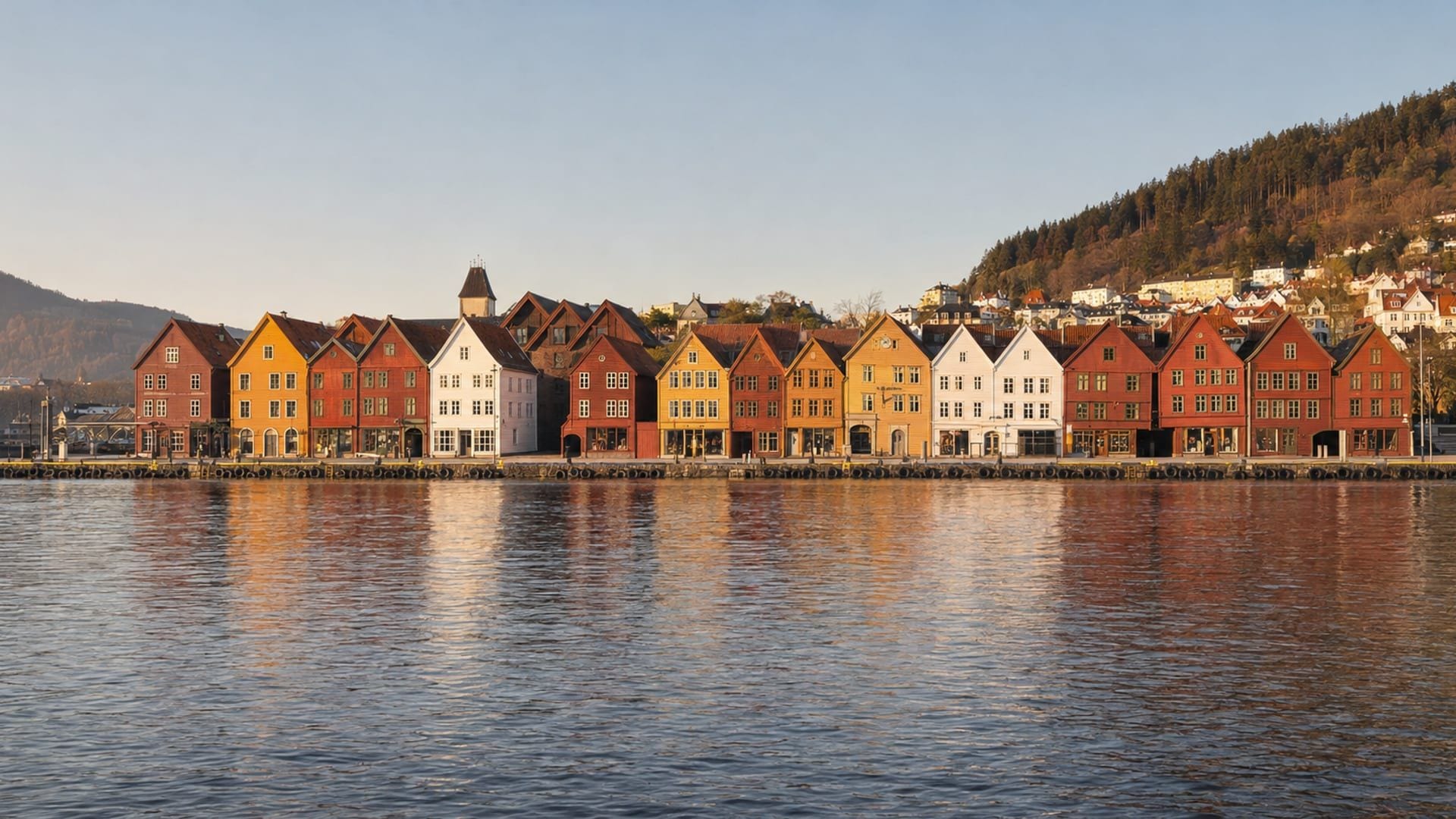
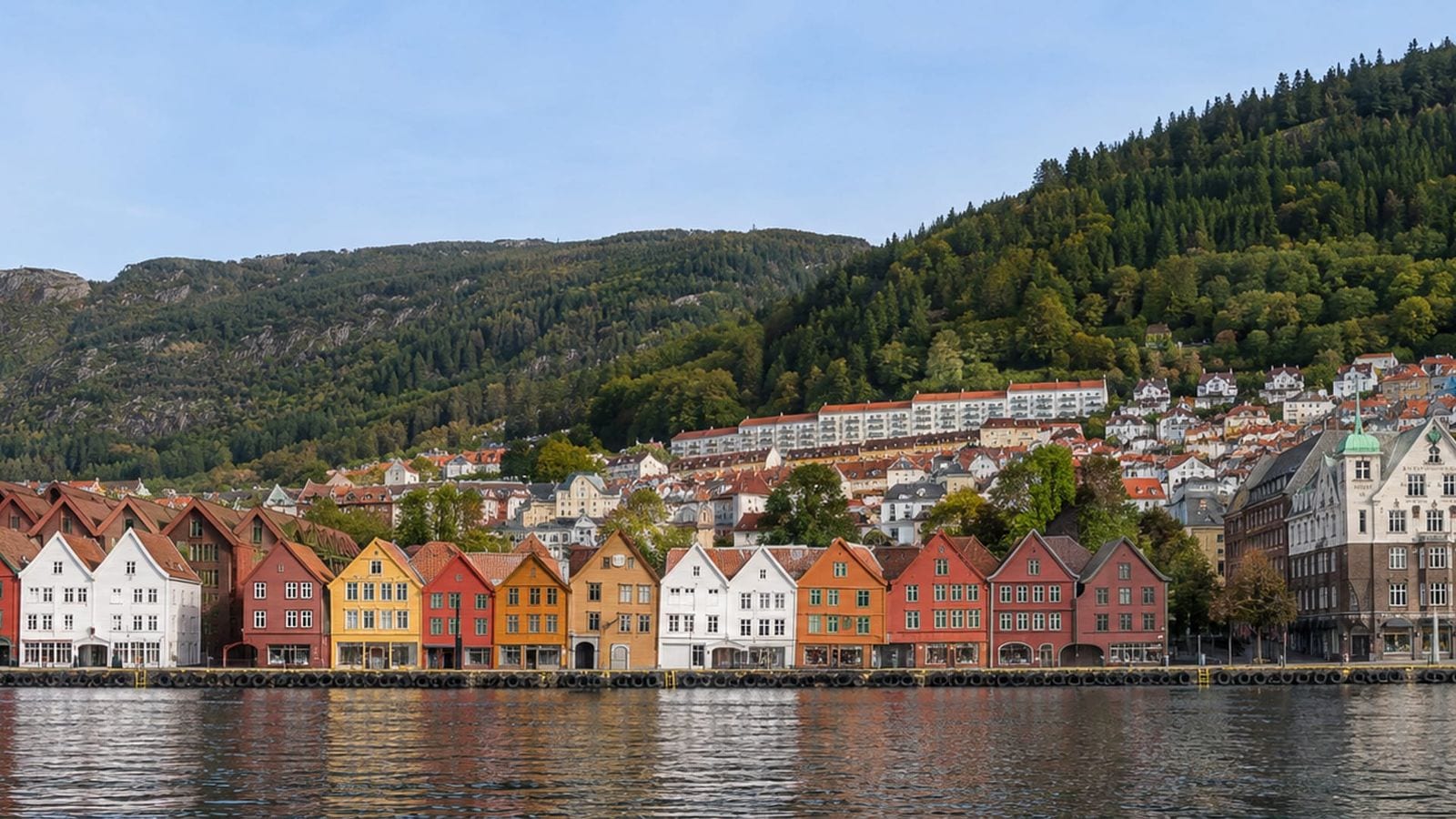
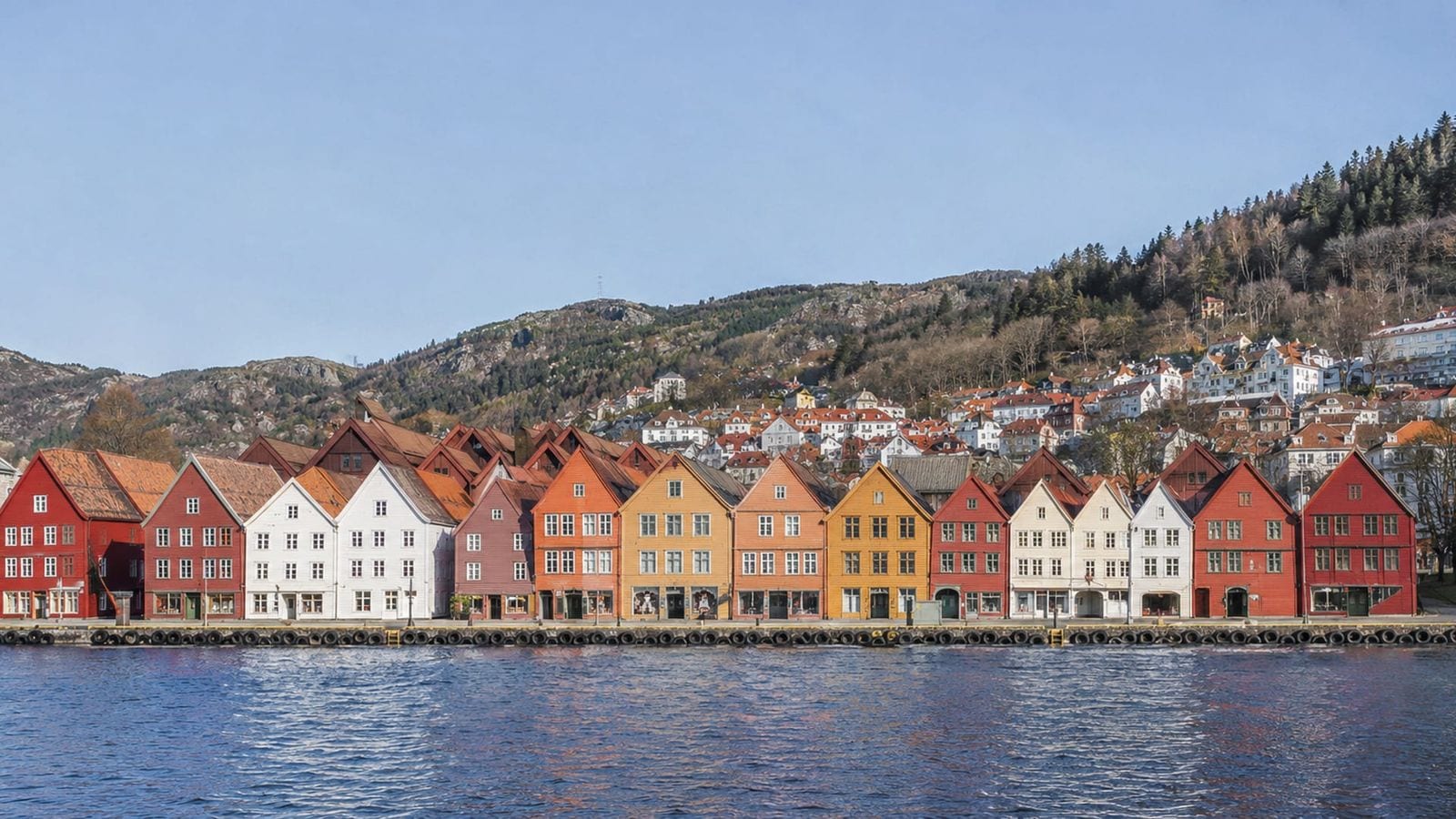
Bergen curves around Vågen harbor beneath seven mountains, with brightly painted wooden buildings, steep residential streets, and boats crossing the water throughout the day. Bryggen introduces the city’s Hanseatic history through narrow passageways and leaning timber façades, while Mount Fløyen opens toward rooftops, islands, and fjords from above.
This guide covers everything you need for five days in Bergen, including where to stay, how to travel from the airport to your destination, what to eat, and more.
Useful things to know

Main language(s): Norwegian
Hei (hay) – Hello
Vær så snill (vair soh sneel) – Please
Takk (tahk) – Thank you
Snakker du engelsk? (snah-ker doo en-gehlsk) – Do you speak English?
Hvor mye koster det? (voor myeh kos-ter deh) – How much does it cost?

Currency: Norwegian krone (NOK, kr)

Cash and cards: Hotels, restaurants, shops, attractions, and public transportation widely accept cards and contactless payments. Carry NOK 200 ($21) for occasional cash-only purchases.

Tipping: Tipping is optional. Round up taxi fares or leave 5%–10% in restaurants when the service deserves additional recognition.

Traditional food: Bergen fish soup, fish cakes, raspeballer, and brunost

Water and coffee costs: Bottled water generally costs NOK 25–NOK 40 ($2.60–$4.20). An espresso in a central café commonly ranges from NOK 40 to NOK 55 ($4.20–$5.80).

Taxis and ride apps: Uber and Bolt operate in Bergen, while licensed taxis are available at the airport and central ranks. Prices can be high, especially during evenings and weekends.

Plug and voltage: Type F socket, 230V

Dining and shop opening hours: Cafés serve breakfast between 7:00 am and 10:00 am. Lunch usually begins near 11:30 am, while restaurants serve dinner from 5:00 pm until 9:00 pm or later. Sunday hours may be shorter.

Emergency number: Call 112 for police, 110 for the fire department, and 113 for an ambulance.
Where to stay in Bergen
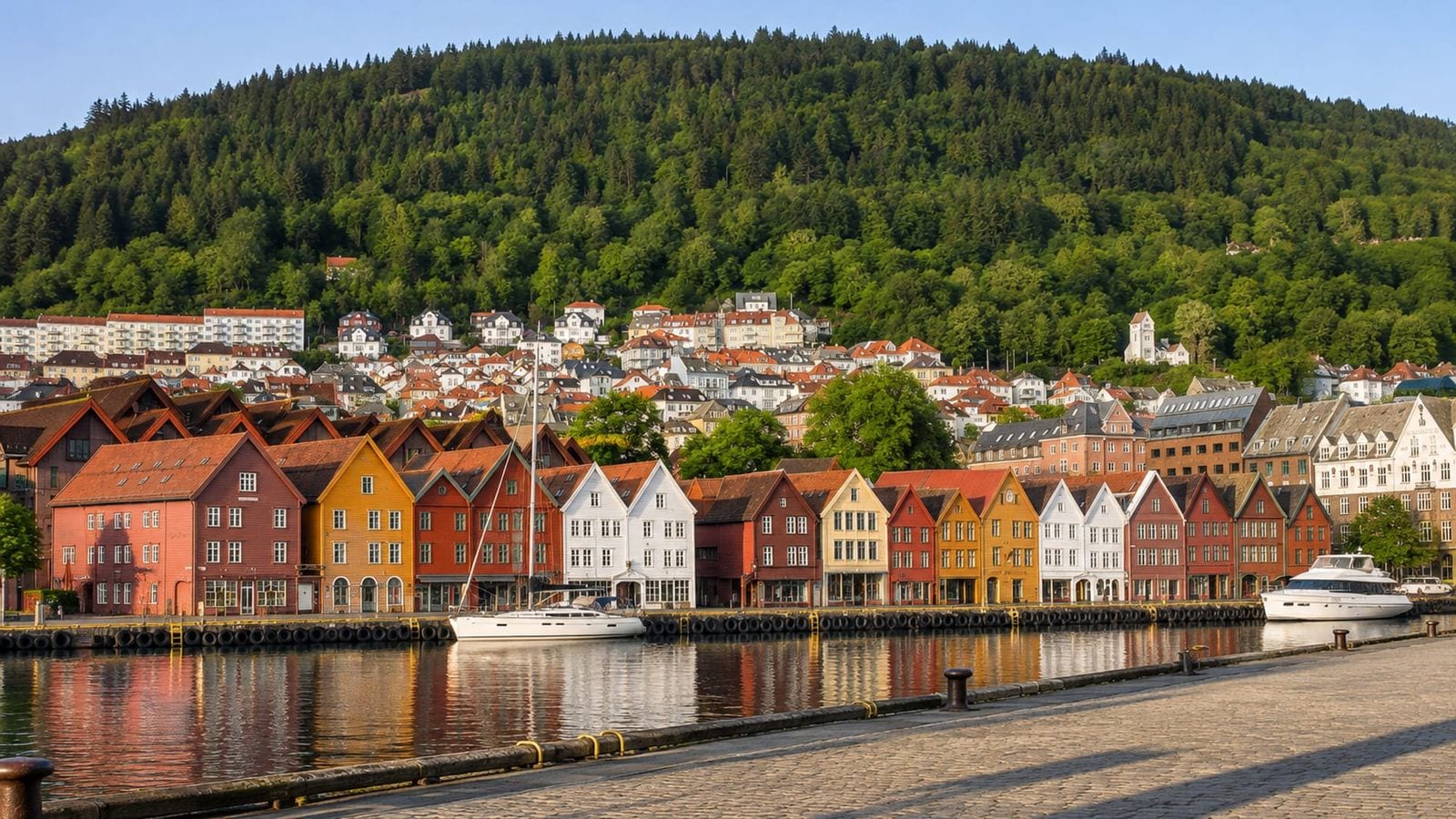
Bryggen and Vågen form Bergen’s historic harbor district, with colorful timber buildings, ferry piers, seafood restaurants, the Fish Market, and narrow streets leading into the center. Staying here places the city’s best-known landmarks within a short walk.
Best for: First-time visits, harbor views, historic streets, and ferry access
What to expect: Tour groups, cruise visitors, restaurant traffic, early ferry activity, and crowded summer walkways
Hotel prices: Nightly rates typically range from NOK 1,800–NOK 3,200 ($190–$335).
Distance to major sights: Bryggen and the Fish Market are within the district, while the lower Fløibanen station is generally 10 to 15 minutes away on foot.
Quietness: Harbor-facing streets are busy during the day and early evening, while lanes away from the water become quieter later at night.
Main trade-off: Hotels charge more for the central location, and rooms near the piers may receive early-morning noise.
Good to know: Choose a higher floor or an inward-facing room if ferry activity and restaurant traffic could disturb your sleep.
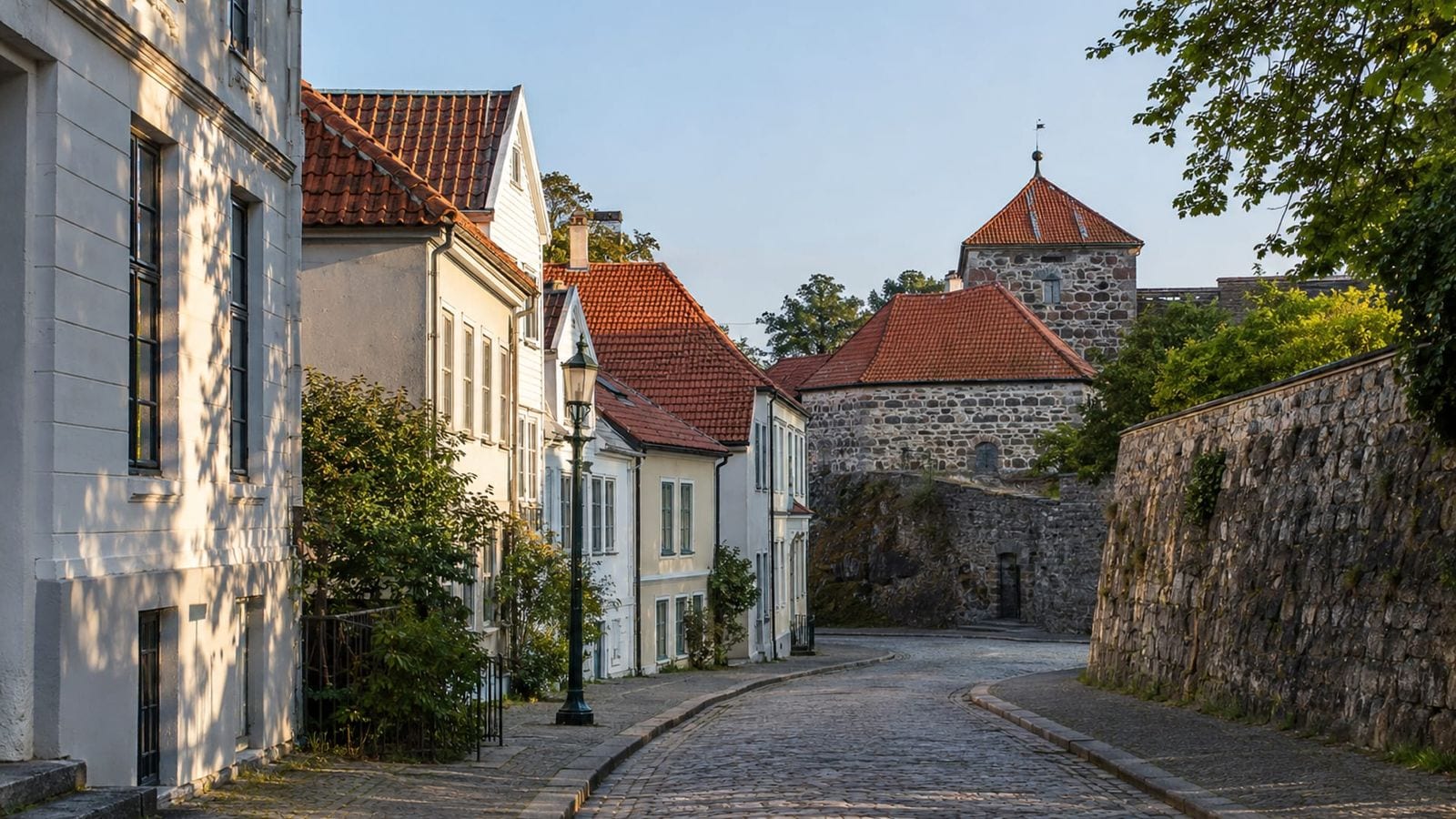
Nordnes extends west from the city center along a narrow peninsula of wooden houses, small parks, waterfront paths, and residential streets. The Bergen Aquarium occupies the outer end of the district, while the center and Fish Market are still reachable on foot.
Best for: Quiet evenings, harbor walks, residential surroundings, and longer visits
What to expect: Sloping streets, local cafés, waterfront views, families, and fewer visitors than around Bryggen
Hotel prices: Rooms at well-reviewed properties generally cost NOK 1,600–NOK 2,800 ($170–$290) per night.
Distance to major sights: The Fish Market usually takes 10 to 20 minutes to reach on foot, while Bryggen is approximately 15 to 25 minutes away.
Quietness: Most residential streets are peaceful throughout the day and evening.
Main trade-off: The district has fewer restaurants and hotels, and some routes back from the waterfront involve a steep climb.
Good to know: Review the elevation around the property before booking if stairs or uphill walks are a concern.
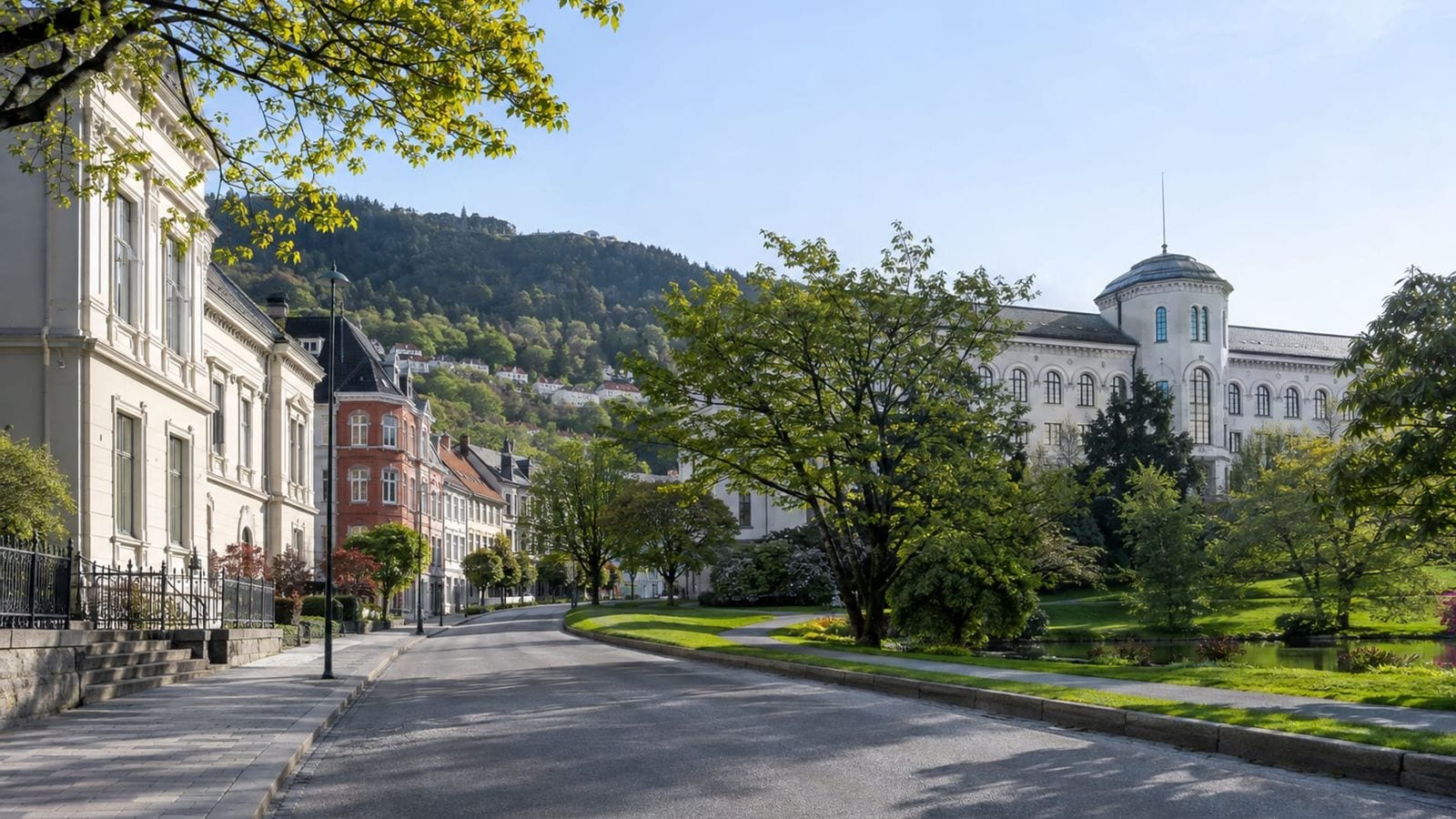
Nygård is located south and west of the central harbor near the University of Bergen, KODE museums, Bybanen stops, cafés, and residential blocks. It provides convenient access to both the museum district and the city center without the highest harbor prices.
Best for: Museums, light-rail access, cafés, students, and midrange hotels
What to expect: University activity, apartments, local businesses, weekday foot traffic, and quieter evenings
Hotel prices: Expect to pay NOK 1,400–NOK 2,400 ($150–$250) per night at many established hotels.
Distance to major sights: The center is usually 10 to 15 minutes away on foot, while Bryggen takes approximately 15 to 25 minutes to reach.
Quietness: Residential streets are quiet after working hours, although areas near student bars may stay active later.
Main trade-off: The neighborhood has fewer harbor views and historic streets immediately outside the hotel.
Good to know: Accommodation close to a Bybanen stop provides easier airport travel and reduces uphill walking with luggage.
Ytrebygda, Arna, Fyllingsdalen, Kokstad, and Sandsli require longer journeys to Bryggen, Mount Fløyen, and the main museums. Hotels near Bergen Airport may suit an early flight but offer fewer dining and sightseeing choices in the evening.
Hotel deals
Getting around Bergen
Bergen’s Bybanen light rail connects the airport with the city, while buses serve neighborhoods, hillsides, and coastal districts.

Metro
for longer distances
Bybanen travels between Bergen Airport (BGO), central Bergen, Danmarks plass, Lagunen, and several residential districts. A local ticket costs approximately NOK 51 ($5.30) and is valid for 60 minutes. Purchase tickets through the Skyss app or at a ticket machine before boarding.

Bus and tram
for convenience
Skyss buses connect Nordnes, the city center, hillside districts, and destinations beyond the light-rail network. Standard local tickets follow the same 60-minute fare system as Bybanen and also cost NOK 51 ($5.30). The airport express bus reaches the center faster than the light rail, with a typical journey of 30 to 40 minutes.

Taxi
for convenience or late hours
Licensed taxis use meters, and prices vary by company, time, traffic, and destination. A trip from Bergen Airport to the center usually takes 20 to 30 minutes and costs NOK 475–NOK 735 ($50–$80). Uber and Bolt may also be available. Check the quoted price before booking.
*Prices are based on rates updated as of August 2026 and may change at the time of travel.
Use the train for the least expensive airport journey, the bus when you want a faster public transfer, and taxis for luggage, late arrivals, or uphill routes.
Iconic places in Bergen
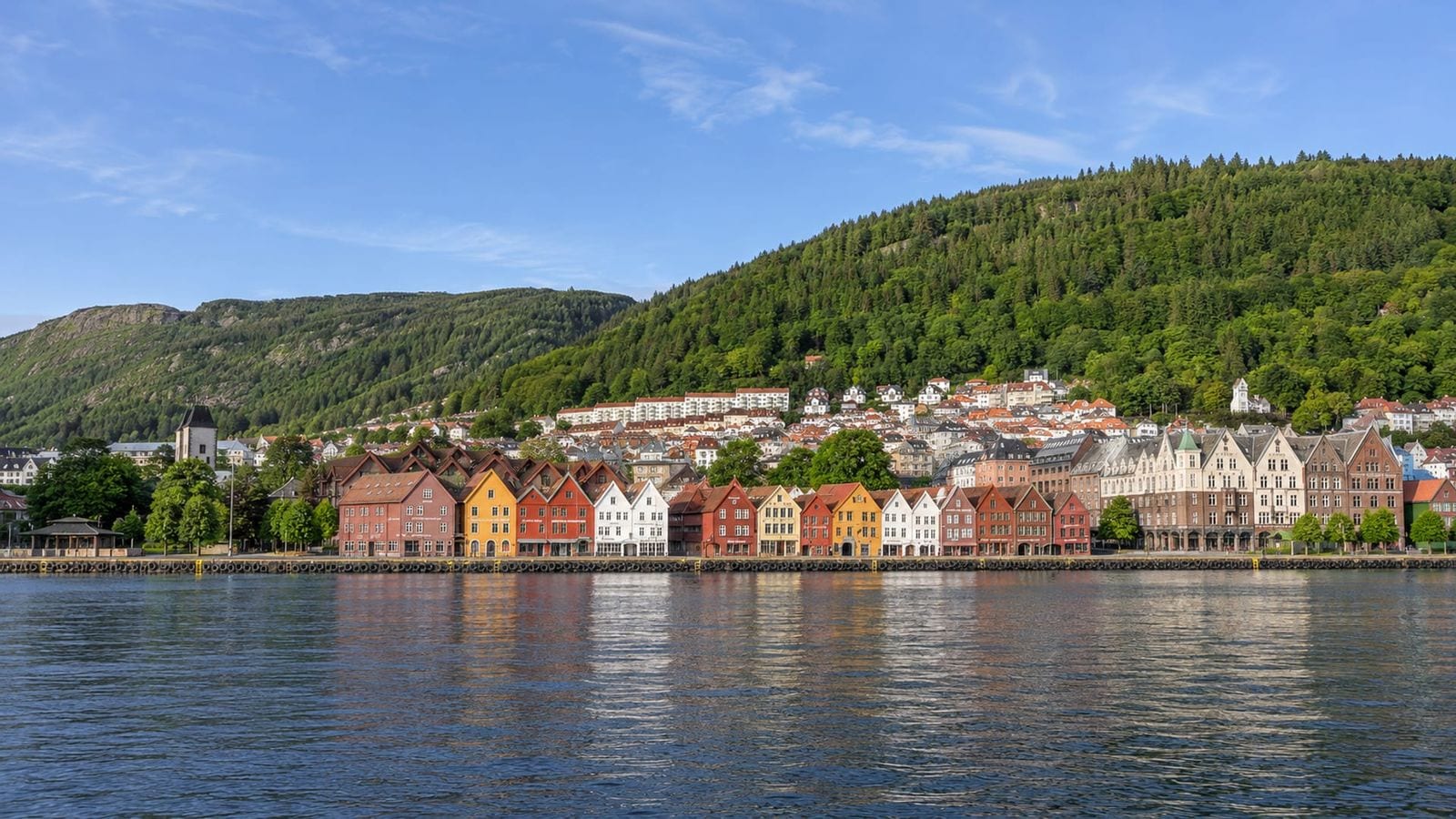
Bryggen
Bryggen, rebuilt several times after destructive fires, preserves the plan of Bergen’s medieval Hanseatic trading quarter. Its rows of ochre, red, and white wooden buildings lean toward cobbled passageways. These were once filled with merchants, stockfish, warehouses, and communal meeting rooms.
Time needed: 1 to 2 hours
Entry: Free to explore; museums and guided tours charge separately. Visit the official site for details.
Tip: Visit before 9:00 am or in the evening, when the lanes are less crowded.
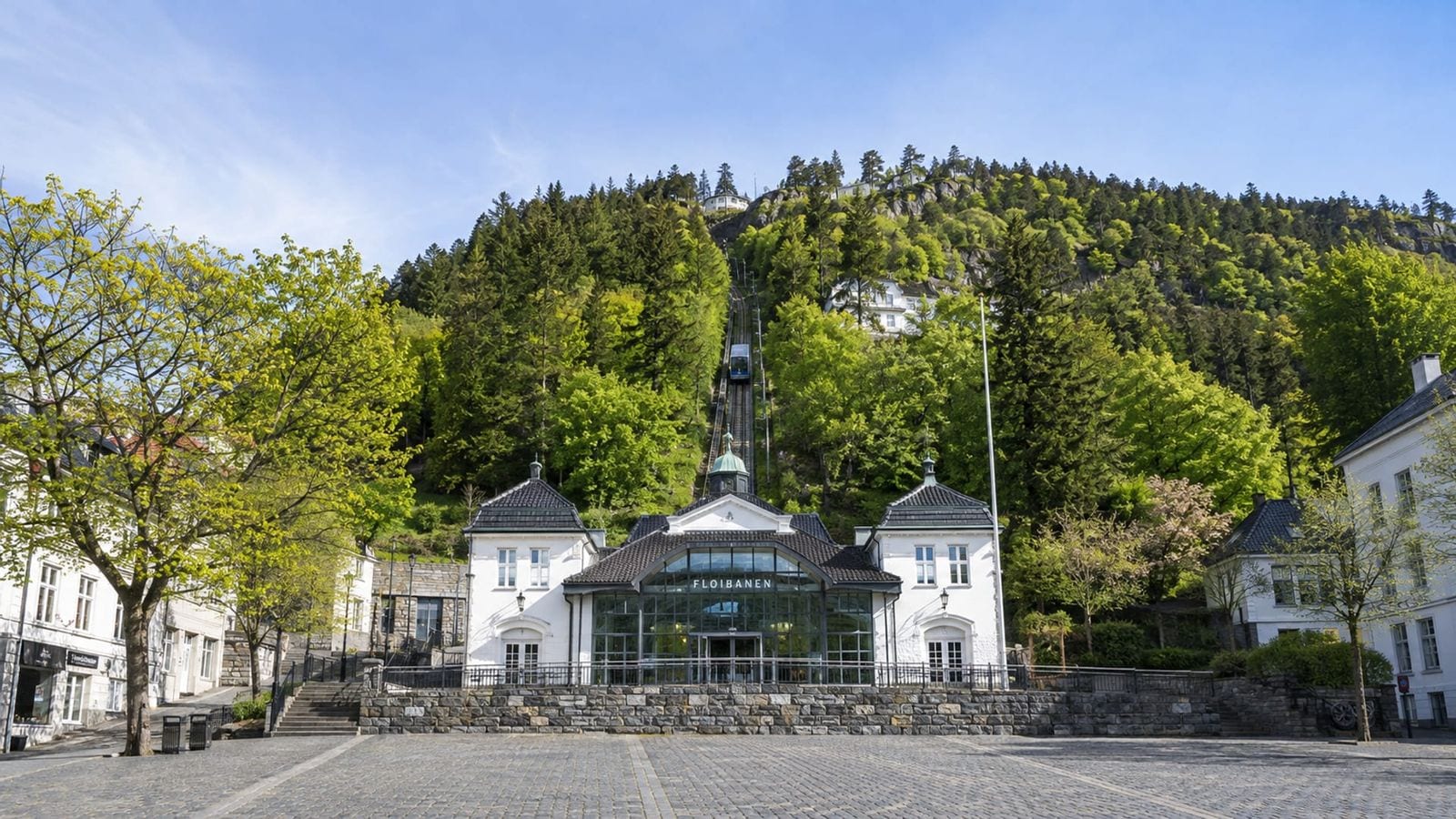
Fløibanen and Mount Fløyen
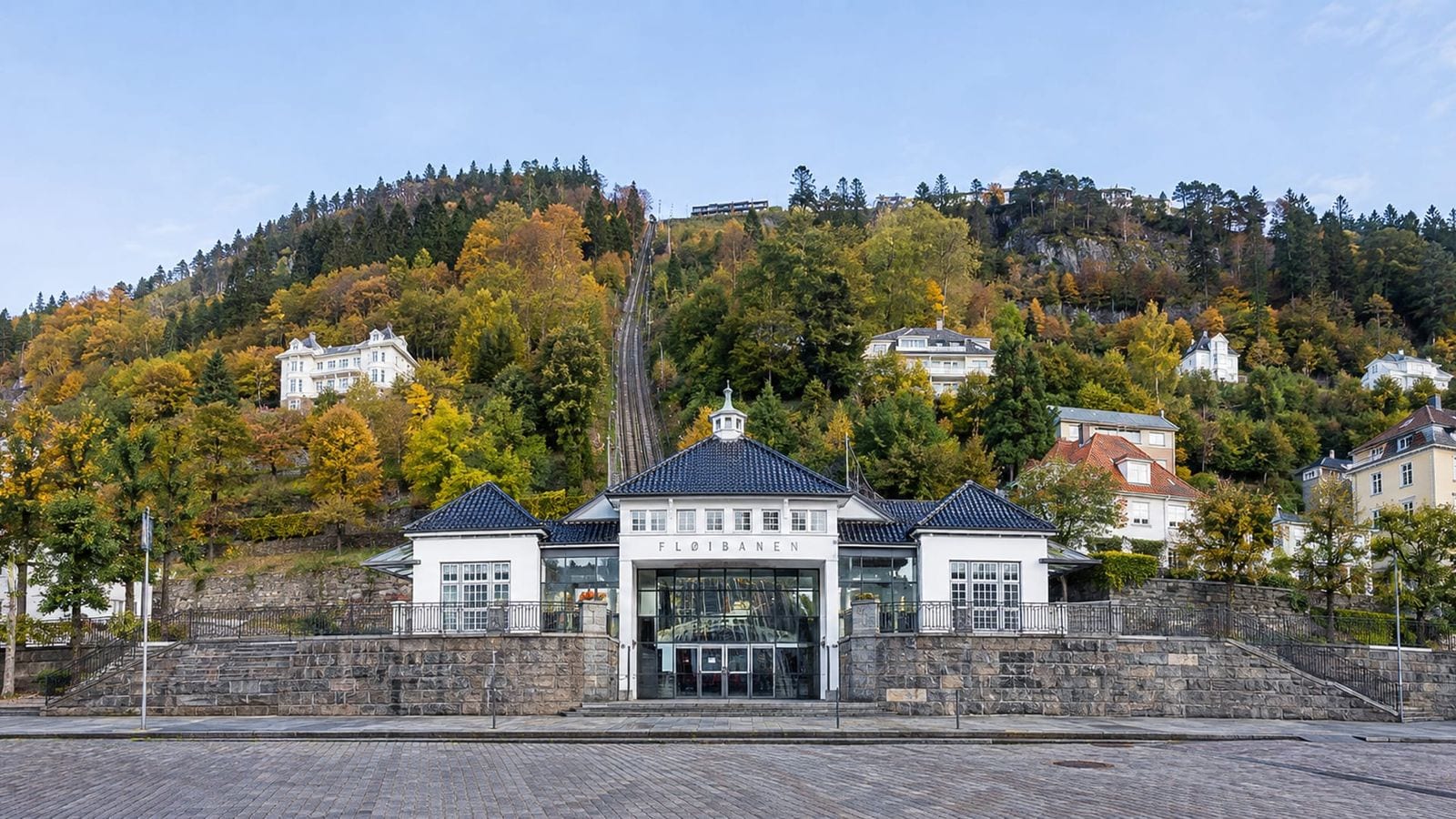
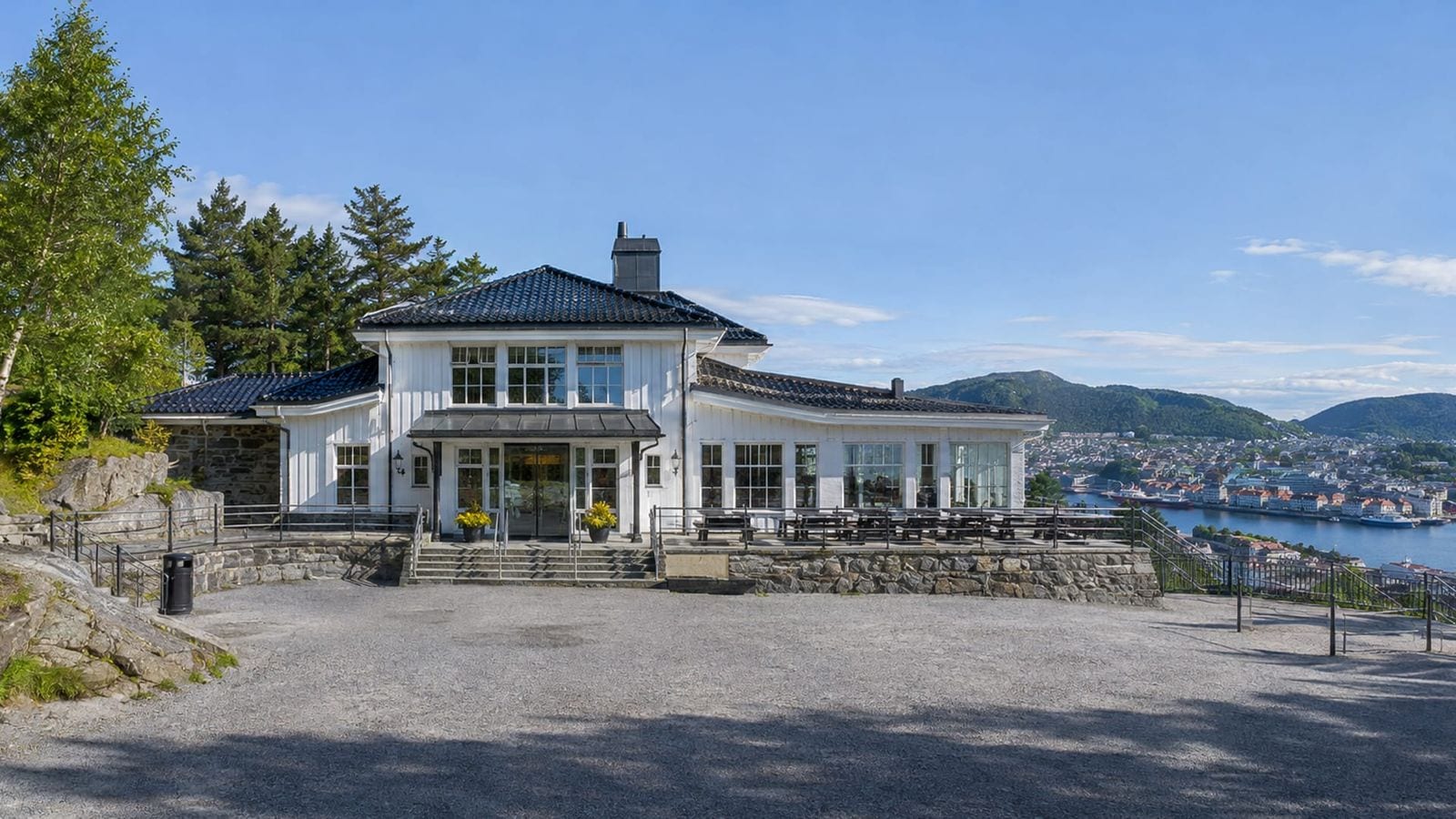
Fløibanen is a funicular that opened in 1918 and climbs from the center to Mount Fløyen in several minutes. Its red carriages rise above tiled roofs and dense hillside homes before reaching a viewing terrace overlooking the harbor, islands, and surrounding mountains.
Time needed: 2 to 3 hours
Entry: Tickets for adults cost NOK 200 ($21). Check the official Fløibanen website for more details.
Tip: Choose a clear morning or arrive before sunset for the best panoramic views of the city.
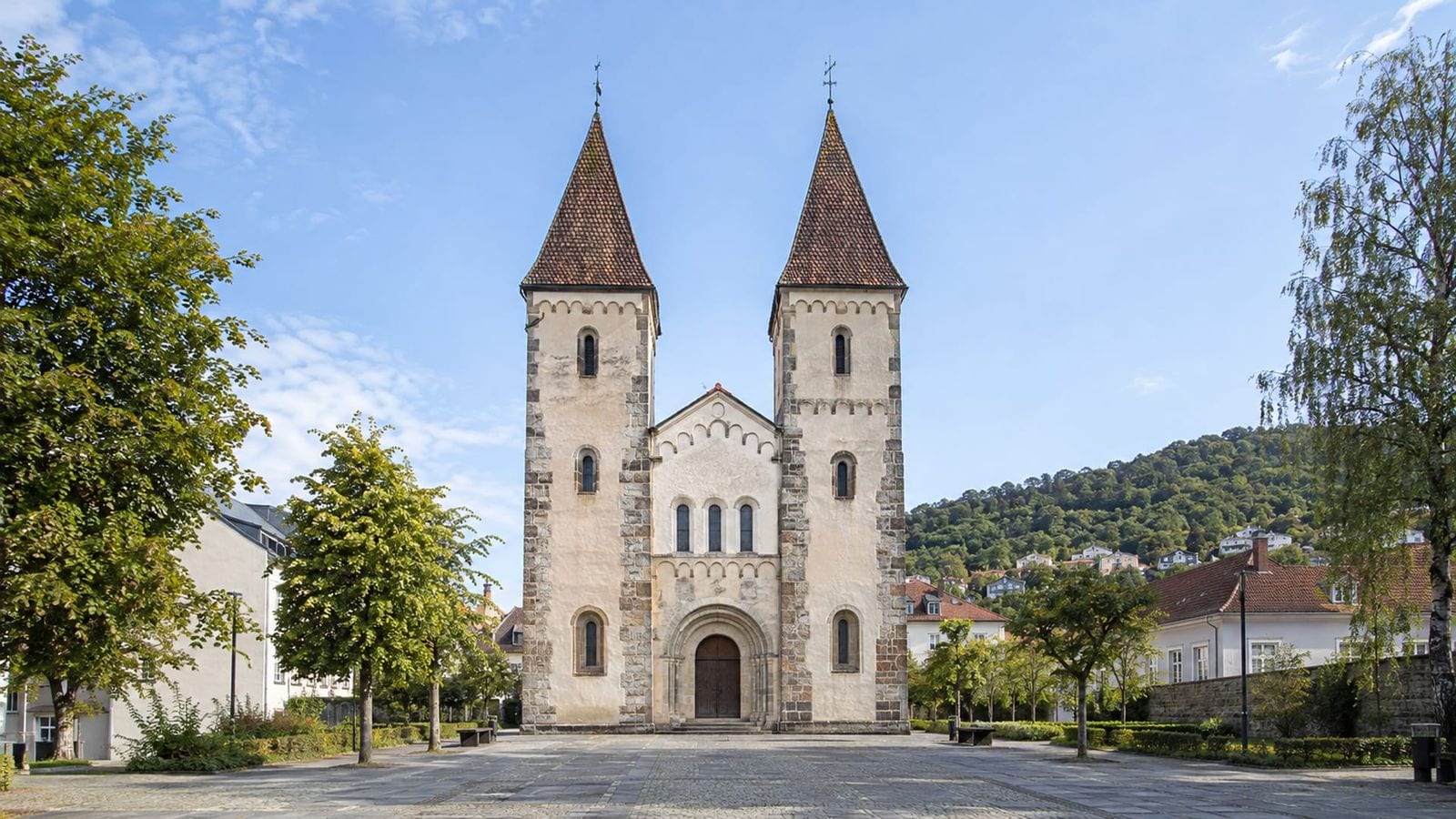
St. Mary’s Church
St. Mary’s Church, built during the 12th century, is Bergen’s oldest surviving building. Thick stone walls, twin towers, narrow Romanesque windows, and a richly carved Baroque pulpit reflect the church’s long connection with the Hanseatic merchant community.
Time needed: About 30 to 45 minutes
Entry: Admission costs NOK 200 ($21). Visit the official site for details.
Tip: Check for services or concerts before visiting, since they may limit general access.
Overlooked places in Bergen

Lyngheisenteret at Lygra
Lyngheisenteret is a coastal heath landscape shaped by centuries of traditional farming. Windswept heather, low stone walls, and turf-roofed buildings create a landscape different from central Bergen.
Time needed: 1 to 2 hours
Entry: Free Visit the official site for details.
Tip: Check opening dates and transportation before leaving Bergen, especially outside summer.

KODE art museums
KODE brings together several art museums around Lille Lungegårdsvann in central Bergen. Its collections include Norwegian landscape painting, European works, and artists such as Edvard Munch.
Time needed: Up to 3 hours
Entry: Ticket options vary by exhibition and building. Check the official KODE website for details.
Tip: Visit during wet weather, when the connected museum district provides a comfortable alternative to hillside walks.
What to eat in Bergen

Bergen’s cuisine reflects its position on Norway’s western coast, with cod, shellfish, salmon, potatoes, dairy products, preserved meat, and baked goods appearing across traditional menus.
Bergen fish soup
Bergen fish soup combines white fish, shellfish, cream, vegetables, herbs, and a lightly tangy broth. The texture is rich without hiding the flavor of the seafood. Bryggeloftet & Stuene serves seafood and regional Norwegian dishes.
Fish cakes
Norwegian fish cakes are made from finely ground white fish, milk, seasoning, and starch, then fried until lightly browned. They may be served with potatoes, vegetables, brown sauce, or bread. You can enjoy them at Pingvinen.
Raspeballer
Raspeballer are dense potato dumplings served with salted lamb or pork, sausage, bacon, root vegetables, and melted butter. The dish is especially associated with western Norway. Pingvinen has this dish on its regular menu.
Brunost
Brunost is a caramel-colored whey cheese with sweet, nutty flavors created during slow cooking. It is commonly eaten on bread, crispbread, or warm waffles. Baker Brun, a Bergen bakery company with roots in the 19th century, serves brunost.
Best time to visit Bergen
Bergen receives rain throughout the year, so daylight, crowds, and temperature often influence travel plans more than the chance of a dry day.
Best for: Museum visits, Bryggen walks, waterfalls, and smaller crowds
What you get: Temperatures gradually rise from 39°F to 54°F (4°C–12°C), with longer daylight and changing weather.
Trade-offs: Rain, wind, and damp mountain paths can interrupt outdoor plans.
Best for: Fjord outings, mountain walks, long evenings, and outdoor dining
What you get: Travelers can expect temperatures between 54°F and 68°F (12°C–20°C), along with the year’s longest days.
Trade-offs: Cruise traffic, festivals, and vacation travel increase hotel prices and queues.
Best for: Museums, quieter harbor streets, and fall colors in the surrounding hills
What you get: The season brings temperatures of 43°F–57°F (6°C–14°C), with cooler evenings and fewer visitors after September.
Trade-offs: Rainfall becomes heavier, and daylight decreases quickly.
Best for: Indoor attractions, cafés, quieter streets, and seasonal atmosphere
What you get: Daytime and nighttime temperatures commonly range from 30°F to 43°F (-1°C–6°C), with occasional snow or sleet.
Trade-offs: Short daylight hours and reduced excursion schedules limit longer outdoor trips.
A 5-day plan in Bergen
Five days provide enough time for Bryggen, Mount Fløyen, the museum district, Nordnes, and one coastal excursion. The plan keeps the central sights together and reserves a full day for Lygra.
Fly to Bergen Airport (BGO), then travel for 20–45 minutes to the city center by bus or light rail. If you are staying in Bryggen and Vågen, you can walk to your hotel quickly and settle before a low-key dinner at the Fish Market or on the harbor edge. If you choose Nygård, the tram or a short taxi ride gets you there with little effort, and the area gives you a quieter first night. Keep dinner simple and leave Bryggen for a short evening stroll only if you still have energy.
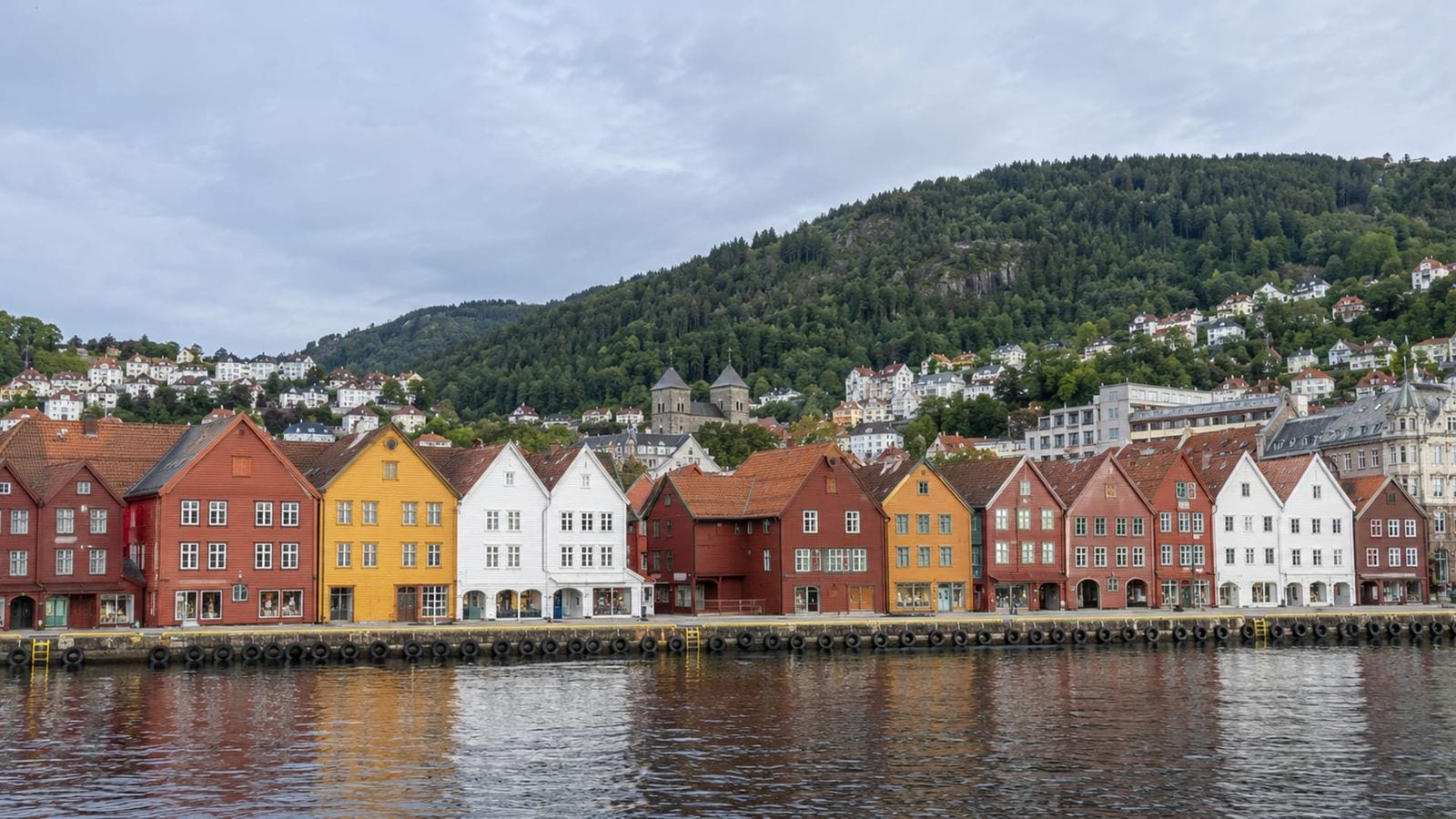
Begin at Bryggen before the busiest tour groups arrive. From Bryggen, it is about a 5-minute walk to St. Mary’s Church, where the stone exterior and compact interior make a good contrast to the merchant quarter. Spend up to 45 minutes there, then walk back toward Vågen for lunch near the harbor. In the afternoon, ride Fløibanen from the center to Mount Fløyen, then stay about 2 hours for the views before returning downhill for dinner in Bryggen and Vågen.
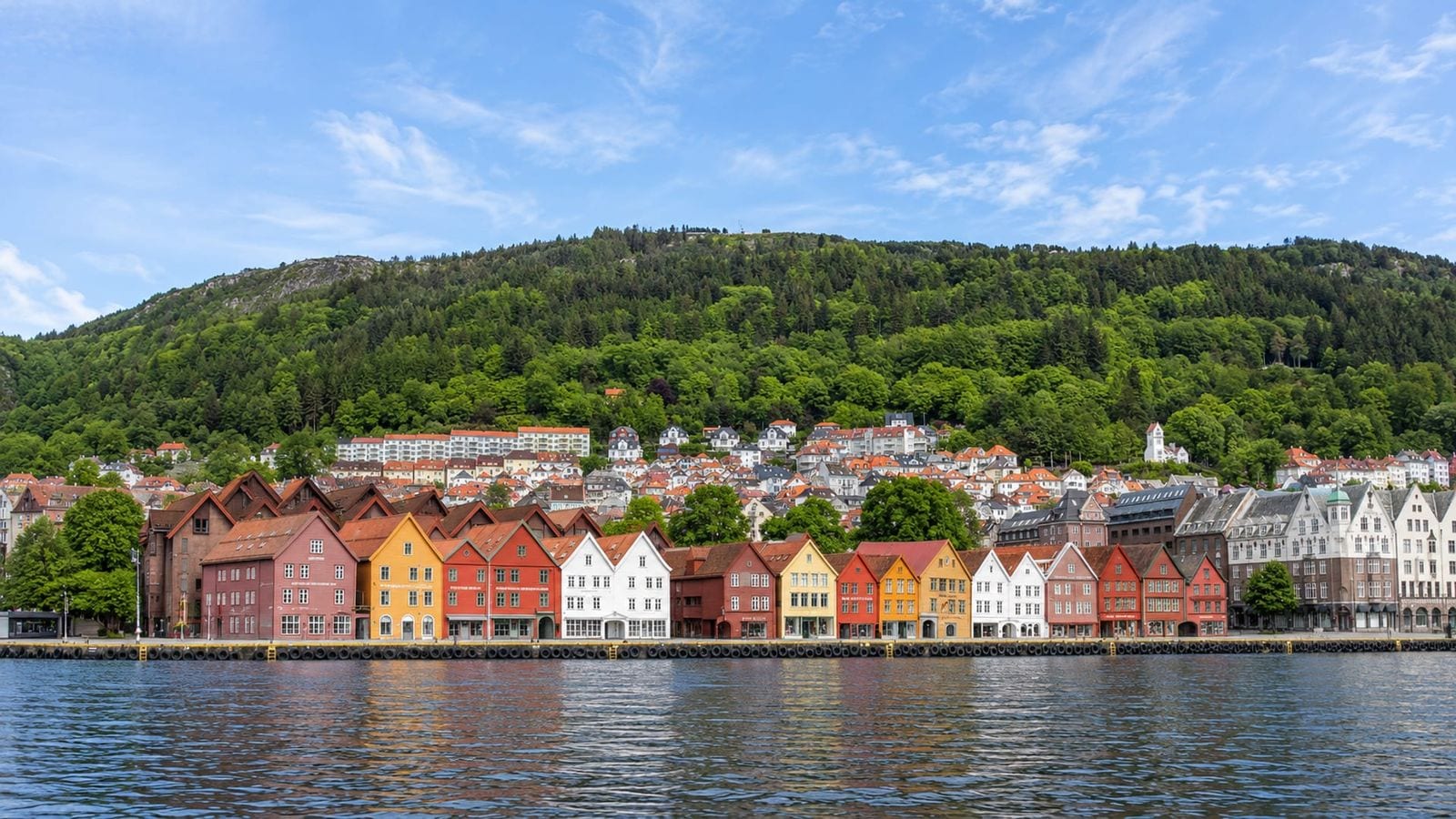
Start the day at the Kode museums, and allow 2 to 3 hours for one or two collections. From there, walk 10 to 15 minutes to the city center, then continue to Fløibanen for an uphill ride to Mount Fløyen if you want a second look at the city from above, or save the funicular for a sunset return if the weather is clear. If you prefer a calmer afternoon, stay near the museum district and stop for coffee in Nygård before dinner.
Take a longer excursion north to Lyngheisenteret at Lygra, which usually takes 1.5 to 2 hours each way by car and ferry depending on the route. Plan for 1 to 2 hours on site, with time for the heather landscape, turf walls, and the grazing areas that explain coastal farming traditions. Leave Bergen early so you can return before evening, then keep dinner simple back near your hotel in Bryggen and Vågen or Nordnes.
Use the final morning for a last walk through Bryggen, the Fish Market, or the streets around Nordnes. Keep luggage at your hotel and avoid a distant excursion before departure. Bybanen takes approximately 45 minutes to reach Bergen Airport, while the bus needs 30–40 minutes and a taxi 20–30 minutes. If your flight leaves later in the day, keep your bags close and stay within the city center so you can reach the airport without a rush.
Business-class flights from the US to Bergen
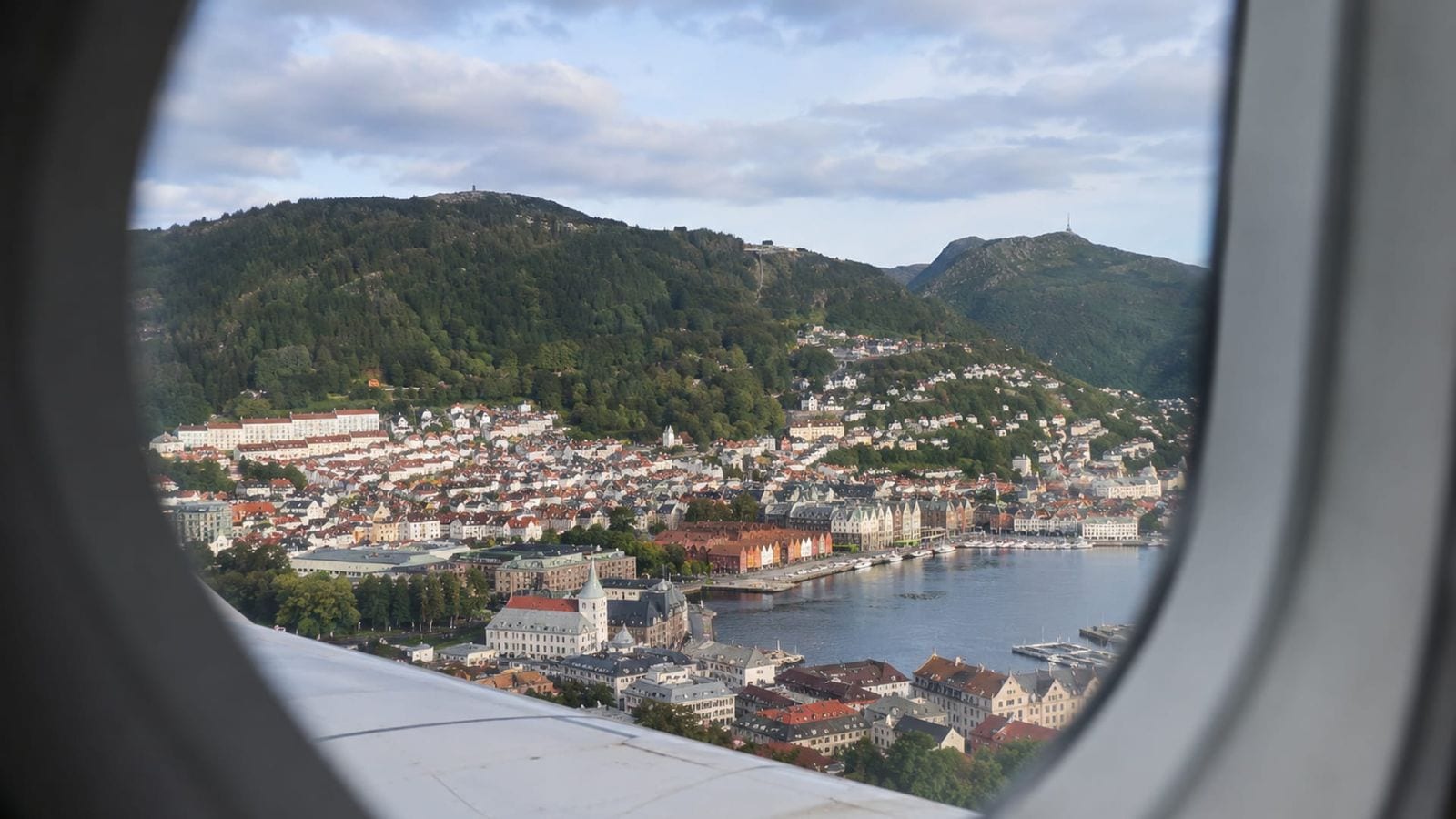
Bergen offers one-stop itineraries from the US. The most useful comparisons are the connection points and total time in transit, not just the fare headline.
New York (JFK) to Bergen (BGO)
From New York (JFK), airlines like Icelandair, Scandinavian Airlines, British Airways, Lufthansa, KLM, and Air France operate one-stop itineraries. The total journey usually takes 10 to 19 hours. The layovers are usually in European cities like Keflavík (KEF), Copenhagen (CPH), London (LHR), Frankfurt (FRA), or Amsterdam (AMS). Round-trip fares with these airlines usually start at $3,100 and can reach $7,700.
Los Angeles (LAX) to Bergen (BGO)
Flights from Los Angeles International Airport (LAX) require at least one connection. Icelandair, Scandinavian Airlines, Lufthansa, KLM, Air France, and British Airways serve the route through their European hubs, such as Frankfurt (FRA) and Paris (CDG). The complete journey usually takes 14 to 20 hours, depending on the length of the layover. Business-class tickets on this route cost between $3,600 and $6,400.
Experience Bergen beyond the harbor view
Bergen’s harbor introduces the city, but the surrounding hills, museums, residential streets, and coastal landscapes reveal much more. Bryggen preserves the memory of Hanseatic trade, while Mount Fløyen lifts the city into a wider fjord landscape. Nordnes and Lygra add quieter views of life along the western coast. If you want to visit Bergen soon, you can reach out to our AranGrant team for help comparing business-class flights and hotels that match your travel dates and budget.







