

Chapters:

Need help with your trip?
Our support team is available 24/7. Request a callback or call us directly at (833) 619-0908
Baku brings together a walled medieval center, a long Caspian waterfront, and some of Azerbaijan’s most distinctive contemporary architecture. With five days, you can explore these parts of the city without compressing every major sight into the same schedule.
Good planning starts with location. Staying near Icherisheher, Fountain Square, or the central boulevard keeps many sights within walking distance, while places such as the Heydar Aliyev Center and Ateshgah Fire Temple require separate trips. Grouping nearby attractions also leaves more time for Azerbaijani food, waterfront walks, and unhurried evenings.
This guide covers where to stay, how to get around, what to see and eat, when to visit, and how to organize five days in Baku with practical travel times and clear priorities.
Useful things to know

Main language(s): Azerbaijani
Salam (sah-lahm) – Hello
Zəhmət olmasa (zuhh-met ol-lah-sah) – Please
Təşəkkür edirəm (teh-sheh-kur eh-deh-rem) – Thank you
Siz ingiliscə danışırsınız? (seez in-gi-lis-juh dah-nuh-suh-rsuh-nuhz) – Do you speak English?
Bu neçəyədir? (boo neh-cheh-yeh-deer) – How much does it cost?

Currency: Azerbaijani manat (AZN, ₼)

Cash and cards: Cards and contactless payments are widely accepted at hotels, malls, restaurants, and many other businesses in Baku. Carry some cash for smaller shops, markets, and independent taxis.

Tipping: Leave 5% to 10% in restaurants for good service if a service charge is not already included. Rounding up small bills is also common.

Traditional food: Plov, dolma, qutab, and piti are among the traditional Azerbaijani dishes commonly served in Baku.

Water and coffee costs: Café prices vary, but bottled water can cost AZN 3 ($1.75), while an espresso is typically AZN 5 to AZN 6.50 ($3 to $3.80).

Taxis and ride apps: Bolt and Uber operate in Baku. App-based rides show the fare in advance, while fares for street taxis should be confirmed before the trip if no meter is used.

Plug and voltage: Type C/F plugs, 230V, 50Hz.

Dining and shop opening hours: Major shopping malls commonly open from 10:00 am until 10:00 pm or 11:00 pm. Restaurant hours vary, and many restaurants and cafés stay open later in the evening.

Emergency number: 112 for general emergency and rescue services; 101 for fire rescue, 102 for police, and 103 for ambulance
Where to stay in Baku
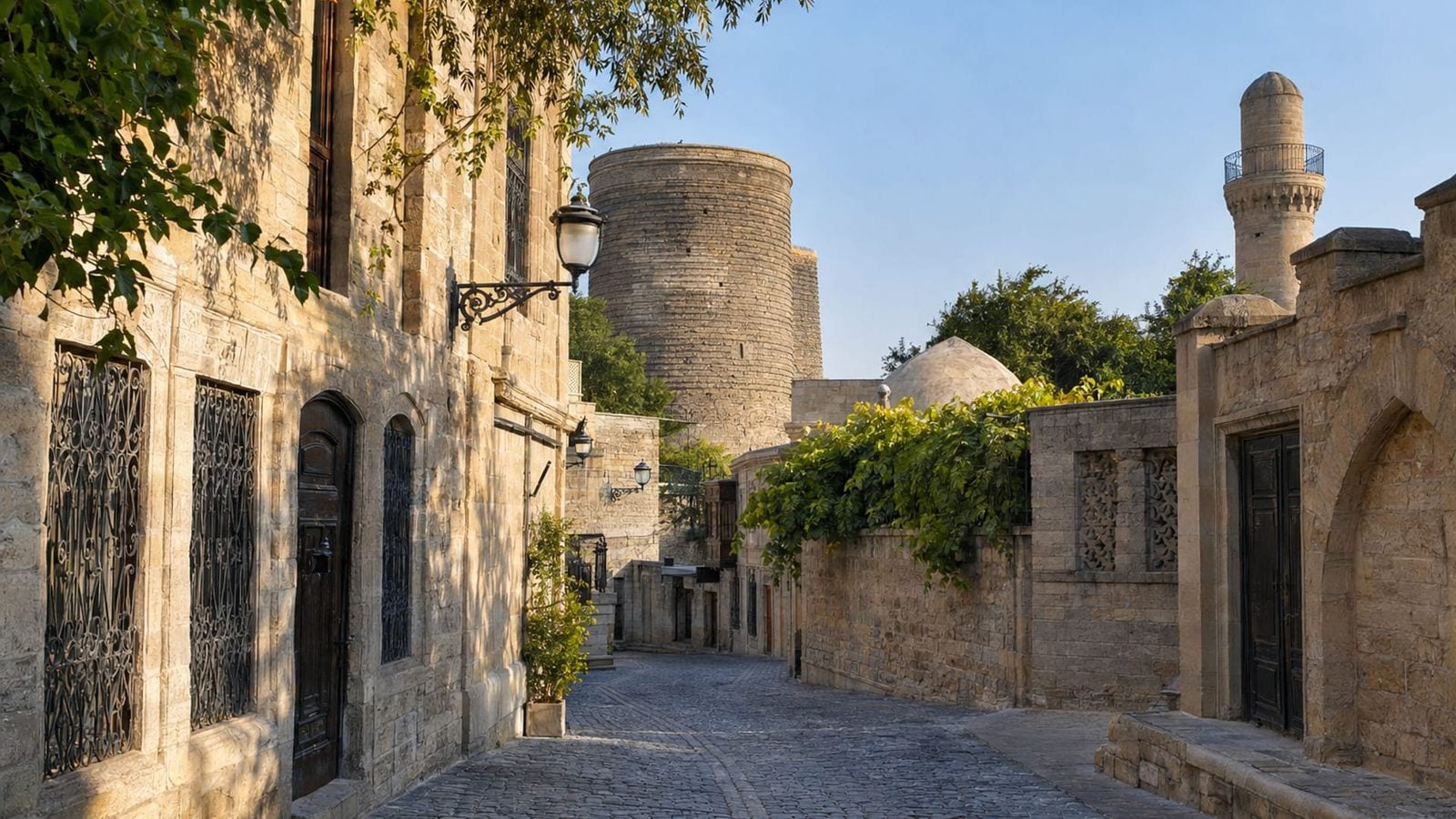
Icherisheher is Baku’s walled Old City, with stone lanes, caravanserais, mosques, historic houses, and small courtyards enclosed by fortress walls. The Maiden Tower and Palace of the Shirvanshahs are inside the district, alongside museums, restaurants, and boutique hotels in a compact area.
Best for: First-time visits, heritage sightseeing, and travelers who want to stay inside the historic center
What to expect: Narrow lanes, frequent foot traffic, and the highest concentration of tourists during the day.
Hotel prices: Usually about $120 to $260 per night for well-rated stays
Distance to major sights: 0 to 10 minutes on foot to the Maiden Tower and Shirvanshahs’ Palace
Quietness: Busy by day, quieter after dinner once the tour groups leave.
Main trade-off: Rooms can be smaller, and some streets limit car access, so luggage handling takes more effort.
Good to know: : Check the hotel’s exact entrance and vehicle access before arrival, since some properties are accessible only on foot or via traffic-restricted streets.
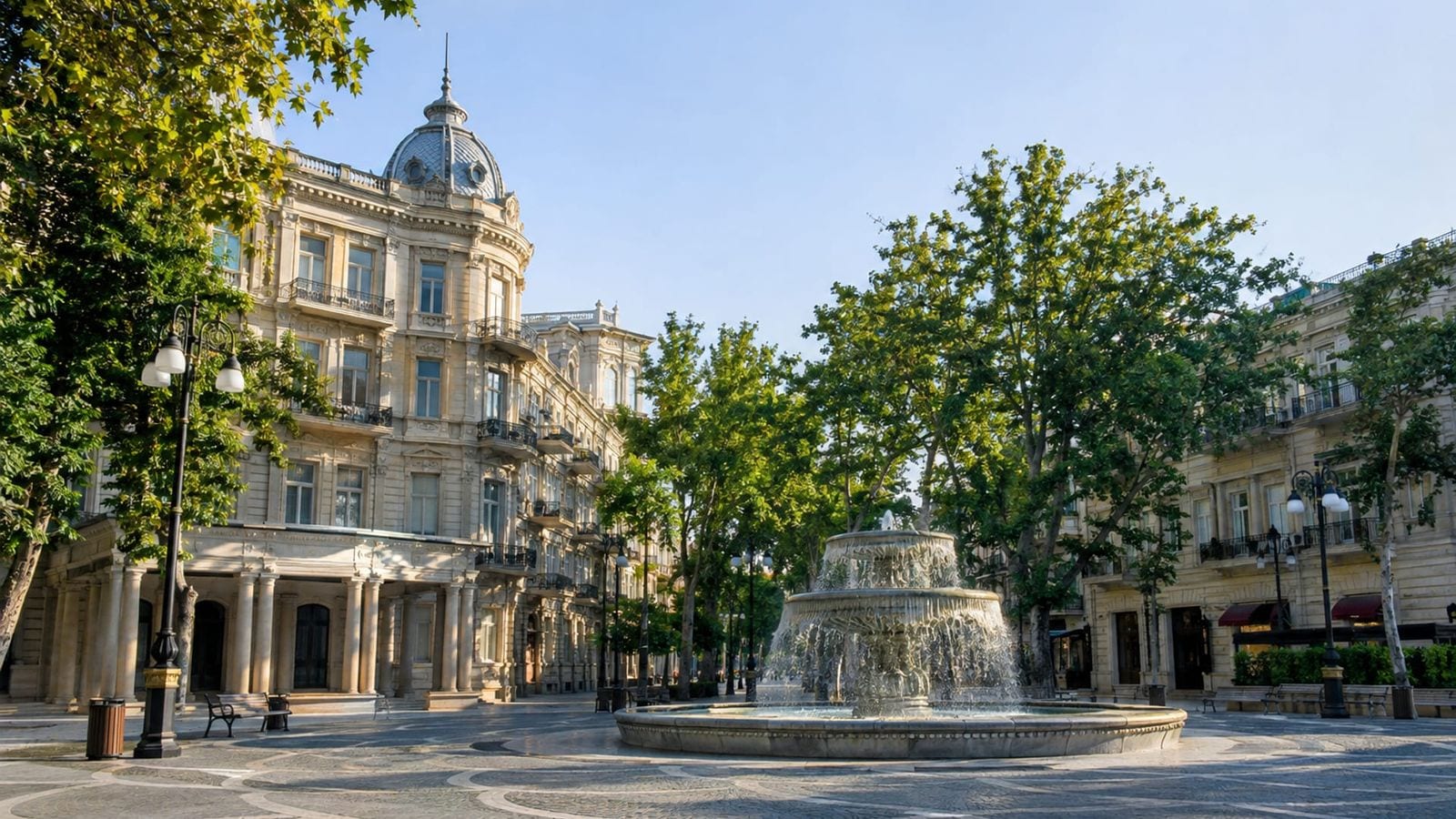
Fountain Square is a central pedestrian area in central Baku near Nizami Street, with cafes, restaurants, shops, and hotels surrounding the square. Baku Boulevard and Icherisheher are within walking distance, while nearby streets stay active into the evening with dining and shopping.
Best for: Dining, shopping, short stays, and travelers who want central access to multiple sights
What to expect: Busy sidewalks, outdoor seating, and a lively flow of locals and visitors into the evening.
Hotel prices: Usually about $90 to $220 per night for well-rated stays
Distance to major sights: 10 to 15 minutes on foot to the Old City and about 15 minutes on foot to the Flame Towers viewing area
Quietness: Active late, with traffic and restaurant noise into the evening, then calmer after midnight.
Main trade-off: The center brings more noise and denser traffic, especially on weekends and around dinner time.
Good to know: : Rideshare cars may collect passengers on nearby vehicle-accessible streets because Fountain Square and adjacent streets are pedestrian-only.
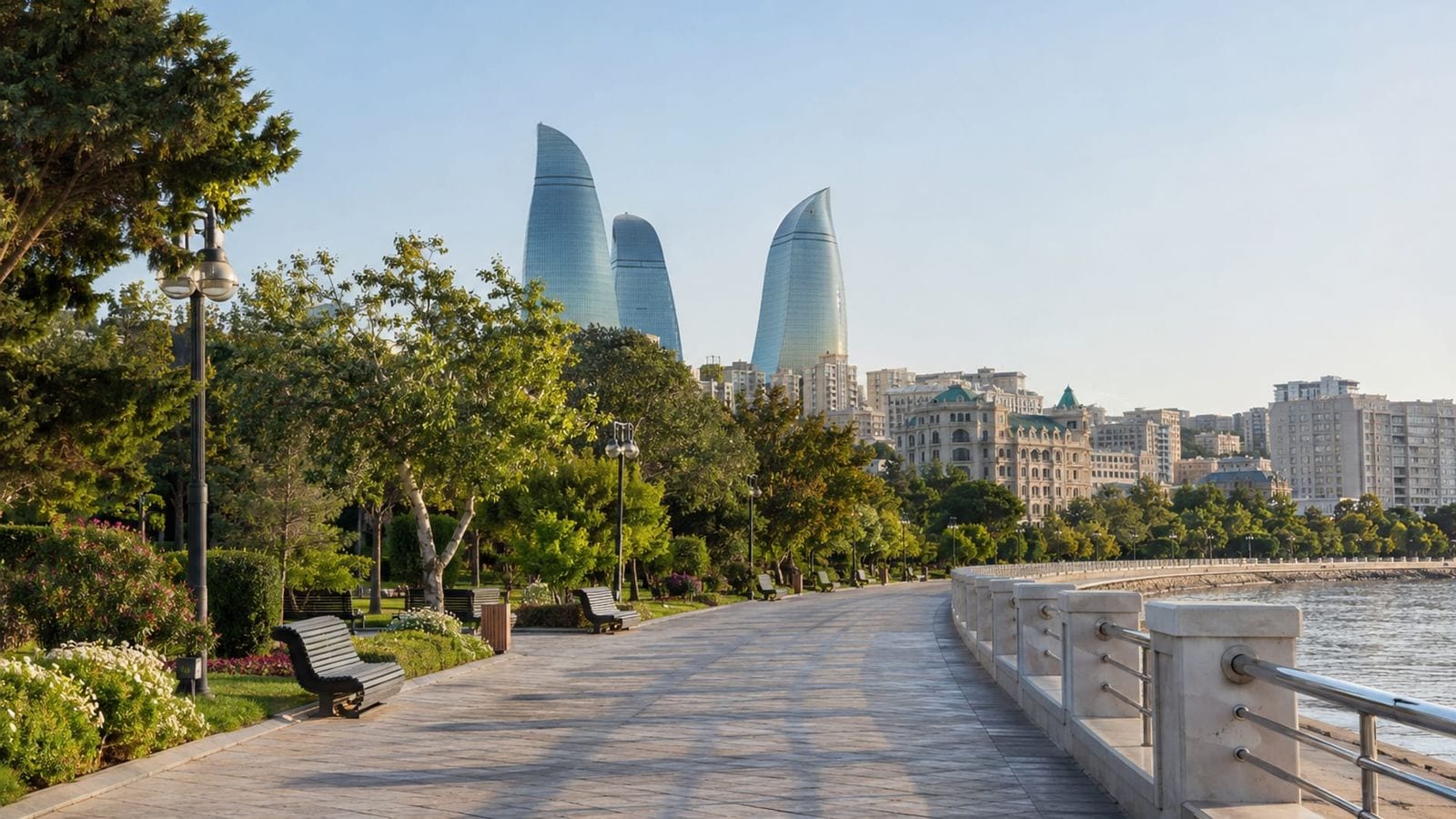
Seaside Boulevard follows Baku Bay with landscaped parks, pedestrian paths, cafes, museums, and major waterfront hotels. The central section is close to Icherisheher and Fountain Square, while hotels farther east require longer trips to the historic center by taxi or ride-hailing car.
Best for: Waterfront walks, family stays, and travelers who prefer newer hotels with open views
What to expect: Wide paths, seasonal crowds, and steady activity from walkers, cyclists, and families.
Hotel prices: Usually about $100 to $250 per night for well-rated stays
Distance to major sights: 15 to 25 minutes on foot to Fountain Square, or about 10 minutes by taxi to the Old City
Quietness: More open and calmer in the morning, with livelier promenades and cafes in the evening.
Main trade-off: You trade a little convenience for a longer walk to the Old City and more dependence on taxis for some dinners.
Good to know: : Check the hotel’s exact position along the boulevard before booking, since access to central sights varies by section.
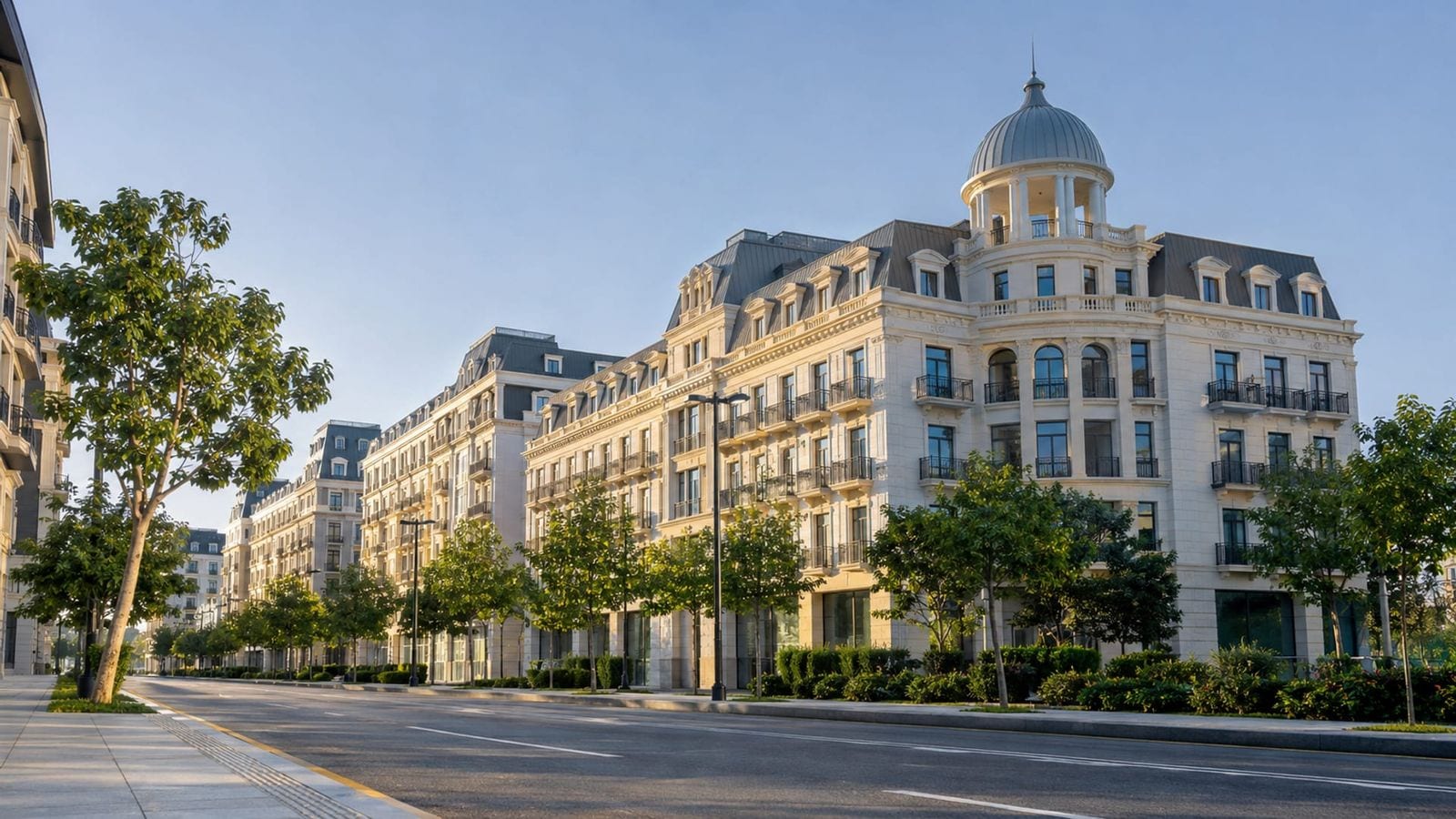
White City is a modern mixed-use district east of central Baku, developed on former industrial land with apartments, offices, hotels, parks, and commercial areas. The waterfront is close to several parts of the district, while trips to Icherisheher usually require a taxi or ride-hailing car.
Best for: Longer stays, newer hotels, and travelers who do not mind using taxis for the main sights
What to expect: Newer blocks, lighter pedestrian traffic, and a more residential feel than the central districts.
Hotel prices: Usually about $70 to $180 per night for well-rated stays
Distance to major sights: About 15 to 20 minutes by taxi to the Old City and roughly 10 minutes by taxi to the Seaside Boulevard
Quietness: Quieter than the center during the day, with less evening street life after restaurants close.
Main trade-off: You will spend more time in taxis, and the district has fewer late dining choices within a short walk.
Good to know: : White City has no operating metro station yet; Khatai is the nearest established option for some parts of the district, depending on location.
For a short sightseeing stay, Binagadi, Garadagh, and hotels near Heydar Aliyev International Airport (GYD) are less convenient because they are farther from Icherisheher, Fountain Square, and the central waterfront and require longer taxi trips.
Hotel deals
How to get around Baku efficiently
Baku is easy to navigate by Metro, buses, taxis, or ride-hailing, with the best option depending on distance, traffic, and your destination.

Metro
for longer distances
The Metro is useful for central and longer cross-city trips, with three lines and 27 stations. A ride costs AZN 0.50 ($0.29), and trains normally run from 6:00 am to midnight. The Nizami to 28 May section is currently closed during line-separation construction.

Bus and tram
for convenience
City buses reach areas beyond the Metro, while Aero Express links Heydar Aliyev International Airport with 28 May. City fares vary from AZN 0.40 to AZN 1.00 ($0.24 to $0.59); Aero Express costs AZN 1.30 ($0.76). Journey times depend on route, distance, and traffic.

Taxi
for convenience or late hours
Taxis and rideshare services are useful for late hours, luggage, and districts beyond the center. Bolt shows the fare before booking; current airport-to-center examples start at about AZN 10.50 to AZN 13.60 ($6.20 to $8). Prices rise with traffic, demand, and vehicle category.
*Prices are based on rates updated as of June 2026 and may change at the time of travel.
Use the metro for central trips, buses for wider coverage and airport access, and taxis or ride-hailing for late hours, luggage, and farther districts.
Iconic landmarks
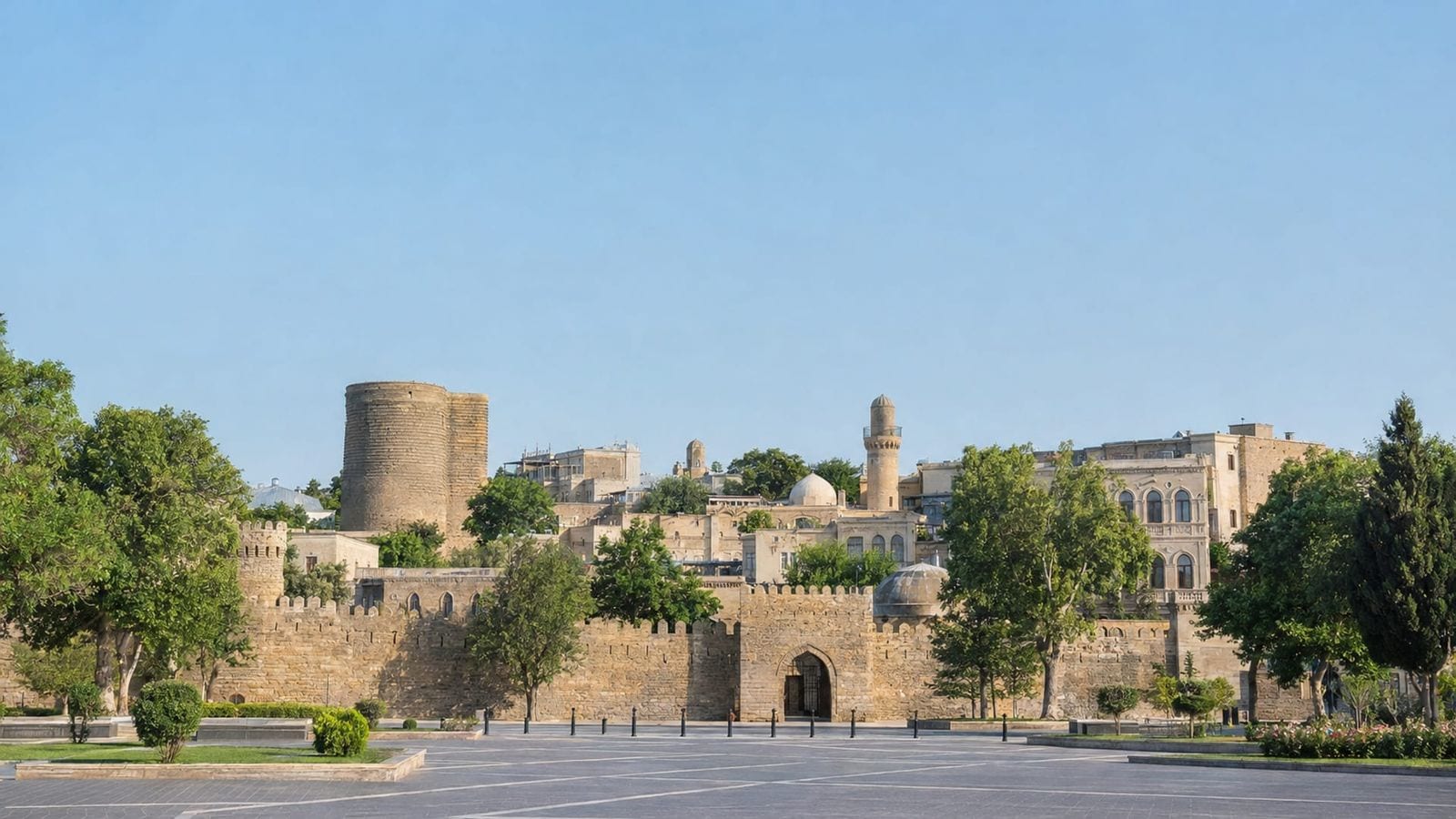
Icherisheher (Old City)
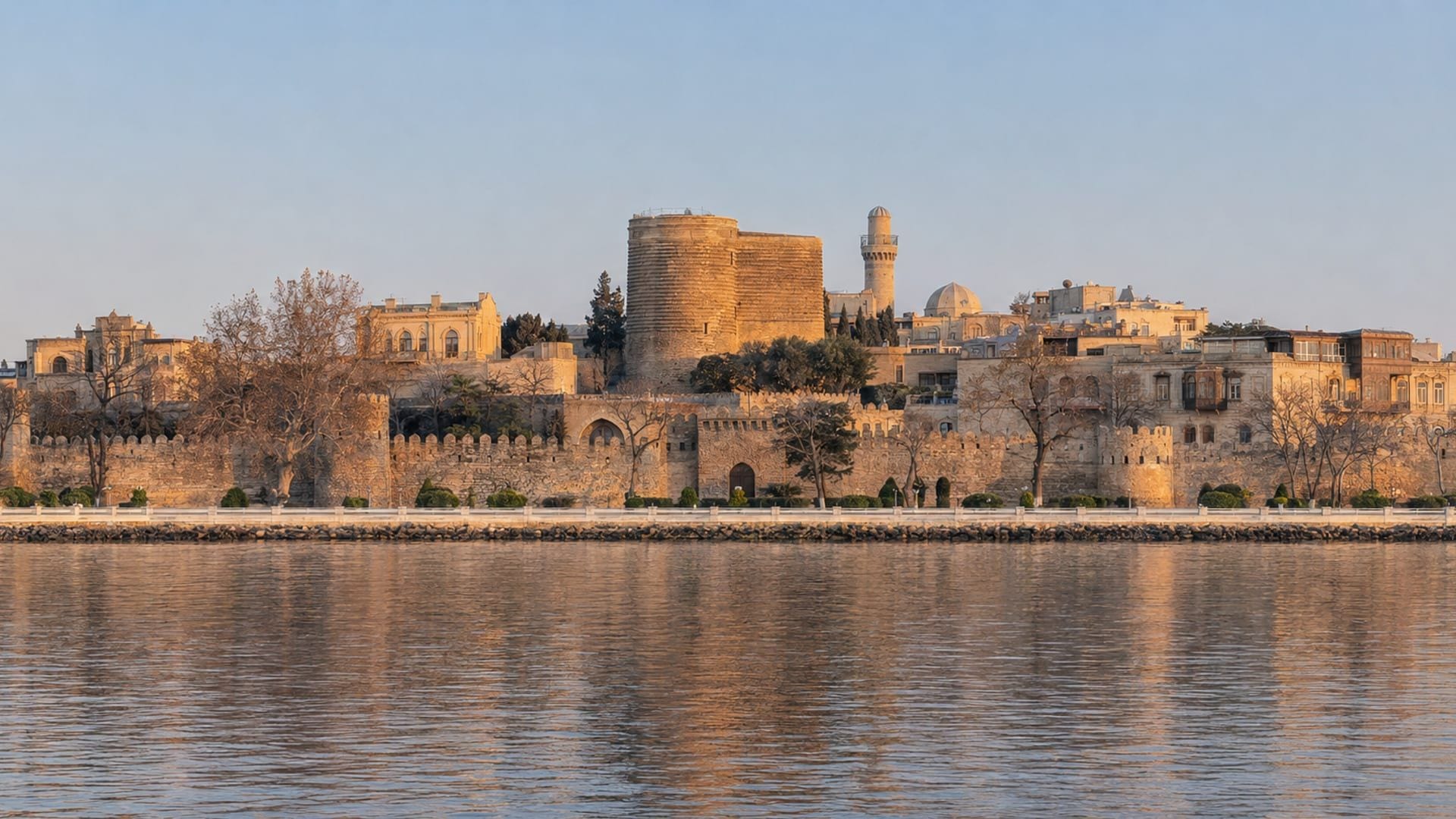
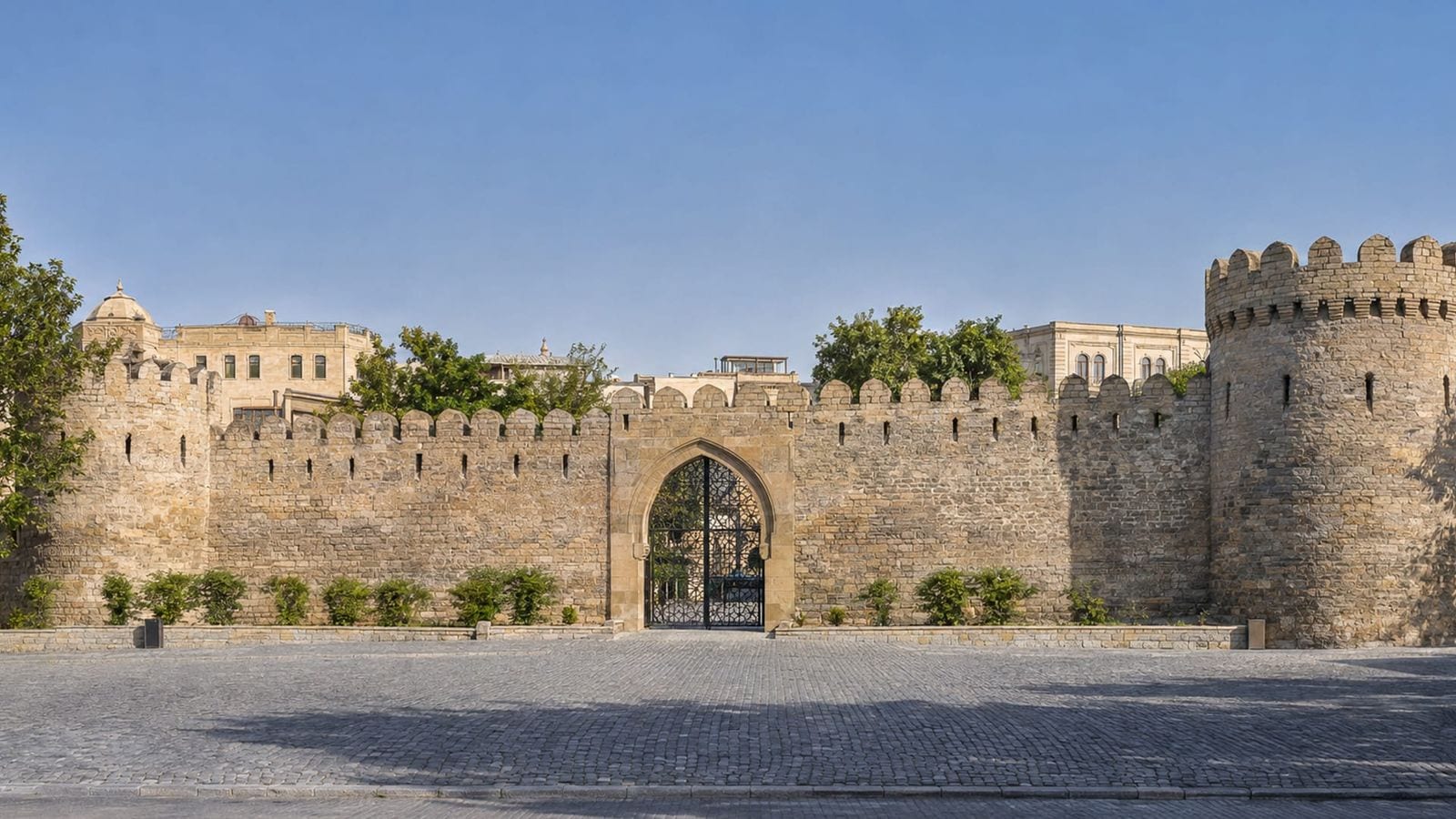
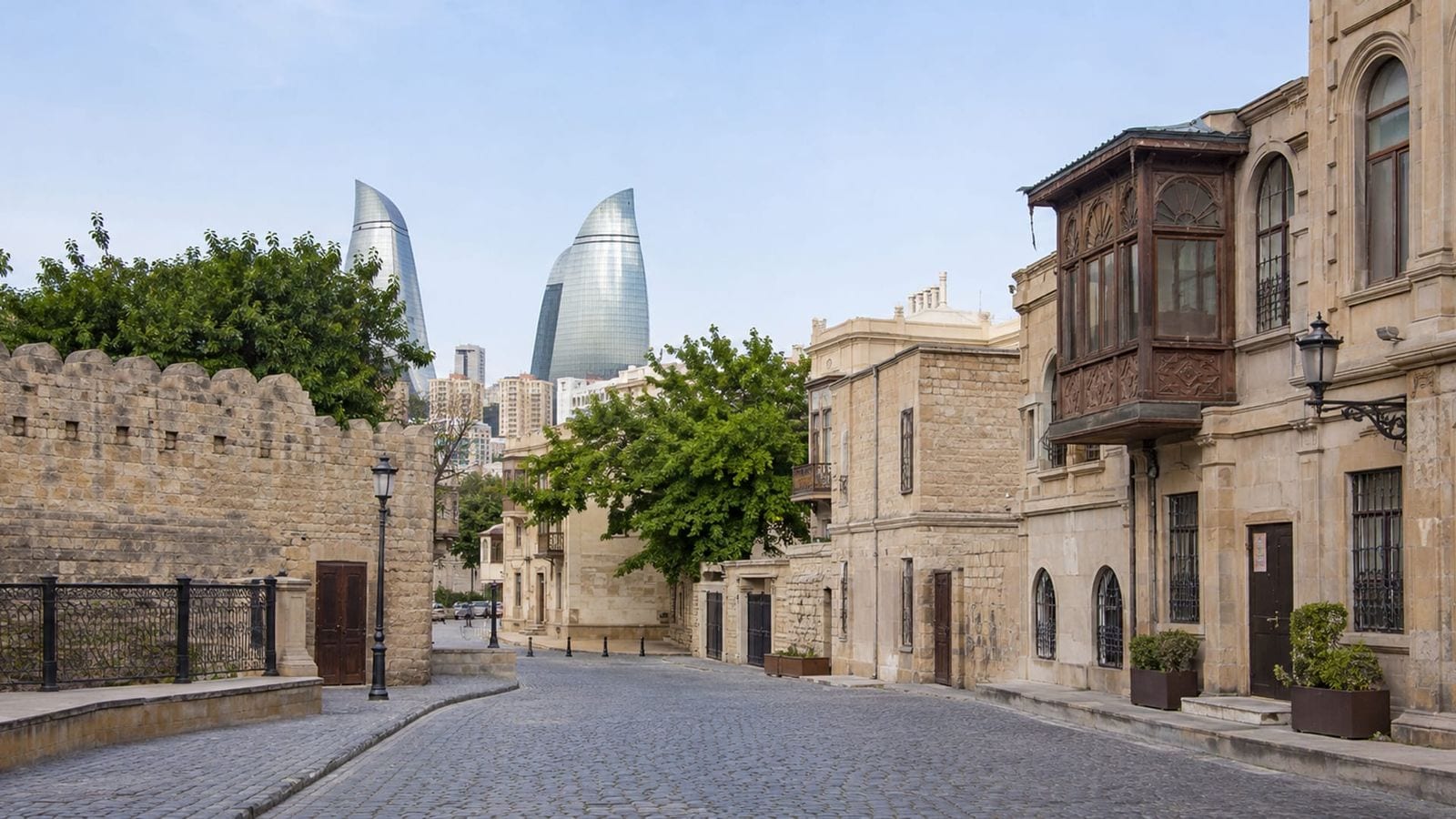
Icherisheher is Baku’s walled historic core, where narrow stone lanes lead past caravanserais, mosques, traditional houses, and small courtyards. The UNESCO-listed district also contains the Maiden Tower and Palace of the Shirvanshahs, two of the city’s most important medieval monuments.
Time needed: About 3 to 4 hours
Entry: Free to enter the district; separate tickets apply for museums and monuments inside, including the Maiden Tower and the Palace of the Shirvanshahs.
Tip: : See the museums after opening, then explore the lanes and fortress walls at a slower pace.
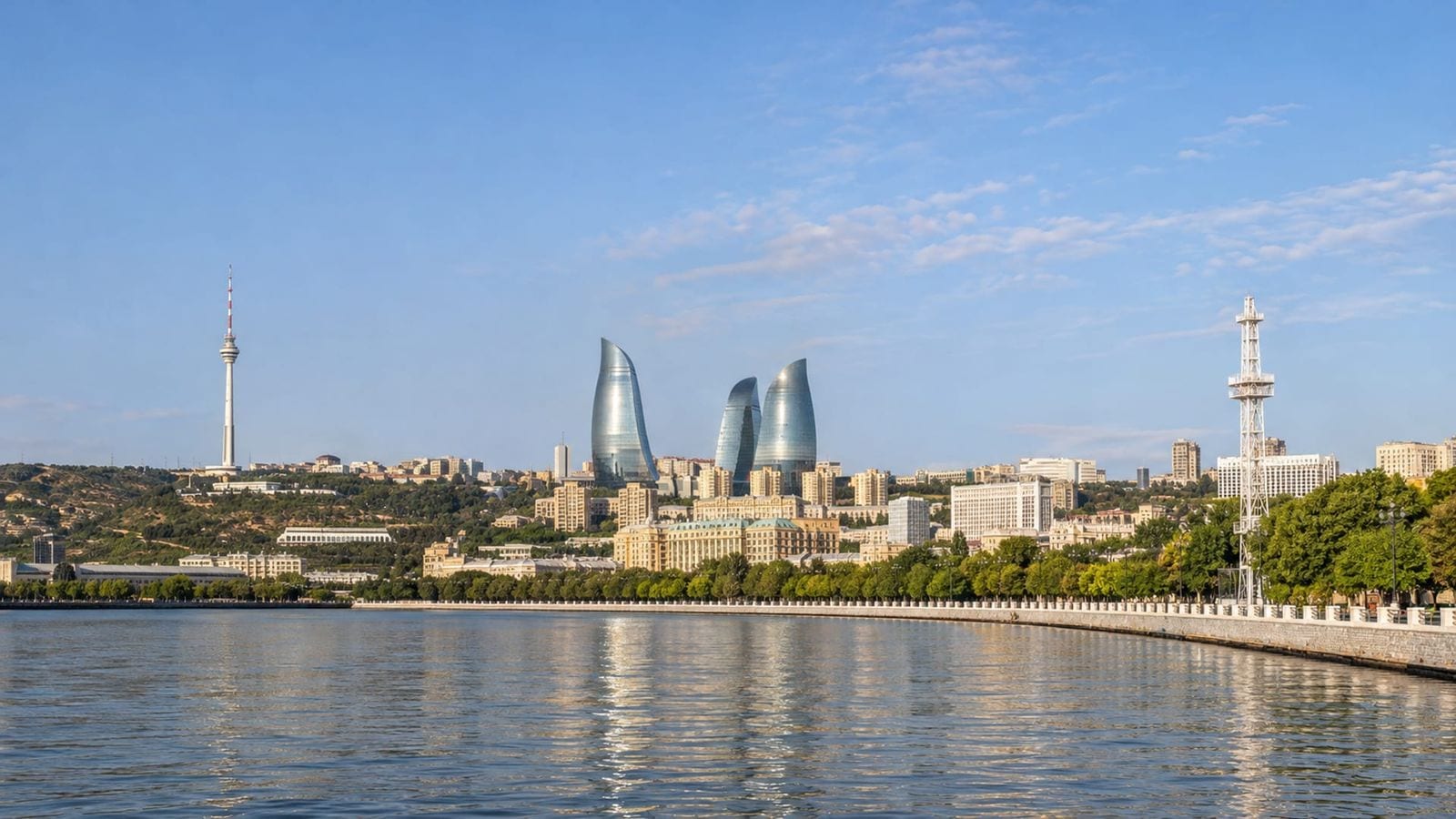
Flame Towers
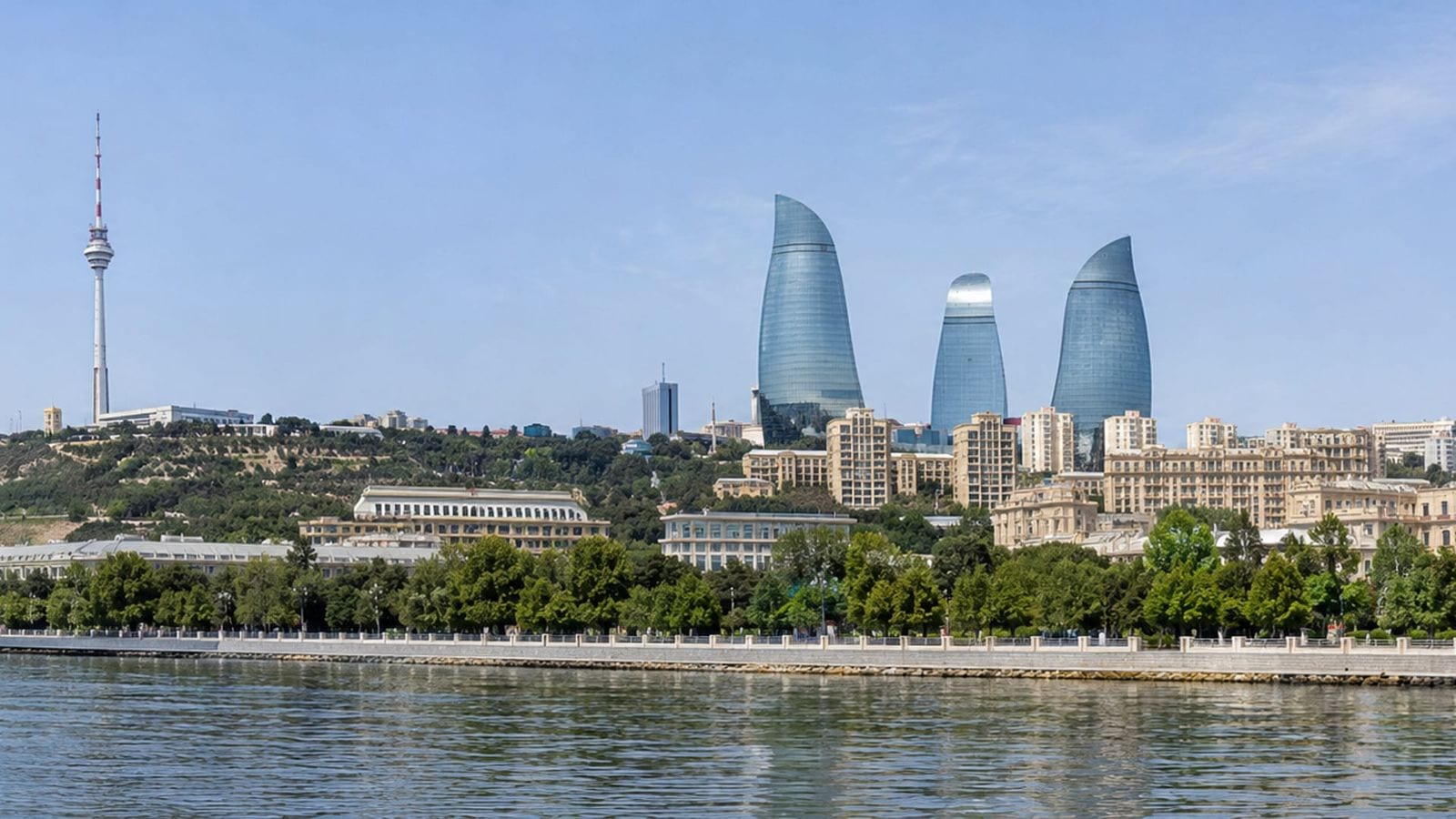
The Flame Towers are three curved glass skyscrapers above Baku Bay and one of the city’s most recognizable modern landmarks. One tower houses the Fairmont Baku, while the others contain residences and offices. Their illuminated facades become especially prominent after dark.
Time needed: About 1 to 2 hours
Entry: Admission costs about $6 ($10) for adults, with reduced tickets for students and children at the palace ticket office.
Tip: : View them from Highland Park near sunset and stay to see the facade lighting after dark.
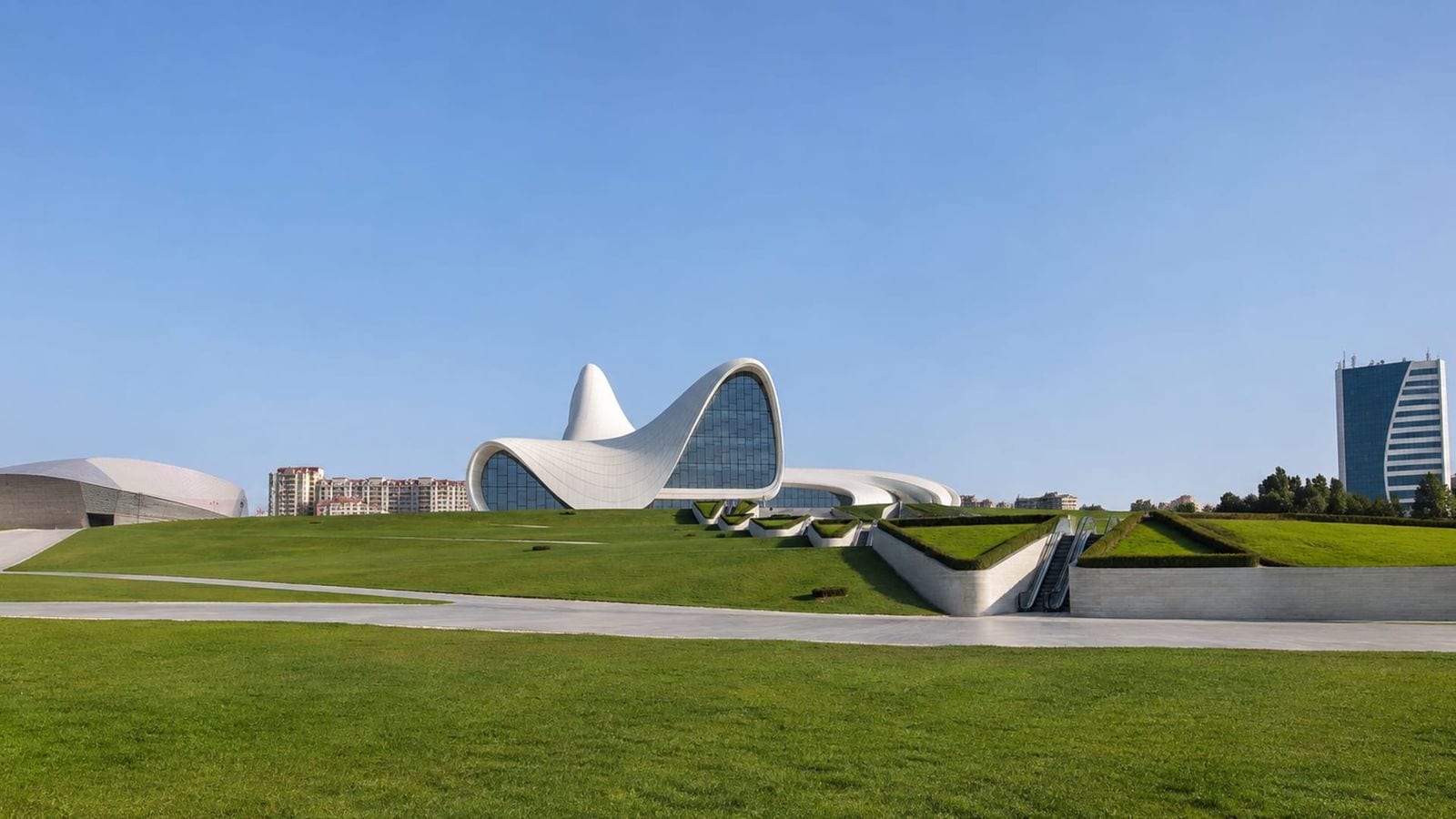
Heydar Aliyev Center
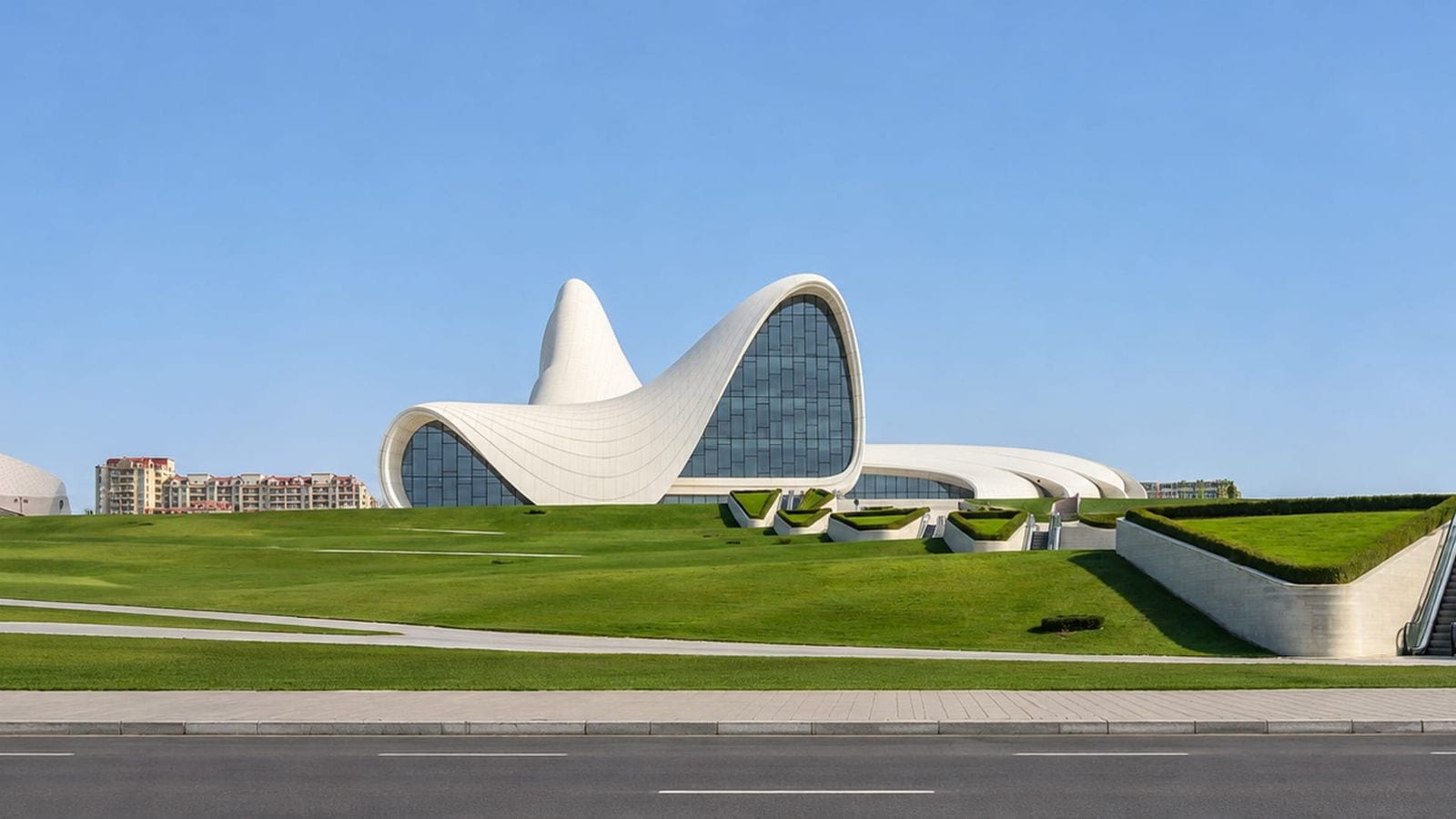
Designed by Zaha Hadid, the Heydar Aliyev Center is one of Baku’s defining contemporary buildings, with a flowing white exterior and large public plaza. Inside, museum and exhibition spaces present Azerbaijani history, architecture, art, miniature landmarks, and changing displays.
Time needed: About 1 to 2 hours
Entry: Tickets cost about $8 ($14) for adults, with lower prices for children, students, and selected exhibitions. Visit the official site for details.
Tip: : Visit the galleries first, then return to the plaza for exterior views in late-day light.
Overlooked sites worth visiting

Museum of Archaeology
The Museum of Archaeology in Icherisheher displays finds from excavations across Azerbaijan, from Stone Age tools and pottery to medieval jewelry, weapons, burial objects, and human remains.
Time needed: About 30 to 45 minutes
Entry: Admission typically costs $7 to $9 (12 to 15 AZN) for adults, with lower rates for children and local concession categories. Check the site or operator for current hours, since access can change with maintenance or weather. Visit the official site for details.
Tip: : Pair it with nearby Old City sights, since the museum is on Boyuk Gala Street.

Baku Museum of Miniature Books
The Baku Museum of Miniature Books holds about 8,000 tiny publications from 76 countries, including rare editions and a 2×2 mm book whose text requires a magnifying glass.
Time needed: About 20 to 30 minutes
Entry: Entry is free, and the museum is open to walk-in visitors during posted hours. Hours can vary by day and season, so check the official page or local listings before you go if you want to avoid a closed door. Visit the official site for details.
Tip: : Combine it with the Palace of the Shirvanshahs, which is only a short walk away.
Traditional food
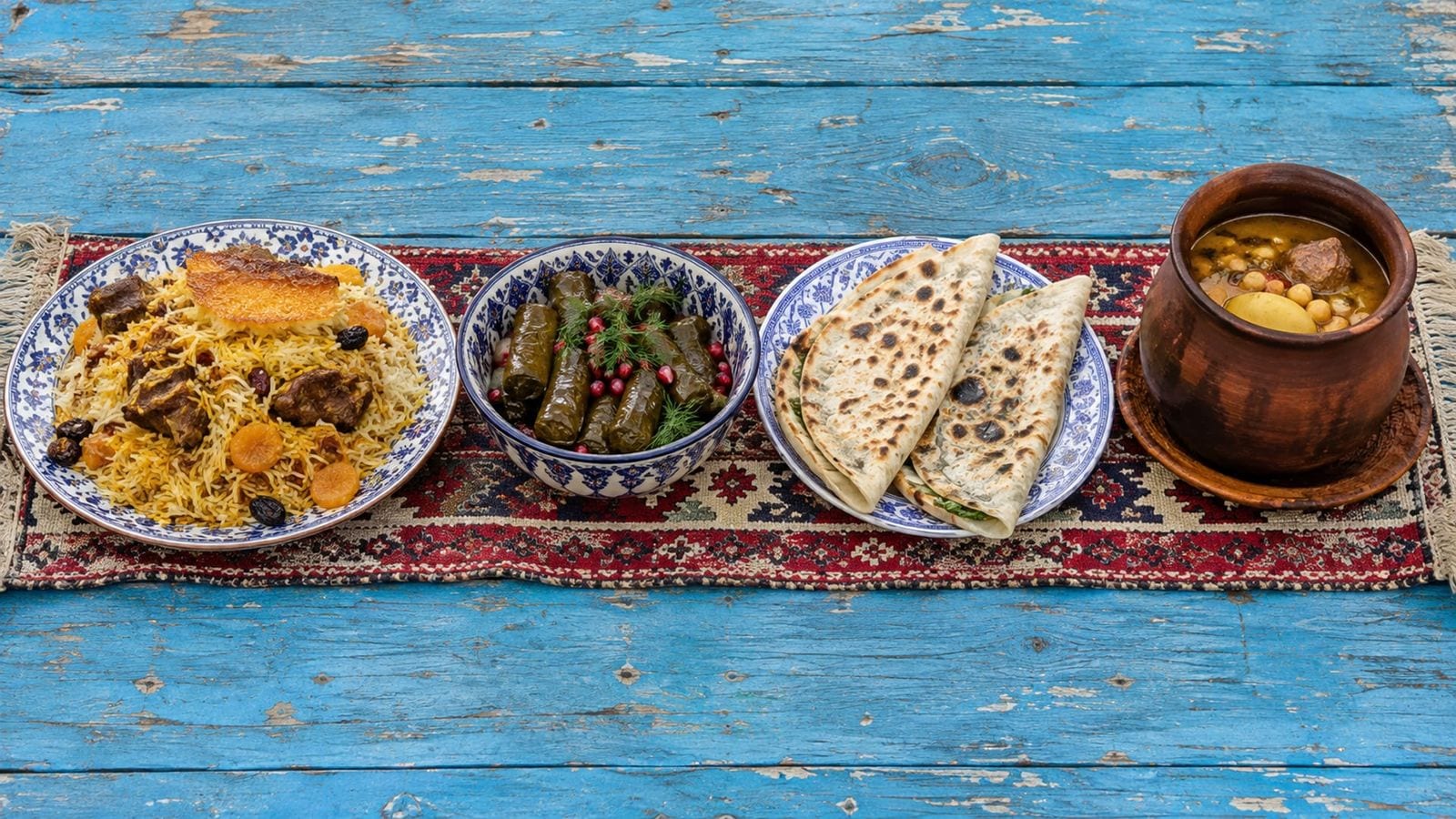
Baku restaurants serve Azerbaijani staples such as saffron plov, herb-filled dolma, thin qutab, and slow-cooked piti, each showing a different part of the country’s culinary traditions.
Plov
Plov combines saffron-scented rice with meat, chestnuts, raisins, dried apricots, or other accompaniments, depending on the version. Firuze near Fountain Square serves several traditional plovs, including varieties with lamb and dried fruit.
Dolma
Dolma wraps minced meat, rice, onion, and fresh herbs in grape leaves, then cooks the parcels until tender; yogurt is commonly served alongside. Dolma Restaurant in central Baku serves grape-leaf dolma and several vegetable-filled versions.
Qutab
Qutab is thin dough folded over fillings such as minced meat, greens, cheese, or pumpkin, then cooked on a hot saj and often served with yogurt or sumac. Çay Bağı 145 in Icherisheher serves meat, greens, cheese, and pumpkin versions.
Piti
Piti is a slow-cooked lamb stew with chickpeas and other ingredients, traditionally prepared in a clay pot and eaten in two stages, first with the broth and then the solids. Sumakh serves Baku piti with lamb, potato, tail fat, peas, and dried plum.
Best time to visit Baku
Spring and fall give Baku the most comfortable conditions for long walks, while summer brings heat and winter brings colder, windier days.
Best for: Old City walks, boulevard time, outdoor dining, and longer sightseeing days
What you get: Temperatures range from 40°F to 74°F (4°C to 23°C), with longer daylight by May, mild afternoons, and more rain in March and April.
Trade-offs: Strong wind can still affect outdoor plans, and early spring can feel cool near the Caspian.
Best for: Late dinners, waterfront walks, evening sightseeing, and time by the Caspian
What you get: Temperatures range from 67°F to 89°F (19°C to 32°C), with long daylight hours, warm evenings, and the driest conditions of the year.
Trade-offs: Midday heat can make exposed streets tiring, especially during longer walks away from shade.
Best for: Walking-heavy sightseeing, day trips, outdoor dining, and cooler afternoons
What you get: Temperatures range from 46°F to 80°F (8°C to 27°C), with mild September days and a steady shift toward cooler weather by November.
Trade-offs: October and November bring more rain, while daylight becomes much shorter by late November.
Best for: Museums, cafes, compact sightseeing days, and visits to central landmarks
What you get: Temperatures range from 36°F to 50°F (2°C to 10°C), with short daylight hours, cool days, and colder conditions near the Caspian.
Trade-offs: Strong wind can make outdoor sightseeing colder than the temperature suggests, especially by the water.
A realistic 5-day plan in Baku
Five days in Baku give enough time to cover the historic center, modern architecture, waterfront, and one trip beyond the core. This plan groups nearby sights, limits unnecessary driving, and leaves room for meals and slower walks in town.
After landing at Heydar Aliyev International Airport (GYD), travel into central Baku and keep the first day light. Check in near Icherisheher, Fountain Square, or the central boulevard, then walk locally to get oriented. Fountain Square has cafes and restaurants close to many central hotels, while the boulevard gives you an easy first look at Baku Bay without committing to a full sightseeing route after the flight.
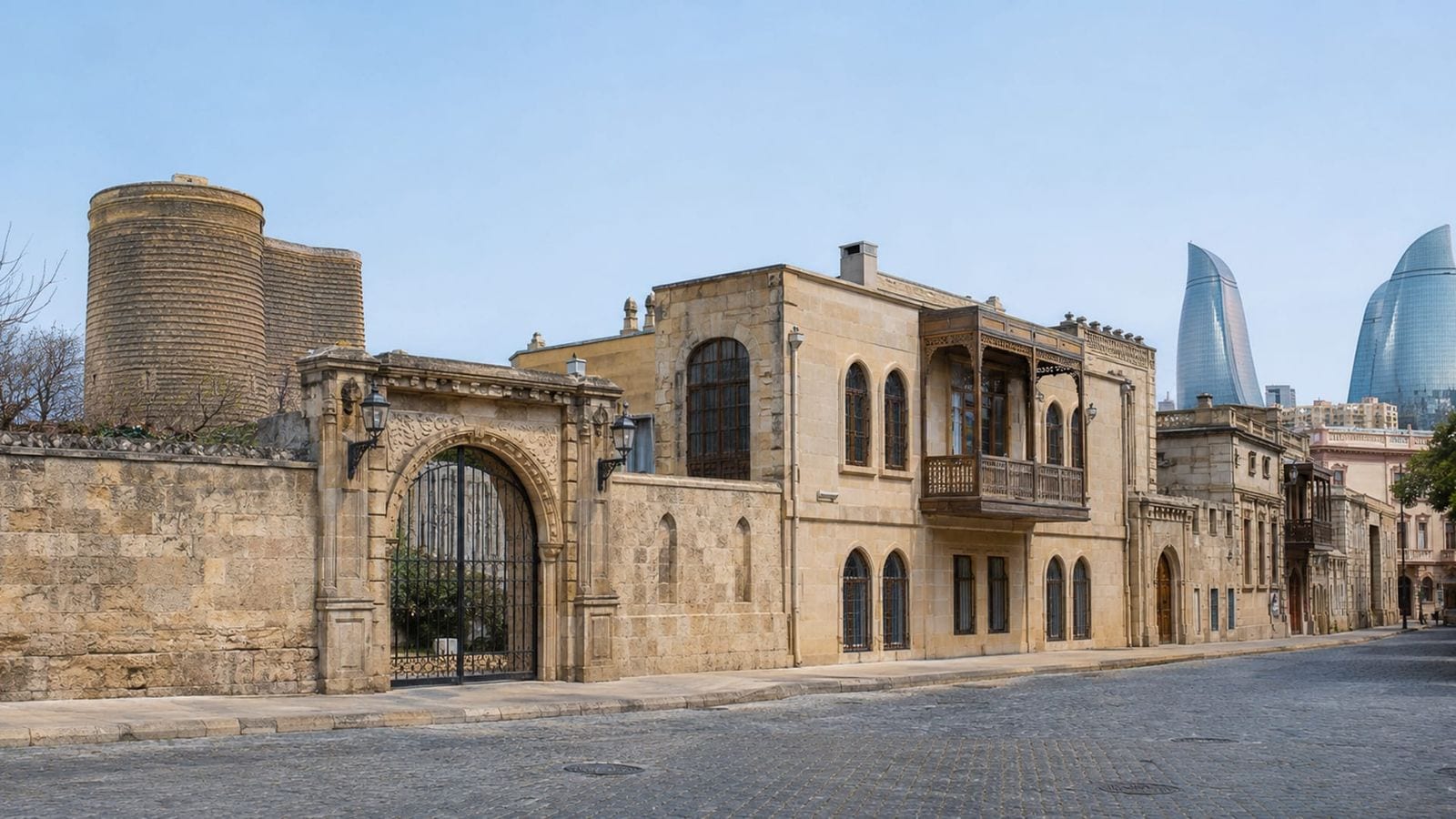
Spend the late morning at the Heydar Aliyev Center, where Zaha Hadid’s flowing white structure surrounds exhibition spaces devoted to Azerbaijani culture, art, architecture, and changing displays. Allow enough time to see the interior and walk across the broad plaza outside. After lunch nearby, continue to the eastern waterfront or return to central Baku for a quieter afternoon, keeping the day focused on the city’s contemporary side.
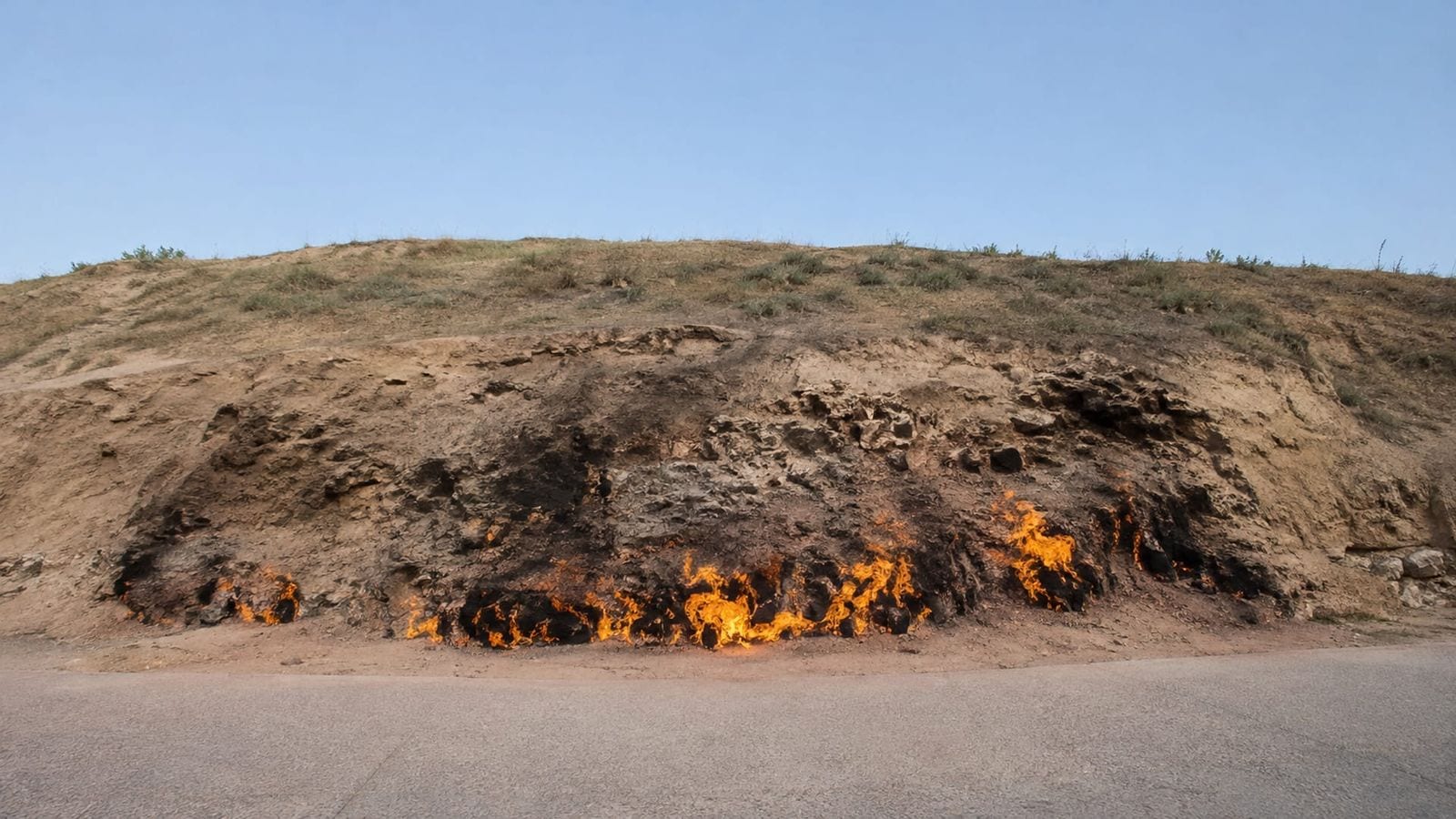
Travel to the Ateshgah Fire Temple in Surakhani, just outside central Baku, to explore the Absheron Peninsula’s long association with natural gas and fire worship. The enclosed complex developed as a place of worship, used especially by Indian devotees in the 17th and 18th centuries, and its museum explains the site’s religious and industrial history. Return to the city afterward and keep dinner near the hotel to avoid another long cross-town trip.
Devote the day to Icherisheher and stay on foot. Start at the Palace of the Shirvanshahs to see its courtyards, mosque, mausoleum, and stone architecture, then visit the nearby Museum of Miniature Books before continuing to the Maiden Tower. The museum closes on Mondays and Thursdays, so switch this day if needed. Finish on the central Seaside Boulevard, where the Caspian waterfront and park paths continue directly beyond the Old City walls.
Keep the final day flexible with Highland Park and the Flame Towers. Highland Park gives a broad view across Baku Bay, the Old City, and the modern skyline, while the Flame Towers rise directly behind the viewpoint. Continue to Fountain Square for coffee, a final meal, or shopping if departure time allows. Leave for Heydar Aliyev International Airport (GYD) with extra time for traffic, especially during busier periods of the day.
Business-class flights from the US to Baku
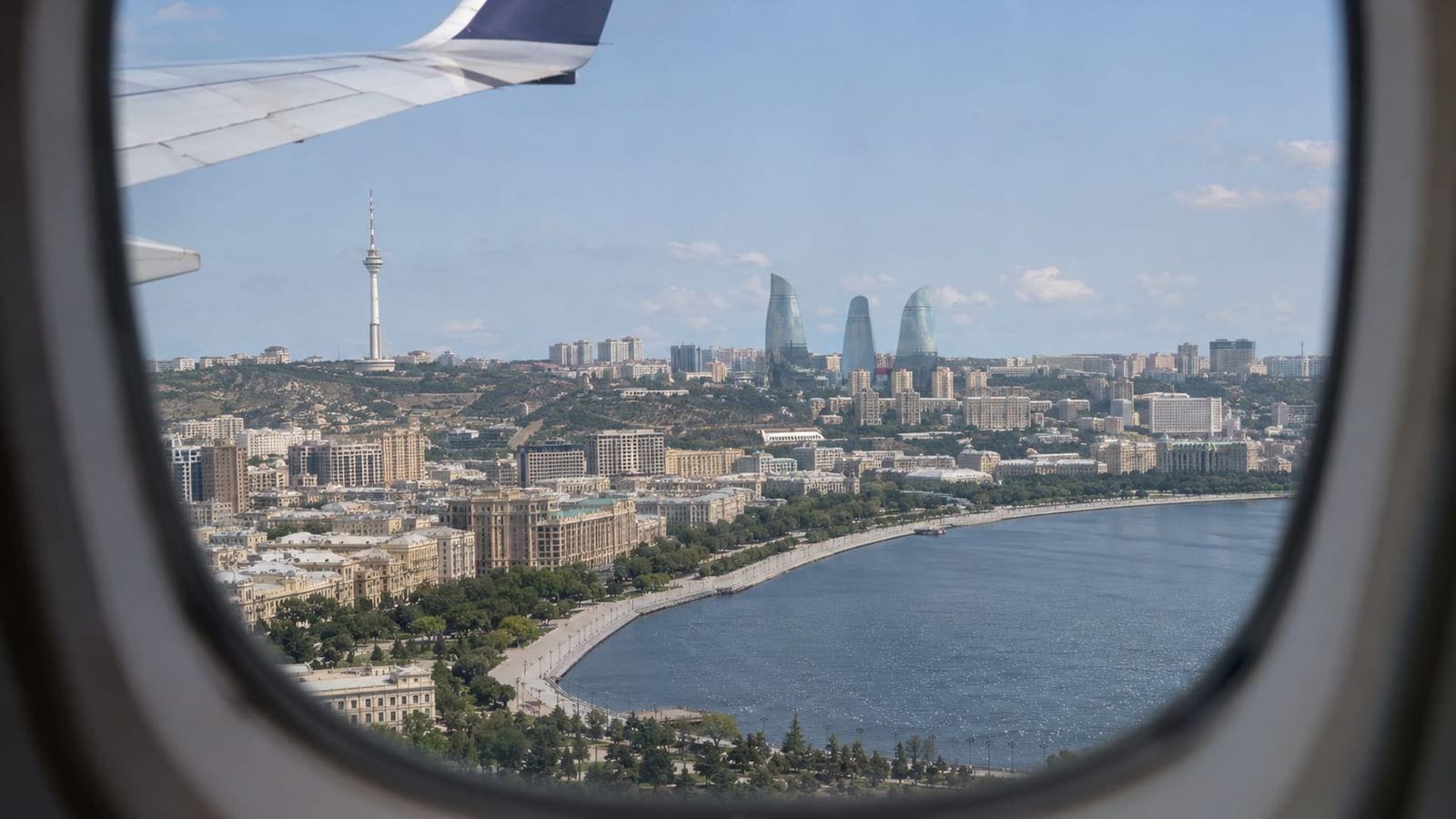
Business-class trips to Baku from New York and Los Angeles require one stop, with several major European and Middle Eastern hubs available.
New York (JFK) to Baku (GYD)
There are no nonstop flights from New York John F. Kennedy International Airport (JFK) to Heydar Aliyev International Airport (GYD). Turkish Airlines connects through Istanbul (IST), Qatar Airways through Doha (DOH), and Lufthansa through Frankfurt (FRA). Depending on the layover, total travel time ranges from about 14 to 35 hours. Round-trip business-class fares typically fall between $4,300 and $8,000.
Los Angeles (LAX) to Baku (GYD)
Travel from Los Angeles International Airport (LAX) to Baku also requires one stop, but travelers have a wider choice of connecting hubs. Turkish Airlines flies via Istanbul (IST), Lufthansa via Frankfurt (FRA), Qatar Airways via Doha (DOH), and LOT Polish Airlines via Warsaw (WAW). Journeys generally take 18 to 37 hours, depending on the itinerary. Round-trip business-class fares range from about $4,500 to $12,500.
Plan Baku at a Comfortable Pace
A well-planned stay in Baku keeps the Old City, waterfront, modern landmarks, and trips beyond the center on separate days, reducing unnecessary travel and leaving more time for meals and unhurried sightseeing. Choosing the right area to stay and grouping nearby sights also makes each day easier to follow. When the itinerary is set, AranGrant experts can help with business-class flights to Baku and hotel options that match the trip.