

Chapters:

Need help with your trip?
Our support team is available 24/7. Request a callback or call us directly at (833) 619-0908
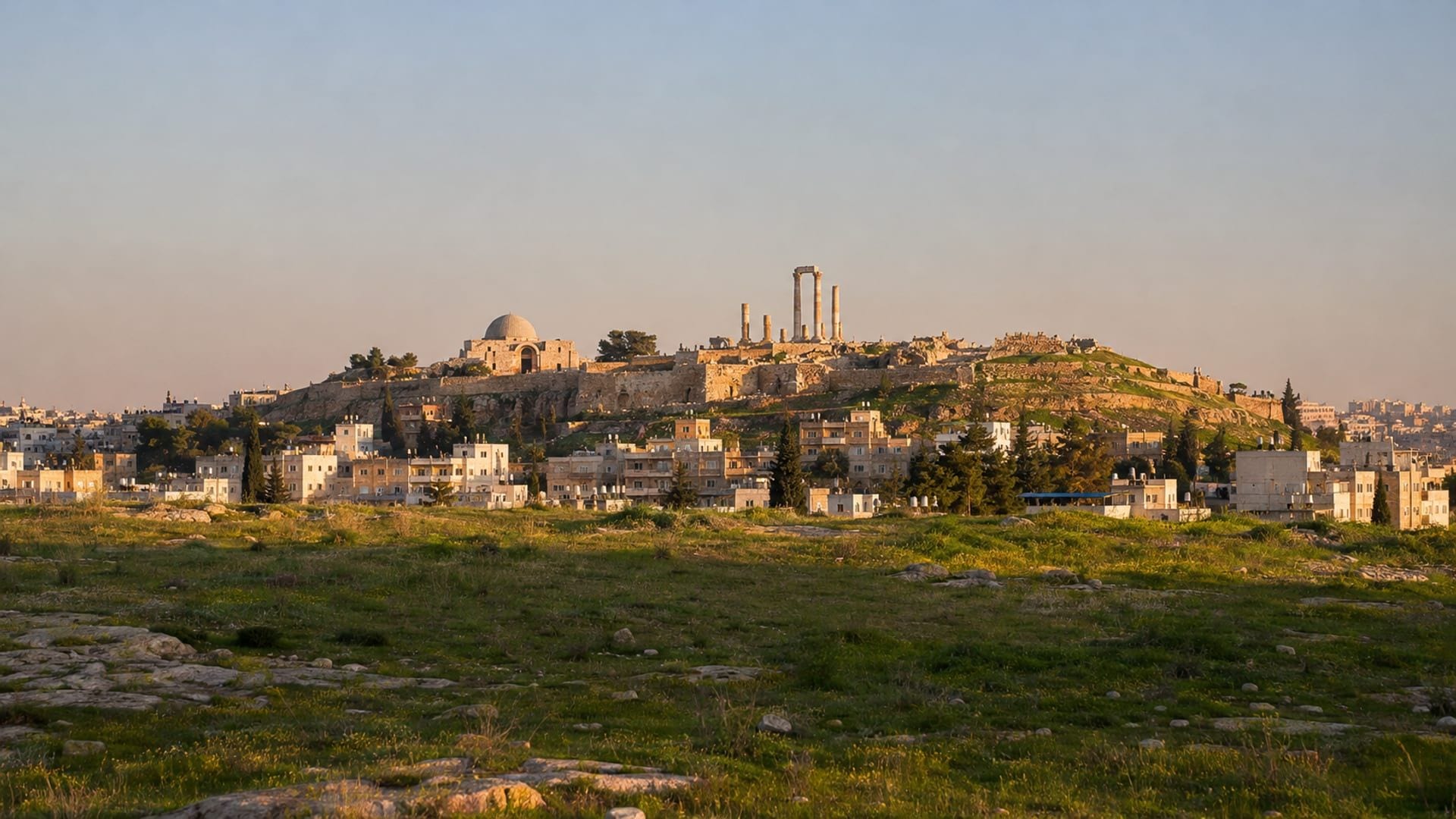
Amman trips often begin with a night near Rainbow Street, a quick sweep through Downtown, and a last-minute taxi to the airport, while the quieter hillside neighborhoods and museum stops get little attention.
That pattern misses how much time the city can consume between steep streets, hilltop sites, and traffic that shifts from one district to the next. A rushed plan also leaves little room for simple meals, mosque timing, or the short walks that make the center easier to read.
This guide slows the route down and groups Amman by neighborhood, meal timing, and transfer choice, so each day has a clear purpose and fewer unnecessary crossings.
Useful things to know

Main language(s): Arabic
marhaba (mar-ha-ba) – hello
min fadlak (min fad-lak) – please
shukran (shook-ran) – thank you
hal tatakallam al-ingliziya? (hal ta-ta-kal-lam al-in-gli-zi-ya) – Do you speak English?
bikam? (bee-kam) – How much does it cost?

Currency: Jordanian dinar (JOD, JD)

Cash and cards: Cards and contactless are widely accepted in Amman, but carry JOD 20 to JOD 40 ($28 to $56) in cash for small shops and taxis.

Tipping: Round up the bill or leave 5% to 10% at restaurants when service is good.

Traditional food: Mansaf, falafel, hummus, maqluba

Water and coffee costs: Water costs JOD 0.5 ($0.70); bar espresso runs JOD 2 to JOD 3 ($3 to $4).

Taxis and ride apps: Careem and Uber operate in Amman; check pickup points at the airport.

Plug and voltage: Type C, F, and G sockets, 230V, 50Hz

Dining and shop opening hours: Breakfast runs from 7:00 am to 10:00 am, lunch from 1:00 pm to 3:00 pm, and dinner from 8:00 pm to 11:00 pm. Many restaurants close during Ramadan daylight hours.

Emergency number: Dial 911 for police, ambulance, and fire rescue.
Where to stay in Amman
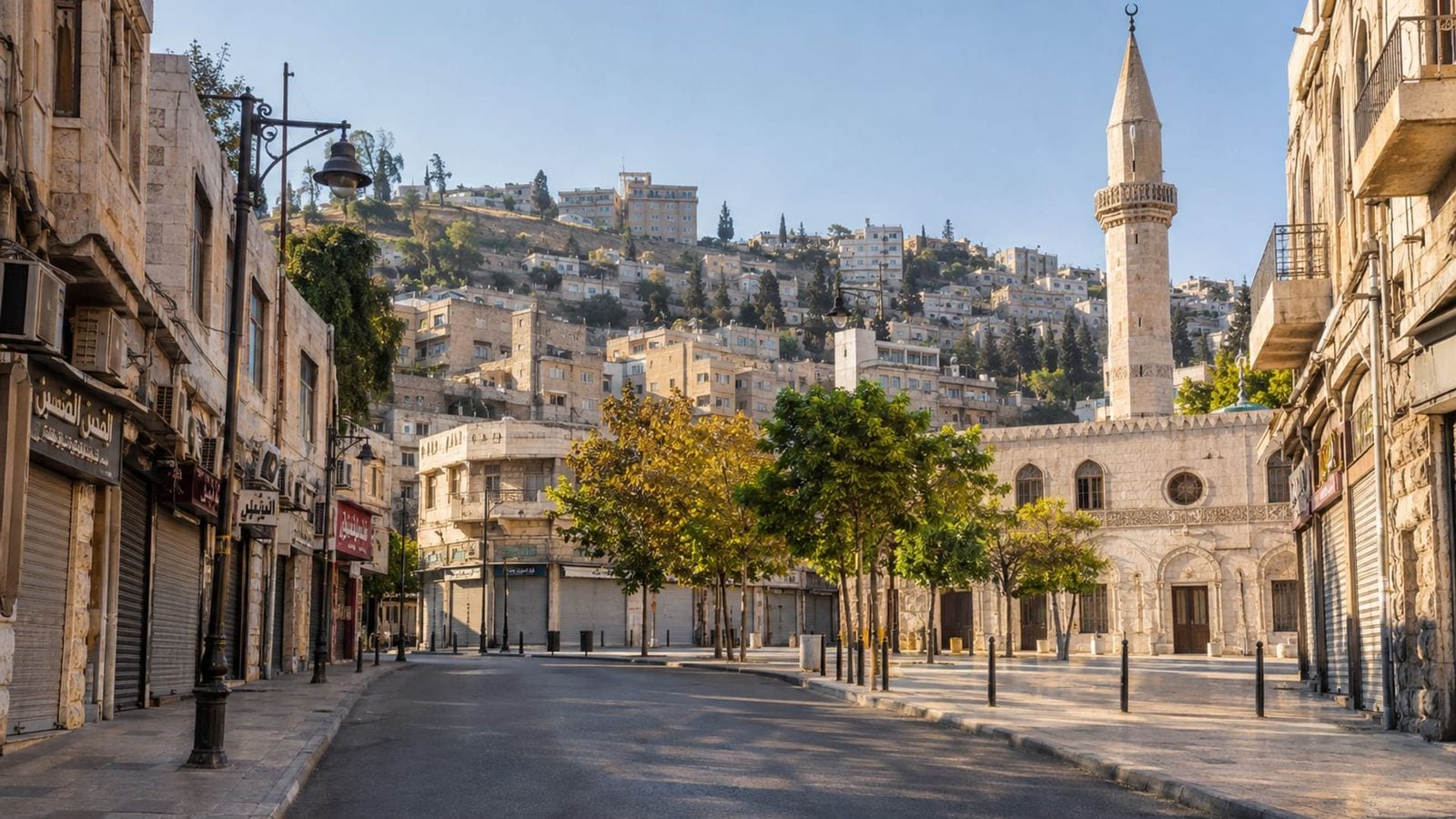
Amman’s historic core clusters Roman ruins, souks, mosques, and long-established hotels in a compact grid. It suits travelers who want to walk between major sights, street food, and evening cafés without relying on long cross-town rides, even though a few attractions sit farther out.
Best for: First-time visits, walking access to landmarks, and travelers who want central sightseeing
What to expect: Busy sidewalks, taxi traffic, and constant movement from morning until late evening, with the liveliest blocks near the markets and cafés
Hotel prices: Usually JOD 50 to JOD120 ($71 to $169) per night for well-rated stays
Distance to major sights: Up to 10 minutes on foot to the Roman Theater, 15 to 20 minutes on foot to the Jordan Museum
Quietness: Noisy during the day, and still active in the evening near cafés and souks; side streets calm down later
Main trade-off: Older buildings and smaller rooms are common, and parking can be difficult.
Good to know: Book a higher-floor room if you are sensitive to street noise, since traffic and late café activity can carry into the block.
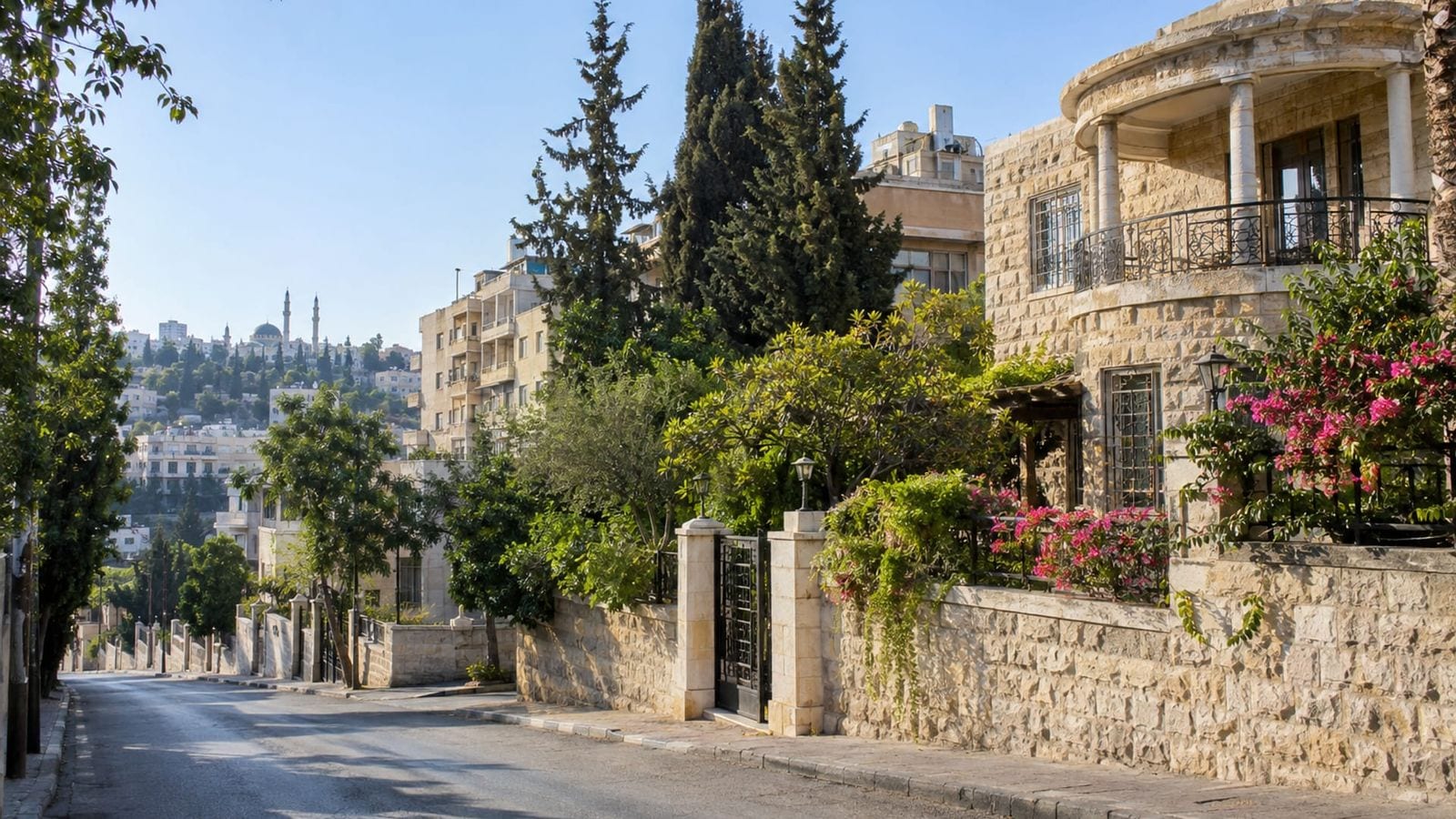
Jabal Amman lies just west of downtown and mixes restored houses, galleries, restaurants, and neighborhood streets across a hillside. It gives you an easy pick for Rainbow Street, downtown, and the city’s dining scene, without staying in the busiest market lanes of the old core.
Best for: Dining, galleries, and travelers who want a central neighborhood with more character than the market core
What to expect: Cafés, restaurants, and steady evening foot traffic, with quieter residential streets a few blocks away from Rainbow Street
Hotel prices: Usually JOD 60 to JOD 140 ($85 to $197) per night for well-rated stays
Distance to major sights: 10 to 20 minutes by car to the Citadel, 15 minutes on foot to Rainbow Street
Quietness: Active in the evening near restaurants, quieter on residential lanes and later at night.
Main trade-off: Prices are often higher than in the older core, especially in small boutique properties.
Good to know: Check the hill slope before you book, because some addresses make walking back from dinner noticeably harder.
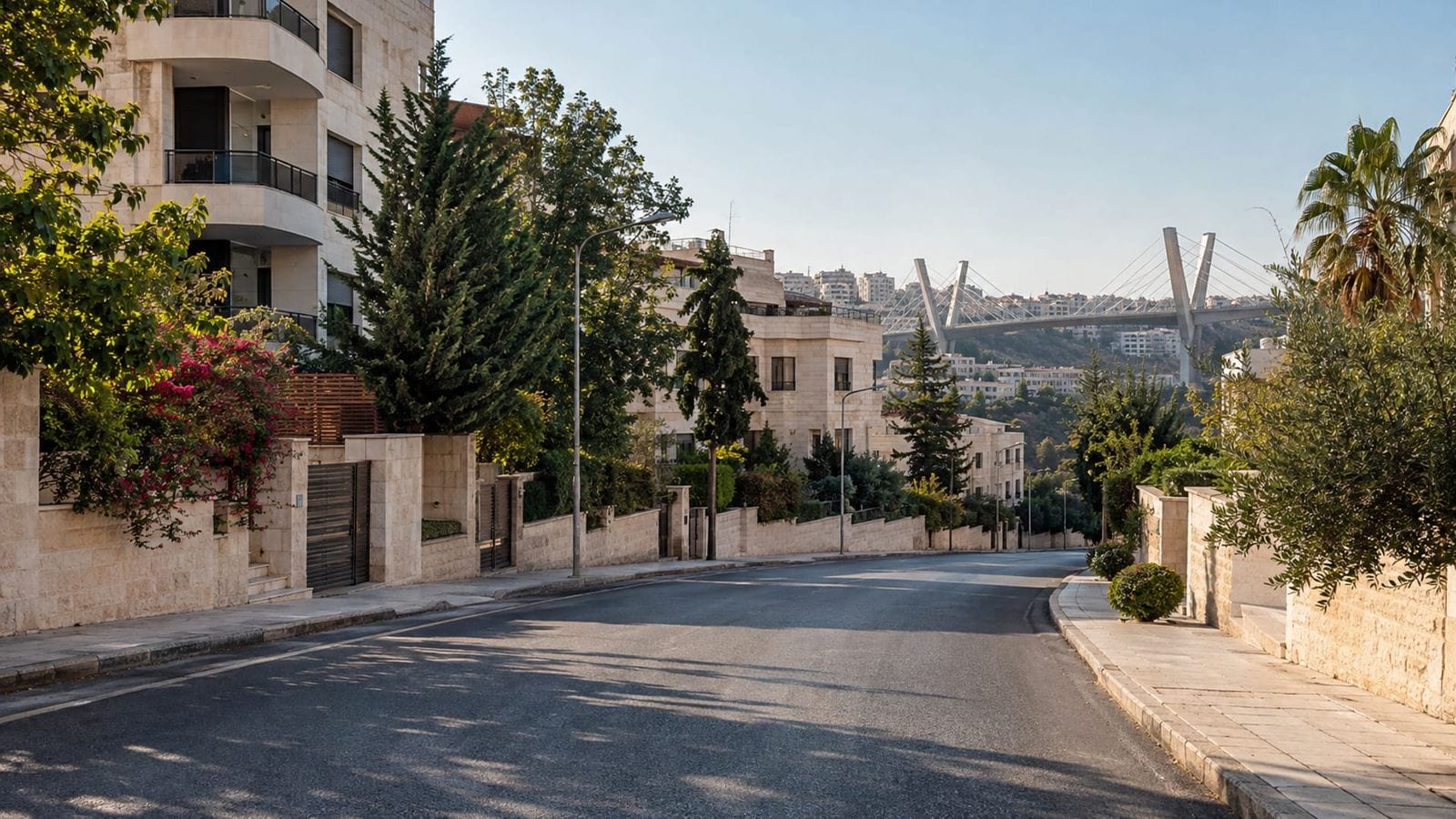
Abdoun is one of Amman’s upscale south-western districts, known for embassies, villas, shopping centers, and larger hotels. It suits travelers who want modern rooms, wider streets, and easy car access rather than a dense old-city setting closer to the historic hills.
Best for: Business trips, larger hotels, and travelers who prefer a modern residential setting
What to expect: Wide roads, shopping centers, and hotel arrivals dominate the area, with less pedestrian energy than central Amman
Hotel prices: Usually JOD 70 to JOD 180 ($99 to $254) per night for well-rated stays
Distance to major sights: 15 to 25 minutes by car to the Citadel, 20 minutes to Rainbow Street
Quietness: Abdoun is quieter than downtown during the day. The main roads are busy, and hotel zones can be noisy with late arrivals.
Main trade-off: You will usually need taxis or a car for most sightseeing and restaurant trips.
Good to know: Choose this area if you plan early departures or meetings, because traffic on the main roads is easier to manage than in the central hills.
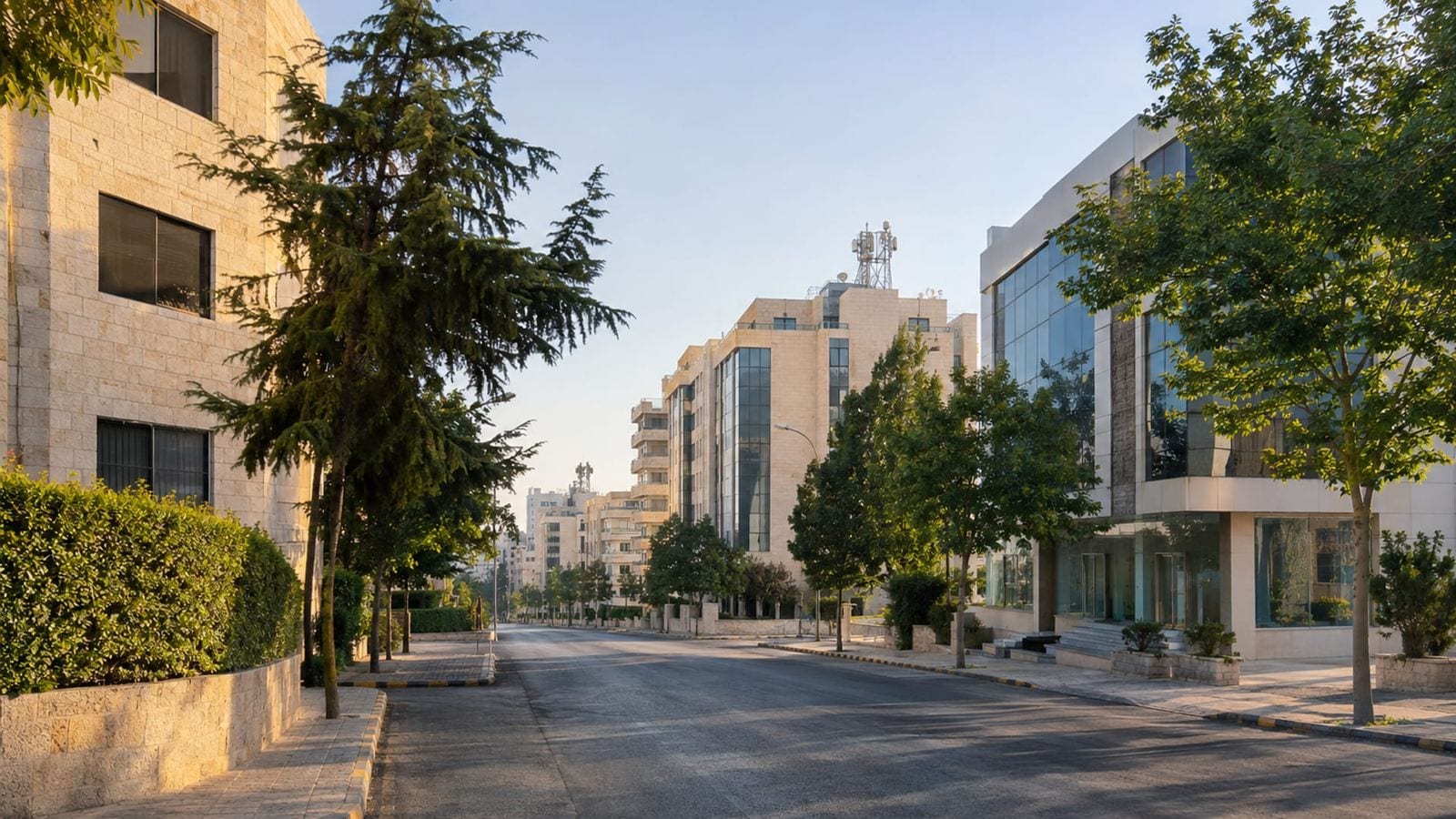
Shmeisani is a central commercial district of offices, mid-rise and high-rise hotels, and cafés near Amman’s main arteries. It suits travelers who want quick access to the city center, business addresses, and shopping without staying in the oldest neighborhoods.
Best for: Business travel, shopping, and access to central Amman by car or taxi
What to expect: Office workers by day, hotel guests and shoppers in the evening
Hotel prices: Usually JOD 55 to JOD 150 ($78 to $211) per night for well-rated stays
Distance to major sights: 10 to 15 minutes by car to downtown, 20 minutes to the Jordan Museum
Quietness: Busy on weekdays and calmer late at night, though traffic along the main roads stays noticeable
Main trade-off: The district is convenient, but it has fewer historic sights and a more commercial feel than hillside neighborhoods.
Good to know: If you are staying for only one or two nights, this is an efficient location, but choose a hotel away from the main road for lighter sleep.
Travelers usually avoid staying in Sahab, Al Jizah, and the far eastern industrial edges of Amman, because they are well outside the main sightseeing areas. Jabal al-Qal’a is also inconvenient, as it has fewer visitor-focused amenities.
Hotel deals
How to get around Amman efficiently
Amman has no metro, so most visitors pair walking with taxi rides for sightseeing and take the Airport Express bus when they need to reach Queen Alia International Airport (AMM).

Bus
for budget-friendly airport transfers
Airport Express buses connect Amman Airport (AMM) with the 7th Circle and North Bus Station every 30 to 60 minutes, with fares of JOD 3 to JOD 3.5 ($4 to $5). Local buses also serve nearby towns and central Amman, but they can be irregular and may not align well with late-night arrivals.

Rideshare services
for upfront pricing and card payment
Careem and Uber both operate in Amman. Within the city, fares are close to taxi rates, with the advantage of a fixed upfront price shown in the app. From the airport, rideshare fares are JOD 25 to JOD 40 ($35 to $56). Careem has many drivers across Jordan and is suitable for day trips beyond Amman.

Taxi
for airport transfers, hilltop districts, and late arrivals
Taxi rides from Amman Airport (AMM) cost JOD 20 to JOD 25 ($28 to $35) to central Amman and slightly more late at night or to destinations farther north. Taxis run on a taximeter with a JOD 0.35 base fare and JOD 0.60 per kilometer, rising 20% after 9:00 pm. Drivers prefer cash payments in Jordanian dinars.
*Prices are based on rates updated as of July 2026 and may change at the time of travel.
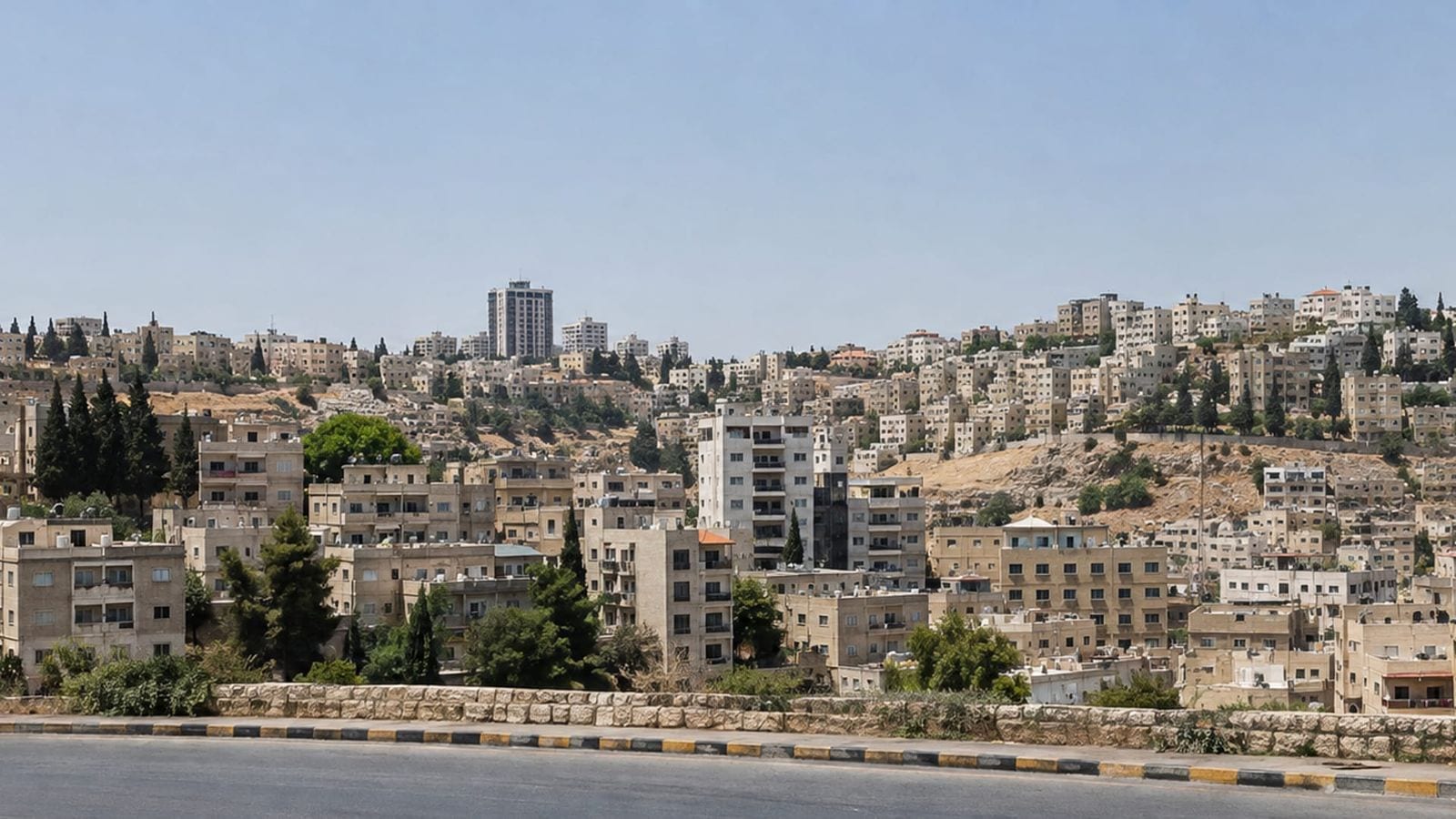
Taking a taxi is the easiest way to move between Amman’s hills and reach the airport, while walking is most suitable for sightseeing downtown and in Jabal Amman.
Iconic landmarks
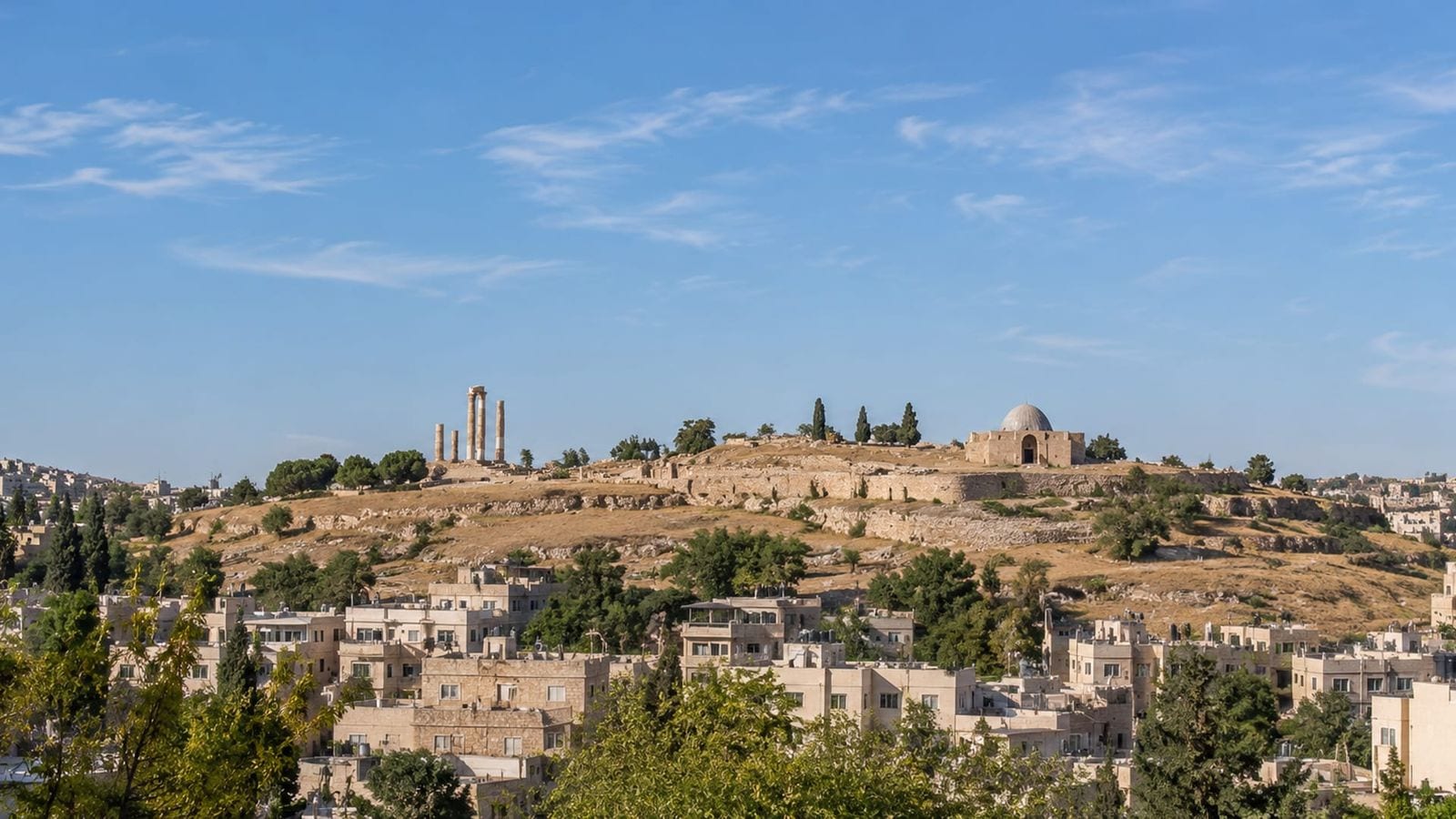
Citadel Hill
This hilltop site brings together the Temple of Hercules, the Umayyad Palace, and broad views over central Amman. Its ruined columns, stone foundations, and small museum trace the city’s long Roman, Byzantine, and Islamic history in one compact stop.
Time needed: 1 to 2 hours
Entry: Admission is JOD 3 ($4); the Jordan Pass covers entry, and the site sells tickets at the gate during opening hours. Visit the official site for details.
Tip: Go near sunset for cooler air, softer light, and far-reaching city views.
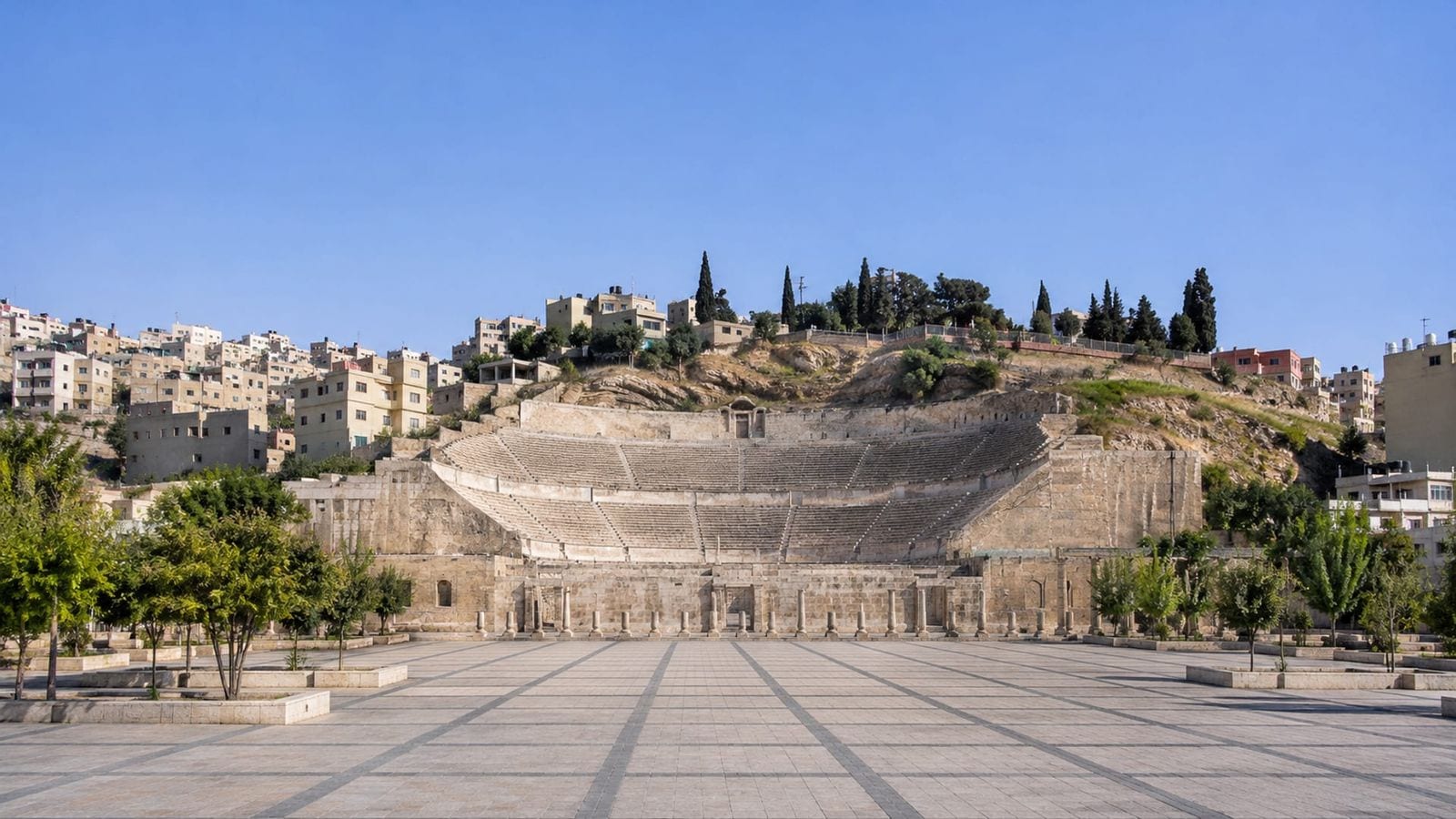
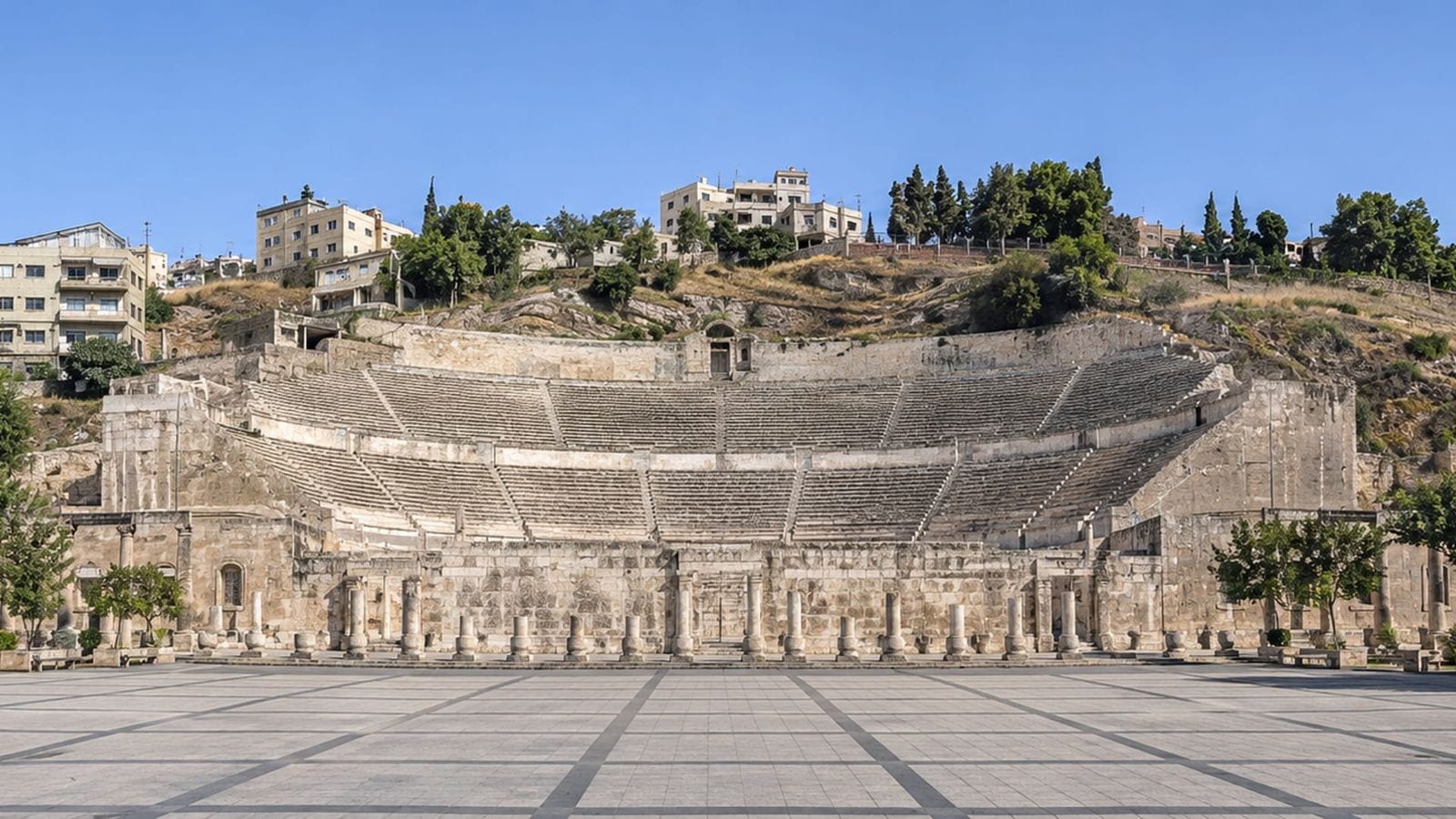
Roman Theater
This 6,000-seat Roman theater dates to the 2nd century and still anchors downtown Amman. Its steep stone tiers, restored stage, and small museums on site make it one of the city’s clearest links to the ancient district below.
Time needed: 45 minutes to 1 hour
Entry: Admission is JOD 2 ($3); the Jordan Pass covers entry, and the museum areas charge no separate fee.
Tip: Visit early morning to avoid heat and to photograph the seating without harsh glare.
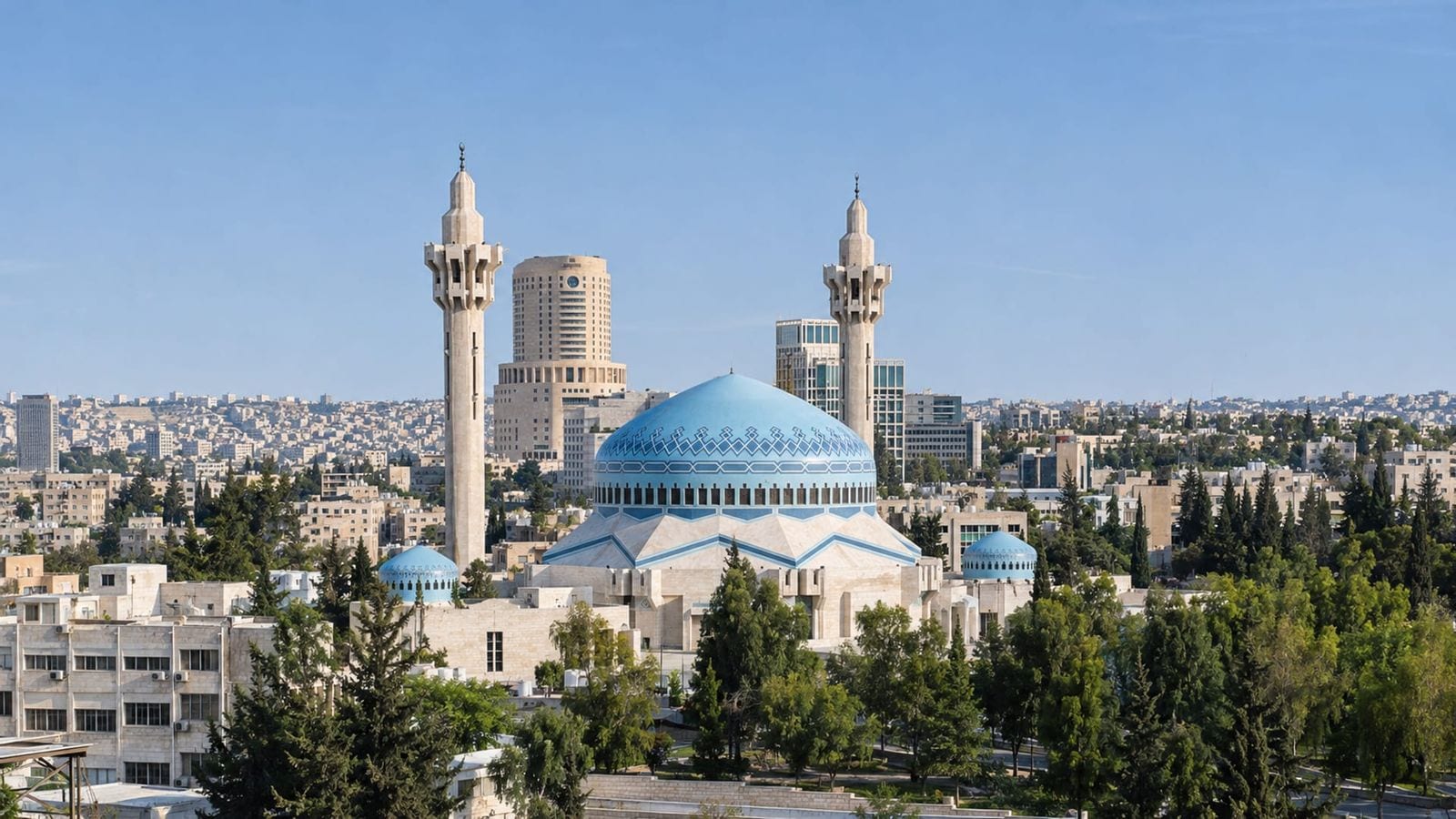
King Abdullah I Mosque
Completed in 1989, the blue-domed King Abdullah I Mosque is one of Amman’s best-known landmarks. Non-Muslim visitors can enter outside prayer times to see the prayer hall, Islamic museum, and wide plaza in the Abdali area.
Time needed: 30 to 45 minutes
Entry: Admission is JOD 2 ($3); modest dress is required, and non-Muslim visits are allowed outside prayer times only. Visit the official site for details.
Tip: Plan a midday visit on any day except Friday to avoid prayer-time closures and crowding.
Overlooked sites worth visiting

Darat al Funun
This cluster of restored houses and gardens on Jabal al Weibdeh has contemporary art exhibitions, a library, and terraces facing downtown Amman. The site is perfect for slow visits.
Time needed: 1 to 2 hours
Entry: Admission is usually free for exhibitions and the grounds. Special programs may charge a separate fee. Visit the official site for details.
Tip: Go late afternoon for cooler terraces and softer light.

Nymphaeum
This Roman fountain stands just off downtown and receives far fewer visitors than the Citadel or the Roman Theater. Its carved stone remains, columns, and shallow pools offer a compact stop with clear city history.
Time needed: 30 to 45 minutes
Entry: Free to access as a public archaeological site. Expect simple on-site information and open access during daylight hours.
Tip: Pair it with a morning downtown walk before the streets heat up.
Traditional food
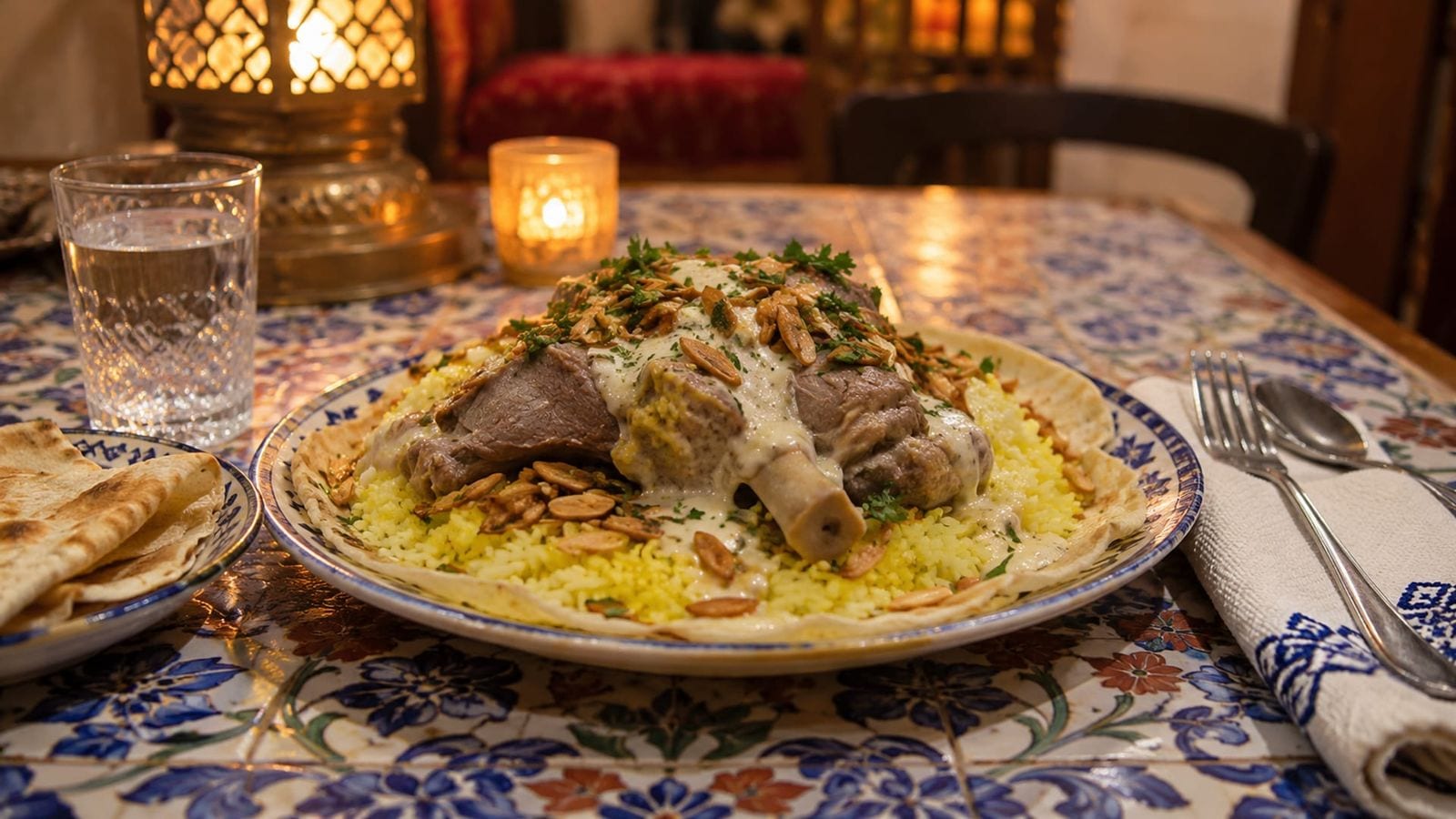
Amman’s cuisine centers on mansaf, falafel, hummus, and maqluba, with olive oil, yogurt, and warm spices shaping meals from breakfast through late dinner.
Mansaf
Jordan’s signature dish combines lamb, rice, and tangy jameed yogurt for a meal built to share. Sufra in Jabal Amman is a classic place to order it in a polished dining room with a strong local following.
Falafel
Crisp, herb-heavy falafel often anchors breakfast or a quick lunch in Amman. Hashem Restaurant in Downtown Amman is one of the city’s best-known stops for a simple plate with hummus, tomatoes, and pickles.
Hummus
Restaurants in Amman serve hummus as a daily staple, usually with warm bread, olive oil, and toppings that range from ful to pine nuts. Fakhreldin in Amman is a long-running reference point for a more formal version of the dish.
Maqluba
Maqluba turns rice, vegetables, and meat into an upside-down layered dish that arrives with a dramatic flip at the table. Ard Al Fakhar Restaurant is a dependable place in Amman to order an authentic version alongside other Jordanian classics.
Best time to visit Amman
Spring and autumn usually bring the most comfortable walking weather in Amman, while summer heat and winter rain change how long you can feel comfortable staying outside.
Best for: Clear skies, green hills, and long sightseeing days
What you get: 54°F to 82°F (12°C to 28°C), with moderate crowds and pleasant afternoons for walking
Trade-offs: Popular sights can feel busier on weekends and holidays.
Best for: Late starts, evening dinners, and hilltop views after sunset
What you get: 64°F to 90°F (18°C to 32°C), with lighter daytime crowds but more heat in open areas
Trade-offs: Midday visits to Citadel Hill and the downtown ruins can feel hot and tiring.
Best for: Balanced weather for museums, markets, and neighborhood walks
What you get: 57°F to 87°F (14°C to 31°C), with comfortable crowds and good conditions for full-day plans
Trade-offs: School holidays and weekend traffic can make rides across the city take longer.
Best for: Museum visits, cafés, and slower sightseeing days
What you get: 37°F to 58°F (3°C to 14°C), with lighter crowds and occasional rain
Trade-offs: Cold evenings and wet streets can make sightseeing less comfortable.
A realistic 5-day plan in Amman
Five days are enough to see the best parts of Amman when you cluster sights by district. The itinerary below starts with a stop downtown, then a ride to Citadel and Jabal Amman, and leaves space for culture, mosques, and one last easy morning before departure.
Land at Amman Airport (AMM), then take a taxi into the city center, roughly 30 to 45 minutes to Downtown Amman or Jabal Amman for JOD 20 to JOD 30 ($28 to $42), depending on traffic and your exact address. Stay near Rainbow Street or in Downtown if you want an easy first night on foot. Take time to settle in, then keep dinner close; you can have a simple mezze meal in Jabal Amman or a quick plate of falafel near the Roman Theater.
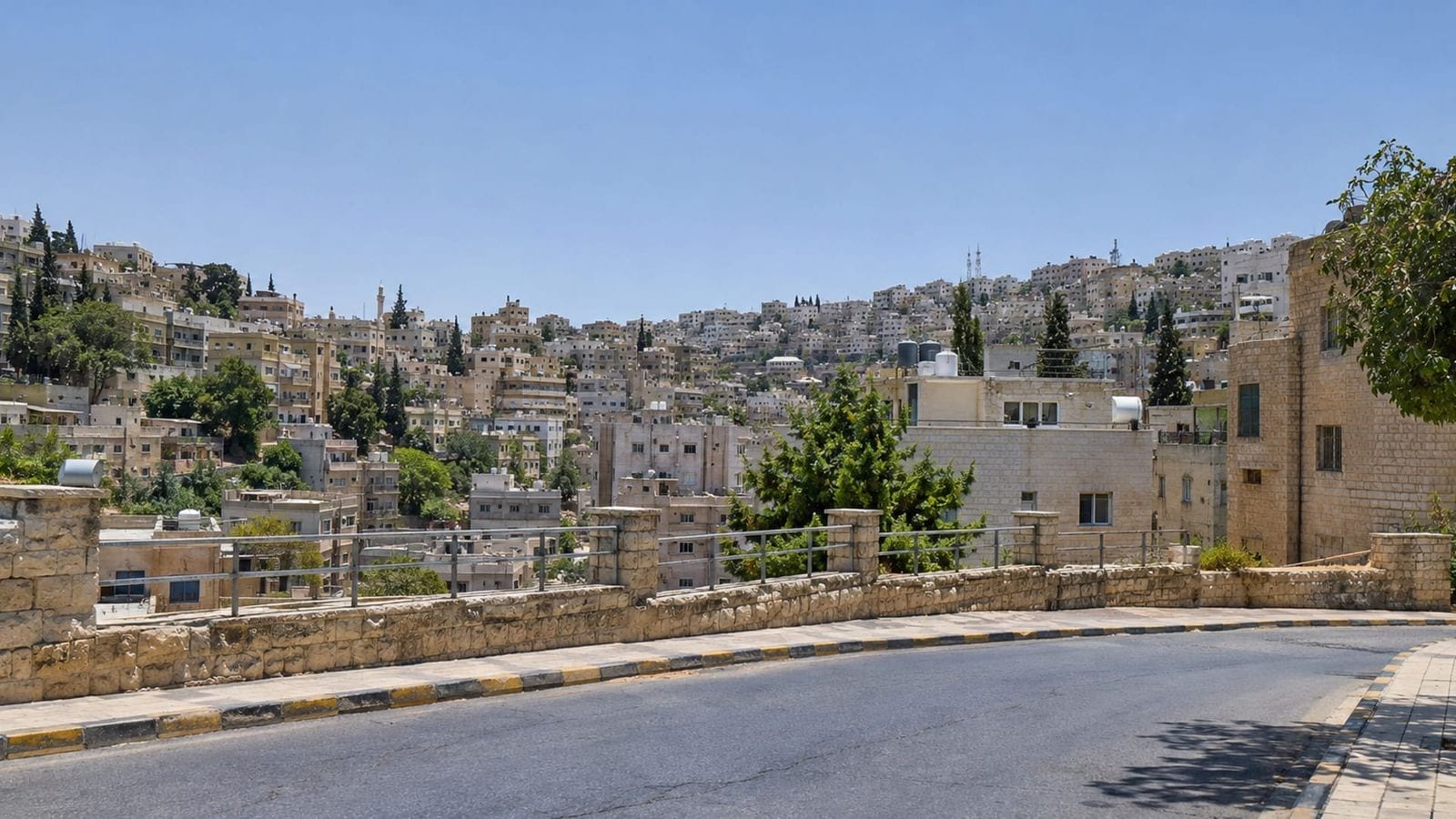
Start at the Roman Theater early, since it takes up to 1 hour to visit and stands in the heart of downtown, then walk 5 minutes to the Nymphaeum. From there, continue 10 minutes uphill or by taxi to Citadel Hill and spend 1 to 2 hours there, enjoying the broad city views and the sights of the Temple of Hercules. Then, head back down for an easy late lunch and market browsing. End the afternoon with a taxi ride of 15 minutes to Jabal Amman for dinner on Rainbow Street.
Begin in Jabal Amman, then spend 15 minutes on foot reaching Darat al Funun on Jabal al Weibdeh for a slow visit through the restored houses, terraces, and exhibition spaces. After that, take a 10-minute taxi ride to the King Abdullah I Mosque in the Abdali area, timing your visit for midday outside prayer hours; spend up to an hour inside, taking in the intricate details of the mosque. In the evening, linger in the cafés near Rainbow Street or return to your hotel for dinner.
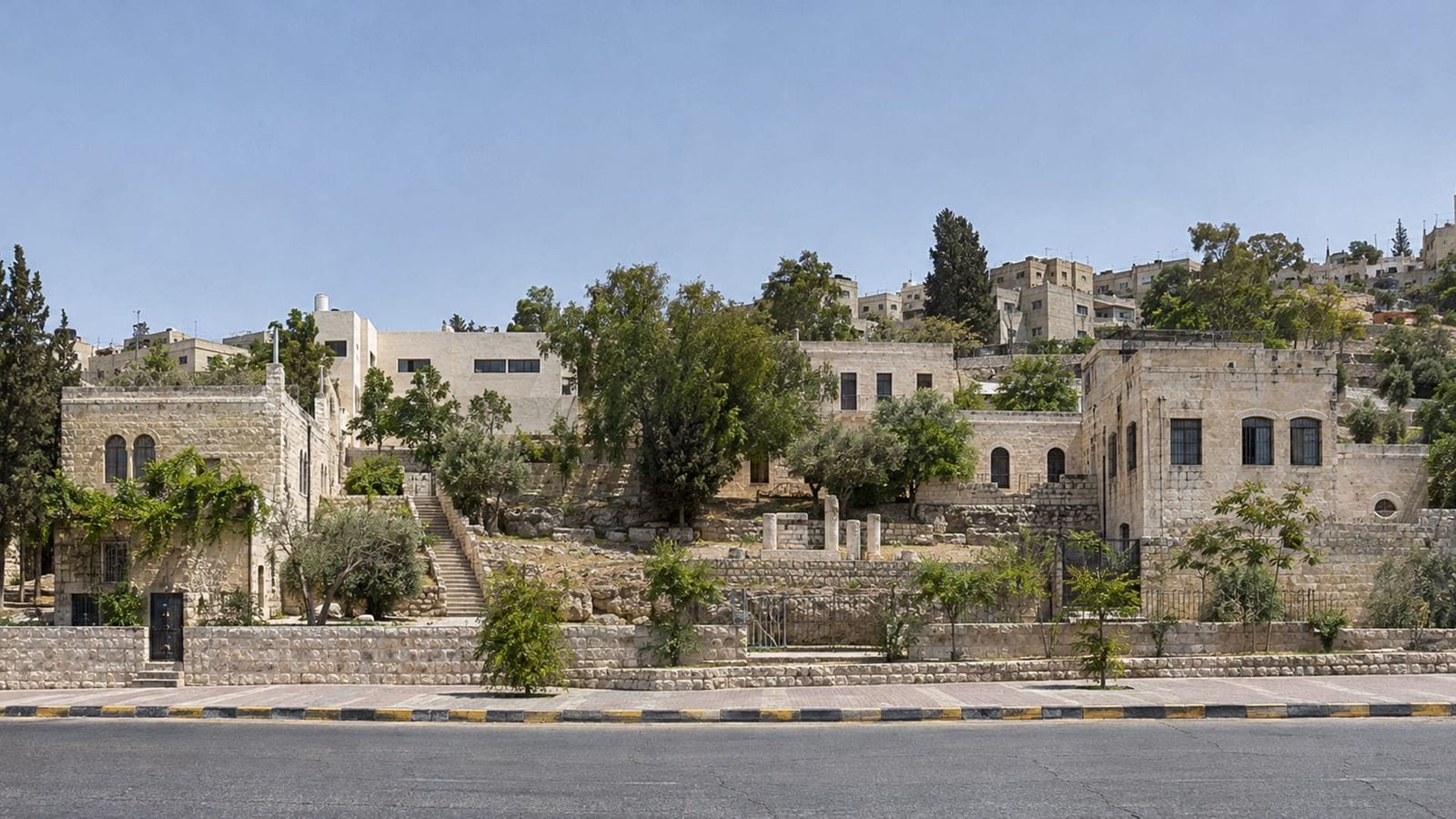
Head to Citadel Hill near sunset for the clearest light and the longest views across central Amman, then allow 1 to 2 hours on site before dinner. From there, it is usually 10 to 15 minutes by taxi to Downtown Amman, where you can follow the hilltop visit with a relaxed meal near the souks or a second stop in Jabal Amman. If you want one more short walk, the route from the Citadel to the old city takes 20 minutes on foot. If you find the streets too steep, you can take a short taxi ride instead.
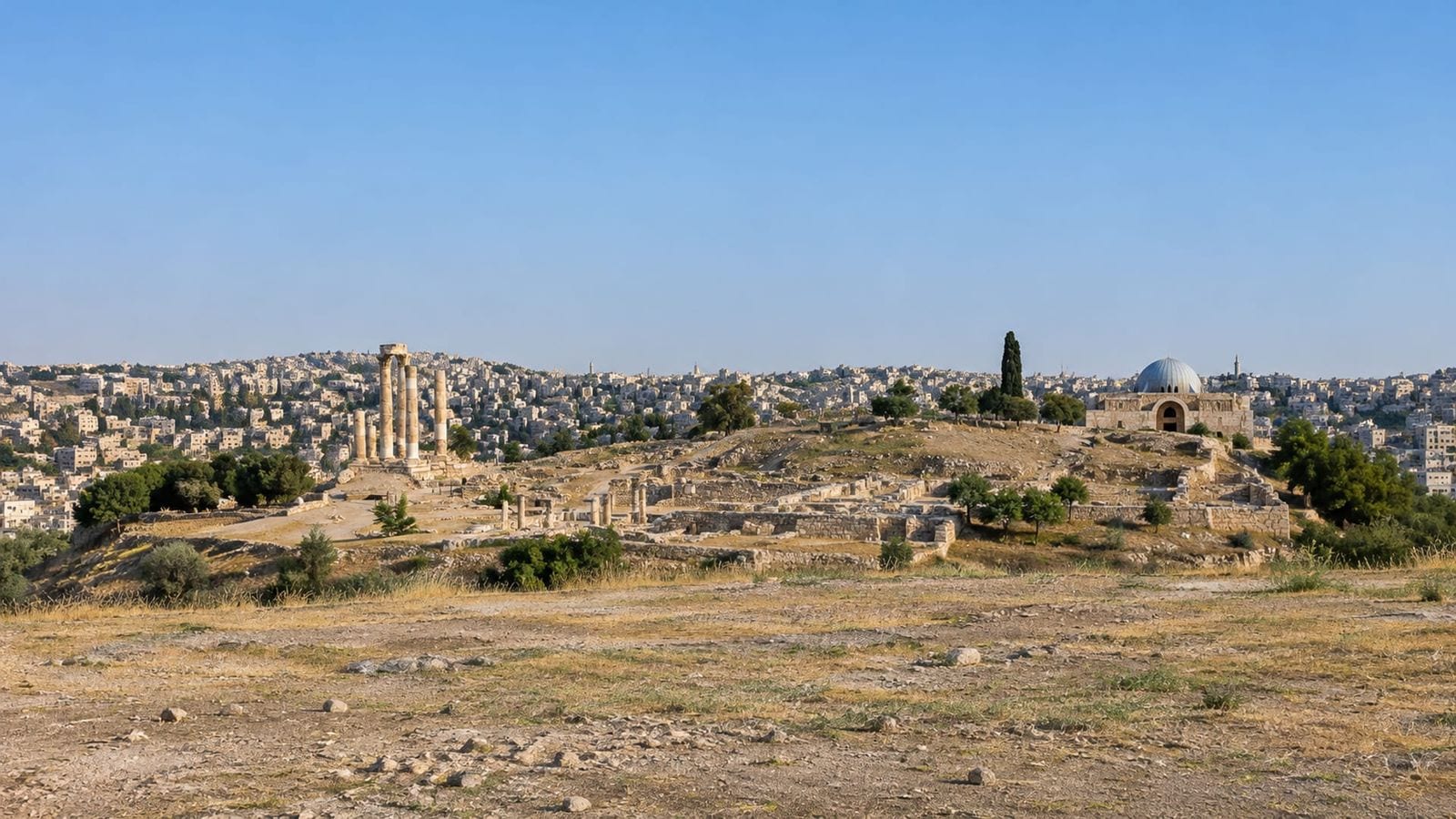
Before you head to Amman Airport (AMM), spend an easy morning in Abdali or Shmeisani, with a short museum stop, shopping center visit, or coffee break. If you have a late flight, a final hour in Jabal Amman gives you time for a cafe stop, while Downtown Amman works if you want a last stroll through the market lanes and a quick lunch. Plan to leave for the airport early, since the drive there usually takes 30 to 45 minutes.
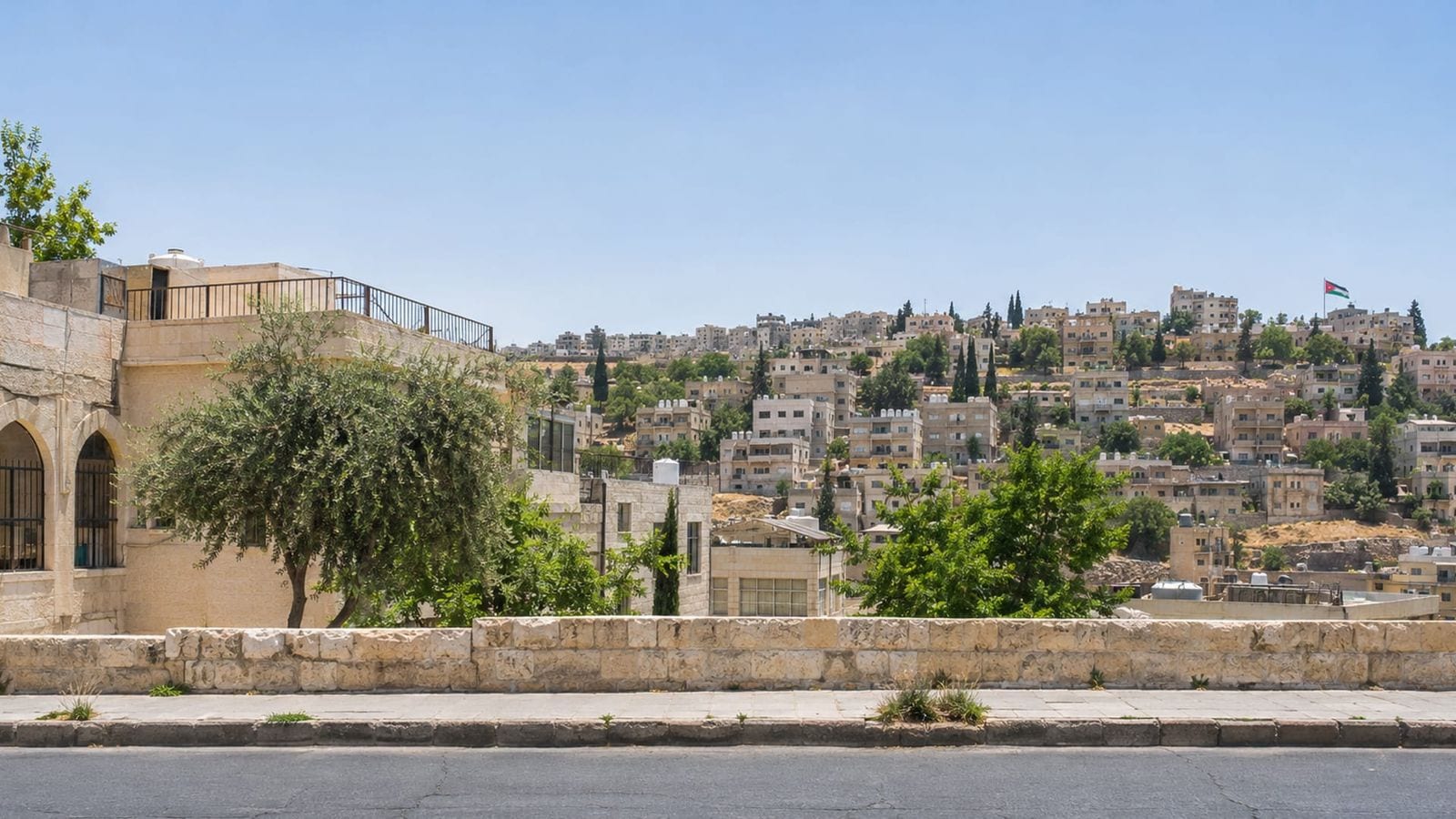
Business-class flights from the US to Amman
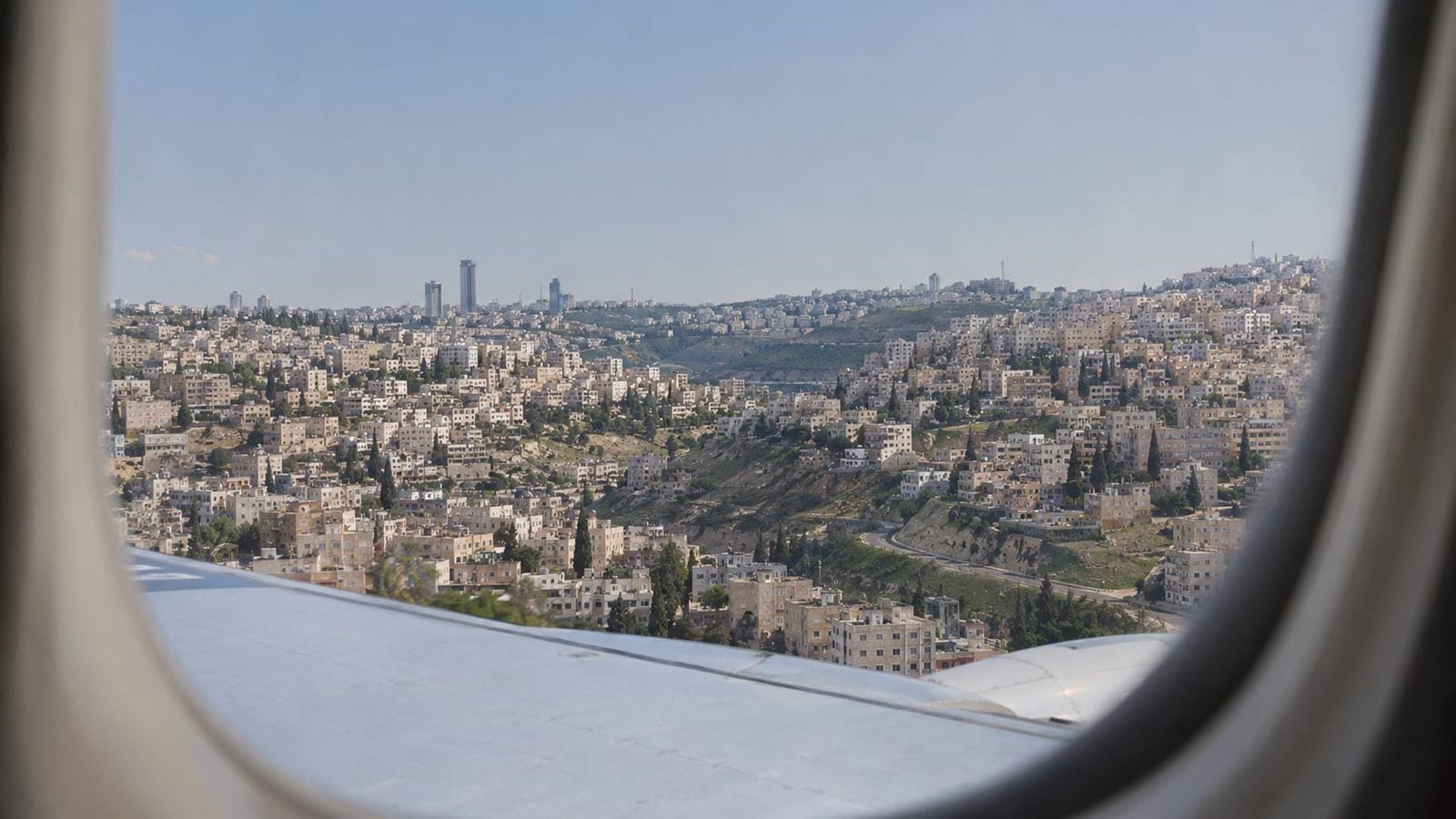
Most US travelers to Amman connect through a Gulf or European hub, with total journey times varying depending on the departure city and connection point.
New York (JFK) to Amman (AMM)
Royal Jordanian operates the only nonstop flight from New York to Amman, with a flight time of approximately 11 to 12 hours. Turkish Airlines, Emirates, Qatar Airways, Lufthansa, and other carriers offer one-stop itineraries through cities such as Istanbul (IST), Dubai (DXB), Doha (DOH), Frankfurt (FRA), or Zurich (ZRH). These connecting journeys typically take 14 to 20 hours in total. Round-trip business-class fares usually range from $3,500 to $7,500.
Los Angeles (LAX) to Amman (AMM)
There are no nonstop flights from Los Angeles to Amman. Royal Jordanian, Turkish Airlines, Emirates, Qatar Airways, Lufthansa, and other carriers offer connecting itineraries, commonly through Istanbul (IST), Doha (DOH), Dubai (DXB), Frankfurt (FRA), or Zurich (ZRH). Total journey times typically range from 17 to 24 hours, while round-trip business-class fares usually range from $4,200 to $8,500. Some one-stop options through Istanbul, Doha, or Dubai may cost less than itineraries with longer or multiple connections.
Amman feels different when you slow down
A good Amman trip has a clear map: Downtown for the Roman Theater and Nymphaeum, Jabal Amman for Rainbow Street dinners, the Citadel at sunset, and a taxi back when the hills start to feel steep. Add a midday stop at the King Abdullah I Mosque or Darat al Funun, and the city begins to come together as connected neighborhoods instead of isolated landmarks. If you want help shaping the trip, our experts at AranGrant can find the right business-class flights and hotels to match your dates and pace.







