

Chapters:

Need help with your trip?
Our support team is available 24/7. Request a callback or call us directly at (833) 619-0908
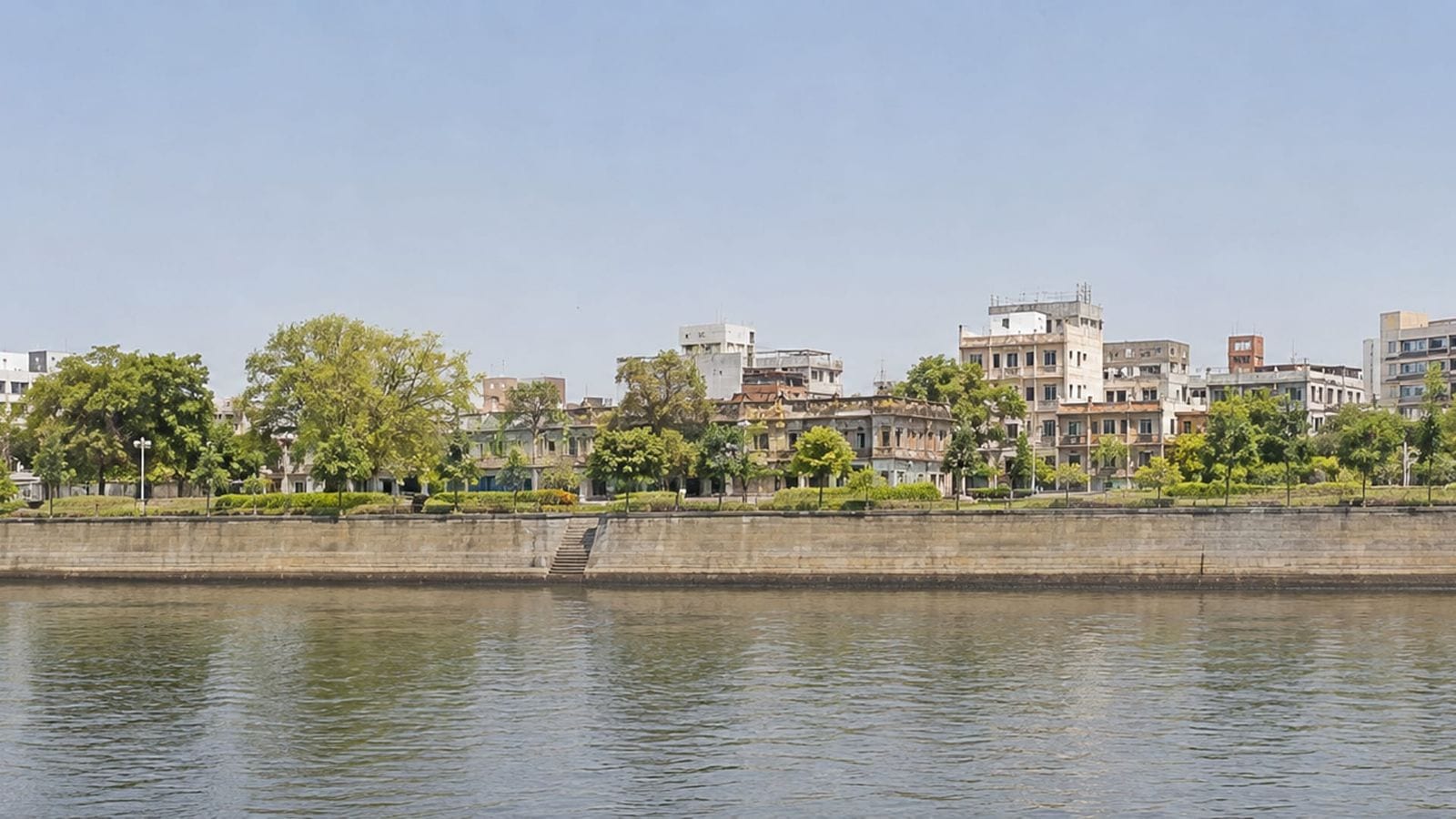
Ahmedabad was founded in 1411 by Sultan Ahmed Shah on the banks of the Sabarmati River, and that history never really receded into the background the way it has in many Indian cities. Mosques from the Gujarat Sultanate still hold daily prayers, textile traditions that made the city a manufacturing hub are preserved in working museums, and Gandhi’s ashram sits a short walk from where he actually lived and worked. It’s also a city that punishes bad timing, with heat that shuts down outdoor plans by midday and sights that run on their own hours rather than a tourist’s.
This guide covers where to stay, what to eat, when to go, and how to spend five days in Ahmedabad.
Useful things to know

Main language(s): Gujarati, Hindi
Kem cho? (keh-m cho) – Hello / How are you?
Maherbani (mah-her-baa-nee) – Please
Aabhar (aa-bhaar) – Thank you
Aap angrezi bolo chho? (aap un-greh-zee bol-o cho) – Do you speak English?
Ketlu thay? (ket-loo thay) – How much does it cost?

Currency: Indian rupee (INR, ₹)

Cash and cards: Cards and contactless are widely accepted, but keep about ₹1,000 to ₹2,000 ($12 to $24) in cash for small buys and taxi rides.

Tipping: Round up small bills; leave 5% to 10% at restaurants if service is good.

Traditional food: Dhokla, khandvi, fafda-jalebi, undhiyu

Water and coffee costs: Water about ₹20 to ₹40 ($0.25 to $0.50), bar espresso about ₹150 to ₹250 ($1.80 to $3)

Taxis and ride apps: Uber and Ola operate here; book from the airport stand or app.

Plug and voltage: Type C/D/M socket, 230V

Dining and shop opening hours: Breakfast is served from 8:00 am to 10:00 am, lunch 1:00 pm to 3:00 pm, and dinner 8:00 pm to 10:30 pm. Many restaurants close between lunch and dinner.

Emergency number: 112 for police, fire, and medical emergencies
Where to stay in Ahmedabad
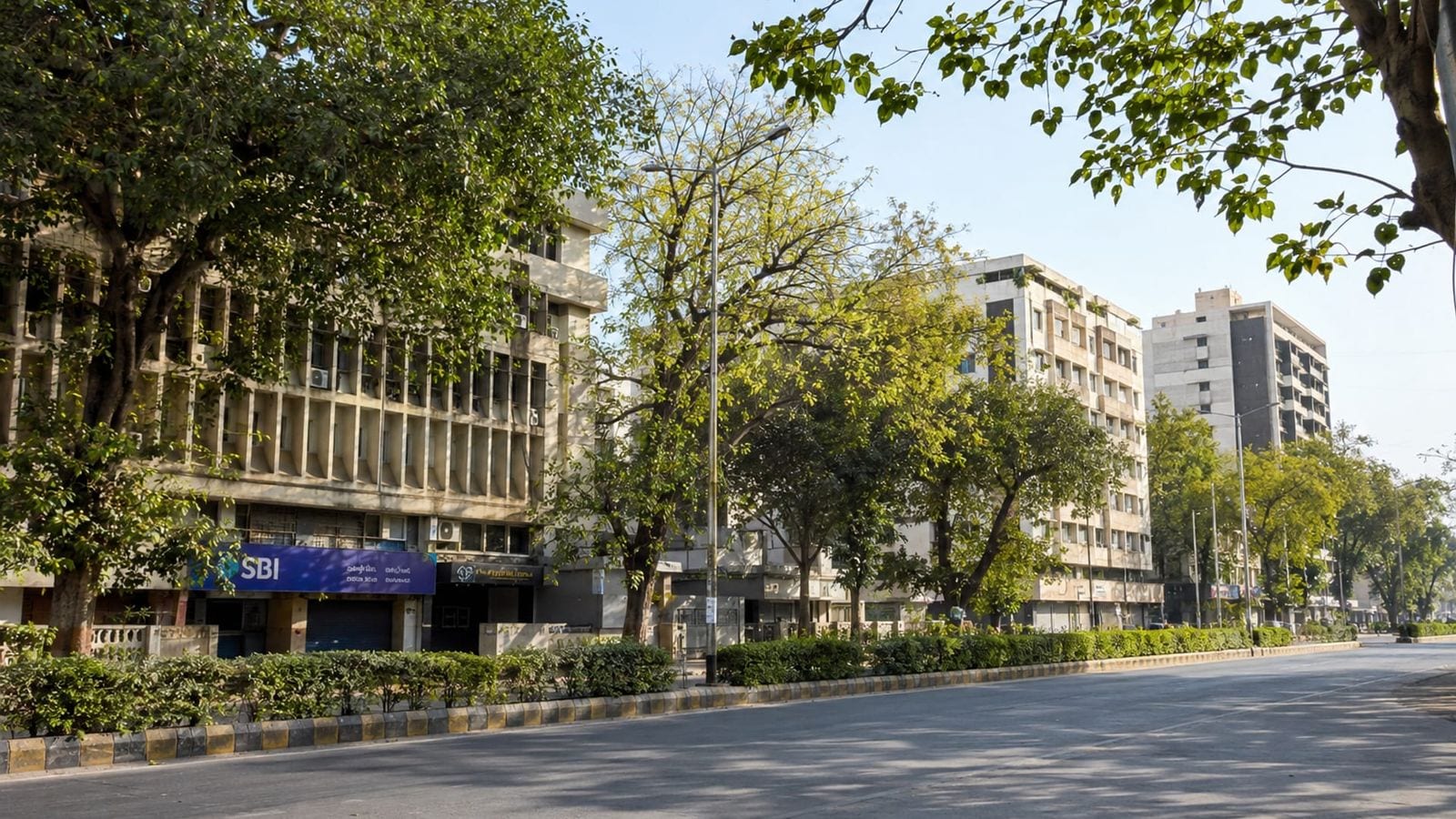
Navrangpura has Gujarat University’s 300-acre campus on one side and CG Road’s shops and cafes running through the middle. In the evening, Law Garden’s market fills nearby streets with handicraft stalls and the smell of frying fafda and jalebi.
Best for: Business travel, dining, and access to central Ahmedabad
What to expect: Busy streets by day, with office traffic, students, and steady restaurant activity in the evening.
Hotel prices: Usually about ₹4,500 to ₹9,000 ($54 to $108) per night for well-rated stays
Distance to major sights: About 15 to 20 minutes by taxi to Sabarmati Riverfront and 10 to 15 minutes to Sabarmati Ashram
Quietness: Lively in the day, then somewhat calmer after office hours, although main roads still carry traffic at night
Main trade-off: You gain central access, but the area can feel traffic-heavy and rates rise near CG Road and peak business dates.
Good to know: SP Stadium metro station is right in Navrangpura, an easy way to skip road traffic when heading across the city.
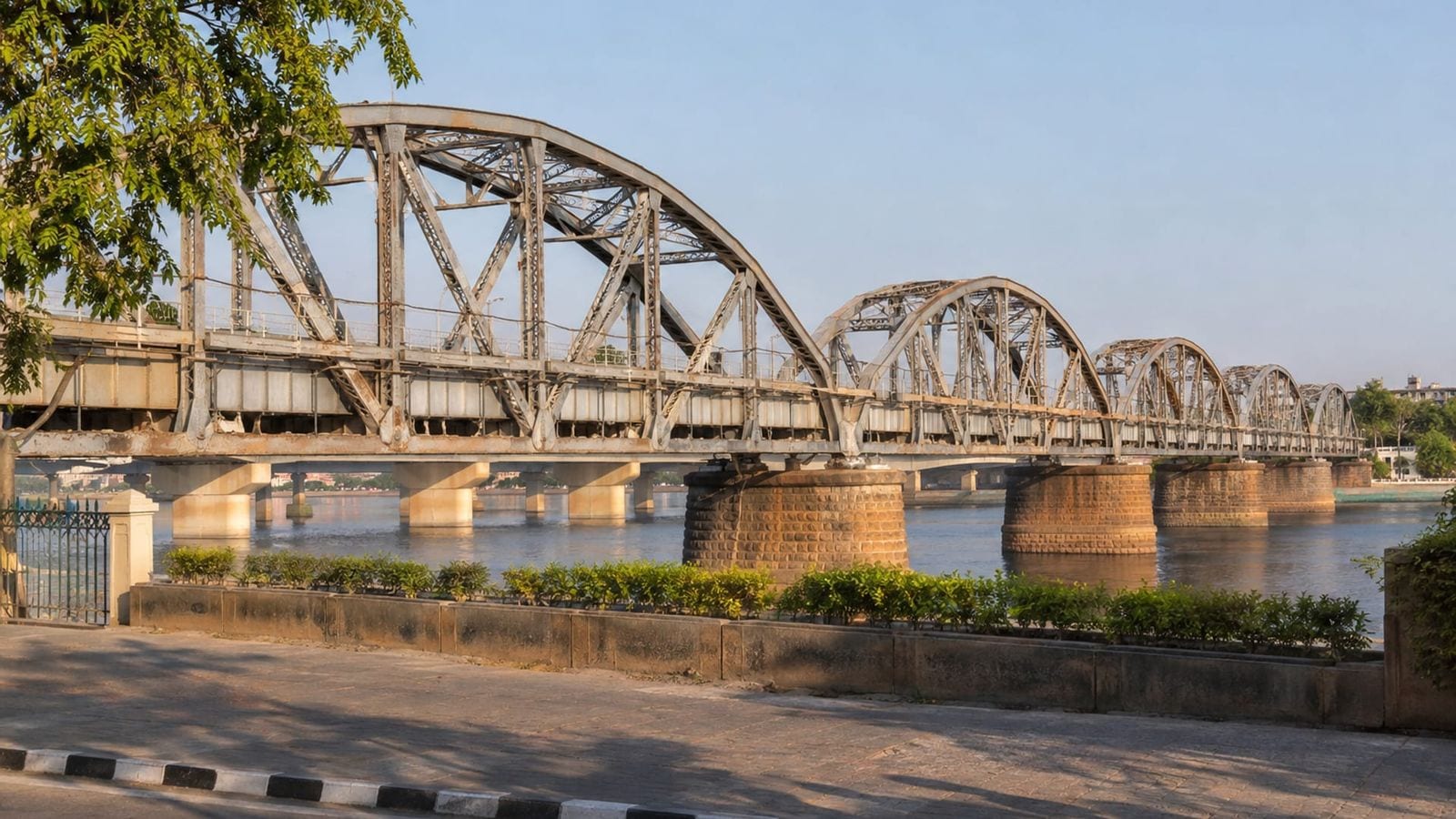
Ellis Bridge has Le Corbusier’s Sanskar Kendra museum and busy commercial streets running along the Sabarmati River, with offices, midrange hotels, and heritage buildings packed close together.
Best for: Heritage sightseeing, short business trips, and access to public transport
What to expect: Constant traffic, mixed office and hotel footfall, and an urban pace that stays active into the evening
Hotel prices: Usually about ₹4,000 to ₹8,500 ($48 to $102) per night for well-rated stays
Distance to major sights: About 10 to 15 minutes by taxi to Sabarmati Riverfront and 15 to 25 minutes to Bhadra Fort
Quietness: Moderately busy by day, with less noise late at night once offices close, although arterial roads stay active
Main trade-off: The location is central, but the area is more about access than atmosphere, and premium rooms can cost more than in farther districts.
Good to know: Bhadra Fort is close enough to walk to from most hotels here, saving a taxi ride if you’re comfortable with a short walk in the heat.
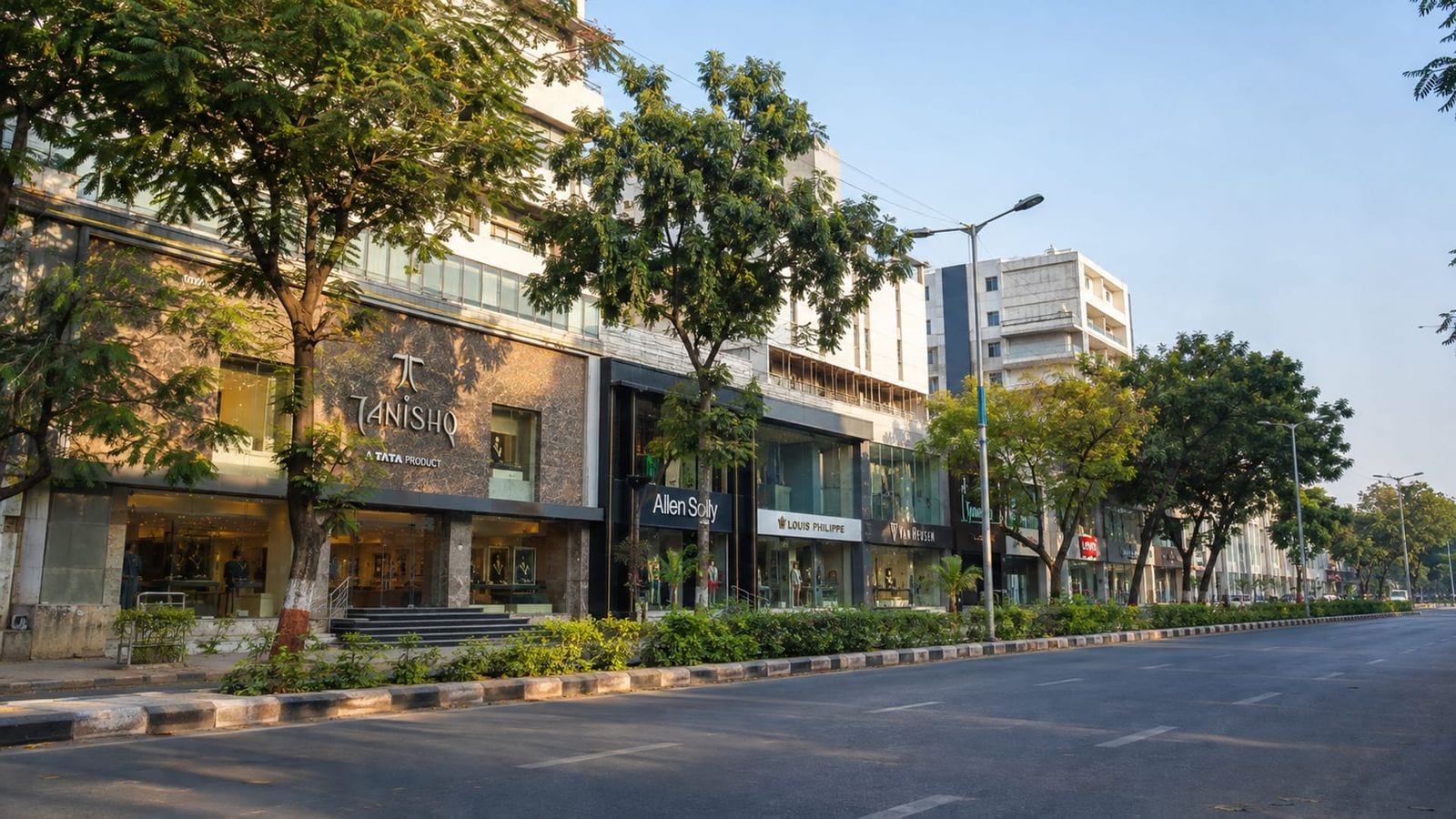
CG Road is Ahmedabad’s main retail and office corridor, once ranked third in the world for retail rental growth, lined with malls, showrooms, and corporate towers end to end. Hotels and restaurants fill in the side streets branching off it.
Best for: Shopping, dining, and travelers who want a central modern base
What to expect: Heavy daytime traffic, active storefronts, and a steady flow of shoppers and office workers from morning until night
Hotel prices: Rooms here typically run ₹5,000 to ₹10,500 ($60 to $126) a night.
Distance to major sights: About 15 minutes by taxi to Sabarmati Riverfront and 20 to 30 minutes to the old city gates
Quietness: Noisy through the day and into the evening, then lighter late at night away from the main road
Main trade-off: Traffic can slow short rides, and the busiest blocks are not the quietest sleeping option.
Good to know: CG Road closes to traffic on Sunday mornings for Happy Street, a car-free event with food stalls and fitness sessions.
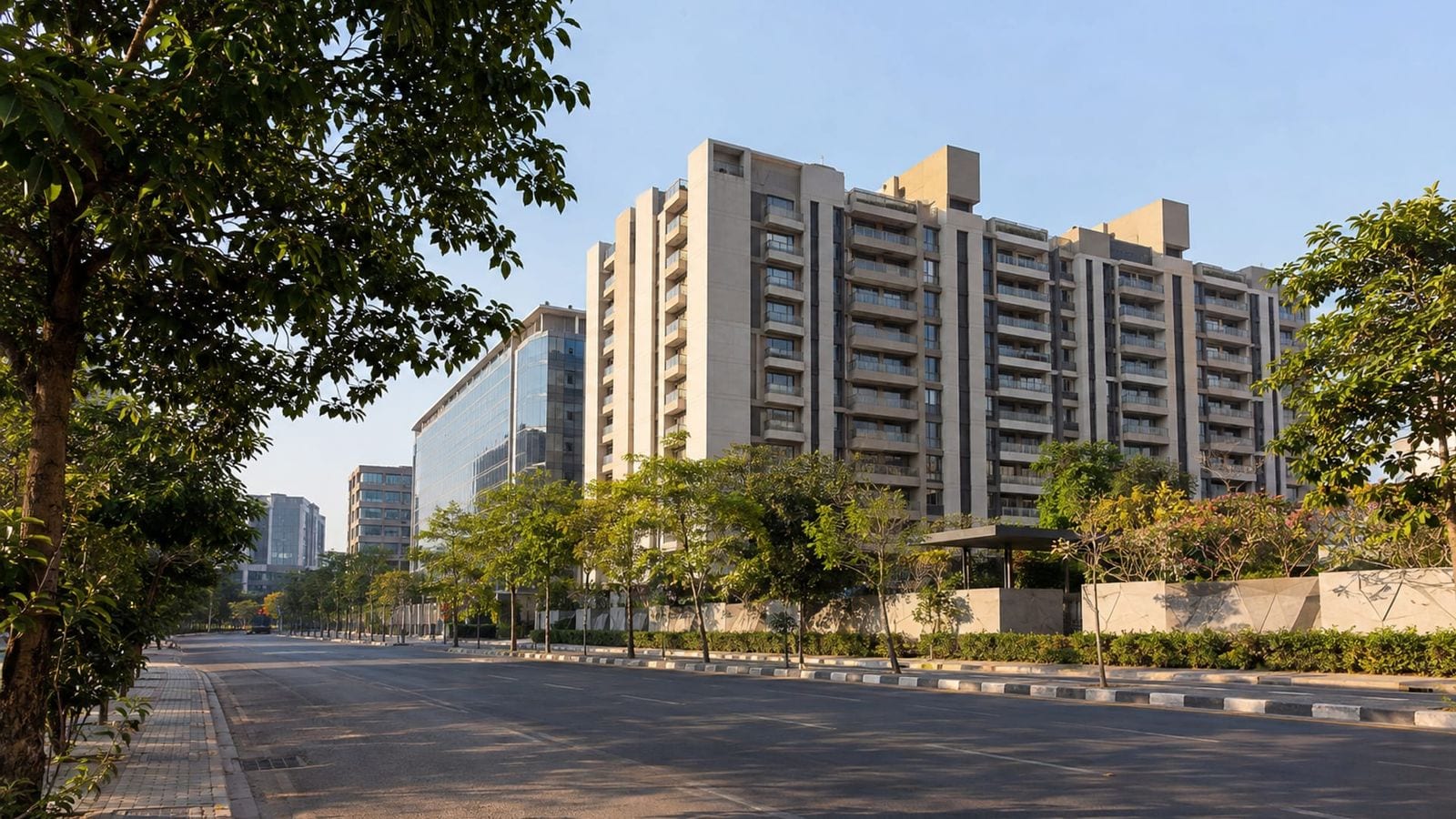
Prahlad Nagar Road is full of corporate offices, with Prahlad Nagar Garden as a public park and walking track right in the middle of it. International hotel chains like Novotel and Crowne Plaza operate here too, close to SG Highway.
Best for: Business trips, newer hotels, and travelers with car-based plans
What to expect: Wide roads, office parks, malls, and a more suburban feel than central Ahmedabad, with less street-level chaos after dark.
Hotel prices: Rooms here generally cost ₹4,500 to ₹9,500 ($54 to $114) per night at well-rated properties.
Distance to major sights: About 25 to 35 minutes by taxi to Sabarmati Ashram and 30 to 40 minutes to Bhadra Fort
Quietness: Fairly calm in the evening compared with central areas, although traffic builds during commuting hours.
Main trade-off: The area offers newer properties, but you will spend more time in the car for heritage sights and old-city dining.
Good to know: Alpha One Mall and Iscon Mall are both a short drive away if you want to go shopping or catch a movie in the evening.
Avoid Bapunagar, Odhav, Vatva, and Naroda, industrial zones east of the city, and the far western stretch of SG Highway. Both are well outside the main sightseeing and dining areas.
Hotel deals
How to get around Ahmedabad efficiently
Getting around Ahmedabad usually means combining walking, taxis, buses, and the metro, depending on where you’re starting from and how far you need to go.

Metro
for longer distances
The metro covers the Blue, Red, Yellow, and Violet lines, connecting central Ahmedabad out to Gandhinagar and GIFT City. Fares are distance-based, from ₹5 ($0.05) for a short hop up to ₹25 ($0.26) for the longest single trip, and there’s a ₹100 ($1.04) day pass for unlimited rides, which is great if you’re sightseeing.

Bus
for convenience
AMTS runs the city’s regular bus routes, while BRTS operates faster buses along dedicated lanes on major roads. Fares depend on distance and are ₹5 to ₹30 ($0.05 to $0.35) for a single ride. You may need a short auto-rickshaw ride to reach a bus stop at either end of your trip.

Taxi
for convenience or late hours
Taxis at Ahmedabad Airport (AMD) charge either a metered fare or an app-based rate, not a flat price. A ride to central Ahmedabad usually costs about ₹400 to ₹950 ($4 to $10), depending on traffic and your exact destination.
*Prices are based on rates updated as of July 2026 and may change at the time of travel.
Use the metro for city travel once you’re away from the airport. Take a taxi for airport runs and late-night trips. Buses are the cheapest option on major roads. Walk in the old city, where the streets and monuments are close together.
Iconic landmarks
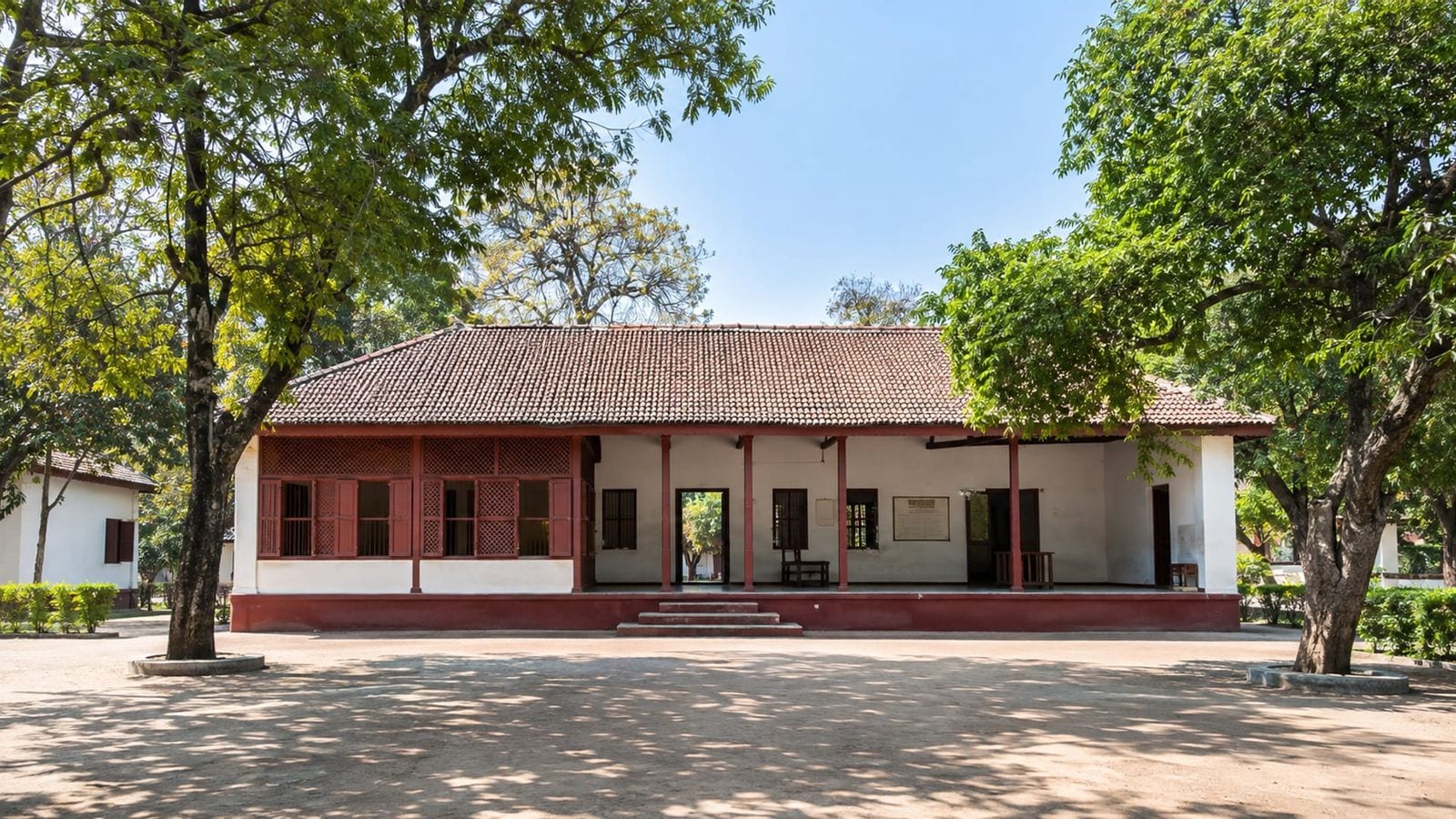
Sabarmati Ashram
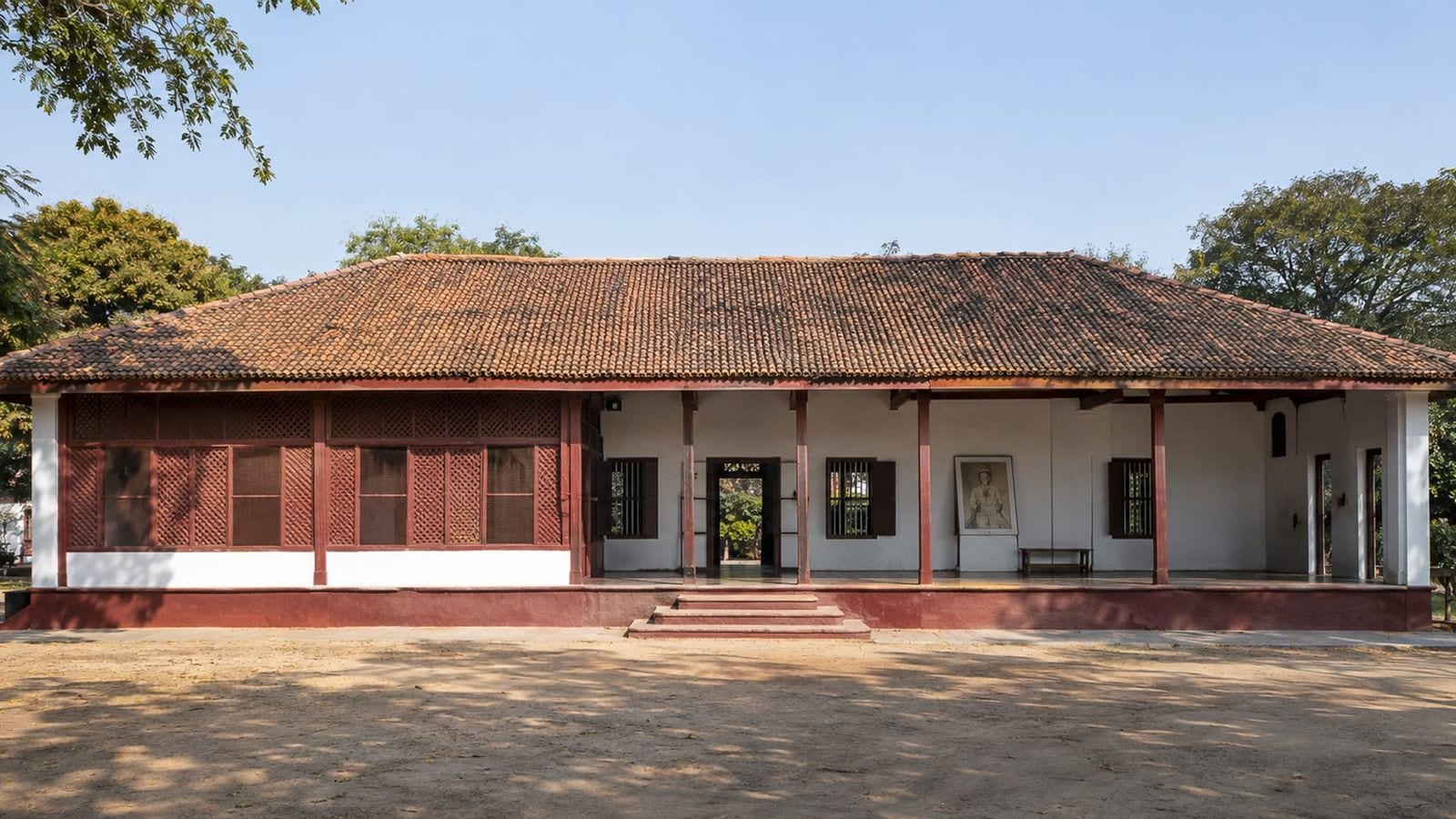
Gandhi lived at this ashram on the Sabarmati River from 1917 to 1930, and launched the Dandi March against the British salt tax from here. His cottage, Hriday Kunj, still stands, along with a museum holding his letters, photographs, and personal belongings.
Time needed: About 1 to 2 hours
Entry: Admission is free Visit the official site for details.
Tip: The museum stops admitting visitors at 6:00 pm sharp, so arrive early.
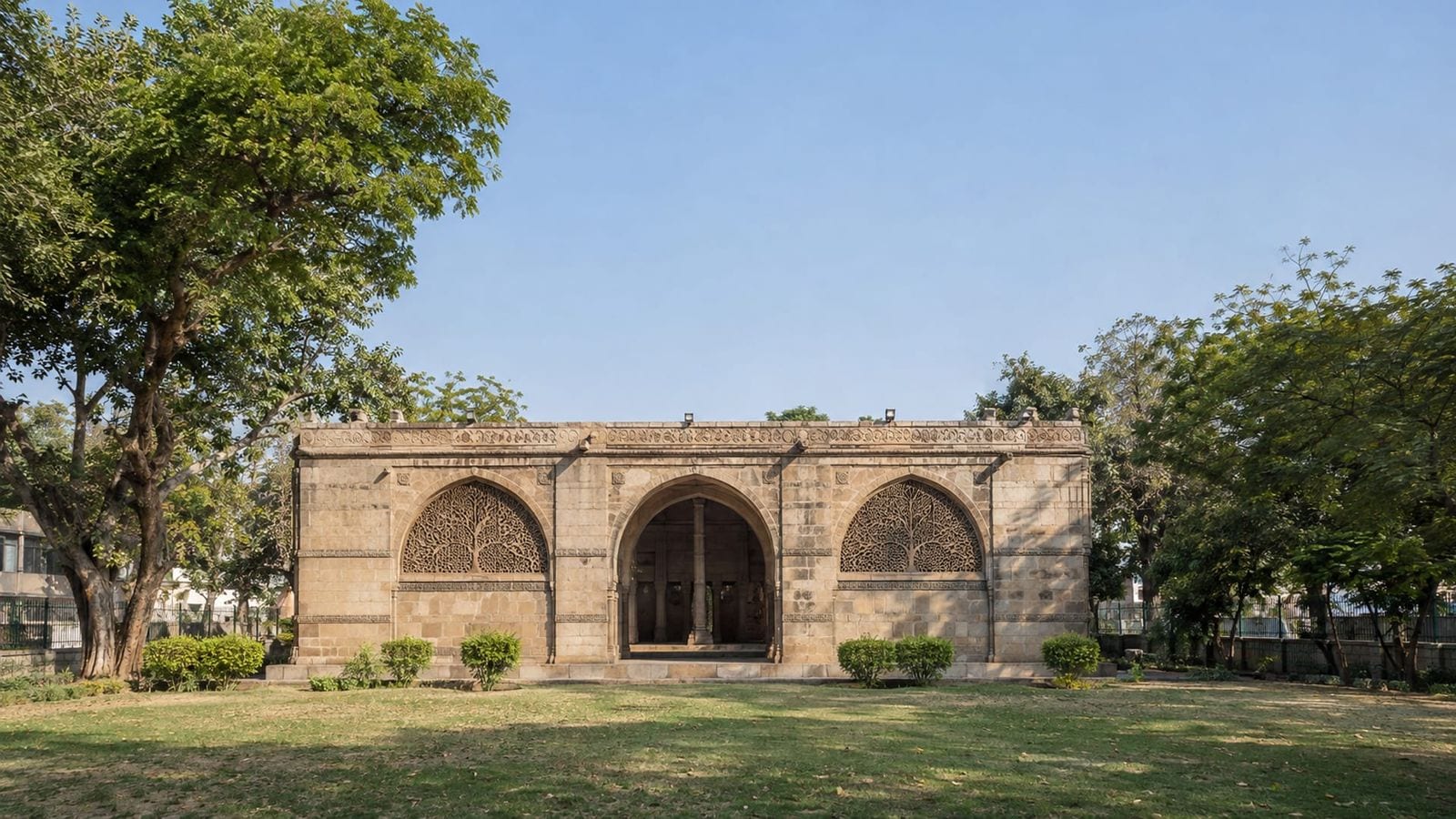
Sidi Saiyyed Mosque
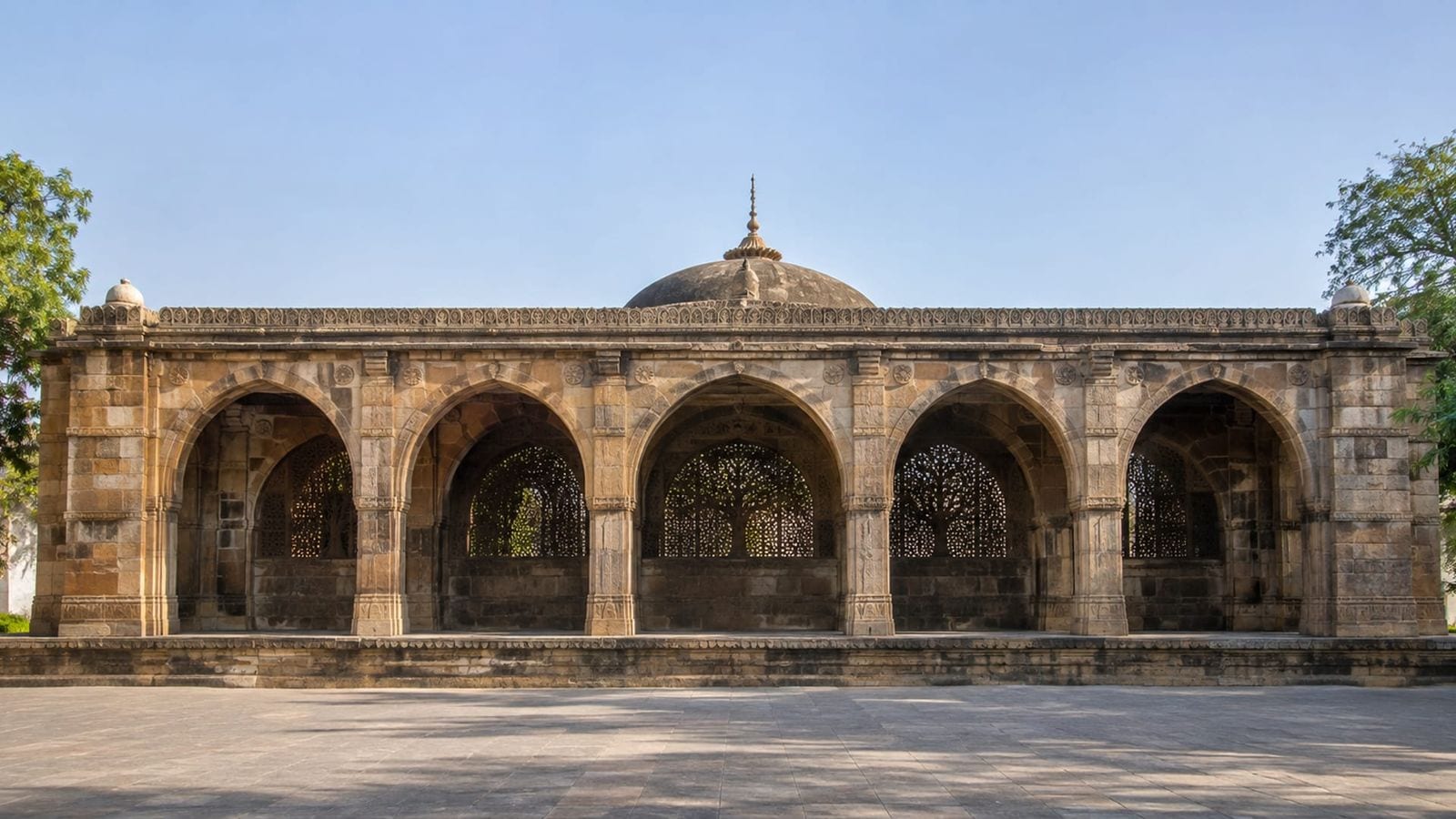
Built in 1572, this mosque has ten carved stone jali windows, the most famous depicting a tree with intertwining branches. That design inspired the IIM Ahmedabad logo and now stands as the unofficial symbol of the city.
Time needed: About 30 to 45 minutes
Entry: Free. Dress modestly, remove your shoes before entering, and check locally for prayer-hour access limits.
Tip: Go in late afternoon, when the western sun passes through the lattice and lights up the carving from behind.
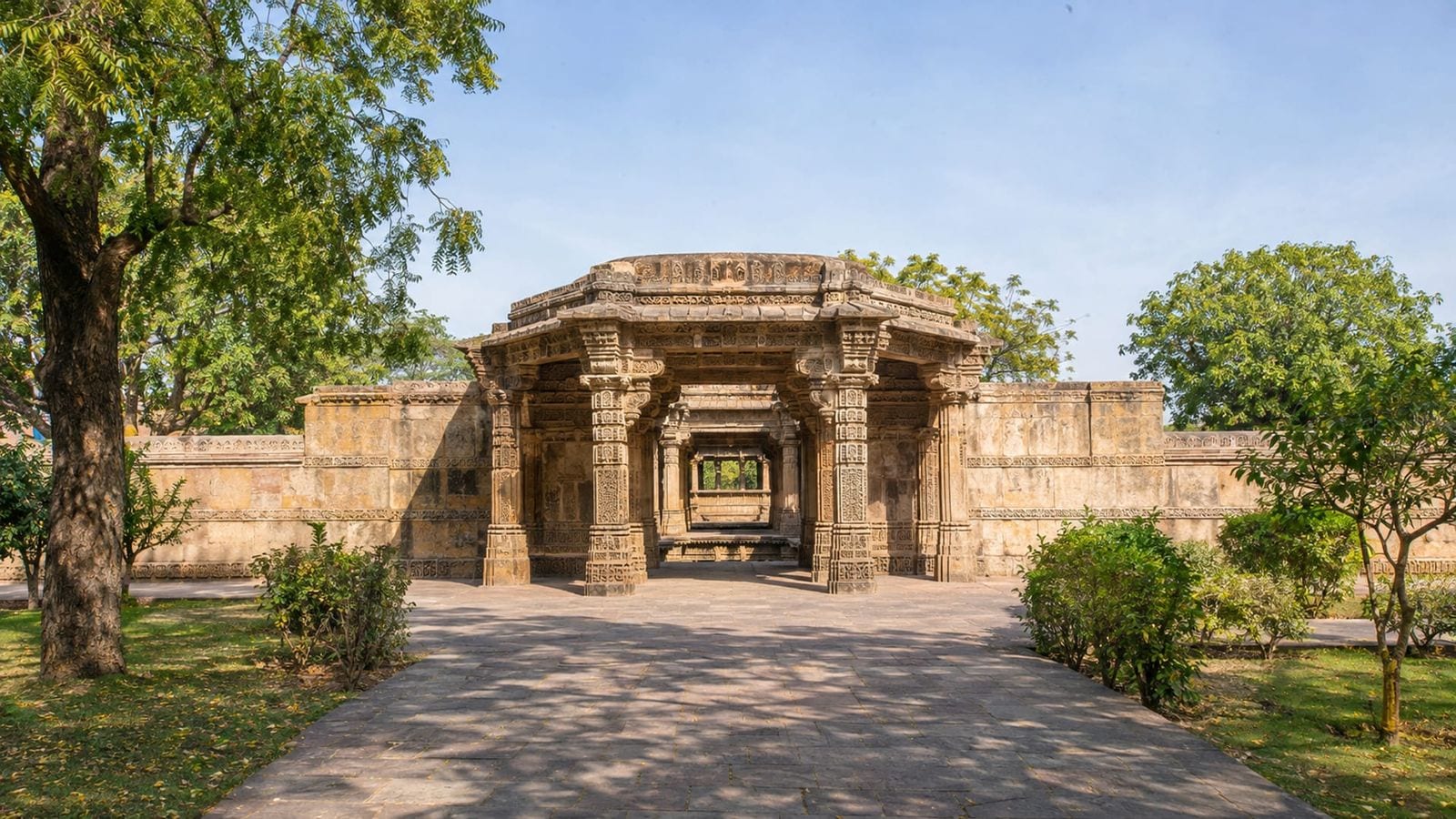
Adalaj Stepwell
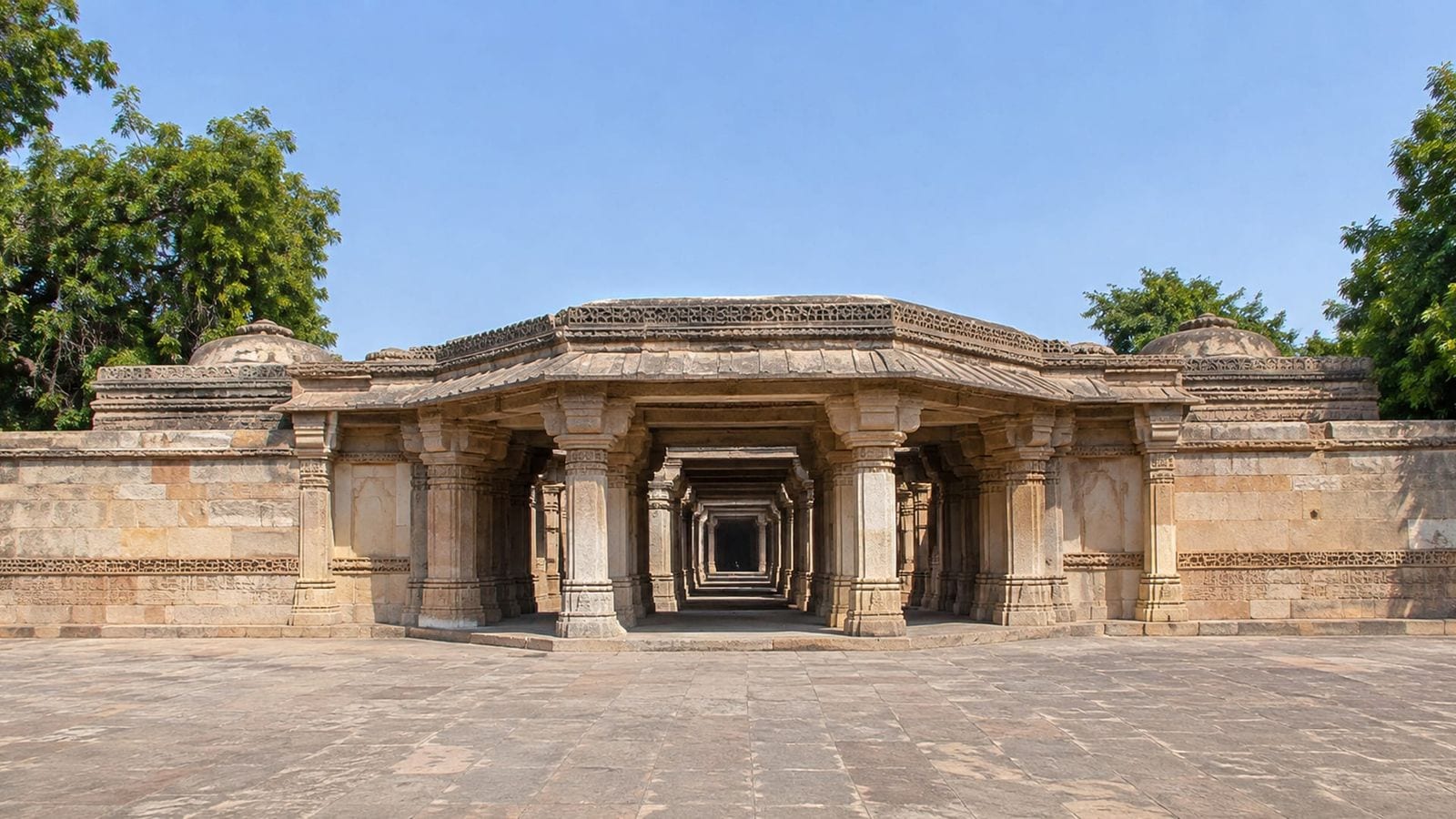
About 11 miles (18 km) north of central Ahmedabad, this 15th-century stepwell drops through carved galleries and octagonal landings to the water level. Its sandstone and floral motifs show why it ranks among Gujarat’s finest historic wells.
Time needed: About 1 to 1.5 hours
Entry: Admission costs ₹95 ($1) for Indian citizens and ₹380 ($4) for foreign visitors, with camera fees sometimes charged separately. Visit the official site for details.
Tip: Visit before noon, when the lower levels get enough light to highlight the carvings.
Overlooked sites worth visiting

Jhulta Minar (Shaking Minarets)
These twin 15th-century minarets are the last piece left of the Sidi Bashir Mosque, destroyed in an 18th-century war. Historical accounts say shaking one caused the other to vibrate seconds later, while the connecting archway between them stayed still.
Time needed: About 30 to 45 minutes
Entry: Free to view from outside. Climbing inside has been closed to the public since 1981 for preservation.
Tip: You won’t be able to test the shaking effect yourself anymore, so it’s worth reading up on the phenomenon beforehand.

Calico Museum of Textiles
The Calico Museum has textiles going back 500 years, housed inside Shahibaug’s Sarabhai House. Kashmiri shawls, Mughal tent panels, and double ikat patola saris fill the galleries, alongside a separate collection of Jain manuscripts and bronzes.
Time needed: About 2 to 3 hours
Entry: Free, but by advance booking only. Check the official site to reserve a spot.
Tip: Book early; tour slots fill well ahead.
Traditional food
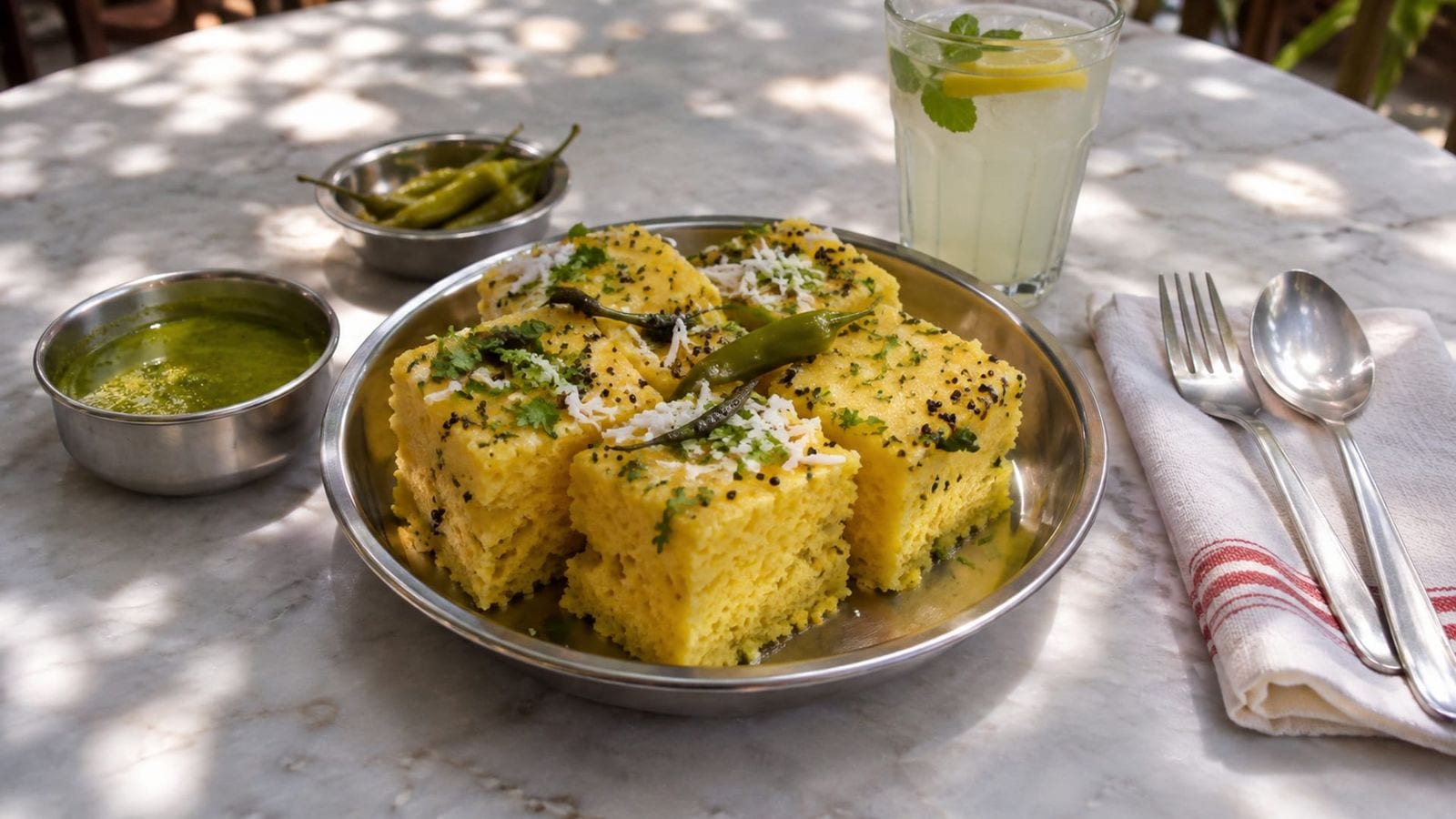
Food in Ahmedabad is prepared with wheat, lentils, yogurt, and seasonal vegetables, with sweet and savory often sharing the same plate.
Dhokla
Soft, steamed, and lightly tangy, dhokla is one of the clearest introductions to Ahmedabad’s snack culture. Das Khaman has been serving it since 1922.
Khandvi
Khandvi pairs a delicate texture with mustard seed tempering and coconut, so it rewards an unhurried breakfast or snack stop. Laxmi Gathiya Rath is a reputable restaurant where you can try it.
Fafda-jalebi
This classic combination pairs crisp gram-flour fafda with syrupy jalebi, showing how Ahmedabad’s cuisine features contrast on the plate. Head to Chandravilas, open since 1900, for the traditional version.
Undhiyu
Undhiyu is a mix of purple yam, sweet potato, green beans, and raw banana, cooked slowly with fenugreek dumplings and warm spices. It’s a winter dish, traditionally eaten around the Uttarayan kite festival, and Gordhan Thal restaurant serves it as part of its thali spread.
Best time to visit Ahmedabad
Ahmedabad gets extremely hot for much of the year, and how the heat changes month to month matters more here than rain or crowds.
Best for: Walking the old city, evenings by the riverfront, and visiting the stepwells
What you get: Temperatures usually range between 55°F and 82°F (13°C to 28°C), with comfortable days and the biggest crowds of the year.
Trade-offs: Nights get cool, and the best hotels and guides book up early
Best for: Museums and other indoor stops, with sightseeing best done before midday
What you get: Temperatures usually run about 72°F to 102°F (22°C to 39°C), with fewer tourists but heat that builds fast by late morning.
Trade-offs: Afternoons get too hot for much walking, so plan your day around that.
Best for: Seeing the city green up, with lower hotel prices too
What you get: Temperatures usually stay at 77°F to 95°F (25°C to 35°C), with fewer tourists, and stretches of heavy rain.
Trade-offs: Rain can throw off your timing and make walking around old buildings less pleasant.
Best for: A shoulder-season trip with decent weather
What you get: Temperatures usually hover about 70°F to 93°F (21°C to 34°C), smaller crowds, and conditions that keep improving as the month goes on.
Trade-offs: It can still feel hot in the middle of the day.
A realistic 5-day plan in Ahmedabad
Ahmedabad rewards a slow pace, and five days is enough to see most of what makes the city worth visiting.
Check into your hotel in Navrangpura or Ellis Bridge and let the first evening be an easy one. Walk CG Road as the shops light up, and the street food stalls start filling in the gaps between showrooms, then sit down at Das Khaman for a plate of khaman that’s been made the same way since 1922.
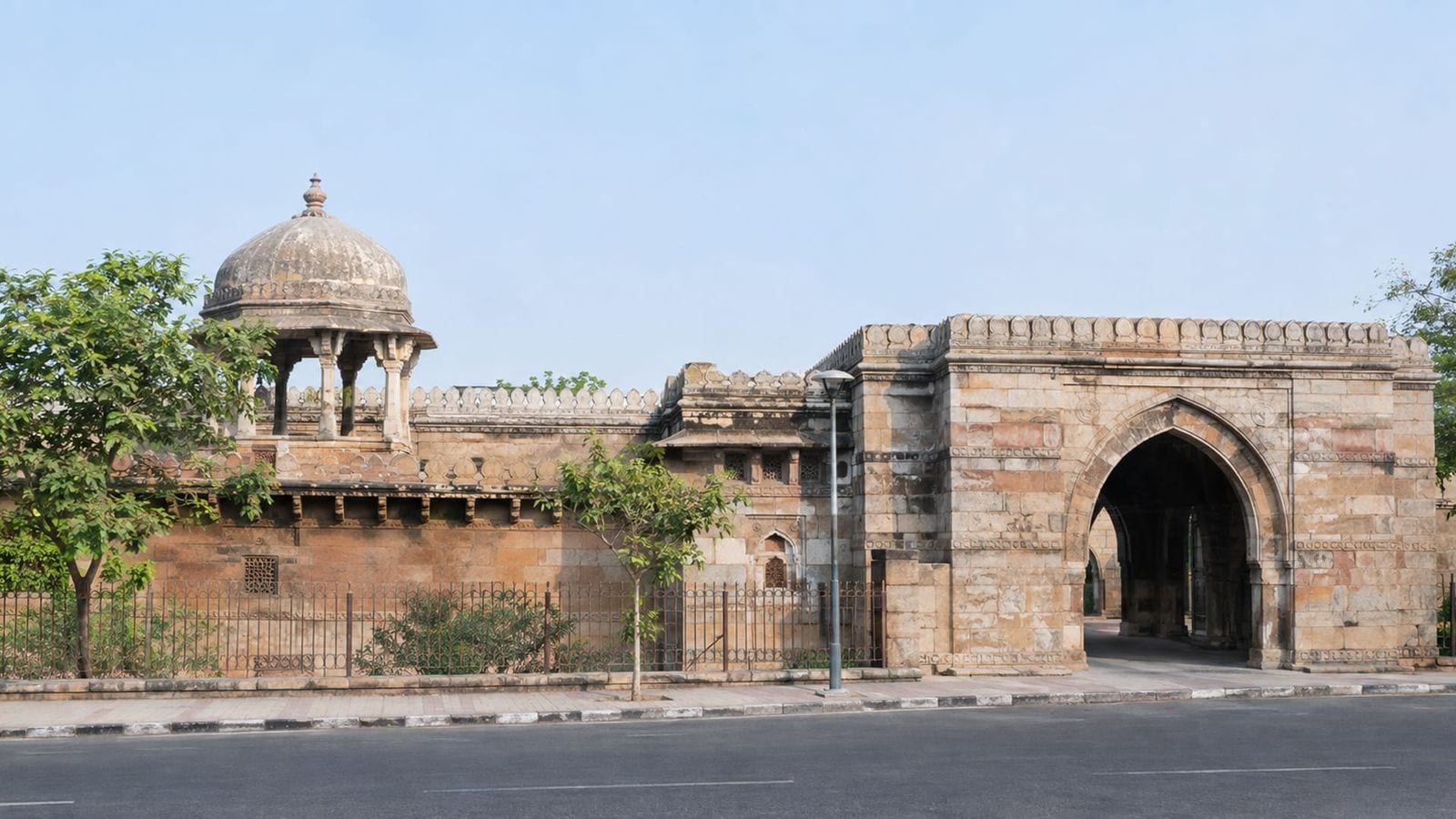
Spend the morning inside Hriday Kunj, the cottage where Gandhi lived for over a decade and plotted the Dandi March, then walk the ashram’s quiet grounds along the Sabarmati. Follow the river down to the promenade for the afternoon, and end the day at Sidi Saiyyed Mosque, timed for the hour when the sun cuts through its carved stone screen.
Spend the morning inside the Calico Museum, led room to room past Kashmiri shawls, Mughal tent panels, and double ikat patola saris five centuries old. In the afternoon, descend into Adalaj Stepwell, where the temperature drops and the carvings get more intricate with every level down.
Walk the grounds of Bhadra Fort in the morning, then cross to Sidi Saiyyed Mosque if you haven’t already stood beneath its jali. From there, seek out the Jhulta Minar, the odd, half-ruined survivor of a mosque that once had minarets said to shake in tandem, then finish at Dada Harir Vav, a seven-story stepwell almost nobody visits. Reward the day with fafda-jalebi at Chandravilas, the shop credited with inventing the pairing.
Spend the morning working through CG Road’s shops before the heat sets in, and if your Calico Museum slot didn’t fill on day three, use it now. Sit down for one last thali at Gordhan Thal, or khandvi at Laxmi Gathiya Rath, before heading to the airport.
Business-class flights from the US to Ahmedabad
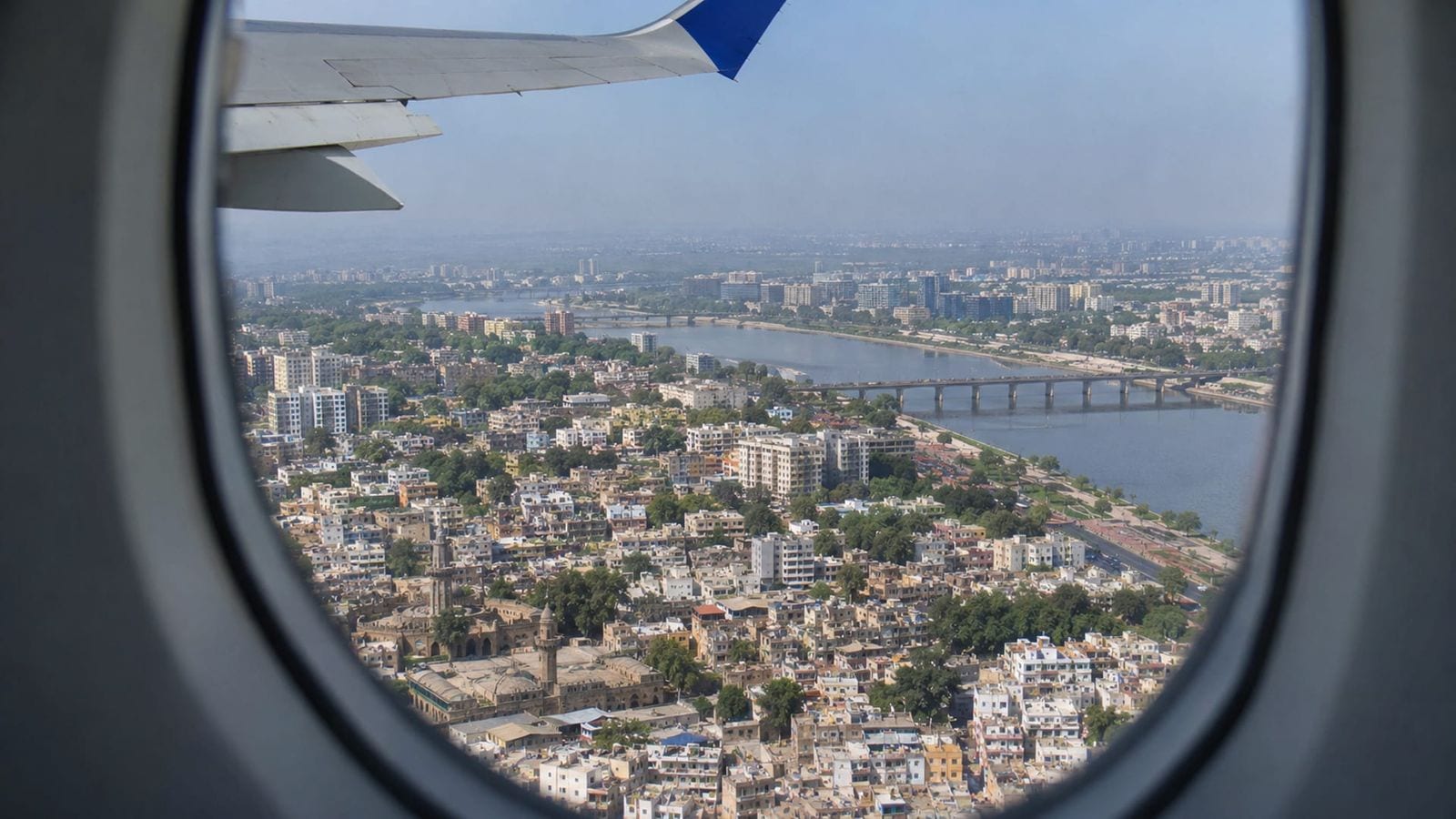
There are no nonstop flights to Ahmedabad from the US, so every route runs through at least one major connection hub. Fares and connection points below reflect current options as of mid-2026.
New York (JFK) to Ahmedabad (AMD)
Etihad operates business-class flights from New York (JFK) to Ahmedabad (AMD) with a layover in Abu Dhabi (DOH). The total trip takes roughly 17 hours. Round-trip business-class fares typically start at $4,700 and can reach $8,700 depending on how far ahead you book. Emirates also serves this route with a layover in Dubai (DXB), on a similar total journey time. Fares are broadly comparable to Etihad, generally in the $5,000 to $7,500 range for round-trip business class.
Los Angeles (LAX) to Ahmedabad (AMD)
Emirates also operates business-class flights from Los Angeles (LAX) to Ahmedabad (AMD) through Dubai (DXB), with a total travel time of about 20 to 22 hours. Round-trip business-class fares generally start around $7,200 and can climb higher during peak travel months, reaching $10,000. Alternatively, there are codeshare flights from LAX to AMD operated by airlines such as Virgin Atlantic, IndiGo, JetBlue, Etihad, American Airlines, and others.
Ahmedabad rewards those who look closely
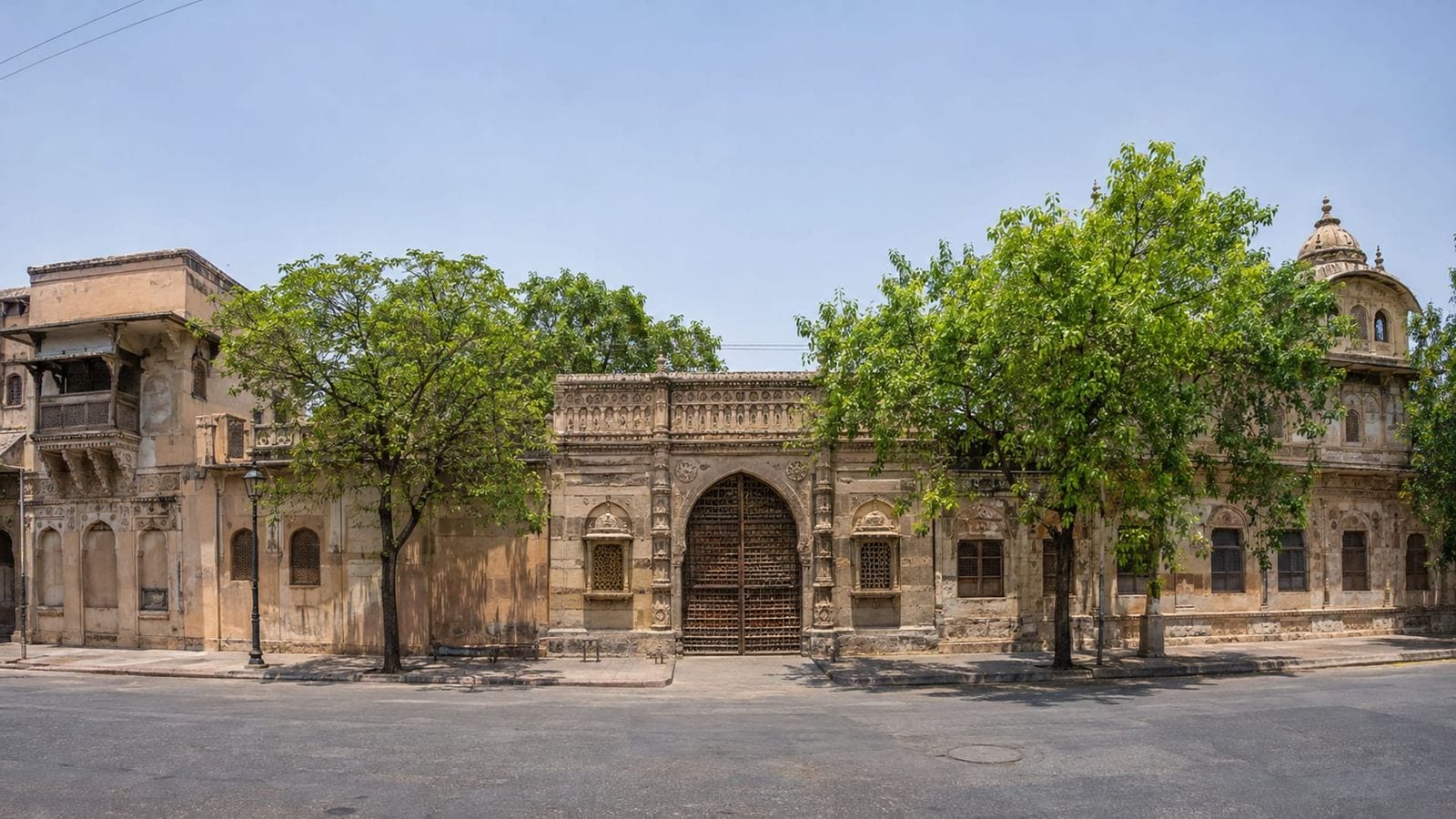
The old city’s pols, tightly packed residential quarters that are centuries old and still lived in, sit right next to working mosques and stepwells. It’s the kind of history you walk through rather than view behind glass, and it’s a big reason Ahmedabad became India’s first UNESCO World Heritage City. Seeing it properly means slowing down and covering it on foot, one quarter at a time. And our travel experts at AranGrant’s are here to help you reach it; you can contact us anytime.