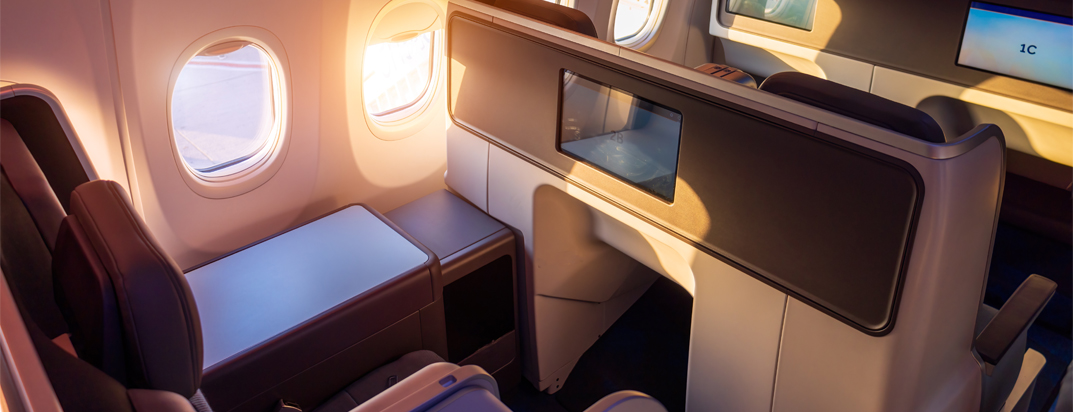



What is the difference between business class vs first class on international flights? AranGrant – a platform for booking cheap business class flights – hears this debate all the time from savvy travelers. Deciding on first class or business class for an international trip is a classic travel dilemma. Both promise comfort far beyond economy, yet they cater to different needs and budgets. In this in-depth comparison, we’ll pit business and first class head-to-head across five key categories – Seat, Food, Service, Privacy, and Cost – and see how 6 top airlines stack up.
By the end, you’ll know which cabin matches your travel style and when an upgrade makes financial sense. Let’s buckle in for the business vs. first class showdown.
Read In this article:
Seat & Space: Lie-Flat vs. Luxury Suite
| Feature | Modern Business Suite | Flagship First Suite |
| Privacy | Sliding door up to shoulder height (Qsuite, Delta One) | Fully enclosed floor‑to‑ceiling suite; some offer separate armchair + bed or a two‑person “Suite Plus” |
| Bed length | ~78 in / 198 cm; mattress pad & duvet | 80–83 in; real mattress topper, turndown service |
| Layout | 1‑2‑1 (≈40–60 seats on a wide‑body) | 4–8 seats max; ultra‑quiet cabin |
| Extras | Wireless charging, 4K screen, Bluetooth audio | Personal wardrobe, dining table for two, shower (Emirates A380), in‑suite temperature control |
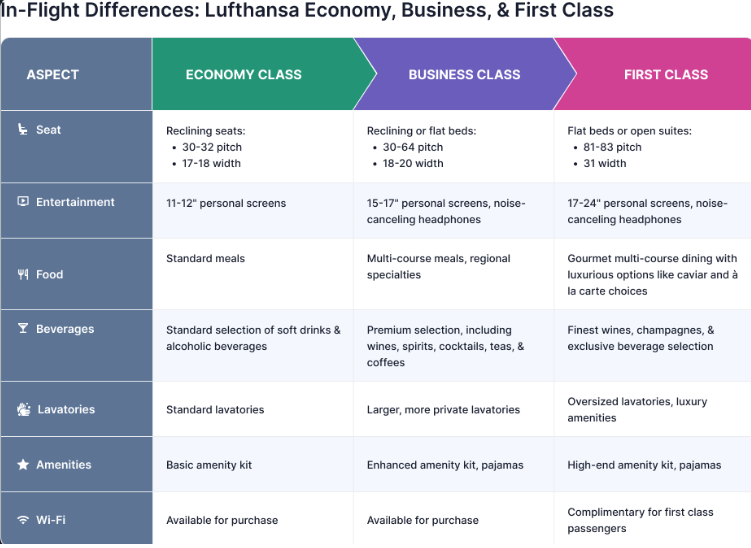
Business Class Seat – On long-haul flights, business class seats are a sanctuary of comfort. Expect wide lie-flat beds or deeply reclining seats with ample legroom (often 1-2-1 configured so every passenger has aisle access). This is a huge step up from economy – no middle seats, and you can actually sleep.
Seats usually come with adjustable lumbar support, massage functions, and direct power outlets and USB ports for your devices. In fact, business cabins are designed for productivity and rest: large tray tables double as desks, and lighting is gentle so you can work or relax quietly. For most travelers, the business-class seat delivers all the comfort needed for an overnight flight.
First Class Seat – First class takes comfort to another level entirely. Instead of just a seat, you often get a private suite. Many first class cabins feature enclosed or semi-enclosed suites with sliding doors for complete privacy, essentially giving you a mini-hotel room in the sky. The seats are extra-wide and turn into bed suites with luxurious bedding – some airlines even offer double beds in first class if you’re traveling with a companion (for example, Singapore Airlines connects suites into a double bed).
Entertainment screens are enormous (often 24–32″, comparable to a home TV) and the seat area might include an ottoman or buddy seat so someone can dine with you. In short, first class provides more space, more padding, and ultimate comfort. It’s not just a bigger seat – it’s an entirely elevated experience, akin to a private lounge in the sky.
Dining & Drinks: Gourmet vs. Gastronomy
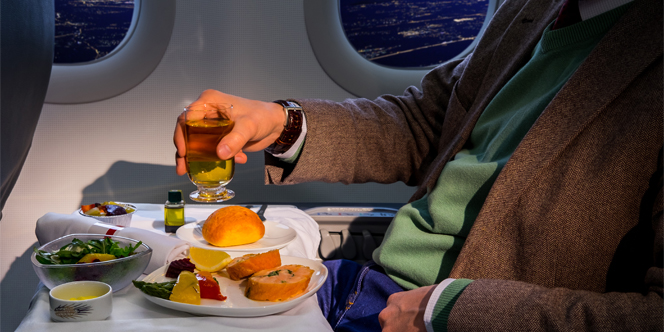
Business Class Dining – In business class, airlines serve high-quality cuisine, often regionally inspired. You’ll typically get a printed menu with a choice of appetizers, mains, and desserts, and meals are served on real china with metal cutlery and linen. Think dishes like seared steak, salmon fillet, or international favorites crafted by notable chefs.
The meal service is more structured – usually one main meal after takeoff and another before landing – though some airlines allow “express” meals if you prefer to eat quickly and sleep.
The drink selection in business is excellent: a variety of wines (often curated by sommeliers), top-shelf spirits, and champagne (usually a very nice label like Moët or Veuve Clicquot) are all included. For example, Emirates business class pours Veuve Clicquot champagne and even offers an onboard bar on the A380 where a bartender can mix cocktails.
First Class Dining – First class passengers often dine on gourmet dishes like caviar, lobster, or filet mignon, prepared fresh to order. There’s greater menu variety and flexibility – many airlines offer dine-on-demand, meaning you eat what you want, when you want. Not hungry after takeoff? You can ask the crew to serve your dinner later, at any time during the flight.
Courses are served one at a time on elegant table settings (white tablecloth, bone china, real glassware), often with an amuse-bouche and sorbet palate cleansers between courses on top airlines.
The champagne in first class is typically a prestige label – for example, Dom Pérignon flows freely in Emirates first class, versus the Veuve in business. Airlines also load rare wines and top-shelf liquor for first class (one airline famously serves Chateau d’Yquem dessert wine and Johnnie Walker Blue Label scotch in first).
The ingredients tend to be higher-end across the board: one analysis noted that a business class meal might use USDA Choice beef, whereas first class uses USDA Prime, or a lobster tail in business vs. a whole lobster in first. Even the coffee might be an upgrade (some first classes serve espresso or Blue Mountain coffee). And if you have a special craving, first class crews will try to accommodate – it’s not unheard of for off-menu items to be whipped up if you ask nicely and ingredients are available. For instance, British Airways first class passengers can choose an à la carte “Dine Anytime” menu, ordering whatever they want whenever they feel like it. Business class, in contrast, usually follows a set meal schedule (though you still get choices for each course).
Service & Amenities: Attentive vs. All-Out Pampering
Business Class Service – flight attendants greet you by name, offer a welcome drink (usually champagne or juice), and provide prompt, professional service. The crew‑to‑passenger ratio is lower than in economy, though a long‑haul cabin still has around 30–60 seats. Service is efficient and friendly—meals arrive by cart or in courses—and staff respond quickly to calls while juggling multiple guests.
Amenities in business are great: you’ll typically receive an amenity kit with toiletries (e.g. eye mask, socks, lotion, toothbrush – sometimes from luxury brands), noise-canceling headphones, and on overnight flights possibly pajamas in some airlines (e.g. Qatar Airways and Emirates provide pajamas to business class on longer flights). Many airlines also give business class passengers access to an exclusive lounge on the ground with hot food, drinks, and showers.
First Class Service – With only 8–14 passengers in international first class, flight attendants can truly personalize the experience. You might have two or three crew members just for the first class cabin, meaning very high crew-to-passenger ratio.
The result? Ultra-personalized, anticipatory service. Flight attendants in first class proactively offer to make your bed when you seem tired, refill your drink with your preferred champagne without you asking, and adjust service to your schedule.
Little luxury touches set first class apart: your name is engraved on a welcome card, the purser comes to personally thank you for flying, and you might even get personalized pajamas and turn-down service (crew will make up your bed with a mattress pad and duvet while you change into the provided pajamas).
Amenity kits in first are a step up, often designer-branded with high-end skincare products. Some airlines also offer in-flight showers (Emirates A380) or an onboard lounge exclusively for first class. The overall vibe is that nothing is too much to ask. Want an espresso at 3 AM? They’ll bring it on a silver tray with a biscuit. British Airways staff, for example, will even serve first class passengers dinner on the ground before a short overnight flight, so you can maximize sleep in the air – that’s the level of attention first class can entail.
Ground services are another differentiator: first class tickets often come with chauffeur drive to/from the airport (offered by Emirates, Etihad, etc.), personal escort through security/immigration, and access to Flagship First lounges that have semi-private spaces, à la carte dining, spa treatments, or even nap rooms.
Privacy & Cabin Atmosphere: Personal Space vs. Exclusivity
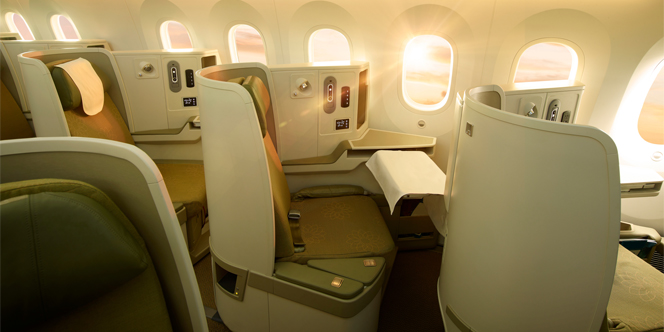
Business Class Cabin – Flying business class already means a more peaceful environment than economy. The cabin is quieter, and layouts are often designed for privacy (high seat shells or dividers). However, business class is still a shared space with dozens of passengers.
Depending on the airline and aircraft, you might be in a 1-2-1 configuration with direct aisle access for all, or slightly older layouts like 2-2-2. Newer business class seats, such as the Qatar Airways Qsuite, British Airways Club Suite, or Delta One Suites, even have sliding doors, blurring the line between business and first by giving you a mini-suite feel in business class. These innovations mean some business travelers enjoy near-first-class privacy now.
Yet not all business class seats have doors – many just have partial dividers. You will see and hear fellow passengers to some extent, and crew move through the aisles more frequently.
Privacy in business is about clever design: angled seats, privacy screens, and smaller cabins within business (some jets have a front and mini business cabin, which can feel more intimate). Overall, you get a lot of personal space but it’s not exclusive space. Business class might have 30–60 people, and while it’s quiet, it’s not silent. If you’re seated in an aisle, you might occasionally get bumped or see people walking by, though direct aisle access layouts mitigate this greatly.
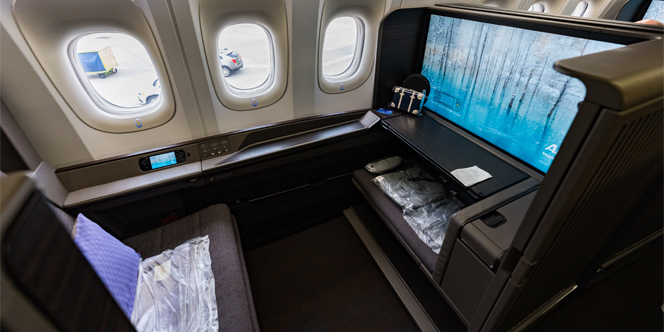
First Class Cabin – Many first class cabins have as few as 8–10 seats (and some newer ones only 4–6 seats total!). This means the cabin is an exclusive enclave. Often first class is at the very nose of the plane or the upper deck of an A380, physically separated from other classes by a galley or staircase.
The small number of fellow passengers creates a hushed, serene atmosphere – it can almost feel like a private jet. Crucially, most first class products provide enhanced privacy features: either fully enclosed suites with floor-to-ceiling doors (e.g. Emirates New First, Singapore Suites, ANA “The Suite”) or high-walled “open suites” that still shield you from view. You never have to see another passenger if you don’t want to. In fact, on some airlines you could close your suite door and not be visible at all throughout the flight.
The difference in ambiance is noticeable even for first vs. business lounges on the ground – first class lounges are often much quieter and sparsely populated, mirroring the tranquility you’ll find in the air. It’s intimate and tranquil. Privacy isn’t just physical either – with so few passengers, announcements and disturbances are minimal.
Read Also: Why AranGrant Is the Reliable Flight Booking Service: The Real Story of AranGrant’s Reputation
Price & Value: Splurge or Smart Upgrade?
Business Class Cost – In monetary terms, business class is expensive, but generally far more attainable than first. A business class ticket might cost 3-5 times the price of economy, whereas first class can be 10+ times economy on some routes.
However, value is subjective. If you’re looking at frequent flyer miles or credit card points, business class and first class might both be within reach. For instance, using airline miles, first class might cost only 20-40% more miles than business on the same route.
For example: An ANA first class ticket from Tokyo to the US West Coast (worth about $5,000) can be booked for 72,500 Amex points (transferred to Virgin Atlantic) – whereas business class on the same route could be had for 45,000 points. In such cases, using miles for first class can yield tremendous value for your points, far exceeding what you’d get using them for economy. So, when does it financially make sense to book first class? Here are a few scenarios:
- Small fare gap: On some routes or sales, first class costs only modestly more than business (e.g., British Aairways NYC‑LON first was ≈ £863 extra—about 25 % for far more luxury).
- Promos & companion deals: Watch for limited “two‑for‑one” or partner specials (Lufthansa runs them), last‑minute buy‑ups, or empty‑cabin upgrades at check‑in that price close to business.
- Points & miles: Redeem instead of paying cash. Lufthansa typically releases unsold first class award seats to partner airlines about 2 weeks before departuregoing.com – meaning if you have United MileagePlus or Avianca LifeMiles, you could snag Lufthansa First for ~87,000 miles one-way to Europe (versus ~70,000 in business). The out-of-pocket cost then becomes minimal (just taxes/fees), delivering an incredible value for your miles.
- Route sweet spots: Certain markets (e.g., Cairo, Colombo) or 5th‑freedom legs (Emirates Milan–NY, Cathay Vancouver–NY) price first class only slightly higher; on 15‑hour legs the comfort premium is especially worthwhile.
- Off‑peak days: Weekend flights see lighter corporate demand, so airlines quietly lower first‑class fares and release more awards—check Saturday departures for the best odds.
Of course, value is personal. If you’re celebrating a honeymoon or milestone birthday, the “sense” in paying for first class might simply be about the experience rather than dollars. In that case, it’s about personal value: the memories and enjoyment could be worth every penny.
On the other hand, a frugal-minded traveler might argue that money saved by flying business (or premium economy) could buy an extra night or two at a five-star hotel on the ground.
Airline-by-Airline Comparison Table
To see how these differences play out in practice, let’s compare the business vs. first class offerings of 8 top airlines side by side. Each airline interprets “business” and “first” a bit differently. Below is a summary of how their products differ:
| Airline | Business Class | First Class |
| Emirates (UAE) | Seat & Space: lie-flat seat (A380/777) with direct aisle access; Onboard Lounge: access to the iconic A380 bar lounge for cocktails. Dining: Gourmet meals on a menu, served with quality wine and Veuve Clicquot champagne. Amenity: BVLGARI amenity kit; pajamas on ultra-long flights; chauffeur-drive limo service on ground for business and first. | Seat & Space: private suite with closing doors (on most 777s and all A380s), only 8–14 suites in cabin; each suite has a personal mini-bar and closet. Extra Amenity: access to two shower spas on the A380 (a unique Emirates perk). Dining: Dine-on-demand with an expanded menu including caviar service; served on Royal Doulton fine china. Dom Pérignon champagne continuously poured. Lounge: Exclusive First Class lounge in Dubai with à la carte dining and even a 15-minute spa treatment (business lounge has buffet). Service: One of the world’s most pampering. |
| Lufthansa (Germany) | Seat: 180° lie-flat seat (large but open); older config is 2-2-2 on many aircraft (less privacy), newer planes moving to 1-2-1. Dining: High-quality meals with multiple courses, served on a single tray; excellent German wines. Service: Professional and efficient, but meal service is on a set schedule. Ground: Business class lounge access (good buffet, but no personal service). | Seat: only 8 seats (747-8) or 4–6 seats (new A350) in an open suite layout – extremely spacious with ottoman for companion dining. Privacy: not fully enclosed but very private cabin with all seats having aisle access. Dining: Caviar course offered on most flights, with menus by Michelin-star chefs; completely on-demand – you decide when each course is served. Service: Extraordinarily attentive (crew/passenger ratio often 1:1 or 1:2) – known for touches like a red rose at each seat. Ground: First Class Terminal in Frankfurt (separate building) with private security, top-notch restaurant, cigar lounge, and chauffeured Porsche transfer to the plane – an elite ground experience. |
| Qatar Airways (Qatar) | Seat: Qsuite business class on many long-haul routes – a private suite with a sliding door, lie-flat bed, and even the option to form a double bed or 4-person meeting space. On other aircraft, 1-2-1 lie-flats (no door). Dining: Dine-on-demand even in business; menus by celebrity chefs, excellent Arabic and Western options. Service: Сrew address you by name and serve at your pace, almost first-class level service in Qsuite. Ground: Al Mourjan Business Lounge in Doha – lavish (spa, restaurant, nap rooms) but can be crowded. No chauffeur for business. | Seat: Qatar only offers international first class on A380s (just 8 open suites in 1-2-1). Seats are extra large and plush but no closing doors (Qsuites in business actually have doors). Dining: Also dine-on-demand with an even more extensive menu (e.g. additional luxe dishes); Krug or Bollinger Grande Année champagne in F vs. typically Taittinger in J. Service: Subtle enhancements – e.g. Arabic coffee & dates upon boarding (a first class tradition); generally very similar attentive service as Qsuite business, with maybe more personalization. Ground: Access to the Al Safwa First Lounge in Doha – an exclusive, museum-like lounge with private quiet rooms and à la carte dining (versus buffet in business lounge). No limousine transfers (Qatar doesn’t offer due to hub proximity). |
| Singapore Airlines (Singapore) | Seat: Wide lie-flat seat (some 30″ wide) in 1-2-1; on A380, two center business seats can form a double bed (after lowering a divider). Not enclosed, but seat shells are high. Dining: Book the Cook service allows business class flyers to pre-order gourmet entrées (lobster thermidor, etc.) – a unique perk. Meals are excellent, served course by course on tray tables. Champagne served is typically Charles Heidsieck Brut in business. Service: Polished and efficient, with that famous SIA hospitality; crew are very attentive even in business. Ground: Business class lounges (SilverKris) with buffet dining and showers; very nice but not as exclusive as The Private Room (first class). | Seat: Two types – First Class on 777 (4 large flat-bed seats, 35″ wide, in 1-2-1, no doors), and Suites on A380 (up to 6 ultra-private suites with sliding doors and standalone bed + chair). The A380 Suites even allow two adjacent suites to form a double bedroom – one of the only such products in the world. Dining: Unmatched. First/Suites passengers also use Book the Cook, with an even wider selection (including exclusive items like lobster rendang, wagyu beef, etc.). Starts with Dom Pérignon and caviar service. Dine any time; each course plated individually, no trays. Service: Extraordinary – SIA crew are known for anticipating needs. With at most 4–6 passengers, service is nearly one-to-one. They’ll address you as “Mr/Ms ___” and make you feel truly pampered. Ground: “The Private Room” in Singapore – a first class-only lounge section with full-service dining (like a fine restaurant) and quiet day suites. First class check-in at Changi includes a private area with porters and immigration staff. |
| ANA (All Nippon Airways) (Japan) | Seat: Newest business product “The Room” on select 777-300ERs offers an insanely spacious suite with a door – it’s been called “business class that feels like first”. Other aircraft have 1-2-1 staggered lie-flats (excellent too). Dining: Business passengers enjoy multi-course Japanese kaiseki or Western meals, served beautifully. You can dine on demand to an extent, and ANA’s catered meals are among the best of any business class. Sake and Japanese wines available. Service: Impeccably polite and detail-oriented. Japanese hospitality (omotenashi) means even in business, crew may bow and personally thank you. Ground: Business lounge access (ANA Lounge) with noodle bar and buffet. | Seat: “The Suite” first class on new 777-300ERs – huge enclosed suites with sliding doors, 43″ 4K entertainment screens and leather seats. Older 777s have First Class “Square” (open suite, no door). Only 8 seats max. Dining: Michelin-star cuisine in the sky. ANA serves elaborate Japanese kaiseki meals (beautifully plated courses of seasonal delicacies) and gourmet Western options. Everything is on demand – you can even mix and match from Japanese and Western menus. Top-shelf sake (Dassai), champagne (Krug) and fine wines are poured. Service: Quintessential Japanese service – extremely attentive, formal, and graceful. Small details: Given Japan’s culture, first class crew often present business cards and a personalized thank-you note. Ground: ANA Suite Lounges in Tokyo have made-to-order noodle bars and relaxation areas; first class check-in at Tokyo with private security. First class also gets extra baggage allowance (typically 3×32kg bags vs. 2×32kg in business). |
| British Airways (UK) | Seat: New Club Suite business class on many aircraft (especially A350s, 787-10s, refit 777s) – 1-2-1 with sliding door, 6’6” flat bed, lots of storage. Older planes may have Club World: an outdated 2-4-2 layout with forward/reverse seats (all flat beds but less privacy). Dining: Tasty meals but not truly on-demand – generally a 3-course dinner served after takeoff and a lighter meal before landing. Service: Proper and efficient, if sometimes a bit rushed on full flights. Ground: Priority check-in and fast-track security (and the exclusive “First Wing” check-in for Golds and first class at Heathrow T5, which business can use if status). Business lounge (Galleries) access – decent buffet and drinks. | Seat: Typically 8 First suites in 1-2-1 on BA’s long-haul fleet. These are roomier than Club Suite (wider seat, more pitch) and have higher walls for privacy, though only a curtain or partial door. The bed is 6’6” with a thick quilted mattress pad and White Company bedding. Dining: Dine Anytime à la carte menu – you can mix and match courses whenever. Menu features luxe touches like Laurent-Perrier Grand Siècle champagne, a separate cheese trolley, and often an “enhanced” entrée (e.g. lamb Wellington or fresh seafood) not available in business. Service: More personalized – BA has a dedicated “You First” concierge line for First passengers before the flight. In the air, crew-to-passenger ratio is higher, so they have time for little extras (addressing you by name, offering to set your bed while you change, etc.). Ground: Access to the Concorde Room lounge at LHR. At Heathrow T5, First travelers use the First Wing, a private check-in area with direct lounge access. Extra baggage allowance (3×32kg bags vs 2 in business). |
*Note: Not all airlines offer international first class. For example, US. carriers (Delta, American, United) generally don’t have a true first class cabin on long-haul flights – their “Delta One” or “Flagship First” products are actually business class in function (sometimes branded differently). The comparisons above focus on airlines that maintain distinct first class cabins.
Who Should Choose Business Class?
You might be thinking, “All this luxury sounds great, but what do I really need for my trip?” Let’s break it down:
Business class is ideal for the majority of travelers seeking comfort and convenience. It was literally designed with the business traveler in mind – someone who needs to be productive or well-rested on the journey, but also mindful of cost/value. If you’re a professional traveling for work, business class allows you to arrive ready to hit the ground running: you get the flat bed to sleep on, space to work on your laptop, and quiet to concentrate.
Business class is also great for vacationers who want to splurge a bit on comfort but don’t require the red-carpet treatment of first. Are you celebrating an anniversary trip to Europe, or taking that bucket-list vacation to Asia? You’ll sip champagne, enjoy a multi-course dinner, watch movies on a big screen, then drift off in a comfy bed – not too shabby! Families sometimes choose business class for long flights so that the parents and kids have space to stretch out and sleep.
Consider business class if: you value a high level of comfort but are also value-conscious. Importantly, on many routes business class is the highest cabin anyway. Many top airlines (like Turkish, Delta, etc.) have excellent business classes and no first class. So in those cases, the decision is simply business vs economy. When first class isn’t available, business class is the de facto “best”.

Who Should Consider First Class?
First class is a more exclusive club, and it caters to particular needs and desires. You should consider first class if you’re the type of traveler for whom the journey is an experience in itself, and you’re willing (and able) to pay for the very best. Here are a few profiles that might opt for first:
- Small fare gap: On some routes or sales, first class costs only modestly more than business (e.g., British Aairways NYC‑LON first was ≈ £863 extra—about 25 % for far more luxury).
- Promos & companion deals: Watch for limited “two‑for‑one” or partner specials (Lufthansa runs them), last‑minute buy‑ups, or empty‑cabin upgrades at check‑in that price close to business.
- Points & miles: Redeem instead of paying cash. Lufthansa typically releases unsold first class award seats to partner airlines about 2 weeks before departuregoing.com – meaning if you have United MileagePlus or Avianca LifeMiles, you could snag Lufthansa First for ~87,000 miles one-way to Europe (versus ~70,000 in business). The out-of-pocket cost then becomes minimal (just taxes/fees), delivering an incredible value for your miles.
- Route sweet spots: Certain markets (e.g., Cairo, Colombo) or 5th‑freedom legs (Emirates Milan–NY, Cathay Vancouver–NY) price first class only slightly higher; on 15‑hour legs the comfort premium is especially worthwhile.
- Off‑peak days: Weekend flights see lighter corporate demand, so airlines quietly lower first‑class fares and release more awards—check Saturday departures for the best odds.
Is First Class Better Than Business Class?
Your budget and preferences determine the answer. If you want the most luxurious travel experience possible, first class is the way to go. However, if you want to enjoy similar benefits but at a more affordable price, business class is a great option.
In closing, both business and first class provide a luxurious way to travel; however, the main difference between business and first class is the level of exclusivity, personalized service, and over-the-top amenities. First-class travel is more upscale and exclusive, whereas business-class travel is more relaxed and comfortable. But you can expect a memorable and comfortable flight experience regardless of which class you choose.
Ready to experience premium travel for yourself? When it’s time to book, AranGrant is a great place to find cheap business class flights, making luxury air travel more accessible. Whether you decide on business class or first class, AranGrant can help you score the best deals.