



Is Global Entry worth it for someone who already has TSA PreCheck? The real answer usually comes down to one factor: how often you actually cross back into the United States after an international trip, not the price gap between the two programs. Frequency decides the value more than the extra cost does.
Read in this post:
What Global Entry actually costs compared to TSA PreCheck
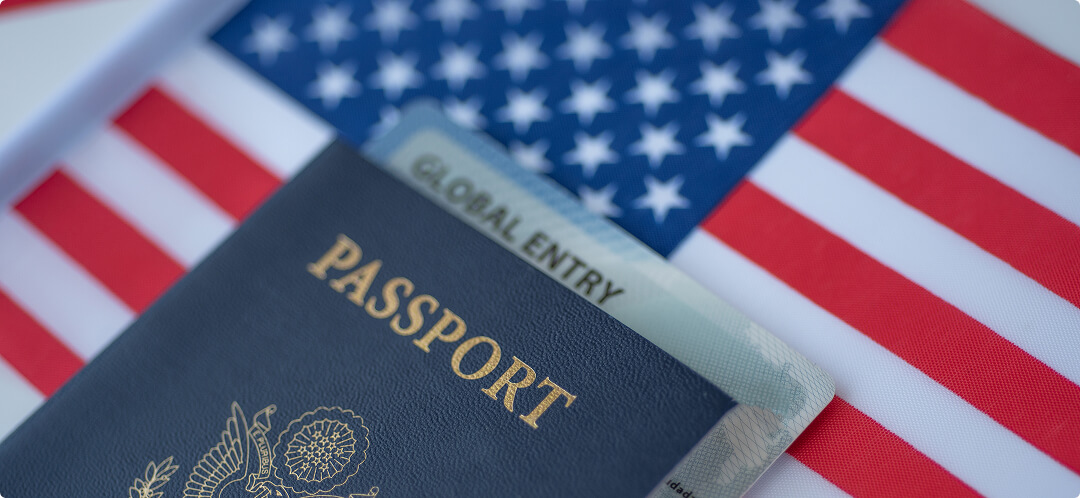
Global Entry costs $120 for a five-year membership, compared with $85 or less for a five-year TSA PreCheck membership on its own. Because Global Entry automatically includes PreCheck, the real difference between the two programs comes to about $35, not the full application fee.
The extra $35 for Global Entry buys you faster clearance through US customs, not faster airport security. Global Entry is beneficial for travelers who cross the border frequently for business or personal international travel, while occasional international travelers find PreCheck alone sufficient.
Global Entry’s core benefit, the customs kiosk, only applies when arriving in the US from an international trip. It does nothing for a purely domestic flight, in any cabin class, since domestic travel involves no customs process at all. The only part of Global Entry that applies to domestic flying is the bundled TSA PreCheck, and that benefit is identical whether a traveler flies economy or business.
The dollar difference between the two programs is small. What separates them in practice is how each one is actually used at the airport, and that is where the real-time savings diverge.
What each program actually saves at the airport

TSA PreCheck reduces time spent at the security checkpoint before departure. TSA reports that about 99% of TSA PreCheck passengers wait less than 10 minutes, although the program does not guarantee a specific wait at every airport or departure time.
The comparison with standard screening provides helpful context. A TSA spokesperson told Axios that the agency’s wait-time goal is 30 minutes or less for standard screening and 10 minutes or less for TSA PreCheck. These are performance goals, not a promise that PreCheck saves exactly 20 minutes on every trip.
Global Entry addresses a different point in the arrival process. At participating airports, approved members use dedicated Global Entry processing when they enter the US after international travel. Many locations now use facial comparison technology, allowing members to proceed through a touchless portal before receiving instructions from a CBP officer.
CBP describes reduced wait times and the absence of paperwork as principal Global Entry benefits. Members must still complete the required entry inspection, and CBP can direct any traveler to additional screening. Global Entry expedites the process but does not remove border formalities.
The strongest time benefit appears when both parts of the membership apply to the same journey: TSA PreCheck at the US departure checkpoint and Global Entry processing after the return flight. This gives an international traveler two distinct benefits during one round trip.
Global Entry kiosks no longer require the physical membership card; according to CBP’s own frequently asked questions page, they don’t work for entry by air and are only relevant for the SENTRI and NEXUS land and sea lanes. A passport or permanent resident card is what the kiosk actually requires.
Who Global Entry is actually worth it for

When is Global Entry worth it? Global Entry is worth it for travelers who cross back into the US from international trips frequently, since that’s the only time the customs kiosk applies. Domestic flight frequency and cabin class play no role, since neither one triggers a customs re-entry.
A traveler who takes several international trips each year has repeated opportunities to use expedited entry. Over a five-year membership, even one international trip per year creates five potential uses. Two annual trips create ten, reducing the additional cost to a few dollars per return.
For someone planning only one international trip during the entire membership period, the extra $35 buys exactly one skipped customs line, the highest per-use cost the membership offers. That’s still a real benefit, but it’s the weakest return case Global Entry has, while every additional international trip beyond that one lowers the cost per use further.
Travelers who fly domestically often but rarely leave the country still receive the full TSA PreCheck benefit through Global Entry. However, that domestic benefit is identical to the one available through a standalone PreCheck membership. Paying more solely for domestic travel does not confer any additional security advantage.
Application effort also deserves consideration. Global Entry requires conditional approval followed by an interview, while TSA PreCheck uses its own enrollment process. Both programs require government vetting, and approval is not automatic. A traveler with no realistic opportunity to complete the Global Entry process before an upcoming trip should not treat membership as an immediate solution.
Final Thoughts
Because approval requires a background check and an interview, Global Entry isn’t something to apply for the week before a trip. Travelers who expect to keep flying internationally, even occasionally, get more value from applying now than from waiting until a specific trip makes the case obvious — by the time that trip is booked, the membership may not be approved in time to use it.