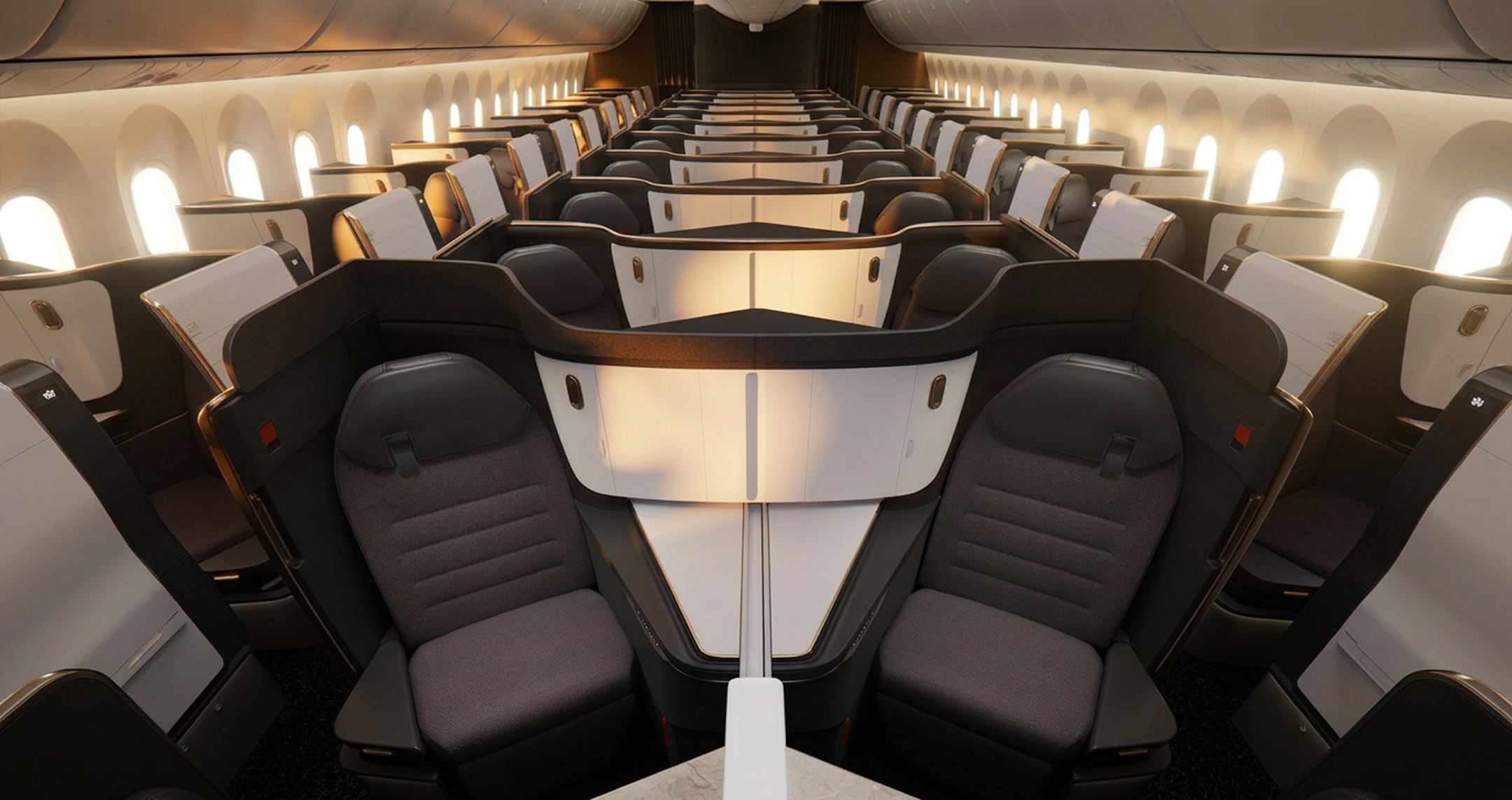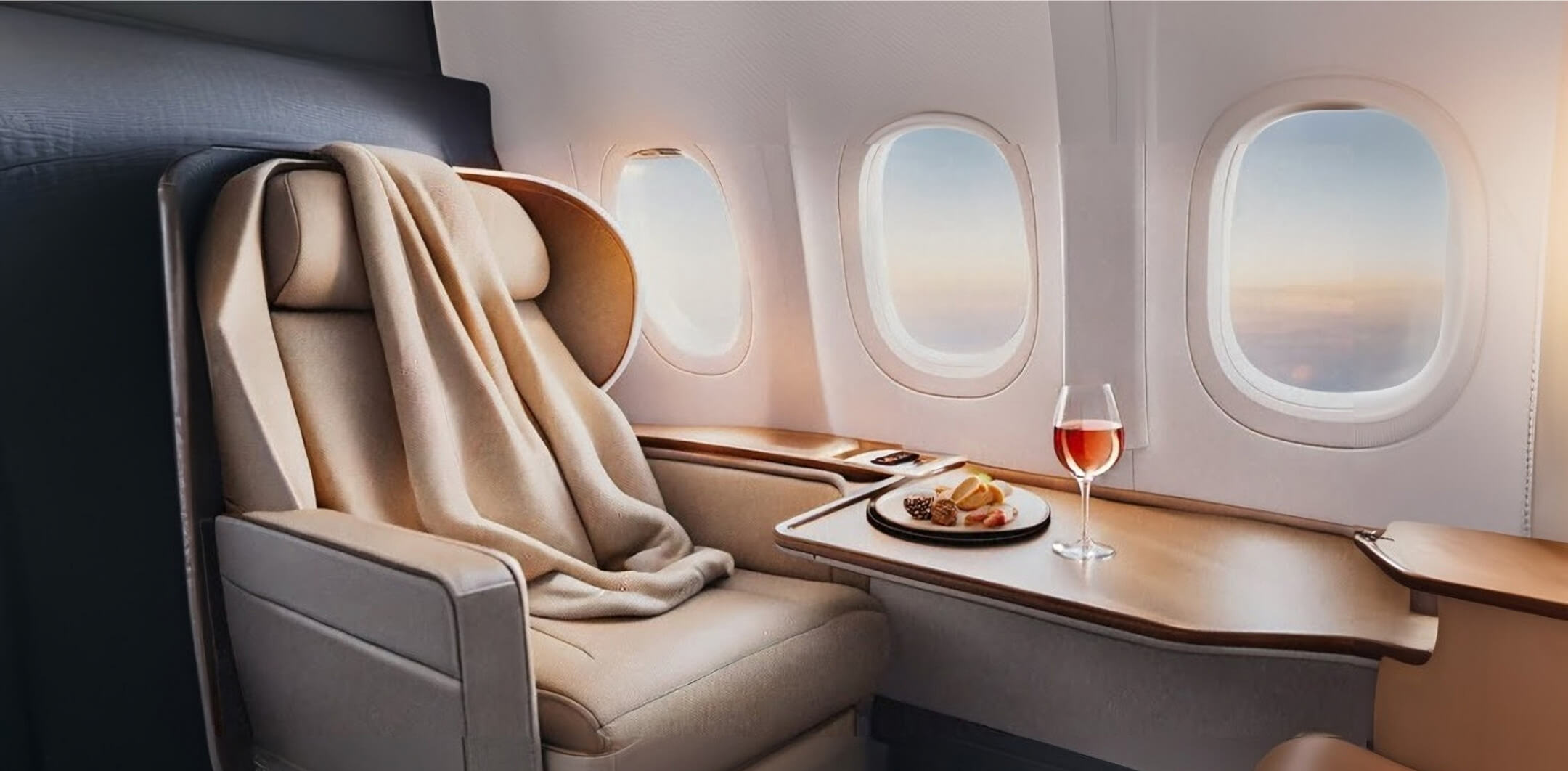



A premium cabin ticket on a US flight can offer very different experiences depending on what you book. Domestic business class may mean anything from a larger seat at the front of a standard narrowbody aircraft to a fully lie-flat suite on a long coast-to-coast domestic flight.
This variation makes the cabin name surprisingly unreliable. A first-class ticket from Chicago to Denver and a business-class ticket between New York and Los Angeles may both be the highest cabin sold on the flight, yet the seats, privacy, and overall experience can be completely different.
Therefore, knowing what you are actually paying for requires looking beyond the words “business class” or “first class” and checking how the airline has configured that particular flight.
Read in this post:
Why domestic business class rarely means a lie-flat seat
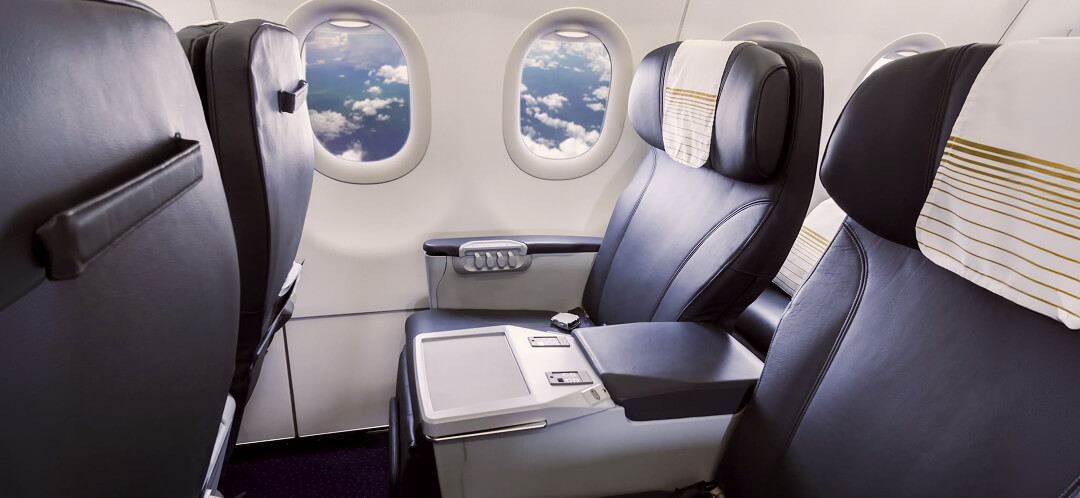
On most US domestic flights, there is only one premium cabin, not a separate business class and first class. The highest-class seat, whatever the airline calls it, is a wider recliner with more legroom and better service than economy. And it does not convert into a bed. A true lie-flat seat usually belongs to a specific premium route or aircraft, not an airline’s standard domestic product.
This distinction explains much of the confusion around domestic business-class flights. American Airlines, United Airlines, Delta Air Lines, and Alaska Airlines call their single standard domestic cabin First Class, not Business Class. Internationally, most of these airlines drop the “First Class” name entirely and sell one premium cabin under a different name, such as Delta One or United Polaris, that bears little resemblance to the domestic seat. American is the exception, still selling both an international Business Class and a separate Flagship First product.
The cabin label alone, therefore, tells you less than it first appears to.
American Airlines’ regular domestic first cabin, for example, provides wider seats than in economy, extra legroom, priority airport services, and premium dining on eligible flights. Those benefits can make a three- or four-hour journey considerably more comfortable than one spent in economy class, but the seat itself still doesn’t convert into a bed.
Delta First and United First follow the same broad model. You receive more space than in economy and a higher level of service, but you should not expect the privacy, direct aisle access, or sleeping surface associated with long-haul business class.
The distinction becomes even more important when airlines place internationally configured aircraft on domestic routes or create premium subfleets specifically for longer US markets. Suddenly, two flights sold by the same airline can provide very different experiences in the front cabin.
Thus, treat the cabin name as the starting point, then check what physical seat the flight actually uses.
You might also like to read: Business Class vs First Class: Which Is Right for You?
How American, United, Delta, Alaska, and JetBlue’s premium domestic products differ
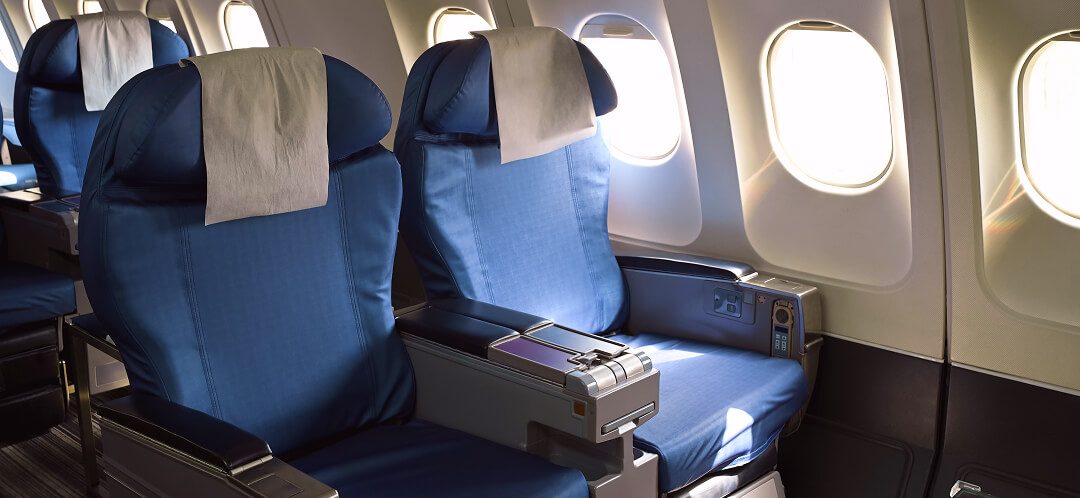
Despite the different names airlines use for their premium cabins, the standard domestic experience across American, United, Delta, Alaska, and JetBlue remains broadly similar. The details are not identical, though. Seat dimensions, layouts, and features vary by airline and aircraft.
American Airlines: First Class
If you are searching for American Airlines domestic business-class tickets, First Class is usually the premium product you will find on ordinary two-cabin flights.
- Aircraft and layout: 20 First Class seats in a 2-2 layout on the Airbus A321neo; 16 seats in a 2-2 layout on the Boeing 737-800 and 737 MAX 8
- Seat space: 37 inches of pitch, with seats approximately 20–21 inches wide, depending on aircraft
- Entertainment: Primarily streamed to your own device rather than shown on built-in seatback screens
United Airlines: United First
What travelers sometimes refer to as United domestic business class is normally sold as United First on the airline’s standard domestic narrowbody aircraft.
- Aircraft and layout: 16 First seats in a 2-2 layout on the Boeing 737-800; 20 seats in a 2-2 layout on the Boeing 737-900
- Seat space: Approximately 37 inches of pitch and 20–21 inches of width
- Entertainment: Varies by aircraft configuration, with some versions offering seatback DIRECTV or on-demand entertainment
Delta Air Lines: Delta First
Delta’s domestic business class is generally sold as Delta First on standard domestic flights.
- Aircraft and layout: 20 First Class seats in a 2-2 layout on the Airbus A321neo
- Seat space: The seats have 37 inches of pitch and 21 inches of width, with up to 5.4 inches of recline
- Entertainment: 11-inch seatback screens on many aircraft
Alaska Airlines: First Class
Alaska Airlines’ domestic business class is sold as First Class across the carrier’s standard domestic network, with the configuration changing between its mainline and regional aircraft.
- Aircraft and layout: 16 First seats in a 2-2 layout on the Boeing 737-900 and 737-9 MAX; 12 seats in a 1-2 layout on the Embraer 175
- Seat space: Up to 41 inches of pitch
- Entertainment: No seatback screens; streaming to passengers’ devices
JetBlue: BlueFirst
JetBlue is the outlier because its standard domestic fleet has historically operated without a conventional first-class cabin. That changes with BlueFirst, which the airline unveiled in September 2026 for aircraft that do not offer Mint.
- Aircraft and layout: A 2-2 First Class configuration on non-Mint aircraft as BlueFirst rolls out later in 2026
- Seat space: Five inches of recline and up to seven inches more legroom than JetBlue Main, which features 30 to 34 inches of legroom
- Entertainment: 13.3-inch seatback screens with Bluetooth connectivity
Where you can actually find a lie-flat seat on a domestic US flight
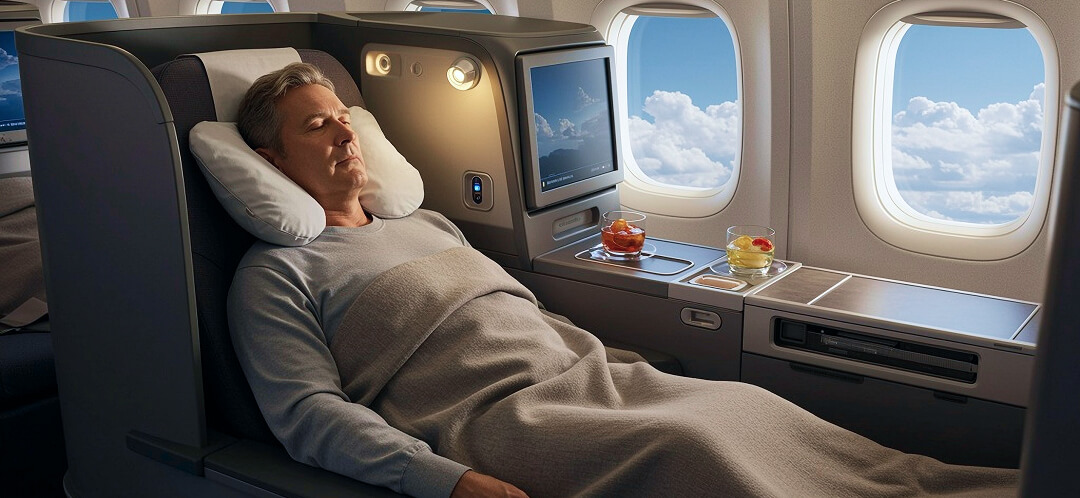
A genuine lie-flat seat is available only on some domestic US flights, and booking the most expensive cabin on a particular airline does not guarantee one. The safest approach is to identify the premium product first, then confirm which aircraft operates your flight.
- American Airlines
American Airlines offers lie-flat seats on three different types of aircraft on domestic routes.
Its specially configured Airbus A321T is one of them. The aircraft has 10 Flagship First seats in a 1-1 layout and 20 lie-flat Flagship Business seats. American continues to use the aircraft on premium transcontinental flights, although the newer Airbus A321XLR is gradually changing this part of the fleet.
The A321XLR is an important development of 2026. American’s version has 20 Flagship Suite seats with lie-flat beds, direct aisle access, extra storage, wireless charging, and privacy doors. The aircraft entered service between New York (JFK) and Los Angeles in December 2025, followed by service between New York (JFK) and San Francisco and between Boston and Los Angeles in 2026.
American also operates Flagship service with widebody aircraft on selected domestic routes, including certain Hawaii markets. For travelers looking for the best business-class airline for domestic travel in the US, American stands out for the number of different aircraft on which a true lie-flat product appears.
- Delta Air Lines
Delta makes the distinction easier through the cabin name. Delta One means a 180-degree lie-flat seat, while Delta First does not.
Delta sells Delta One on some long-haul domestic routes and uses aircraft normally associated with international flights, including members of its Airbus A330 and Airbus A350 fleets and Boeing 767 family. The exact aircraft and routes change with scheduling needs, so a route that offers Delta One during one part of the year does not guarantee the same cabin permanently.
The airline is a strong candidate for the best domestic business class for US travel when Delta One is available, but the advantage depends entirely on booking the right flight rather than simply choosing Delta.
- JetBlue
JetBlue Mint is another clear domestic lie-flat option. Every Mint seat converts into a fully flat bed, and newer Mint aircraft provide direct aisle access from private suites.
Mint is available on some coast-to-coast routes and is expanding in markets such as Fort Lauderdale, where JetBlue is adding Mint service to San Diego and increasing premium flying to Los Angeles and San Francisco later in 2026.
Mint is especially appealing on longer coast-to-coast flights, where several hours in the air make the premium upgrade more meaningful, particularly on overnight or early-morning departures. Its main trade-off is network coverage: Mint is available on only a limited share of JetBlue’s domestic schedule, so travelers may have to give up a preferred departure time or route to book it.
- United Airlines
United’s domestic premium option is becoming more complex in 2026.
The airline has offered lie-flat seats on premium transcontinental flights before, but it is now bringing the United Polaris name and a more complete Polaris experience to some domestic routes.
Its new Airbus A321XLR features 20 lie-flat Polaris suites with privacy doors, and it is scheduled to begin domestic service in September 2026 before moving into international service on December 1. These new United Airlines domestic business-class seats bring one of the carrier’s most modern premium products to several US routes.
United has also developed a separate A321neo variant called the Coastliner, with 20 lie-flat Polaris seats and 12 Premium Plus seats. The aircraft is intended for major transcontinental routes linking Newark with Los Angeles and San Francisco.
The original Coastliner launch was planned for summer 2026, but Airbus delivery delays pushed that schedule back. As of September, United had not announced a new entry-into-service date.
On every airline in this section, a lie-flat seat is the exception, not the standard domestic product. It comes with a specific aircraft on a specific route, not with the airline’s whole network. Thus, it is difficult to establish which is the best domestic business-class airline in the US. It is not so much about a particular airline as it is about whichever aircraft happens to be flying a given route on a given date, and that can change from one booking to the next.
What to check before booking, including lounge access rules

The seat is only one part of the premium ticket. Domestic First or Business Class also does not automatically give you airport lounge access, even when the aircraft has a genuine lie-flat seat. Airlines increasingly separate the physical seat from the bundle of benefits sold with it.
Thus, before booking your tickets:
- Start by looking at the aircraft type and seat map. If you want to sleep in a fully horizontal position, make sure that the actual flight shows the expected premium cabin. An airline may operate several aircraft types on the same route, and only some may have the seat you want.
- Then check the fare tier and lounge rules.
United Airlines, for example, introduced Base, Standard, and Flexible options for Polaris and other premium products in 2026. On qualifying transcontinental US and longer Hawaii flights sold as United Polaris, Standard and Flexible fares can include access to a United Polaris Lounge.
A lower-priced Base Polaris fare can put you in the same physical premium cabin while excluding Polaris Lounge access. United says those passengers retain United Club access instead.
That distinction is particularly relevant when checking United’s domestic business-class lounge access in Los Angeles (LAX), Chicago (ORD), Houston (IAH), New York (EWR), San Francisco (SFO), and Washington (IAD). At these airports, the airline offers multiple lounge options with different eligibility rules. A Polaris seat alone does not tell you which lounge benefit your ticket contains.
American Airlines uses a different system. Passengers traveling in qualifying Flagship First and Flagship Business products can access Flagship Lounges and Admirals Club lounges on eligible premium transcontinental routes. Current qualifying markets include Los Angeles to New York (JFK), Los Angeles to Miami and Boston, New York (JFK) to San Francisco, and New York (JFK) to Orange County, along with selected Flagship Hawaii services. Regular domestic first-class tickets don’t grant travelers access to any American Airlines’ lounges.
The broader lesson is that two separate checks now matter. The aircraft tells you what kind of seat you are getting, while the fare and route rules tell you what comes with your ticket on the ground.
Confirm both before paying for a premium fare, especially when lounge access or a lie-flat bed is part of the reason you are spending more.