


There are plenty of lists telling you which places you should see at least once. The problem is that many bucket list travel destinations appear because they are famous or photogenic, not because they give you an experience worth organizing a major trip around.
The trips worth planning years in advance usually have something more specific at their center: an experience tied to a particular season, unusual logistics, or a way of seeing a destination that a standard visit cannot reproduce. That is the focus here: not simply where to go, but what gives you a reason to make the journey.
Read in this post:
What actually belongs on a serious travel bucket list

A genuine bucket list travel destination isn’t just scenic. It’s specific, rare, or tied closely enough to a single season that most travelers never actually get around to booking it; that’s what separates it from a place you’d simply enjoy visiting.
That’s also the gap between a real bucket list and the endless lists of famous viewpoints, beaches, and landmarks online. You are not simply visiting northern Sweden, for example. You are booking a night in ICEHOTEL Winter before the seasonal hotel melts in spring. You are not just going on safari in Botswana. You are walking through the Okavango Delta and exploring its waterways by mokoro.
The same idea runs through all seven trips in this article. They span six continents, but geography is only part of the appeal. Some have short seasons that determine when you can go. Others take more planning or give you a level of privacy and access that is difficult to find on a standard trip. Each one is a real, bookable experience built around something specific, not a backdrop. That’s what separates the top bucket list travel destinations from the rest: not just a place worth seeing, but a chance you may only get once, on terms that won’t repeat themselves next year or the year after.
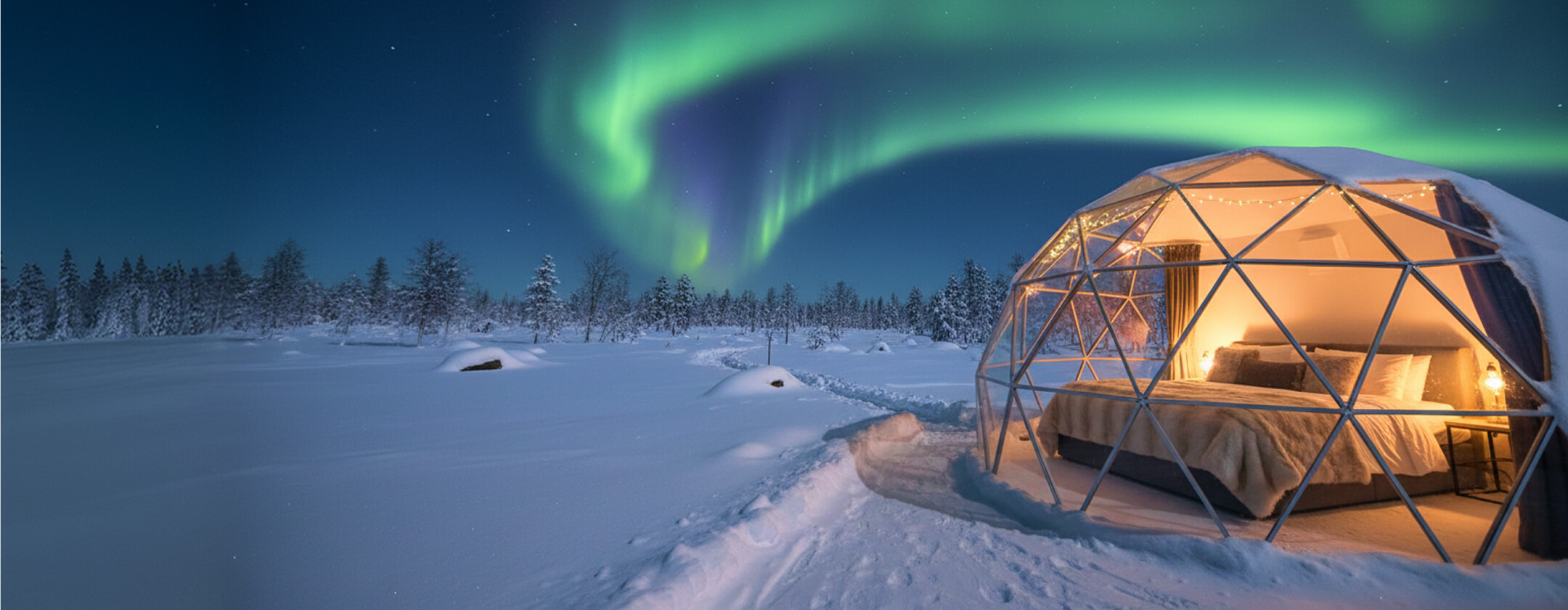
Watch the northern lights from a glass igloo
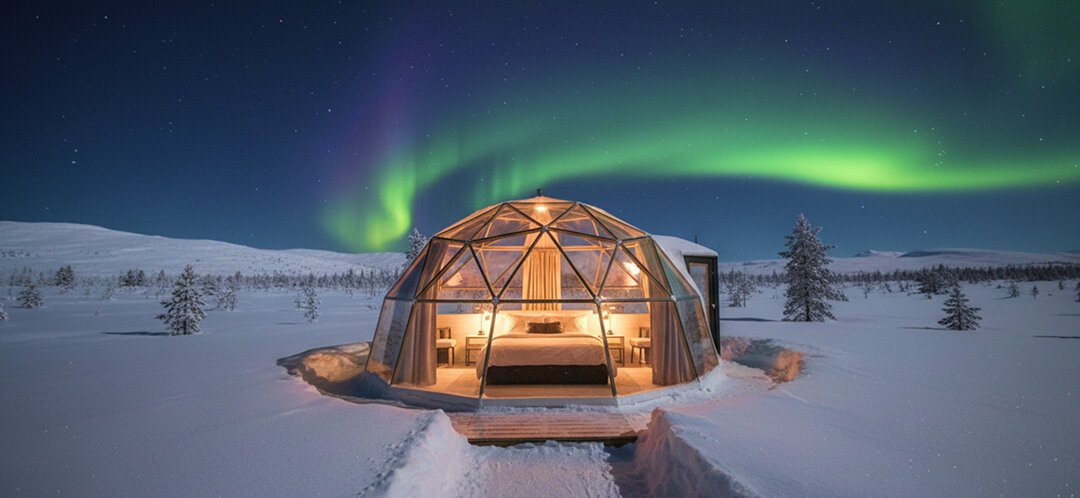
A glass igloo swaps a normal ceiling for glass, so you can watch the aurora appear overhead without leaving your bed. It ranges from a small heated cabin to a full dome, built specifically for sky-facing nights. You will find versions of this in Finland, Norway, Iceland, and Alaska, from small glass-roofed rooms to larger cabins and domes.
Finland is the place most closely associated with glass igloos, especially in Lapland, where you will find various igloos built around views of the night sky. Some use heated glass to keep snow from blocking the roof. With the northern lights season stretching broadly from late August into April, you have several months to plan the trip.
Finland is not the only option, though. Norway and Iceland have their own glass domes and cabins, while Fairbanks gives US travelers a similar experience in Alaska. The setting and the full trip will be different in each place, but the reason for choosing this type of stay is the same: you can keep watching the sky from a warm room and, if the aurora appears, see it without having to head outside and wait in the cold.
A glass roof gives you a better way to watch for the aurora, but it cannot guarantee that the sky will cooperate. Cloud cover and solar activity still decide what you see, which is why it is better to stay for several nights instead of depending on a single evening.
Because a few extra nights improve your odds without asking much extra of your itinerary, this is also one of the easier bucket list travel destinations in the world to fit into a wider trip. In Lapland, you can build several days around the stay and combine it with other winter activities. Norway and Iceland can work as part of a broader itinerary, while Alaska gives US travelers a similar experience without an international flight.
Sleep in a hotel rebuilt from ice every single winter
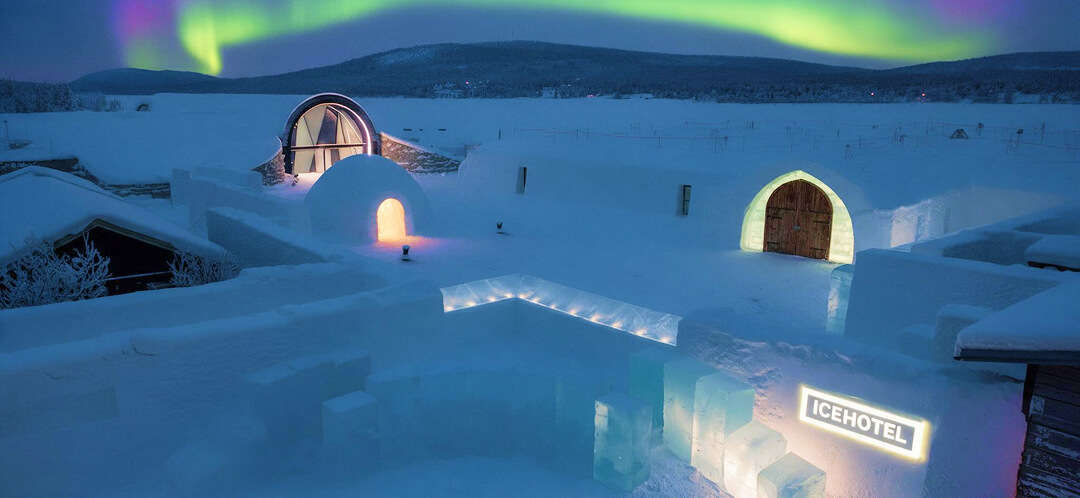
ICEHOTEL Winter in Jukkasjärvi, Sweden, is rebuilt every year from snow and ice from the Torne River. It opens for the winter season, then melts away again in spring.
This temporary nature is part of what made the hotel famous. The idea was born in 1989, when founder Yngve Bergqvist opened an ice-and-snow art gallery beside the river. Guests eventually started sleeping inside it, and the concept grew into the hotel that exists today.
A night here means sleeping on a mattress over a block of ice, wrapped in reindeer hides and a thermal sleeping bag rated to -13°F (-25°C), while the room itself stays between 18°F and 23°F (-8°C to -5°C). There are no bathrooms in these rooms. A heated building a short walk away is open around the clock with toilets, showers, and a sauna, and that is also where you change and store your luggage before bed. In the morning, you’re woken with a cup of hot lingonberry juice.
Each winter’s Art Suites are individually designed and hand-carved by a different group of international artists, so no two suites in a given year look alike, and the lineup changes completely the next. That makes choosing a room part of the experience, not just a question of paying for a higher category, and it also means the design you book will disappear with the building in spring.
Today, there are two ways to experience the concept. ICEHOTEL 365 is open year-round inside a permanently chilled building, while ICEHOTEL Winter is the seasonal version that returns each December and lasts until April. If your main goal is simply to sleep in an ice room, you have more flexibility. If you want the temporary hotel that exists for one winter only, your travel dates are much more limited.
Jukkasjärvi is near Kiruna in northern Sweden. From the US, most flights route through Stockholm before continuing to Kiruna Airport.
Among the best bucket list travel destinations, ICEHOTEL stands out because the calendar changes what you are actually booking. Decide first whether you want the year-round ice experience or the hotel that exists for one winter only.
Have an island entirely to yourself
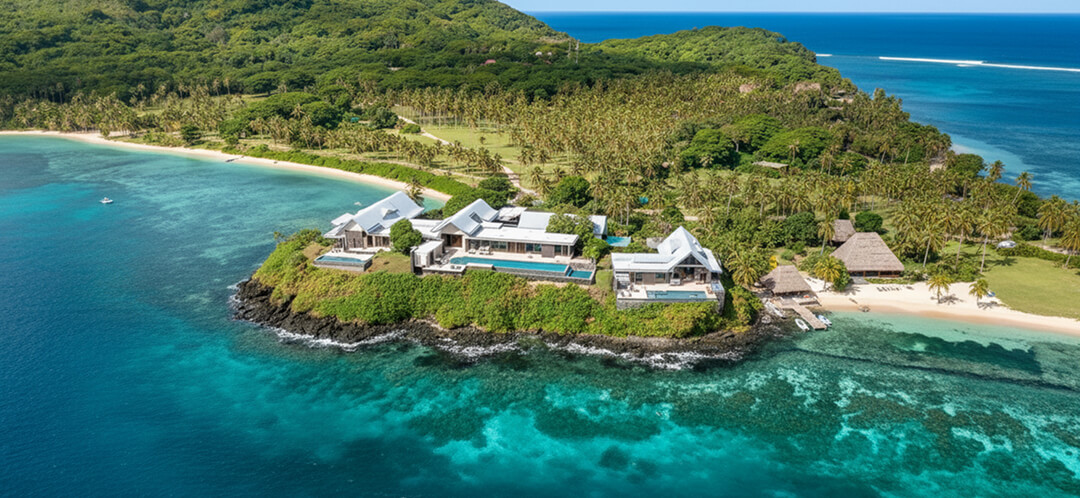
A genuine private-island rental means reserving the entire island for your group, not staying at a resort that happens to have a private beach.
The scale varies widely. At the smaller end, Musha Cay in the Bahamas puts up to 24 guests on a 700-acre archipelago in the Exumas, with five residences, a full staff, and a private chef, reserved for one group at a time. At the larger end, Fiji’s Wakaya Club offers a full buyout of its entire 2,200-acre island, ten oceanfront bures plus two private villas, sleeping up to 32 guests. What both have in common is not just privacy, but control over how the stay unfolds.
At a normal resort, you follow restaurant hours, shared excursions, and the pace of other guests. On a private island, meals, boat trips, and activities can be arranged around your group instead. That is especially useful for milestone birthdays, family gatherings, or trips with friends, where having everyone together without reserving separate spaces changes the whole experience.
It is also worth checking what a property means when it calls itself private. Plenty of resorts land on lists of overrated travel destinations for bucket-list travelers for exactly this reason: they sell a secluded beach or an adults-only wing as exclusivity, while hundreds of other guests are still checked in elsewhere on the same property. A genuine buyout, like Musha Cay’s or Wakaya’s, gives your group the entire setting, not just a roped-off corner of it.
Once you know the property is genuinely private, the next questions are practical. Musha Cay guests fly commercial to Great Exuma, then transfer by private plane or boat to the island’s own runway. Wakaya guests fly into Nadi and take a 35-to-40-minute flight on the resort’s private aircraft. Either way, look at what staff and meals are included, whether the final leg is by boat or small aircraft, and what happens if weather delays that transfer. Those details will have a much bigger effect on the trip than how remote the island looks in photographs.
Ride the Hiram Bingham train to Machu Picchu
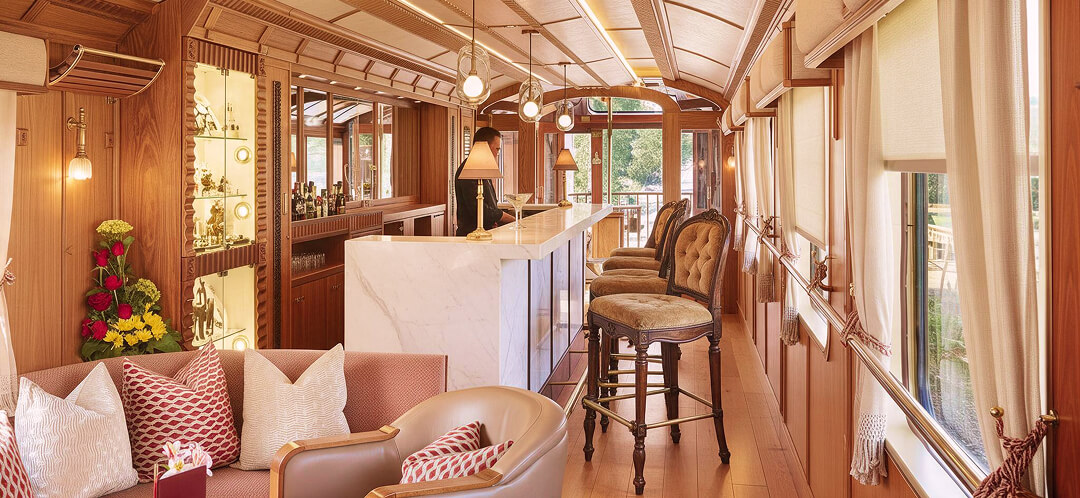
The Belmond Hiram Bingham is Peru’s luxury train to Machu Picchu, running from the Cusco area toward Machu Picchu Pueblo with dining cars, a bar car, and an open-air observation carriage. For travelers who want more than a standard transfer, it turns the route through the Sacred Valley into part of the day itself.
Belmond launched the train in 2003 and named it after Hiram Bingham, the American explorer whose expeditions brought Machu Picchu to international attention in the early 20th century. The outbound journey includes brunch, cocktails, and live music, while the return includes dinner and more live entertainment.
The route changes with the season. From January through April, Belmond operates a bimodal service, with a private bus from Cusco to Rio Sagrado followed by the train to Machu Picchu Pueblo. From May through December, the regular service operates from the Cusco area.
If the Hiram Bingham is on your top 10 bucket list travel destinations because you want the full rail journey, that difference is important. For the classic version of the trip, plan your dates around the regular train-only service.
Walk, not just drive, through Botswana’s Okavango Delta
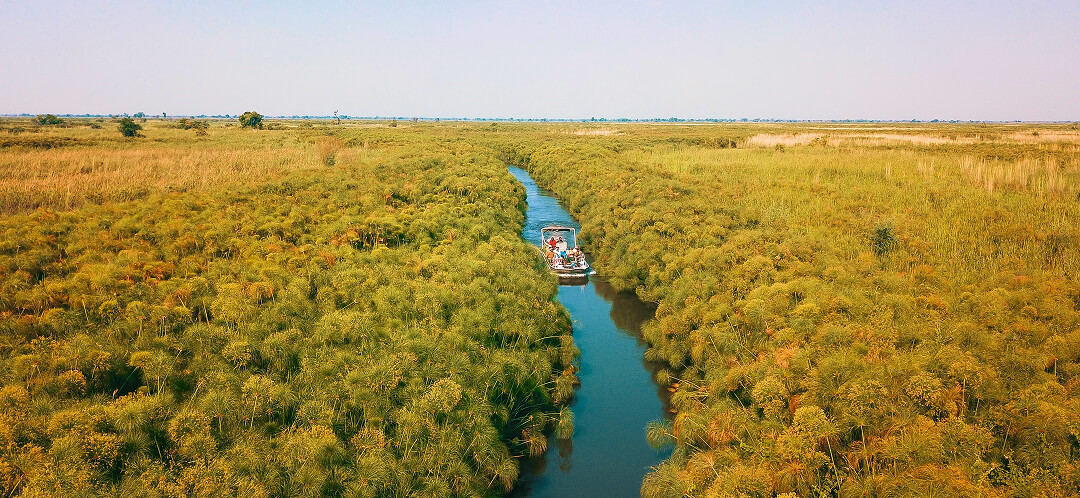
A guided walking safari in Botswana’s Okavango Delta is very different from a standard 4×4 game drive. You explore on foot with an experienced guide, looking for tracks, listening for wildlife, and noticing smaller details that are easy to miss from a vehicle.
This experience is possible here in a way it isn’t in most other safari destinations because of how the Delta itself behaves. UNESCO inscribed the Okavango Delta as its 1,000th World Heritage Site on June 22, 2014. Unlike most river deltas, its water never reaches the sea. Instead, it spreads across the Kalahari Basin and creates a changing network of channels, floodplains, and islands.
As the water rises, more of the Delta opens up to mokoro trips. These traditional dugout canoes let you travel quietly through narrow channels that vehicles cannot reach, which is why the high-water season, roughly May through August, is the best time to include this part of the trip.
Get the season right, and Botswana earns its place on any travel destinations bucket list for exactly this reason: choose the camp and the high-water months together, and one trip covers walking, game drives, and time on the water instead of just one of the three.
Sleep under the stars in a Bedouin camp in Wadi Rum
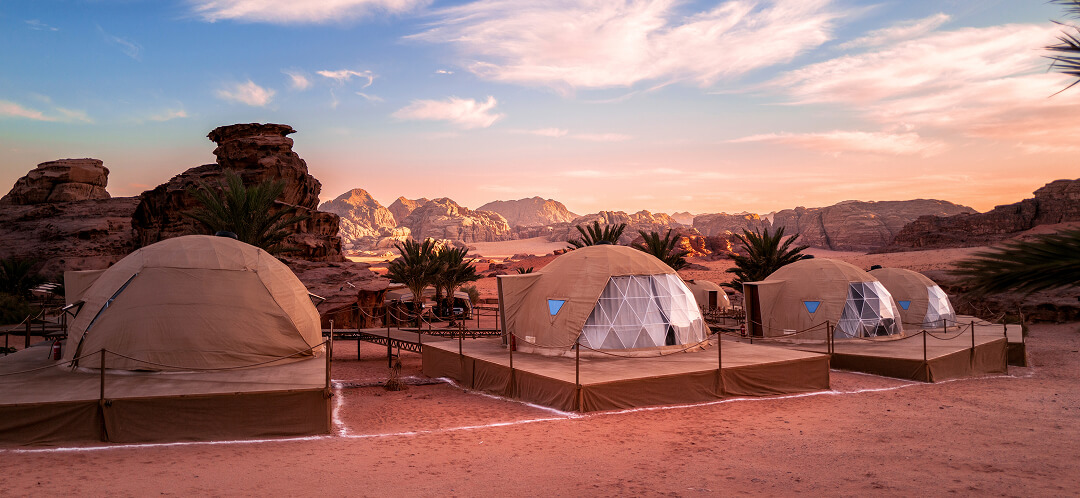
Wadi Rum is a 74,000-hectare protected desert area in southern Jordan, where you can stay overnight in a traditional Bedouin-style camp or choose one of the glass-domed “bubble” tents designed for watching the stars from bed. The accommodation has changed over the years, but the main reason to stay is still the desert itself.
Wadi Rum became a UNESCO World Heritage Site in 2011, recognized for both its landscape and its cultural history. Narrow canyons, natural arches, cliffs, and caverns stretch across the protected area, alongside thousands of rock carvings and inscriptions left over roughly 12,000 years of human activity.
That history also includes Wadi Rum’s connection to T.E. Lawrence, whose writings helped make the area internationally known through the story later associated with “Lawrence of Arabia.” More recently, the same red, iron-rich sand and towering sandstone formations convinced Ridley Scott to shoot Mars scenes for The Martian here, and it’s easy to see why once you’re standing there.
The bubble tents themselves are a real reason to choose one over a traditional camp. Behind the glass front, most have a private bathroom, air conditioning, and a bed positioned so the transparent panel or dome faces the sky directly above it. Some go further, with a small kitchenette or a covered outdoor terrace. It’s a different kind of comfort than a traditional open-sided Bedouin tent, and it comes at a higher price for it.
After dark, there is very little artificial light around the protected area, so the sky becomes one of the main reasons to spend the night. A glass dome lets you keep watching from bed, while a more traditional camp gives you the chance to sit outside and experience the same dark desert sky without the city glow found around larger resorts.
Getting there depends on where you enter Jordan. Aqaba is about 60 km from Wadi Rum, so the drive is relatively short. Amman is roughly 290 km away, which makes the desert a much longer road journey and usually a more natural part of a wider Jordan itinerary.
Among these bucket list travel destinations, Wadi Rum also gives you more freedom over timing than experiences tied to a short operating season. What actually changes by season is the temperature: summer days can pass 100°F (38°C), while winter nights can drop below freezing, so pack for both extremes on the same trip and let the season decide what you bring, not whether you go.
Cross the Drake Passage to Antarctica
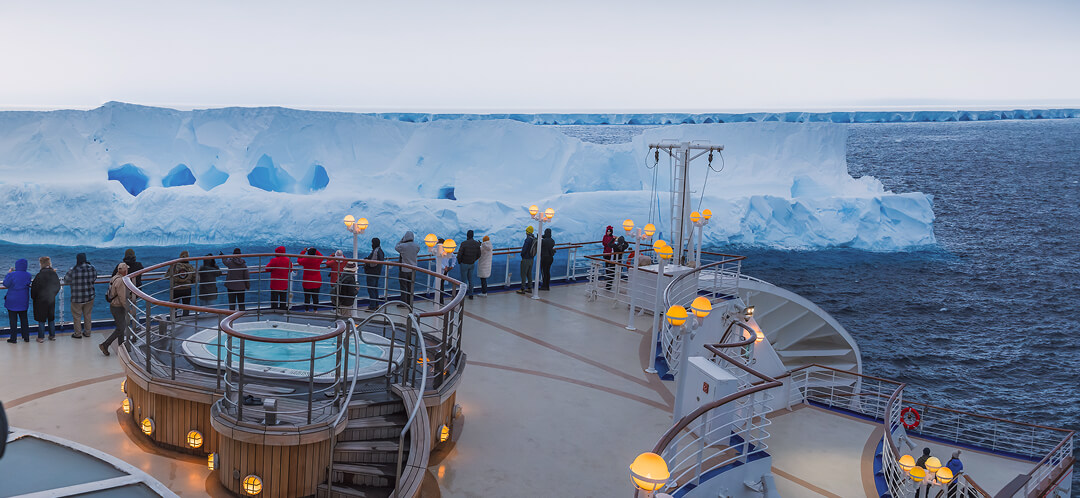
A small-ship expedition cruise from Ushuaia, Argentina, across the Drake Passage is the classic route to the Antarctic Peninsula.
The Drake Passage is what actually sets this decision apart. It’s the open stretch of ocean between South America’s Cape Horn and Antarctica’s South Shetland Islands, roughly 500 miles across, and it’s one of the roughest crossings on Earth for a specific reason: it’s the only place where the Atlantic, Pacific, and Southern Oceans meet with no landmass anywhere in the way, so winds and currents that would normally break against a coastline just keep building instead. Crossing takes about two days each way.
What you get on any given crossing is genuinely a coin flip. Expedition crews call the calm version a “Drake Lake” and the rough one a “Drake Shake,” and Drake Lake is actually the more common outcome, making up roughly 70% of crossings. The other 30% can bring swells of 40 feet (12 meters) or more, although modern expedition ships are built with stabilizers specifically for this stretch of water, and captains track conditions days in advance to route around the worst of it.
A fly-cruise removes those crossing days entirely, useful for travelers with less time or no interest in finding out which version of the Drake they’ll get. For others, the crossing itself is part of the appeal. Sailing south from Ushuaia creates a gradual arrival, and the days at sea become part of the expedition instead of simply transport to Antarctica.
Antarctic tourism is now well established. IAATO recorded 118,491 visitors in the 2024-25 season, but the travel window remains short. Most expeditions run from late October to late March, with December and January offering the most reliable weather and the widest choice of departures.
That limited season means you need to plan Antarctica earlier than most trips on this list. First decide whether crossing the Drake forms part of the experience you want, then compare ships and departure dates.
How to actually prioritize a list like this
Start with the trips locked to a narrow window of the year. ICEHOTEL Winter needs to be planned between December and April, and Antarctica has its own short expedition season. Those dates are fixed, so they should go into the calendar before trips such as Wadi Rum, a private island, or most safaris, which give you far more choice over when to travel.
This is especially useful if you are planning several years of travel around retirement. You might plan Antarctica for one austral summer, ICEHOTEL Winter for the following winter, and leave Jordan or a private-island stay for a year when your dates are less predictable. That way, the trips with the narrowest windows are not pushed back simply because they are harder to fit in later.
You do not always have to begin with the farthest option, either. Alaska gives US travelers a closer version of the glass-igloo and northern-lights experience around Fairbanks, without the extra flight to Scandinavia. The same idea can help when looking at bucket list travel destinations in the USA: a domestic trip can still give you the experience you want, while asking for less time and planning.
Once you know which trips have fixed seasons and which ones can move around the calendar, it becomes much easier to decide what to book first.