

Chapters:

Need help with your trip?
Our support team is available 24/7. Request a callback or call us directly at (833) 619-0908
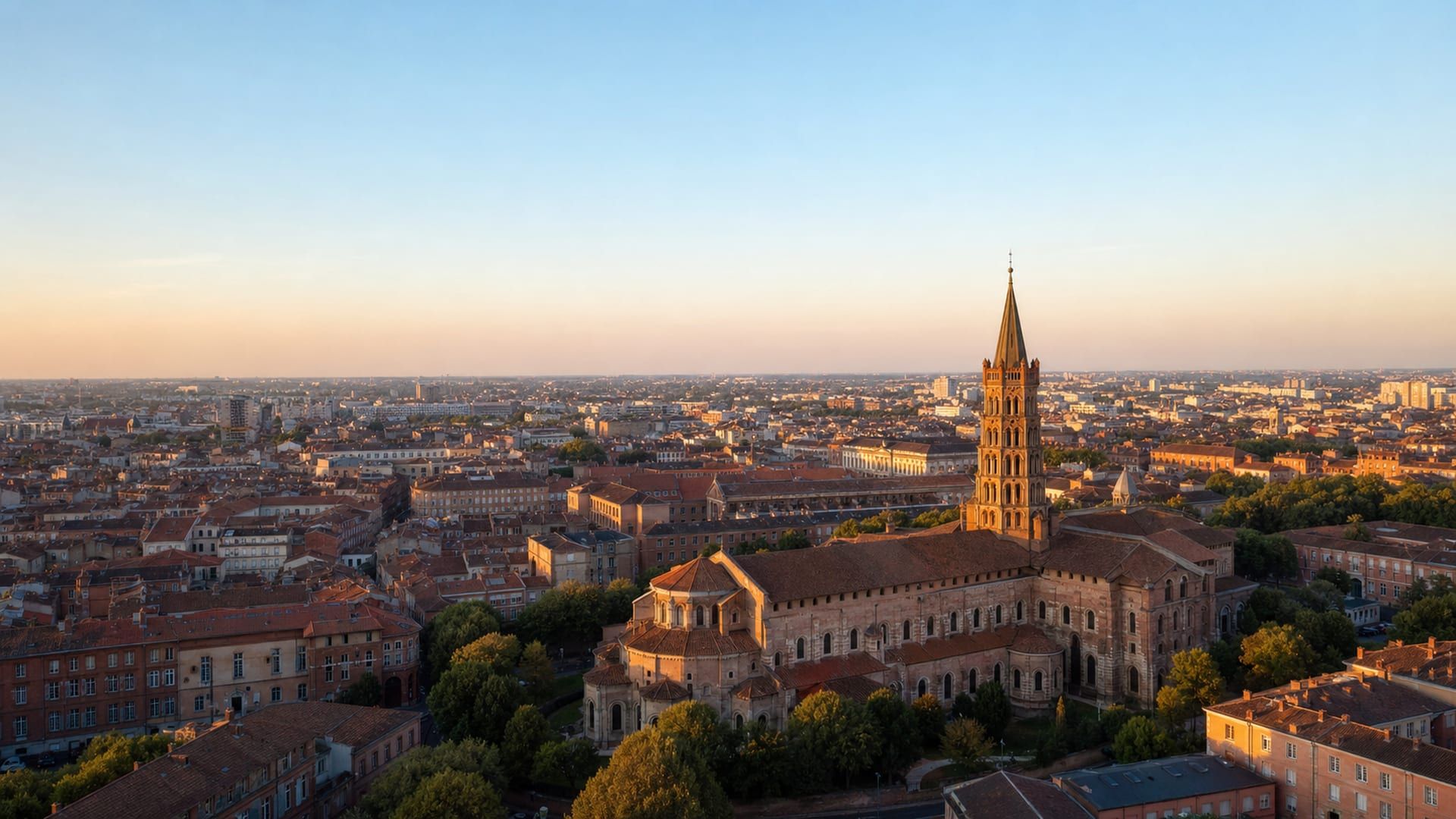
Toulouse usually gets treated as a quick stop between airports, aerospace sites, and the old square, so travelers often miss how much the city rewards slower, neighborhood-by-neighborhood planning.
That habit leaves distance, tram connections, and dinner timing to chance, which matters here because the best sights spread from Saint-Sernin to the river and then out toward Cité de l’espace.
This guide orders the visit by area, transit, and time of day, so you can see the brick center, cross the Garonne once, and still leave space for meals and an easier departure.
Useful things to know

Main language(s): French
Bonjour (bohn-zhoor) – Hello/good morning
S'il vous plaît (seel voo pleh) – Please
Merci (mehr-see) – Thank you
Parlez-vous anglais ? (par-lay voo ahn-gleh) – Do you speak English?
C'est combien ? (say kohm-byen) – How much does it cost?

Currency: The local currency is the euro (EUR, €).

Cash and cards: Cards and contactless are widely accepted, but carry about €20 to €40 ($22 to $43) in cash for small purchases.

Tipping: Round up small bills and leave about 5% in restaurants if service is good.

Traditional food: Cassoulet, duck confit, Toulouse sausage, foie gras

Water and coffee costs: Water ~€2 ($2), bar espresso ~€2.50 ($3).

Taxis and ride apps: Uber and Bolt operate here; taxi availability can be tighter late at night.

Plug and voltage: Type E socket, 230V

Dining and shop opening hours: Breakfast runs about 7:00-9:30 am, lunch about 12:00-2:00 pm, and dinner about 7:30-10:00 pm. Many restaurants close Sunday night and Monday.

Emergency number: Call 112 for all emergencies; 15 for medical, 17 for police, 18 for firefighters.
Where to stay in Toulouse
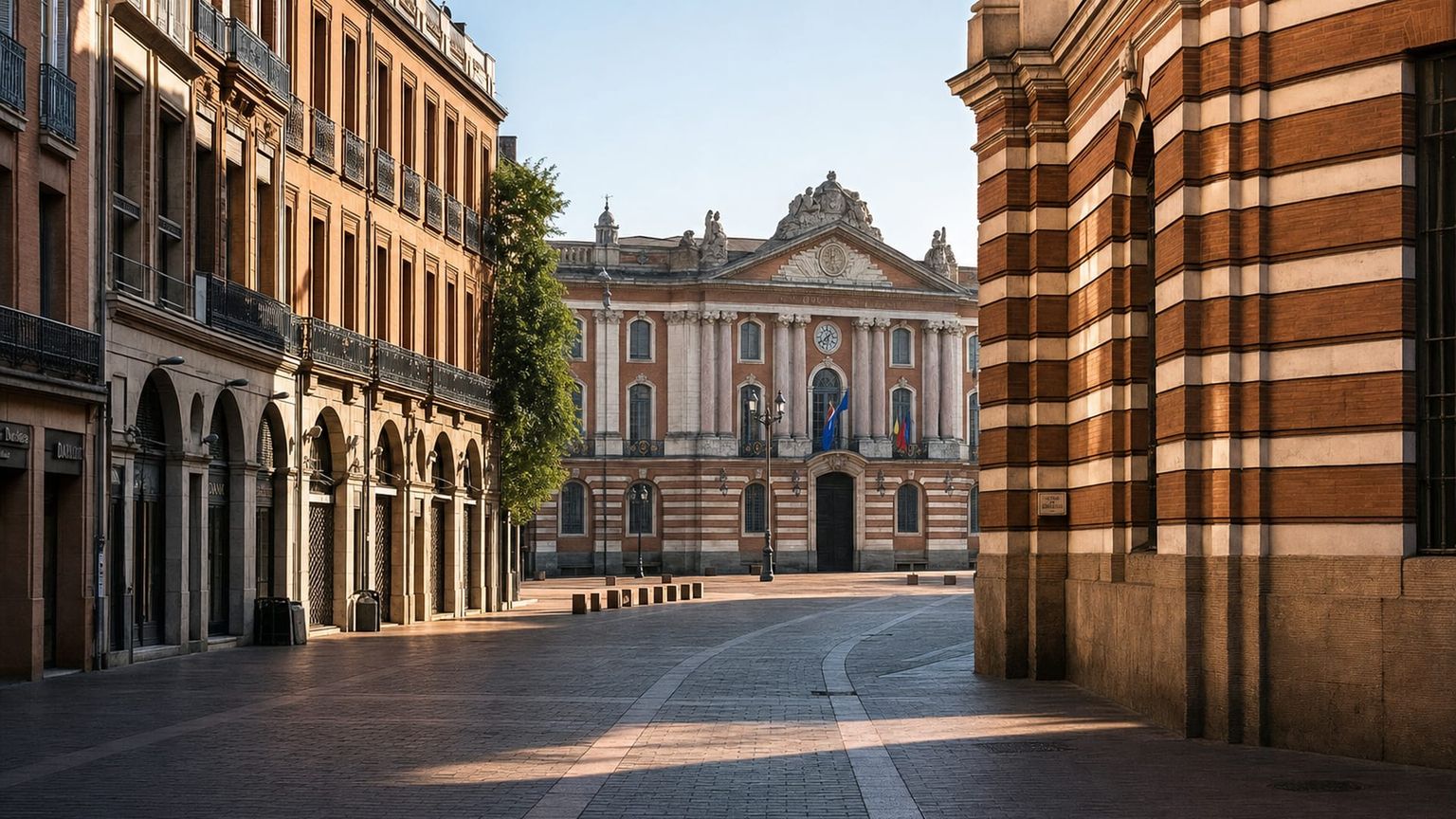
Toulouse’s central grid around Place du Capitole, Rue d’Alsace-Lorraine, and the main shopping streets puts you beside the city’s biggest sights, restaurants, and metro links. It suits visitors who want to move between museums, squares, and dinner on foot.
Best for: First-time visits, sightseeing, shopping, and short stays without much transit planning
What to expect: Busy sidewalks, late-opening restaurants, and the most concentrated foot traffic in the city.
Hotel prices: Usually about 130€ to 230€ (~$143 to ~$253) per night for well-rated stays
Distance to major sights: 5 to 10 minutes on foot to Place du Capitole; about 15 minutes on foot to the Garonne riverfront
Quietness: Lively by day and early evening, with more street noise and activity after dark.
Main trade-off: Hotel rates run higher here, and rooms facing the main streets can pick up tram and pedestrian noise.
Good to know: If you want cafés and shops close by, choose a room on a side street or an upper floor to reduce street noise.
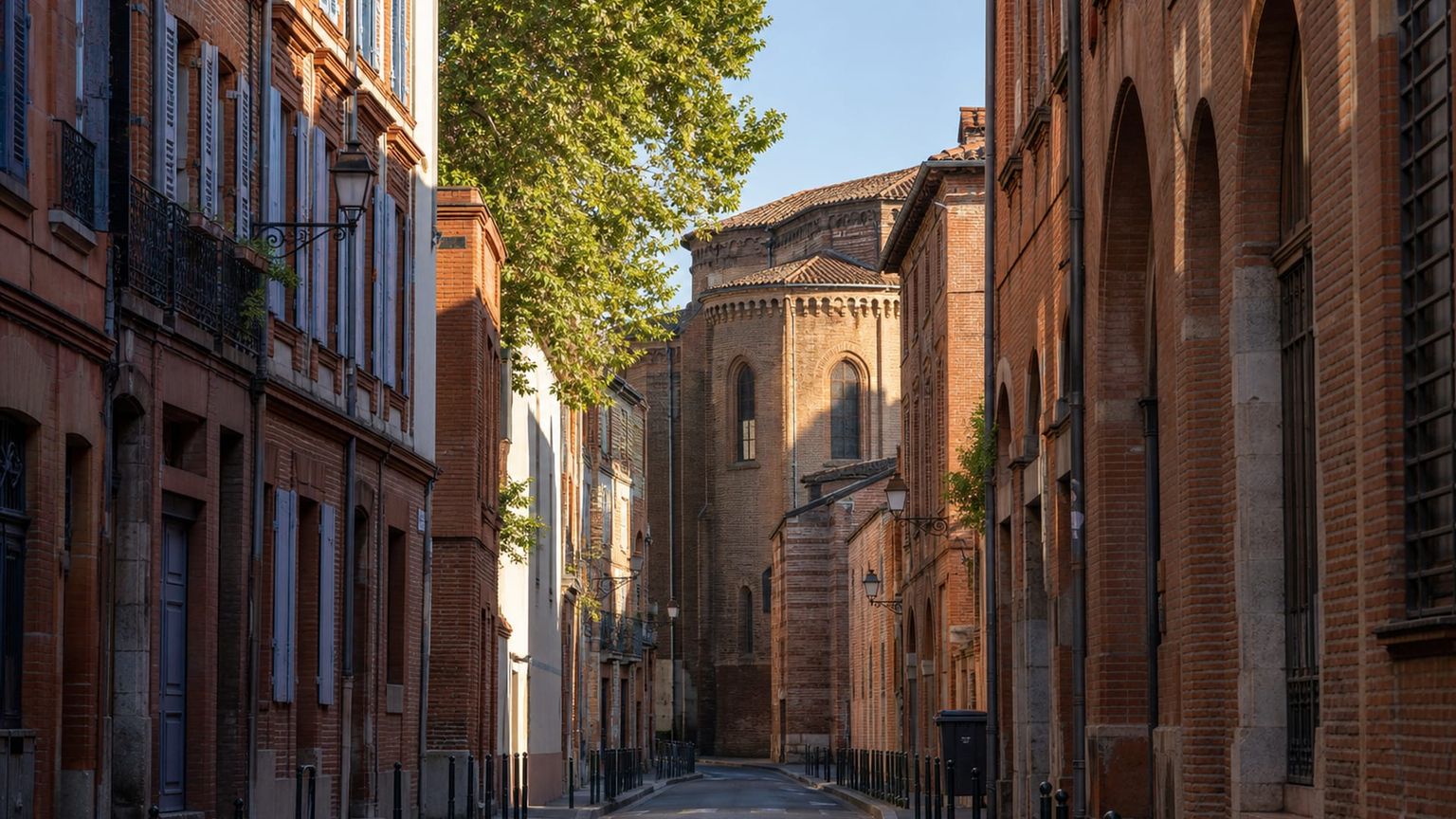
Carmes and Saint-Étienne combine narrow streets, independent dining, and some of Toulouse’s best-preserved historic blocks just south of the center. The area matters because it gives you a more residential setting while staying close to the cathedral, museums, and river walks.
Best for: Dining, historic streets, boutique stays, and travelers who want a central but calmer base
What to expect: Compact streets, terrace dining, and a mix of locals, students, and visitors in the evening.
Hotel prices: Usually about 120€ to 210€ (~$132 to ~$231) per night for well-rated stays
Distance to major sights: About 10 to 15 minutes on foot to Place du Capitole; about 12 minutes on foot to Saint-Sernin Basilica
Quietness: Quieter than the hyper-center in the morning, then livelier at dinner and on weekend nights.
Main trade-off: The best addresses book early, and some streets are narrow enough that drop-offs and luggage handling take extra time.
Good to know: If you are arriving by taxi or rideshare, check the exact street before booking, since some buildings sit on lanes with limited vehicle access.
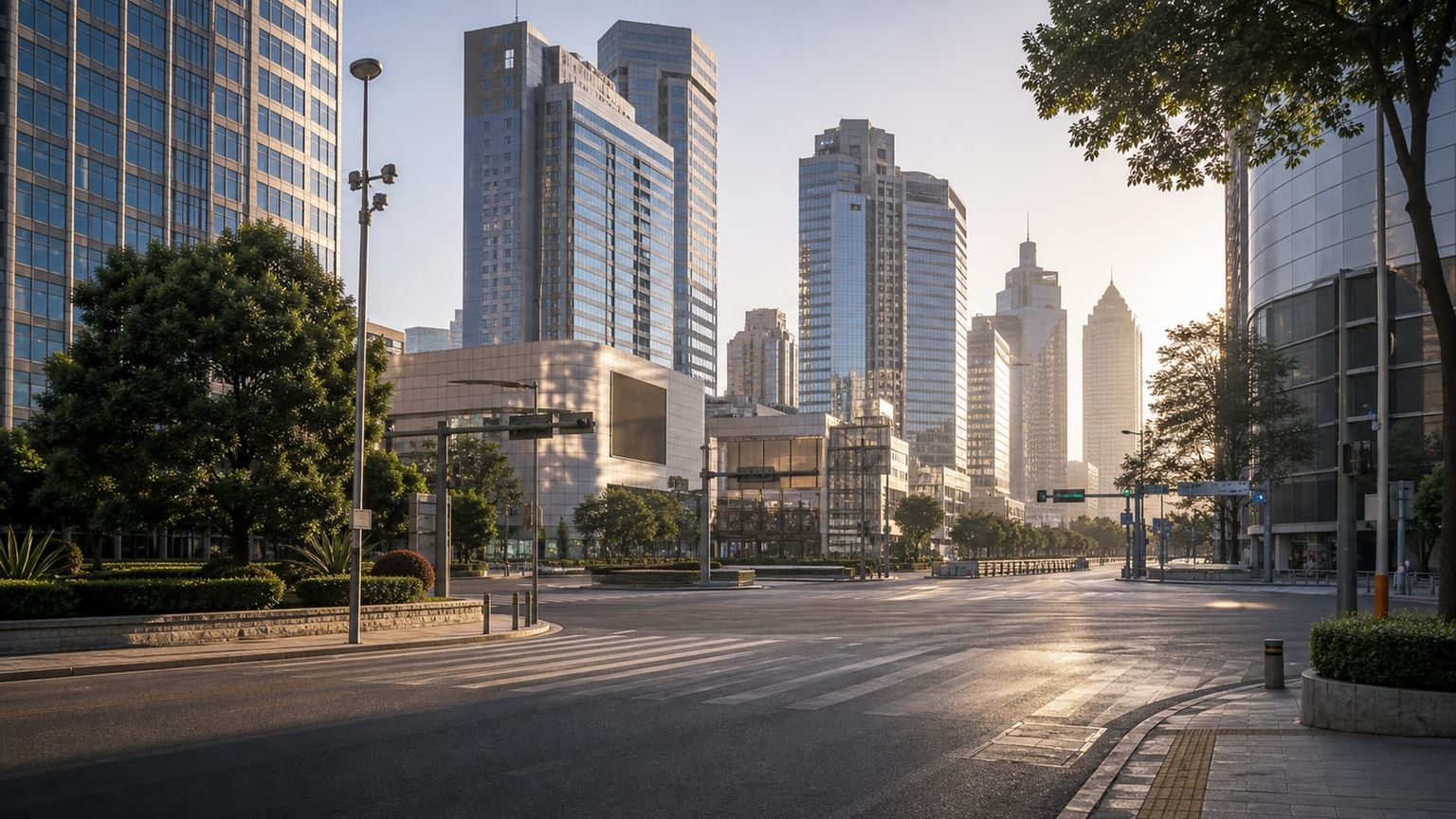
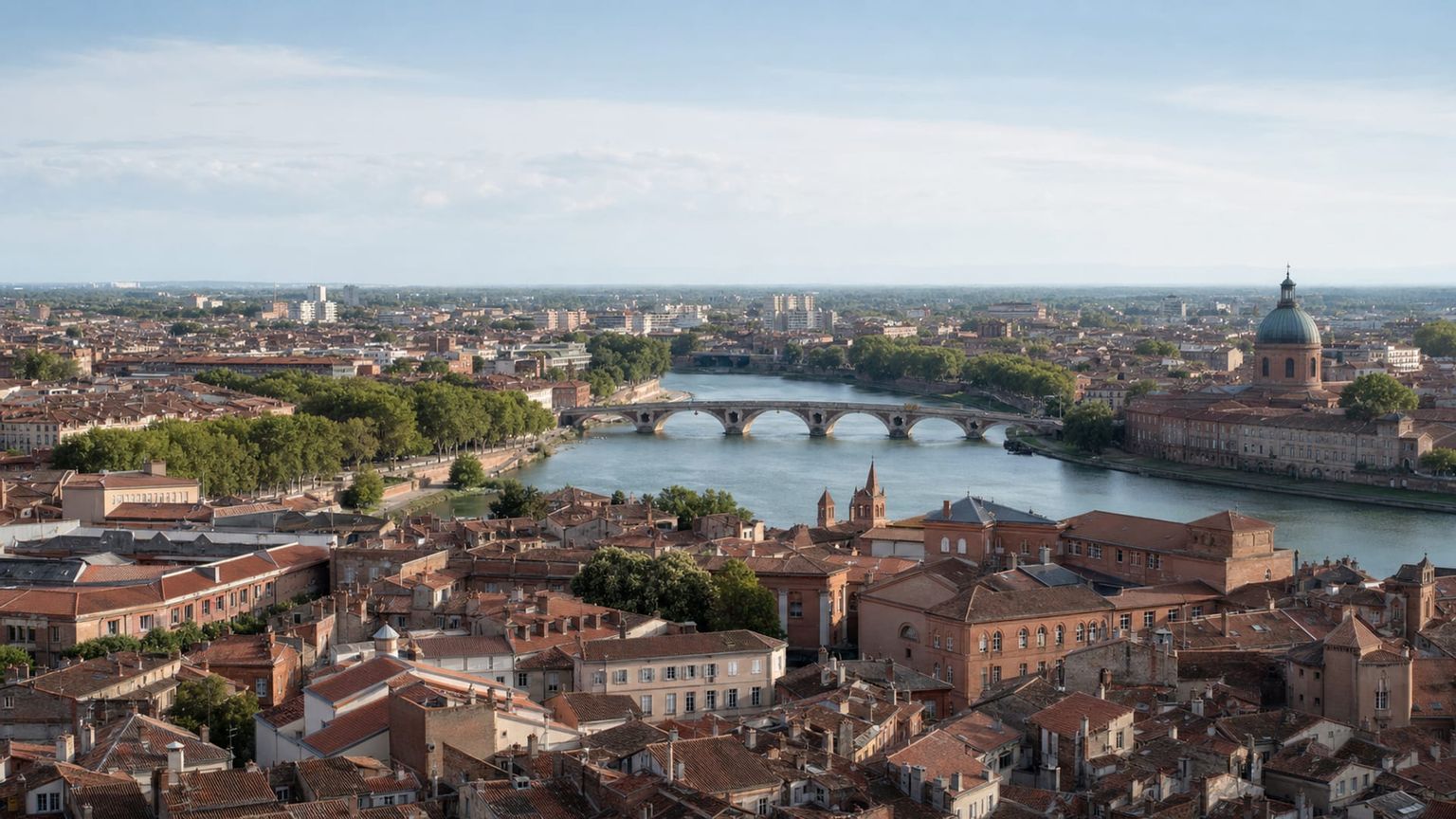
Saint-Cyprien sits across the Garonne from the historic center and mixes market halls, local bars, and easy river access. It matters for travelers who want a neighborhood with its own character, plus a short walk or tram ride back to the old town.
Best for: Longer stays, market visits, river walks, and travelers who prefer a neighborhood feel
What to expect: Active daytime streets around the market and more relaxed evenings away from the main center.
Hotel prices: Usually about 100€ to 180€ (~$110 to ~$198) per night for well-rated stays
Distance to major sights: About 10 minutes by tram or 20 minutes on foot to Place du Capitole; about 8 minutes on foot to the Garonne riverbanks
Quietness: Generally calmer than the center during the day, with a modest evening scene near bars and restaurants.
Main trade-off: You will cross the river for the main monuments, so late-night returns take a little more planning.
Good to know: If you plan to walk back after dinner, pick lodging near the bridge or a tram stop rather than deeper in the neighborhood.
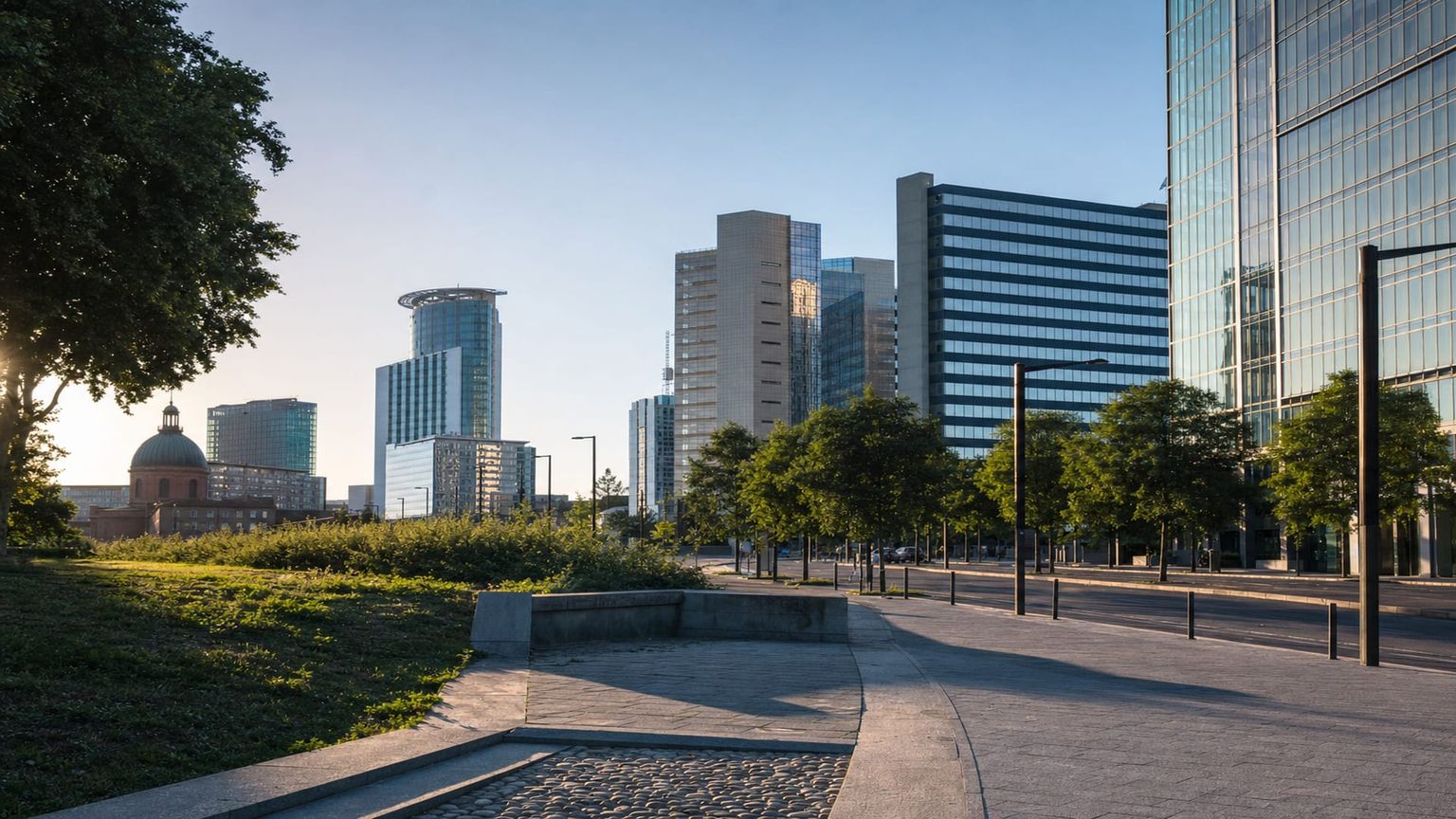
Compans-Caffarelli combines office towers, the Japanese Garden, and direct metro access north of the center. It suits travelers who want newer hotels, easier arrivals, and a quick route into the old town without staying in the busiest streets.
Best for: Business trips, reliable metro access, and travelers who prefer newer hotels
What to expect: Office-hour foot traffic, fewer late-night crowds, and a cleaner, broader-street feel than the old center.
Hotel prices: Usually about 110€ to 190€ (~$121 to ~$209) per night for well-rated stays
Distance to major sights: About 10 minutes by metro to Place du Capitole; about 5 minutes on foot to the Japanese Garden
Quietness: Busier on weekdays during office hours, then noticeably quieter after work and on weekends.
Main trade-off: The neighborhood has fewer classic Toulouse streets and less evening life than the historic core.
Good to know: If you want to avoid late-night noise, this is a better fit than the center, but expect to eat and socialize elsewhere more often.
Travelers usually avoid staying in Borderouge and La Vache if they want to be close to the main sights, since both sit well north of the historic center and lean more residential than visitor-focused. Purpan, Mirail, and Reynerie are also less convenient for a first visit, with fewer tourist amenities and longer evening trips back from the center.
Hotel deals
How to get around Toulouse efficiently
Toulouse has no subway, so the city works best with Tisséo trams and buses for cross-town hops, then taxis or rideshares when you need a direct ride from the airport or late at night.

Metro
for longer distances
Toulouse has no subway, so the metro field is best read as a note on the city’s suburban rail and tram links; the Tisséo network covers the center well by tram and bus, while TER trains connect a few outer districts and nearby towns. Use them for longer cross-city hops when a walk would take too long, then switch to tram or bus for the last stretch. Tickets are valid for 90 minutes and cost about $1.90 (€1.80), with day passes from about $7.40 (€7).

Bus and tram
for convenience
Trams T1 and T2 run between the airport area, the airport branch, the center, and the western edge of the city, while the bus network fills in neighborhoods the tram does not reach. Buy a Tisséo ticket before boarding or validate a pass on entry, and plan on about 15 to 25 minutes from the center to major tram stops, depending on traffic and the exact stop. A single ride costs about $1.90 (€1.80), and a 2-hour ticket is about $3.20 (€3).

Taxi
for convenience or late hours
Licensed taxis queue at Toulouse-Blagnac Airport, train stations, and marked ranks, and you can also book by phone or app rather than hailing at random on the street. Fares are metered, with airport trips usually landing at about $25 to $35 (€24 to €33) to the center in light traffic, and late-night or luggage-heavy rides costing more; card payment is usually accepted, but confirm before departure if you want to pay by card.
*Prices are based on rates updated as of June 2026 and may change at the time of travel.
Walk in the center, use tram or bus for longer links, and keep taxis for airport transfers, luggage, or evening returns across the river.
Iconic landmarks
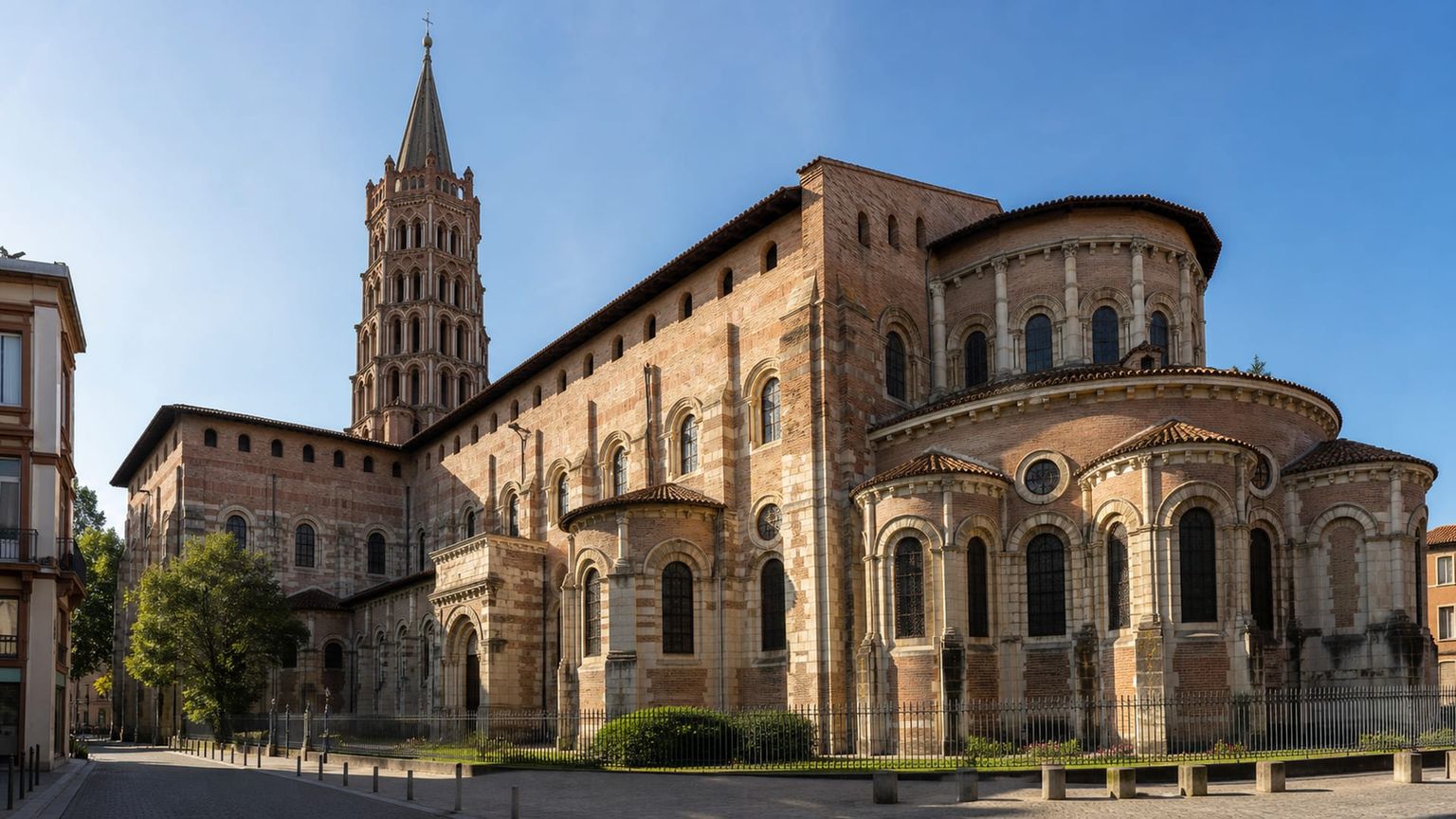
Basilica of Saint-Sernin
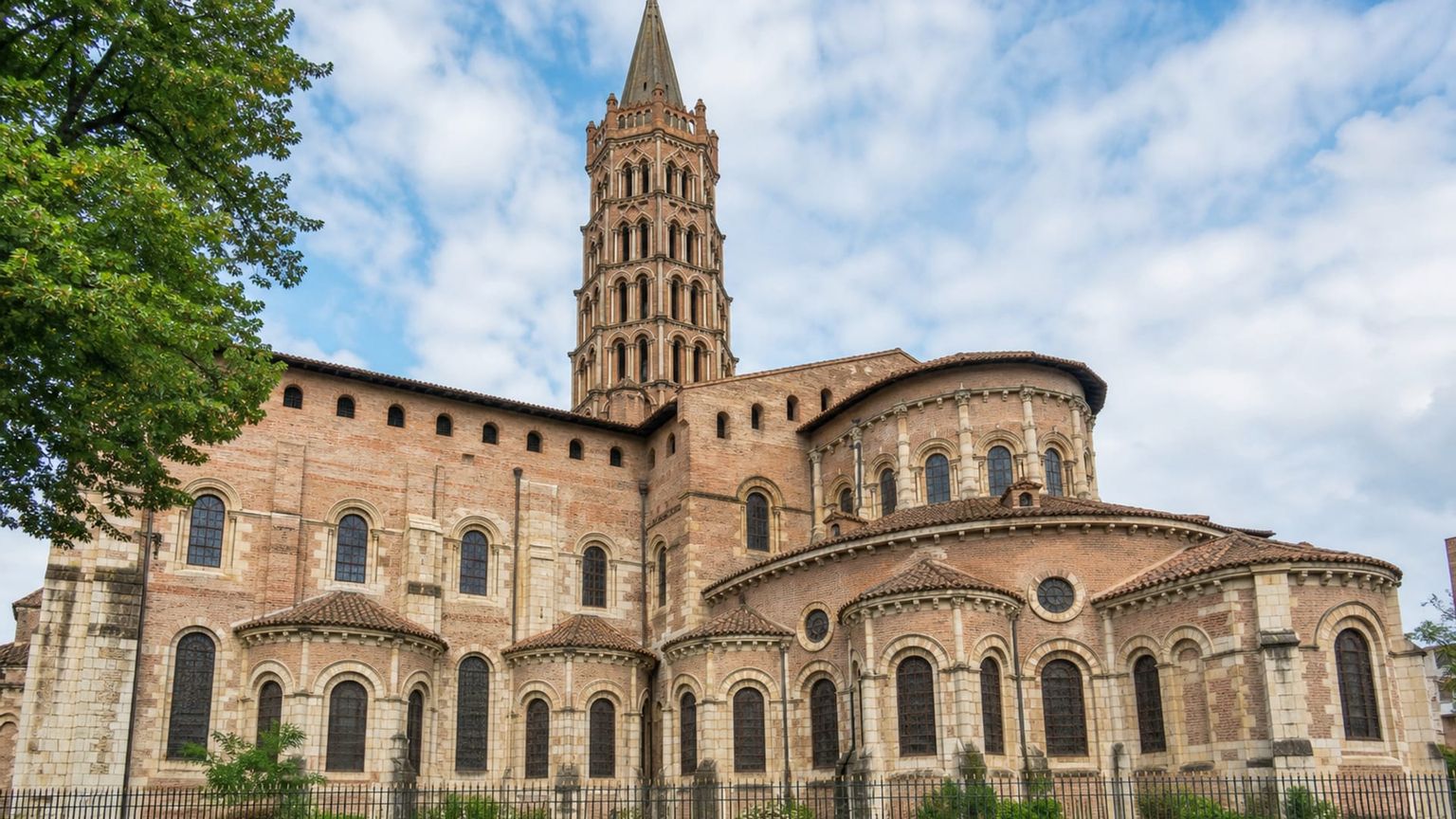
This Romanesque basilica anchors Toulouse’s old center with a brick nave, radiating chapels, and a tall octagonal bell tower. It holds major relics linked to the pilgrimage route to Santiago de Compostela.
Time needed: About 1 to 2 hours
Entry: Free to enter the basilica; the crypt and select ancillary spaces may require a paid ticket during special visits or events. Visit the official site for details.
Tip: Go early in the day for quieter interiors and softer light on the brickwork.
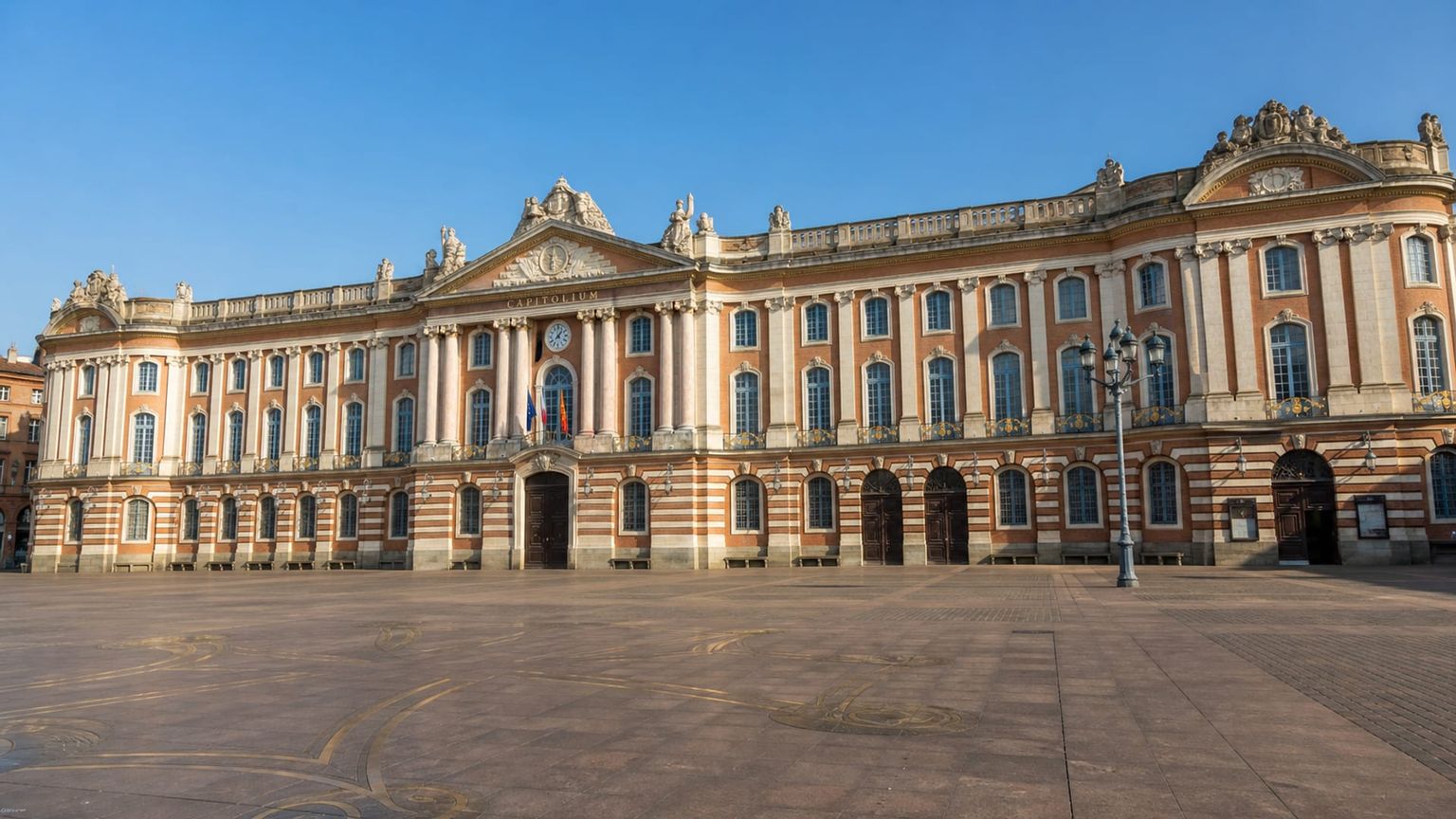
Capitole de Toulouse
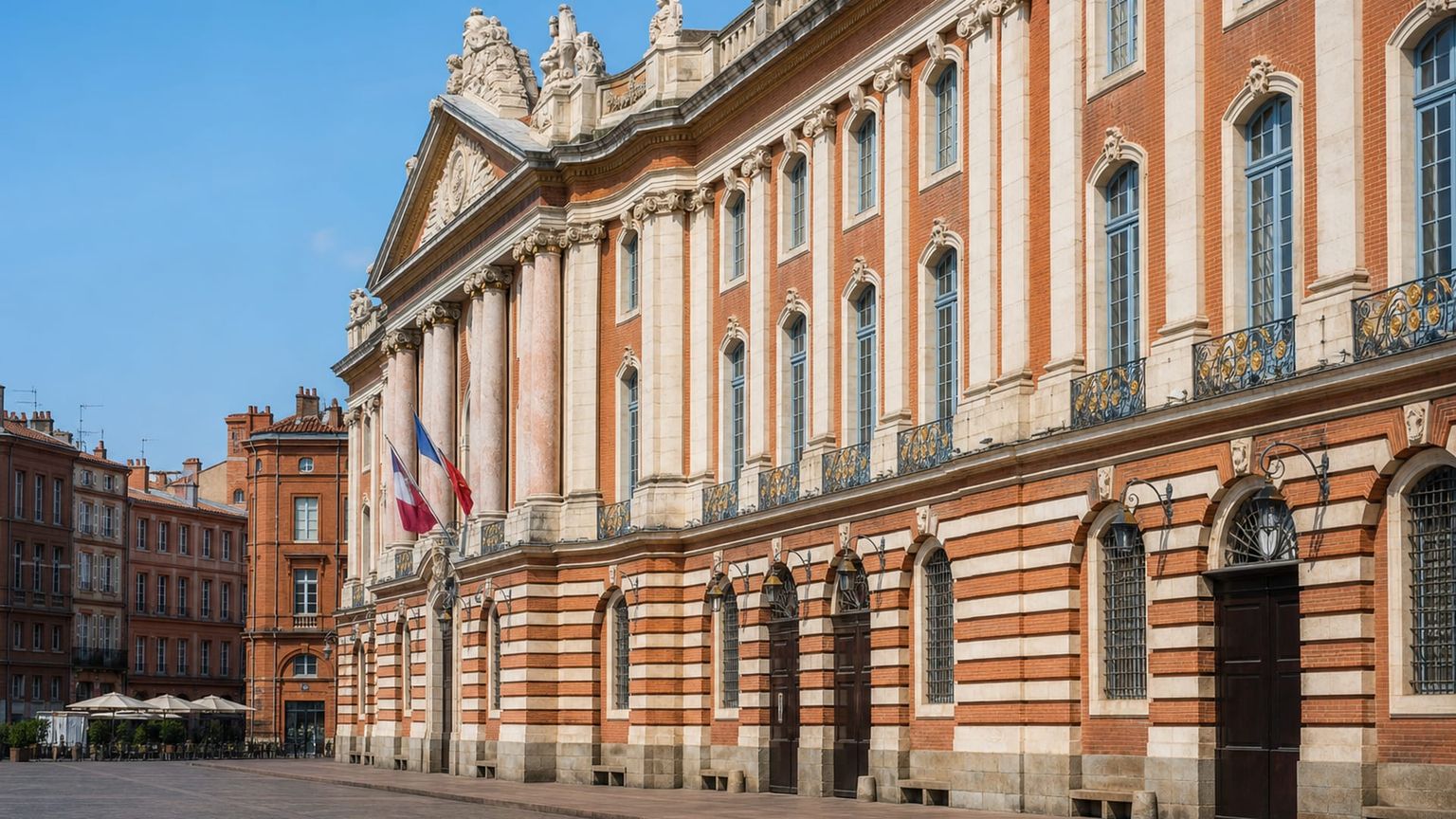
Place du Capitole centers on Toulouse’s grand civic palace, with an ornate neoclassical facade and the city hall and theater inside. The square in front gives you the clearest view of the building and its pink-brick symmetry.
Time needed: About 45 minutes to 1 hour
Entry: Free to access the square; guided interior visits and performance tickets vary by event and date. Visit the official site for details.
Tip: Visit late afternoon, when the facade catches warmer color and the square is less hectic.
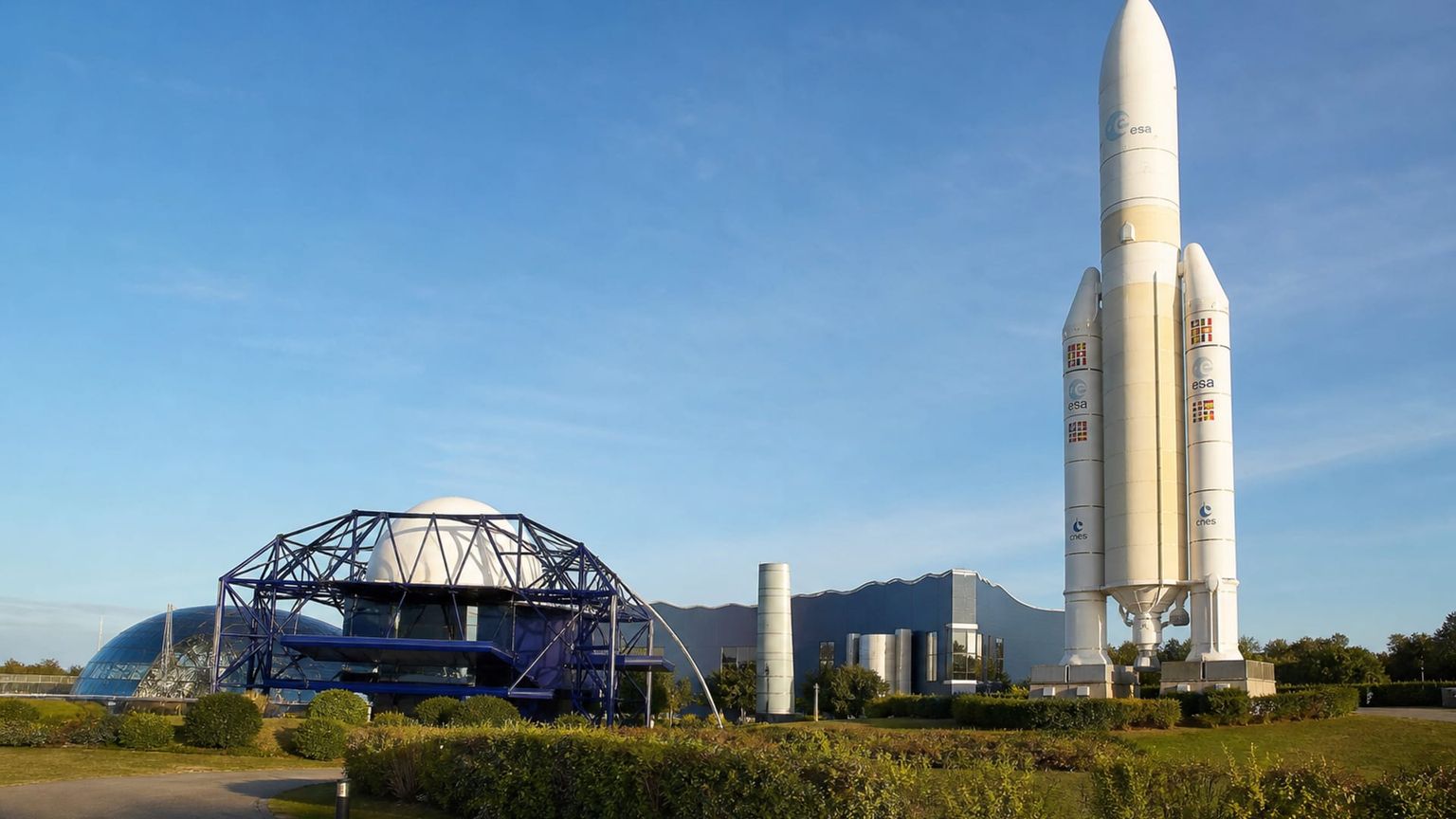
Cité de l'espace
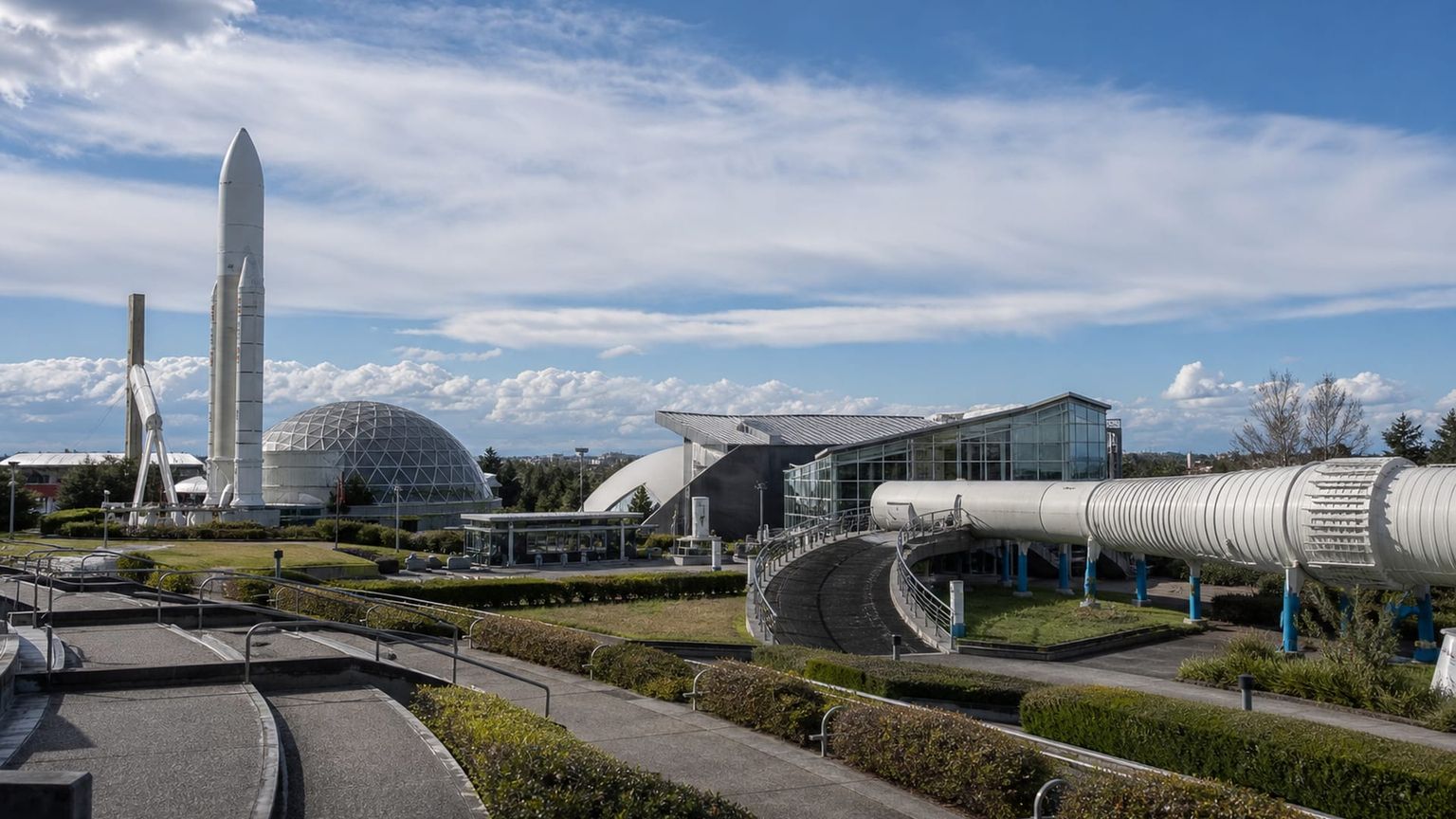
Cité de l’espace turns Toulouse’s aerospace identity into a major science park, with full-size rockets, planetarium shows, and hands-on exhibits. It sits east of the center and gives context to the city’s role in European space industry.
Time needed: About 3 to 4 hours
Entry: Standard admission costs $23 to $29 (€21 to €27), with reduced rates for children, students, and selected family tickets. Visit the official site for details.
Tip: Arrive before the first planetarium session to fit the outdoor rockets into the same visit.
Overlooked sites worth visiting

Jardin des Plantes
A quiet botanical garden with shaded paths, a small river, and curated plant beds in the city center. It works well for an unhurried walk, a picnic, or a pause between museum visits.
Time needed: About 1 to 2 hours
Entry: Free to access
Tip: Visit in the morning for cooler paths and softer light.

Musée Georges-Labit
This compact museum fills a former mansion with Southeast Asian and Egyptian art, plus a small garden. Its rooms stay manageable in size, so you can see the collection without a long visit.
Time needed: About 1 hour
Entry: Admission costs $5 ($4.50) to $8 ($7) Visit the official site for details.
Tip: Check afternoon opening times before you go.
Traditional food
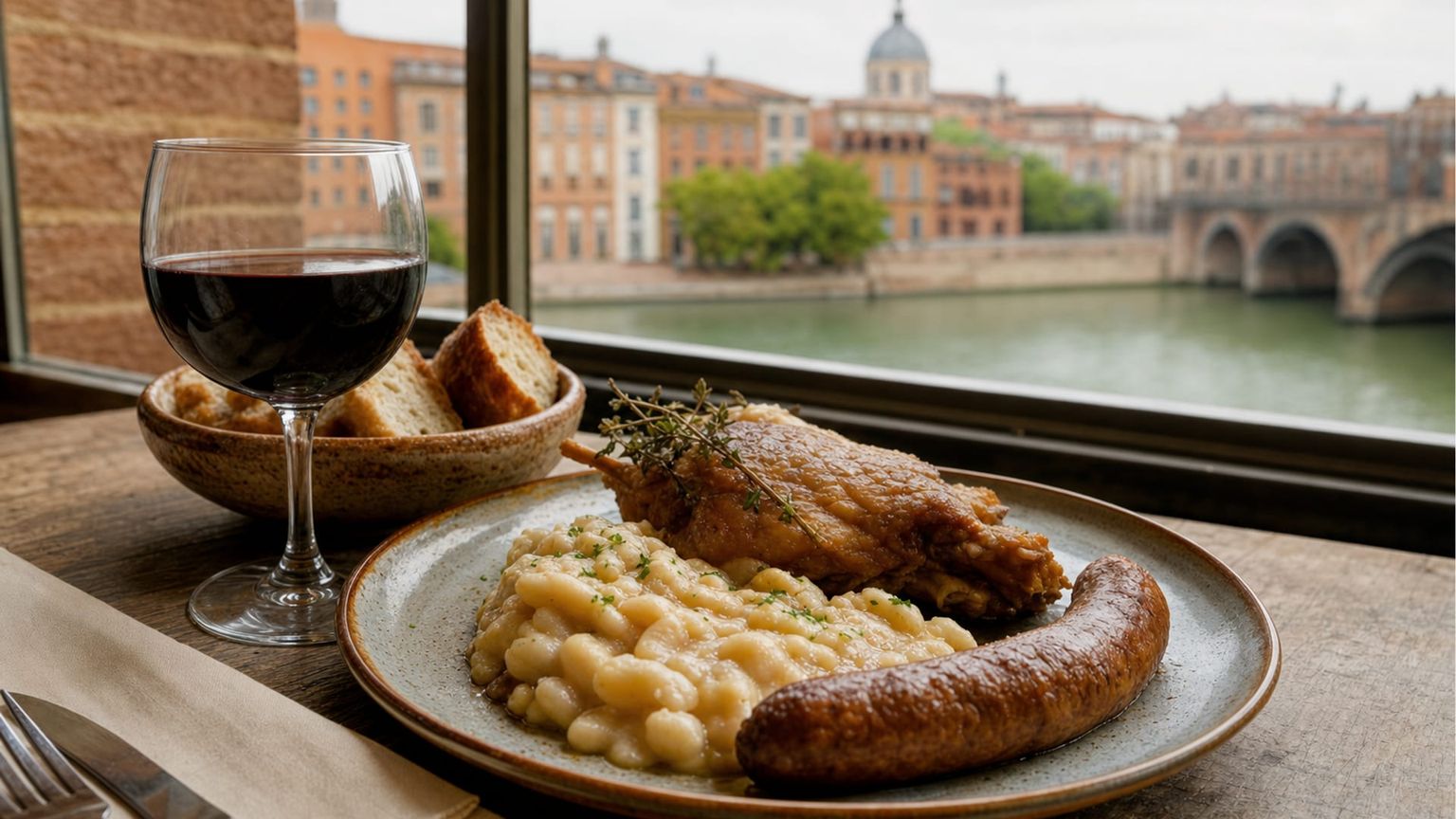
Toulouse cooking leans on duck, sausage, foie gras, and white beans, with cassoulet at the center of the table and long lunches, terrace dinners, and Sunday closures shaping the dining day.
Cassoulet
This bean-and-duck casserole defines southwest French comfort food, and it suits Toulouse’s slow dinner pace. Le Colombier serves a classic version in the old center, with a menu built around regional dishes.
Duck confit
Duck confit brings crisp skin, tender meat, and the rich flavors that shape Toulouse menus. At Chez Emile, the dish appears in a traditional setting near the center, with a strong local following.
Toulouse sausage
This coarse pork sausage anchors many regional plates and often arrives with beans or potatoes. Au Pois Gourmand offers a refined take in Toulouse, with a view that matches a longer dinner.
Foie gras
Foie gras shows up as a starter or a tasting plate across the city’s classic restaurants. Michel Sarran, now operating as Maison Sarran in Toulouse, remains the canonical stop for an elevated version of the ingredient.
Best time to visit Toulouse
Toulouse works well in most seasons, but spring and early autumn give you the best balance of outdoor walking, river time, and manageable crowds.
Best for: Brick streets, garden visits, and mild café weather
What you get: About 50-72°F (10-22°C), with moderate crowds and easier walking than in peak summer
Trade-offs: Rain can interrupt a river walk or a long outdoor lunch
Best for: Long evenings, open terraces, and late light on the pink brick
What you get: About 61-86°F (16-30°C), with the highest visitor numbers in the center and more demand for shaded sights
Trade-offs: Midday heat can make museum breaks and taxi rides more appealing
Best for: Food-focused trips, calmer squares, and comfortable city walks
What you get: About 48-77°F (9-25°C), with lighter crowds after the summer rush
Trade-offs: Shorter days reduce how much you can pack into one outing
Best for: Short stays, museums, and quieter hotel choices
What you get: About 38-54°F (3-12°C), with the smallest crowds and a slower restaurant pace
Trade-offs: Cool mornings and occasional rain make long walks less appealing
A realistic 5-day plan in Toulouse
Five days gives Toulouse enough room to show both its historic core and its aerospace side without turning the trip into a transit puzzle. The sequence below starts in the center, adds a park and a museum break, then saves a neighborhood day and a final shopping morning for the end.
Land at Toulouse (TLS), then take a taxi or rideshare into the center for about 20 to 25 minutes and roughly $35 to $45, or use the airport shuttle and metro for a cheaper trip that takes about 35 to 45 minutes total. Book a room in Capitole and the hyper-center if you want the easiest first-night footing, or Carmes and Saint-Étienne if you prefer quieter streets near the old core. After checking in, drink water, walk a few blocks to Place du Capitole, and keep dinner close with a simple cassoulet or duck confit on a terrace in the center.
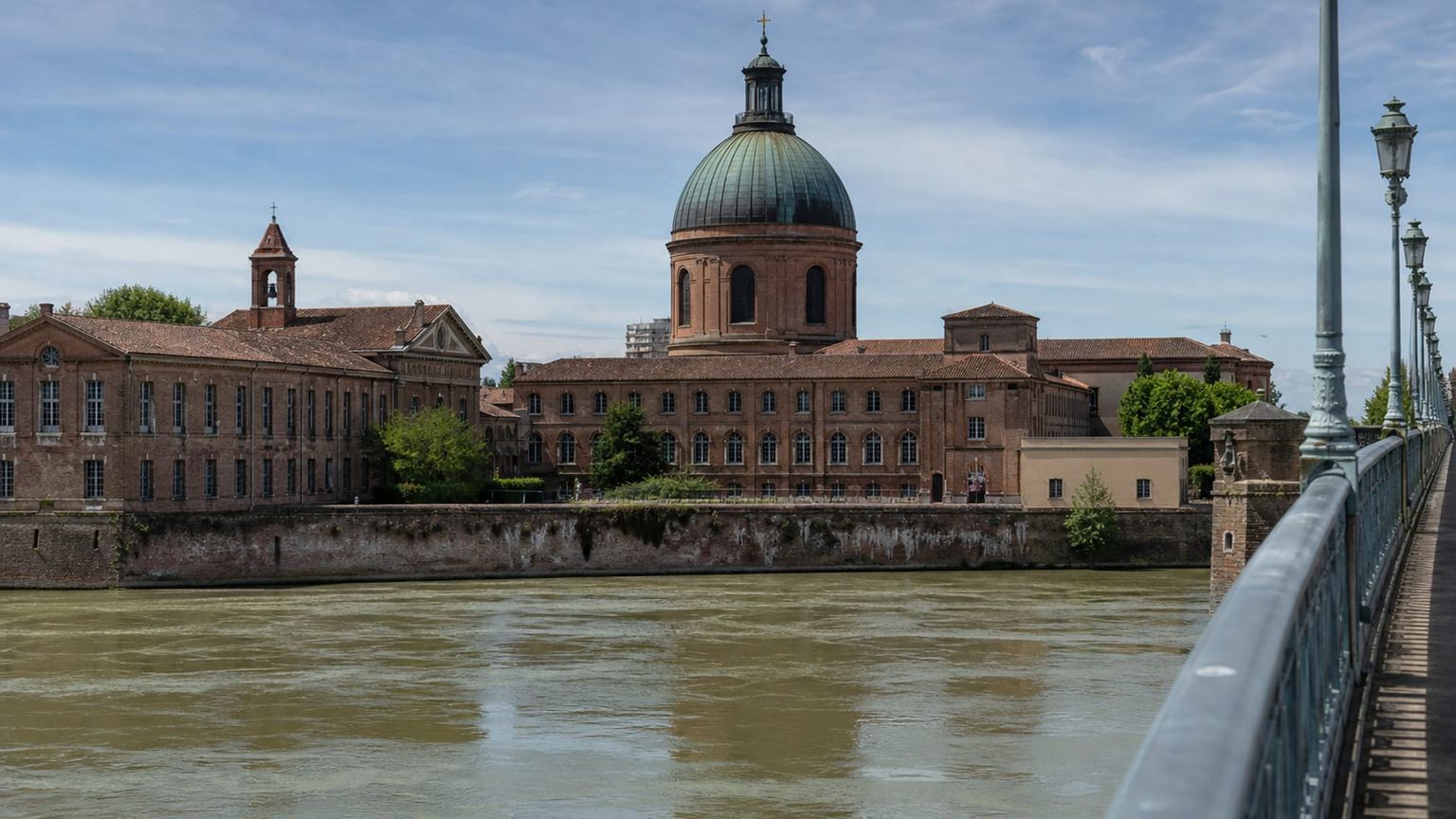
Start at the Basilica of Saint-Sernin, where the brick nave and bell tower are easiest to appreciate in the morning, then walk about 10 minutes to the Capitole de Toulouse for the square and civic facade. From there, continue about 8 minutes on foot to Jardin des Plantes for a slower stretch among the paths and plant beds, then end with an easy dinner back in Carmes, about 12 to 15 minutes on foot from the garden, where the narrow streets give you more choice without a long return.
An easy southeast loop makes the city’s space identity clear: take a taxi or bus to Cité de l’espace, spend about 3 to 4 hours with the rockets and planetarium, then ride back toward the center and stop at Musée Georges-Labit, about 20 to 25 minutes by taxi from the science park. Finish the afternoon in Saint-Étienne or along the nearby center streets, where you can sit down for coffee before a short walk back to your hotel.
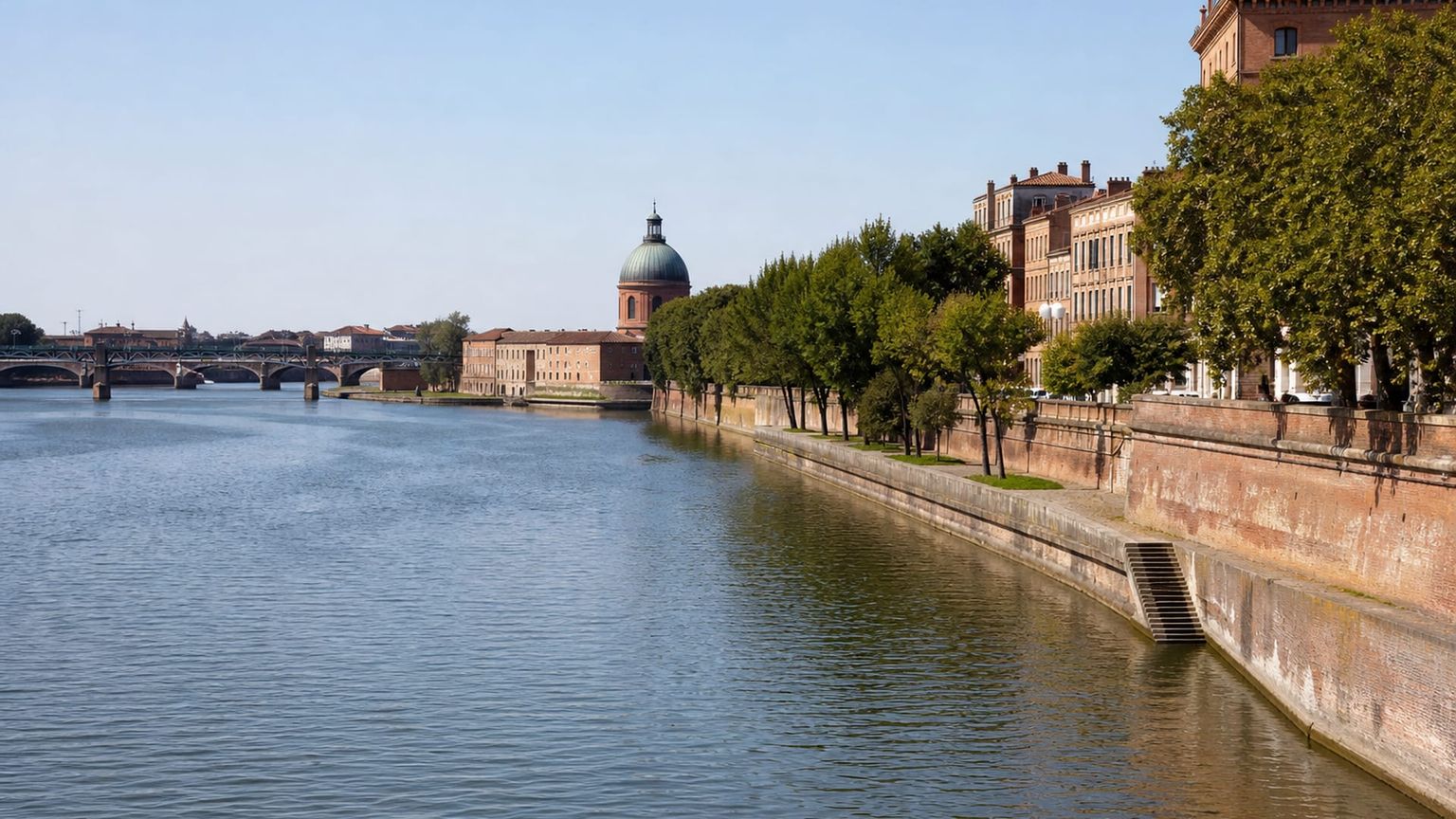
Begin across the river in Saint-Cyprien, where the market area gives you a different neighborhood feel, then cross back toward the center for a second look at the Capitole de Toulouse if you want a late-morning return through the main square. After lunch, head about 10 minutes on foot to the Garonne riverbanks for an unhurried walk, then spend your evening in Carmes for dinner and wine on streets that stay lively without the same density as Place du Capitole.
One final morning works well for a short museum stop, a last round of shopping in the Capitole and the hyper-center, and a café break in Carmes before checkout. If your flight leaves later, return to the square for a last look at the Capitole de Toulouse, then pick up any souvenirs along Rue d’Alsace-Lorraine and have an espresso or pastry nearby before heading back to Toulouse (TLS).
Business-class flights from the US to Toulouse
From both New York and Los Angeles, the trip usually involves one stop, so the useful comparison is not just fare but where the layover lands and how long the travel day becomes. The route details below show which hubs appear most often.
Air France, British Airways, Delta Air Lines, Iberia, Lufthansa, and TAP Air Portugal all appear on New York itineraries, with total travel times of about 10 to 14 hours. Common layovers include CDG, LHR, MAD, FRA, and LIS, and one-stop options often trim the fare, with round-trips usually starting at $2,200 and reaching about $5,500.
Los Angeles travelers usually see Air France, British Airways, Delta Air Lines, Iberia, Lufthansa, and United Airlines on the board, with total journeys of about 13 to 17 hours. Fares for round-trips generally run from $2,400 to $6,200, and itineraries with one stop typically price lower than nonstop options when they are available.
Toulouse feels different when you slow down
A well-shaped Toulouse trip ties the center to its edges: Saint-Sernin in the morning, the Capitole in the afternoon, then a tram or taxi out to Cité de l’espace when you want a bigger contrast. Carmes, Saint-Cyprien, and the Garonne riverbanks give the city its best pauses between meals and walks. If you want help matching neighborhoods, flight timing, and a five-day stay, AranGrant experts can build the route around your arrival window and departure plans







