

Chapters:

Need help with your trip?
Our support team is available 24/7. Request a callback or call us directly at (833) 619-0908
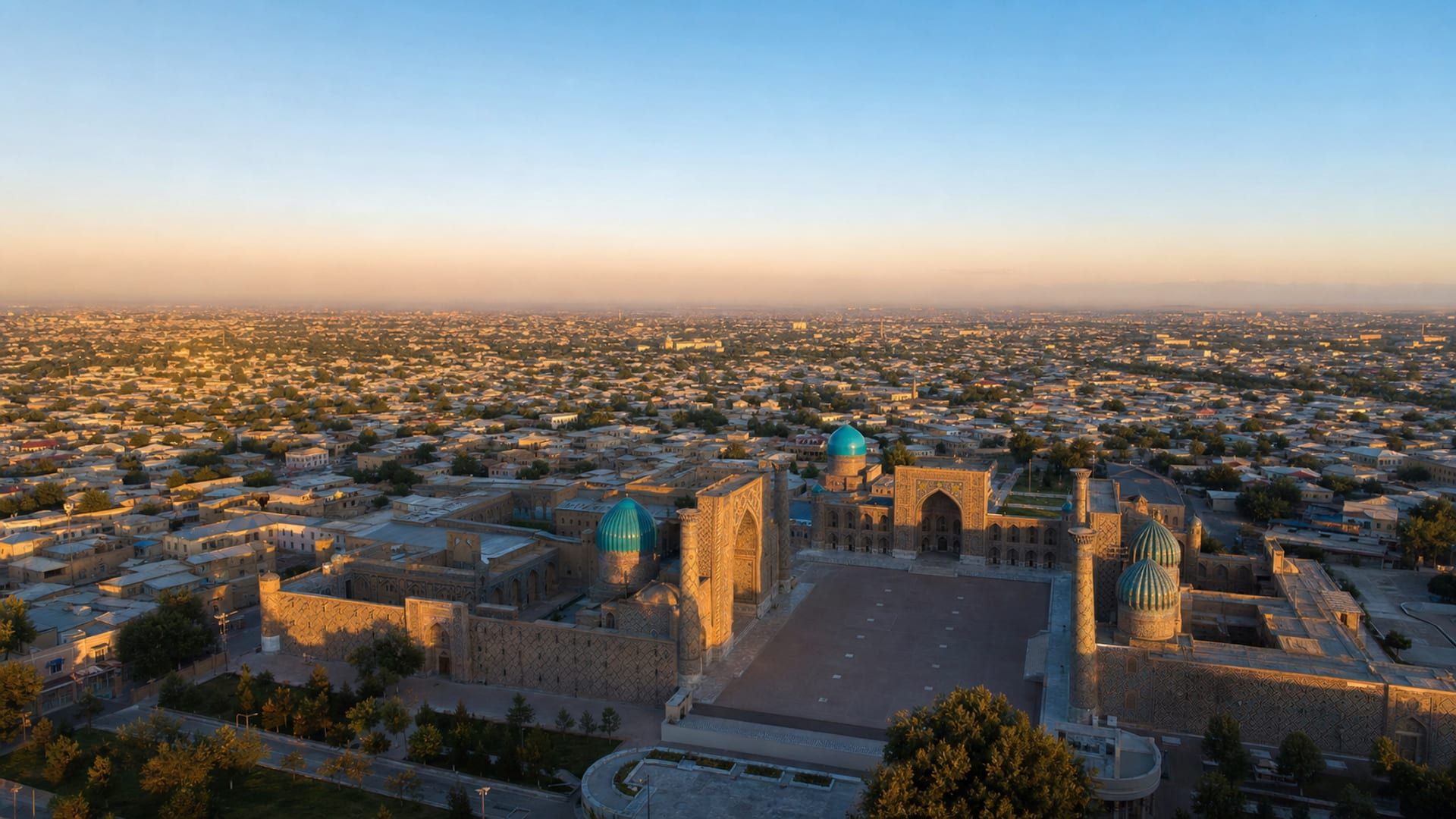
Many Samarkand trips still follow a simple loop, Registan first, Shah-i-Zinda next, then a quick meal before the day ends. That sequence covers the headline sights, but it often skips the older context that gives the city depth.
The problem is not the distance between monuments, it is the way they fill a day with taxis, tour groups, and backtracking if you do not group them carefully. Crowded lanes and midday heat can make the pace feel more tiring than the map suggests.
This guide organizes Samarkand into clear blocks, so you can pair sites that sit well together, choose the right base, and keep each day anchored by a realistic route.
Useful things to know

Main language(s): Uzbek
Salom (sah-LOM) – Hello
Iltimos (eel-tee-MOS) – Please
Rahmat (rah-MAHT) – Thank you
Siz ingliz tilida gapirasizmi? (seez een-GLIZ ti-lee-dah gah-pee-RAH-seez-mee) – Do you speak English?
Bu qancha turadi? (boo KAHN-chah too-RAH-dee) – How much does it cost?

Currency: The local currency is the Uzbek sum (UZS, so’m).

Cash and cards: Cards work at larger hotels and restaurants, but carry about UZS 300,000 to UZS 500,000 ($24 to $40) in cash.

Tipping: Round up small bills; 5% to 10% is appreciated in nicer restaurants.

Traditional food: plov, samsa, lagman, shashlik

Water and coffee costs: Water ~UZS 5,000 ($0.40), bar espresso ~UZS 25,000 ($2).

Taxis and ride apps: Yandex Go and Bolt operate here; confirm the fare before you start.

Plug and voltage: Type C/F socket, 220V

Dining and shop opening hours: Breakfast is about 7:00-9:00 am, lunch 12:00-2:00 pm, and dinner 7:00-9:00 pm. Many restaurants close between meal periods; tea houses may stay open later.

Emergency number: 112 for all emergencies, including police, fire, and ambulance.
Where to stay in Samarkand
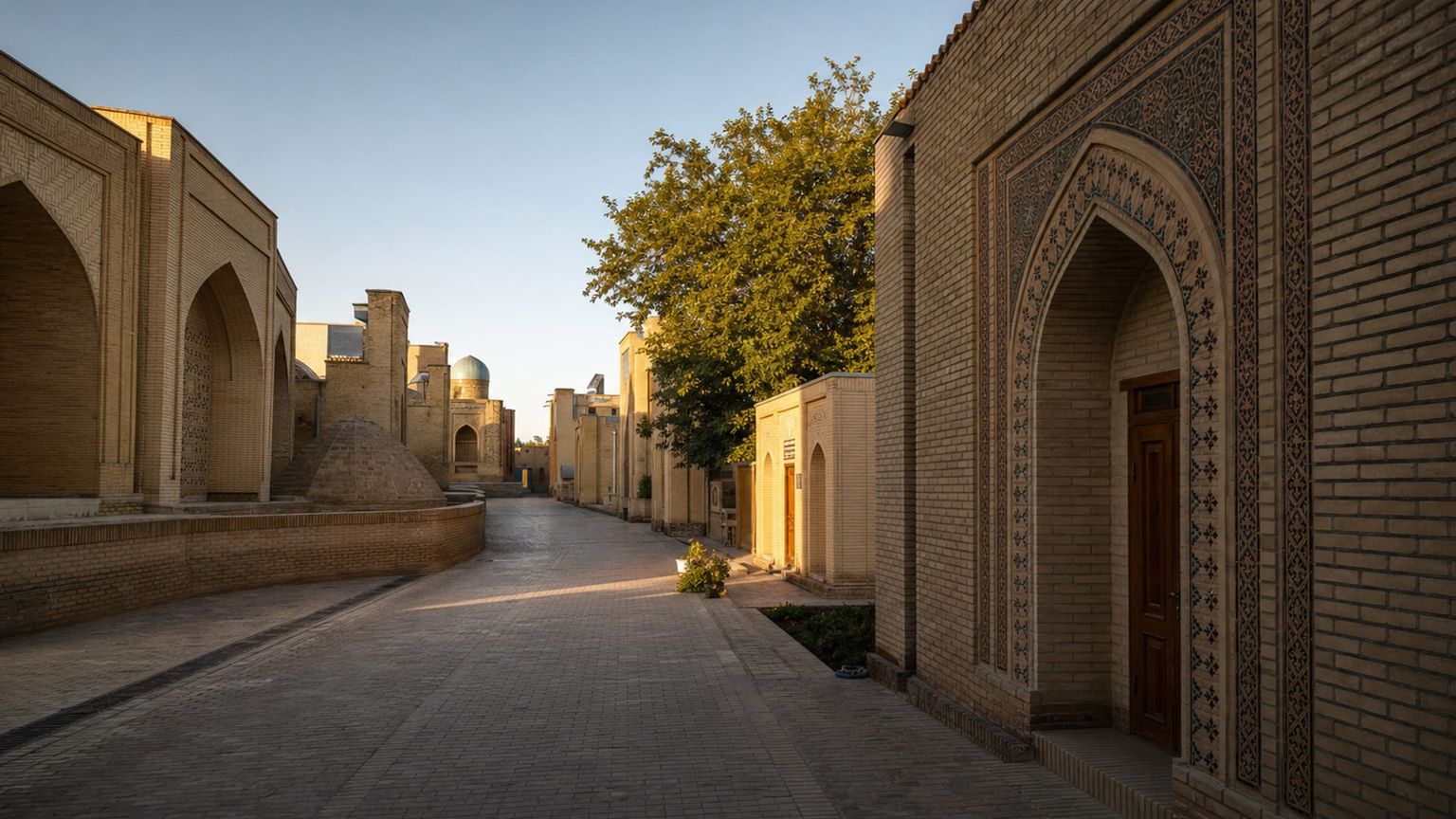
Samarkand’s historic center puts you closest to Registan, Bibi-Khanym Mosque, and the Shah-i-Zinda necropolis. It suits travelers who want major monuments, tiled facades, and the city’s most walkable sightseeing zone.
Best for: First-time visits, monument hopping, and short stays focused on major sights
What to expect: Busy by day with tour groups, souvenir stalls, and steady pedestrian traffic; evenings thin out after the landmarks close.
Hotel prices: Usually about $40 to $120 per night for well-rated stays
Distance to major sights: 5 to 15 minutes on foot to Registan; about 10 to 20 minutes on foot to Shah-i-Zinda
Quietness: Daytime is lively and crowded, while evenings are much quieter once the sightseeing peaks pass.
Main trade-off: You pay more for the location, and some streets bring tour buses, group arrivals, and late foot traffic.
Good to know: If you want to step out for early photos or a midday break, this area cuts transit time, but expect fewer late dinner options nearby.
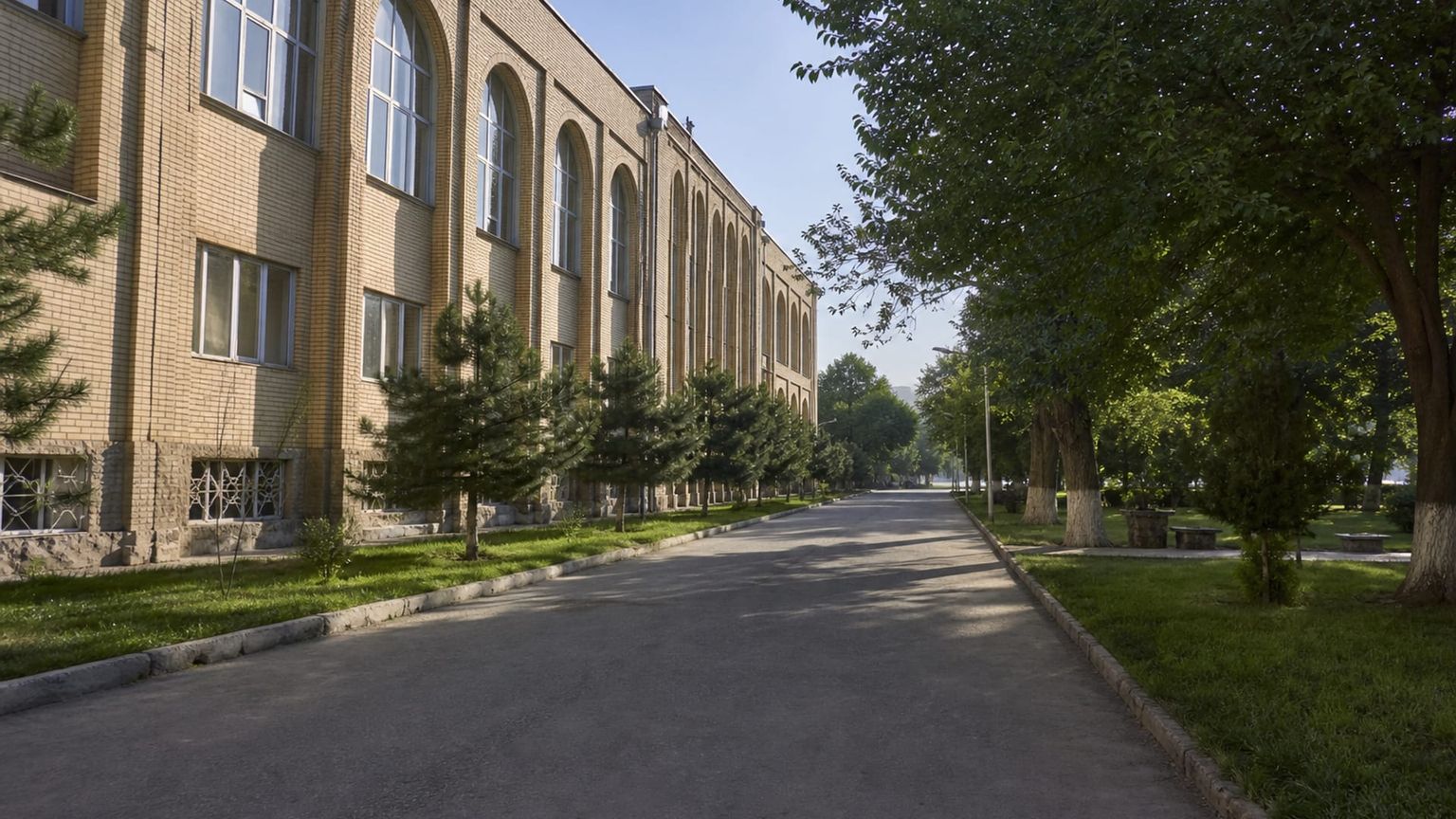
The university district sits just west of the historic core and mixes campuses, apartment blocks, and local cafes. It gives you easier access to central Samarkand without staying inside the busiest monument zone.
Best for: Travelers who want lower rates, local cafes, and a base near the center
What to expect: More local than touristy, with student traffic, neighborhood shops, and a steady but not intense street scene.
Hotel prices: Usually about $25 to $70 per night for well-rated stays
Distance to major sights: About 10 to 20 minutes by taxi to Registan; roughly 30 to 40 minutes on foot
Quietness: Daytime brings student movement and neighborhood activity, while nights are generally quieter than the historic center.
Main trade-off: You save money, but you will depend more on taxis or longer walks to reach the main monuments.
Good to know: Pick this area if you plan several nights and do not mind using rides for the biggest sights, since the main draw is the lower room rate.
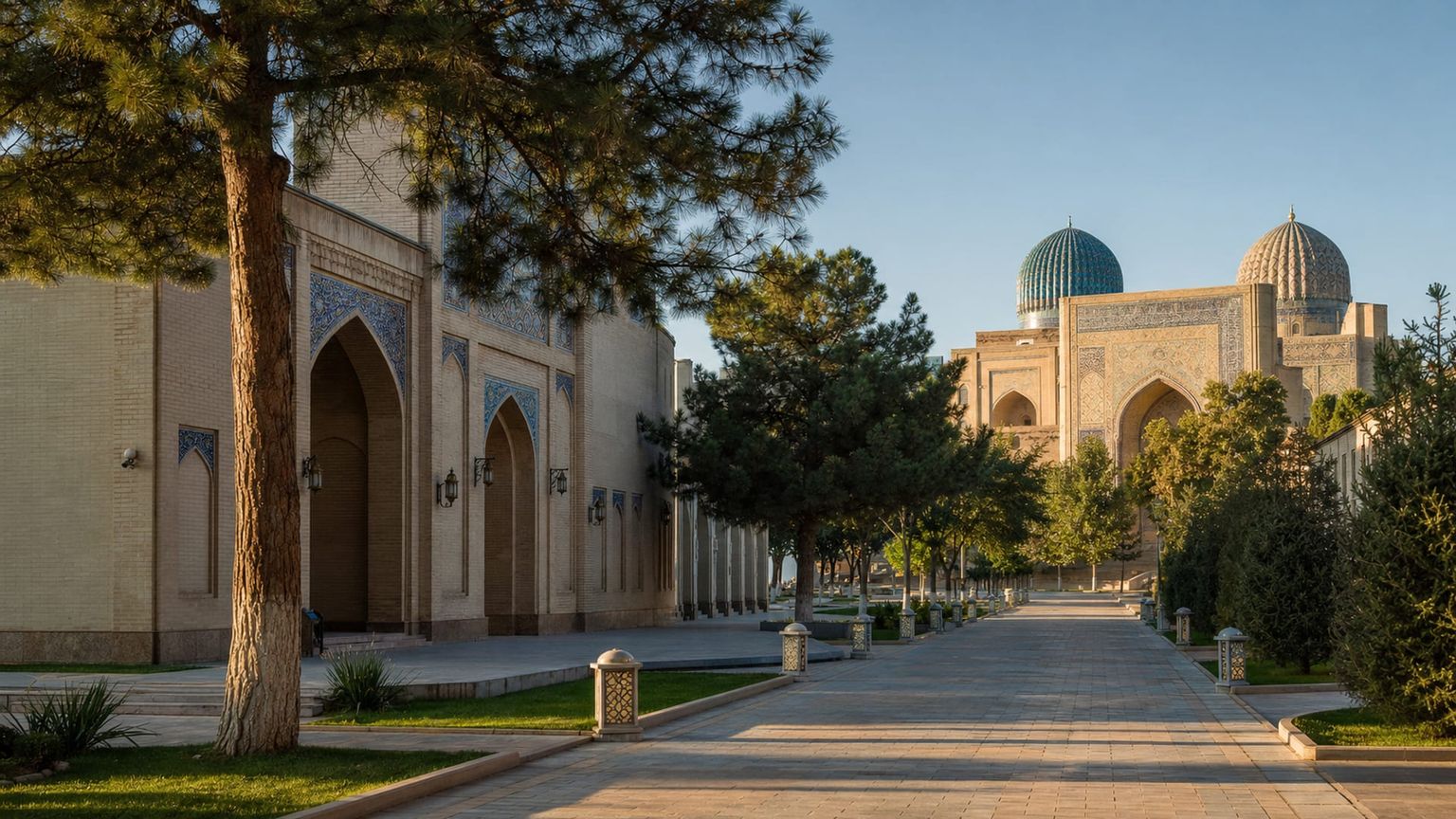
The Bulvar area follows Samarkand’s wider central avenue zone, with hotels, cafes, and easier road access than the old quarter. It works well for visitors who want a central base with more space and simpler car connections.
Best for: Travelers arriving by car, business visitors, and guests who want central access without old-town congestion
What to expect: Broader streets, more traffic than footfall, and a mix of mid-range hotels and local dining spots.
Hotel prices: Usually about $30 to $90 per night for well-rated stays
Distance to major sights: About 10 to 15 minutes by taxi to Registan; roughly 20 to 30 minutes by taxi to Shah-i-Zinda
Quietness: Daytime traffic is noticeable, but evenings are calmer than the historic core and main bazaar streets.
Main trade-off: You gain easier vehicle access, but the setting is less atmospheric and you will usually need transport for sightseeing.
Good to know: This is a sensible pick if you are driving in or leaving early, because parking and road access are easier than in the monument district.
Travelers usually avoid staying in the Farhod, Sattepo, and Sozangaron areas, because they sit well away from Registan, Shah-i-Zinda, and the old city, with fewer visitor amenities and longer taxi rides for evening plans. The northwestern industrial fringe near the airport is also less convenient, since it offers limited restaurants and puts you far from the main historic districts.
Hotel deals
How to get around Samarkand efficiently
Samarkand has no metro, so your best results come from mixing walking in the historic core with buses, minibuses, and short taxi rides across the wider city.

Metro
for longer distances
Samarkand has no metro, so visitors rely on buses, minibuses, and taxis instead; for longer cross-town hops, plan on road travel rather than rail.

Bus and tram
for convenience
City buses and shared minibuses cover the main corridors, with single rides typically about $0.15 to $0.30 (roughly 2,000 to 4,000 UZS) and fares paid in cash on board; most useful for the historic center, Registan, the railway area, and the airport approach, with trips across town often taking about 20 to 40 minutes depending on traffic.

Taxi
for convenience or late hours
Licensed taxis in Samarkand usually use fixed fares rather than meters for common trips, with short city rides about $2 to $4, airport transfers about $5 to $8, and longer cross-city runs about $4 to $7; agree the price before departure, and carry cash in USD or UZS because cards are uncommon.
*Prices are based on rates updated as of June 2026 and may change at the time of travel.
Walk for the old quarter, use buses and minibuses for main corridors, and take taxis for airport runs, cross-town hops, and any site pairing that would otherwise involve a long detour.
Iconic landmarks
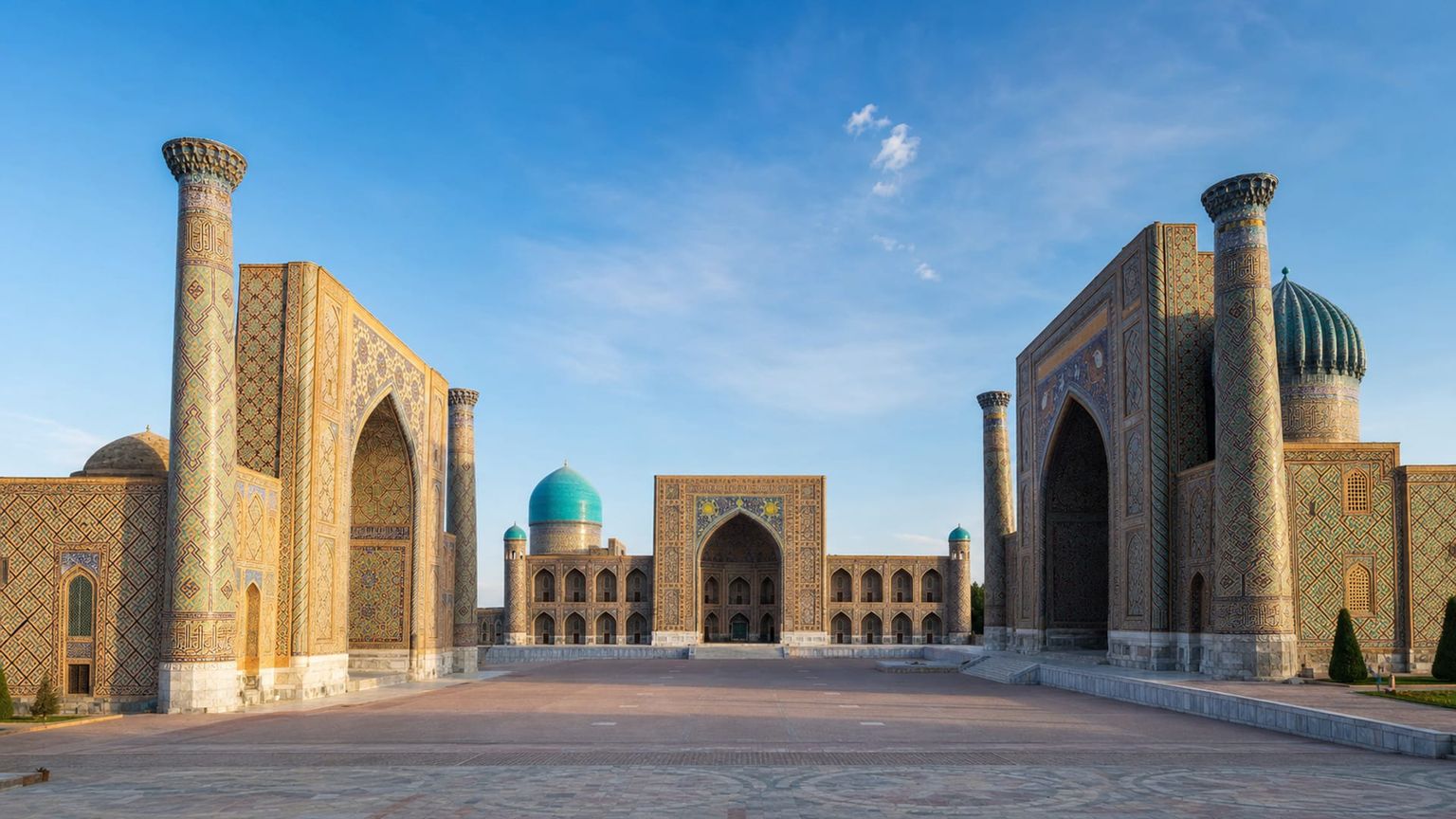
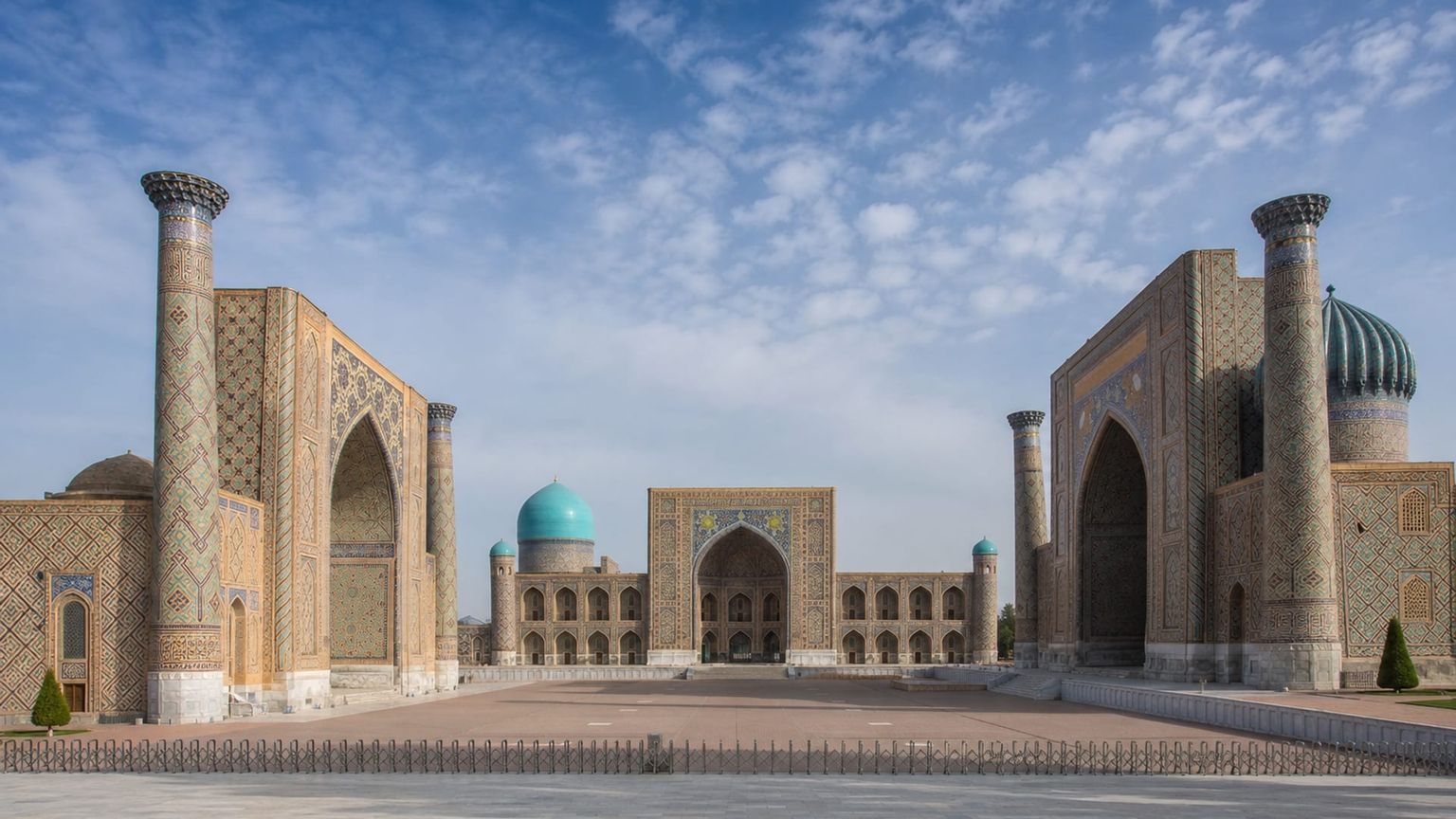
Registan Square
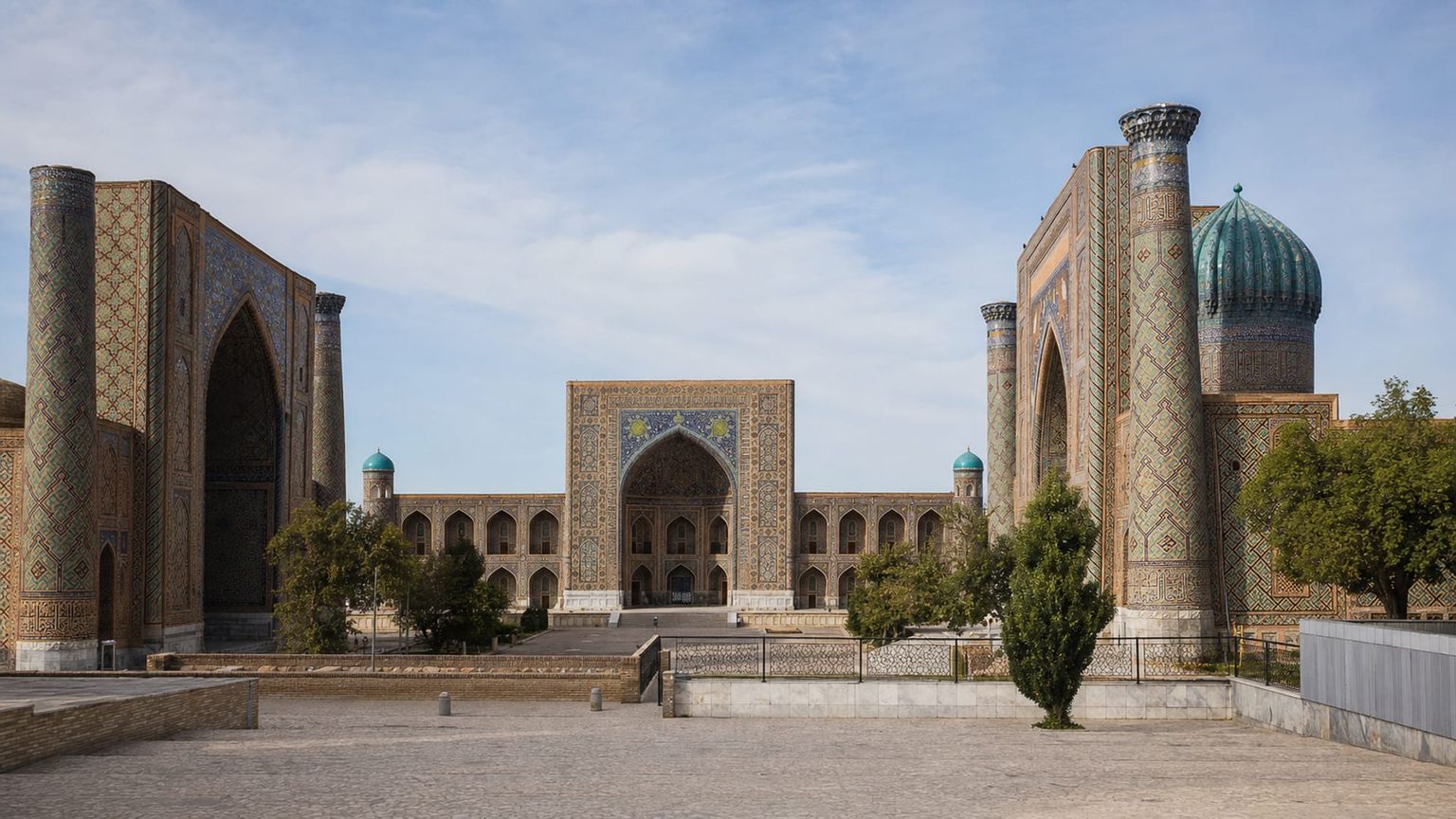
Samarkand’s defining square, Registan brings together the Ulugh Beg, Sher-Dor, and Tilya-Kori madrasahs in one monumental ensemble. Tilework, calligraphy, and soaring portals make it the city’s most concentrated historic stop.
Time needed: About 2 to 3 hours
Entry: Standard admission costs about $7 ($90,000 UZS)
Tip: Arrive near sunset, when the facades catch warm light and crowds thin slightly.
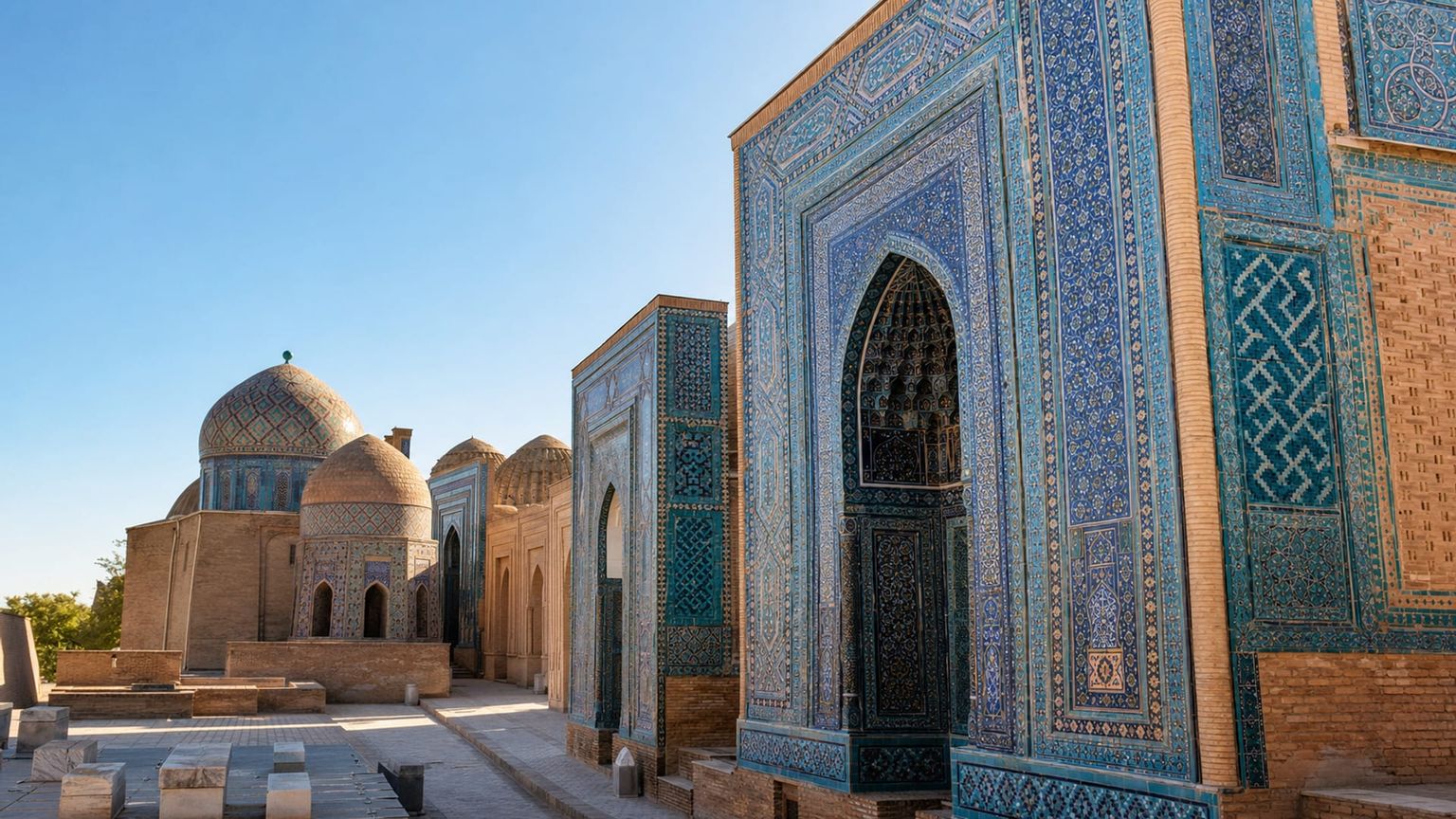
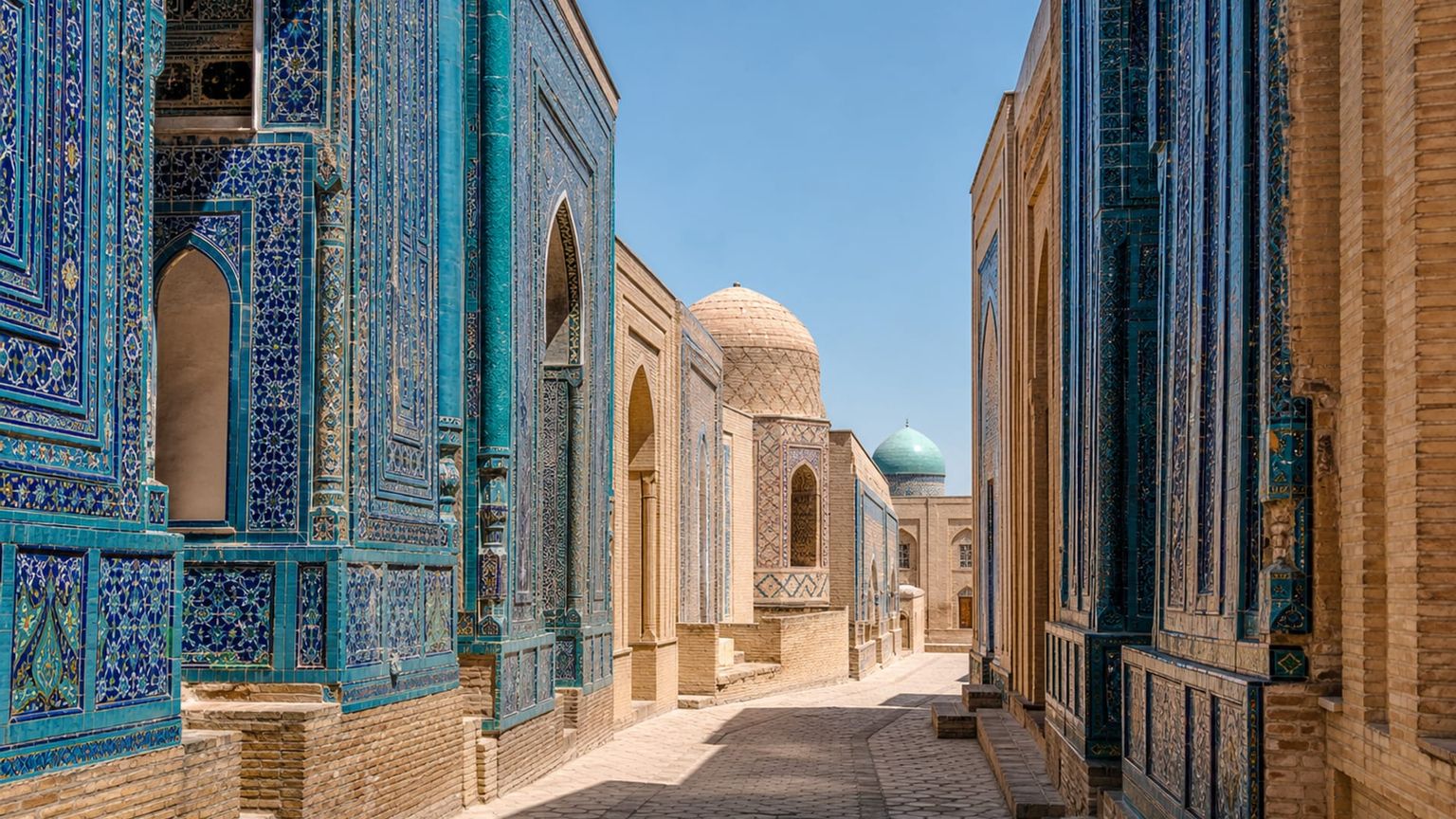
Shah-i-Zinda
This necropolis of tiled mausoleums stretches along a narrow lane northeast of Registan. The vivid blue and turquoise ceramic work is exceptional, with layered tombs that chart Samarkand’s medieval religious and artistic history.
Time needed: About 1 to 2 hours
Entry: Standard admission costs about $5 ($65,000 UZS)
Tip: Go early in the day for cooler conditions and fewer tour groups on the lane.
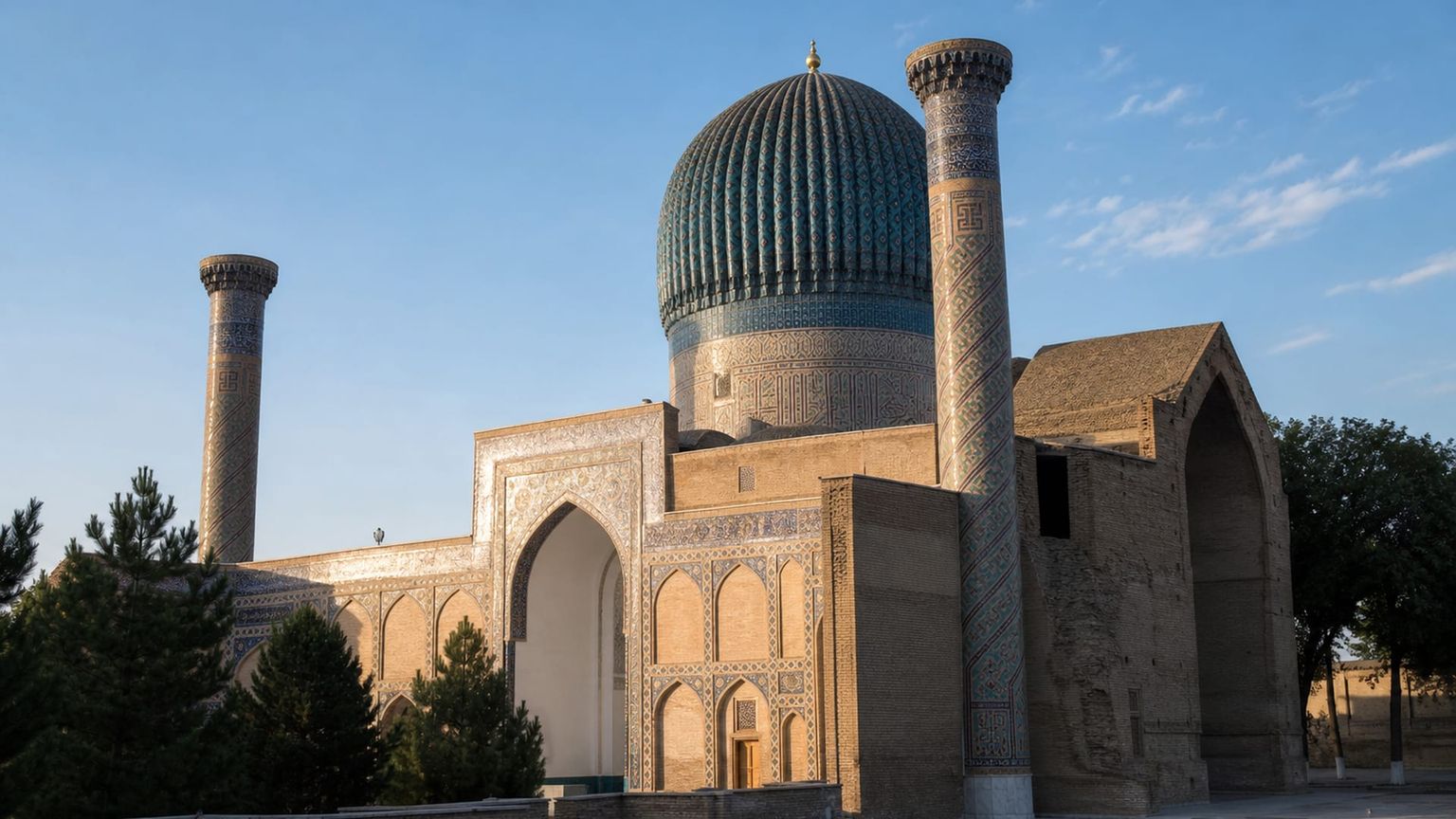
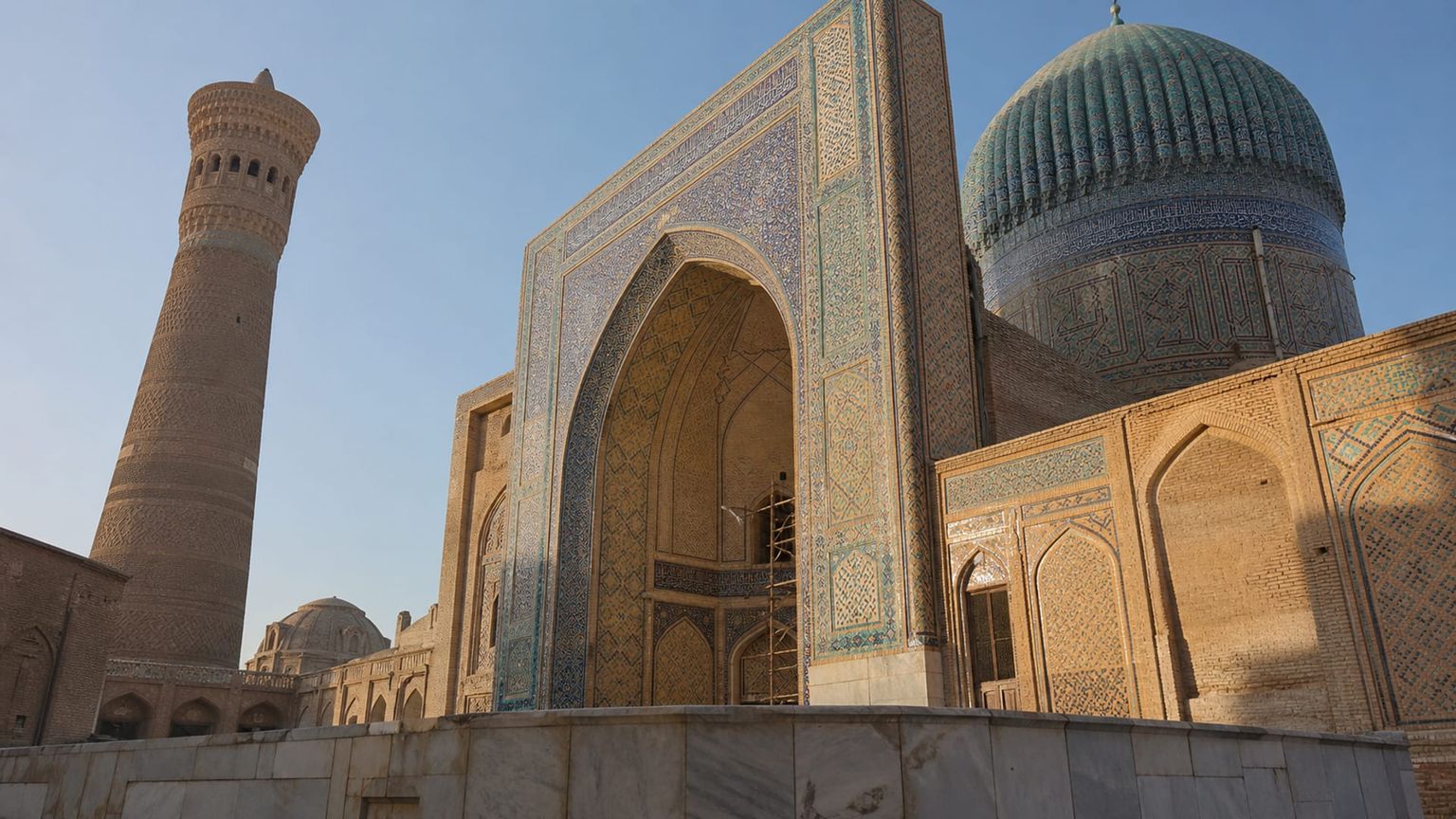
Gur-e-Amir Mausoleum
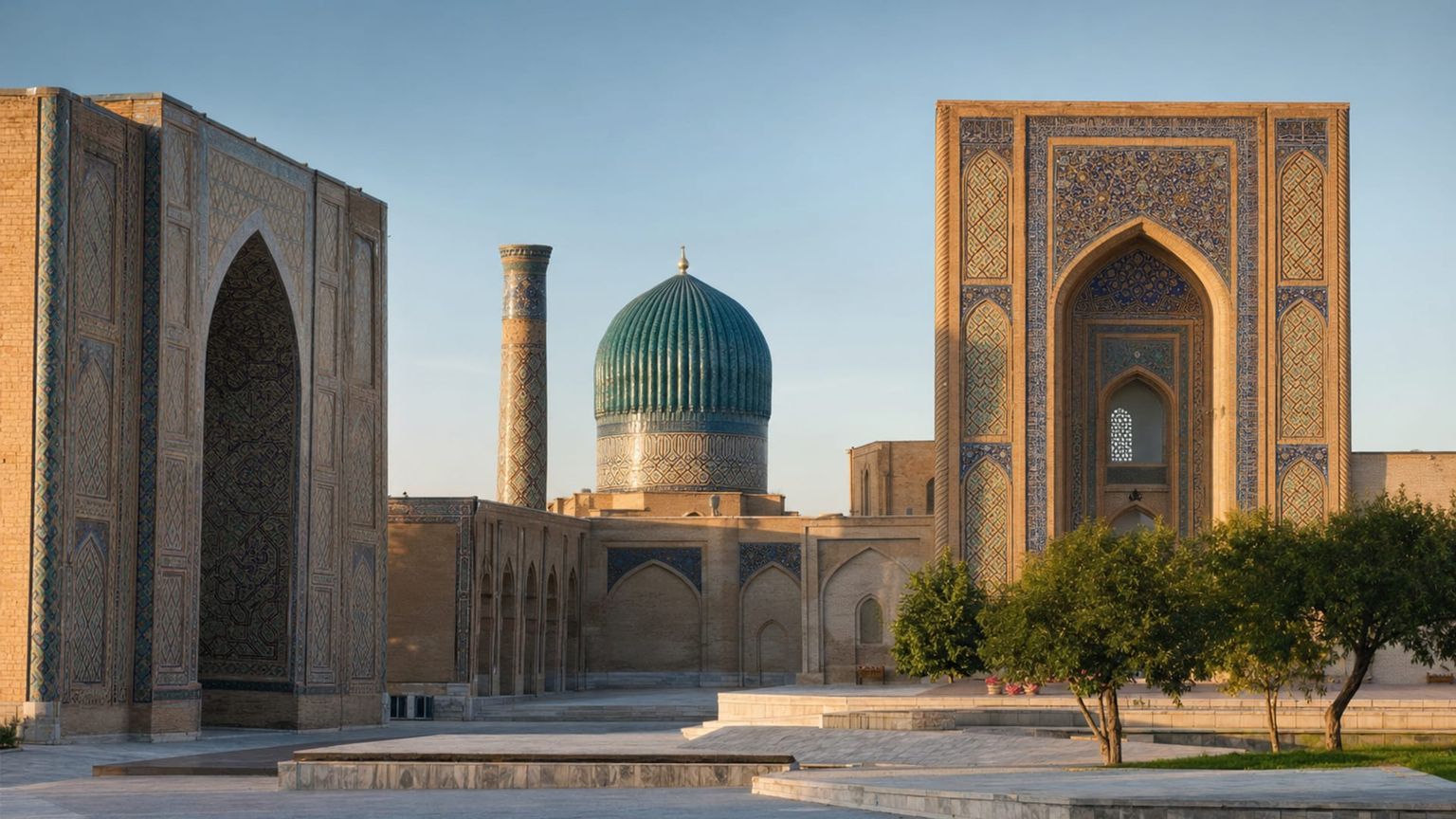
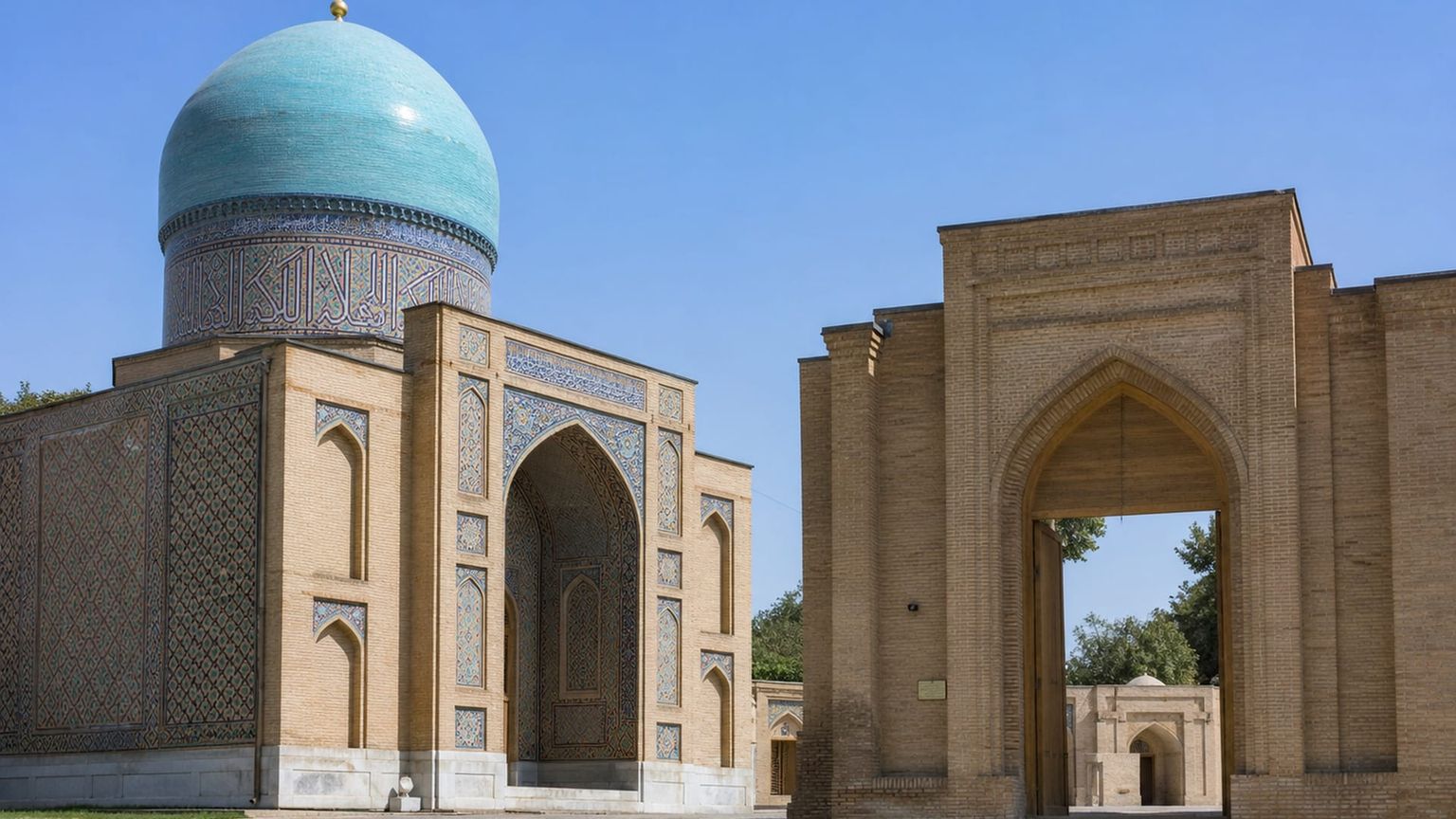
Gur-e-Amir holds the tomb of Timur and anchors Samarkand’s Timurid legacy with a distinctive ribbed dome and rich interior ornament. The compact complex rewards close looking, especially for its carved marble and painted decoration.
Time needed: About 45 minutes to 1 hour
Entry: Standard admission costs about $6 ($75,000 UZS)
Tip: Visit before midday, when interior details are easiest to see and photo light is better.
Overlooked sites worth visiting

Khoja Ahrar Ensemble
A quiet cluster of shrine, mosque, and cemetery linked to the 15th-century Naqshbandi leader Khoja Ahrar. It draws fewer visitors than Registan, yet preserves carved wood, tiled facades, and shaded courtyards.
Time needed: About 1 hour
Entry: Free to access; donations are optional. Some interior spaces may open only during prayer times or for maintenance, and guided explanations can cost extra if offered by caretakers on site.
Tip: Go early for softer light and fewer prayer-time interruptions.

Afrosiyob Museum
A compact museum beside the ancient city site, with wall paintings, Sogdian finds, and models that explain Samarkand before Timur. It suits a short visit and adds context many travelers miss.
Time needed: About 1 hour
Entry: Admission costs about $3 to $5 (35,000 to 60,000 soum) for adults, depending on current local pricing. Extra fees may apply for cameras, temporary exhibitions, or visiting with a guide.
Tip: Pair it with the nearby hill site to see the excavated walls after.
Traditional food
Samarkand cooking leans on plov, samsa, lagman, and shashlik, with lamb, rice, onions, and dough at the center. Tea houses and neighborhood restaurants often serve these dishes in a slow daytime cycle that matches the city’s meal breaks.
Plov
Samarkand plov is the city’s signature rice dish, built with carrots, lamb, and plenty of seasoning. For a dependable local meal, try it at Osh Markazi, where plov is the main reason to come.
Samsa
Samsa arrives as crisp baked pastry filled with meat and onion, often cooked in a tandoor. Afrosiyob Restaurant is a strong place to order it alongside other Uzbek staples.
Lagman
Lagman brings hand-pulled noodles in a savory broth or sauced version, with vegetables and meat adding depth. At Old City Restaurant, it fits neatly into a broader Central Asian menu.
Shashlik
Shashlik, grilled meat on skewers, is one of the easiest ways to eat simply and well in Samarkand. Try it at Karimbek, a local restaurant known for Uzbek grilled dishes.
Best time to visit Samarkand
Samarkand changes more by season than by month, with spring and autumn giving the clearest weather for monument visits, while summer heat and winter cold shape how long you want to stay outside.
Best for: Tilework in softer light, comfortable walking, and long sightseeing days
What you get: About 55 to 82°F (13 to 28°C), with moderate crowds and a good balance between comfort and visibility
Trade-offs: Rain can interrupt a few outdoor plans
Best for: Early starts, evening monument visits, and slower museum-focused days
What you get: About 72 to 97°F (22 to 36°C), with heavier daytime crowds at major sights
Trade-offs: Midday heat makes long outdoor stretches tiring
Best for: Clear skies, easier walking, and strong conditions for photography
What you get: About 48 to 79°F (9 to 26°C), with comfortable crowds outside the busiest weekends
Trade-offs: By late November, evenings turn noticeably colder
Best for: Low visitor numbers and calm museum visits
What you get: About 25 to 46°F (-4 to 8°C), with light crowds and shorter outdoor stays
Trade-offs: Cold weather limits time on open-air monument circuits
A realistic 5-day plan in Samarkand
Five days in Samarkand works best when you separate the big monuments from the quieter sites and leave room for slow crossings between them. This plan does that without forcing long backtracking or overfull afternoons.
Land at Samarkand (SKD), then take a taxi into the Historic center, which usually takes about 20 to 30 minutes and costs roughly $4 to $8. If you are staying in the Historic center, you can settle in, drink water, and keep dinner close to your hotel with a simple meal near Registan or on a nearby side street, where evening crowds fade after the monuments close. If you prefer a quieter first night, the University district is another sensible base, with local cafes and lower room rates, though you will need a ride to the main sights.
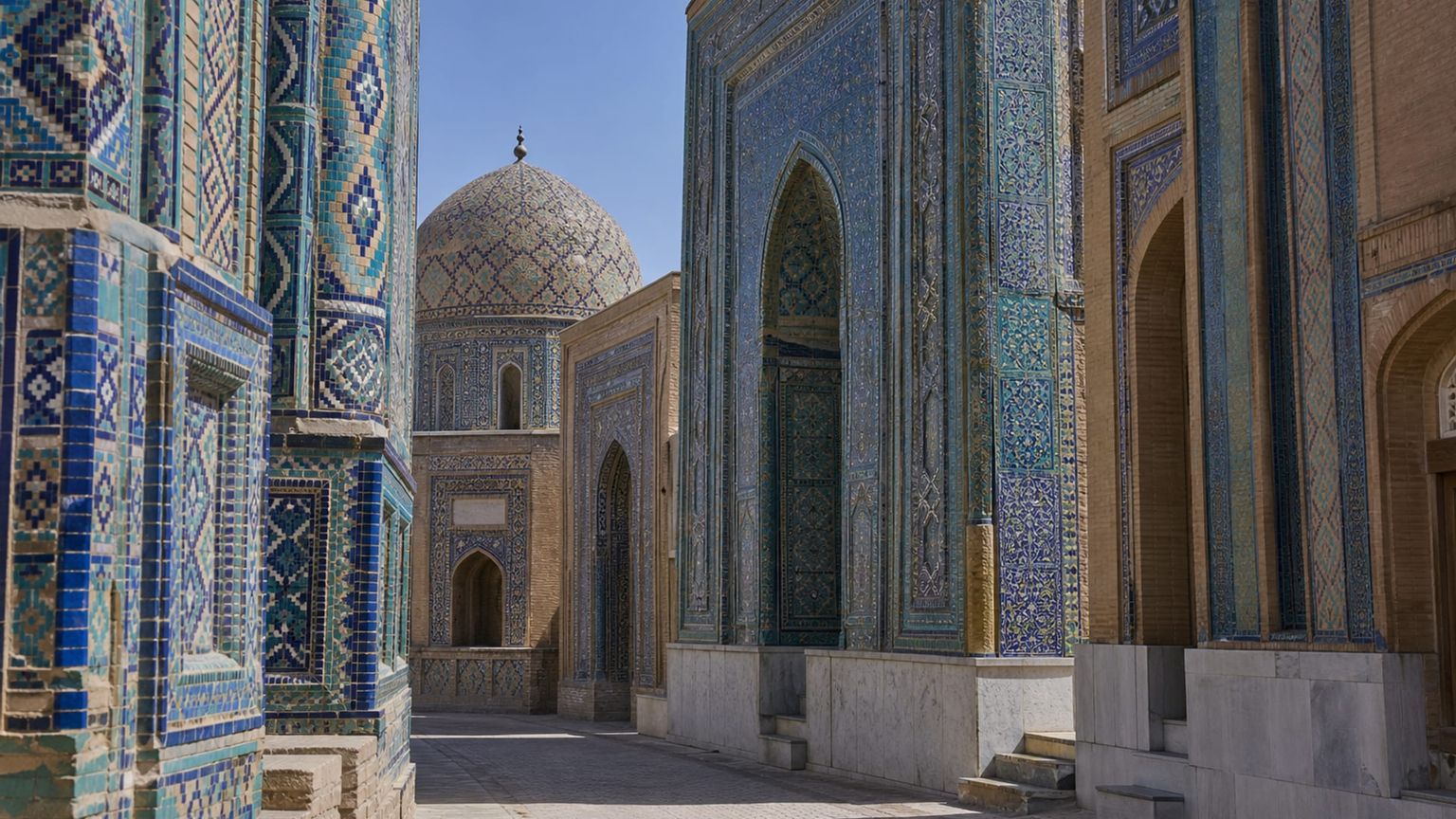
Begin at Gur-e-Amir Mausoleum before the heat builds, then continue by taxi or on foot to Registan Square, which is about 10 to 15 minutes away by car or a longer walk through the center. Give Gur-e-Amir about 45 minutes to 1 hour, then plan 2 to 3 hours at Registan so you can see the Ulugh Beg, Sher-Dor, and Tilya-Kori madrasahs without rushing. Late in the afternoon, stay for the light on the tilework, then return to the Historic center for an early dinner within easy walking distance of your hotel.
Shah-i-Zinda and the Afrosiyob Museum make a strong pair, with the museum best visited first, then the necropolis after a short ride or a walk of roughly 15 to 20 minutes between them. Spend about 1 hour at the museum for the Sogdian finds and wall paintings, then allow 1 to 2 hours for Shah-i-Zinda, where the tiled mausoleums line the narrow lane northeast of Registan. Finish with a slow return to the center, and if you are staying in the Historic center, you can reach many restaurants in 10 to 20 minutes on foot from Shah-i-Zinda.
Start early at the Khoja Ahrar Ensemble, where a visit takes about 1 hour and the quieter courtyards are easier to appreciate before midday. From there, continue to the Historic center for another look at the old-city streets, or combine the ensemble with a nearby lunch stop in the same central area so you do not lose time to backtracking. If you are based in the Bulvar area, plan on about 10 to 15 minutes by taxi back to the old quarter, then spend the afternoon browsing the main monument zone at an unhurried pace.
For a final day in Samarkand, keep the pace centered on one last cultural stop, then finish with a district-level wander rather than a long sight-seeing circuit. If you still want one museum, return to the Afrosiyob Museum for an hour, then head to the Bulvar area for shopping and a last cafe stop, or stay in the University district if you want a quieter coffee before heading to the airport. A taxi from the central districts back to Samarkand (SKD) usually takes about 20 to 30 minutes, so leave enough time for traffic and a final water break before departure.
Business-class flights from the US to Samarkand
Business-class flights to Samarkand usually connect through major hubs, so the route matters as much as the fare. From New York and Los Angeles, the main choices differ in duration, layover hubs, and how much you pay for a simpler itinerary.
From New York City, airlines such as Emirates, Turkish Airlines, Qatar Airways, Air France, Lufthansa, and Uzbekistan Airways sell fares that usually start at $4,500 and can reach about $9,500. Common layovers run through Istanbul (IST), Doha (DOH), Dubai (DXB), CDG, or Frankfurt (FRA), with total travel times typically about 15 to 20 hours.
Los Angeles travelers usually see Emirates, Turkish Airlines, Qatar Airways, Lufthansa, and Air France on the board, with round-trip fares about $4,800 to $10,500. If you do not mind a layover, routing through Istanbul (IST), Doha (DOH), Dubai (DXB), Frankfurt (FRA), or Paris (CDG) can reduce the price materially on sale dates, and the total journey often takes about 16 to 22 hours.
Samarkand feels different when you slow down
A thoughtful Samarkand trip gives each district a role, the Historic center for Registan and early dinners, Shah-i-Zinda for a morning visit, the Bulvar area for wider roads, or the University district for a quieter base. Taxis, buses, and short walks each solve a different part of the city. If you want help shaping the route, the AranGrant experts can turn those pieces into a trip that fits your dates and pace







