

Chapters:

Need help with your trip?
Our support team is available 24/7. Request a callback or call us directly at (833) 619-0908
San Juan trips often start with a fort, a beach hotel, and a dinner reservation, while the details that shape the stay, parking, transit gaps, and neighborhood choice, get handled too late. Many visitors also miss how much time the old city and the shoreline districts actually take to link up.
That split matters because the historic center rewards walking, but the airport strip, Condado, and Piñones all pull the day in different directions. Without a plan, short rides, busy streets, and midday closures can break up sightseeing and meals.
This guide keeps the trip in order, with a clear base, timed transfers, and day plans that match the city’s layout instead of fighting it.
Useful things to know

Main language(s): Spanish
Hola (OH-lah) – Hello
Por favor (por fah-VOR) – Please
Gracias (GRAH-see-ahs) – Thank you
¿Habla inglés? (AH-blah een-GLAYS) – Do you speak English?
¿Cuánto cuesta? (KWAHN-toh KWES-tah) – How much does it cost?

Currency: The local currency is the US dollar (USD, $).

Cash and cards: Cards and contactless are widely accepted; carry about $20 to $40 in cash for small purchases and tips.

Tipping: Tip 10% to 15% at sit-down restaurants; round up small bills and taxis.

Traditional food: Mofongo, lechón asado, arroz con gandules, alcapurrias

Water and coffee costs: Water about $1.50 ($1.50), bar espresso about $3 ($3).

Taxis and ride apps: Uber and Lyft operate here; pickup points can vary by airport or hotel.

Plug and voltage: Type A/B socket, 120V

Dining and shop opening hours: Breakfast is about 07:00-10:00, lunch 12:00-15:00, and dinner 18:00-22:00. Many kitchens close between lunch and dinner, especially outside hotel zones.

Emergency number: Call 911 for police, fire, and medical emergencies.
Where to stay in San Juan
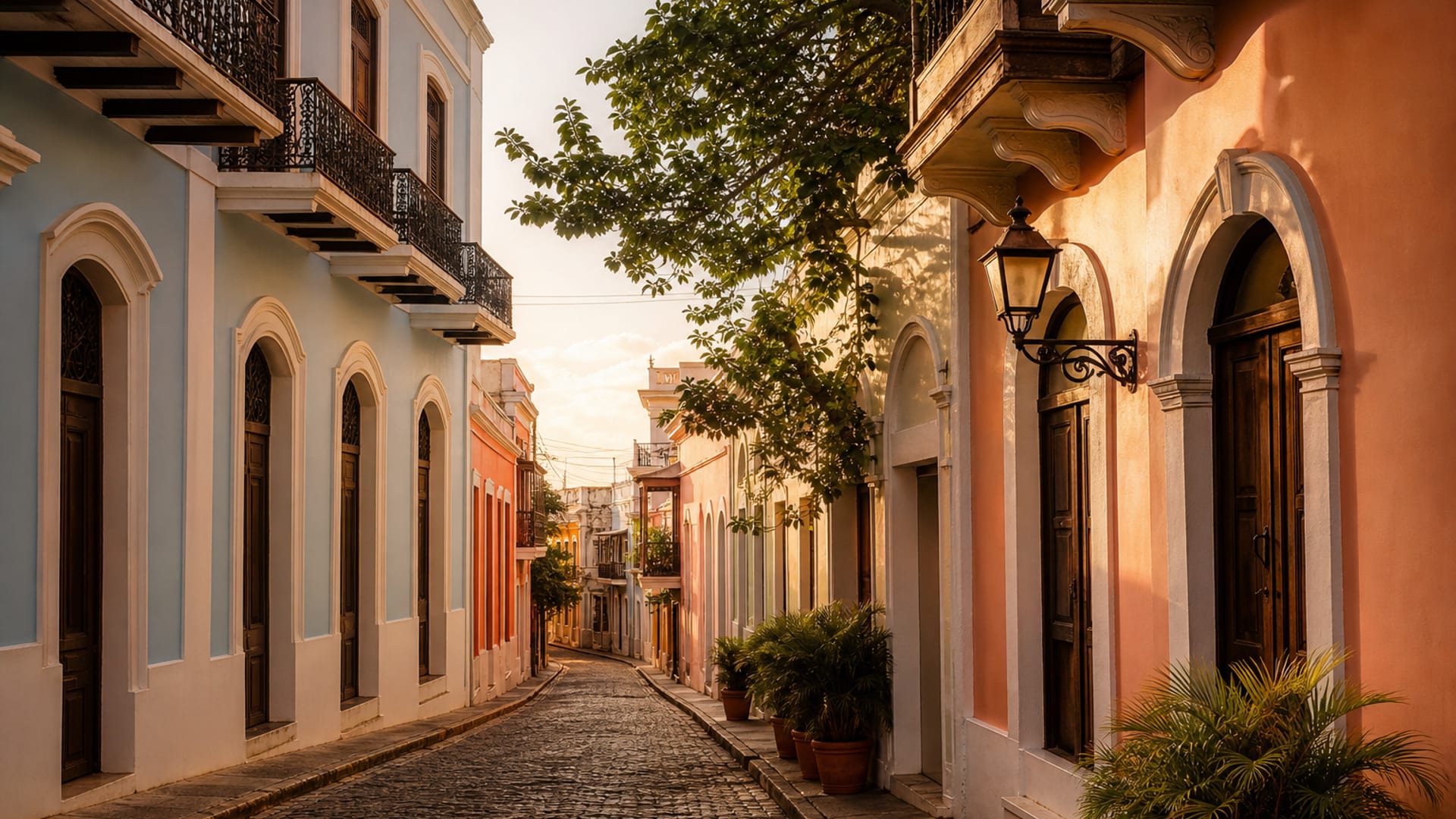
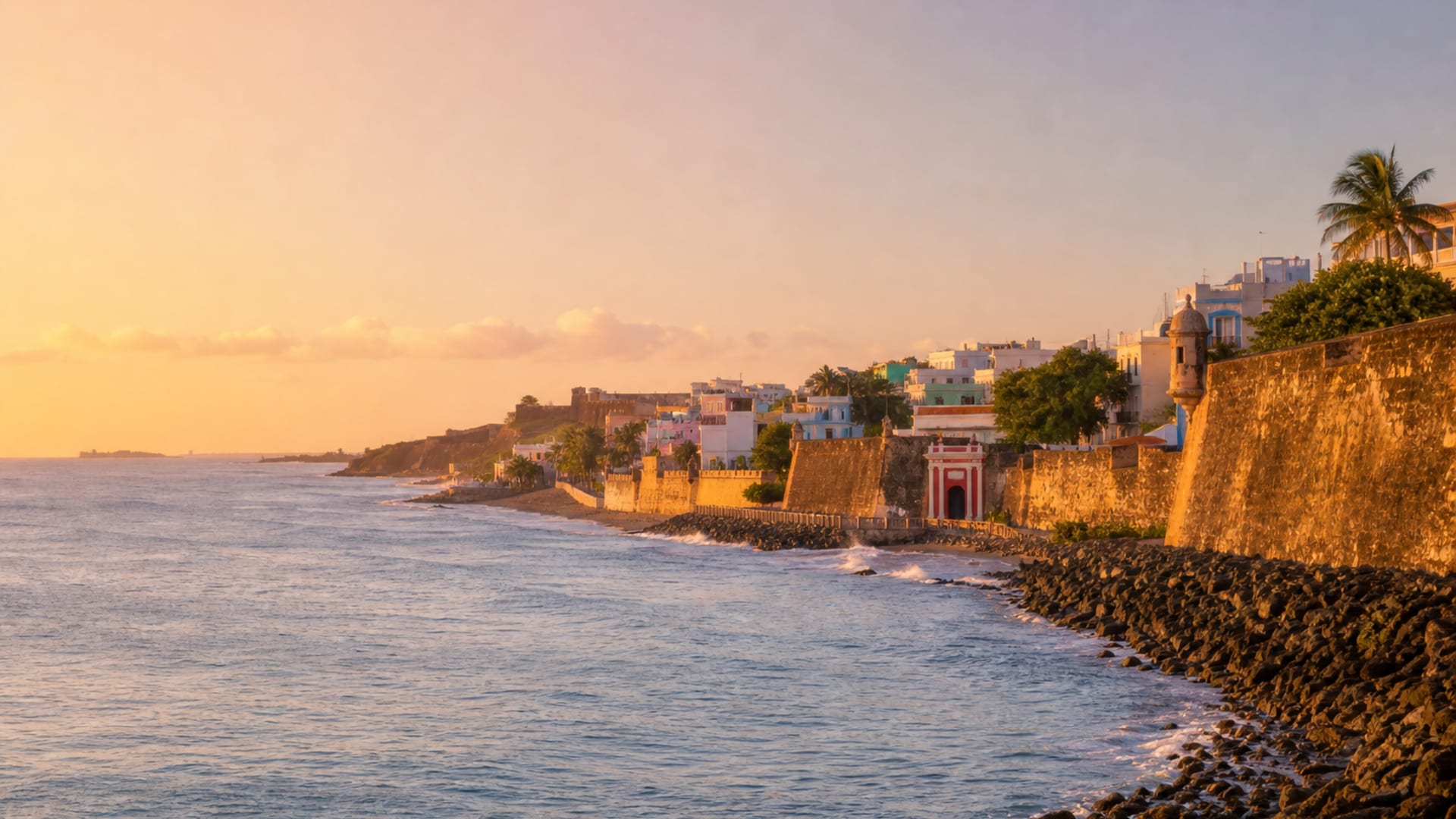
The historic heart of San Juan packs Spanish colonial streets, museums, plazas, and waterfront views into a walkable grid. It suits travelers who want the city’s main sights, dining, and harbor scenery within a short stroll.
Best for: Historic sightseeing, walkable stays, and travelers who want the main landmarks close by
What to expect: Cobbled streets, steady daytime foot traffic, and a lively restaurant scene that stays busy into the evening.
Hotel prices: Usually about $180 to $350 per night for well-rated stays
Distance to major sights: 5 to 15 minutes on foot to Castillo San Felipe del Morro and San Juan Cathedral
Quietness: Busy from late morning through dinner, then calmer after the restaurants close.
Main trade-off: Rooms often cost more, and some streets can be noisy from bars, events, and tour groups.
Good to know: If you plan to explore on foot, pick a room away from the busiest nightlife blocks and check whether your hotel offers parking, since driving and parking are limited in the old streets.
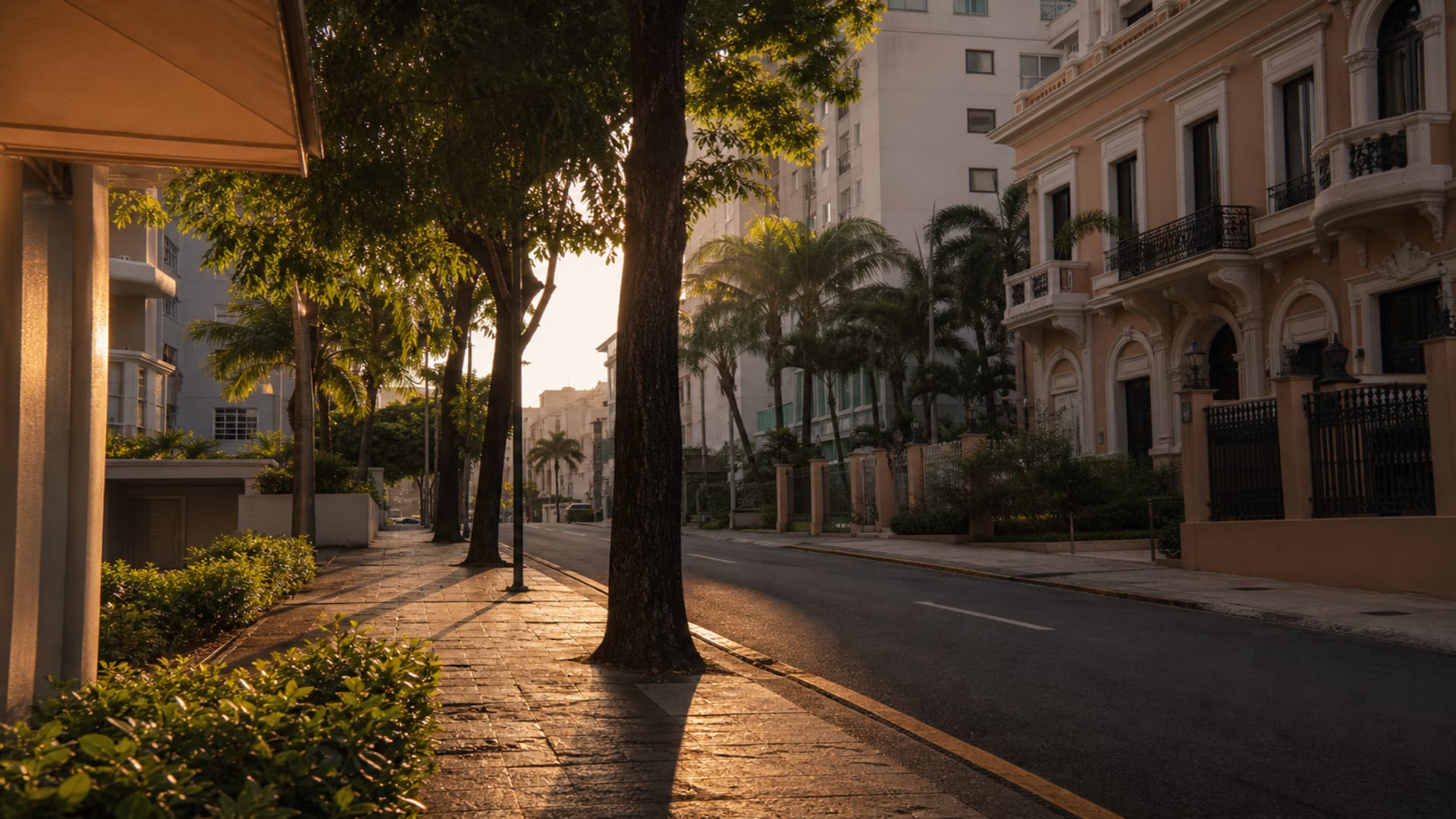
Condado is San Juan’s beachfront hotel district, with a dense line of resorts, restaurants, and ocean-facing blocks between the lagoon and the Atlantic. It matters for travelers who want beach access without losing quick reach to Old San Juan and Miramar.
Best for: Beach access, resort stays, and visitors who want restaurants nearby
What to expect: Busy sidewalks, constant taxi traffic, and a mix of hotel guests, diners, and beachgoers from morning to late night.
Hotel prices: Usually about $170 to $320 per night for well-rated stays
Distance to major sights: 10 to 20 minutes by taxi to Old San Juan, about 20 minutes to Luis A. Ferré Performing Arts Center
Quietness: Lively during the day and often noisy at night near bars, traffic, and beachfront hotels.
Main trade-off: Beachfront convenience comes with higher rates and less space than many inland neighborhoods.
Good to know: Public beach access varies by block, so confirm whether your hotel is on the ocean side or across the lagoon before you book.
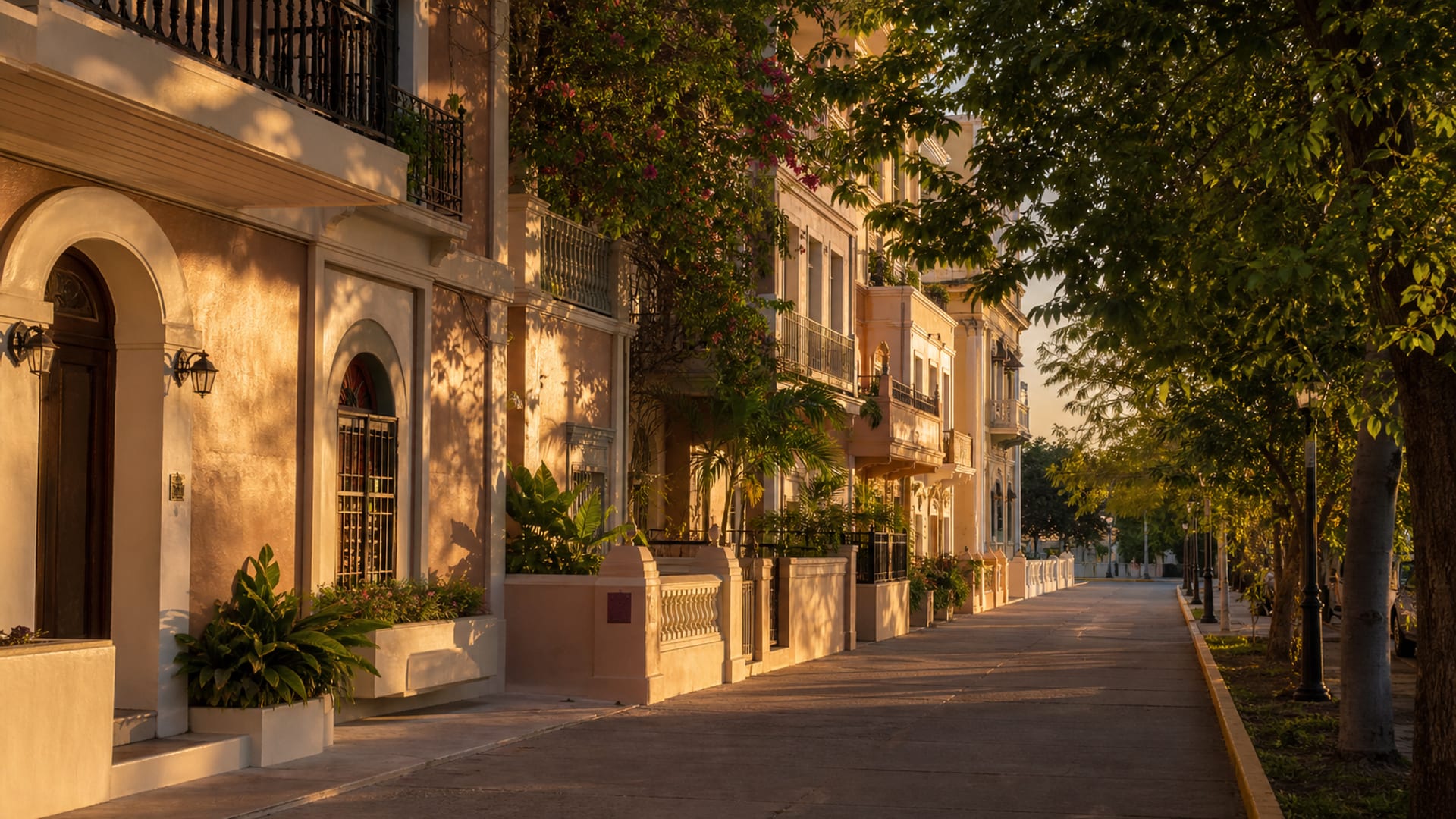
Miramar sits just south of Condado and combines residential streets, business hotels, and easy access to the convention center and the lagoon. It appeals to travelers who want a central base with less resort density than the beachfront zone.
Best for: Business travel, convention access, and travelers who want a central base with fewer resort crowds
What to expect: Tree-lined streets, moderate traffic, and a quieter evening scene than Condado or Old San Juan.
Hotel prices: Usually about $140 to $260 per night for well-rated stays
Distance to major sights: 10 to 15 minutes by taxi to Old San Juan, about 15 minutes on foot to Distrito T-Mobile
Quietness: Calm in the evening on residential blocks, with more activity near hotels and main roads during the day.
Main trade-off: You will usually need a taxi or rideshare for the beach and the historic center.
Good to know: If you plan to attend events at the convention center, this is one of the easiest places to stay without relying on a long ride after dark.
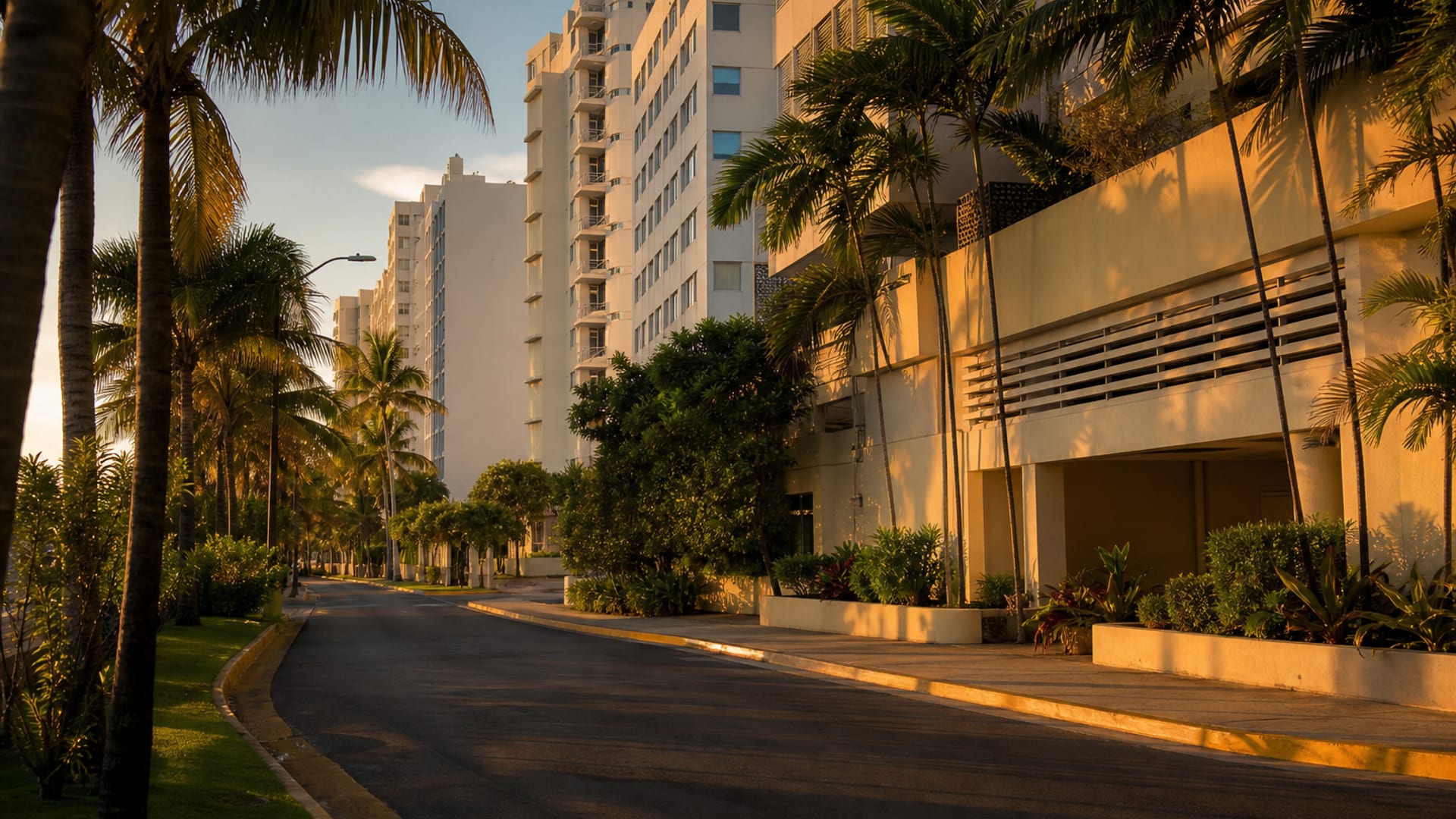
Isla Verde is San Juan’s main airport-side beach strip, lined with high-rise hotels, casinos, and a broad public shoreline. It works well for travelers who want a classic resort stay and the shortest transfer from San Juan (SJU).
Best for: Beach stays, short airport transfers, and travelers who want resort amenities
What to expect: Wide sidewalks, heavy hotel traffic, beach crowds by day, and a late-night hotel and casino scene.
Hotel prices: Usually about $160 to $330 per night for well-rated stays
Distance to major sights: About 10 minutes by car from San Juan (SJU), about 20 to 30 minutes by taxi to Old San Juan
Quietness: Busy through the day and often active well into the evening near hotels, bars, and the beach.
Main trade-off: It is convenient for arrivals and departures, but you will spend more time getting to the historic center.
Good to know: If you have an early flight, this area can simplify departure day, but confirm your hotel’s beach access because some properties sit across busy streets from the sand.
Travelers usually avoid staying in Cataño, because it puts you across the bay from Old San Juan and the main visitor sights, which means extra ferry or taxi time for evening plans. Isla de Cabras is also less convenient for most visitors, since it is far from the main hotel strip and has few nearby dining and shopping options; Piñones can be inconvenient if you plan to rely on frequent nighttime travel, because it sits well east of the core tourist areas and has limited late-night visitor amenities. Areas deep in suburban Carolina, away from Isla Verde, are also less convenient, because they are far from Old San Juan and Condado and often require longer rides for meals, beaches, and sightseeing.
Hotel deals
How to get around San Juan efficiently
San Juan has no airport rail link, so taxis, rideshare apps, and a few bus connections do most of the work between SJU, the beach districts, and Old San Juan.

Public bus
for longer distances
San Juan has no metro system serving the SJU airport area. The nearest rail option is Tren Urbano, which does not reach the airport, so visitors usually rely on taxis, app-based rides, or buses for the final leg into the city.

Tren Urbano
for convenience
MetroBus and AMA buses serve parts of the San Juan area, with the most useful airport connection often being route D53 to Isla Verde and nearby links from there. Fares are typically about $0.75 to $1.50, and a trip can take roughly 30 to 60 minutes depending on traffic and the exact stop; service is limited for late arrivals, so check schedules before you depend on it.

Taxis and Uber
for convenience or late hours
Licensed taxis at San Juan (SJU) use zone or flat fares from the airport rather than a meter for many common destinations. Expect about $12 to $20 to Isla Verde, about $25 to $30 to Condado, and roughly $25 to $35 to Old San Juan; drivers usually accept cash, and some also take cards, though you should confirm before boarding.
*Prices are based on rates updated as of June 2026 and may change at the time of travel.
Use taxis for airport transfers, rideshare for flexible point-to-point trips, and buses only when the schedule fits your plans and you are not cutting it close.
Iconic landmarks
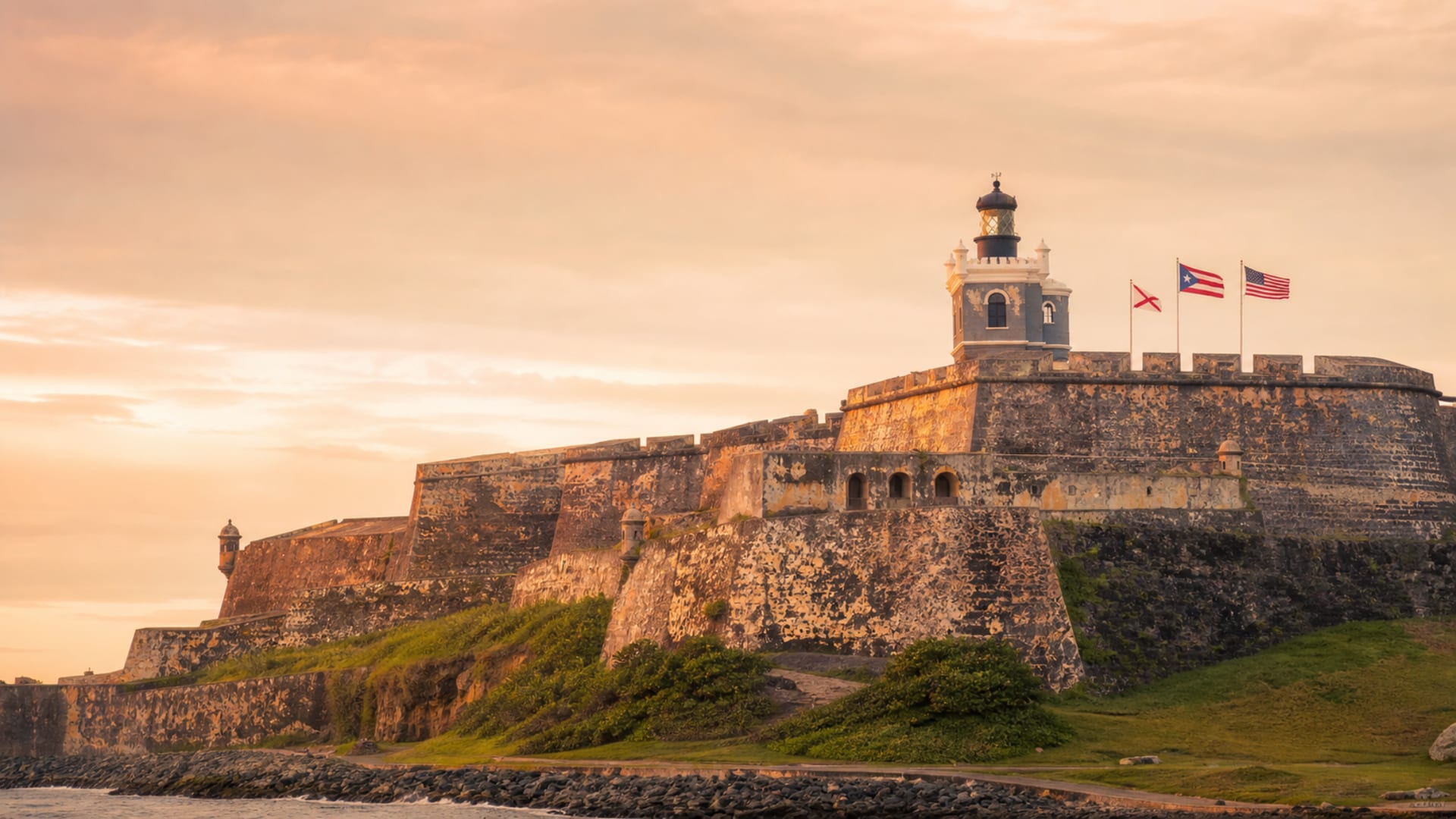
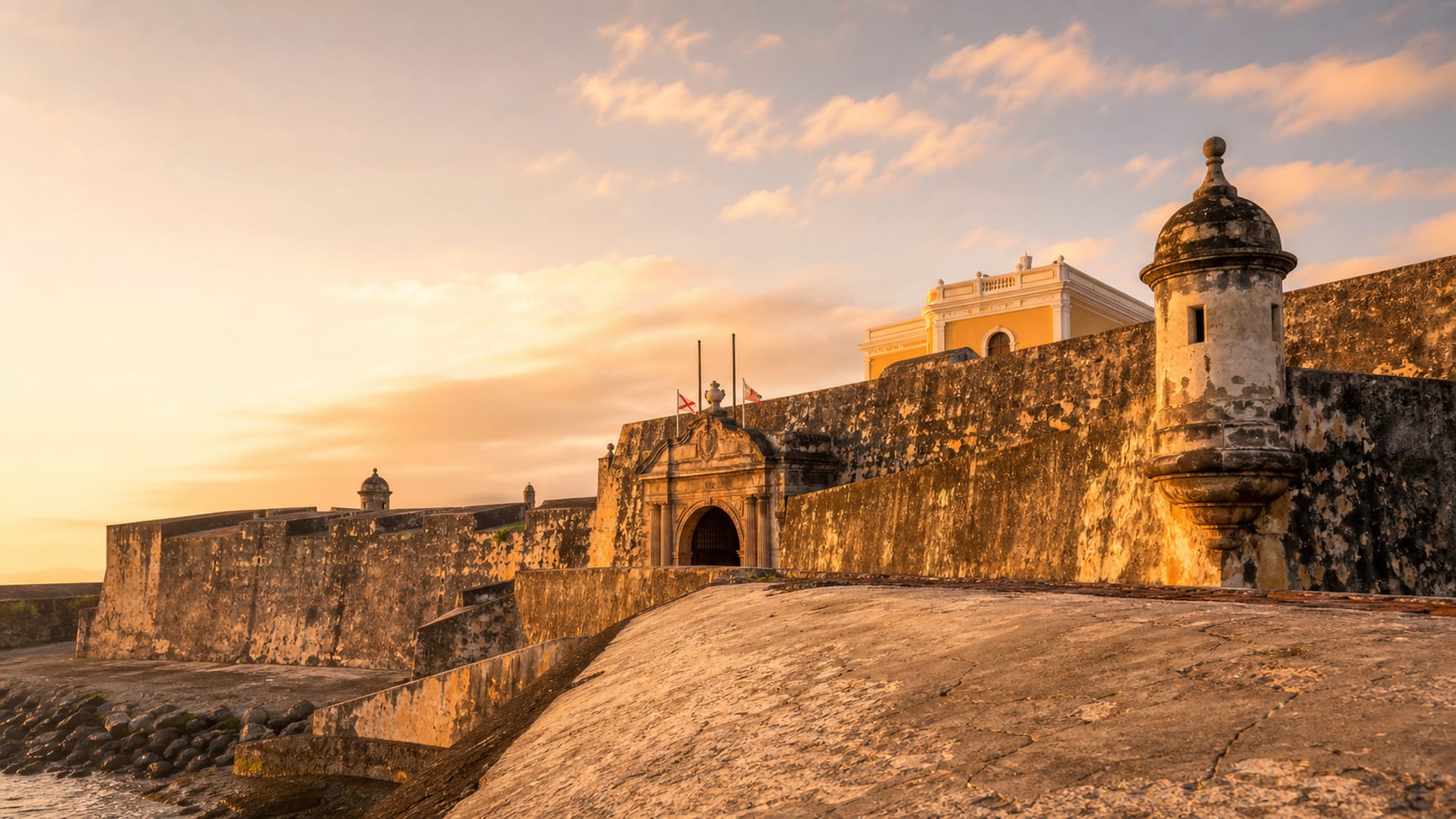
Castillo San Felipe del Morro
This 16th-century fortress guards San Juan Bay with ramparts, sentry boxes, and sweeping Atlantic views. Walk the grassy esplanade, then climb to the cannon batteries for the best sightlines over the water and Old San Juan.
Time needed: About 2 to 3 hours
Entry: Entrance is $10 for adults, free for children 15 and under, and valid for both El Morro and nearby Castillo San Cristóbal. Visit the official site for details.
Tip: Go early or near sunset for cooler light, and wear shoes with grip on the stone paths.
Castillo San Cristóbal
San Juan’s largest fort spreads across tunnels, dungeons, and artillery positions built to protect the landward approach. Its elevated walls frame the city and harbor, with the best views from the upper batteries and the outer glacis.
Time needed: About 2 to 3 hours
Entry: Entrance is $10 for adults, free for children 15 and under, and the ticket also covers Castillo San Felipe del Morro. Visit the official site for details.
Tip: Visit in the morning if you want lighter crowds and easier access to the upper batteries.
La Fortaleza
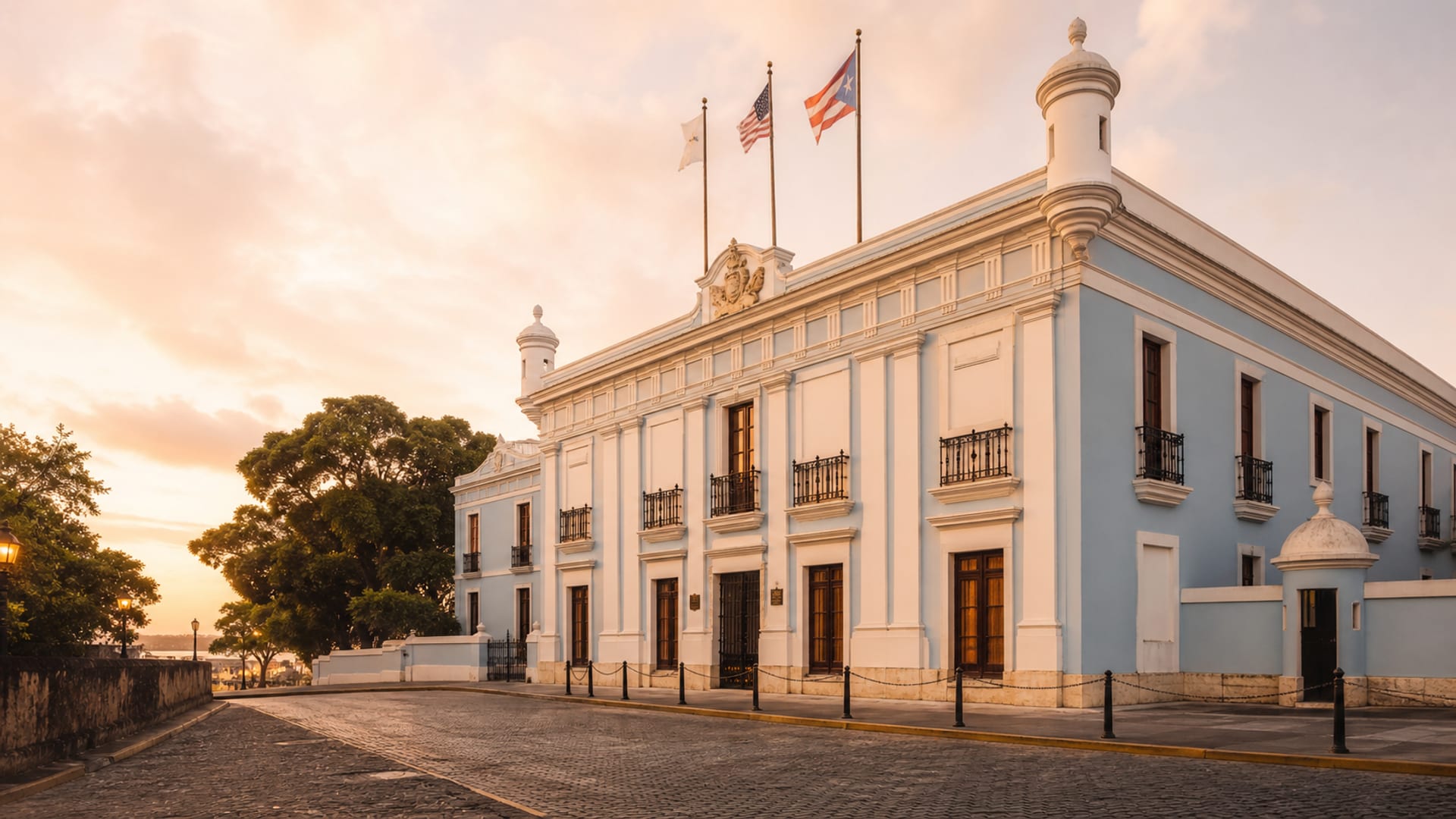
Built in 1533, La Fortaleza is the oldest executive mansion in continuous use in the Americas. Its blue facade, iron balconies, and formal courtyard sit at the edge of Old San Juan, a short walk from the cathedral and Plaza de Armas.
Time needed: About 30 to 45 minutes
Entry: Free to view from the exterior; guided interior access is limited and managed by the Puerto Rico government when available. Visit the official site for details.
Tip: Plan this stop for daylight, when the facade and courtyard details are easiest to see.
Overlooked sites worth visiting

Piñones mangrove boardwalks
Wooden paths thread through mangroves east of the city, with small kiosks, bike lanes, and Atlantic views. Go at sunrise or late afternoon for shade, bird activity, and cooler temperatures.
Time needed: About 1 to 2 hours
Entry: Free to access; expect optional costs only if you rent a bike, buy snacks, or use nearby parking lots, which charge local rates that vary by lot and season.
Tip: Visit early for cooler air and fewer cyclists.

Museo Casa Blanca
This 16th-century house museum in Old San Juan shows colonial domestic life through courtyards, gardens, and period rooms. Its compact scale makes it a quieter stop than the major forts nearby.
Time needed: About 1 hour
Entry: Admission is about $10 ($10) for adults, with reduced rates for seniors, students, and children; check the museum calendar for current hours, temporary closures, and any special exhibition surcharges before you go. Visit the official site for details.
Tip: Go midmorning, before cruise-day foot traffic builds.
Traditional food
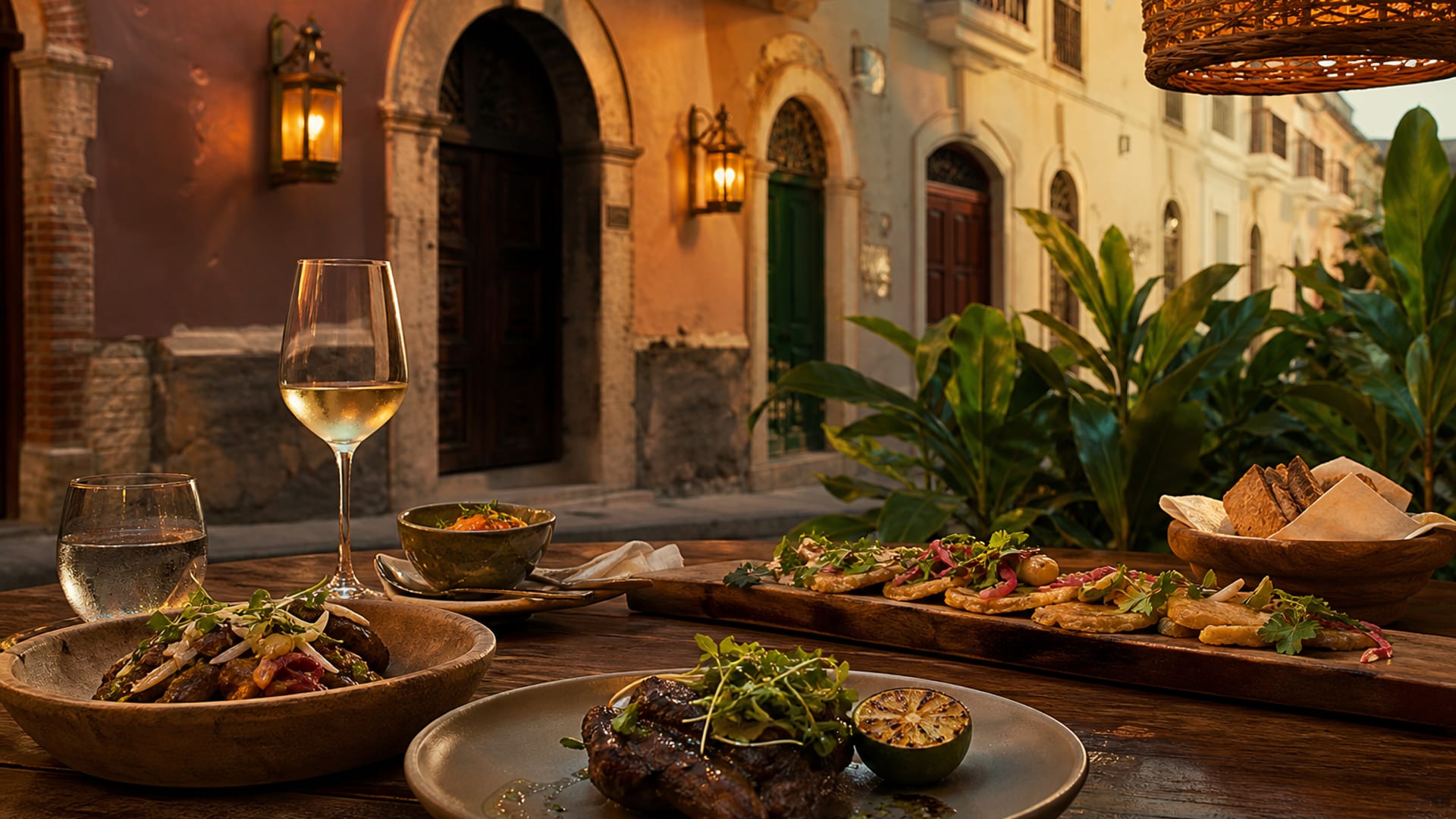
San Juan’s food leans on plantains, pork, rice, beans, garlic, and long-cooked seasoning. Expect mofongo, lechón asado, arroz con gandules, and alcapurrias, with lunch crowds, late dinners, and hotel-zone tables shaping the pace.
Mofongo
Mashed green plantains give mofongo its dense, savory base, usually finished with garlic and pork cracklings. At Casita Miramar, the kitchen treats it as a signature Puerto Rican plate with a refined dining-room setting.
Lechón asado
Slow-roasted pork is the centerpiece here, crisp at the edges and rich through the middle. La Casita Blanca is a longtime San Juan favorite for a classic version that arrives with the kind of sides locals expect.
Arroz con gandules
Rice cooked with pigeon peas and seasoning is one of the city’s defining everyday dishes, especially alongside roasted meat. Raíces in Old San Juan serves a widely recognized version in a setting built for traditional Puerto Rican food.
Alcapurrias
These fried fritters are filled with meat or seafood and work well as a snack or an easy street-side lunch. Kioskos de Piñones is the canonical stop, with multiple stalls serving them fresh near the boardwalks.
Best time to visit San Juan
San Juan shifts more by crowd level and rain than by temperature, so the best months depend on whether you want calmer streets, easier beach weather, or a livelier winter scene.
Best for: Best for drier days and the liveliest hotel and restaurant calendar
What you get: About 74 to 83°F (23 to 28°C), with higher visitor numbers and the busiest rates in the core districts
Trade-offs: Prices rise and popular sights can feel crowded by midday
Best for: Best for warm weather, easier reservations, and balanced sightseeing days
What you get: About 75 to 86°F (24 to 30°C), with moderate crowds before summer travel peaks
Trade-offs: Afternoon heat builds quickly, especially away from the coast
Best for: Best for beach time and lower hotel rates outside holiday periods
What you get: About 79 to 89°F (26 to 32°C), with lighter sightseeing crowds and more humidity
Trade-offs: Heat, rain, and storm season can interrupt outdoor plans
Best for: Best for quieter streets and flexible hotel choices
What you get: About 77 to 87°F (25 to 31°C), with fewer visitors and some of the warmest sea water
Trade-offs: This is the most weather-sensitive stretch of the year
A realistic 5-day plan in San Juan
A five-day San Juan stay works best when the old city gets the longest blocks of time and the beach districts fill the gaps between sights. The plan below uses the forts, plazas, and mangroves in a sequence that keeps transfers short and leaves room for meals without forcing long backtracking.
Touch down at San Juan (SJU), then take a taxi or rideshare to Isla Verde, roughly 10 minutes away and usually about $15 to $25. If you are staying in Condado, expect about 15 to 20 minutes and roughly $20 to $30, while Old San Juan usually takes about 20 to 30 minutes and costs roughly $25 to $35. Settle in, drink water, and keep dinner close to your hotel, with a simple first meal in Isla Verde or Condado so you can turn in early.
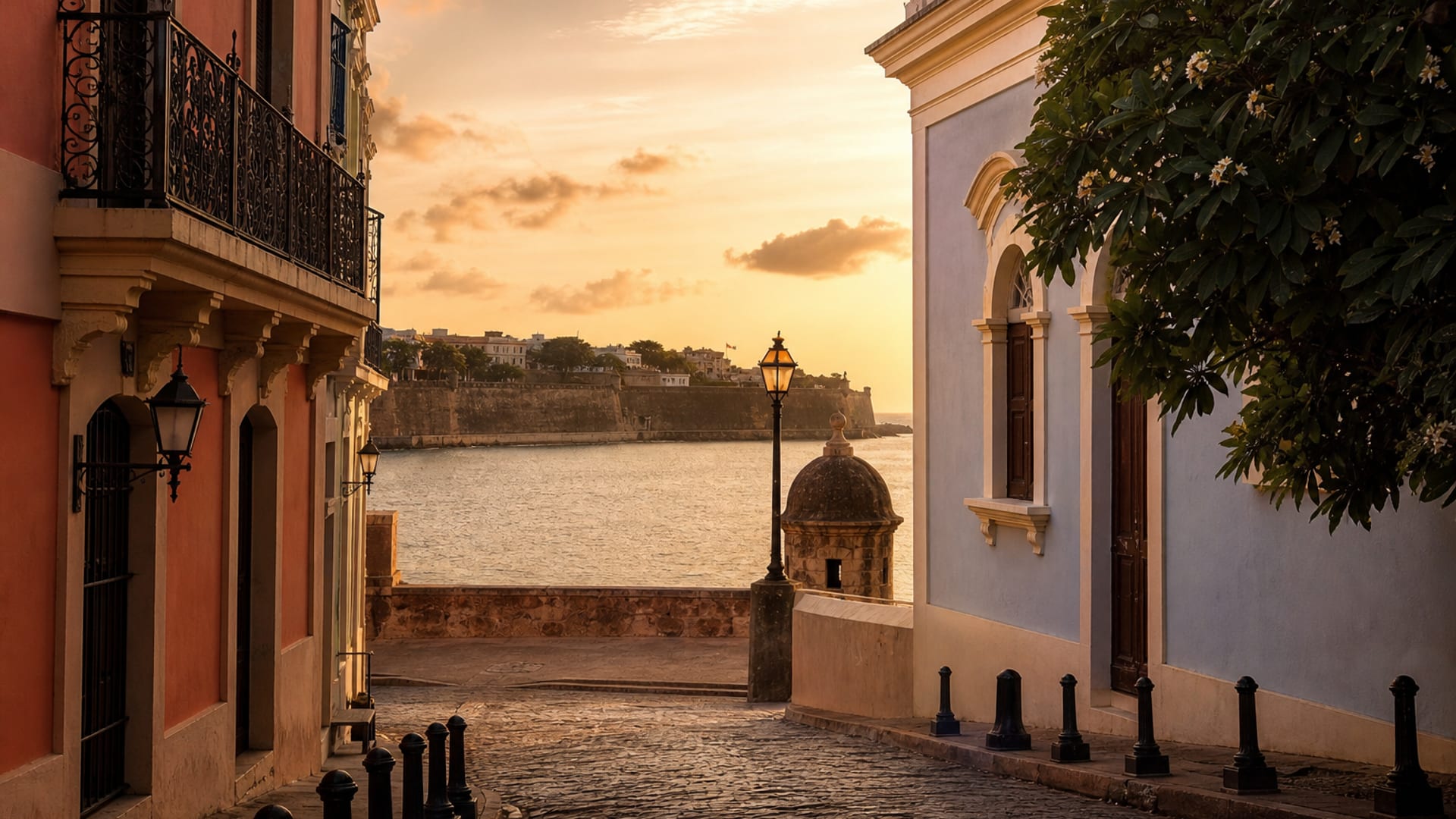
Begin in Castillo San Cristóbal, where the upper batteries and tunnels reward an early start, then walk about 10 to 15 minutes into Old San Juan for La Fortaleza and Plaza de Armas. From there, it is about 5 to 10 minutes on foot to Museo Casa Blanca, a quieter stop that gives the day a more intimate second half. End with dinner in Old San Juan, where the narrow streets keep everything within a short walk back to your room.
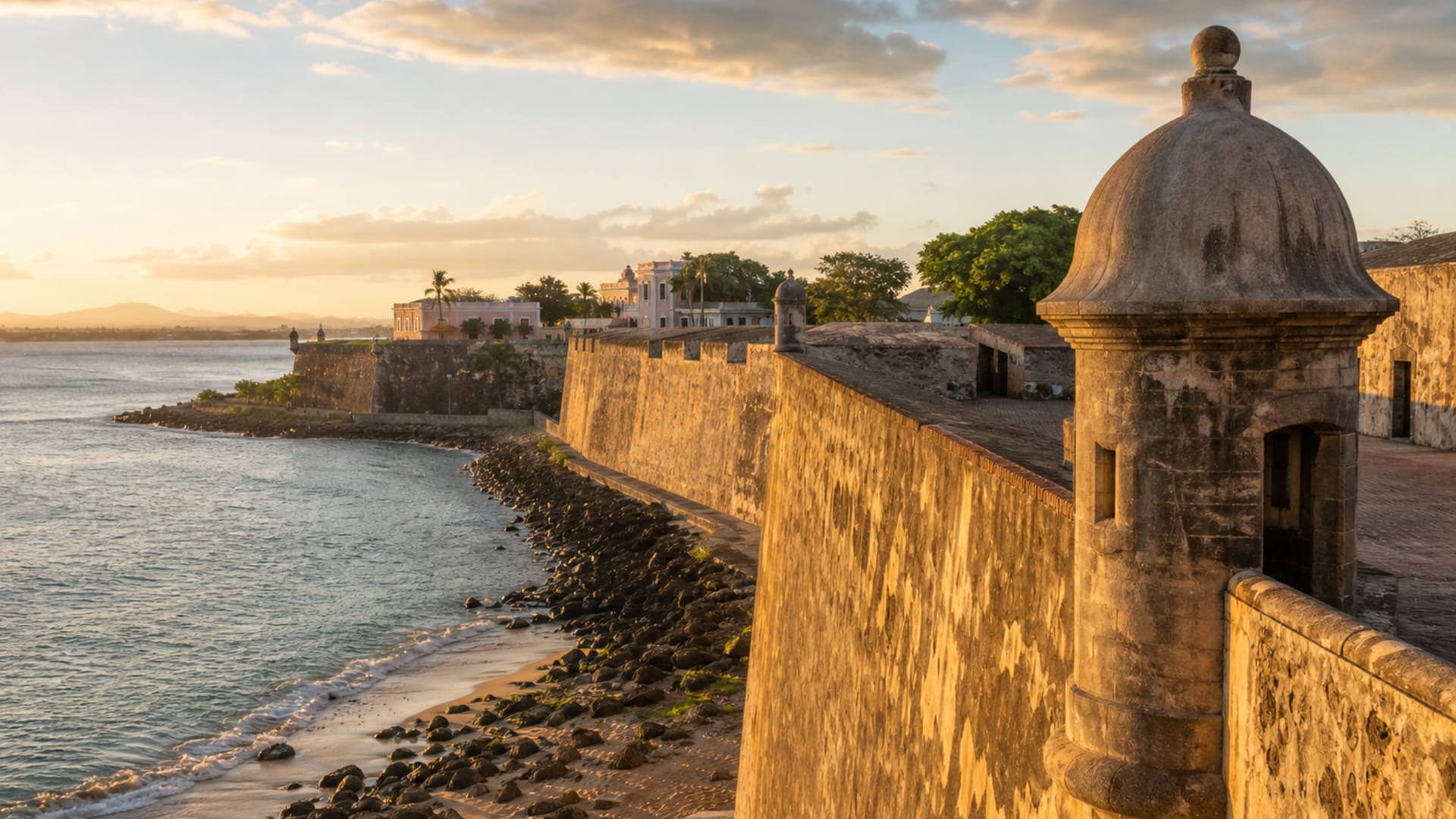
Start early at Castillo San Felipe del Morro, about a 10 to 15 minute walk from the center of Old San Juan, and plan 2 to 3 hours for the ramparts and bay views. After lunch, cross back through the old streets for a slower afternoon around the Cathedral of San Juan Bautista and nearby plazas, with most stops lining up within 5 to 10 minutes on foot. Stay in Old San Juan for an unhurried evening, since the best photo light often lasts well past sunset along the waterfront walls.
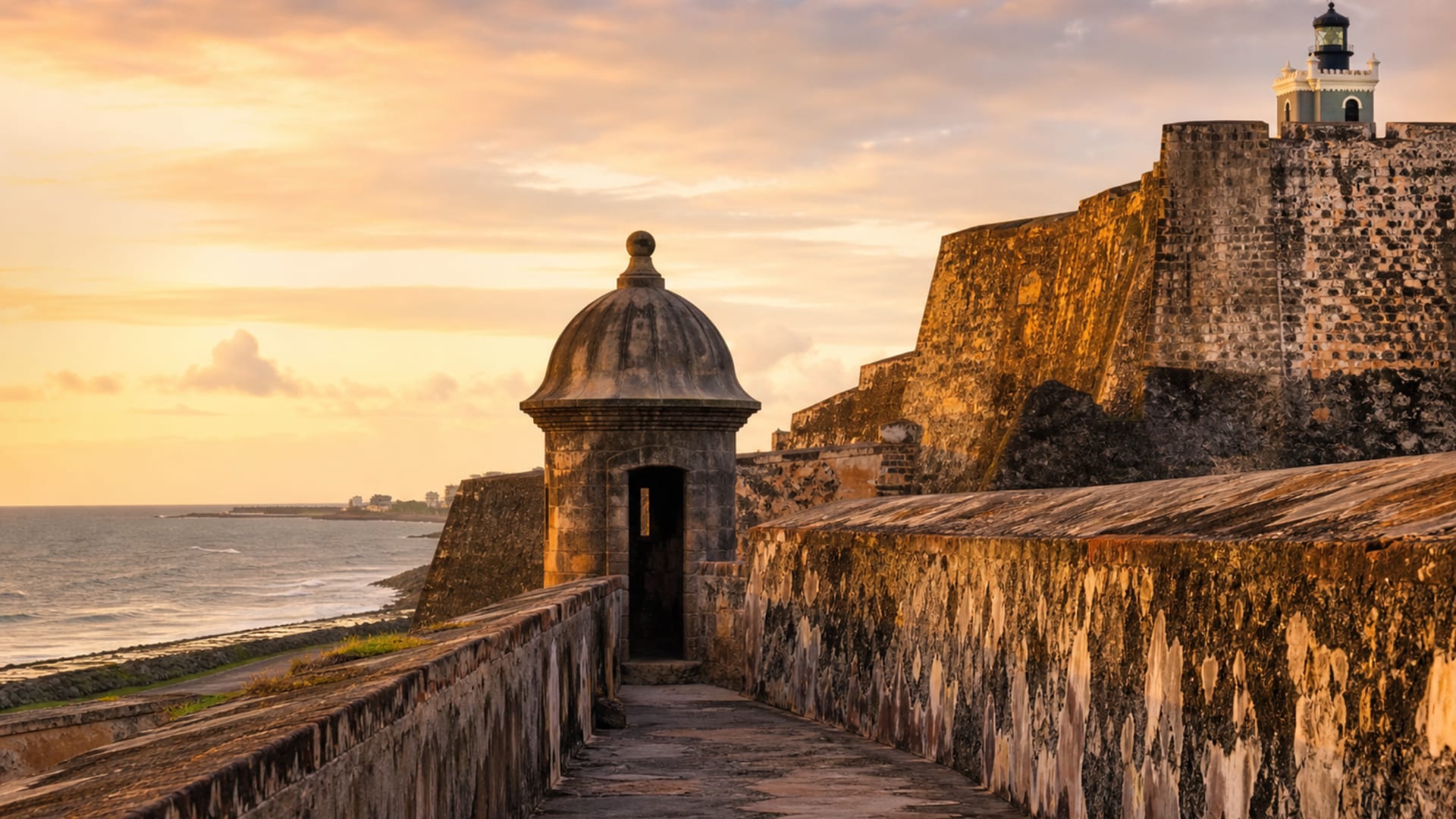
Head east to the Piñones mangrove boardwalks, about 20 to 30 minutes by taxi from Condado and roughly 25 to 35 minutes from Old San Juan, then spend 1 to 2 hours on the paths before the day warms up. After that, return toward the city for beach time in Condado or Isla Verde, where a late afternoon swim and an oceanfront walk fit easily into the rest of the day. If you want one final sit-down meal, choose a beachside restaurant in Condado so you can stay close to your hotel.
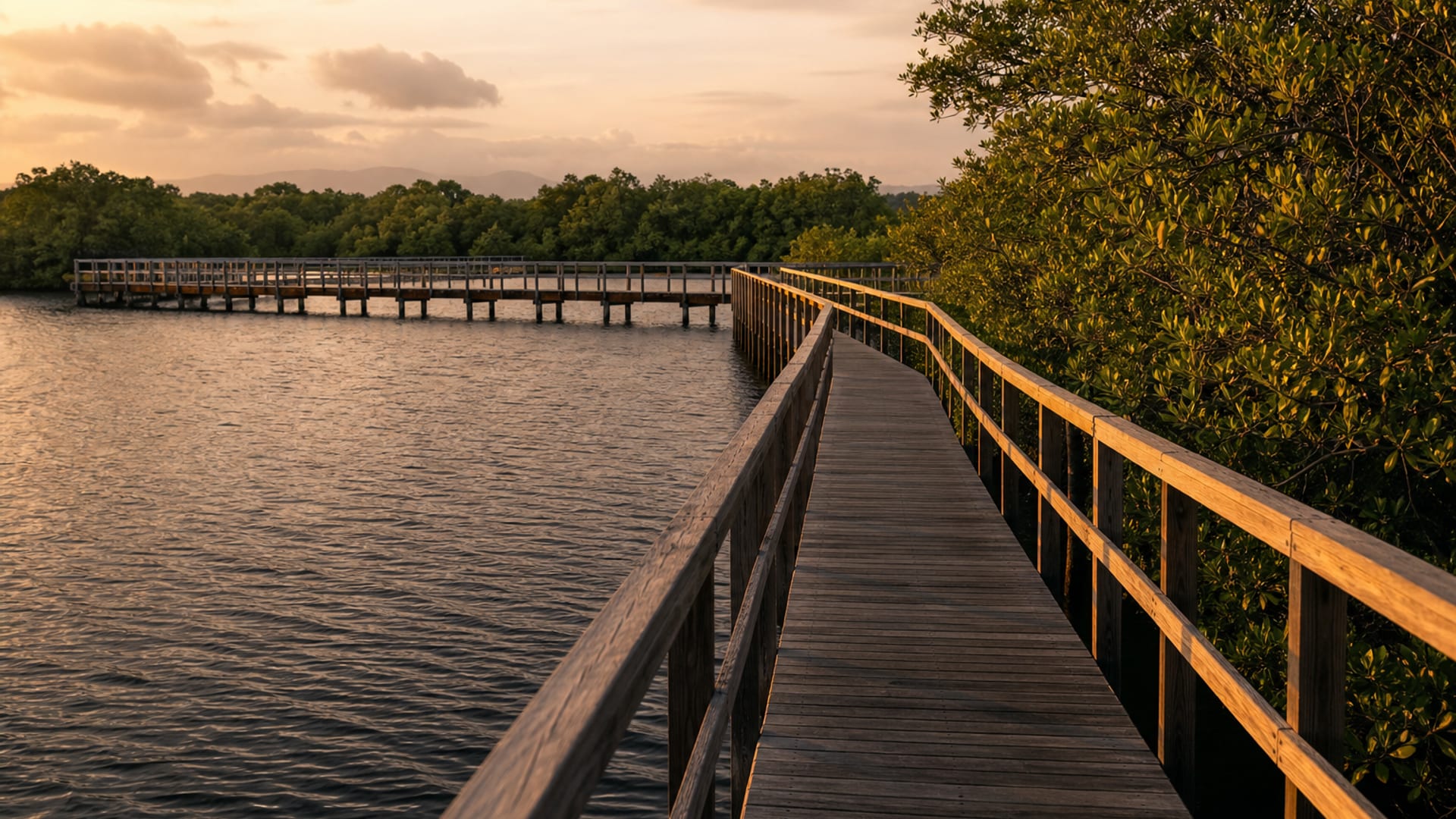
For your last morning, pair a short visit to a final museum stop with relaxed browsing in Old San Juan, where the compact blocks make it easy to fit in souvenir shops, galleries, and a coffee break without rushing. If you are staying in Miramar or Condado, a late breakfast or café stop there works well before checkout, and it keeps the transfer to San Juan (SJU) simple. Reserve enough time for a taxi to the airport, since traffic can slow departures from the beach districts and the old city at peak hours.
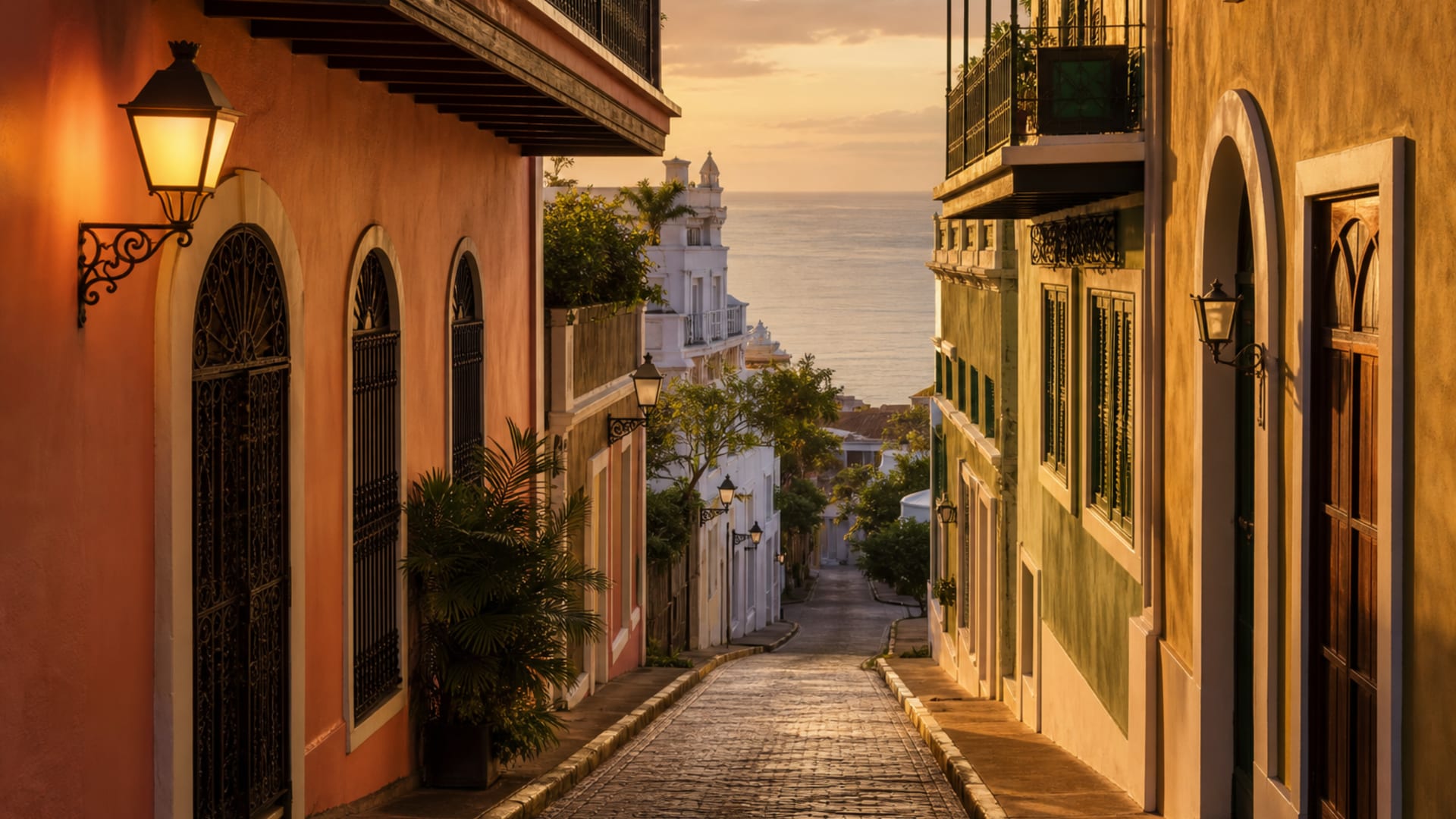
Business-class flights from the US to San Juan
Flights to San Juan often connect through a short East Coast hop or a longer West Coast itinerary, so the route you choose changes the whole travel day. The examples below show how fares and timing shift by origin.
From New York, American Airlines, Delta Air Lines, JetBlue, United Airlines, Air Canada, and Copa Airlines all sell itineraries to San Juan, with nonstop flying time about 3.5 to 4 hours. If you are open to a connection, common layover points include MIA, CLT, ATL, IAH, and PTY, and the total trip can stretch to roughly 6 to 10 hours. From $900 to $2,200 round-trip.
Los Angeles itineraries usually run through MIA, DFW, IAH, ATL, or PTY, which is why the trip often lands in the 9 to 14 hour range. American Airlines, Delta Air Lines, United Airlines, JetBlue, and Copa Airlines all appear on this corridor, and round-trip fares usually start at $1,100 and can reach $2,800.
San Juan feels different when you slow down
A deliberate San Juan trip gives each district a clear job: Old San Juan for fort walls, plazas, and museum stops, Condado for a beach break, Isla Verde for an easy airport-side base, and Piñones for mangrove paths and fried snacks. Taxis and rideshare handles the links between them, while the old city rewards walking once you arrive. If you want help shaping those pieces into one clean itinerary, speak with AranGrant experts before you book