

Chapters:

Need help with your trip?
Our support team is available 24/7. Request a callback or call us directly at (833) 619-0908
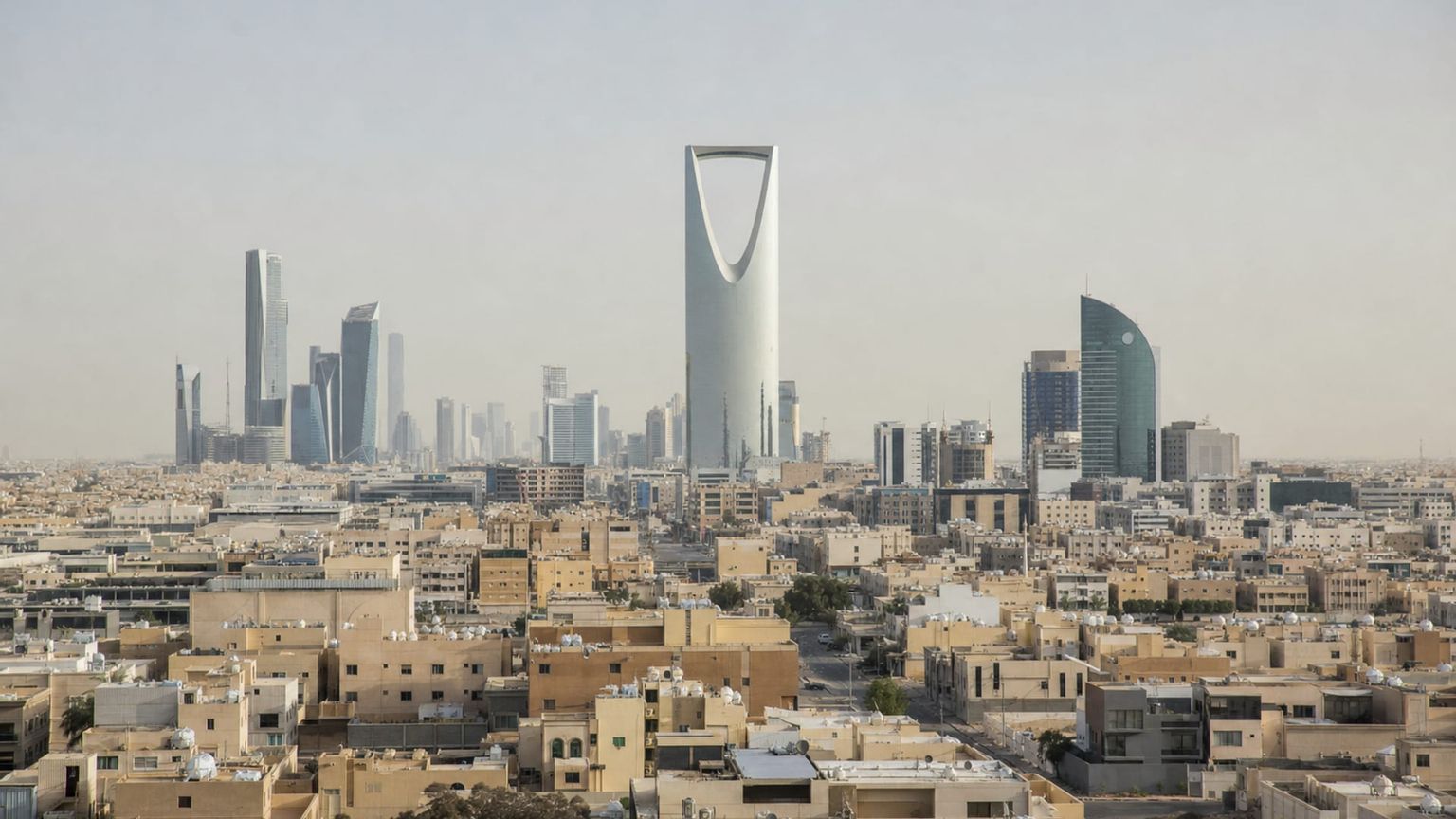
Riyadh trips often start with a hotel in Al Olaya, a taxi from Riyadh (RUH), and one or two headline sights. That works, but many visitors miss how far apart the historic core, towers, and newer districts sit, and how much timing shapes each day.
The city rewards planning because distances are real, traffic can stretch simple moves, and several landmarks work best at set hours. Without a plan, you can spend too much time in cars and not enough time in places that close early or shine after sunset.
This guide lays out a tighter route through Riyadh, with neighborhoods, transit choices, seasonal timing, food stops, flights, and a five-day sequence that matches the city’s scale.
Useful things to know

Main language(s): Arabic
Marhaban (mar-haban) – Hello / good morning
Min fadlak (min FAHD-lak) – Please
Shukran (SHOOK-ran) – Thank you
Hal تتحدث الإنجليزية؟ (hal tatahaddath al-injliiziyya?) – Do you speak English?
Kam al-thaman? (kam al-tha-man?) – How much does it cost?

Currency: The local currency is the Saudi riyal (SAR, ر.س).

Cash and cards: Cards and contactless are widely accepted; carry about SAR 100 to 200 ($27 to $53) for small shops and taxis.

Tipping: Tip about 10% in restaurants if service is not already included; round up taxi fares.

Traditional food: Kabsa, Jareesh, Mandi, Saleeg

Water and coffee costs: Water ~SAR 2 to 4 ($0.50 to $1), bar espresso ~SAR 10 to 18 ($2.67 to $4.80).

Taxis and ride apps: Uber and Careem operate here; airport pickups can be directed to designated ride-hail zones.

Plug and voltage: Type G socket, 230V

Dining and shop opening hours: Breakfast is about 7:00-10:00 am, lunch 12:30-3:00 pm, and dinner 8:00-11:00 pm. Many places close for part of the afternoon.

Emergency number: 999 for police, fire, and ambulance; 997 for ambulance only.
Where to stay in Riyadh
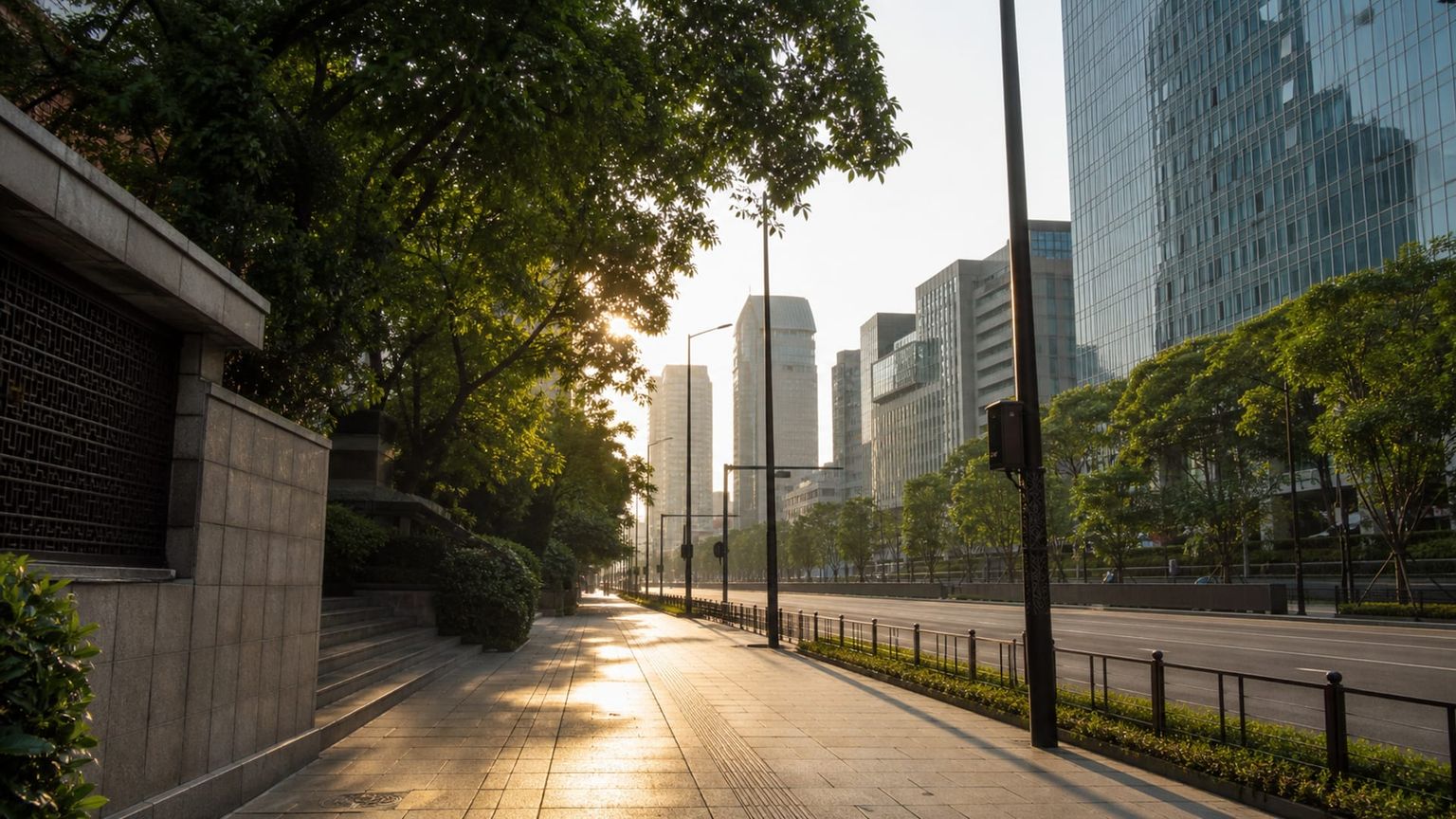
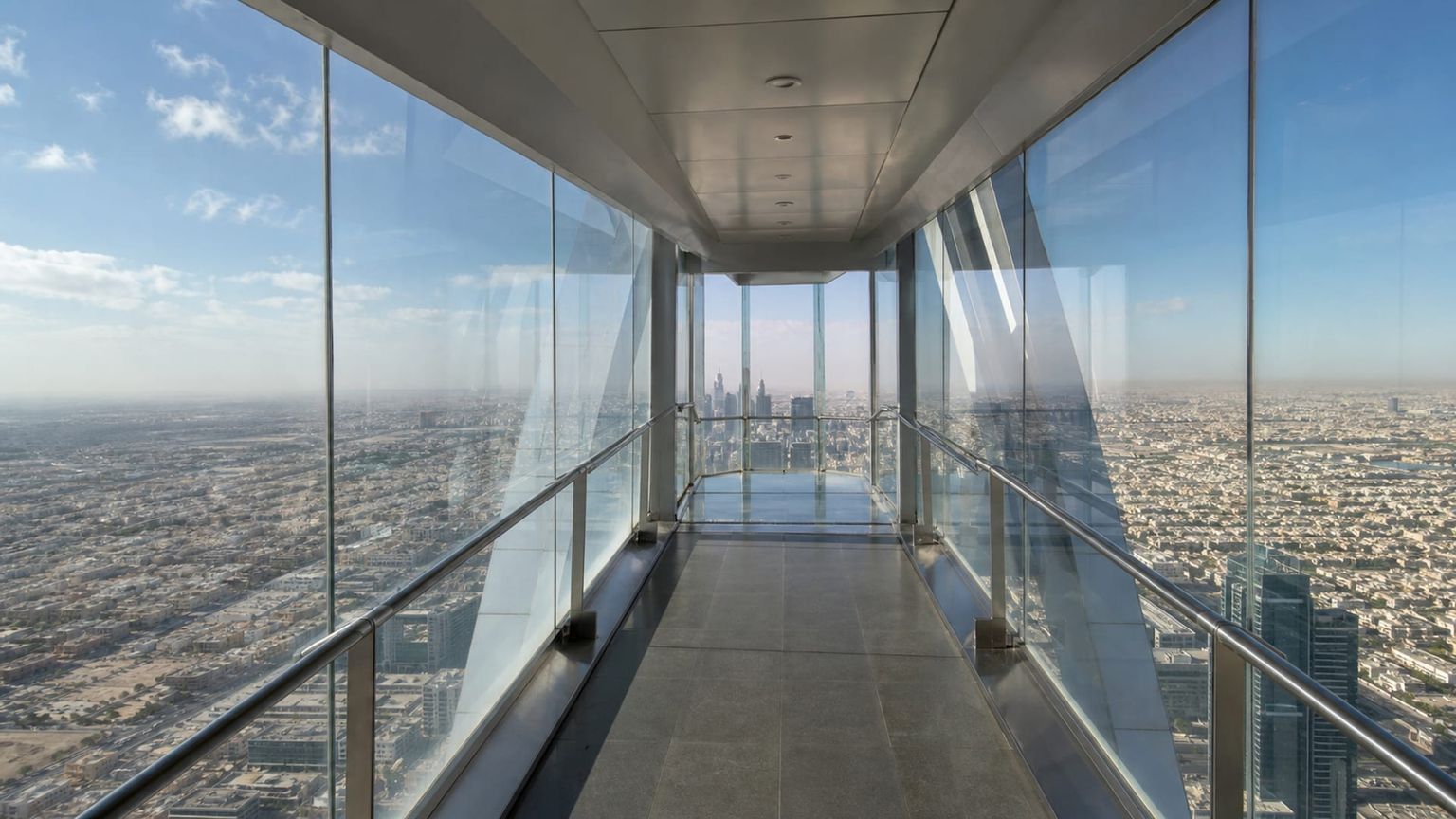
Riyadh’s main business district sits north of the old center and puts you close to many of the city’s tallest towers, major hotels, and office blocks. It suits visitors who want quick access to dining, shopping, and meetings in one of the city’s most established commercial zones.
Best for: Business trips, shopping, and a central base with easy access to major hotels
What to expect: Wide avenues, tower views, and a busy weekday pace, with more activity in the malls and hotel lobbies than on the sidewalks.
Hotel prices: Usually about $140 to $320 per night for well-rated stays
Distance to major sights: About 10 to 15 minutes by car to Kingdom Centre and about 20 minutes to Al Masmak Palace Museum
Quietness: Busy during the day, quieter in the evening once offices close, though hotel zones stay active.
Main trade-off: You pay more for centrality, and the area can feel car-dependent because many destinations sit across large blocks.
Good to know: If you plan to move around by taxi, this area cuts down cross-city travel, but you will still want to book cars for most outings.
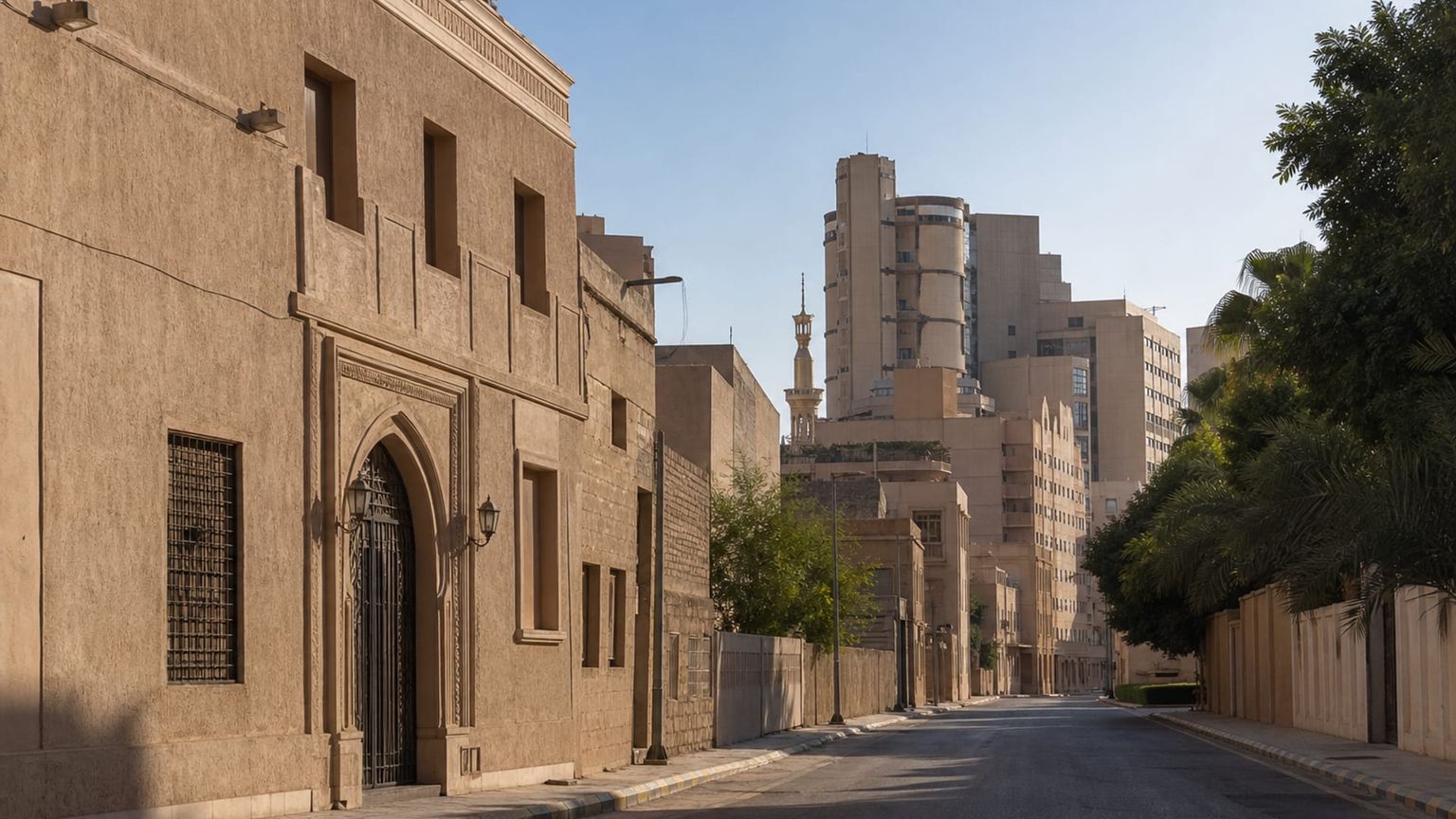
Al Murabba sits near the historic heart of Riyadh and gives you access to museums, government landmarks, and older city streets. It works well for travelers who want a more local base within reach of the National Museum and the old quarter.
Best for: Museum visits, heritage stops, and travelers who want to stay near the historic core
What to expect: A calmer residential-and-institutional setting, with some office traffic by day and limited late-night street activity.
Hotel prices: Usually about $90 to $220 per night for well-rated stays
Distance to major sights: About 5 to 10 minutes by car to the National Museum and about 15 minutes to Al Masmak Palace Museum
Quietness: Fairly quiet at night, with more movement on weekday mornings and afternoons.
Main trade-off: Hotel choice is narrower than in the main business district, and dining runs lighter after office hours.
Good to know: Evenings are best planned in advance, since you will usually rely on taxis rather than walking between most dinner spots.
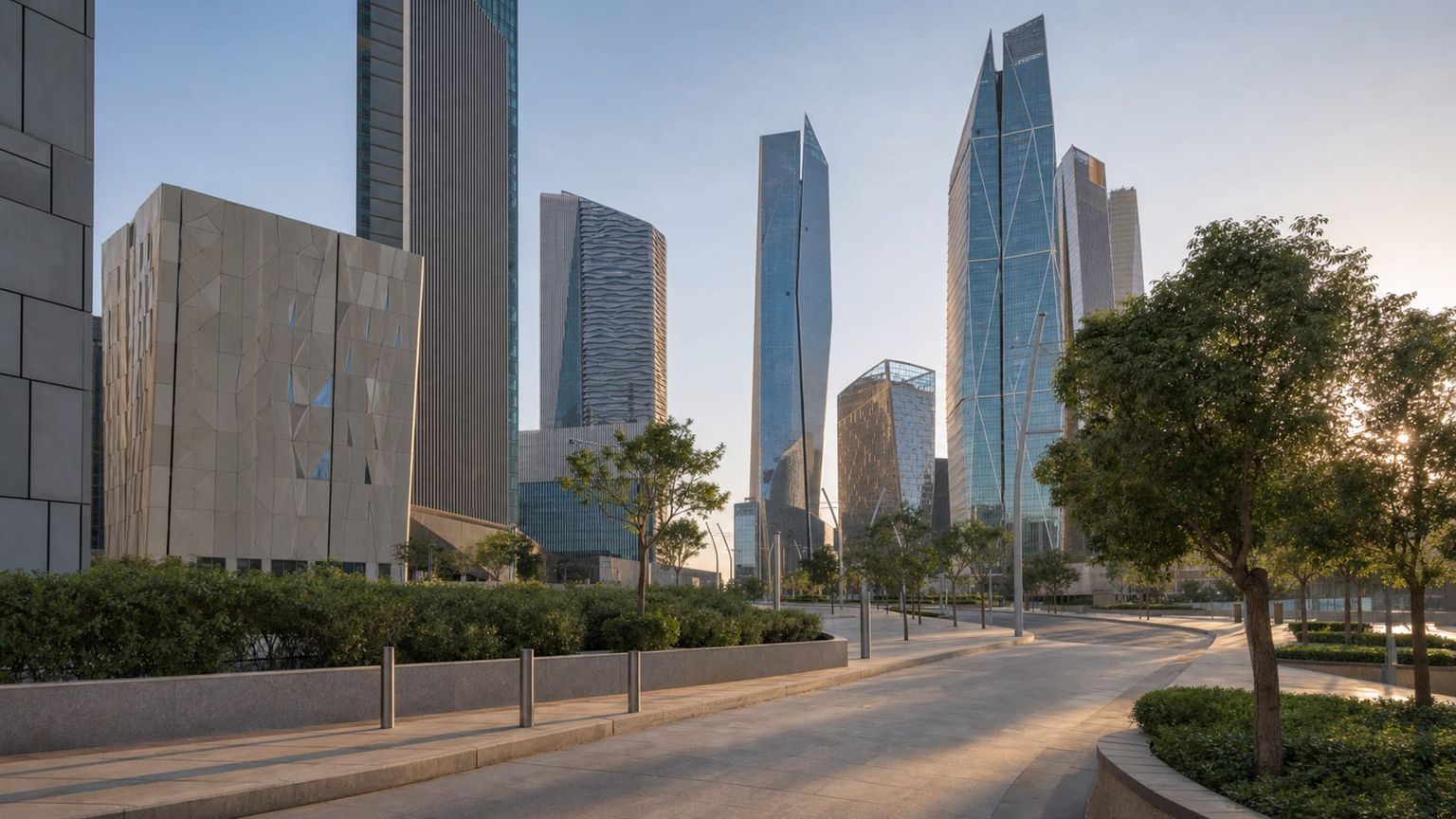
King Abdullah Financial District, often called KAFD, is a modern northern district built around high-rises, upscale hotels, and a new metro connection. It suits travelers who want a contemporary base with polished hotels and fast access to the city via major roads.
Best for: Modern hotels, business travel, and visitors who want quick highway and metro access
What to expect: New towers, wide streets, and a planned district layout, with the busiest scenes inside hotels, cafés, and conference spaces.
Hotel prices: Usually about $180 to $420 per night for well-rated stays
Distance to major sights: About 15 to 20 minutes by car to Kingdom Centre and about 25 to 30 minutes to Al Masmak Palace Museum
Quietness: Quiet on the sidewalks outside peak hours, livelier inside the hotels and restaurants through the evening.
Main trade-off: It sits farther from the historic core, so sightseeing days can mean longer taxi rides.
Good to know: Check metro timings and station access before booking, because the district works best when you pair it with rail or car use.
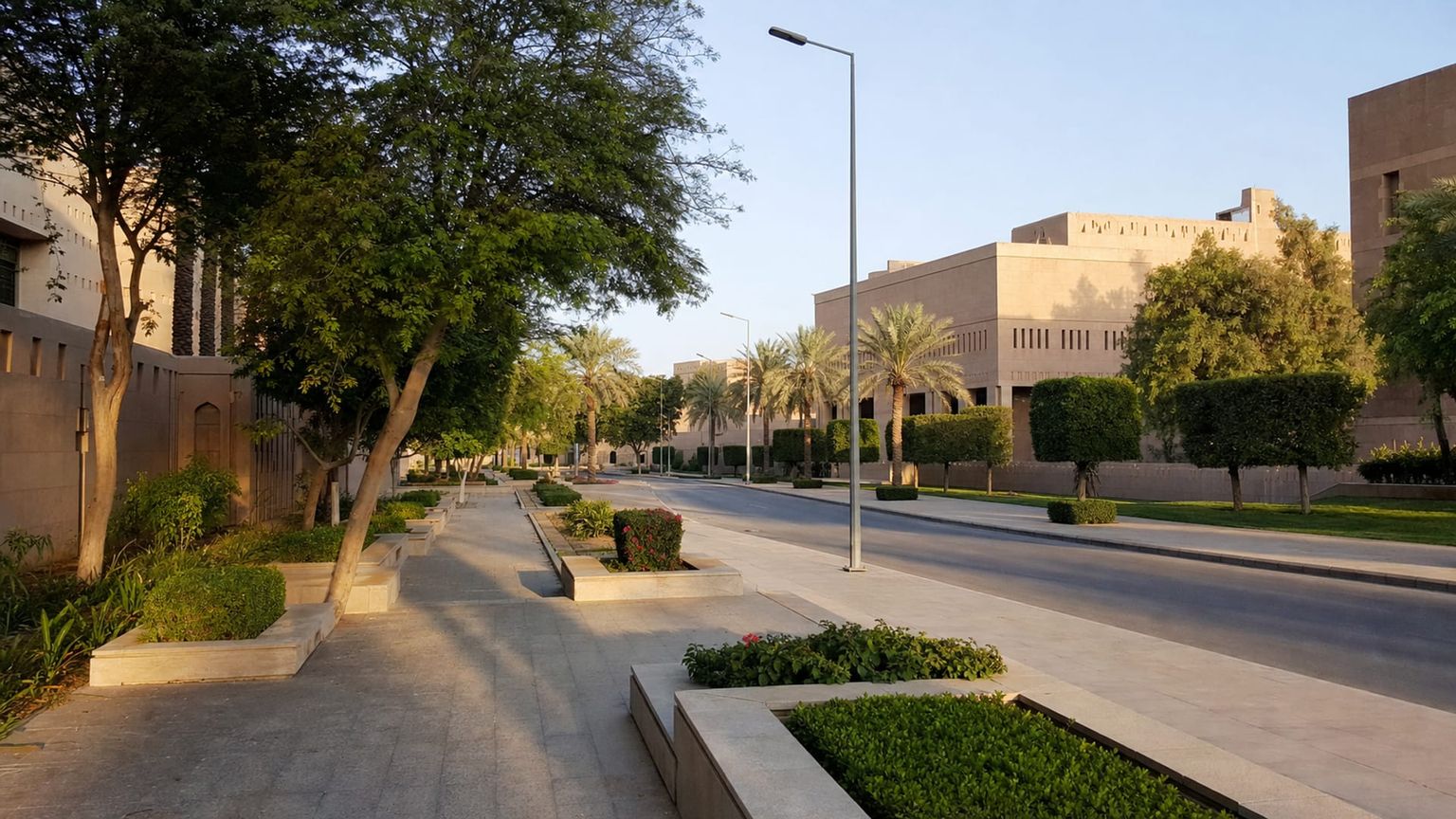
The Diplomatic Quarter lies southwest of central Riyadh and is known for embassies, parkland, and controlled access roads. It offers one of the city’s calmest upscale bases, with green space and a more residential feel than the main commercial districts.
Best for: Calmer stays, park access, and travelers who prefer an upscale residential setting
What to expect: Low foot traffic, broad roads, and a mostly residential atmosphere, with most movement coming from residents, diplomats, and hotel guests.
Hotel prices: Usually about $160 to $380 per night for well-rated stays
Distance to major sights: About 20 to 25 minutes by car to Al Masmak Palace Museum and about 15 minutes to King Khalid Grand Mosque
Quietness: Very quiet in the evening, with modest daytime activity around hotels, cafes, and institutions.
Main trade-off: You will spend more time in taxis, and dining and shopping options are more limited than in Al Olaya.
Good to know: Because the district is spread out, confirm your hotel’s exact location before booking, especially if you want to limit walking between meals and meetings.
Travelers usually avoid staying in northwestern industrial districts such as Al Kharj Road and Dhahran Jubail Road areas, which sit far from the main sights and have few visitor amenities. Al-Malaz is less convenient for many first-time visitors because it is east of the core attractions, and outlying residential districts such as Al Narjis and Al Yasmin can mean long evening rides to central restaurants and shopping areas.
Hotel deals
How to get around Riyadh efficiently
Riyadh’s six-line metro, public buses, and app-based cars each cover a different kind of trip, so the best choice depends on whether you are crossing districts, linking stations, or heading straight to a museum or hotel.

Metro
for longer distances
Riyadh Metro has six lines, with airport access on the Yellow Line to King Khalid International Airport, and fares are tied to time-based passes, not single-ride tickets: about $1.60 (SAR 6) for 2 hours, about $3.20 (SAR 12) for 3 days, and about $8.00 (SAR 30) for 7 days. Trains suit longer cross-city trips better than point-to-point neighborhood hops, and station-to-station journeys often take roughly 10 to 35 minutes depending on the line and transfer count.

Bus and tram
for convenience
SAPTCO and Riyadh public buses cover major corridors, but the network is less dense than the metro, so buses work best for direct links such as downtown, university, and district-to-district trips rather than every local move. Fares are low, typically about $0.80 to $1.30 (SAR 3 to SAR 5), with tickets usually valid for a single ride or a short time window set by the operator, and waits can stretch to 15 to 30 minutes on less busy routes.

Taxi
for convenience or late hours
Licensed taxis use metered fares, and app-based cars such as Uber and Careem are widely available, with airport runs from Riyadh (RUH) to central hotels usually costing about $16 to $32 (SAR 60 to SAR 120) by meter or app, depending on traffic and pickup point. Hail street taxis only where they are licensed, or book through an app to reduce price disputes; most drivers accept cash and cards, and trips from the airport into the city often take about 30 to 50 minutes.
*Prices are based on rates updated as of June 2026 and may change at the time of travel.
Use the metro for longer cross-city runs, buses for low-cost direct corridors, and taxis or ride-hail for airport transfers and the last mile between sights.
Iconic landmarks
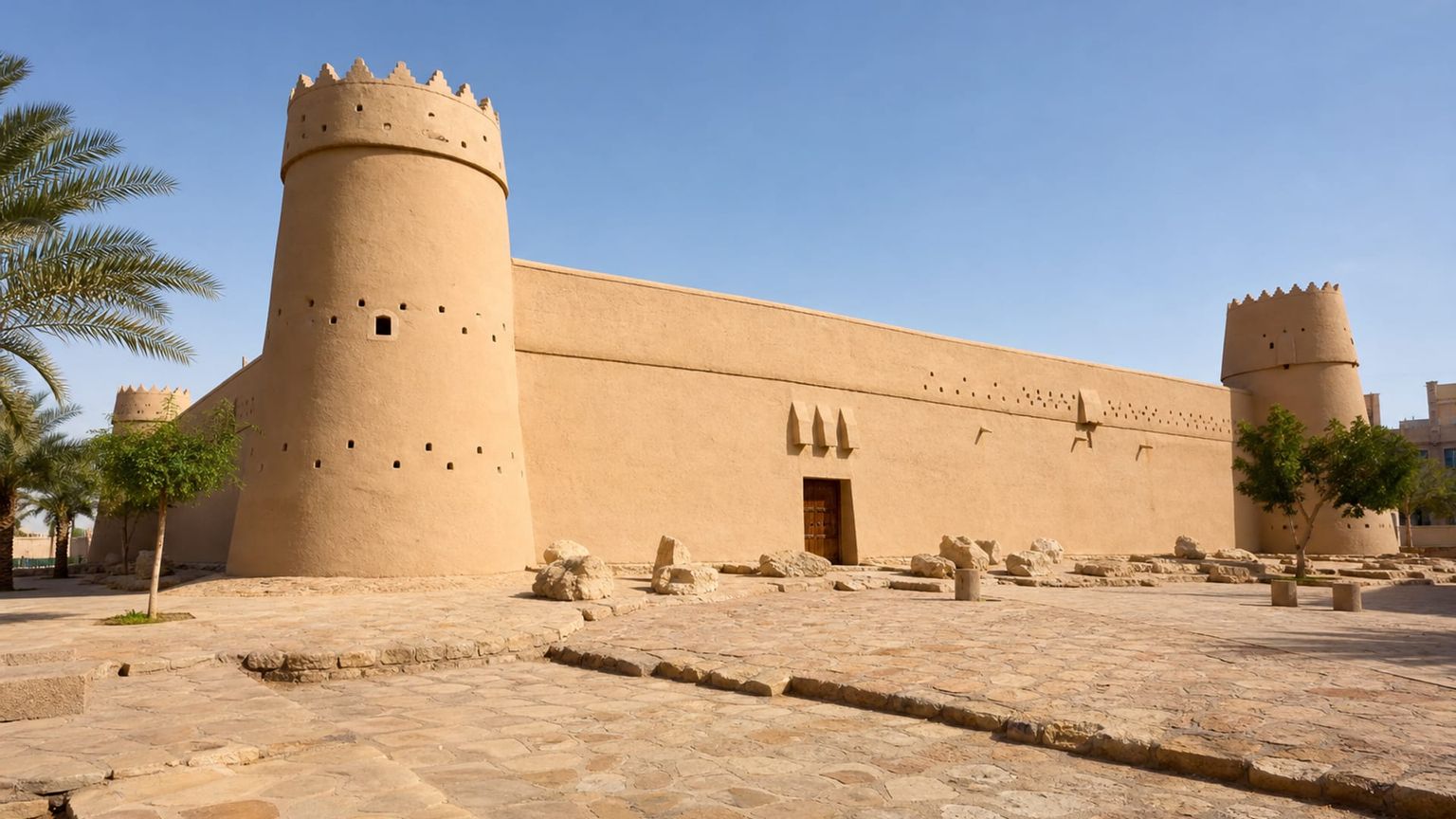
Al Masmak Fortress
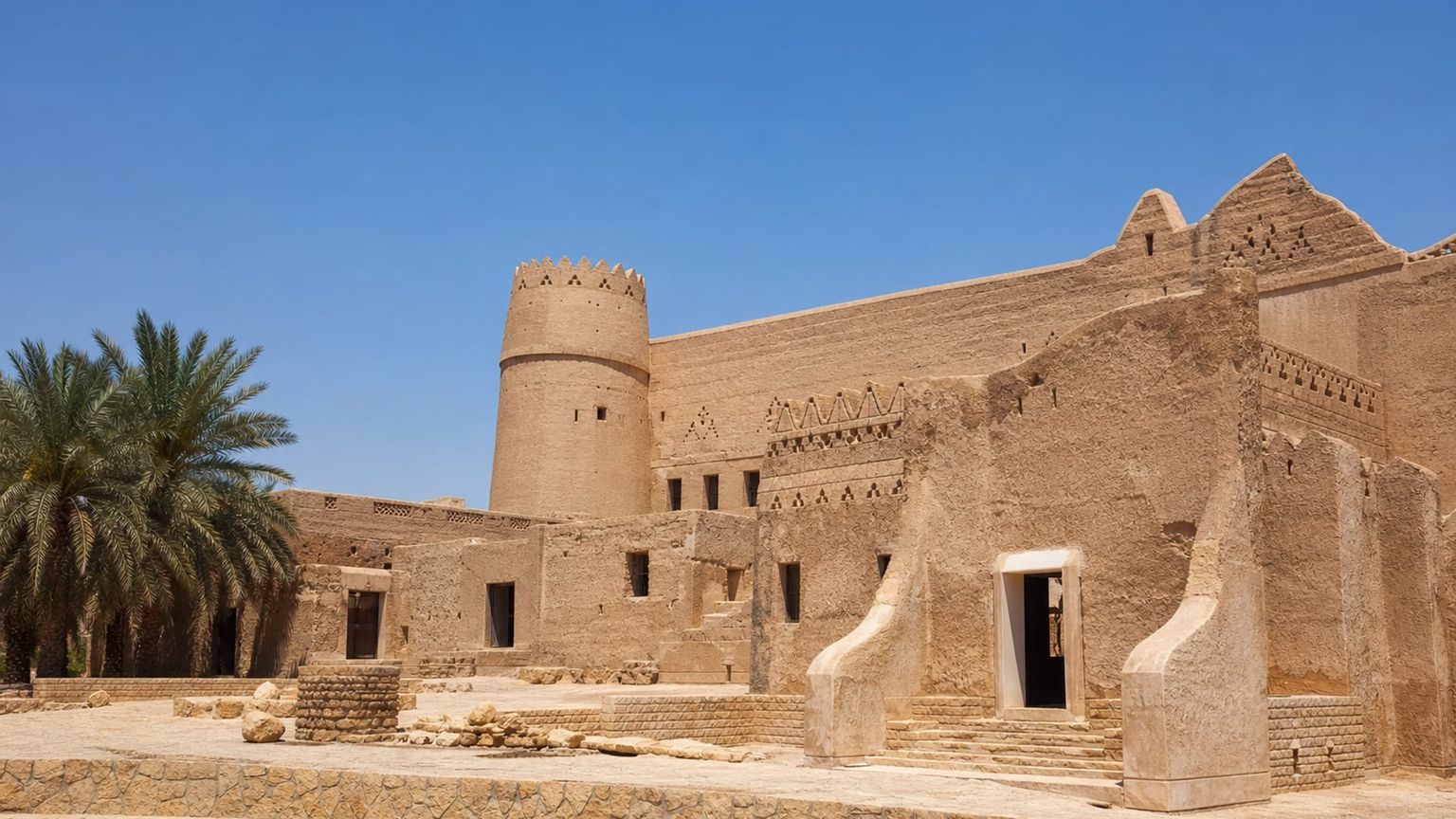
This 19th-century mud-brick fort anchors old Riyadh, with thick walls, a central courtyard, and exhibits on the 1902 recapture of the city by Abdulaziz Ibn Saud. Its small size makes it an easy stop with nearby souq streets.
Time needed: About 45 minutes to 1 hour
Entry: Free to access, with no timed entry required
Tip: Go early in the day, before heat builds, then continue to nearby souq lanes on foot.
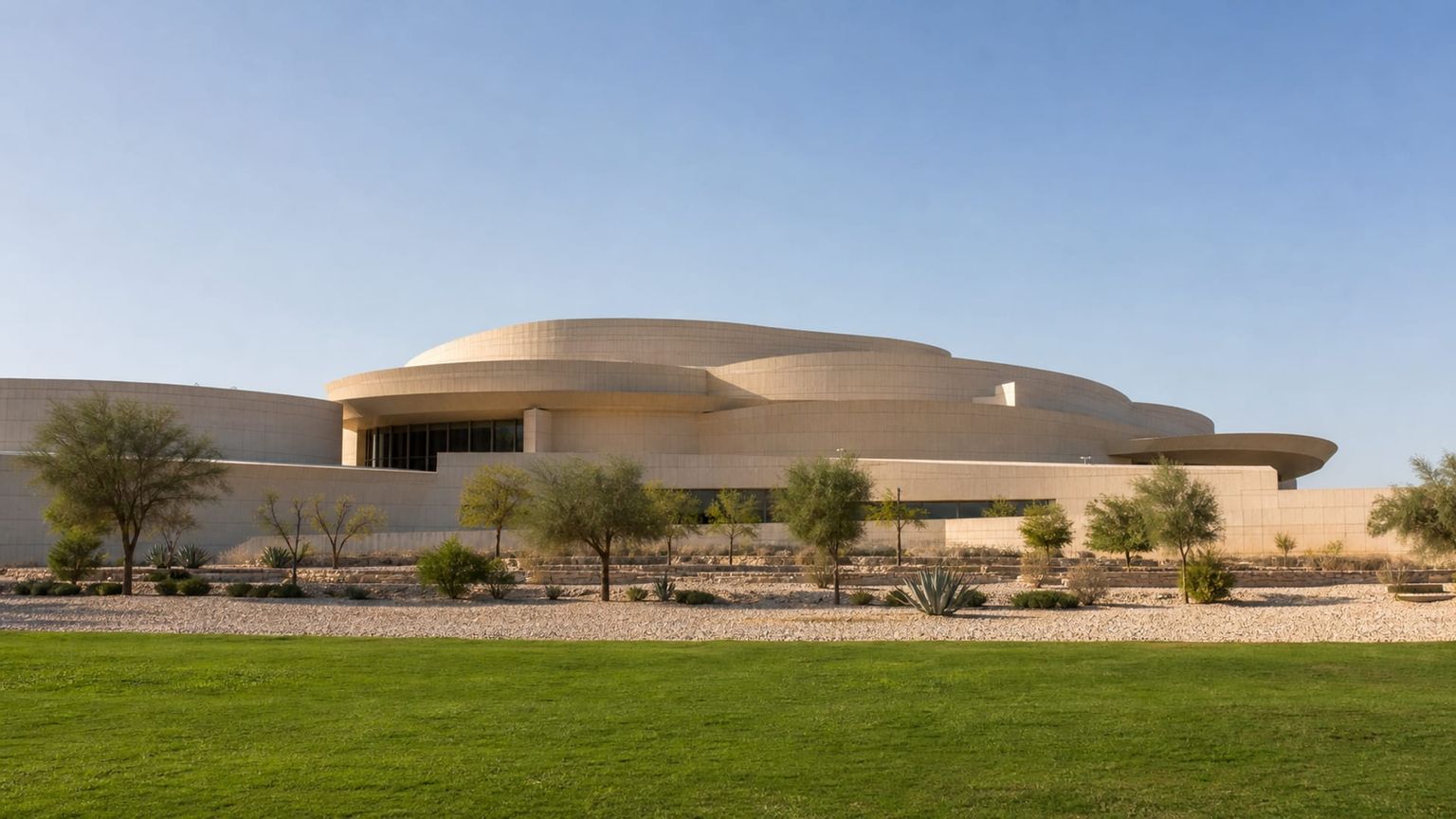
National Museum of Saudi Arabia
The National Museum traces Arabian Peninsula history from prehistoric finds to the modern kingdom through artifacts, models, and large-scale galleries. It sits in the King Abdulaziz Historical Center, about 5 km from central Riyadh.
Time needed: About 2 to 3 hours
Entry: Admission costs $5 to $13 (20 to 50 SAR) Visit the official site for details.
Tip: Plan a daytime visit, then allow extra time for the adjacent historical-center grounds.
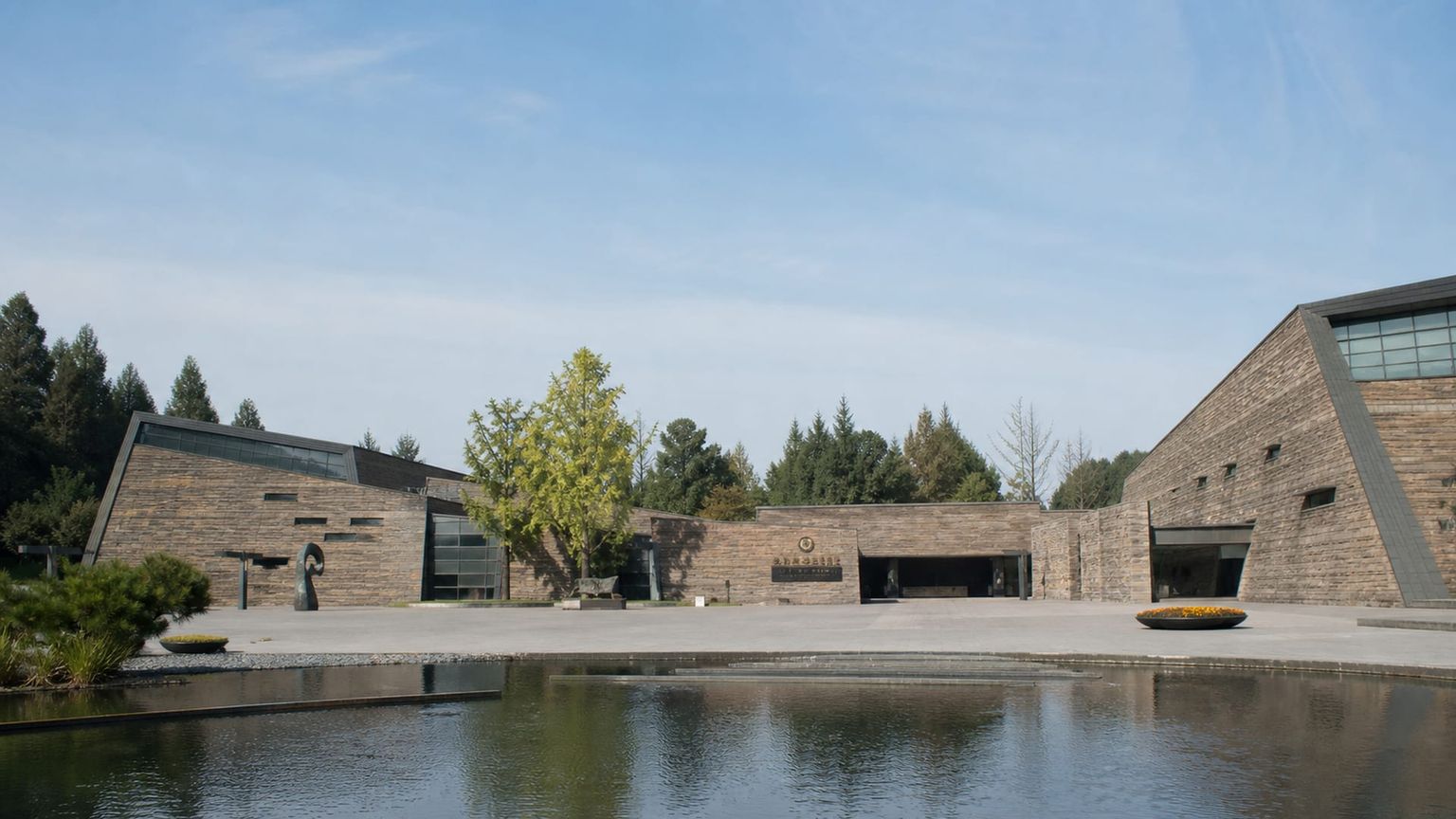
Kingdom Centre Tower Sky Bridge
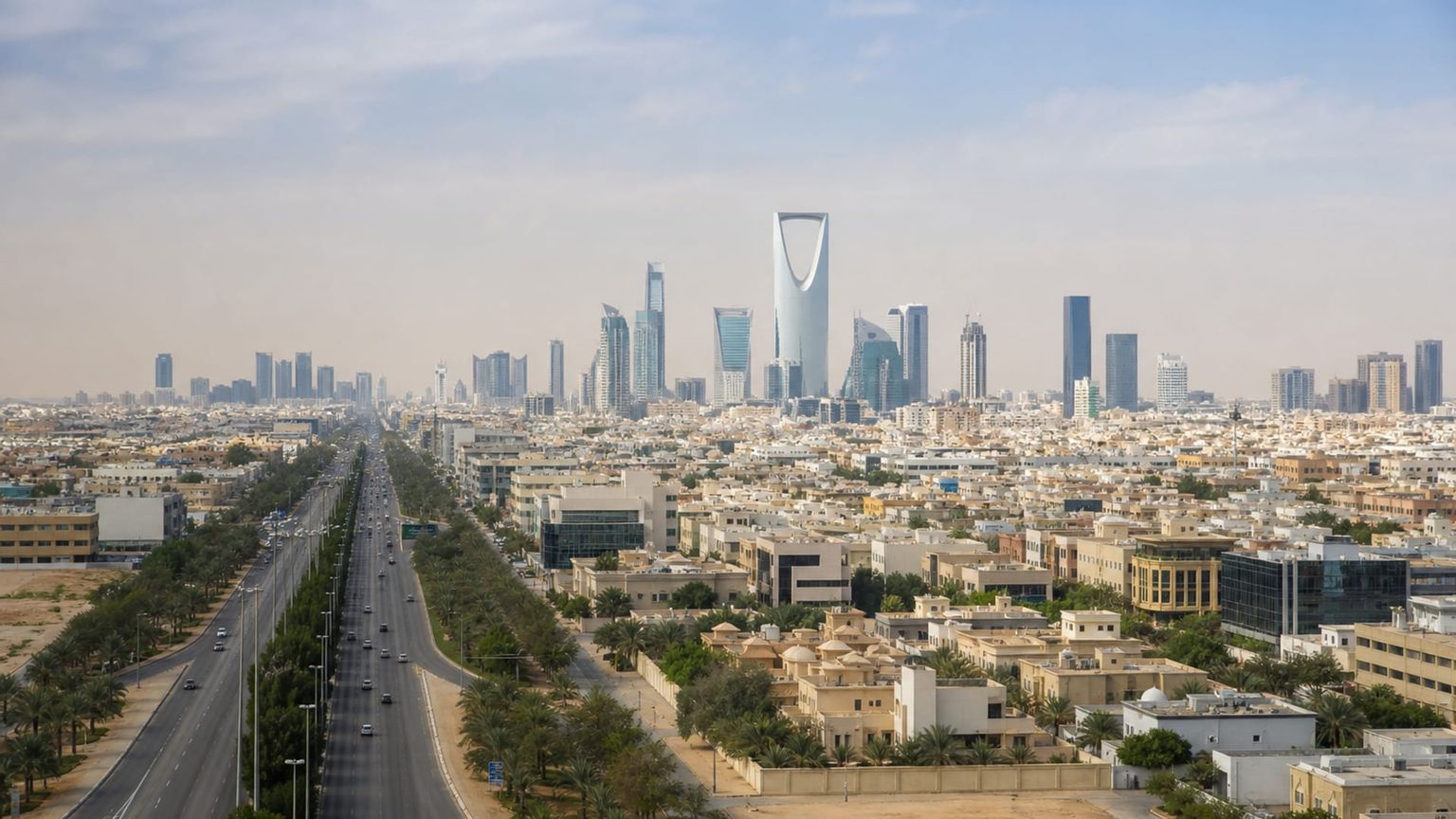
Kingdom Centre Tower is one of Riyadh’s best-known skylines, and its 99th-floor sky bridge gives wide city views from a landmark skyscraper about 10 km north of the center. The tower also anchors a major shopping complex.
Time needed: About 1 to 2 hours
Entry: Sky bridge tickets cost $13 to $16 (50 to 60 SAR) Visit the official site for details.
Tip: Visit near sunset for long views, but arrive early if you want shorter waits for the elevator.
Overlooked sites worth visiting

At-Turaif District, Diriyah
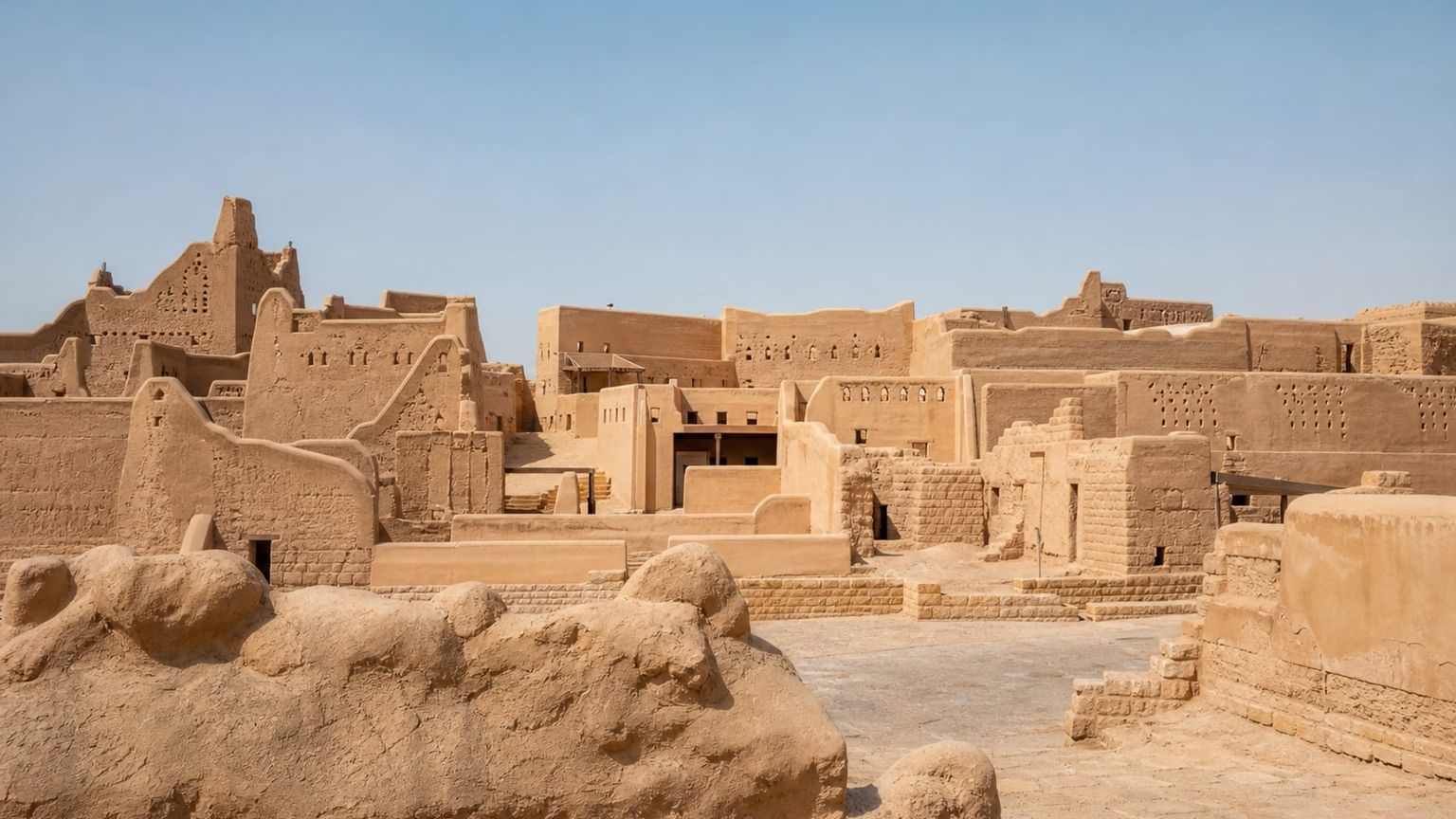
Mud-brick palaces and lanes line the restored first Saudi capital, with Najdi details, shaded courtyards, and a compact museum cluster. Visit at dusk for cooler walks and lit facades.
Time needed: About 2 to 3 hours
Entry: Entry starts at $15 (about SAR 56) for general access, with some museum or event spaces priced separately. Check the site for current packages, as hours and bundled tickets change by season and by the areas open to visitors Visit the official site for details.
Tip: Go after 4:00 pm for softer light and cooler temperatures.

National Museum of Saudi Arabia
This compact museum traces Arabian Peninsula history from geology to the modern kingdom through fossils, manuscripts, and period rooms. The galleries are manageable in one visit and suit a shorter cultural stop.
Time needed: About 1 to 2 hours
Entry: Standard admission is about $13 (SAR 50) for adults, with reduced pricing for children and some groups. Temporary exhibitions or special programs may carry separate charges, so check current ticketing before you go Visit the official site for details.
Tip: Start on the top floor and work downward to avoid backtracking.
Traditional food
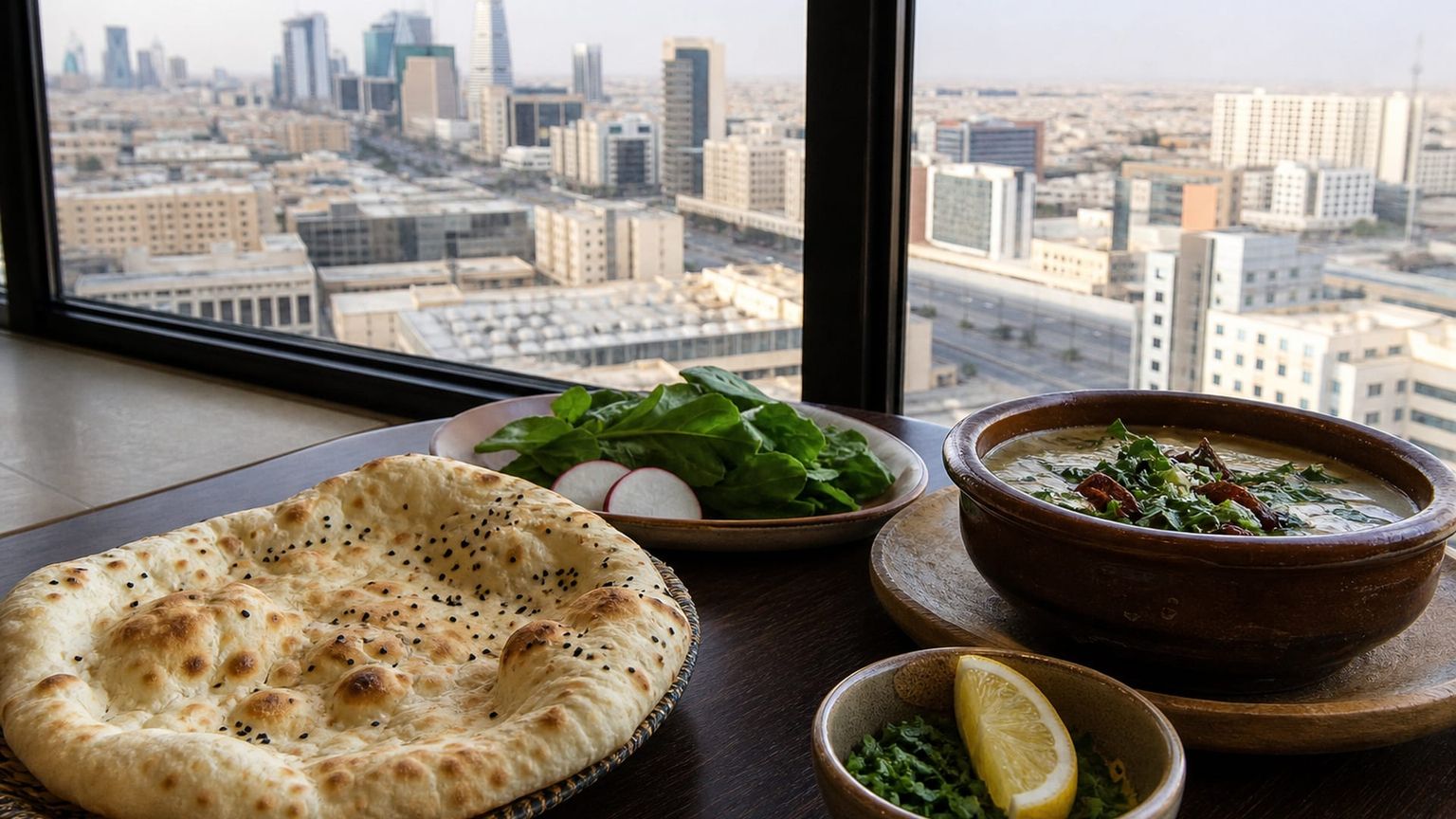
Riyadh’s table leans on rice, lamb, wheat, and warm spices, with Kabsa, Jareesh, Mandi, and Saleeg shaping many meals. Lunch and dinner often run late, and shared platters suit the city’s social dining style.
Kabsa
Kabsa layers spiced rice with chicken or lamb, dried lime, and toasted aromatics, making it the city’s most familiar one-plate meal. Najd Village in Riyadh serves a well-known version in a traditional setting.
Jareesh
Jareesh uses crushed wheat cooked until creamy, often finished with yogurt, onions, and ghee. Al Orjouan at the Ritz-Carlton Riyadh is a strong place to try it alongside other Saudi dishes.
Mandi
Mandi pairs fragrant rice with slow-cooked meat, usually served in large portions that suit group dining. Tameesa Riyadh is a dependable city restaurant for a classic plate.
Saleeg
Saleeg is a Hejazi rice dish cooked with milk or broth until soft, then topped with chicken and browned butter. Al Romansiah is one of Riyadh’s best-known places for a straightforward version.
Best time to visit Riyadh
Riyadh shifts sharply by season, with winter giving the most comfortable sightseeing weather and summer demanding shorter outdoor stops, later starts, and more time indoors.
Best for: Best for old Riyadh, Diriyah, and long walks between museum visits
What you get: About 45 to 72°F (7 to 22°C), with clear air and the busiest sightseeing calendar
Trade-offs: Evenings can turn cool, so you may need a light layer after sunset
Best for: Best for mixed days that combine towers, museums, and late-afternoon outdoor stops
What you get: About 66 to 97°F (19 to 36°C), with moderate crowds before heat builds
Trade-offs: Late spring can warm up fast, especially by midday
Best for: Best for indoor museums, shopping districts, and short taxi-linked plans
What you get: About 77 to 111°F (25 to 44°C), with lighter daytime sightseeing crowds and strong air conditioning indoors
Trade-offs: Outdoor time gets limited to early morning or after sunset
Best for: Best for balanced city days that mix Diriyah, towers, and neighborhood dining
What you get: About 63 to 99°F (17 to 37°C), with crowds returning as temperatures ease
Trade-offs: September can still feel hot before the season settles
A realistic 5-day plan in Riyadh
The five-day plan moves from arrival and history to skyline views, then out to Diriyah before a final day for shopping or a last museum stop. It keeps the long taxi rides clustered, so the days feel linked by geography rather than stitched together at random.
Land at Riyadh (RUH), then take a taxi or prebooked car into Al Olaya or the Diplomatic Quarter, which usually takes about 30 to 45 minutes and costs roughly $20 to $35. Check in, drink plenty of water, and stay close to your hotel for dinner, since your first evening is better spent at a nearby restaurant in Al Olaya or one of the hotel dining rooms rather than crossing the city again. If you have energy after sunset, a short walk in the hotel district gives you an easy first look at the towers and wide avenues before an early night.
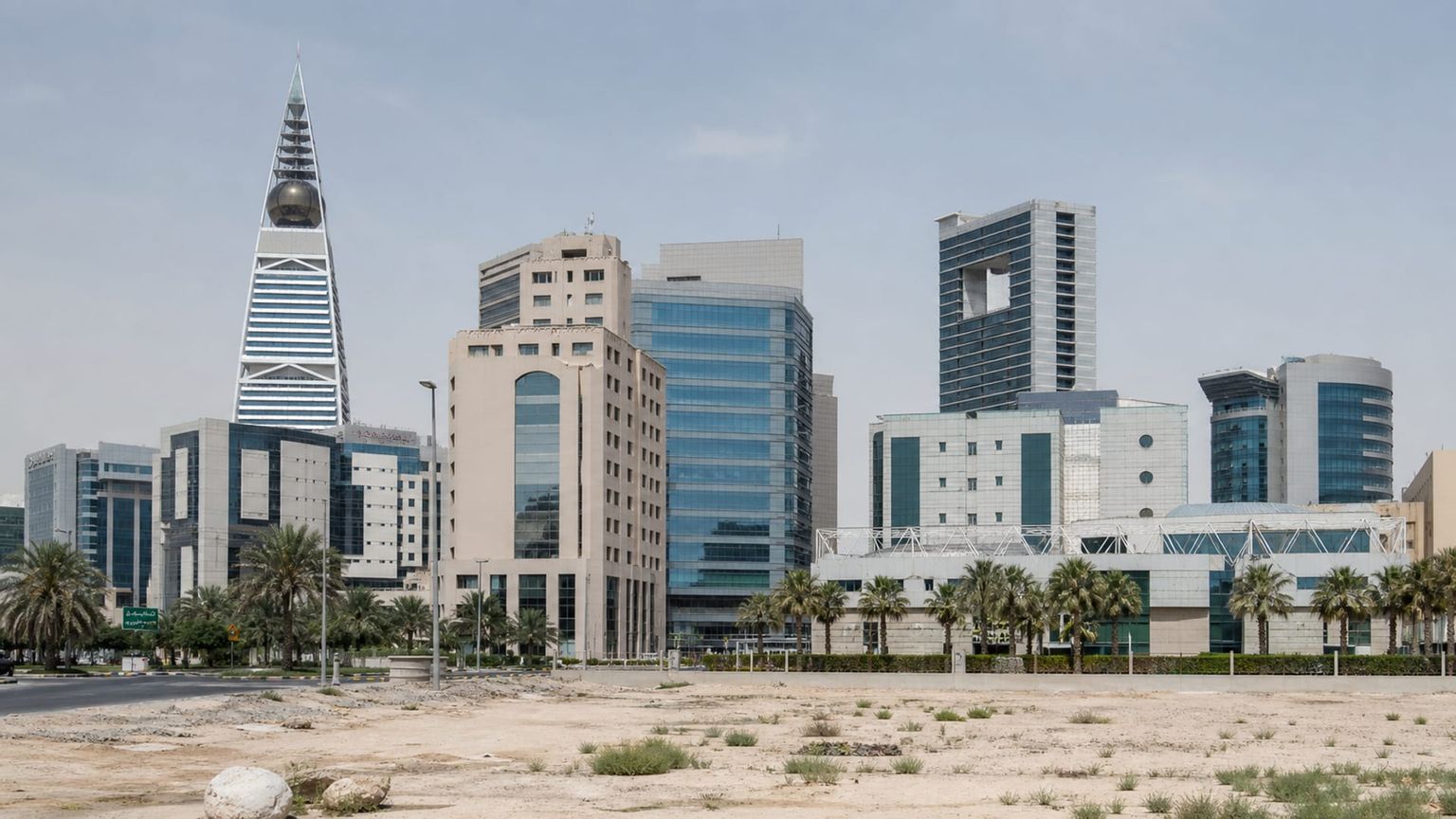
Begin in the old center with Al Masmak Fortress, then walk about 10 minutes through the nearby souq streets for a sense of the historic quarter. From there, take a taxi about 10 to 15 minutes to the National Museum of Saudi Arabia, where the galleries usually take 2 to 3 hours, then continue about 10 minutes by car back toward Al Murabba for coffee or an early dinner near your base. This pairing keeps the day focused on the city’s history without forcing a long cross-town loop.
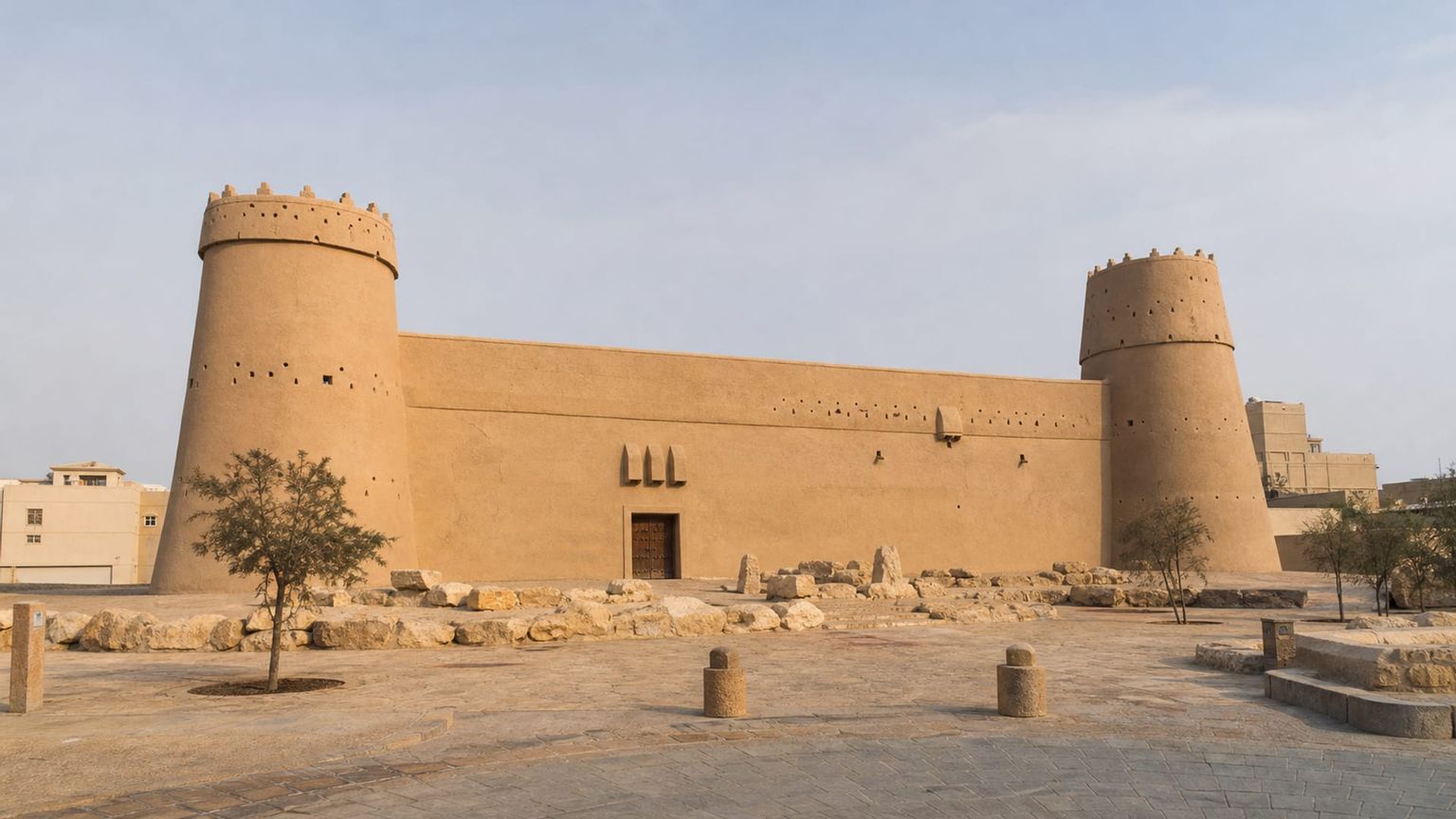
Head north to Kingdom Centre Tower first, arriving near sunset if you want the sky bridge view at its best; from Al Olaya, the ride usually takes about 10 to 15 minutes by taxi. After the tower, stay in the same district for lunch or shopping in the surrounding mall, then return by car to your hotel with very little time lost in transit. If you want a second stop, add a short evening drive to another hotel or café in Al Olaya rather than pushing farther across Riyadh.
Start after 4:00 pm in At-Turaif District, Diriyah, when the light softens on the mud-brick walls and the temperature drops enough for a longer walk. Plan on about 25 to 35 minutes by car from central Riyadh, then spend 2 to 3 hours exploring the restored lanes and museum cluster before heading back for dinner. If you are staying in KAFD or Al Olaya, the return trip is usually similar in length, which makes this a good late-afternoon outing instead of a full-day outing.
Begin with a final museum stop if you missed the National Museum earlier, since a shorter return visit works well before checkout and does not require an early start. After that, head to Al Olaya for shopping or a last lunch near the towers, or settle into a café in the Diplomatic Quarter if you want a quieter final stop with less traffic. Build in enough time for a taxi back to Riyadh (RUH), which can take about 30 to 45 minutes from central neighborhoods depending on the hour.
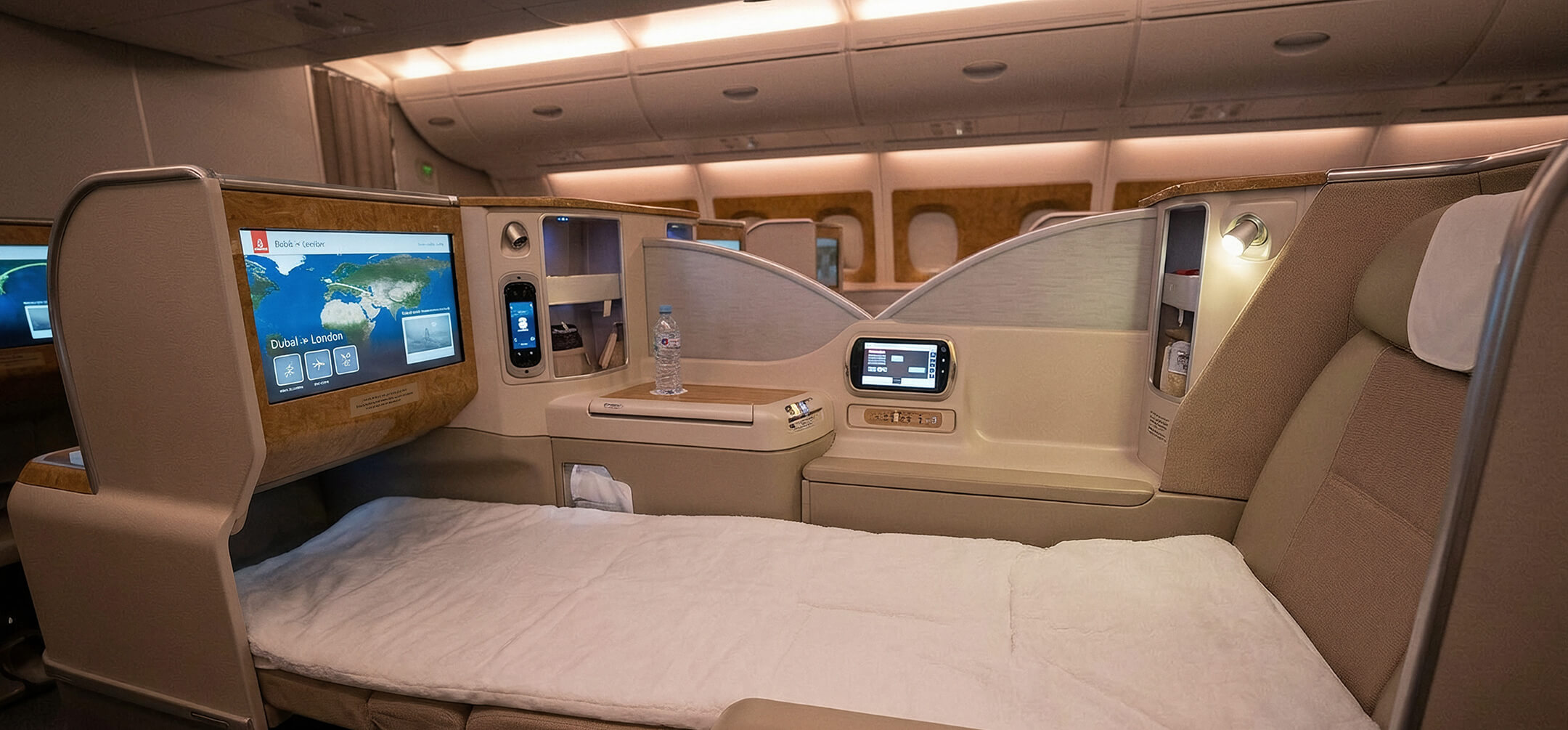
Business-class flights from the US to Riyadh
Flights from New York and Los Angeles to Riyadh usually involve Gulf or European connections unless you catch a nonstop from a limited set of carriers. The routing details matter because the journey length changes sharply by origin.
From New York, Saudia, Qatar Airways, Turkish Airlines, Emirates, and Etihad Airways all serve the route, and nonstop flying takes about 12 to 13 hours. If you connect, common hubs include Doha (DOH), Dubai (DXB), Abu Dhabi (AUH), Istanbul (IST), and Paris (CDG), and round-trip fares usually start at $3,200 and can reach about $7,500.
Los Angeles departures on Saudia, Qatar Airways, Turkish Airlines, Emirates, and Etihad Airways often run about 15 to 16 hours without a stop. When you choose a connection, the usual hubs are Doha (DOH), Dubai (DXB), Abu Dhabi (AUH), Istanbul (IST), and London (LHR), and round-trip fares often run from $3,000 to $7,000.
Riyadh feels different when you slow down
A thoughtful Riyadh trip works in layers, Al Masmak in the morning, the National Museum in the middle of the day, Kingdom Centre at sunset, and At-Turaif after 4:00 pm when the light softens on the mud-brick walls. Add taxis for the longer jumps, keep dinner near Al Olaya or the Diplomatic Quarter, and let the city set the pace instead of forcing a single loop. If you want help matching neighborhoods, flights, and timing, the AranGrant experts can build that plan with you