

Chapters:

Need help with your trip?
Our support team is available 24/7. Request a callback or call us directly at (833) 619-0908
New Orleans trips often start with the French Quarter, then leave the rest of the city for a rushed second day. Travelers see Jackson Square, eat a few classics, and miss how much of the city sits just beyond that first circuit.
That pattern misses the distances between neighborhoods, the way streetcars and rideshares shape the day, and how quickly late nights can narrow an itinerary. If every stop sits in the Quarter, the city starts to feel smaller and louder than it needs to be.
This guide spreads the visit across the Quarter, the CBD, the Garden District, Marigny, and City Park, with a pace that gives each area room to work.
Useful things to know

Main language(s): English

Currency: The local currency is the US dollar (USD, $).

Cash and cards: Cards and contactless are widely accepted; keep about $20 to $40 cash for small purchases and tips.

Tipping: Tip 15-20% at restaurants, a few dollars for bartenders and hotel staff.

Traditional food: gumbo, jambalaya, crawfish étouffée, beignets

Water and coffee costs: Water about $2 ($2); bar espresso about $3.50 ($3).

Taxis and ride apps: Uber and Lyft operate here; airport pickup rules can be tightly enforced.

Plug and voltage: Type A/B socket, 120V

Dining and shop opening hours: Breakfast runs about 07:00-10:00, lunch 11:30-14:00, dinner 18:00-22:00. Kitchens in many places close earlier on Sundays and Mondays.

Emergency number: 911 for police, fire, and medical emergencies.
Where to stay in New Orleans
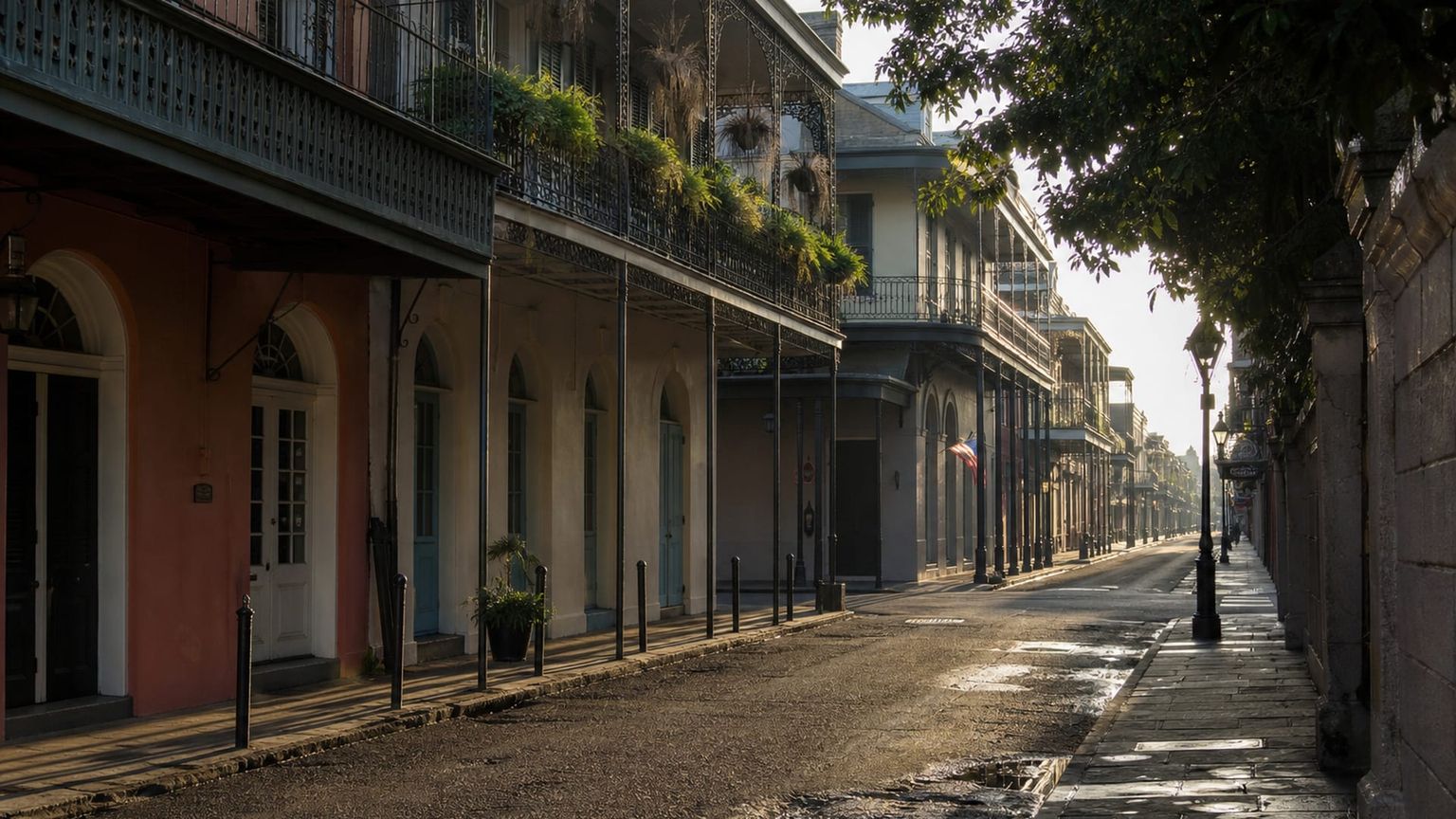
New Orleans’ oldest district, the French Quarter packs many of the city’s classic sights, from Jackson Square to Frenchmen Street just beyond its edge. Stay here if you want to walk to historic streets, bars, restaurants, and riverfront landmarks.
Best for: First-time visits, historic sightseeing, and travelers who want to stay near major dining and nightlife
What to expect: Expect heavy foot traffic, street performers, and steady noise late into the evening, especially near Bourbon Street.
Hotel prices: Usually about $220 to $450 per night for well-rated stays
Distance to major sights: 5 to 10 minutes on foot to Jackson Square; 10 to 15 minutes on foot to the Mississippi Riverfront
Quietness: Busy in the daytime and lively well past midnight, with quieter pockets only on side streets far from Bourbon Street.
Main trade-off: Room rates climb quickly, and the noisiest blocks can carry music and crowd noise into the night.
Good to know: If you are sensitive to nightlife noise, choose a room on an upper floor or on the edge of the Quarter rather than near Bourbon Street.
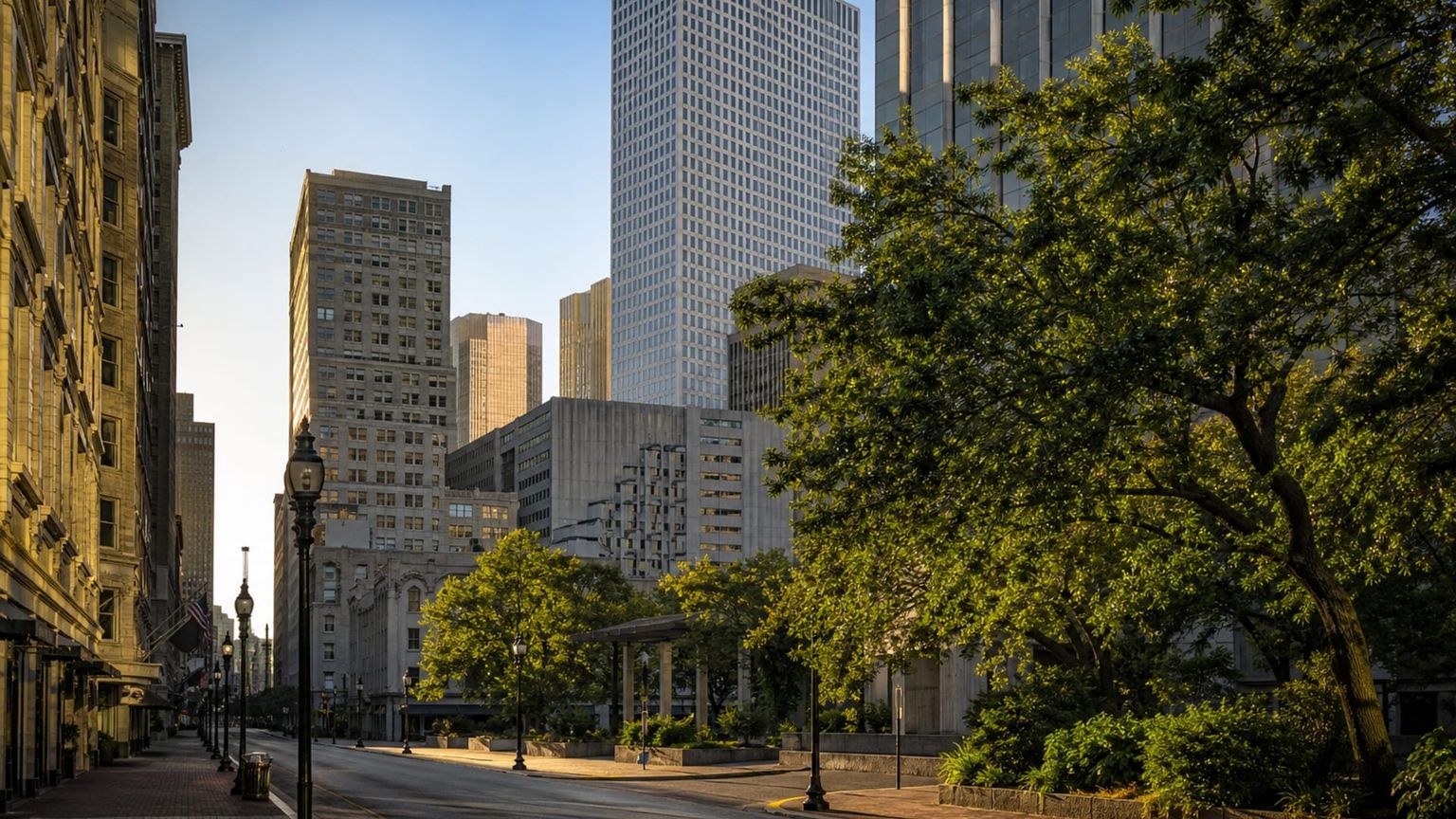
Just west of the French Quarter, the Central Business District puts you near Convention Center hotels, warehouse district restaurants, and major streetcar connections. It works well for travelers who want downtown access without staying inside the Quarter’s busiest blocks.
Best for: Business trips, convention stays, and visitors who want central access with easier transport links
What to expect: Expect office towers by day, restaurant traffic at lunch, and a calmer street scene after business hours except around big events.
Hotel prices: Usually about $180 to $360 per night for well-rated stays
Distance to major sights: 10 to 15 minutes on foot to Jackson Square; 5 to 10 minutes on foot to the National WWII Museum
Quietness: Quieter at night than the French Quarter, though event weekends and hotel corridors stay active.
Main trade-off: You will walk more for classic French Quarter atmosphere, and some blocks feel sparse after office hours.
Good to know: A few streets here sit far from late-night dining, so check the exact block if you plan to return on foot after dark.
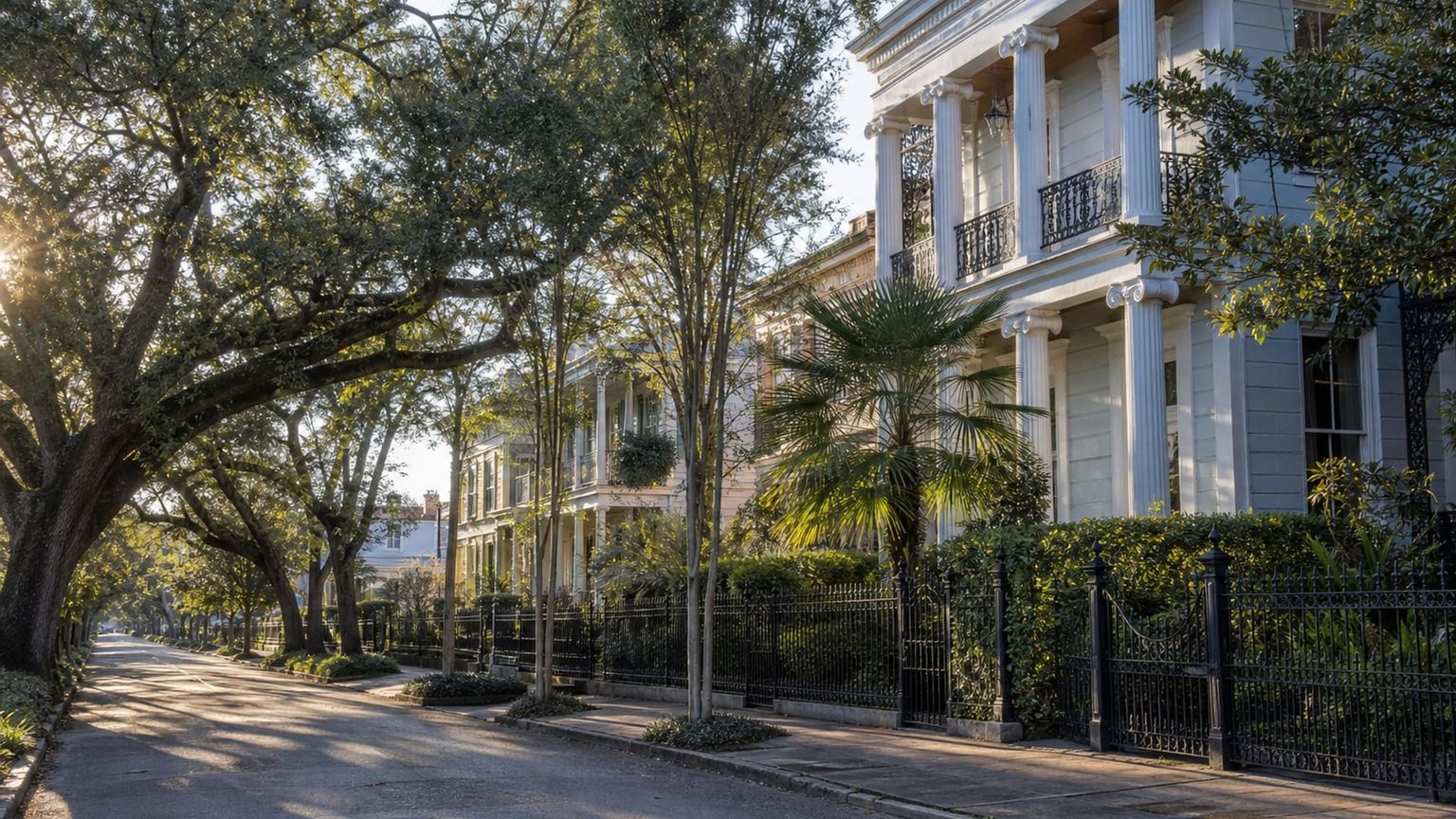
The Garden District brings you closer to oak-lined streets, preserved mansions, and Magazine Street shopping while keeping you outside the most crowded nightlife core. It suits visitors who want a neighborhood feel and do not mind riding or walking for the historic center.
Best for: Architecture lovers, couples, and travelers who prefer a residential base with easier daytime wandering
What to expect: Expect leafy blocks, slower foot traffic, and a more local pace, with busy stretches along Magazine Street and St. Charles Avenue.
Hotel prices: Usually about $190 to $380 per night for well-rated stays
Distance to major sights: 20 to 25 minutes by streetcar to Jackson Square; 10 to 15 minutes on foot to Magazine Street shopping
Quietness: Calmer than downtown both day and evening, with most activity concentrated on transit corridors and restaurant streets.
Main trade-off: You will spend more time getting to the French Quarter, especially if you want to go out at night.
Good to know: If you rely on transit, stay close to St. Charles Avenue, since that corridor gives you the easiest streetcar access.
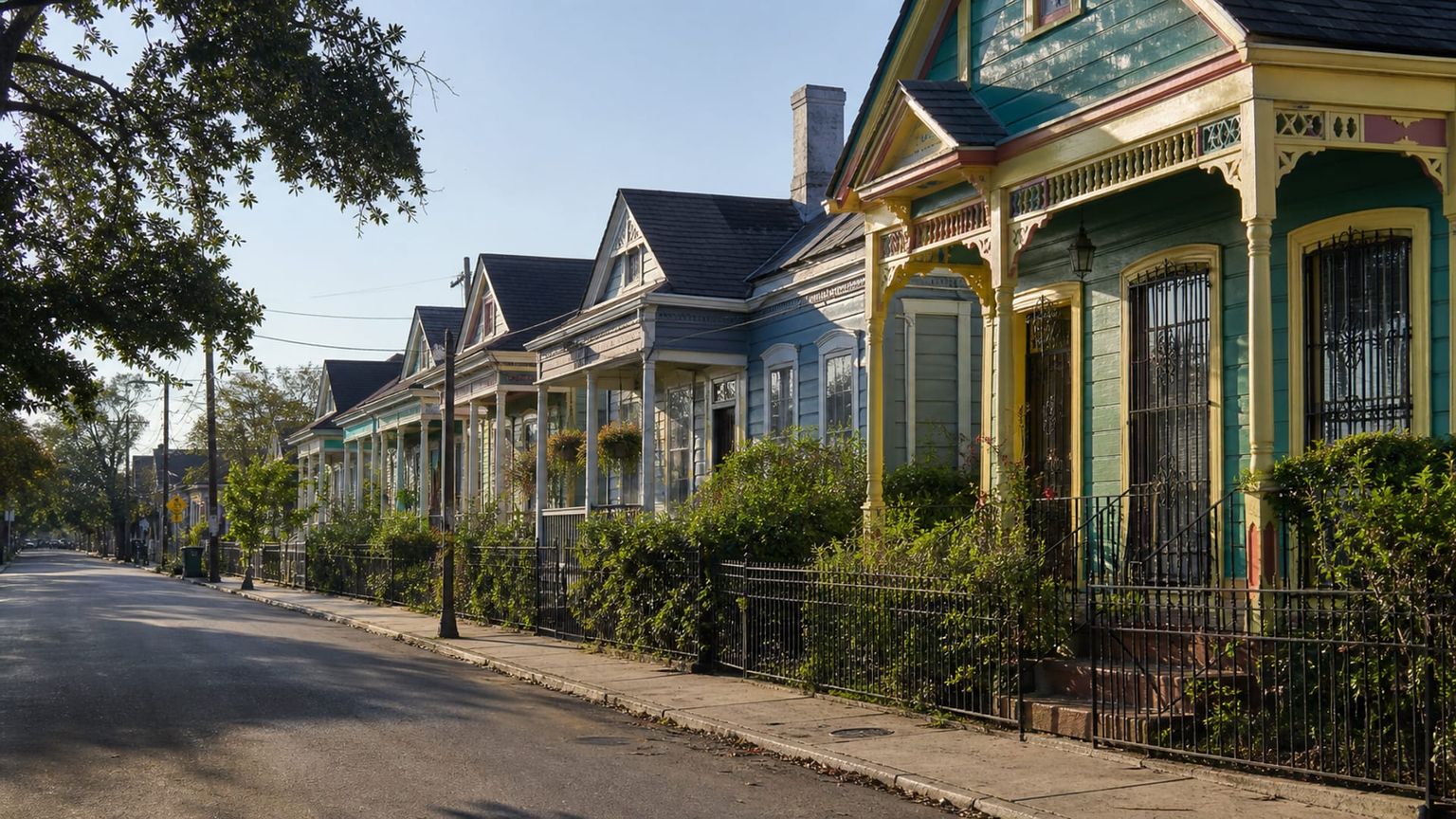
The Marigny sits just east of the French Quarter and gives you access to Frenchmen Street, independent restaurants, and colorful residential blocks. It appeals to travelers who want music nearby without staying in the Quarter’s busiest center.
Best for: Nightlife, live music, and visitors who want a neighborhood base near the French Quarter
What to expect: Expect busy evenings around Frenchmen Street, more local traffic on side streets, and a crowd that peaks after dinner.
Hotel prices: Usually about $170 to $320 per night for well-rated stays
Distance to major sights: 10 to 15 minutes on foot to Jackson Square; 5 to 10 minutes on foot to Frenchmen Street
Quietness: Quiet by day on residential blocks, then noticeably louder at night near the music venues and bars.
Main trade-off: The neighborhood’s best location for music also brings late-night street noise and limited parking.
Good to know: If you plan to sleep early, avoid staying directly on or beside Frenchmen Street, since the sound carries well into the night.
Travelers usually avoid staying in New Orleans East, because it sits far from the French Quarter, Garden District, and Uptown, and it has fewer visitor amenities. Parts of the industrial Lower Ninth Ward and the far eastern edge of the city are also less convenient, since hotel options are limited and evening transit is sparse; the New Orleans Lakefront area is better for airport or convention access than for sightseeing, so it works poorly as a base for most visitors.
Hotel deals
How to get around New Orleans efficiently
In New Orleans, the RTA streetcar and bus network fills the gaps between the main visitor districts, while taxis and ride-hail cover the trips that do not fit the fixed lines.

Metro
for longer distances
New Orleans does not have a metro or subway network. The closest equivalent is the RTA streetcar and bus system, with the St. Charles, Canal, Riverfront, and Rampart-Loyola streetcar lines linking downtown, the Garden District, the French Quarter edge, and the Union Passenger Terminal area. Fares are $1.25 per ride, or $3 for a 1-day pass, and transfers on regional buses are valid for 2 hours.

Bus and tram
for convenience
RTA buses and streetcars cover the main visitor areas, including the French Quarter, Downtown, the Garden District, Mid-City, and connections to New Orleans (MSY) via airport buses and rail-linked stops. Streetcars run on fixed corridors, while buses fill the gaps, and single rides cost $1.25, with a 1-day pass at $3 and a 3-day pass at $8. Journeys across the core usually take about 10 to 30 minutes, depending on traffic and waiting time.

Taxi
for convenience or late hours
Licensed taxis at New Orleans (MSY) use metered fares, with airport trips to the Central Business District and French Quarter often priced at a flat rate of $36, plus tolls and optional tips. Elsewhere in the city, expect roughly $12 to $20 for short inner-city rides and about $25 to $40 for longer cross-town trips. Taxis line up at the airport and hotel stands, and most accept cards, though it is still worth confirming payment before departure.
*Prices are based on rates updated as of June 2026 and may change at the time of travel.
Use streetcars for the CBD, Garden District, and Quarter edges, buses for cheaper cross-town hops, and taxis or ride-hail when you need a direct ride from MSY or after a late dinner.
Iconic landmarks
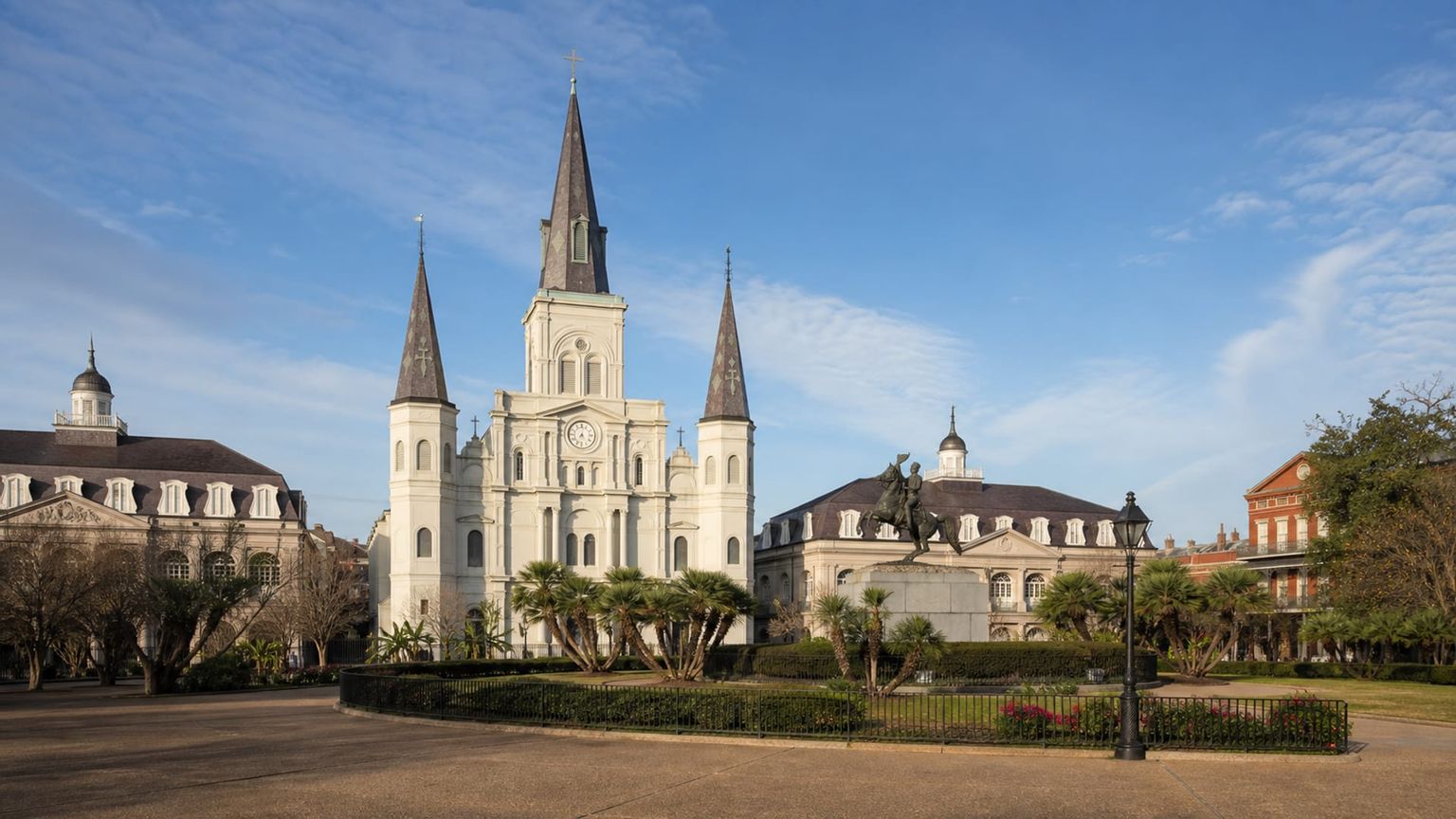
Jackson Square
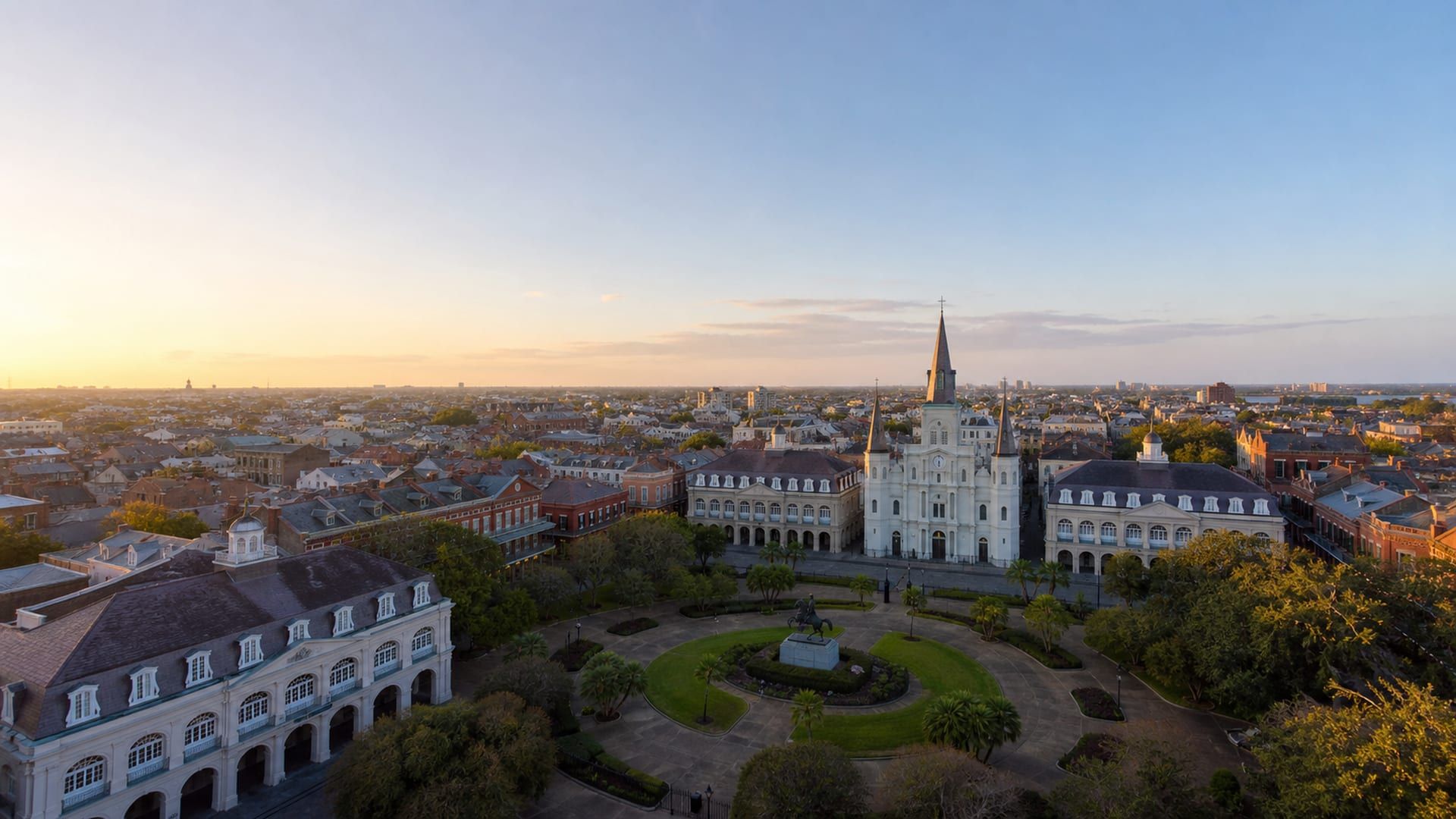
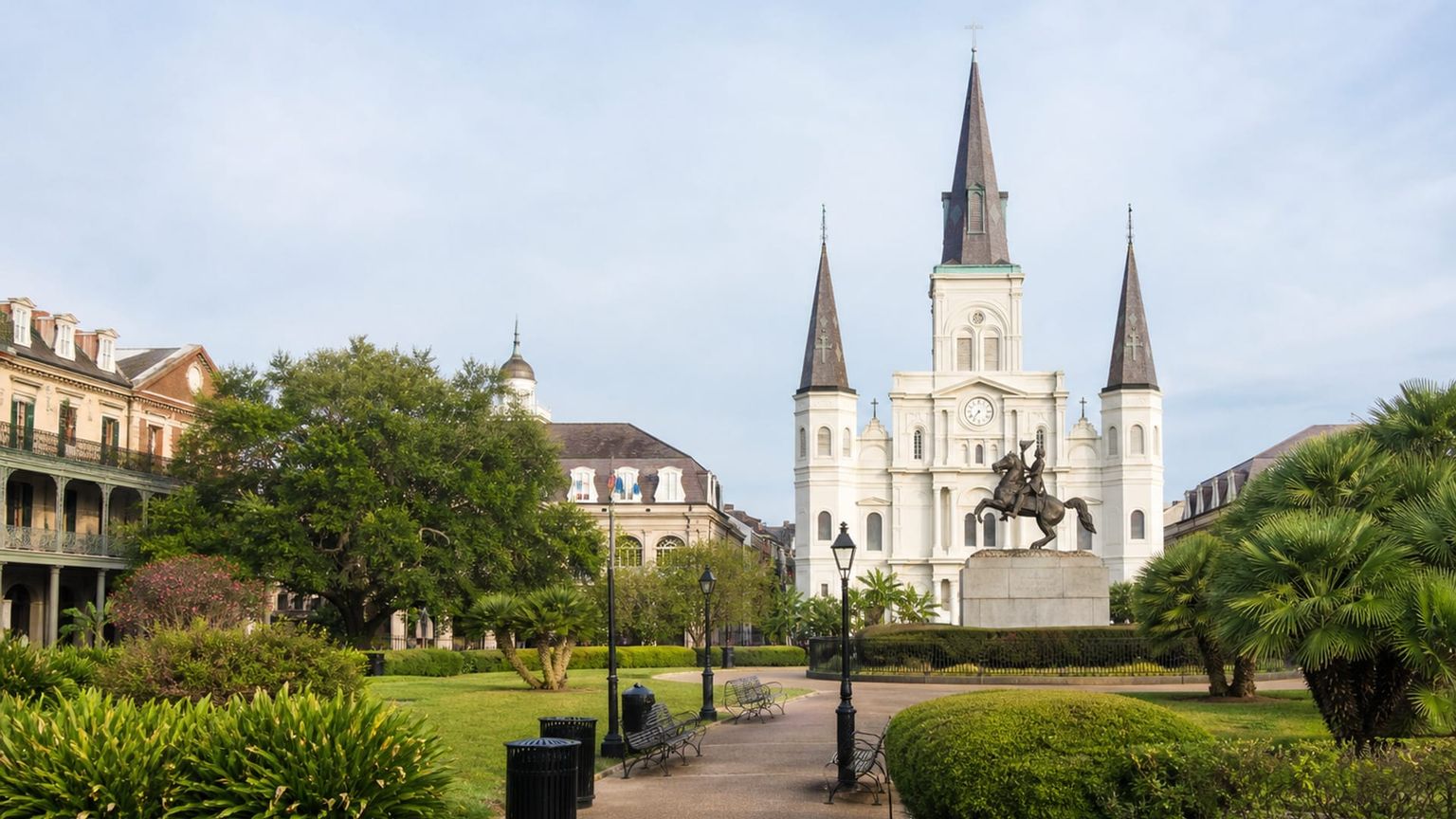
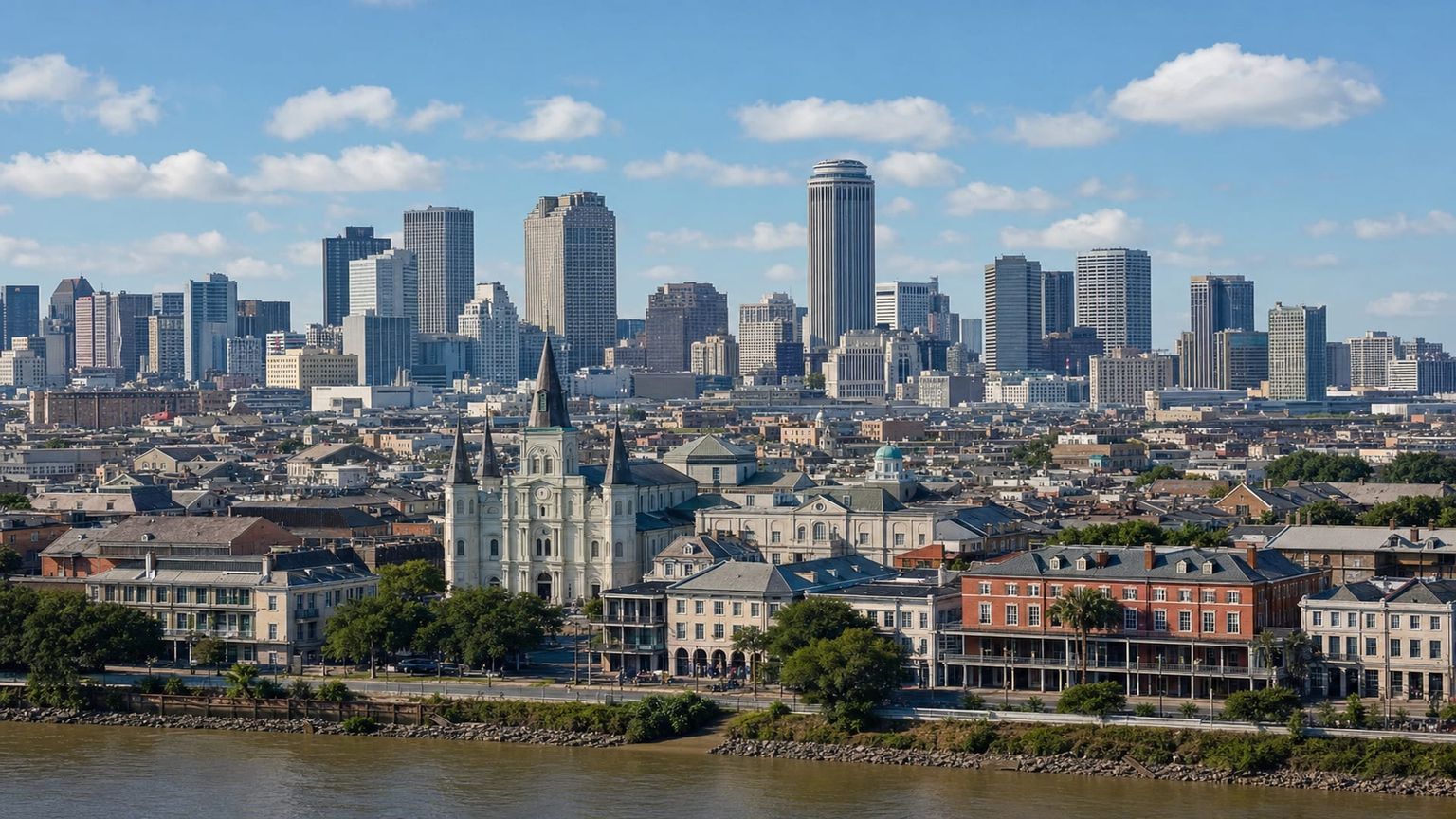
The heart of the French Quarter, Jackson Square fronts the Mississippi-facing edge of the old city and centers on St. Louis Cathedral, the Cabildo, and the Presbytère. Street performers, artists, and view lines make it a natural first stop.
Time needed: About 45 minutes to 1 hour
Entry: Free to access; nearby museums and cathedral tours charge separately, with some timed admissions on busy days.
Tip: Go early for lighter crowds and clearer views of the square and cathedral façade.
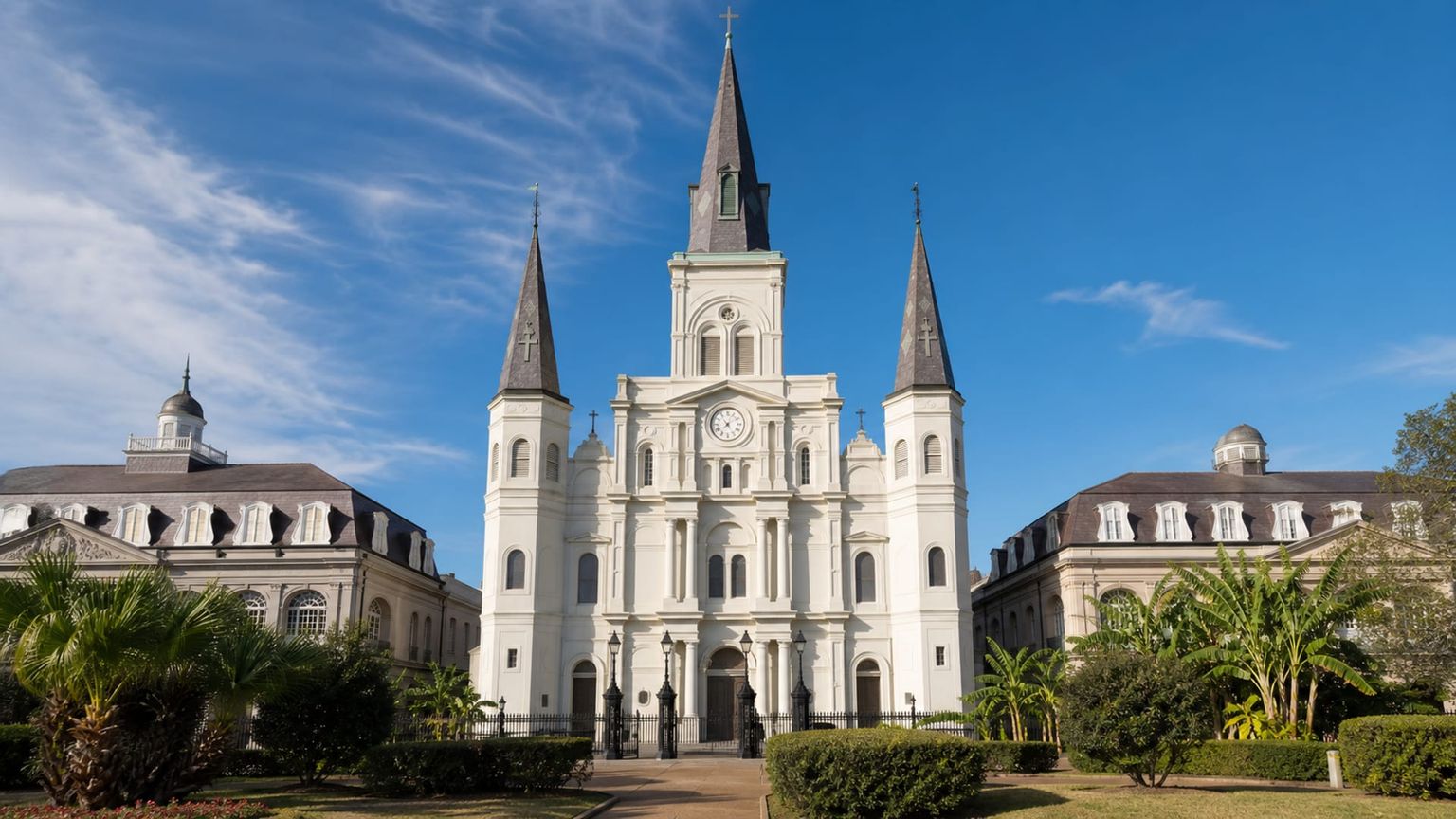
St. Louis Cathedral
Facing Jackson Square, St. Louis Cathedral is the oldest continually active Roman Catholic cathedral in the United States. Its white façade, interior nave, and adjacent square make it one of New Orleans’ defining landmarks.
Time needed: About 30 to 45 minutes
Entry: Entry is free for worship and self-guided viewing; donations are welcome, and guided tower or special access visits cost extra. Visit the official site for details.
Tip: Visit outside Mass times if you want quiet photos and an easier look at the nave.

Audubon Aquarium
On the Mississippi riverfront, Audubon Aquarium focuses on Gulf, Amazon, and Caribbean habitats, with a tunnel tank, sea turtles, and penguins among its best-known exhibits. It sits close to the French Quarter and the Convention Center.
Time needed: About 2 hours
Entry: Standard tickets cost $34.95 to $39.95 ($34.95 to $39.95) for adults; prices vary by age, date, and combo options. Visit the official site for details.
Tip: Arrive near opening time to see the tunnel tank before the busiest midday window.
Overlooked sites worth visiting

City Park and Couturie Forest
This large park combines oak-lined paths, lagoons, and the Besthoff Sculpture Garden, so you can mix a slow walk with art stops. Couturie Forest adds shaded trails and birding without leaving city limits.
Time needed: About 2 to 3 hours
Entry: Free to access; some attractions inside City Park, such as the Besthoff Sculpture Garden and the amusement rides, may charge separate fees, but the park grounds, lakeside paths, and Couturie Forest are free for walking, birdwatching, and picnics.
Tip: Go early for cooler paths and softer light on the lagoons.

Backstreet Cultural Museum
This compact Tremé museum focuses on Mardi Gras Indians, second line parades, and Social Aid and Pleasure Clubs. Displays are tight, but the collection gives close-up context you will not find in larger museums.
Time needed: About 1 hour
Entry: Admission is typically $10 to $15 ($10 to $15), with rates set by the museum and subject to change for special events or group visits. Allow extra cash for small purchases, since some days may favor card or exact payment. Visit the official site for details.
Tip: Pair it with a Tremé walk for context on nearby parade routes.
Traditional food
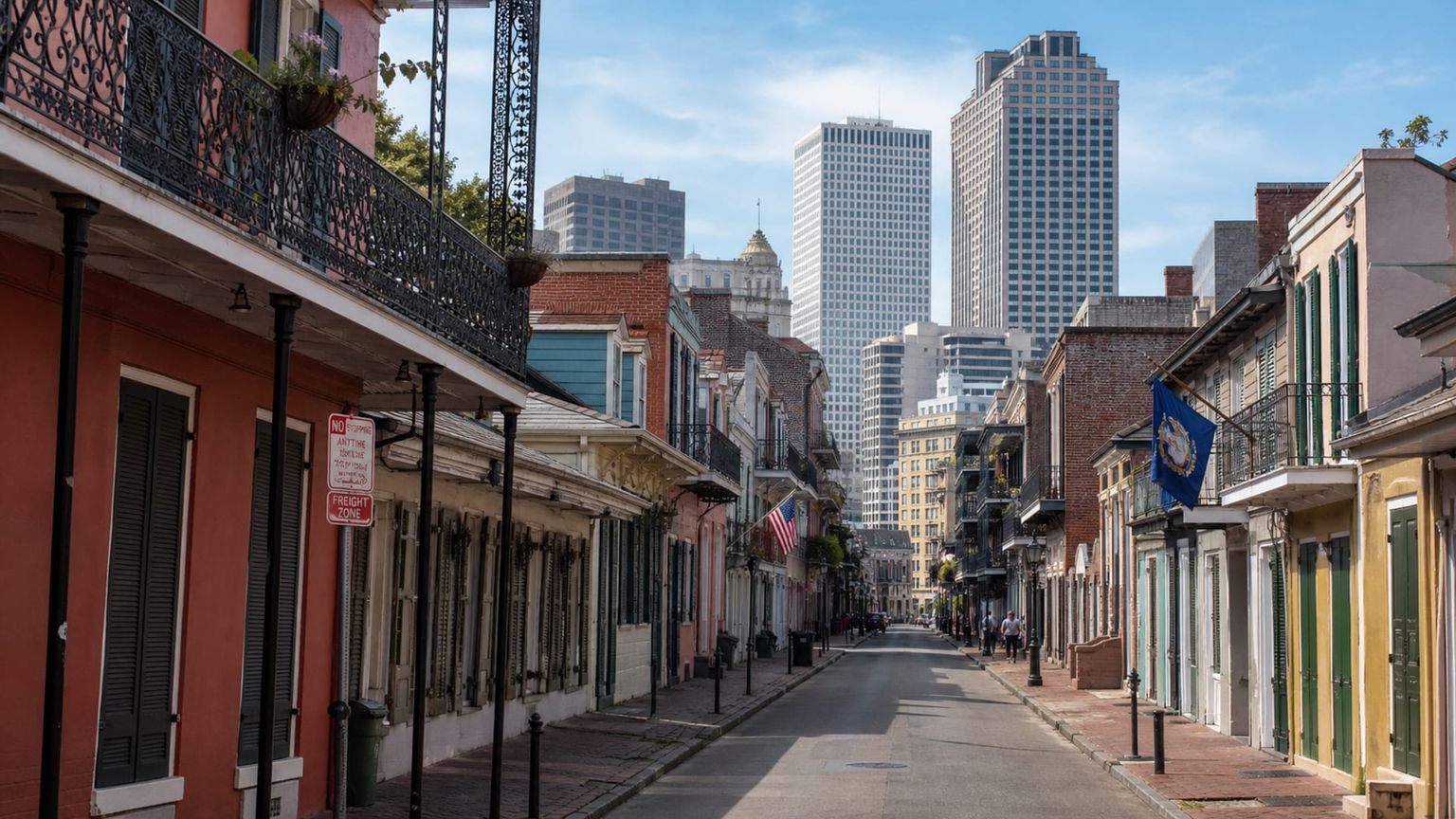
New Orleans cooking leans on gumbo, jambalaya, crawfish étouffée, and beignets, with dark roux, seafood, rice, and spice carrying meals from breakfast through late-night dining rooms.
Gumbo
Dooky Chase’s Restaurant serves a classic version of this Louisiana staple, built on roux, seafood or chicken, and a bowl that arrives best with rice. It is one of the city’s most cited places for a first serious gumbo.
Jambalaya
Commander’s Palace is a standard stop for jambalaya when you want the dish in a polished Garden District setting. The kitchen balances rice, meat, and spice in a way that suits a long lunch or dinner.
Crawfish étouffée
Liuzza’s by the Track has long been a dependable name for crawfish étouffée, with a rich sauce that fits the city’s comfort-food lane. It is the kind of plate that rewards an unhurried meal near Mid-City and City Park.
Beignets
Café du Monde remains the reference point for beignets, where the square pastries arrive hot and heavily dusted with sugar. It is the clearest canonical stop for this New Orleans classic.
Best time to visit New Orleans
Spring and fall bring the most comfortable weather, while summer pushes visitors toward shorter walks, earlier starts, and more indoor time between meals and museums.
Best for: Cooler days for walking the Quarter and Garden District
What you get: About 45 to 65°F (7 to 18°C), with lighter crowds than spring and fewer heat-related slowdowns
Trade-offs: Cold snaps and rain can interrupt outdoor plans
Best for: Festival season, long days, and strong conditions for neighborhoods on foot
What you get: About 65 to 82°F (18 to 28°C), with the busiest crowds of the year and fuller hotels
Trade-offs: Rates rise and popular streets stay crowded
Best for: Indoor museums, aquarium time, and slower midday pacing
What you get: About 78 to 92°F (26 to 33°C), with high humidity and lighter crowds outside major events
Trade-offs: Heat and afternoon storms make long walks harder
Best for: Balanced weather for streetcars, riverfront walks, and outdoor dining
What you get: About 68 to 85°F (20 to 29°C), with moderate crowds after the summer peak
Trade-offs: Late-season storms can still affect plans
A realistic 5-day plan in New Orleans
This five-day plan keeps the city in manageable sections, so you can move from the Quarter to the Garden District, then out to City Park and back to music-heavy streets without repeating the same ground.
Touch down at New Orleans (MSY), then take a rideshare or taxi into the French Quarter or the Central Business District in about 20 to 35 minutes for roughly $35 to $50, depending on traffic and your hotel location. Settle in, drink water, and keep dinner close to your room, either at a French Quarter café or a warehouse district restaurant in the CBD, so you can turn in early after the flight. If you arrive with energy to spare, a short walk to Jackson Square gives you an easy first look at the cathedral-fronted heart of the city without pushing the pace.
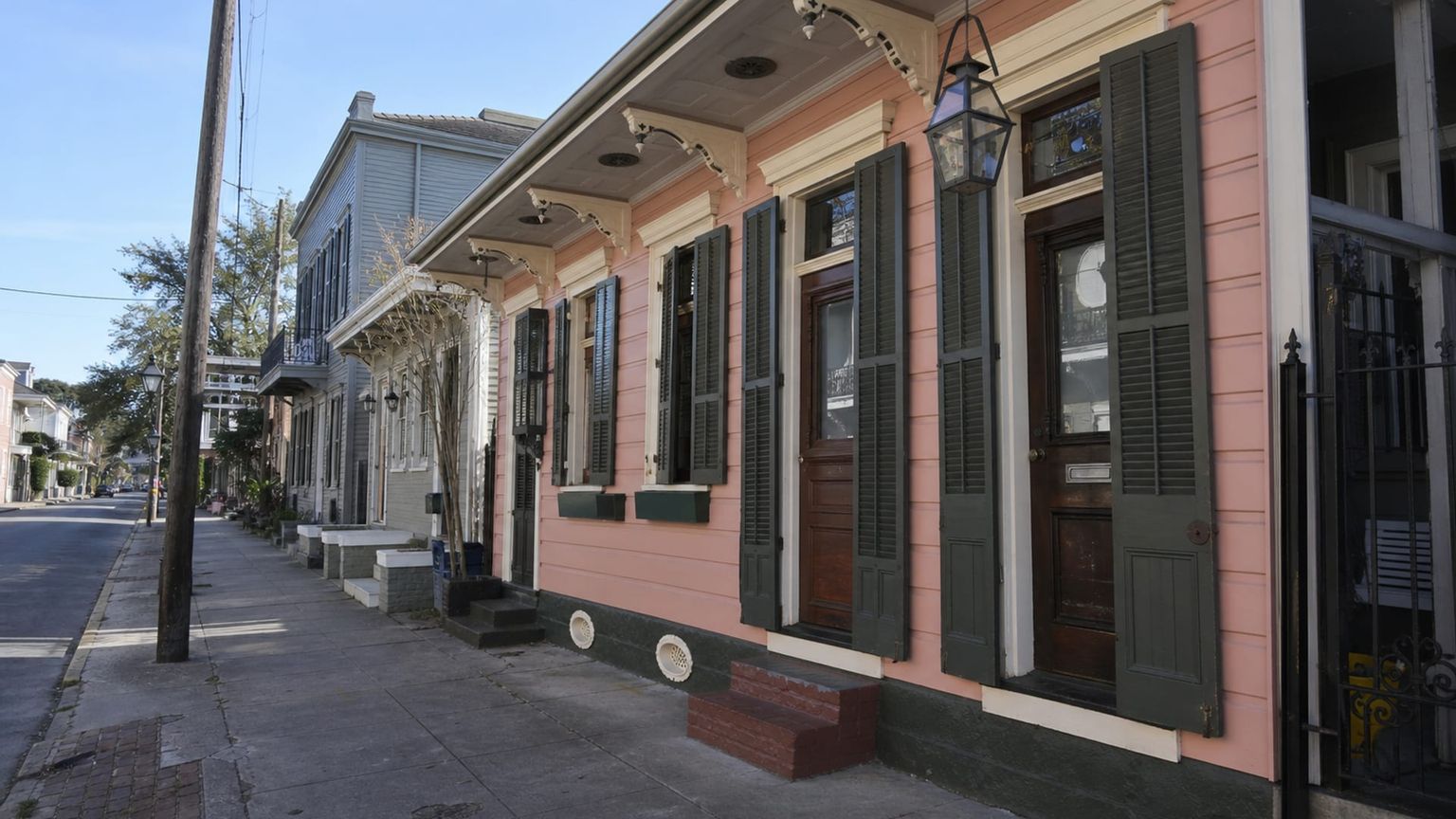
Start early at Jackson Square, where you can spend about 45 minutes to 1 hour taking in St. Louis Cathedral, the square, and the river-facing edge of the Quarter. Walk about 2 minutes to St. Louis Cathedral for a quieter look inside, then continue to the Audubon Aquarium by a 15 to 20 minute walk along the riverfront, or a short rideshare if the weather turns warm. Plan about 2 hours at the aquarium, then return to the French Quarter or the CBD for an unhurried dinner near your hotel, with Frenchmen Street or Magazine Street only if you want a later night.
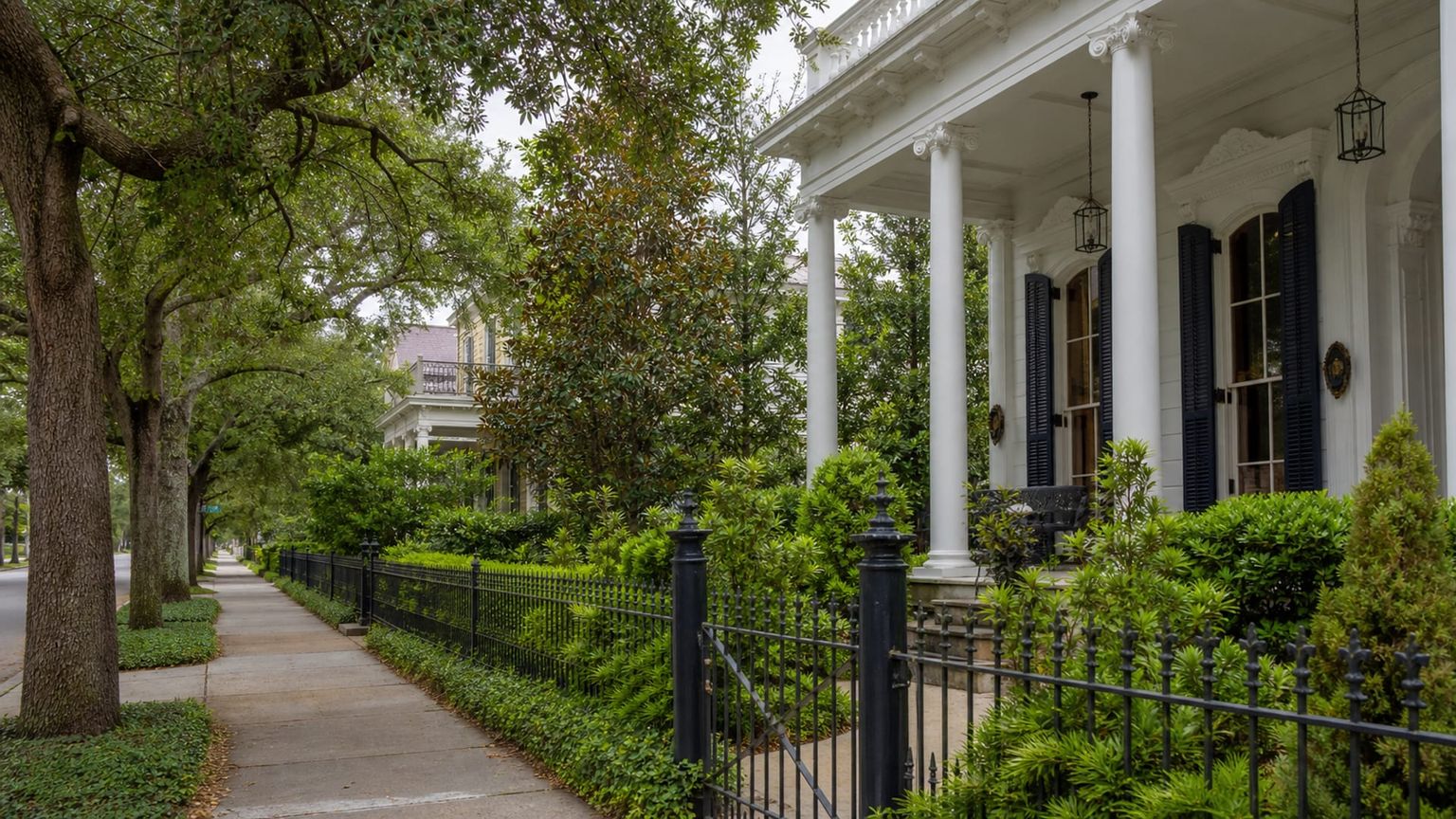
Begin in the Garden District, where a streetcar from the Central Business District takes about 20 to 25 minutes and a ride from the French Quarter takes roughly 25 to 35 minutes, depending on connections. Spend the morning on oak-lined blocks and along St. Charles Avenue, then walk about 10 to 15 minutes to Magazine Street for lunch, galleries, and shops. Afterward, head to City Park and Couturie Forest by rideshare in about 15 to 20 minutes, and give yourself 2 to 3 hours for lakeside paths, shaded trails, and a slower afternoon outdoors.
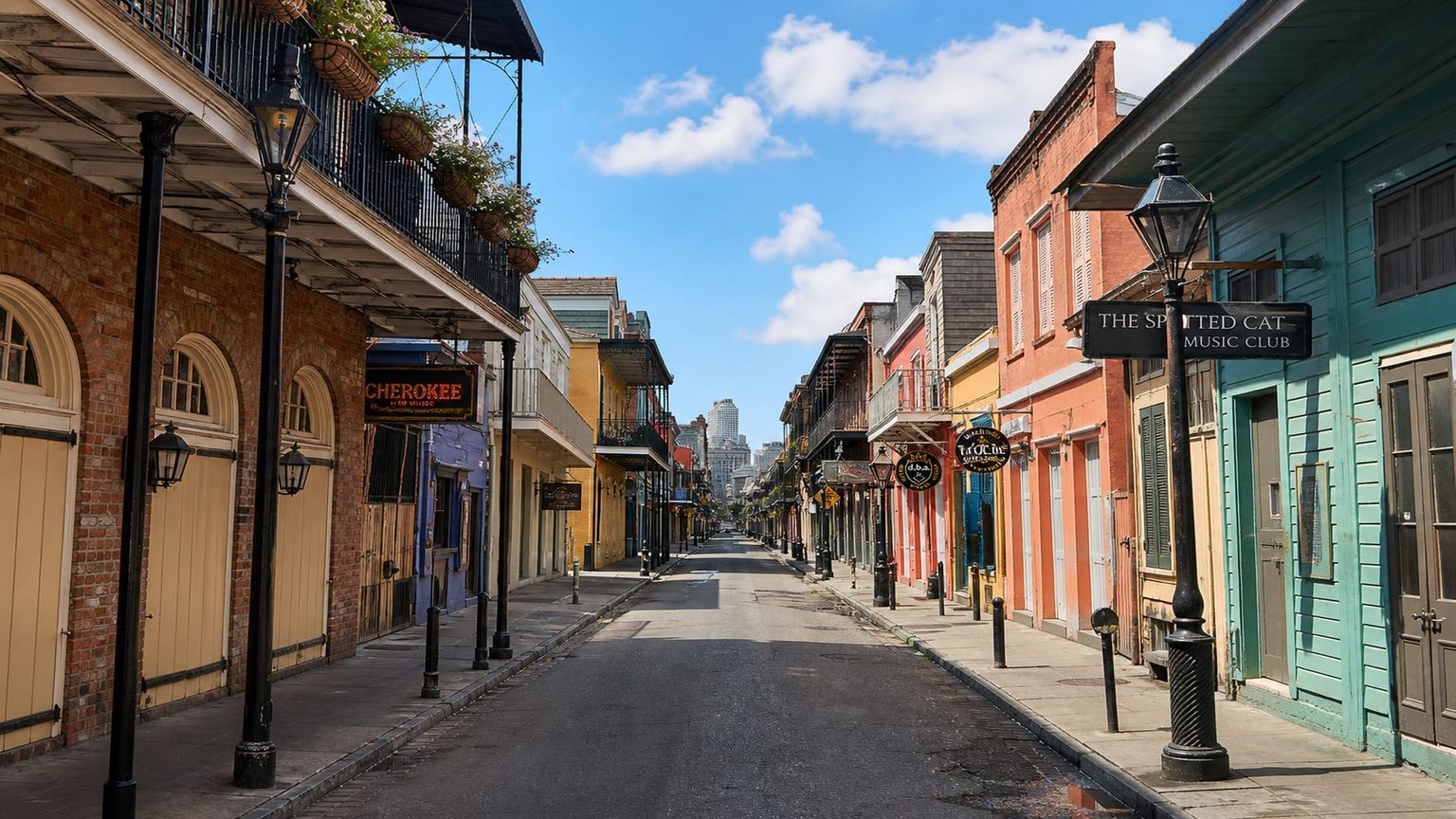
Frenchmen Street sets the tone for this day, and it works best if you stay in the Marigny or just across the edge of the French Quarter. Start with the Backstreet Cultural Museum in Tremé, about a 15 to 20 minute walk from Jackson Square or a short rideshare from the Marigny, and spend about 1 hour on Mardi Gras Indian and second line history. From there, walk about 20 minutes to Frenchmen Street for lunch, music, and an easy neighborhood wander, then return toward the Quarter for a final evening stroll past the street performers and lit facades near Jackson Square.
One last museum stop fits well on departure day, so begin at the National WWII Museum in the Central Business District if your flight leaves later in the afternoon, or spend the morning back in City Park and Couturie Forest if you prefer open air before you pack. From there, head to Magazine Street in the Garden District for shopping, then finish with coffee or a late pastry in the Marigny, where you can sit near Frenchmen Street without committing to a long night. Leave enough time to get back to New Orleans (MSY), since airport traffic can stretch the ride beyond 30 minutes during busy periods.
Business-class flights from the US to New Orleans
For longer-haul arrivals, the most useful fares are the ones that keep the route simple or make the layover worth the time. New Orleans has workable options from both coasts, with different carrier mixes on each side.
From New York, Delta Air Lines, JetBlue, United Airlines, American Airlines, and Spirit Airlines all appear on the route, and nonstop flying takes about 3 to 3.5 hours. If you do connect, common hubs include ATL, CLT, IAH, ORD, and DFW, with total travel time usually about 5 to 8 hours. Round-trip fares usually start at $800 and can reach about $2,000.
Los Angeles itineraries often run through DFW, DEN, PHX, ORD, or ATL, and the full trip usually takes about 6 to 9 hours. Delta Air Lines, American Airlines, United Airlines, Alaska Airlines, and Southwest Airlines all operate on this market, and round-trip fares usually fall roughly between $900 and $2,200.
New Orleans feels different when you slow down
A deliberate New Orleans trip gives each district a clear job: Jackson Square for the first sweep of the Quarter, St. Charles Avenue for the streetcar ride, City Park for shade and open space, and Frenchmen Street for one focused night out. That pace leaves room for gumbo, beignets, and a final museum stop without compressing the city into one crowded block. If you want a route built around the French Quarter, the Garden District, and MSY timing, the AranGrant experts can help you map it out







