

Chapters:

Need help with your trip?
Our support team is available 24/7. Request a callback or call us directly at (833) 619-0908
Guilin trips often start with the same checklist, the river, the cave, the hill, and a restaurant with rice noodles. What many visitors miss is how much time those stops consume once you add traffic, ticketing, and river access points.
That matters here because the main sights sit on different edges of the center, and a poor order can leave you backtracking across Xiufeng, Qixing, and the riverfront in the same afternoon. Crowds also build early at the most famous stops.
This guide separates arrival, sightseeing, food, and day trips into a cleaner sequence, so you can pair the right district with each day and spend more time on the Li River and less time reworking transfers.
Useful things to know

Main language(s): Mandarin Chinese
你好 (nǐ hǎo) – Hello/good morning
请 (qǐng) – Please
谢谢 (xiè xie) – Thank you
你会说英语吗? (nǐ huì shuō yīngyǔ ma?) – Do you speak English?
多少钱? (duō shao qián?) – How much does it cost?

Currency: The local currency is the Chinese yuan (CNY, ¥).

Cash and cards: Cards and contactless work in larger hotels and shops, but carry about ¥100 to ¥300 ($14 to $42) in cash for smaller places.

Tipping: Tipping is not customary; round up only in casual settings if you want to.

Traditional food: Beer fish, Guilin rice noodles, stuffed snails, Lipu taro pork

Water and coffee costs: Water about ¥2 to ¥6 ($0.30 to $0.85), bar espresso about ¥20 to ¥35 ($2.80 to $5).

Taxis and ride apps: Didi works here; taxis also use meters, and some drivers may prefer cash or local payment apps.

Plug and voltage: Type A/C/I socket, 220V

Dining and shop opening hours: Breakfast is about 07:00-09:00, lunch 11:30-13:30, and dinner 18:00-20:00. Many restaurants serve late, and some close midafternoon.

Emergency number: Call 110 for police, 120 for ambulance, and 119 for fire.
Where to stay in Guilin
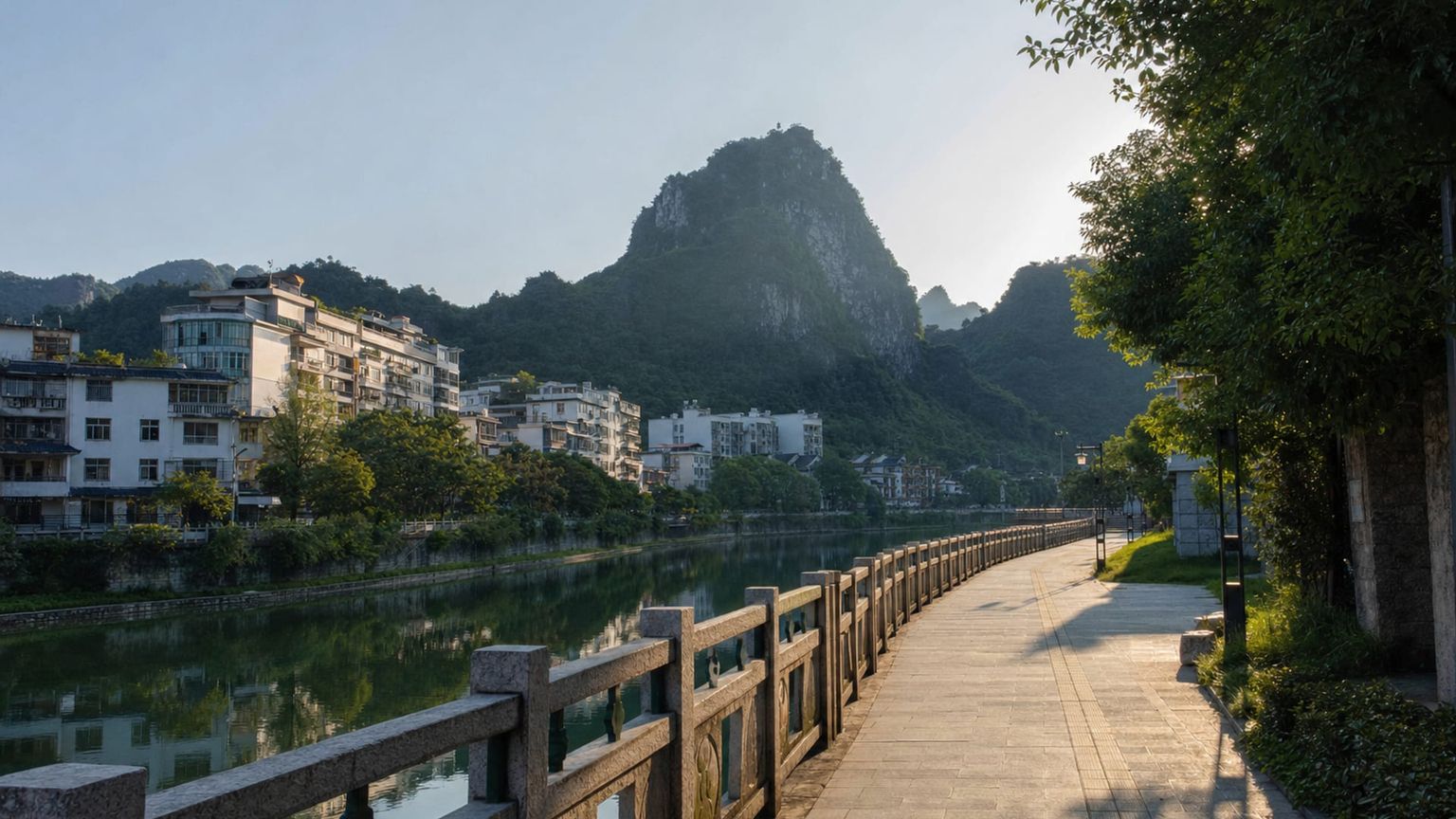
Qixing District covers much of eastern Guilin, including the riverfront near downtown, hotels, and several major sights. It suits travelers who want the widest range of restaurants, transport links, and easy access to the city’s core attractions.
Best for: First-time visits, shopping, and travelers who want the broadest choice of hotels and dining
What to expect: Busy streets, plenty of local traffic, and a steady flow of visitors near the main hotel strips.
Hotel prices: Usually about 250 yuan to 700 yuan (~$35 to ~$98) per night for well-rated stays
Distance to major sights: About 10 to 20 minutes by taxi to Elephant Trunk Hill and Two Rivers and Four Lakes
Quietness: Busier by day and evening, especially near main roads and hotel clusters.
Main trade-off: You gain convenience, but the most appealing rooms and riverside addresses cost more than inland blocks.
Good to know: If you plan early starts and short taxi rides, this area cuts down on cross-town transfers after dinner.
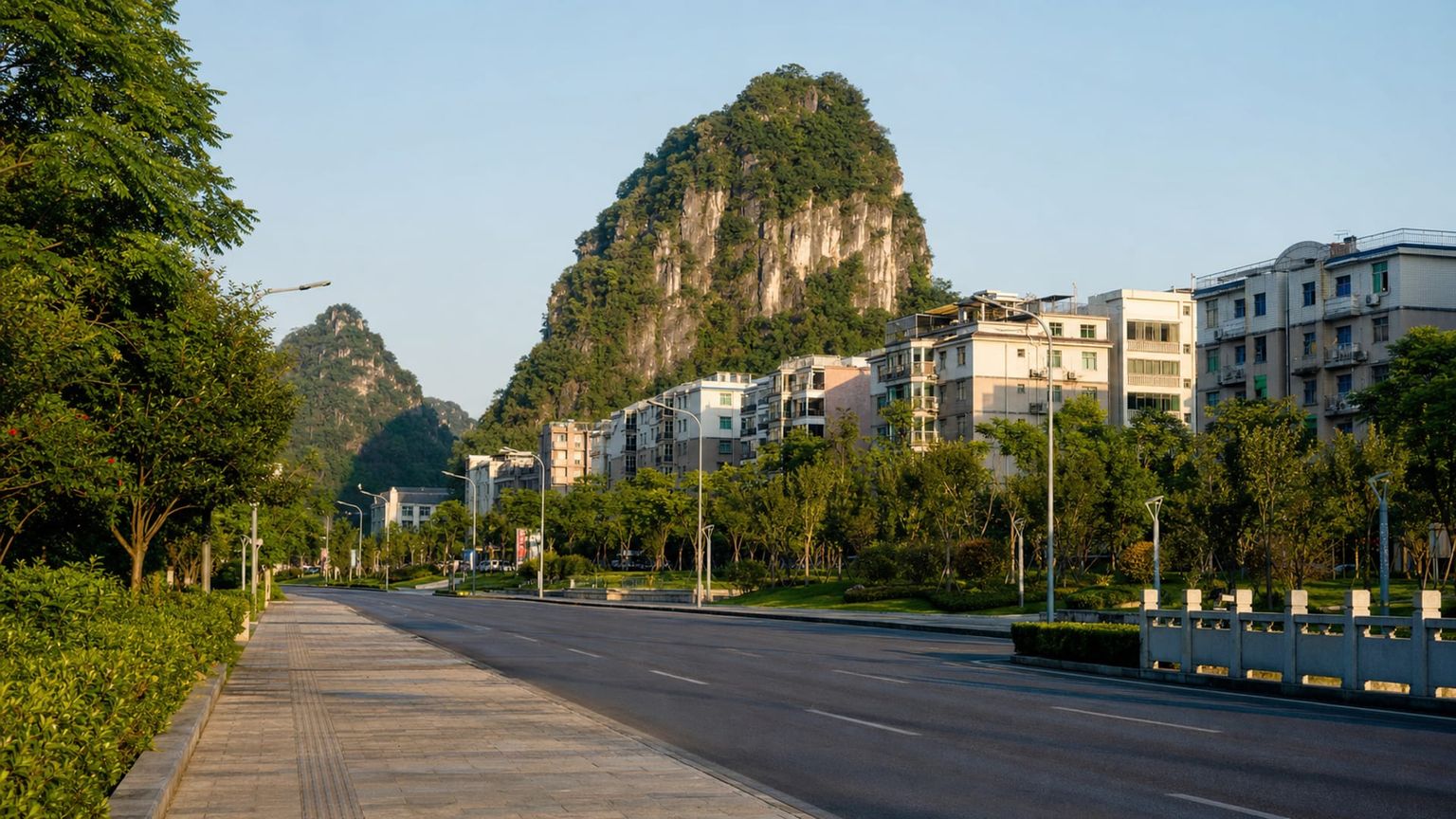
Diecai District sits north of the city center and gives you access to the scenic hill parks, older neighborhoods, and quieter residential streets. It works well if you want a base that still sits close to downtown without staying in the busiest riverfront zone.
Best for: Calmer stays, park visits, and travelers who do not need to be in the busiest central strip
What to expect: Local shops, moderate traffic, and fewer late-night crowds than the central districts.
Hotel prices: Usually about 200 yuan to 500 yuan (~$28 to ~$70) per night for well-rated stays
Distance to major sights: About 10 to 15 minutes by taxi to Elephant Trunk Hill and about 20 minutes to Reed Flute Cave
Quietness: Quieter at night, with more neighborhood calm after office hours and dinner.
Main trade-off: You may need taxis for riverfront dining and the main sightseeing belt, especially in the evening.
Good to know: Choose this if you want easier parking or a lower-key street scene, but expect fewer late-opening restaurant choices nearby.
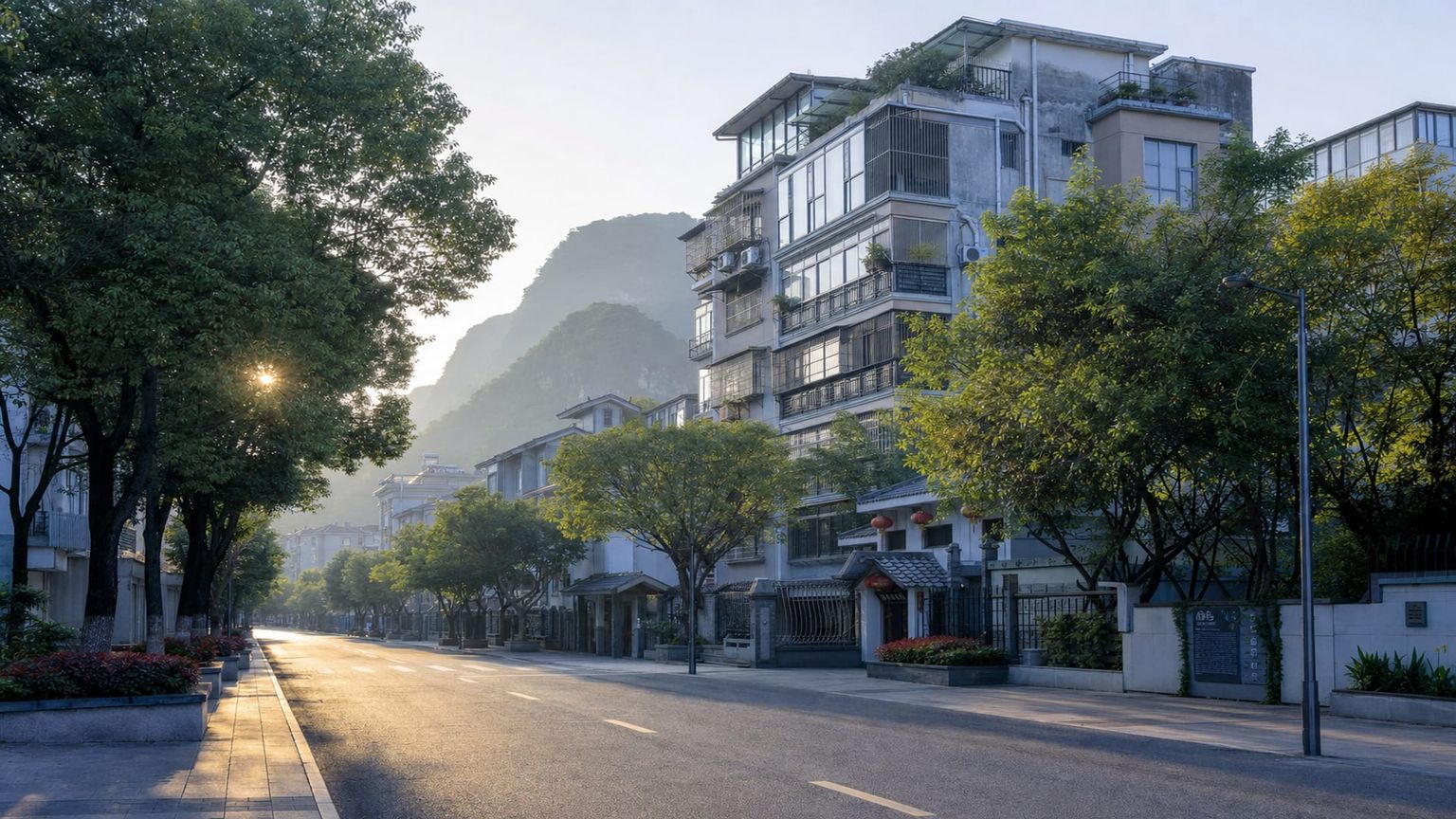
Xiufeng District centers on Guilin’s historic heart, with easy access to the Li River area, canal sights, and several of the city’s best-known landmarks. It places you close to the classic postcard views, but the tradeoff is denser traffic and more visitors.
Best for: Sightseeing, short stays, and travelers who want to walk to major central landmarks
What to expect: Lively sidewalks, tour groups near key sights, and frequent taxi and scooter traffic during the day.
Hotel prices: Usually about 300 yuan to 800 yuan (~$42 to ~$112) per night for well-rated stays
Distance to major sights: About 5 to 15 minutes on foot or by taxi to Elephant Trunk Hill and Two Rivers and Four Lakes
Quietness: Busy through the day and still active after dark near the main attractions.
Main trade-off: Central rooms put you close to the sights, but older buildings and prime locations can mean higher rates and more noise.
Good to know: Staying here makes it easy to return to your room between outings, which matters if you plan to break up sightseeing with rests.
Travelers usually avoid Lingui District for hotel stays, since it sits well south of Guilin’s main scenic area and adds time to trips to Elephant Trunk Hill, Two Rivers and Four Lakes, and Zhengyang Pedestrian Street. They also tend to skip the farther edges of Yanshan, Qixing’s outer residential sections, and the airport-side area near Guilin Liangjiang International Airport (KWL), because these spots have fewer visitor amenities and make evening travel into the center inconvenient.
Hotel deals
How to get around Guilin efficiently
Guilin has no metro, so city buses, taxis, and Didi do most of the work between the airport, the center, and the riverfront.

Metro
for longer distances
Guilin has no metro network, so the closest equivalent for visitors is the city bus system and short taxi rides; use those for trips between Guilin Liangjiang International Airport and the city, which takes roughly 45 to 60 minutes by road.

Bus and tram
for convenience
Bus routes link Guilin Liangjiang International Airport, the downtown area, and key rail stations, with fares usually about $1 to $3 (¥2 to ¥10) and tickets valid for a single ride; board at marked stops, keep small cash or use a local payment app if accepted, and expect airport buses to take about 45 to 70 minutes depending on traffic.

Taxi
for convenience or late hours
Licensed taxis use meters in Guilin, with airport rides to central hotels typically costing about $12 to $25 (¥90 to ¥180) and longer cross-city trips rising to about $20 to $35 (¥150 to ¥250); hail at official stands or book through a hotel, carry the destination in Chinese if possible, and expect card acceptance to vary, while cash and mobile payments are more common.
*Prices are based on rates updated as of June 2026 and may change at the time of travel.
Use buses for low-cost airport and station transfers, taxis or Didi for cross-town sightseeing, and walking only when the day stays inside Xiufeng or nearby riverfront blocks.
Iconic landmarks
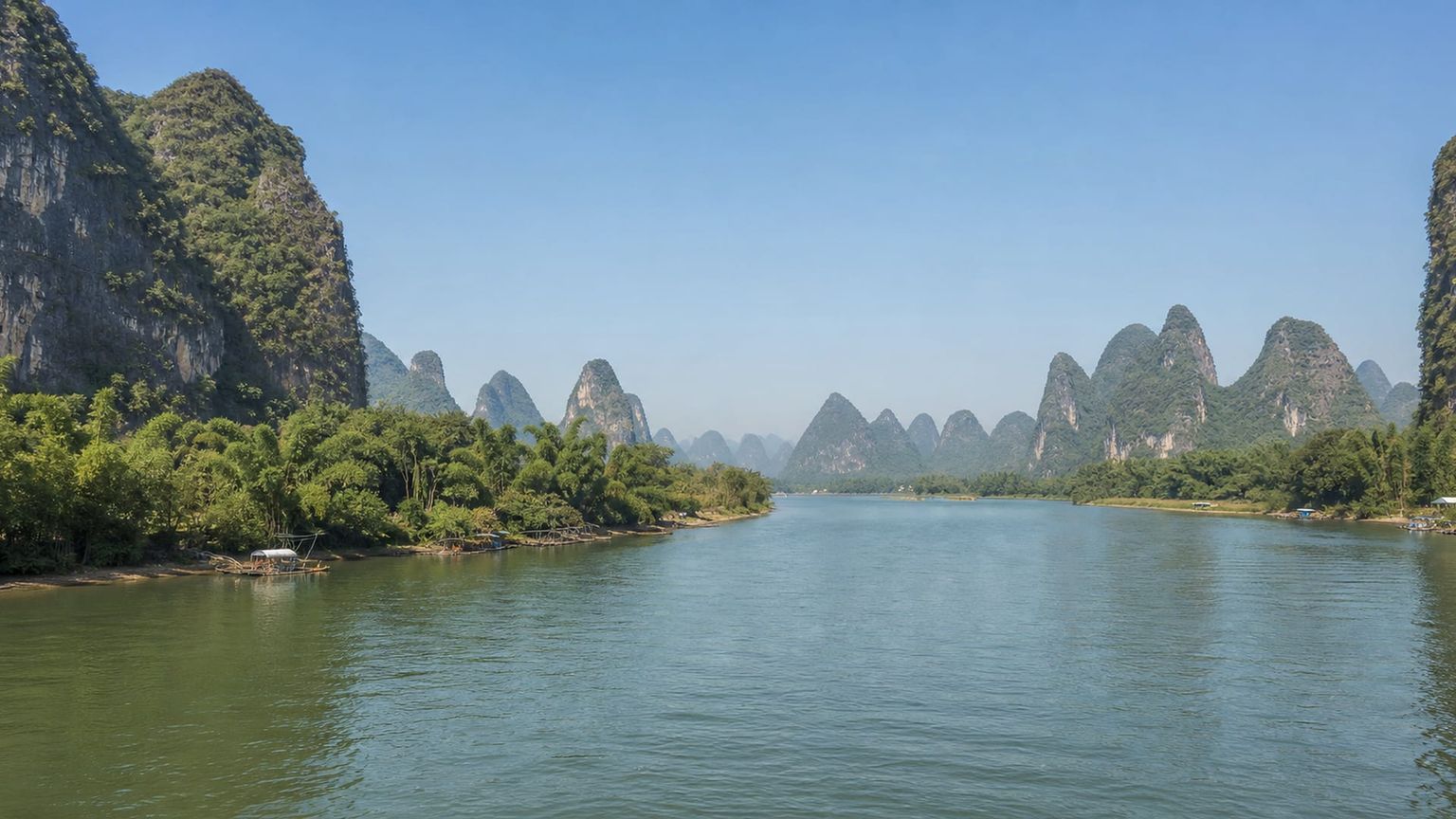
Li River
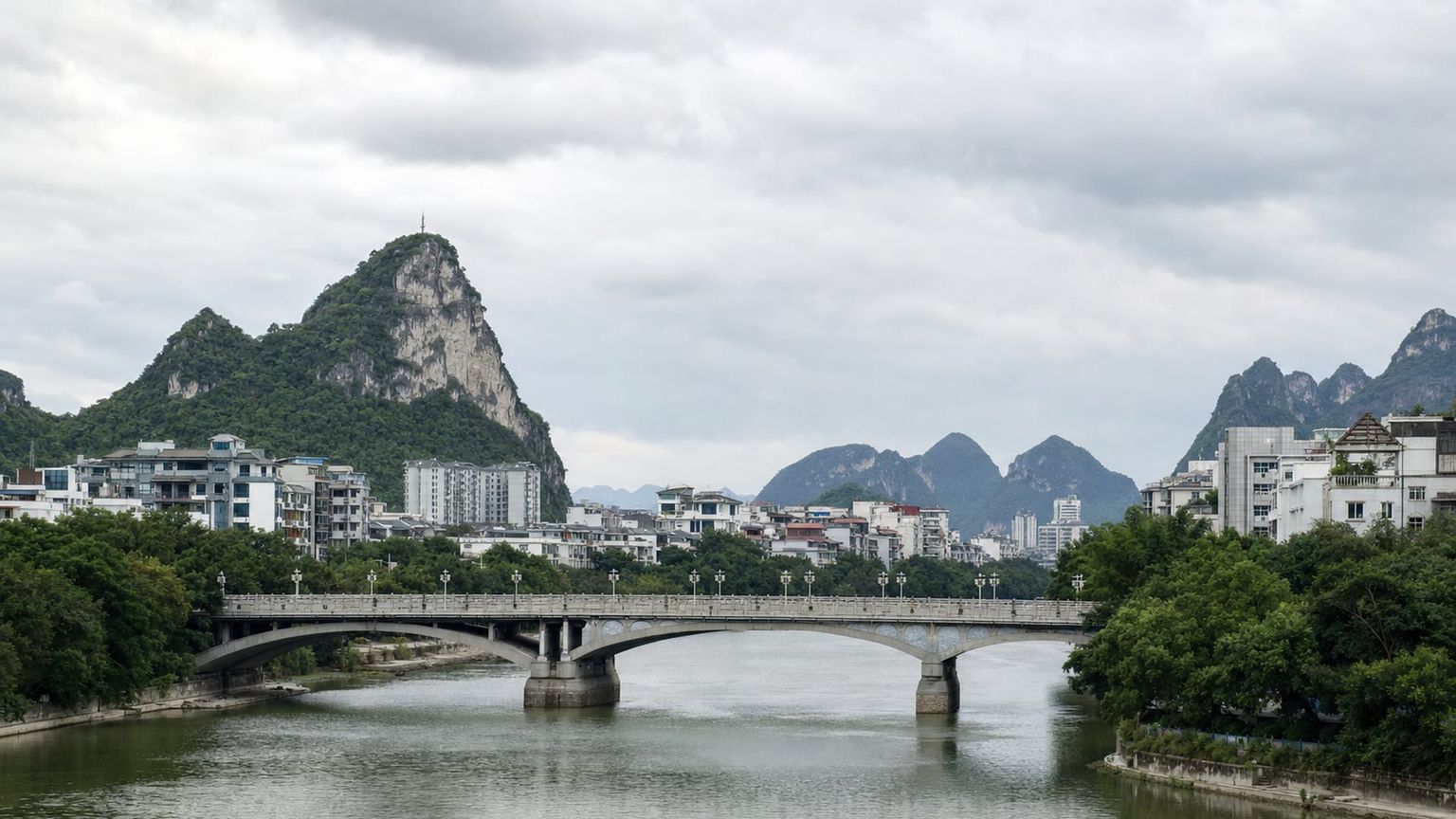
The Li River runs through Guilin’s karst hills and delivers the city’s best-known landscape, with limestone peaks, bamboo groves, and river bends that photographers favor. Boat trips from Guilin or Yangshuo show the clearest stretch.
Time needed: About 4 to 6 hours
Entry: Cruise fares usually cost $65 to $115 (about CNY 470 to CNY 830), depending on boat class, season, and departure point; meals may cost extra.
Tip: Choose a morning departure for clearer light and fewer afternoon clouds over the peaks.
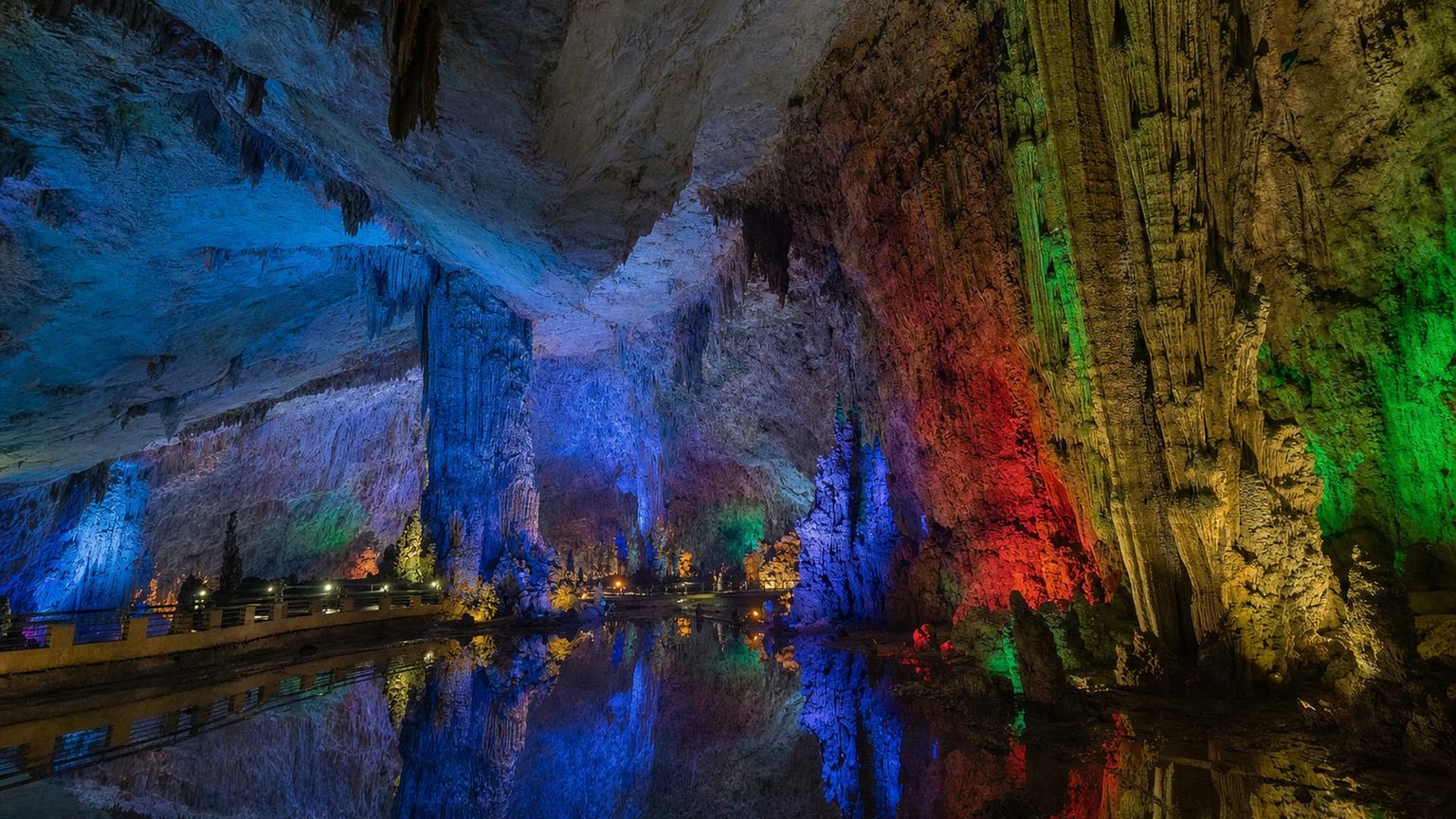
Reed Flute Cave
Reed Flute Cave fills a large limestone chamber with stalactites, stalagmites, and colored lighting that highlights the rock forms. It sits west of the center and gives Guilin one of its most visited underground walks.
Time needed: About 1 to 2 hours
Entry: Tickets usually cost $10 to $16 (about CNY 72 to CNY 115) per adult, with lower prices for children and some seasonal adjustments. Visit the official site for details.
Tip: Go early in the day, when tour groups are lighter and the cave stays easier to photograph.
Elephant Trunk Hill
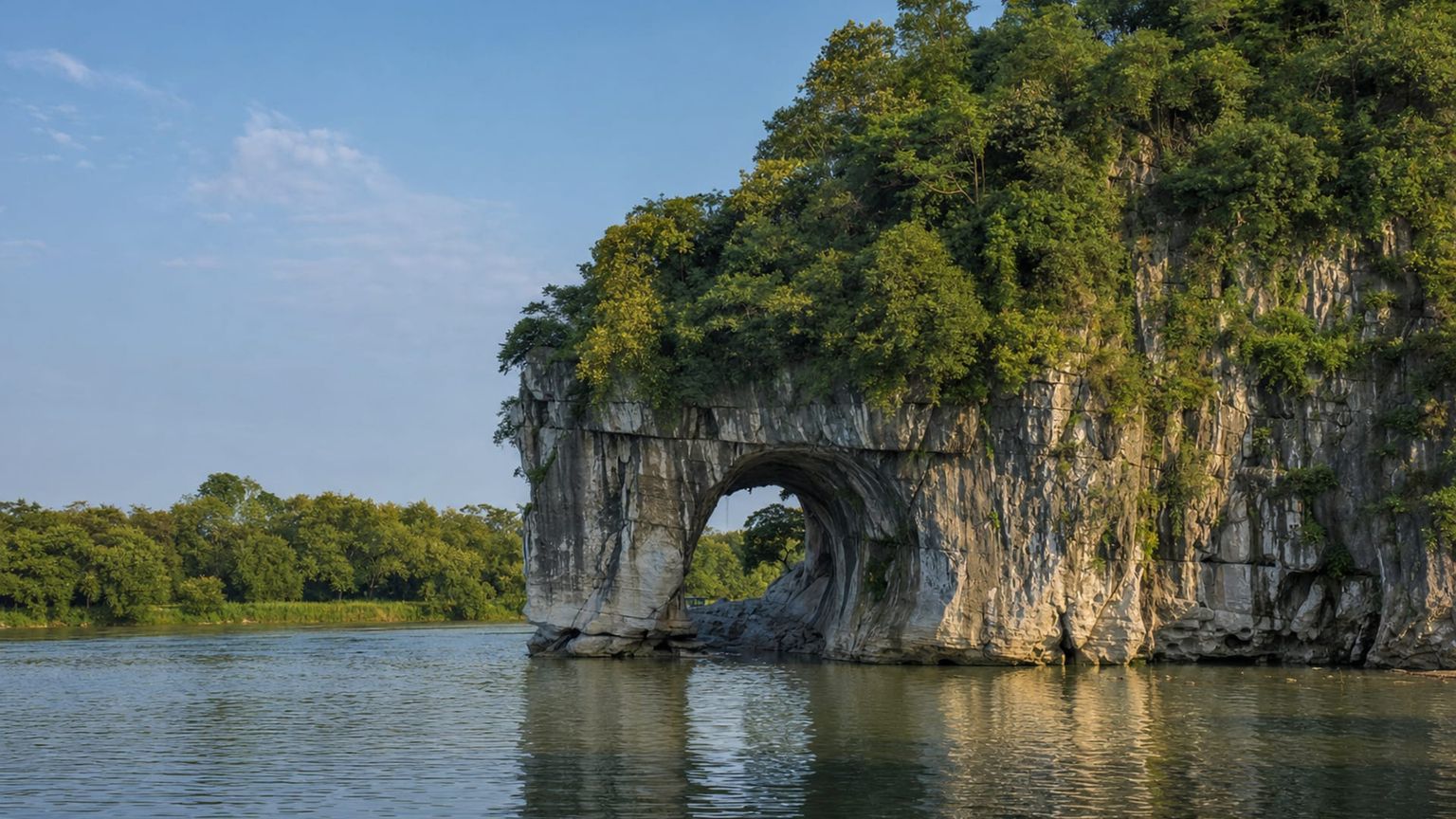
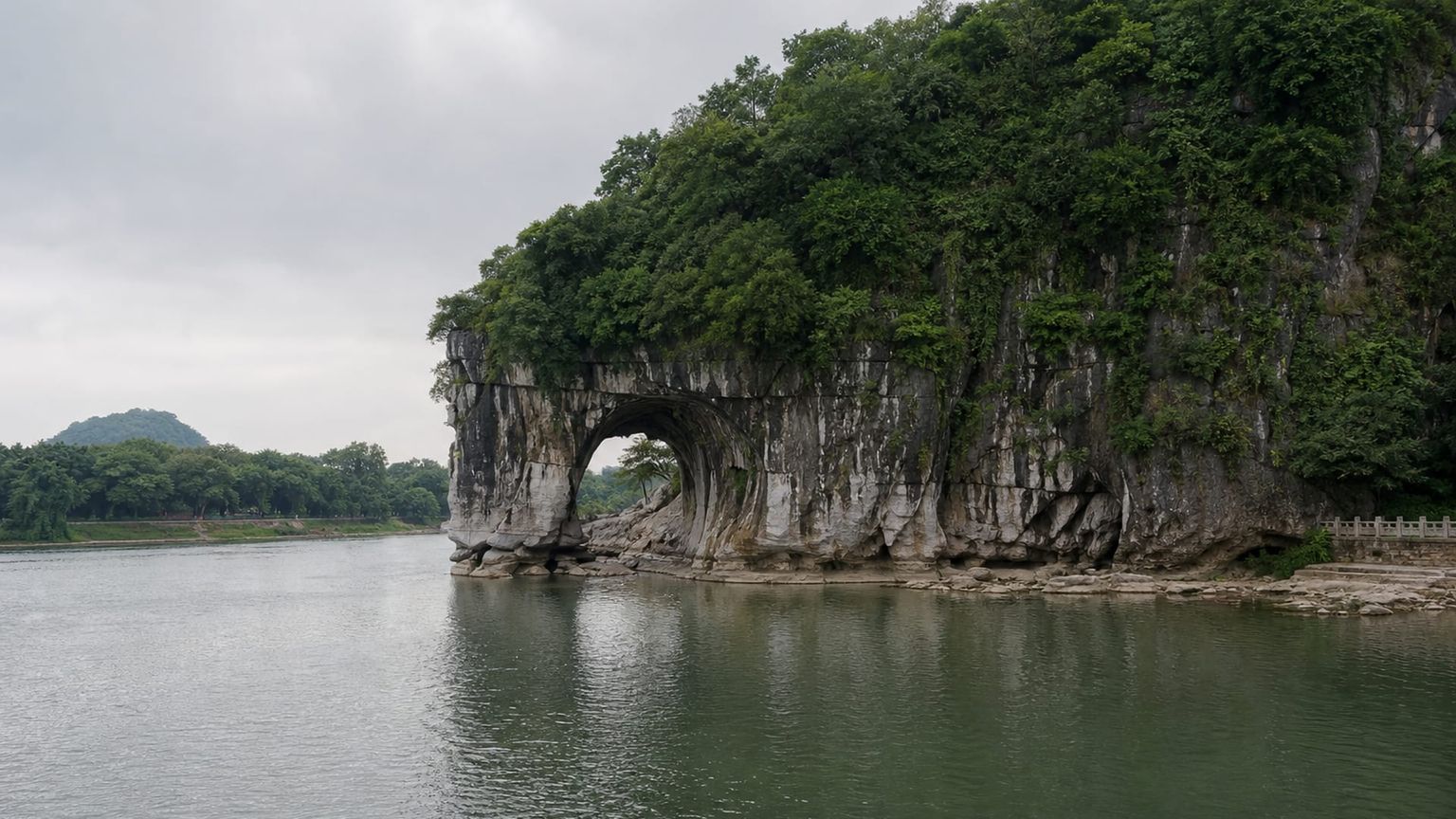
Elephant Trunk Hill is Guilin’s best-known city landmark, where a limestone ridge curves into the Li River and suggests an elephant drinking water. Paths, pavilions, and river views make it an easy central stop.
Time needed: About 1 to 2 hours
Entry: Standard admission costs $7 to $11 (about CNY 50 to CNY 79), with separate rates for night visits or bundled scenic-area tickets. Visit the official site for details.
Tip: Visit near sunset if you want softer light on the hill and the river from the waterfront path.
Overlooked sites worth visiting

Elephant Trunk Hill Park
This limestone headland at the Li and Peach Blossom rivers looks beyond the classic postcard angle if you enter from the quieter side paths and riverside terraces. Dawn brings softer light and fewer tour groups.
Time needed: About 1 hour
Entry: Park access costs about $7 to $10 (approximately CNY 50 to CNY 70), with separate fees for some caves and boat add-ons inside the scenic area. Check the gate notice, since ticketing can change by season and by access point.
Tip: Go early, before the group coaches arrive.

Guilin Taohua Jiang Lake
This compact lakeside area in central Guilin pairs calm water with pagodas, short bridges, and tree-shaded paths, so you can cover it without a long detour. It works well for a brief cultural stop between downtown sights.
Time needed: About 45 minutes
Entry: Free to access; some nearby paid boat rides and tower entries, when operating, usually cost about $4 to $9 (approximately CNY 30 to CNY 60). The lake paths themselves do not require a ticket.
Tip: Visit near sunset for the best light on the water.
Traditional food
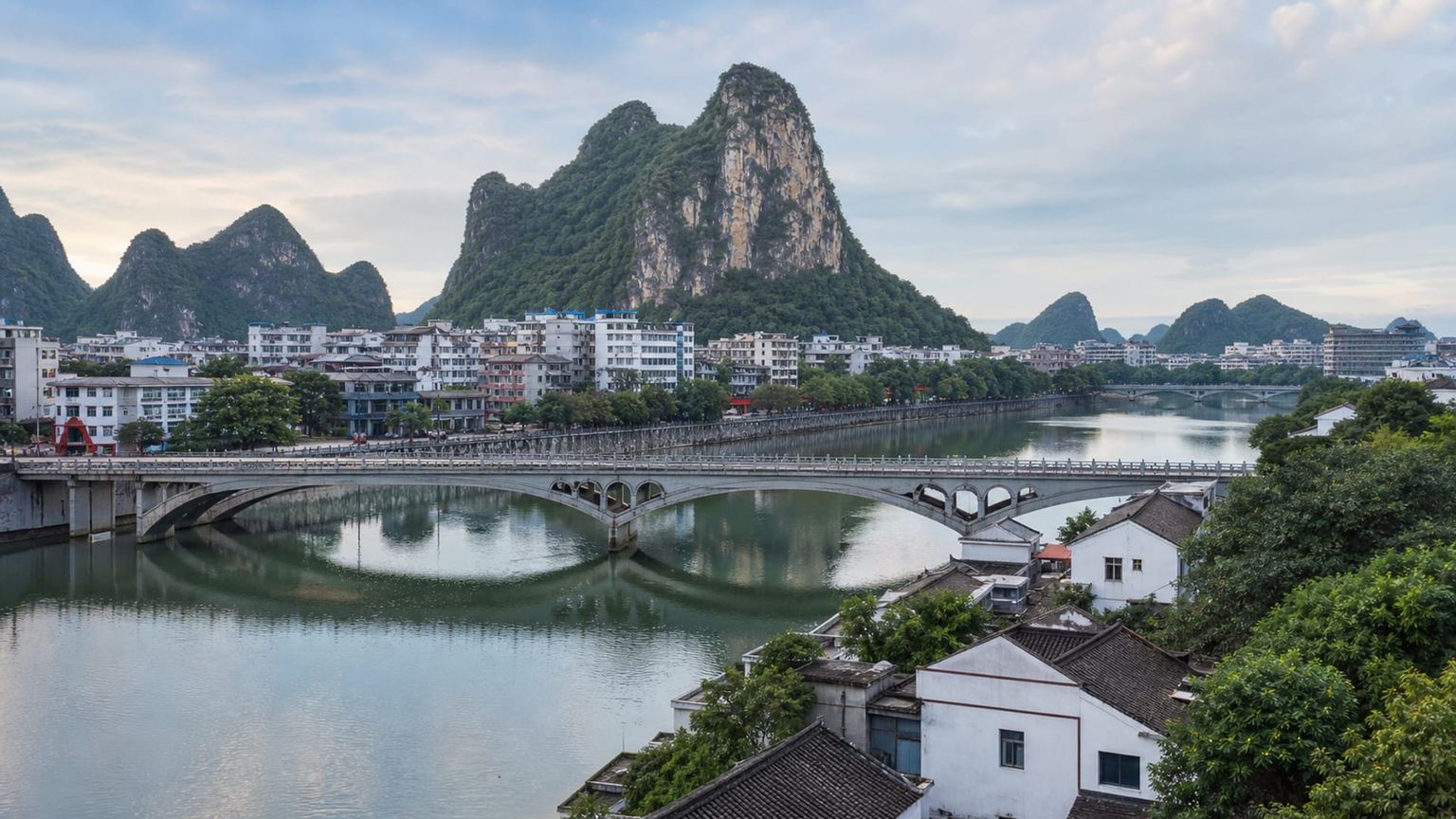
Guilin cooking leans on river fish, rice noodles, taro, and snails, with sour, savory, and peppery notes showing up in quick noodle bowls and slower home-style dishes. Meals usually follow the city’s early dining hours.
Guilin rice noodles
The city’s defining breakfast dish pairs rice noodles with broth, sliced meat, peanuts, pickles, and herbs. Huashe Guilin Rice Noodles is a long-running central pick for a first bowl in Guilin.
Beer fish
Beer fish cooks local river fish with beer, chilies, and aromatics for a rich, slightly sweet sauce. Jincheng Restaurant in Guilin is a common stop for a version that fits a full dinner.
Stuffed snails
Stuffed snails combine minced pork, herbs, and spices packed into snail shells, then simmered until the flavors deepen. Guilin Restaurant is one of the better-known places in the city for this regional specialty.
Lipu taro pork
Lipu taro pork layers taro and pork belly so the taro absorbs the meat juices during steaming. Chunji Roast Goose Restaurant in Guilin serves a widely ordered version alongside other local dishes.
Best time to visit Guilin
Guilin shifts from damp, misty spring mornings to hot, storm-prone summers, then into clearer autumn weather and cooler winter days that can sharpen the karst views.
Best for: Karst scenery, river cruises, and mild walking weather
What you get: About 55°F to 77°F (13°C to 25°C), with lighter crowds than peak summer and some misty mornings
Trade-offs: Showers can interrupt outdoor plans and keep river views hazy
Best for: Long daylight, river time, and full sightseeing days
What you get: About 73°F to 91°F (23°C to 33°C), with the busiest sightseeing periods and heavy holiday crowds
Trade-offs: Heat, humidity, and afternoon rain can slow outdoor movement
Best for: Clearer views, easier walking, and balanced touring
What you get: About 57°F to 84°F (14°C to 29°C), with comfortable temperatures and moderate crowds
Trade-offs: Popular dates can still fill boats and central hotels
Best for: Quieter streets, lower hotel demand, and slower city days
What you get: About 41°F to 61°F (5°C to 16°C), with fewer visitors and cooler mornings
Trade-offs: Some days feel damp and gray, which can soften mountain views
A realistic 5-day plan in Guilin
The five-day plan starts with arrival close to the center, then builds toward caves, river time, and the city’s best-known landmark. By the last day, you are staying near the downtown core so shopping, café time, and the airport transfer all fit without compressing the schedule.
Land at Guilin Liangjiang International Airport (KWL), then take a taxi into Xiufeng District or Qixing District, about 45 to 60 minutes and roughly $16 to $25 (about CNY 115 to CNY 180) depending on traffic and the exact hotel address. Settle into a room near the Li River or the central hotel strips, drink water, and stay close to dinner, then walk to Elephant Trunk Hill Park or a nearby riverside restaurant for a light meal before an early night.
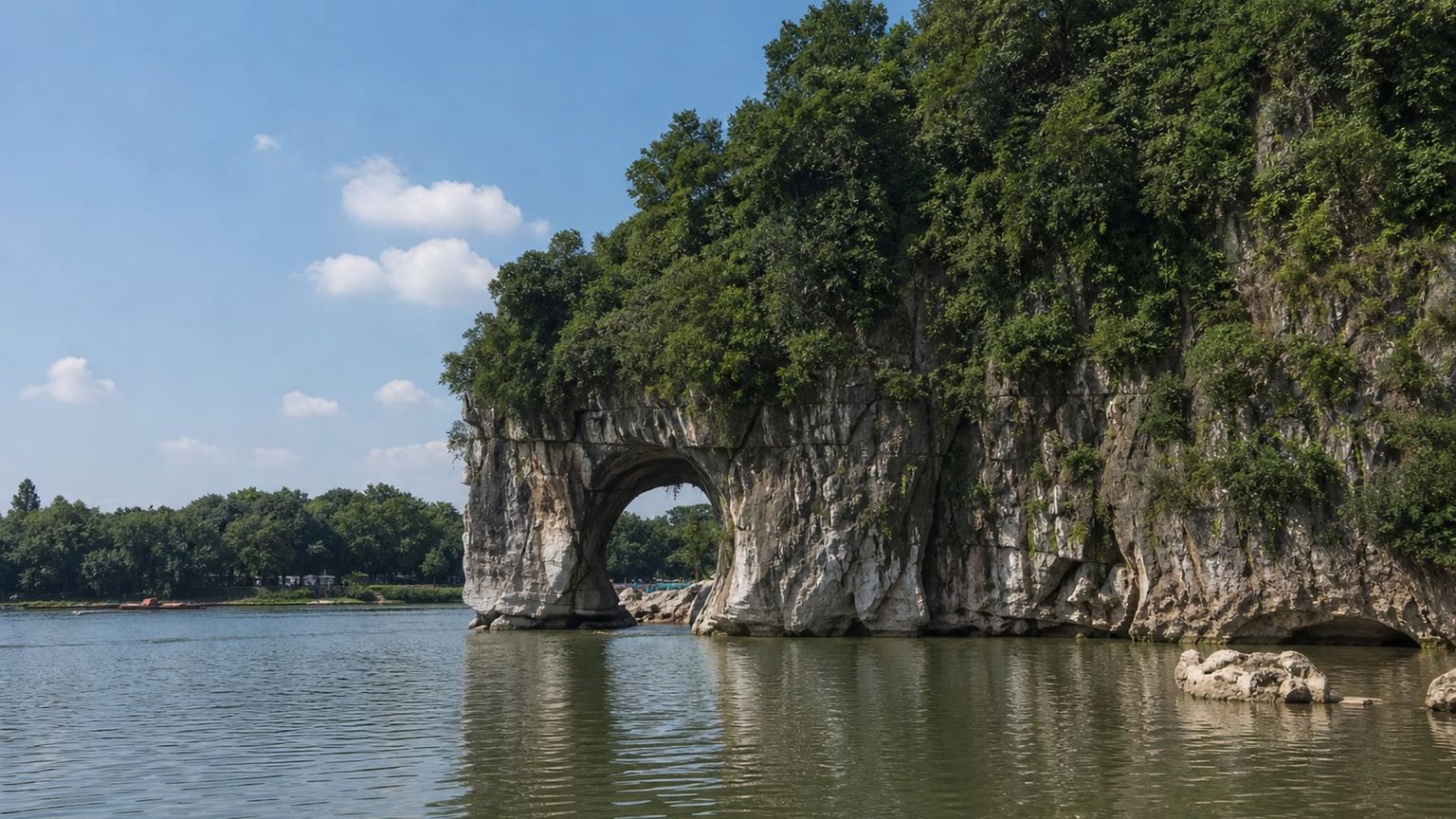
Start at Reed Flute Cave, ideally before the larger tour groups arrive, then take a taxi back toward the center, about 20 to 25 minutes, for lunch near Xiufeng District. In the afternoon, walk about 10 to 15 minutes to Elephant Trunk Hill and the surrounding park paths, then finish with the calm water and pagodas at Guilin Taohua Jiang Lake, which sits about 10 minutes away by taxi from the main central sights.

Begin with a morning Li River cruise, which usually takes 4 to 6 hours, and choose the earliest departure you can manage for clearer views of the peaks. Plan on a taxi ride of about 15 to 25 minutes from central Guilin to the departure point, and return to the city for an easy dinner in Qixing District once you are back on shore.

Early in the day, head first to Elephant Trunk Hill Park, then continue to the main Elephant Trunk Hill scenic area, a walk of only about 5 to 10 minutes between entrances and viewpoints. Spend the morning tracing the quieter riverside terraces and then move to the hilltop lookouts, where the Li River curves past the landmark, before ending the day back in Xiufeng District for an unhurried dinner within a short taxi ride of the center.
For a low-key last day, visit one more downtown sight in the morning, then pair it with shopping in Qixing District and a café stop in Xiufeng District before you pack. If you want a final stop before the airport, choose the riverfront areas near the center, where you can fit in lunch, a short walk, and an easy taxi back to Guilin Liangjiang International Airport (KWL) without a rushed schedule.
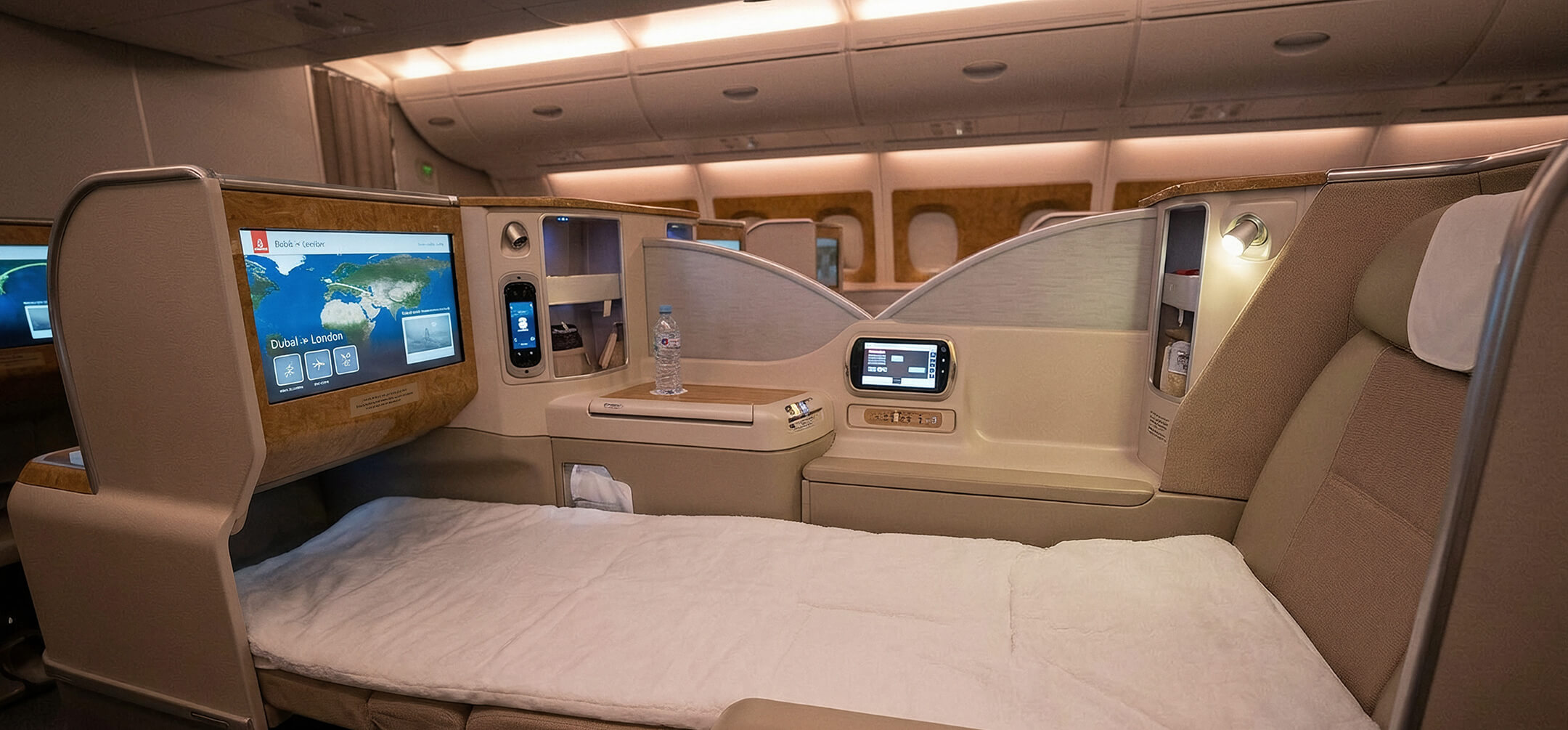
Business-class flights from the US to Guilin
Flights to Guilin usually connect through one or more major Asian hubs, so the origin city matters more than the final fare headline. From New York and Los Angeles, the useful question is which layover chain keeps the journey shortest and the timing least awkward.
From New York, carriers such as China Eastern Airlines, Cathay Pacific, China Southern Airlines, Air China, Korean Air, and Asiana Airlines typically price round-trip fares at about $4,800 to $8,500. Connections usually route through PVG, HKG, CAN, PEK, ICN, or SIN, with total travel times of roughly 19 to 30 hours.
Los Angeles travelers usually see round-trip fares from about $4,300 to $7,900 on China Southern Airlines, China Eastern Airlines, Cathay Pacific, Korean Air, and Air China. Total travel time commonly lands at about 17 to 28 hours, most often with a connection through CAN, HKG, PVG, ICN, or PEK.
Guilin feels different when you slow down
A deliberate Guilin stay works best when you match each day to a district, Xiufeng for the historic core, Qixing for broader dining and hotel choice, and a taxi or Didi for the jumps between Reed Flute Cave, Elephant Trunk Hill, and the Li River pier. That keeps the city’s short distances from turning into repeated backtracking. If you want a Guilin plan shaped around the hill, the river, and the right downtown base, ask the AranGrant experts to build it for your dates