

Chapters:

Need help with your trip?
Our support team is available 24/7. Request a callback or call us directly at (833) 619-0908
Münster trips often begin with the cathedral, Prinzipalmarkt, and a hotel near the center, then add a lake visit or a station-side stop before departure. That works, but it can miss how much the city opens up once you separate the old town from the quieter residential edges.
Distances are short, yet the right sequence still matters. Crowds build quickly around Domplatz and the arcades, while places such as Aasee, Kreuzviertel, and Wolbeck reward a slower pace and better timing.
This guide sets out a clearer order, so you can pair the landmark core with neighborhood walks, simple transit choices, and day-by-day planning that matches how Münster actually works.
Useful things to know

Main language(s): German
Hallo (HAH-loh) – Hello
Bitte (BIT-uh) – Please
Danke (DAHN-kuh) – Thank you
Sprechen Sie Englisch? (SHPREH-khen zee ENG-lish?) – Do you speak English?
Wie viel kostet das? (vee feel KOS-tet dahs?) – How much does it cost?

Currency: The local currency is the euro (EUR, €).

Cash and cards: Cards and contactless are widely accepted; carry about €20 to €40 ($22 to $44) in cash for small shops and market stalls.

Tipping: Round up small bills, and add about 5-10% in restaurants if the service is good.

Traditional food: Töttchen, Westphalian pumpernickel, Grünkohl mit Mettwurst, Pfefferpotthast

Water and coffee costs: Water ~€2 ($2), bar espresso ~€2.50 ($3).

Taxis and ride apps: Uber is limited; local taxis are easier to find than ride apps.

Plug and voltage: Type C/F socket, 230V

Dining and shop opening hours: Breakfast is about 07:00-10:00, lunch 12:00-14:00, and dinner 18:00-21:00. Many kitchens close between lunch and dinner.

Emergency number: 112 for ambulance, fire, and police; 110 for police.
Where to stay in Münster
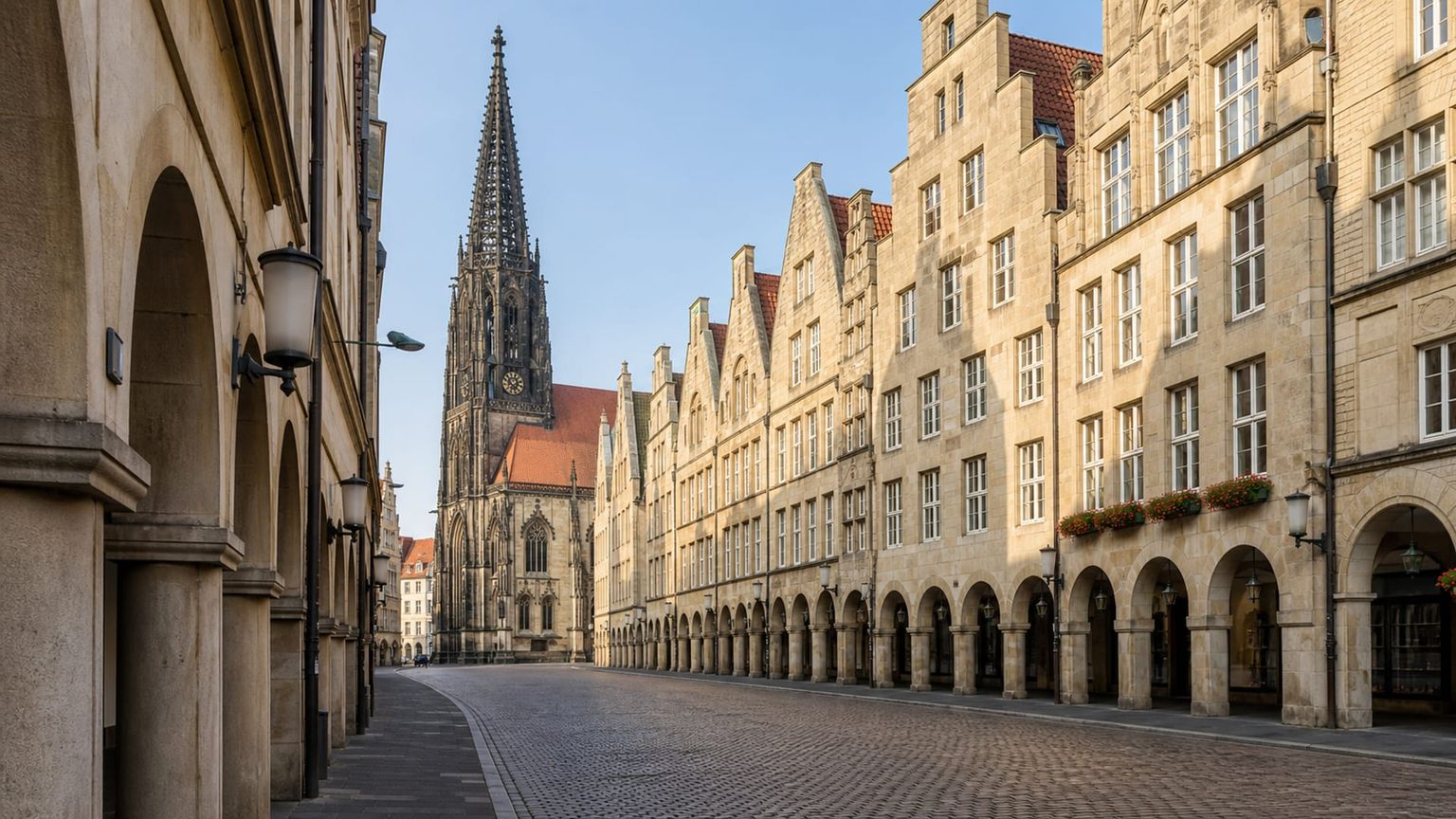
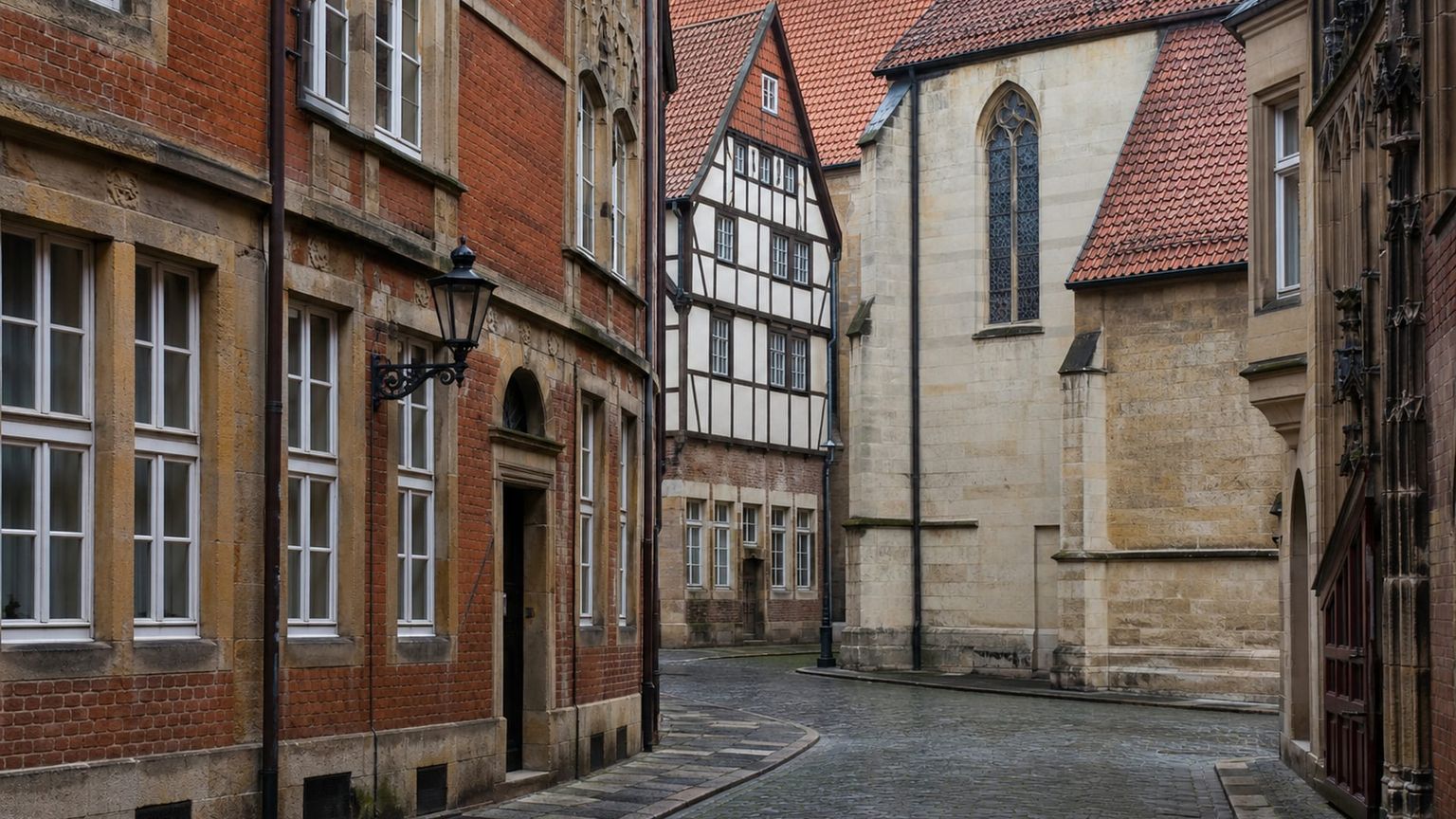
Münster’s Altstadt centers on Prinzipalmarkt, the cathedral, and the main shopping streets, with the Old Town Hall and arcades creating the city’s most recognizable core. It suits travelers who want museums, restaurants, and landmark access on foot.
Best for: First-time visits, sightseeing, and staying within easy walking distance of major sights
What to expect: Expect busy daytime streets, cyclists, shoppers, and steady restaurant traffic, especially near Prinzipalmarkt and the cathedral square.
Hotel prices: Usually about €120 to €220 (~$130 to ~$240) per night for well-rated stays
Distance to major sights: 5 to 10 minutes on foot to Prinzipalmarkt and St. Paulus Cathedral
Quietness: Daytime is lively and sometimes crowded; evenings are calmer after shops close, though restaurant streets still have activity.
Main trade-off: Central rooms cost more and some streets carry late noise from dining and evening foot traffic.
Good to know: If you plan to walk most of the day, book early, since the best-located rooms are limited and often sell out on weekends.
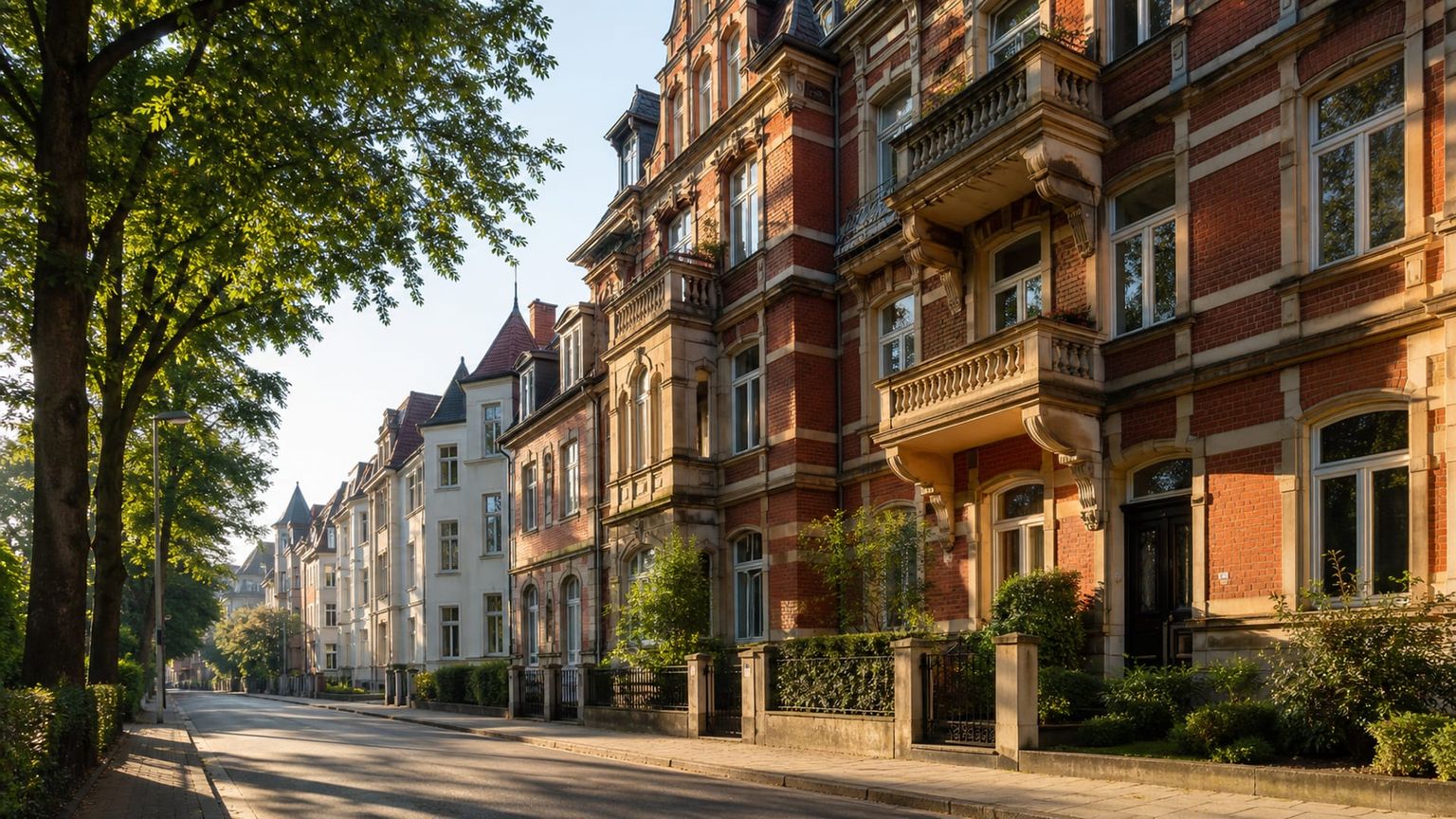
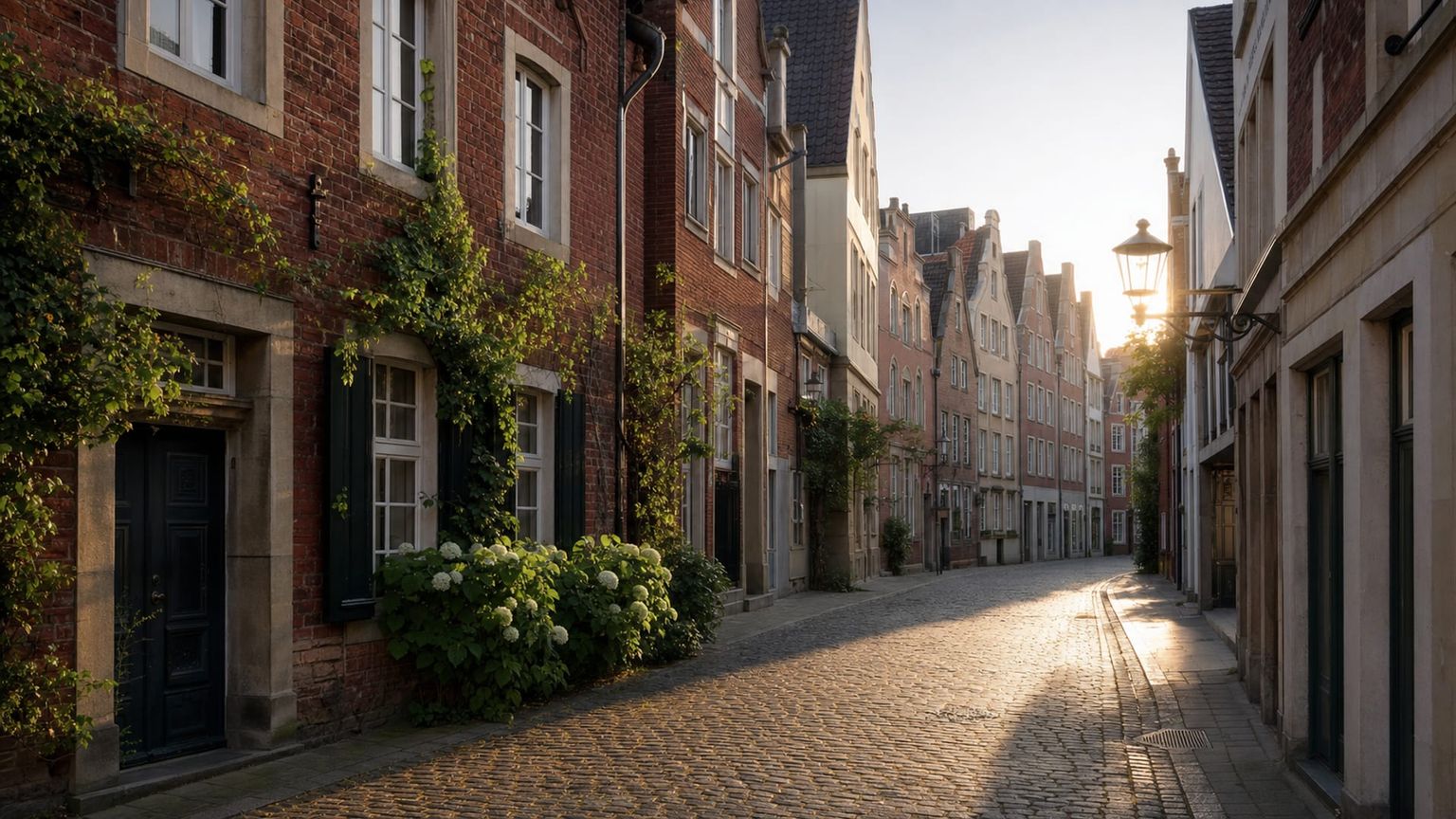
Kreuzviertel is a west-central neighborhood known for tree-lined streets, cafes, and a strong residential feel just beyond the old town. It gives you an easier pace than the core while keeping the center close for sightseeing and dinner.
Best for: Couples, longer stays, and travelers who want cafes and a neighborhood base near the center
What to expect: Expect local residents, casual restaurants, bakeries, and moderate street activity rather than heavy tourist crowds.
Hotel prices: Usually about €100 to €180 (~$110 to ~$200) per night for well-rated stays
Distance to major sights: 10 to 15 minutes on foot to Prinzipalmarkt; about 10 minutes by bike to the main station
Quietness: Days are active with neighborhood life and cafe traffic; evenings are generally quieter than the old town, with fewer late-night spillovers.
Main trade-off: You give up some instant doorstep access to the main square, so short walks or bike rides become part of the routine.
Good to know: Check transport links if you arrive by rail, since some addresses sit a little off the most direct walking line from Münster (Main Station).
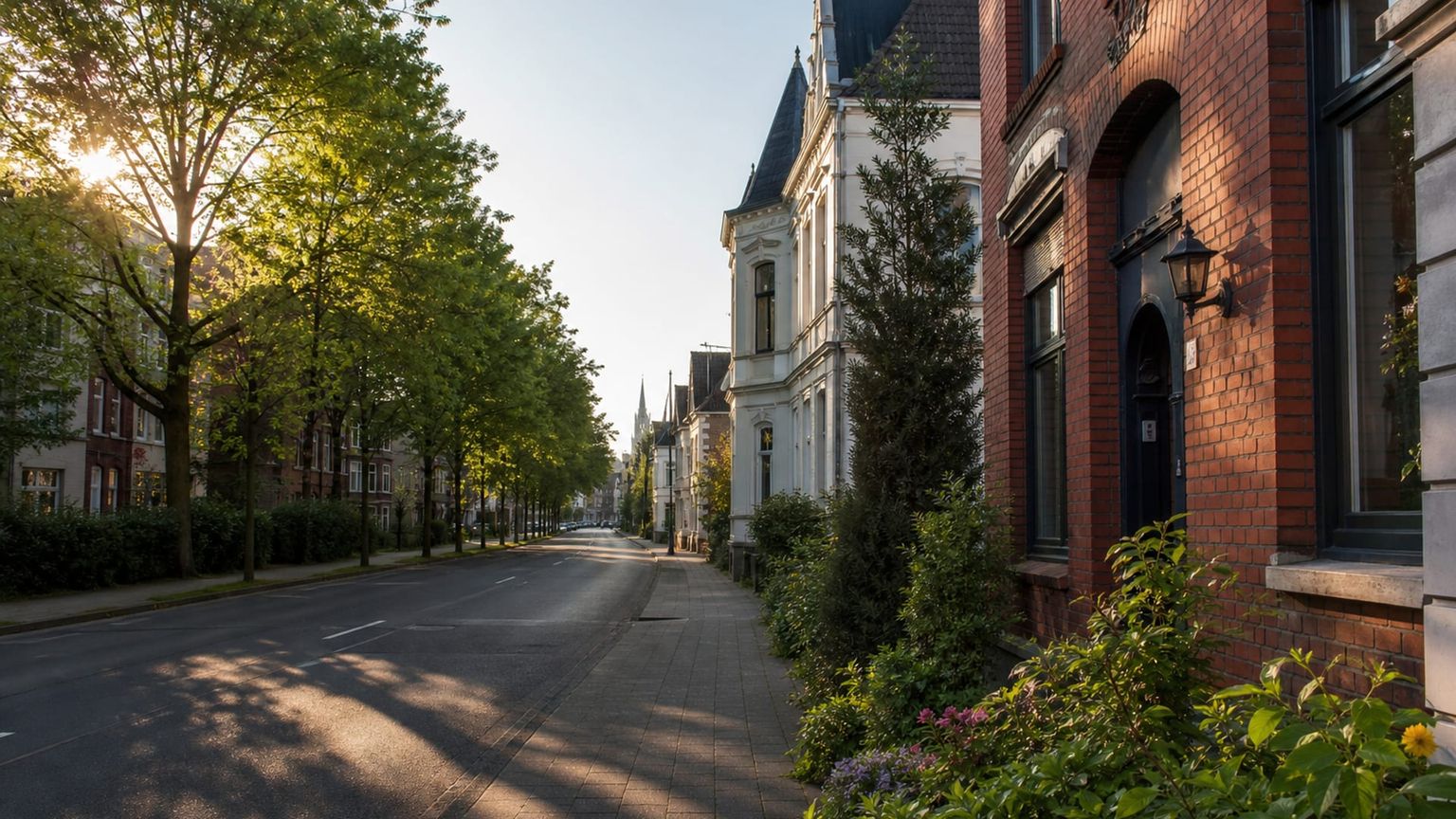
The area around Münster (Main Station) puts you beside the rail hub, bus connections, and a large share of the city’s hotels. It works well when arrivals, departures, or regional day trips matter more than an old-town setting.
Best for: Train travelers, overnight stopovers, and trips with early departures or regional connections
What to expect: Expect heavier foot traffic, constant transit movement, and a mix of commuters, hotel guests, and convenience stores.
Hotel prices: Usually about €90 to €170 (~$100 to ~$185) per night for well-rated stays
Distance to major sights: 10 to 15 minutes on foot to Prinzipalmarkt; 2 to 5 minutes to Münster (Main Station)
Quietness: Daytime is busy and transit-heavy; evenings vary by street, with calmer blocks near hotels and livelier sections closer to the station.
Main trade-off: The area puts you close to transport, but some streets near the station feel less appealing late at night than the old town.
Good to know: If you arrive late, choose a hotel west of the busiest station exits, since those blocks usually have less nighttime foot traffic.
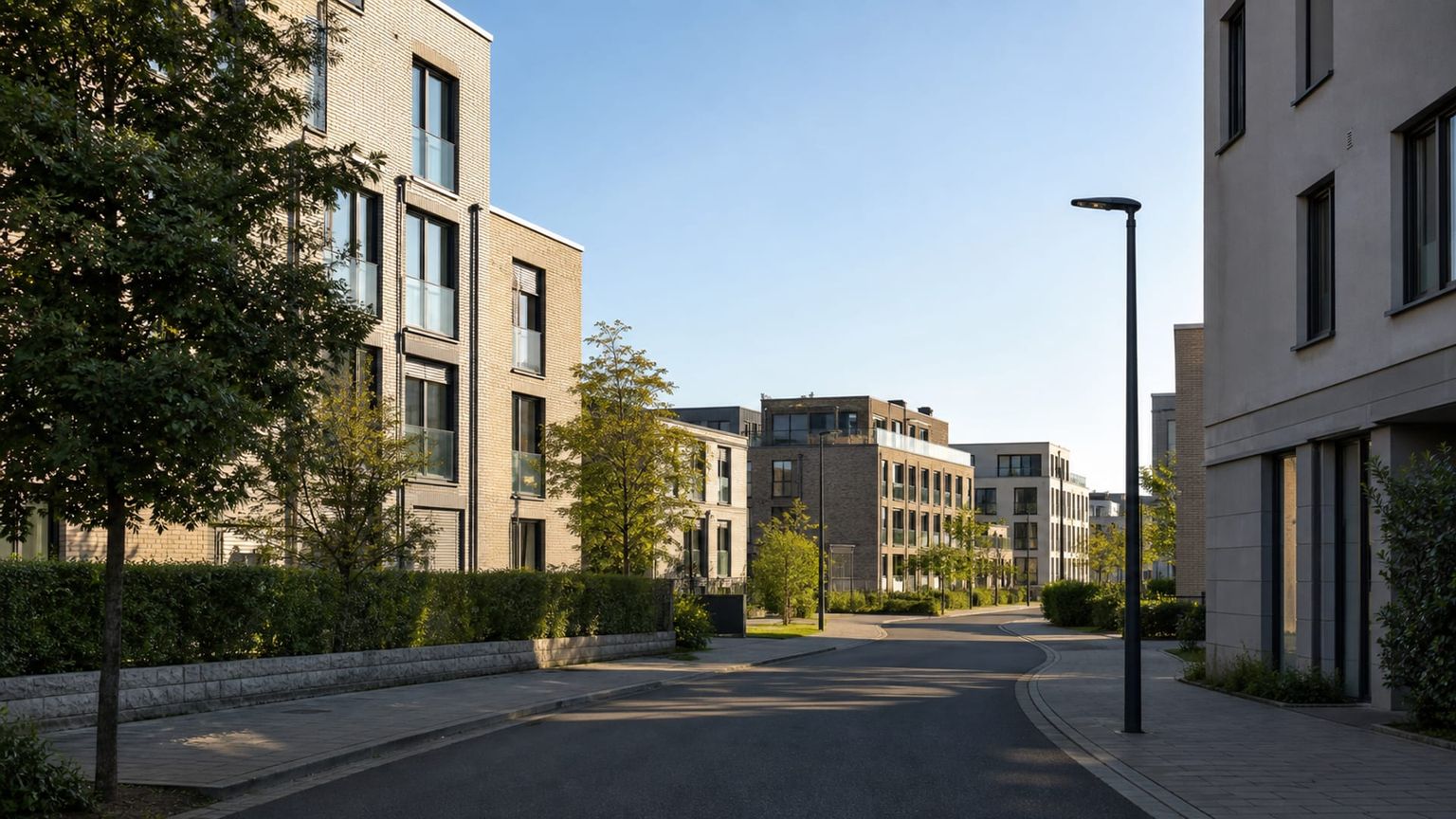
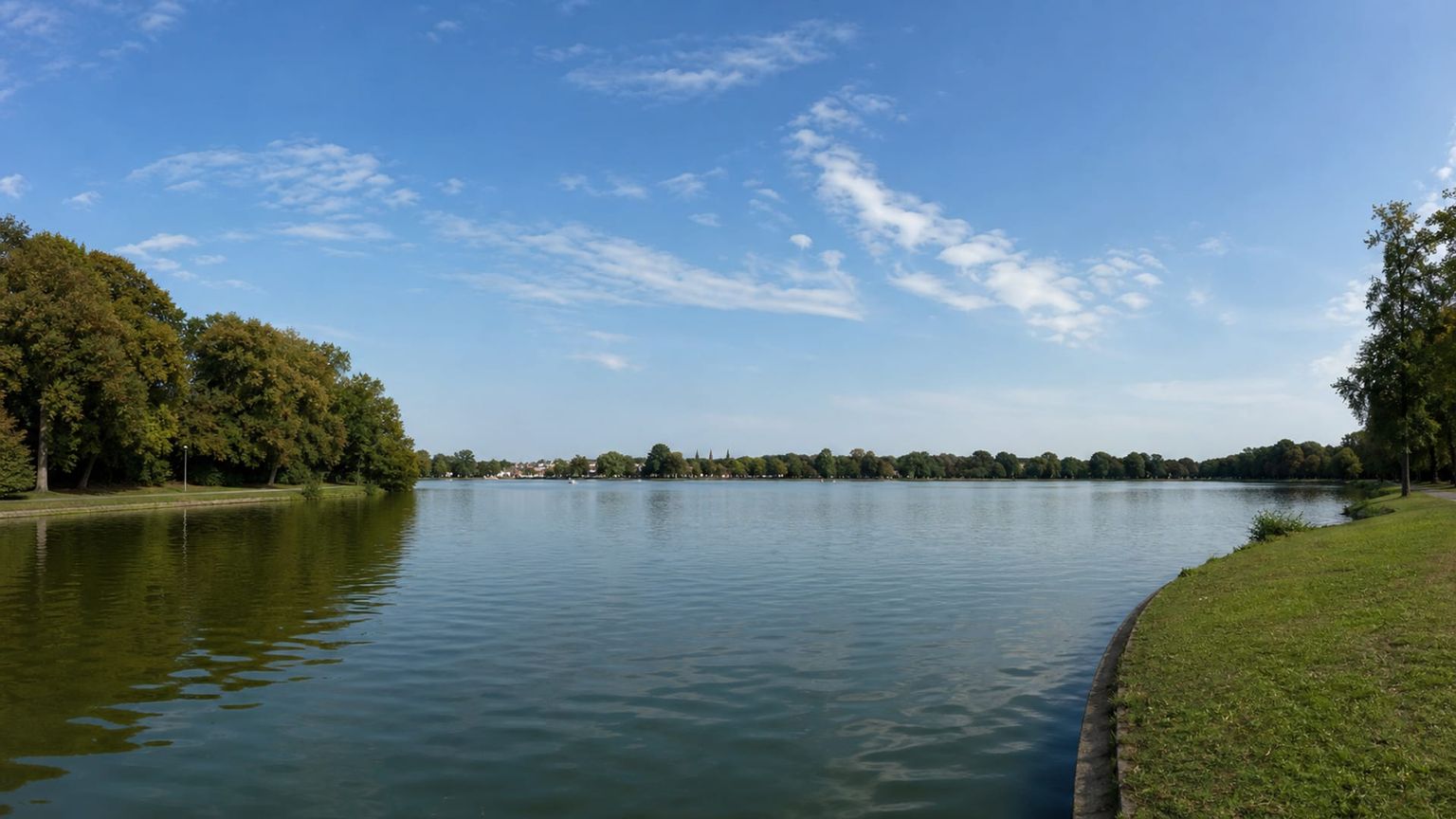
Aaseestadt sits near Aasee, Münster’s lake and park area, with residential blocks, open green space, and easy access to running and walking paths. It suits visitors who want room to spread out and do not need to stay in the historic core.
Best for: Families, walkers, and travelers who prefer park access and a quieter residential base
What to expect: Expect apartment blocks, local traffic, lake visitors, and a calmer mood than the center, with more space and fewer tourists.
Hotel prices: Usually about €95 to €160 (~$105 to ~$175) per night for well-rated stays
Distance to major sights: 15 to 20 minutes by bus to Prinzipalmarkt; about 10 minutes on foot to Aasee
Quietness: Days can be busy around the lake, especially in good weather; evenings are notably quieter once park visitors head home.
Main trade-off: You will spend more time reaching the old town, and the most appealing parts of the area are spread around the lake rather than concentrated in one block.
Good to know: Plan on using buses or bikes after dark, since the lake area itself is pleasant but not the most convenient place for late dinner runs.
Travelers usually avoid far-west Handorf and Gelmer, because they sit far from the Altstadt, Prinzipalmarkt, and the main museum district, with limited visitor amenities. Coerde and Kinderhaus are less convenient for short stays, since they are mainly residential and need bus transfers for evening trips into the center.
Hotel deals
How to get around Münster efficiently
Münster has no subway, so most visitors combine walking with buses, regional rail from Münster (Westfalen) Hauptbahnhof, and taxis for the airport or late returns.

Metro
for longer distances
Münster has no subway or metro. The nearest equivalent is the regional rail network, including Münster (Westfalen) Hauptbahnhof, with trains linking the city center to outlying districts and nearby towns; use it for longer cross-city trips rather than local blocks.

Bus and tram
for convenience
Westfalenbus and Stadtwerke Münster buses cover the city, with frequent links from Münster (FMO) into the center, the main station, and university areas. A single ticket costs about $3 ($2.90) and is valid for roughly 90 minutes; day passes usually cost about $8 ($7.80). Buy from ticket machines, the app, or the driver on many routes, and check evening and Sunday schedules, which run less often than daytime services.

Taxi
for convenience or late hours
Licensed taxis queue at Münster (FMO) and at major stands in the center, and you can also book by phone or app. Fares are metered rather than fixed, with a typical airport trip to central Münster costing about $35 to $45 (€32 to €41), depending on traffic and time of day; short inner-city rides often fall in the $10 to $18 (€9 to €16) range. Most taxis take cards, but it helps to confirm before departure.
*Prices are based on rates updated as of June 2026 and may change at the time of travel.
Walk for the center, use buses for Aasee and outer districts, take regional rail for wider connections, and choose taxis when timing matters most.
Iconic landmarks
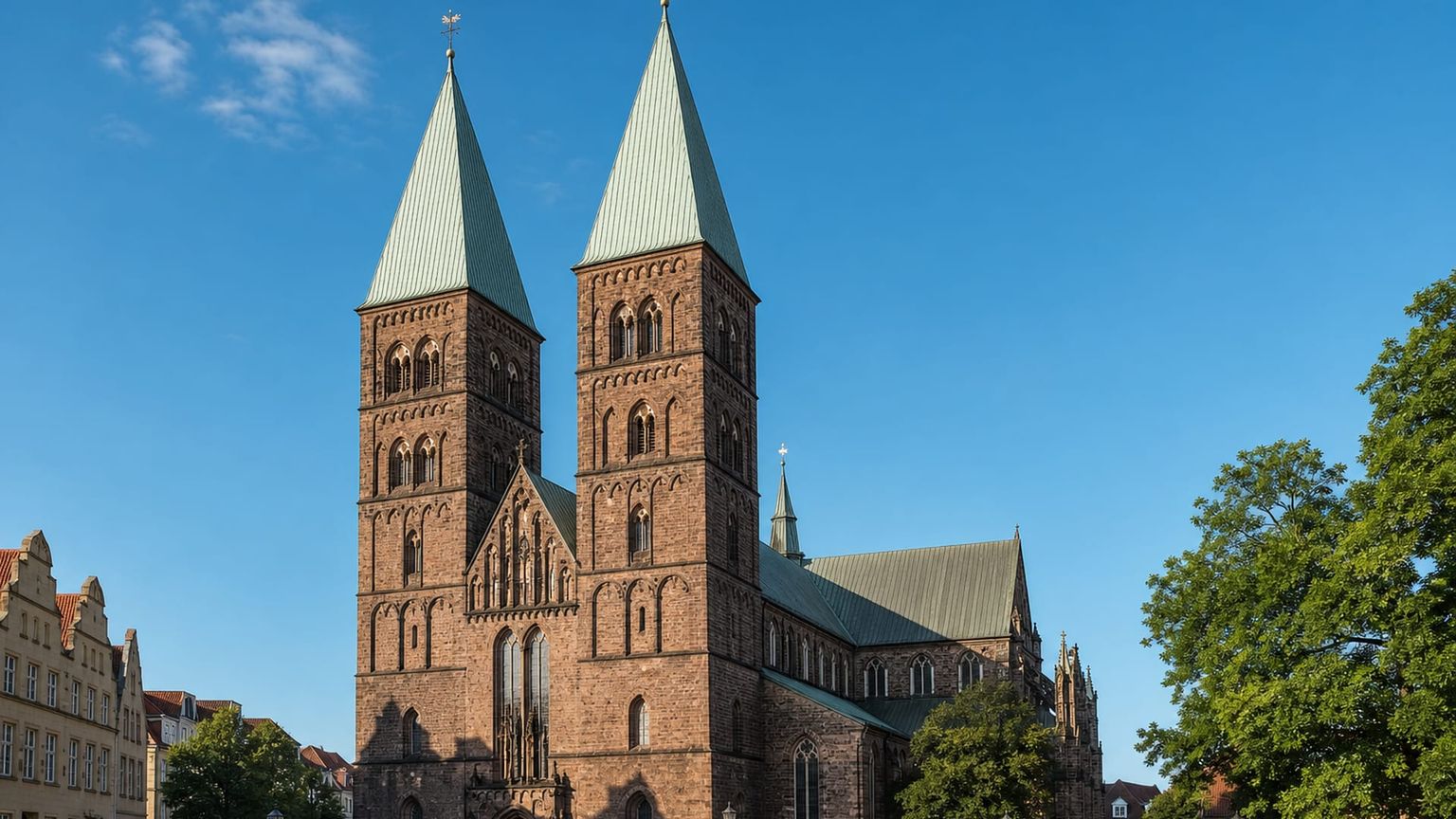
St. Paul's Cathedral
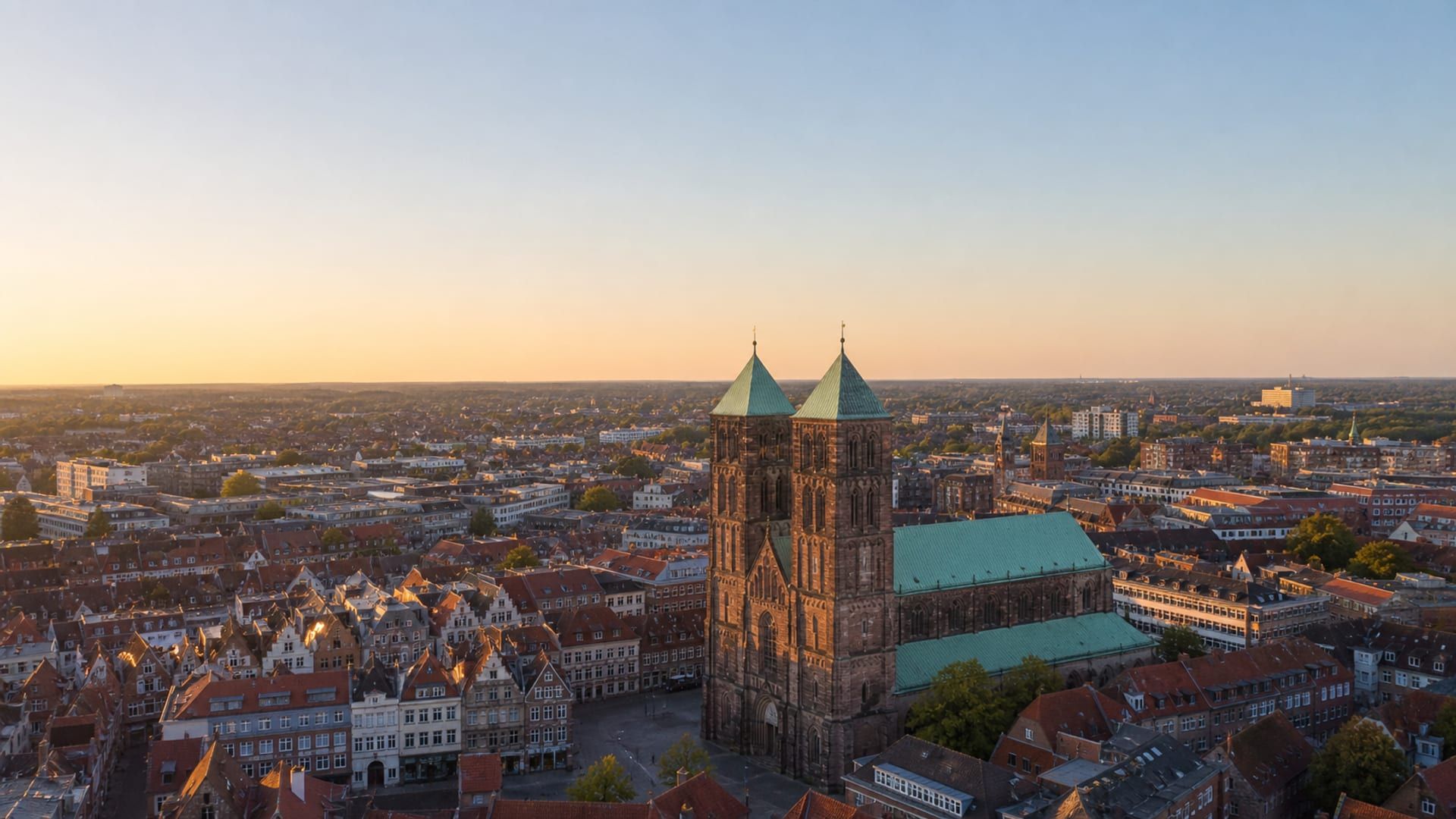
Münster’s Gothic cathedral anchors the Domplatz with twin towers, a westwork from the 13th century, and an Astronomical Clock that still marks the hours. Inside, Romanesque and Gothic details show the church’s long building history.
Time needed: About 1 to 1.5 hours
Entry: Free to enter the cathedral; donations are welcome, and paid tower access may vary by season and event schedule. Visit the official site for details.
Tip: Go early on a weekday for fewer visitors and clearer views of the clock.
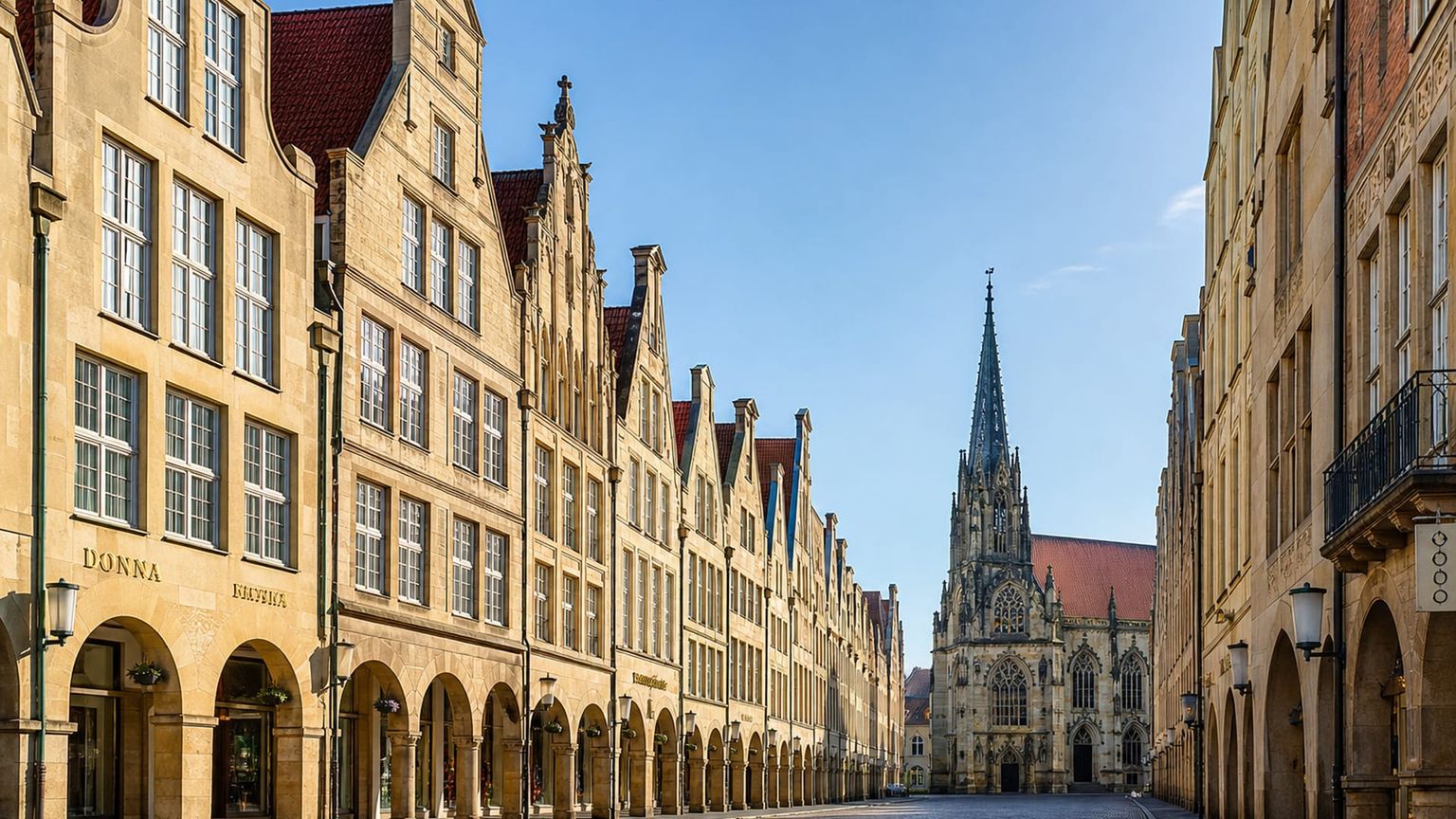
Prinzipalmarkt
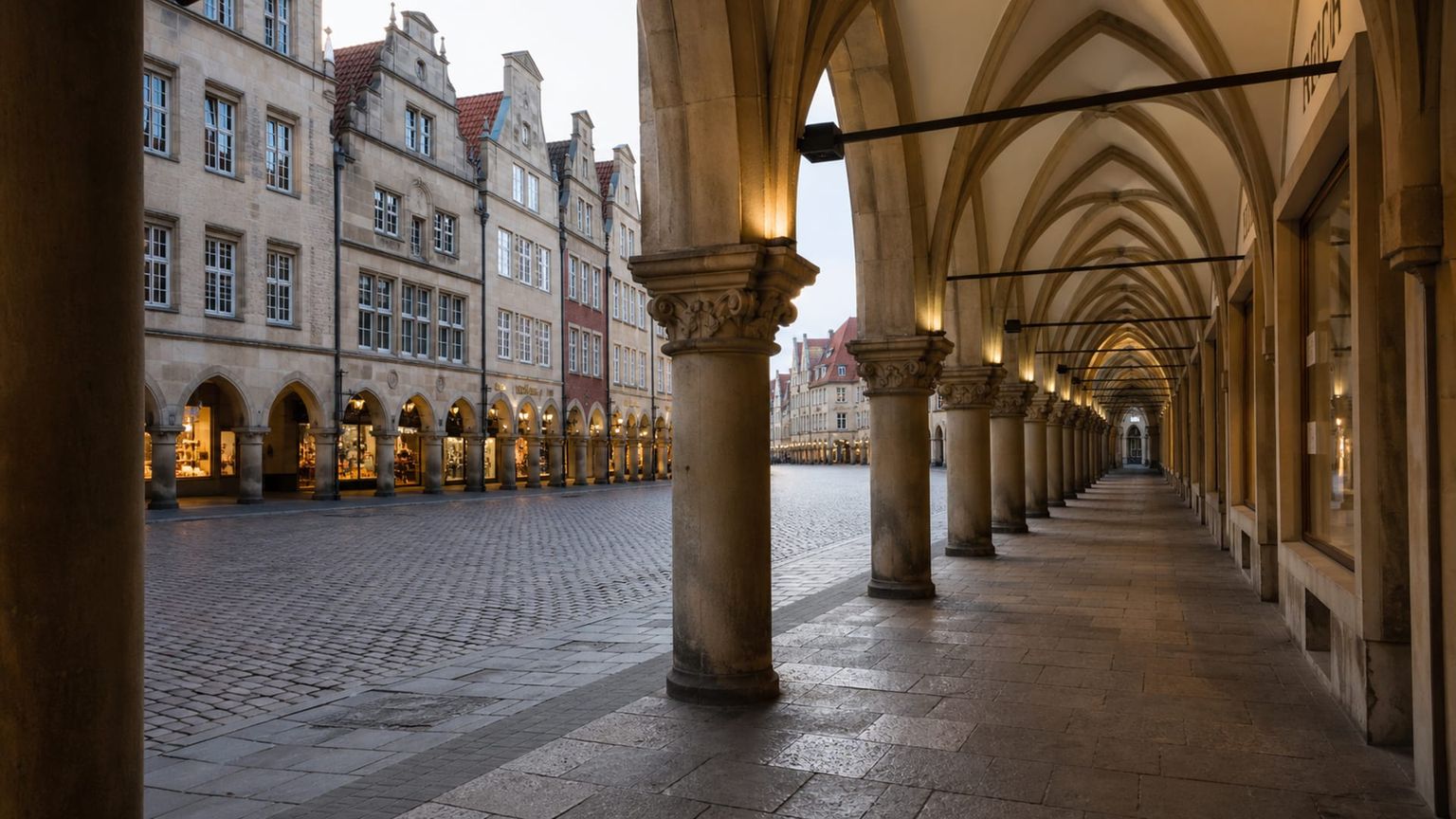
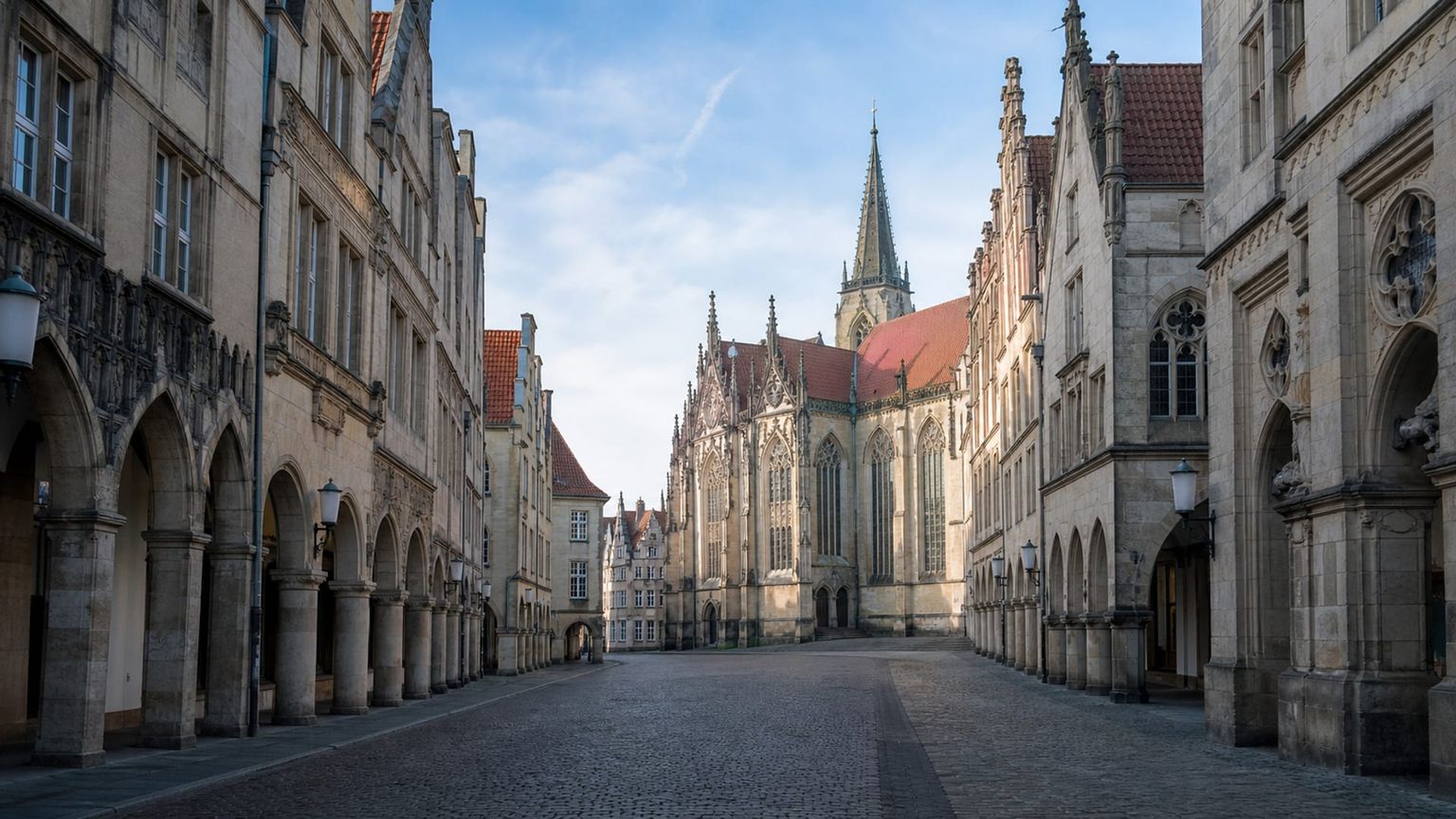
Prinzipalmarkt lines Münster’s old market street with gabled merchant houses and vaulted arcades rebuilt after World War II. The street links the Rathaus area to St. Lambert’s and still serves as the city’s historic shopping spine.
Time needed: About 45 minutes to 1 hour
Entry: Free to walk the street at any time; shops, cafes, and museums along the arcades charge separately for their own access.
Tip: Visit in late afternoon, when the arcades and facades catch warmer light.
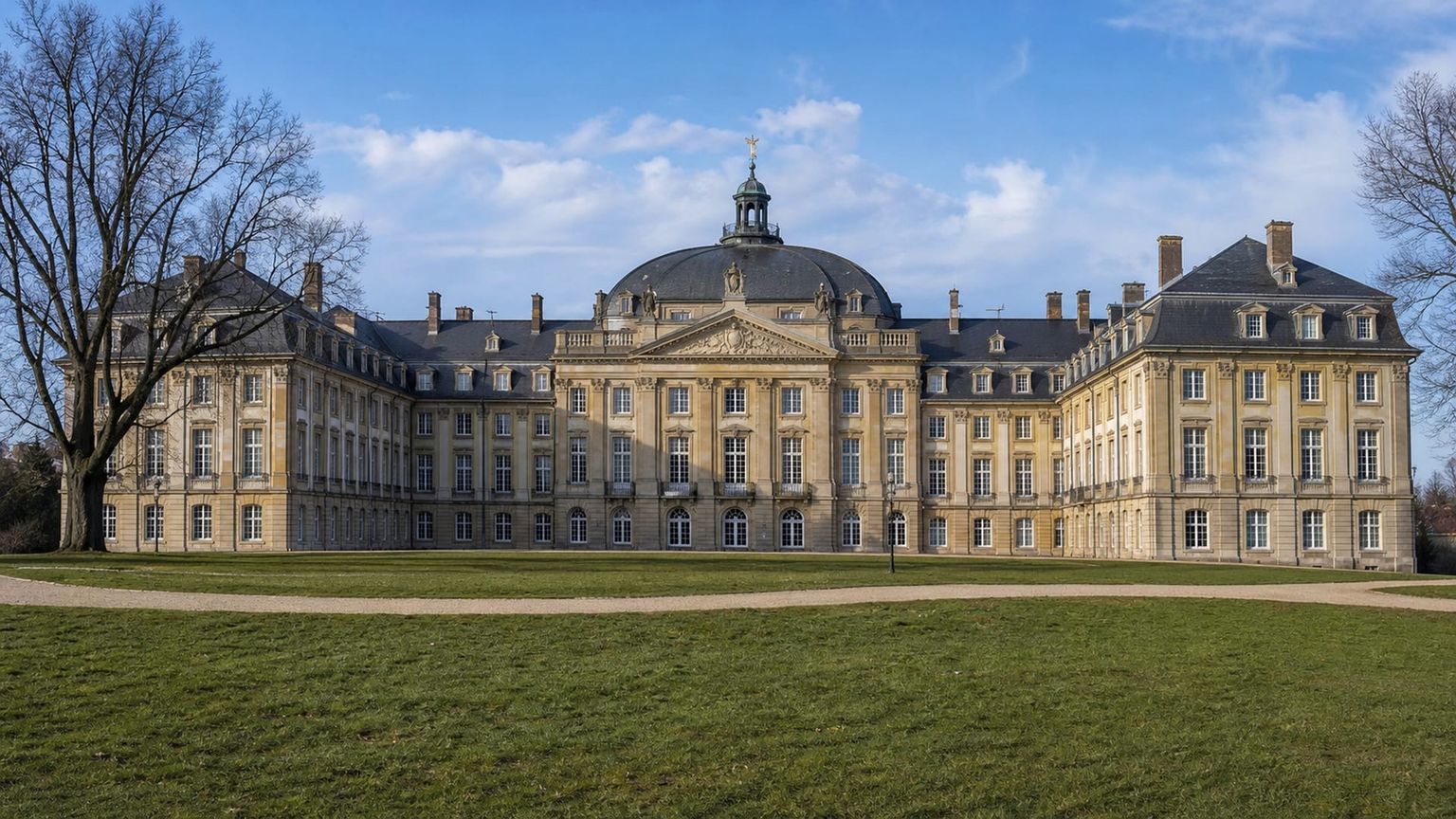
Münster Castle
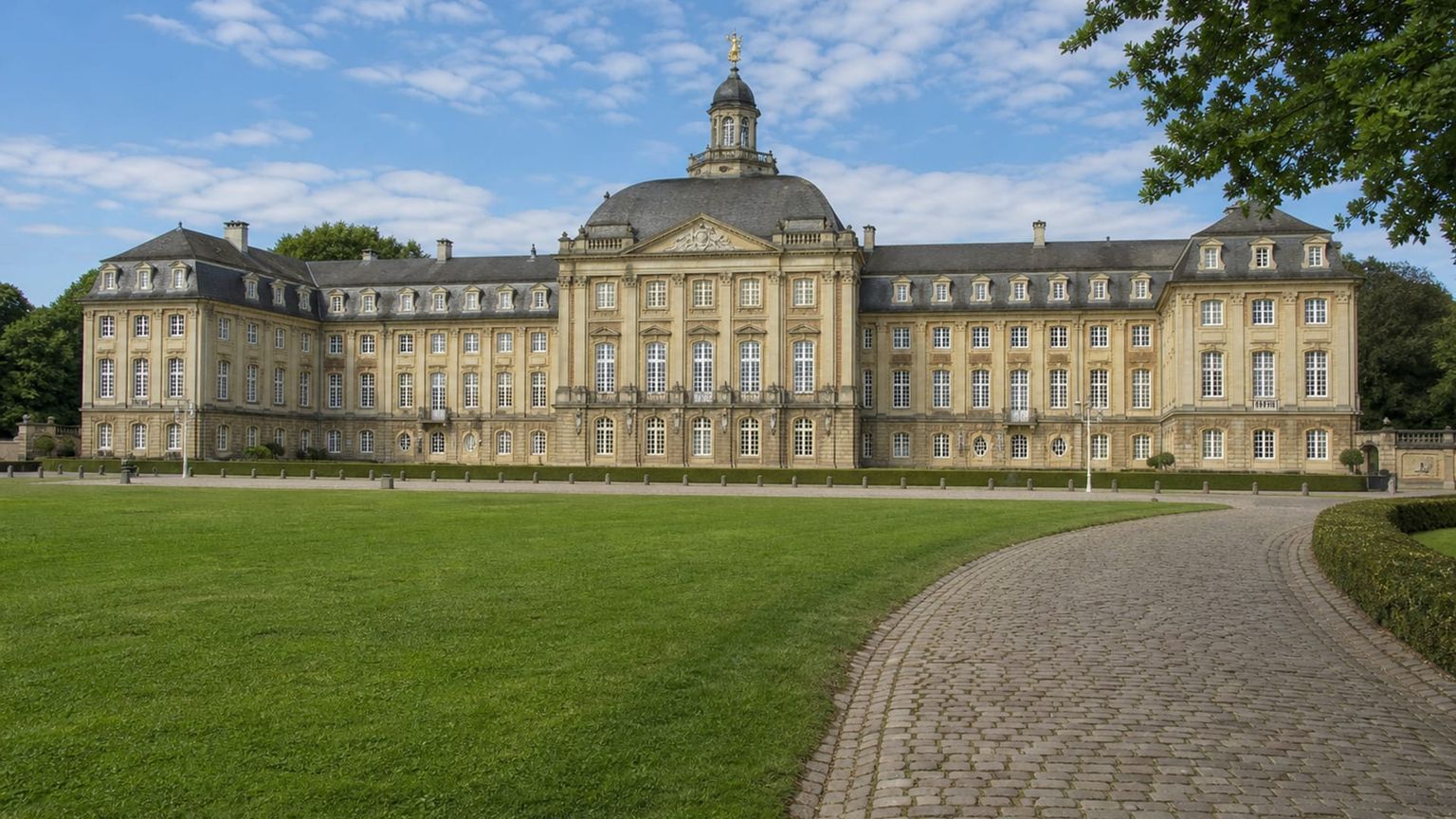
Münster Castle fronts the University of Münster with a broad baroque facade and formal gardens that open onto the Promenade. The building now houses university administration, while the grounds stay open for walks and seasonal events.
Time needed: About 1 to 1.5 hours
Entry: Free to see the exterior and gardens; interior access is limited to university areas and any separate event tickets when offered. Visit the official site for details.
Tip: Combine it with a loop on the Promenade for the best approach and exit.
Overlooked sites worth visiting

Wolbeck Zoo Park
This wooded park southeast of the center pairs deer enclosures with ponds, meadows, and long walking paths. It draws fewer visitors than the city core, so you can linger without crowds.
Time needed: About 1 to 2 hours
Entry: Free to access. Some animal feed, special events, or seasonal activities may carry separate charges, but regular entry to the park grounds and viewing areas costs nothing.
Tip: Go in late afternoon for quieter paths and better light.

Münster City Museum
Set in a former warehouse, this compact museum traces Münster’s history through models, photos, and urban artifacts. Its small scale lets you cover the highlights in one unhurried visit.
Time needed: About 1 hour
Entry: Adult admission is typically about $8 ($7), with reduced rates for children, students, and some concessions. Temporary exhibitions or guided tours can add a small surcharge, depending on the program. Visit the official site for details.
Tip: Check the temporary exhibition schedule before you go.
Traditional food
Münster’s table leans on Westphalian staples such as pumpernickel, cabbage, sausages, and hearty braises like Töttchen and Pfefferpotthast. Lunch counters and long-running inns keep the cooking rooted in local habits rather than showy plates.
Pfefferpotthast
A peppery beef stew thickened with onions and bread, Pfefferpotthast is one of Münster’s most recognizable local dishes. Gasthaus Leve is a classic place to order it in the old town.
Töttchen
This minced veal or beef dish is served in a light gravy and shows up on many Westphalian menus. Drübbelken is a dependable Münster stop for a traditional version.
Grünkohl mit Mettwurst
Kale with smoked sausage belongs to the colder months and reflects the city’s hearty northern cooking. Restaurant Ackermann’s is a strong choice for a regional plate in Münster.
Westphalian pumpernickel
Dense, dark pumpernickel appears on breakfast tables and with local cheese or cold cuts. Restaurant Café Sieben has a solid reputation for regional breads and simple daytime meals.
Best time to visit Münster
Münster changes most by weather and cycling conditions, with crisp shoulder seasons often giving the best mix of comfort, light, and manageable crowd levels.
Best for: Canals, gardens, and early cycling days
What you get: About 45-66°F (7-19°C), with moderate crowds and frequent showers
Trade-offs: Wind and rain can interrupt long walks
Best for: Lake time, outdoor cafes, and long daylight hours
What you get: About 59-77°F (15-25°C), with the heaviest visitor traffic at central sights
Trade-offs: Popular areas around Domplatz and Prinzipalmarkt feel busier
Best for: Museum visits, neighborhood walks, and calmer streets
What you get: About 45-66°F (7-19°C), with lighter crowds after the summer peak
Trade-offs: Shorter days reduce evening walking time
Best for: Indoor sights and market visits
What you get: About 30-43°F (-1-6°C), with low crowds outside holiday periods
Trade-offs: Cold, damp weather limits time by the lake and on bikes
A realistic 5-day plan in Münster
The five-day plan follows a simple pattern: start in the center, add the Promenade and the castle, then widen the map to neighborhoods and the lake before a lighter final day. It keeps the city compact without treating every block the same.
Land at Münster Osnabrück Airport (FMO), then take the taxi or shuttle into the center in about 25 to 35 minutes for roughly $35 to $50 (€32 to €46). If you want the easiest first night, book near Altstadt or the Bahnhofsviertel, then settle in with water, a short walk to Prinzipalmarkt, and an early dinner on the pedestrian streets near the cathedral square.
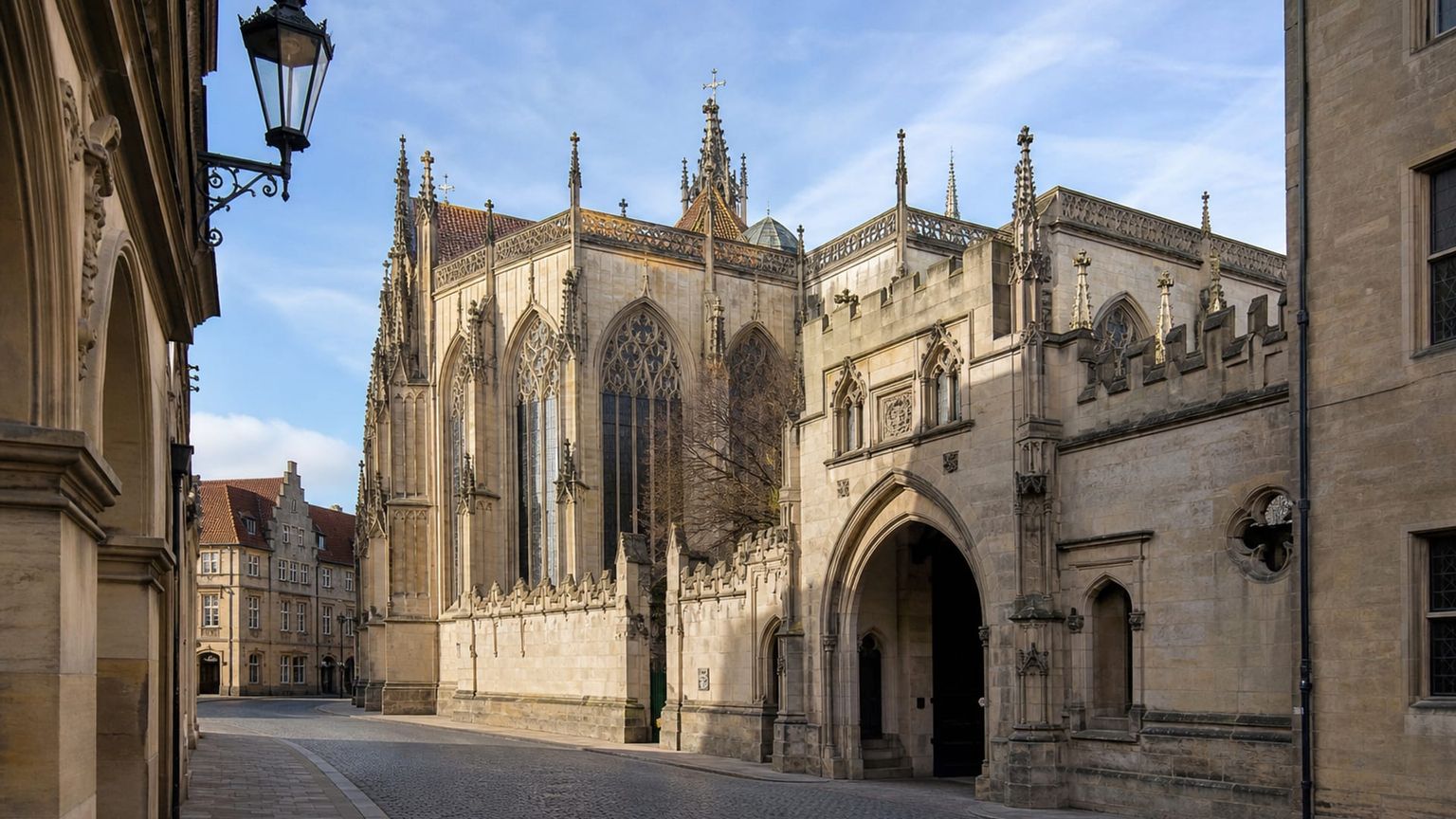
Start at St. Paul’s Cathedral, where the Astronomical Clock and twin towers reward an early visit, then walk about 5 minutes to Prinzipalmarkt for the arcades and gabled merchant houses. After lunch, continue about 10 minutes on foot to Münster City Museum for the city’s urban history, then end the afternoon with a relaxed loop through the Altstadt streets before dinner nearby.
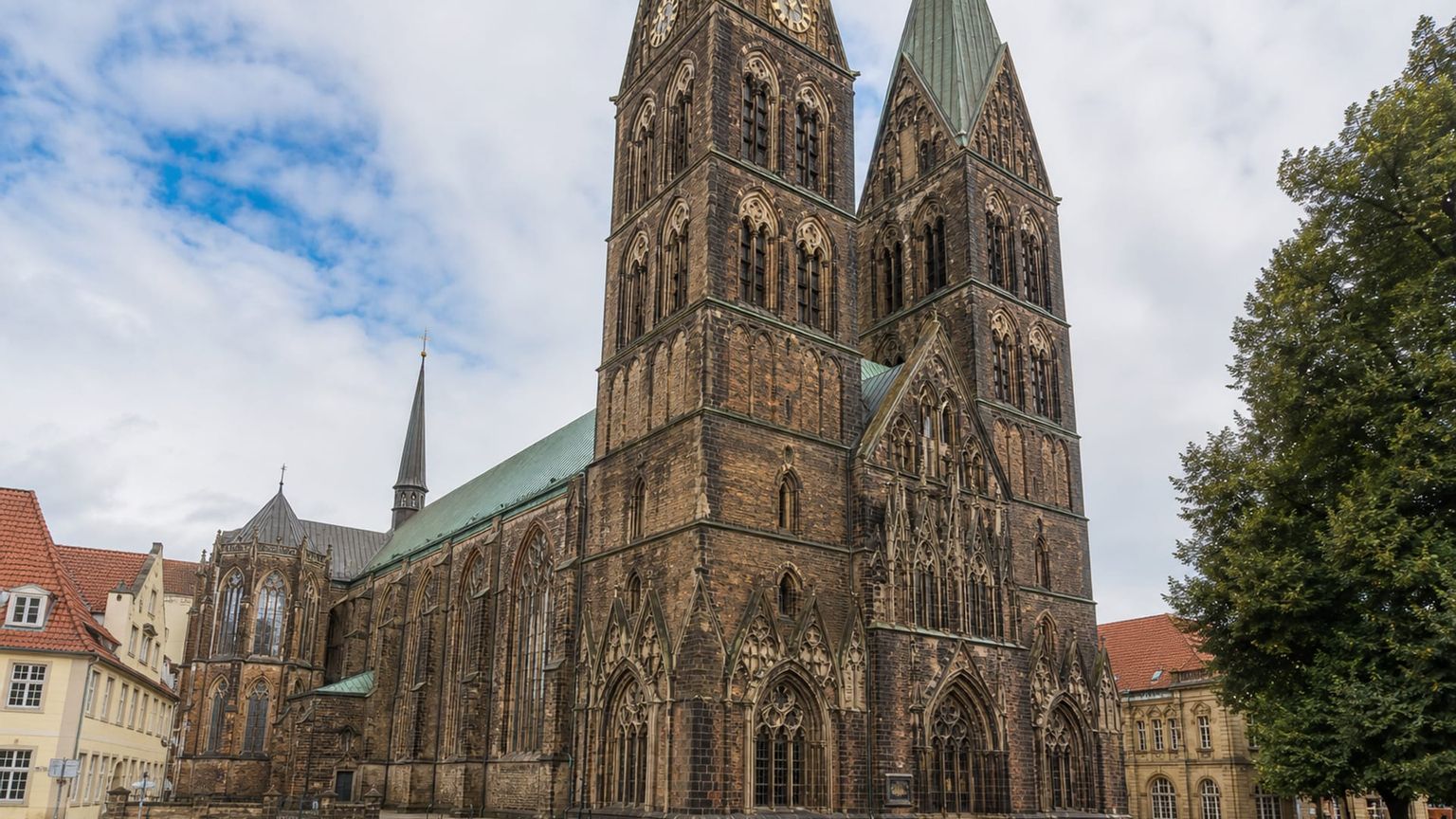
A morning walk through Münster Castle and its gardens sets up an easy connection to the Promenade, which reaches the castle gates in just a few minutes on foot. From there, cycle or walk about 10 to 15 minutes back toward the old town for a café stop, then spend the late afternoon with the cathedral square and the nearby arcades of Prinzipalmarkt.
Begin in Kreuzviertel with coffee and a slow neighborhood walk, then head to Aaseestadt for the lake paths and open green space around Aasee, about 15 to 20 minutes by bus from the center. In the afternoon, continue to Wolbeck Zoo Park by local transit or taxi for ponds, deer enclosures, and quieter wooded paths, then return to the center for dinner.
For a final day, pair one last museum stop with shopping and a café table rather than a packed checklist: revisit the Altstadt for any missed corners of Prinzipalmarkt, browse the streets around the old market area, and stop in Kreuzviertel for a bakery or coffee before heading back to your hotel. If you have time before departure, one last walk by the cathedral square gives you a clear closing view without rushing the schedule.
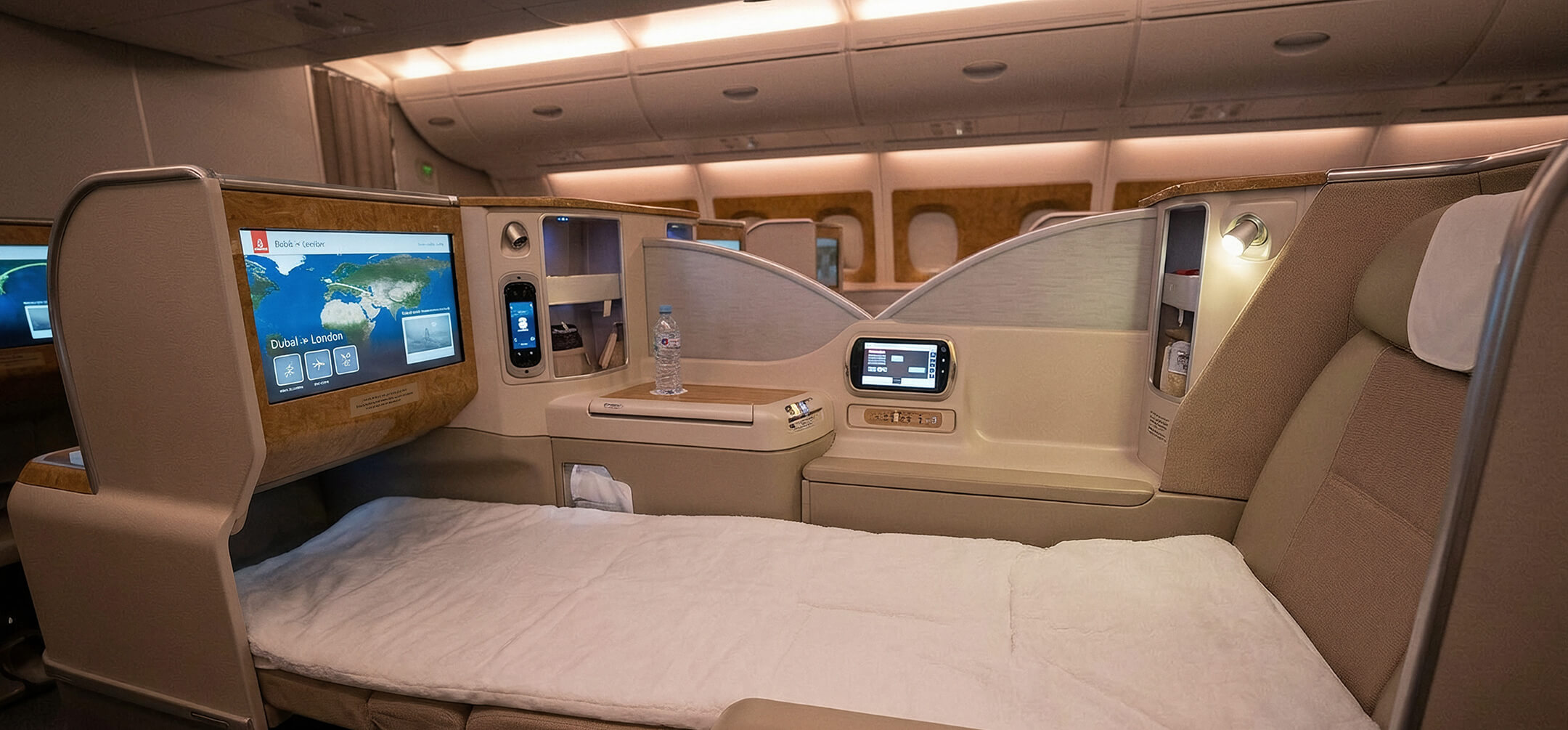
Business-class flights from the US to Münster
Flights to Münster usually connect through one of Europe’s major hubs, so the best option often depends on whether you value a shorter total trip or a lower fare. From both coasts, the routing is more important than the carrier name.
From New York, Lufthansa, United Airlines, Brussels Airlines, KLM Royal Dutch Airlines, and Air France all sell itineraries that commonly take about 7 to 8 hours nonstop when available, or about 10 to 14 hours with a connection. Typical layover hubs include FRA, MUC, AMS, BRU, and CDG. Round-trip fares from New York to Münster often start at $3,200 and can reach about $6,500, with nonstop pricing at the upper end.
Los Angeles itineraries usually run about 11 to 12 hours nonstop, or roughly 14 to 19 hours with a connection, and carriers commonly include Lufthansa, United Airlines, British Airways, KLM Royal Dutch Airlines, and Air France. Common connection points are FRA, MUC, AMS, LHR, and CDG. From Los Angeles, fares usually begin near $3,900 and climb to roughly $7,200 for nonstop itineraries.
Münster feels different when you slow down
A deliberate Münster trip gives each area a clear job: the Altstadt for Prinzipalmarkt and St. Paul’s Cathedral, Kreuzviertel for cafes and slower streets, Aasee for open space, and Wolbeck Zoo Park for a quieter afternoon. Buses, walking, and short taxi rides keep the city easy to connect without turning every day into a transfer day. If you want a trip built around those details, AranGrant experts can help you shape it around Münster’s center and its quieter edges