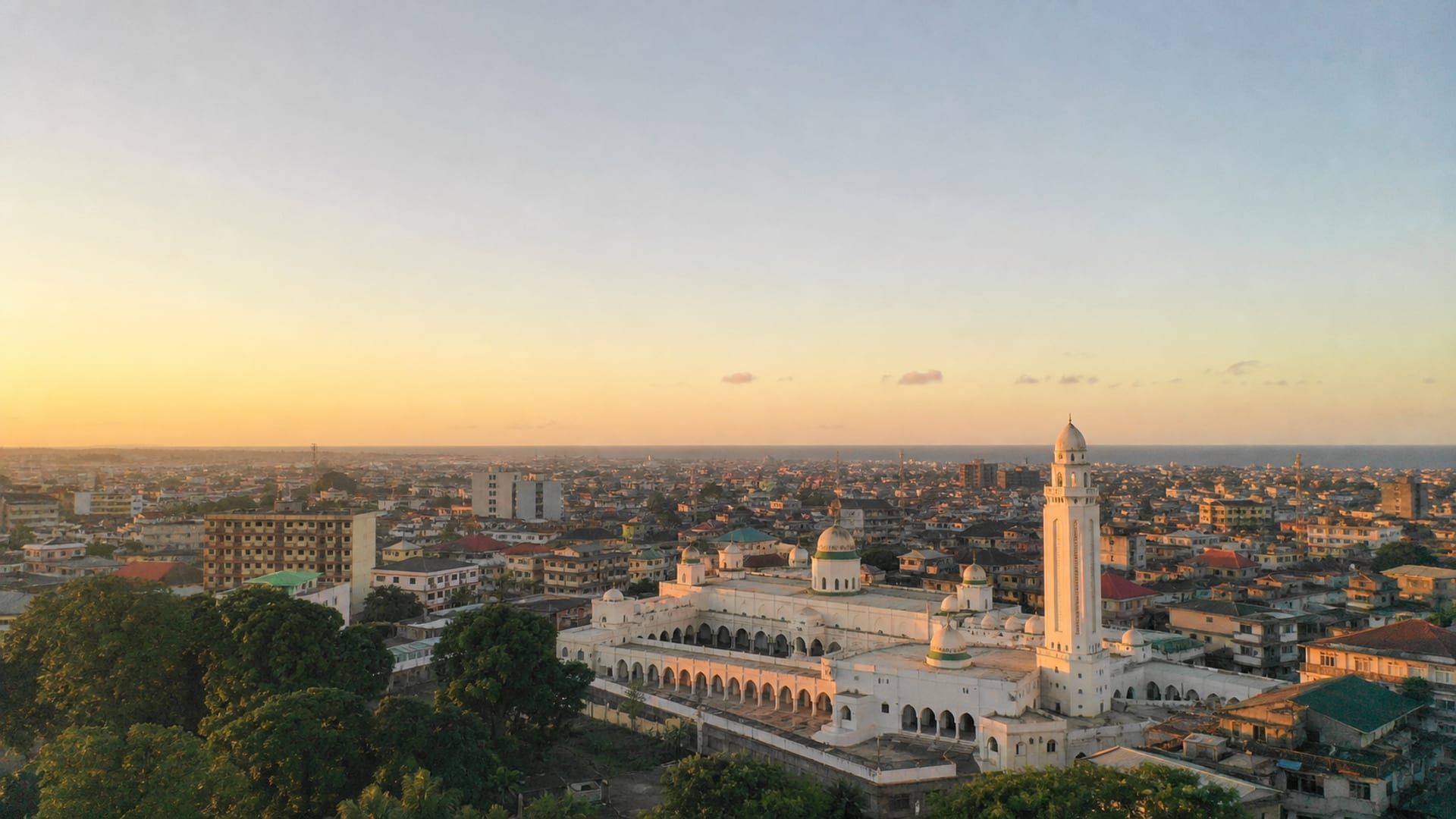


Chapters:

Need help with your trip?
Our support team is available 24/7. Request a callback or call us directly at (833) 619-0908
Conakry trips often begin with a late airport transfer, a hotel check-in in Kaloum or Camayenne, and a first meal that stays close to the room. What many visitors miss is how quickly traffic, prayer times, and market hours shape the day.
That matters because distances across the peninsula and into the northern districts can stretch short errands into long rides. Without a plan, you lose time to crossings, crowds, and repeated returns to the same area.
This guide keeps the city in a tighter order, pairing sights by district and timing meals, taxis, and slower moments so each day has a clear purpose.
Useful things to know
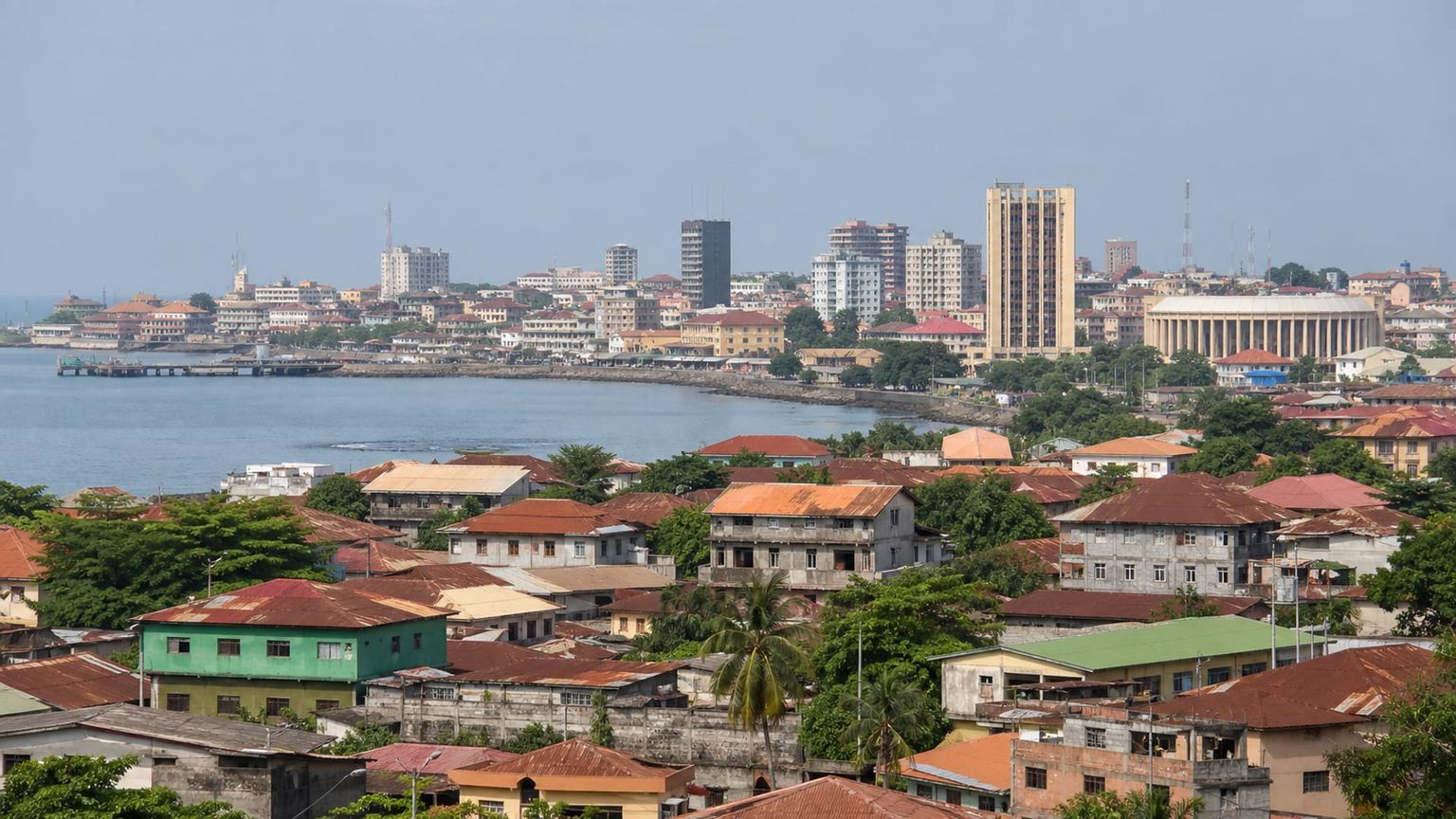

Main language(s): French
Bonjour (bohn-zhoor) – Hello / good morning
S'il vous plaît (seel voo pleh) – Please
Merci (mehr-see) – Thank you
Parlez-vous anglais ? (par-lay voo ahn-glay) – Do you speak English?
C'est combien ? (say kohn-byen) – How much does it cost?

Currency: The local currency is the Guinean franc (GNF, FG).

Cash and cards: Cards and contactless are not widely accepted, carry about 500,000 to 1,000,000 GNF in cash.

Tipping: Round up small bills; leave about 5-10% in nicer restaurants if service is good.

Traditional food: Jollof rice, Peanut stew, Grilled fish, Fufu

Water and coffee costs: Water ~20,000 GNF ($2.40), bar espresso ~25,000 GNF ($3).

Taxis and ride apps: Little is established; use hotel taxis or local drivers, and confirm the fare before you set off.

Plug and voltage: Type C/F socket, 220V

Dining and shop opening hours: Breakfast is about 07:00-09:00, lunch 12:00-14:00, and dinner 19:00-22:00. Many places close between lunch and dinner, and hours can be shorter on Fridays and during Ramadan.

Emergency number: 112 for police, fire, and medical emergencies.
Where to stay in Conakry
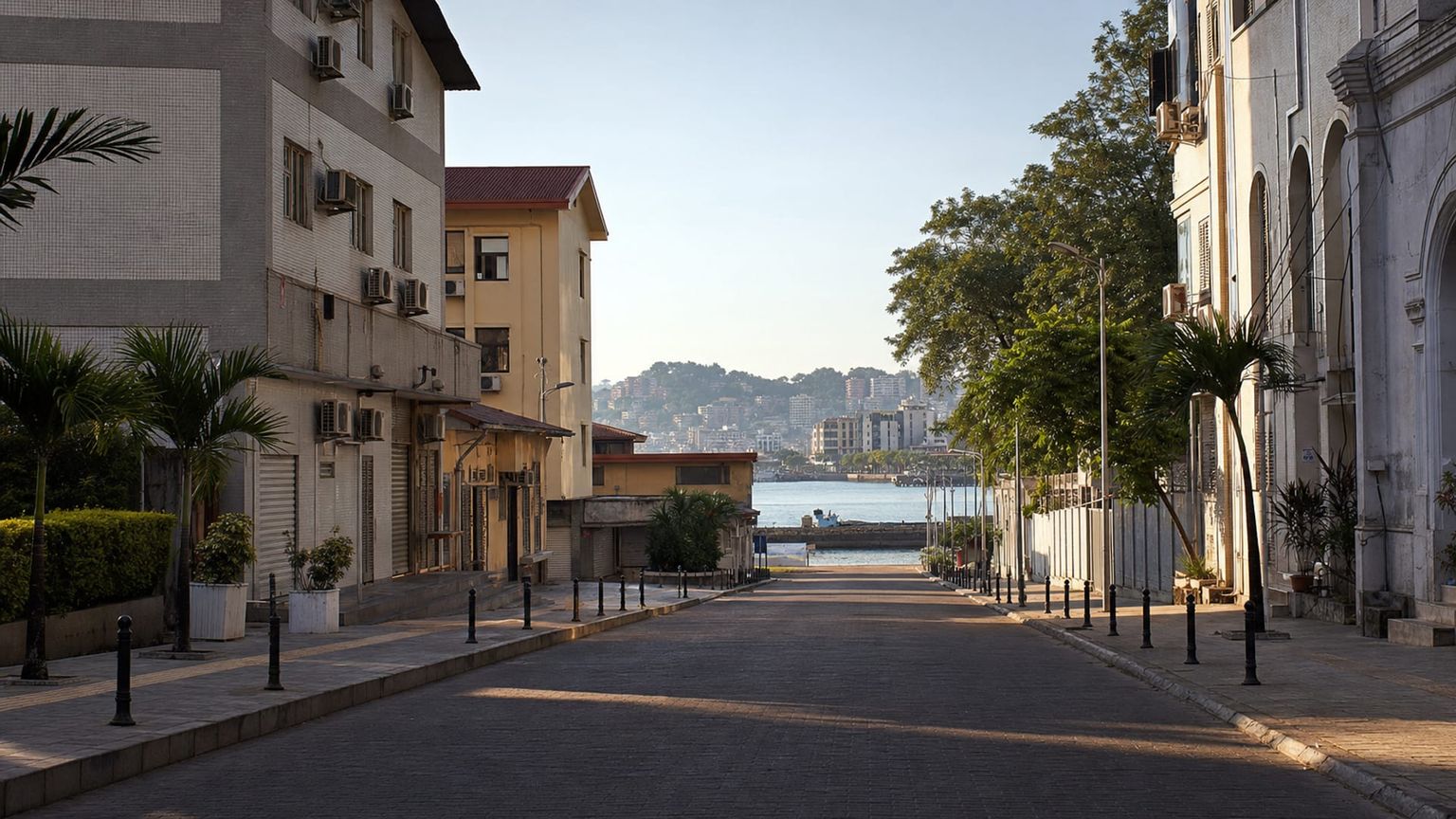
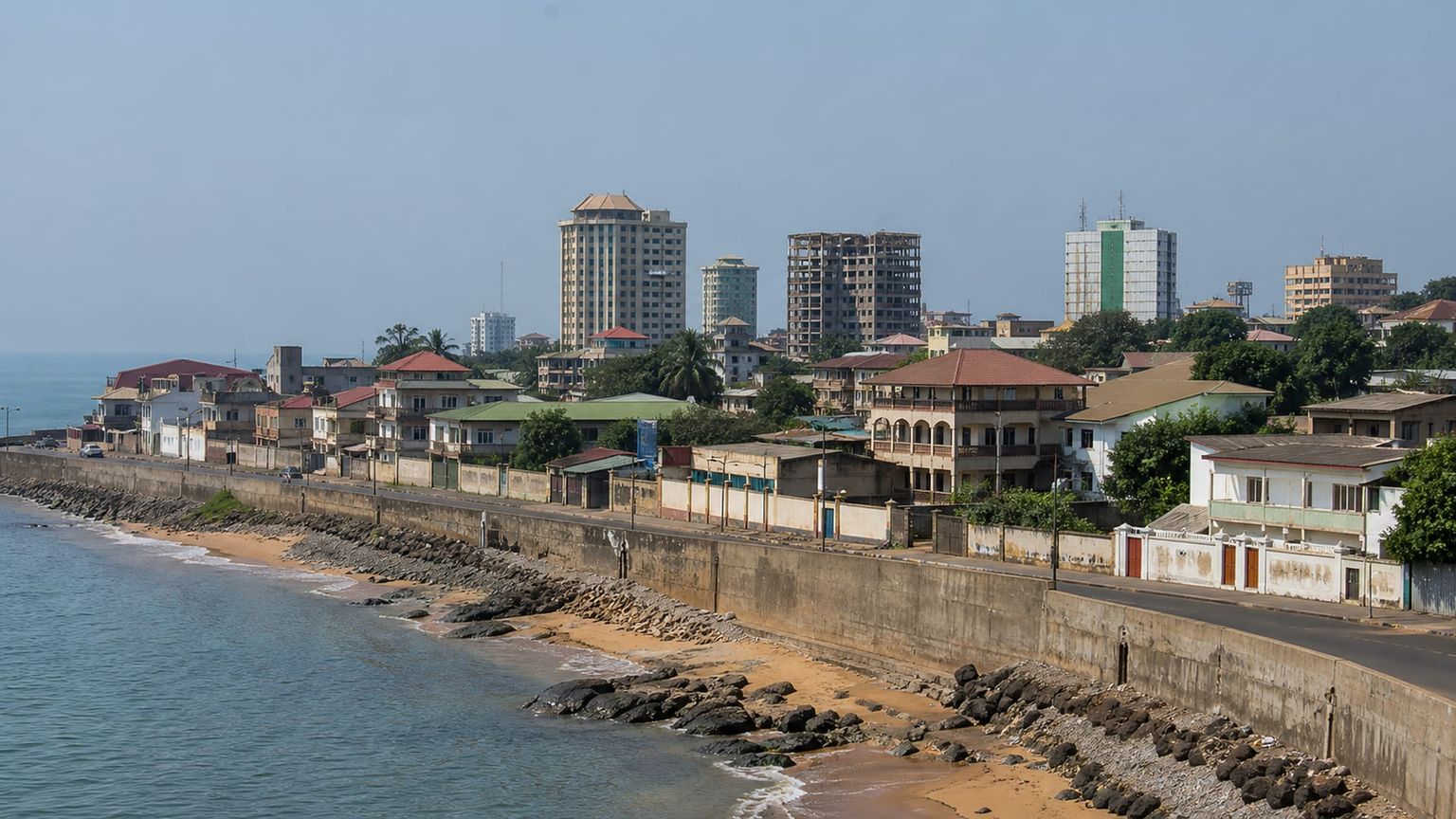
Conakry’s historic peninsula and central business district, home to ministries, banks, ports, and the main hotel stock. It suits visitors who want the city’s core services close at hand and do not mind daytime traffic or a busier street grid.
Best for: Business trips, ferry access, and central sightseeing bases
What to expect: Busy weekday streets, frequent traffic, and a steady flow of office workers, shoppers, and government staff.
Hotel prices: Usually about 900,000 GNF to 2,500,000 GNF (~$105 to ~$290) per night for well-rated stays
Distance to major sights: 5 to 15 minutes by car to the National Museum and Port; about 20 to 35 minutes to Taouyah Market
Quietness: Noisy in the day, calmer after office hours, with some blocks still active into the evening.
Main trade-off: Rates are usually higher here, and traffic can add time even on short trips.
Good to know: Choose a hotel with on-site dining or a nearby restaurant, since late-night options can thin out once office crowds leave.
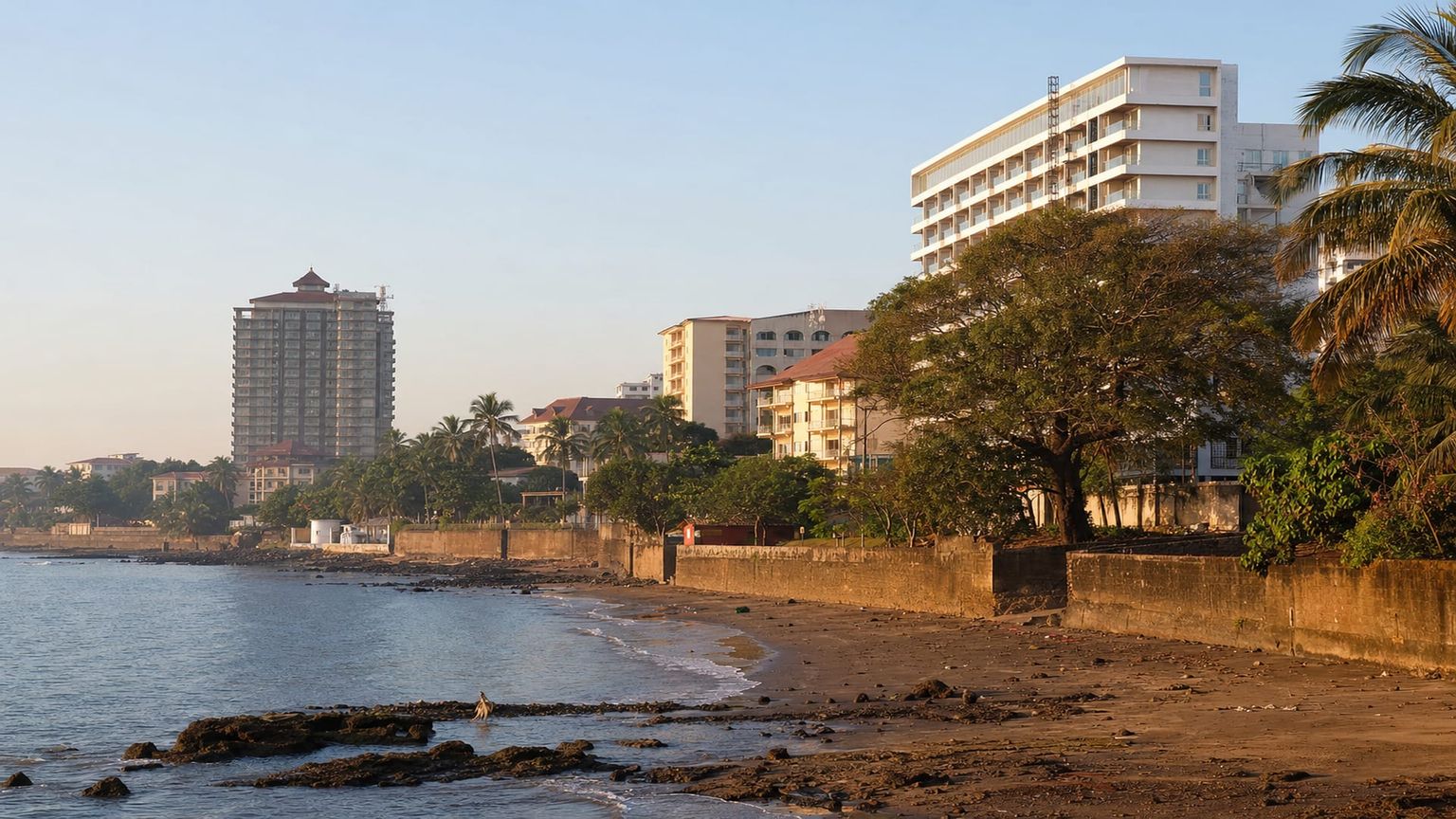
A coastal residential and hotel area north of Kaloum, known for larger properties, sea views, and easier access to the city center than the outer suburbs. It works well for travelers who want a less hectic base without leaving the main urban area.
Best for: Leisure stays, waterfront access, and travelers who prefer larger hotels
What to expect: Hotel guests, apartment buildings, and local traffic dominate the streets, with a calmer pace than central Conakry.
Hotel prices: Usually about 850,000 GNF to 2,200,000 GNF (~$100 to ~$255) per night for well-rated stays
Distance to major sights: 10 to 20 minutes by car to the National Museum; about 20 to 30 minutes by car to Conakry Grand Mosque
Quietness: Quieter than Kaloum in the day, with occasional evening traffic and hotel activity.
Main trade-off: You may need a car for most meals and errands, because neighborhood walkability is limited.
Good to know: Some properties sit on narrow side roads, so check whether your driver can reach the entrance directly during rain or peak traffic.
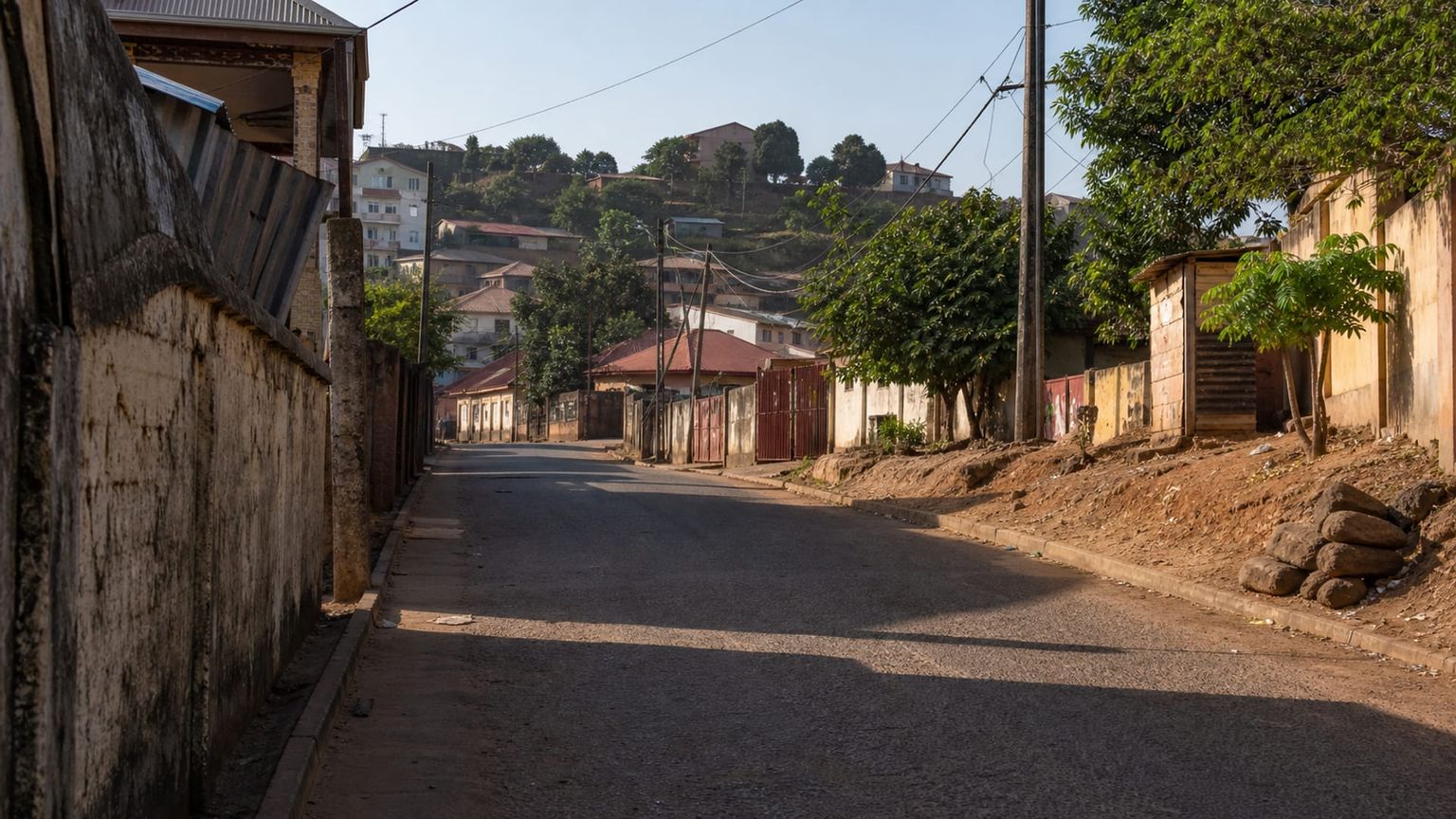
A broad northern district that includes many residential blocks, embassies, and midrange hotels along the main coastal road. It gives you more room and often better rates than central Conakry, while keeping the city within reach.
Best for: Longer stays, midrange budgets, and travelers with cars or drivers
What to expect: Local markets, everyday errands, and heavier road traffic near the main arteries; side streets are quieter and more residential.
Hotel prices: Usually about 700,000 GNF to 1,800,000 GNF (~$80 to ~$210) per night for well-rated stays
Distance to major sights: 20 to 35 minutes by car to Kaloum and the National Museum; about 15 to 25 minutes by car to Taouyah Market
Quietness: Quieter at night than Kaloum, though main roads stay active and some blocks carry scooter and minibus noise.
Main trade-off: Distance from the harbor and government district adds commute time, especially in rush hour.
Good to know: If you plan evening outings in Kaloum, budget extra time for the return trip because traffic can slow the main road after dark.
An inland neighborhood and market area in eastern Conakry, known for dense local commerce, food stalls, and a very everyday pace. It suits travelers who want to be near a lively neighborhood center and do not need to stay in the most formal part of town.
Best for: Local-market access, budget stays, and travelers who want neighborhood life
What to expect: Crowded streets, taxis, moto-taxis, vendors, and constant neighborhood activity around the market and main junctions.
Hotel prices: Usually about 500,000 GNF to 1,300,000 GNF (~$60 to ~$150) per night for well-rated stays
Distance to major sights: 15 to 25 minutes by car to the National Museum; about 25 to 40 minutes to Kaloum and the port
Quietness: Lively through the day and still active in the evening, then quieter late at night on side streets.
Main trade-off: You save on room rates, but taxi fares and ride times add up if you visit the peninsula often.
Good to know: Expect limited upscale dining nearby, so it works best if you are comfortable eating at local spots or planning meals elsewhere.
Travelers usually avoid Sonfonia and Km 36 for overnight stays, since they sit far from the main central sights and mean long cross-city trips for dining or errands. Kaloum’s far eastern edge and some outlying parts of Ratoma are less convenient too, because visitor amenities thin out and evening taxi trips can take longer.
Hotel deals
How to get around Conakry efficiently
Conakry has no metro, so taxis, shared minibuses, and short walks do most of the work between Kaloum, Donka, Kipé, and the northern districts.

Metro
for longer distances
Conakry has no metro or suburban rail, so there is no underground network to use from Conakry (CKY). For city trips, travelers rely on taxis and minibuses instead, with road traffic making door-to-door transport the main option.

Bus and tram
for convenience
Shared minibuses, often called magbana, cover the main corridors between central Conakry, neighborhoods such as Kaloum, Dixinn, Ratoma, and Matam, and out toward suburbs. Fares are usually about $0.20 to $0.50 per ride, paid in cash, and vehicles run without fixed timetables, so expect to wait for a full load before departure; shorter hops can take roughly 20 to 45 minutes, longer cross-city rides much longer in traffic.

Taxi
for convenience or late hours
Taxi fares are usually negotiated before departure rather than metered, and shared taxis often cost about $1 to $3 for short city rides, while private hires commonly run about $4 to $12 within central Conakry. From Conakry (CKY), airport taxis are typically quoted in advance, often about $8 to $20 depending on the district and time of day, and cash in local currency is the norm, with USD sometimes accepted for airport trips.
*Prices are based on rates updated as of June 2026 and may change at the time of travel.
Use taxis for airport and cross-town moves, minibuses for low-cost corridor travel, and walking only for short stretches inside the same neighborhood.
Iconic landmarks
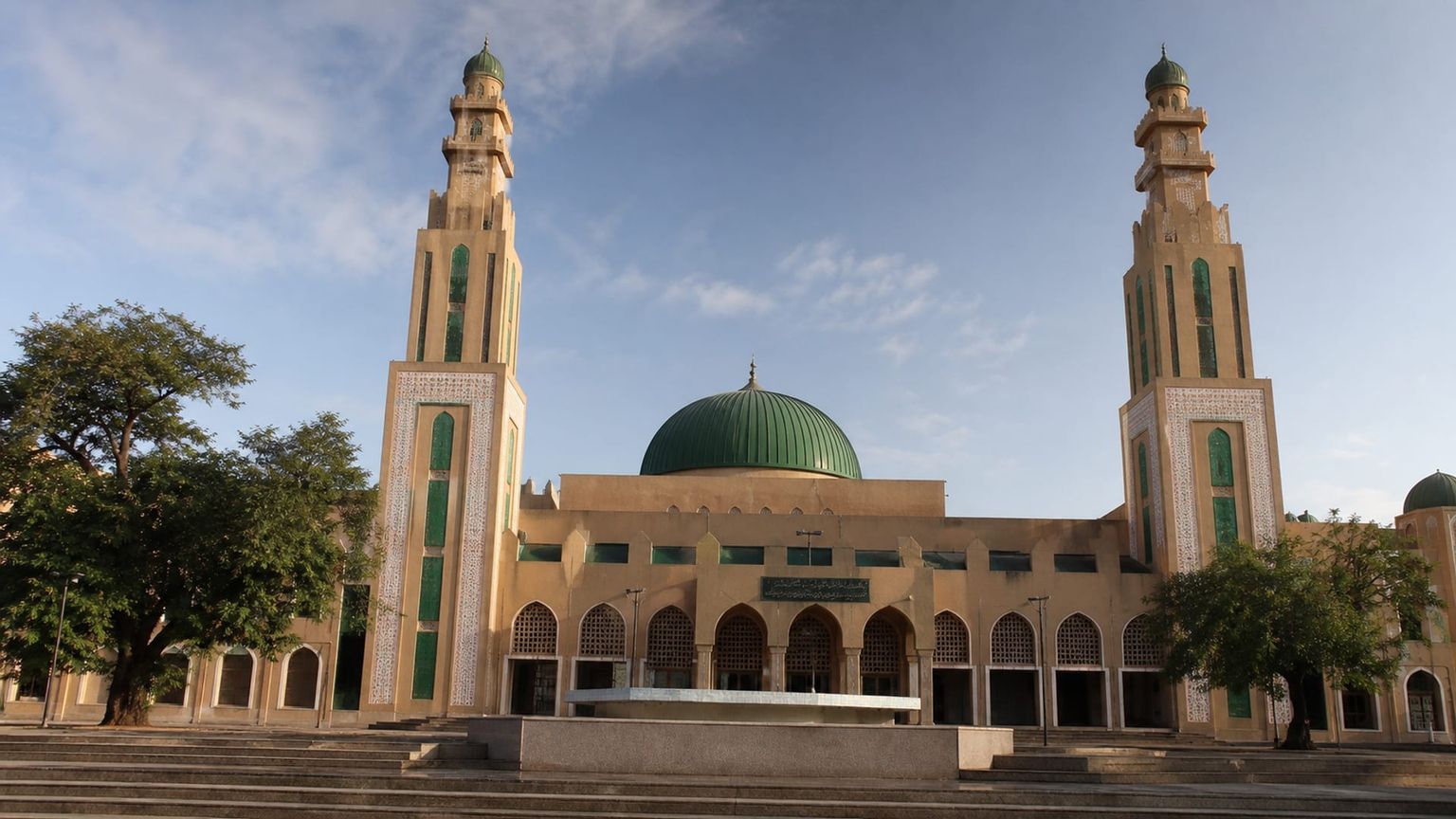
Conakry Grand Mosque
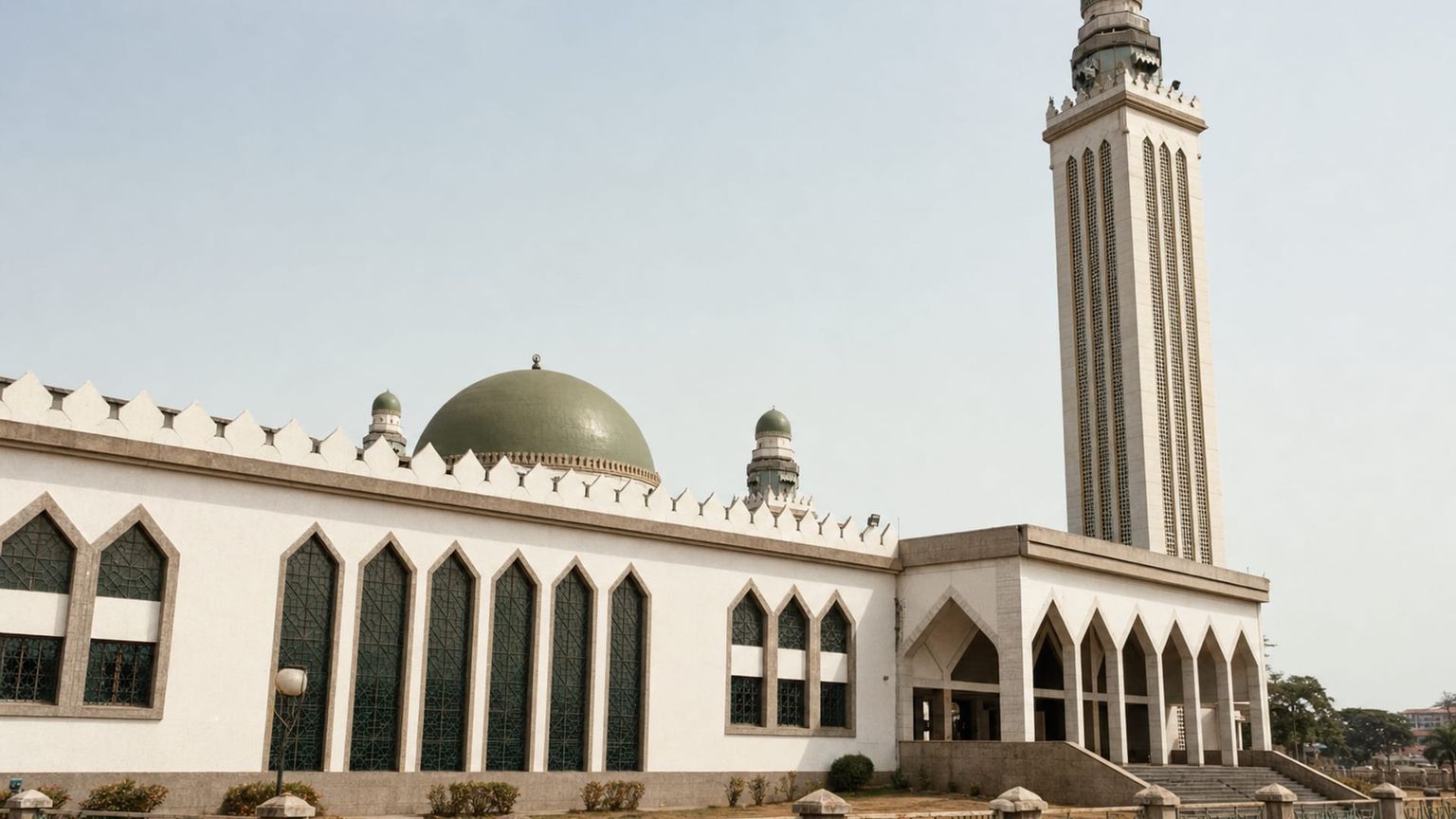
Conakry Grand Mosque, one of West Africa’s largest mosques, dominates the Kipé district with a large prayer hall, landscaped grounds, and a tall minaret. Visit outside prayer times to see the courtyard, architecture, and the mosque’s public exterior.
Time needed: About 45 to 60 minutes
Entry: Free to access; modest dress is required, and visitors should expect security screening and limited access during prayer times.
Tip: Visit early morning or late afternoon for cooler light and fewer worshippers on site.
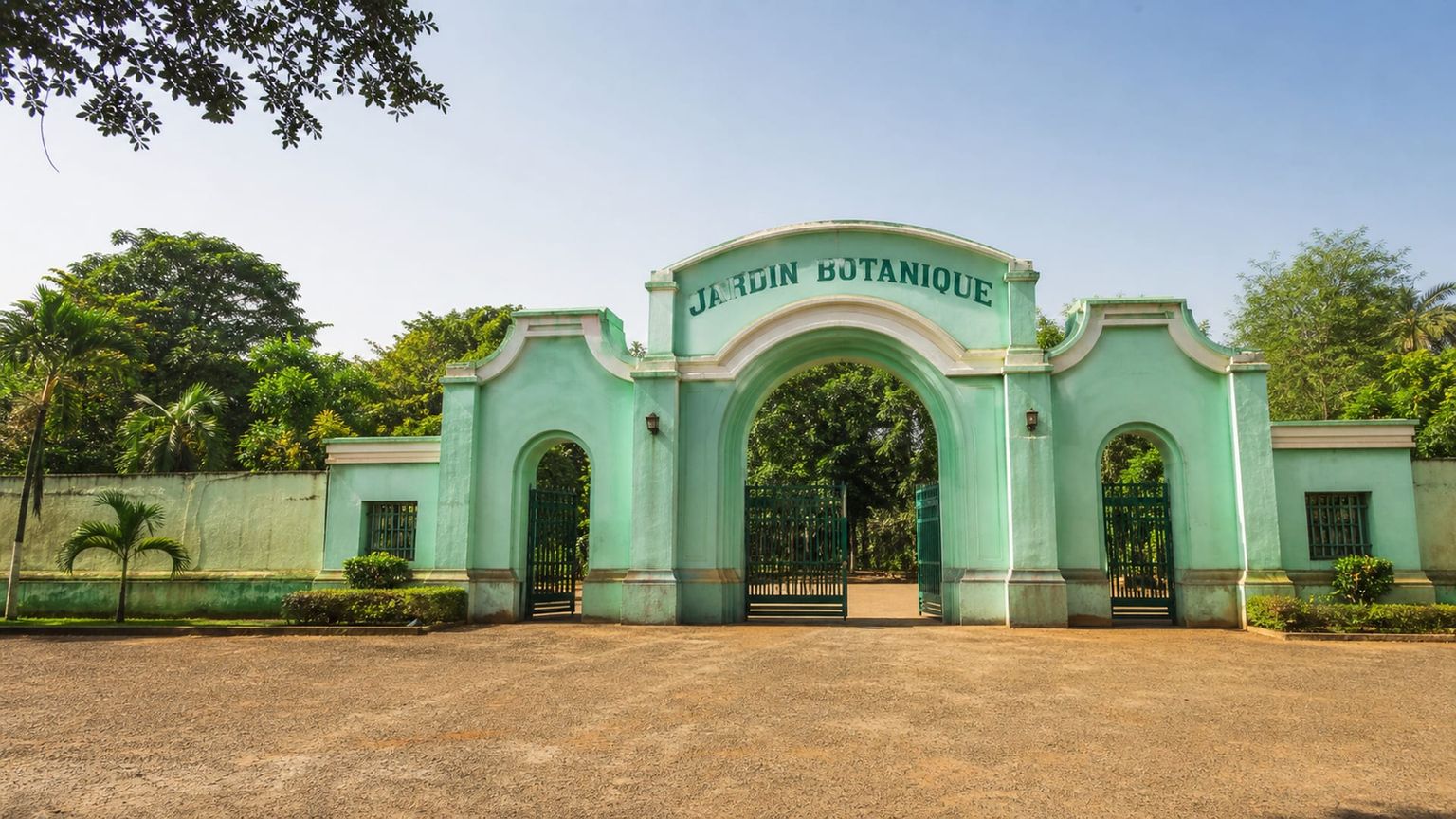
Conakry Botanical Garden
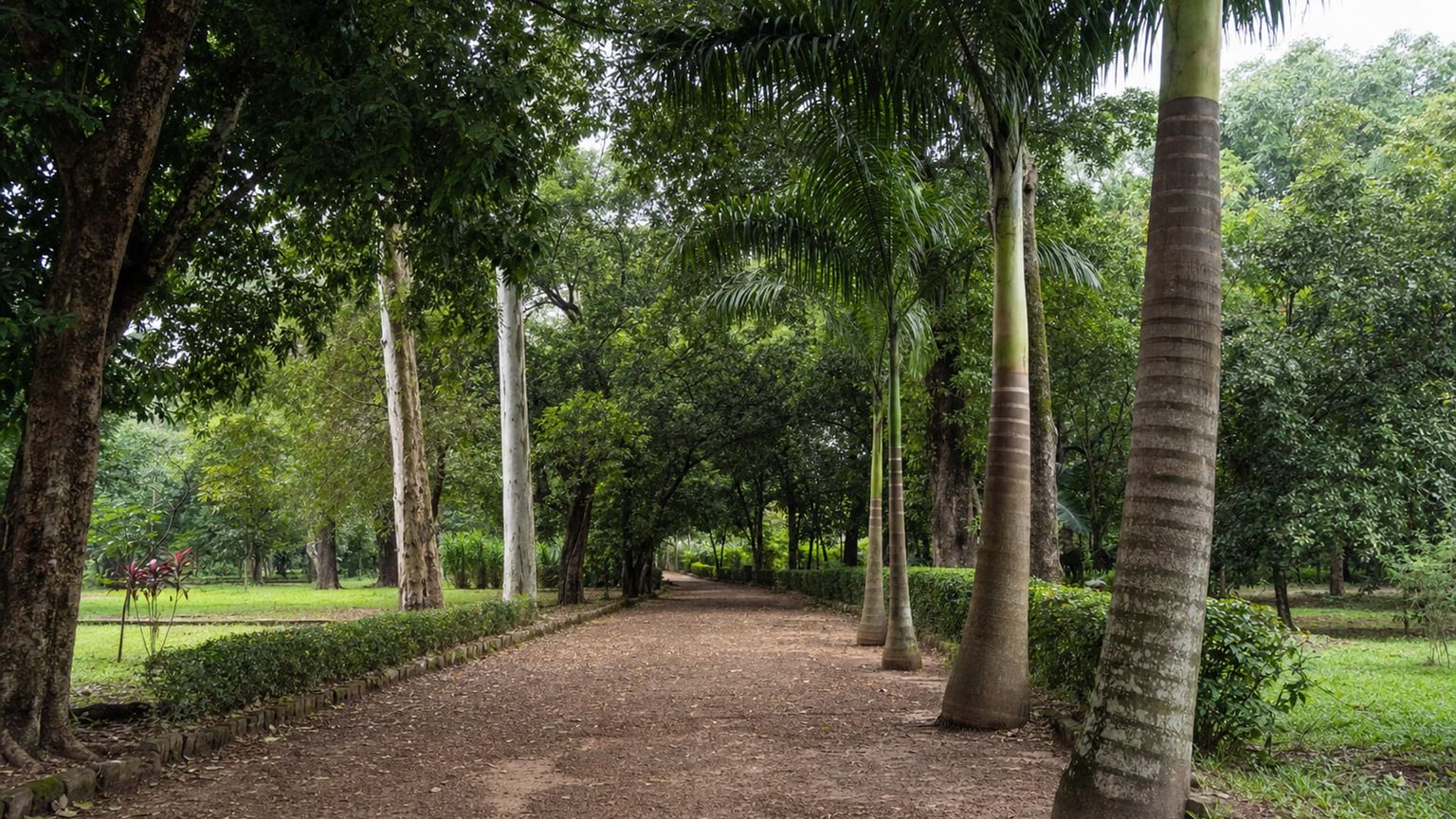
Conakry Botanical Garden in the Donka area holds shaded paths, tropical plants, and large trees that offer one of the city’s clearest green spaces. It works well for a quiet walk, birdwatching, and a break from downtown traffic.
Time needed: About 1 to 2 hours
Entry: Entry costs about $1 to $2 (10,000 to 20,000 GNF) for adults; cameras or special access may carry a small added fee on site.
Tip: Go in the morning, when the paths are cooler and the light is better for photos.
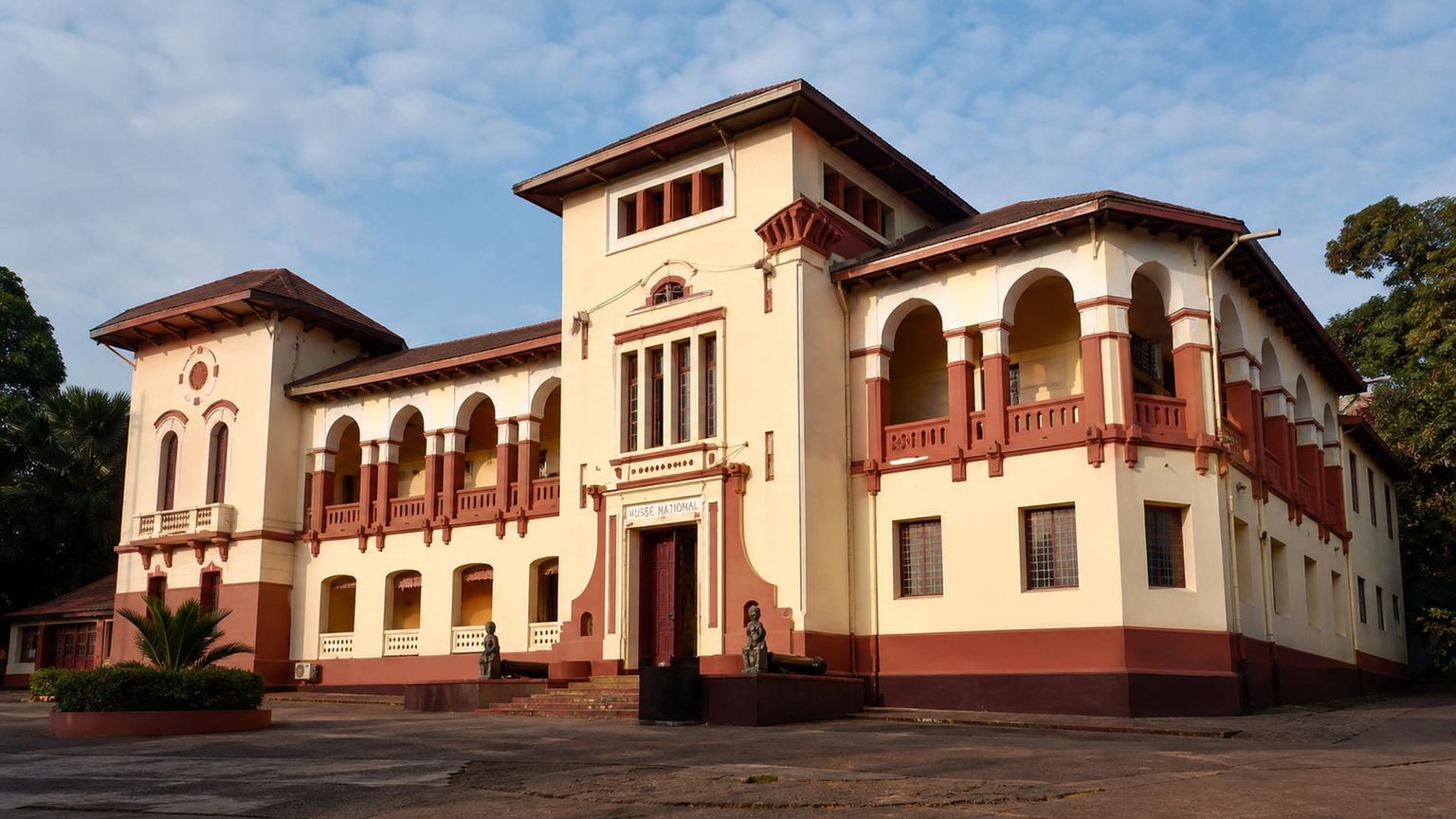
National Museum of Guinea
The National Museum of Guinea presents masks, textiles, musical instruments, and historical objects that trace the country’s cultures in one compact visit. It gives the clearest museum overview in central Conakry and suits a short stop between neighborhood sights.
Time needed: About 1 to 2 hours
Entry: Admission costs about $2 to $5 (20,000 to 50,000 GNF) per person, with possible extra fees for photography or guided explanation.
Tip: Pair the museum with a midday visit, since the galleries suit the hottest part of the day.
Overlooked sites worth visiting

Loos and the independent arts scene at the Palais du Peuple
This landmark hosts concerts, exhibitions, and civic events in a broad open plaza that locals still use for gatherings. Visit on a weekday morning for easier access and fewer interruptions.
Time needed: About 1 to 2 hours
Entry: Admission varies by event; public plaza access is often free, while concerts or shows can cost about $2 to $15 (about 18,000 to 130,000 GNF) depending on the program and seating.
Tip: Go in the morning for calmer access and clearer photos.

Conakry Botanical Garden
The garden holds shaded paths, native trees, and simple plantings that offer a quieter break from the center. It suits a slow walk, with enough space to linger without a long visit.
Time needed: About 1 to 2 hours
Entry: Entry is usually free or a small gate fee of about $1 to $3 (about 9,000 to 26,000 GNF) if staff collect one; bring cash, as charges can change and facilities are limited.
Tip: Visit early, before midday heat builds under the trees.
Traditional food
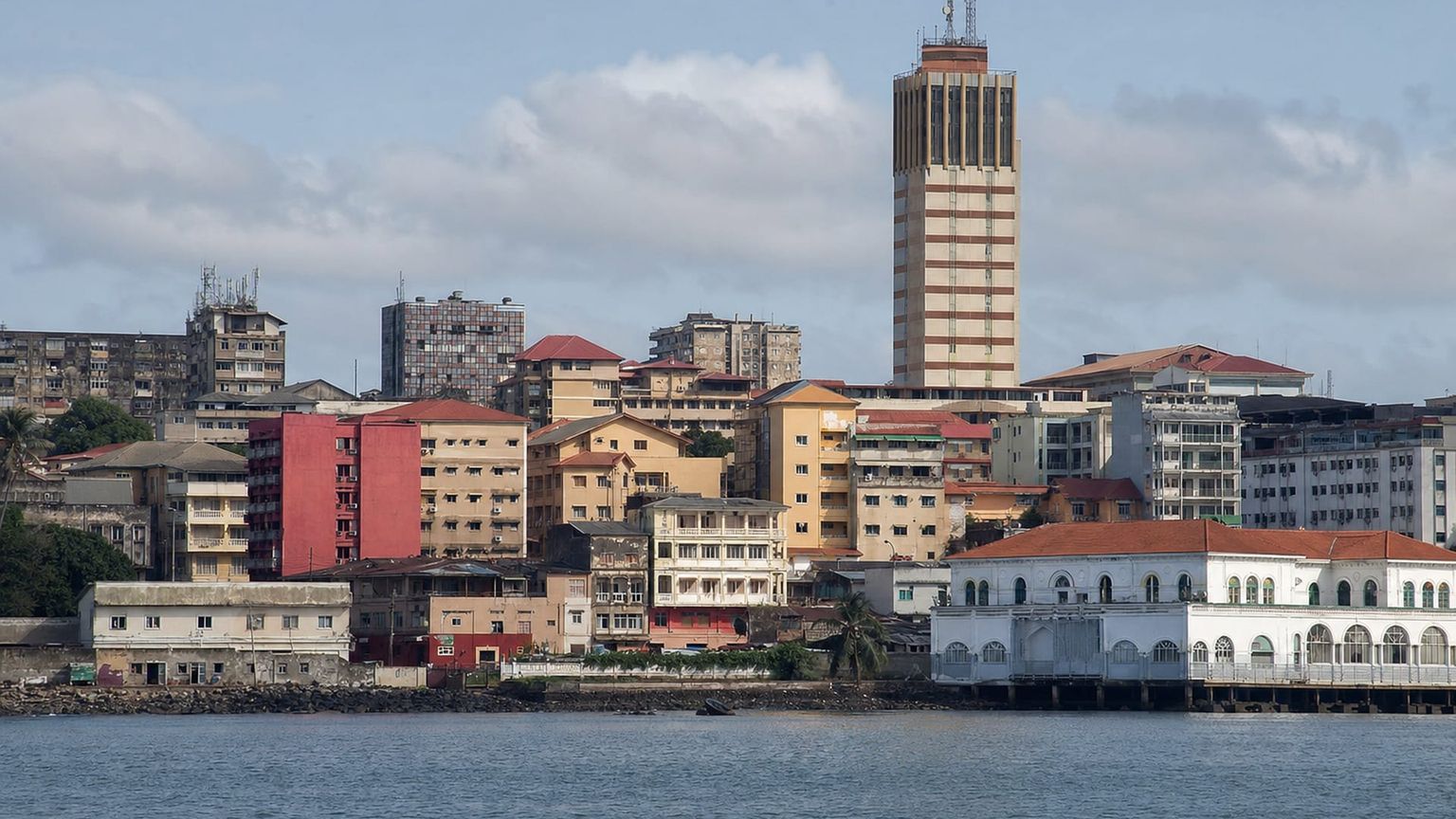
Conakry’s table leans on rice, peanut sauces, fish, and cassava staples, with pepper, onion, and palm oil adding depth. Meals are often simple, filling, and best eaten on the city’s daytime schedule.
Jollof rice
Tomato rice with pepper, onion, and a savory base, often served with fish or meat. A good canonical stop in Conakry is Le Petit Bateau in Kaloum, where rice dishes fit the central lunch crowd.
Peanut stew
A rich sauce built on ground peanuts, often paired with chicken, fish, or vegetables and served with rice or fufu. Keur Khalifa in Conakry is a strong place to order it with a local meal pace.
Grilled fish
Usually caught locally and cooked over coals with onion, citrus, and pepper. Le Kaloum in Conakry is a fitting choice when you want fish near the peninsula’s center.
Fufu
A soft cassava or plantain staple, eaten with soup or stew and shaped by hand at the table. Chez Alima in Conakry is a useful reference point for a classic West African plate.
Best time to visit Conakry
Conakry stays hot and humid for much of the year, but the most comfortable months bring lighter rain, while the wet season can complicate cross-city movement and outdoor visits.
Best for: Best for drier days and easier movement between Kaloum and the northern districts.
What you get: About 77°F to 90°F (25°C to 32°C), with smaller crowds at outdoor sights and better road conditions than in the wettest months.
Trade-offs: Heat still builds by midday, and dusty air can linger on busy roads.
Best for: Best for museum time, mosque visits, and short scheduled outings before heavier rains arrive.
What you get: About 79°F to 91°F (26°C to 33°C), with moderate visitor numbers and growing humidity toward late spring.
Trade-offs: Afternoon showers become more common as the season progresses.
Best for: Best for indoor breaks, slower sightseeing, and travelers who do not mind planning around rain.
What you get: About 74°F to 85°F (23°C to 29°C), with lighter daytime crowds but slower traffic on wet roads.
Trade-offs: Rain can interrupt plans and make cross-town trips take longer.
Best for: Best for green scenery and flexible days once the rain starts to ease.
What you get: About 76°F to 88°F (24°C to 31°C), with improving access and fewer weather-related delays late in the season.
Trade-offs: Early autumn can still bring heavy showers and muddy side streets.
A realistic 5-day plan in Conakry
This five-day plan keeps the city grouped by district, so you can move from Kaloum to Donka and Kipé without circling back more than necessary. It also leaves room for slower lunches, traffic delays, and one final morning before the airport run.
Land at Conakry (CKY), then take a taxi or prearranged hotel car into Kaloum or Camayenne, which usually takes about 20 to 35 minutes and costs roughly $15 to $30, depending on traffic and the time of day. Check in near the central peninsula if you want the shortest ride to dinner, then keep the evening close to the hotel with water, a simple meal, and an early night, since the city can feel busy after office hours and airport arrivals often stretch late.
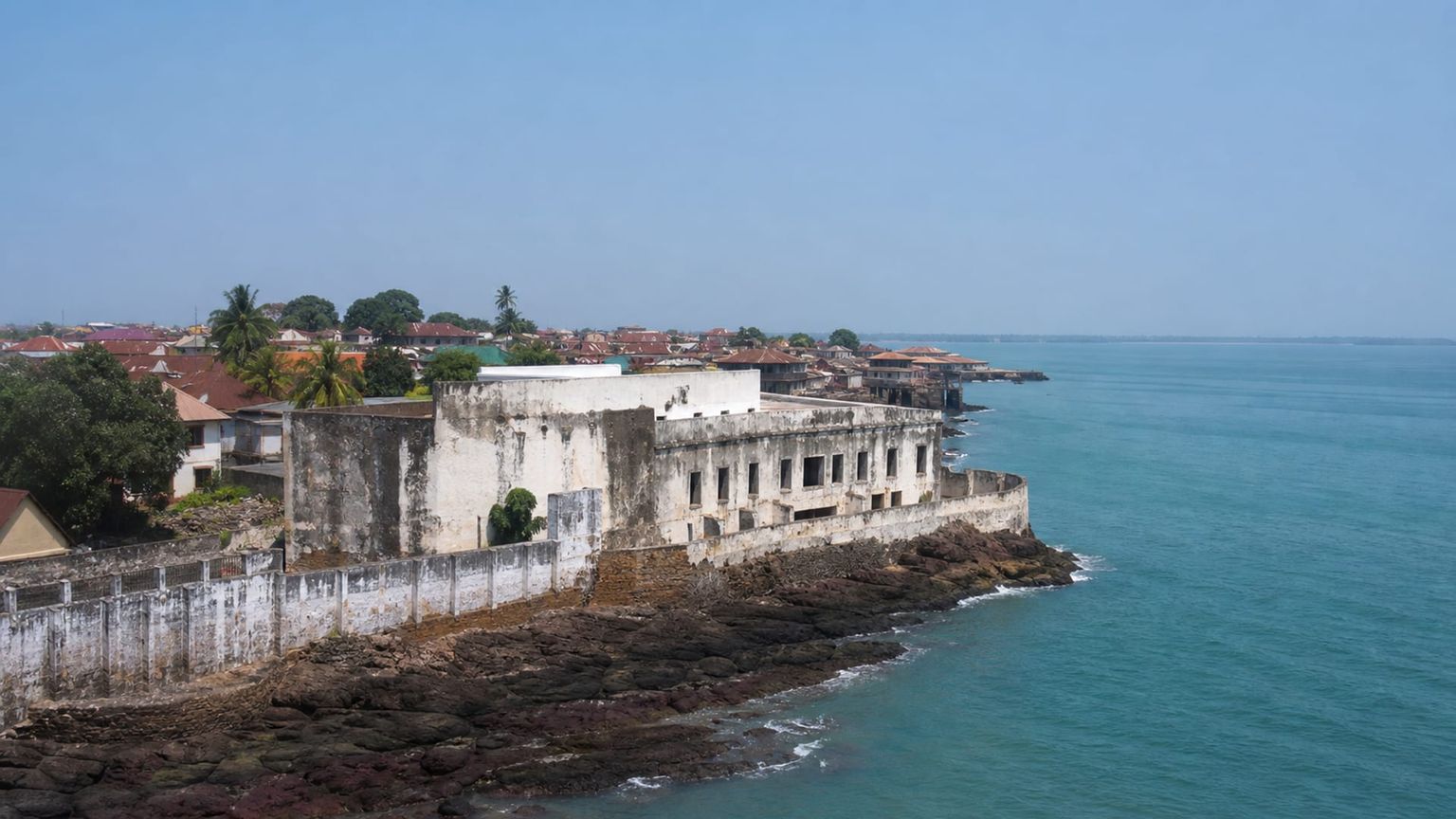
Start at the National Museum of Guinea in the late morning, then walk or take a short taxi ride, about 10 to 15 minutes, to the Conakry Grand Mosque in Kipé. The museum takes about 1 to 2 hours, and the mosque visit needs about 45 to 60 minutes, so you can fit both into one clear sightseeing block before lunch. Finish with a relaxed meal back in Kaloum or Camayenne, then allow about 20 to 30 minutes for the return ride if traffic builds.
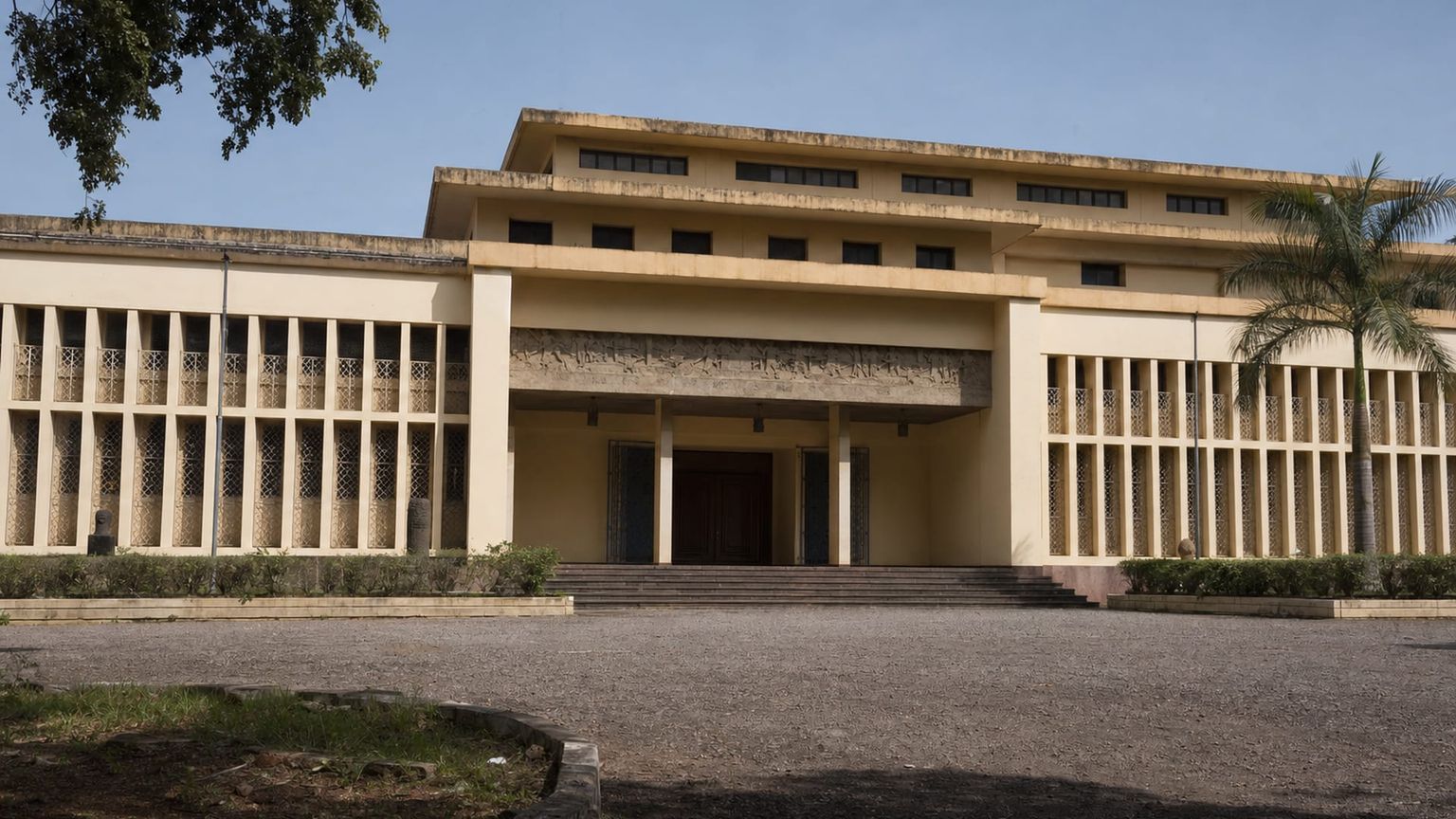
Begin in Donka at the Conakry Botanical Garden, where shaded paths and tropical planting make an easy 1 to 2 hour visit. From there, continue by car to the Palais du Peuple area for Loos and the independent arts scene, a transfer that usually takes about 10 to 20 minutes depending on traffic. Pair the two stops with a café break nearby, then return to your base in about 15 to 25 minutes if you are staying in central Conakry.
Set out early for a fuller city day, starting with the Conakry Grand Mosque if you want the clearest light on the exterior, then head to the Conakry Botanical Garden for a greener second stop, about 15 to 25 minutes away by car. After lunch, return to the Palais du Peuple area for another look at the plaza and any live or exhibition programming, which works well as a late-afternoon stop and usually takes another 10 to 20 minutes to reach from Donka. End the day with dinner in Kaloum, where the drive from the arts district generally takes about 15 to 25 minutes.
Choose a slower last morning in Kaloum or Camayenne, then make one final cultural stop at the National Museum of Guinea, which fits neatly into a 1 to 2 hour visit before checkout. If you want a little shopping, continue to Taouyah, where market stalls and neighborhood commerce give you a final chance to pick up small items before lunch. Finish with coffee or a light meal in Camayenne, then head back toward the airport with enough time for a 20 to 35 minute transfer if traffic is moderate.
Business-class flights from the US to Conakry
Long-haul itineraries into Conakry usually connect through a European or North African hub, and the routing matters as much as the fare. From New York and Los Angeles, the easiest options often trade nonstop hopes for one well-timed layover.
From New York, Air France, Delta Air Lines, Royal Air Maroc, Turkish Airlines, and Brussels Airlines are the usual carriers, with total travel times often landing between 12 and 18 hours on connecting itineraries. Common layover points include CDG, CMN, IST, BRU, and AMS, and round-trip fares from New York start at $4,200 and often reach $7,500.
Los Angeles travelers usually fly with Air France, Delta Air Lines, Turkish Airlines, Royal Air Maroc, or Brussels Airlines, and round-trip fares generally start at $4,600, with higher-end tickets near $8,200. Expect a travel day of roughly 16 to 23 hours through hubs such as CDG, CMN, IST, BRU, or AMS.
Conakry feels different when you slow down
A deliberate Conakry trip keeps you close to the places that shape daily movement, Kaloum for central errands, Camayenne for a calmer hotel base, Donka for the botanical garden, and Kipé for the grand mosque. Shared minibuses, taxis, and short walks do the rest. If you want help building that kind of trip, the AranGrant experts can map the right route through Conakry’s neighborhoods, meals, and transfer times







