

Chapters:

Need help with your trip?
Our support team is available 24/7. Request a callback or call us directly at (833) 619-0908
Bergen trips often start with Bryggen, a funicular ride, and one harbor dinner, then stop before the city opens up beyond the postcard views. Travelers who stay close to the waterfront see the main landmarks, but they can miss how short the moves are between the center, the museum quarter, and the hills.
That works for a quick visit, yet it can leave you queueing at the busiest sites and doubling back through the same lanes. Bergen is compact, but the hill grades, ferry links, and weather shifts reward better timing than a loose checklist.
This guide sets out the city in a clearer order, with where to stay, how to move, what to eat, and how to pace five days so the harbor core, museums, and fjord-side outing each get their own space.
Useful things to know
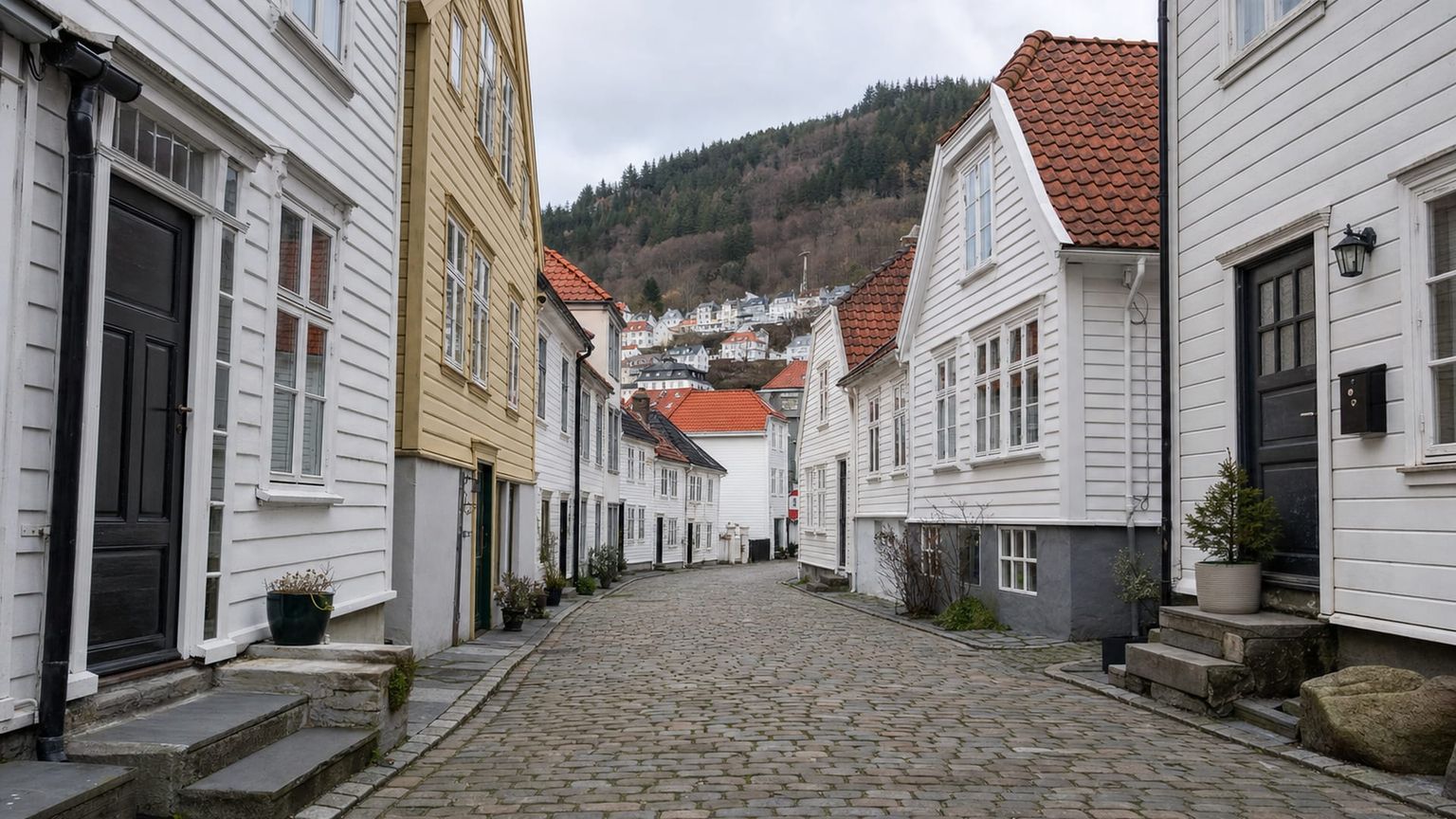

Main language(s): Norwegian
Hei (hay) – Hello
Vær så snill (vair soh sneel) – Please
Takk (tahk) – Thank you
Snakker du engelsk? (snah-ker doo en-gehlsk) – Do you speak English?
Hvor mye koster det? (voor myeh kos-ter deh) – How much does it cost?

Currency: The local currency is the Norwegian krone (NOK, kr).

Cash and cards: Cards and contactless are widely accepted; carry about 200 NOK ($19) for small cash-only buys.

Tipping: Round up taxi fares and leave 5-10% at restaurants if service is good.

Traditional food: Fish soup, fish cakes, raspeballer, brunost

Water and coffee costs: Water about 30 NOK ($3), bar espresso about 45 NOK ($4).

Taxis and ride apps: Uber and Bolt operate here; taxis can be costly.

Plug and voltage: Type F socket, 230V

Dining and shop opening hours: Breakfast is about 07:00-10:00, lunch 11:30-13:30, and dinner 17:00-21:00. Many kitchens close earlier on Sundays and in smaller places.

Emergency number: Call 112 for police, 110 for fire, and 113 for ambulance.
Where to stay in Bergen
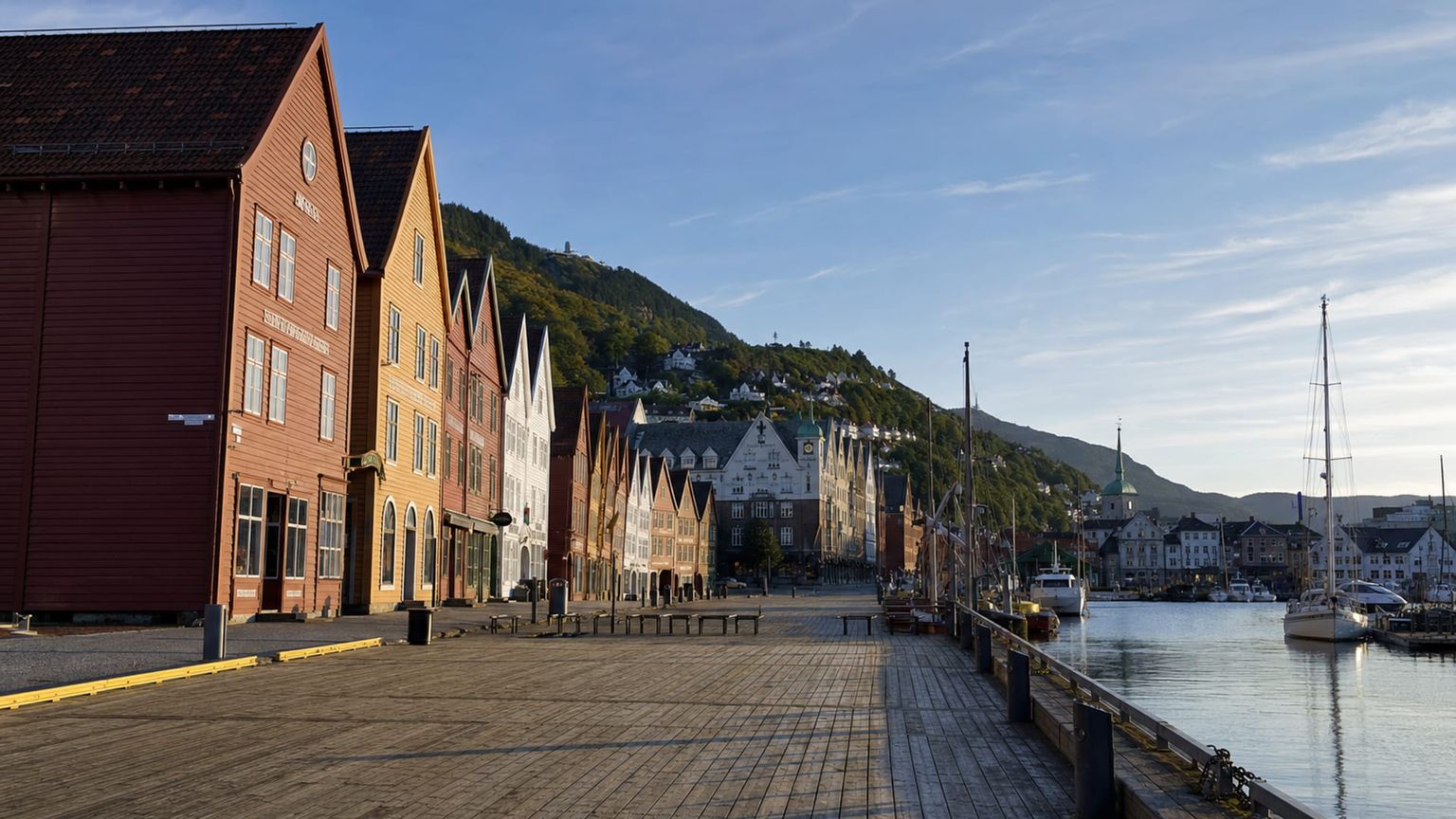
Bergen’s old harbor core puts you beside the wooden wharf fronts, fish market, and the main ferry piers. It suits visitors who want to step out into the city’s most walkable historic district and stay close to the places most people come to see.
Best for: First-time visits, waterfront walks, and travelers who want to minimize transit time
What to expect: Busy pedestrian streets by day, with heavy visitor traffic near Bryggen and the harbor until evening.
Hotel prices: Usually about 1800kr to 3200kr (~$170 to ~$300) per night for well-rated stays
Distance to major sights: 0 to 10 minutes on foot to Bryggen and the Fish Market; about 15 minutes on foot to Fløibanen
Quietness: Lively and crowded in the daytime, then quieter after shops and tour groups thin out at night.
Main trade-off: You pay more here, and some rooms sit above streets that fill with day visitors and early ferries.
Good to know: Some buildings face the harbor directly, so choose higher floors if you want less noise from early departures and late restaurant traffic.
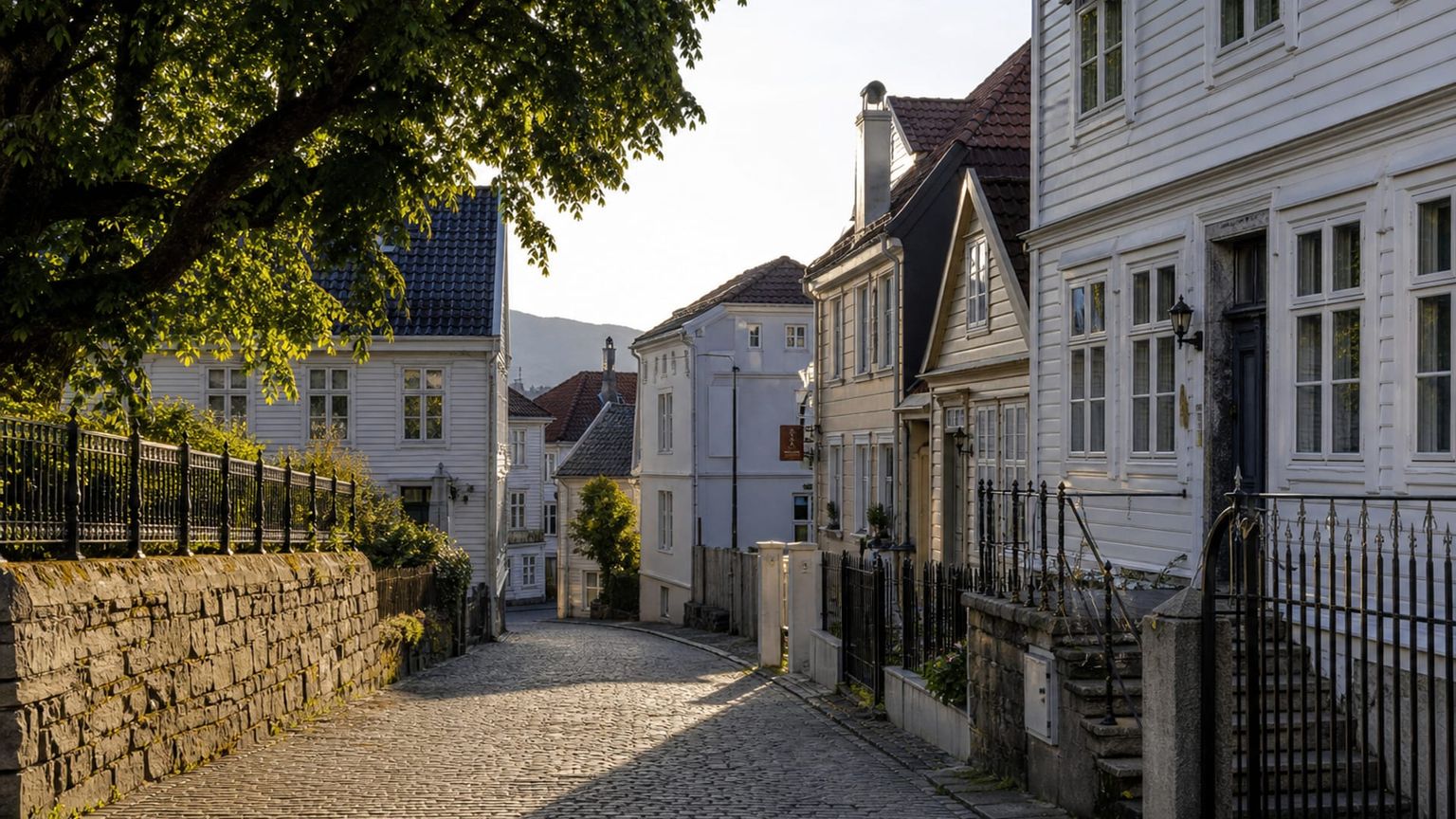
Nordnes is the peninsula west of the center, with narrow residential streets, small waterfront paths, and the Bergen Aquarium at its tip. It gives you a local-feeling base within a short walk of the old town and the inner harbor.
Best for: Travelers who want a quieter base, harbor walks, and easy access to the center
What to expect: Mostly residential streets with local foot traffic, plus more visitors near the Aquarium and the shoreline.
Hotel prices: Usually about 1600kr to 2800kr (~$150 to ~$260) per night for well-rated stays
Distance to major sights: About 10 to 20 minutes on foot to Bryggen and about 15 minutes on foot to the Fish Market
Quietness: Calmer in the daytime than the harbor core, with only light evening activity on most streets.
Main trade-off: Restaurants and late-night options are thinner than in the center, so you may walk or take a short taxi after dinner.
Good to know: Check the uphill approach before booking, since some streets require a noticeable climb back from the waterfront.
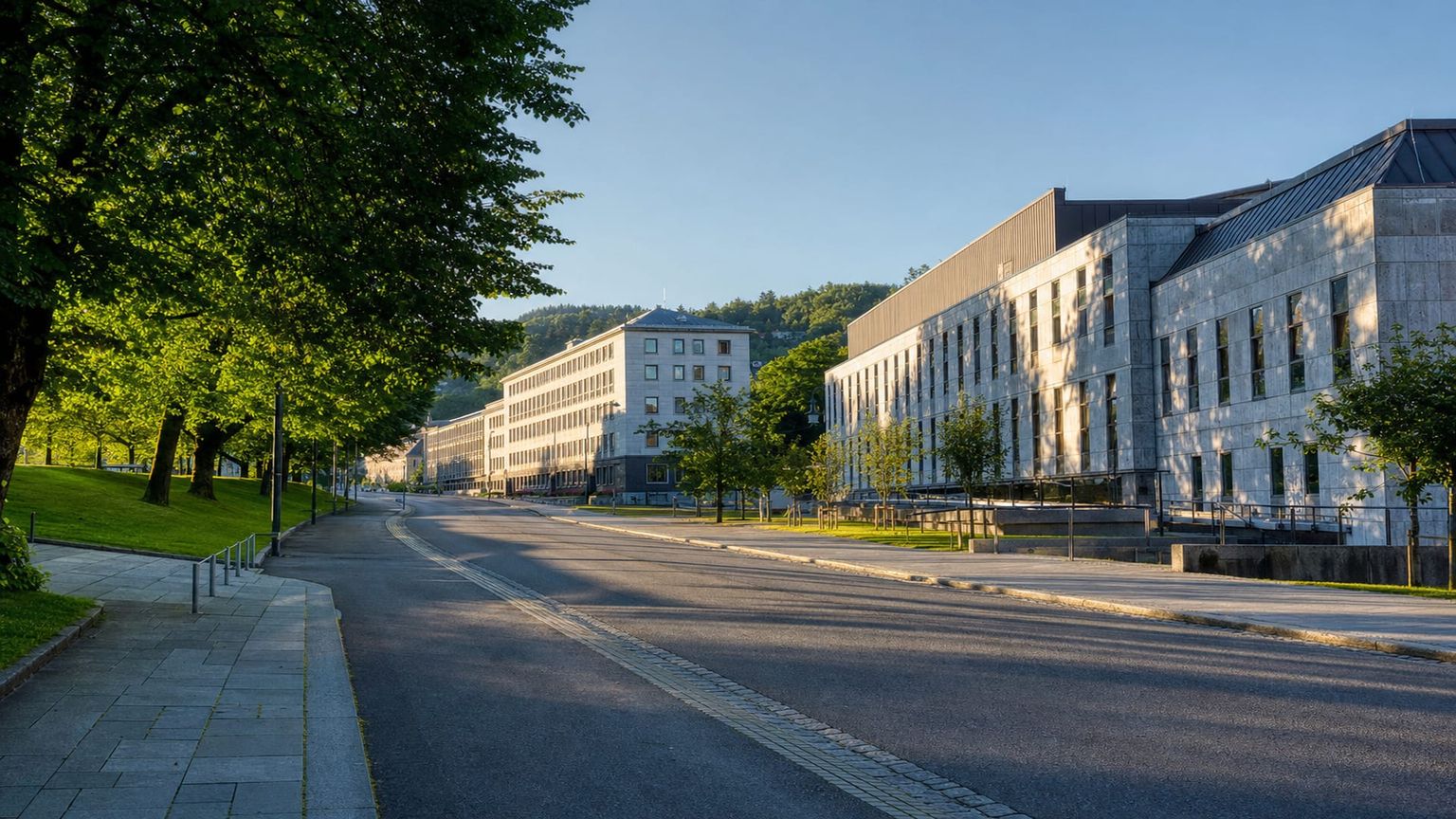
Nygård sits just west of the center near the University of Bergen, with tram stops, cafés, and apartment blocks that put you close to both downtown and the museum district. It works well if you want a base with good transit access and easier room availability than the harbor front.
Best for: Museum visits, tram access, and travelers looking for a midrange base near the center
What to expect: Student-heavy streets, weekday movement, and a more everyday city feel than the tourist core.
Hotel prices: Usually about 1400kr to 2400kr (~$130 to ~$225) per night for well-rated stays
Distance to major sights: About 10 to 15 minutes on foot to the city center and about 15 to 20 minutes on foot to Bryggen
Quietness: Busier in the daytime, then quieter at night except near bars and student spots.
Main trade-off: You trade harbor views and postcard surroundings for shorter stays and better odds of finding better-priced rooms.
Good to know: If you plan early museum mornings, verify the nearest tram stop, because some side streets add a longer walk than the map suggests.
Travelers usually avoid Ytrebygda, Fyllingsdalen, and Arna for a first stay in Bergen because they sit well outside the main sights around Bryggen, Fløyen, and the central harbor, and evening trips back often take longer on transit. Parts of Kokstad and Sandsli are also less convenient for visitors, since they are close to the airport rather than the historic center and have fewer dining and sightseeing options after business hours.
Hotel deals
How to get around Bergen efficiently
Bergen’s Bybanen, buses, taxis, and walkable center work best together, since the light rail links the airport to downtown while the oldest sights sit close enough for short on-foot moves.

Metro
for longer distances
Bergen has no metro, so the closest public-transport option is the Bybanen light rail, which links Bergen city center with Bergen Airport (BGO) via key stops such as Danmarks plass and Lagunen. A single ticket is about $4 to $5, and it is valid for 90 minutes on the local network; a ride from the airport to central Bergen takes roughly 45 minutes. Buy tickets in the Skyss app or at machines before boarding.

Bus and tram
for convenience
Skyss buses cover most neighborhoods, the harbor area, and nearby towns, with frequent service on main corridors and fewer late-night departures outside the center. A local adult ticket is about $4 to $5, valid for 90 minutes, and day passes are available if you will make several hops in one day. For coastal and hillside areas that the light rail does not reach, buses usually fill the gap, and real-time route planning is available in the Skyss app.

Taxi
for convenience or late hours
Licensed taxis wait at ranks in central Bergen and at Bergen Airport (BGO), and you can also book by phone or app rather than hailing on the street. Fares are metered, not fixed, and a daytime trip from the airport to the center usually costs about $45 to $70, with late-night and weekend rides running higher; cards are widely accepted. Check the posted tariff before departure, because rates can vary by company and time of day.
*Prices are based on rates updated as of June 2026 and may change at the time of travel.
Use the light rail for airport transfers, buses for neighborhoods and shorelines the tram does not reach, and taxis for late returns or steep uphill stretches.
Iconic landmarks
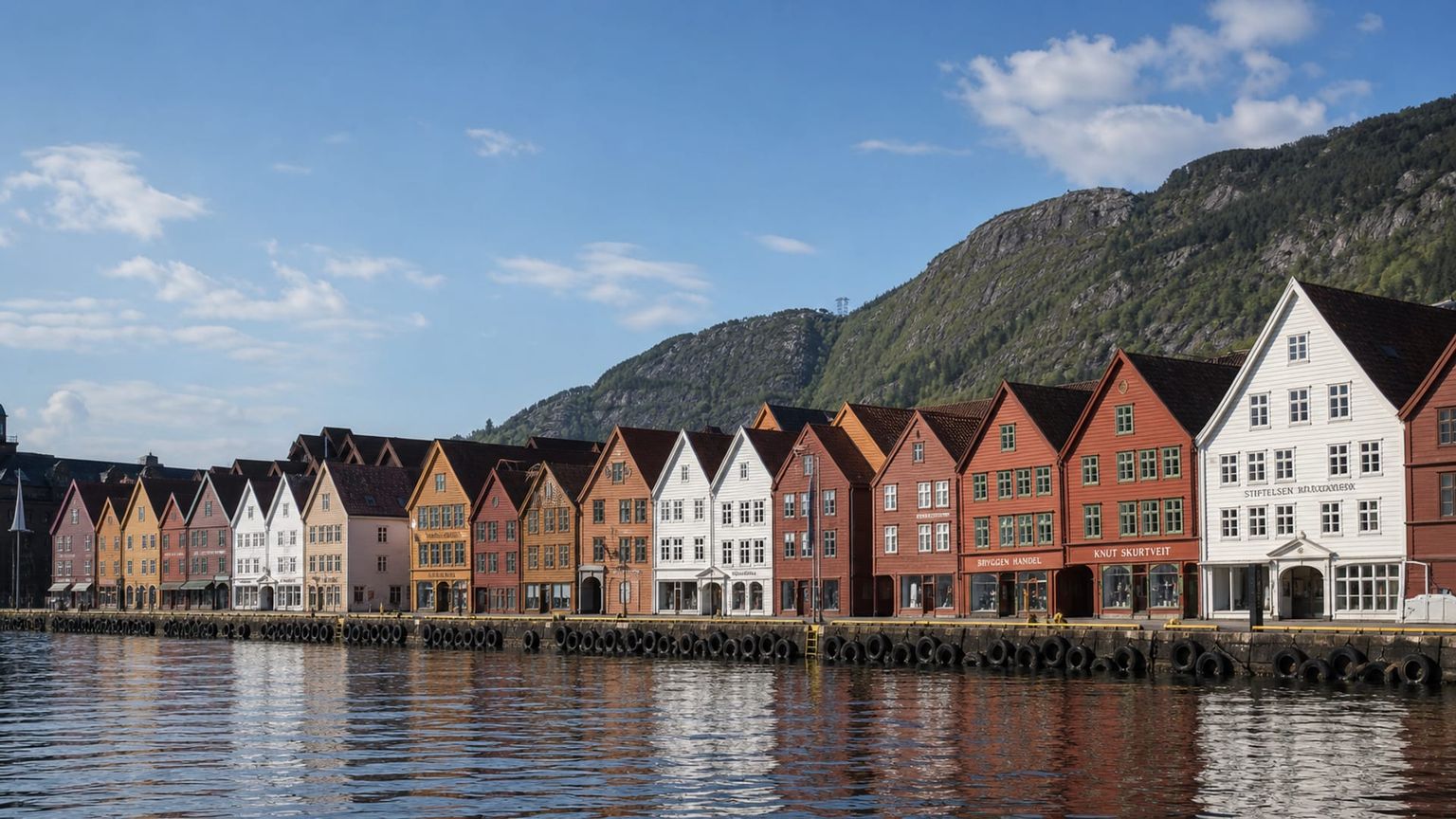
Bryggen
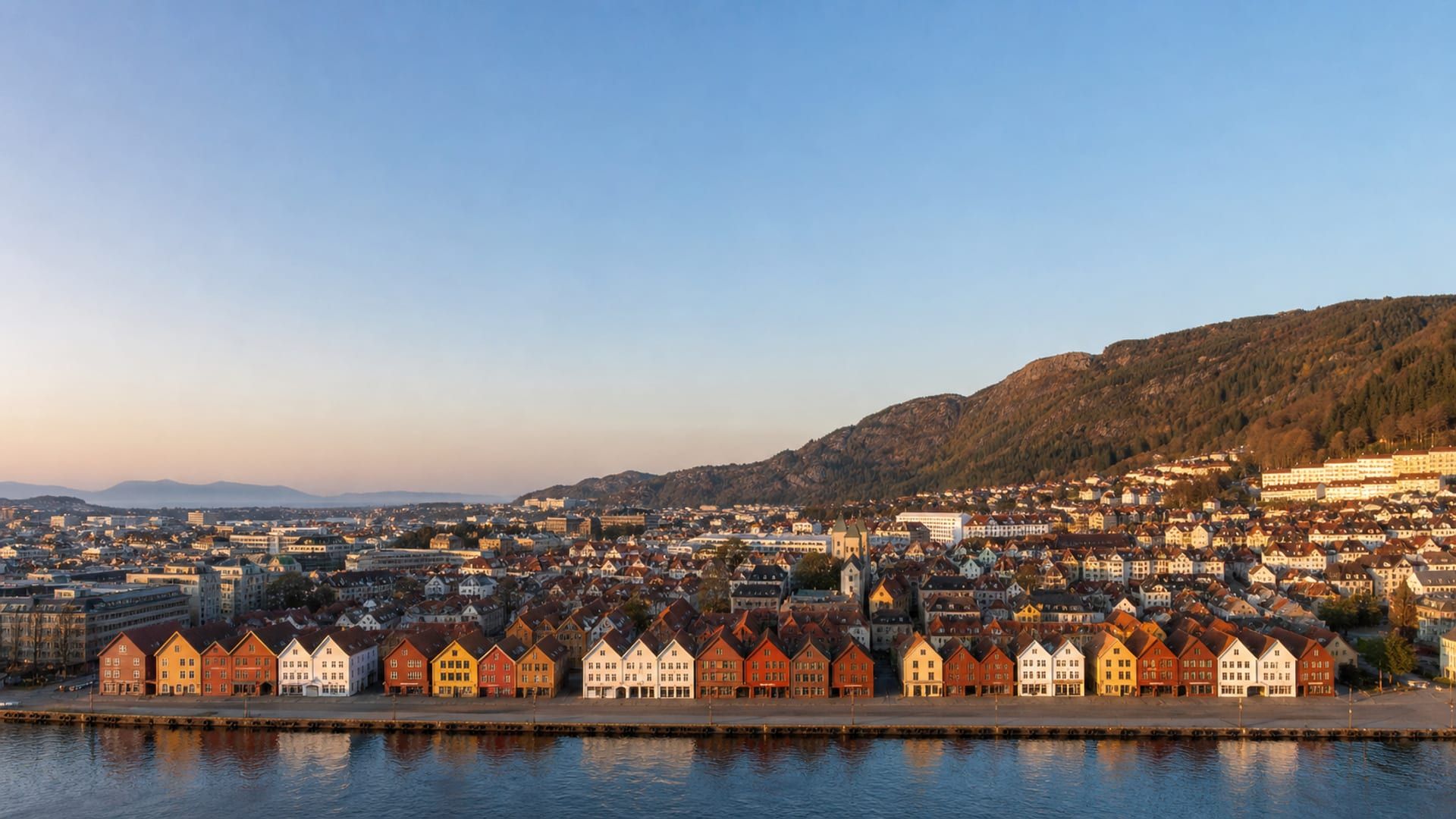
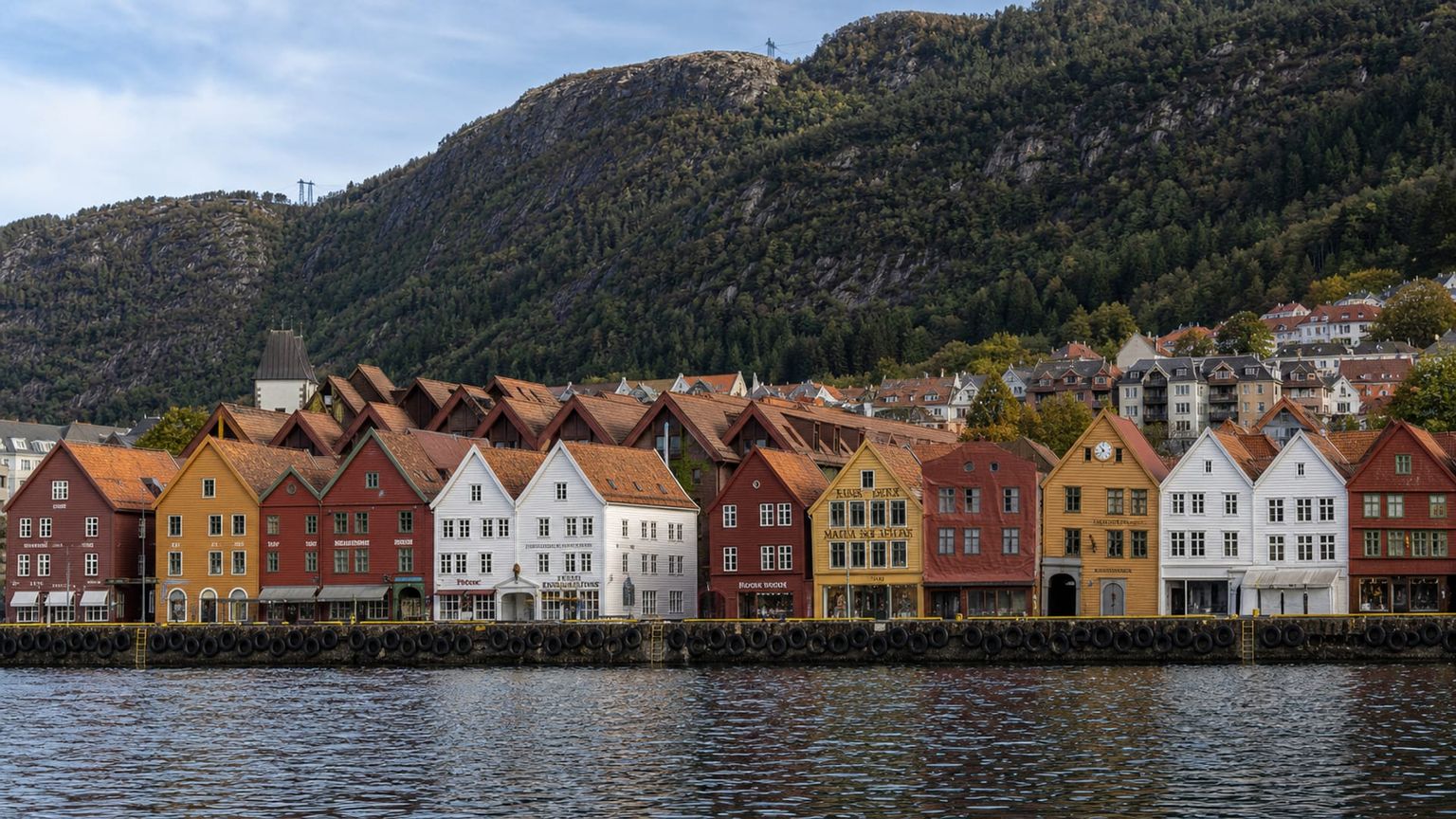
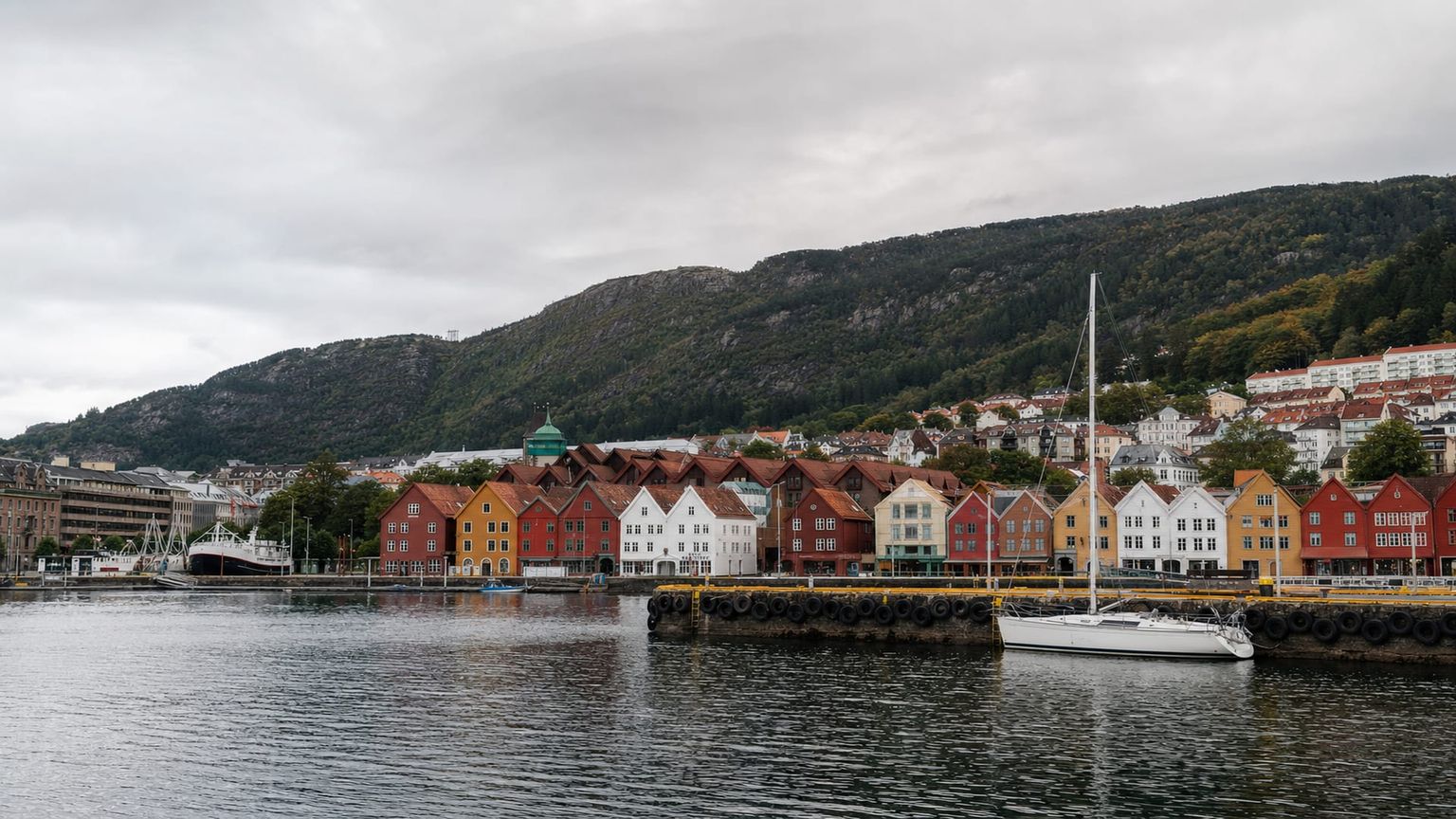
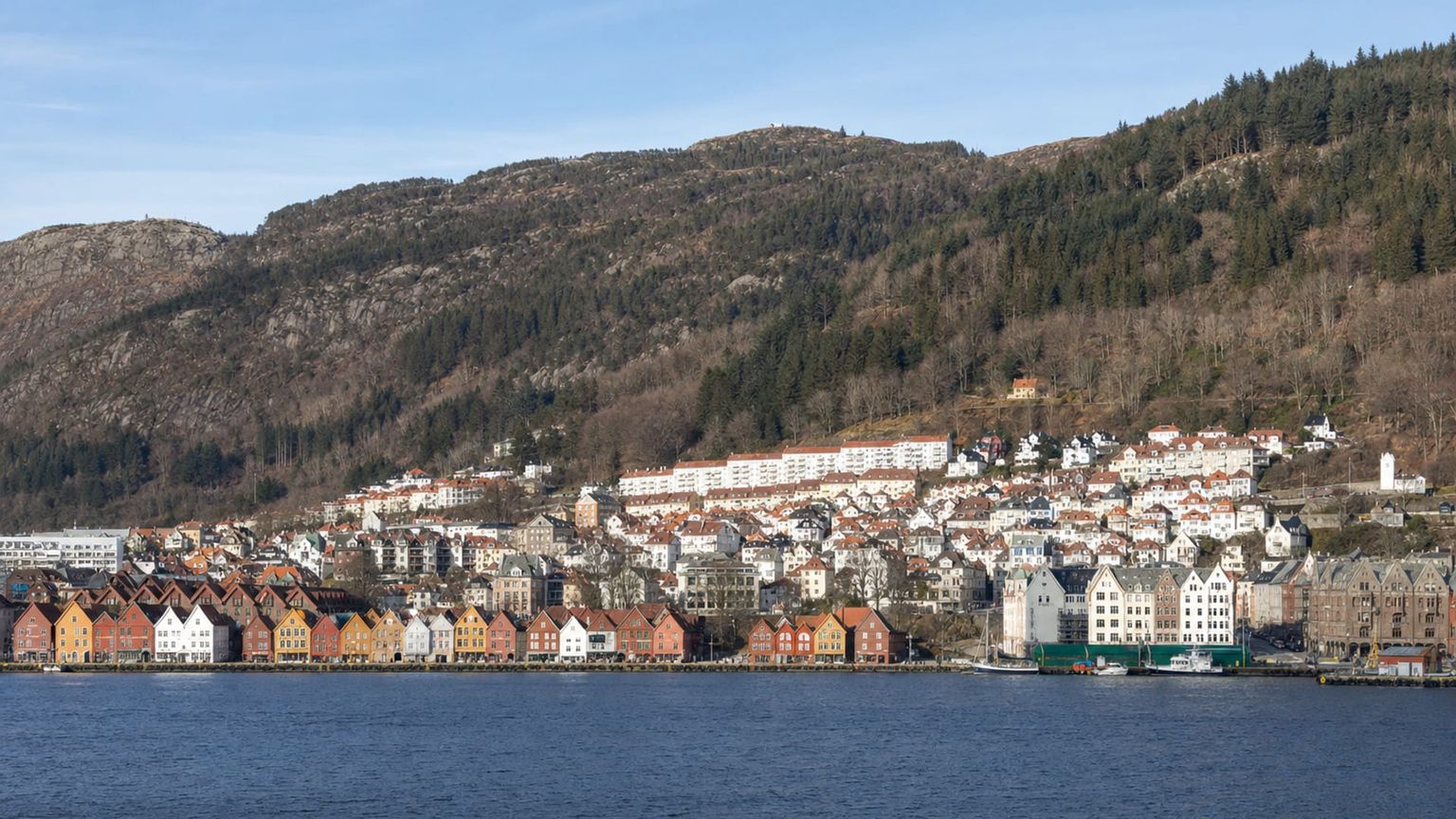
Bergen’s UNESCO-listed Hanseatic wharf lines the east side of Vågen with narrow wooden buildings, steep gables, and lanes that date to the city’s medieval trade era. The Hanseatic Museum and Schøtstuene adds context to the merchant quarter.
Time needed: About 1 to 2 hours
Entry: Free to walk through; museum admission usually costs about $12 to $18 (NOK 130 to 200), with separate charges for some exhibits and houses. Visit the official site for details.
Tip: Visit early or late in the day for fewer tour groups and clearer harbor views.
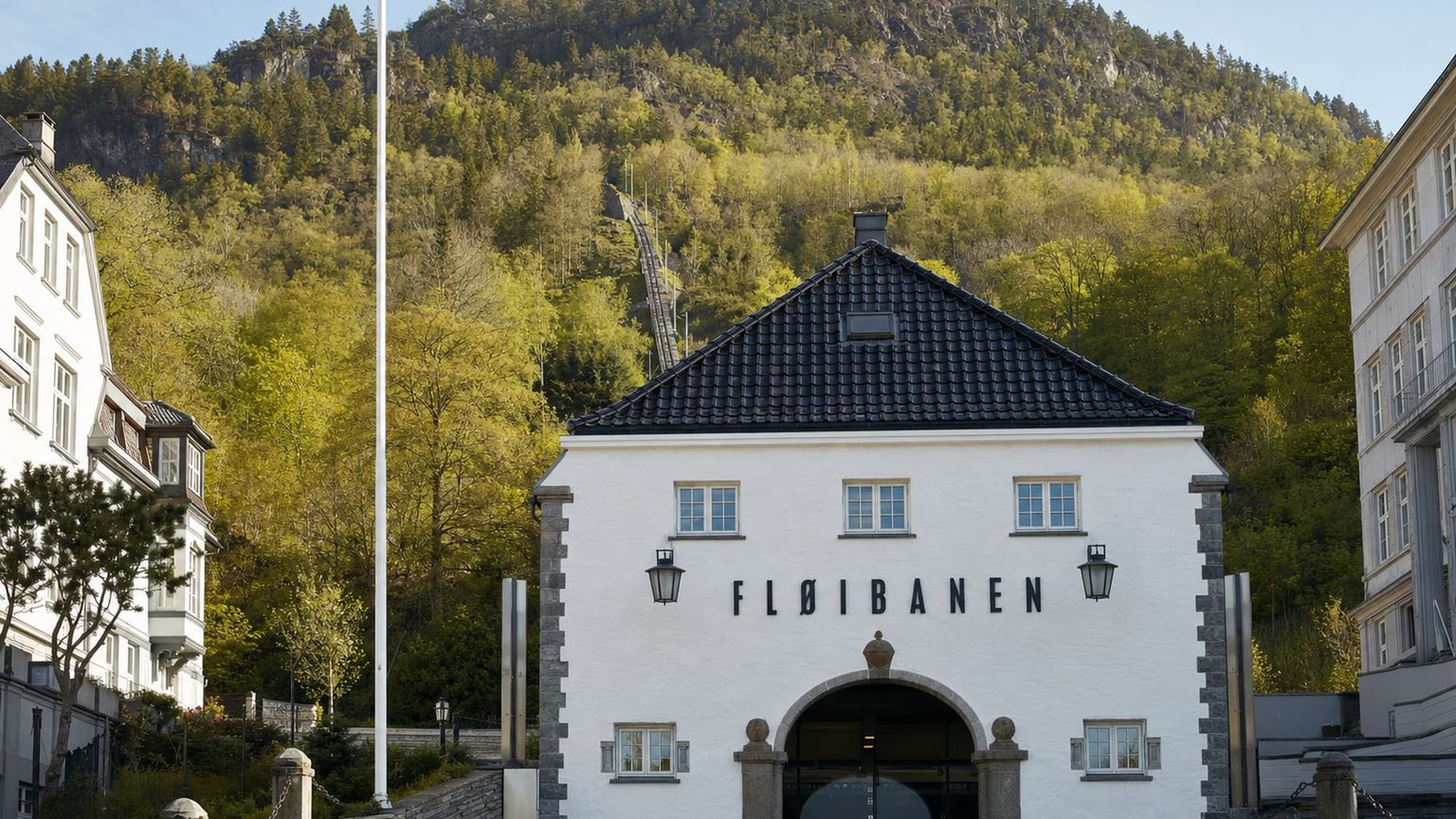
Fløibanen and Mount Fløyen
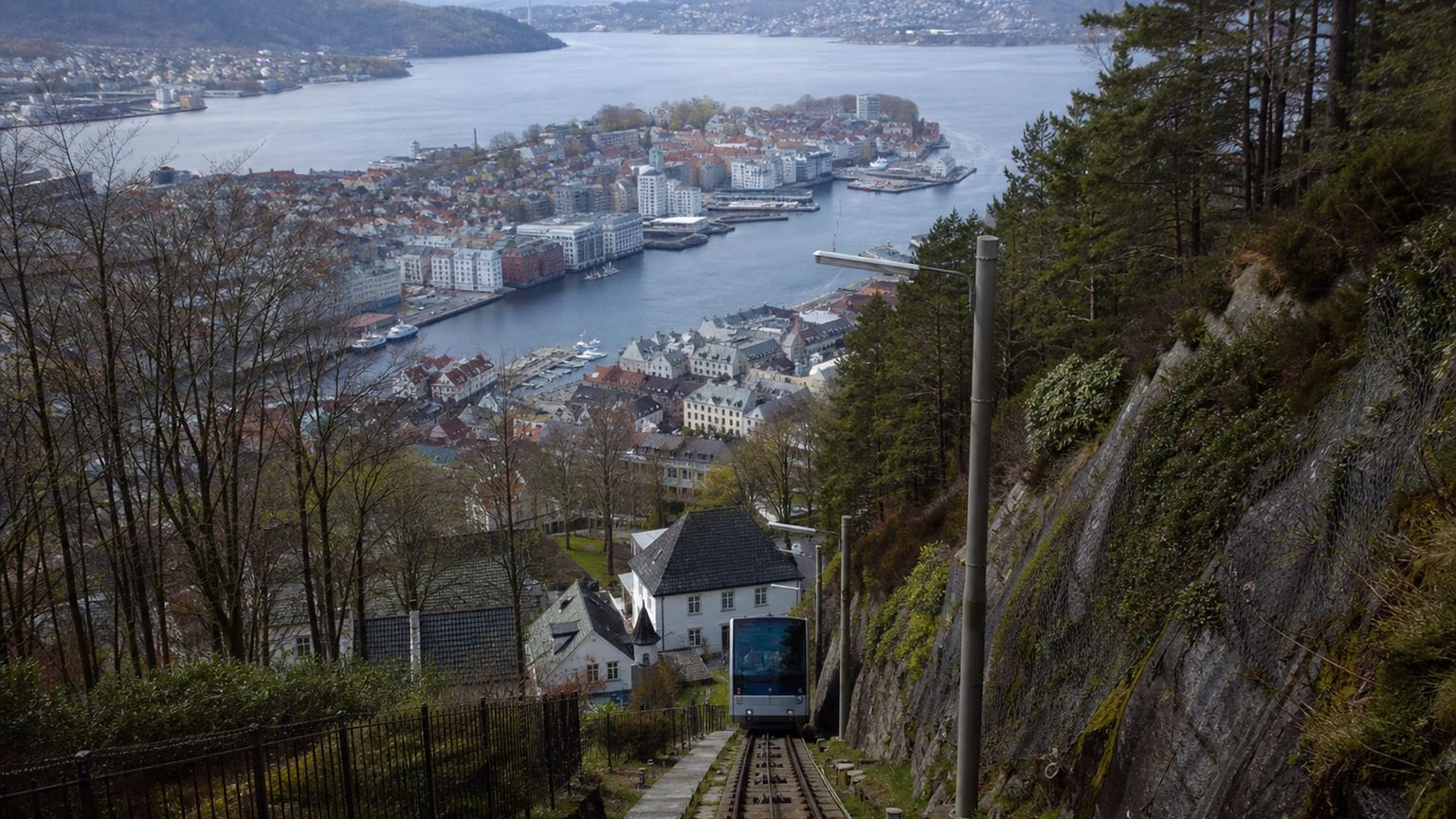
Fløibanen climbs from the city center to Mount Fløyen, where you get wide views over Bergen, the harbor, and the surrounding fjords. At the top, short marked trails and the Troll Forest make it an easy high-point stop.
Time needed: About 2 to 3 hours
Entry: Round-trip funicular tickets cost about $16 to $20 (NOK 175 to 220) for adults, with lower fares for children and seniors. Visit the official site for details.
Tip: Go near sunset if you want city lights and less haze over the harbor.
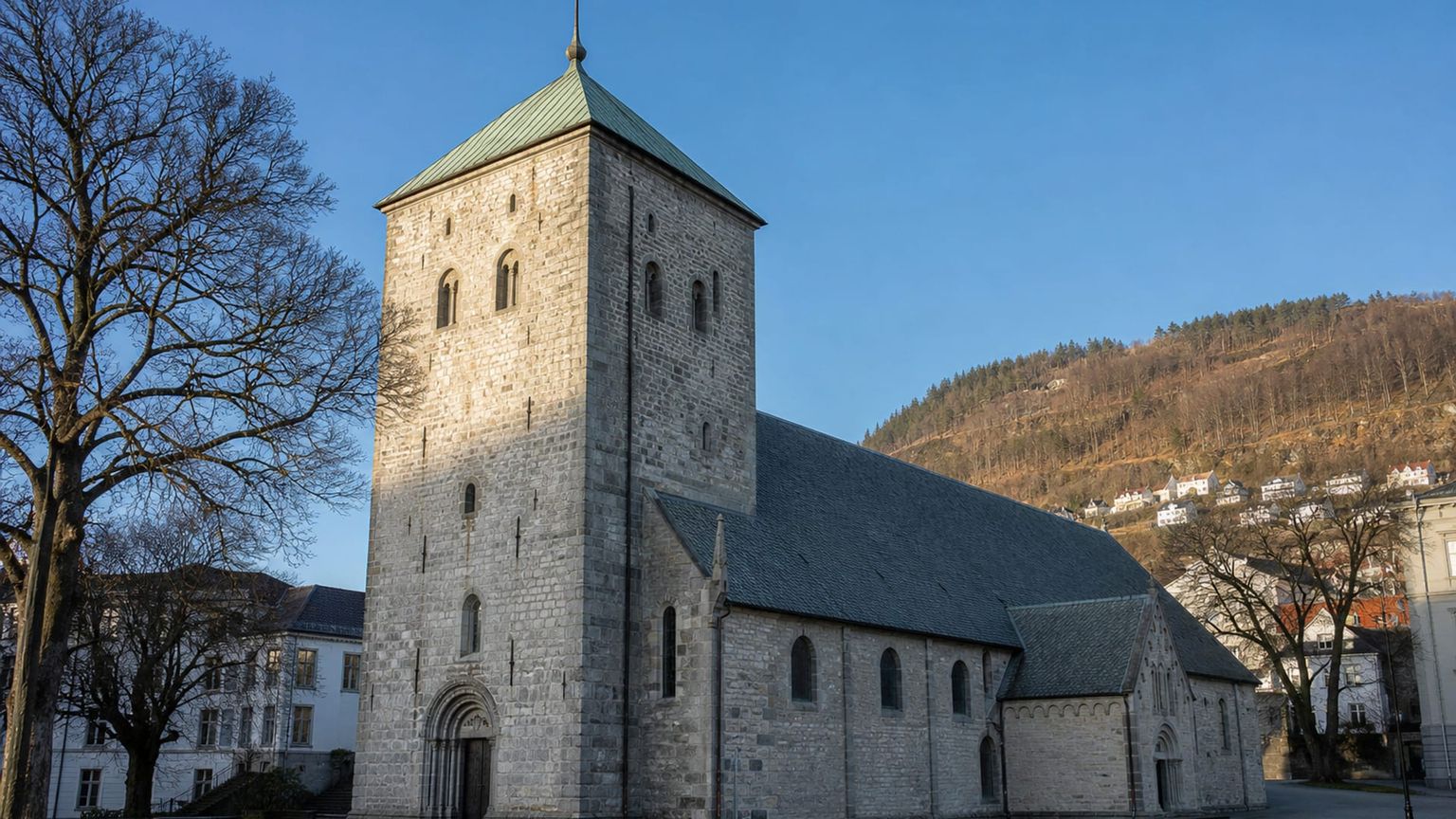
St. Mary’s Church
St. Mary’s Church is Bergen’s oldest surviving building, a Romanesque stone church built in the 12th century for the city’s German merchants. Its thick walls, twin towers, and carved details give a rare look at medieval Bergen.
Time needed: About 30 to 45 minutes
Entry: Admission costs about $9 to $11 (NOK 100 to 120) for adults; reduced rates usually apply for children, students, and seniors. Visit the official site for details.
Tip: Check opening hours first, since services and concerts can limit visitor access.
Overlooked sites worth visiting

Lyngheisenteret at Lygra
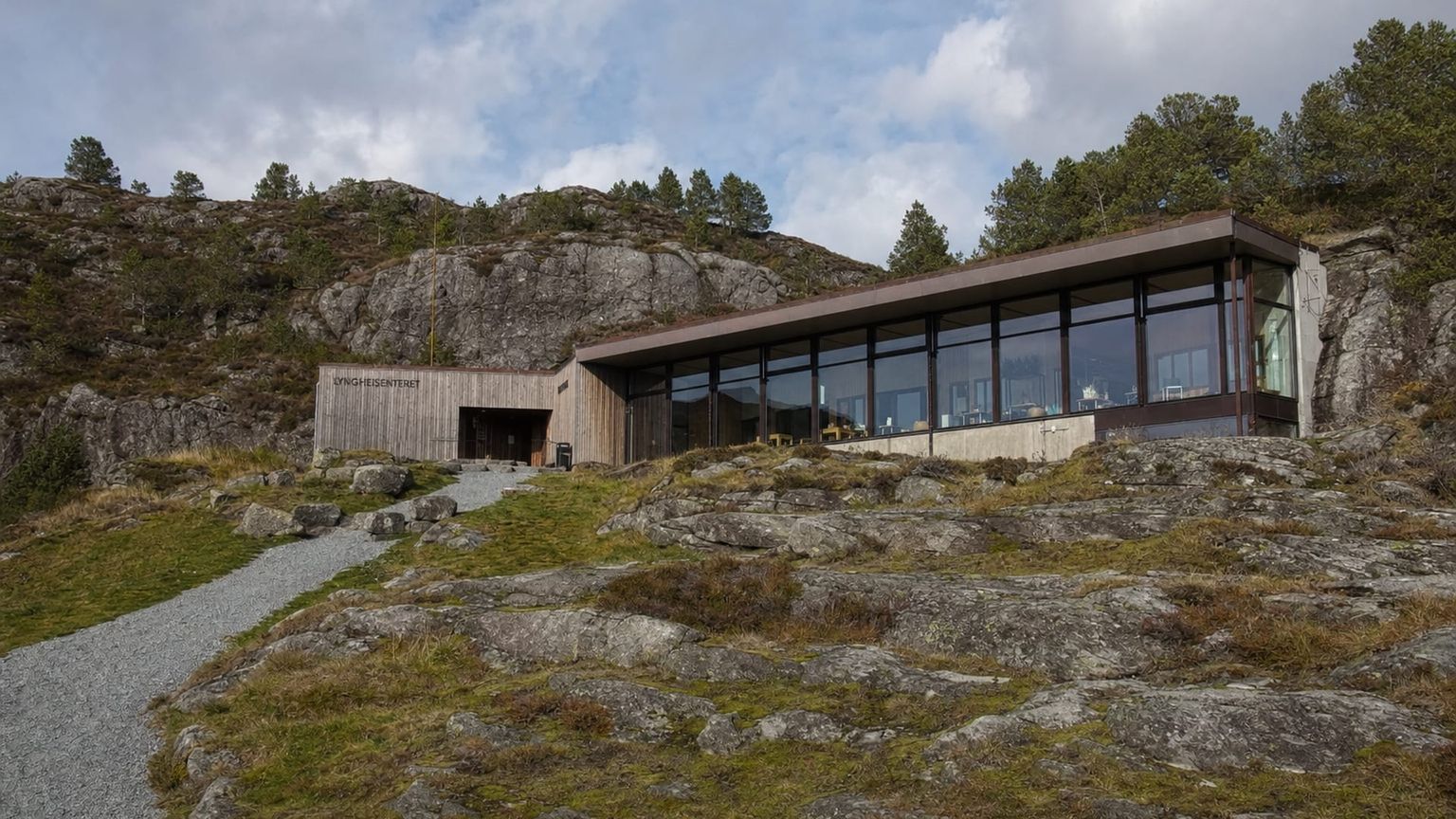
A windswept heather landscape and museum center on Lygra, about 30 km north of Bergen, shows coastal grazing traditions, turf walls, and grazing sheep. Paths let you explore at an easy pace.
Time needed: About 1 to 2 hours
Entry: Admission is typically about $15 to $20 (about NOK 160 to NOK 220) for adults, with reduced rates for children and some concessions. Check seasonal opening dates before visiting, because access and tour times vary outside summer. Visit the official site for details.
Tip: Go in late afternoon for softer light on the heather.

Kode 2, Permanent Collection
This compact museum in central Bergen focuses on Norwegian art from the 19th and 20th centuries, including Nikolai Astrup and decorative arts. Rooms stay manageable, so you can see it without a long stop.
Time needed: About 1 to 1.5 hours
Entry: Admission usually costs about $17 to $21 (about NOK 180 to NOK 230) for adults, with lower prices for students and children; the museum sells single-entry and combined tickets with other KODE sites, and hours can change on holidays. Visit the official site for details.
Tip: Visit on a weekday morning to avoid school groups.
Traditional food
Bergen’s table leans on fish soup, fish cakes, and other coastal staples, with brunost and raspeballer showing up beside seasonal produce. Meals tend to be early, and harbor restaurants often center the day around the catch.
Fish soup
Creamy Bergen fish soup usually combines white fish, shellfish, potatoes, and dill in a bowl built for damp weather. Bryggeloftet & Stuene is a classic place to order it near Bryggen.
Fish cakes
Norwegian fish cakes are pan-seared, lightly seasoned, and often served with potatoes or salad rather than heavy sauces. Pingvinen serves a well-known version in a central setting.
Raspeballer
Raspeballer, the potato dumplings, arrive with salted meat, sausage, or bacon and a deeply savory pan gravy. Pingvinen is a strong Bergen stop for a traditional plate.
Brunost
Brunost, the caramelized brown cheese, often appears on bread or waffles and gives Bergen breakfasts a sweet, nutty note. Baker Brun in the city center is a dependable place to try it.
Best time to visit Bergen
Bergen changes more by rain, light, and crowd levels than by temperature alone, so the best month depends on whether you want long evenings, fewer lines, or the clearest harbor views.
Best for: Clearer sightseeing days and lighter foot traffic before summer peaks
What you get: About 39 to 54°F (4 to 12°C), with moderate crowds and frequent showers
Trade-offs: Weather can turn quickly, and some higher trails stay damp
Best for: Longest daylight, easy hill walks, and full access to outdoor excursions
What you get: About 54 to 68°F (12 to 20°C), with the heaviest crowds and the busiest hotel calendar
Trade-offs: Popular sights and ferries feel busiest, especially in July
Best for: Quieter harbor walks and strong color in the hills
What you get: About 43 to 57°F (6 to 14°C), with lighter crowds after early September
Trade-offs: Rain becomes more frequent, and daylight shortens fast
Best for: Low crowds, museum time, and a calmer city center
What you get: About 30 to 43°F (-1 to 6°C), with the lightest tourist numbers and occasional snow or sleet
Trade-offs: Short days limit outdoor time, and some excursions run less often
A realistic 5-day plan in Bergen
Five days in Bergen works well when you separate the harbor core, the museum district, the funicular, and the day trip north. That gives each part of the city room to breathe and keeps the longer outing from crowding the historic center.
Fly into Bergen (BGO), then take the airport bus or light rail into the center in about 20 to 30 minutes for roughly $10 to $15. If you are staying in Bryggen and Vågen, you can walk to your hotel quickly and settle before a low-key dinner at the Fish Market or on the harbor edge. If you choose Nygård, the tram or a short taxi ride gets you there with little effort, and the area gives you a quieter first night. Keep dinner simple, drink water after the flight, and leave Bryggen for a short evening stroll only if you still have energy.
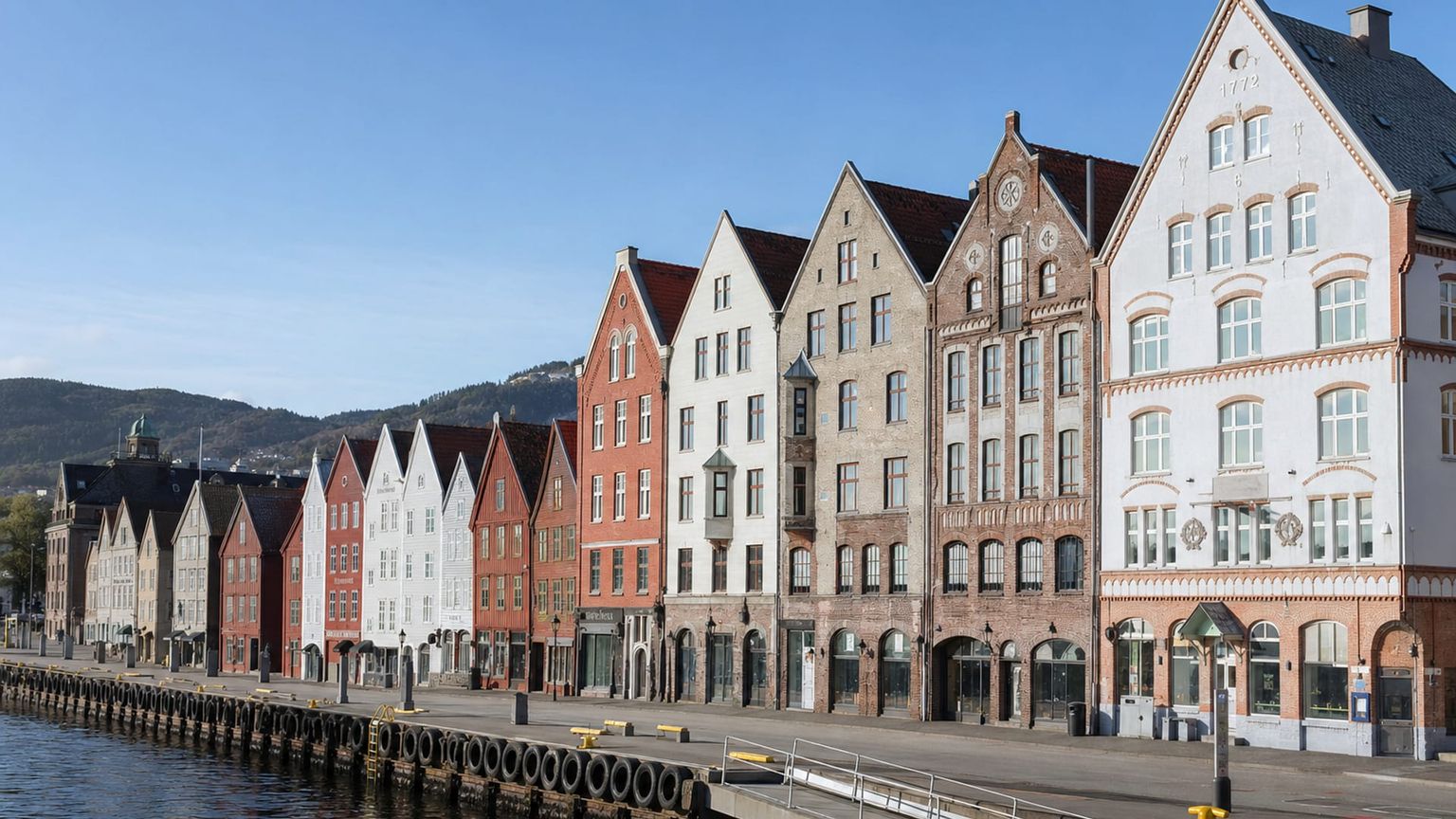
Begin with Bryggen in the morning, when the narrow lanes are easier to walk and the light is better for the wooden wharves. From Bryggen, it is about a 5-minute walk to St. Mary’s Church, where the stone exterior and compact interior make a good contrast to the merchant quarter. Spend about 30 to 45 minutes there, then walk back toward Vågen for lunch near the harbor. In the afternoon, ride Fløibanen from the center to Mount Fløyen, which takes roughly 6 to 8 minutes, then stay about 2 hours for the views and short trails before returning downhill for dinner in Bryggen and Vågen.
Start the day at Kode 2, Permanent Collection, where you can spend about 1 to 1.5 hours with Norwegian art and decorative arts without a long museum stretch. From Kode 2, walk about 10 to 15 minutes to the city center, then continue to Fløibanen for an uphill ride to Mount Fløyen if you want a second look at the city from above, or save the funicular for a sunset return if the weather is clear. If you prefer a calmer afternoon, stay near the museum district and stop for coffee in Nygård before dinner. The day works well for moving between compact blocks rather than crossing town repeatedly.
Take a longer excursion north to Lyngheisenteret at Lygra, which usually takes roughly 1.5 to 2 hours each way by car and ferry depending on connections. Plan for about 1 to 2 hours on site, with time for the heather landscape, turf walls, and the grazing areas that explain coastal farming traditions. Leave Bergen early so you can return before evening, then keep dinner simple back near your hotel in Bryggen and Vågen or Nordnes. If you want a quieter last night after the outing, Nordnes gives you easier waterfront walking and fewer late crowds.
End with a short, city-centered morning at St. Mary’s Church if you want one last historic stop, or return to Bryggen for a final harbor walk if you prefer open time outdoors. From there, walk or taxi to a café in Nygård for an unhurried lunch, then browse the center and nearby streets for a few last purchases before heading back toward Bergen (BGO). If your flight leaves later in the day, keep your bags close and stay within the core so you can reach the airport bus stop without a rush.
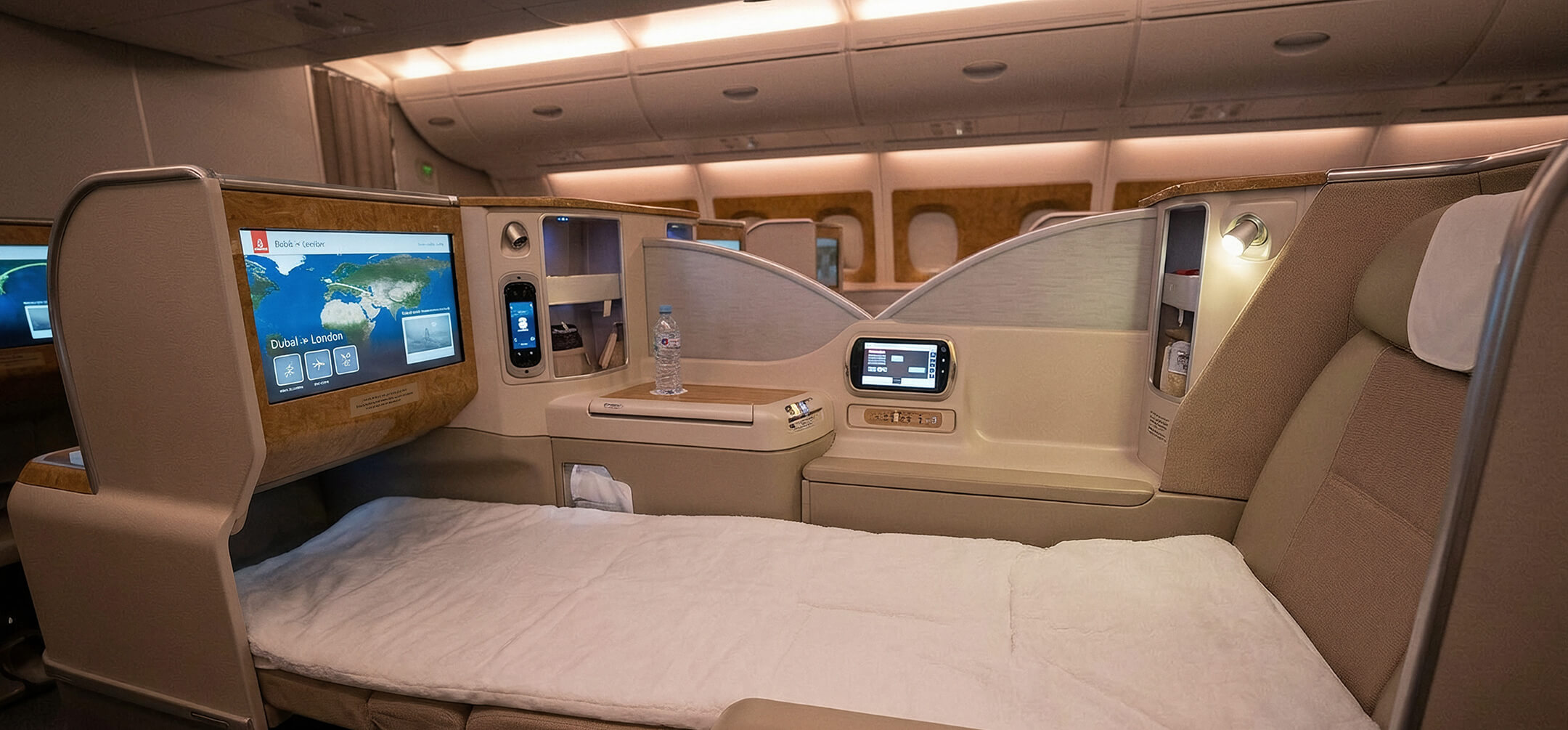
Business-class flights from the US to Bergen
For long-haul arrivals, Bergen usually sits on one-stop itineraries rather than nonstop routes from the US. The most useful comparisons are the connection points and total time in transit, not just the fare headline.
From New York, Icelandair, Scandinavian Airlines, British Airways, Lufthansa, KLM, and Air France commonly show up on one-stop itineraries, and the total journey usually takes about 6 to 7 hours when nonstop is not available. Connections most often run through KEF, CPH, LHR, FRA, or AMS, with layovers of about 9 to 14 hours. Round-trip fares usually start at $3,200 and can reach $5,800.
Los Angeles itineraries usually use Icelandair, Scandinavian Airlines, Lufthansa, KLM, Air France, or British Airways, with total travel times of about 11 to 18 hours. The common connection points are KEF, CPH, LHR, FRA, and AMS, and round-trip fares usually start at $3,600 and can reach $6,500.
Bergen feels different when you slow down
A good Bergen stay gives each part of the city a clear role, Bryggen for the wooden wharves, Vågen for the harbor edge, Nygård for museum time, and Fløibanen for the view that ties it together. Add one longer run north to Lygra, and the city starts to feel measured rather than rushed. If you want help shaping that mix, AranGrant experts can match your dates to the right neighborhood and flight timing