

Chapters:

Need help with your trip?
Our support team is available 24/7. Request a callback or call us directly at (833) 619-0908
Bhubaneshwar trips often begin with a temple list, a hotel near a main road, and a long taxi day that leaves little time for the old city lanes or the quieter caves. Travelers often miss how much the route between sites shapes the visit.
Distances are short on a map, but traffic, narrow approaches, and midday heat can stretch simple moves into slow ones. If you stay too far west or rely on one big outing, you spend more time in cars and less time at the stonework.
This guide orders the city by movement, not just monuments. It pairs neighborhoods with sights, spreads the heritage stops across the day, and keeps transfers in view so the pace stays clear from arrival to departure.
Useful things to know

Main language(s): Odia
Namaskar (nah-mah-skar) – Hello / good morning
Dayakari (dai-yuh-kah-ree) – Please
Dhanyabad (dhan-yah-baad) – Thank you
Apana ki Angrezi jananti? (ah-pah-nah kee un-greh-zee juh-nun-tee) – Do you speak English?
Eiṭa ketē? (ay-tah keh-tay) – How much does it cost?

Currency: The local currency is the Indian rupee (INR, ₹).

Cash and cards: Cards and contactless are accepted at larger hotels and shops, but carry about ₹1,000 to ₹2,000 ($12 to $24) in cash.

Tipping: Round up small bills; 5% to 10% is appreciated in nicer restaurants if service is good.

Traditional food: Pakhala Bhata, Dalma, Chhena Poda, Macha Ghanta

Water and coffee costs: Water about ₹20 to ₹40 ($0.25 to $0.50), bar espresso about ₹150 to ₹250 ($2 to $3).

Taxis and ride apps: Uber and Ola operate here; check pickup points before you order.

Plug and voltage: Type C/D socket, 230V

Dining and shop opening hours: Breakfast is about 8:00-10:00 am, lunch 12:30-3:00 pm, and dinner 8:00-10:00 pm. Many restaurants close between meals.

Emergency number: 112 for police, fire, and medical emergencies.
Where to stay in Bhubaneshwar
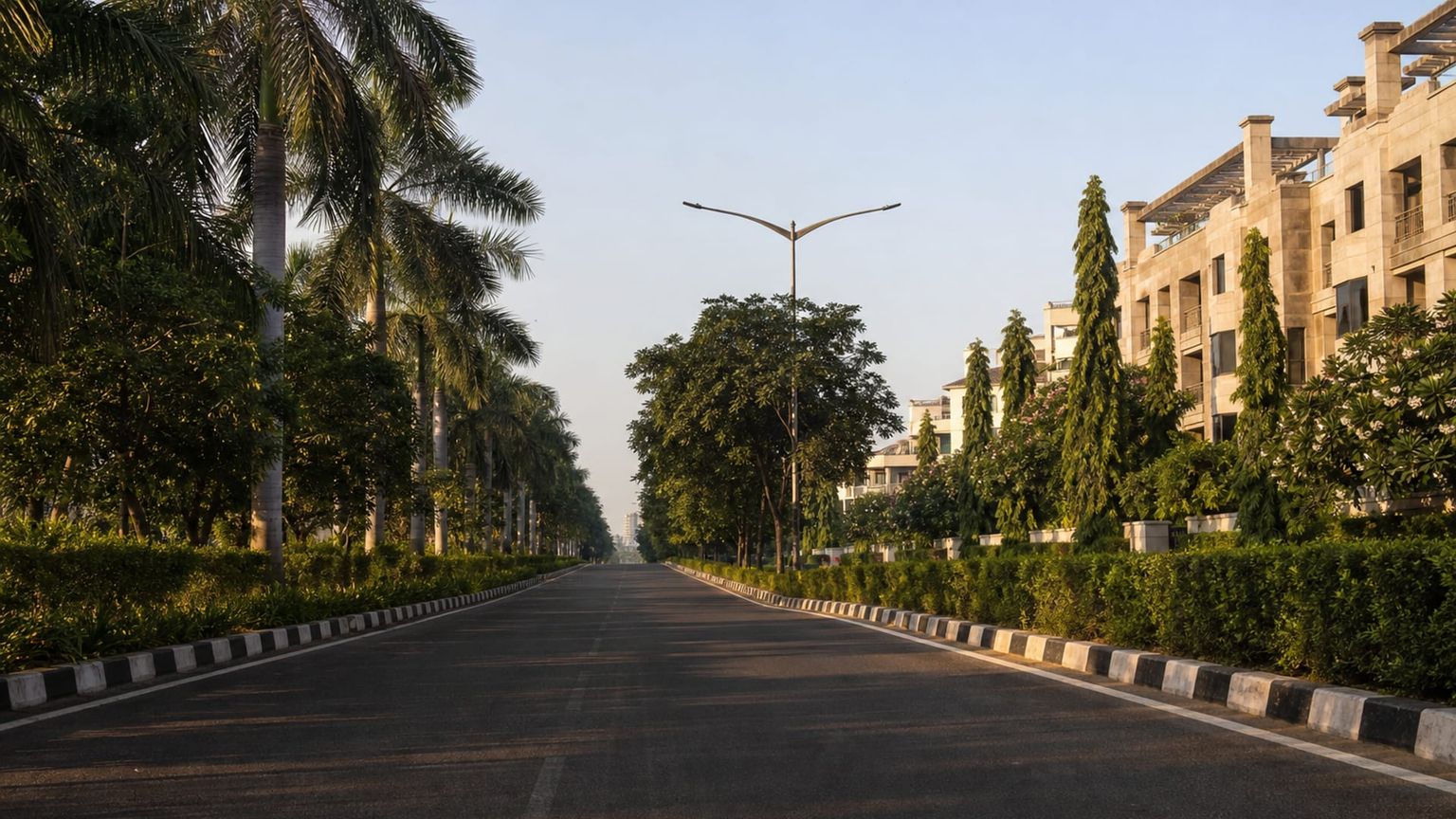
A central residential and commercial district with malls, restaurants, and a steady supply of midrange hotels. It works well for travelers who want an easy base between the airport, railway station, and the old temple core.
Best for: Dining, shopping, and a central base for getting across the city
What to expect: Busy roads by day, with restaurants, offices, and local shoppers; evenings stay active but not loud on the main streets.
Hotel prices: Usually about $35 to $90 per night for well-rated stays
Distance to major sights: About 15 minutes by taxi to Udayagiri and Khandagiri Caves, roughly 20 minutes to Lingaraj Temple
Quietness: Livelier in the day, calmer on side streets after dark; main roads keep some traffic noise into the evening.
Main trade-off: You get convenience and more hotel choice, but the area lacks the heritage setting that many visitors come to Bhubaneswar for.
Good to know: Choose a room away from the main road if you plan to sleep early, since traffic and late dining can add noise.
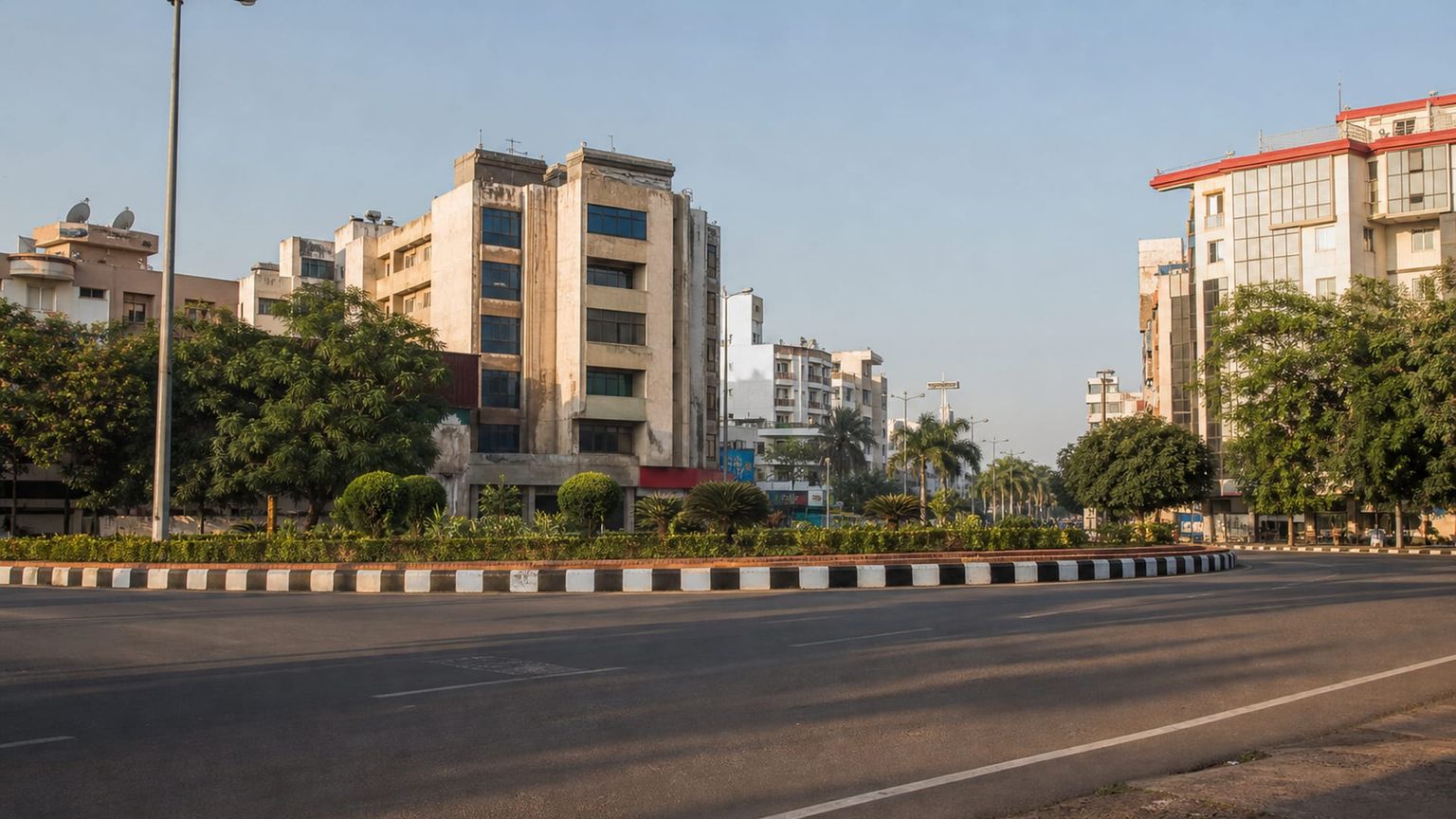
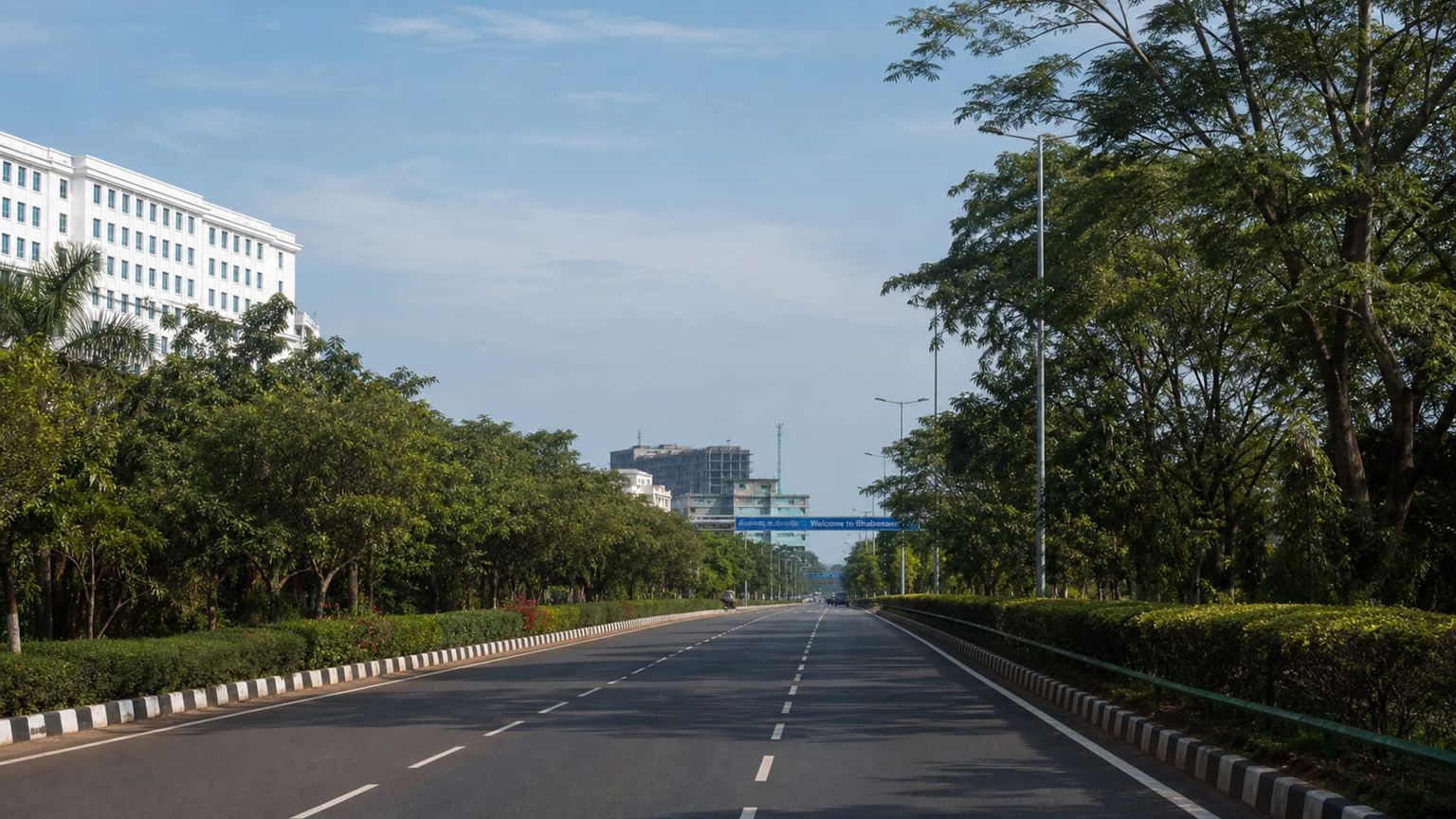
A major junction and newer commercial district on the west side of central Bhubaneswar, with office towers, hotels, and easy road links. It suits visitors who want quick access to the airport side of town and to major arteries leading toward the temples.
Best for: Business trips, short stays, and travelers who want quick road access
What to expect: Heavy traffic at peak times, with a functional urban feel, chain hotels, and shopping centers nearby.
Hotel prices: Usually about $30 to $80 per night for well-rated stays
Distance to major sights: About 20 minutes by taxi to Mukteshwar Temple and roughly 25 minutes to Lingaraj Temple
Quietness: Noisy during commute hours, then quieter late at night once office traffic clears.
Main trade-off: The area saves time on cross-city travel, but you will depend on taxis or cars for most sightseeing and temple visits.
Good to know: If you are sensitive to road noise, avoid rooms facing the junction, especially on weekdays.
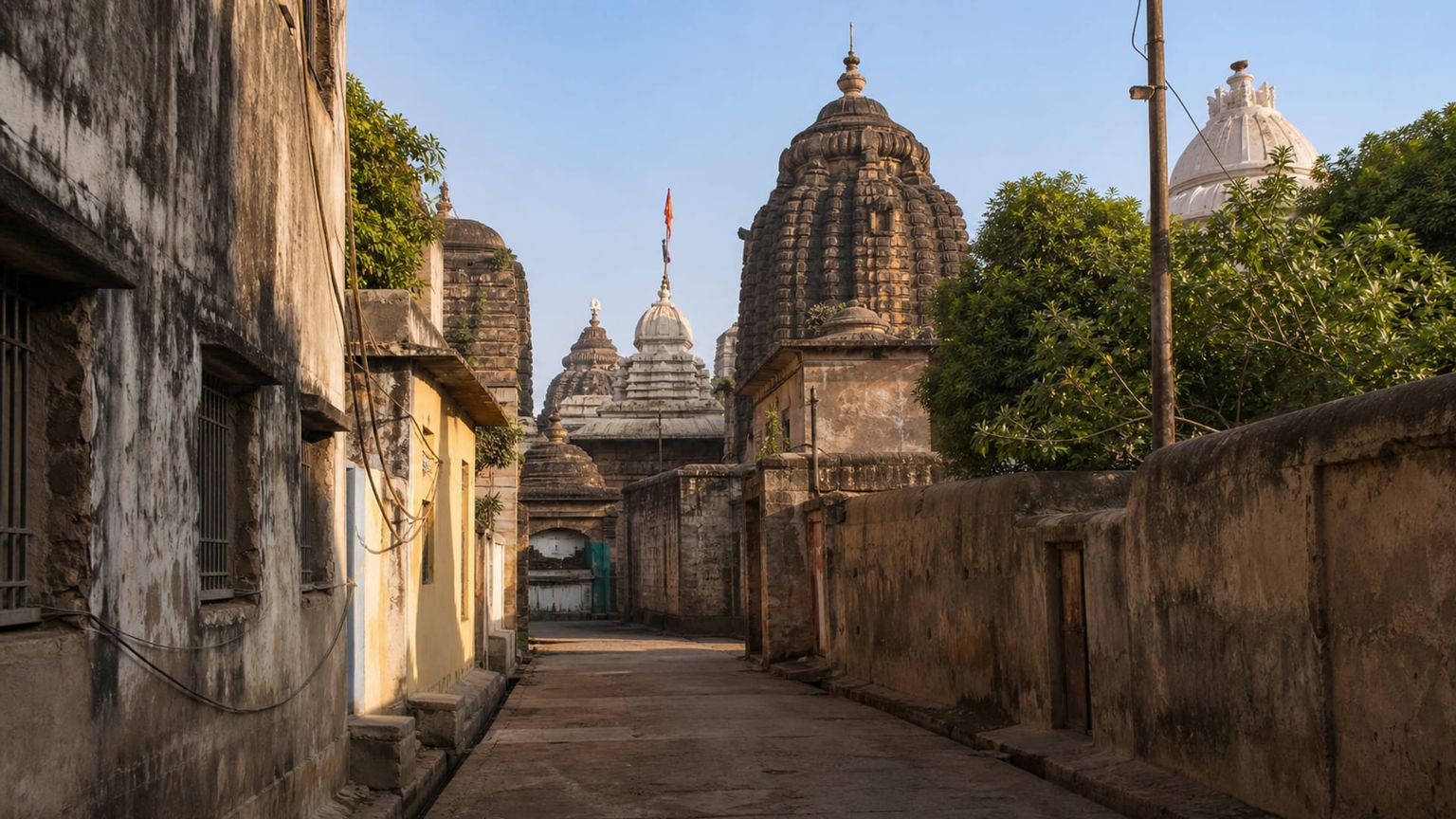
The historic core around Lingaraj Temple and the older temple cluster, where narrow lanes, ritual activity, and traditional markets shape daily life. It suits travelers who want to stay close to Bhubaneswar’s most important heritage sites and witness the city at its most historic.
Best for: Temple visits, heritage walks, and photographers who want to stay near the oldest monuments
What to expect: Dense lanes, pilgrim traffic, temple bells, and a constant flow of local movement through the day.
Hotel prices: Usually about $25 to $70 per night for well-rated stays
Distance to major sights: Within 5 to 10 minutes on foot of Lingaraj Temple and about 15 minutes on foot of Mukteshwar Temple
Quietness: Busy and animated in the day, with early morning and evening temple activity that can carry late.
Main trade-off: You gain the closest access to the historic temples, but lodging options are fewer and the streets can feel crowded and tight.
Good to know: Autos and cabs can struggle in the narrow lanes, so confirm the exact drop-off point before you arrive.
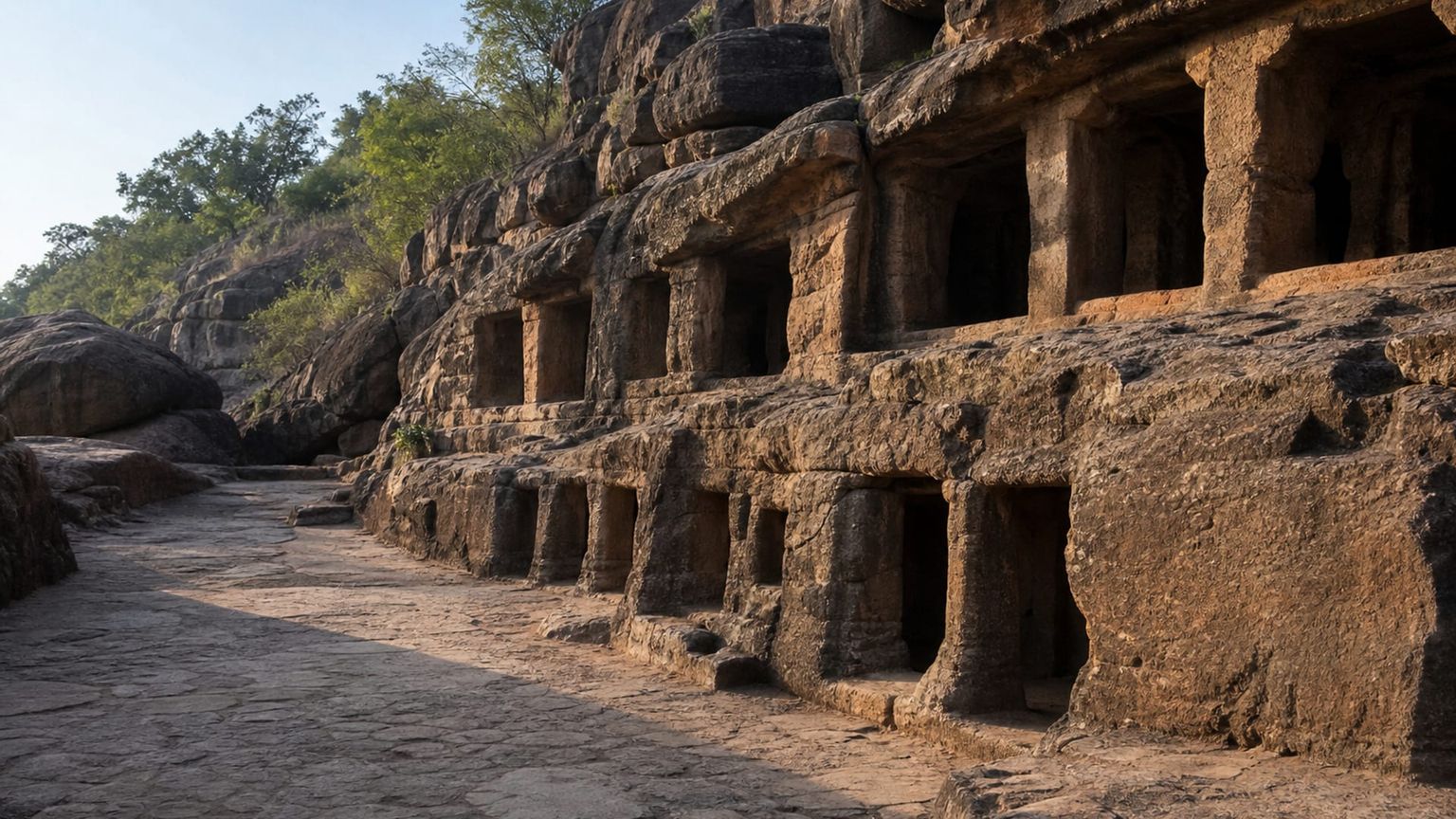
A west-side area near the Udayagiri and Khandagiri Caves, with guesthouses, local housing, and a quieter pace than the central junctions. It works well for visitors focused on the caves and on a less hectic place to sleep.
Best for: Cave visits, short stays, and travelers who prefer a quieter base
What to expect: Residential streets, local shops, and moderate daytime activity, with less traffic than the city center.
Hotel prices: Usually about $20 to $55 per night for well-rated stays
Distance to major sights: About 5 minutes by taxi to Udayagiri and Khandagiri Caves and roughly 20 minutes by taxi to Lingaraj Temple
Quietness: Calmer than central Bhubaneswar by day and even quieter after dark, with activity tapering early.
Main trade-off: You stay close to the caves, but you will usually need transport for the main temple circuit and central dining.
Good to know: Nighttime dining choices are limited, so plan dinner before you return from sightseeing.
Travelers usually avoid staying in Patia, because it sits far from the older temple circuit and most sightseeing requires longer rides; the area is better for offices and colleges than for walkable visitor stays. Khandagiri and Jatni are also less convenient, with fewer tourist-oriented amenities, longer trips into the city center, and more dependence on evening transport. Cuttack Road can be a poor fit for visitors who want to move on foot, since it is busy and spread out rather than centered on major sights.
Hotel deals
How to get around Bhubaneshwar efficiently
Bhubaneshwar has no metro, so most visitors move by Mo Bus for low-cost daytime hops and by taxis or app cabs for temple circuits and airport transfers.

Metro
for longer distances
Bhubaneswar has no metro system, so visitors usually rely on autos, app-based cabs, and the city’s bus network for medium-distance trips. The closest rail-based option is local and intercity Indian Railways services from Bhubaneswar New (BBS), but they do not function like an urban subway. For airport transfers from Bhubaneswar (BBI), plan on about 25 to 40 minutes by road, depending on traffic.

Bus and tram
for convenience
Mo Bus is the main city network, with frequent corridors linking Bhubaneswar New (BBS), the airport side, major market areas, and routes toward Cuttack. Fares are usually about $0.12 to $0.60 (₹10 to ₹50), depending on distance and bus type, and tickets are valid for the single ride only. Buses are most useful in the daytime, while evening frequency thins out, so check the timetable before relying on the last departure.

Taxi
for convenience or late hours
Licensed taxis and app cabs use metered or app-based pricing rather than fixed citywide fares, and airport pickups from Bhubaneswar (BBI) to central hotels usually cost about $5 to $12 (₹400 to ₹1,000), with longer cross-city trips roughly $10 to $18 (₹800 to ₹1,500). You can book through rideshare apps, hotel desks, or prepaid counters at the airport, and cash is still common, though cards and digital payments are widely accepted in app bookings. Travel times from the airport to central Bhubaneshwar are usually about 25 to 40 minutes, longer at peak hours.
*Prices are based on rates updated as of June 2026 and may change at the time of travel.
Use buses for low-cost daytime links, taxis for temple-to-temple travel, and app cabs or prepaid cars when you are coming from or going back to Biju Patnaik International Airport (BBI).
Iconic landmarks
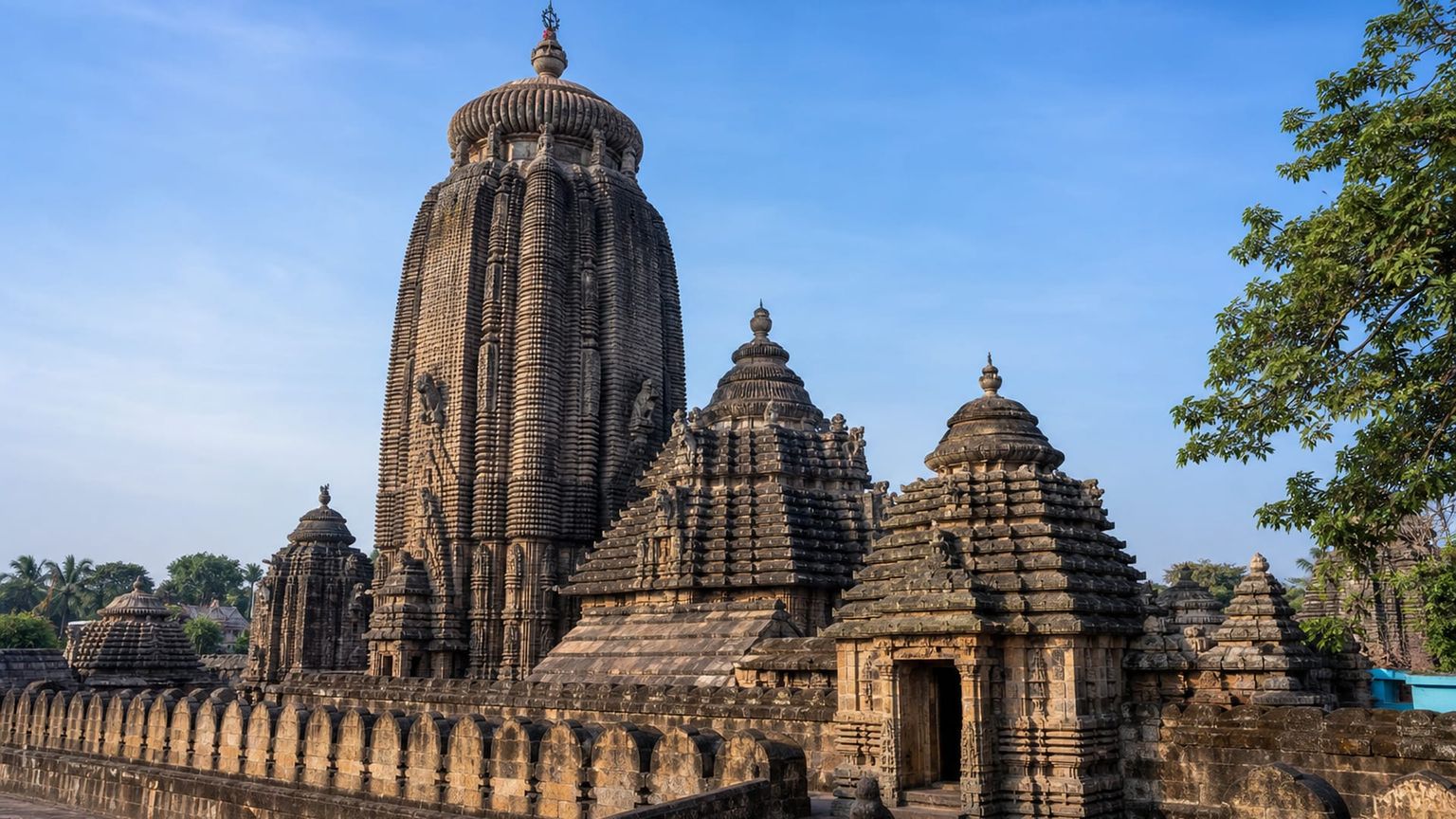
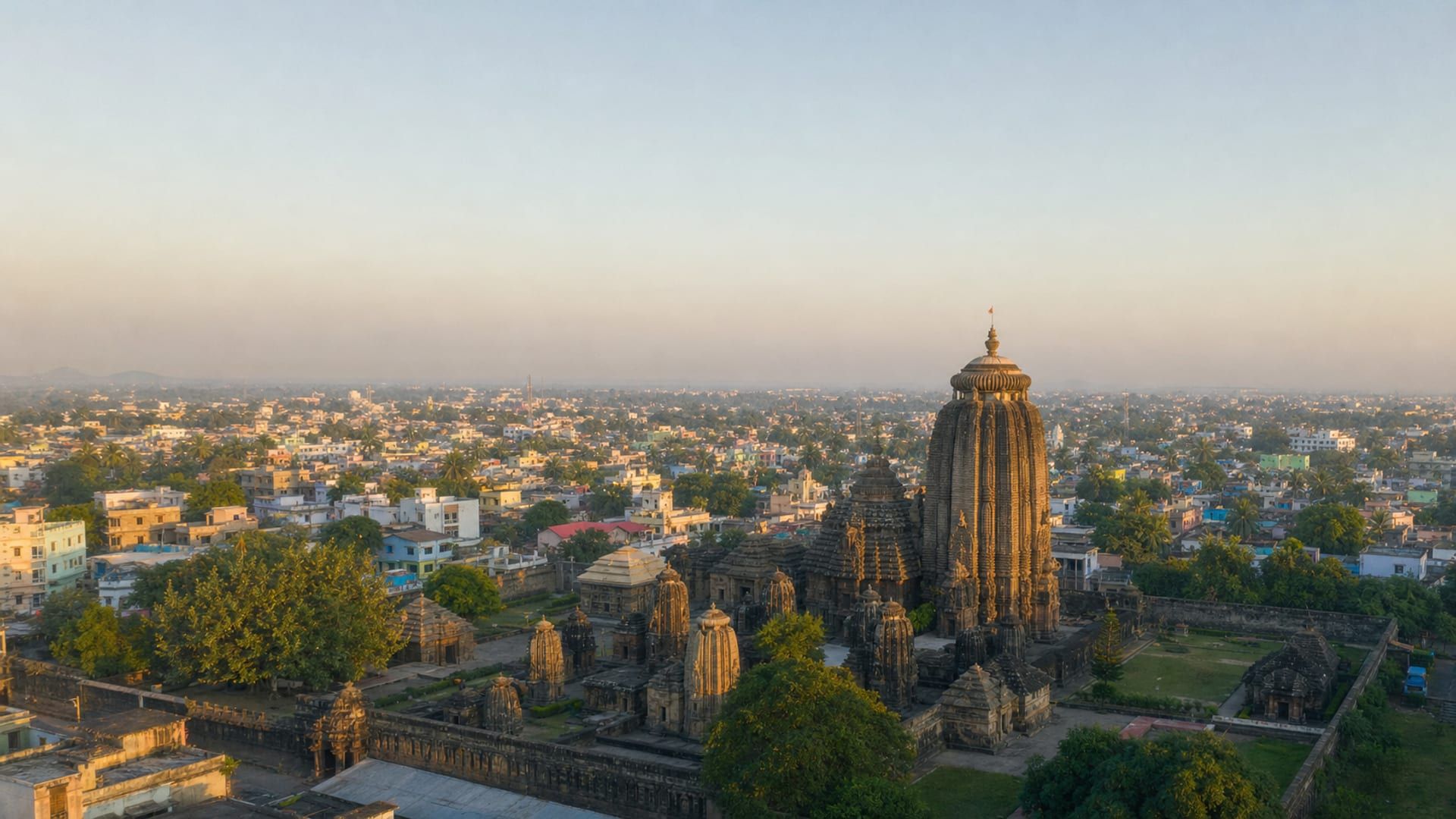
Lingaraj Temple
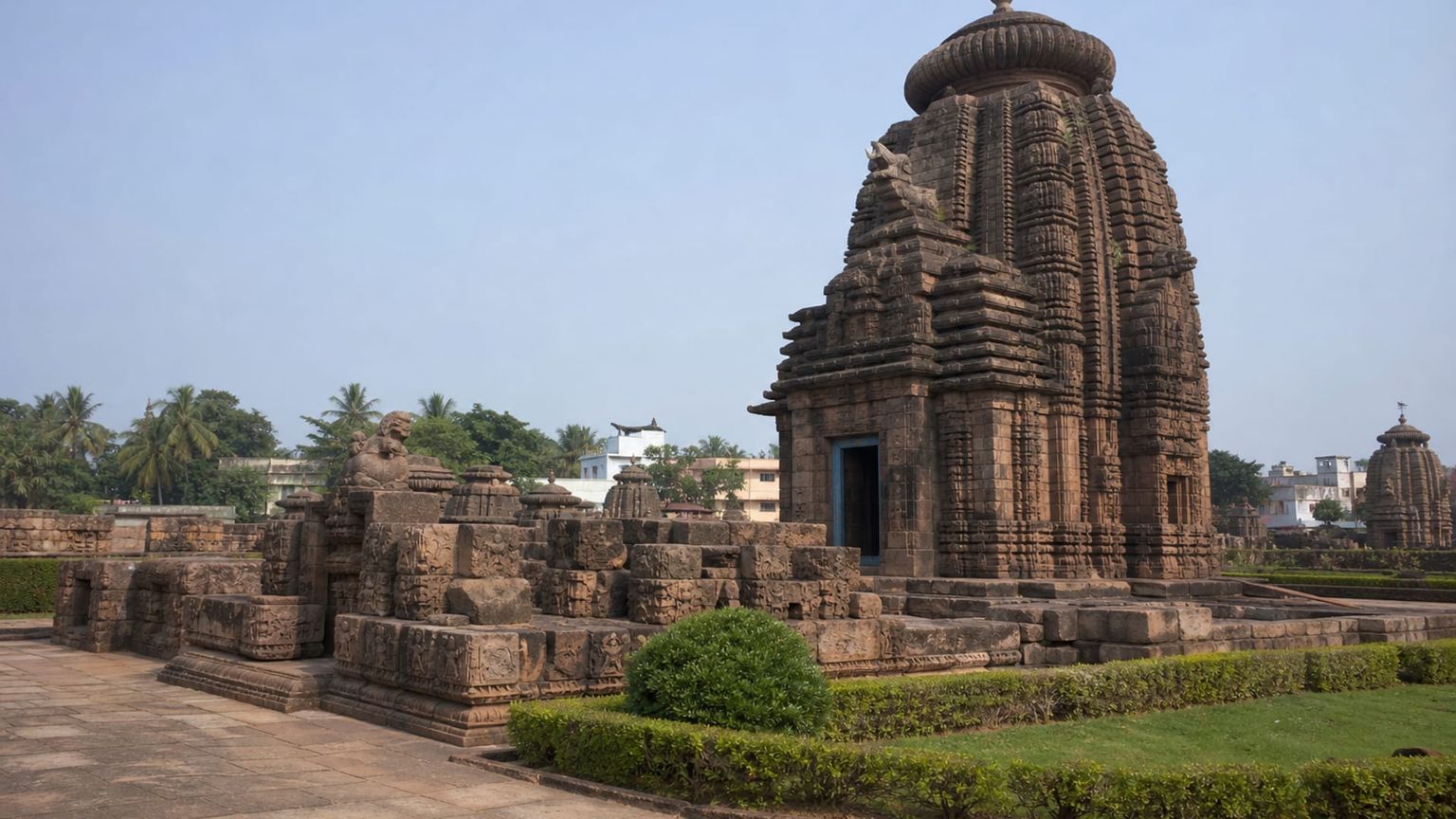
Bhubaneswar’s signature 11th-century Shaivite temple rises within a vast compound of sandstone shrines, pillared halls, and ritual courtyards. Its main tower and carvings make it the city’s most important heritage stop.
Time needed: About 1 to 2 hours
Entry: Free to access; non-Hindus cannot enter the main sanctum, and a camera fee may apply in outer areas during special visits.
Tip: Visit early morning for quieter darshan and softer light on the sandstone walls.
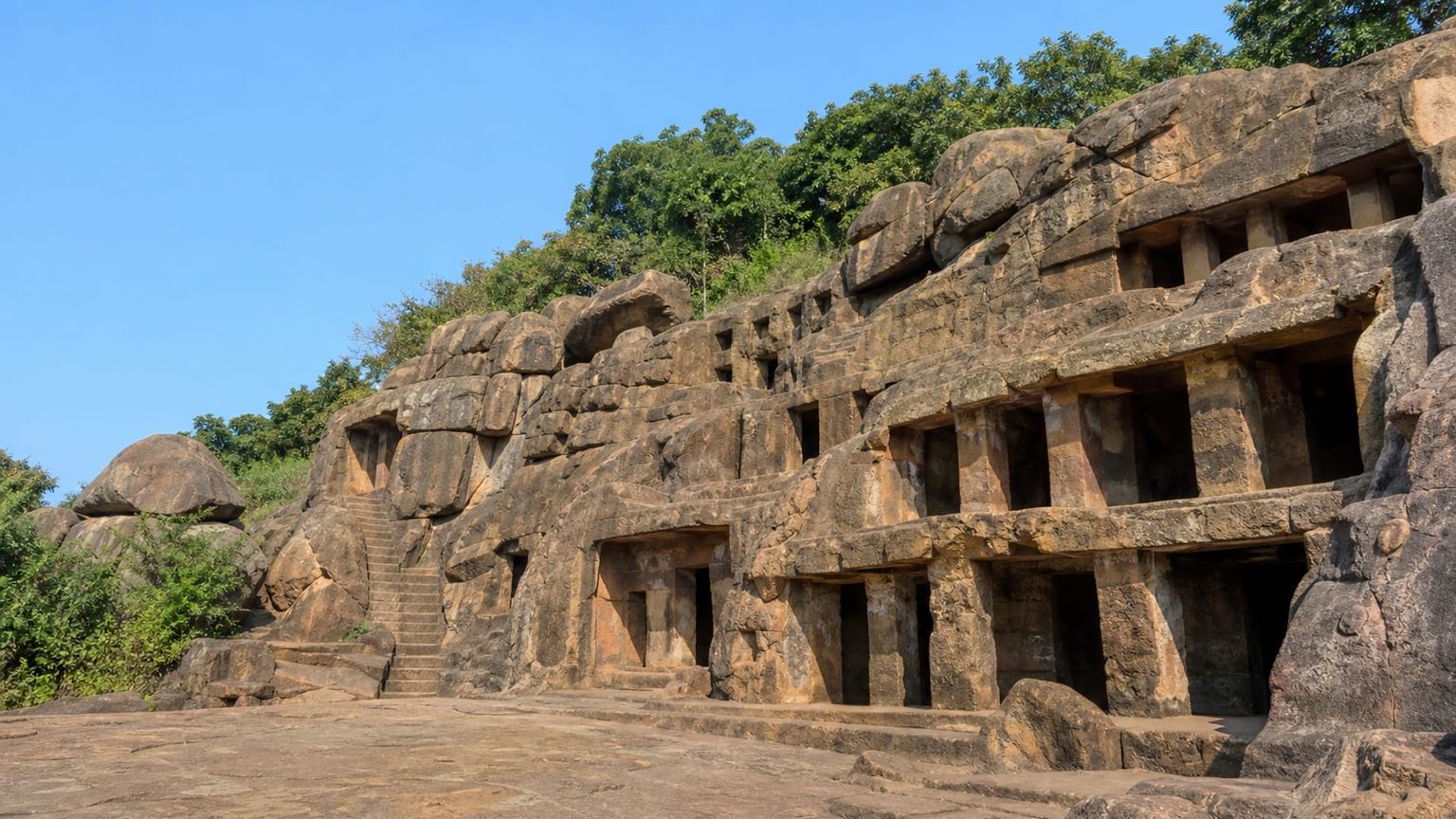
Udayagiri and Khandagiri Caves
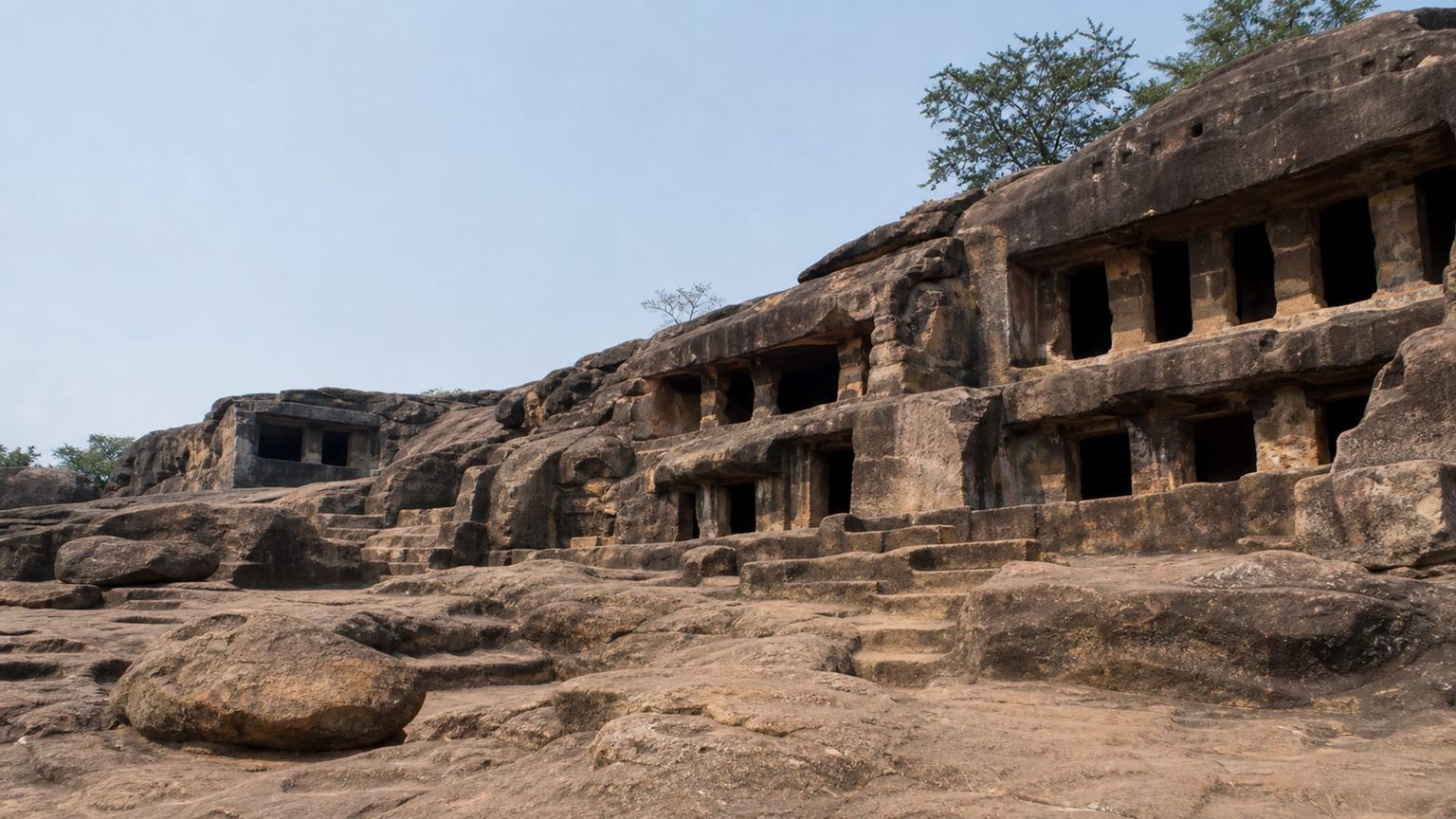
These twin hills hold early Jain rock-cut caves from the 2nd century BCE, with monk cells, carved panels, and hilltop views over Bhubaneswar. They offer the city’s clearest link to its ancient royal past.
Time needed: About 1 to 2 hours
Entry: Entry is about $0.30 to $1 ($20 to ₹80) for Indians and $3 to $6 ($250 to ₹500) for foreign visitors, depending on the site.
Tip: Go in the late afternoon, then climb slowly, since the stone steps can be steep and uneven.
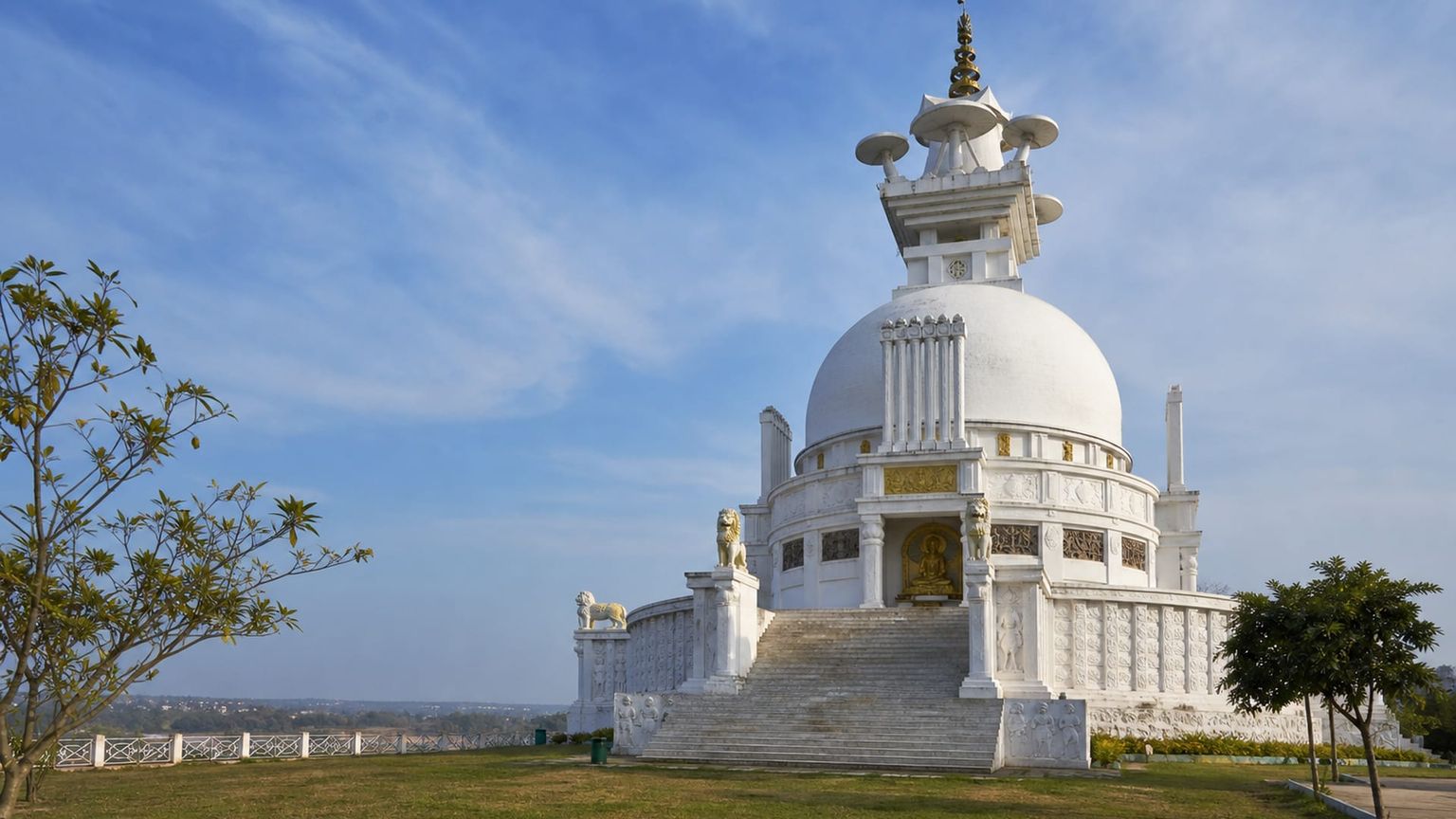
Dhauli Peace Pagoda
On Dhauli hill, this white stupa marks the site linked to Emperor Ashoka’s post-war transformation and Buddhist legacy. Its terrace, murals, and Daya River views make it one of Bhubaneswar’s key outings.
Time needed: About 45 to 60 minutes
Entry: Free to access; small fees may apply for parking or nearby vehicle entry, while the pagoda itself has no ticket charge.
Tip: Come near sunset for cooler air and a wider view over the Daya River valley.
Overlooked sites worth visiting

Mukteswara Temple
This 10th-century temple is smaller than Bhubaneswar’s headline shrines, but its carved torana and fine sandstone reliefs reward a slow circuit. The courtyard stays quiet outside ritual hours.
Time needed: About 30 to 45 minutes
Entry: Free to access. The temple is open to visitors during daylight hours, with no ticket office or timed admission. Donations are optional, and local rituals can briefly limit access to the inner shrine if priests are conducting worship.
Tip: Go early for softer light on the stone carvings.

Odisha State Museum
This compact museum gathers tribal art, bronzes, palm-leaf manuscripts, and coins in a few focused galleries. It suits an hour indoors and gives a tighter look at Odisha’s history than the larger sites.
Time needed: About 1 to 1.5 hours
Entry: Tickets cost about $0.60 to $1.20 ($50 to ₹100) for Indian citizens, with higher rates for foreign visitors on some gallery days. Camera fees, if charged, are separate, and the museum follows standard daytime opening hours with weekly closure rules. Visit the official site for details.
Tip: Check the weekly closure before you head over.
Traditional food
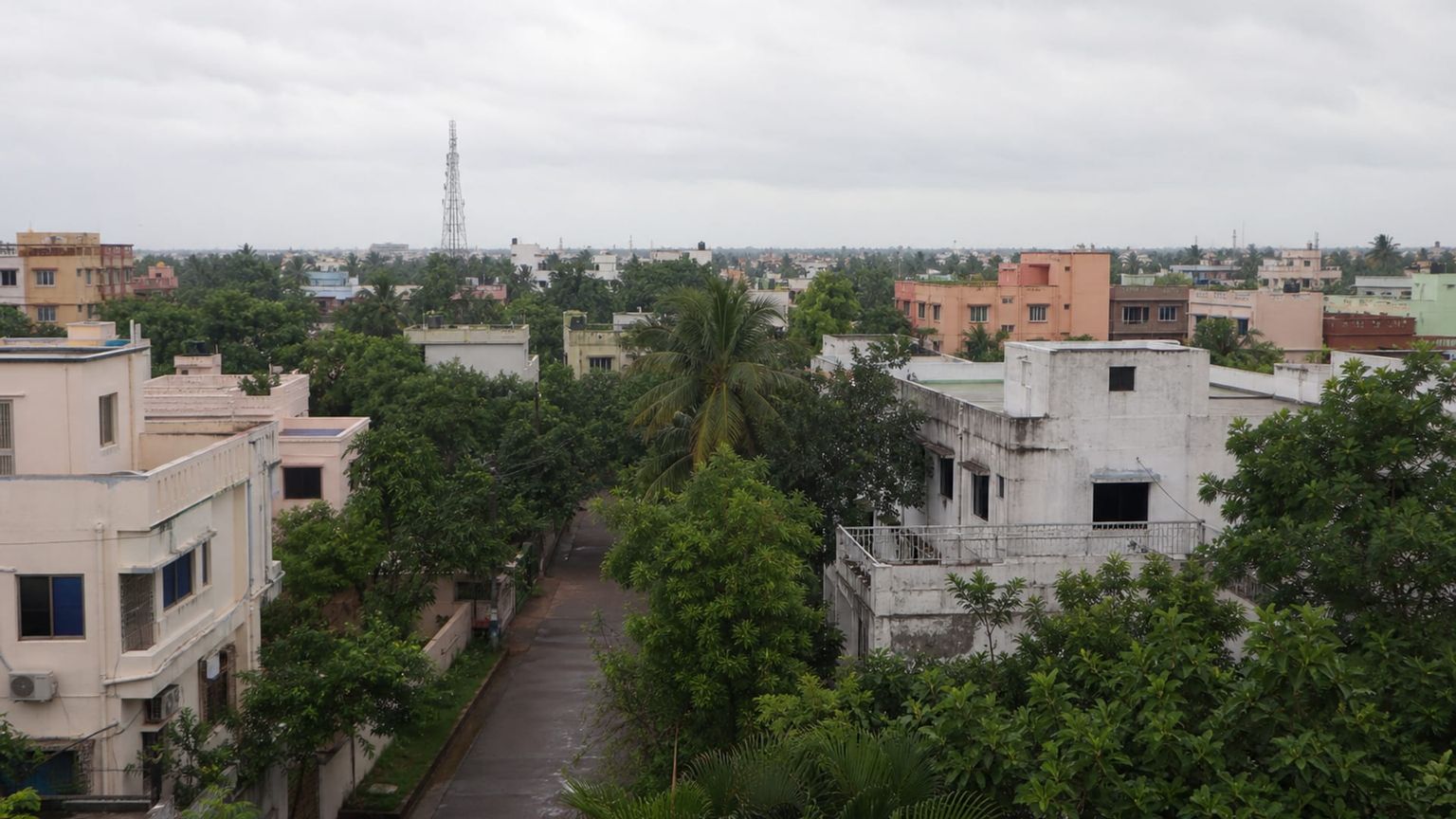
Bhubaneshwar’s food centers on rice, lentils, freshwater fish, milk sweets, and gentle spice, with Pakhala Bhata, Dalma, Chhena Poda, and Macha Ghanta showing the range from cooling meals to richer temple-town cooking.
Pakhala Bhata
Fermented rice with water, curd, and light sides, best when the day runs hot. Dalma in Bhubaneswar serves a dependable version in a city center setting.
Dalma
A steady Odisha classic of lentils and vegetables, usually served with rice and a mild tempering of spices. Truptee Restaurant in Bhubaneswar is a common stop for a full Odia meal.
Chhena Poda
A baked cheese dessert with a caramelized top and a dense, slightly smoky crumb. It is a signature sweet at Nayagarh Sweets, a long-running Bhubaneswar favorite.
Macha Ghanta
A fish curry built with vegetables and a fuller spice base, often served as a home-style Sunday dish. The Kanika restaurant at Mayfair Lagoon is a strong place to try it in the city.
Best time to visit Bhubaneshwar
Bhubaneshwar is most comfortable in the cooler months, while the hot season tests even short temple walks and the monsoon shifts outdoor plans toward early starts and longer indoor breaks.
Best for: Temple visits, cave outings, and full-day sightseeing
What you get: About 55 to 82°F (13 to 28°C), with the clearest air and the lightest weather pressure; crowds rise during holiday periods.
Trade-offs: Popular sites can feel busier, especially on weekends and festival dates.
Best for: Early-morning temple stops and shorter heritage loops
What you get: About 77 to 102°F (25 to 39°C), with fewer visitors than winter but more heat by late morning.
Trade-offs: Midday walking becomes tiring, so timing matters more.
Best for: Museum time, garden pauses, and quieter hotel rates
What you get: About 75 to 91°F (24 to 33°C), with lighter sightseeing crowds and frequent rain interruptions.
Trade-offs: Heavy showers can slow road travel and limit longer outdoor visits.
Best for: Balanced sightseeing before peak season arrives
What you get: About 70 to 90°F (21 to 32°C), with improving weather and manageable visitor numbers.
Trade-offs: Conditions improve fast, so the city can feel more active by late month.
A realistic 5-day plan in Bhubaneshwar
A five-day Bhubaneshwar stay works best when the old temples, the cave hills, and the day-trip stops each get their own space. This plan keeps the first day light, groups nearby sights together, and leaves time for moving between central neighborhoods without hurrying.
Land at Bhubaneswar airport, then take a prebooked taxi or app cab to Saheed Nagar or Jaydev Vihar, which usually takes about 20 to 35 minutes and costs roughly $4 to $8. Check into a room away from the main road if you want a quieter first night, then drink water, rest for an hour, and keep dinner simple at a nearby Odia or north Indian restaurant in Saheed Nagar, where you can eat without crossing the city after dark.
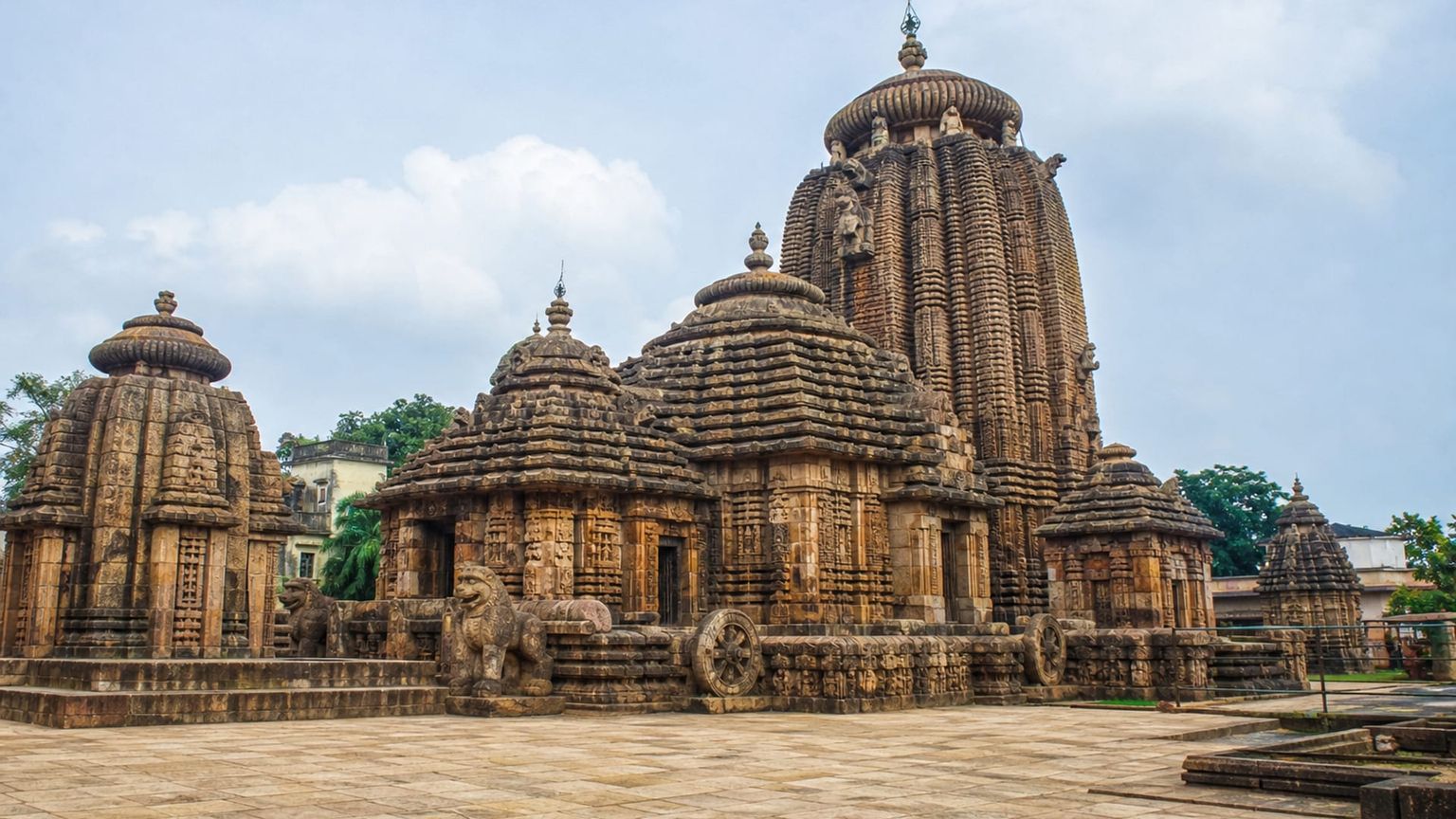
Start early at Lingaraj Temple, where the morning light works well on the sandstone towers and the compound is calmer before the crowds build. From Saheed Nagar, a taxi takes about 20 minutes, or roughly 25 minutes from Jaydev Vihar. After about 1 to 2 hours on site, continue by taxi to Mukteswara Temple in about 10 to 15 minutes, then spend 30 to 45 minutes on the carved torana and the smaller courtyard. Have lunch nearby, then end the afternoon at the Odisha State Museum, about 15 to 20 minutes away by taxi, for 1 to 1.5 hours with tribal art, bronzes, and manuscripts.
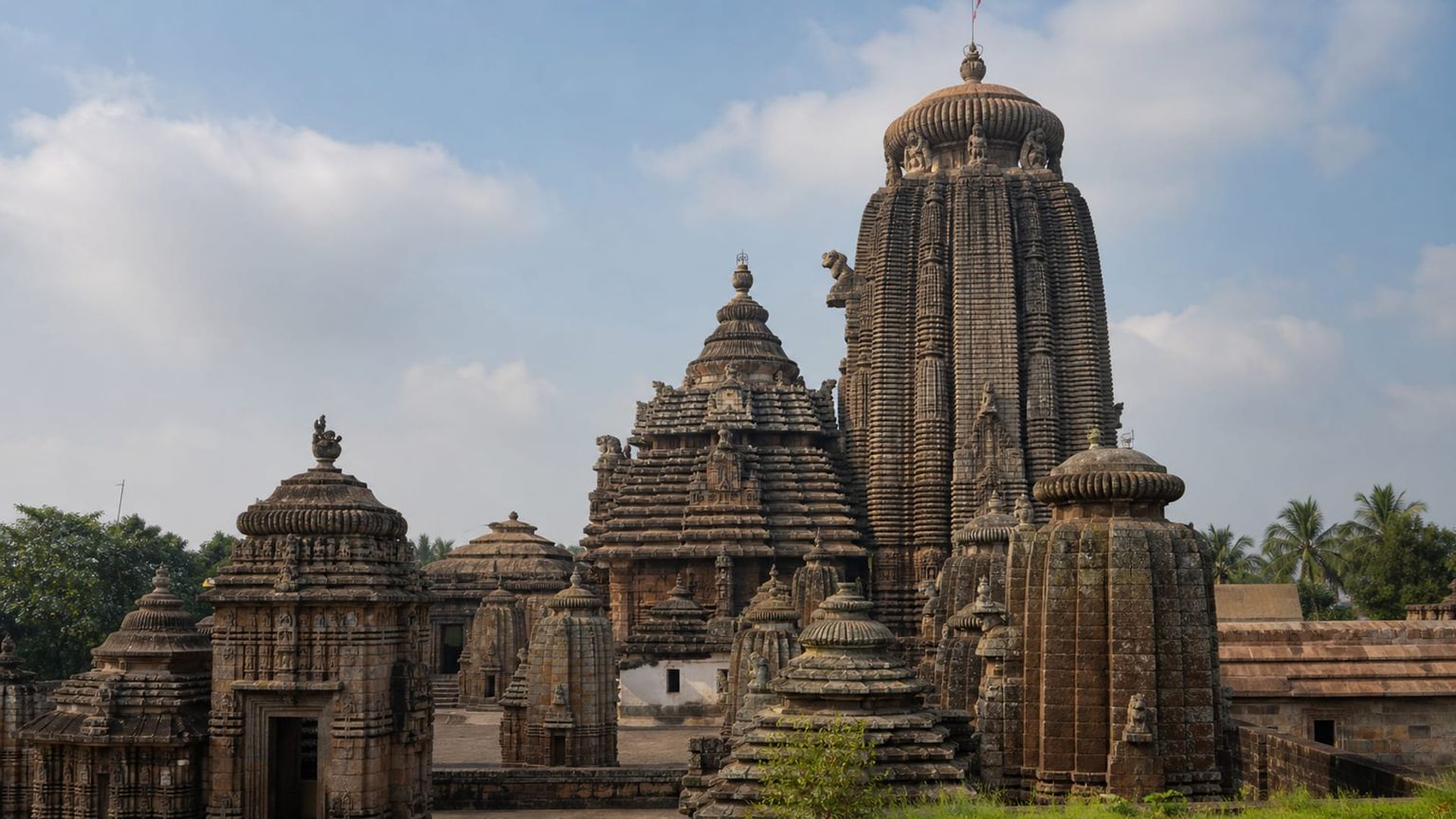
Spend the day on Bhubaneswar’s hill sites, beginning with the Udayagiri and Khandagiri Caves. From Saheed Nagar or Jaydev Vihar, the drive takes about 15 to 25 minutes, and the site itself needs about 1 to 2 hours if you climb slowly and pause for the carvings and views. After that, go by taxi to the nearby Khandagiri area for a late lunch or tea, then return to your hotel for an early evening because this side of the city quiets down faster after dark.
Head out near sunset for Dhauli Peace Pagoda, where cooler light and the Daya River valley make the best final impression of the trip. From central Bhubaneswar, the taxi ride takes about 30 to 40 minutes, and the hilltop stop usually takes 45 to 60 minutes. If you want a fuller afternoon before the drive, pair it with a second short stop back in the city at Mukteswara Temple or the Odisha State Museum, then finish with dinner in Saheed Nagar.
Before you head to the airport, make a last circuit that stays close to the center, starting with one final hour at the Odisha State Museum if you missed it earlier or want a shorter return visit. Then spend time in Saheed Nagar for shopping and lunch, where malls and local stores make it easy to pick up textiles or small souvenirs without a long cross-town ride. If your flight is later in the day, finish with coffee in Jaydev Vihar, then leave for Bhubaneswar airport about 1 hour before departure if you are coming from the center.
Business-class flights from the US to Bhubaneshwar
Long-haul flights to Bhubaneshwar usually connect through major Gulf or Asian hubs, with East Coast and West Coast itineraries following different stopover patterns. The sample fares below show how those routes often price.
From New York, Air India, Qatar Airways, Emirates, Etihad Airways, Lufthansa, and Singapore Airlines are common options, and the trip usually takes about 18 to 26 hours with one stop through Doha, Dubai, Abu Dhabi, Frankfurt, Munich, or Singapore. Round-trip fares from New York usually run from $3,200 to $6,500.
From Los Angeles, Qatar Airways, Emirates, Etihad Airways, Singapore Airlines, Cathay Pacific, and Lufthansa commonly appear on one-stop itineraries, with the journey usually taking about 19 to 28 hours through Doha, Dubai, Abu Dhabi, Hong Kong, Singapore, or Frankfurt. Round-trip fares from Los Angeles often price at $3,400 to $6,800.
Bhubaneshwar feels different when you slow down
A deliberate Bhubaneshwar trip keeps Saheed Nagar or Jaydev Vihar as the base, uses taxis for Lingaraj Temple, Mukteswara Temple, and Dhauli, then saves one slower day for Udayagiri, Khandagiri, and the Odisha State Museum. That mix gives the city shape in real distances, not just in names on a list. If you want a route built around the old temple core and the west-side cave hills, ask AranGrant experts to plan it with the right pace







