Chapters:

Need help with your trip?
Our support team is available 24/7. Request a callback or call us directly at (833) 619-0908
Düsseldorf often gets treated as a quick stop for the old town, a glass of Altbier, and a few hours on Königsallee, while the quieter riverside districts and south-bank sights stay out of the plan.
That approach can work, but it leaves you crossing town more often than needed, mixing crowded evening streets with longer transfers to museums, the Rhine Tower, and Benrath Palace.
This guide keeps the city in a cleaner order, with neighborhoods, transit, meals, and day trips arranged so each day has a clear focus.
Useful things to know

Main language(s): German
Hallo (HAH-loh) – Hello/good morning
Bitte (BIT-teh) – Please
Danke (DAHN-keh) – Thank you
Sprechen Sie Englisch? (SHPREH-khen zee ENG-lish?) – Do you speak English?
Wie viel kostet das? (vee feel KOS-tet dahs?) – How much does it cost?

Currency: The local currency is the euro (EUR, €).

Cash and cards: Cards and contactless are widely accepted; carry about €20 to €40 ($22 to $44) in cash for small purchases.

Tipping: Round up the bill or leave about 5-10% for good service.

Traditional food: Rheinischer Sauerbraten, Himmel un Ääd, Halve Hahn, Düsseldorfer Senfrostbraten

Water and coffee costs: Water about €2 ($2), bar espresso about €3 ($3.30).

Taxis and ride apps: Uber and Bolt operate here; local taxis are easy to find.

Plug and voltage: Type F socket, 230V

Dining and shop opening hours: Breakfast runs about 07:00-10:00, lunch 12:00-14:00, and dinner 18:00-21:00. Many kitchens close on Sunday afternoons and some smaller spots close one day a week.

Emergency number: 112 for ambulance, fire, and police; 110 for police.
Where to stay in Düsseldorf
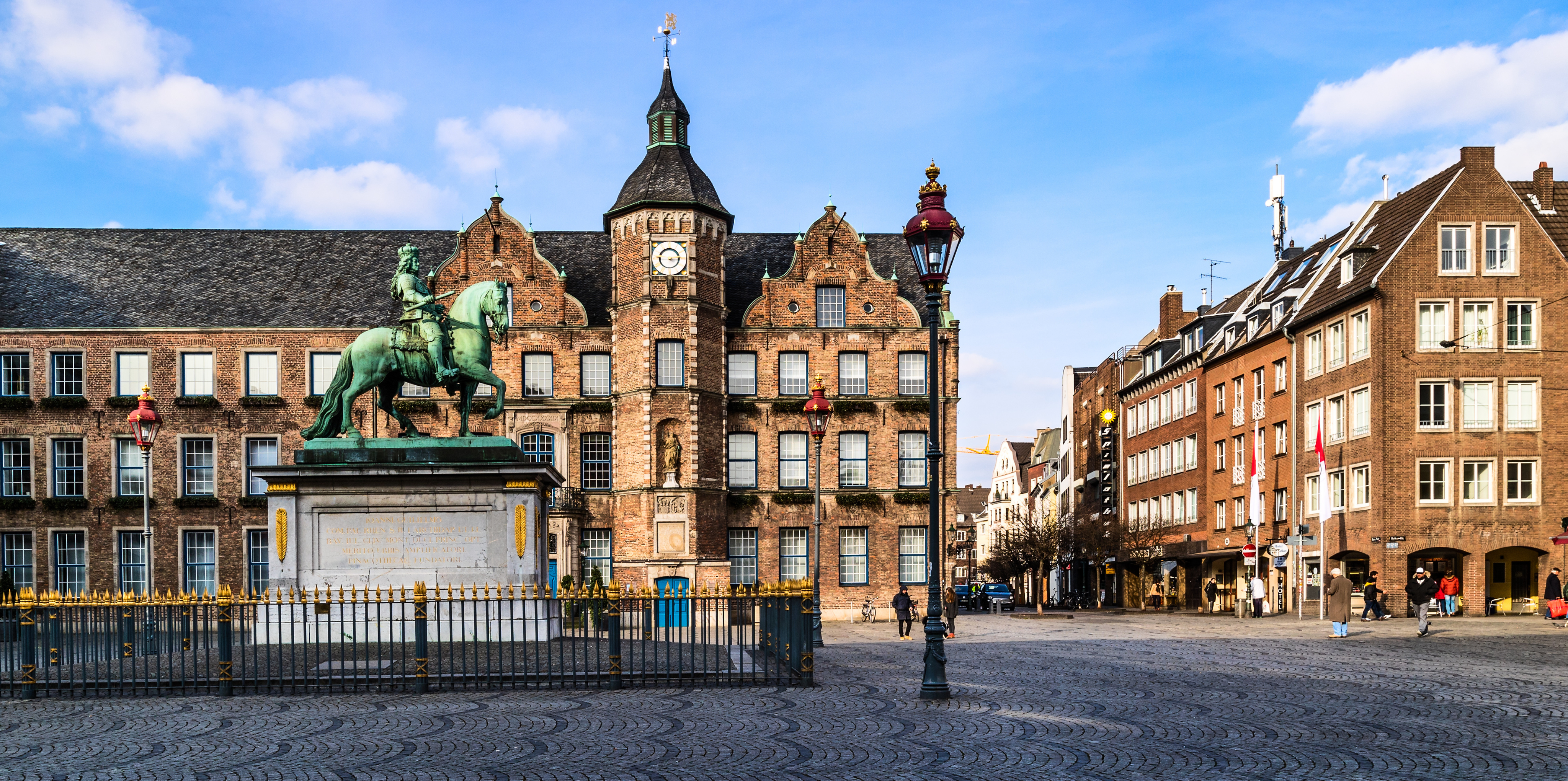
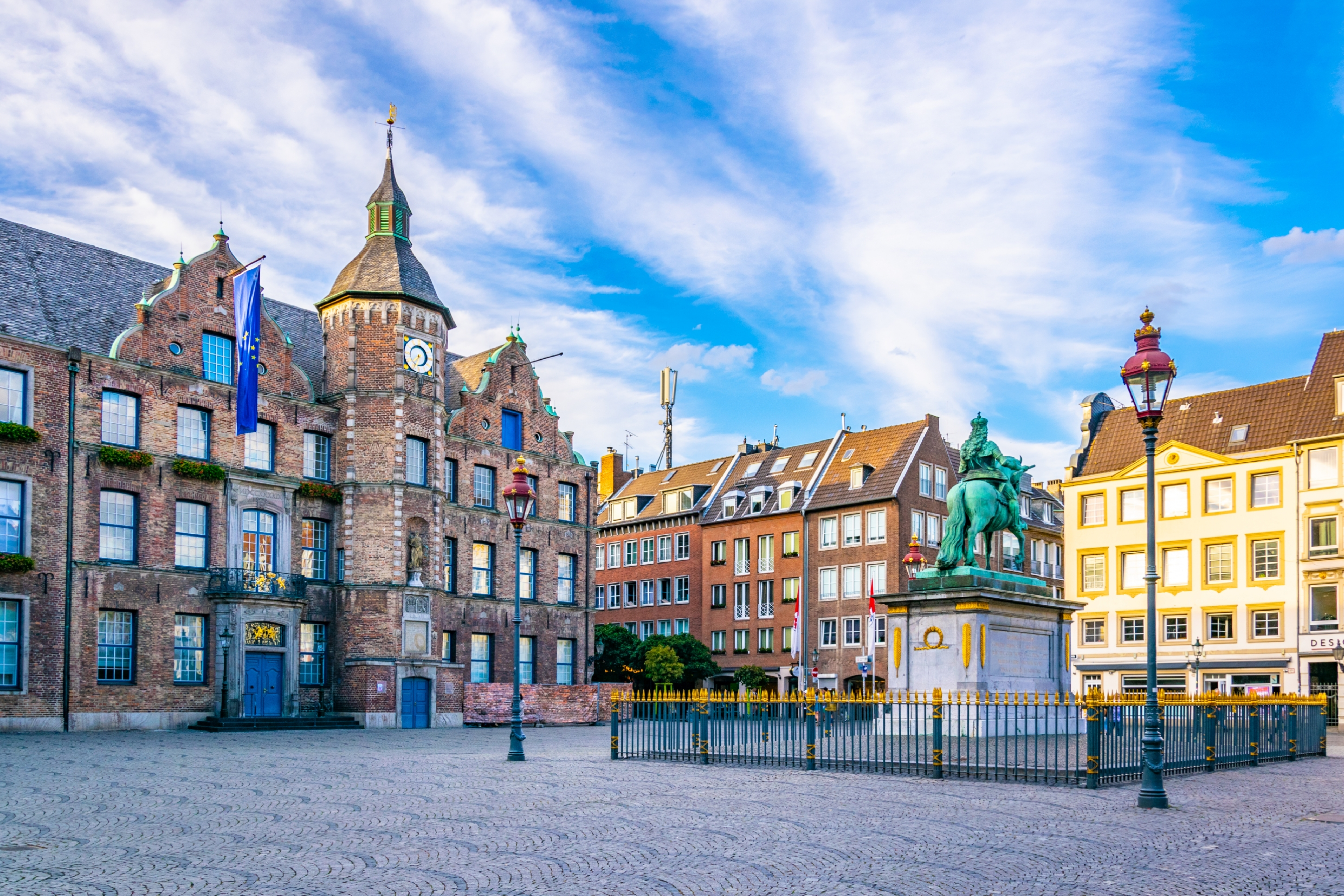
Düsseldorf’s old town packs bars, restaurants, and compact streets along the Rhine. It suits travelers who want to step out to major sights, though the late-night scene brings noise and dense crowds.
Best for: Nightlife, short sightseeing walks, and travelers who want the liveliest central base
What to expect: Narrow streets, packed evenings, and a strong restaurant and bar concentration, with daytime visitors filling the main lanes.
Hotel prices: Usually about 140€ to 260€ (~$153 to ~$284) per night for well-rated stays
Distance to major sights: About 10 minutes on foot to Königsallee; about 15 minutes on foot to the Rhine Promenade
Quietness: Busy in the day and loud well into the night, especially on weekends.
Main trade-off: Central access comes with the city’s highest noise levels and the least room to relax after dark.
Good to know: Book higher floors or a courtyard room if you plan to sleep before midnight, since late crowds spill into the side streets.
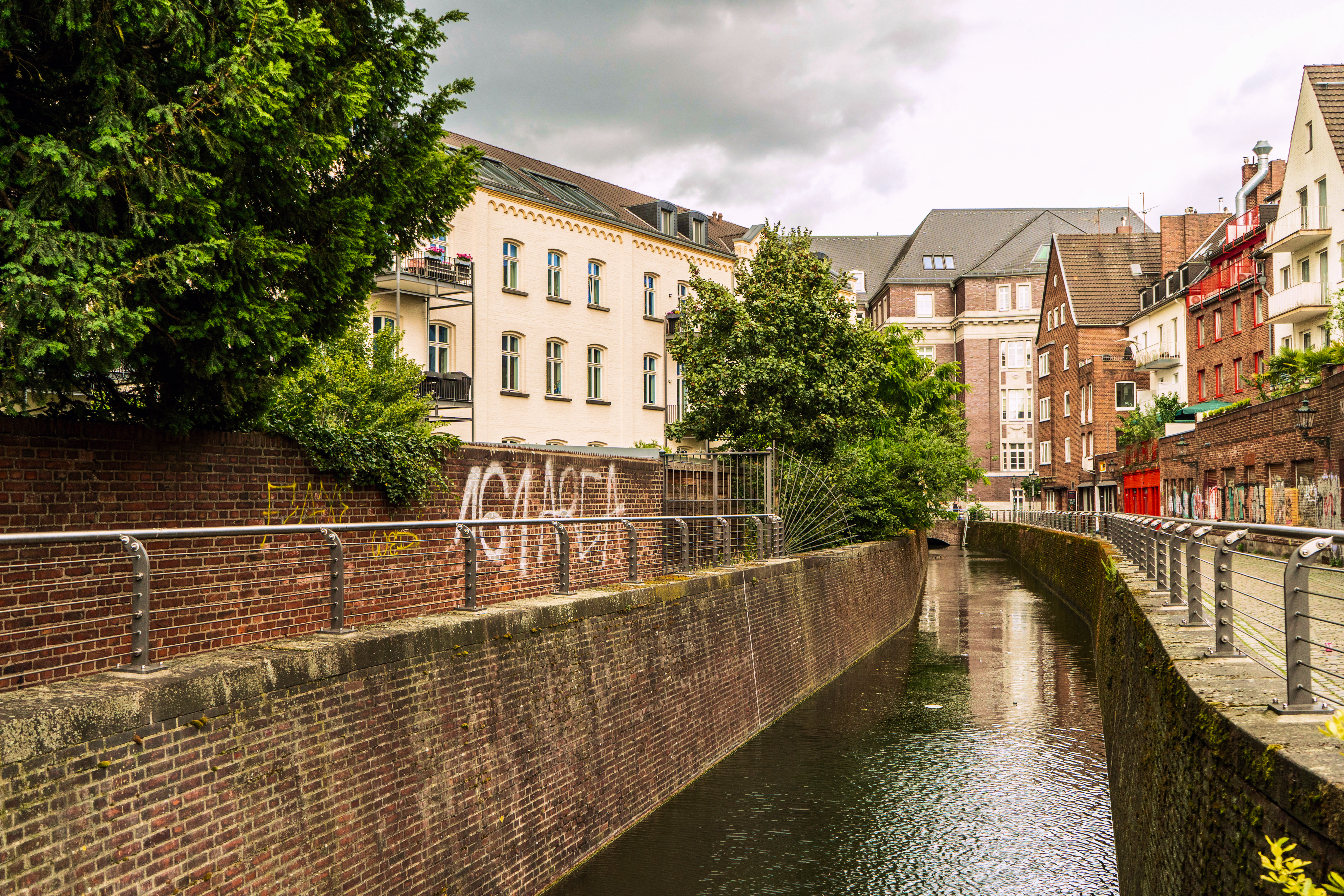
Carlstadt sits just south of the old town and keeps a more residential edge while staying close to the center. It works well for travelers who want restaurants, galleries, and easy walks without the same late-night intensity.
Best for: Couples, food-focused stays, and travelers who want a central base with fewer late-night crowds
What to expect: Small streets, cafes, antique shops, and moderate foot traffic that drops quickly after dinner.
Hotel prices: Usually about 120€ to 220€ (~$131 to ~$240) per night for well-rated stays
Distance to major sights: About 8 minutes on foot to Königsallee; about 15 minutes on foot to the Rhine Promenade
Quietness: Calmer than Altstadt by day, and notably quieter at night with only occasional restaurant spillover.
Main trade-off: You trade some immediate nightlife for a quieter street pattern and slightly fewer hotel choices.
Good to know: Some blocks have limited late shopping and fewer all-night spots, so plan evening meals before returning to the hotel.
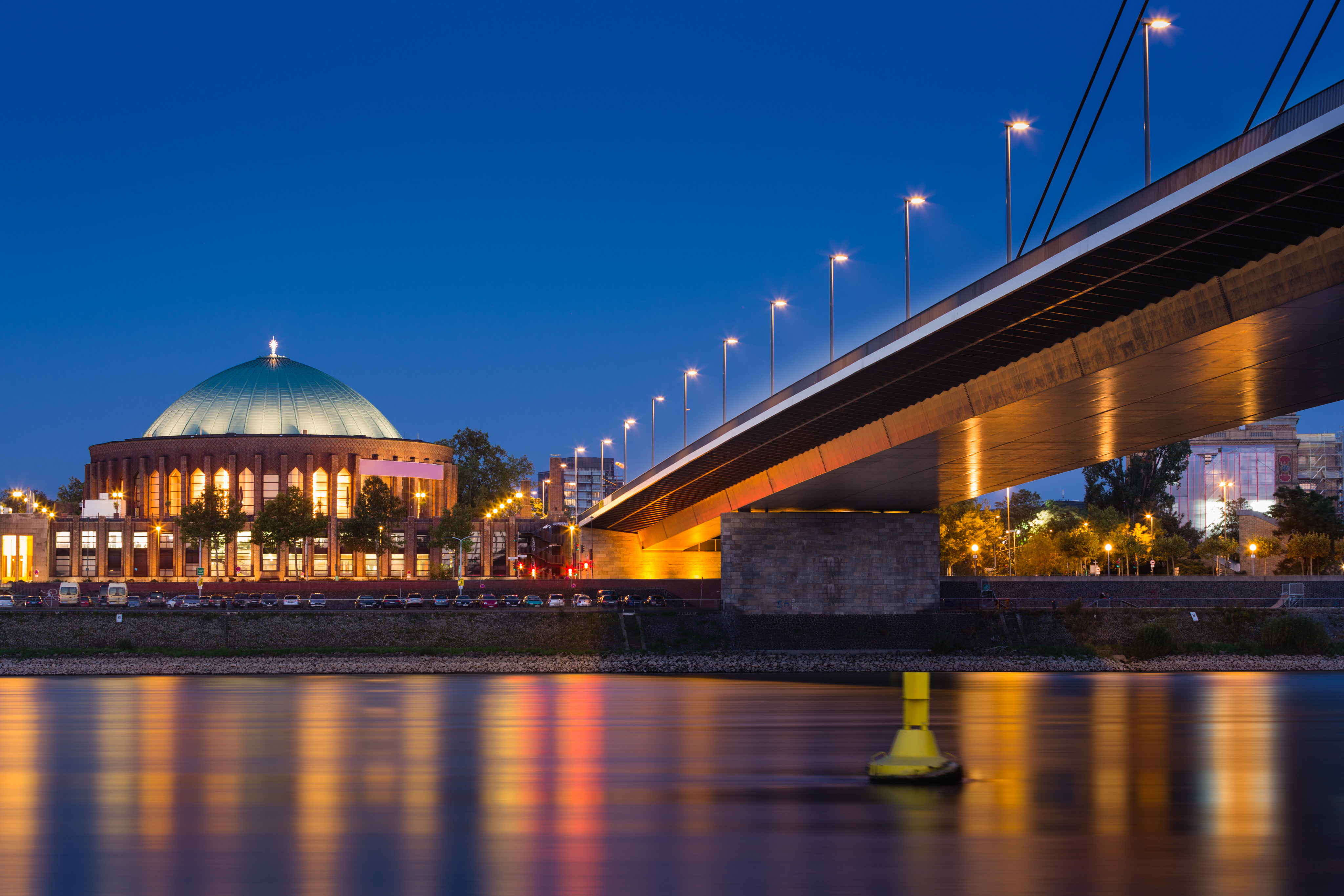
Pempelfort is a north-central district with steady local life, independent cafes, and easy U-Bahn access to the center. It suits visitors who want a neighborhood base with quick links to museums, the old town, and the station.
Best for: Museum visits, longer stays, and travelers who prefer a neighborhood feel with transit access
What to expect: Mixed residential and commercial streets, daytime cafe traffic, and a calmer evening scene than the inner core.
Hotel prices: Usually about 110€ to 200€ (~$120 to ~$218) per night for well-rated stays
Distance to major sights: About 10 minutes by transit to Königsallee; about 15 minutes by transit to the Old Town
Quietness: Active during the day, then quieter after office hours, with less weekend noise than the center.
Main trade-off: You will rely more on transit or walking for late evenings, and the immediate area has fewer headline sights.
Good to know: If you want to move by transit, check how close the hotel sits to the Wehrhahn or Nordstraße stops before booking.
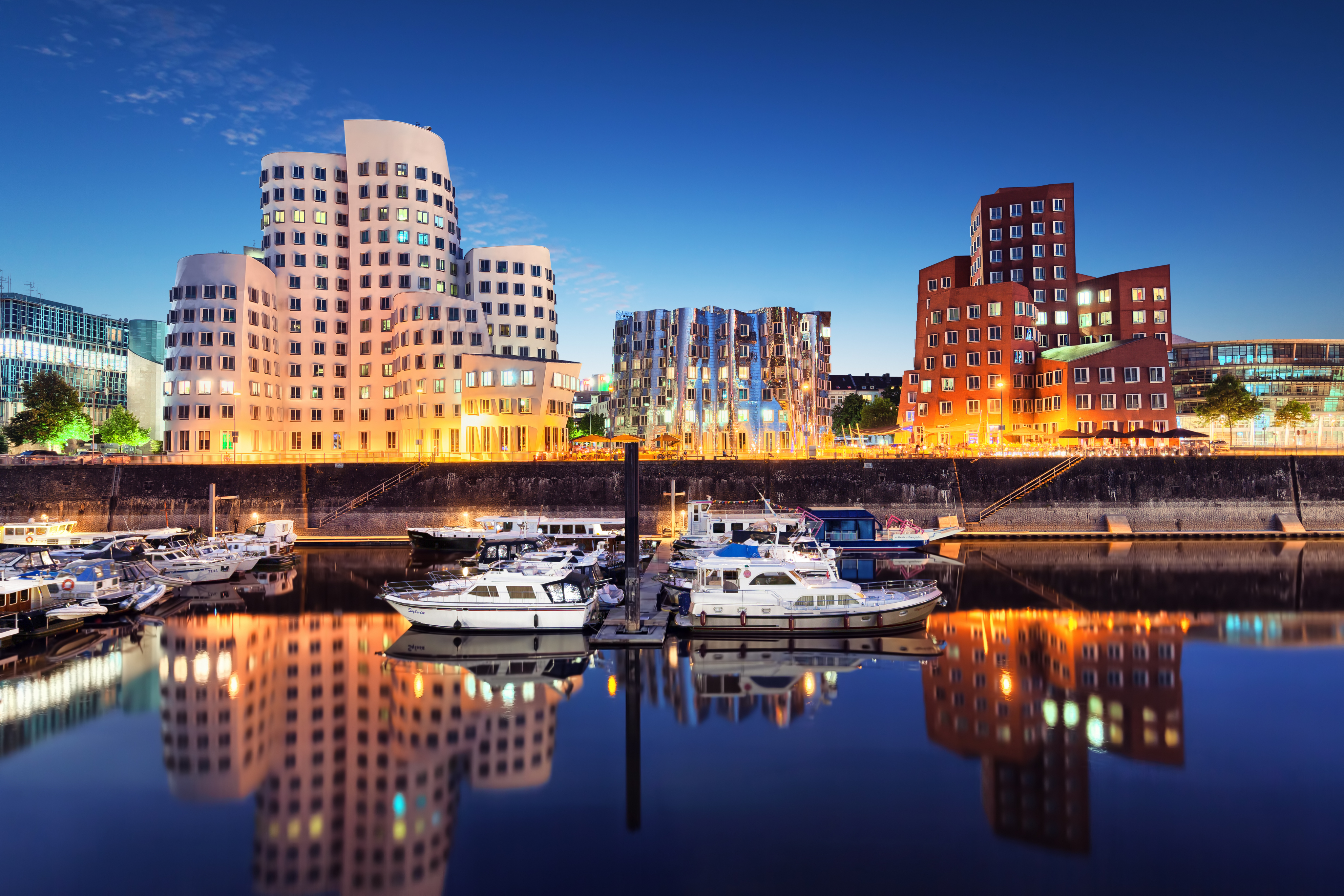
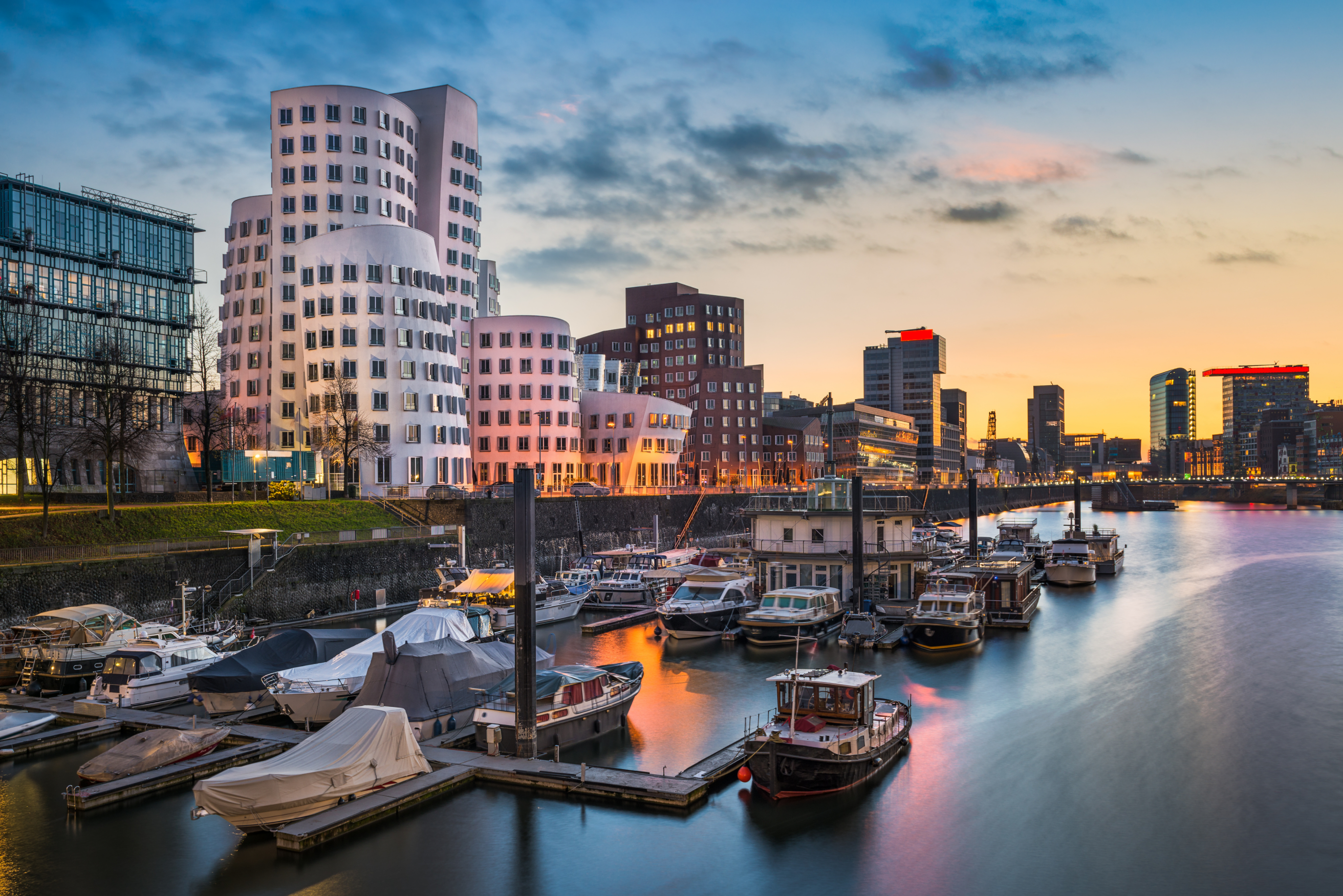
Unterbilk sits south of the center near MedienHafen and the Rhine, with cafes, restaurants, and a younger residential crowd. It gives you quick access to the waterfront while staying connected to central Düsseldorf.
Best for: Dining, riverside walks, and travelers who want a modern neighborhood with central connections
What to expect: Cafes, dinner spots, and evening foot traffic around major streets, while side streets stay more residential.
Hotel prices: Usually about 120€ to 230€ (~$131 to ~$251) per night for well-rated stays
Distance to major sights: About 10 minutes by transit to Königsallee; about 20 minutes on foot to the Rhine Promenade
Quietness: Lively in the early evening, then quieter away from the main restaurant streets after about 10:00 pm.
Main trade-off: Popular dining streets can be busy at mealtimes, and the hotel selection is smaller than in the center.
Good to know: Choose a place near a tram or U-Bahn stop if you plan to split nights between the Rhine and the center.
Travelers usually avoid staying in Unterrath, Lohausen, and Wittlaer unless they need airport access, because they sit far from the Altstadt, Königsallee, and the main museum areas and offer fewer visitor-oriented hotels and dining options. Oberbilk and parts of the outer northern districts are also less convenient for short city stays, since evening transit can take longer and the main sights are not within an easy walk.
Hotel deals
How to get around Düsseldorf efficiently
Düsseldorf has no subway-style metro, so most visitors rely on the S-Bahn, trams, buses, and taxis, with the S11 linking Düsseldorf Airport (DUS) to the center in about 12 minutes.

S-Bahn
for longer journeys and rides to the airport
Düsseldorf has no subway-style metro, so visitors usually use the S-Bahn and regional trains instead. From Düsseldorf Airport (DUS), the S11 links the airport terminal to Düsseldorf Hauptbahnhof in about 12 minutes, with local fares from about $3.20 (€2.90) for a short trip or about $9.80 (€8.90) for a 24-hour ticket that covers buses, trams, and trains within the city zone.

Stadtbahn, tram, and bus
for city-center and neighborhood journeys
The bus and tram network reaches the Altstadt, Hauptbahnhof, MedienHafen, and most inner districts, with frequent day service and night buses on the main corridors. Single tickets start at about $3.20 (€2.90) and stay valid for about 90 minutes on the local network, while day tickets cost about $9.80 (€8.90); buy from platform machines, onboard machines, or the VRR app, then validate only if the ticket type requires it.

Taxi
for late hours
Licensed Düsseldorf taxis use meters, not fixed airport fares, and the city tariff usually lands at about $4.50 to $6.00 (€4.10 to €5.50) for the base fare, then about $2.60 to $3.20 (€2.40 to €2.90) per mile, depending on the time of day. A ride from Düsseldorf Airport (DUS) to central Düsseldorf typically costs about $25 to $35 (€23 to €32), and most cabs accept cards, though cash still works well; you can take one at official ranks or book through a dispatch app.
*Prices are based on rates updated as of June 2026 and may change at the time of travel.
Use the S-Bahn for airport and longer cross-town trips, trams and buses for inner districts, and taxis or ride apps when you want door-to-door travel after dinner.
Iconic landmarks
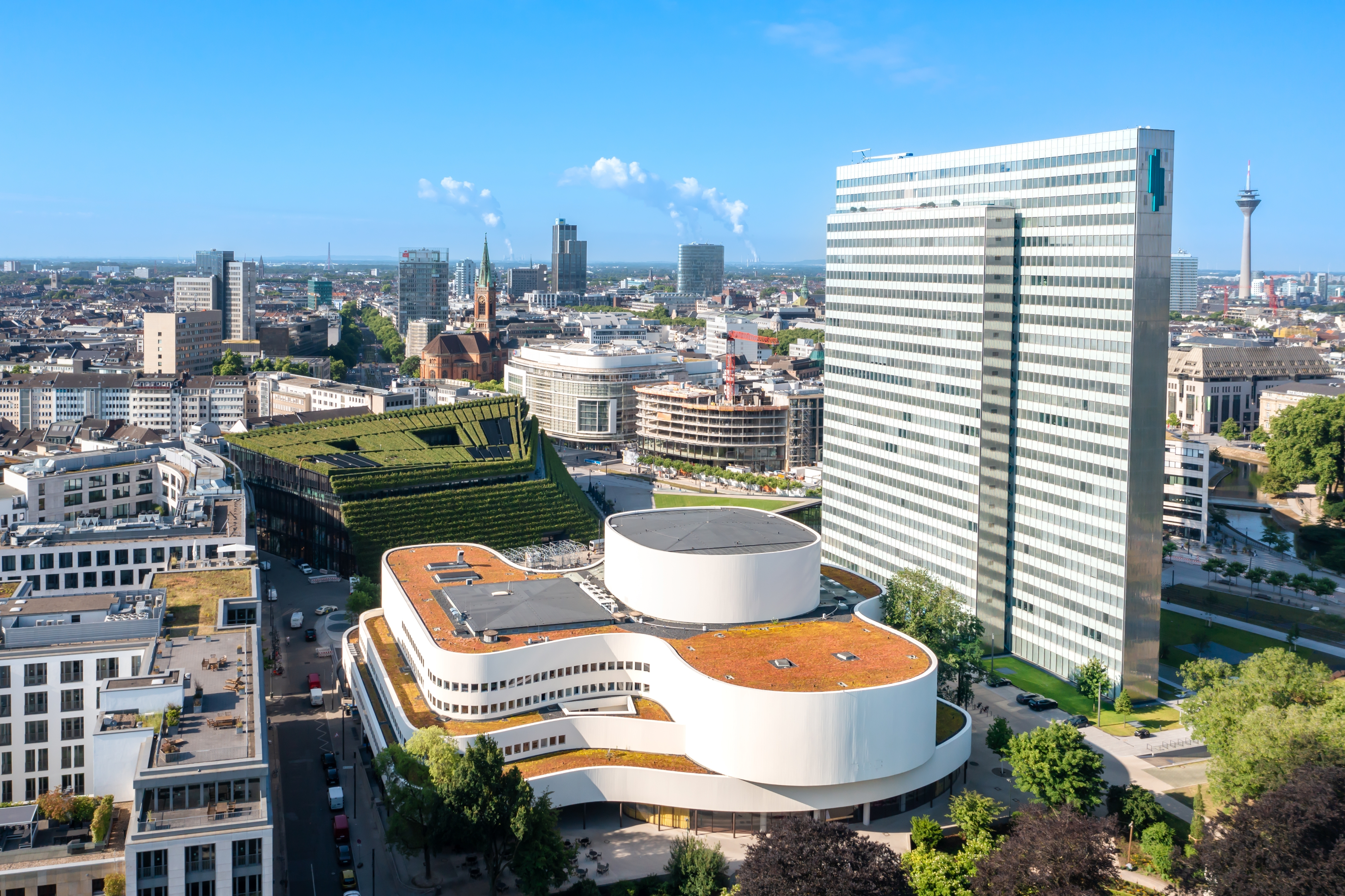
Königsallee
Düsseldorf’s grand shopping boulevard centers on a canal lined with plane trees, bridges, and flagship stores. It is the city’s best-known promenade, with luxury boutiques on one side and cafés on the water’s edge.
Time needed: About 1 to 2 hours
Entry: Free to access
Tip: Visit late afternoon for the clearest light and the busiest café terraces.
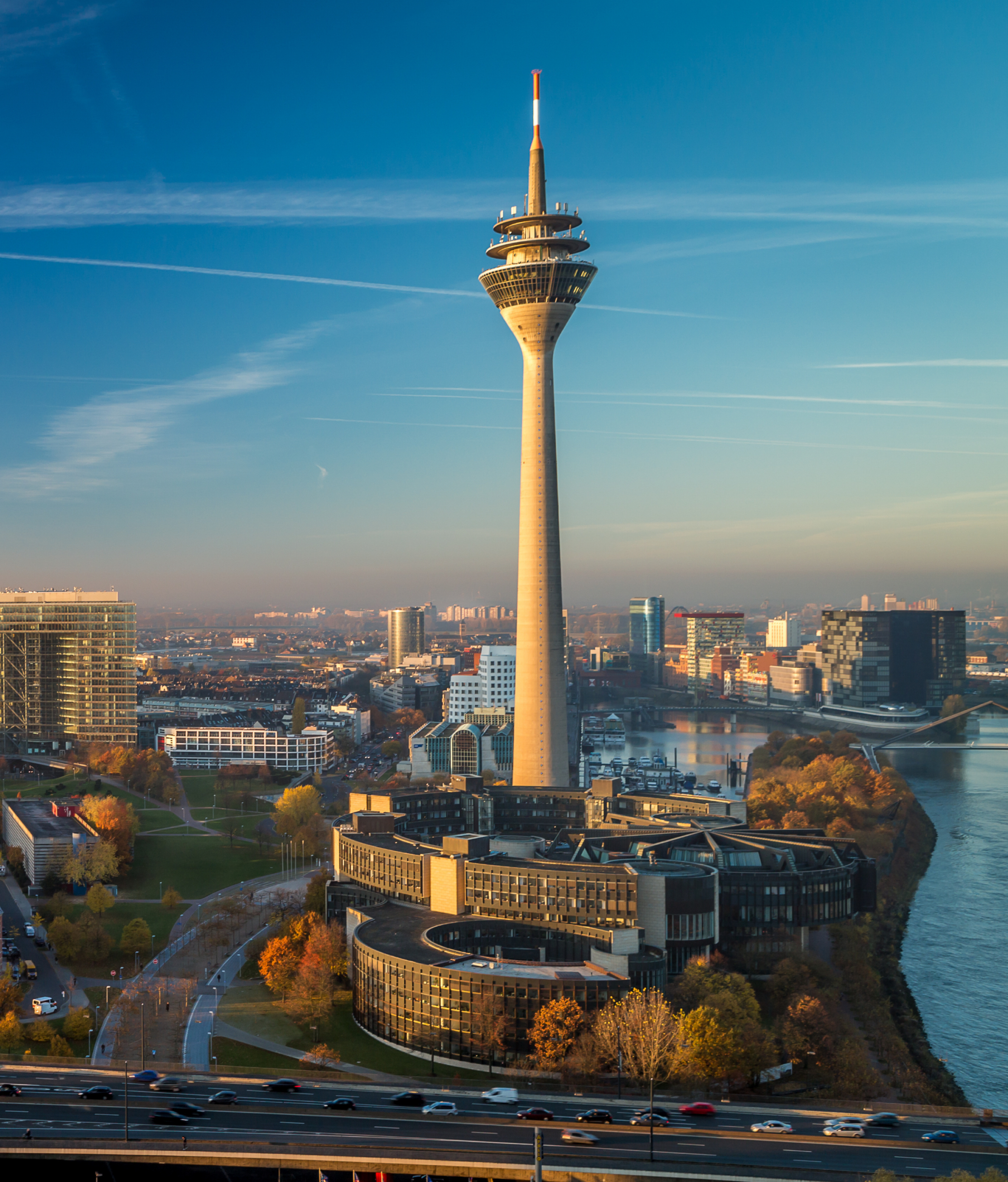
Rhine Tower
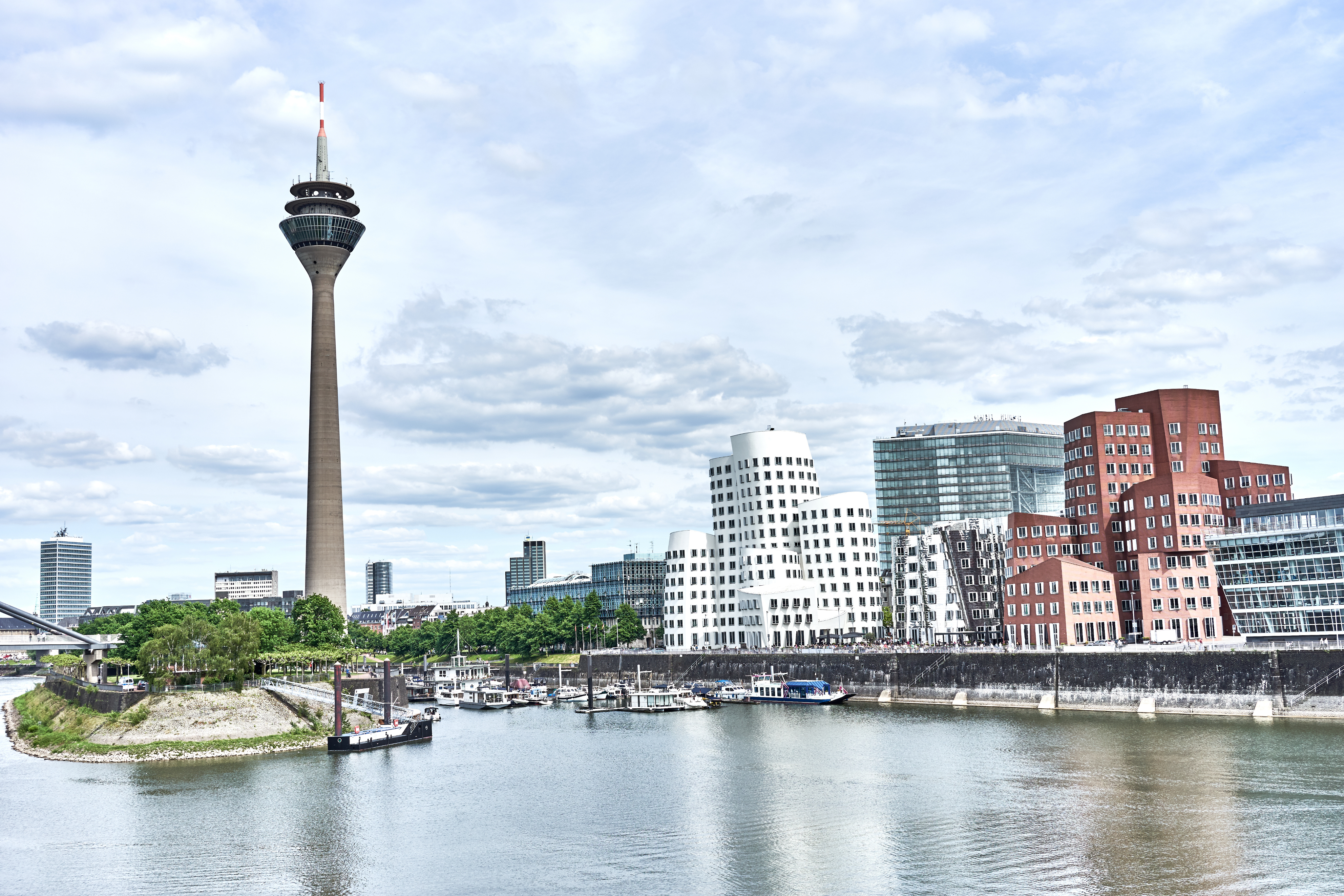
The 240.5-meter Rhine Tower gives a clear high-level view over the Rhine, the MedienHafen, and the old town. Its revolving restaurant and observation deck make it one of Düsseldorf’s most recognizable landmarks.
Time needed: About 1 hour
Entry: Adult tickets cost $15 to $18 (€14 to €17) Visit the official site for details.
Tip: Go near sunset for long views, then stay for the city lights after dark.
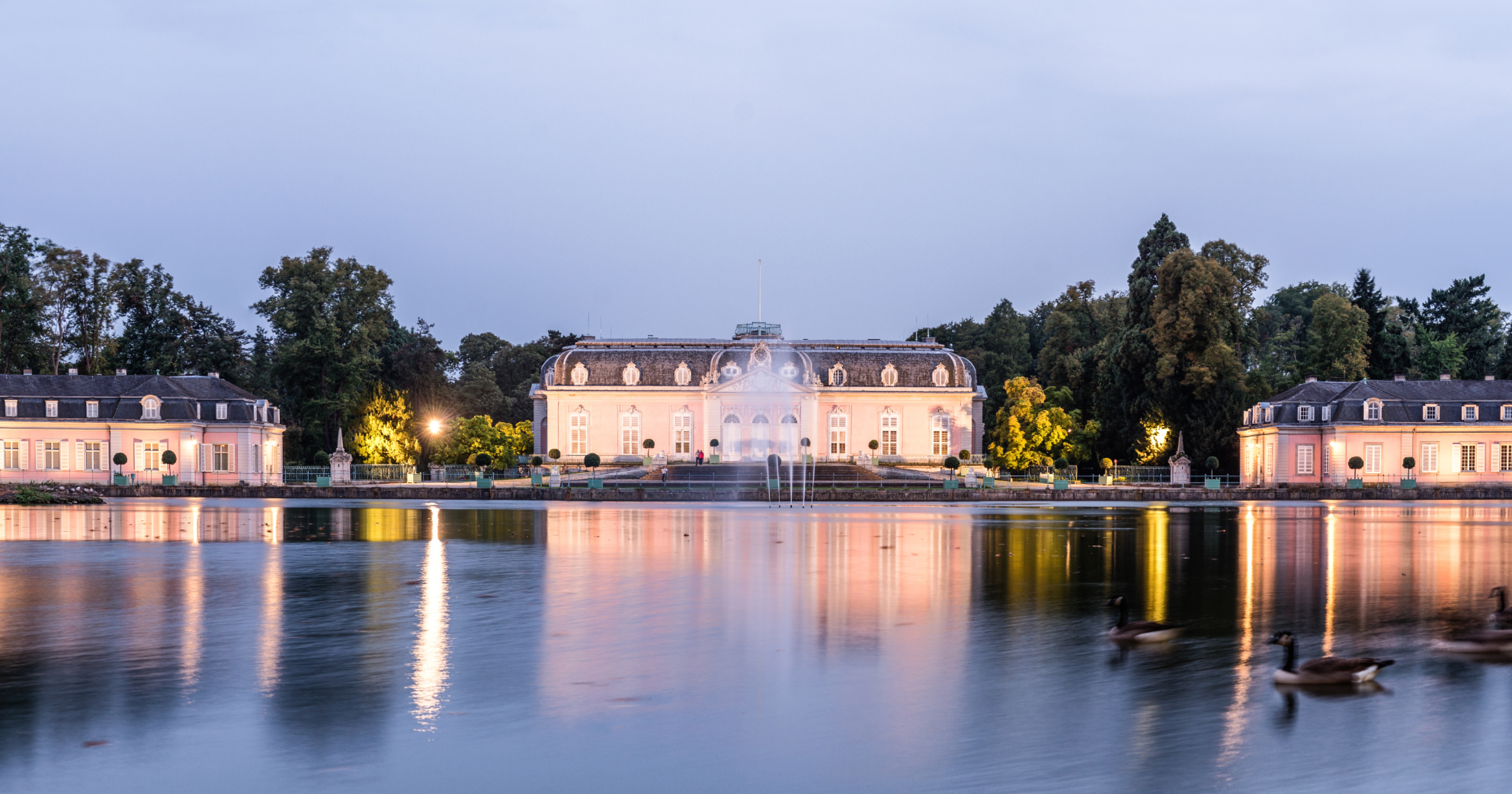
Benrath Palace
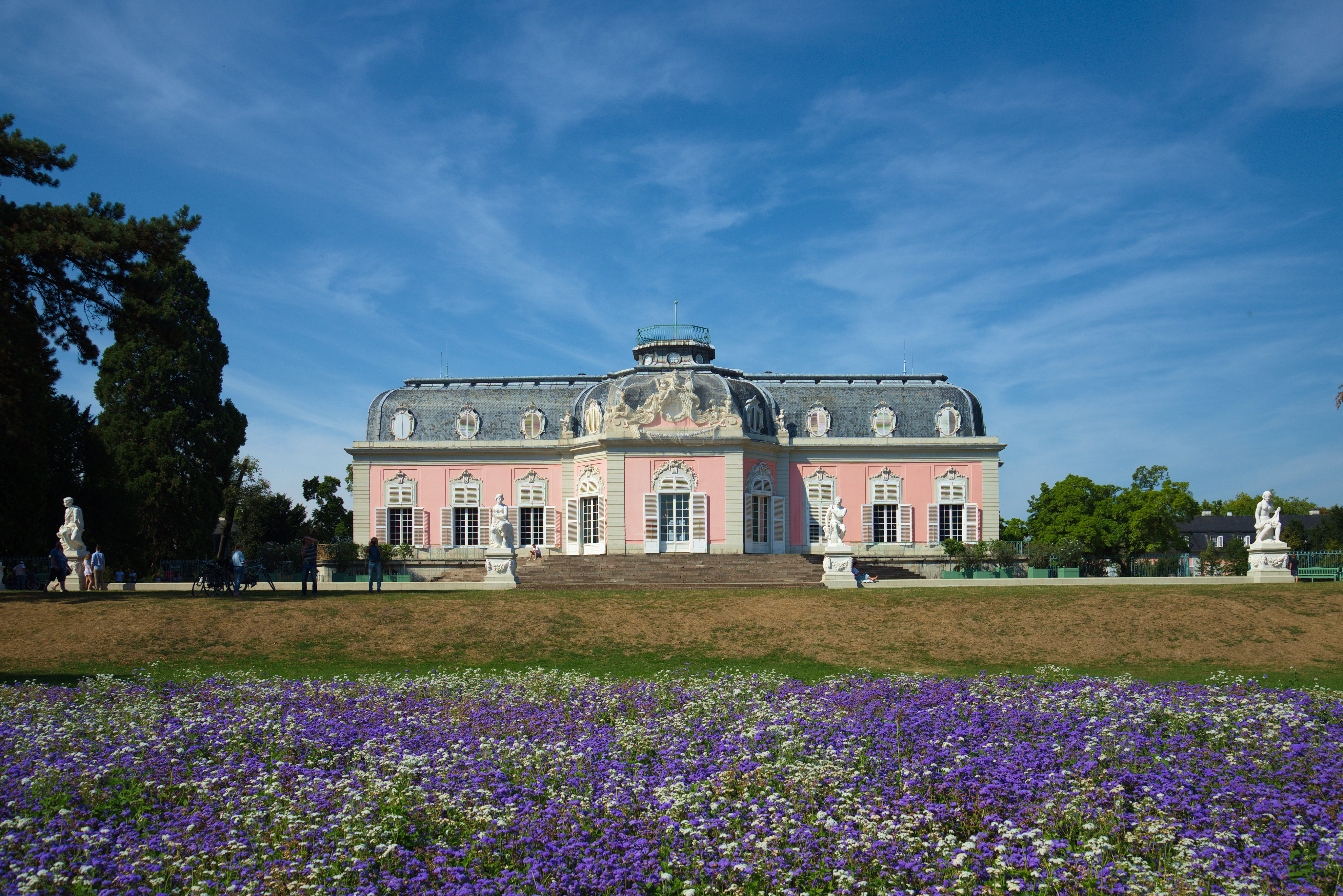
Benrath Palace is an 18th-century pink baroque complex south of the center, set around formal gardens and two museums. The palace’s layout and water features show the court culture that shaped Düsseldorf’s southern edge.
Time needed: About 2 to 3 hours
Entry: Standard tickets cost $15 to $21 (€14 to €19) Visit the official site for details.
Tip: Arrive in the morning to tour the rooms before the gardens fill with visitors.
Overlooked sites worth visiting
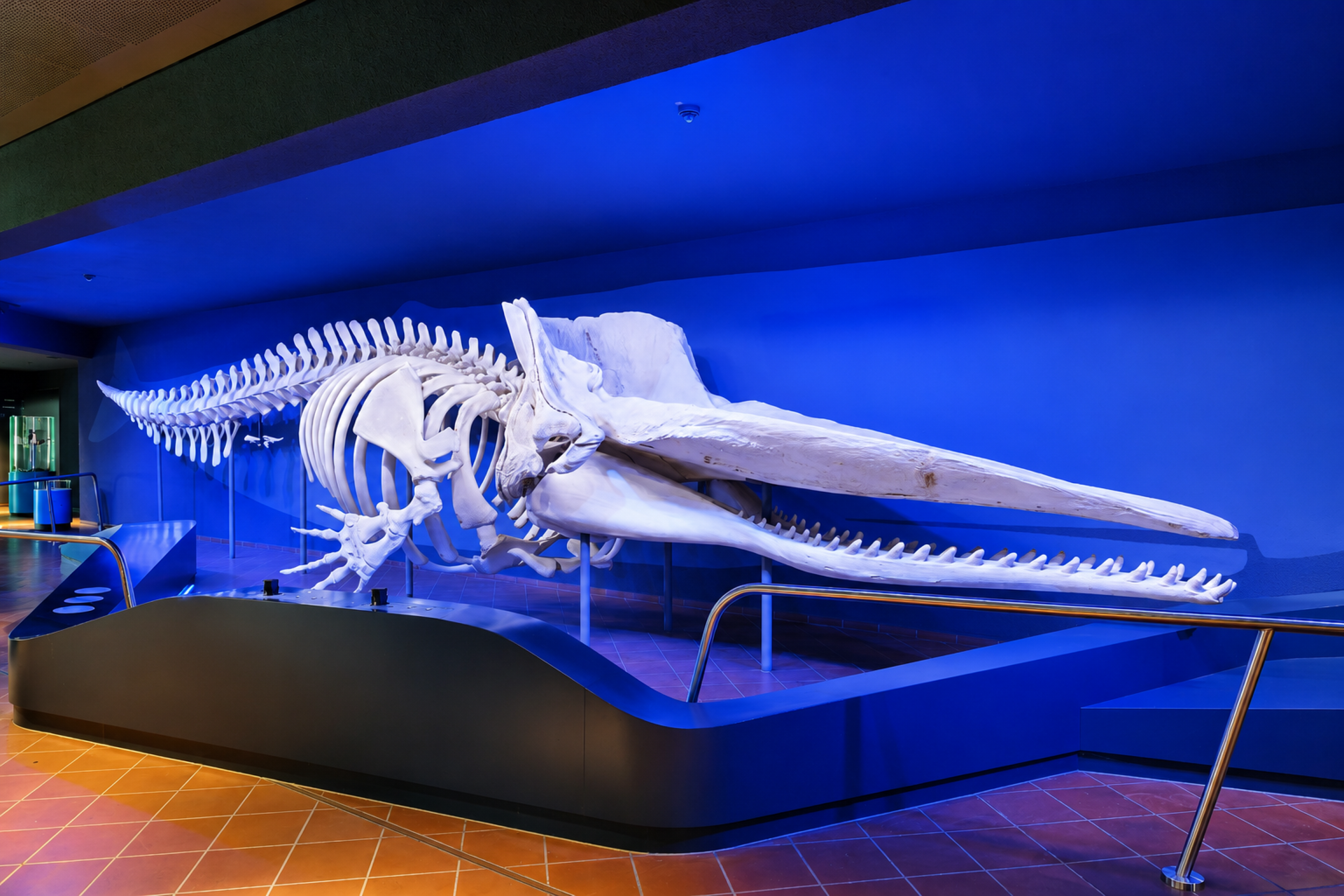
Aquazoo Löbbecke Museum
This compact museum pairs aquarium tanks with natural history displays, including reptiles, birds, and fossil collections. It suits a short indoor stop when you want variety without a large campus.
Time needed: About 1 to 2 hours
Entry: Adult tickets cost about $10 ($9). Reduced tickets for children, students, and eligible concessions are about $5 ($5) to $7 ($6), with family pricing and occasional free entry days listed on the museum site. Visit the official site for details.
Tip: Go early on weekdays to avoid school groups.

Kaiserpfalz Kaiserswerth
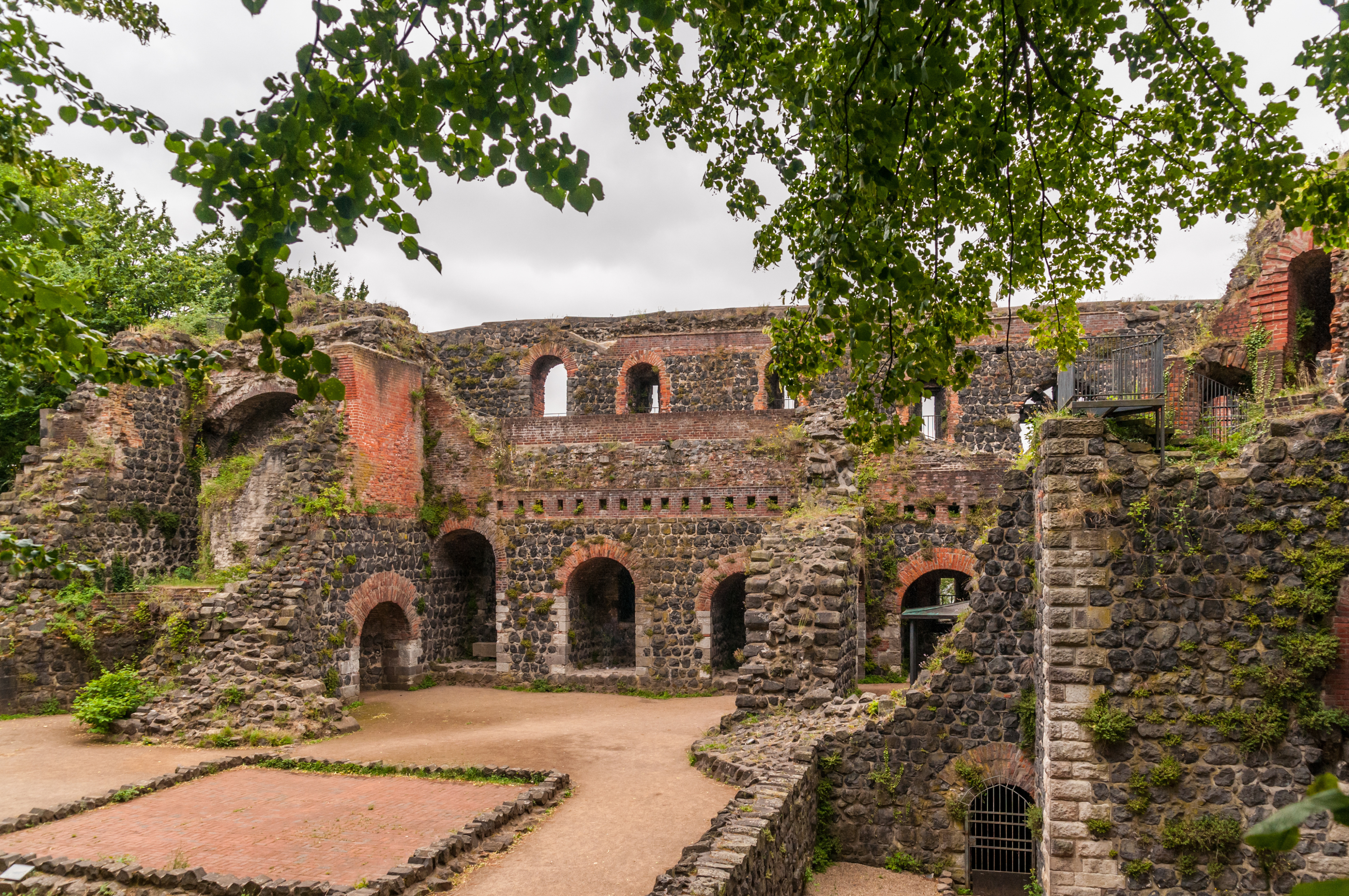
These riverside ruins preserve the walls of a medieval imperial palace on the Rhine. Paths, lawns, and the water edge make it a quiet place for a short walk and photos.
Time needed: About 1 hour
Entry: Free to access. The ruin and riverside grounds have no admission charge, but nearby cafes, guided tours, and any special exhibitions may charge separately; check local listings if you want a guided visit.
Tip: Visit at sunset for the best light on the stone walls.
Traditional food
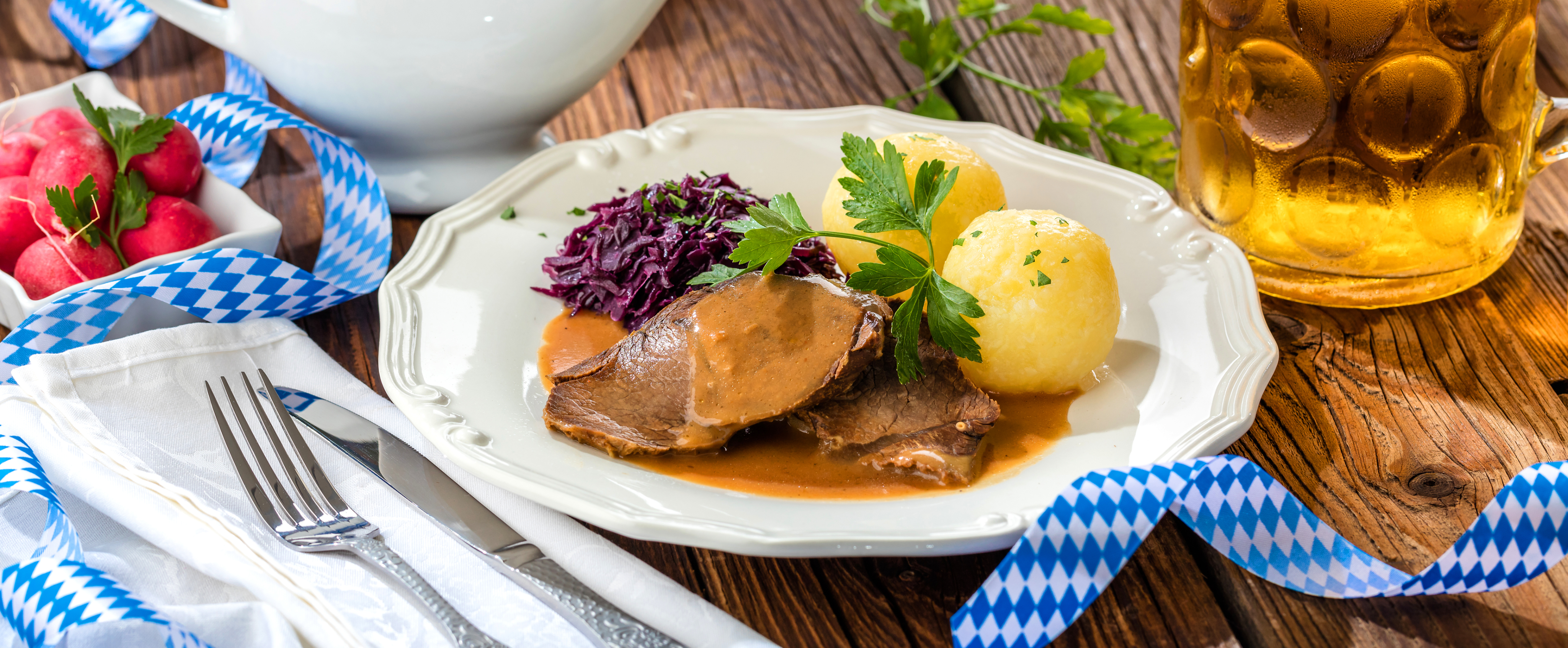
Düsseldorf food leans on beef, mustard, potatoes, rye bread, and slow-cooked sauces, with classics such as Rheinischer Sauerbraten and Halve Hahn showing up in taverns, beer halls, and more modern dining rooms.
Rheinischer Sauerbraten
This Rhine-region pot roast brings sour, spiced depth and is one of the city’s defining plates. Im Goldenen Kessel serves a classic version in the old town.
Himmel un Ääd
The dish pairs mashed potatoes with apples and black pudding, a combination that shows up in traditional Düsseldorf kitchens. Brauerei Uerige is a strong place to try it with local beer.
Halve Hahn
Despite the name, this is a rye roll with cheese, mustard, and onion, not chicken. Uerige serves it in a setting that matches the city’s beer-hall culture.
Düsseldorfer Senfrostbraten
This mustard-roasted beef highlights the city’s sharp mustard style and rich pan juices. Zum Schiffchen is a canonical stop for a traditional version in the old town.
Best time to visit Düsseldorf
Düsseldorf works in every season, but the balance changes, with spring and early autumn giving the best mix of walking weather, river time, and manageable crowds.
Best for: River walks, café terraces, and palace gardens
What you get: About 46 to 66°F (8 to 19°C), with moderate crowds and frequent light rain
Trade-offs: Some days still feel cool, and showers can interrupt long outdoor plans
Best for: Long evenings on the Rhine and late museum visits
What you get: About 59 to 77°F (15 to 25°C), with the year’s busiest visitor periods and fuller restaurants
Trade-offs: Popular areas can feel crowded, especially on warm weekends
Best for: Clear city walks, museum days, and relaxed dining
What you get: About 45 to 64°F (7 to 18°C), with lighter crowds than midsummer
Trade-offs: Shorter days arrive quickly, especially by late October
Best for: Museums, Christmas markets, and slower neighborhood time
What you get: About 32 to 43°F (0 to 6°C), with the quietest sightseeing weeks and cold, damp spells
Trade-offs: Outdoor time shrinks, and some evenings feel better suited to short walks than long ones
A realistic 5-day plan in Düsseldorf
Five days in Düsseldorf works well when you divide the city by movement and scale, starting in the center, then widening out to the Rhine, the north, and the southern palace grounds before a final easy morning.
Land at Düsseldorf (DUS), then take a taxi or Rheinbahn S-Bahn toward the center, about 15 to 25 minutes and roughly $35 to $45. If you are staying in Carlstadt or Pempelfort, check in, drink some water, and keep dinner close to your hotel, perhaps in Carlstadt for an easy first meal before an early night. If you arrive with energy left, a short walk to the Rhine edge gives you a first look at the river without committing to a full evening out.
Start in Königsallee, since the canal-side boulevard gives the clearest introduction to central Düsseldorf and takes about 1 to 2 hours to walk at an easy pace. From there, it is about 15 minutes on foot to the Altstadt, where you can stop for lunch and a quick look at the tight streets before heading south on foot, about 20 minutes, to the Rhine Tower for the late-afternoon view. Finish with sunset on the observation deck, then stay nearby for dinner in Unterbilk or back in Carlstadt, both within a short tram or taxi ride.
Aquazoo Löbbecke Museum works well as the first stop, especially if you go early on a weekday, and it takes about 1 to 2 hours. From the museum, plan about 25 minutes by transit to Kaiserpfalz Kaiserswerth, where you can walk the ruins and riverside paths for another hour. End with a relaxed Rhine-side meal back in Pempelfort or the center, leaving enough time for an unhurried return.
Benrath Palace sets the tone for this day, and the trip south from the center takes about 25 to 30 minutes by S-Bahn or regional train. Spend 2 to 3 hours touring the palace rooms and gardens, then head back to the city and cross to MedienHafen in about 20 minutes by transit for a contrasting look at Düsseldorf’s modern waterfront. If you want a final stop, the Rhine Promenade sits within a short walk from the harbor area and gives you an easy place to watch the evening light on the water.
A final morning in Düsseldorf fits best with a low-key museum visit, then a last round of browsing in Carlstadt or along Königsallee. If your flight leaves later in the day, linger over coffee in Unterbilk, where cafes are close enough to reach by tram or a 20-minute walk from the river. Keep your bags near the station or your hotel, then head to Düsseldorf (DUS) with enough time for the airport check-in and security queue.
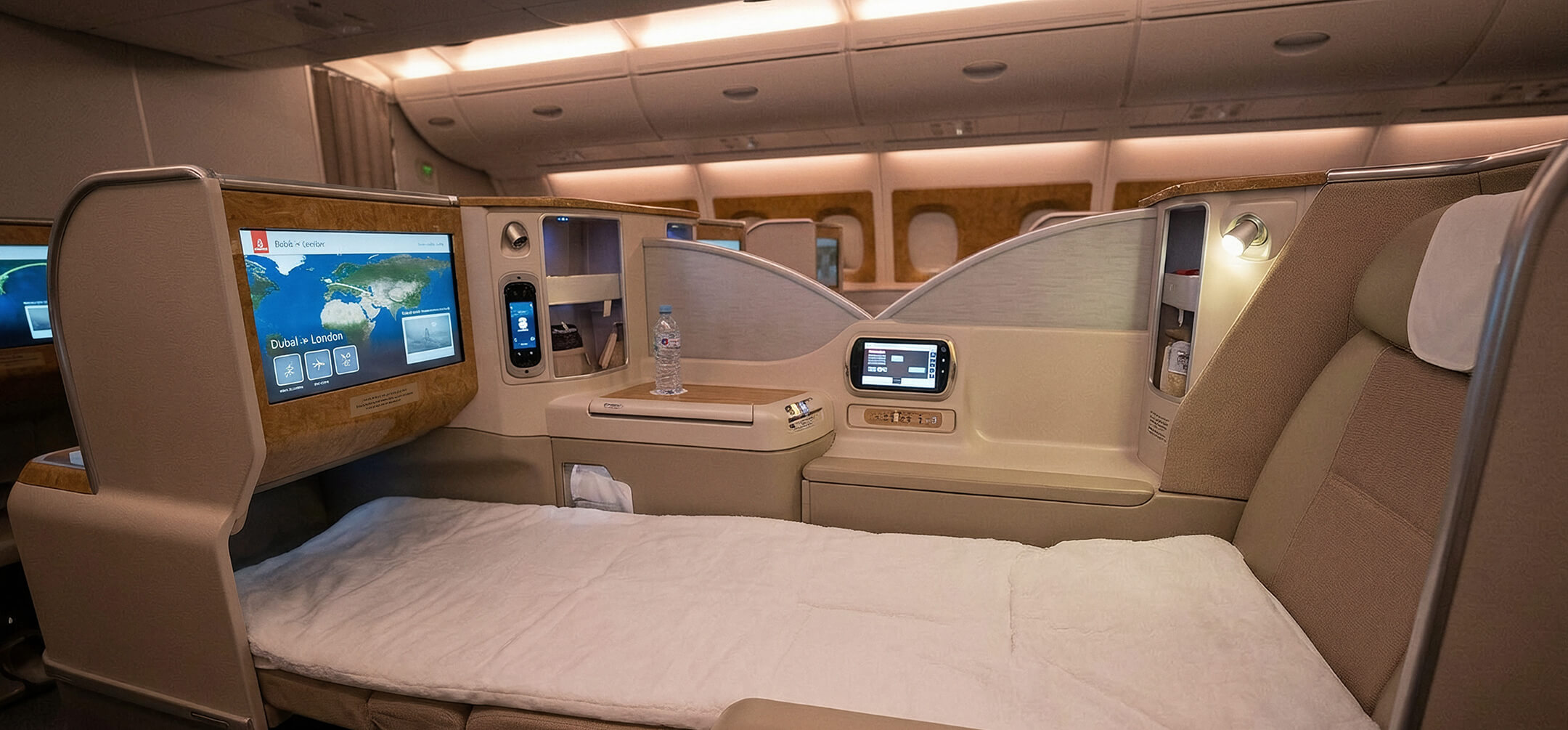
Business-class flights from the US to Düsseldorf
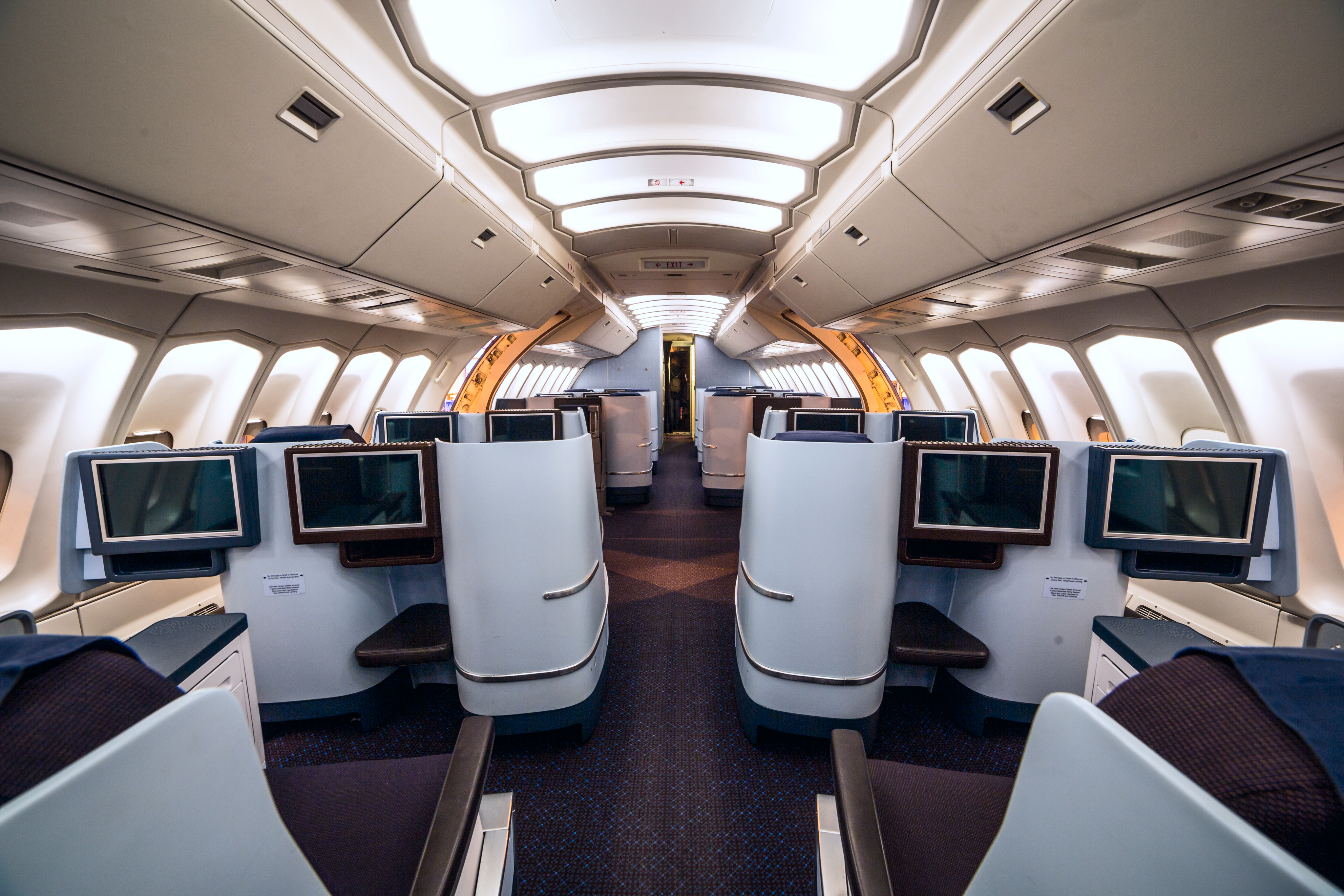
Flights from New York and Los Angeles both usually involve one-stop itineraries through major European hubs, though the nonstop East Coast options can save a full connection. The ranges below show what that looks like in real trip planning.
From New York, Lufthansa, United Airlines, Delta Air Lines, KLM, Air France, and British Airways serve the route, and the nonstop flight usually takes about 7 to 8 hours. If you connect, common hubs are FRA, MUC, AMS, CDG, and LHR, with total travel time often running about 10 to 13 hours. Round-trip fares usually start from $2,000 and can reach $5,500.
Los Angeles travelers usually fly with Lufthansa, United Airlines, Delta Air Lines, Air France, KLM, or British Airways, and the nonstop option takes about 11 to 12 hours. If you do not mind a layover, common routings via FRA, AMS, or CDG can cut fares to roughly $1,300 to $2,800, with total travel time about 13 to 17 hours.
Düsseldorf feels different when you slow down
A deliberate Düsseldorf stay puts the center, the river, and the southern sights in sequence, so you are not spending each day backtracking between Königsallee, the Altstadt, the Rhine Tower, and Benrath Palace. Trams, the S-Bahn, and a few well-timed walks handle most of the city. If you want help matching flights, neighborhoods, and timing, speak with the AranGrant experts and shape the trip around the part of Düsseldorf you most want to see