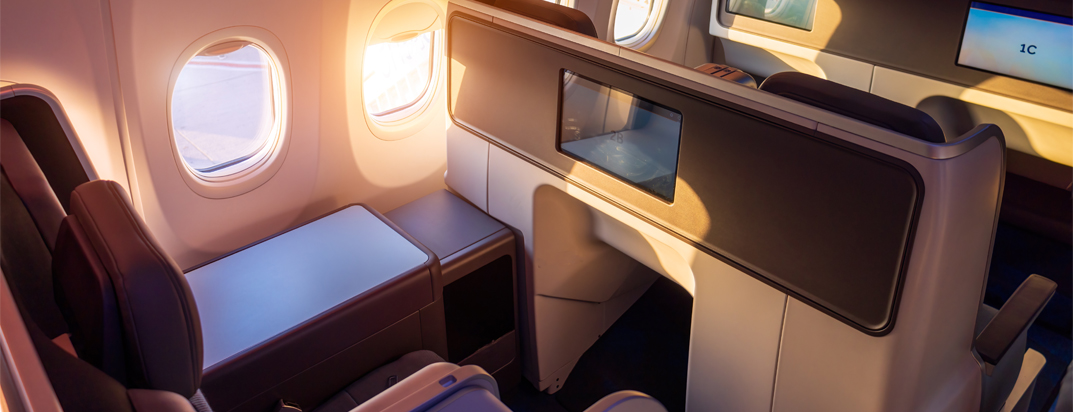
Ever noticed business class fares jump from $900 to $6,000 for the same route? Business-class round-trip fares as low as $900 are rare. But it’s common to see economy tickets priced at $550 while business class costs $4,000—more than seven times the price. Wondering why business class is so expensive? You’re not alone. This article breaks down the real reasons behind those eye-watering price differences and shows you smart ways to beat the system.
Fair warning: we start with the hard truths—yes, some business class fares seem outrageous for a reason. But that’s not the full picture. To truly understand what you’re paying for—we recommend reading through the second section as well. Let’s dive in.
Read in this post:

Inside Premium Pricing: The psychology airlines prefer to keep quiet
1. Price discrimination
Price discrimination is a strategy where companies charge different prices for the same product or service—not based on cost, but on the customer’s willingness or ability to pay. In the airline industry, especially for business class, it’s both common and deliberate.
The goal? To fill every seat at the highest price each passenger is willing to pay. For example, a last-minute business traveler might pay $6,000 for a seat someone else booked three months earlier for $1,500—or even $900 during a promo.
Prices also vary by purchase conditions: advance vs. last-minute, flexible vs. non-refundable, or basic vs. full-service fares. Airlines use dynamic pricing algorithms to adjust fares in real time, factoring in demand, departure timing, and competitor rates.
As a result, two people sitting in the same cabin may have paid drastically different amounts, depending on when and how they booked. Though some view it as unfair, price discrimination is legal and widely used in travel, retail, and software. Supporters argue it’s efficient—it allows price-sensitive travelers to access lower fares while higher-paying customers help fund premium services.
2. Yield management
Yield management is how airlines put price discrimination into practice. By forecasting demand, tracking seat availability, and adjusting fares in real time, airlines maximize revenue from every flight. Prices change based on factors like booking trends, remaining seats, and time until departure.
For example, business class fares often stay high until the last minute to capture business travelers willing to pay more, while discounted seats are offered earlier to fill the plane. In short, yield management lets airlines sell each seat—especially in business class—at the highest price the market will support.
3. Corporate behavior
Airlines closely study the travel habits and purchasing patterns of business travelers and corporate travel departments to shape their premium cabin pricing. They recognize that corporate travelers, who often book within two weeks of departure, are far less price-sensitive than leisure travelers planning months in advance. This allows airlines to charge higher fares for last-minute business bookings while using advance purchase discounts to fill seats early.
Business travelers typically have more flexible expense accounts, making them more willing to pay for convenience, comfort, and flexibility. Airlines capitalize on this by setting their highest fares around peak business travel times—such as Tuesday to Thursday departures and Monday morning returns—while lowering prices during holidays when business demand falls.
Pricing algorithms also account for route-specific business demand. For instance, a New York–Frankfurt flight often commands much higher business class fares than a leisure route like New York–Tampa, even with similar aircraft and service. Airlines further refine their strategies by analyzing corporate contracts, frequent flyer data, and economic trends in destination cities to optimize premium pricing.
But before assuming business class pricing is all smoke and mirrors, read on. The next section breaks down other, grounded reasons behind those high fares.
What airlines want you to understand: the real costs behind your ticket
1. Space: the premium real estate at 35,000 feet
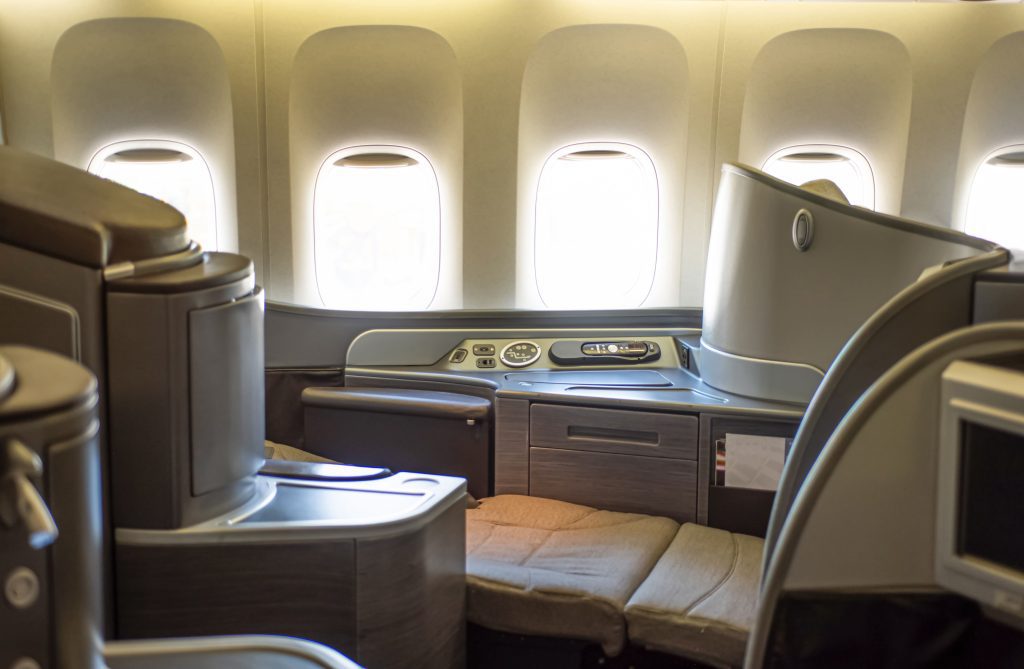
A business class seat takes up significantly more space than an economy seat—typically 15 to 25 square feet, compared to just 3 to 4 in economy. That means one business class seat uses the space of 4 to 6 economy passengers. The pitch (legroom) also reflects this difference: 60–84 inches in business class versus 28–32 inches in economy. Add lie-flat beds stretching up to 7 feet, and the space demands grow even more.
Airlines aren’t just selling a seat—they’re selling real estate at cruising altitude. Modern business class layouts like 1-2-1 or reverse herringbone give every passenger direct aisle access, but these configurations come at a cost: lower seat density. For example, a reverse herringbone layout may only allow 28 seats in a space where a traditional 2-2-2 setup could fit 42.
2. Engineering the experience: what each seat really costs
A modern lie-flat business class seat costs $100,000–500,000 per unit to design, certify, and install. With complex motorized mechanisms, privacy doors, touchscreen panels, and power outlets, these seats are essentially mini-suites that must meet strict international aviation standards.
Retrofit projects cost millions per aircraft and can take planes out of service for weeks. Airlines like Delta and Lufthansa work with companies like Collins Aerospace or Safran to design seats that balance comfort, space, and safety—investments recouped only through long-term premium pricing.
3. Service: high standards, not just basics
Specialized training for business class cabin crew goes well beyond basic safety certification. Airlines typically invest up to 2.5× more per person in premium service training than for economy-focused roles. Business class crew members often undergo $20,000–35,000 worth of training, compared to around $10,000 or less for their economy counterparts. This includes intensive instruction in wine service, fine-dining presentation, cross-cultural hospitality, multilingual communication, and brand-specific service protocols.
Lufthansa, for example, channels a substantial portion of its training budget—estimated at nearly one-third—into elevating its business class service standards. Their crew must complete detailed modules on high-end dining, amenity presentation, international etiquette, and managing VIP expectations mid-flight.
4. Gourmet food that leaves a lasting impression
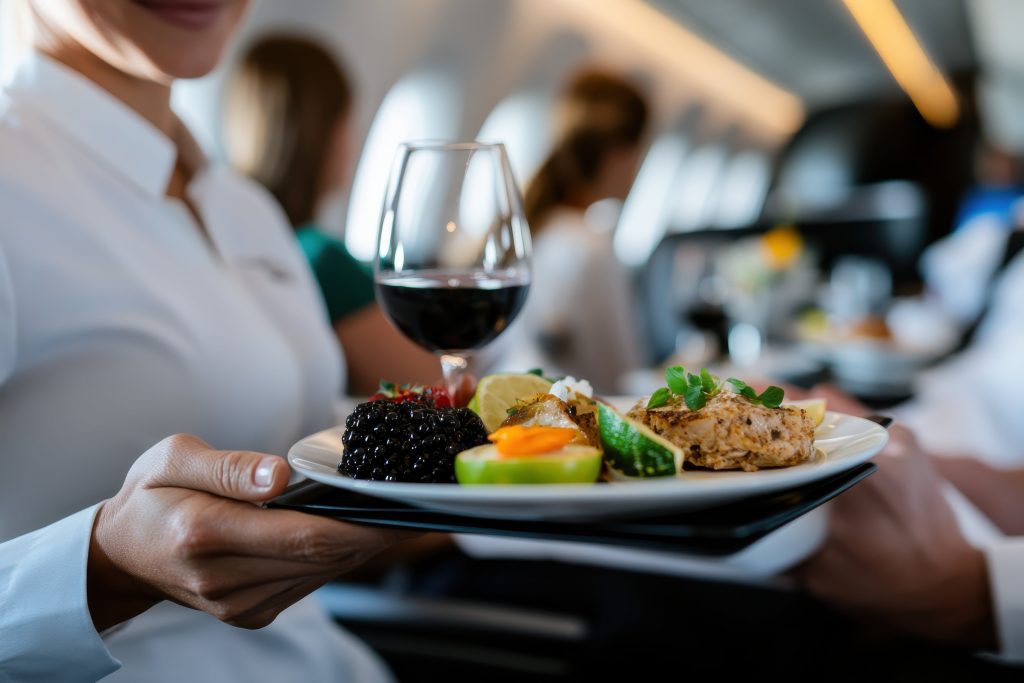
Business class dining isn’t just about better ingredients—it runs on a separate, more complex infrastructure. Airlines use specialized storage, galley equipment, and trained staff to deliver restaurant-level meals in the air. Premium service also requires stricter food safety compliance, adding to administrative and operational costs.
Food waste is another hidden expense. To meet high expectations for menu variety and availability, airlines often overstock. Waste in business class can reach 20–30%, compared to 5–8% in the economy.
Many airlines also invest heavily in dedicated catering operations. Emirates, for example, operates a massive in-house facility in Dubai, with investments over $120 million to support its premium meal service.
In total, meal costs can reach $60–180 per business class passenger, versus $10–30 in economy. This makes inflight dining one of the most visible and costly parts of the premium experience.
5. Wi-Fi and screens: the digital expectations of premium travel
Business class passengers expect high-speed connectivity, not just for email but for video calls and streaming. Airlines often invest in satellite-based systems from providers like Viasat or Panasonic Avionics, costing $500,000–$1 million per aircraft, plus ongoing bandwidth fees of $100,000+ per year.
Add to that oversized HD entertainment screens, noise-canceling headphones, and premium content licensing—and you have a tech infrastructure that far exceeds what’s offered in economy.
6. The hidden costs: maintenance, insurance, and opportunity loss
Business class seats require frequent inspections and have a higher failure rate due to their complexity. Airlines must stock spare parts and employ specially trained maintenance staff—driving operational costs 3–5× higher than economy seating.
Add higher insurance premiums to cover luxury amenities, liability for service failures, and the opportunity cost of blocking out large portions of the cabin for fewer passengers. That’s how you have another layer of hidden expenditure factored into premium pricing.
7. Lounges: aviation’s priciest ground luxury
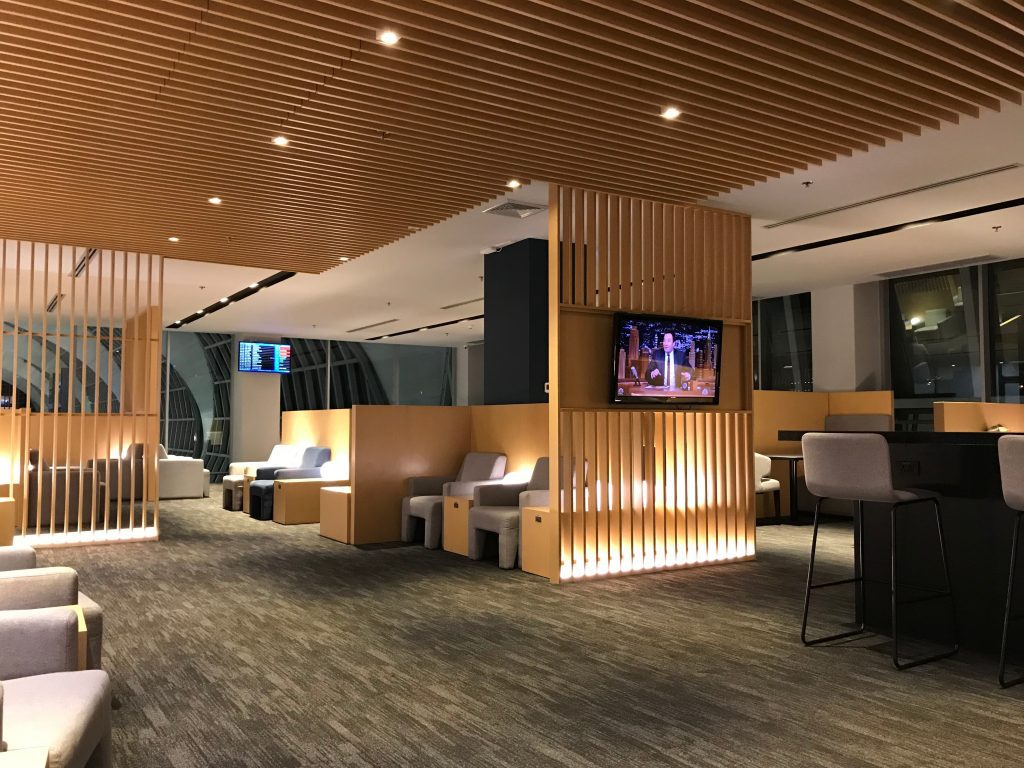
Premium airport lounges are among the most expensive assets in an airline’s ground operation. At major hubs like LAX, Frankfurt, or Hong Kong International, lounge spaces can cost $250–450 per square foot annually, rivaling high-end commercial property in global financial districts. A mid-sized flagship lounge—often 6,000 to 10,000 square feet—may carry annual rental expenses upwards of $3–6 million.
But rent is just the beginning. Premium lounges demand significantly more staff per guest than the terminal average. While general airport spaces may operate with 1 staffer per 70–100 passengers, business class lounges typically maintain a 1:15–1:20 ratio. Airlines like Etihad or Cathay Pacific employ full teams of chefs, servers, spa attendants, and concierge personnel—driving annual labor costs well above $800,000 per location.
Food and beverage service is run like a boutique hotel restaurant. With gourmet menus, barista-prepared coffee, top-shelf liquor, and often à la carte options, food/beverage expenses can range from $60 to over $150 per guest visit. Unlike airport dining outlets, lounges don’t bill guests directly—these costs are entirely absorbed by the airline, adding millions to annual overhead.
8. Other ground services: a significantly underestimated airline cost
Airlines invest heavily in premium ground services that go far beyond the lounge. These networks include exclusive check-in areas, private security lanes, and separate boarding processes—all of which demand dedicated space, specially trained staff, and complex coordination. When fully allocated, these services can cost airlines $150–450 per business class passenger, depending on the airport and route.
- Priority boarding: Some carriers go further, offering private terminals or curb-to-gate escorts in select cities, especially for top-tier passengers. Behind the scenes, priority boarding requires reserved gate zones, separate boarding bridges, and real-time coordination between ground crews and flight staff—systems that may cost $75,000–250,000 annually per terminal to operate.
- Fast-track security access, often seen as a simple perk, involves costly partnerships with airports and third-party providers. Airlines typically pay $20–35 per passenger, plus fees for dedicated staffing, program integration, and infrastructure upgrades. At busy international hubs, this can result in over $1 million in annual costs per location.
- Premium baggage handling adds another layer of expense. It often requires separate conveyors, rapid-access storage areas, and flagged tagging systems. Ground handlers charge two to four times more for priority baggage processing than for standard bags. For high-traffic routes, this can mean $3–6 million a year in additional costs just to maintain fast baggage delivery expectations for business class travelers.
9. Amenity kits and bedding: quiet luxury in the skies
High-end amenity kits feature luxury brand toiletries, sleep masks, skincare, and grooming items—often costing $50–150 per kit, compared to $5–10 in economy. Airlines like Air France or Japan Airlines partner with brands like Clarins, L’Occitane, or Shiseido.
Then there’s bedding: plush duvets, mattress pads, and full-size pillows sourced from hotel-quality suppliers like The White Company or Saks Fifth Avenue. These sets can run $200–400 per passenger per flight, requiring frequent replacement and specialized cleaning processes.
10. Sustainability at a price: greener luxury travel
As travelers become more eco-conscious, airlines are investing in sustainable aviation fuel (SAF), carbon offset programs, and lighter cabin materials. These innovations come with a high price tag and are often rolled into the business class fare, as premium passengers are more likely to support and afford greener initiatives.
Since early 2025, Lufthansa has introduced a variable “environmental surcharge” on tickets departing the EU. Business class passengers pay up to €72 per long-haul segment, compared to just €5 in economy. The surcharge helps cover the added costs of meeting EU requirements for a 2% blend of sustainable aviation fuel (SAF).
Meanwhile, American Airlines has pledged to purchase 100 million gallons of SAF annually starting in 2027. This is a significant investment that will likely influence future pricing—especially in premium cabins, where passengers are more willing to absorb sustainability surcharges.
How to outsmart airline pricing
Now that you know the science and costs behind business class prices, here’s how to avoid overpaying and find better fares:
- Book early—but not too early: Sweet spot is 2–5 months ahead for international business class. Keep in mind that airlines release promo fares early. But ultra-early bookings (8–12 months out) often default to full fares.
- Use a VPN or private browsing: Airlines may show different prices based on location or browsing history. Try checking fares using different countries’ IPs, incognito mode, or currency comparisons.
- Be flexible with dates and routes: Shifting your departure/return by 1–2 days can shave hundreds off the fare. Try nearby airports (e.g., EWR instead of JFK, OSL instead of ARN). Open-jaw tickets (e.g., NYC–Singapore, return Bangkok–NYC) sometimes cost less.
- Buy through AranGrant: We specialize in unpublished or negotiated business class fares, often cheaper than those offered by airlines. Sign up for our newsletter to score a flight bargain.
- Use points and upgrades strategically: Book economy or premium economy and use miles or upgrade vouchers. Airlines like ANA, United, Lufthansa often release upgrade space close to departure. Join frequent flier programs even if you don’t fly often—you’ll sometimes access discounted awards or status-based deals.
- Travel off-peak or shoulder season: According to our data, October and November are ideal months for long-haul business or leisure travel. During this quieter season, airlines frequently discount business class fares to fill seats. It’s the perfect time to visit destinations with great weather, fewer tourists, and exclusive experiences. For more insider tips on premium flight demand, check out this informative post.
- Target business class “sweet routes”: Studies consistently find that routes with several competing airlines—especially those with low-cost carriers or new entrants—tend to have the lowest premium fares. They include NYC–Europe (Lisbon, Milan, Dublin), LAX–Tokyo, or Vancouver–Asia.
The appeal of business class on long flights is undeniable, especially when you’re stuck in a long economy check-in line while business class passengers breeze through and head to the lounge.
The contrast is even starker when you finally reach your economy seat—which might cost more than your first car—only to find yourself next to someone you’d rather not sit by. At AranGrant, we understand these frustrations, and we’re committed to offering you the best value for your money.