
Santa Claus may be the season’s most recognizable figure, but he is far from the only character Christmas has created. Across Europe, Christmas folklore introduces a much stranger cast, including the horned Krampus, whose appearance during Krampusnacht is only one part of a much wider world of seasonal traditions.
Some of these figures are generous. Others are unsettling, mischievous, or deliberately frightening. Their origins are just as varied, drawing on religious tradition, regional folklore, and customs that developed long before the modern Christmas season took its current form.
For travelers, these traditions offer something beyond familiar markets and decorated squares: a chance to see how different communities celebrate Christmas, and how their stories still shape the winter season today.
Read in this post:
What Krampusnacht is and why Austria still runs from it
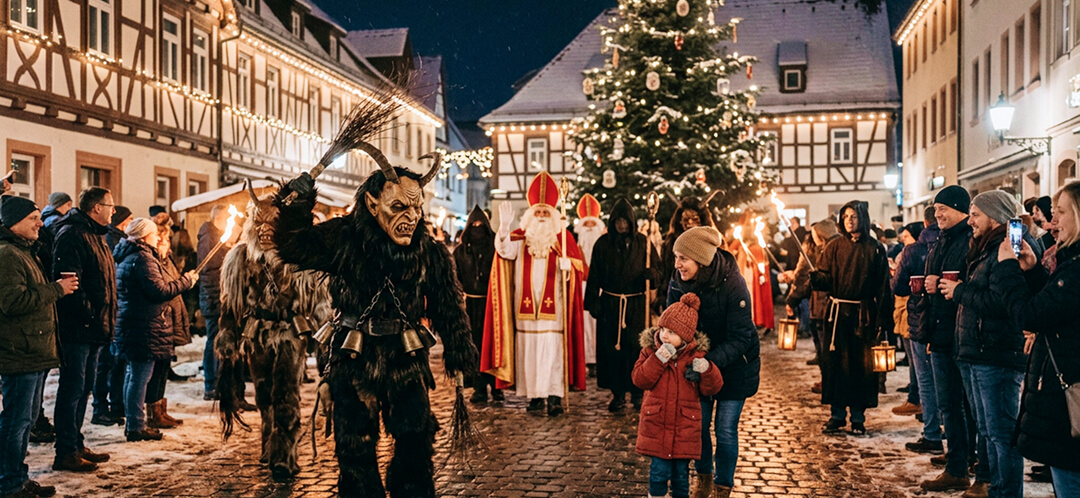
Krampusnacht is an Alpine folk tradition held on December 5, the night before St. Nicholas Day, when the horned Krampus comes to punish badly behaved children while St. Nicholas rewards the good ones. Austria still runs from Krampus, as the custom lives on as the Krampuslauf, or Krampus run. Costumed groups in carved masks, fur, and heavy bells charge through town streets, chasing the crowds that gather to watch.
Krampus traditionally carries chains and a switch, and the runs keep that menace alive in public. The custom is deeply established in Salzburg, where about 200 local Krampus and Perchten groups, or Pässe, keep the tradition going.
Krampus is also different from the Perchten, masked figures from Alpine folklore that traditionally appear later in the winter season. Their costumes look similar, but Krampus belongs to the St. Nicholas tradition in early December, while Perchten traditionally appear later, particularly from December 21 through January 6.
Where to see Krampus in Austria
- Salzburg: The Old Town Krampus run takes place on December 5, 2026, starting at 5:30 pm. Several Krampus groups move together through the Old Town while spectators gather along Getreidegasse and Alter Markt to watch the procession before the groups return to the Festspielhaus, where the route ends. The event is free and does not require a ticket. If you combine the run with Salzburg’s Christmas market, you can also stop for mulled wine, punch, and regional treats before or after the procession.
- Hallstatt: Hallstatt hosts its Krampus Run on December 5, 2026, from 6 pm to 11 pm, with free admission. A fire show accompanies the run, while St. Nicholas arrives later in the evening with sweets for younger visitors. The celebration in the market square also features traditional masks, regional food, and hot drinks. What makes Hallstatt’s version especially distinctive is the local legend that Krampus descends from the Hirlatz Cave above the village before joining St. Nicholas.
Tip: Do not build your trip around December 5 alone. Hundreds of Krampus and related Alpine runs take place across Austria from mid-November into early January, with individual towns choosing their own dates. Stay several nights in one region and check the calendars of nearby towns before you go, so you have more than one opportunity to catch a run.
La Befana, the kind witch who closes out Italy’s Christmas season
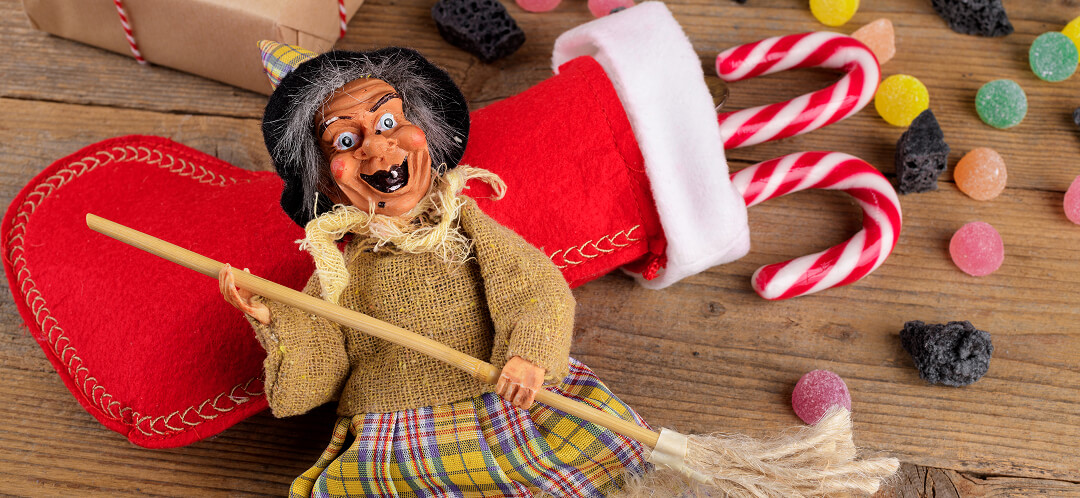
La Befana is an old woman who flies on a broomstick and brings gifts to Italian children on the night of January 5. Unlike Santa, she arrives at the end of the Christmas season, with Epiphany on January 6 traditionally marking the close of Italy’s holiday celebrations. Children leave stockings out for La Befana to fill. Well-behaved children receive sweets and small gifts, while the traditional punishment for poor behavior is coal.
According to one of the best-known legends, the Three Wise Men asked La Befana to join them on their journey to Bethlehem. She refused because she had housework to finish, later regretted the decision, and set out to find them. She never did, so the story says she continues searching for the Christ child and leaves gifts for children along the way.
That makes her a very different figure from Krampus. Both have unsettling appearances, but La Befana brings sweets and presents, with her story centered on regret and generosity instead of punishment.
Where to see La Befana in Italy
- Rome: Piazza Navona has hosted Rome’s best-known public Befana celebration since the late 19th century, and the festivities are free to attend. During the Christmas and Epiphany season, the square fills with market stalls, crafts, sweets, music, and performances before La Befana arrives on January 6 to hand out sweets. Her arrival in 2027 is scheduled for 10 am, but we advise checking the time again closer to the date if you are planning to see her.
- Urbania: For a smaller celebration devoted almost entirely to La Befana, head to Urbania in the Marche region, known as her Italian home. Its National Befana Festival brings performances, workshops, games, market stalls, and sweets to the historic center. Visitors can also stop at the Casa della Befana, one of the festival’s central attractions. In 2026, the Casa opened early on January 3, and the main festival ran from January 4–6. Adult admission cost €8. Check the 2027 dates closer to the event.
Choose between Rome and Urbania depending on the kind of celebration you want: Rome presents La Befana as part of a larger public Epiphany celebration, while Urbania dedicates several days almost entirely to her.
Iceland’s 13 Yule Lads and the troll family behind them
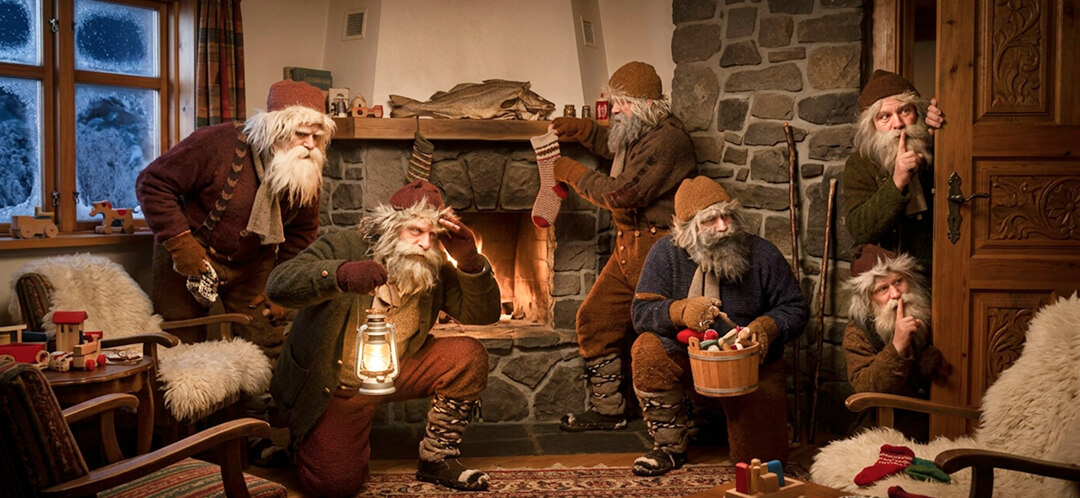
Icelandic Christmas folklore has 13 Yule Lads instead of one Santa Claus. They arrive one by one from December 12 to 24 and then leave in the same order, with the final Lad returning home on January 6.
The Yule Lads are the sons of Grýla, a mountain-dwelling troll, and her husband Leppalúði. Each brother has his own particular habit. Sheep-Cote Clod bothers sheep and tries to drink their milk, Spoon Licker goes after wooden spoons, while others steal sausages, slam doors, or peer through windows.
For Icelandic children, the tradition plays out over 13 nights. Before bed, children place a shoe on the windowsill, and each arriving Yule Lad leaves a small gift for a well-behaved child or a potato for one who misbehaved.
These figures were once much more frightening. In 1746, authorities prohibited the practice of using Yule Lads and similar figures to scare children. Over the following centuries, their image softened, and by the 20th century, Icelandic Christmas tradition had embraced the friendlier, gift-giving version.
Where to see the Yule Lads in Iceland
- Reykjavík: The National Museum of Iceland has made Yule Lad visits part of its Christmas program. In its latest published schedule, one Lad appeared at 11 am each day from December 12 to 24 to meet visitors and explain the mischief associated with his character. As of October, the museum has not yet published its 2026 Yule Lad schedule, so check the current program before your visit.
- Dimmuborgir: Icelandic folklore identifies this lava field at Lake Mývatn as the Yule Lads’ home, making the setting part of the tradition itself. The Visit North Iceland travel guide lists the 2026 Yule Lads event period from December 1 to 23. The organizers have not yet published the individual 2026 appearance dates, so check the schedule before planning a specific day.
If your trip centers on Reykjavík, the National Museum gives you a convenient way to see the Yule Lads without leaving the city. If you are already heading to North Iceland, Dimmuborgir lets you experience the tradition in the landscape tied to their folklore.
St. Lucia’s Day in Sweden: a candlelit answer to the Nordic darkness
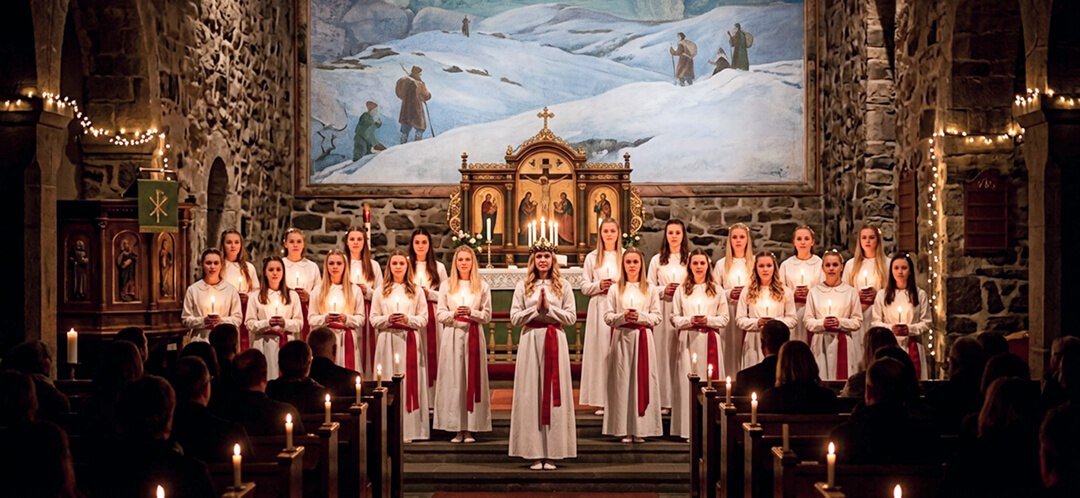
St. Lucia’s Day in Sweden falls on December 13, when groups of singers dressed in white take part in candlelit processions through churches, schools, workplaces, and public spaces. Lucia, traditionally a girl wearing a crown of candles, leads the procession, symbolizing light during one of the darkest periods of the Swedish winter. The tradition takes its name from St. Lucy of Syracuse, a 4th-century Christian martyr.
December 13 also once marked the shortest day of the year under the old Julian calendar, giving the Swedish celebration a connection to older ideas about midwinter darkness as well as the Christian saint.
A Lucia procession, or Luciatåg, includes white-robed singers carrying candles, with Lucia at the front and “star boys” wearing tall, cone-shaped hats. Some modern school and youth processions appoint more than one Lucia.
Where to experience St. Lucia’s Day in Stockholm
- One option for 2026 is Engelbrekt Church, where Lucia concerts take place on December 12 and 13. On December 13, performances start at 4 pm and 6 pm and last about one hour. Tickets cost SEK 200–SEK 350 ($20–$35).
Beyond the procession itself, Lucia celebrations feature lussekatter, traditional saffron buns, along with gingerbread and warm glögg, a Swedish mulled wine.
Lucia creates a very different mood from Krampus, La Befana, and the Yule Lads. Instead of punishment or mischief, the tradition centers on candlelight, choral music, and community during Sweden’s darkest season.
If you want to experience St. Lucia’s Day in Sweden, plan around December 13 and check Stockholm’s current event listings before you go, since individual concerts, times, and ticket arrangements change each year.
Building one itinerary around several Christmas traditions
These traditions unfold across the same broad winter season, but their key dates fall at different points within it. Krampus events take place mainly in early December, St. Lucia’s Day follows on December 13, the Yule Lads arrive throughout the second half of December, and La Befana closes the season in early January.
- December 5–8, Austria: Krampusnacht falls on December 5, with many Krampus runs and related events taking place over the following days. Salzburg lists Krampus events on December 5, 6, and 8 in 2026, while related Perchten traditions continue later in the winter season.
- December 12–24, Iceland: The first Yule Lad arrives on December 12, followed by another each night through Christmas Eve. Their departures continue after Christmas, with the final Lad returning home on January 6.
- December 13, Sweden: St. Lucia’s Day always falls on December 13, giving you a fixed date to plan around.
- January 5–6, Italy: La Befana arrives on the night of January 5, followed by Epiphany celebrations on January 6.
Those dates make Austria and Sweden the easiest pair to combine in one early-to-mid-December trip. You could plan for a Krampus run in Austria during the first week of December, then continue to Sweden for St. Lucia’s Day on December 13. Iceland begins its Yule Lad season at almost the same time, while La Befana sits at the other end of the festive calendar in early January.
Krampus runs need the most careful date checking. Individual towns set their own schedules, and dates can shift from one year to the next, so confirm the event for the specific town you plan to visit before booking the rest of your itinerary.
If you have not finalized your December plans yet, choose the event date first and hurry to book the long-haul flights. Business-class availability is tightening as the holiday season approaches, but with AranGrant, you can secure your flights and book hotels in one place. If you need help in planning your itinerary, our travel advisors will be happy to assist you.