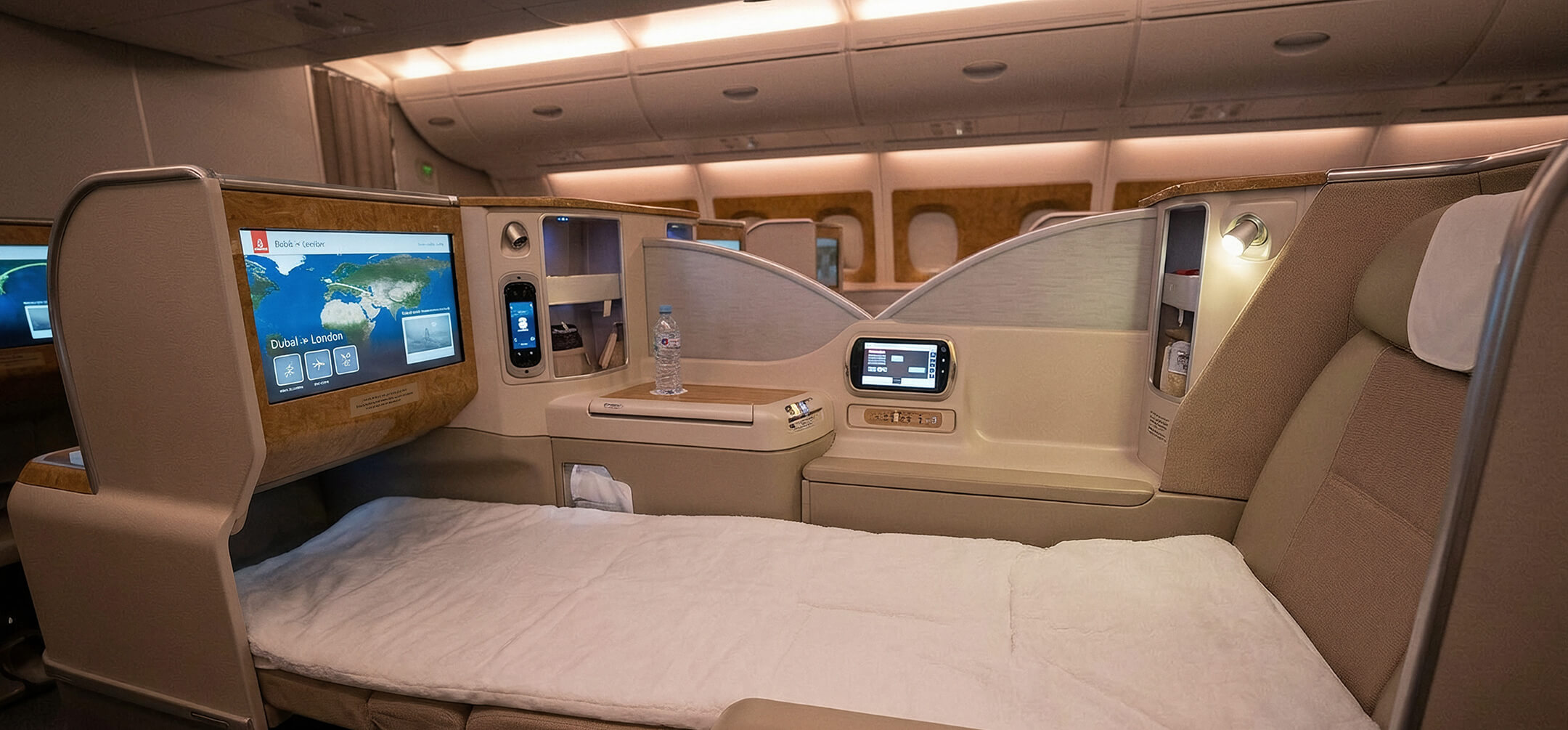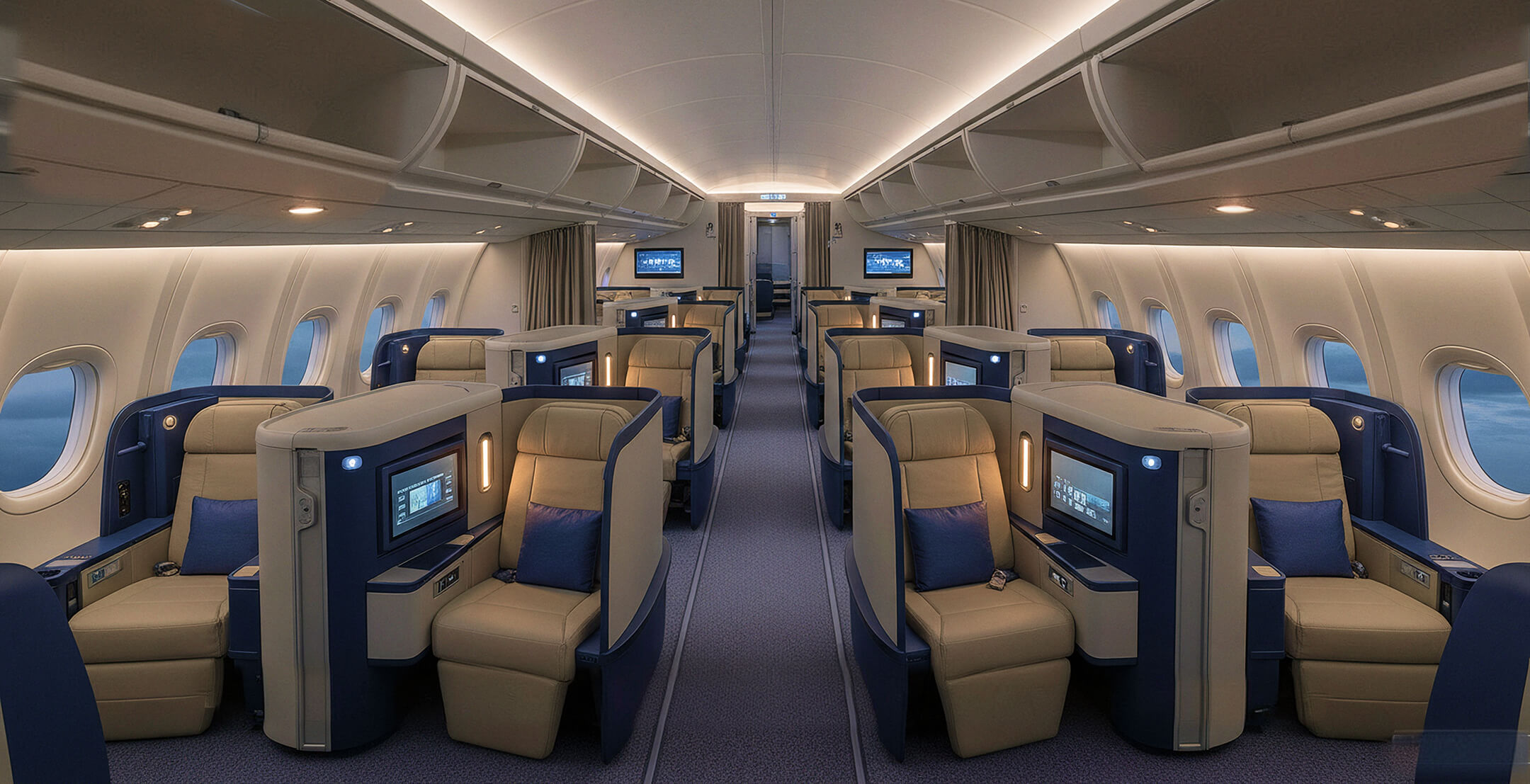



A business-class seat map gives you a clearer idea of what you will get during your flight than the airline name alone. Airlines may use several business-class products on the same aircraft model or assign different cabins to the same route. Marketing photos often feature the newest cabin, but your flight could have anything from a private suite with a closing door to an older open seat without direct aisle access. If you booked for the privacy, bed length, storage, or aisle access, you could board and not find the features you expected.
This guide explains why the airline name alone does not define your business-class experience and how to make a more informed choice before booking.
Read in this post:
The seat types hiding behind the words “business class”
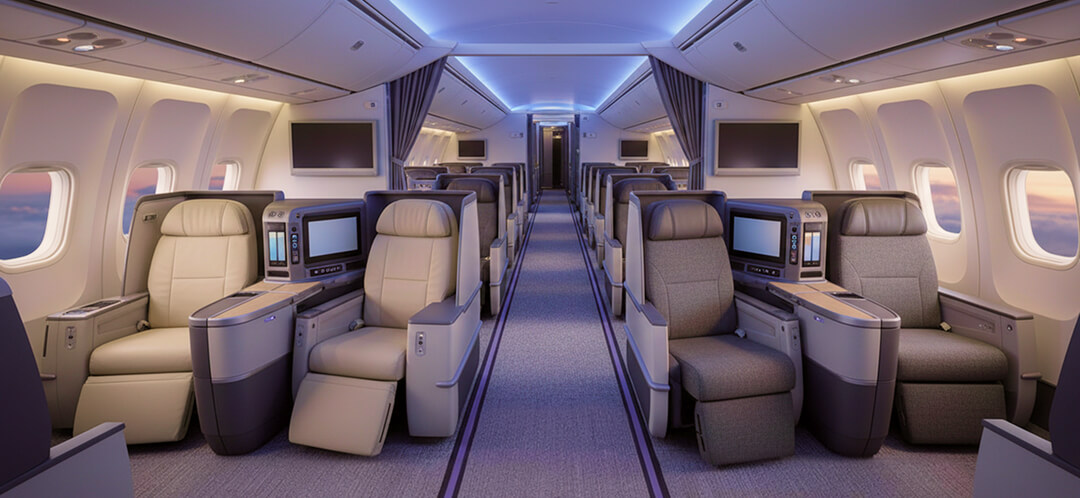
The main business-class seat types use forward-facing, staggered, or herringbone layouts, but these terms can overlap. “Forward-facing” tells you which way the seat points. “Staggered” tells you how the airline places seats from one row to the next. “Herringbone” tells you the angle of the seat. A seat can, therefore, face forward and form part of a staggered layout.
Forward-facing seats
Forward-facing seats point toward the front of the aircraft. Some cabins place one seat beside each window and two in the center, giving every passenger direct aisle access. Other cabins place seats in pairs. In these cabins, a window passenger must step past the aisle passenger when both passengers are in their seats.
The direction of the seat does not tell you how much privacy it offers. Airlines use forward-facing designs for older open seats and newer suites with closing doors.
Staggered seats
Staggered layouts place seats in slightly different positions from one row to the next. One row may have a window seat beside the window, while the next places it closer to the aisle. This pattern creates room for the bed and footwell.
Most staggered layouts give every passenger direct aisle access, but the seat positions are not equal. A seat beside the window usually has more separation from the aisle. A seat closer to the aisle exposes you to aisle traffic.
Herringbone and reverse herringbone seats
Herringbone seats point at an angle. A traditional herringbone seat faces the aisle, so you look toward more of the cabin. A reverse herringbone seat faces away from the aisle. Window seats face the windows, while center seats face each other and usually have a divider between them.
Both layouts typically give every passenger direct aisle access. Reverse herringbone seats usually offer more privacy to solo travelers, while the center seats make it easier for companions to converse.
Airlines sell all three layouts under the same business-class label. The words “business class” therefore tell you which cabin you booked, but not which seat design you will receive. It is always best to check the aircraft and cabin layout to see which features your seat includes.
Why the aircraft matters as much as the airline
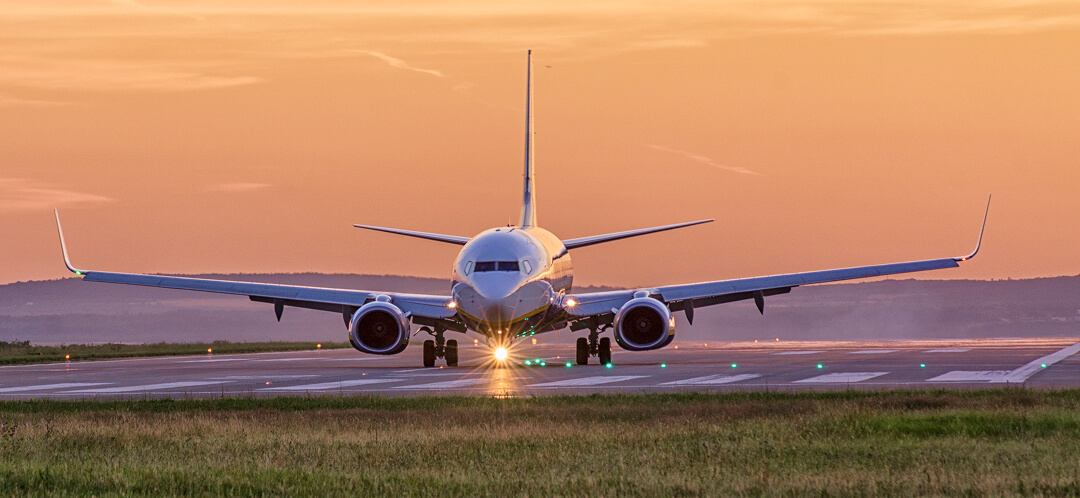
The airline name tells you who provides the service, but the aircraft and its cabin configuration tell you which seat, layout, and cabin facilities you can expect. Two flights operated by the same airline in the same class can therefore provide very different levels of privacy, aisle access, storage, and space, and aircraft size is one of the biggest reasons why.
A widebody aircraft has two aisles, while a narrowbody has one. Airlines now use narrowbodies on transcontinental and international routes that once relied mainly on widebody jets. Thus, a single-aisle aircraft can also offer a fully flat bed, direct aisle access, and a closing privacy door.
American Airlines provides a clear example because its Airbus A321XLR pairs a narrowbody aircraft with a long-haul business-class suite.
- The airline launched the aircraft and its new Flagship Suite cabin between New York John F. Kennedy International Airport (JFK) and Los Angeles International Airport (LAX), then expanded it to flights between New York and Edinburgh Airport (EDI).
- The A321XLR has 20 Flagship Suite seats. Each seat converts into a fully flat bed and includes direct aisle access, a closing privacy door, and personal storage. These are features you would normally expect to find in a long-haul widebody cabin.
Nevertheless, a narrowbody still has some limits. A single aisle means passengers and crew have no way around a blocked cart or a slow-moving line, which shows up most during boarding, deplaning, and meal service. It also usually has fewer restrooms and less galley space. A widebody gives you more room to move and often has a larger business-class cabin.
The size of the aircraft also does not tell you how good the seat is. A new narrowbody suite may offer more privacy and easier aisle access than an older widebody seat. Compare the seat and cabin facilities instead of choosing a flight based solely on aircraft size.
How one airline can fly two different business-class cabins on the same route
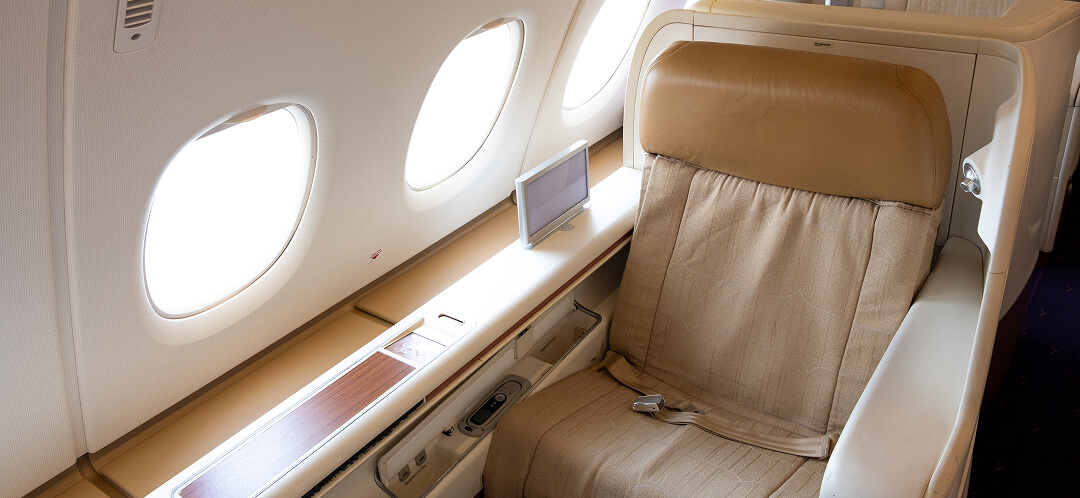
Even after you choose the airline and aircraft model, you may still face more than one business-class cabin. Lufthansa’s business-class fleet includes Airbus A350-900s and Boeing 787-9s with the new Allegris cabin. Other aircraft of both models have older versions of the business-class cabins. Lufthansa may use either version on its long-haul routes.
The difference is clearest on the Airbus A350-900. The older business-class cabin has a 2-2-2 layout. A window passenger must step past the aisle passenger when both passengers occupy their seats. Allegris has a 1-2-1 layout, so every passenger can reach the aisle directly.
The non-Allegris Boeing 787-9 does not have the older 2-2-2 seat. It has a 1-2-1 reverse herringbone cabin with direct aisle access. However, it does not offer Allegris’s five seat choices, first-row suites with closing doors, or newer cabin features.
Allegris does not mean one uniform seat
This cabin includes five different Lufthansa Allegris business-class seat types. They offer different levels of privacy, space, and bed length:
- The Classic Seat faces forward beside the aisle and has a privacy screen.
- The Privacy Seat is beside the window and farther from the aisle.
- The Extra Long Bed extends to 7 feet 2 inches when fully flat.
- The Extra Space Seat provides more personal room beside the seat.
- The Business Class Suite is located in the first row and has closing doors.
Lufthansa charges a reservation fee for some seat types. The fee depends on your fare and frequent-flyer status. If you do not reserve a seat, Lufthansa assigns one at check-in. Booking an Allegris flight tells you which cabin family Lufthansa plans to use. It does not tell you which of the five seats you will receive.
The flight number does not confirm the cabin
Airlines can use different aircraft or cabins under the same flight number and change the aircraft after you book.
You need to check the cabin shown for your exact travel date. Look for Lufthansa’s “Allegris: New seat concept” label and review the live seat map before choosing a seat. This is the only way to distinguish an Allegris cabin from an earlier configuration and see which Allegris seat types are still available.
How to check the actual seat map for your specific flight
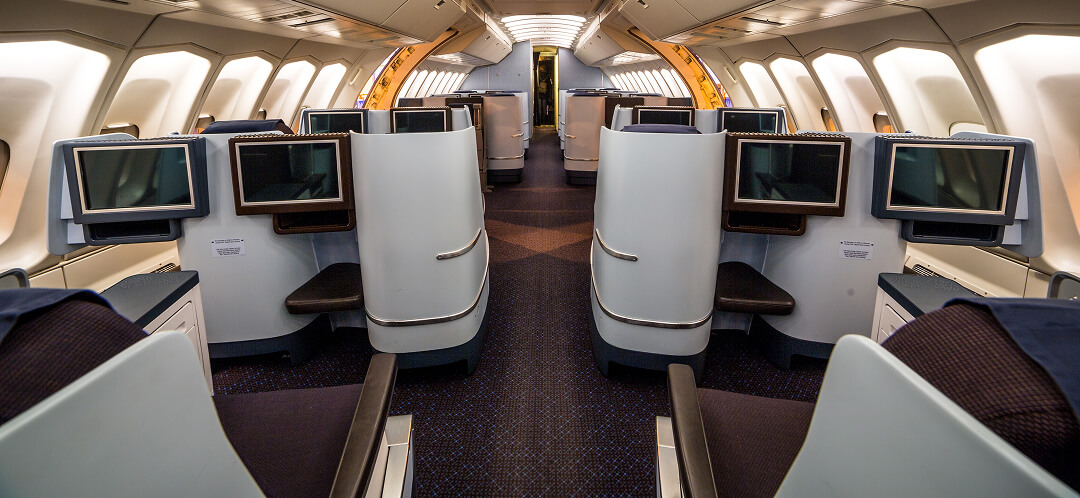
To check the business-class seat map for your specific flight, search for the route and travel date on the operating airline’s website, select the flight and fare, then open ‘Choose seats,’ ‘Seat selection,’ or ‘View seat map’ before payment. If it is a codeshare flight, check the airline listed next to ‘operated by,’ since that airline provides the aircraft and cabin. Once the map is open, check the aircraft model, seat arrangement, cabin size, and product name: this is the cabin currently planned for your flight, although the airline can still change the aircraft later.
Emirates A380 business-class seat map
An Emirates A380 business-class seat map shows business class in a staggered 1-2-1 layout on the upper deck. Seats alternate between positions closer to the window or aisle, while center seats vary in distance from each other. Emirates uses several A380 configurations, so check the upper-deck map assigned to your departure. The main deck has other cabins, not a second business-class layout.
Air France A350-900 business-class seat map
An Air France A350-900 business-class seat map reveals one of two layouts: an open staggered 1-2-1 cabin or a newer 1-2-1 cabin with sliding-door suites. Air France also uses Boeing 777s on many long-haul routes. If your flight uses a Boeing 777, check its seat map separately because the cabin design and number of business-class rows may differ.
American Airlines 777-200 business-class seat map
An American Airlines 777-200 business-class seat map splits into one of two open 1-2-1 cabins. The Super Diamond version uses forward-facing reverse-herringbone seats, while Concept D alternates between forward- and rear-facing seats. Both provide fully flat beds and direct aisle access, but neither has privacy doors. American’s smaller Airbus A321XLR has newer Flagship Suites with closing doors, so aircraft size alone does not tell you which plane has the newer seat.
Qatar Airways business-class seat map
Qatar Airways offers Qsuite on its Airbus A350-900 and A350-1000 aircraft and Boeing 777-200LR and 777-300ER aircraft. However, some A350-900s and 777s use other cabins. The Airbus A380, Boeing 787-8, and Boeing 787-9 also have non-Qsuite 1-2-1 layouts.
A Qatar Airways business-class seat map helps you distinguish Qsuite from Qatar’s other 1-2-1 cabins. Qsuite seats alternate between forward- and rear-facing positions and have closing doors. The movable panels between the center seats can create a double suite for two or a shared space for four. Look for the alternating seat directions because direct aisle access does not confirm Qsuite, and the 787-9 also has closing doors.
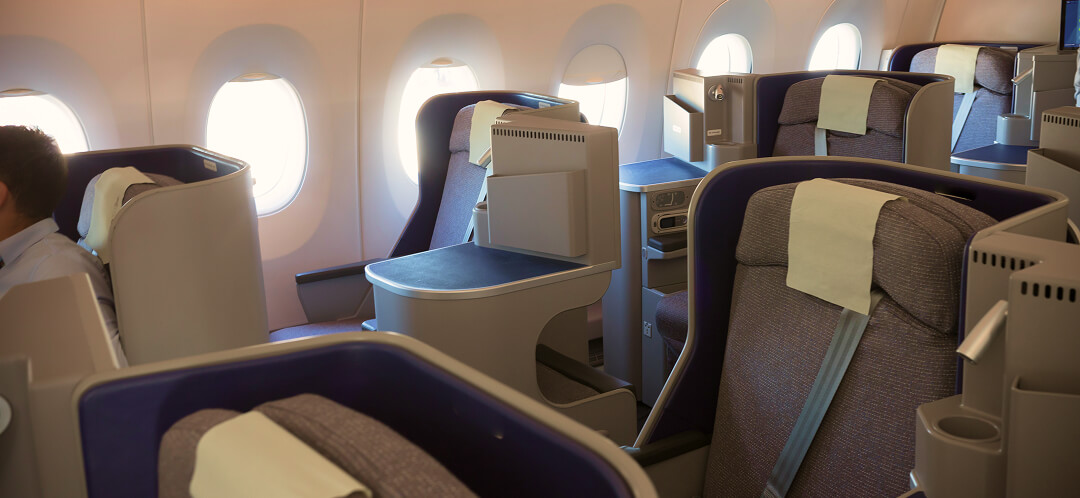
Lufthansa A380 business-class seat map
A Lufthansa A380 business-class seat map confirms the airline’s older 2-2-2 layout, not Allegris. The seats convert into fully flat beds, but the window seats do not have direct aisle access. Unlike Allegris, the A380 has one standard business-class seat instead of five seat types, and none has a closing door.
ANA 787-9 business-class seat map
An ANA 787-9 business-class seat map indicates either The Room FX or ANA Business Staggered. The Room FX has enclosed suites with alternating forward- and rear-facing seats. Business Staggered uses open, forward-facing seats. Both convert into fully flat beds and give every passenger direct aisle access, but only The Room FX has closing doors. AranGrant’s New Business Class 2026 article describes The Room FX in more detail.
Turkish Airlines 787-9 business-class seat map
A Turkish Airlines 787-9 business-class seat map shows fully flat seats in a staggered 1-2-1 layout. Some window seats are beside the window and farther from the aisle. Others are closer to people walking through the cabin. The space between center seats also changes. Check the map and choose your seats based on whether you want more privacy or easier conversation with a companion during the flight.
Use third-party maps as a secondary check
If the airline’s map is unclear, compare it with AeroLOPA or SeatMaps. Their diagrams can help you match the rows, seat directions, cabin divisions, galleys, and restrooms to a specific configuration.
SeatGuru has closed, and its old maps are no longer a reliable current reference. AeroLOPA and SeatMaps can help identify the likely cabin, but only the airline’s live seat map shows the aircraft currently assigned to your flight.
Check the seat map even if you know the airline
Lufthansa mixes Allegris and older cabins across its Munich and Frankfurt long-haul network right now, and United is doing the same as it rolls out its Elevated interior, with United Polaris Studio suites in the first row, to some of its Boeing 787-9s while others in the same fleet keep the older Polaris cabin. On routes like these, your history with an airline tells you nothing about which cabin you’ll get today; only the flight number, the date, and the live seat map do.