

Chapters:

Need help with your trip?
Our support team is available 24/7. Request a callback or call us directly at (833) 619-0908
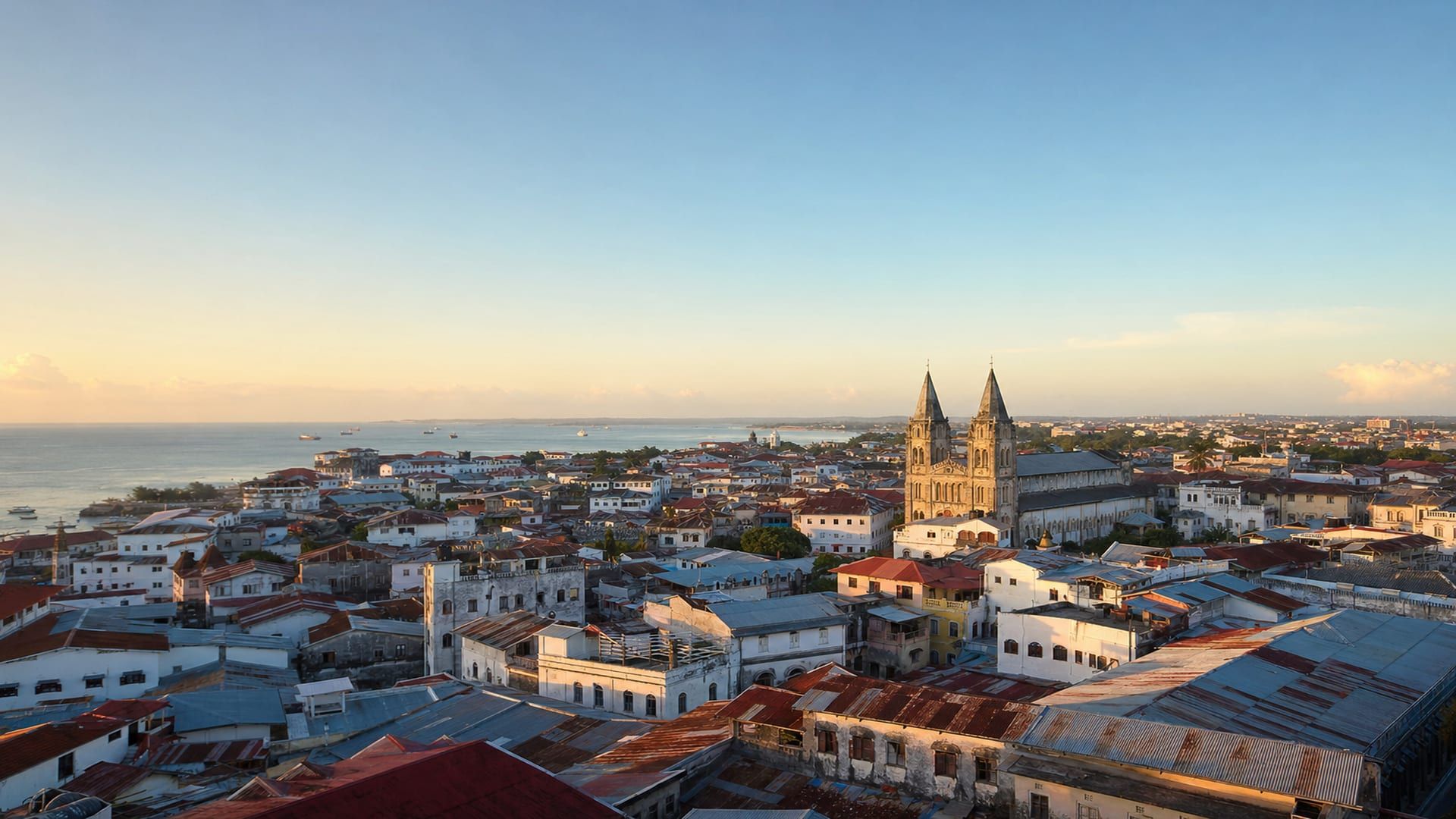
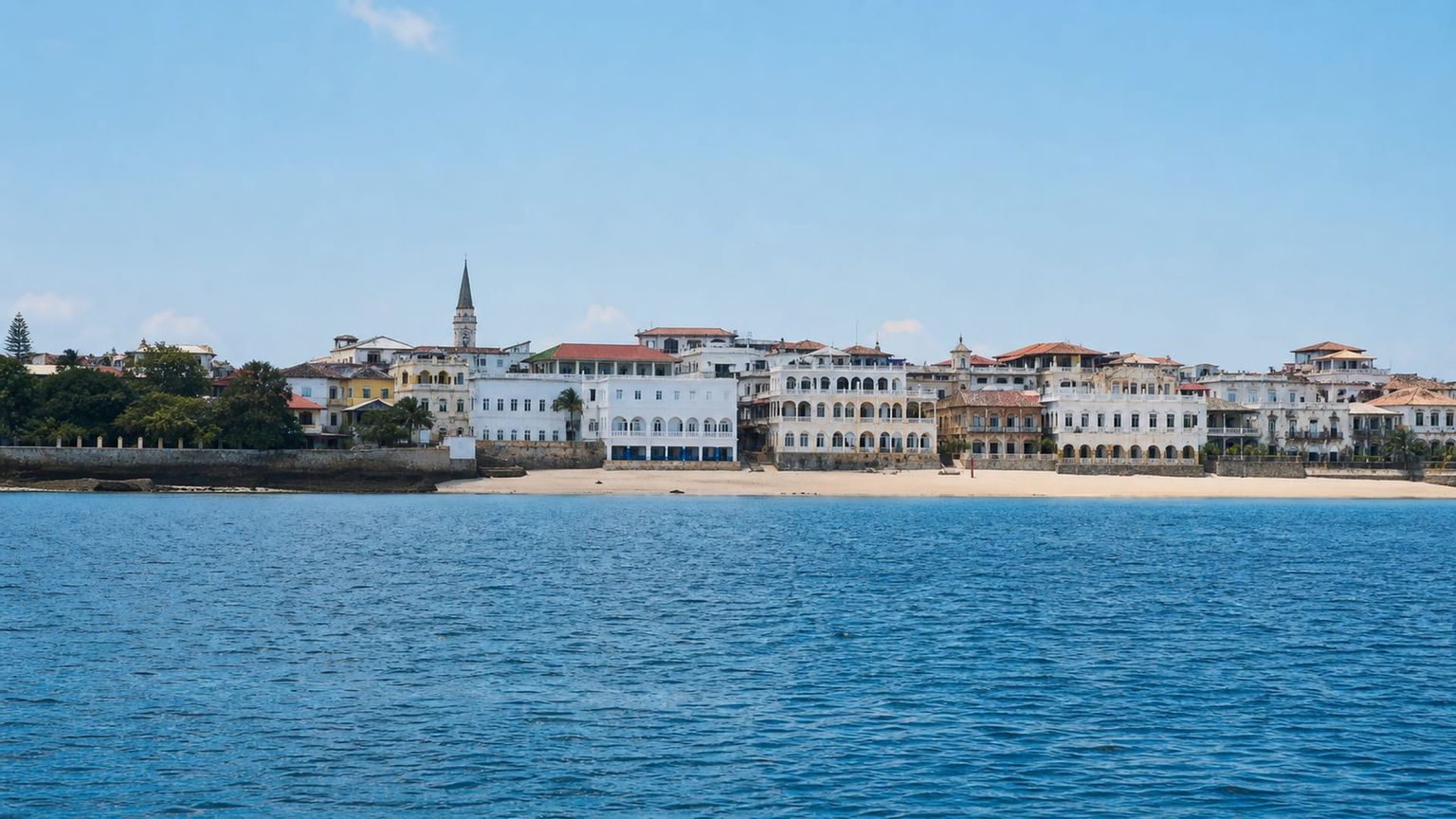
Zanzibar City is the capital of Zanzibar, the semi-autonomous Tanzanian archipelago in the Indian Ocean, and the largest city on its main island, Unguja. In the 19th century, the sultans of Oman ruled their East African trade from here, and the city grew rich on cloves, ivory, and the slave trade. Its historic quarter, Stone Town, has been a UNESCO World Heritage Site since 2000, and it holds most of the sights visitors come for, from the Old Fort to the Old Slave Market. Beyond Stone Town, the city spreads along the coast, with quiet suburbs, palace ruins, and resort hotels to the north and south.
This guide covers where to stay, what to eat, how to get around, when to visit, and how to spend five days on Zanzibar.
Useful things to know

Main language(s): Swahili, English
Jambo (JAHM-boh) – Hello
Tafadhali (tah-fah-THA-lee) – Please
Asante (ah-SAHN-teh) – Thank you
Unazungumza Kiingereza? (oo-nah-zoo-ngoo-MZAH kee-ing-ee-REH-zah) – Do you speak English?
Bei gani? (BEH-ee GAH-nee) – How much does it cost?

Currency: Tanzanian shilling (TZS, TSh)

Cash and cards: Hotels, resorts, and tour operators often quote prices in US dollars and accept cards, but markets, dala-dalas, and small cafés take cash. Carry TZS 50,000 to TZS 100,000 ($19 to $38).

Tipping: Tipping is appreciated but not required. Leave 5% to 10% in restaurants for good service, and round up for drivers and guides.

Traditional food: Zanzibar pizza, octopus curry, urojo, and pilau are among the island’s best-known dishes.

Water and coffee costs: A large bottle of water costs TZS 1,000 to TZS 1,500 ($0.40 to $0.55), and a cappuccino costs about TZS 5,000 ($1.90).

Taxis and ride apps: Uber does not operate in Zanzibar. Bolt works in Stone Town and nearby areas, while taxis and pre-booked transfers cover the rest of the island.

Plug and voltage: Zanzibar uses Type G sockets and 230V electricity. US travelers need a plug adapter.

Dining and shop opening hours: Restaurants usually serve lunch from 12:30 pm to 2:30 pm and dinner from 7:00 pm. During Ramadan, many cafés in Stone Town stay closed until sunset.

Emergency number: Call 112 for police, 114 for fire rescue, and 115 for an ambulance.
Where to stay in Zanzibar
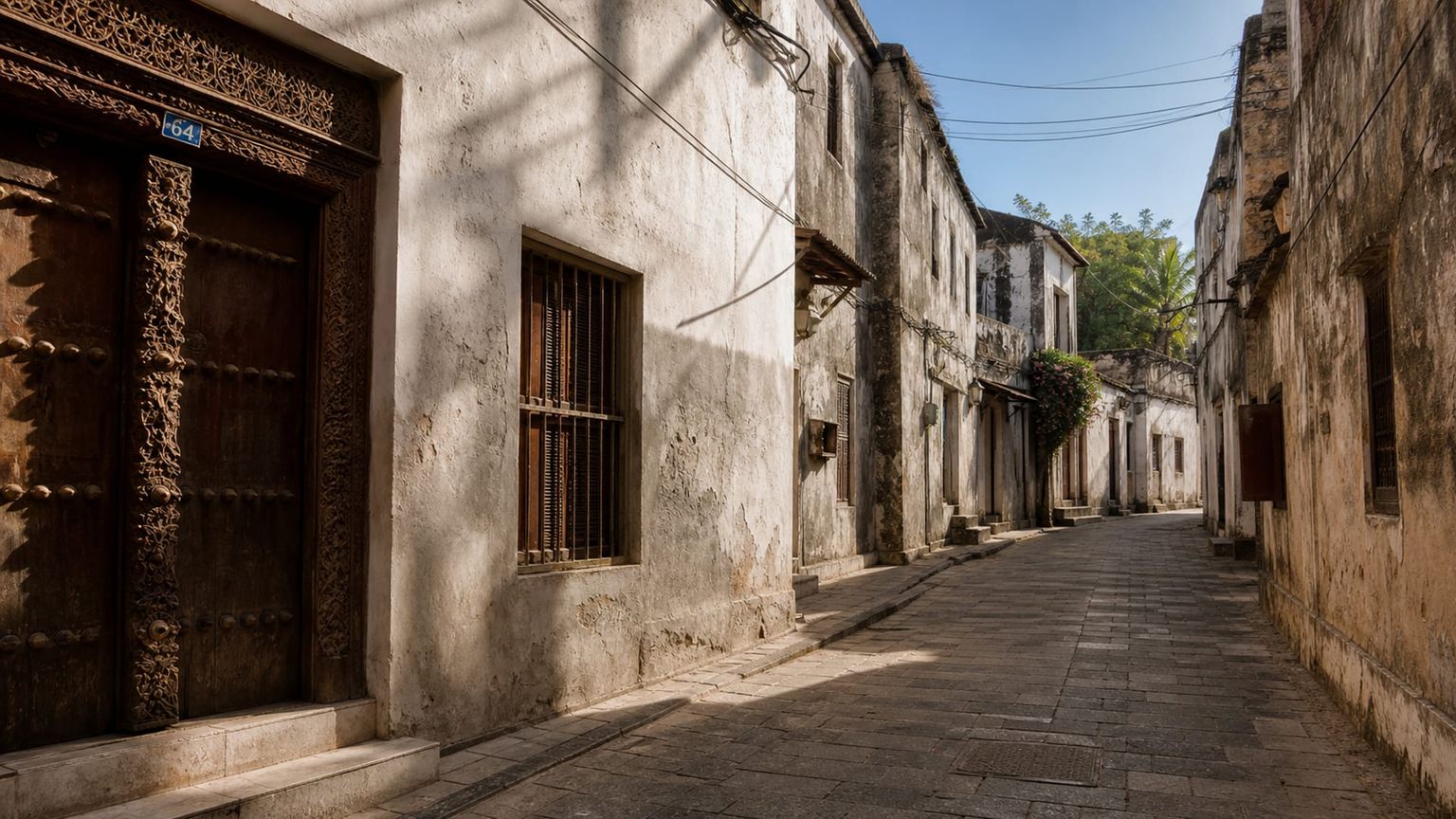
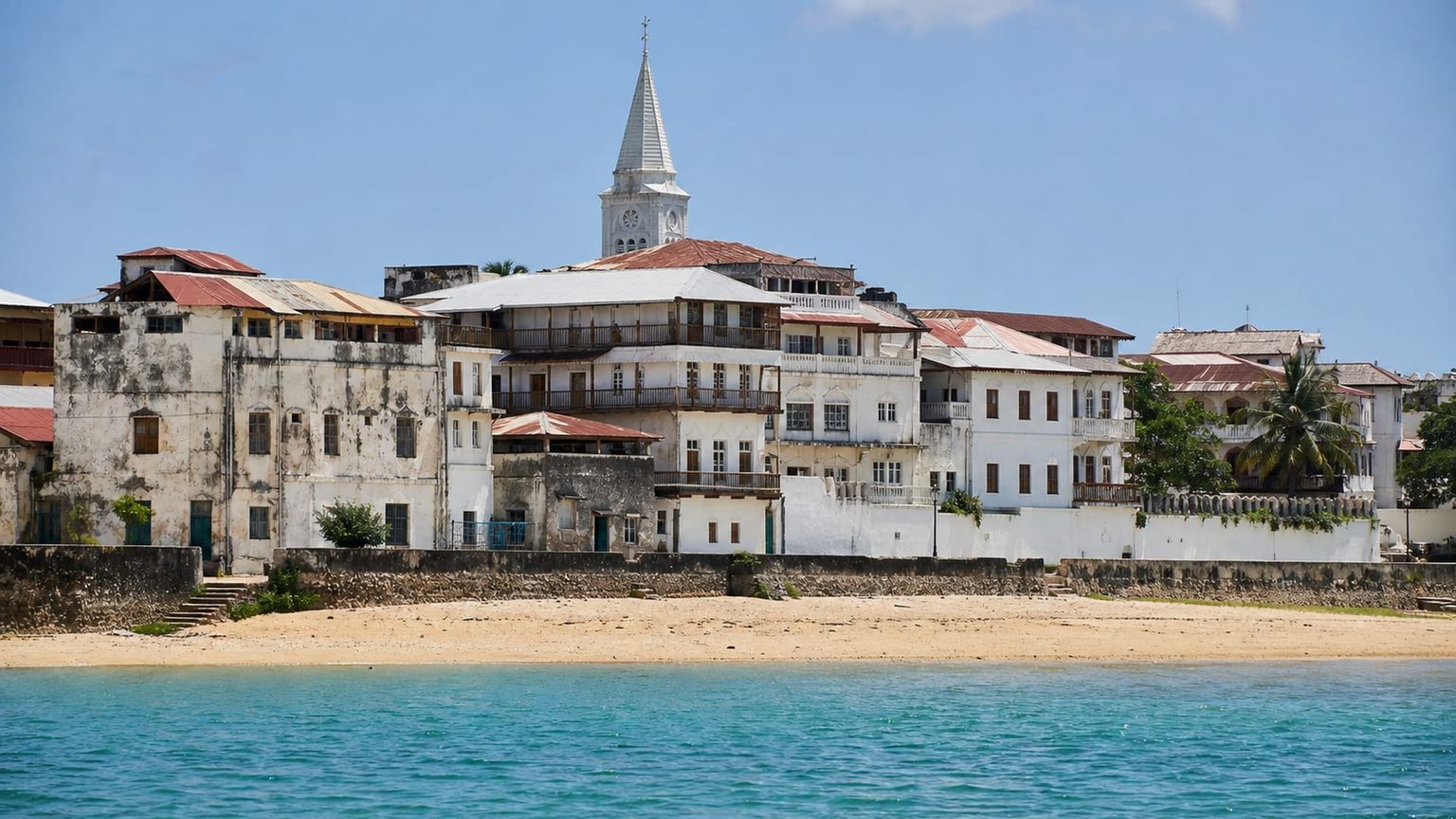
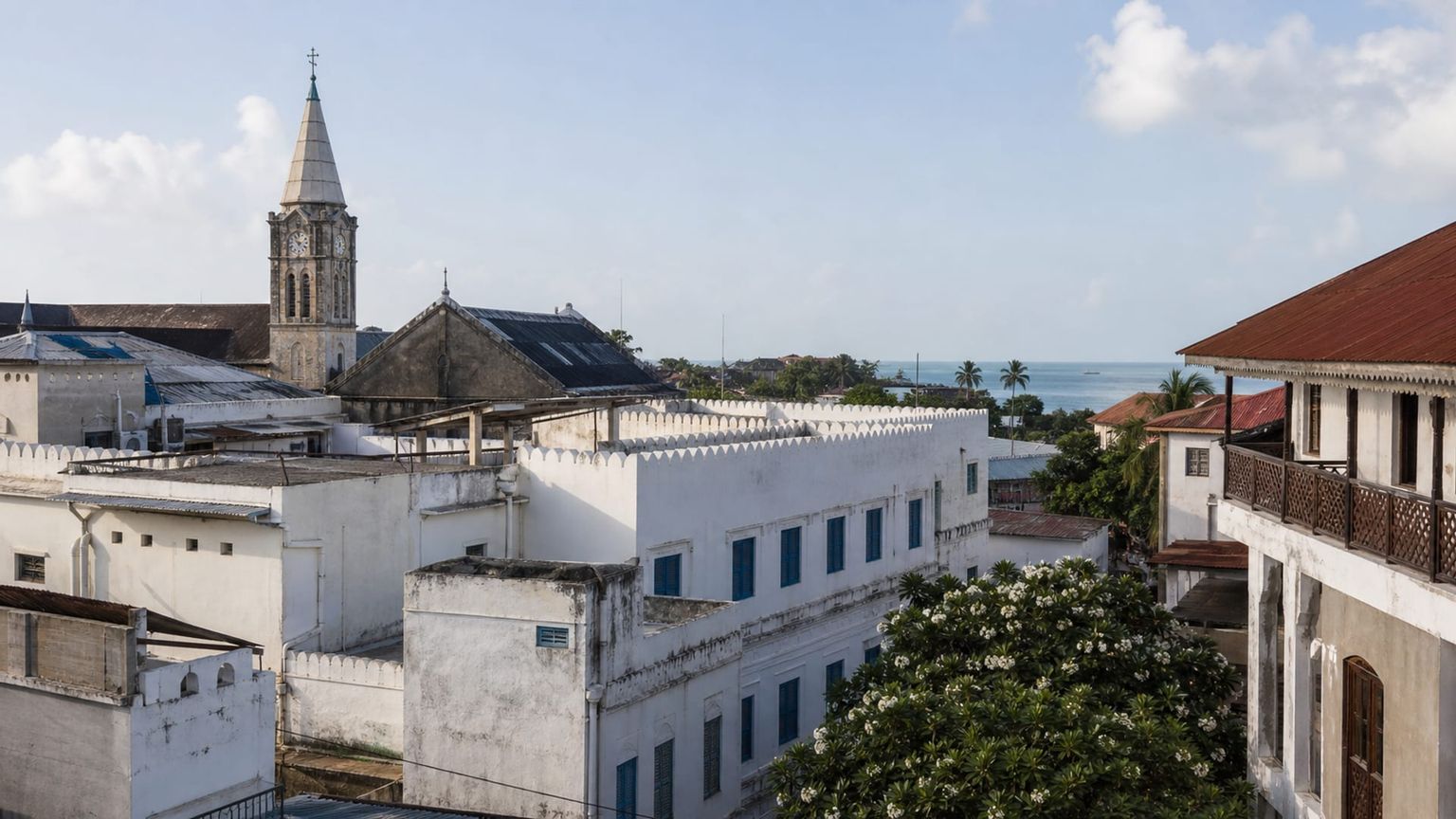
Stone Town is the old heart of Zanzibar City and the only place on the island that feels like a real town. It is the best area for history and food, with coral-stone houses, carved wooden doors, and busy markets. In the evening, people head to the Forodhani night market on the waterfront for dinner.
Best for: First-time visits, sightseeing, dining, and travelers who want to explore on foot
What to expect: Narrow lanes, frequent pedestrian traffic, market calls, mosque sounds, and a steady flow of visitors through the center.
Hotel prices: Usually about $80 to $250 per night for well-rated stays
Distance to major sights: On foot to the Old Fort in about 5 minutes and the House of Wonders in about 7 minutes
Quietness: Busy during the day, then quieter in side lanes after dinner, though some waterfront spots keep evening activity
Main trade-off: Rooms in the most atmospheric streets can be older, smaller, and noisier than hotels farther from the main lanes.
Good to know: Many streets are too narrow for taxis, so ask your hotel where drivers can drop you off with luggage.
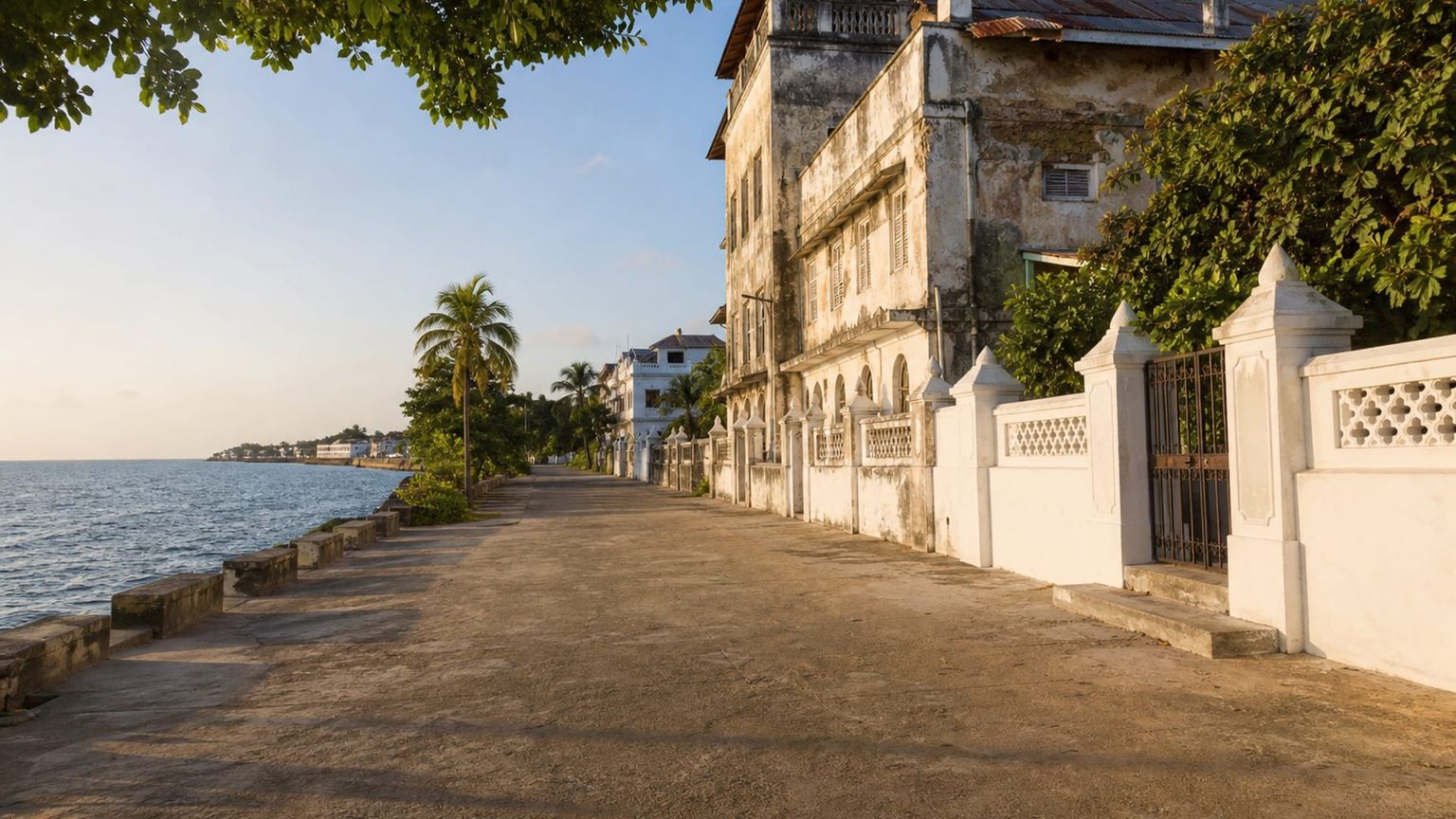
Shangani is the western waterfront of Stone Town, where the city’s top hotels face the sea, including several in restored 19th-century mansions and old merchant houses. The rest of Stone Town is a short walk away, and the Freddie Mercury Museum, in the singer’s former home, is nearby.
Best for: Waterfront stays, shorter walks to Stone Town, and travelers who want easier taxi access
What to expect: A mix of hotels, guesthouses, and foot traffic along the seafront, with more open streets than the inner maze of Stone Town.
Hotel prices: Usually about $90 to $280 per night for well-rated stays
Distance to major sights: About 10 minutes on foot to the Old Fort and about 12 minutes to the Darajani Market area
Quietness: Quieter than central Stone Town during the day, with more audible traffic and hotel activity in the evening along the waterfront
Main trade-off: You give up some of Stone Town’s atmosphere, and the best sea-facing rooms cost more than inland options.
Good to know: Ask for a sea-facing room, since traditional dhows sail past the hotels at sunset.
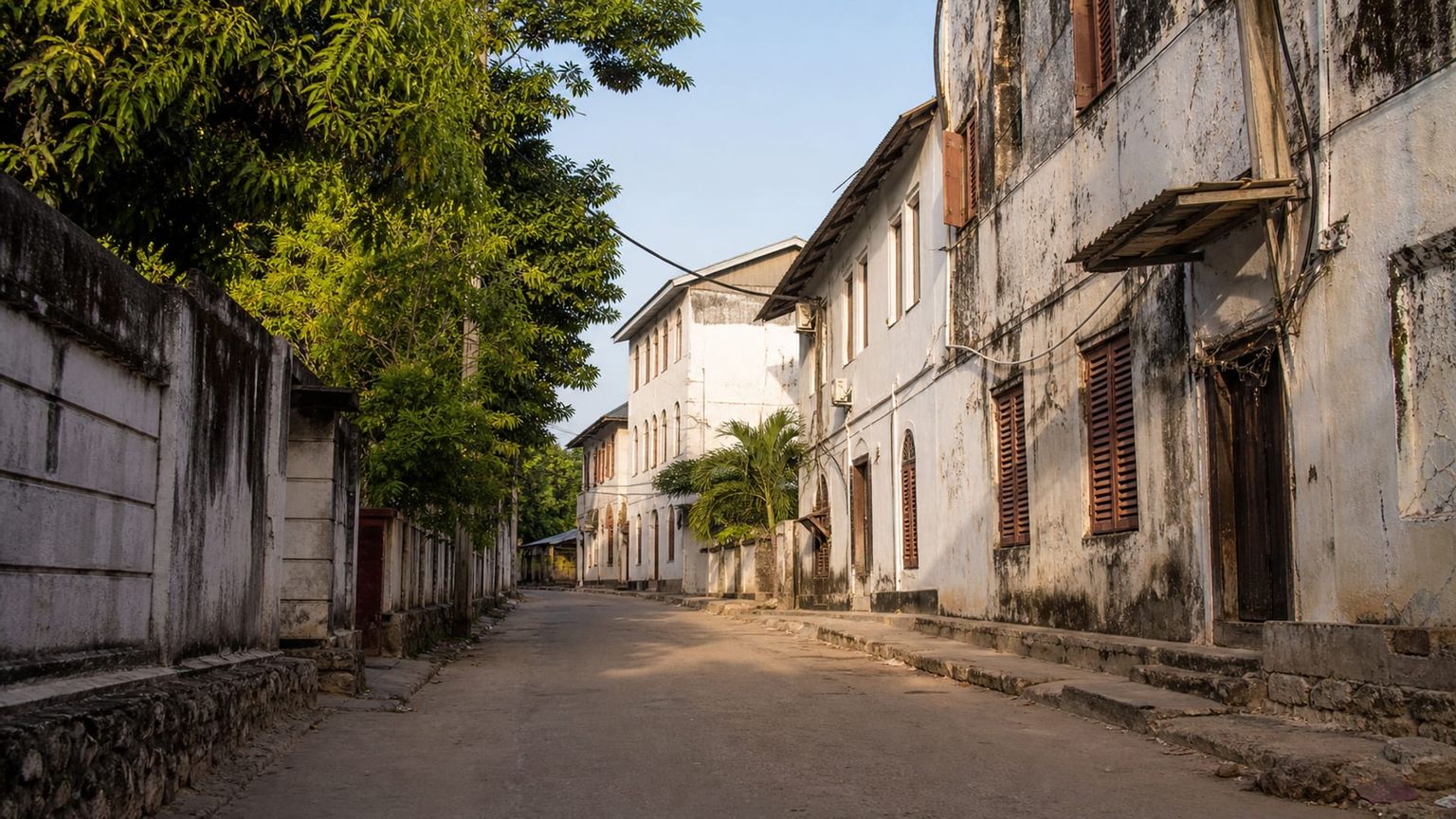
Bububu and Chuini line the coast north of the city, where the sultans of Zanzibar built their country palaces in the 19th century. Today the shore has beachfront resorts and lodges, and the ruins of the Mtoni and Maruhubi palaces stand by the coast road on the way into Stone Town.
Best for: Resort-style stays, beach time, and travelers who prefer a quieter base with vehicle access
What to expect: Low-rise hotels, local neighborhoods, and wider roads, with far less foot traffic than Stone Town.
Hotel prices: Usually about $70 to $220 per night for well-rated stays
Distance to major sights: About 20 to 30 minutes by taxi to Stone Town’s Old Fort
Quietness: Quiet in the day and generally quieter at night, apart from hotel activity near the coast
Main trade-off: You will spend more time and money on taxis if you plan to visit museums, markets, and restaurants in Stone Town.
Good to know: The Maruhubi Palace ticket includes a guide, who shows old photos of the palace before the 1899 fire.
Avoid hotels in Ng’ambo or near the airport if you plan to explore on foot. These parts of the city are mainly residential, with few restaurants or sights within walking distance.
Hotel deals
How to get around Zanzibar efficiently
Zanzibar City has no rail or metro. Walking is easiest within Stone Town, and taxis, Bolt, and dala-dala minibuses cover the rest of the city.

<strong>Taxi</strong> and rideshare
for the airport, Mbweni, and the coast north of town
Official airport taxis charge TZS 40,000 to TZS 53,000 ($15 to $20) to Stone Town. Taxis have no meters, so agree on the fare first and pay in cash. Bolt shows the price upfront and works best in Stone Town, although cars are scarce and wait times can reach 20 minutes.

Dala-dala
for short trips during the day
Dala-dalas are shared minibuses that leave when full and run from dawn to dusk. Route 505 links the airport and Stone Town for TZS 400 ($0.15), and other routes start near Darajani Market. Luggage space is limited.

Bajaji
for short rides in and near Stone Town
Bajaji are three-wheeled tuk-tuks found on the main roads around Stone Town, useful for sights on its edge such as the Peace Memorial Museum. Agree on the price before you get in. A ride in or near Stone Town should cost no more than TZS 5,000 ($1.90).
*Prices are based on rates updated as of October 2026 and may change at the time of travel.
Walk within Stone Town, take taxis for the airport and the coast, use Bolt for short rides, and try dala-dalas for daytime trips around the city.
Iconic landmarks
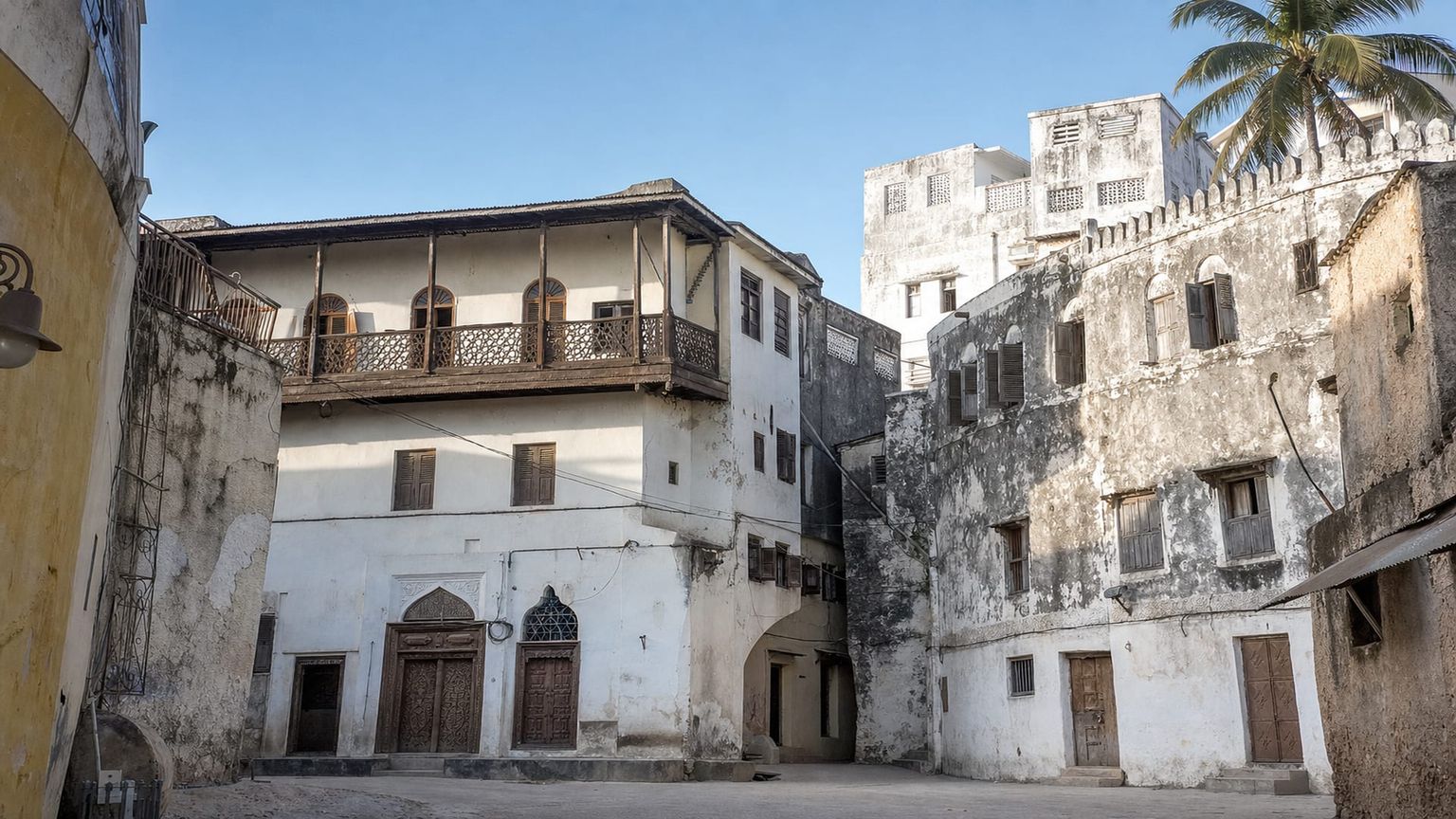
Old Slave Market and Christ Church Cathedral
This is the most important historical site in Stone Town. The Anglican cathedral was built in the 1870s on the site of the island’s slave market, and the grounds include the chambers where enslaved people were held and a memorial of five chained figures.
Time needed: About 3 to 4 hours
Entry: Free to explore, with separate charges for museums, guided walks, and some heritage interiors
Tip: Go early, since the exhibition gallery is poorly ventilated and gets hot by midday.
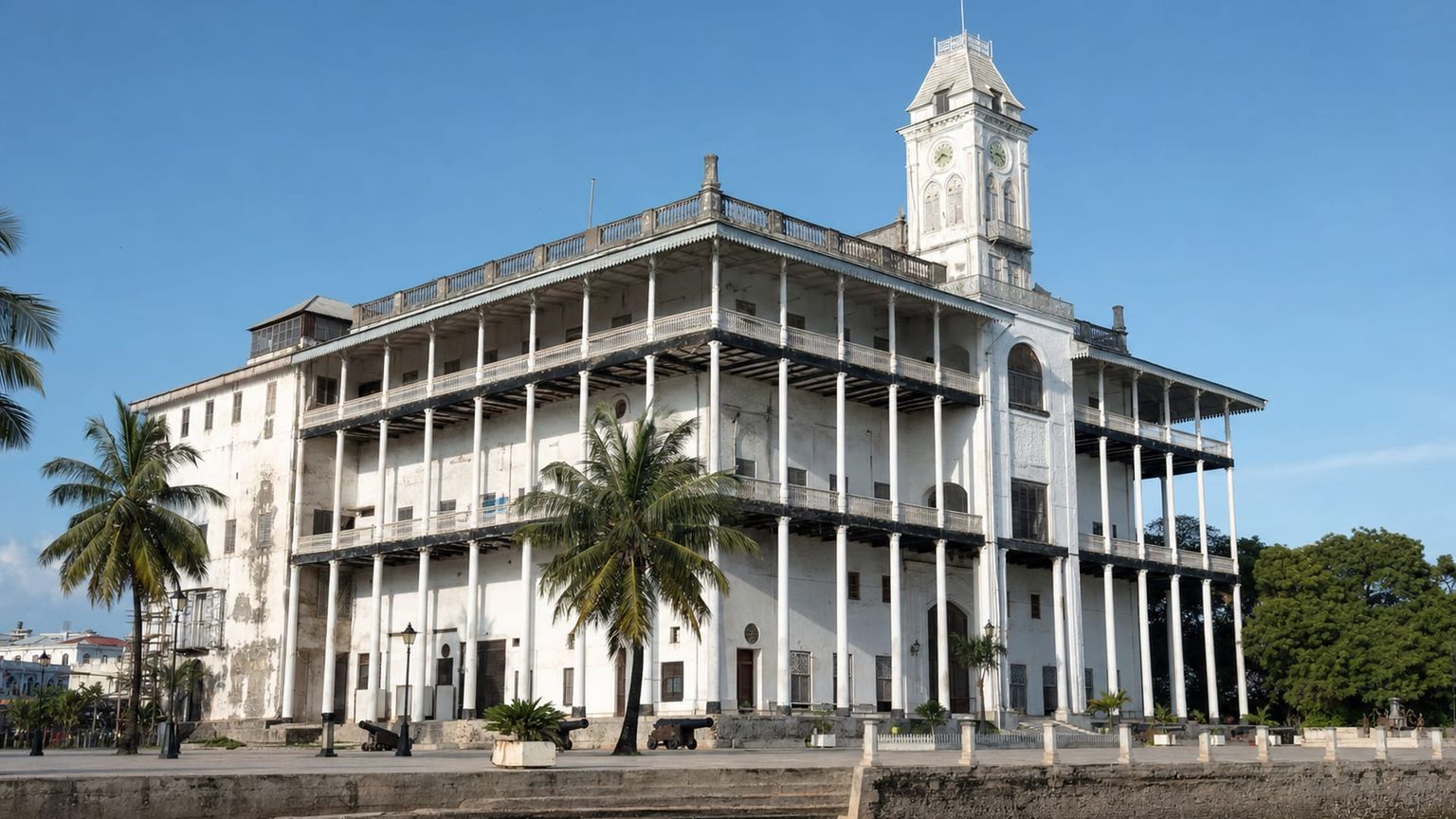
Old Fort
The Old Fort is Stone Town’s oldest building, built by the Omanis at the end of the 17th century to defend the town against the Portuguese. Its courtyard now hosts art exhibitions and an open-air amphitheater used for concerts and performances.
Time needed: About 1 to 2 hours
Entry: Admission typically costs about $6 to $12 (about TSh15,000 to TSh30,000), depending on exhibit access and local rates
Tip: Check the schedule at the gate for evening concerts and performances in the amphitheater.
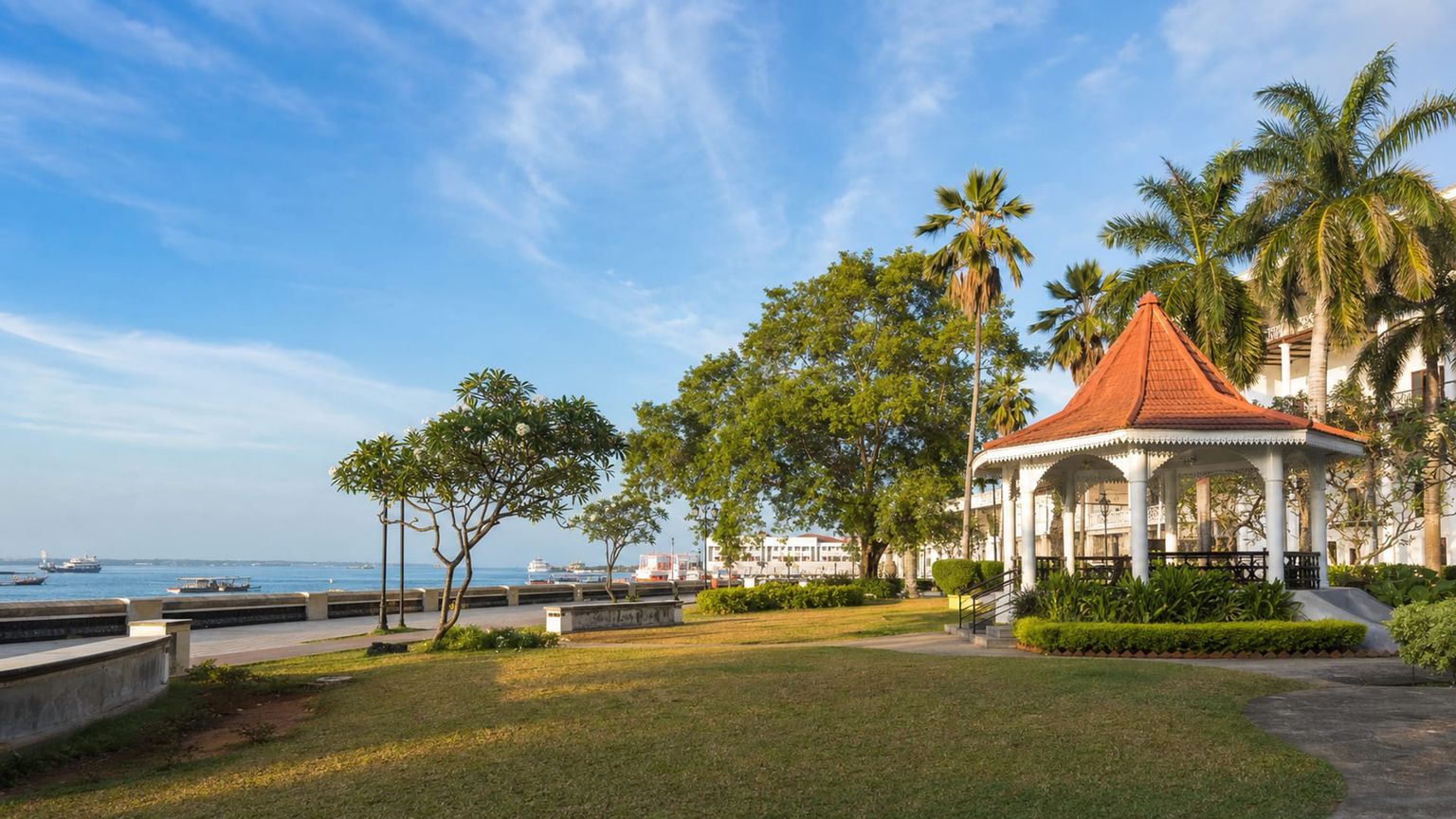
Forodhani Gardens
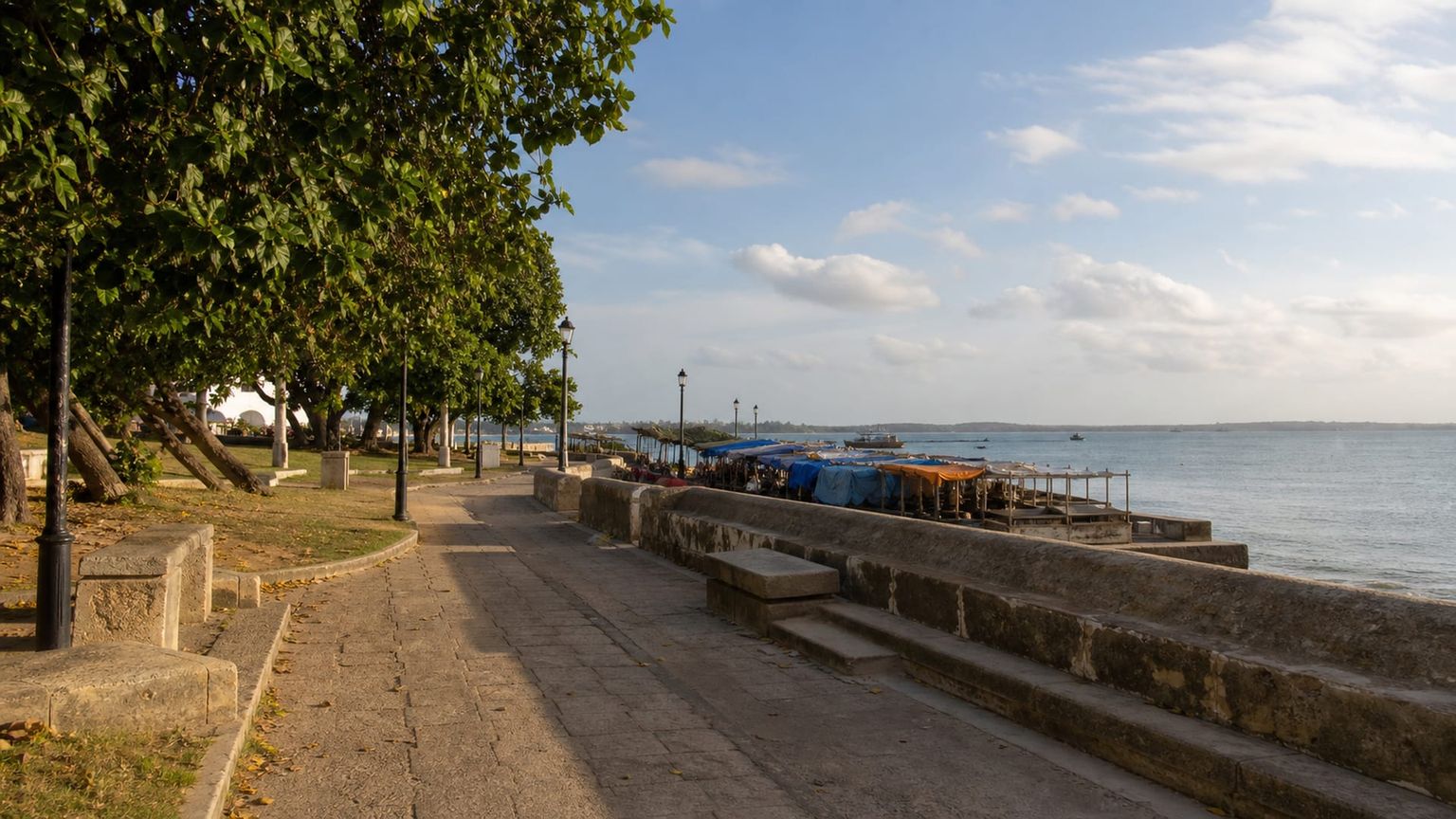
Forodhani Gardens is Stone Town’s seafront park and the island’s best-known place to eat outdoors. Every evening, vendors set up grills and stalls selling Zanzibar pizza, seafood skewers, urojo, and sugarcane juice, and local families fill the lawns.
Time needed: About 1 to 2 hours
Entry: Free to enter, with food and drinks sold separately at the evening market stalls
Tip: Arrive before sunset, while stalls are setting up, to avoid long lines and pushy vendors.
Overlooked sites worth visiting

Prison Island
Just off Stone Town, this small island once held a prison and a quarantine station. Today it is best known for its giant Aldabra tortoises, descended from four sent from the Seychelles in 1919.
Time needed: About 45 minutes to 1.5 hours
Entry: Free to access; food stall prices vary, and a snack or drink usually costs about $2 to $8 (about TSh 5,000 to TSh 20,000), depending on the stall and what you order.
Tip: The crossing can be choppy, so pick a calm morning if you get seasick.

Hamamni Persian Baths
Built in the 19th century, Hamamni was one of Stone Town’s grandest public bathhouses. Its domed rooms and Persian-style design show how closely the island was tied to Persia and Arabia.
Time needed: About 30 to 45 minutes
Entry: Admission usually costs about $5 to $10 (about TSh 12,500 to TSh 25,000) for adults, with reduced rates sometimes offered for children and local residents; hours can vary by season, so check before you go.
Tip: Jaws Corner is close by, so stop for coffee where locals gather after your visit.
Traditional food
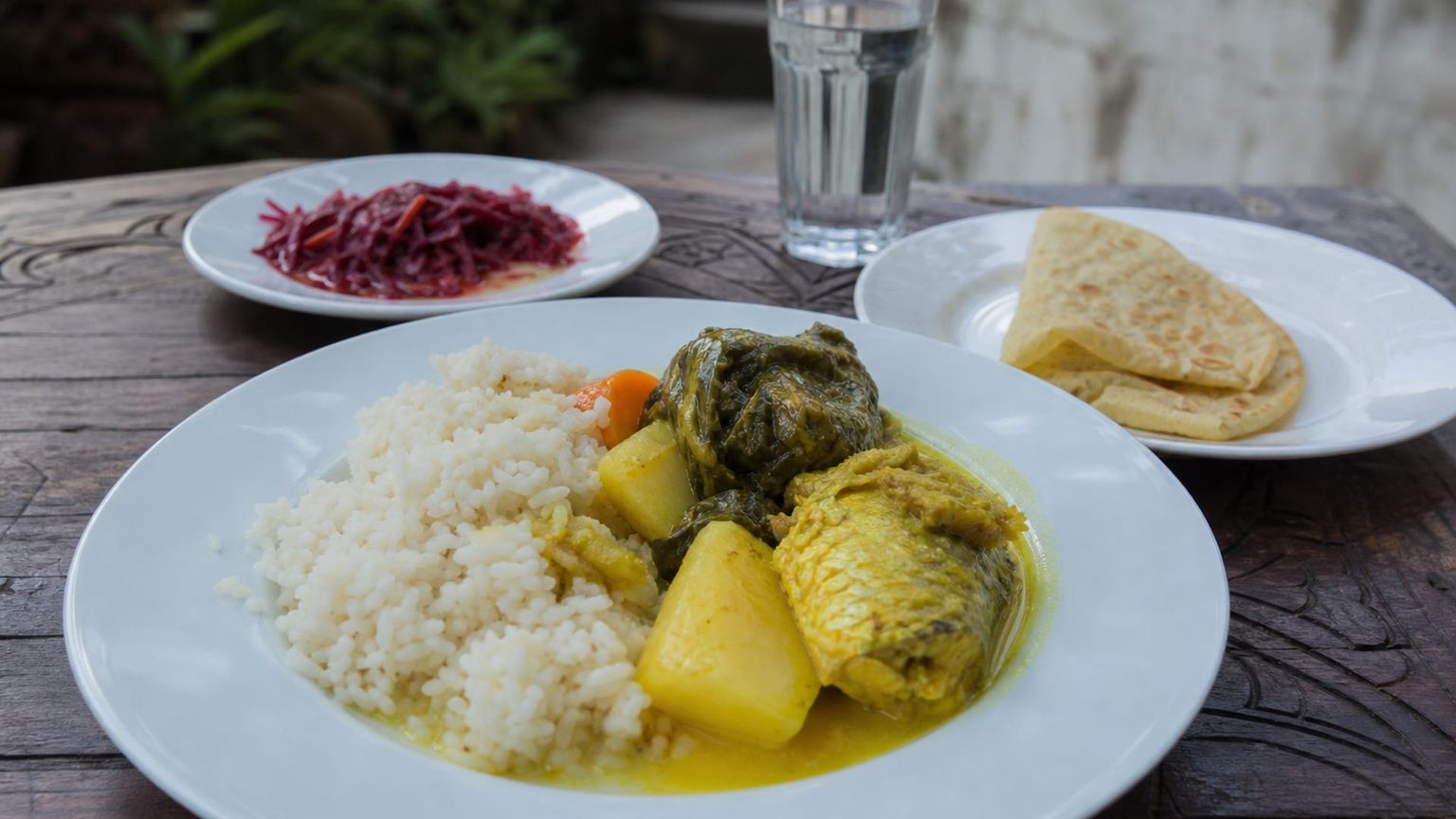
Zanzibar’s cooking mixes African, Arab, and Indian influences, built on coconut, seafood, rice, and spices such as cloves and cardamom that grow on the island.
Zanzibar pizza
Despite the name, it is closer to a stuffed crepe: thin dough folded over egg, minced meat, vegetables, and cheese, then fried on a griddle. Sweet versions come with banana or chocolate. The stalls at Forodhani Gardens make it fresh every evening.
Octopus curry
Octopus simmers in a coconut and spice sauce until tender, and locals usually eat it with pilau or chapati. Lukmaan Restaurant, a local favorite next to the Anglican Cathedral, serves it at lunch and dinner.
Urojo
Also called Zanzibar mix, urojo is a tangy mango-and-lemon soup poured over potatoes, bhajias, and crispy toppings, then finished with coconut chutney. Joshi’s, a small eatery behind the main market, is where locals send visitors for it.
Pilau
Pilau is rice cooked with cloves, cinnamon, and cardamom, usually with beef or chicken, and served at everyday lunches and celebrations. The Passing Show, a simple local restaurant on Malawi Road, is known for it.
Best time to visit Zanzibar
Zanzibar is warm all year. The long rains fall from March to May and the short rains in November, and the dry season runs from June to October.
Best for: Hot beach days, calm seas for swimming, and holiday trips over the New Year
What you get: Hot weather with highs of 86°F to 91°F (30°C to 33°C). January and February are mostly dry, though short afternoon storms still occur.
Trade-offs: Hotels fill up over Christmas and New Year, and midday heat makes Stone Town walks tiring.
Best for: Quiet Stone Town visits, museums, and lower hotel prices outside the peak
What you get: The long rains bring heavy downpours, especially in April, the wettest month. Highs stay near 84°F (29°C), and the whole island turns green.
Trade-offs: Many beach hotels close in April and May, and boat trips depend on the weather.
Best for: Beach days, snorkeling at Mnemba Atoll, and comfortable walks in Stone Town
What you get: Dry, sunny days with low humidity and temperatures from 72°F to 82°F (22°C to 28°C). Evenings are cool enough for a light layer.
Trade-offs: This is peak season, so book hotels and tours well ahead.
Best for: Dry weather, calm seas, and fewer crowds than in July and August on the coast
What you get: September and October stay dry and sunny, with temperatures from 73°F to 86°F (23°C to 30°C). The short rains then arrive in November.
Trade-offs: November rain can be heavy, and the heat builds toward the end of the season.
A realistic 5-day plan in Zanzibar
Five days give enough time for Stone Town’s main sights, a boat trip to Prison Island, and the palace ruins and suburbs along the coast.
Take a taxi from the airport to Stone Town, a 15- to 20-minute ride. After check-in, walk through the old town to see its carved wooden doors. Visit the Hamamni Persian Baths, then stop for coffee and kashata at Jaws Corner, where locals gather to relax. Head to the Old Fort, whose courtyard is free to enter, and finish at Forodhani Gardens before sunset for Zanzibar pizza and grilled seafood.
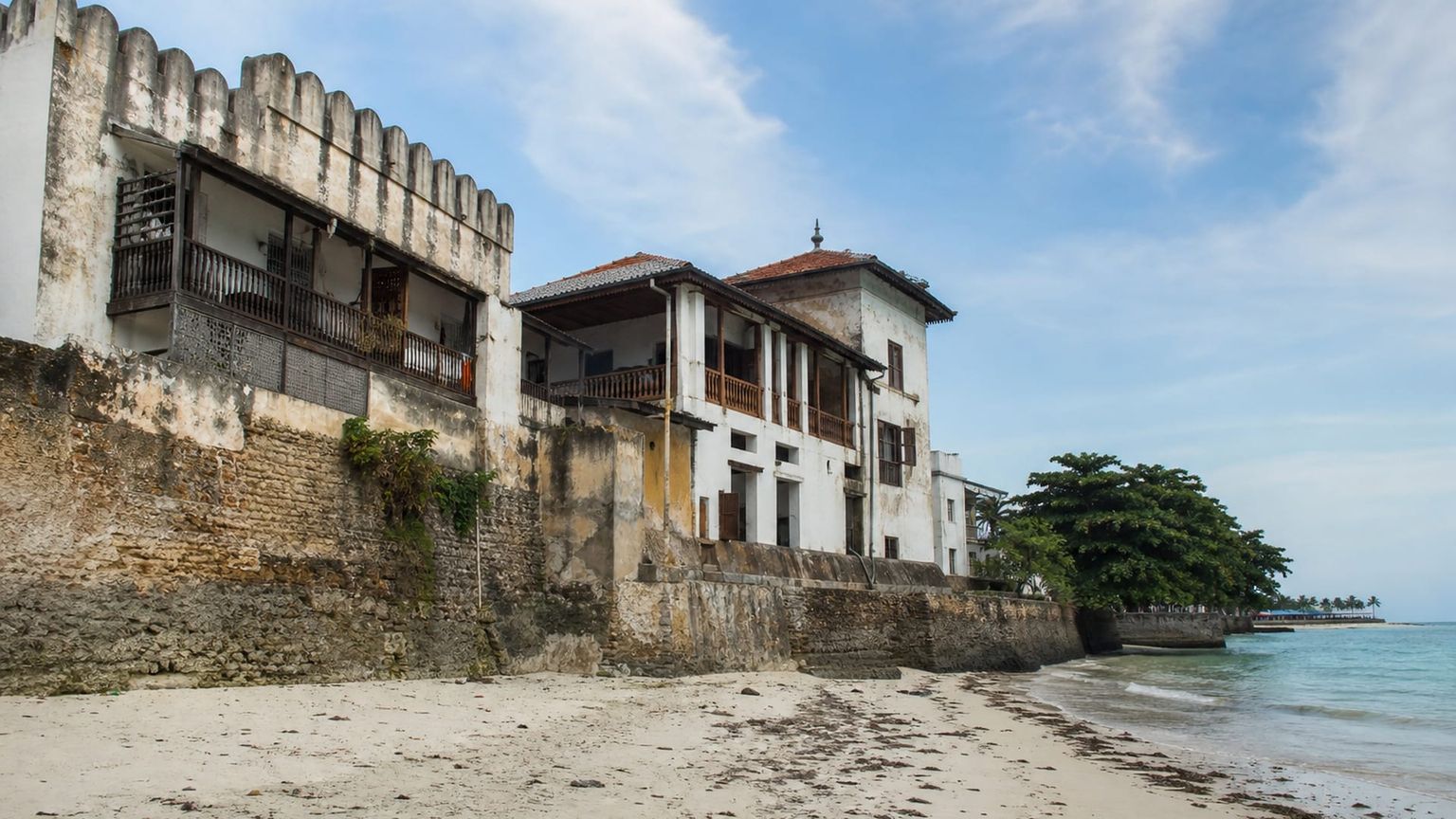
Start at the Old Slave Market and Christ Church Cathedral, where a guide leads you through the slave chambers, the exhibition, and the memorial. Lukmaan is a few steps away, so have octopus curry there for lunch. Browse Darajani Market for spices, fruit, and the kanga cloth sold near Tharia and Market streets. In the afternoon, take a boat to Prison Island to meet the giant tortoises, see the old prison buildings, and swim off its beach, then return for dinner in town.
Start at the Freddie Mercury Museum in Shangani, set in the house where the Queen singer lived as a child, then walk along the waterfront to the Palace Museum, the sultans’ former residence, to see the royal family’s furniture and belongings. Have lunch at one of the cafés near Forodhani Gardens. In the late afternoon, take a sunset dhow cruise along the Stone Town seafront, which is the best way to see the old town’s skyline from the water, and stay in Shangani for dinner.
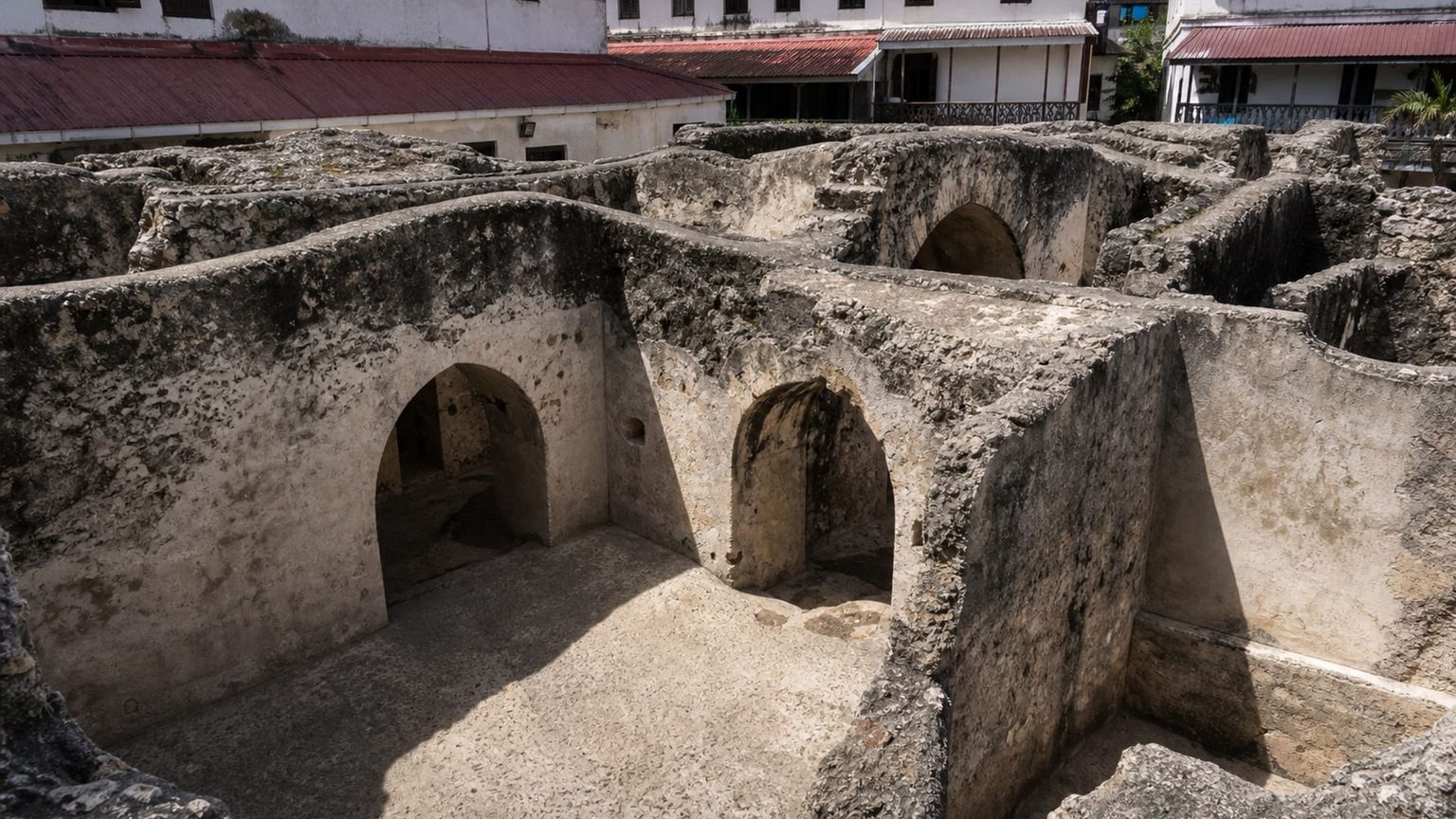
Take a taxi north along the coast to the Maruhubi Palace ruins, built in 1882 for Sultan Barghash’s harem. Entry includes a guide, who shows old photos of the palace as it looked before a fire destroyed it in 1899. Continue to the Mtoni Palace ruins, the oldest palace on the island and the childhood home of Princess Salme. At Bububu, turn inland for a guided spice farm tour, then finish with a late swim and an early dinner at Fuji Beach.
Check out and take a short taxi ride south to Mbweni. Walk through the ruins of St Mary’s School, built by missionaries for girls freed from slave ships, and the botanical garden around them, then visit St John’s Anglican Church, opened in 1882 and still in use. Have lunch at the hotel restaurant by the ruins. The airport is a few minutes away by taxi, so Mbweni makes an easy last stop before your flight.
Business-class flights from the US to Zanzibar
Flights from New York and Los Angeles both usually involve one stop, with Gulf, European, or East African connections shaping the journey to Zanzibar. The examples below show how that routing typically looks in premium fares.
From New York, Qatar Airways, Emirates, Turkish Airlines, Ethiopian Airlines, and Kenya Airways are common choices. Round-trip fares in this class usually start at $3,400 and can reach $7,500; if you do not mind a layover, common routings via Doha, Dubai, and Istanbul often lower the fare.
Los Angeles itineraries usually run through Doha, Dubai, Istanbul, Addis Ababa, or Nairobi, with Qatar Airways, Emirates, Turkish Airlines, Ethiopian Airlines, and Kenya Airways appearing most often. Expect fares from $3,800 round-trip, with higher prices during peak holiday periods.
Zanzibar City as a starting point
Zanzibar City is often the start of a longer trip across the island. The north coast beaches at Nungwi and Kendwa are about an hour away by car; Jozani Forest is home to the rare red colobus monkey, and Paje on the east coast is one of East Africa’s main kitesurfing spots. Many travelers also add a safari on the Tanzanian mainland. When you are ready to plan your trip, AranGrant can help you find business-class flights to Zanzibar.