

Chapters:

Need help with your trip?
Our support team is available 24/7. Request a callback or call us directly at (833) 619-0908
Trondheim usually rewards travelers who move between its compact center, riverfront, and hilltop sights without trying to see everything at once. The common miss is treating it like a quick cathedral stop, then leaving before Bakklandet, Solsiden, and the harbor edges get any time.
That approach leaves too much walking packed into one block of the day, and it can make ferry times, museum hours, and dinner plans harder to line up. Trondheim is manageable, but its best sites sit far enough apart to benefit from a simple order.
This guide breaks the city into clear days, then links neighborhoods, transit, food, and day trips so each stop lands in a workable sequence.
Useful things to know

Main language(s): Norwegian
Hei (hye) – Hello
Vær så snill (vair soh snel) – Please
Takk (tahk) – Thank you
Snakker du engelsk? (snah-ker doo EN-gelsk) – Do you speak English?
Hvor mye koster det? (voor mye KOS-ter deh) – How much does it cost?

Currency: The local currency is the Norwegian krone (NOK, kr).

Cash and cards: Cards and contactless are widely accepted; carry about NOK 200 to NOK 300 ($18 to $27) in cash for small purchases.

Tipping: Round up taxis and small bills; leave 5-10% at restaurants for good service.

Traditional food: klippfisk, fårikål, lutefisk, raspeballer

Water and coffee costs: Water ~NOK 25 ($2.30), bar espresso ~NOK 40 ($3.70).

Taxis and ride apps: Uber and local taxis operate here; prebook late-night airport rides if availability is thin.

Plug and voltage: Type C/F socket, 230V

Dining and shop opening hours: Breakfast is about 7:00-9:00 am, lunch about 11:30 am-1:30 pm, and dinner about 5:00-8:00 pm. Many restaurants close earlier on Sundays.

Emergency number: Call 112 for police, 110 for fire, 113 for medical emergencies.
Where to stay in Trondheim
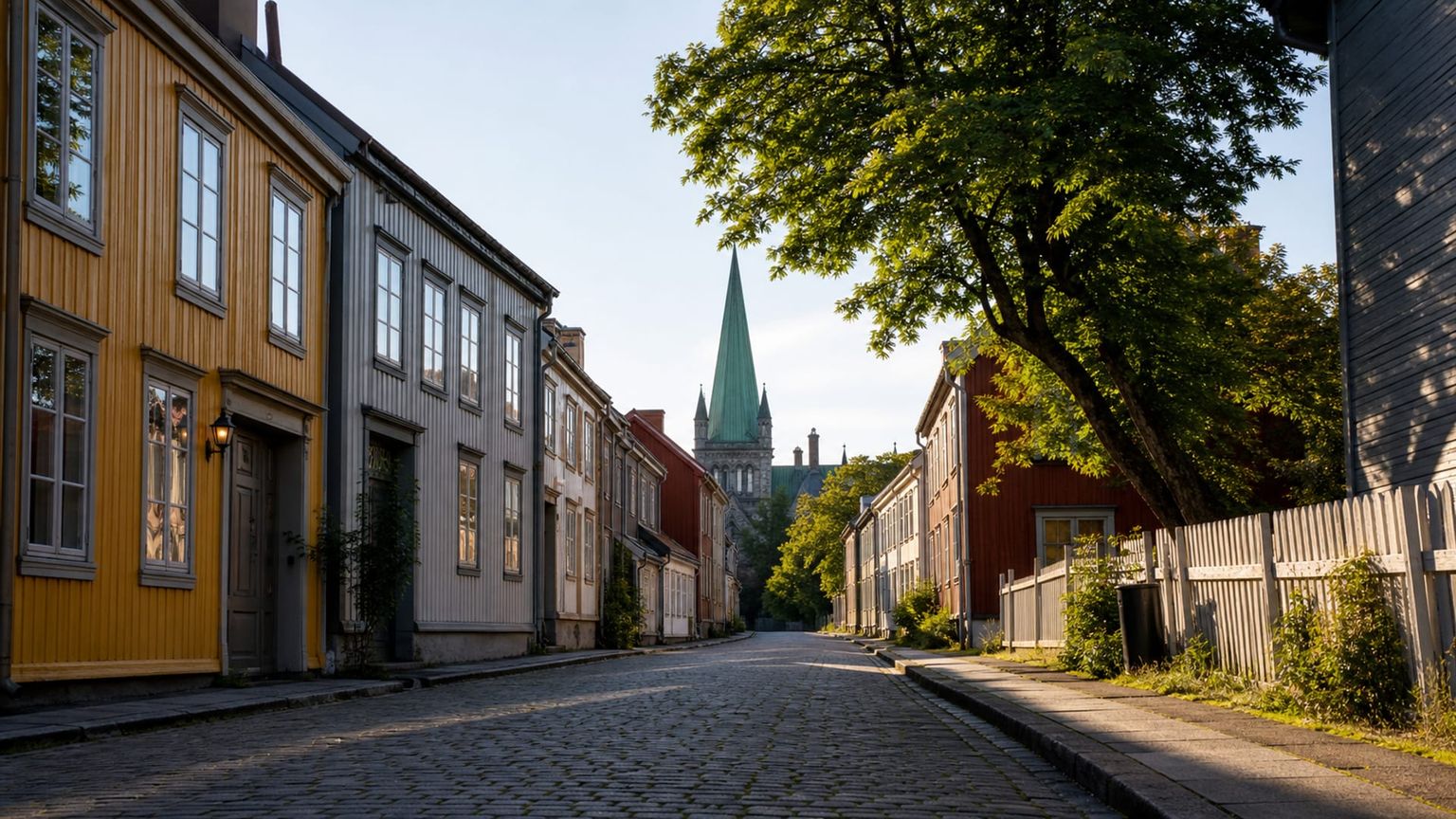
Trondheim’s compact city center, Midtbyen clusters the main shops, restaurants, and transit links around the Nidelva and the harbor. It works well for sightseeing because many of the city’s core sights sit within an easy walk.
Best for: First-time visits, car-free stays, and easy access to shops, restaurants, and transit
What to expect: Busy sidewalks by day, especially near the shopping streets and central squares; evenings stay active near bars and dining spots.
Hotel prices: Usually about 1,300 kr to 2,500 kr (~$120 to ~230) per night for well-rated stays
Distance to major sights: 5 to 15 minutes on foot to Nidaros Cathedral and the Old Town Bridge
Quietness: Noisier in the daytime and on weekend evenings, quieter on side streets and in smaller blocks.
Main trade-off: Central hotels cost more, and the busiest blocks can feel lively late into the evening.
Good to know: If you plan to arrive by train or bus, this is the easiest area for a short stay because you can move around without relying on taxis.
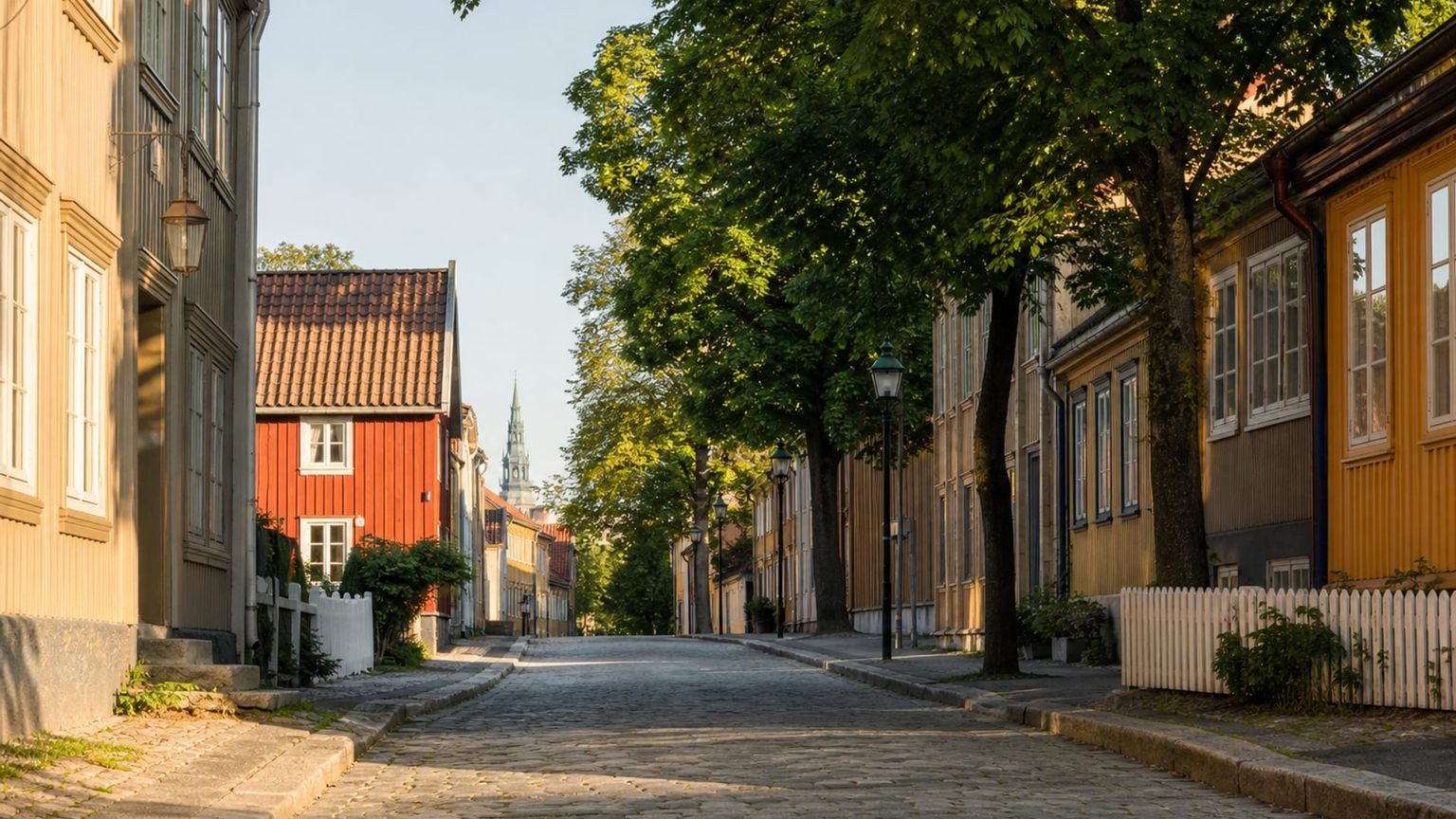
Bakklandet sits across the river from the center, with wooden houses, narrow streets, and cafés that give the quarter a historic residential character. It suits travelers who want a prettier base while staying close to Trondheim’s main sights.
Best for: Riverside walks, café hopping, and travelers who want a historic neighborhood with easy access to the center
What to expect: Pedestrian traffic stays steady on the main lanes, with more locals than nightlife and a slower pace after dinner.
Hotel prices: Usually about 1,500 kr to 2,900 kr (~$140 to ~270) per night for well-rated stays
Distance to major sights: 10 to 20 minutes on foot to Nidaros Cathedral and about 15 minutes to Kristiansten Fortress
Quietness: Quiet in the evening once cafés close, with only light daytime foot traffic on the main streets.
Main trade-off: Room choice is smaller here, and stays can cost more because the area has limited hotel supply.
Good to know: Bridge crossings are simple, but the neighborhood’s narrow streets mean parking and luggage handling can be less convenient than in the center.
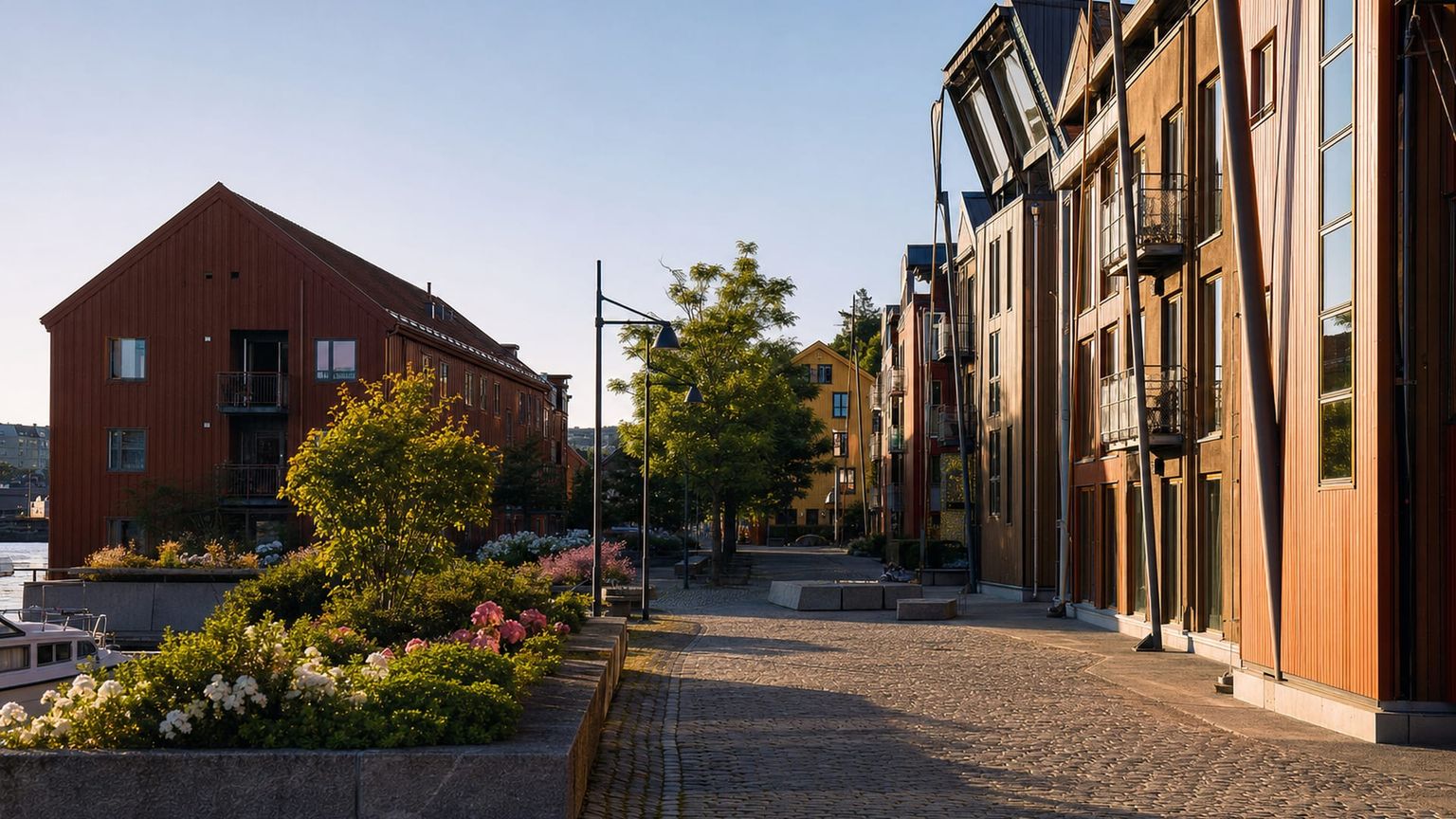
Solsiden is Trondheim’s waterfront dining and apartment district, set just east of the center along the harbor basin. It matters for visitors who want restaurants, bars, and modern hotels within a short walk of downtown.
Best for: Dining, evening drinks, and travelers who want a modern waterfront base near downtown
What to expect: Active in the evenings, especially around the marina-side restaurants and bars; daytime life is quieter and more residential.
Hotel prices: Usually about 1,400 kr to 2,700 kr (~$130 to ~250) per night for well-rated stays
Distance to major sights: 10 to 15 minutes on foot to Trondheim Central Station and about 20 minutes to Nidaros Cathedral
Quietness: Lively at night near restaurants and bars, calmer on weekday mornings and away from the waterfront frontages.
Main trade-off: You get more dining choice here, but the setting is less historic than Bakklandet and not quite as central as Midtbyen.
Good to know: Expect more late activity on weekends, so light sleepers should ask for a room away from the harbor-facing bars.
Travelers usually avoid Heimdal, Kattem, and Saupstad for a hotel base, since they sit well south of the center, away from most Trondheim sights, and rely more on local errands than visitor-oriented dining and nightlife. Ila and Byåsen are also less convenient for short stays, because they are farther from the compact downtown core and can mean longer evening trips back after dinner or sightseeing.
Hotel deals
How to get around Trondheim efficiently
Trondheim has no metro, so most visitors pair the AtB bus network, occasional regional rail, and short taxi rides with walking through the center.

Metro
for longer distances
Trondheim has no metro or subway, so the closest equivalent is the compact bus network and the regional rail line from Trondheim S. Trains do not replace local transit, but they do link the center with airport-adjacent and suburban stops in about 10 to 20 minutes.

Bus and tram
for convenience
At $4 to $6 for a single ticket, the bus network covers the city center, the university area, and St. Olavs hospital, while airport buses and regional coaches connect Trondheim (TRD) with nearby towns; tickets usually stay valid for about 1 hour to 2 hours, depending on the product. Buy before boarding in the app or at machines where available, then check zones because fares rise as you cross into outer districts.

Taxi
for convenience or late hours
Licensed taxis use metered fares, not fixed citywide set prices, and a ride from Trondheim Airport, Værnes (TRD) to the center usually costs about $70 to $100, while shorter in-town trips often run about $12 to $30. Taxis queue at the airport and rank stands, and most accept cards, but you should confirm the estimated fare before leaving the stand if the meter has a minimum charge or evening supplement.
*Prices are based on rates updated as of June 2026 and may change at the time of travel.
Use buses for cross-town hops, taxis for late returns or airport transfers, and walking when you stay between Midtbyen, Bakklandet, and Solsiden.
Iconic landmarks
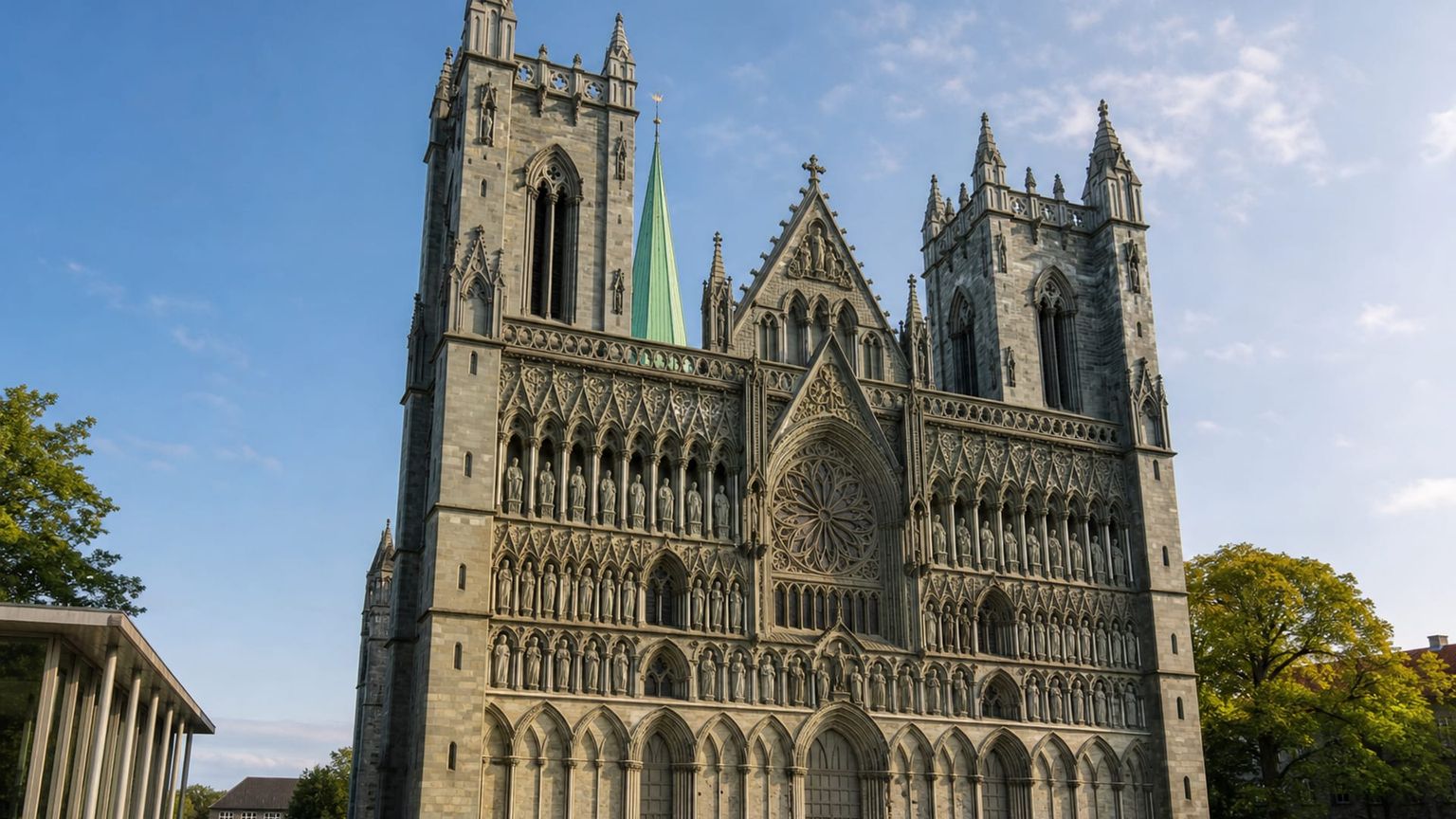
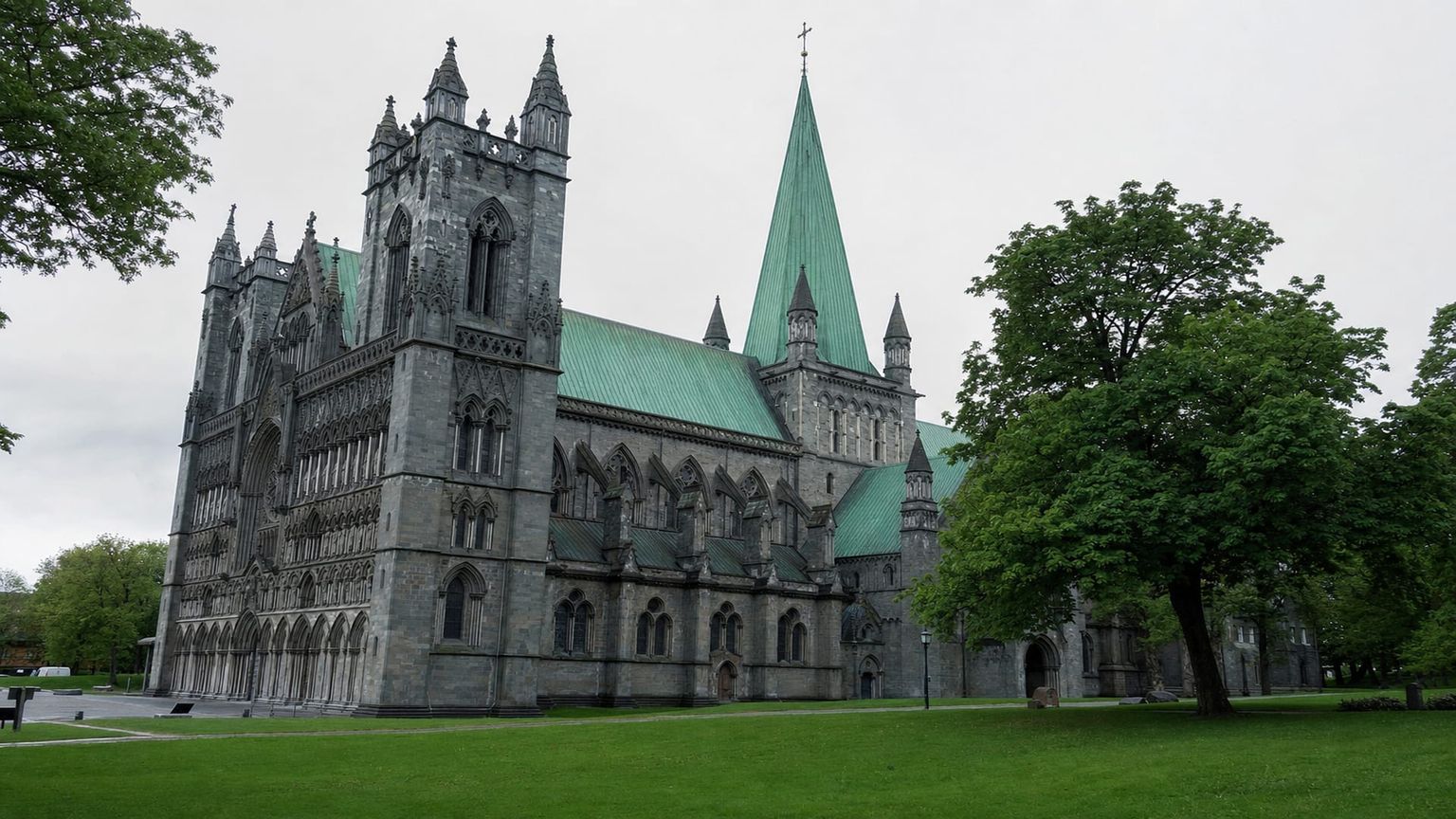
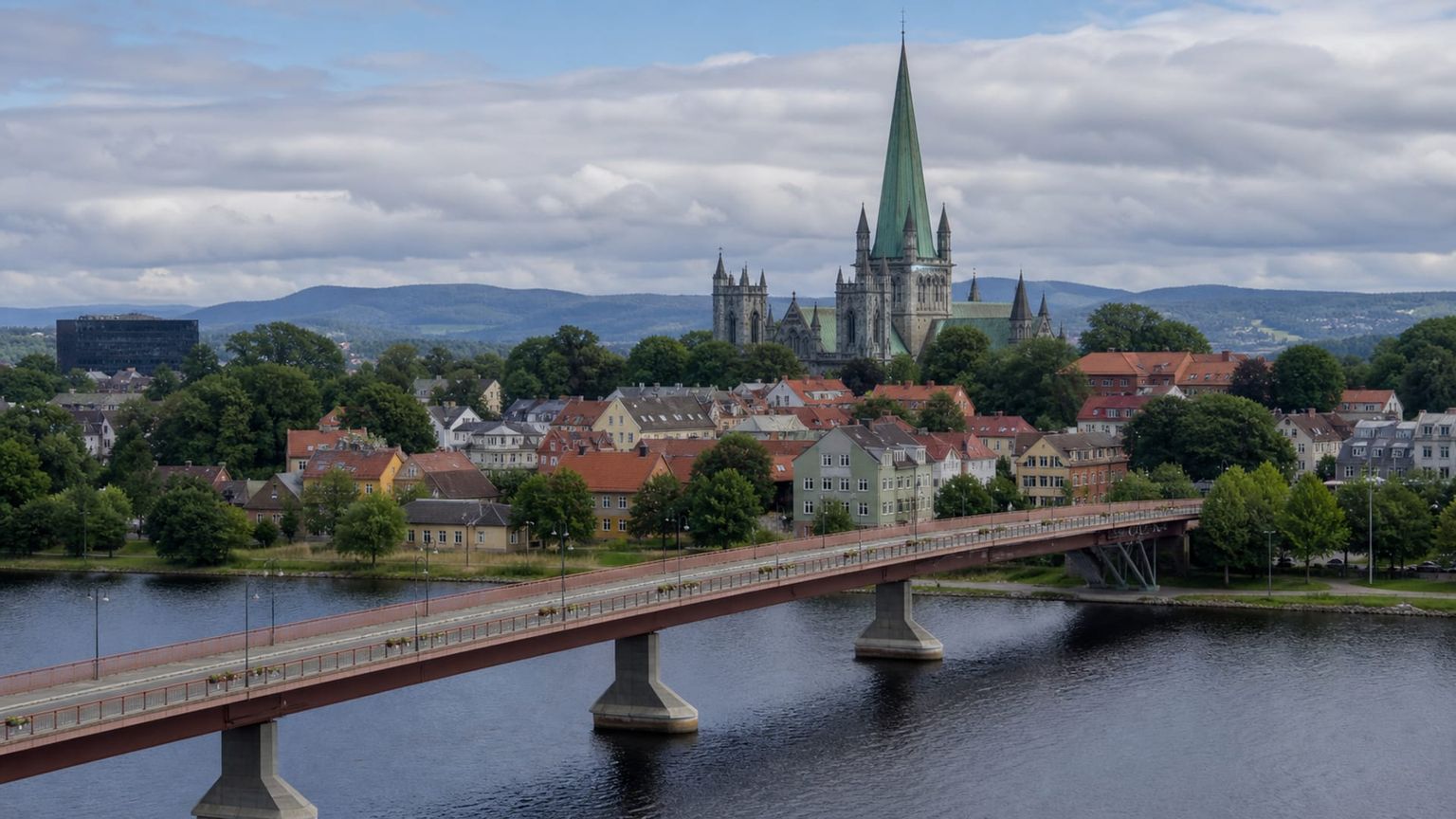
Nidaros Cathedral
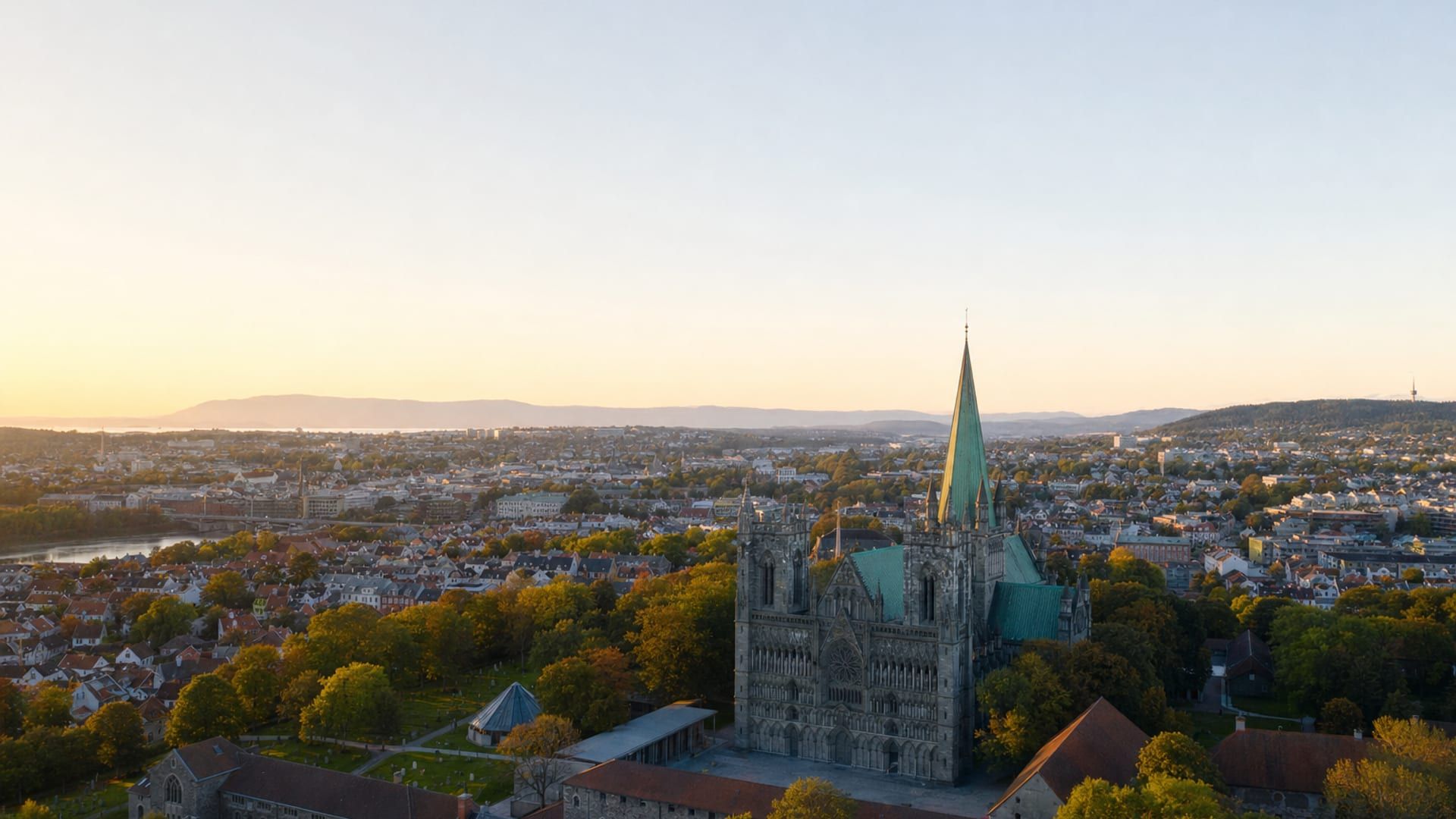
Norway’s national cathedral rises over Trondheim with Gothic stonework, medieval carvings, and a long church history tied to St. Olav. Inside, the west front, nave, and royal chapel make it the city’s most important landmark.
Time needed: About 1 to 2 hours
Entry: Guided admission costs about $15 ($165 NOK) for adults, with lower rates for children and students; tower access may cost extra in season. Visit the official site for details.
Tip: Visit earlier in the day for quieter interiors and better light on the west front.
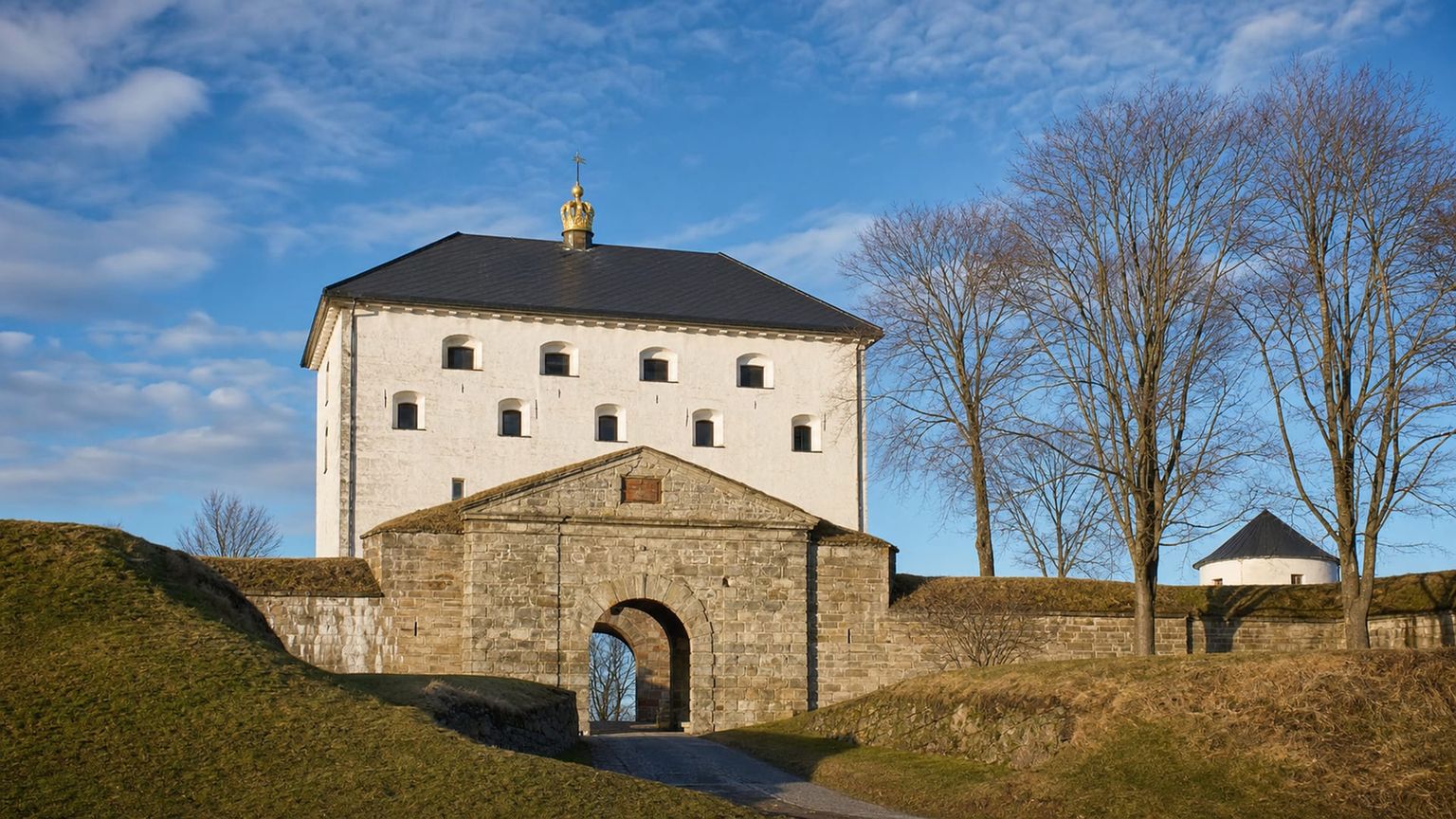
Kristiansten Fortress
Built after the 1681 city fire, Kristiansten Fortress stands above the river and frames wide views across Trondheim. The main bastions, gun positions, and hilltop setting make it one of the city’s clearest historic overlooks.
Time needed: About 1 to 2 hours
Entry: Free to access; special exhibitions or guided events may carry separate charges, and some interior areas can open only during set hours. Visit the official site for details.
Tip: Go late in the afternoon for softer light and wider views over the river valley.
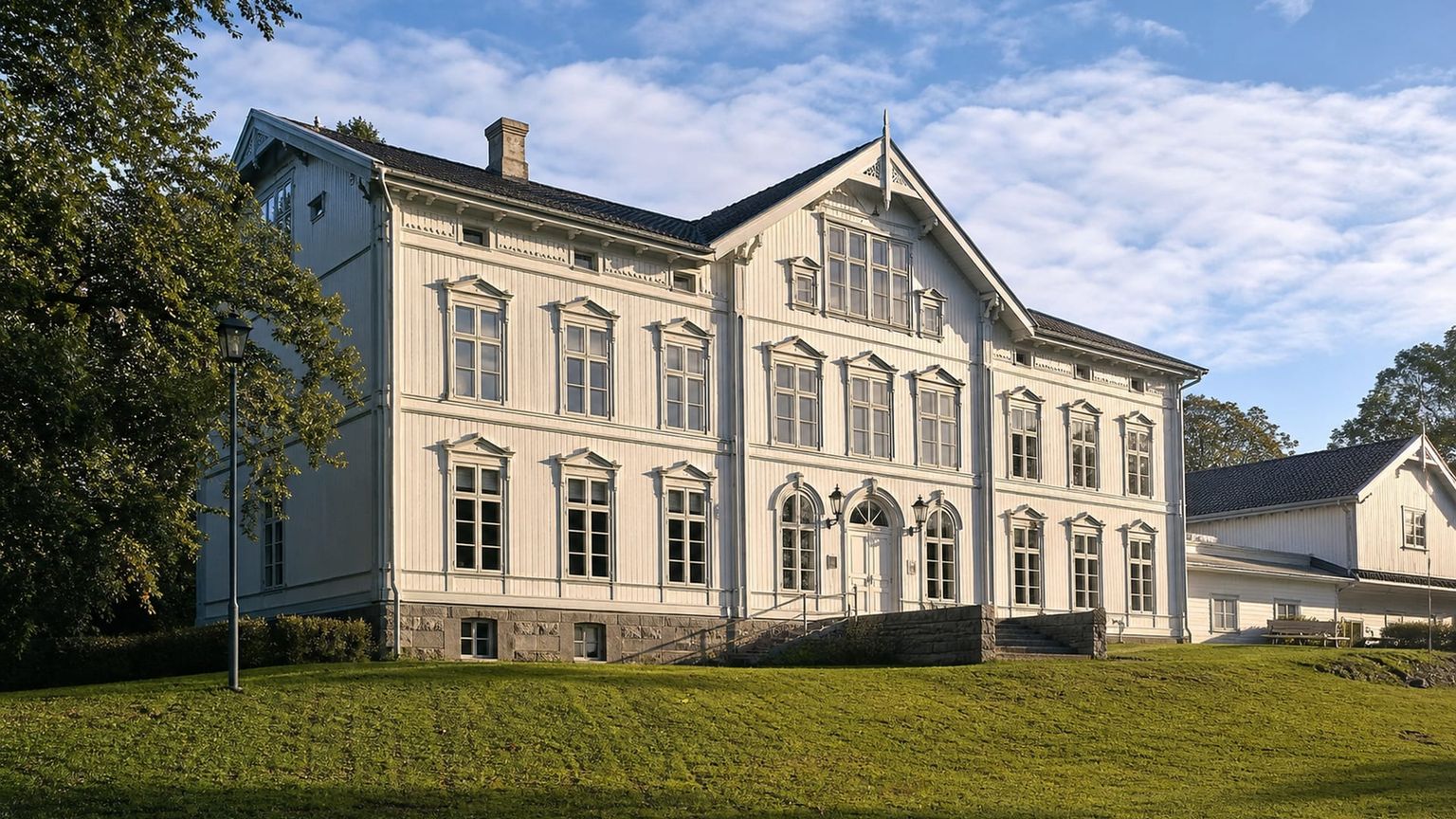
Ringve Music Museum
Ringve sits in an 18th-century manor on Lade peninsula and traces Norwegian music through historic rooms and instrument collections. The garden setting, period interiors, and guided museum route make it one of Trondheim’s most distinctive stops.
Time needed: About 2 to 3 hours
Entry: Standard tickets cost about $16 to $22 (NOK 180 to 250) for adults, with discounts for children, seniors, and students. Visit the official site for details.
Tip: Allow extra time for the gardens, especially on sunny days when the grounds are open.
Overlooked sites worth visiting

Ringve Botanical Garden
About 12 hectares on the Lade peninsula, this garden pairs alpine beds, herbs, and shaded paths with harbor views. It suits a quiet hour between city stops and changes with the season.
Time needed: About 1 to 2 hours
Entry: Free to enter; some special events or guided programs may charge separate fees. Paths are open in daylight hours, and the garden is run as part of NTNU and Ringve Museum in Trondheim.
Tip: Go in late spring for the best flower color.

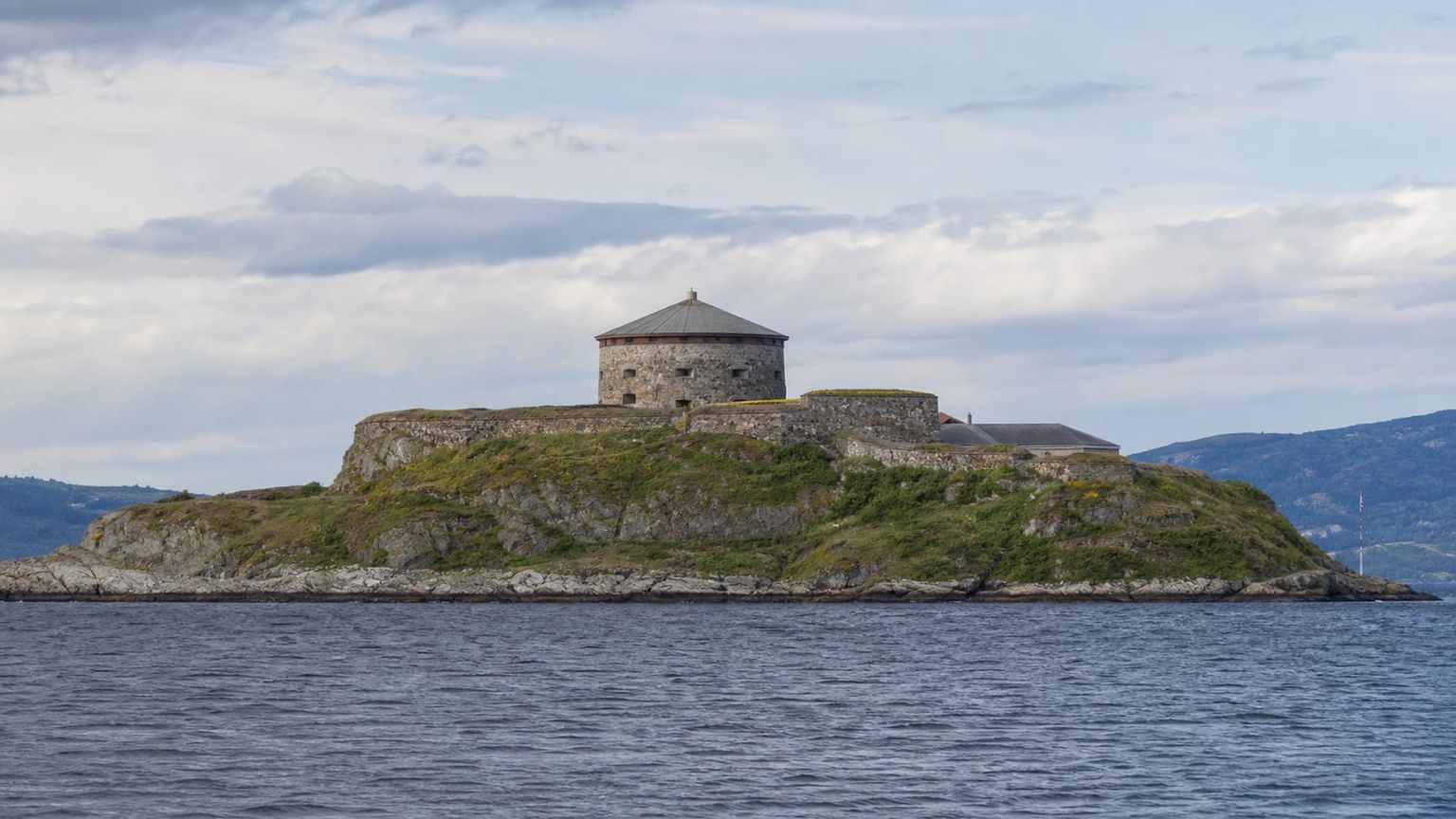
Munkholmen Island
This small island in Trondheim Fjord brings together a former monastery, fortifications, and bathing spots in one compact outing. Ferries add a short scenic crossing before you explore the shoreline.
Time needed: About 2 to 3 hours
Entry: Ferry tickets and any island admission typically cost about $12 to $25 ($130 to 270 NOK), depending on season and whether you join a guided visit. Check the timetable before you go, as departures vary by month. Visit the official site for details.
Tip: Take the earliest ferry for calmer light and fewer day trippers.
Traditional food

Trondheim’s cooking leans on klippfisk, fish, lamb, and potatoes, with soups, stews, and smoked or cured flavors that suit the city’s cold seasons and early dinner hours.
klippfisk
Cured cod shows up in several regional preparations, and To Rom og Kjøkken is a strong place to start if you want a well-executed version in central Trondheim.
fårikål
Norway’s cabbage-and-lamb stew tastes best when the broth and pepper are given time to settle. Baklandet Skydsstation is a fitting Trondheim stop for a traditional plate in a historic setting.
lutefisk
This cured fish dish comes with a strong local tradition and a very specific texture, so it is best tried where the kitchen knows the classic accompaniments. To Rom og Kjøkken handles it well when it appears in season.
raspeballer
Potato dumplings often arrive with meat and sauce, making them one of the city’s heartiest cold-weather meals. Gubalari serves a dependable Trondheim version with a clear Nordic focus.
Best time to visit Trondheim
Trondheim shifts cleanly with the seasons, from bright summer evenings on the harbor to colder winter days that make museum time and café stops more appealing.
Best for: Cathedral visits, river walks, and quieter city streets
What you get: About 36°F to 54°F (2°C to 12°C), with lighter crowds before peak summer
Trade-offs: Rain and cool wind can linger well into May
Best for: Ferry trips, long daylight, and outdoor museum time
What you get: About 54°F to 68°F (12°C to 20°C), with the busiest hotel and restaurant demand
Trade-offs: Popular sites and waterfront tables fill faster
Best for: Museum days, foliage, and easier dining reservations
What you get: About 34°F to 52°F (1°C to 11°C), with moderate crowds after summer
Trade-offs: Shorter days arrive quickly by late October
Best for: Cafés, indoor sights, and a calmer city center
What you get: About 20°F to 37°F (-6°C to 3°C), with the lightest visitor flow
Trade-offs: Cold weather and limited daylight narrow outdoor options
A realistic 5-day plan in Trondheim
The five-day plan follows Trondheim’s geography in a sensible order, starting in the center and then moving outward to the cathedral hill, Lade peninsula, and the fjord. That keeps the long walks useful and leaves room for slower meals and ferry timing.
Fly into Trondheim (TRD) and take the airport express coach or a taxi into Midtbyen, usually about 30 to 45 minutes depending on traffic and about 350 kr to 600 kr. Check in near the central squares or the riverfront so you can walk to dinner, then keep the evening short with a harbor-side meal in Solsiden and an early night after the flight.
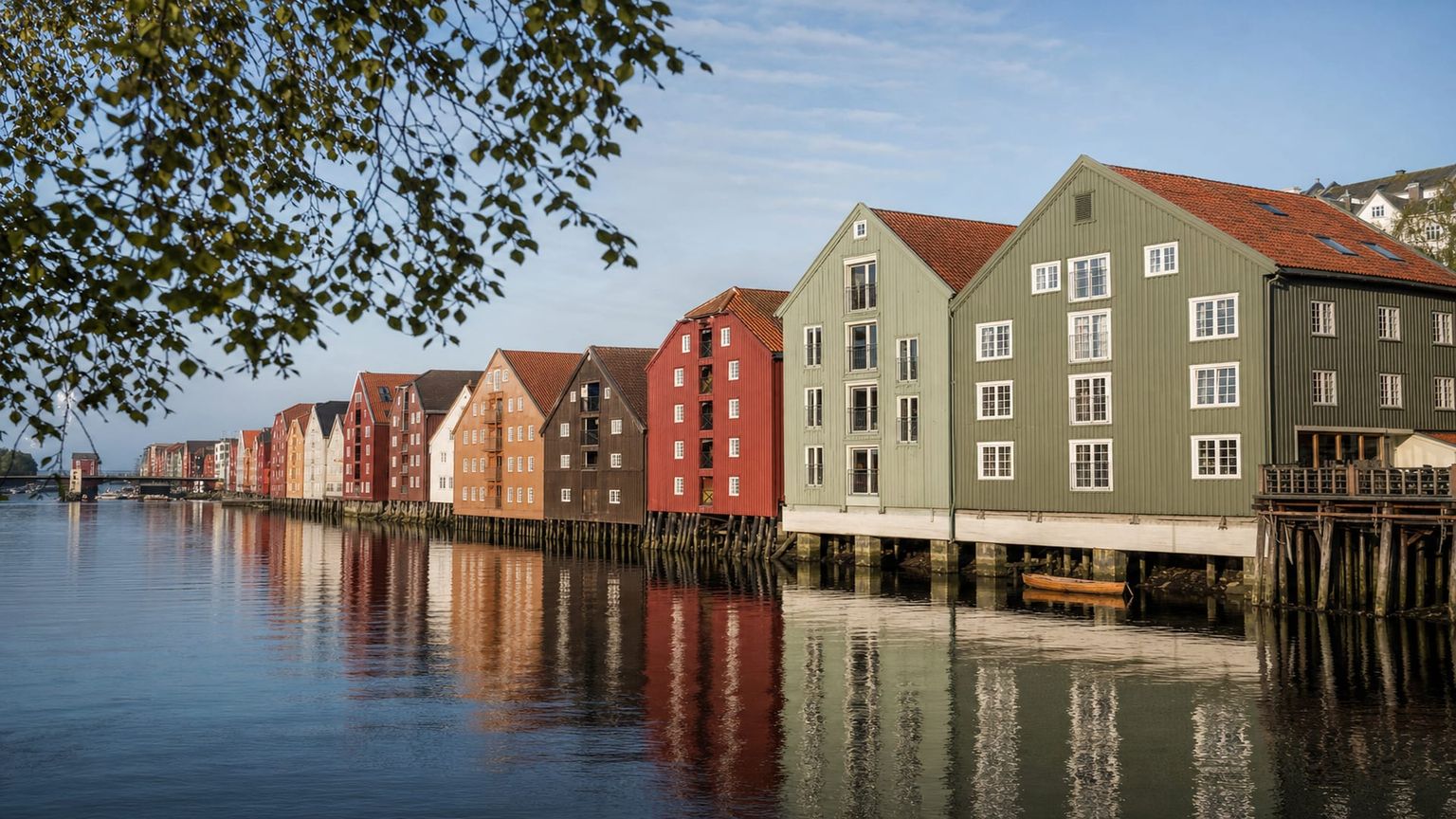
Start at Nidaros Cathedral, where the guided visit takes about 1 to 2 hours and admission is about $15 ($165 NOK) for adults. From there, walk about 10 minutes to the Old Town Bridge, cross into Bakklandet for coffee and wooden-house streets, then continue about 15 minutes uphill to Kristiansten Fortress for late-afternoon views over the river and the center. If you want dinner nearby, return to Midtbyen or stay in Bakklandet for a quieter table.
Ringve makes an easy half-day outing, so begin with the Ringve Music Museum in the morning, then spend 2 to 3 hours in the manor, gardens, and instrument collections. Afterward, walk or take a short taxi ride to Ringve Botanical Garden on the Lade peninsula, where the paths, alpine beds, and harbor views give the afternoon a slower pace. End back in Solsiden for dinner, about 10 to 15 minutes from the waterfront district by taxi or a longer bus ride.
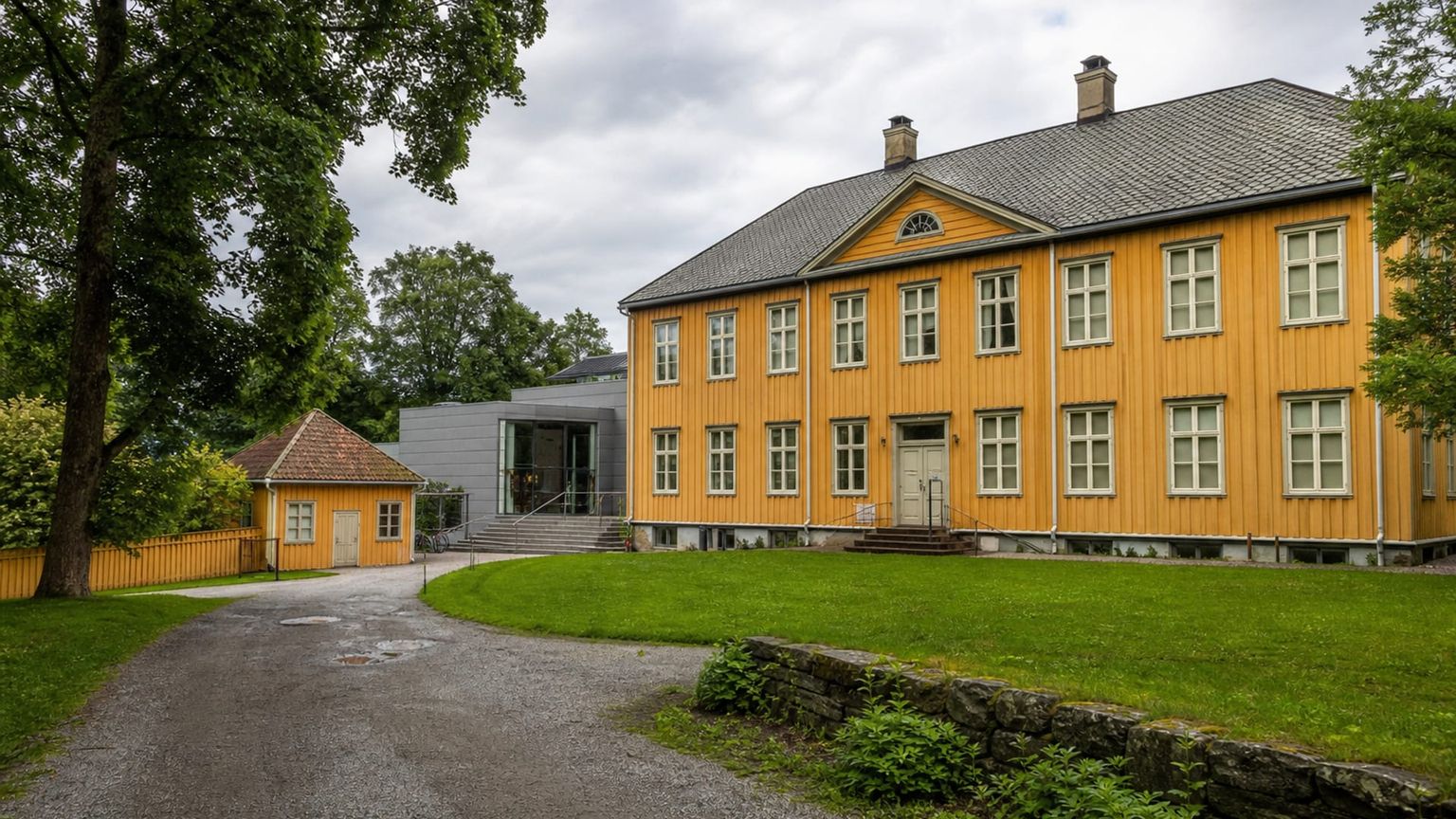
Take the earliest ferry to Munkholmen Island, because the crossing and visit together usually take about 2 to 3 hours and the first departures give you calmer light. Back on the mainland, return to Midtbyen for lunch, then spend the afternoon on the riverfront and in the shopping streets before an easy walk to Bakklandet for an unhurried café stop. If you want one more view before dinner, cross back toward the center and watch the light fade over the Nidelva.
Begin with a final museum stop if you missed one, or return to Ringve Music Museum for a shorter revisit, then shift to shopping in Midtbyen, where the central streets make the easiest last sweep for clothing, books, and local goods. Finish with coffee in Bakklandet, where the wooden houses and riverside tables give you a calm place to sit before your flight from Trondheim (TRD).
Business-class flights from the US to Trondheim
Trondheim usually means a one-stop trip from both coasts, with hub changes doing most of the work. The routes below show the typical timing and pricing range travelers see in the market.
From New York, SAS Scandinavian Airlines, Lufthansa, KLM Royal Dutch Airlines, Air France, and British Airways are common choices, and total travel time usually lands at about 10 to 15 hours when you connect through Copenhagen (CPH), Frankfurt (FRA), or Amsterdam (AMS). Round-trip fares from New York to Trondheim usually start at $2,400 and reach about $5,500.
Los Angeles itineraries usually run through one of several European hubs, including Copenhagen (CPH), Frankfurt (FRA), Amsterdam (AMS), Paris (CDG), London (LHR), or Chicago (ORD), and total trip time often comes in at about 14 to 20 hours. SAS Scandinavian Airlines, Lufthansa, KLM Royal Dutch Airlines, Air France, British Airways, and United Airlines are the names you will most often see, with round-trip fares usually running from $2,900 to $6,500.
Trondheim feels different when you slow down
A good Trondheim trip has a clear shape, Midtbyen for the first walk, Bakklandet for coffee and wooden streets, Kristiansten Fortress for the view, and Solsiden or Ringve when you want a change of pace. Buses and short taxi rides do the rest, with Munkholmen and the cathedral fitting neatly between meals. If you want a Trondheim plan that matches those neighborhoods and ferry times, the AranGrant experts can help you refine it