


Chapters:

Need help with your trip?
Our support team is available 24/7. Request a callback or call us directly at (833) 619-0908
Most trips to Singapore follow a familiar pattern. Travelers land at Changi, rush to the skyline sights, sample a few hawker meals, and leave with the sense that the city was efficient but a little compressed.
That approach misses how spread out the best parts can feel once you factor in transfers, opening hours, and the pace of the heat. A rushed plan also makes crowds and backtracking more noticeable.
This guide is built to slow the sequence down. It groups the city by neighborhood and rhythm, so the days move more deliberately between arrival, icons, heritage, gardens, and departure.
Useful things to know

Main language(s): English, Mandarin Chinese, Malay

Currency: The local currency is the Singapore dollar (SGD, S$).

Cash and cards: Cards are widely accepted, including Apple Pay and Google Pay, at hotels, malls, and most restaurants. Keep some cash for hawker stalls, small cafés, and occasional restrooms; S$20–S$40 ($15–$30) is usually enough for a day.

Tipping: Tipping is not generally expected in Singapore. Service staff may receive a service charge at restaurants (often listed on the bill), and tipping extra is optional for exceptional service—rounding up is the most common approach for small amounts.

Traditional food: Hainanese chicken rice (poached chicken, rice, ginger-scallion oil), Laksa (spicy coconut noodle soup), Chili crab (sweet-spicy tomato chili crab sauce)

Water and coffee costs: Bottled water usually costs S$1.50–S$3 ($1.11–$2.22). A local kopi or espresso-style coffee is often S$1.80–S$4.50 ($1.33–$3.33), with higher prices in hotel cafés and touristy waterfront areas.

Taxis and ride apps: Grab is the main ride-hailing app in Singapore; Gojek and TADA are also used. Prices are usually clear in-app, and unofficial touts at the airport or nightlife spots are best avoided in favor of licensed taxis or app bookings.

Plug and voltage: Type G socket, 230V

Dining and shop opening hours: Breakfast is commonly eaten from about 7:00–10:30am, with many hawker centres starting early and staying lively into late morning. Lunch is typically around 12:00–2:00pm. Dinner is usually from about 6:00–10:00pm; some hawker stalls close earlier or vary by stall. Many restaurants are open daily, but specific venues (especially hawker centres) may have staggered operating hours, so check the stall or listing before going.

Emergency number: Dial 999 for police and 995 for fire or ambulance services. For non-urgent medical help, use a clinic or hospital directly; Singapore’s emergency services are fast and well organized.
Where to stay in Singapore
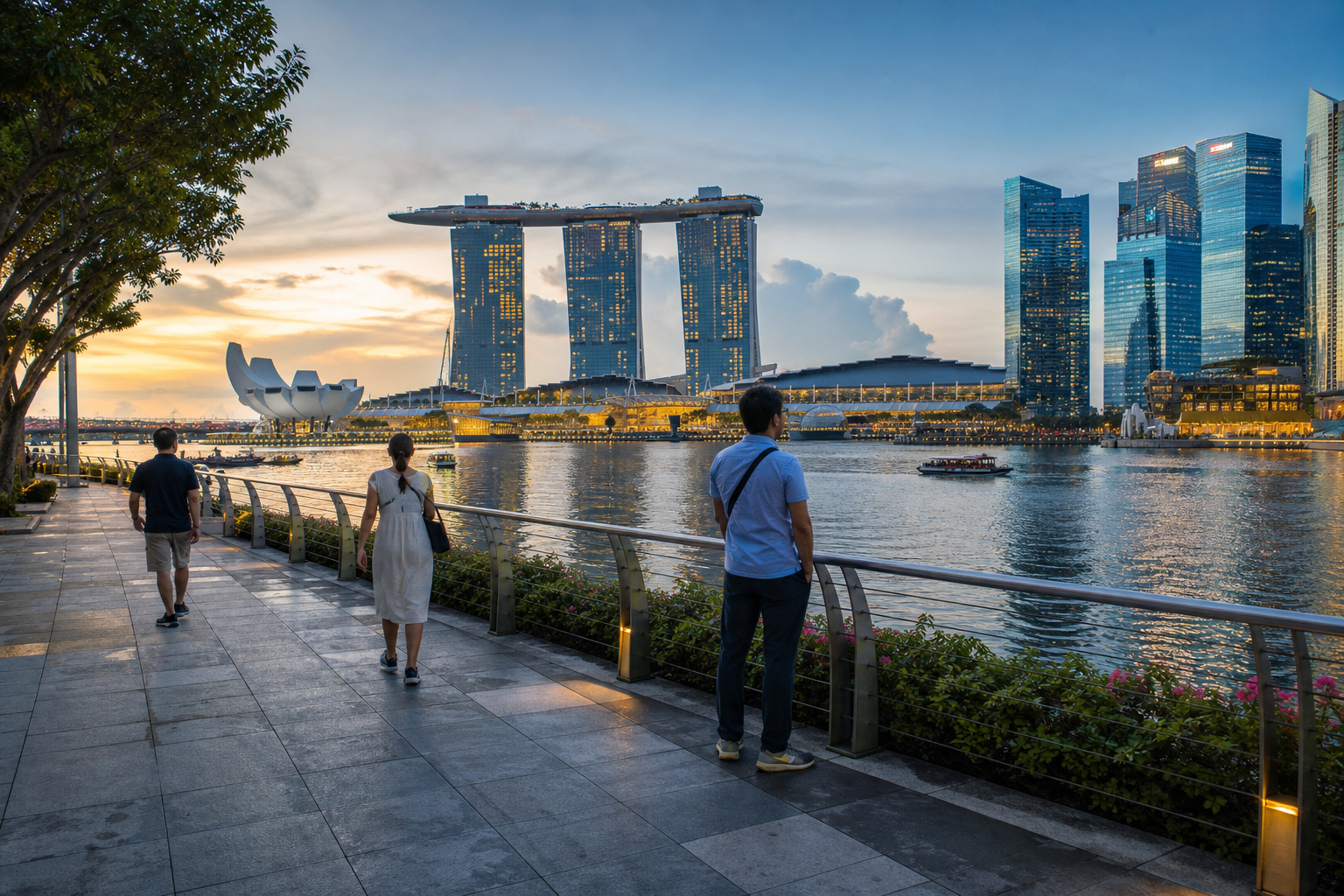
Stay by Marina Bay for skyline views, waterfront walks, and easy access to many of Singapore’s top sights. It’s polished and well-connected by MRT, ideal for first-timers, couples, and anyone who prefers modern hotels near major attractions.
Best for: First-time visits, sightseeing, and skyline lovers.
What to expect: Active, modern, and busy—especially near the bay at night.
Hotel prices: Usually around €180–€420 per night for well-rated stays
Distance to major sights: About 10 to 20 minutes by MRT or taxi to most central landmarks.
Quietness: Lively throughout the day; evenings are energetic around waterfront areas.
Main trade-off: Higher hotel prices and the busiest crowds during peak hours.
Good to know: Best for travelers who want “see everything” convenience.
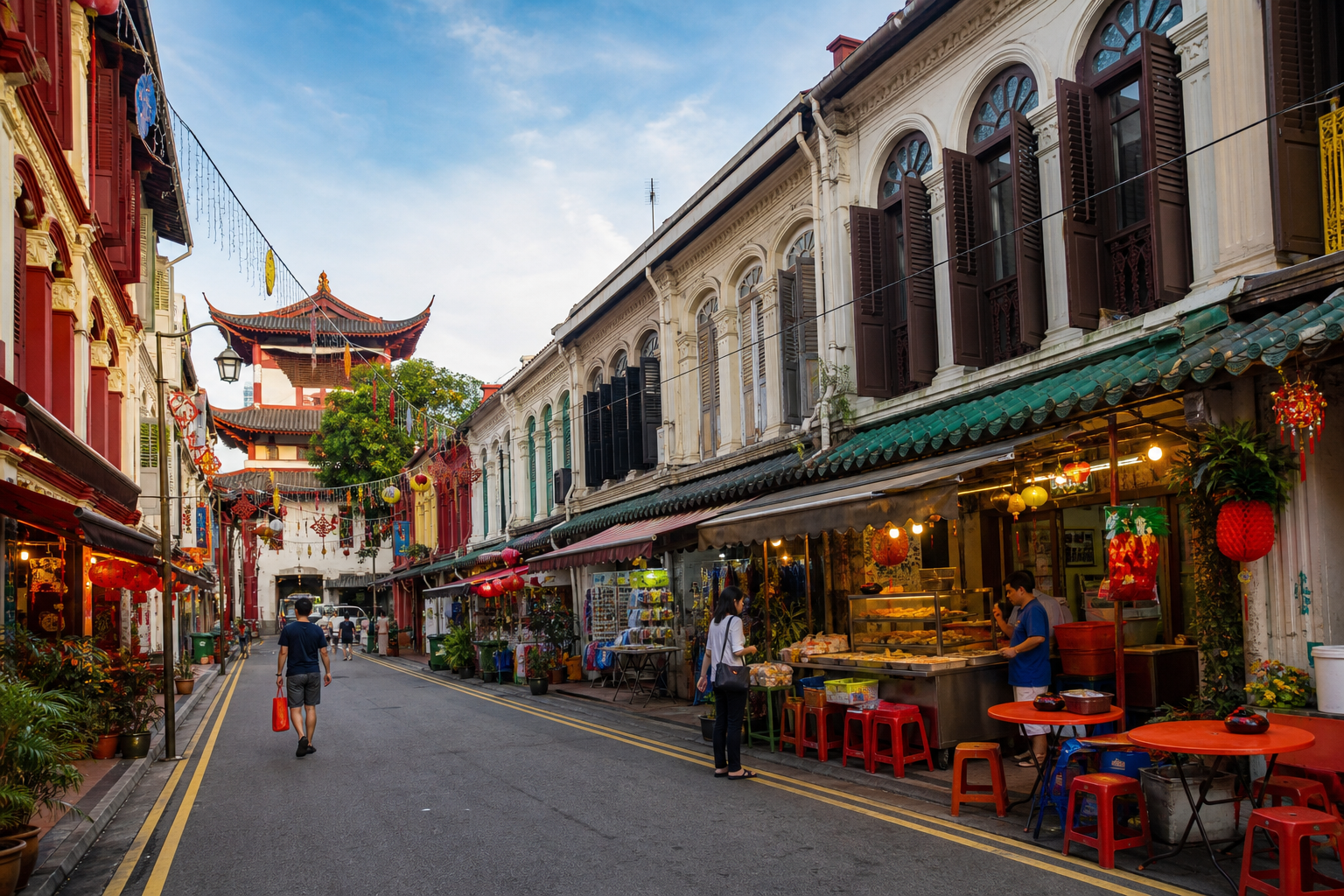
Chinatown is a lively heritage base with traditional shophouses, temples, and street food just outside the tourist core. It’s great for culture seekers who enjoy walking and browsing markets, while still reaching major sights quickly via MRT and short rides.
Best for: Foodies, heritage fans, and budget-conscious explorers.
What to expect: Bustling by day with evenings that stay lively around eateries.
Hotel prices: Usually around €90–€230 per night for well-rated stays
Distance to major sights: About 15 to 30 minutes by MRT to central landmark clusters.
Quietness: Active in the daytime; nights are lively near restaurants and streets.
Main trade-off: Smaller hotel rooms and occasional weekend crowding.
Good to know: Best suited for travelers who want character and convenience.
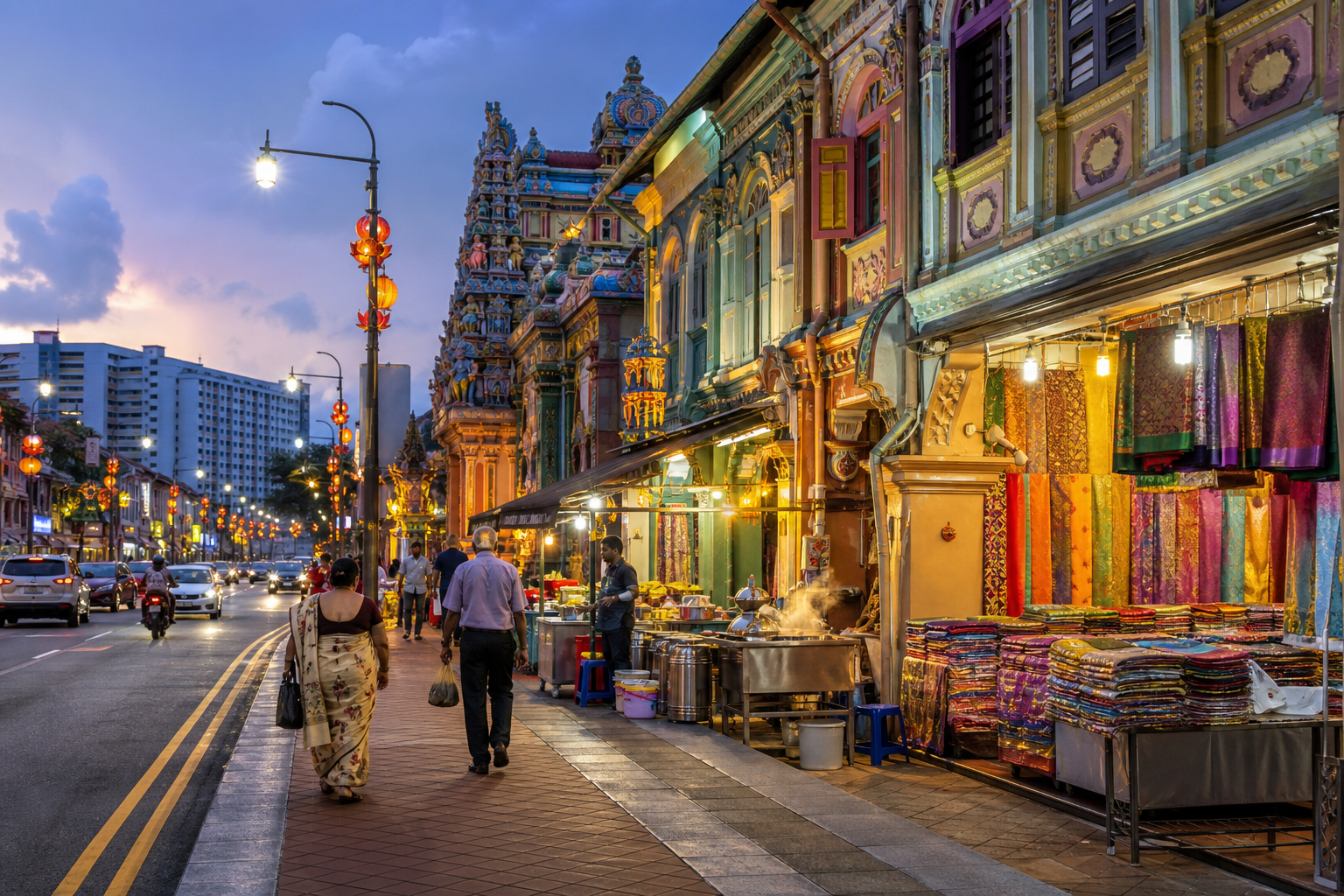
Little India is colorful and vibrant, known for its textile shops, temples, and spicy street food. As a base, it puts you close to cultural enclaves and offers lively evening energy, while MRT connections make it easy to reach downtown attractions fast.
Best for: Culture lovers, food adventurers, and photographers.
What to expect: Bustling, colorful, and very active around markets and eateries.
Hotel prices: Usually around €85–€200 per night for well-rated stays
Distance to major sights: About 20 to 35 minutes by MRT to downtown landmarks.
Quietness: More energetic during evenings; streets can feel busy later on.
Main trade-off: Noise and crowds can be noticeable near main roads.
Good to know: Best for travelers who enjoy immersive neighborhoods.
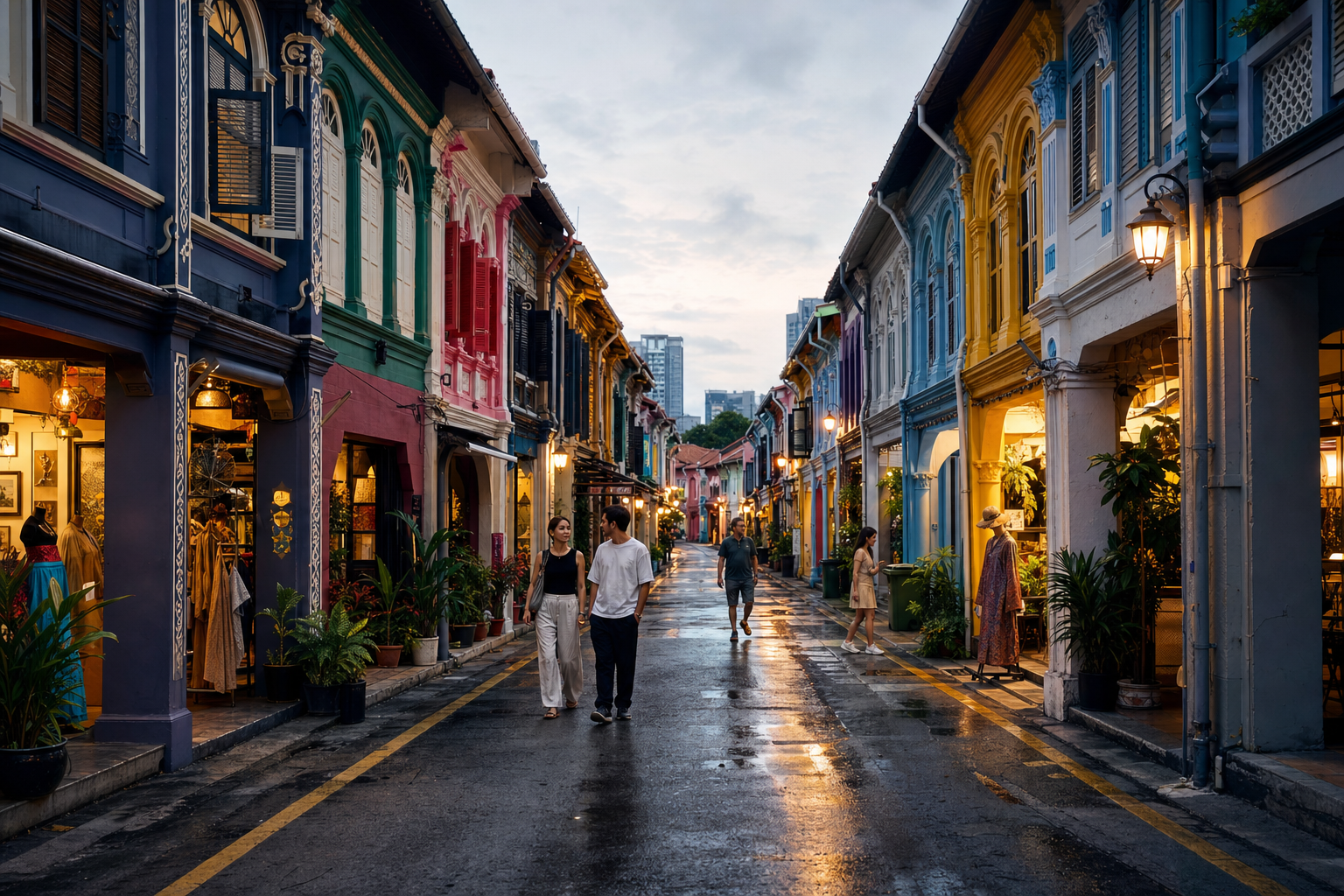
Kampong Glam blends Malay, Arab, and Islamic heritage with trendy cafés and boutiques along restored shophouse streets. It’s an excellent base for exploring cultural corners and walking to scenic river areas, with MRT access that keeps the rest of the city within easy reach.
Best for: Design-minded travelers and culture explorers.
What to expect: Friendly and bustling, with a strong evening vibe along key streets.
Hotel prices: Usually around €110–€270 per night for well-rated stays
Distance to major sights: About 15 to 30 minutes by MRT to central sights.
Quietness: Lively after sunset; calmer side streets nearby.
Main trade-off: Can be crowded on weekends during festivals.
Good to know: Best for those who want culture and a stylish local scene.
Travelers often avoid far-flung outer residential areas and industrial fringes such as Pasir Ris (outer parts), Sembawang, Woodlands (outer/edge areas), and Tuas, since they’re less convenient for major sights and nightlife and usually require longer commutes. Also consider avoiding hotels in very industrial zones near ports/rail yards where dining options at night are limited.
Hotel deals
How to get around Singapore efficiently
Singapore is easiest to navigate when you combine walking with short MRT rides, buses for local gaps, and taxis or ride-hailing for airport runs and late-night door-to-door trips.

Metro
for longer distances
Singapore’s MRT is the fastest way to cross the city. A single adult ride usually costs S$0.99–S$2.37 ($0.74–$1.76), and the Downtown, Circle, North-South, and East-West lines cover most sightseeing areas in 10–30 minutes.

Bus and tram
for convenience
Public buses are cheap and extensive, often filling gaps the MRT does not cover. Fares are usually S$1.20–S$2.50 ($0.89–$1.86) per ride, and they are handy for short hops to places like Kampong Glam, Little India, and the Botanic Gardens.

Taxi
for convenience or late hours
Taxis are metered and useful for late nights or door-to-door trips. A central ride often costs S$10–S$25 ($7–$19), while airport trips to Marina Bay or Chinatown usually take 15–25 minutes and cost about S$20–S$35 ($15–$26) before surcharges.
*Prices are based on rates updated as of June 2026 and may change at the time of travel.
Use the MRT for speed, buses for short neighborhood connections, and taxis when comfort, luggage, or time matters most.
Iconic landmarks
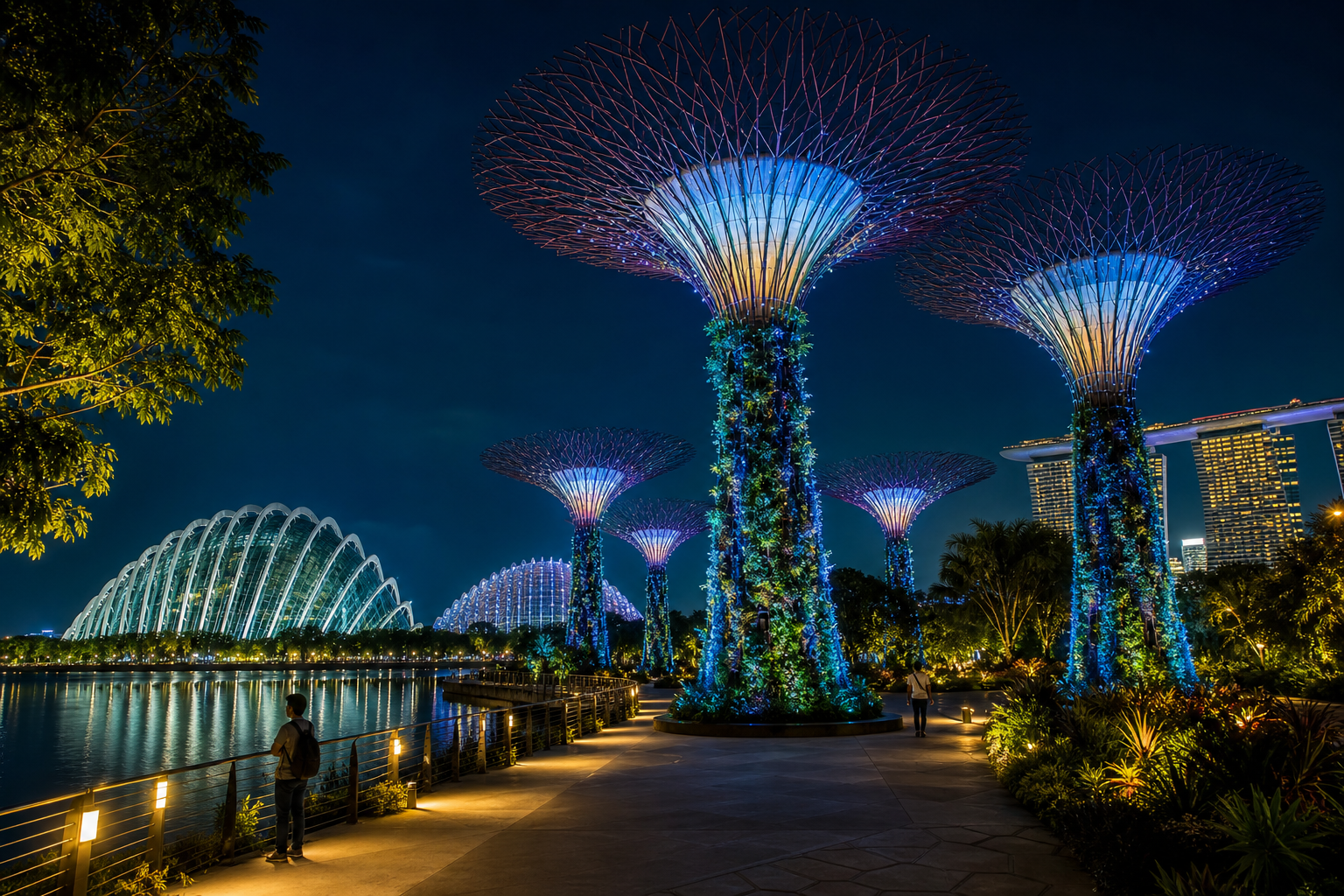
Gardens by the Bay
A futuristic waterfront garden complex with the Flower Dome and Cloud Forest, plus Supertree grove views at night. It’s a signature Singapore experience—beautiful both day and evening, with indoor and outdoor attractions in one ticketed area.
Time needed: About 2 to 4 hours
Entry: Entry tickets vary by dome and time slots; expect about S$28 to S$60 (€18–€40) Visit the official site for details.
Tip: Aim for late afternoon to catch both daylight gardens and night lighting.
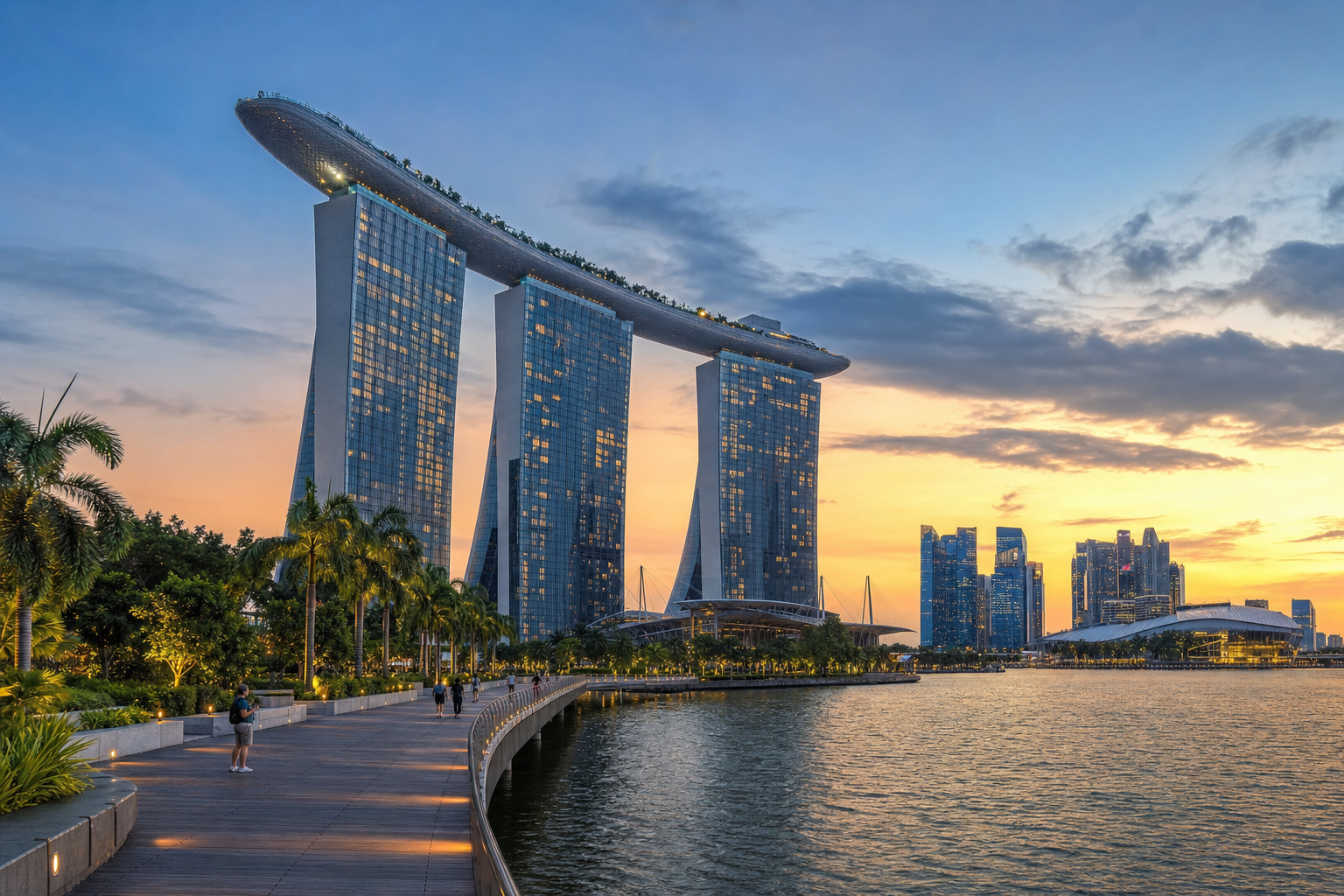
Marina Bay Sands SkyPark
Singapore’s landmark rooftop viewpoint atop Marina Bay Sands offers sweeping city and sea views. The SkyPark is ideal for sunset and night skyline photos, and the surrounding complex adds dining and galleries for a complete, central visit.
Time needed: About 1 to 2 hours
Entry: Tickets typically cost about S$33 to S$40 (€22–€27) Visit the official site for details.
Tip: Reserve ahead and go at least 30 minutes before sunset for the best light.
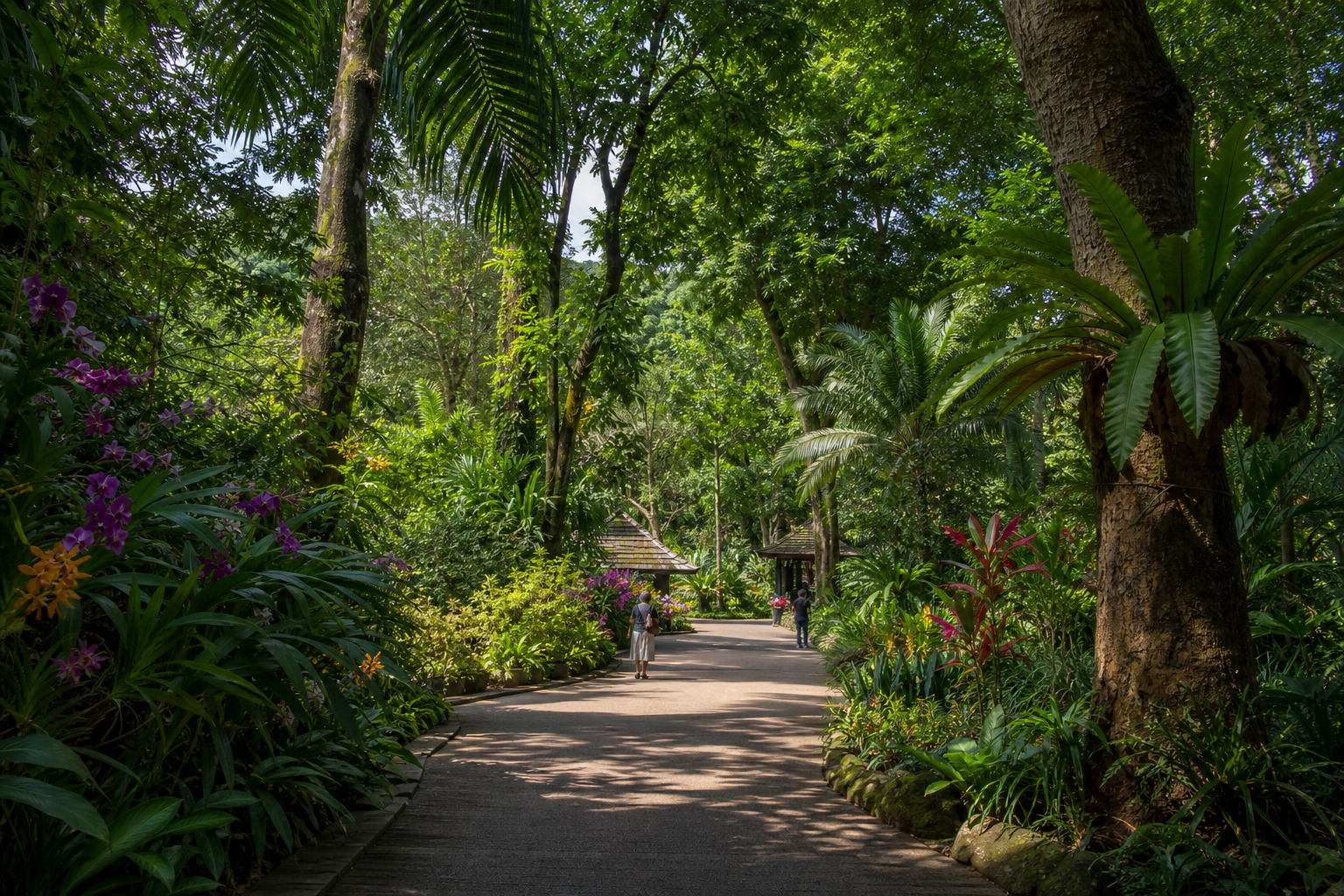
Singapore Botanic Gardens (UNESCO)
A UNESCO World Heritage site featuring lush rainforest scenery, curated gardens, and the famous National Orchid Garden. It’s both relaxing and visually stunning, with shaded paths and landmarks suited for slow walks or a half-day nature break in the city.
Time needed: About 2 to 3 hours
Entry: Main areas are free; Orchid Garden tickets are about S$15 to S$25 (€10–€17) Visit the official site for details.
Tip: Visit earlier in the day to beat heat and crowds, especially on weekends.
Overlooked sites worth visiting
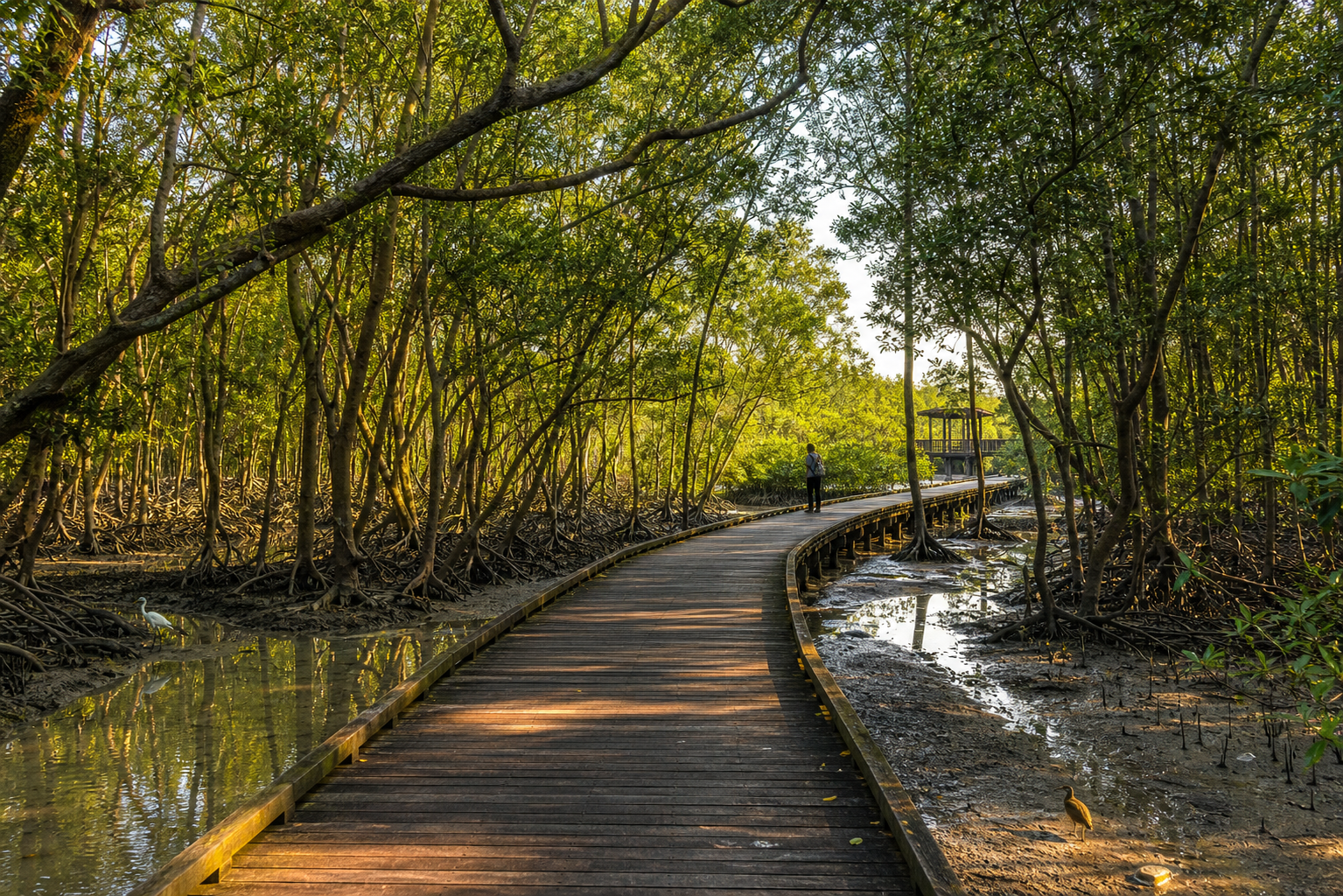
Sungei Buloh Wetland Reserve
A compact escape for birdwatchers and nature lovers, with mangroves, boardwalks, and excellent wildlife sightings. It feels far from the city, yet remains in Singapore’s metro area—great for an active, outdoorsy half day.
Time needed: About 1 to 2 hours
Entry: Park fees are typically about S$4 to S$8 (€3–€5); guided options may cost more Visit the official site for details.
Tip: Go early morning and bring insect repellent for the boardwalk sections.
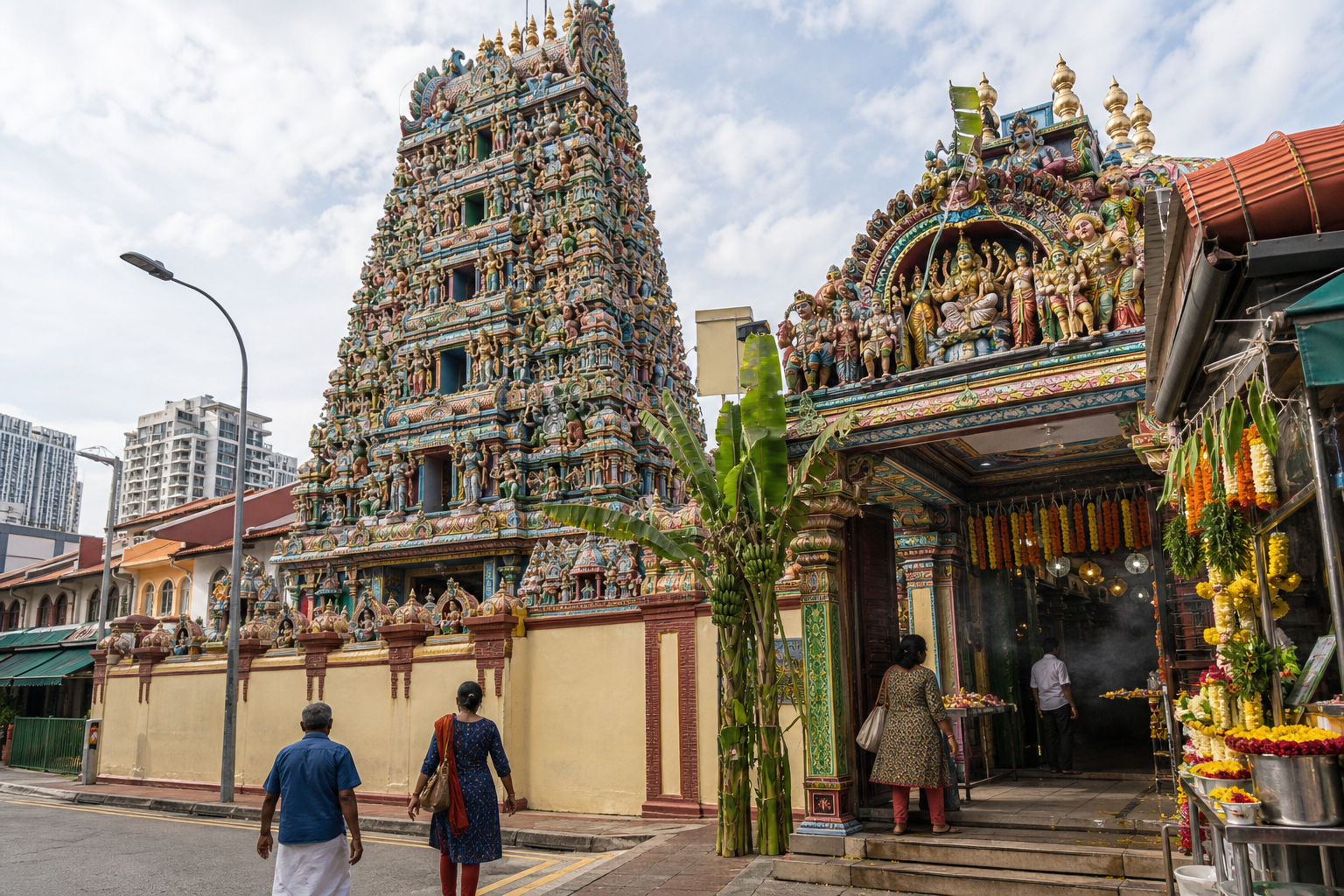
Sri Veeramakaliamman Temple (Serangoon Road)
A vibrant Hindu temple known for its colorful gopuram details and lively atmosphere in Little India. It’s especially striking around festivals, but the everyday visit still feels immersive—watch devotees and admire the intricate architecture at close range.
Time needed: About 45 minutes to 1 hour
Entry: Free to enter; small donations are welcome Visit the official site for details.
Tip: Dress modestly and visit outside peak festival crowds for a calmer experience.
Traditional food
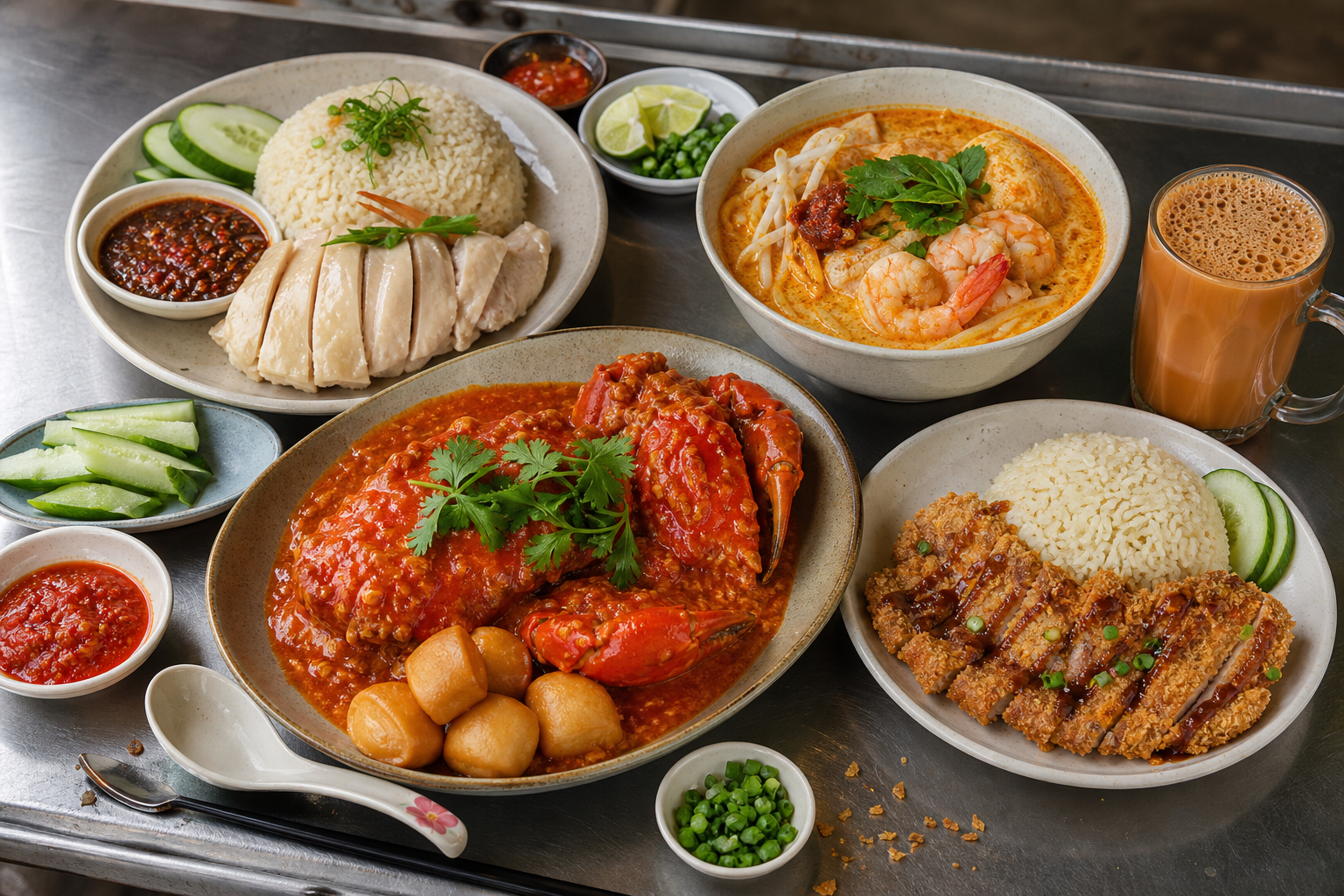
Singapore’s food scene is built on precise flavors and everyday variety: poached chicken with rice, coconut-rich laksa, chili crab, noodles, spices, and strong tea or kopi. Hawker culture keeps the pace casual, affordable, and distinctly local.
Hainanese chicken rice
Poached chicken with fragrant rice, ginger-scallion oil, and clear soy seasoning is one of Singapore’s defining dishes. Tian Tian Hainanese Chicken Rice in Maxwell Food Centre has served it as a benchmark for years.
Laksa
Laksa brings spicy coconut broth, rice noodles, and a rich, aromatic finish that sits at the center of local comfort food. 328 Katong Laksa has served its version as a long-running Singapore favorite.
Chili crab
Chili crab pairs sweet-spicy tomato-chili sauce with messy, satisfying shellfish eating. Jumbo Seafood at the East Coast has served this signature Singapore dish for decades.
Hainanese pork chop
Crisp, lightly sauced pork chop with a nostalgic Western-Asian café feel is a classic Singapore comfort plate. Red Star Restaurant has served this old-school favorite in a traditional dim sum setting.
Best time to visit Singapore
Singapore is hot and humid year-round, but rainfall, haze, and crowd levels shift enough to change the feel of each season.
Best for: Best for slightly cooler weather and a strong festival atmosphere.
What you get: Temperatures usually run about 77–88°F (25–31°C), with frequent rain but easier walking than the hottest months; crowds can rise around year-end holidays.
Trade-offs: Popular dates can be busy and hotel rates may climb.
Best for: Best for stable sightseeing days and garden visits.
What you get: Expect about 79–91°F (26–33°C), with humid afternoons and moderate crowds outside school breaks.
Trade-offs: Heat builds quickly by midday.
Best for: Best for flexible city time if you do not mind heat.
What you get: Typical temperatures are around 79–91°F (26–33°C), with occasional haze and a steady visitor flow at major attractions.
Trade-offs: The combination of humidity and haze can make outdoor time feel tiring.
Best for: Best for balanced sightseeing and a quieter overall pace.
What you get: Expect roughly 77–90°F (25–32°C), with regular showers and generally manageable crowds except around major holiday periods.
Trade-offs: Rain can interrupt outdoor plans without much warning.
A realistic 5-day plan in Singapore
The five-day plan follows a simple shape: arrive lightly, spend the middle days on the bay, heritage districts, and gardens, then keep the final day flexible. That makes Singapore feel less like a list of stops and more like a city organized by movement and mood.
Singapore lands at Changi Airport (SIN), one of the easiest airports in Asia for arrivals. To Marina Bay, a taxi usually takes 20–30 minutes and costs about S$25–S$40 ($19–$30), while the MRT is cheaper but less convenient with luggage. If you arrive late, keep the first day light and settle into your hotel near Marina Bay, Chinatown, Little India, or Kampong Glam.
Start with Marina Bay and the city’s most iconic skyline circuit. Begin at Gardens by the Bay, where entry to the main outdoor grounds is free and the domes usually cost S$28–S$60 ($21–$44), then continue to Marina Bay Sands SkyPark for rooftop views at about S$33–S$40 ($24–$30). If you want the best atmosphere, stay for sunset and the evening light show around the Supertree Grove. Plan for a full half-day to evening.
Spend this day in the heritage core: Chinatown, then nearby riverfront streets. In Chinatown, you can explore temples, shophouse lanes, and food halls with little or no entry cost beyond meals. Afterward, head to Kampong Glam for Arab Street, the Sultan Mosque area, and boutique-lined lanes; most wandering is free, and it works well as a relaxed walking day. If you want a specific stop, Sri Veeramakaliamman Temple in Little India is free to enter and fits easily into a broader heritage route.
Use this day for Singapore’s green side. Go early to the Singapore Botanic Gardens, where the main grounds are free and the National Orchid Garden usually costs S$15–S$25 ($11–$19). If you prefer something quieter and more outdoorsy, Sungei Buloh Wetland Reserve charges about S$4–S$8 ($3–$6) and rewards an early start with birds, mangroves, and boardwalks. This is a good slower day between heavier city sightseeing.
Keep the last day flexible for check-out, shopping, or one final neighborhood meal. Marina Bay and the airport are both easy to reach, so this is a good day for a short café stop, a souvenir run, or a revisit to any area you liked most. If your flight is later, the Botanic Gardens or a single museum stop also fits well before heading to SIN.
Business-class flights from the US to Singapore
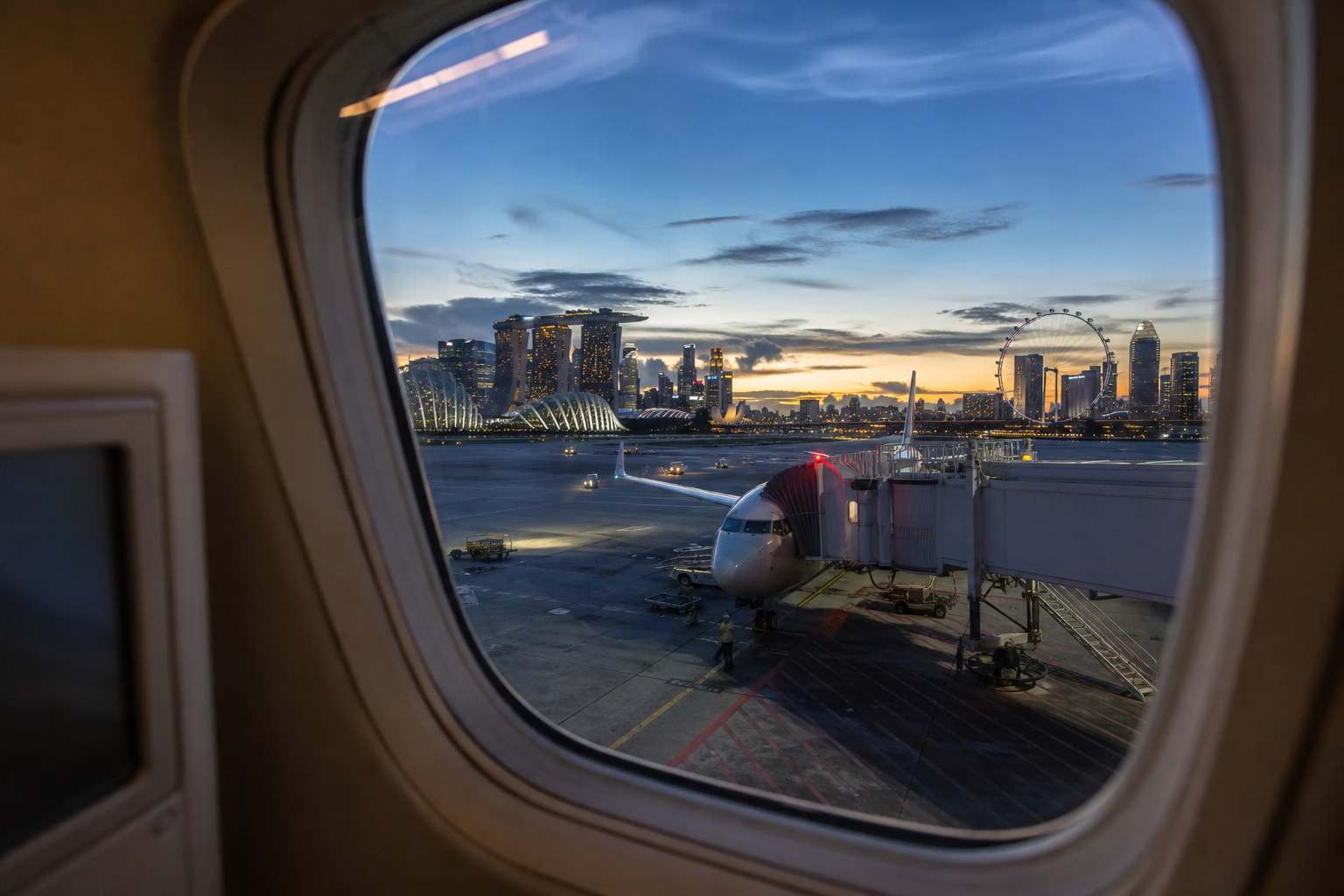
Flights to Singapore are often longer-haul itineraries, so the useful comparison is usually between nonstop service and one-stop routings. Prices can vary widely by season and cabin, but the city is well connected from both New York and Los Angeles.
Singapore Airlines, Cathay Pacific, Emirates, Qatar Airways, ANA, Japan Airlines operate nonstop flights on this route, with a duration of 18 to 20 hours. Round-trip business-class tickets typically range from $3,989 to $5,771, with last-minute bookings reaching $6,000. Round-trip economy tickets typically range from $788 to $1,315, with the best fares often available on one-stop itineraries. If you don’t mind a layover, common routings via DOH, DXB, HKG, NRT, HND take 20 to 30 hours and often reduce the cost.
Singapore Airlines, EVA Air, Cathay Pacific, ANA, Japan Airlines, Korean Air operate nonstop flights on this route, with a duration of 16 to 18 hours. Round-trip business-class tickets typically range from $3,562 to $4,860, with last-minute bookings reaching $5,100. Round-trip economy tickets typically range from $369 to $895, with the best fares often available on nonstop or one-stop itineraries. If you don’t mind a layover, common routings via TPE, HKG, NRT, ICN, BKK take 18 to 28 hours and often reduce the cost.
Singapore feels calmer when the days have a shape.
A well-structured plan in Singapore is less about fitting in more places and more about reducing the friction between them. When you group neighborhoods, use transit intelligently, and leave room for heat, meals, and evening light, the city becomes easier to read and more rewarding to move through. If you are planning your trip to Singapore, our AranGrant experts can help you review routes, book hotels, and shape the days so everything feels smooth from arrival to departure.







