

Chapters:

Need help with your trip?
Our support team is available 24/7. Request a callback or call us directly at (833) 619-0908
Rhodes trips often start with the same script: an Old Town check-in, a quick photo of the walls, then a rush to Lindos or the beach before dinner. What gets missed is how much time disappears into transfers, gate-to-gate walking, and crowded midday hours.
That pace is a poor fit for an island where early starts and short transfers make sightseeing easier. The medieval core, Mandraki, Lindos, and the Valley of the Butterflies are far enough apart that timing shapes the trip as much as distance does.
This guide groups Rhodes by area, then covers where to stay, what to eat, when to go, and how to move between the harbor, medieval walls, beaches, and hilltop sites without unnecessary backtracking during a short stay.
Useful things to know
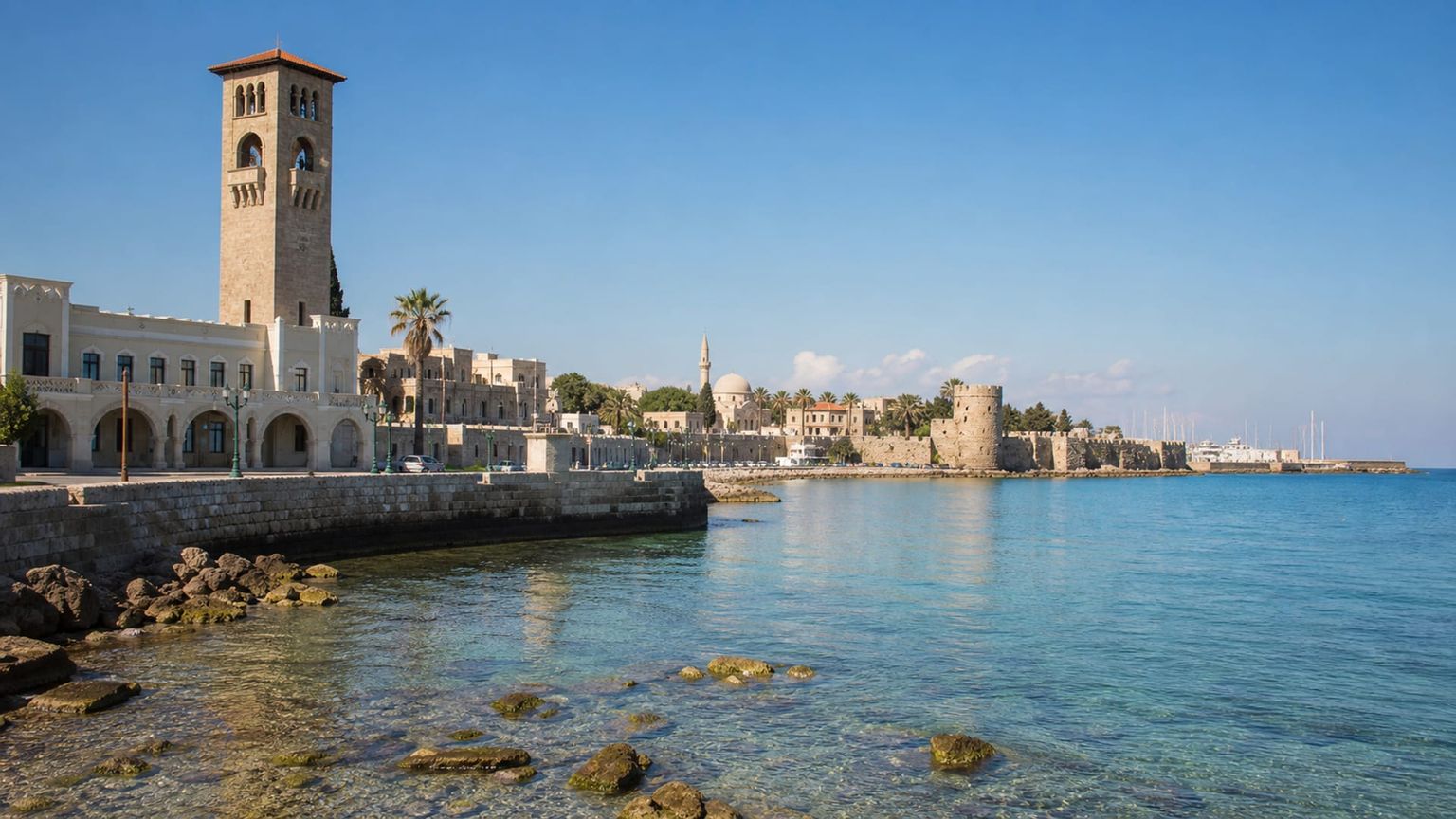

Main language(s): Greek
Γεια σας (YAH sahs) – Hello
Παρακαλώ (pah-rah-kah-LOH) – Please
Ευχαριστώ (eff-khah-rees-TOH) – Thank you
Μιλάτε αγγλικά; (mee-LAH-teh ahng-glee-KAH) – Do you speak English?
Πόσο κοστίζει; (POH-so koh-STEE-zee) – How much does it cost?

Currency: Euro (EUR, €)

Cash and cards: Cards are widely accepted at hotels, restaurants, and shops. Keep €20 to €40 ($22 to $44) for small purchases, tips, and occasional cash-only payments.

Tipping: Round up café and taxi bills, or leave 5% to 10% at restaurants for good service when no service charge is included.

Traditional food: Pitaroudia, giaprakia, kapamas, and melekouni are among the traditional foods associated with Rhodes.

Water and coffee costs: Bottled water typically costs €1 to €1.50 ($1 to $2), while an espresso usually costs €2 to €3 ($2 to $3).

Taxis and ride apps: Licensed taxis operate across Rhodes, and local online taxi booking is available. Uber does not currently list Rhodes among its supported Greek cities.

Plug and voltage: Type C and F sockets, 230V, 50Hz

Dining and shop opening hours: Lunch is commonly served from 1:00 pm to 3:00 pm and dinner from 8:00 pm to 11:00 pm. Many shops stay open until 9:00 pm, with seasonal Sunday opening in tourist areas.

Emergency number: Dial 112 for police, fire, and medical emergencies.
Where to stay in Rhodes
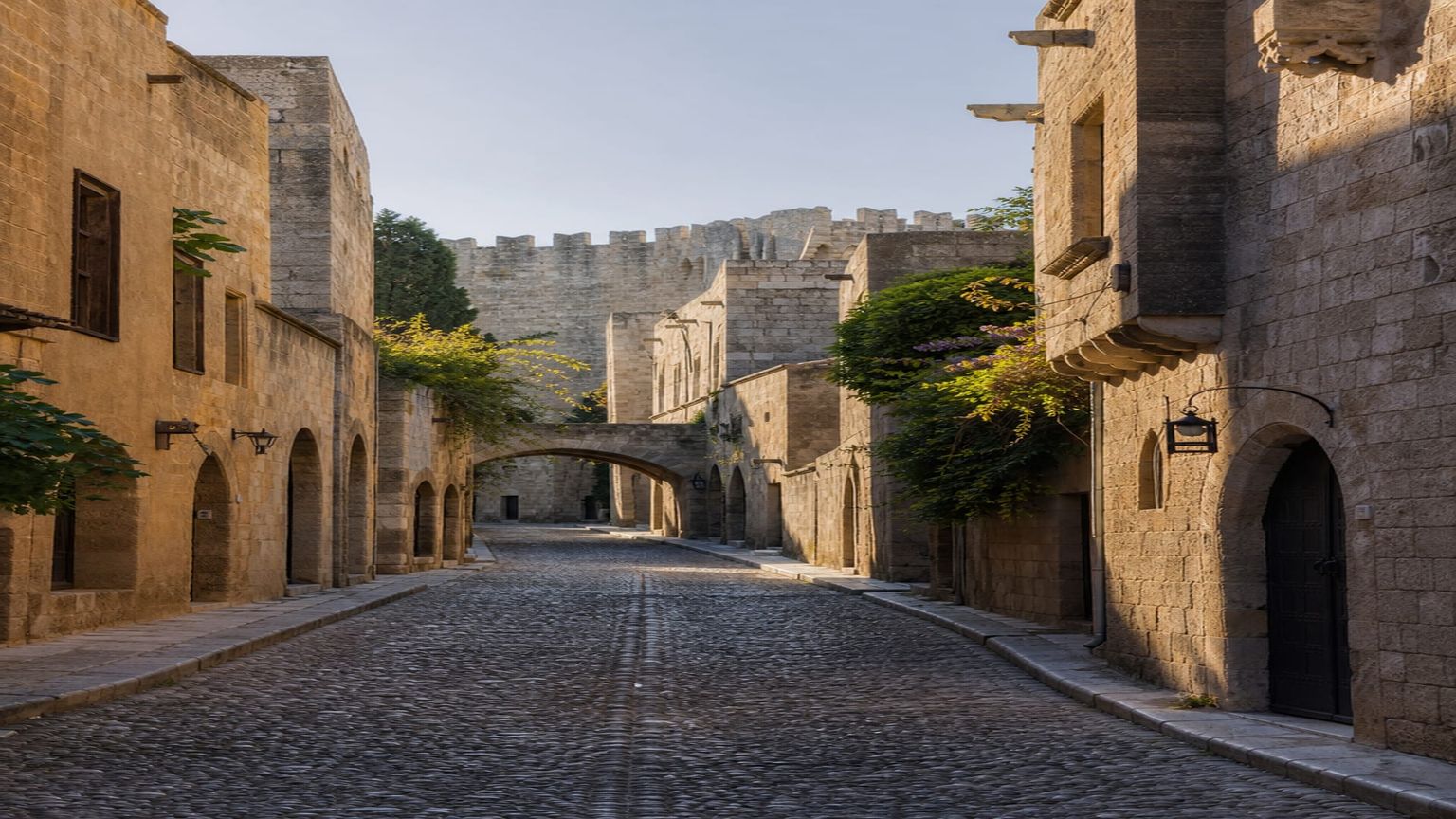
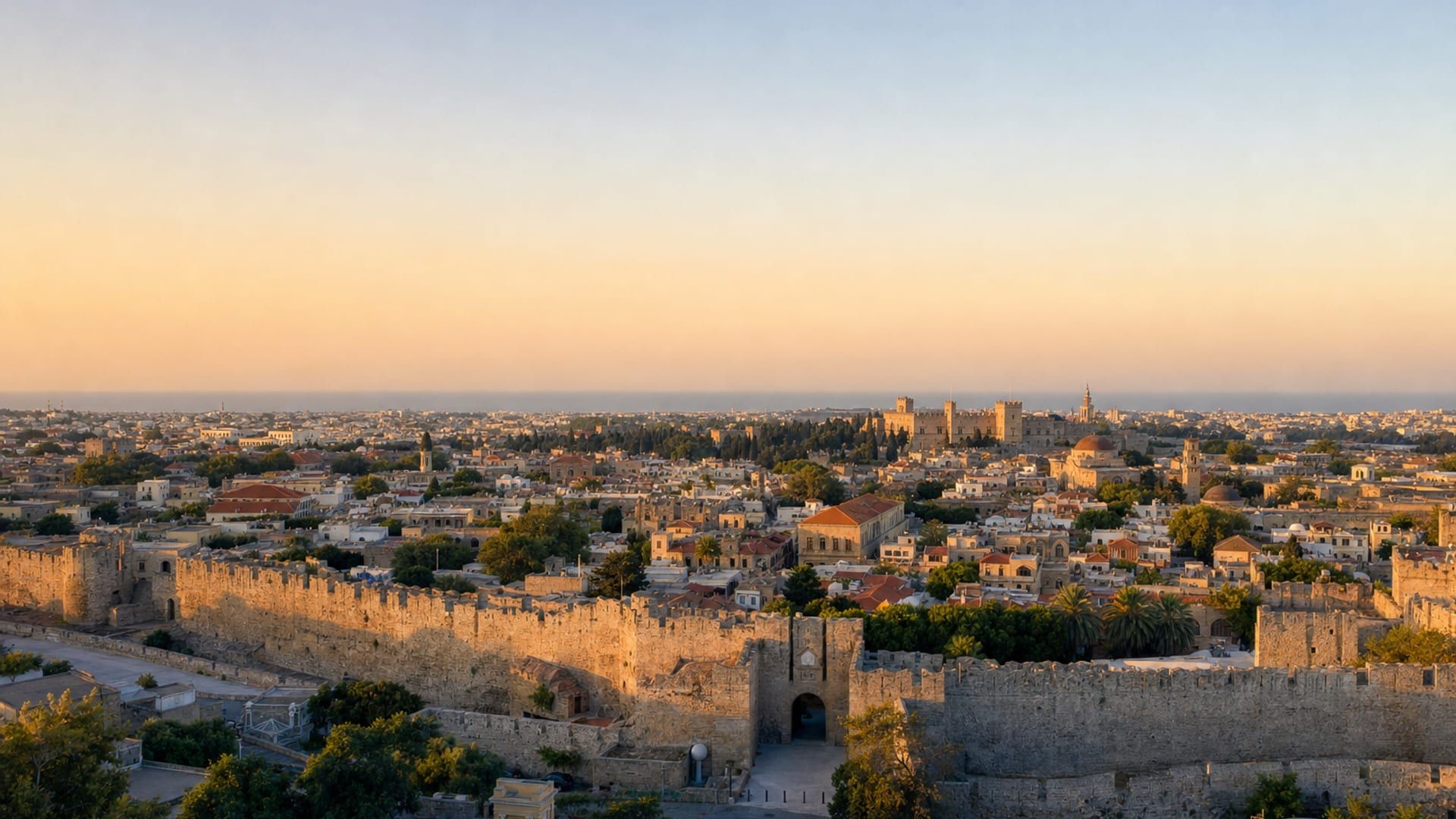
Rhodes Old Town is a UNESCO-listed medieval city within stone walls, with stone lanes, historic houses, museums, cafés, and restaurants. It suits travelers who want the island’s main historical sights within easy walking distance and do not mind heavier daytime visitor traffic.
Best for: History, walkable sightseeing, and first-time stays
What to expect: Stone lanes, museums, shops, restaurants, and heavy daytime visitor traffic
Hotel prices: Well-rated hotels generally cost €120 to €260 ($130 to $285) per night.
Distance to major sights: 5 to 15 minutes on foot to the Palace of the Grand Master and Mandraki
Quietness: Main streets stay active into the evening, with less noise on smaller lanes after day visitors leave.
Main trade-off: Pedestrian streets can make taxi access and luggage transfers less convenient.
Good to know: Confirm the nearest vehicle drop-off point before booking if you are arriving with luggage or by car.
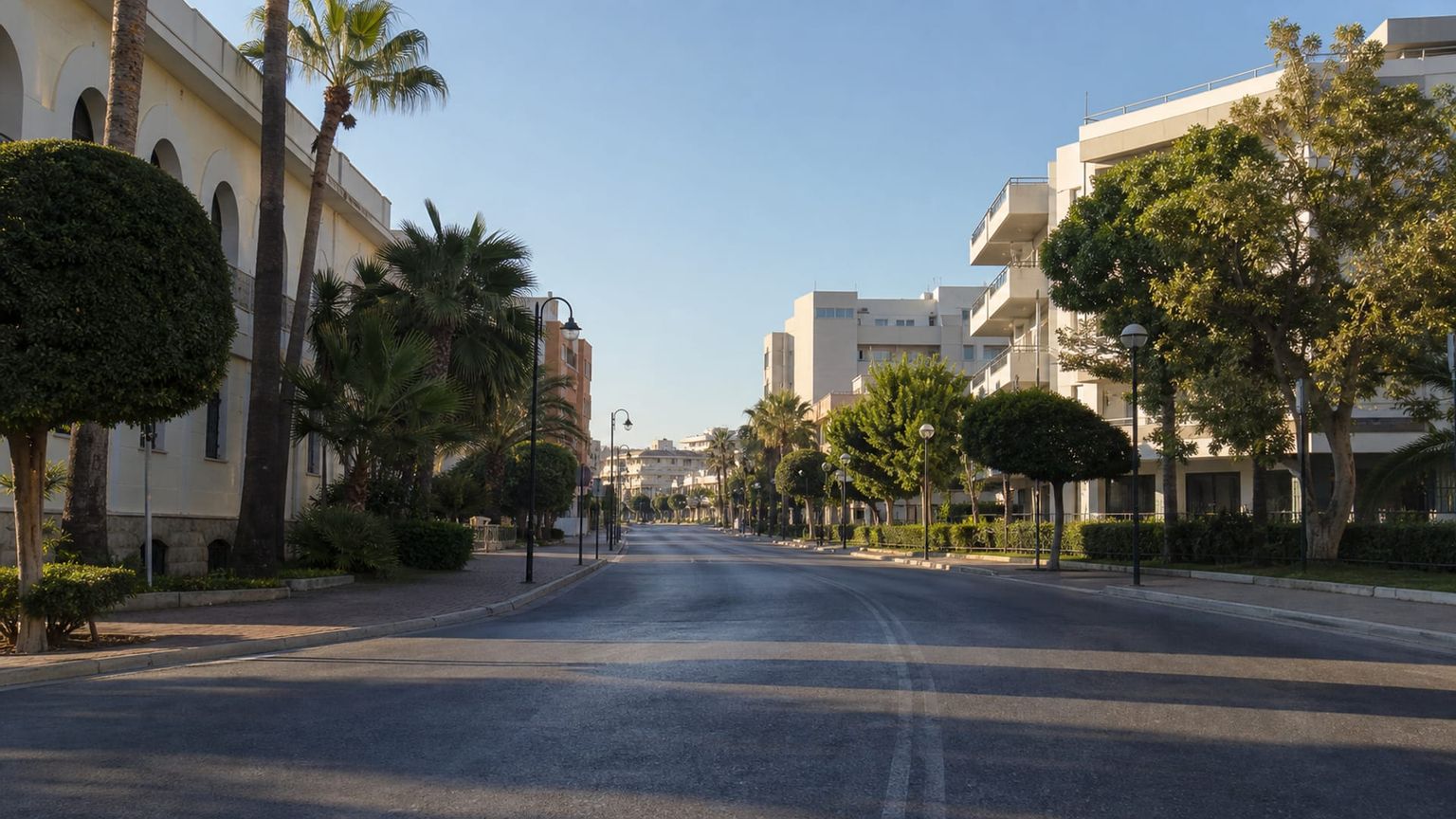
New Town spreads north and west of the medieval walls, with shops, offices, restaurants, larger hotels, and easier road access. It suits travelers who want a central location outside the historic core, with Mandraki, Elli Beach, and Old Town all reachable on foot without staying inside the walls.
Best for: Central access, shopping, larger hotels, and easier road connections
What to expect: Shops, offices, restaurants, traffic, and steady pedestrian movement throughout the day
Hotel prices: Nightly rates usually range from €90 to €190 ($100 to $210) for well-rated stays.
Distance to major sights: 10 to 20 minutes on foot to Old Town; many blocks are closer to Mandraki
Quietness: Main streets remain active at night, while smaller residential roads see less traffic.
Main trade-off: The setting has less historic character than staying inside the medieval walls.
Good to know: Choose a room away from major roads if you are sensitive to traffic or late-night delivery noise.
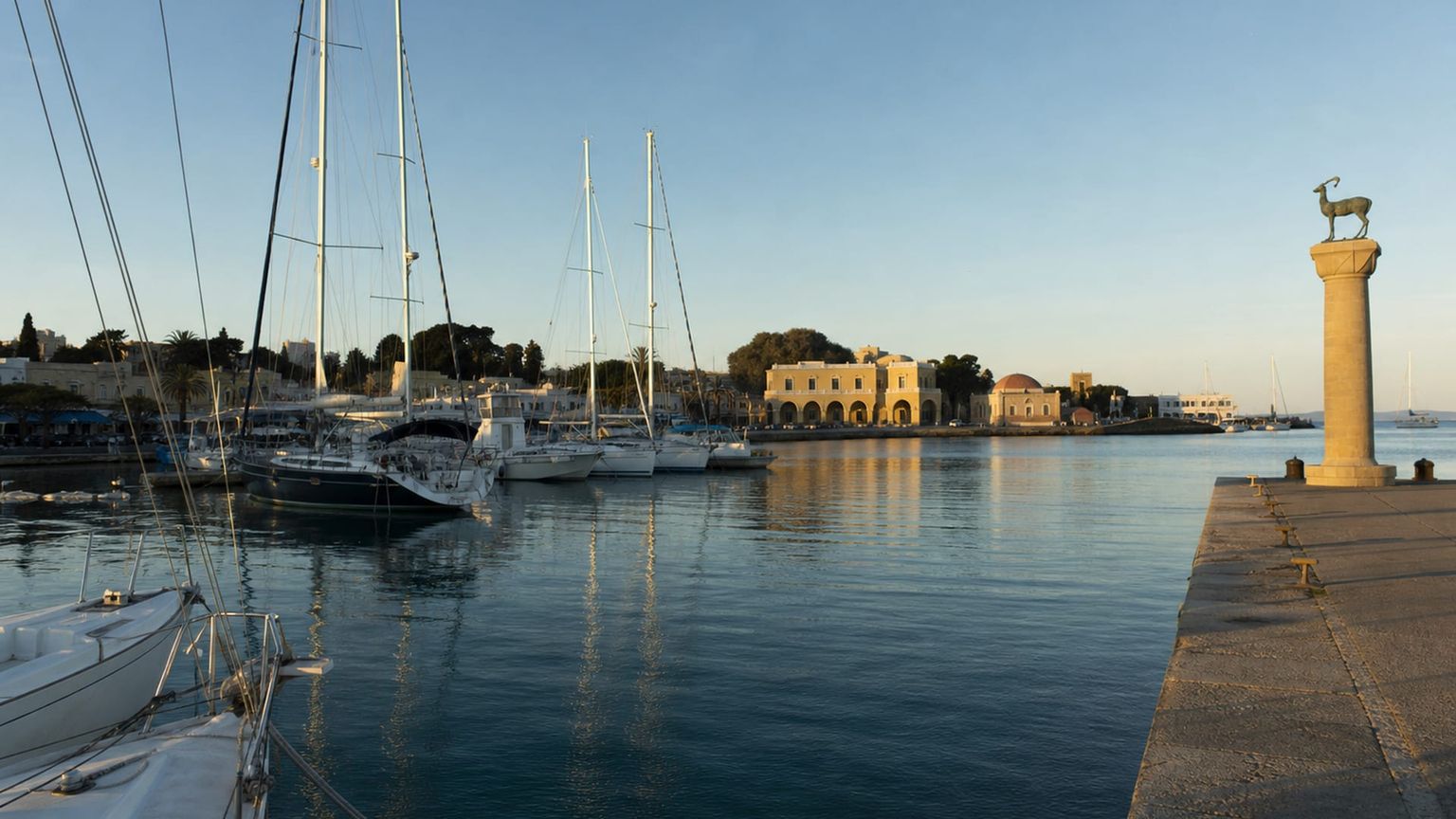
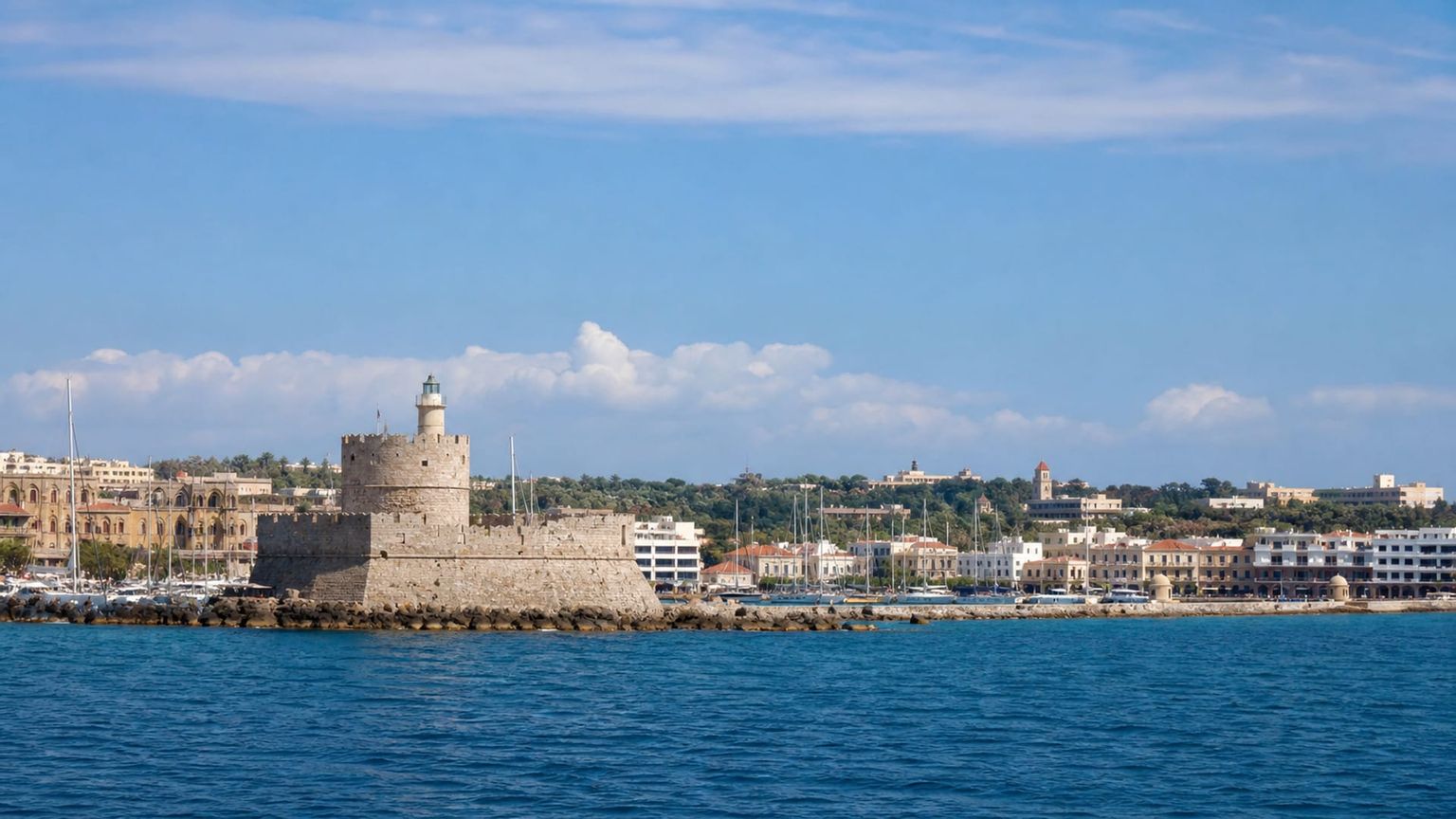
Mandraki is the harborfront section of Rhodes New Town, beside the marina, deer statues, waterfront promenade, and Old Town gates. It suits short stays, ferry users, and travelers who want sea views with the medieval center, central bus links, restaurants, and boat departures close at hand.
Best for: Harbor access, short stays, boat trips, and walking into Old Town
What to expect: Waterfront promenades, cafés, marina traffic, tour boats, and steady daytime foot traffic
Hotel prices: Expect to pay €110 to €220 ($120 to $240) per night for well-rated stays.
Distance to major sights: Old Town gates are 5 to 10 minutes away on foot; the marina is beside the area.
Quietness: Harbor-facing streets stay active longer, while inland blocks see less activity later at night.
Main trade-off: Waterfront rooms can cost more and may pick up harbor activity, wind, or pedestrian noise.
Good to know: This is the most convenient of the three areas if your itinerary includes early boat or ferry departures.
For a short trip focused on Rhodes Town, Ialyssos, Ixia, Kallithea, Faliraki, and Afandou require longer bus or taxi rides to the medieval center and Mandraki. They make more sense for beach-focused stays than daily Old Town sightseeing.
Hotel deals
How to get around Rhodes efficiently
Rhodes Town is easy to cover on foot. RODA buses serve the airport and west coast, KTEL buses head east and south, and taxis cover late or longer trips.

Metro
for longer distances
RODA BUSES connect Rhodes Town with Rhodes Airport (RHO), Ixia, Ialyssos, and other west-coast stops. The airport trip usually takes 30 to 45 minutes and costs roughly €2.50 to €3 ($3 to $3.50), depending on where you buy the ticket. Tickets are available at sales points or on board.

Bus and tram
for convenience
KTEL buses leave from Mandraki for Faliraki, Afandou, Archangelos, Lindos, and destinations farther south. A ride from Rhodes Town to Lindos takes roughly 1.5 hours and costs €6 ($7) one way. Buy an e-ticket online or pay in cash when boarding.

Taxi
for convenience or late hours
Taxis are useful for luggage, early departures, and destinations with limited bus service. Rhodes Town to the airport typically costs €27 to €35 ($31 to $40), while a trip to Lindos is closer to €70 to €75 ($80 to $86). Use official taxi ranks or arrange pickup through your hotel.
*Prices are based on rates updated as of September 2026 and may change at the time of travel.
Use RODA buses for rides to the airport and west coast, KTEL for rides to Lindos and eastern beaches, and taxis when timing, luggage, or late hours make bus travel inconvenient.
Iconic landmarks
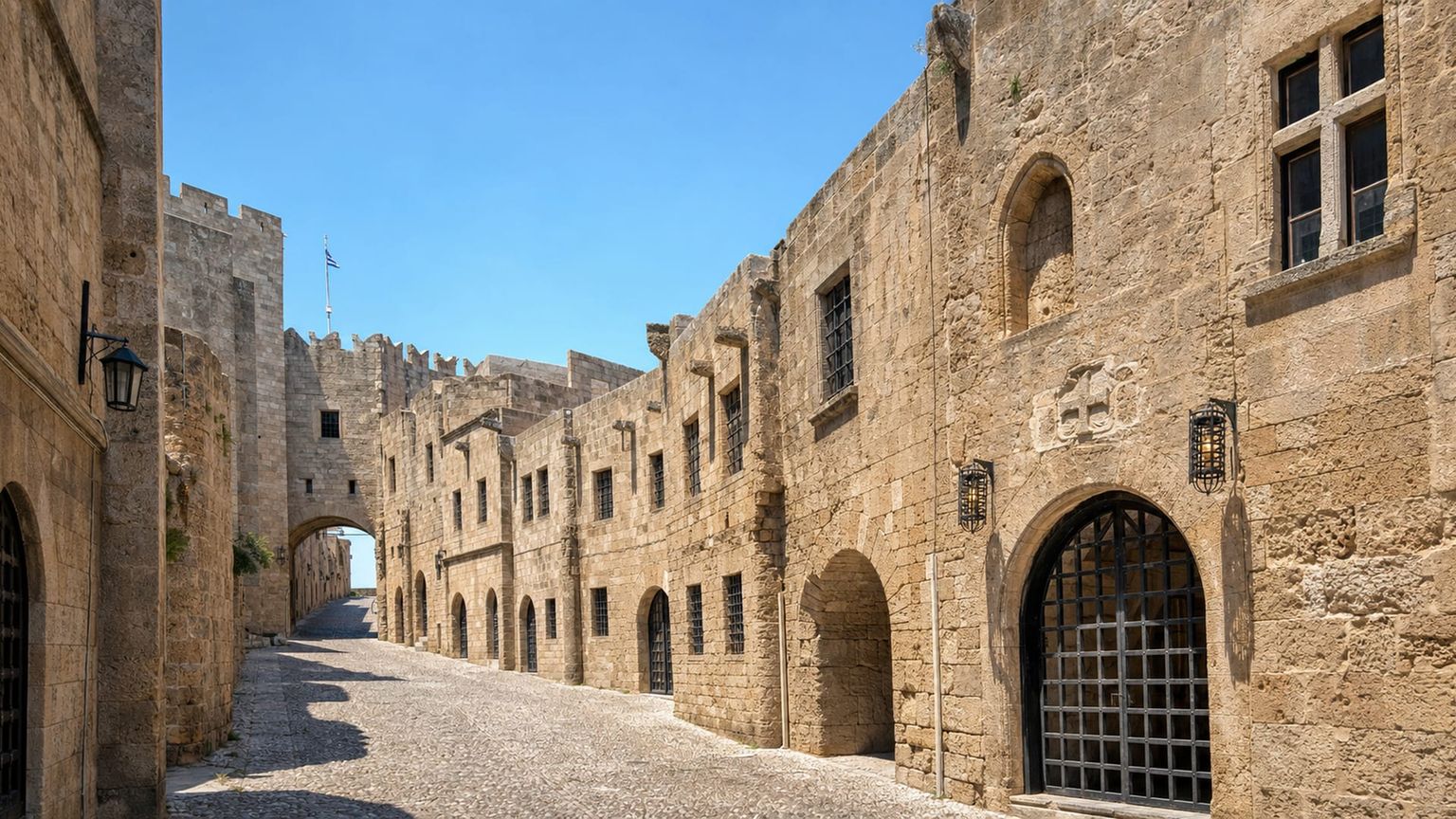
Old Town of Rhodes
The UNESCO-listed Medieval City brings together the Street of the Knights, fortified gates, historic houses, museums, churches, and centuries of Byzantine, Ottoman, Jewish, and Hospitaller history within its walls.
Time needed: 3 to 4 hours
Entry: Free; individual monuments charge separately, with major sites costing €5 to €20 ($6 to $23). Visit the official site for details.
Tip: Visit early or late, when the main lanes are cooler and large groups are less concentrated.
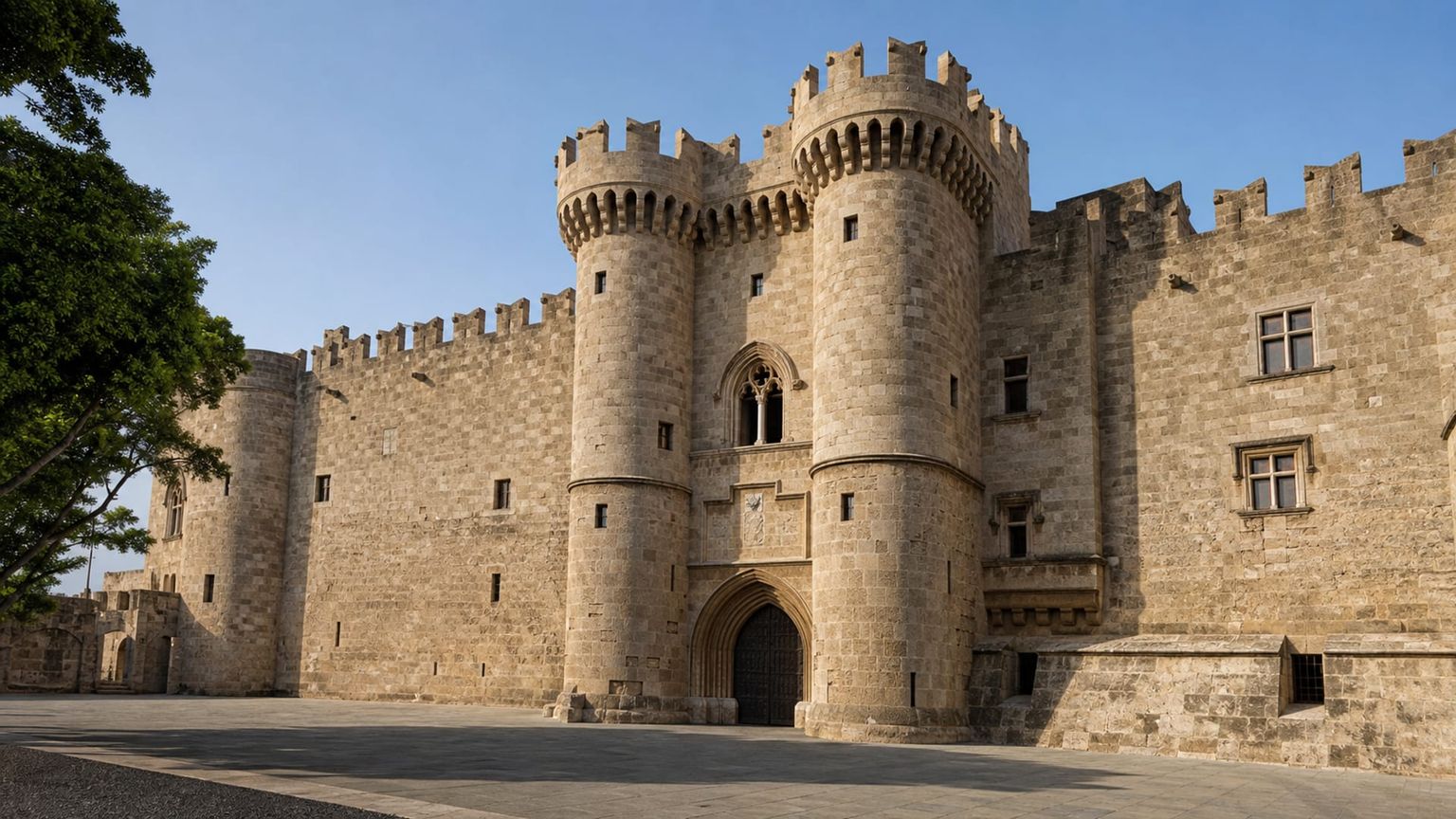
Palace of the Grand Master of the Knights of Rhodes
The Palace of the Grand Master anchors the upper Medieval City with fortified courtyards, Gothic architecture, permanent exhibitions, ancient mosaics, and interiors reconstructed during the Italian period.
Time needed: 1 to 2 hours
Entry: Adults pay €20 ($23); reduced admission is €10 ($11). Visit the official site for details.
Tip: Arrive near opening time before larger tour groups reach the main halls.
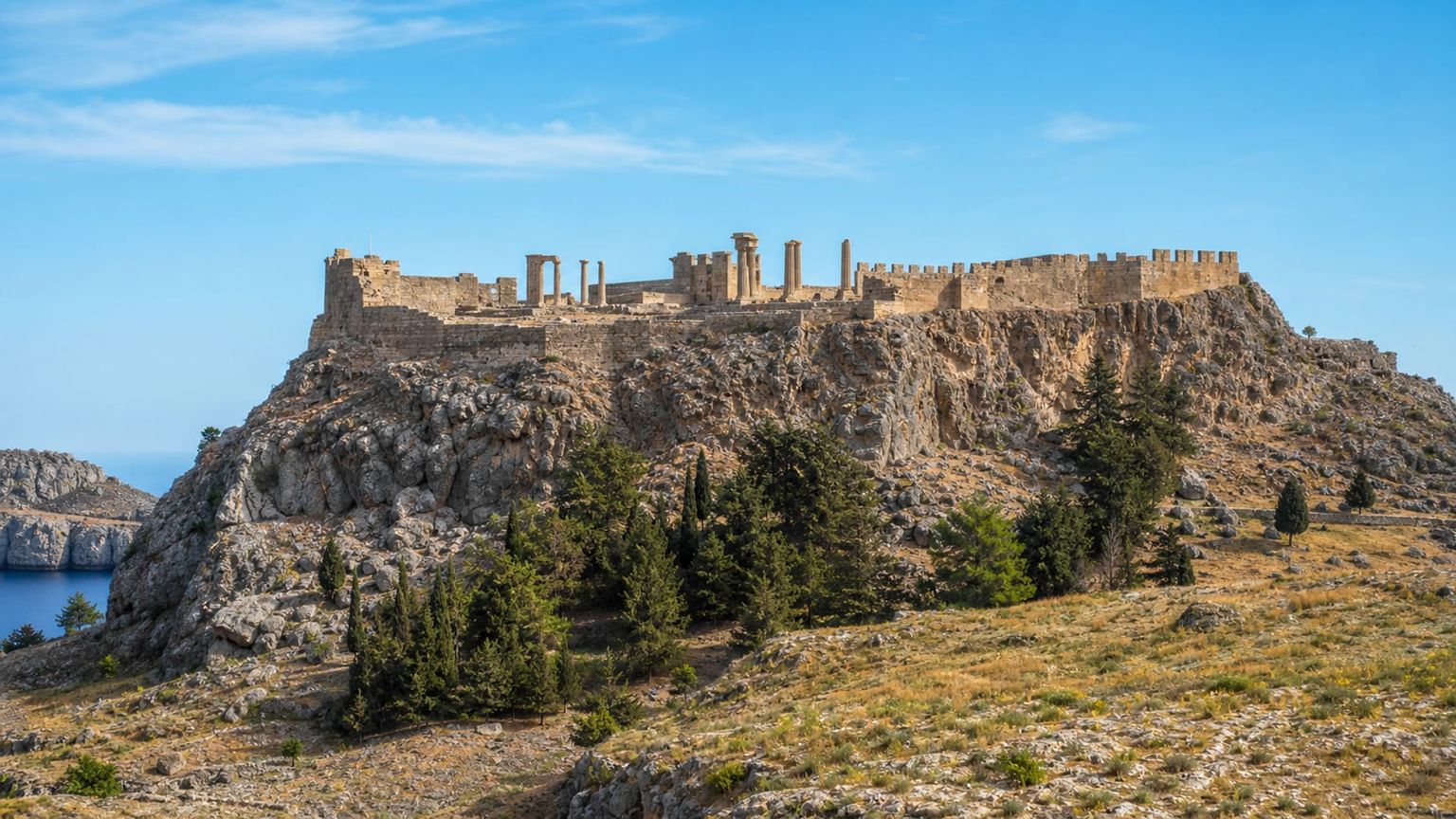
Lindos Acropolis
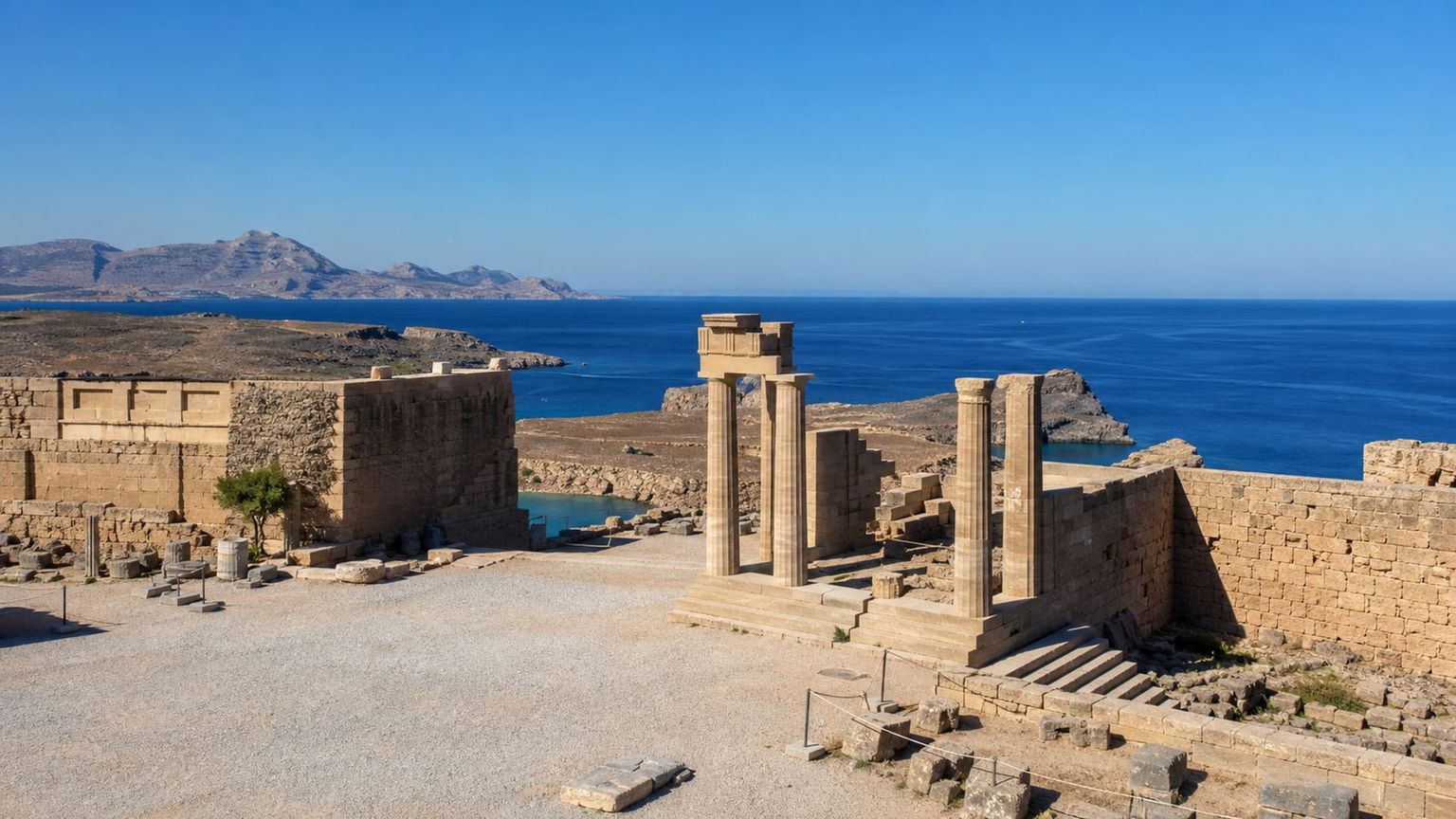
The Acropolis rises above whitewashed Lindos, combining the Temple of Athena Lindia, ancient terraces, medieval fortifications, and broad Aegean views. Reaching the entrance requires a steep uphill walk from the village.
Time needed: 2 to 3 hours
Entry: Adults pay €25 ($28). Interactive audio tours cost €5 ($6) extra. Visit the official site for details.
Tip: Visit early to avoid the strongest heat on the exposed climb and upper terraces.
Overlooked sites worth visiting

Valley of the Butterflies
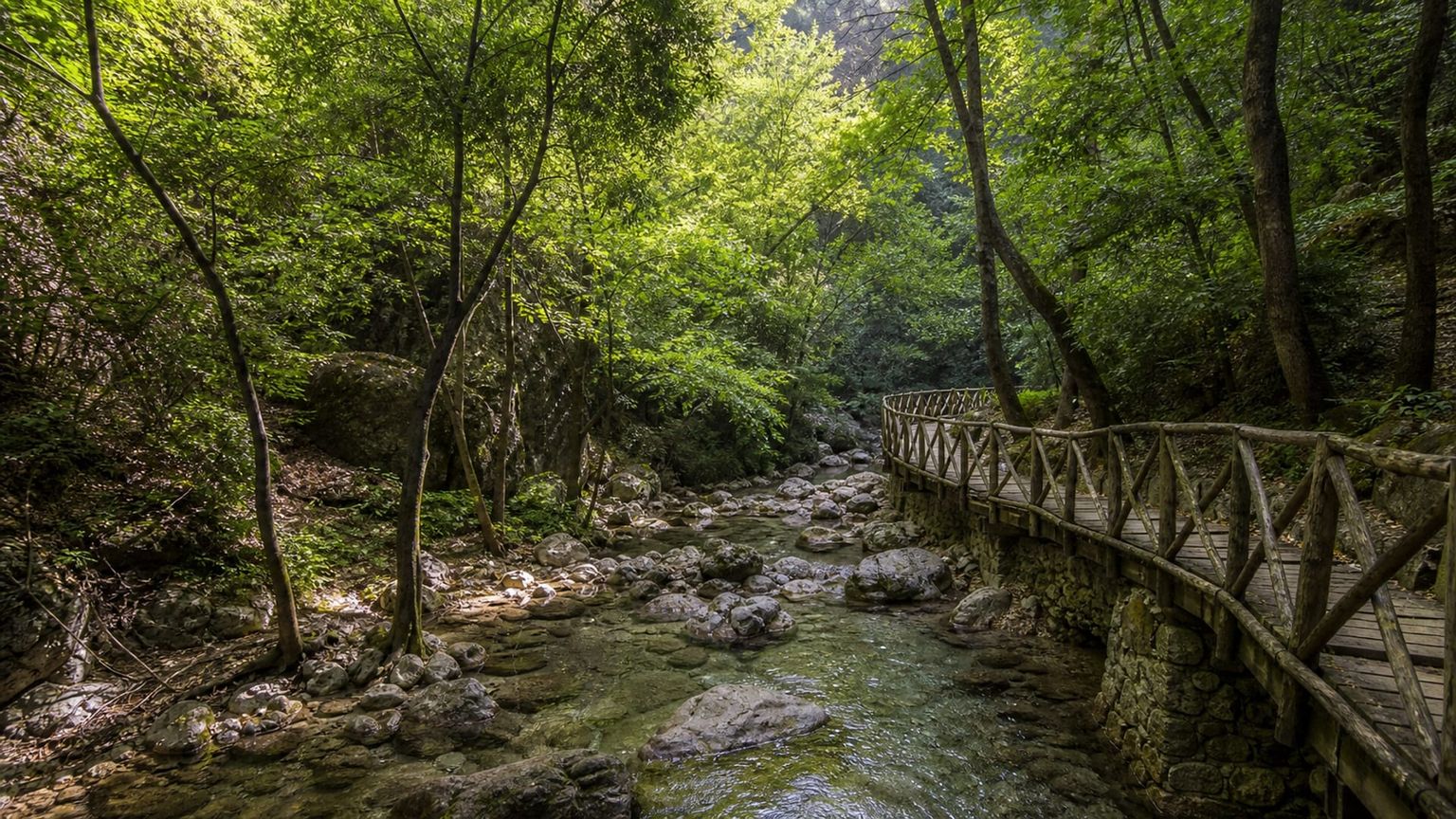
This shaded valley follows a stream through forest, bridges, rock paths, and small waterfalls. Summer brings large concentrations of the moths for which the reserve is known.
Time needed: 1 to 2 hours
Entry: Adults pay €6 ($7) in peak summer and €3 ($3.50) in shoulder season; children under 12 can enter for free.
Tip: Arrive early for cooler paths and fewer visitors on the narrow sections.

Church of Our Lady of the Castle
This medieval church inside Rhodes Old Town reflects Byzantine, Gothic, and Ottoman periods, with surviving architectural elements from its use as both a Christian church and mosque.
Time needed: 30 to 45 minutes
Entry: Adults pay €5 ($6); reduced admission is €3 ($3.50). The church is closed on Tuesdays.
Tip: Visit before mid-afternoon, since the monument closes earlier than many major sites.
Traditional food
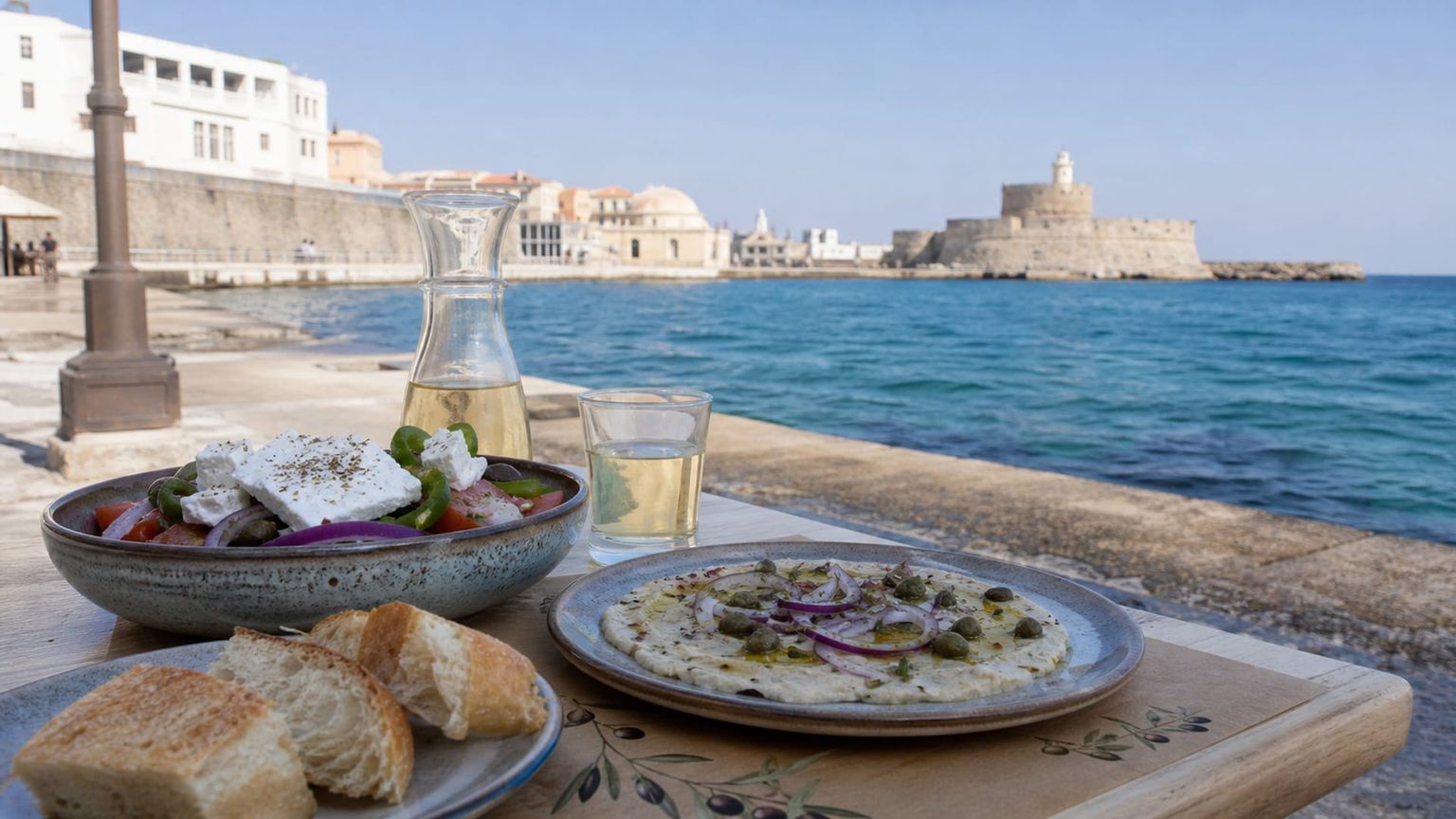
Rhodes cooking leans on olive oil, herbs, tomatoes, seafood, and slow oven dishes such as moussaka, alongside tavernas that keep lunch long and dinner late.
Moussaka
Moussaka layers eggplant, minced meat, and béchamel into a rich baked dish found across Greece. Tamam in Rhodes Town serves its own version, making it a convenient dinner option near Mandraki and the northern side of the city.
Giaprakia
Giaprakia are Rhodian vine leaves filled with rice, herbs, and sometimes minced meat, then cooked until tender. Romios Restaurant in Rhodes Old Town currently serves its own beef-filled version as part of its local menu.
Kapamas
Kapamas is a slow-cooked Rhodian meat dish, traditionally made with goat or lamb and a rich savory filling. Paraga in Apollona serves a traditional version cooked with fragrant stuffing as part of its Rhodian menu.
Melekouni
Melekouni combines sesame, honey, almonds, citrus, and spices into a chewy Rhodian sweet traditionally served at weddings and celebrations. Filema Rodion in Rhodes Town produces and sells the island specialty.
Best time to visit Rhodes
Spring and fall bring comfortable sightseeing weather and lighter crowds; summer is hottest, while winter brings more rain and reduced tourist-oriented services.
Best for: Old Town walks, wildflowers, garden visits, and mild day trips across the island
What you get: Typical temperatures range from 50°F to 76°F (10°C to 24°C), with longer days, moderate crowds, and increasingly dry weather by May.
Trade-offs: March can still be cool and unsettled, and sea temperatures remain low early in the season.
Best for: Beach time, boat trips, late dinners, and long days for coastal sightseeing
What you get: Typical temperatures range from 67°F to 87°F (19°C to 31°C), with very little rain, warm seas, and the island’s busiest visitor period.
Trade-offs: Midday heat and larger crowds make Lindos and exposed archaeological sites more tiring.
Best for: Warm-water swimming, Old Town sightseeing, and day trips with lighter crowds
What you get: Typical temperatures range from 56°F to 83°F (13°C to 28°C), with warm conditions in September before rain increases later in fall.
Trade-offs: Rain becomes more frequent in October and November, and seasonal services begin to thin.
Best for: Museums, quiet Old Town walks, local dining, and uncrowded historic sites
What you get: Typical temperatures range from 49°F to 62°F (9°C to 17°C), with the lightest crowds, cooler days, and the year’s highest rainfall.
Trade-offs: Some seasonal hotels, restaurants, and attractions close or reduce their hours.
A realistic 5-day plan in Rhodes
Five days give Rhodes enough room for the medieval center, harbor, Lindos, and one longer nature outing. Keep the first days near Rhodes Town, then move farther across the island once the main city sights are covered.
Arrive at Rhodes Airport (RHO), then take a taxi or prebooked transfer to Rhodes Town. The drive usually takes 20 to 30 minutes and costs €27 to €35 ($31 to $40). Check in, keep the first evening light, and walk through Mandraki for dinner near the harbor before returning to your hotel.
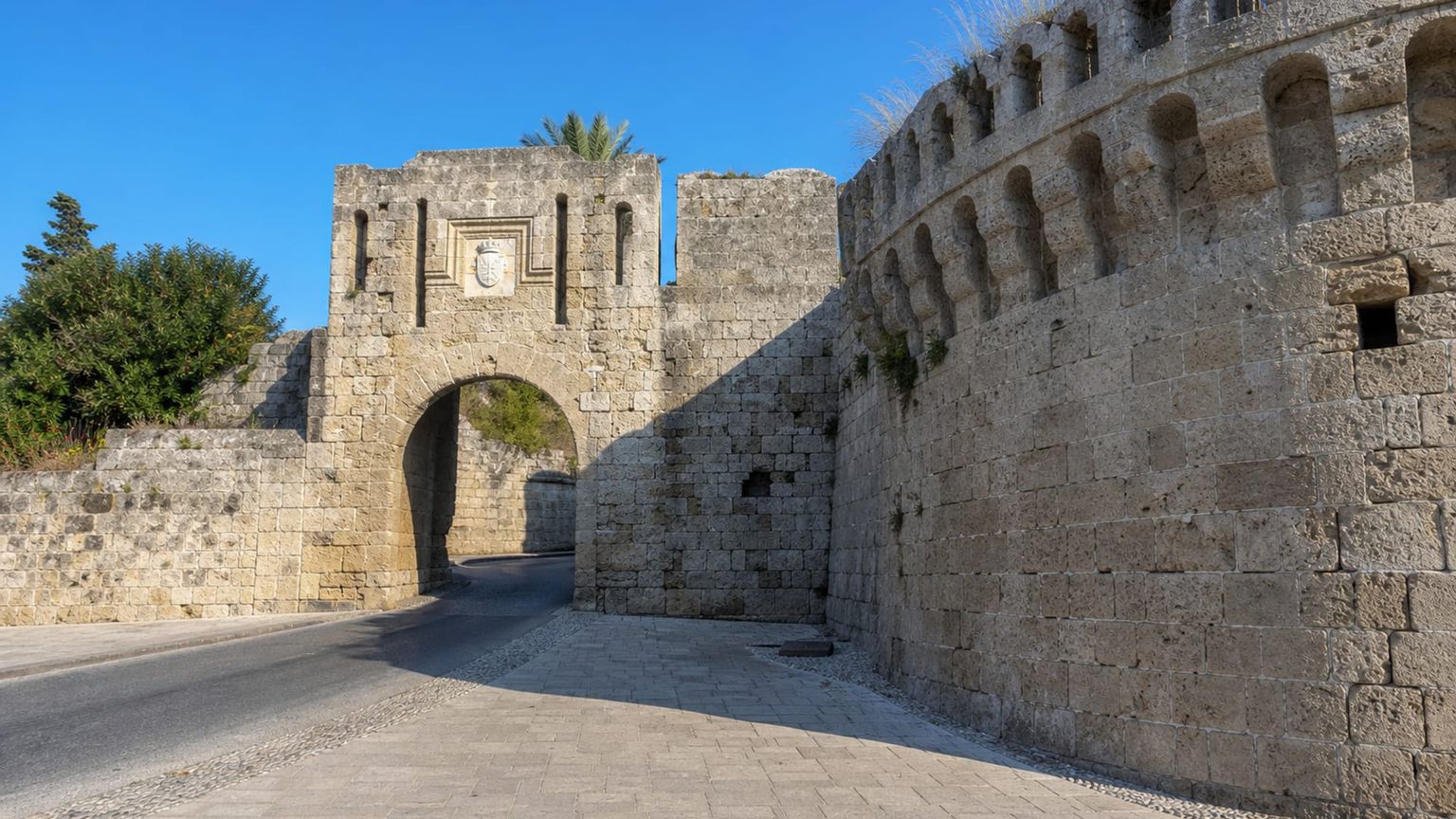
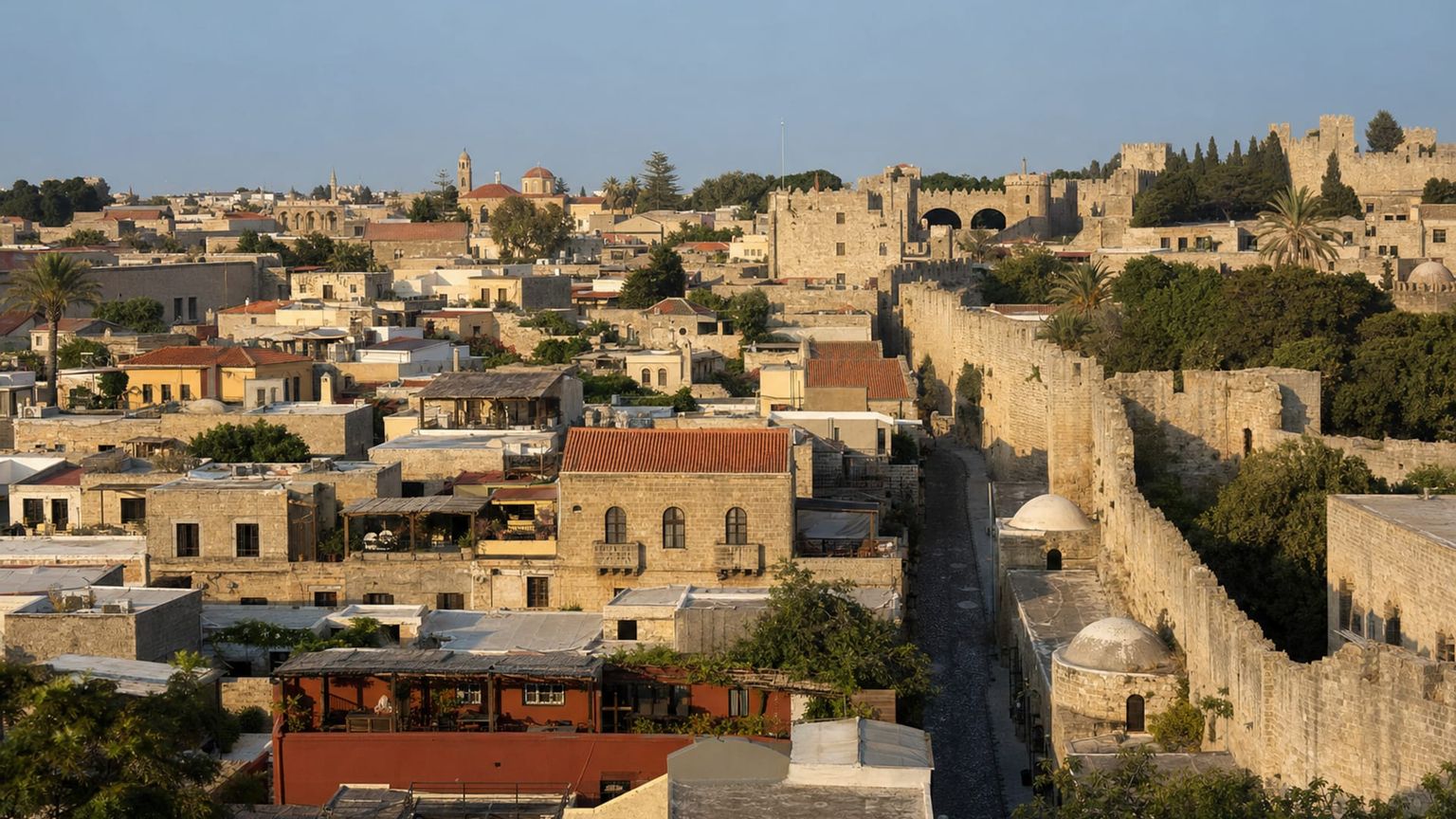
Start early inside Rhodes Old Town and spend the morning on the Street of the Knights, a Gothic avenue lined with 14th-century stone inns built for the Knights of St John. The street runs from the former Knights’ Hospital, now the Archaeological Museum, up to the Palace of the Grand Master. Allow 1 to 2 hours for the palace; adult admission is €20 ($23). Take a break for lunch inside the walls, then spend the afternoon in the Jewish Quarter before having dinner in the medieval center.
Take an early KTEL bus from Rhodes Town to Lindos, a trip of roughly 1.5 hours. Walk through the whitewashed, car-free village before climbing the steep, stepped lanes to the Acropolis, where a Doric Temple of Athena Lindia from 300 BC sits at the summit of a 380-foot (116-meter) cliff above the sea, alongside Byzantine fortifications and medieval battlements. Adult admission is €20 ($23); allow 2 to 3 hours for the site and ascent. Have lunch in Lindos, then return to Rhodes Town before evening.
Leave early for the Valley of the Butterflies, open from April through October and located 16 miles (26 km) southwest of Rhodes. The protected valley is a shaded ravine of streams, wooden bridges, and rare Oriental sweetgum trees whose resin attracts thousands of Jersey tiger moths each summer. The trail runs 0.6 miles (1 km) and takes 45–90 minutes at a relaxed pace; keep noise to a minimum. Return to Mandraki for lunch and a waterfront walk.
Keep the final morning light in New Town. Browse the shopping streets, walk toward Elli Beach or the northern waterfront, and stop for coffee before collecting your luggage. Leave for Rhodes Airport (RHO) with enough time for the 20- to 30-minute transfer, adding extra time during the summer peak.
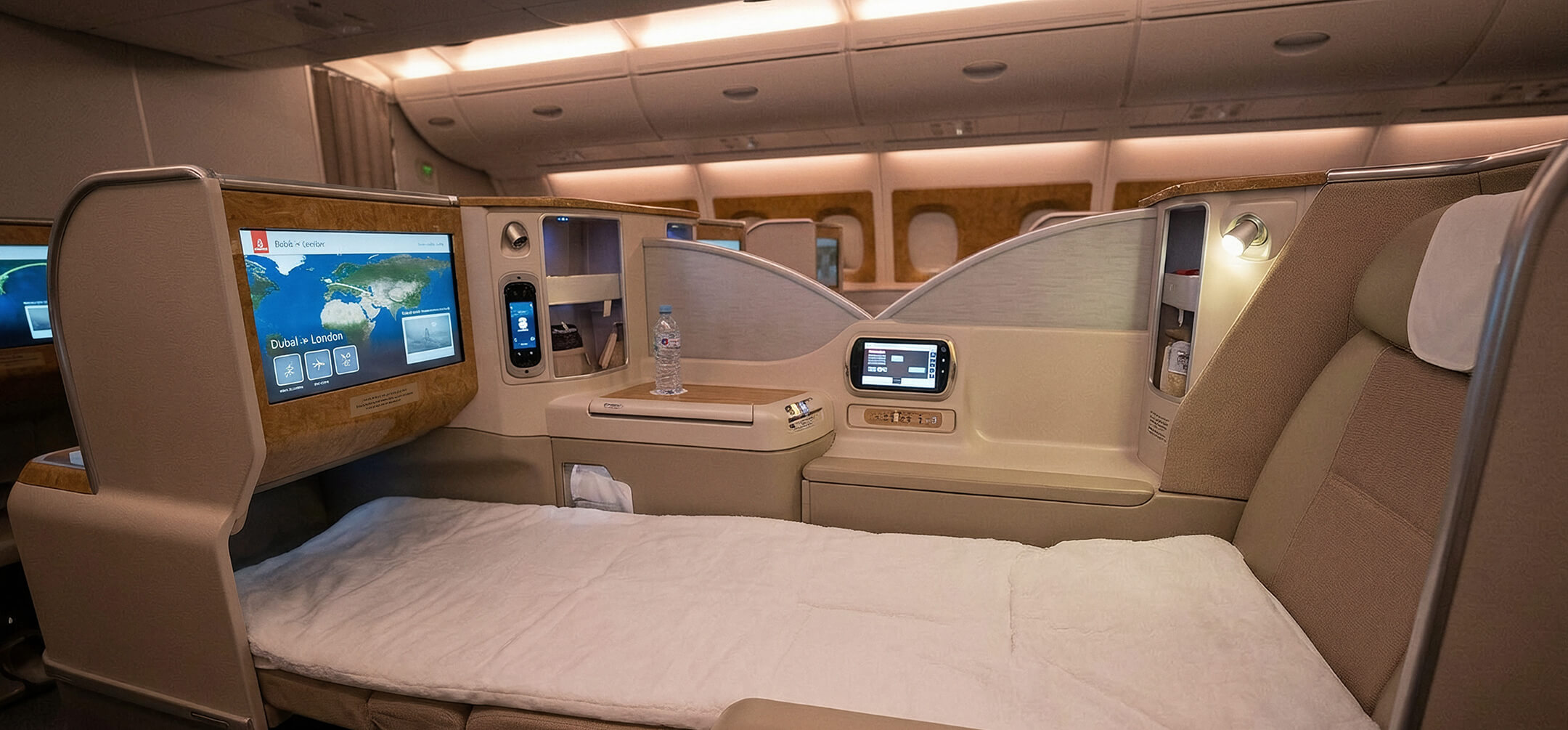
Business-class flights from the US to Rhodes
Flights from the US to Rhodes usually include a layover in a European hub, with total journey time depending heavily on the layover.
New York (JFK) to Rhodes (RHO)
Finnair offers flights from JFK through Helsinki Airport (HEL), followed by its seasonal flights to Rhodes, which currently run through November 2026 before returning in spring 2027. Total travel time commonly falls between 14 and 18 hours, depending on the layover. Round-trip business-class fares for this option range from $5,300 to $13,200. Other airlines offering flights on this route are SWISS, Lufthansa, Austrian Airlines, and Brussels Airlines, all in partnership with the Greek carrier Aegean Airlines.
Los Angeles (LAX) to Rhodes (RHO)
SWISS offers an itinerary from Los Angeles International Airport (LAX) to Zurich Airport (ZRH), where travelers connect to the flight to Rhodes. Total journey time commonly ranges from 16 to 20 hours, depending on the layover. Round-trip business-class fares for this option range from $5,500 to $10,900. Travelers from LAX can also take flights to Rhodes with Lufthansa, Air Canada, Emirates, and other major airlines.
Rhodes is easier when each area gets its own time
Rhodes becomes easier to explore when Old Town, Mandraki, Lindos, and the island’s nature stops each get their own part of the trip. That order keeps longer transfers separate from walkable sightseeing and leaves more time for meals and the waterfront. AranGrant experts can help you compare business-class flights and hotels that fit your dates and preferred location.