

Chapters:

Need help with your trip?
Our support team is available 24/7. Request a callback or call us directly at (833) 619-0908
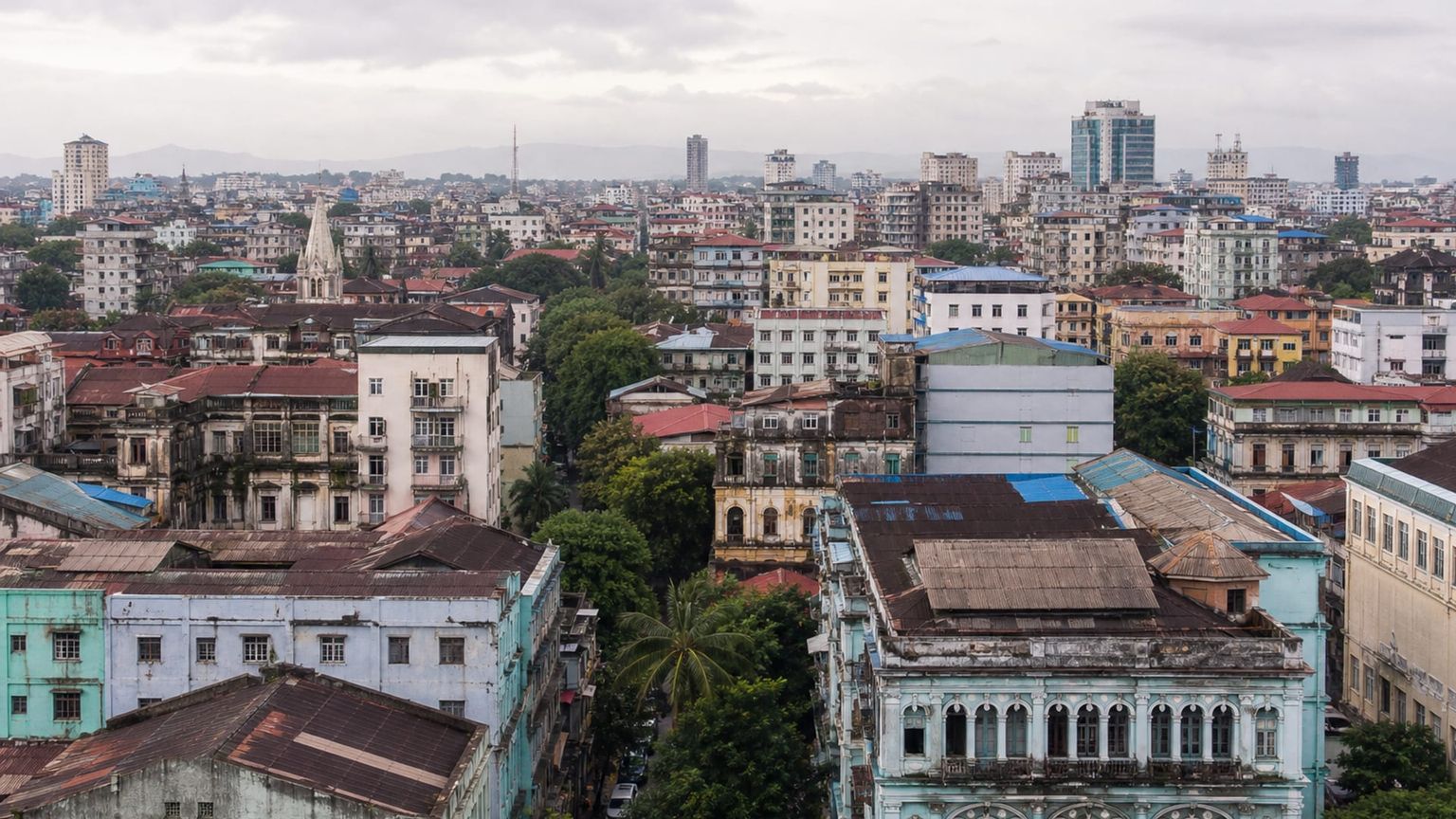
Yangon trips often begin with the same loop, Downtown for one night, Shwedagon for sunset, then a quick departure. Travelers usually miss how much time the city gives back when they plan for traffic, temple hours, and a slower dinner pace.
Without that structure, short taxi rides can stretch, crowded viewing times can blur together, and the old streets lose their context between stops. Even a compact itinerary can feel rushed if each landmark gets treated as a separate errand.
This guide keeps the route simple but spaces it better, with neighborhoods, meals, and visits set in a sequence that fits Yangon’s pace.
Useful things to know

Main language(s): Burmese
မင်္ဂလာပါ (ming-ga-la-ba) – Hello
ကျေးဇူးပြု၍ (kyay-zူး pyu yway) – Please
ကျေးဇူးတင်ပါတယ် (kyay-zူး tin ba de) – Thank you
အင်္ဂလိပ်စကားပြောတတ်ပါသလား (ing-ga-lip sa-ga pyaw tat ba tha-lar) – Do you speak English?
ဘယ်လောက်လဲ (be hlaut le) – How much does it cost?

Currency: The local currency is the Myanmar kyat (MMK, K).

Cash and cards: Cards and contactless are accepted at some hotels and malls, but carry about MMK 30,000 to 50,000 ($14 to $24) in cash.

Tipping: Tipping is not expected; round up small bills or leave a little extra for exceptional help.

Traditional food: Mohinga, Laphet thoke, Burmese curry, Shan noodles

Water and coffee costs: Water about MMK 1,000 to 2,000 ($0.50 to $1), espresso about MMK 3,000 to 5,000 ($1.50 to $2.50).

Taxis and ride apps: Grab and Bolt operate here; availability can be uneven outside central Yangon.

Plug and voltage: Type G socket, 230V

Dining and shop opening hours: Breakfast runs about 06:30-09:00, lunch 12:00-14:00, and dinner 18:00-21:00. Many tea shops and restaurants close by 22:00.

Emergency number: Call 199 for fire, 192 for ambulance, and 191 for police.
Where to stay in Yangon
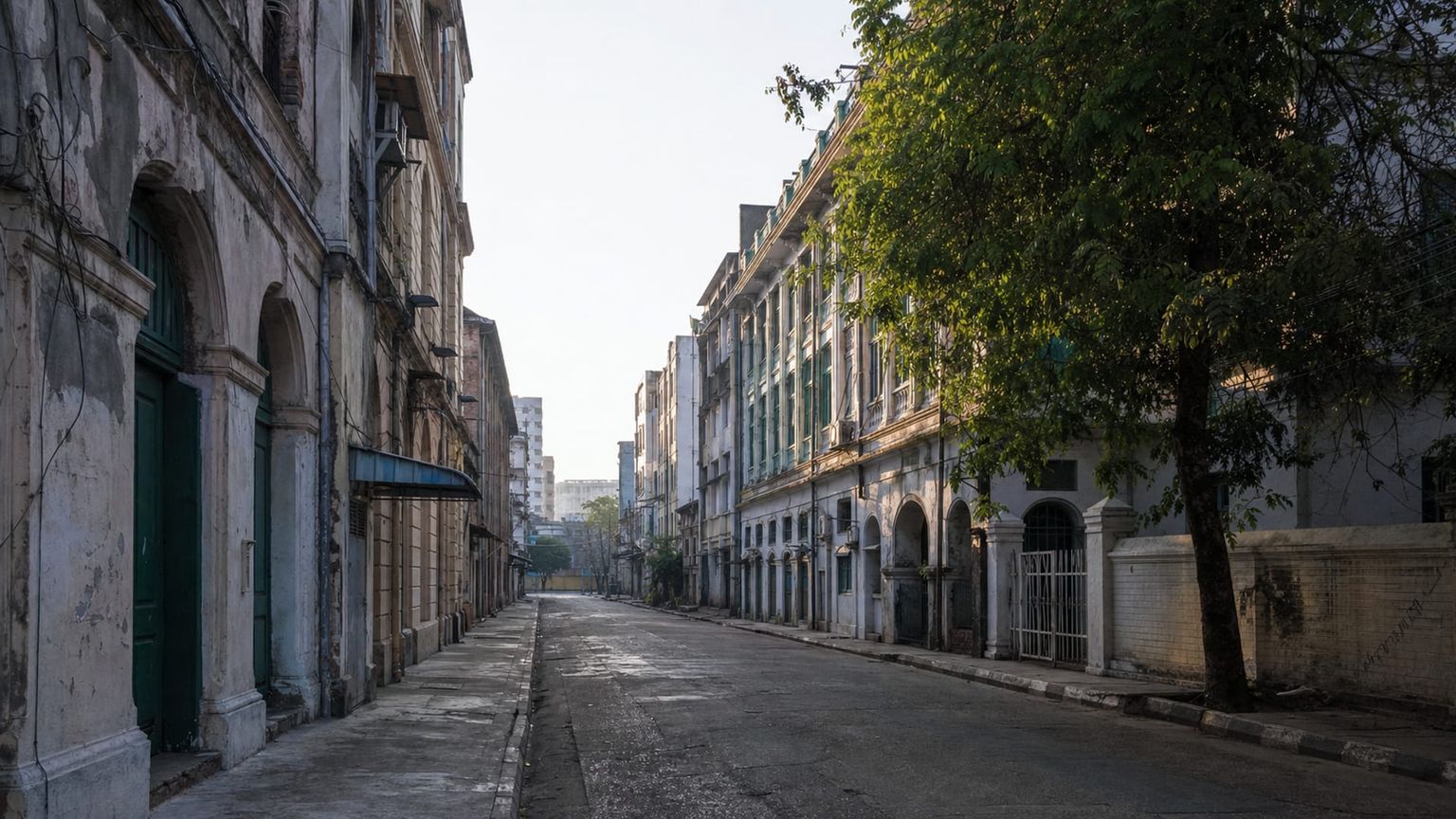
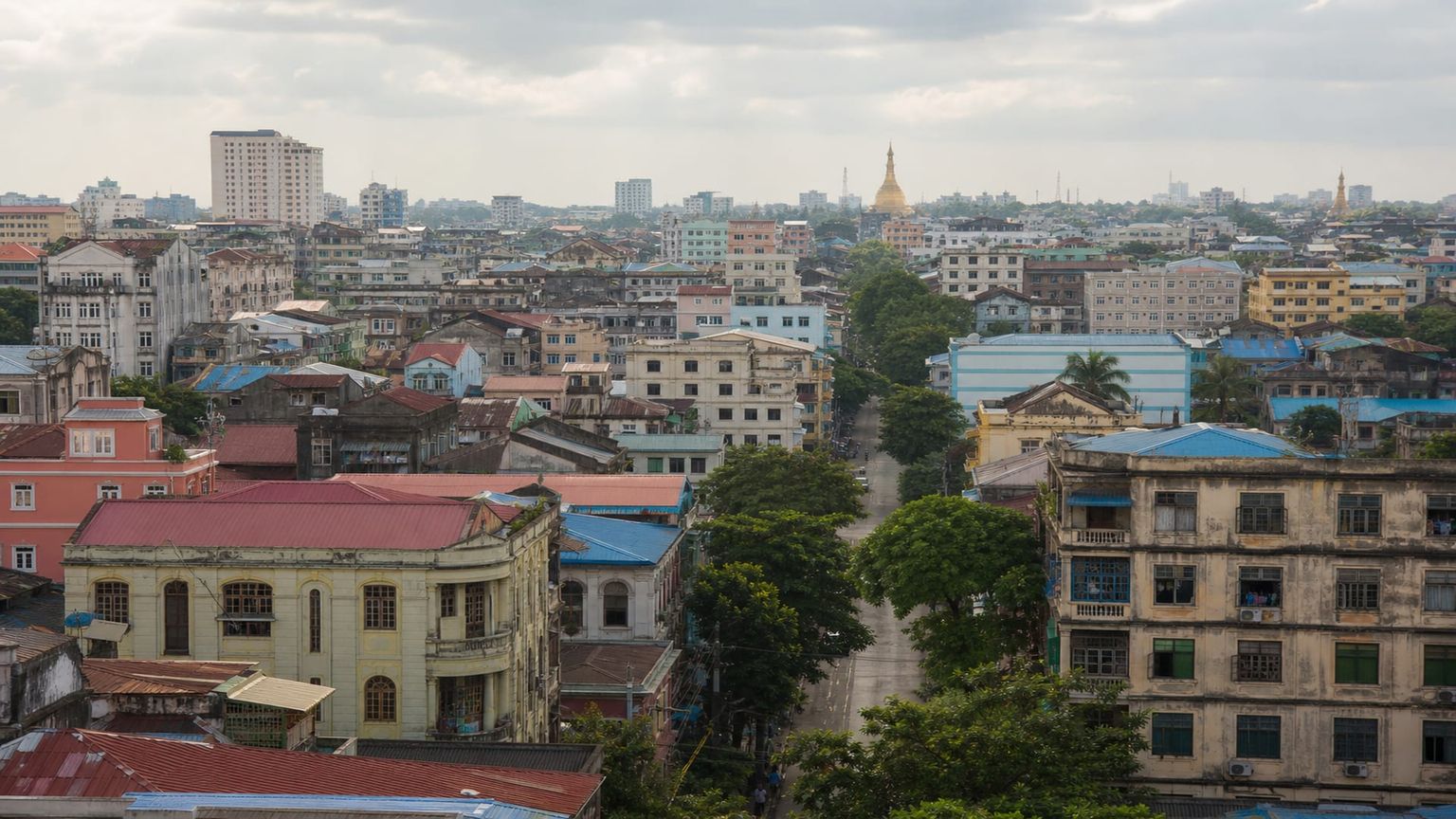
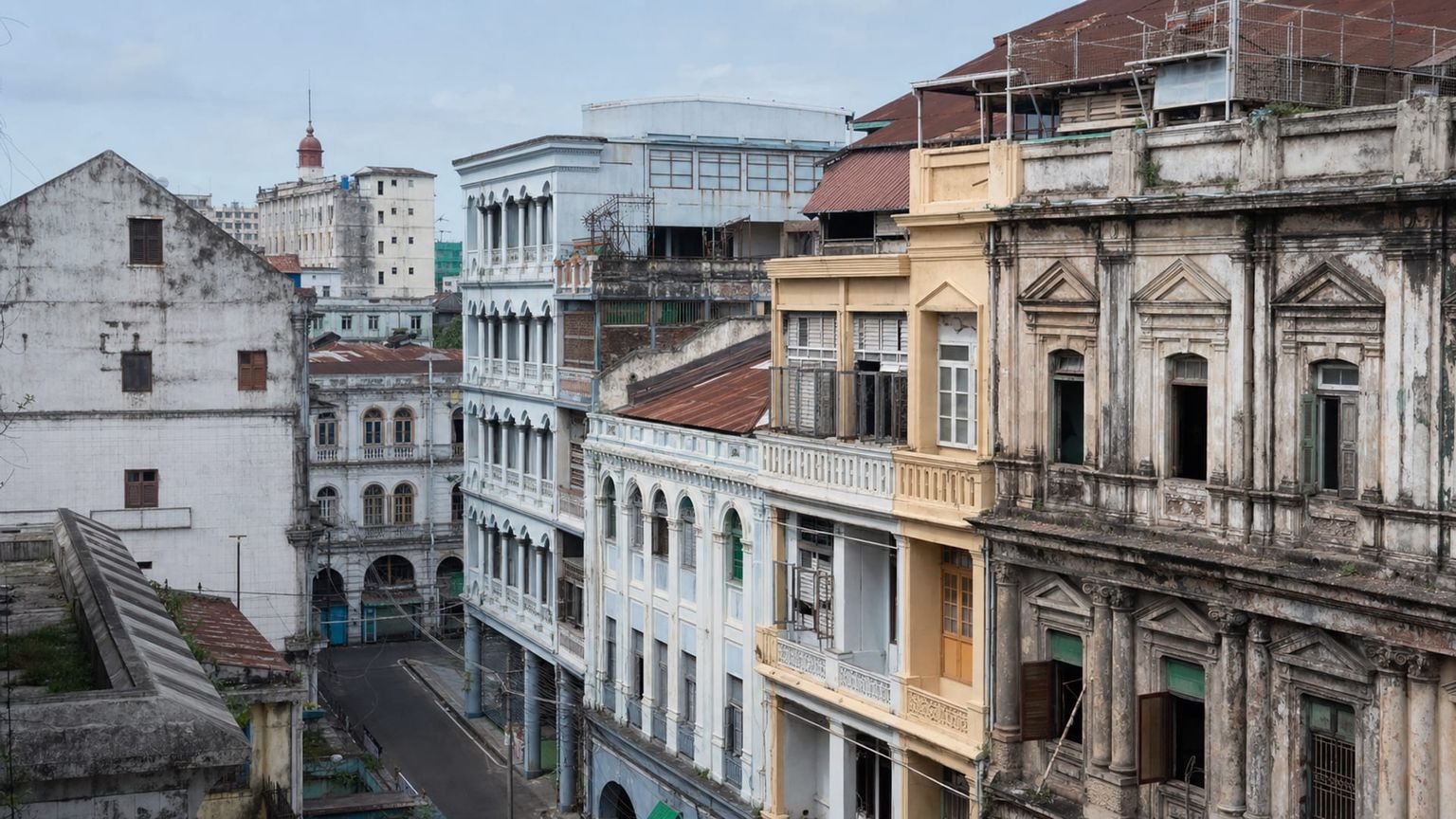
Yangon’s historic core clusters colonial-era blocks, markets, and the main business streets near the river. It matters because many landmark pagodas, rail links, and dining options sit within an easy taxi ride or walk.
Best for: First-time stays, heritage walking, and easy access to central dining and transit
What to expect: Busy sidewalks, early-morning market traffic, and a lot of movement near office hours, then a slower pace after dark.
Hotel prices: Usually about MMK 95,000 to MMK 220,000 (~$45 to ~4) per night for well-rated stays
Distance to major sights: About 10 to 20 minutes by taxi to Sule Pagoda and about 25 to 35 minutes to Shwedagon Pagoda
Quietness: Noisy by day near offices and markets, noticeably calmer late evening on side streets.
Main trade-off: Older buildings and some blocks feel worn, and traffic can slow short trips at peak times.
Good to know: Choose a hotel on a side street if you want less street noise, because main avenues can stay active well past dusk.
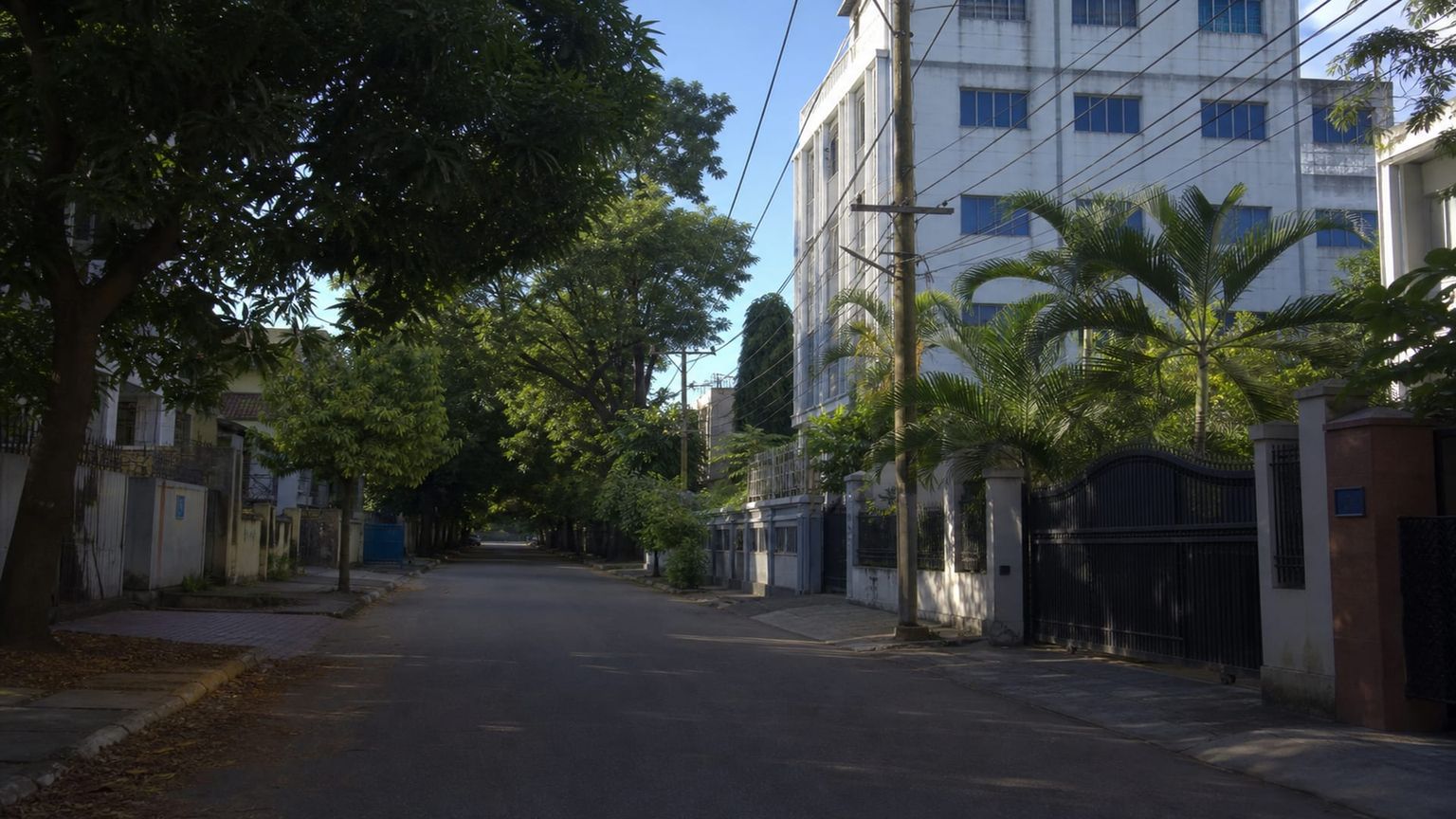
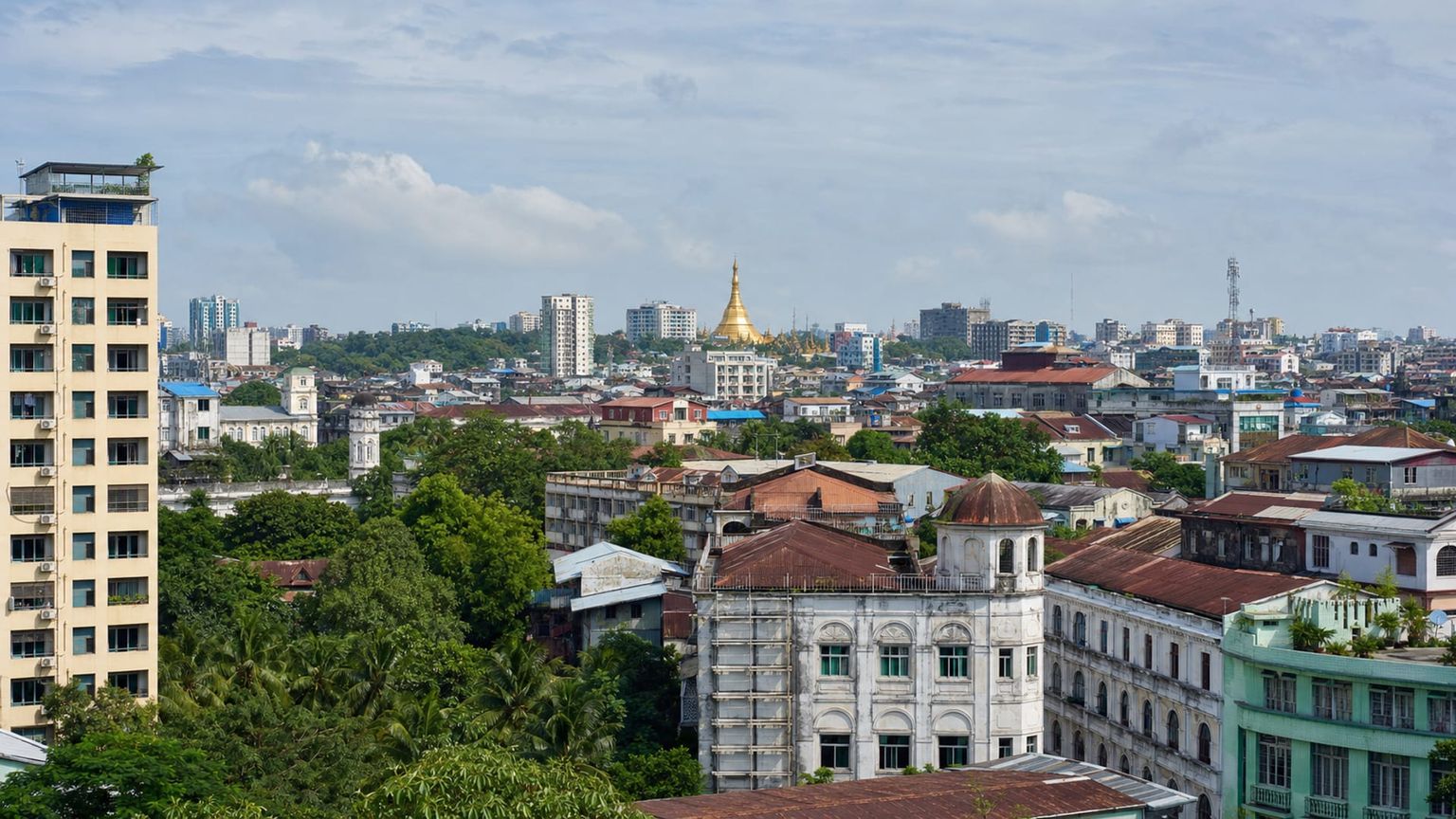
Bahan sits just west of the center and includes the area around Shwedagon Pagoda, one of Yangon’s main draws. It matters for travelers who want an easier base for temple visits, cafés, and quick rides into downtown.
Best for: Temple visits, short taxi rides, and travelers who want to stay near Shwedagon Pagoda
What to expect: A mix of residential streets, guesthouses, and steady temple traffic, with more local life than in the commercial core.
Hotel prices: Usually about MMK 110,000 to MMK 260,000 (~$52 to ~4) per night for well-rated stays
Distance to major sights: About 5 to 15 minutes on foot to Shwedagon Pagoda and about 15 to 25 minutes by taxi to Downtown Yangon
Quietness: Quieter than Downtown in the day, though roads near Shwedagon get busier around prayer times and sunset.
Main trade-off: Rooms near the pagoda can cost more, and traffic builds around the landmark during peak visiting hours.
Good to know: If you plan early temple visits, this area cuts down on taxi time, but you may still need cars for evening meals farther east.
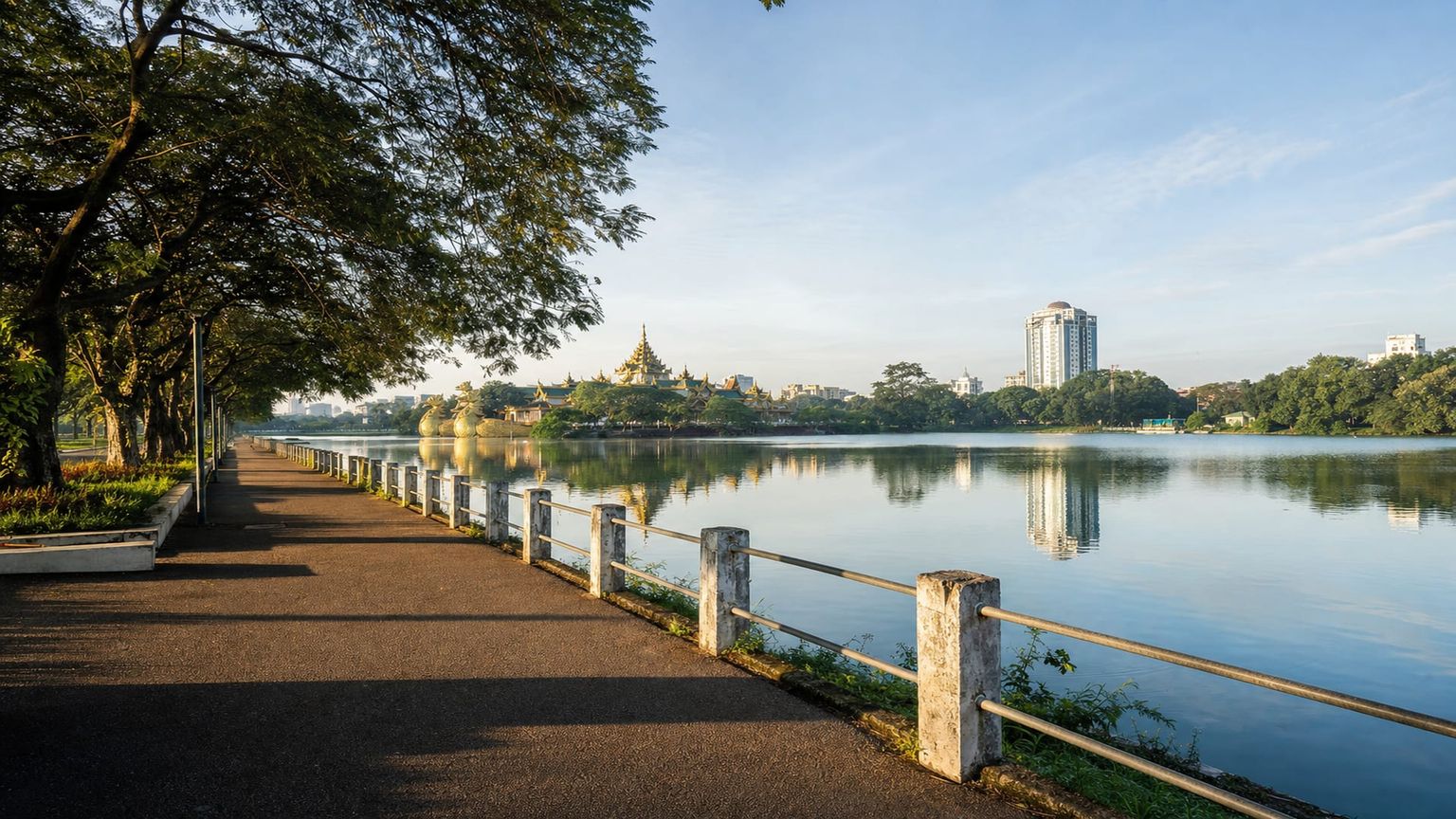
The streets around Kandawgyi Lake put you beside one of Yangon’s most pleasant green spaces, with views toward Shwedagon and a few upscale hotels nearby. It matters for travelers who want open space without leaving the city center far behind.
Best for: Parks, slower-paced stays, and travelers who value open space near central Yangon
What to expect: Tree-lined roads, hotel arrivals, joggers, and fewer shopfronts than in the busier commercial districts.
Hotel prices: Usually about MMK 130,000 to MMK 320,000 (~$62 to ~4) per night for well-rated stays
Distance to major sights: About 10 to 15 minutes by taxi to Shwedagon Pagoda and about 15 to 25 minutes to Sule Pagoda
Quietness: Calmer than downtown through most of the day, with occasional traffic near hotel entrances in the evening.
Main trade-off: Dining and shopping are thinner on foot, so you will likely rely on taxis for most meals and errands.
Good to know: Pick this area if you want evening walks by the lake, but plan ahead for dinner because the strongest restaurant choice sits farther away.
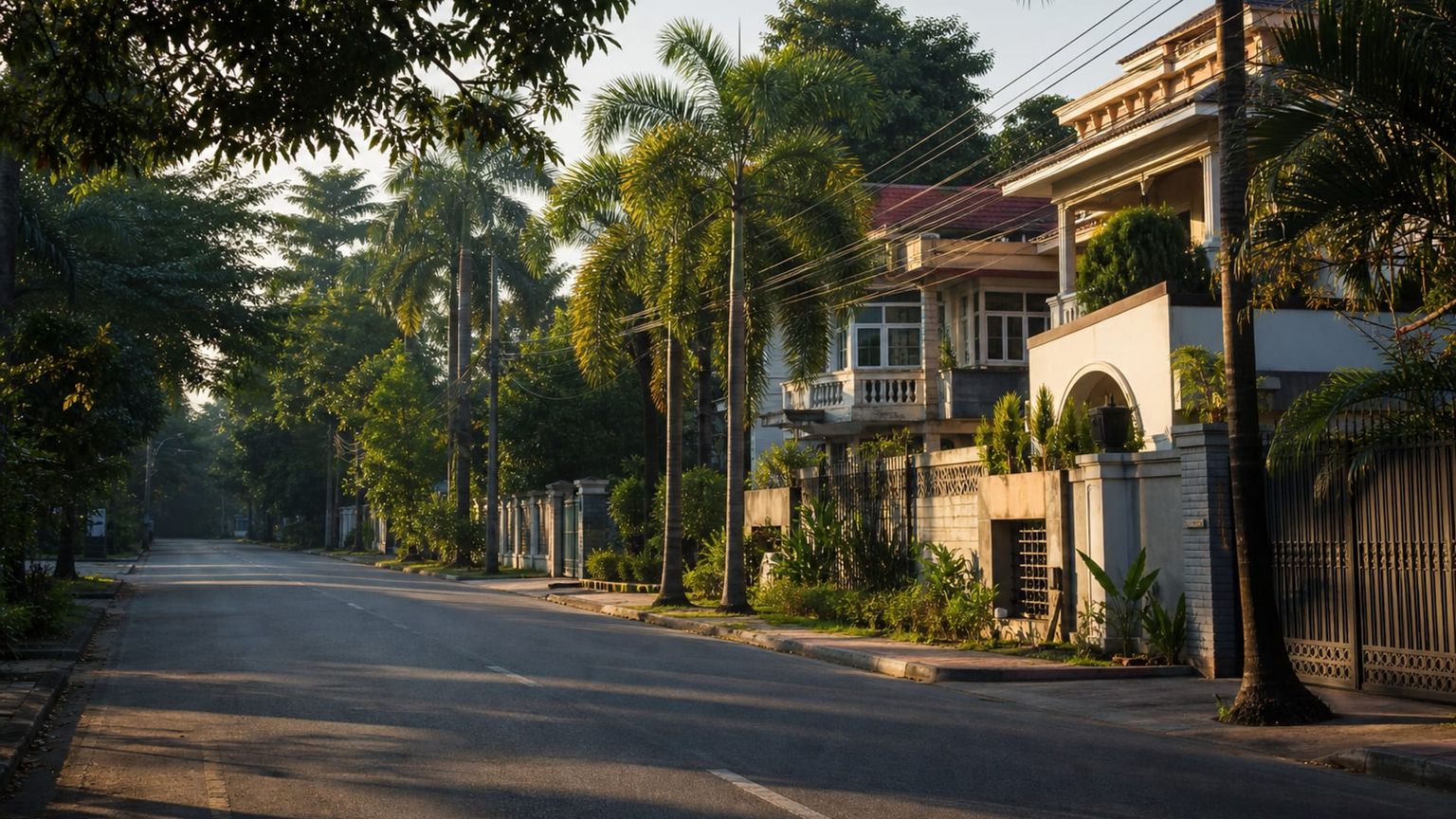
Golden Valley is a leafy residential district west of the center, known for embassies, villas, and a quieter street pattern. It matters if you prefer a lower-key base with quick access to Bahan, Shwedagon, and central Yangon by car.
Best for: Quiet residential stays, longer visits, and travelers who want space between outings
What to expect: Wide streets, fewer pedestrians, and scattered cafés and restaurants rather than dense blocks of shops.
Hotel prices: Usually about MMK 120,000 to MMK 300,000 (~$57 to ~1) per night for well-rated stays
Distance to major sights: About 15 to 25 minutes by taxi to Shwedagon Pagoda and about 20 to 30 minutes to Downtown Yangon
Quietness: Generally quiet by day and even calmer at night, aside from traffic on the main roads.
Main trade-off: You trade walkability for calm, since most sights, markets, and dinner options need a car ride.
Good to know: Stay here if you do not mind using taxis after dark, because public transport options are limited and sidewalks are sparse.
Travelers usually avoid Pantharyi, Hlaing Tharyar, and Dagon Myothit for hotel stays because they sit far from the main sightseeing areas in downtown Yangon and Botahtaung, with fewer visitor amenities nearby. North Okkalapa and Shwepyithar are also less convenient, since evening travel back to the central districts can take a long time and dining options for visitors are limited.
Hotel deals
How to get around Yangon efficiently
Yangon has no metro, so most visitors rely on taxis and buses, with the Circular Railway serving more as a local experience than a fast cross-town link.

Metro
for longer distances
Yangon does not have a metro, so there is no subway to use for airport trips or cross-city travel. The closest rail option is Yangon Circular Railway, which is slow, crowded, and best treated as a local experience rather than a fast link; fares are about $0.10 to $0.30 (200 to 600 kyat), with tickets valid for one ride.

Bus and tram
for convenience
Yangon’s bus network is extensive, but route numbering, stops, and boarding can be hard to follow for first-time visitors, and services vary by vehicle type and operator. Use the Yangon Bus Service app or ask locally for the right line, because many trips need a transfer; fares are about $0.15 to $0.50 (300 to 1,000 kyat), usually paid in cash on board, and tram options are very limited.

Taxi
for convenience or late hours
Licensed taxis in Yangon usually use negotiated fares rather than meters, so agree the price before departure. From Yangon (RGN) to central districts, expect about $6 to $12 (12,000 to 25,000 kyat) in a standard cab, with late-night or heavy-traffic trips higher; many drivers accept kyat cash, and some airport cars can quote fixed rates or accept mobile payment through a local app.
*Prices are based on rates updated as of June 2026 and may change at the time of travel.
Taxis work best for airport runs and temple transfers, buses suit budget-minded city hops if you can follow the routes, and walking makes the most sense in Downtown Yangon and around the lakefront.
Iconic landmarks
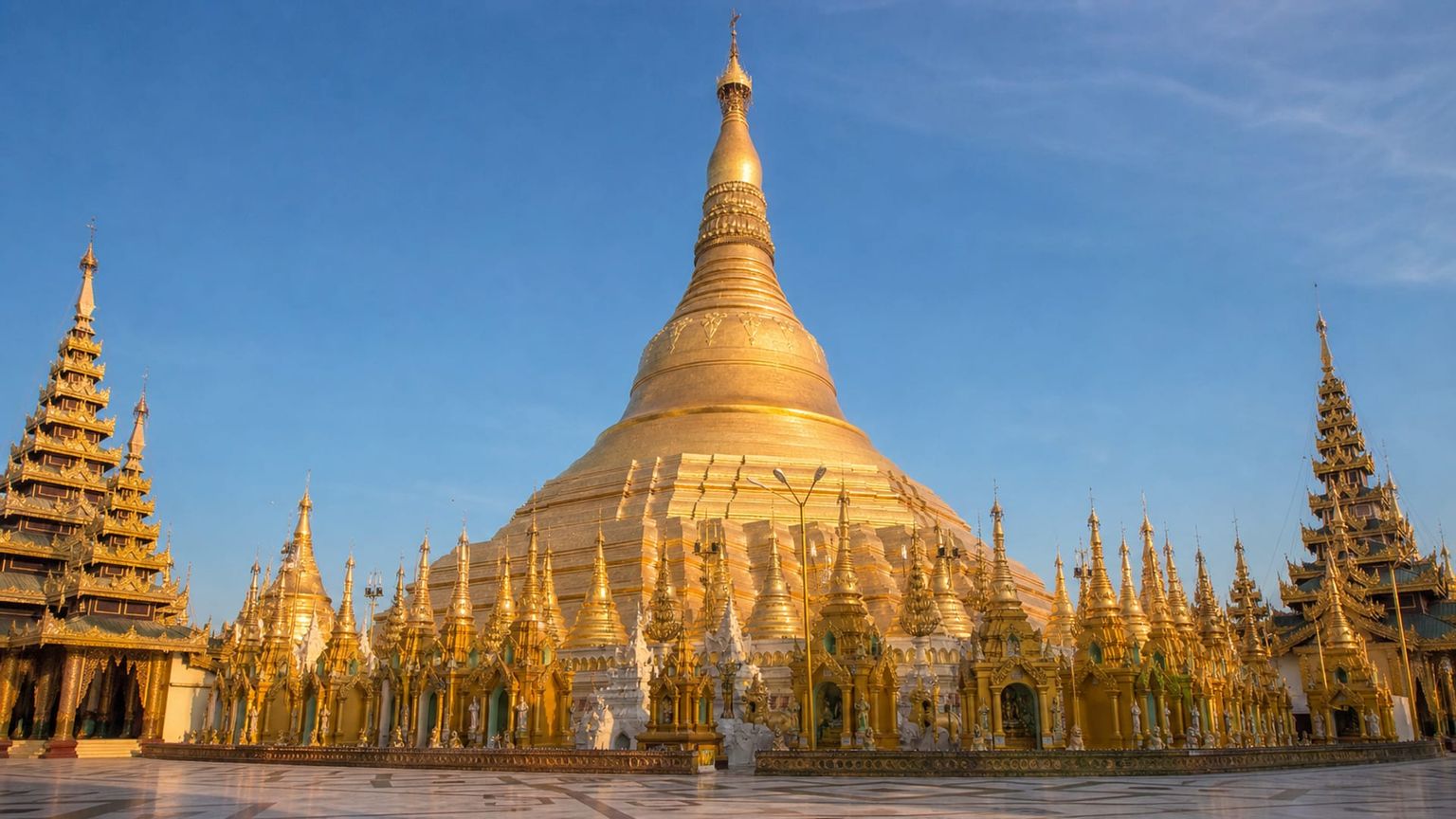
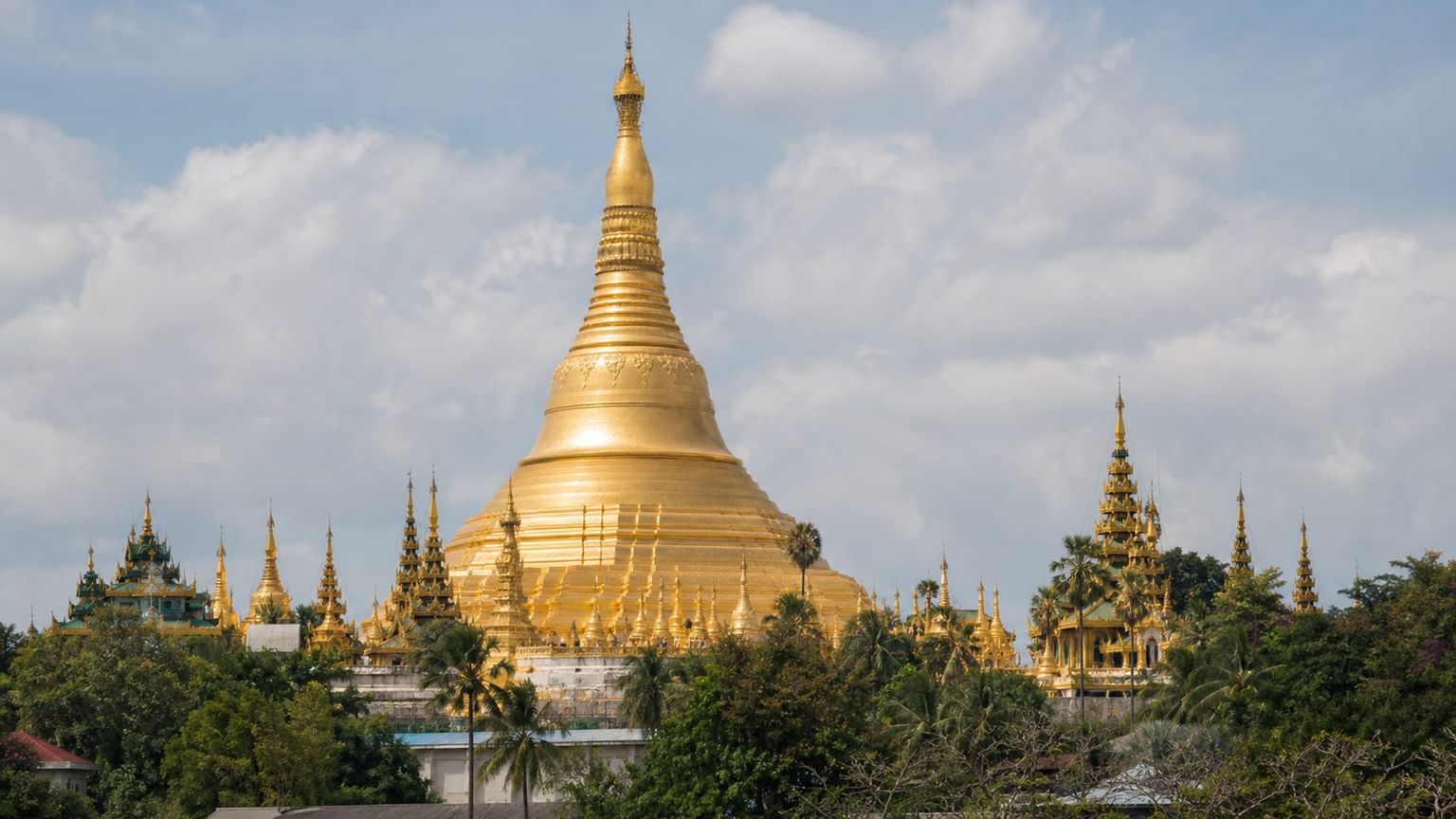
Shwedagon Pagoda
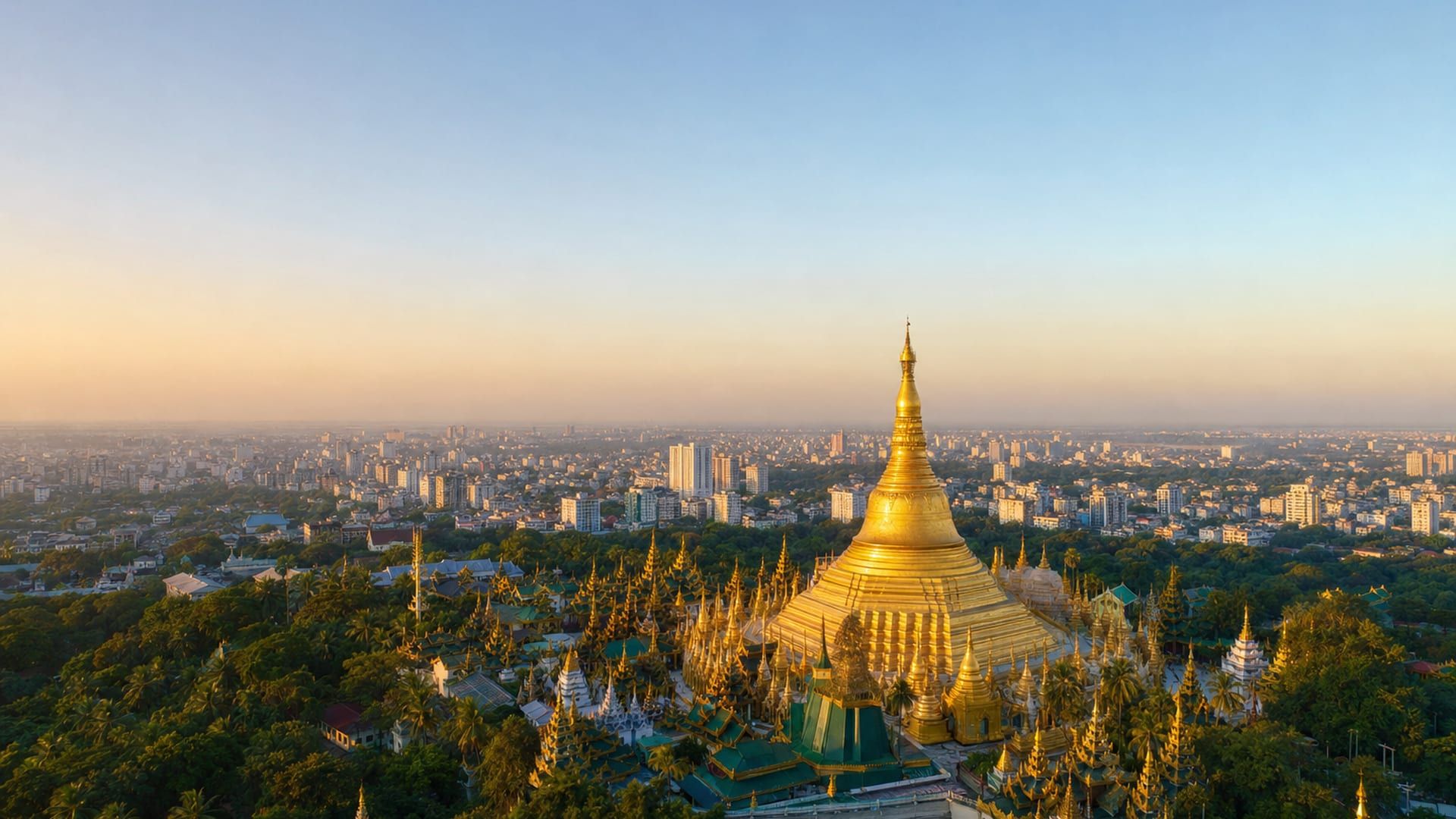
Yangon’s gilded landmark crowns Singuttara Hill with a stupa that rises about 99 meters and is covered in gold plates. Visit at sunset to see the terraces, shrines, and polished marble walkways turn vivid in changing light.
Time needed: About 2 to 3 hours
Entry: Foreign visitor admission is about $10, roughly 20,000 kyat, with separate charges for camera or video use and donations optional. Visit the official site for details.
Tip: Go late afternoon, then stay after sunset for cooler air and clearer photos.
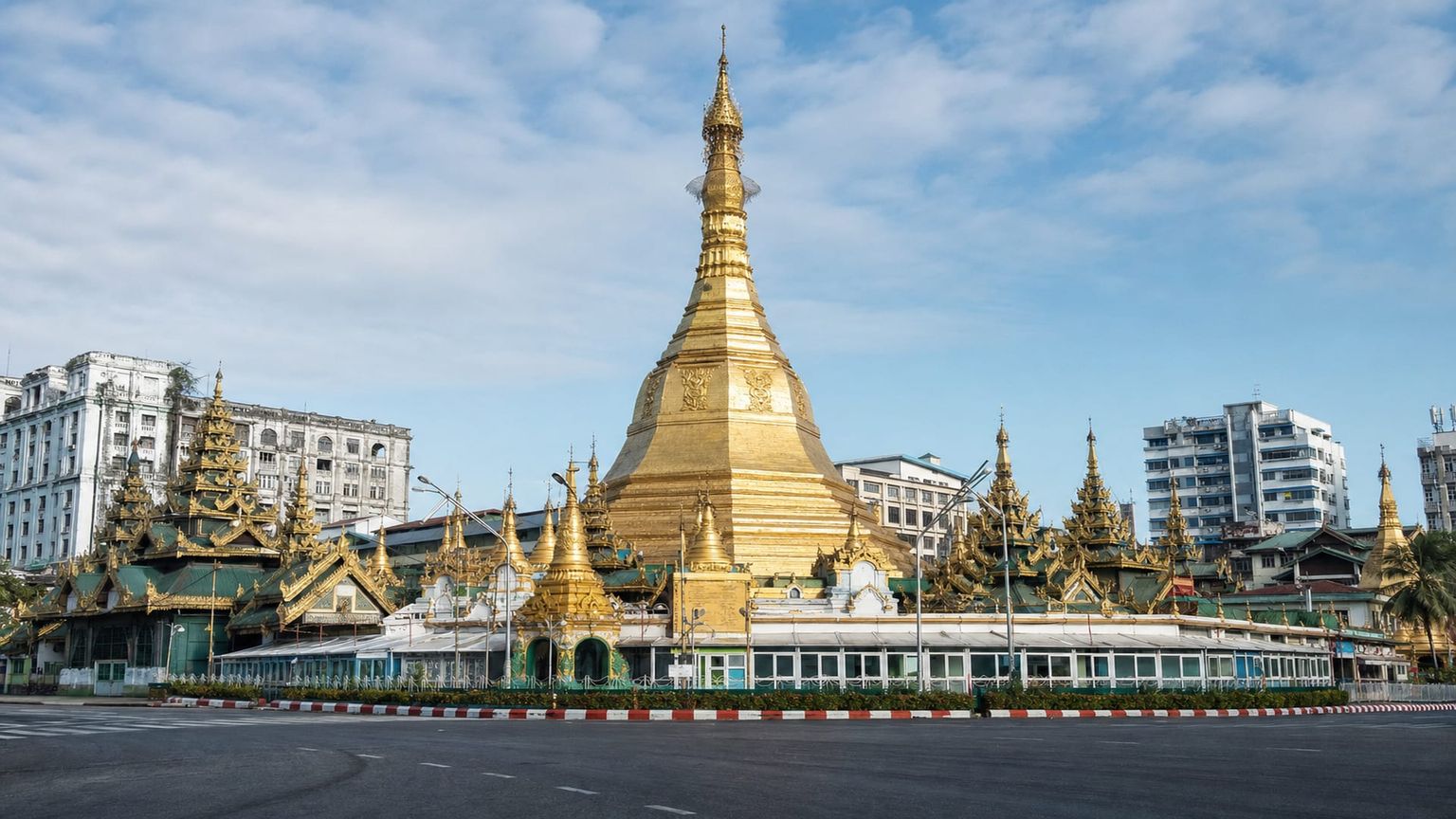
Sule Pagoda
Set in downtown Yangon, this white-and-gold pagoda sits inside a busy traffic circle and gives a clear read on the city’s colonial grid. Its central spire and surrounding prayer halls make it an easy stop between Strand Road and the city center.
Time needed: About 30 to 45 minutes
Entry: Entry is usually free for visitors, though donations are welcome and modest fees may apply for shoes, photos, or special events on site.
Tip: Visit early morning, when traffic is lighter and the shrine floor stays cooler.
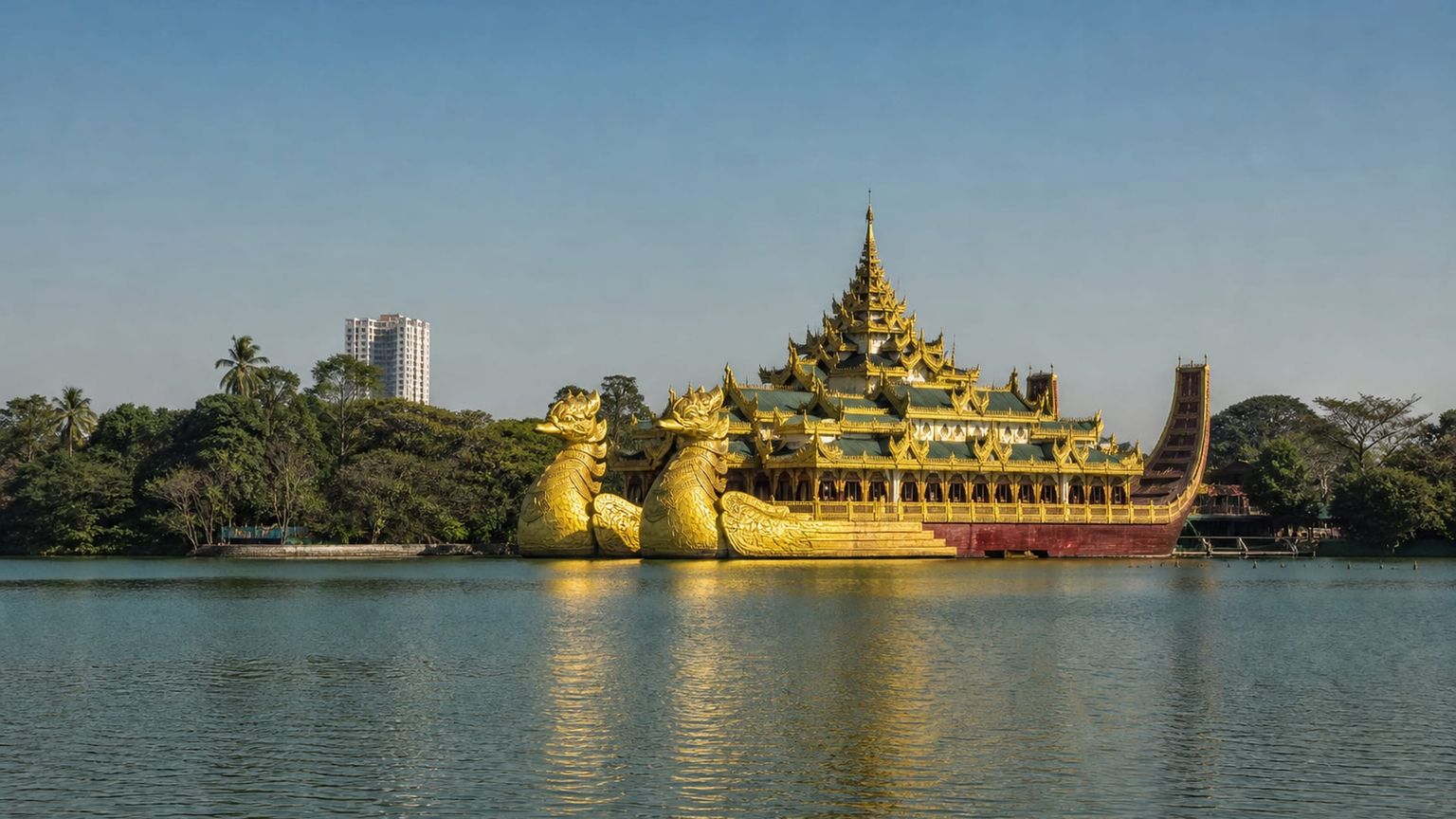
Kandawgyi Lake and Karaweik
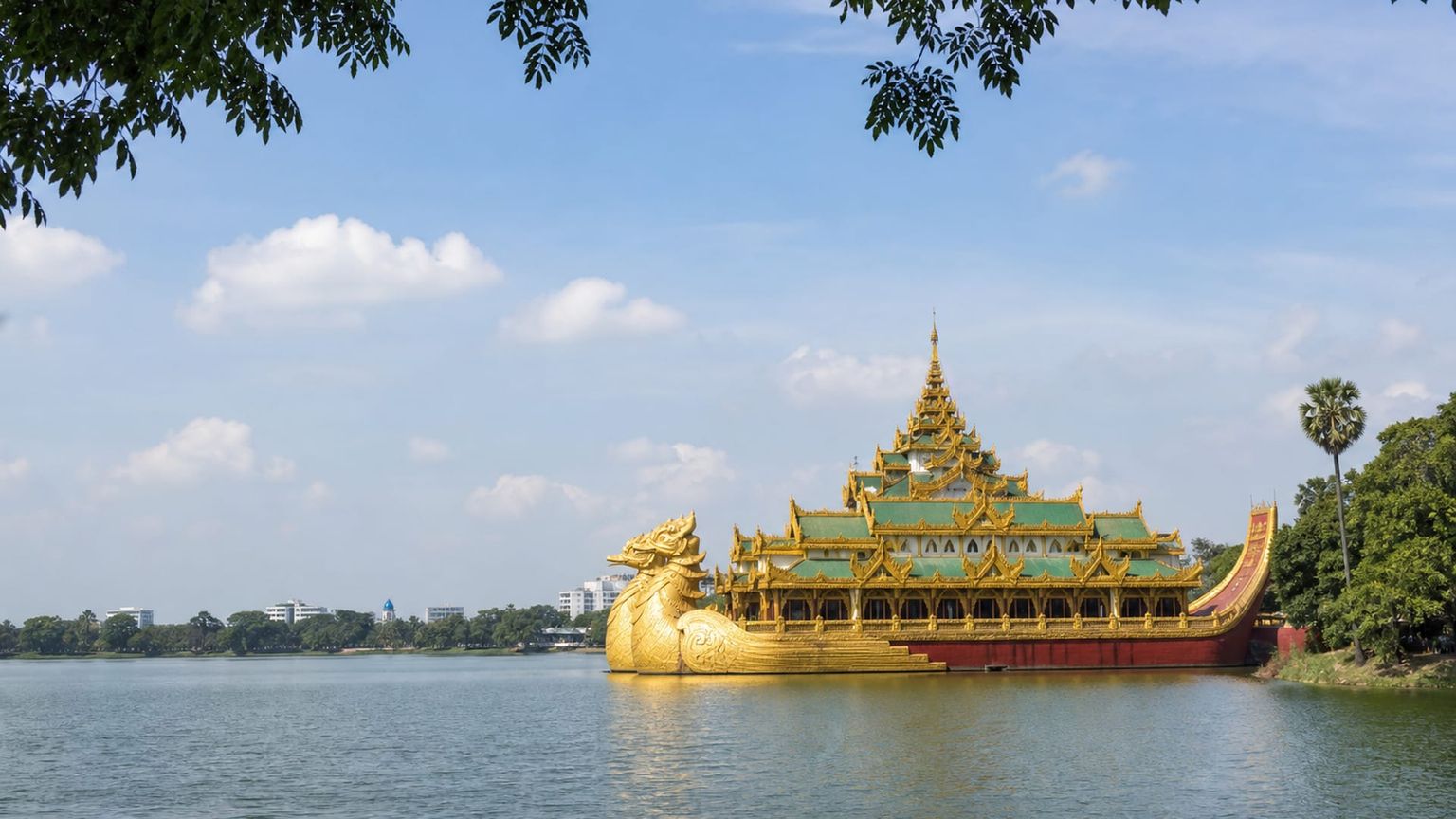
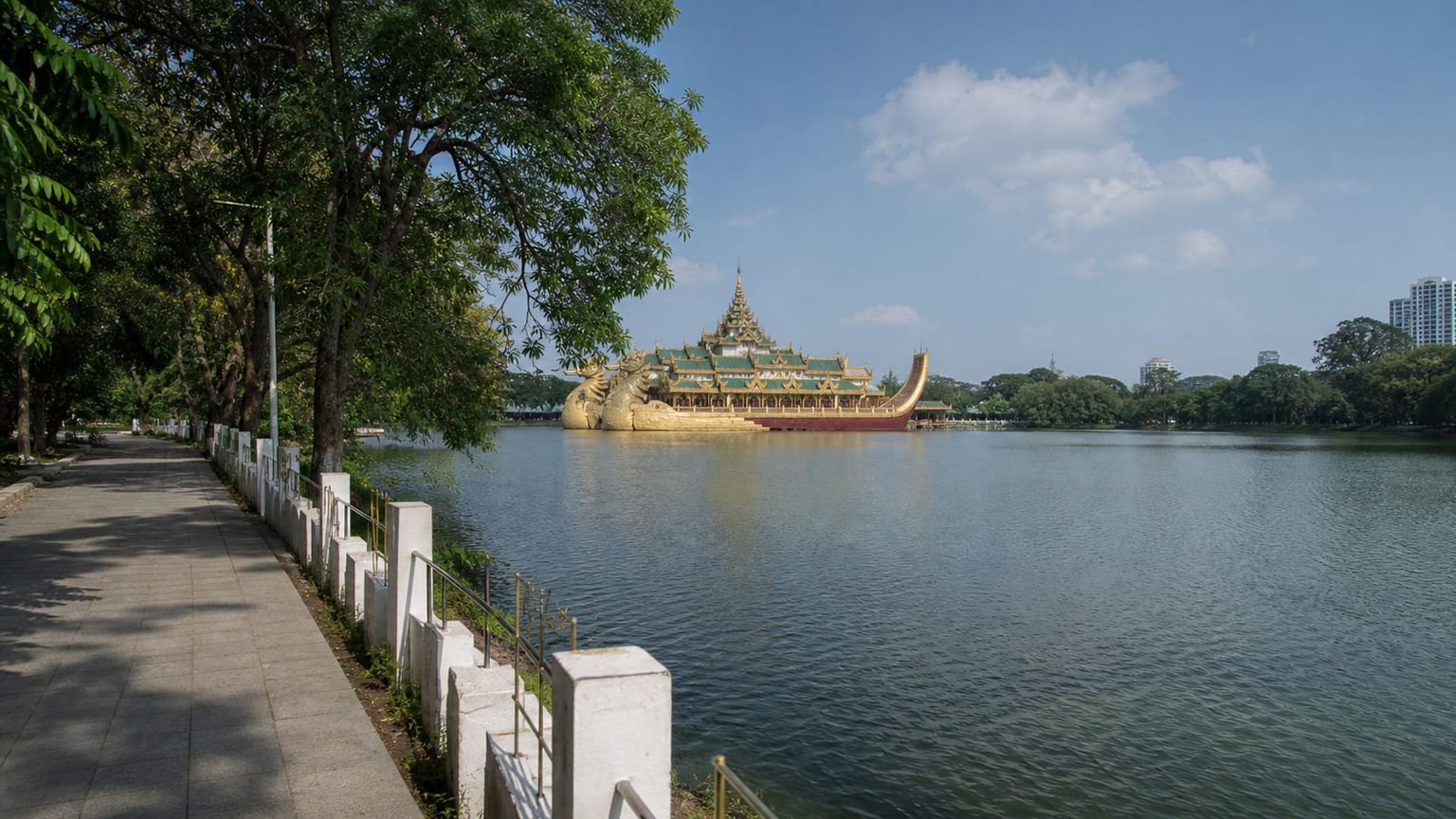
Kandawgyi Lake gives the city a broad waterside walk, with pagoda views, shaded paths, and long sightlines to Shwedagon in the distance. The Karaweik Palace, a gold-toned floating-style hall, adds the area’s most recognizable silhouette.
Time needed: About 1 to 2 hours
Entry: Free to access, with paid admission only for specific venues, boat rides, or private events inside the lakefront complex on certain days.
Tip: Come near sunset, when the lakefront opens to the clearest city and pagoda views.
Overlooked sites worth visiting

Kandawgyi Lake and Karaweik shore path
A lakeside loop with broad water views, tree shade, and a close look at the gilded Karaweik Hall. Go at sunset for local walkers, photo stops, and a quieter pace than downtown sights.
Time needed: About 1 to 2 hours
Entry: Free to access; the public lake path does not charge admission. Paddle boat rentals and food stalls at the edges cost extra, usually in the low thousands of kyat, but you can visit the shore without spending anything.
Tip: Visit near sunset for softer light and cooler air.

Bogyoke Aung San Museum
Set in the house where Aung San lived, this compact museum shows family rooms, documents, and original furnishings. It gives a focused look at modern Myanmar history without a long museum circuit.
Time needed: About 1 hour
Entry: Standard admission is about $2 to $3 (roughly 4,000 to 6,000 kyat) for foreign visitors, with lower local rates sometimes posted at the gate. The museum sells tickets on site, and opening hours can change on public holidays.
Tip: Go early to avoid school groups and midday heat.
Traditional food
Yangon’s food centers on rice, noodles, herbs, and fermented flavors, with mohinga, laphet thoke, and curries filling tea shops and casual restaurants from breakfast through dinner. Meals tend to be unhurried and built for sharing.
Mohinga
This rice noodle soup usually starts the day with fish broth, banana stem, and crisp toppings. In Yangon, feel best served at Feel Myanmar Food, where it appears in a polished buffet setting with broad local appeal.
Laphet thoke
Tea leaf salad brings fermented leaves, peanuts, sesame, and crunchy bits into one of Myanmar’s signature dishes. YKKO serves a well-known version in Yangon, with enough texture and balance for a first try.
Burmese curry
A typical curry plate arrives with rice, vegetables, soup, and small sides that make it easy to sample several flavors at once. Aroma by Tomato offers a strong Yangon reference point, with a menu built around classic Burmese home-style dishes.
Shan noodles
Shan noodles combine rice noodles, tomato, pickles, and minced meat or vegetables into a lighter bowl that works at lunch or dinner. 999 Shan Noodle House is a reliable city choice for this specialty in Yangon.
Best time to visit Yangon
Yangon stays warm year-round, but rain, humidity, and clearer winter days change how far you will want to walk and when the city feels easiest to cover.
Best for: Early temple visits and late-day sightseeing before the rains build
What you get: Expect about 77 to 99°F (25 to 37°C), with rising heat and lighter crowds before monsoon season
Trade-offs: Midday walking gets uncomfortable fast
Best for: Green lake views and slower museum days during the rainy season
What you get: Expect about 75 to 90°F (24 to 32°C), with fewer visitors and frequent downpours that thin out outdoor crowds
Trade-offs: Heavy rain can disrupt plans and slow traffic
Best for: Balanced city walking, pagoda visits, and easier photo conditions
What you get: Expect about 75 to 91°F (24 to 33°C), with receding rain and moderate crowd levels
Trade-offs: Late-season showers can still interrupt an outdoor day
Best for: The most comfortable season for walking Downtown Yangon and Shwedagon
What you get: Expect about 68 to 88°F (20 to 31°C), with clearer skies and the heaviest visitor traffic
Trade-offs: Popular sights feel busier, especially at sunset
A realistic 5-day plan in Yangon
A five-day Yangon stay works best when you separate the downtown grid, the major pagoda visit, and the lakefront into distinct blocks. That keeps transfers shorter and gives each stop enough time to register.
Fly into Yangon (RGN) and take a taxi into Downtown Yangon, which usually costs about $7 to $12 and takes roughly 35 to 60 minutes, depending on traffic. If you arrive in the evening, stay near a side street in Downtown Yangon or in Bahan so you can settle in without a long cross-town ride later. Drink water, then walk to a nearby tea shop or simple Burmese restaurant for mohinga, noodles, or a rice plate before an early night.
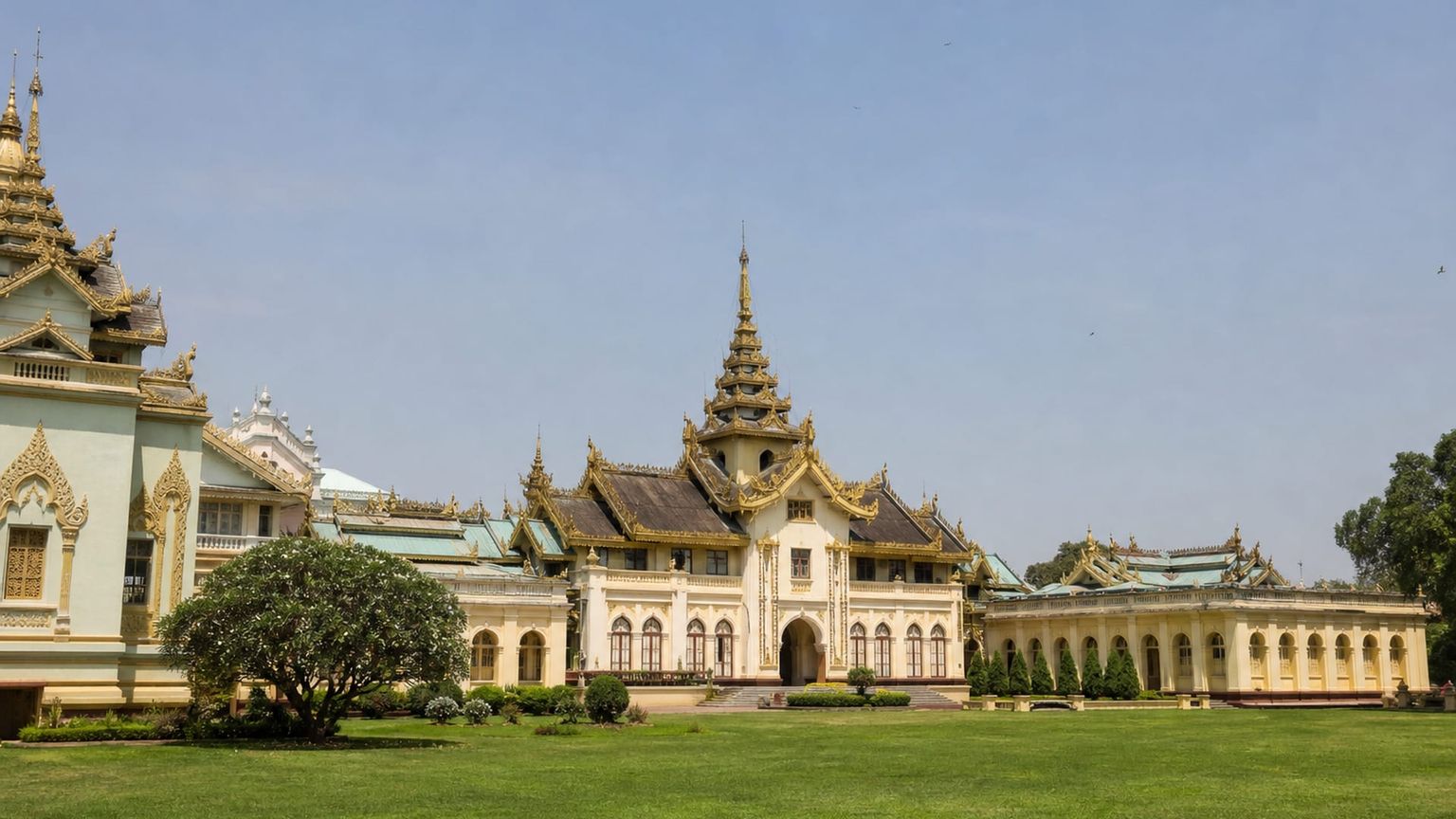
Start early at Sule Pagoda, where the downtown setting gives you a clean read on Yangon’s colonial grid. From there, walk about 10 minutes to Strand Road for a look at the old commercial streets, then continue about 15 minutes into the wider Downtown Yangon blocks for a slow pass by the surviving colonial facades. After lunch, take a taxi about 20 to 30 minutes to Bahan for Shwedagon Pagoda in late afternoon, when the gold stupa and terrace detail show best; plan about 2 to 3 hours on site and stay through sunset.
Begin with Kandawgyi Lake and Karaweik, which works well after breakfast or near sunset if you prefer cooler air. From hotels near the lake, the shore path takes only a few minutes on foot, and you can spend about 1 to 2 hours walking the water edge, pausing for views of Shwedagon across the trees. Later, head about 10 to 15 minutes by taxi to Shwedagon Pagoda if you want a second, quieter visit, then finish the evening in Bahan with an easy dinner nearby rather than crossing back downtown.
A morning visit to the Bogyoke Aung San Museum gives you a compact historical stop before the city warms up, and a taxi from Downtown Yangon usually takes about 10 to 15 minutes. After about an hour inside, continue to Bahan for lunch and then return to Kandawgyi for the lake path, which adds a second look at the water and skyline without a long transfer. If you want one more city view, stay for the late light near the Karaweik shore path, where the pagoda reflections and open water make the strongest photos of the day.
Before you pack, head to Bogyoke Aung San Museum if you missed it earlier, or return for a shorter final stop if your flight timing allows. Then spend the rest of the day in Downtown Yangon for souvenir shopping at Bogyoke Aung San Market, which sits within easy reach of the old commercial streets, or settle into a café in Bahan for tea and a late lunch. From either area, taxi time to Yangon (RGN) usually runs about 35 to 60 minutes, so leave enough margin for traffic.
Business-class flights from the US to Yangon
Flights to Yangon usually connect through major Asian and Gulf hubs, so the most useful comparisons are the long-haul routes from New York and Los Angeles. Both can work, but the layover pattern changes the total trip length a lot.
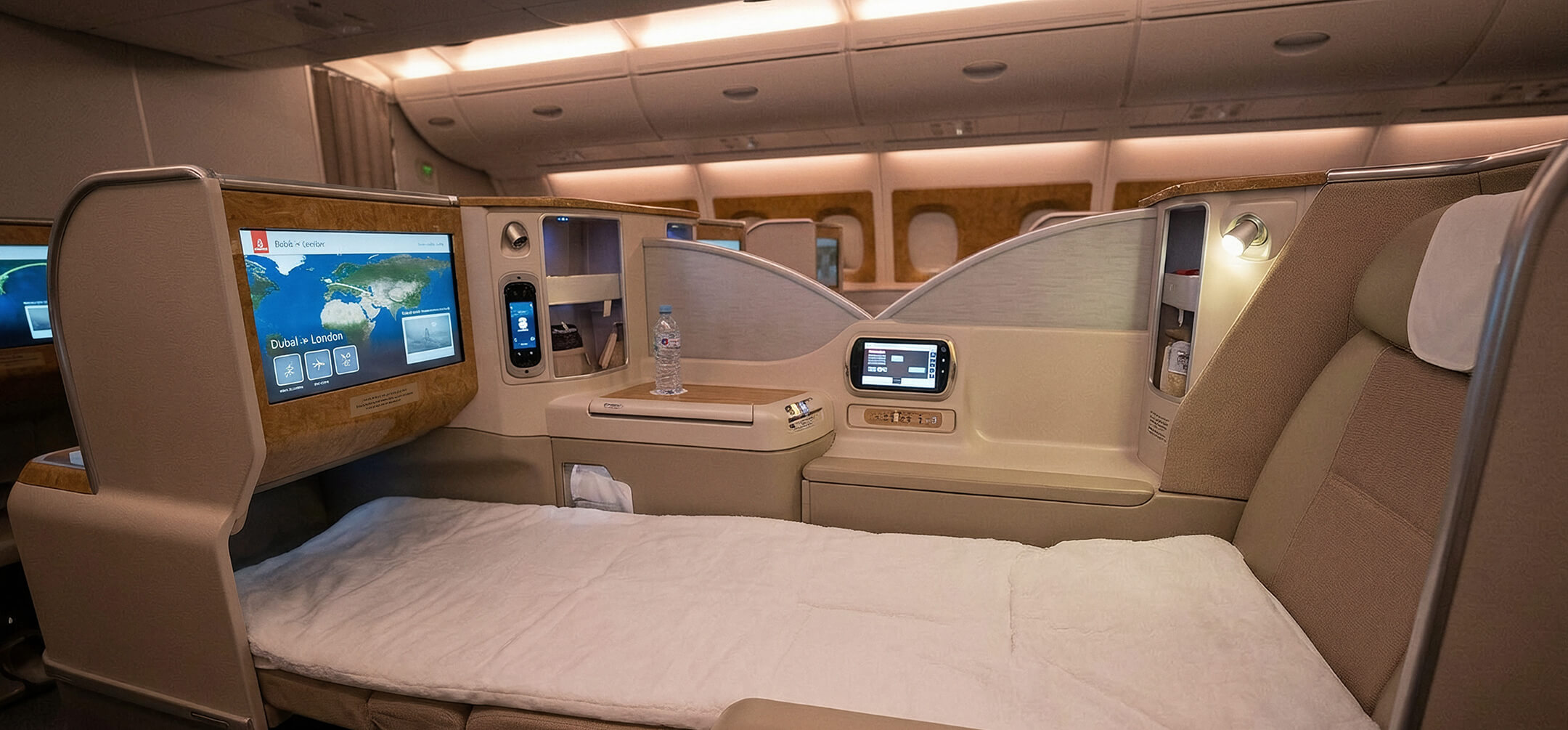
From New York, Cathay Pacific, Singapore Airlines, Korean Air, Emirates, Qatar Airways, and Turkish Airlines all sell one-stop itineraries, with typical layovers through HKG, SIN, ICN, DOH, DXB, or IST. Round-trip fares from New York to Yangon usually start at $3,200 and can reach $6,500.
Los Angeles travelers usually see China Airlines, EVA Air, Korean Air, Singapore Airlines, and Qatar Airways on the board, and one-stop itineraries through TPE or ICN often trim the total price. From Los Angeles, round-trip fares generally run $3,000 to $6,200.
Yangon feels different when you slow down
A deliberate Yangon trip gives each area a job: Downtown for colonial streets and Sule, Bahan for Shwedagon at sunset, and Kandawgyi for a slower evening by the water. Taxis make the connections, while a tea shop or curry house anchors the day between visits. If you want to plan that sequence well, ask the AranGrant experts to shape the route around your arrival time and the season you choose