

Chapters:

Need help with your trip?
Our support team is available 24/7. Request a callback or call us directly at (833) 619-0908
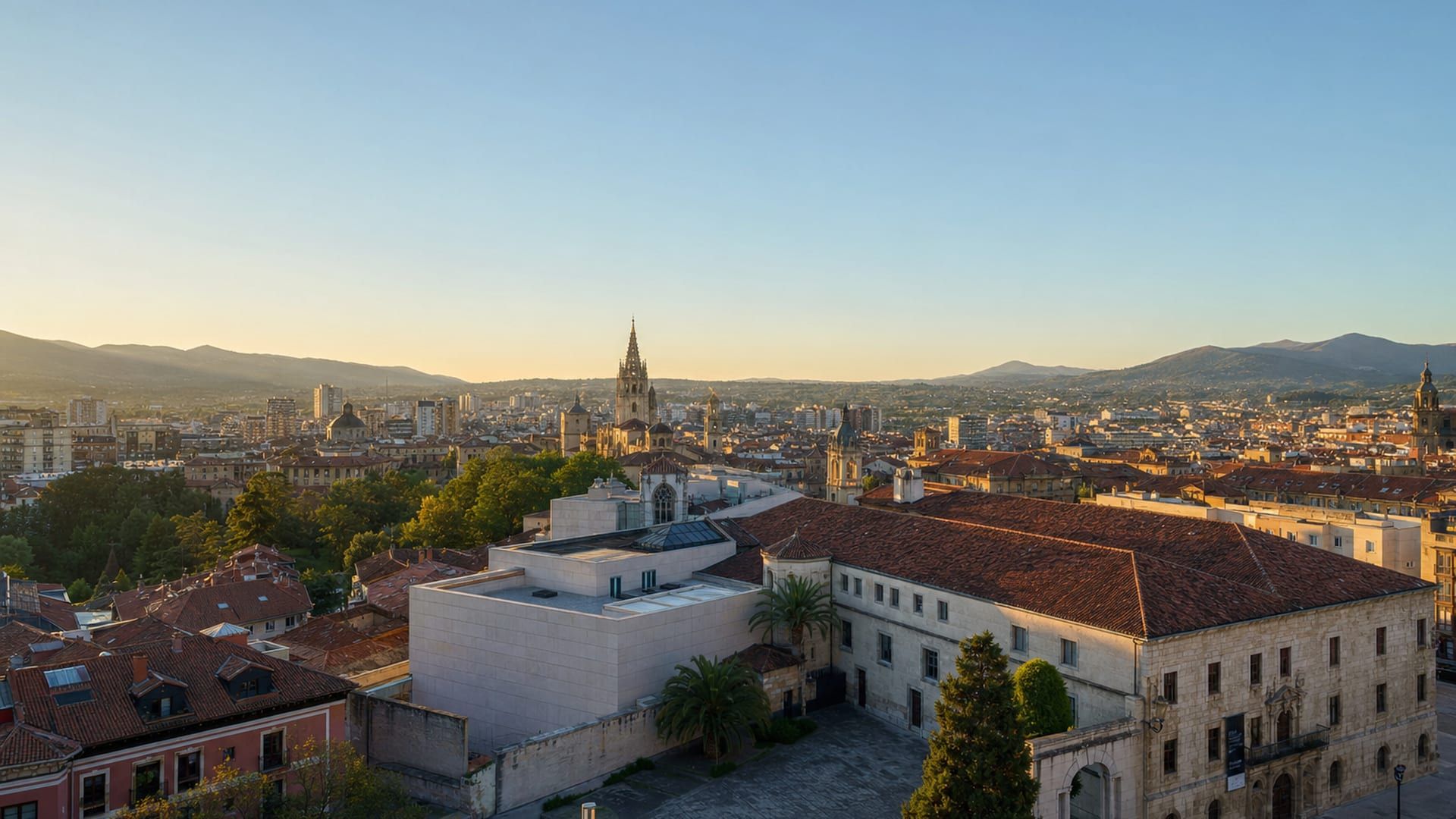
Oviedo trips often start with the cathedral, a museum stop, and one dinner on the old town’s dining streets, while Mount Naranco gets left for a quick taxi ride at the end. Travelers who keep everything inside Casco Antiguo usually miss how short the city’s hops are and how much the hill above it changes the visit.
That pattern can work, but it compresses the days into a small center and pushes uphill sights into a rushed afternoon. It also leaves little room for station-area browsing on Uría or for timing meals around the city’s dining hours and siesta breaks.
This guide breaks the visit into clear days, balances the center with Naranco, and matches each sight to the easiest way to reach it.
Useful things to know

Main language(s): Spanish
Hola (OH-lah) – Hello / good morning
Por favor (por fah-VOR) – Please
Gracias (GRAH-syahs) – Thank you
¿Habla inglés? (AH-blah een-GLAYS) – Do you speak English?
¿Cuánto cuesta? (KWAN-toh KWEHS-tah) – How much does it cost?

Currency: The local currency is the euro (EUR, €).

Cash and cards: Cards and contactless are widely accepted; carry about €20 to €40 ($22 to $44) in cash for small shops and taxis.

Tipping: Round up small bills; leave about 5% to 10% in nicer restaurants if service is good.

Traditional food: Fabada asturiana, Cachopo, Cabrales cheese, Arroz con leche

Water and coffee costs: Water about €2 ($2), bar espresso about €1.50 to €2.00 ($2 to $2).

Taxis and ride apps: Free Now and Uber operate here; Bolt is less dependable, so check availability before you rely on it.

Plug and voltage: Type C/F socket, 230V

Dining and shop opening hours: Breakfast is roughly 08:00-10:30, lunch 13:30-15:30, and dinner 20:30-22:30. Many shops close for siesta in the afternoon.

Emergency number: 112 for police, fire, and medical emergencies.
Where to stay in Oviedo
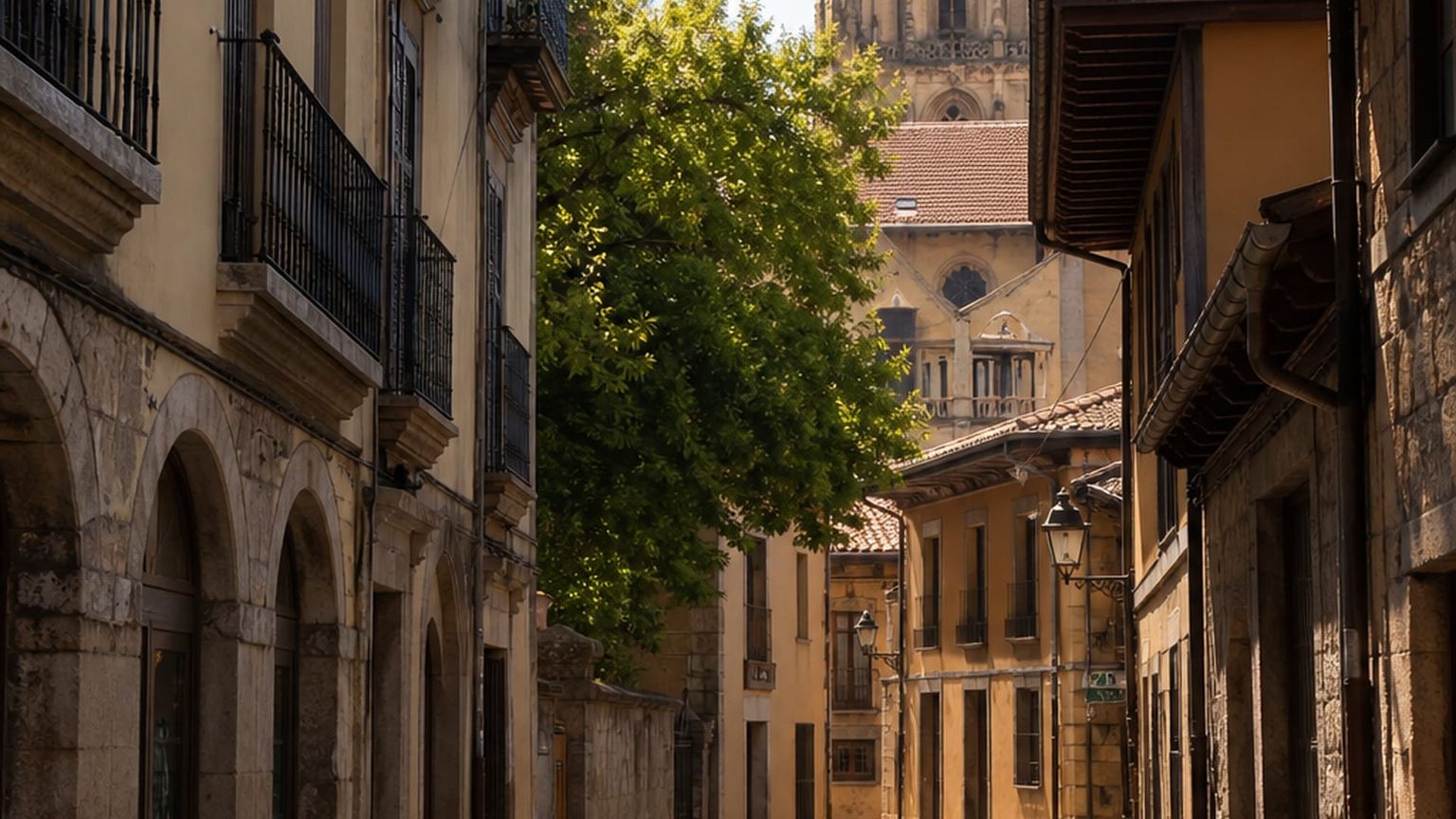
Oviedo’s historic center clusters around the cathedral, narrow streets, plazas, and the city’s best-known dining streets. It suits travelers who want to step out into the main sights on foot and stay close to cafés, shops, and evening activity.
Best for: First-time visits, cathedral access, dining, and walkable sightseeing
What to expect: Busy pedestrian streets by day, livelier around the main squares in the evening, with the most foot traffic near restaurants and bars.
Hotel prices: Usually about 90€ to 180€ (~$99 to ~$198) per night for well-rated stays
Distance to major sights: 5 to 10 minutes on foot to Oviedo Cathedral and Plaza de la Constitución
Quietness: Active during the day and evening, then quieter on side streets late at night.
Main trade-off: Central rooms cost more, and the busiest streets can pick up noise from diners and late departures.
Good to know: If you plan to explore mainly on foot, choose a room off the main bar streets so late-night noise stays lower.
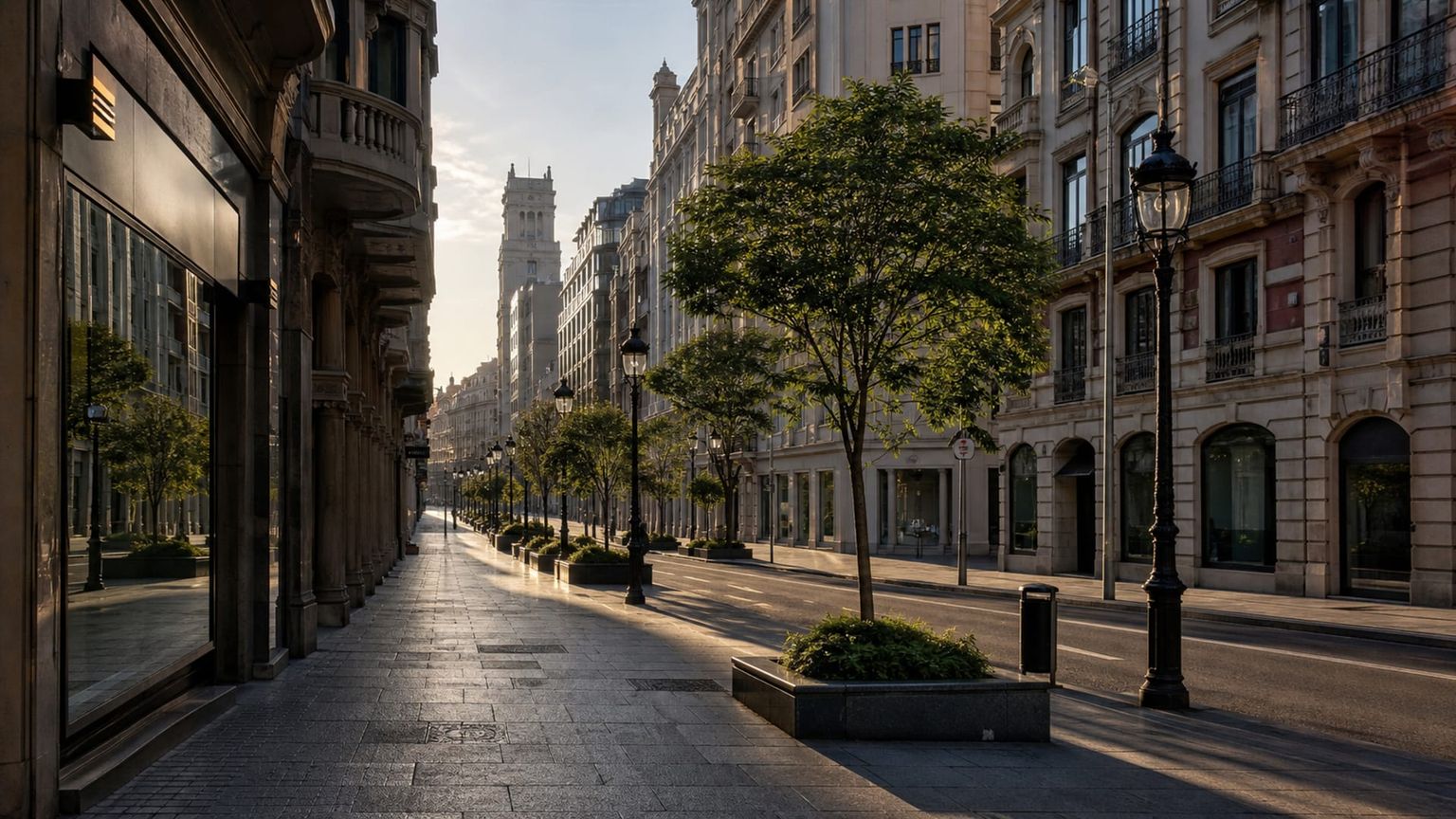
Uría runs along Oviedo’s main rail and shopping axis, with direct access to the station, broad avenues, and easy links toward the old town. It works well for travelers who value transport access and want an area that stays simple to navigate.
Best for: Train arrivals, short stays, and travelers who want quick station access
What to expect: Urban and busy, with steady daytime movement from commuters, shoppers, and people connecting through the station area.
Hotel prices: Usually about 80€ to 160€ (~$88 to ~$176) per night for well-rated stays
Distance to major sights: 8 to 12 minutes on foot to Oviedo Cathedral; 2 to 4 minutes on foot to Oviedo railway station
Quietness: Brisk and active by day, then noticeably calmer after the shops close.
Main trade-off: You get excellent station access, but the area has less historic character than the old town.
Good to know: If you have an early train, staying here cuts the morning cross-city trip and makes luggage handling easier.
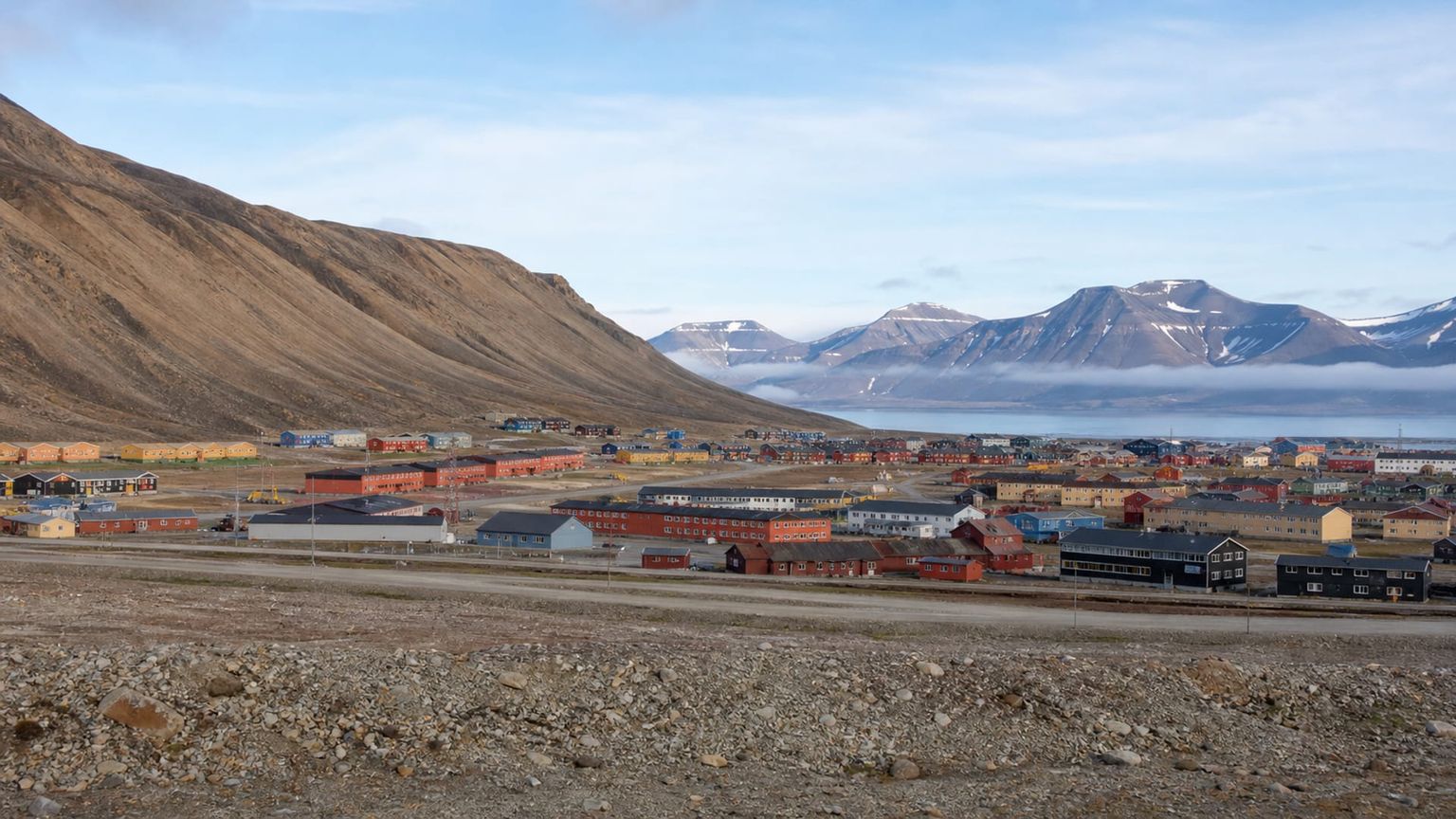
La Florida is a residential district southwest of the center, with modern apartment blocks, neighborhood shops, and more local pace than the historic core. It suits longer stays and travelers who want a calmer base with an easy bus or taxi ride into central Oviedo.
Best for: Longer stays, apartment-style lodging, and travelers who prefer a residential setting
What to expect: Mostly local residents, neighborhood traffic, and limited late-night activity beyond cafés and small bars.
Hotel prices: Usually about 70€ to 130€ (~$77 to ~$143) per night for well-rated stays
Distance to major sights: 15 to 20 minutes by bus to Oviedo Cathedral; about 30 minutes on foot to the center
Quietness: Quieter than the center during the day and especially calm at night.
Main trade-off: You save money and get more space, but you will rely on transit or taxis for most sightseeing.
Good to know: Check the last bus time before booking, since late returns from dinner or concerts can mean a taxi ride.
Travelers usually avoid El Cristo, Monte Cerrao, and La Corredoria if they want to stay near the historic center, since they sit farther from the Cathedral, Calle Gascona, and the main old-town sights. Ventanielles and Pumarín are also less convenient for visitors, with more residential streets, fewer hotel options, and longer evening trips back from restaurants and bars in the center.
Hotel deals
How to get around Oviedo efficiently
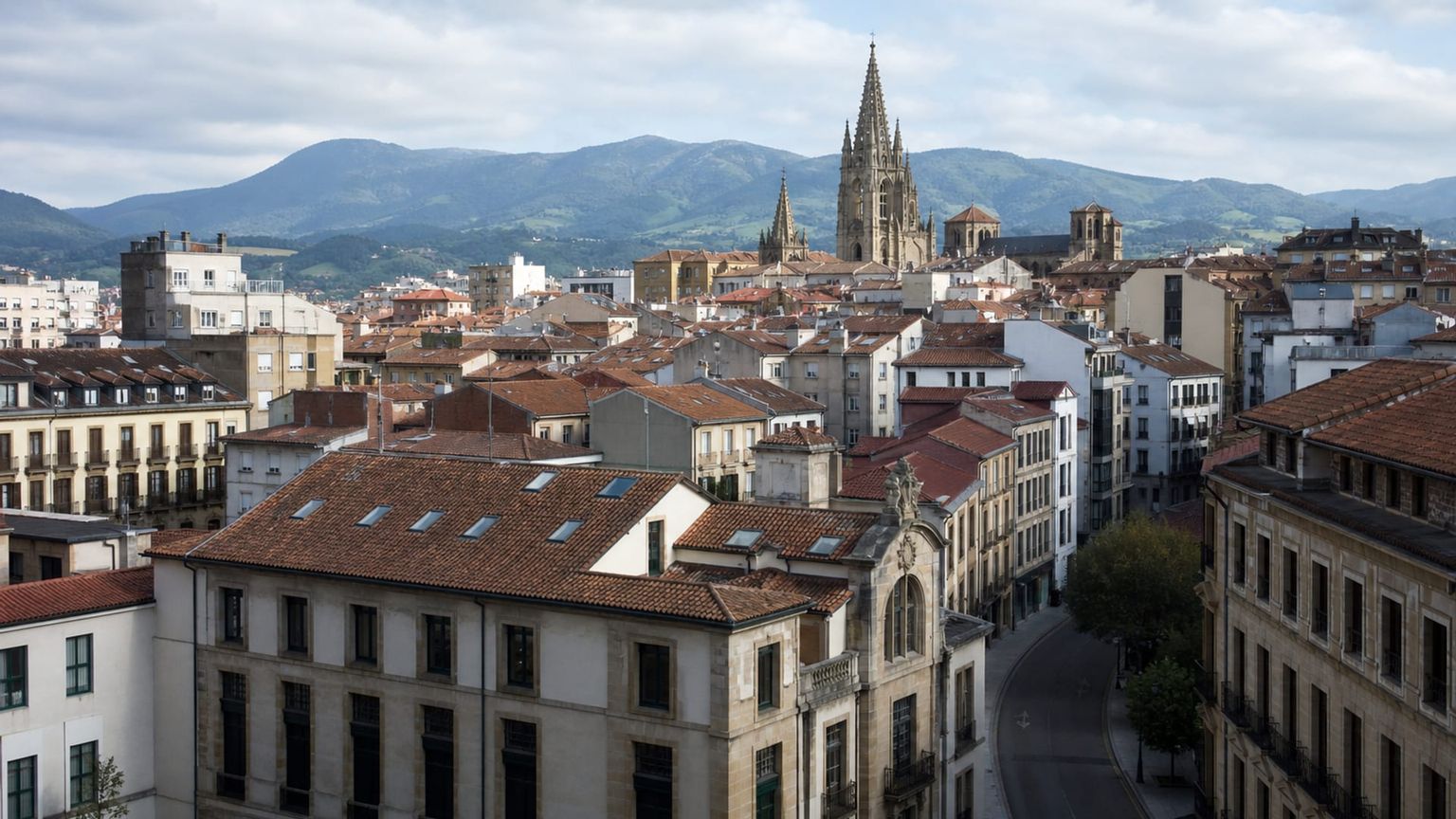
Oviedo has no metro, so walking, city buses, regional trains, taxis, and ride apps cover most trips, with the airport bus and ALSA links doing the heaviest lifting for arrivals and departures.

Metro
for longer distances
Oviedo has no metro, so the closest equivalent is the city bus network and regional trains for reaching nearby districts and towns; for the airport, use bus or taxi instead.

Bus and tram
for convenience
Alsa and the city bus network link Oviedo (OVD) with the airport, the old town, the bus station, and nearby neighborhoods, with many rides taking about 30 to 45 minutes depending on traffic; single fares are usually about $1 to $2, and passes are commonly valid for 60 to 90 minutes on transfer-based tickets.

Taxi
for convenience or late hours
Licensed taxis use metered fares, with an airport trip to central Oviedo typically about $20 to $25, more at night or on holidays; you can hail one at ranks, call by phone, or book through an app, and most accept cards, though cash is still common.
*Prices are based on rates updated as of June 2026 and may change at the time of travel.
Walk the center, use buses for cross-town hops, and choose taxis or ride apps for Mount Naranco, late dinners, or airport runs when you want to save time.
Iconic landmarks
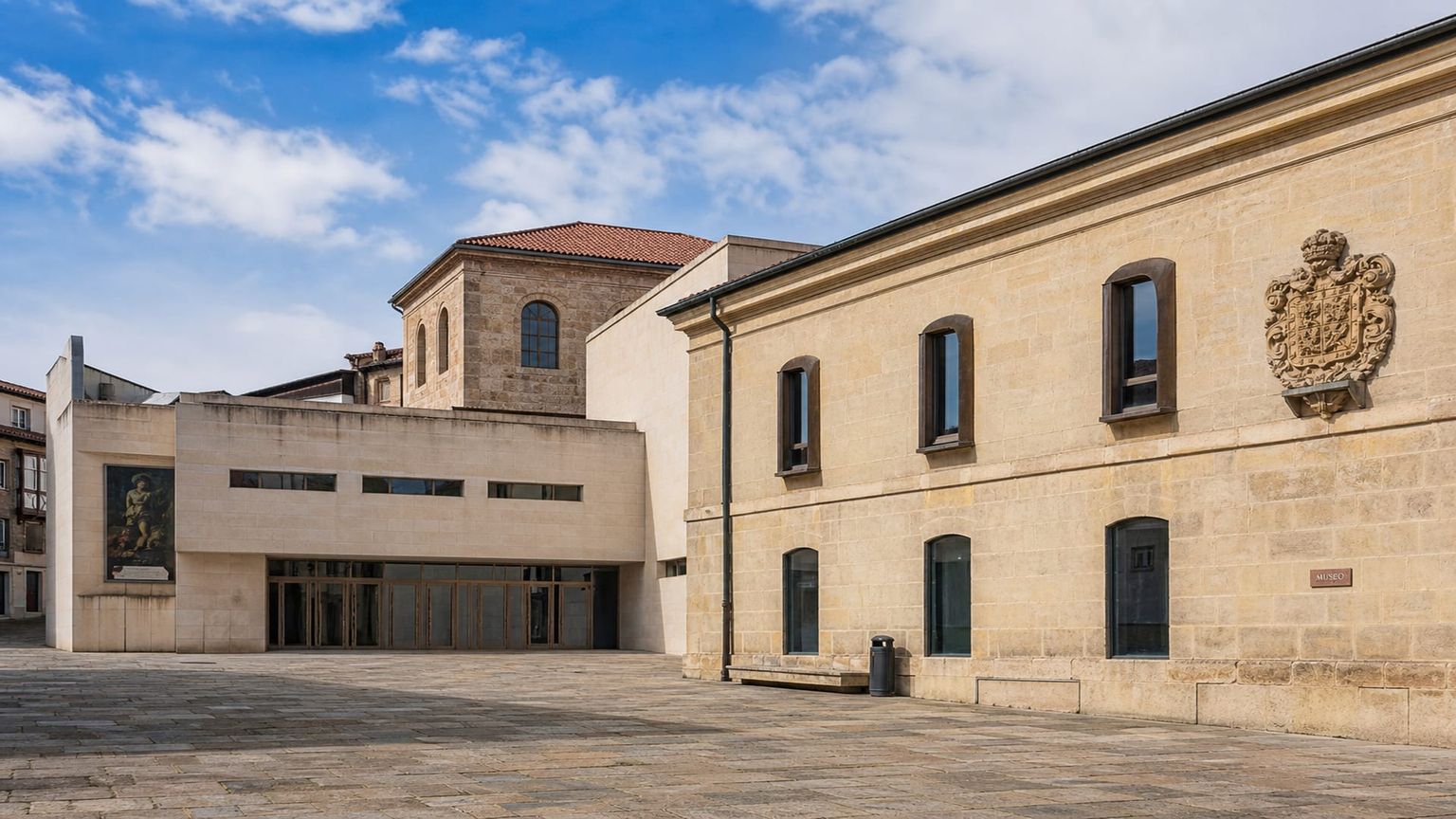
Museum of Fine Arts of Asturias
Set across several historic buildings near the cathedral, this museum holds one of northern Spain’s strongest art collections, with works by El Greco, Goya, Sorolla, Picasso, and Miró alongside Asturian painting and sculpture.
Time needed: About 2 to 3 hours
Entry: Entry is free for the permanent collection, while special exhibitions may charge about $4 to $9 (€4 to €8) depending on the show. Visit the official site for details.
Tip: Start with the main building, then cross to the annexes for a fuller route.
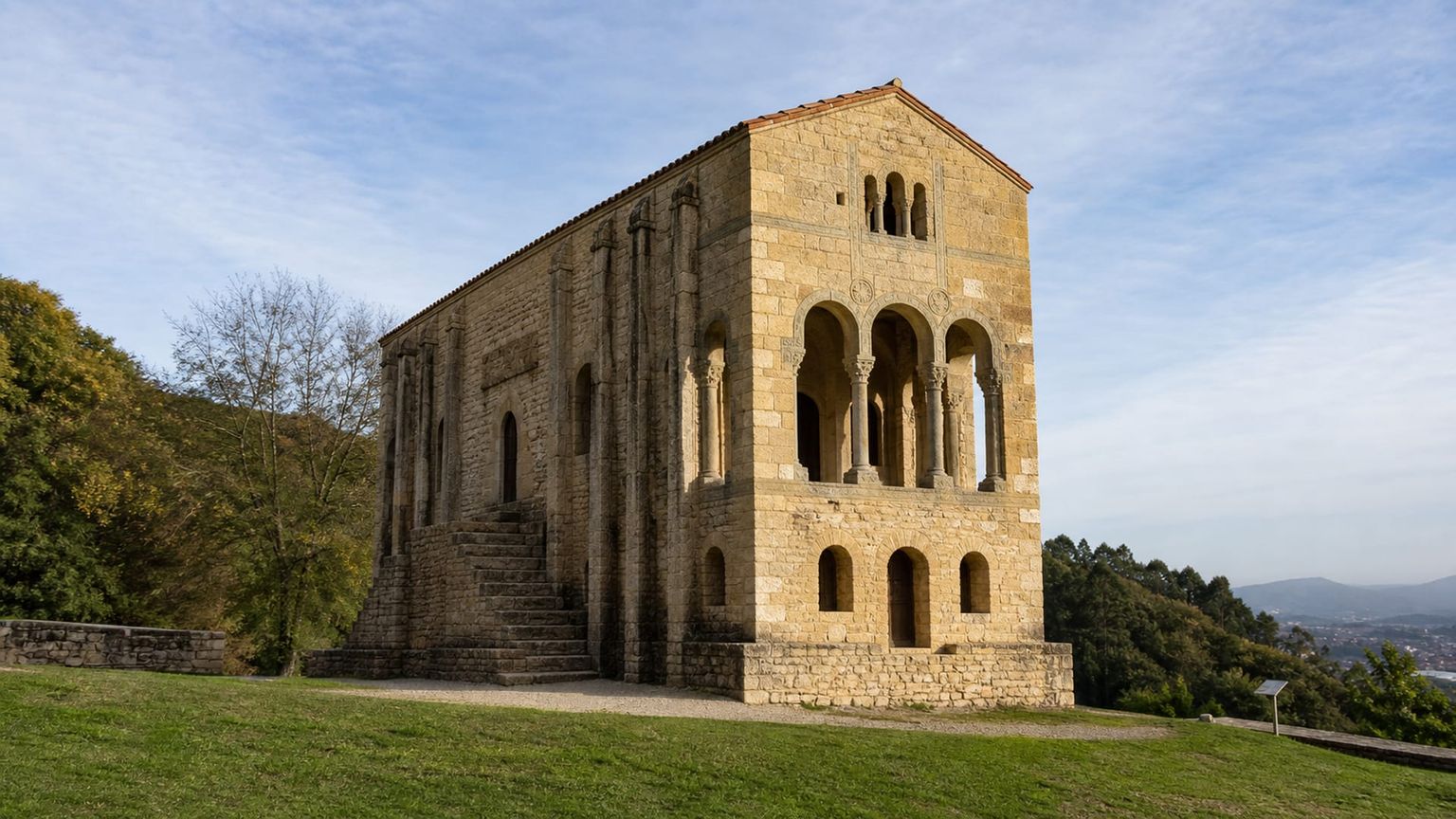
Mount Naranco and Santa María del Naranco
Above Oviedo, Mount Naranco offers city views and a pair of pre-Romanesque landmarks, especially Santa María del Naranco, a ninth-century former royal hall now admired for its carved stonework and hillside setting.
Time needed: About 1 to 2 hours
Entry: Combined access costs about $6 to $8 (€5 to €7) for Santa María del Naranco and nearby San Miguel de Lillo, with guided visits at set times. Visit the official site for details.
Tip: Go near sunset, when the city view is clearest and the hill is less exposed.
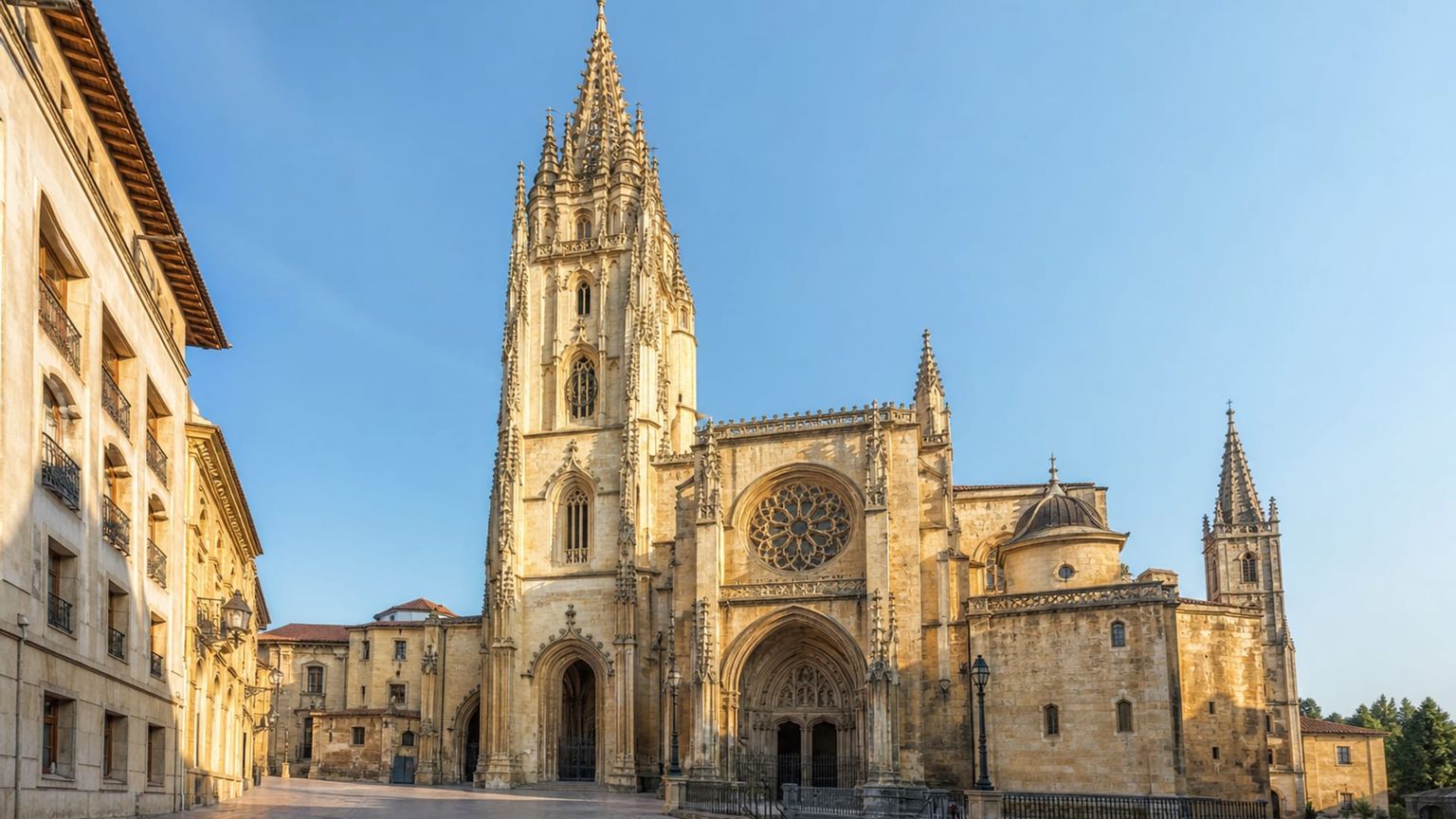
Oviedo Cathedral and the Holy Chamber
Oviedo Cathedral anchors the old town with its Gothic nave and the UNESCO-listed Holy Chamber, where the Cross of the Angels and other medieval relics are kept. The tower, cloister, and chapels make it the city’s clearest historic centerpiece.
Time needed: About 1 to 2 hours
Entry: Entry costs about $11 to $13 (€10 to €12), with reduced rates for children, students, and seniors; tower access may cost extra. Visit the official site for details.
Tip: Arrive early for quieter chapel visits and softer light in the cloister.
Overlooked sites worth visiting

Monte Naranco pre-Romanesque monuments
On Monte Naranco above Oviedo, Santa María del Naranco and San Miguel de Lillo pair hilltop views with 9th-century Asturian architecture, set apart from the city center by a quiet uphill drive.
Time needed: About 1 to 2 hours
Entry: Admission is about $11 ($10) for both monuments, with reduced rates for children, students, and seniors; tickets are timed at the monument entrance, and opening hours vary by season, so check current schedules before going. Visit the official site for details.
Tip: Go early for lighter crowds and clearer hilltop light.

Museum of Fine Arts of Asturias
Housed in three linked buildings near Oviedo Cathedral, this museum combines Spanish painting, sculpture, and regional works in compact galleries, with Goya, El Greco, and Picasso among the names on view.
Time needed: About 1 to 2 hours
Entry: Entry is free to the permanent collection, with separate charges for some temporary exhibitions; access is by museum entrance during posted hours, and guided visits may carry a fee if you join one of those programs. Visit the official site for details.
Tip: Start on the upper floors, then work down to the modern galleries.
Traditional food
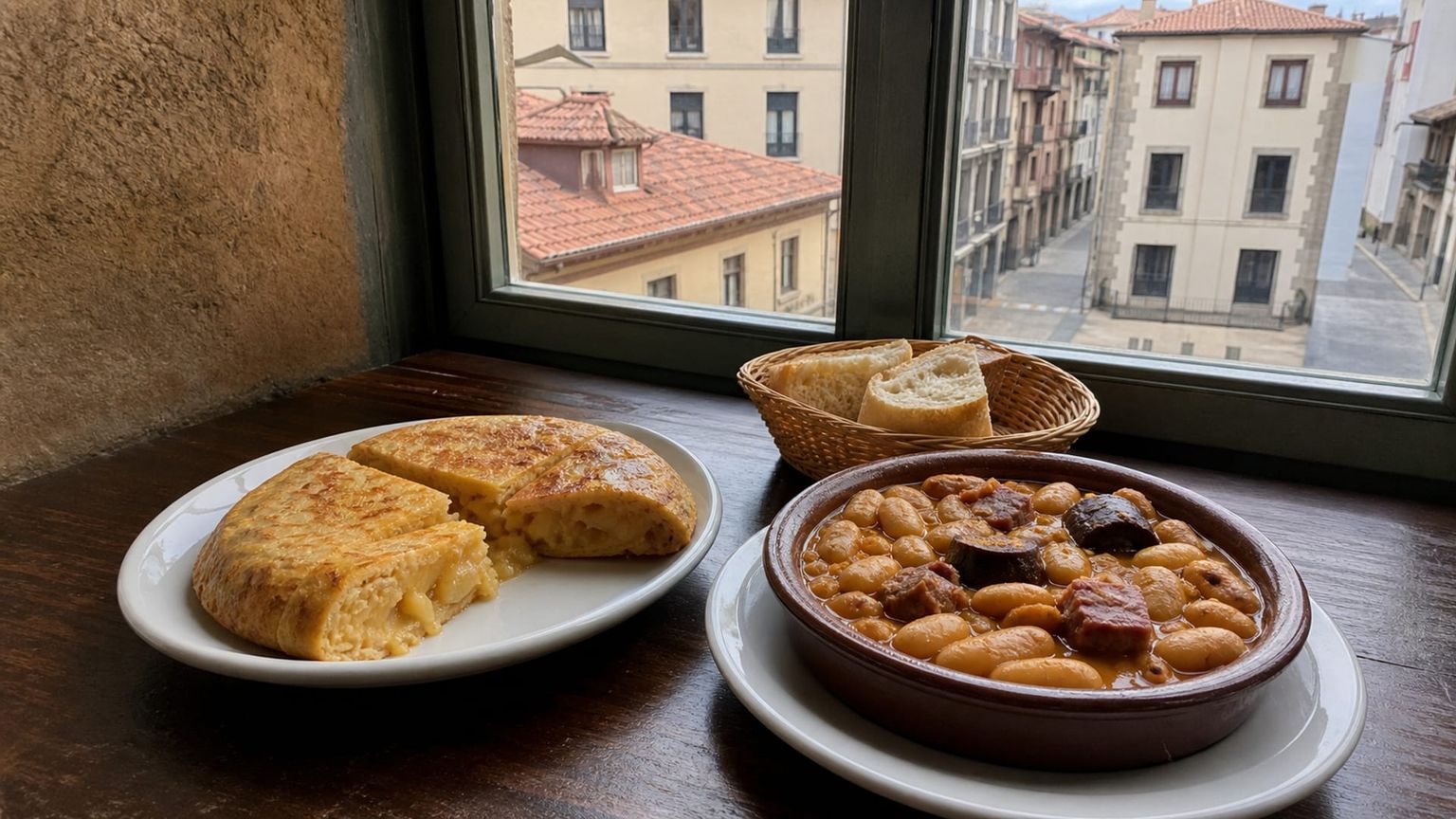
Oviedo’s cooking leans on pork, beans, cheese, cider, and slow-heated desserts, with fabada asturiana and cachopo showing the city’s comfort-first table. Meals run on Asturian hours, and cider bars keep the pace local.
Fabada asturiana
This bean stew is the city’s signature comfort dish, built for slow lunches and a generous pour of cider. Casa Fermín is a strong canonical stop in Oviedo for a polished version rooted in regional cooking.
Cachopo
Two breaded veal cutlets wrapped around ham and cheese make this a hearty shared plate, often served with potatoes. El Fondín de Trascorrales is a well-known Oviedo address for a classic, filling rendition.
Cabrales cheese
This blue cheese brings sharp, salty depth to a tasting board or a simple starter, and it defines many Asturian menus. Sidrería Tierra Astur Gascona is a dependable Oviedo stop for sampling it alongside cider.
Arroz con leche
Asturian rice pudding turns up as a smooth, cinnamon-scented dessert that closes out a long meal well. La Corte de Pelayo is a strong place in Oviedo to finish with a traditional version.
Best time to visit Oviedo
Oviedo shifts by season, with cooler hilltop visits in summer, wetter but quieter streets in winter, and spring and autumn offering the best balance for walking and longer outdoor stops.
Best for: Cathedral walks, museum time, and Mount Naranco before summer heat arrives
What you get: About 48°F to 66°F (9°C to 19°C), with moderate crowds and frequent rain showers
Trade-offs: Showers can interrupt outdoor plans on the hill and in the old town
Best for: Long evenings in Casco Antiguo and clear views from Naranco
What you get: About 57°F to 76°F (14°C to 24°C), with busier restaurants and fuller sightseeing streets
Trade-offs: Popular lunch and dinner spots can book up faster
Best for: Food-focused trips and steady sightseeing with cooler air
What you get: About 50°F to 68°F (10°C to 20°C), with lighter crowds than midsummer
Trade-offs: Rain returns more often as the season moves on
Best for: Museum time, café stops, and a quieter old town
What you get: About 39°F to 53°F (4°C to 12°C), with low tourist pressure and short daylight hours
Trade-offs: Short days make late hill visits less appealing
A realistic 5-day plan in Oviedo
A five-day Oviedo stay works well when you separate the old town, Naranco, and Uría into different blocks. That keeps the walking manageable, leaves room for museum time, and gives the city’s meals and transit enough space in the day.
Fly into Asturias Airport (OVD), then take the ALSA bus or a taxi into the center. The bus costs about $3 to $5 (€3 to €4) and takes roughly 30 minutes, while a taxi usually costs about $22 to $30 (€20 to €27) and reaches Casco Antiguo or Uría in about 20 to 25 minutes, traffic allowing. If you arrive early, check into a room near Casco Antiguo for the easiest evening walk, then drink water, unpack, and keep dinner close by with cider and a light plate on one of the old town’s dining streets.
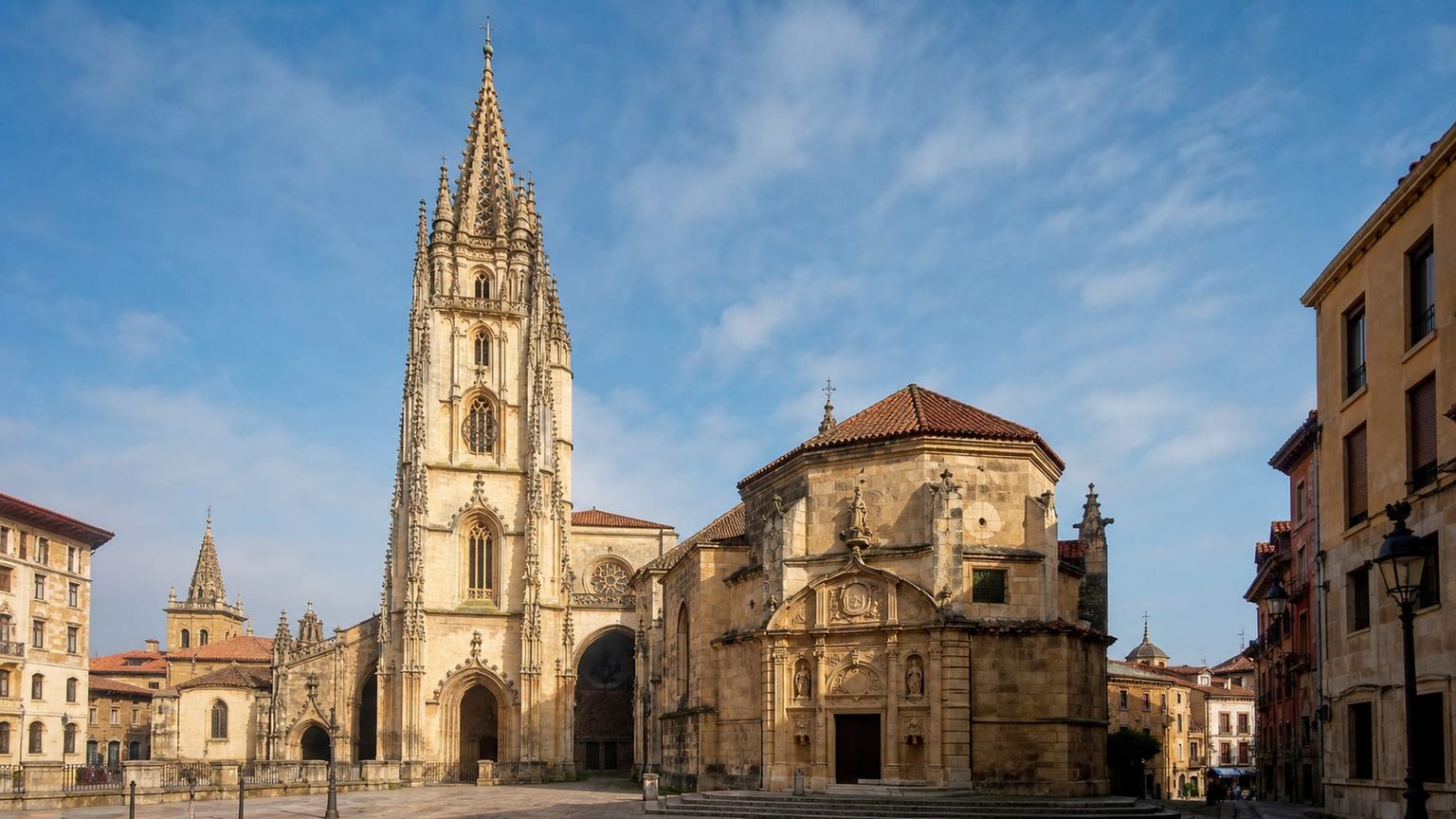
Start at Oviedo Cathedral and the Holy Chamber, where the Gothic nave and medieval relics give you the clearest sense of the city’s core. From there, walk about 5 minutes to the Museum of Fine Arts of Asturias for 2 to 3 hours, then stay in the same historic center for lunch and an unhurried look at the surrounding plazas. In the afternoon, move uphill or take a short taxi ride to Mount Naranco and Santa María del Naranco, which takes about 15 to 20 minutes from Casco Antiguo, and plan to spend 1 to 2 hours there before returning downtown for dinner.
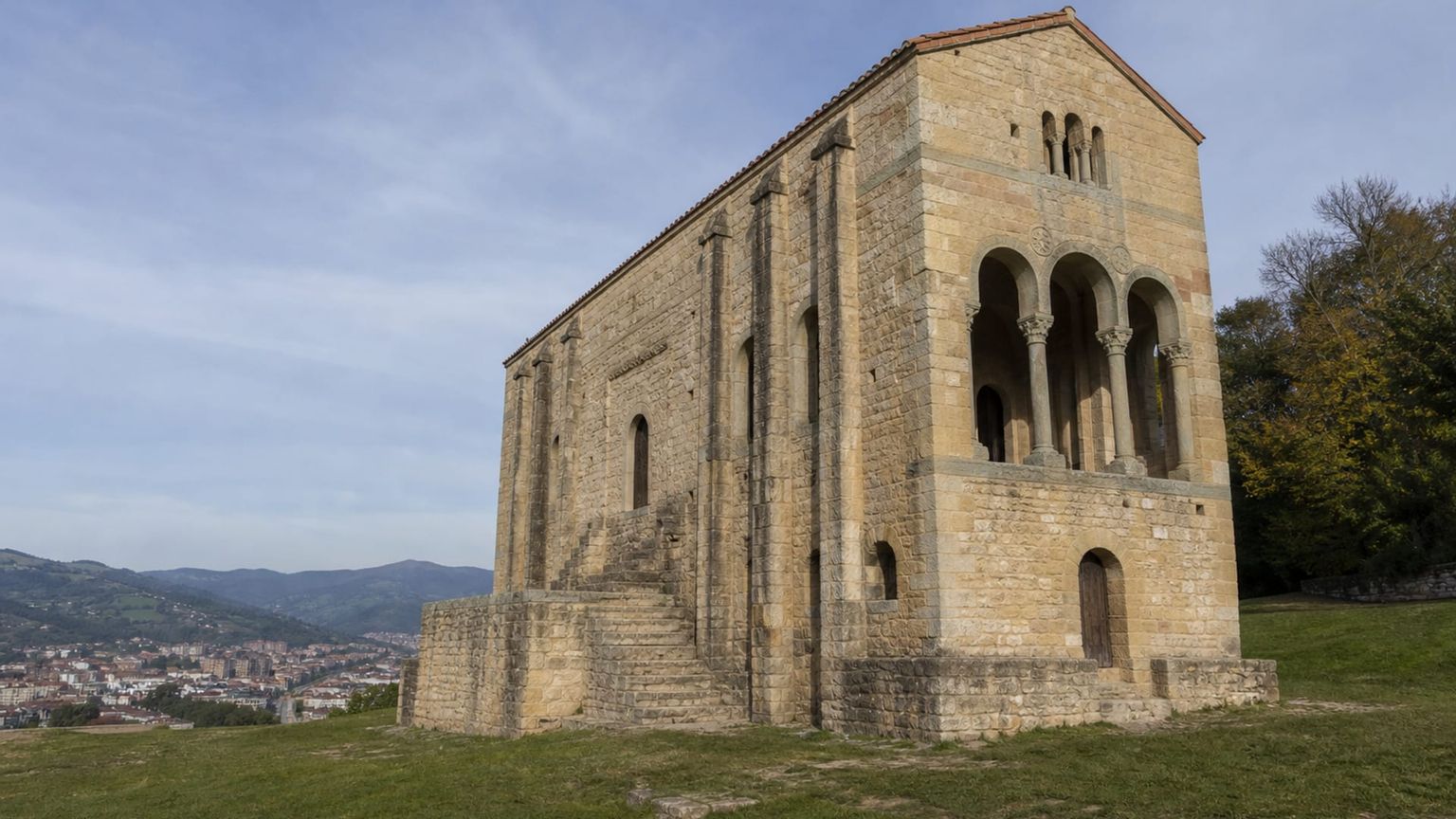
Begin with the lesser-known side of Mount Naranco by visiting the Monte Naranco pre-Romanesque monuments early, when the hilltop air is cooler and the timed entry slots are calmer. Afterward, ride back into the center, about 15 to 20 minutes by taxi or bus, and return to the Museum of Fine Arts of Asturias if you want more time with the regional works and Spanish masters, or continue through the cathedral quarter for a slower look at the streets around Plaza de la Constitución. Finish the day with a dinner reservation in Casco Antiguo, where you can stay on foot between the main squares and nearby bars.
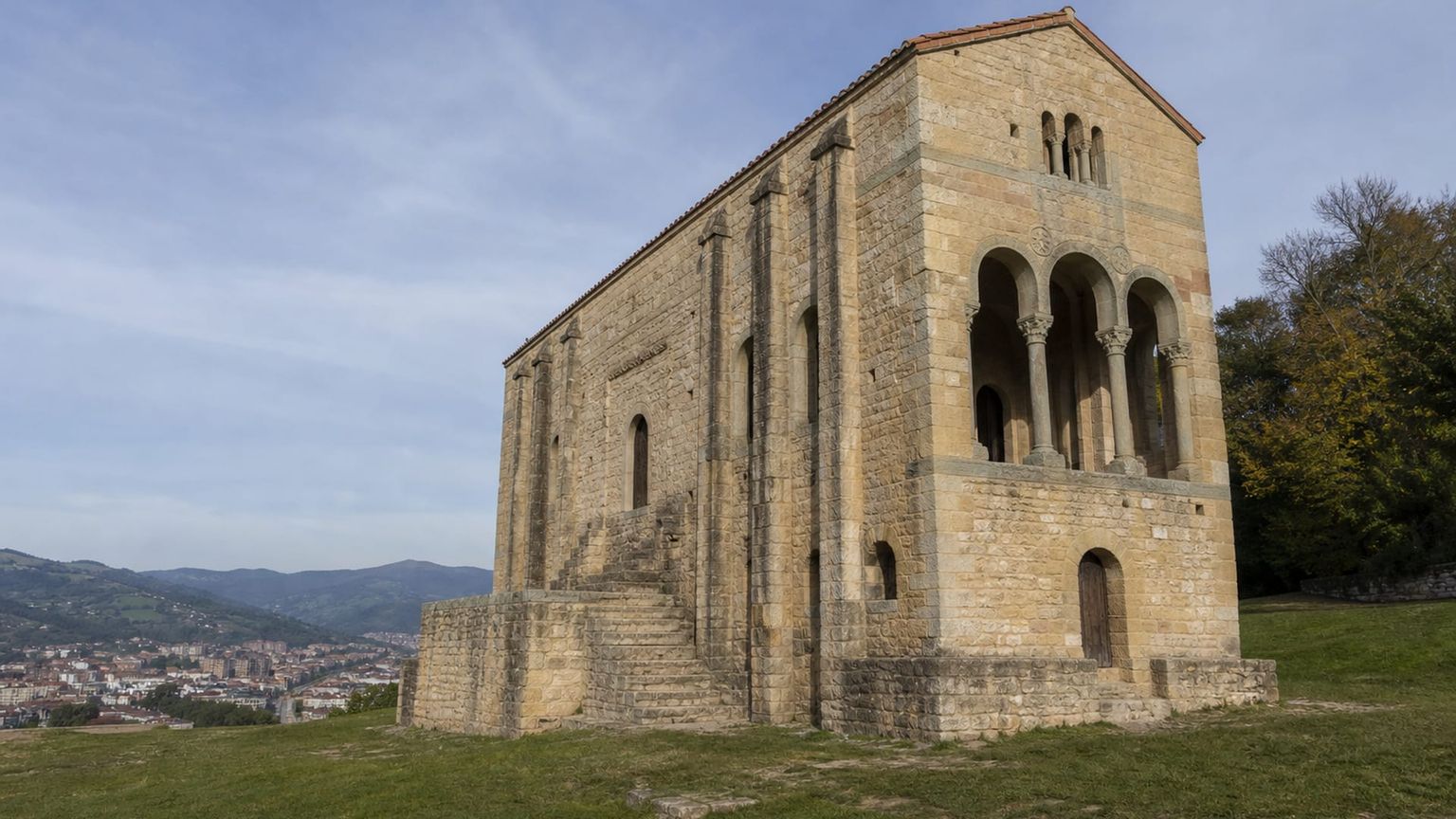
Set out for a more compact city day, starting in Uría so you can see Oviedo’s main station corridor, broad avenues, and the direct walk into the old town. From Uría, it takes about 10 minutes on foot to Oviedo Cathedral and the nearby museum buildings, so you can cross back into the historic center without needing transit. Spend the middle of the day revisiting whichever part of Casco Antiguo caught your attention most, then linger over an early evening walk through the cathedral district and the surrounding squares before dinner.
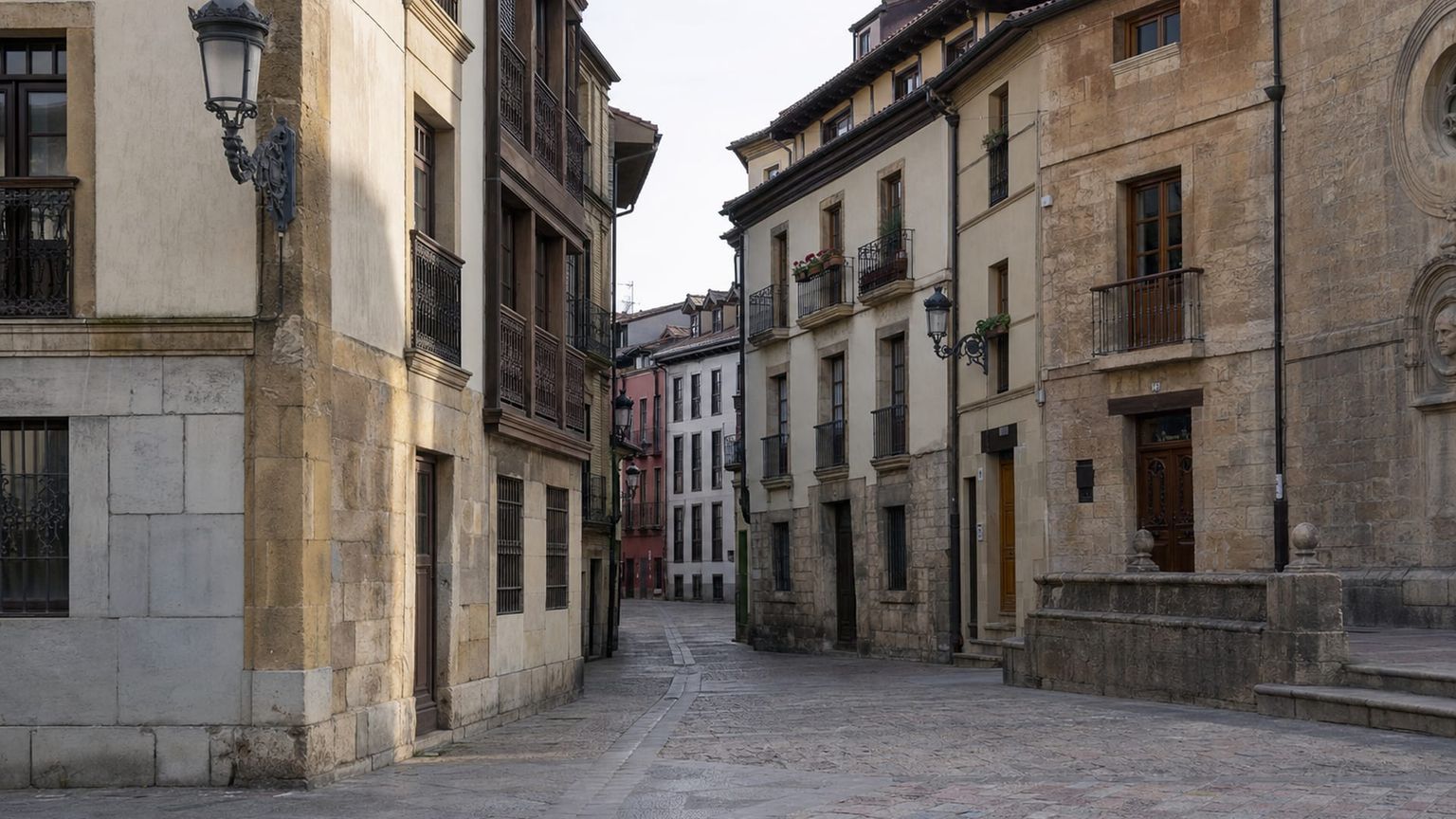
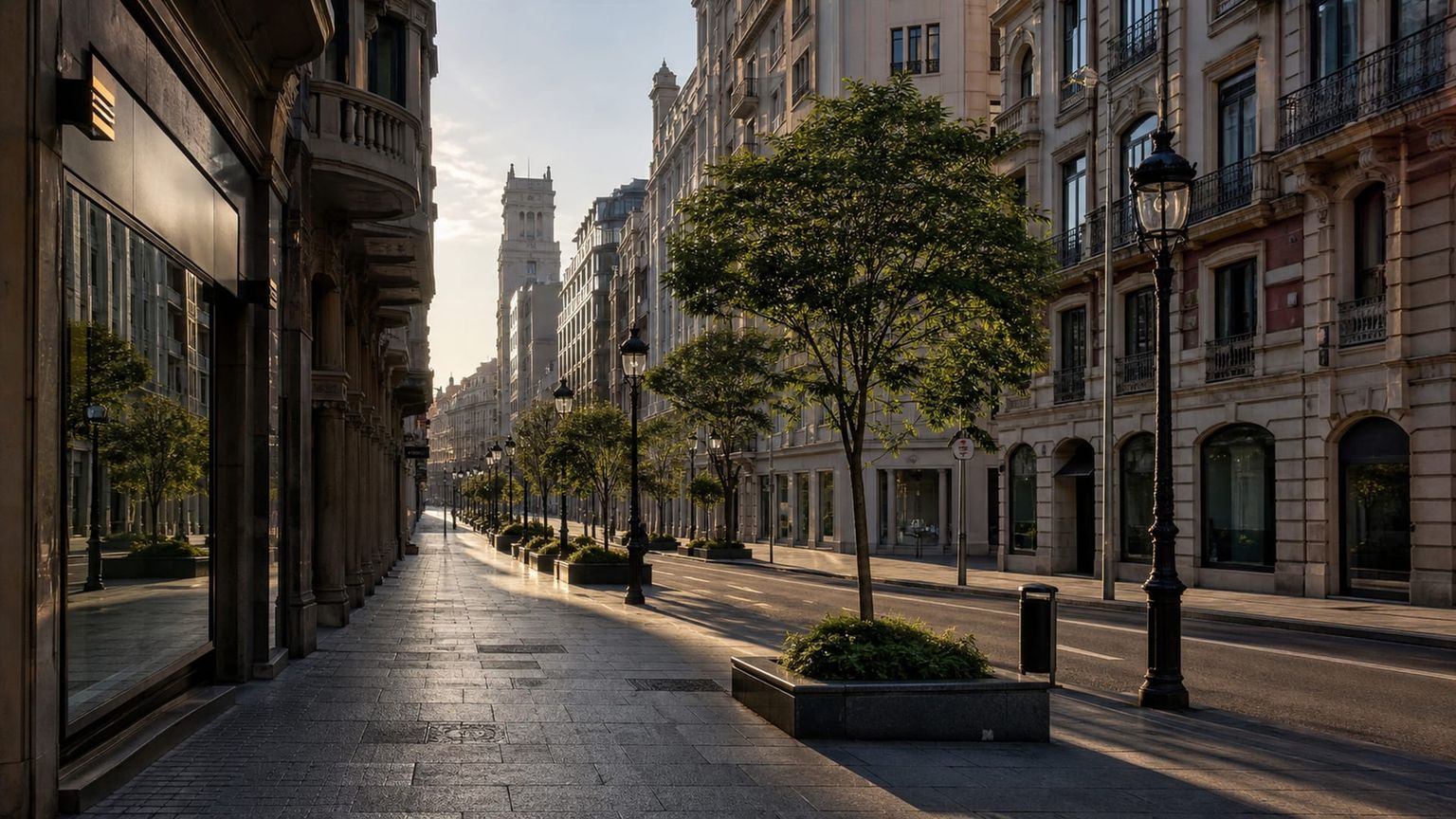
For the last full day, begin with one final museum stop at the Museum of Fine Arts of Asturias if you want a short cultural visit, then shift to shopping along Uría, where the broad avenue makes it easy to browse before lunch. After that, settle into a café in Casco Antiguo for coffee and a pastry, with the cathedral area still only a few minutes away if you want one more walk through the old streets. If you are flying out the next morning, stay near the center or Uría so the airport bus or taxi is easy to reach.
Business-class flights from the US to Oviedo
Reaching Oviedo usually means a one-stop trip through a major European hub, so the best fares often depend more on layover length than on the last segment alone. From both coasts, the route choices are broad, but the timing differs.
From New York, carriers such as Iberia, American Airlines, British Airways, Air France, Lufthansa, and TAP Air Portugal commonly appear on itineraries to Oviedo. Round-trip fares from New York to Oviedo usually start at $2,100 and can reach $4,800, with total travel time often about 7 to 8 hours on the nonstop portion when available and about 10 to 14 hours on one-stop itineraries through MAD, LIS, CDG, LHR, FRA, or MUC.
Los Angeles itineraries to Oviedo usually route through Madrid, London, Paris, Frankfurt, Amsterdam, or Dublin, and the layover adds up quickly, with total travel time about 14 to 18 hours. Expect round-trip fares from Los Angeles to Oviedo to run from $2,600 to $6,200 on airlines such as Iberia, American Airlines, British Airways, Lufthansa, Air France, and Delta Air Lines.
Oviedo feels different when you slow down
A good Oviedo trip gives each part of the city a clear role: Casco Antiguo for the cathedral and dinner streets, Uría for station access and shopping, and Mount Naranco for the stone buildings and wide views above town. Buses and taxis keep the hill and airport simple to reach, while the museum and the old town fill the center without forcing long cross-city detours. If you want help shaping flights or choosing a base, AranGrant experts can build the trip around Naranco, the cathedral quarter, or a late meal on Calle Gascona







