

Chapters:

Need help with your trip?
Our support team is available 24/7. Request a callback or call us directly at (833) 619-0908
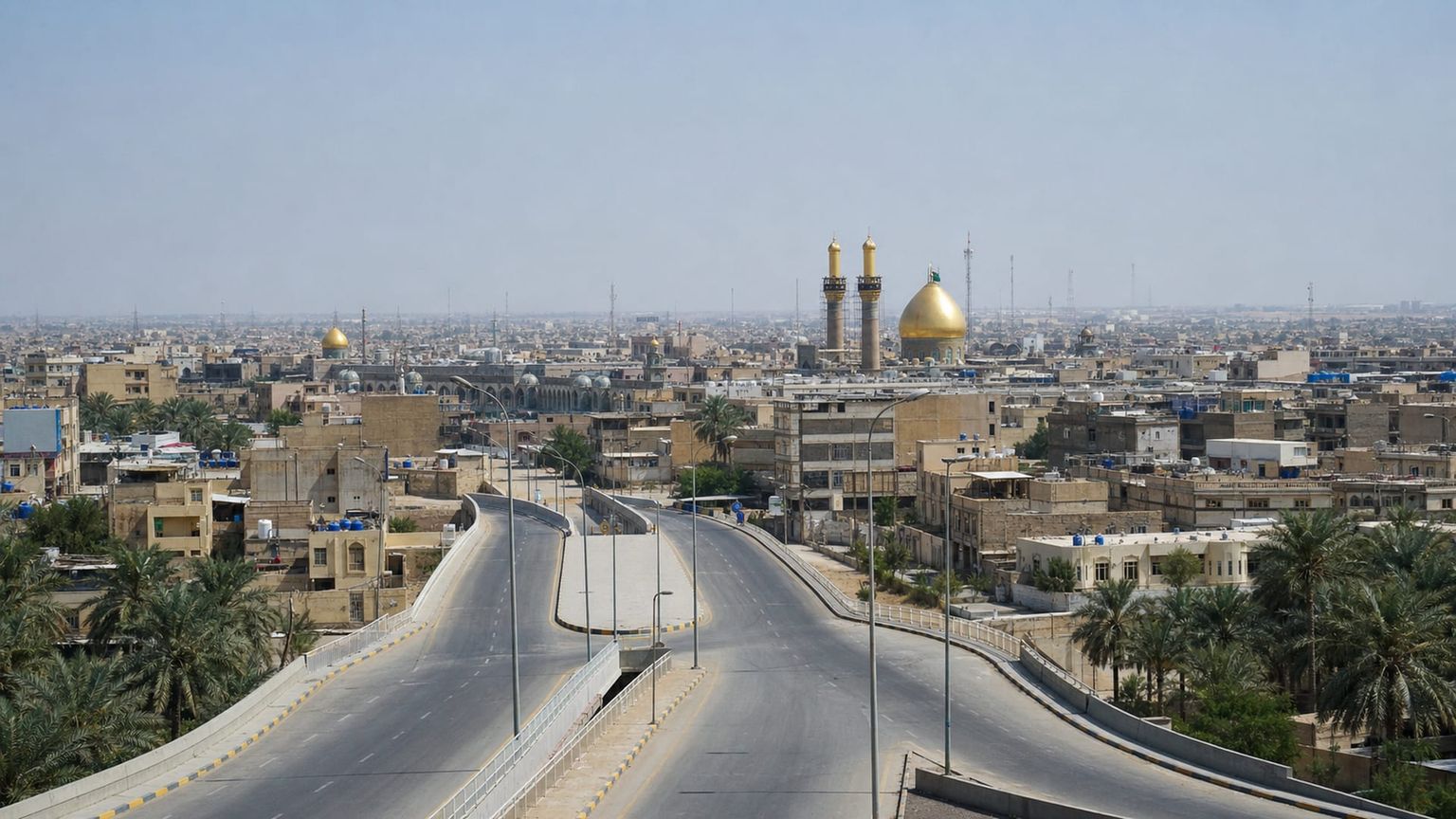
Najaf trips often center on a single shrine visit, a quick cemetery stop, and an overnight near the old core. What travelers miss is how much time the city asks for once taxis, prayer hours, and street closures enter the plan.
The shrine district can fill quickly, Kufa sits on a separate road axis, and Wadi al-Salam takes more time than its map distance suggests. Without a clear sequence, you lose hours to backtracking and crowded curbside pickups.
This guide builds Najaf in stages, from arrival and prayer windows to road transfers, food stops, and departure timing, so each day has a fixed purpose rather than a loose list of stops.
Useful things to know

Main language(s): Arabic
marhaban (mar-ha-ban) – hello/good morning
min fadlak (min fad-lak) – please
shukran (shook-ran) – thank you
hal تتحدث الإنجليزية? (hal tatahaddath al-injleeziyya?) – Do you speak English?
kam al-thaman? (kam al-tha-man?) – How much does it cost?

Currency: The local currency is the Iraqi dinar (IQD, ع.د).

Cash and cards: Cards and contactless are limited; carry about IQD 50,000 to 100,000 ($38 to $76) in cash.

Tipping: Round up small bills; leave about 5% to 10% in nicer restaurants if service is good.

Traditional food: Masgouf, Iraqi dolma, qima stew, biryani

Water and coffee costs: Water about IQD 500 to 1,000 ($0.40 to $0.75), bar espresso about IQD 2,000 to 4,000 ($1.50 to $3).

Taxis and ride apps: Uber and Careem may work in Najaf; confirm pickup zones, as coverage can be patchy.

Plug and voltage: Type C/D/G socket, 230V

Dining and shop opening hours: Breakfast runs about 7:00-10:00 am, lunch 1:00-3:00 pm, and dinner 8:00-10:30 pm. Many restaurants close during prayer times and reopen later in the evening.

Emergency number: 112 for police, ambulance, and fire.
Where to stay in Najaf
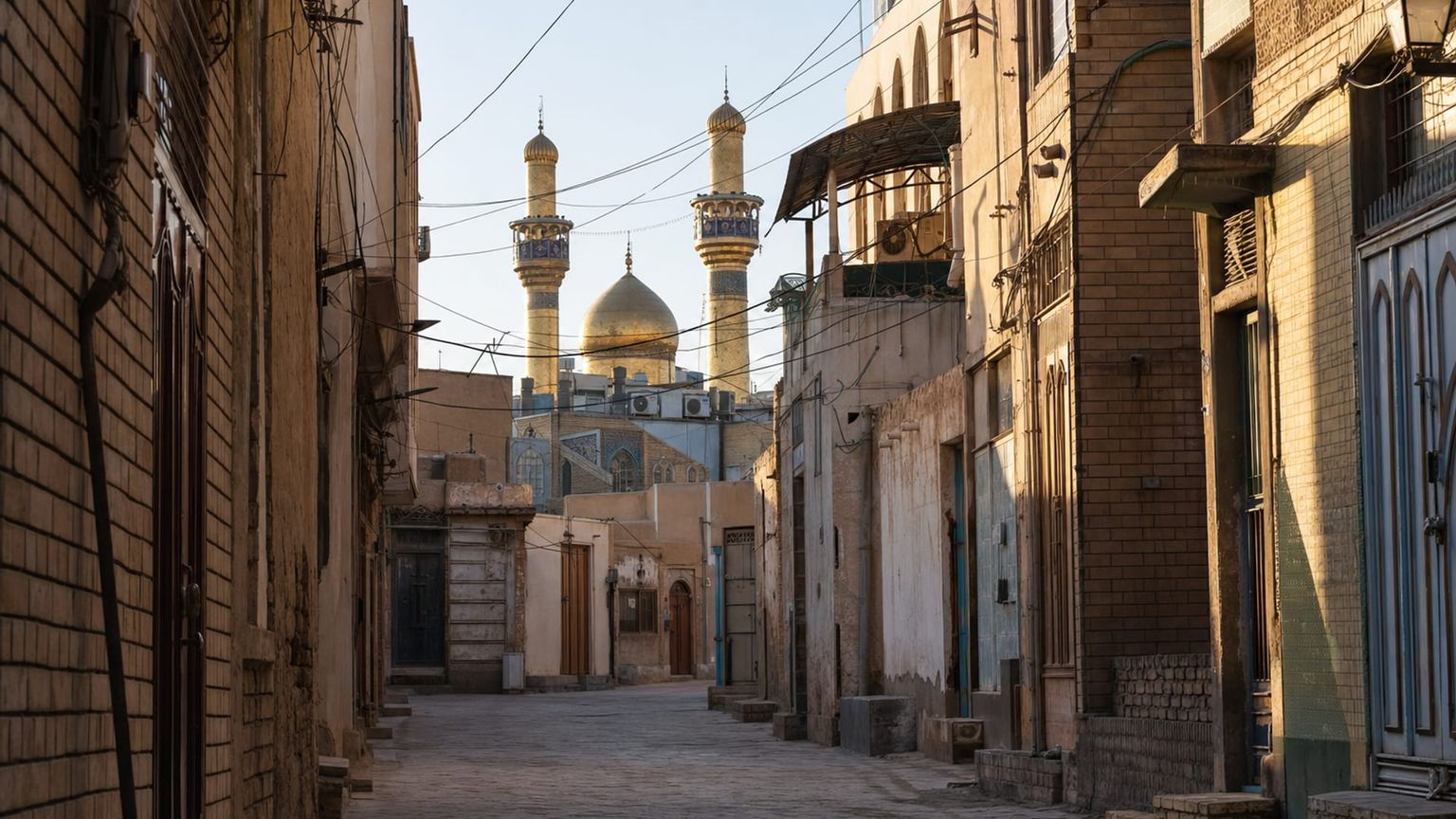
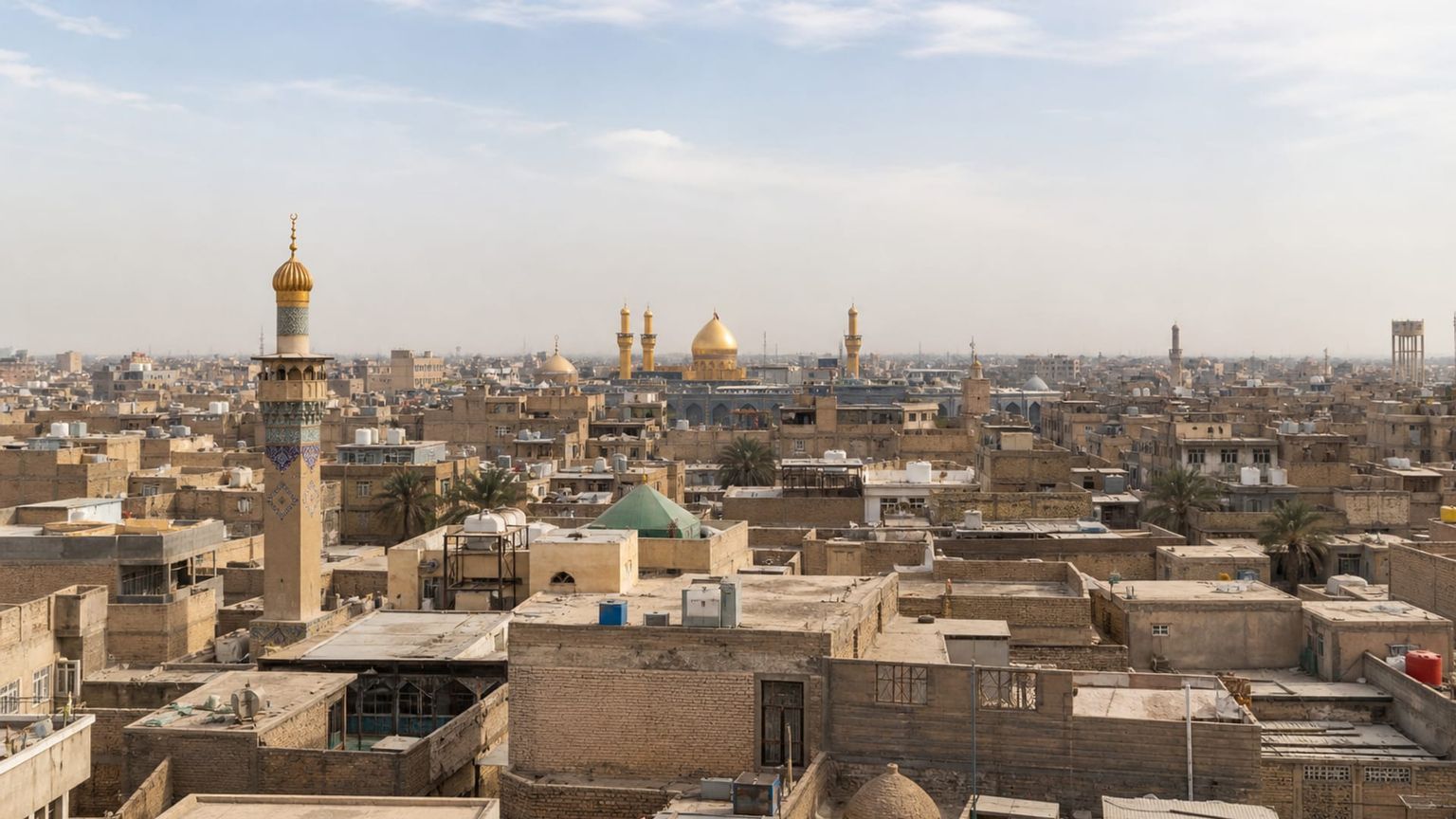
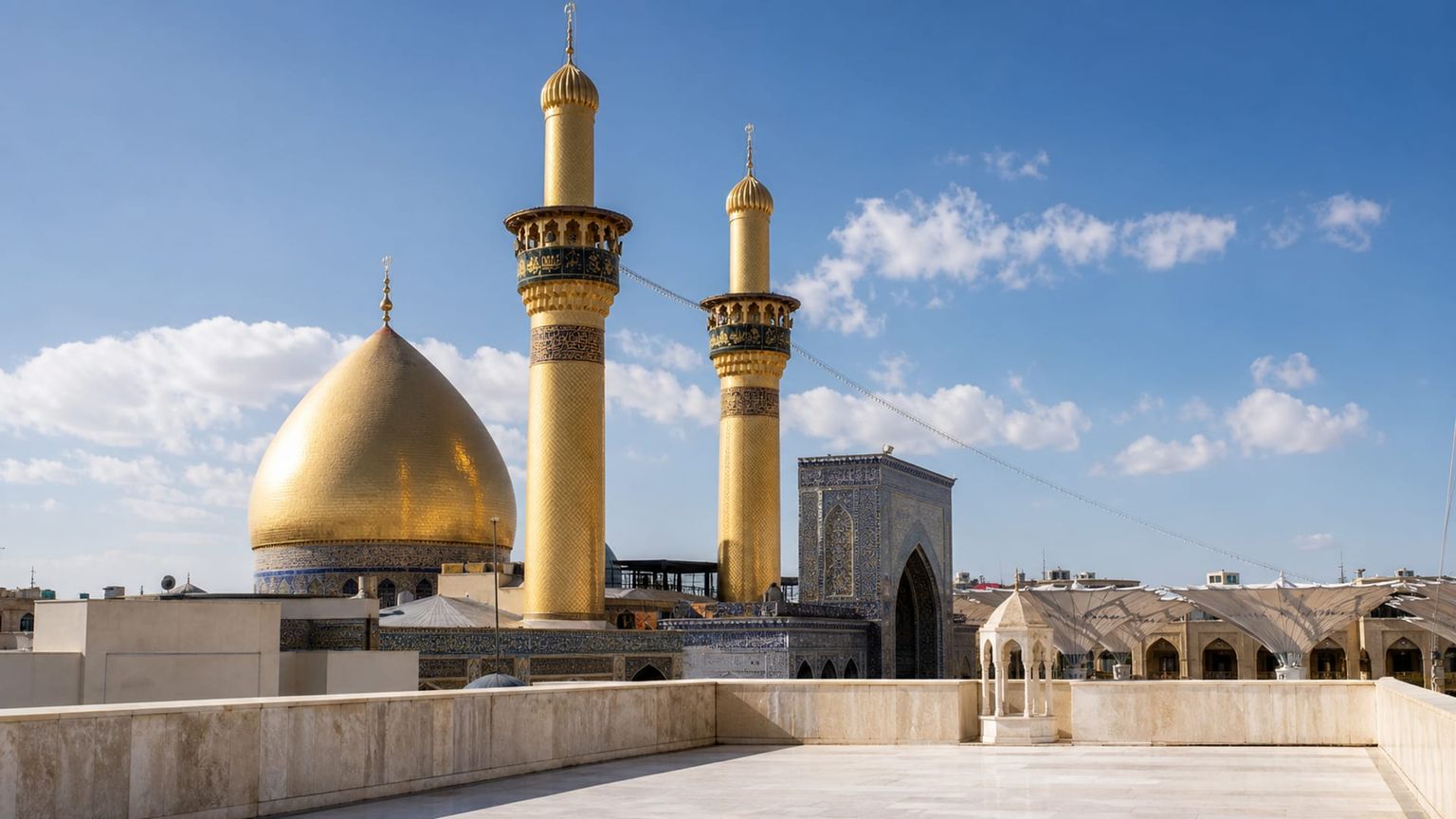
Najaf’s historic core centers on the Imam Ali Shrine, the city’s main pilgrimage landmark and the anchor for nearby hotels, food stalls, and religious schools. Staying here puts you closest to the shrine complex and the most active part of the city on foot.
Best for: Pilgrimage visits, short walking access to the shrine, and travelers who want to be close to the city’s main religious sites
What to expect: Heavy foot traffic by the shrine, constant movement from pilgrims, and busy streets at most hours.
Hotel prices: Usually about $40 to $120 per night for well-rated stays
Distance to major sights: 2 to 10 minutes on foot to the Imam Ali Shrine
Quietness: Very busy during the day and active into the evening, with the strongest crowd pressure near prayer times.
Main trade-off: You pay more for the closest addresses, and some streets can be crowded or noisy during peak religious periods.
Good to know: Expect traffic controls and pedestrian crowds near major observances, so allow extra time for taxis and hotel check-ins.
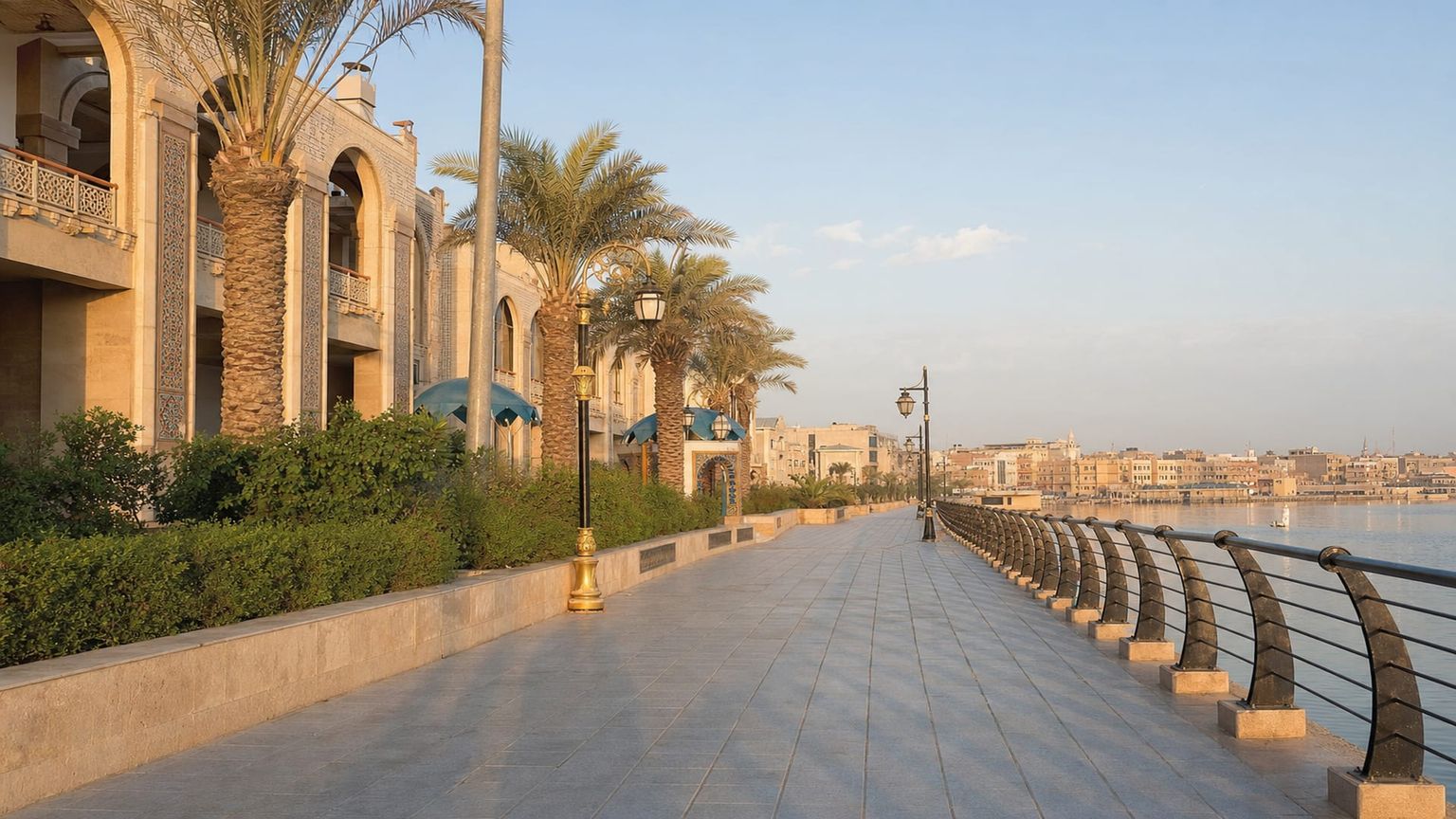
The Corniche and the edge of the Najaf Sea, the city’s long-standing salt lake setting, give you a more open stay than the shrine district. It suits visitors who want wider roads, some promenade space, and easier access by car.
Best for: Drivers, longer stays, and visitors who want more space than the shrine core while staying within easy reach of central Najaf
What to expect: Broad streets, moving traffic, and a lighter pedestrian scene than the old city.
Hotel prices: Usually about $35 to $90 per night for well-rated stays
Distance to major sights: 10 to 20 minutes by car to the Imam Ali Shrine
Quietness: Quieter in the morning and late evening, with more road noise and activity during daytime hours.
Main trade-off: You give up immediate walking access to the shrine and may need taxis for most central visits.
Good to know: If you plan to move around by car, this area makes arrivals and departures easier than the tighter streets near the shrine.
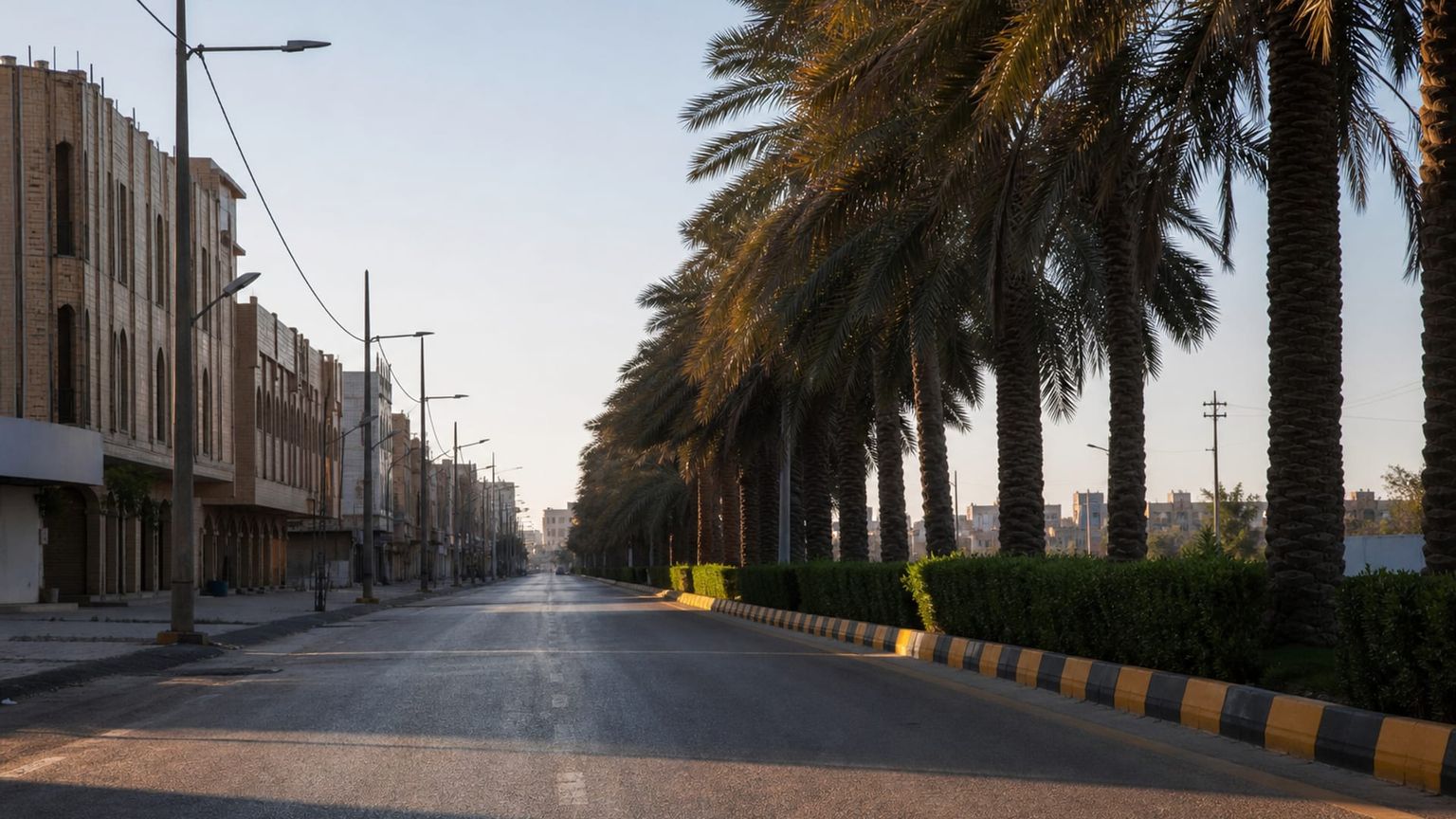
Kufa Road is the main southern approach into Najaf, with hotels, shops, and transport links spread along a busy arterial route. It works well for travelers who want quick road access to Kufa and a simpler arrival by taxi or car.
Best for: Road travelers, transit by car, and visitors combining Najaf with Kufa or other southern stops
What to expect: Car-oriented traffic, scattered commercial strips, and less foot activity than the shrine area.
Hotel prices: Usually about $30 to $80 per night for well-rated stays
Distance to major sights: 15 to 25 minutes by car to the Imam Ali Shrine
Quietness: Busier in the day because of through traffic, then calmer after business hours.
Main trade-off: The area is less walkable for shrine visits, so you will likely depend on taxis for central sightseeing.
Good to know: Choose a property with onsite parking or an easy pickup point, because roadside access matters more here than in the center.
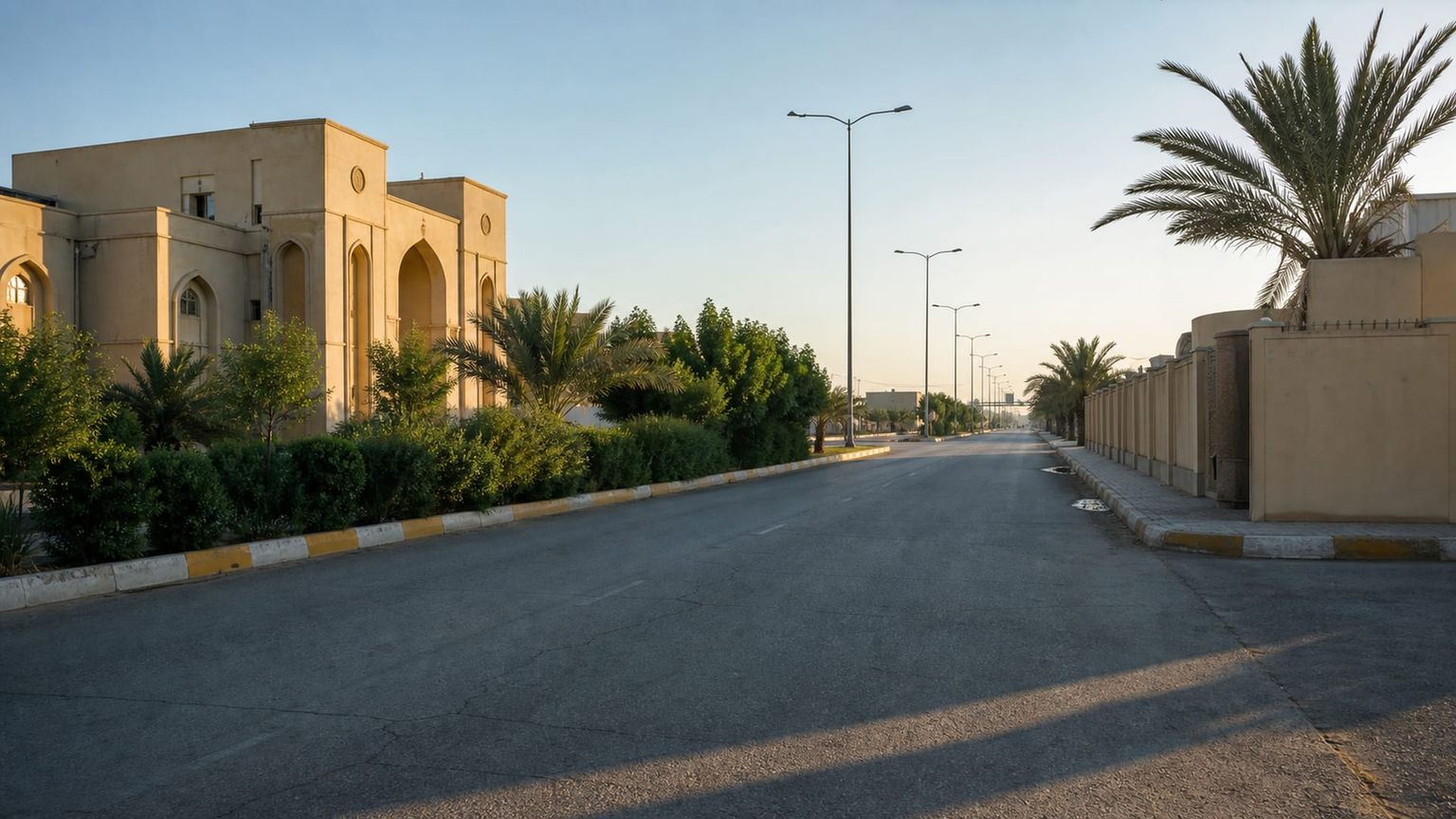
The area near Najaf Airport suits very short stays, late arrivals, and early departures, with hotels positioned for quick road transfers. It sits outside the densest religious core, so it works best as a transit base rather than a sightseeing address.
Best for: Layovers, late-night arrivals, early departures, and travelers who need the fastest airport transfer
What to expect: Sparse street life, hotel-led activity, and little evening atmosphere beyond transit traffic.
Hotel prices: Usually about $25 to $70 per night for well-rated stays
Distance to major sights: 20 to 30 minutes by car to the Imam Ali Shrine
Quietness: Generally quieter than central Najaf, though airport traffic can rise around flight times.
Main trade-off: You save time on airport transfers, but you will spend longer reaching the shrine and central dining streets.
Good to know: If your schedule centers on one overnight, this is the easiest place to avoid a long pre-dawn transfer to the airport.
Travelers usually avoid staying in Al Islah, Al Jazair, and Al Hurriya, because they sit well away from the Imam Ali Shrine area and have fewer visitor-oriented hotels, restaurants, and late-night options. The southern outskirts near Najaf International Airport (NJF) are also less convenient if you plan to rely on taxis for evening trips into the center.
Hotel deals
How to get around Najaf efficiently
Najaf has no metro, so getting around depends on taxis, limited buses, and short walks inside the shrine district; the airport sits about 20 to 30 minutes from central neighborhoods by road.

Metro
for longer distances
Najaf (NJF) has no metro, so visitors rely on roads, taxis, and intercity coach links rather than rail-based urban transit. For trips into the city center, plan on roughly 20 to 30 minutes by road from Najaf (NJF), depending on traffic and your hotel location.

Bus and tram
for convenience
Buses cover Najaf, but they are limited for airport arrivals, and they work best for local trips rather than time-sensitive transfers. Expect fares of about $0.25 to $1 per ride, paid in cash, with travel times shaped by traffic and by how close the route comes to your stop.

Taxi
for convenience or late hours
Licensed taxis use negotiated fares rather than meters, and airport rides usually cost about $10 to $20 to central Najaf, with late-night or long-distance trips priced higher. Confirm the fare before departure, carry cash in U.S. dollars or Iraqi dinars, and use hotel-arranged cars or marked taxis when possible.
*Prices are based on rates updated as of June 2026 and may change at the time of travel.
Taxis work best for airport transfers and shrine-to-shrine trips, buses suit cheap local hops, and walking makes sense once you are already in the Old City.
Iconic landmarks
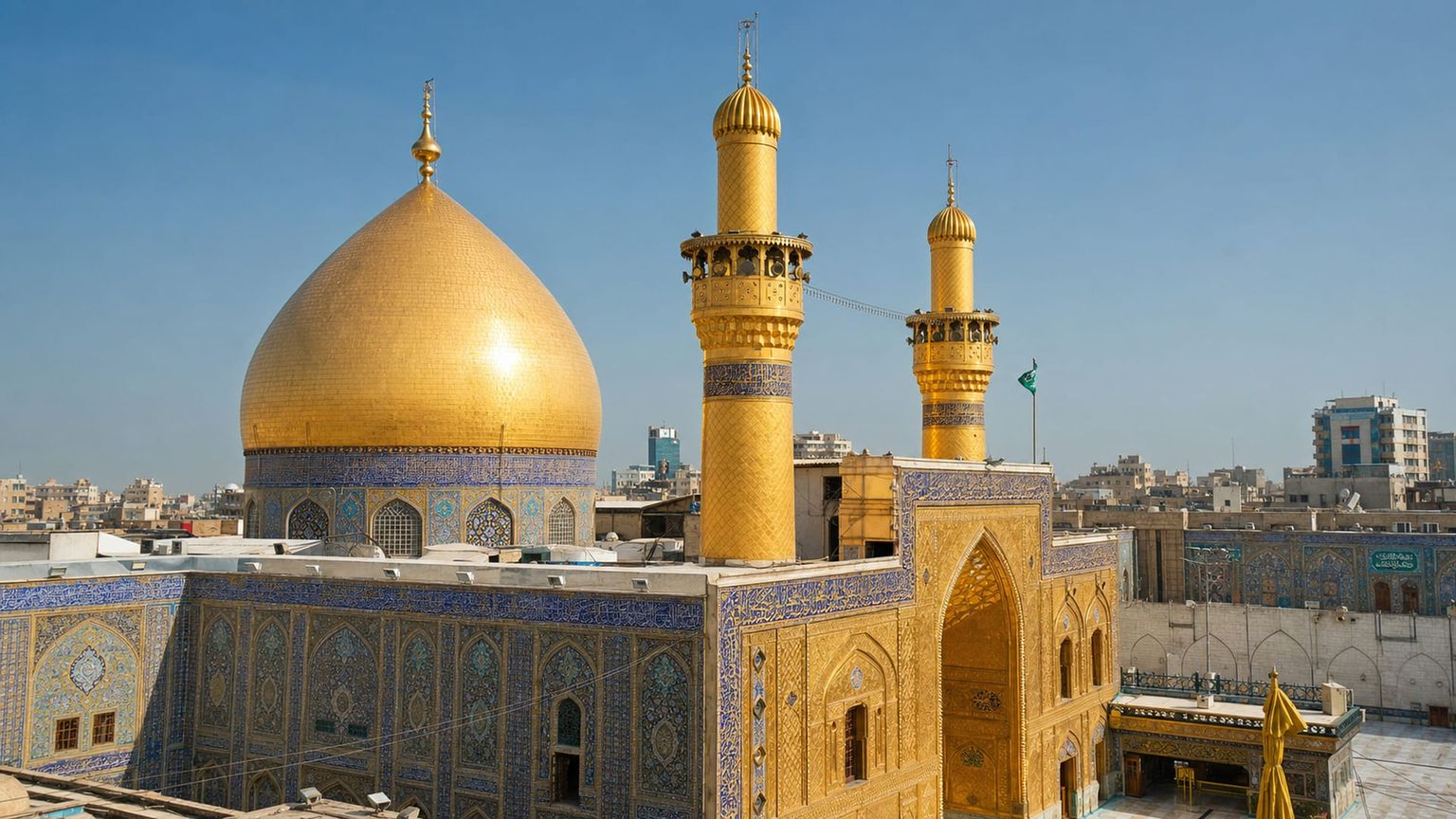
Imam Ali Shrine
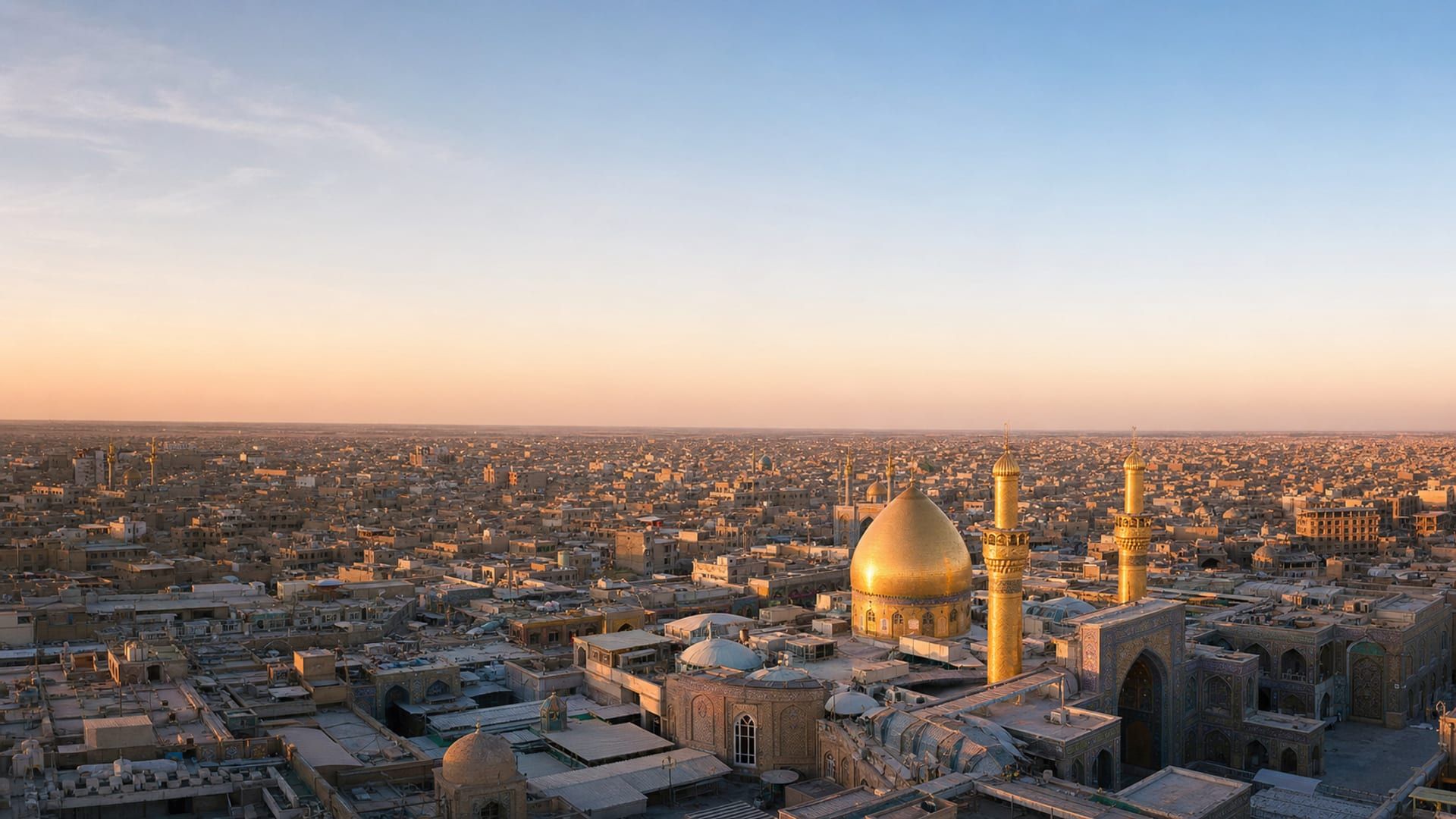
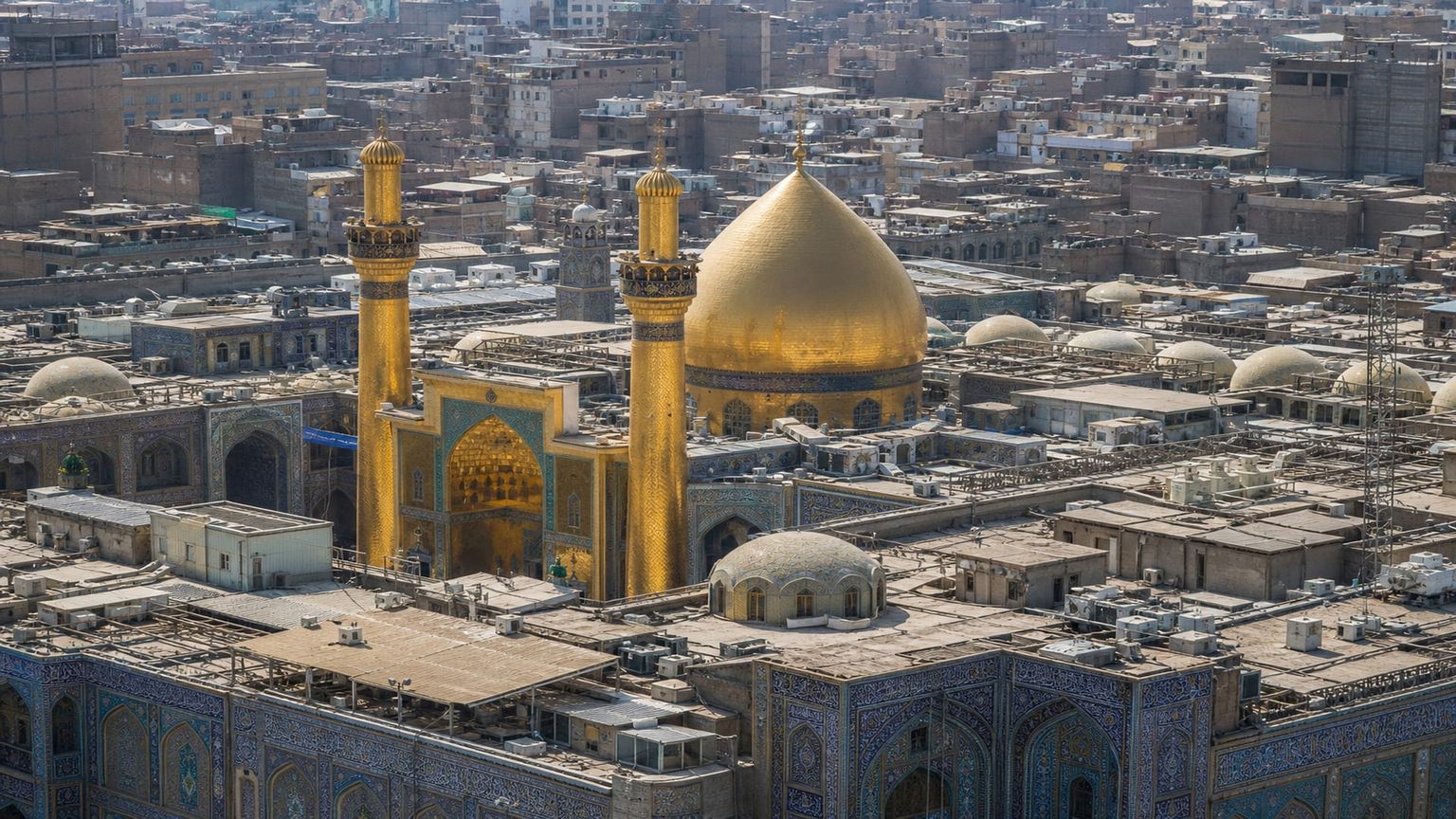
Shiite pilgrims come to the gilded shrine of Imam Ali, revered as the first Imam in Shia Islam and a major burial place in Najaf. Its courtyard, mirrored halls, and dome define the city’s religious center.
Time needed: About 1 to 2 hours
Entry: Free to enter; access is through the shrine courtyards and prayer areas during open hours, with separate arrangements for some interior spaces and peak pilgrim periods.
Tip: Arrive early morning, when the courtyards are calmer and the light is softer.
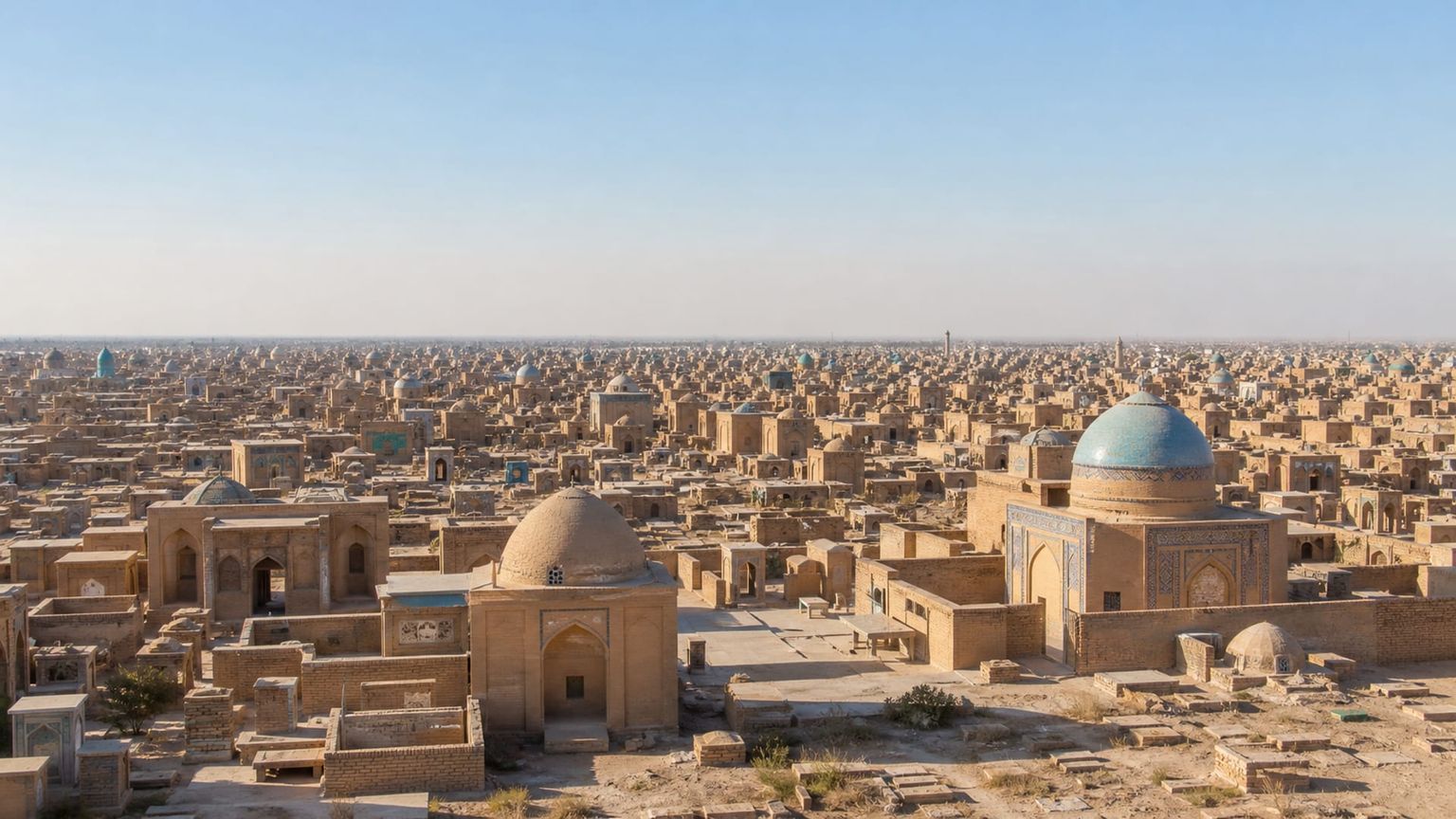
Wadi al-Salam Cemetery
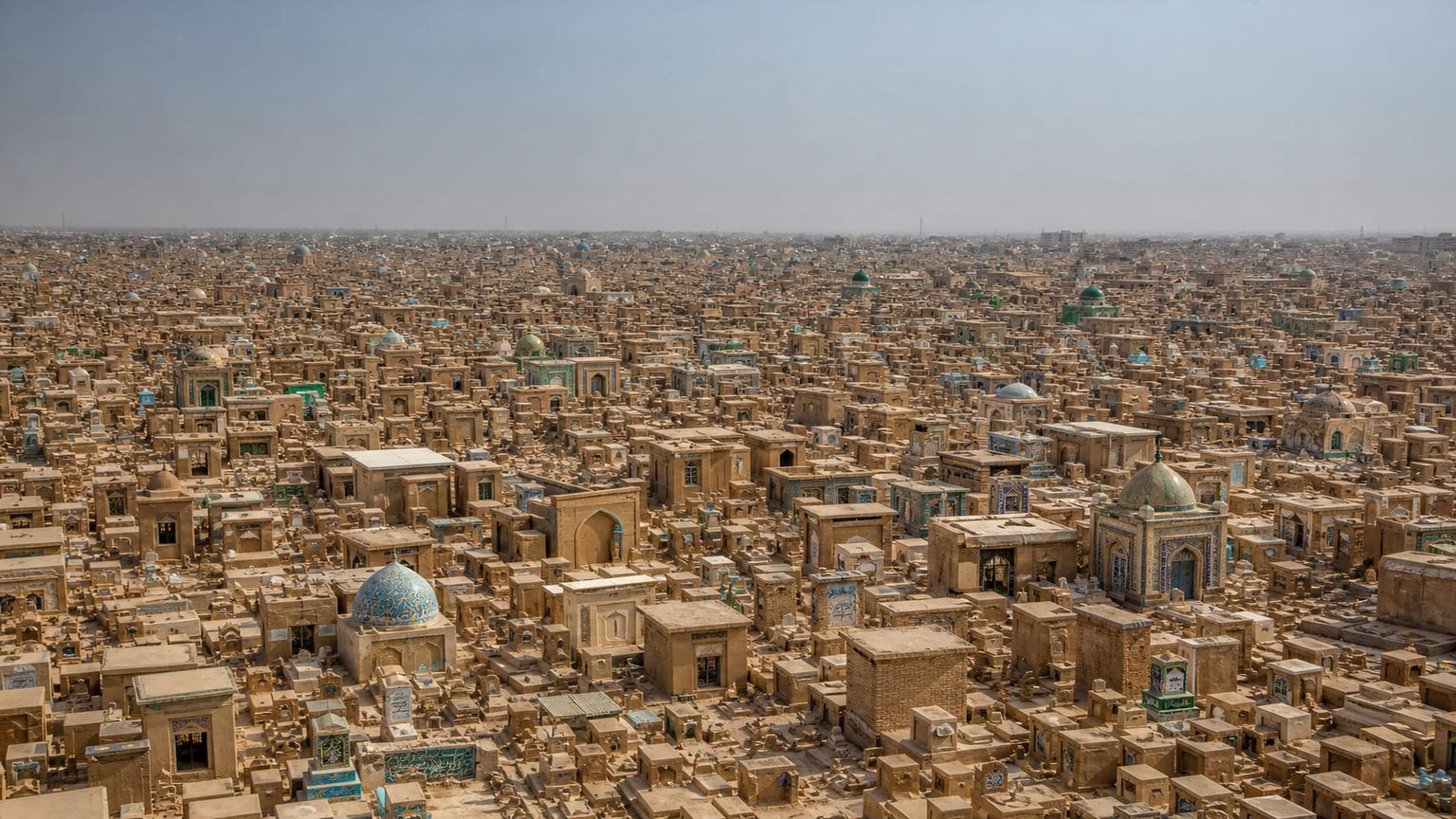
North of the shrine, Wadi al-Salam is one of the world’s largest cemeteries and a central pilgrimage ground in Najaf. Family mausoleums, narrow lanes, and clerical tombs stretch across a vast burial landscape.
Time needed: About 1 to 2 hours
Entry: Free to enter; access is on foot through public cemetery lanes, while guided visits, vehicle access, and burial-related areas may have separate local arrangements.
Tip: Visit in late afternoon, when heat drops and shadows make the lanes easier to read.
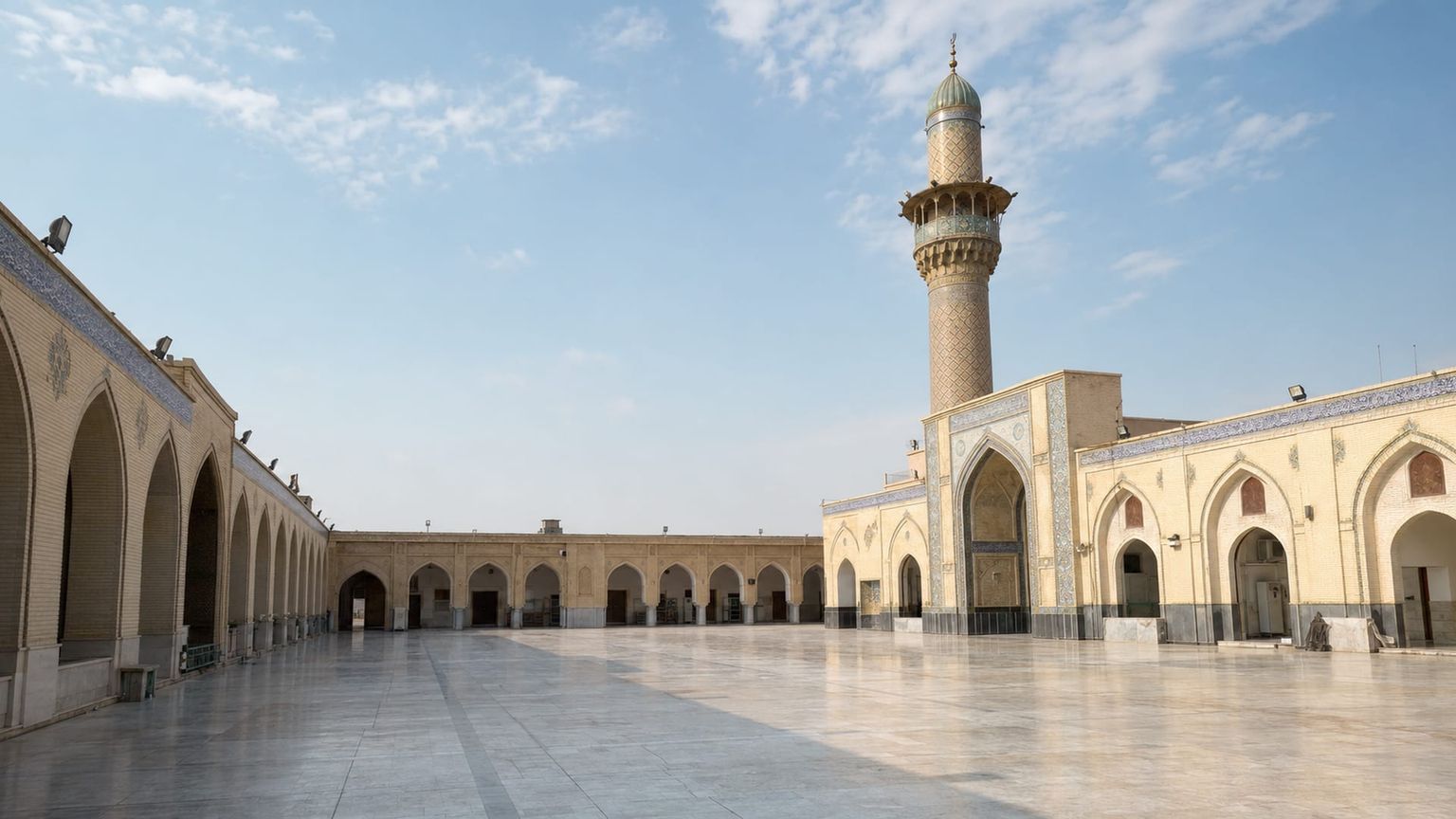
Kufa Mosque
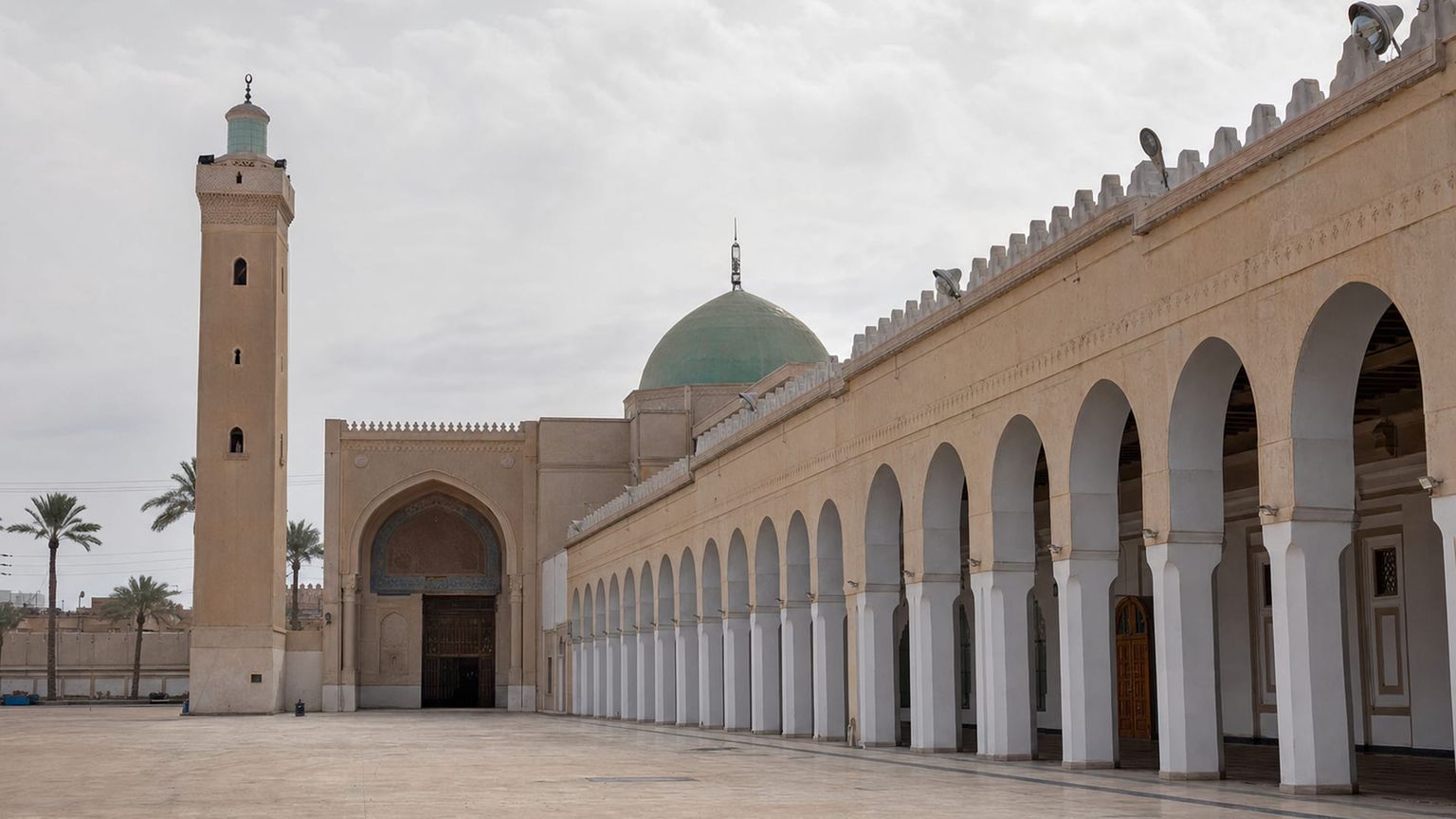
About 10 km from central Najaf, the Great Mosque of Kufa links the city to early Islamic history and to Imam Ali’s final years. Its arches, mihrab, and courtyard draw worshippers and visitors on the same day.
Time needed: About 1 hour
Entry: Free to enter; expect security screening at the gate, with donation boxes on site and limited access during major prayer times and religious observances.
Tip: Plan a midday stop, then avoid Friday prayer hours, when access can tighten.
Overlooked sites worth visiting

Wadi al-Salam Cemetery
This vast cemetery stretches beside the city with long lanes of tombs, shrines, and family plots. Walking its edges gives a rare look at Najaf’s mourning traditions and the scale of a sacred burial ground.
Time needed: About 1 to 2 hours
Entry: Free to access; no ticket is required for walking the public lanes and exterior paths. If you enter guided shrine sections or private family areas, expect donations or permissions to vary by section; carry small cash for local requests.
Tip: Go early for cooler air and quieter paths.

Kufa Mosque
About 10 km from central Najaf, this mosque centers on a compact courtyard, carved arches, and early Islamic associations. It works well as a short cultural stop, with details to study without a long visit.
Time needed: About 45 minutes to 1 hour
Entry: Free to access for visitors during open hours, though some interior areas may be closed during prayers or for maintenance. Modest dress is required, and small donations may be requested at certain entrances or for guided access.
Tip: Visit outside prayer times for fuller courtyard access.
Traditional food
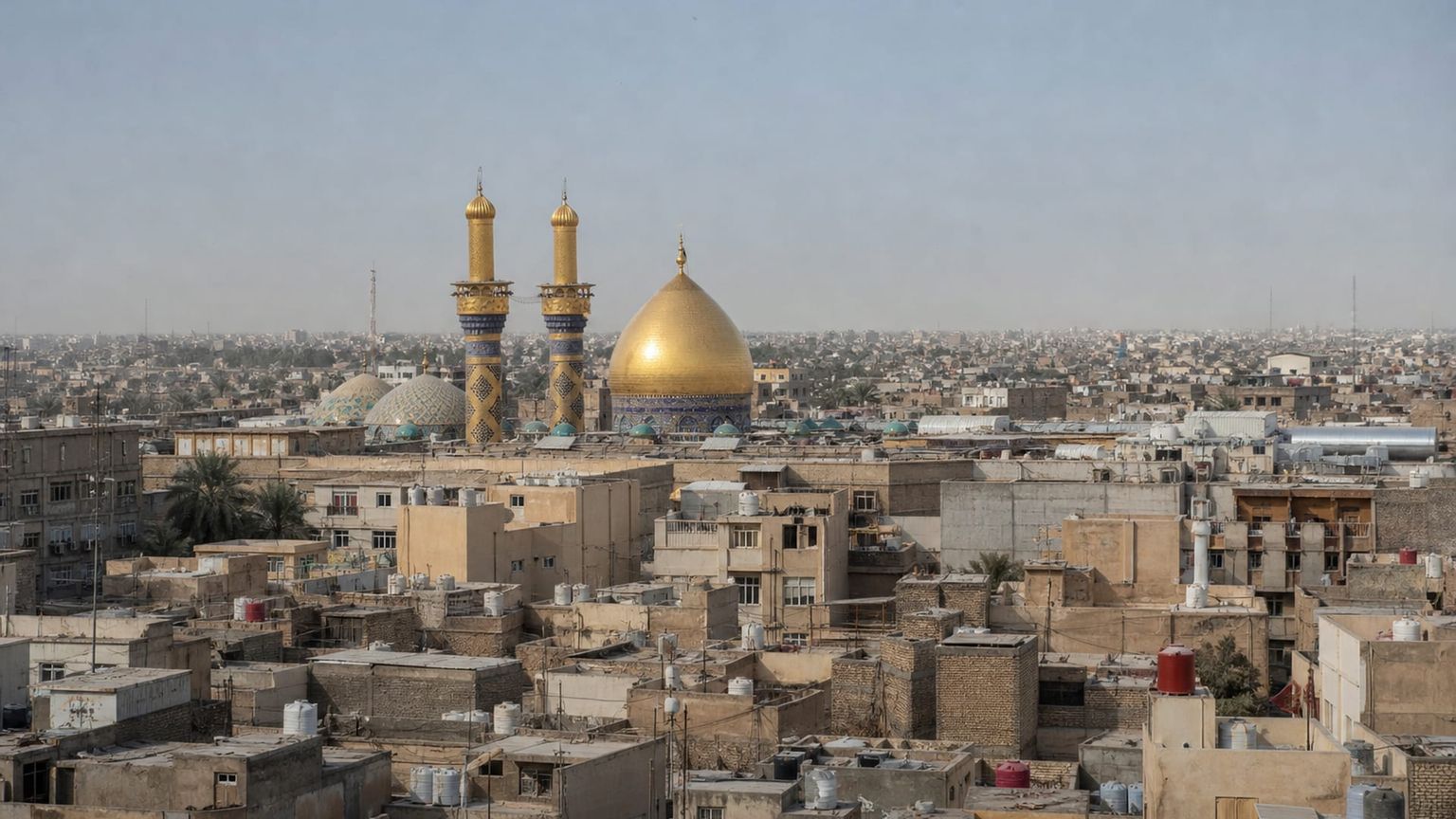
Najaf’s table leans on grilled fish, rice, stews, and stuffed vegetables, with masgouf, Iraqi dolma, qima stew, and biryani often anchoring a meal. Expect hearty portions, simple seasoning, and dining hours shaped by prayer breaks.
Masgouf
Iraq’s signature grilled river fish comes with char, smoke, and rice on the side. In Najaf, Al Mandi Al Iraqi serves a solid version that fits the city’s generous evening meal pattern.
Iraqi dolma
Stuffed vegetables, simmered and seasoned with a light sour edge, show up across local family-style menus. Al Najaf Restaurant is a sensible canonical stop for a plate built around this comfort dish.
Qima stew
This rich meat-and-chickpea stew brings depth to Najaf’s colder months and late lunches. Al Noorain Restaurant is the best-known local-style place to order it in the city.
Iraqi biryani
Najaf’s biryani usually arrives fragrant, layered, and built for a filling midday meal. At Al Safa Restaurant, it works well as a canonical example of the city’s rice-heavy cooking.
Best time to visit Najaf
Najaf is most comfortable in the cooler months, while summer demands earlier starts, shorter outdoor stretches, and more breaks between shrine visits and road transfers.
Best for: Shrines, cemetery walks, and long day plans
What you get: Temperatures roughly 60-93°F (16-34°C), with lighter crowds than peak religious periods and manageable daytime heat.
Trade-offs: Late spring can warm quickly, especially on exposed roads and in open cemetery lanes.
Best for: Early-morning visits and shorter indoor stops
What you get: Temperatures roughly 85-118°F (29-48°C), with thinner daytime crowds but much stronger heat and glare.
Trade-offs: Outdoor sightseeing becomes difficult after late morning, and transfers feel longer in the heat.
Best for: Balanced sightseeing and road-based day trips
What you get: Temperatures roughly 65-95°F (18-35°C), with moderate crowd levels and easier walking than summer.
Trade-offs: Religious calendar dates can still bring sudden crowd surges near the shrine.
Best for: Comfortable shrine visits and longer cemetery time
What you get: Temperatures roughly 45-67°F (7-19°C), with some of the year’s lightest heat and steady visitor flow.
Trade-offs: Evenings can feel cool, and some days bring dust or overcast skies.
A realistic 5-day plan in Najaf
This five-day plan follows the way Najaf actually works on the ground: shrine access, cemetery timing, and taxi movement between separate districts. It keeps the center of gravity in the Old City, then uses two road days to add Kufa and a slower final morning.
Land at Najaf (NJF) and take a taxi, or a prearranged hotel car, to the Old City and Imam Ali Shrine area, roughly 20 to 30 minutes from the airport and about $15 to $25 depending on traffic and time of day. If you arrive late, stay near the shrine district or, for a quieter first night, book the Najaf Corniche and lakefront area, then settle into a light dinner of grilled fish, rice, or soup at a nearby neighborhood restaurant and drink plenty of water after the transfer.
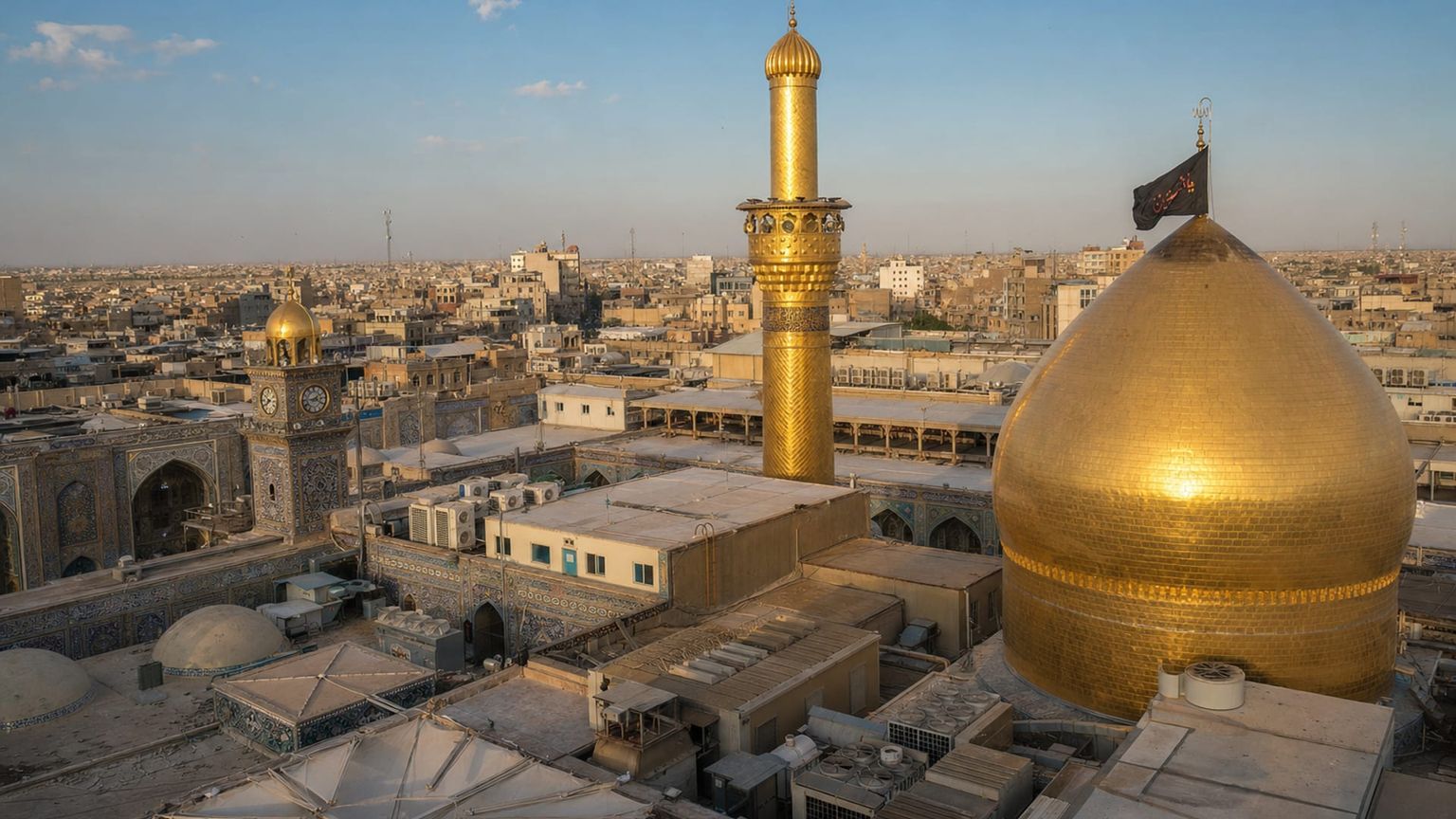
Begin at the Imam Ali Shrine early, when the courtyards are calmer, then spend about 1 to 2 hours inside the complex before walking 10 to 15 minutes through the surrounding old streets for tea or a simple lunch. In the afternoon, take a taxi, about 15 to 20 minutes, to Wadi al-Salam Cemetery and spend 1 to 2 hours following the public lanes and edges; return to the Old City for an unhurried evening meal near the shrine.
Start with a midmorning drive from central Najaf to Kufa Mosque, about 20 to 25 minutes by taxi, and plan roughly 1 hour for the courtyard, arches, and mihrab. After that, continue back toward Najaf and stop at the Wadi al-Salam Cemetery if you want a second, slower look at its burial lanes, or return directly to the shrine area for lunch and a quieter afternoon around the Old City.
An early departure makes the most sense for Kufa Mosque and Wadi al-Salam Cemetery in one circuit, because both sit about 20 to 25 minutes from central Najaf by car and work well before the midday heat builds. Visit Kufa Mosque first for about 45 minutes to 1 hour, then continue to Wadi al-Salam Cemetery for 1 to 2 hours, leaving time to come back to the Corniche for an evening walk and dinner by the lakefront.
Finish with a slower morning in the Najaf Corniche and lakefront area, where you can linger over coffee, then make one last stop in the Old City and Imam Ali Shrine area for a short prayer visit or souvenir shopping before heading out. If you want a final indoor pause, the shrine district also gives you the easiest access to small cafés and bookshops, and it keeps the transfer to Najaf (NJF) manageable for an afternoon or evening flight.
Business-class flights from the US to Najaf
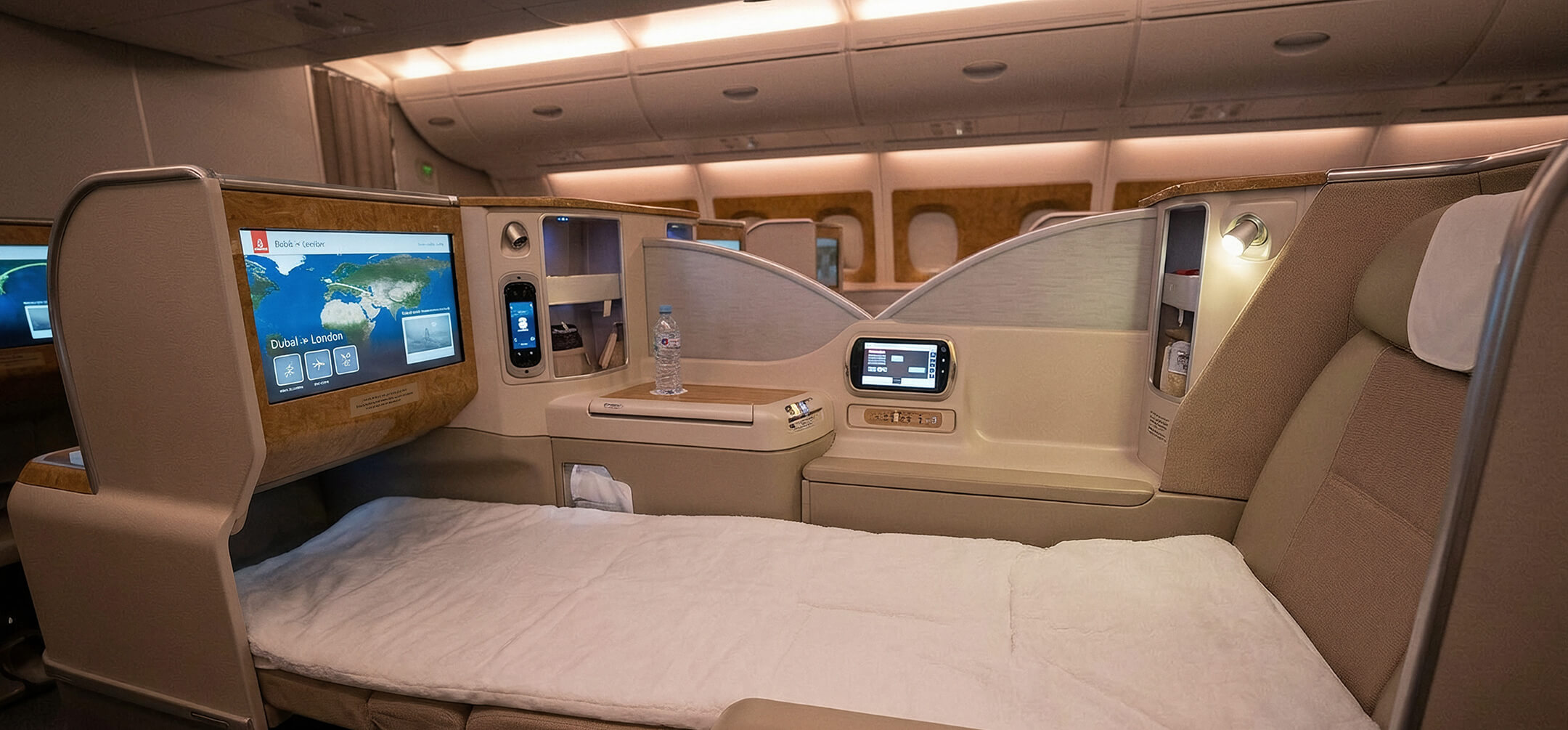
Reaching Najaf usually means routing through Gulf or European hubs, with one set of connections from the New York area and another from Los Angeles. The longer itineraries often reward flexibility on layover length and departure day.
From New York, Qatar Airways, Turkish Airlines, Emirates, Etihad Airways, British Airways, and Lufthansa all appear on typical one-stop itineraries, with common connections through Doha, Istanbul, or Dubai. Fares usually start at $4,500 and can reach about $8,500; if you do not mind a layover, common routings via Doha, Istanbul, or Dubai often bring the price down.
Los Angeles itineraries also lean on Qatar Airways, Turkish Airlines, Emirates, Etihad Airways, British Airways, and Lufthansa, with Doha, Istanbul, Dubai, Abu Dhabi, London, and Frankfurt showing up as frequent hubs. Round-trip fares are usually $4,800 to $9,000.
Najaf feels different when you slow down
A deliberate Najaf trip moves in clear steps, from the Old City and Imam Ali Shrine to Wadi al-Salam, then out to Kufa by taxi when the day is cooler. The Corniche gives you a final pause before departure, with easier road access and a calmer last meal. If you want to shape the route, the AranGrant experts can help you match your hotel area, flight timing, and shrine-day schedule to the season you choose