

Chapters:

Need help with your trip?
Our support team is available 24/7. Request a callback or call us directly at (833) 619-0908
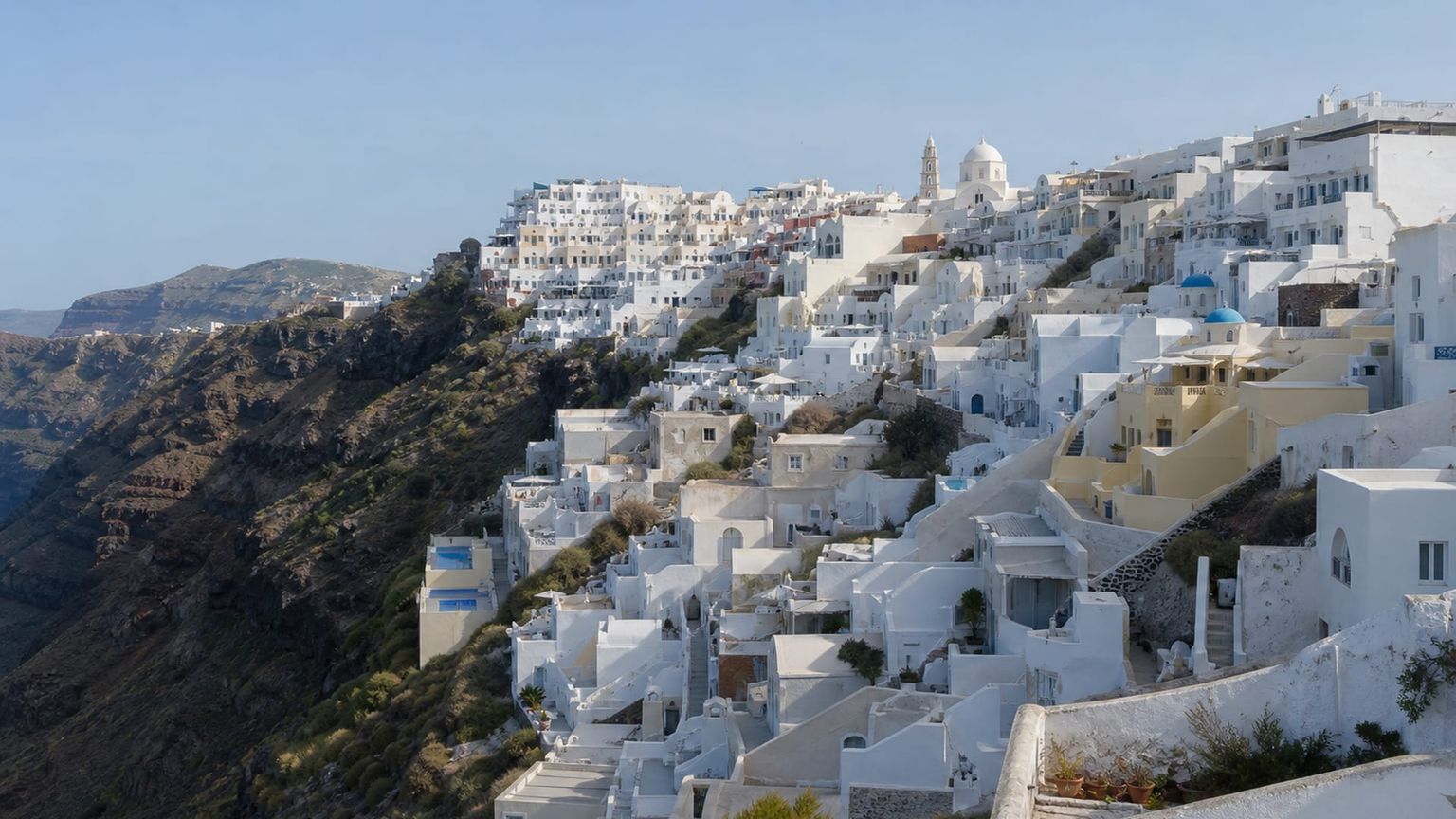
Most visits to Firá begin with a caldera photo, a museum stop, and dinner near the main square, yet many travelers miss how quickly the town changes once the day-trippers leave.
That pattern can work, but it ignores uphill lanes, fixed taxi fares, and the time lost crossing between the rim, the square, and the port at the wrong hour.
This guide sets out the town in a calmer order, pairing Firá with nearby viewpoints, villages, and transfer choices so each day has a clear purpose.
Useful things to know

Main language(s): Greek
Yassas (YAH-sahs) – Hello / good day
Parakaló (pah-rah-kah-LOH) – Please
Efharistó (ef-hah-rees-TOH) – Thank you
Miláte angliká? (mee-LAH-teh ahng-lee-KAH) – Do you speak English?
Póso kostízei? (POH-soh kos-TEE-zeh) – How much does it cost?

Currency: The local currency is the euro (EUR, €).

Cash and cards: Cards and contactless are widely accepted; keep about €20 to €40 ($22 to $44) in cash for small purchases and taxis.

Tipping: Round up small bills; 5-10% is appreciated in restaurants if service is good.

Traditional food: tomato fritters, fava, grilled octopus, moussaka

Water and coffee costs: Water about €1.50 ($2), bar espresso about €2.50 ($3).

Taxis and ride apps: Uber and Free Now operate here; availability can be limited late at night.

Plug and voltage: Type C/F socket, 230V

Dining and shop opening hours: Breakfast is about 08:00-10:00, lunch 13:00-15:00, and dinner 20:00-23:00. Many kitchens close in the afternoon between lunch and dinner.

Emergency number: 112 for police, fire, and medical emergencies.
Where to stay in Firá
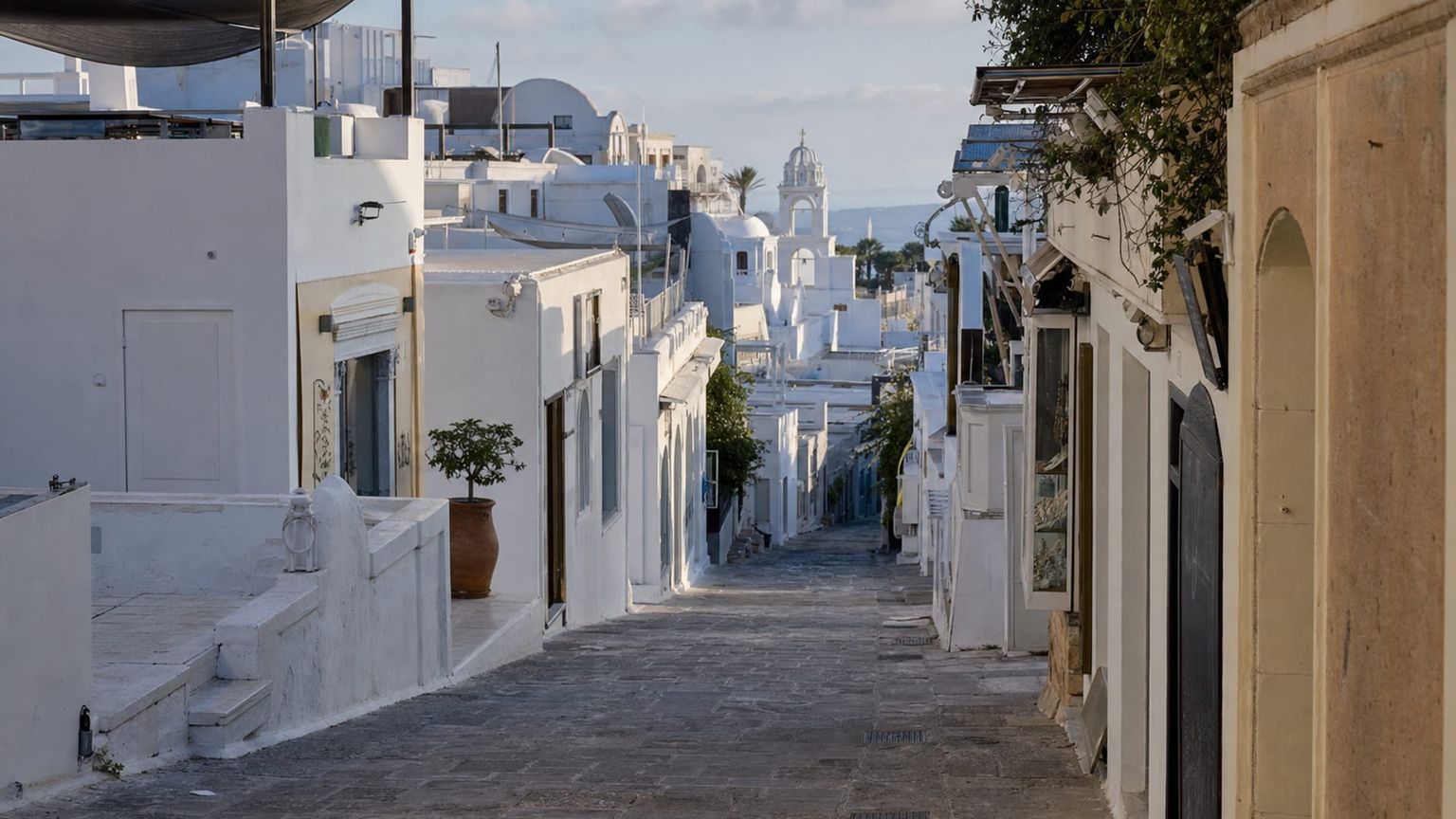
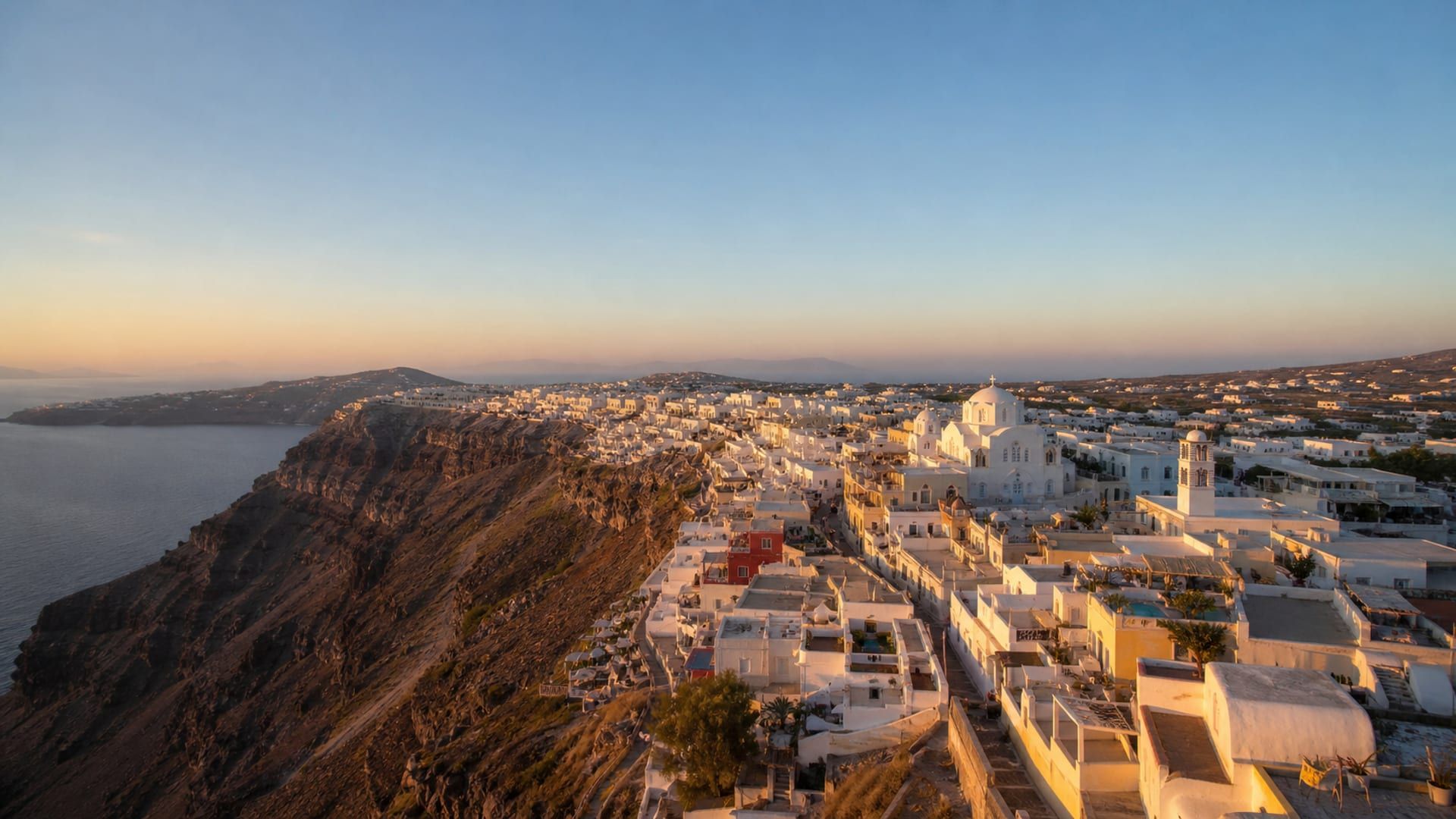
The compact heart of Firá sits on the cliff edge above the caldera, with the main pedestrian lanes, taxi stand, shops, and many of the island’s best sunset viewpoints. Staying here puts you within easy reach of museums, cable-car access, and ferries at the old port below.
Best for: First-time visits, car-free stays, dining, and easy access to caldera viewpoints
What to expect: Narrow lanes, frequent foot traffic, and a steady stream of visitors from late morning until sunset, with a much quieter pace after dinner.
Hotel prices: Usually about $180 to $420 per night for well-rated stays
Distance to major sights: 5 to 10 minutes on foot to the Archaeological Museum of Thera; about 10 to 15 minutes on foot to the cable car
Quietness: Busy by day, then quieter late evening once the day-trippers leave.
Main trade-off: Room rates are higher than in inland villages, and some properties sit on pedestrian streets where luggage transfer takes planning.
Good to know: If you want the easiest evening walk to restaurants and viewpoints, this is the place to base yourself, but book early for cliff-edge rooms.
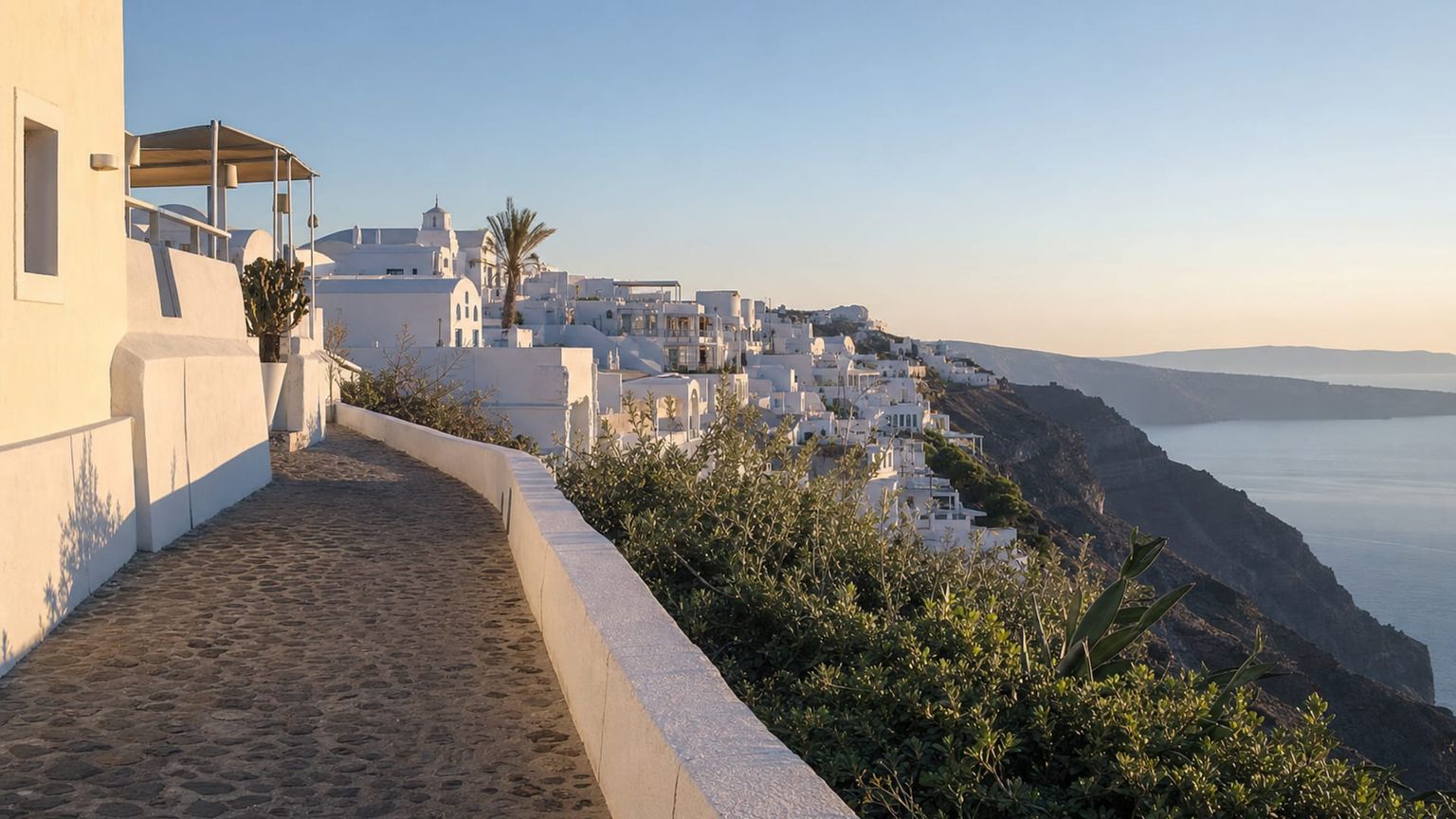
Just north of central Firá, Firostefani follows the caldera rim with whitewashed lanes, churches, and sweeping sunset outlooks. It works well if you want to stay close to the center while trading some of its bustle for a slightly more residential setting.
Best for: Couples, caldera views, walking access to Firá, and a quieter base near restaurants
What to expect: Small lanes, hotel terraces, and visitors walking the rim path, with more restaurant activity near sunset and less late-night noise than central Firá.
Hotel prices: Usually about $160 to $380 per night for well-rated stays
Distance to major sights: 10 to 15 minutes on foot to central Firá; about 20 minutes on foot to the cable car
Quietness: Calmer than central Firá in the morning and evening, though sunset hours still draw people to the rim.
Main trade-off: You gain a softer residential edge, but the best views and cliffside rooms often cost nearly as much as central Firá.
Good to know: Expect a short uphill walk on the return from town, so choose a property near the rim if you want to avoid steep climbs after dinner.
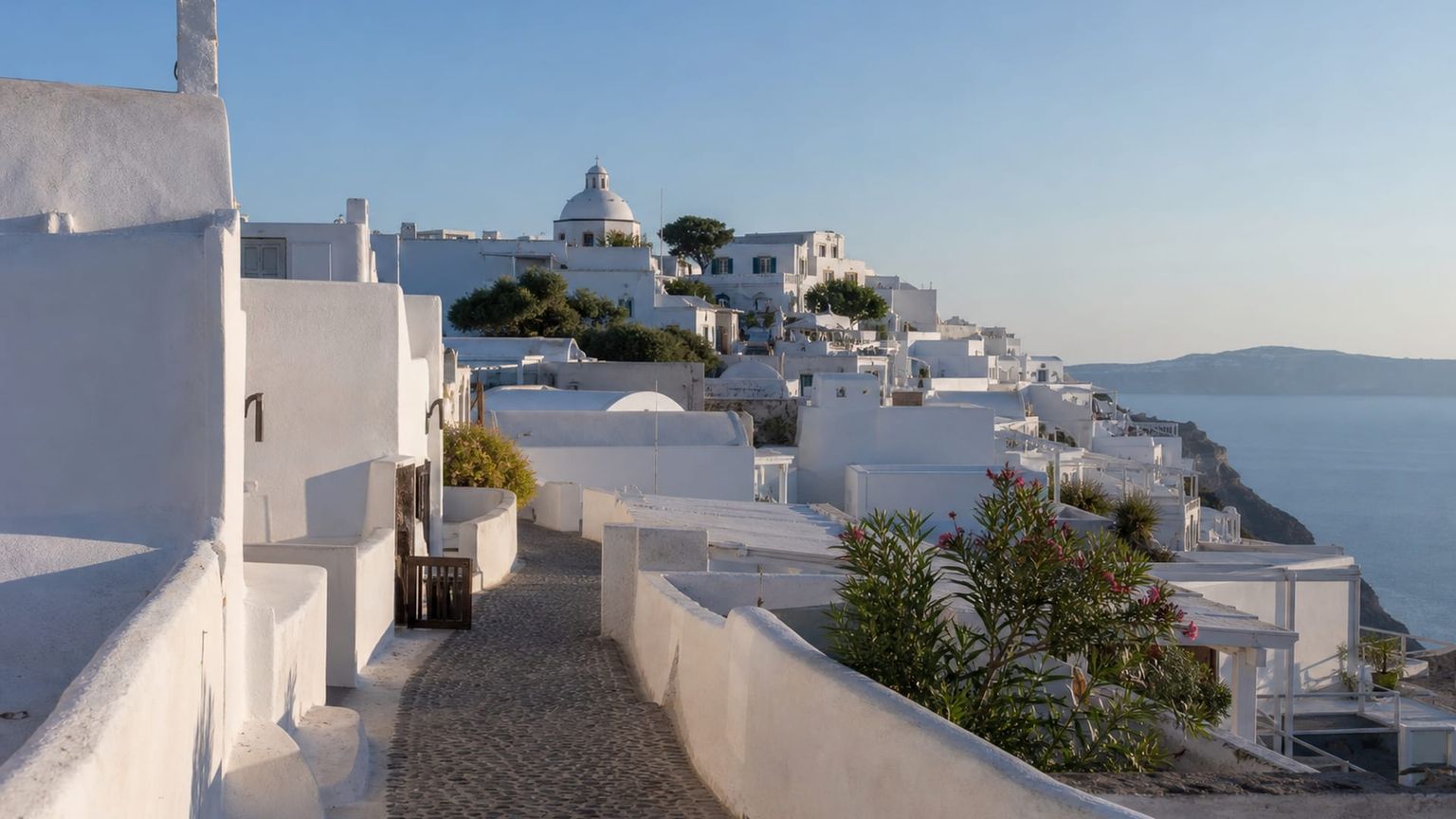
Imerovigli sits north of Firá on the caldera ridge and is known for some of Santorini’s widest volcanic views. It suits travelers who want a refined base with easy access to Firá by road or path, but with fewer pedestrians right outside the door.
Best for: Honeymoons, scenic stays, caldera views, and travelers who prefer a quieter overnight base
What to expect: Hotel terraces, narrow lanes, and fewer passersby than in Firá, with most movement tied to guest arrivals, sunset viewing, and dinner reservations.
Hotel prices: Usually about $200 to $500 per night for well-rated stays
Distance to major sights: About 15 to 20 minutes by car to Firá center; about 25 to 35 minutes on foot along the caldera path
Quietness: Very quiet during the day outside hotel areas, then modestly busier near sunset at the viewpoint edges.
Main trade-off: You will depend more on taxis or walking for dinner in Firá, and many properties are built on steep terrain with steps.
Good to know: If you plan late nights in Firá, check the return route before booking, because the walk back is scenic but steep in places.
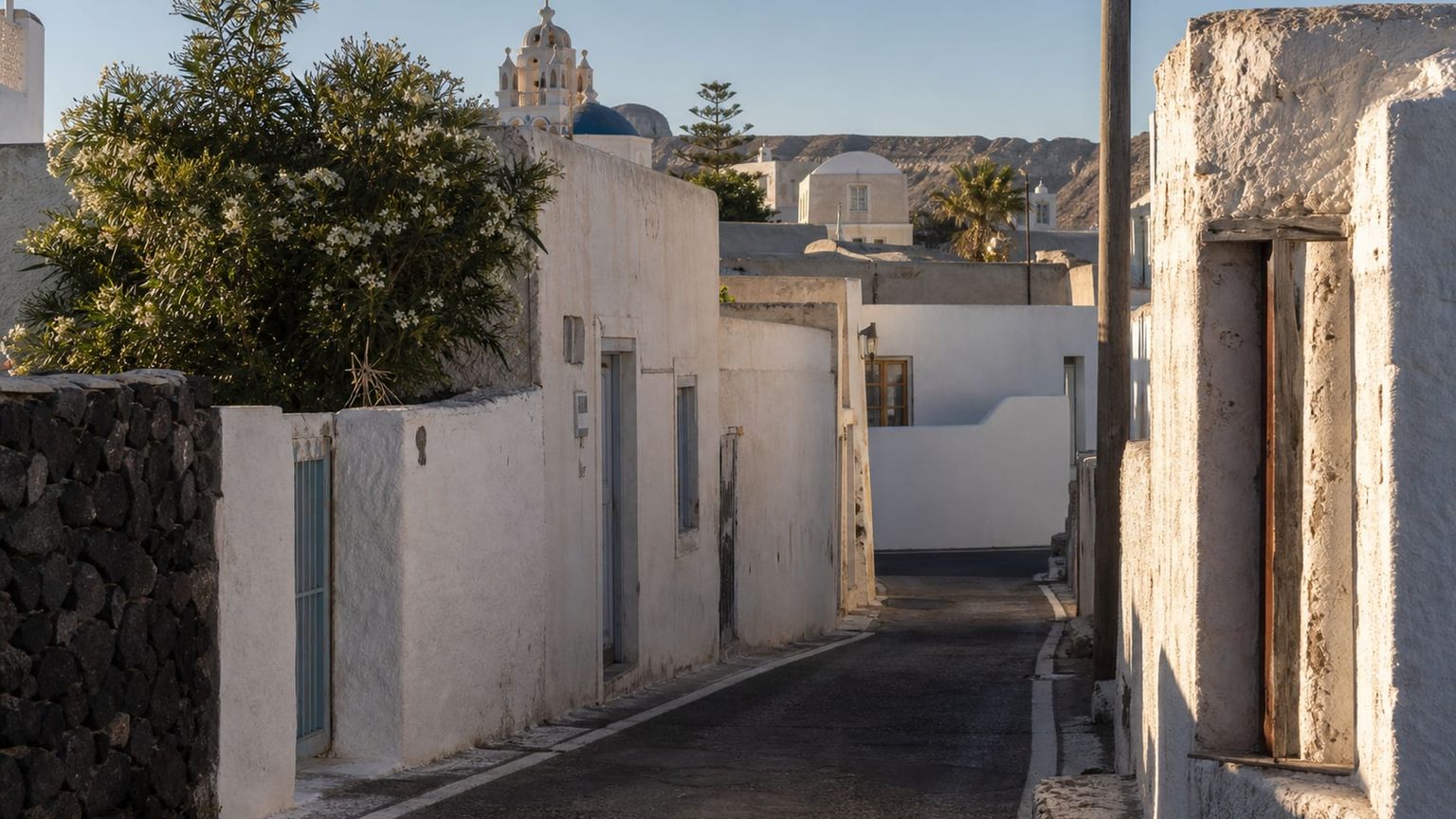
Megalochori is a traditional inland village southwest of Firá, known for restored mansions, narrow lanes, and wine-country surroundings. It offers a different pace from the caldera edge and works well for travelers who care more about local character than direct sunset frontage.
Best for: Wine tasting, village atmosphere, travelers with a car, and longer stays away from the busiest cliff-top zones
What to expect: Quiet lanes, small tavernas, and a local residential feel, with a noticeable pickup around dinner but little late-night activity.
Hotel prices: Usually about $110 to $260 per night for well-rated stays
Distance to major sights: About 15 to 20 minutes by car to Firá center; about 20 to 25 minutes by car to the Archaeological Museum of Thera
Quietness: Quiet throughout the day, with only modest evening activity around village restaurants.
Main trade-off: You give up caldera views and easy walking access to Firá, so nearly every outing needs a car, taxi, or prebooked transfer.
Good to know: Choose this only if you are comfortable arranging transport after dinner, since taxis can be less convenient late at night.
Travelers usually avoid staying in Karterados, Pyrgos, Vothonas, and Exo Gonia, because they sit inland from Firá’s main cliffside sights and usually require a bus or taxi for evening meals and sunset viewing. Mesaria is also less convenient for a short stay, since it is farther from the caldera edge and has fewer visitor amenities than the town center.
Hotel deals
How to get around Firá efficiently
Firá sits on the island bus network, with taxis and ride apps filling the gaps when you need to move between the town center, the airport, and the caldera villages.

Metro
for longer distances
Firá has no metro system; for this part of Santorini, the closest equivalent is the island bus network, which links the town with the airport, port, Oia, and key villages. Fares are usually about $2 to $3 (€2 to €3) one way, valid for a single ride, and buses can take 10 to 30 minutes to reach nearby stops, longer in peak season traffic.

Bus and tram
for convenience
KTEL buses serve the main stops in Firá, including the airport, Athinios port, Oia, Kamari, and Perissa, with the central terminal in town acting as the hub. Tickets are usually about $2 to $3 (€2 to €3) per ride, purchased on board or at the terminal, and journey times range from about 10 minutes to the airport to roughly 30 to 45 minutes for coastal resorts; frequency drops in the evening and late season.

Taxi
for convenience or late hours
Licensed taxis in Firá use fixed fares on common routes rather than a meter for many transfers, with airport runs typically about $28 to $35 (€25 to €32) and port trips about $17 to $23 (€15 to €20), depending on time of day and luggage. You can find them at the taxi rank in Firá or book through your hotel, and drivers usually accept cash, with cards less certain unless agreed in advance.
*Prices are based on rates updated as of June 2026 and may change at the time of travel.
Walk for the town center and rim paths, use buses for airport or beach runs, and choose taxis or prebooked transfers when you need an evening return with luggage.
Iconic landmarks
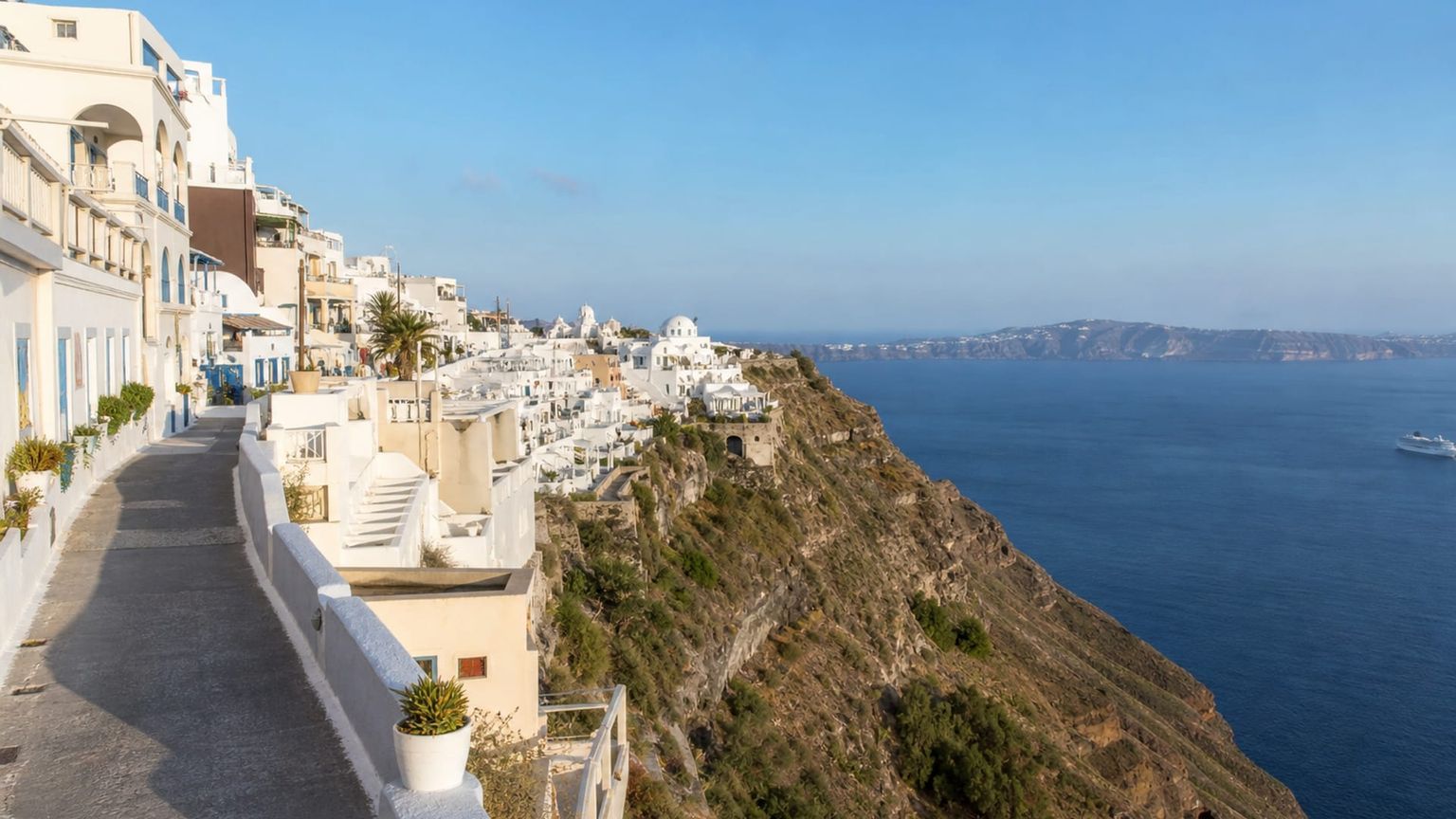
Santorini Caldera viewpoints, Firá
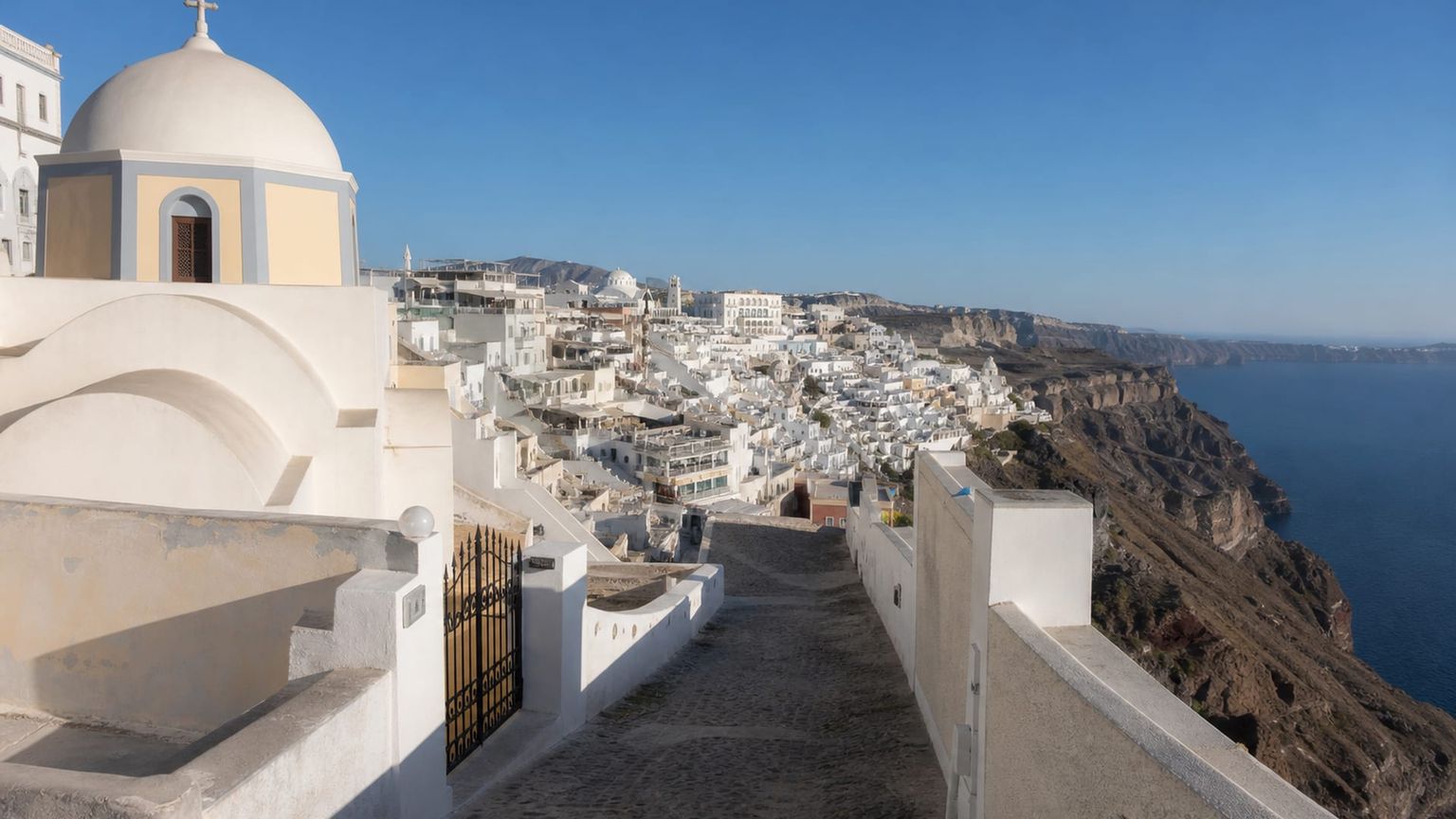
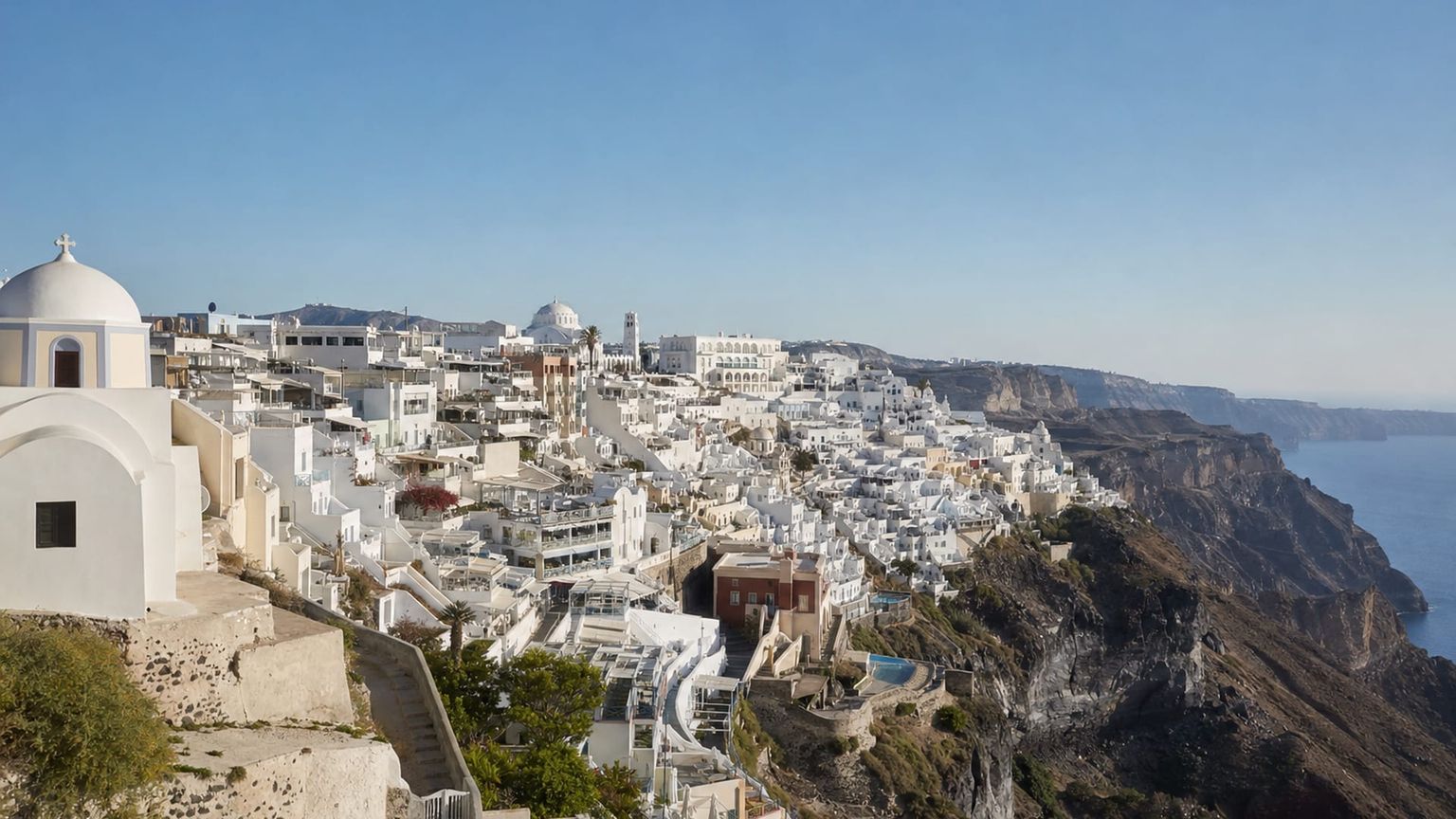
The caldera edge above Firá gives you the island’s clearest cliff-and-sea views, with whitewashed houses stacked over the drop. Walk the rim in daylight, then return at sunset when the western light sharpens the cliffs and the volcano line.
Time needed: About 1 to 2 hours
Entry: Free to access; no timed entry is required, and you can walk the public caldera edge from multiple points in town.
Tip: Go late afternoon, when the cliffs face softer light and crowds thin slightly.
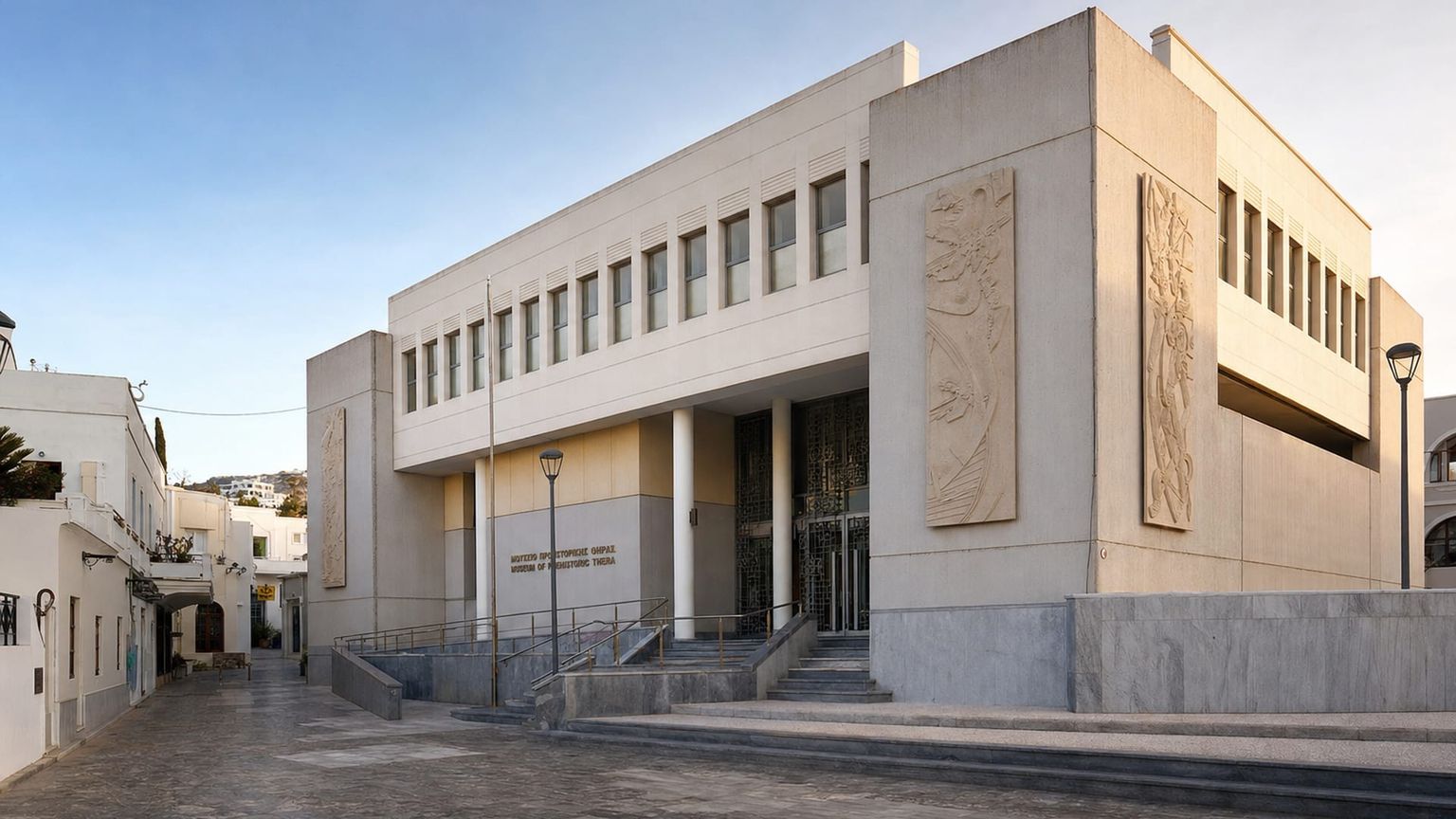
Museum of Prehistoric Thera
This museum brings together finds from Akrotiri and other Cycladic sites, including wall paintings, pottery, and tools that place prehistoric Santorini in clear context. It sits in central Firá, so you can pair it easily with a town walk.
Time needed: About 1 to 2 hours
Entry: Admission costs $8 (€7), with reduced tickets for eligible visitors; hours and ticketing vary by season and local holidays. Visit the official site for details.
Tip: Arrive early, before cruise crowds reach central Firá and the galleries fill.
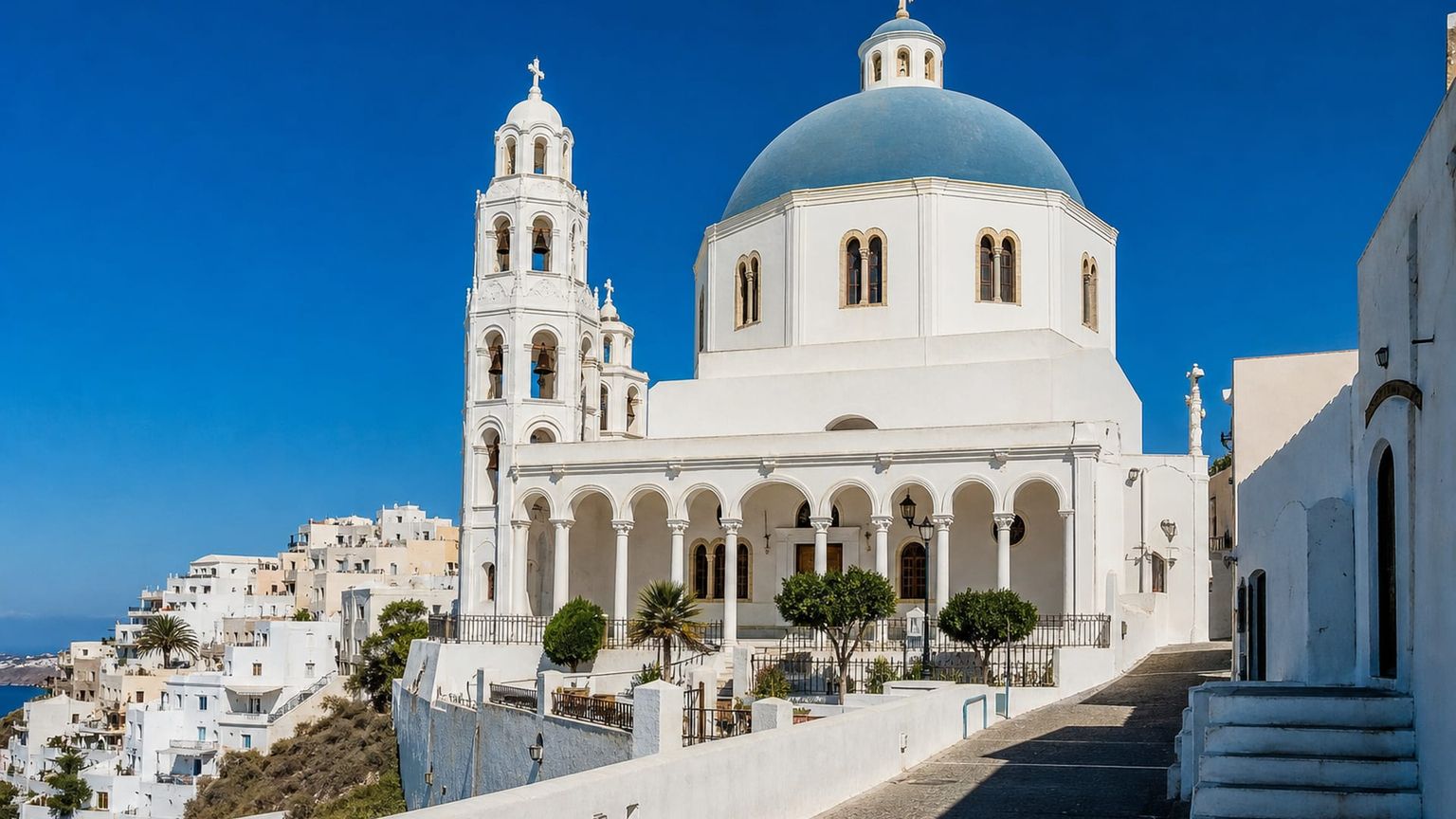
Orthodox Metropolitan Cathedral
This hilltop cathedral anchors Firá’s main square with its arched facade, bell tower, and Cycladic detailing. Step inside for the painted interior, then pause outside for views across the caldera and the dense lanes below.
Time needed: About 30 to 45 minutes
Entry: Free to enter, with donations welcome; opening hours can change for services, feast days, and maintenance periods. Visit the official site for details.
Tip: Visit between services, when the interior is open and the square is quieter.
Overlooked sites worth visiting

Skaros Rock
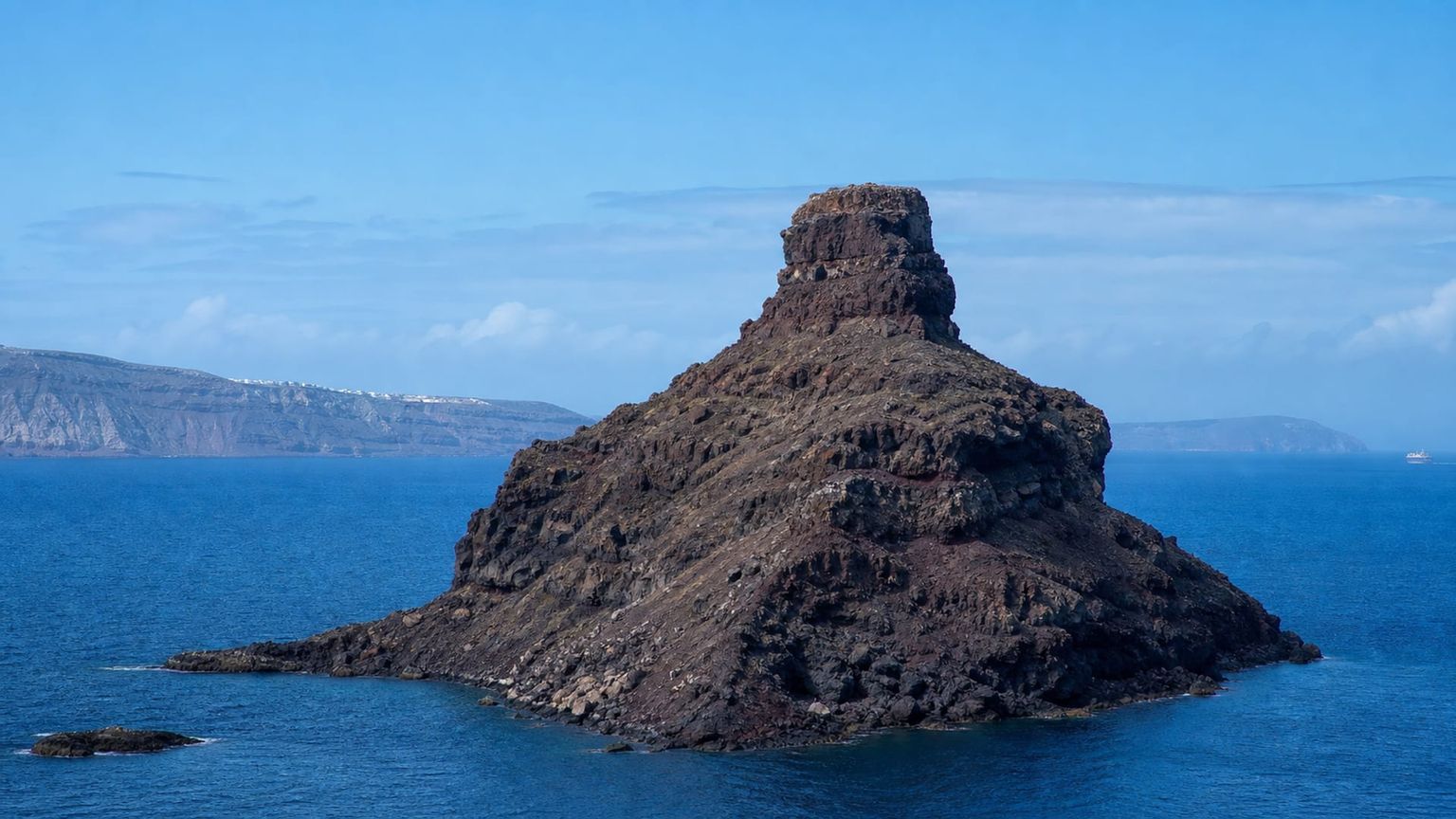
A short climb from Imerovigli leads to a wind-scoured promontory with chapel ruins and wide caldera views. Go at sunrise or late afternoon for quieter paths and cooler footing.
Time needed: About 1 to 2 hours
Entry: Free to access; no ticket or reservation is required, and visitors can walk the trail at any time. Wear sturdy shoes, because the path is uneven, exposed, and steep in places, with loose stone and little shade.
Tip: Start early, before the midday heat builds.

Megaro Gyzi Museum
Set in a restored mansion in Firá, this small museum shows Cycladic prints, maps, and historic photographs. Its compact rooms make it an easy stop between the cable car and dinner.
Time needed: About 45 minutes to 1 hour
Entry: Admission is about $7 to $9 (€6 to €8) for adults, with reduced rates for some visitors. The museum usually opens in the afternoon during season, though hours can shift, so check the latest schedule before you go. Visit the official site for details.
Tip: Visit after 5:00 pm to avoid the busiest midday hours.
Traditional food
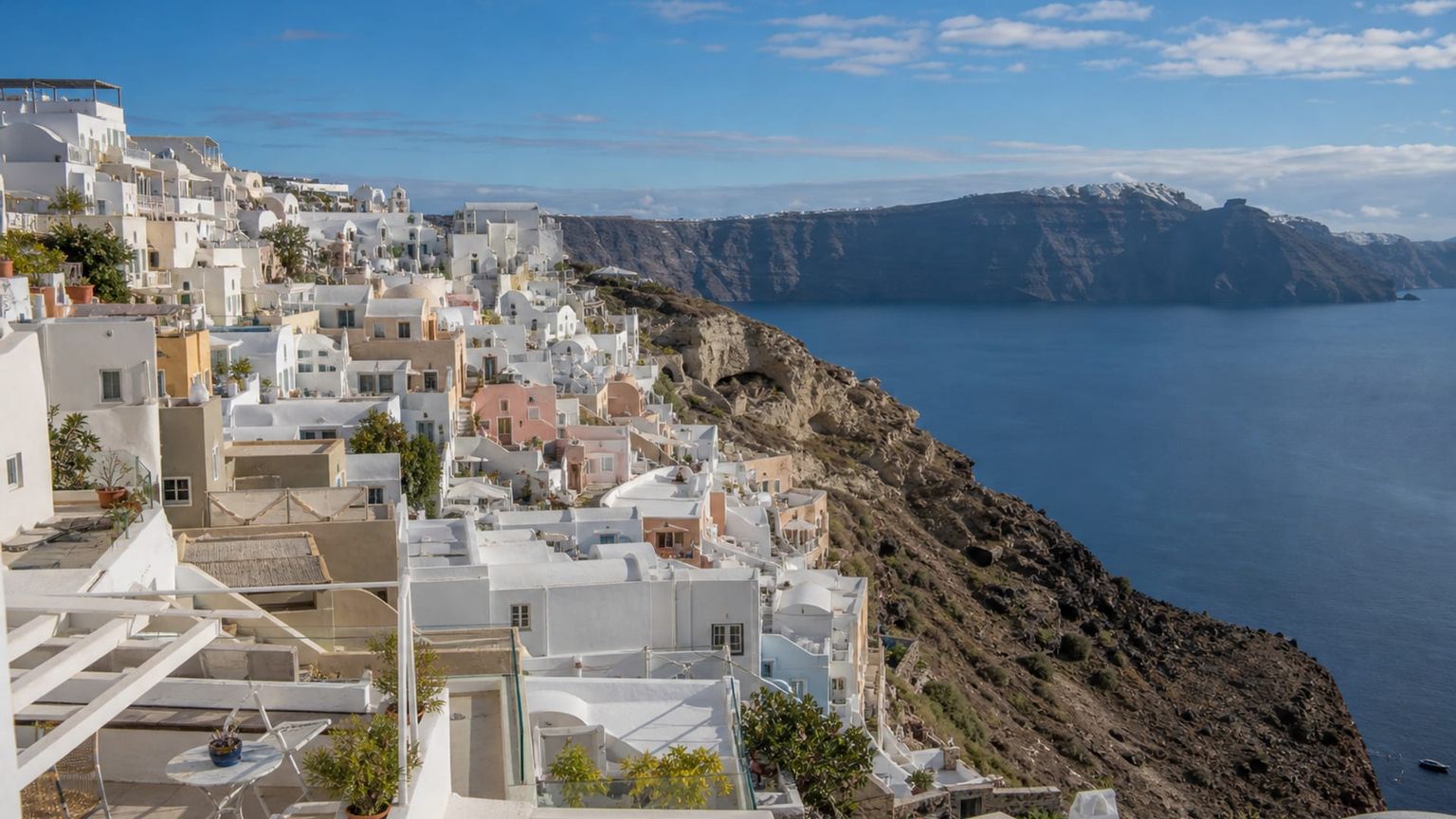
Firá’s cooking leans on olive oil, tomatoes, capers, fava, grilled seafood, and slow village dishes, with tomato fritters and moussaka anchoring many menus. Dinner usually starts late, after a long afternoon pause.
Tomato fritters
These crisp fritters are one of Santorini’s best-known starters, usually built around local tomatoes, herbs, and a light fry. Selene in Firá is a strong canonical pick, with a menu that treats island produce seriously.
Fava
Fava here usually means a smooth yellow split-pea purée finished with olive oil, onion, or capers. Naoussa Restaurant in Firá serves a classic version in a setting close to the main lanes.
Grilled octopus
Charred octopus appears often in the island’s seafood kitchens, usually with lemon, herbs, or beans. Argo Restaurant in Firá is a dependable place to order it while staying close to the caldera edge.
Moussaka
Layered eggplant, potato, minced meat, and béchamel gives this baked dish its familiar richness, and it shows up on many evening menus. Pelican Kipos in Firá is a good local choice for a version that fits a longer dinner.
Best time to visit Firá
Firá changes by season, with spring and autumn giving the best balance of walking weather, while summer brings longer sunsets, fuller tables, and a sharper need to plan around heat and crowds.
Best for: Clear walks, moderate temperatures, and active town life before peak summer
What you get: About 59-75°F (15-24°C), with manageable crowds and comfortable conditions for caldera walks
Trade-offs: Sea swimming can still feel cool early in the season
Best for: Long daylight, late dinners, and the fullest sunset views
What you get: About 72-88°F (22-31°C), with the highest visitor volumes and the busiest viewpoints
Trade-offs: Heat, glare, and limited shade make midday sightseeing tiring
Best for: Warm water, easier dining reservations, and good walking weather
What you get: About 64-82°F (18-28°C), with lighter crowds after early September
Trade-offs: Some seasonal businesses shorten hours later in the season
Best for: Quiet lanes, lower rates, and unhurried museum visits
What you get: About 50-60°F (10-16°C), with very light crowds and occasional rain
Trade-offs: Some cliffside places close or reduce winter hours
A realistic 5-day plan in Firá
Five days in Firá works best when you separate the town center, the caldera edge, and the nearby villages instead of treating them as one compact stop. The plan below keeps the walking day-by-day and leaves room for sunset, dinner, and the island bus schedule.
Land at Santorini (JTR), then take a taxi or prebooked transfer to Firá, which usually takes about 15 to 20 minutes and costs roughly $25 to $40. If you are staying in Fira town center, check in, fill a bottle, and keep dinner close to the main square or the cable car area so you can walk back without dealing with a late uphill transfer. A simple first night works best here: a souvlaki stop, a glass of local wine, and an early look at the caldera edge before the crowds thin after sunset.
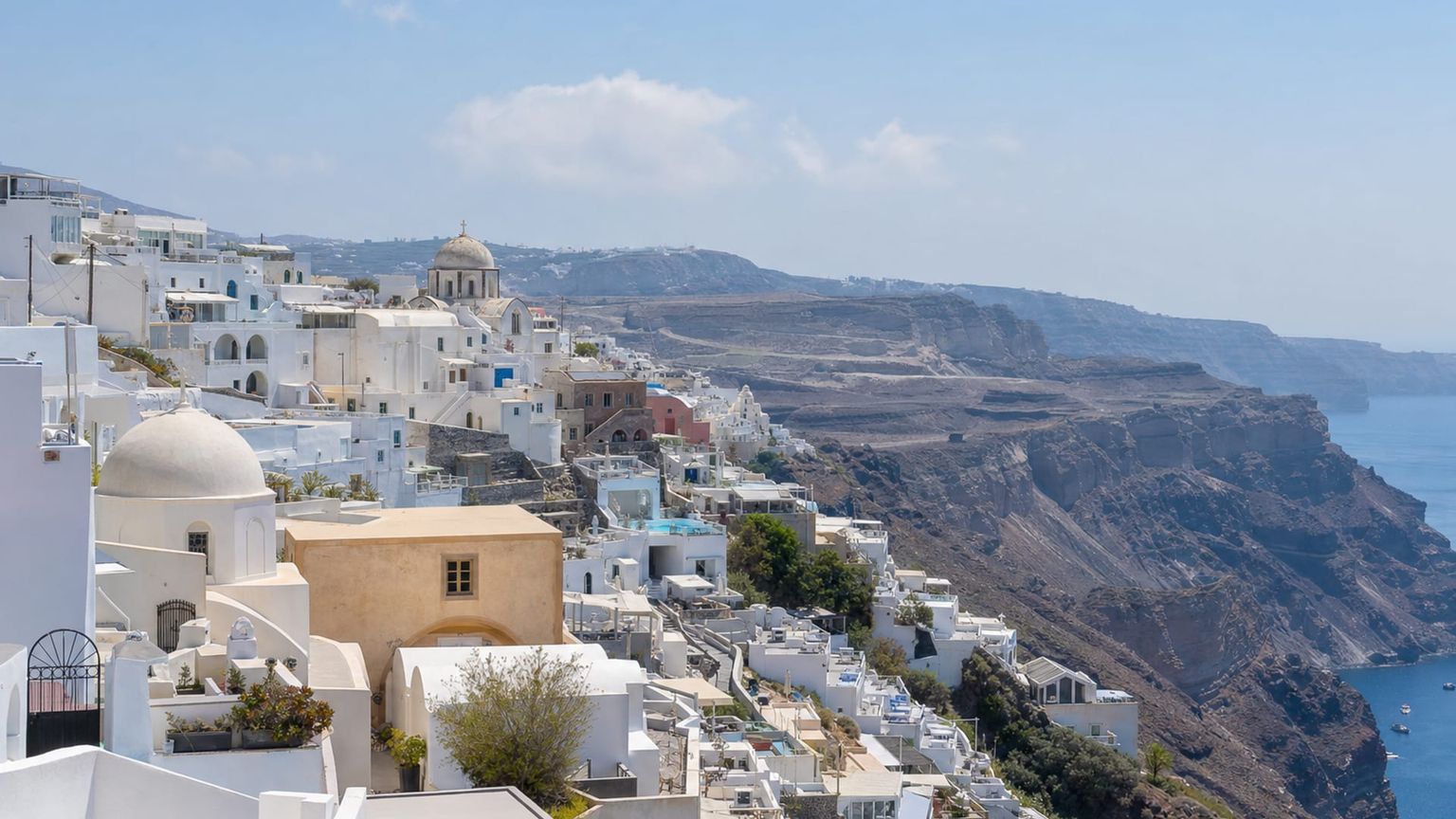
Start early in central Firá with the Museum of Prehistoric Thera, about a 5 to 10 minute walk from most Fira town center stays. From there, continue about 5 minutes on foot to the Orthodox Metropolitan Cathedral, then spend another 10 to 15 minutes wandering the square and the lanes below it. In the late afternoon, follow the public caldera edge for the Santorini Caldera viewpoints, Firá, which is free to access and about a 10 to 15 minute walk from the museum area, then stay out for sunset and dinner back in Firá.
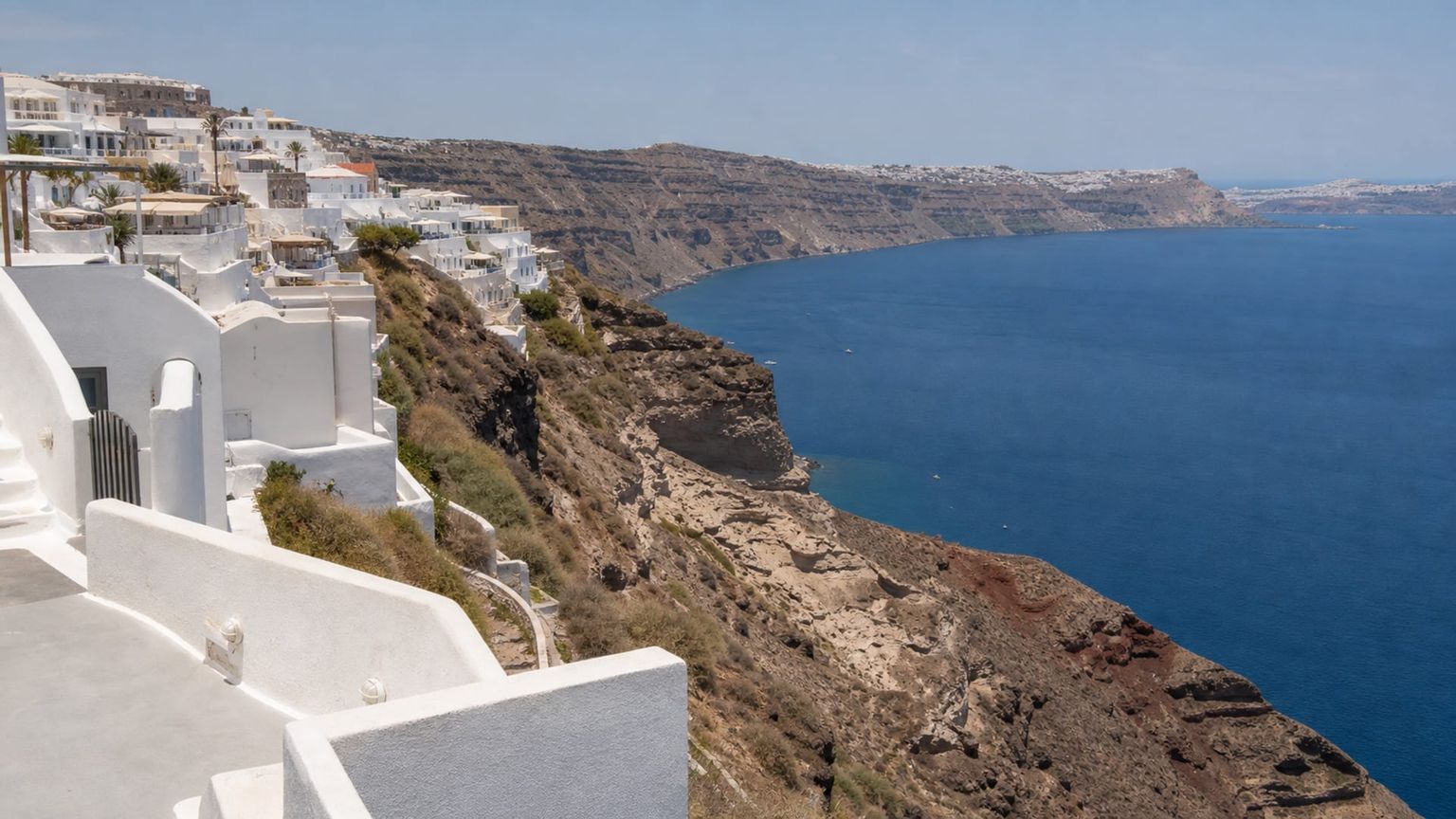
A morning in Imerovigli gives you the best setup for Skaros Rock, so take a taxi from Firá, about 15 to 20 minutes by car, or walk the caldera path if you want a longer route. Plan about 1 to 2 hours for the climb and the return, with sturdy shoes for the uneven trail. After that, return to Firá for Megaro Gyzi Museum, which sits close to the center and works well for a late-afternoon visit after 5:00 pm, then finish with coffee or dessert in the lanes near the main square.
Begin in Megalochori, about 15 to 20 minutes by car from Firá center, and spend the morning among the village lanes, restored mansions, and small tavernas. After lunch, book a tasting at a nearby winery, then head back toward the caldera for one more walk through Firostefani, which lies about 10 to 15 minutes on foot north of central Firá and gives you a quieter rim-side stroll before dinner. If you want a final sunset stop, return to the public viewpoint in Firá rather than trying to cross the island after dark.
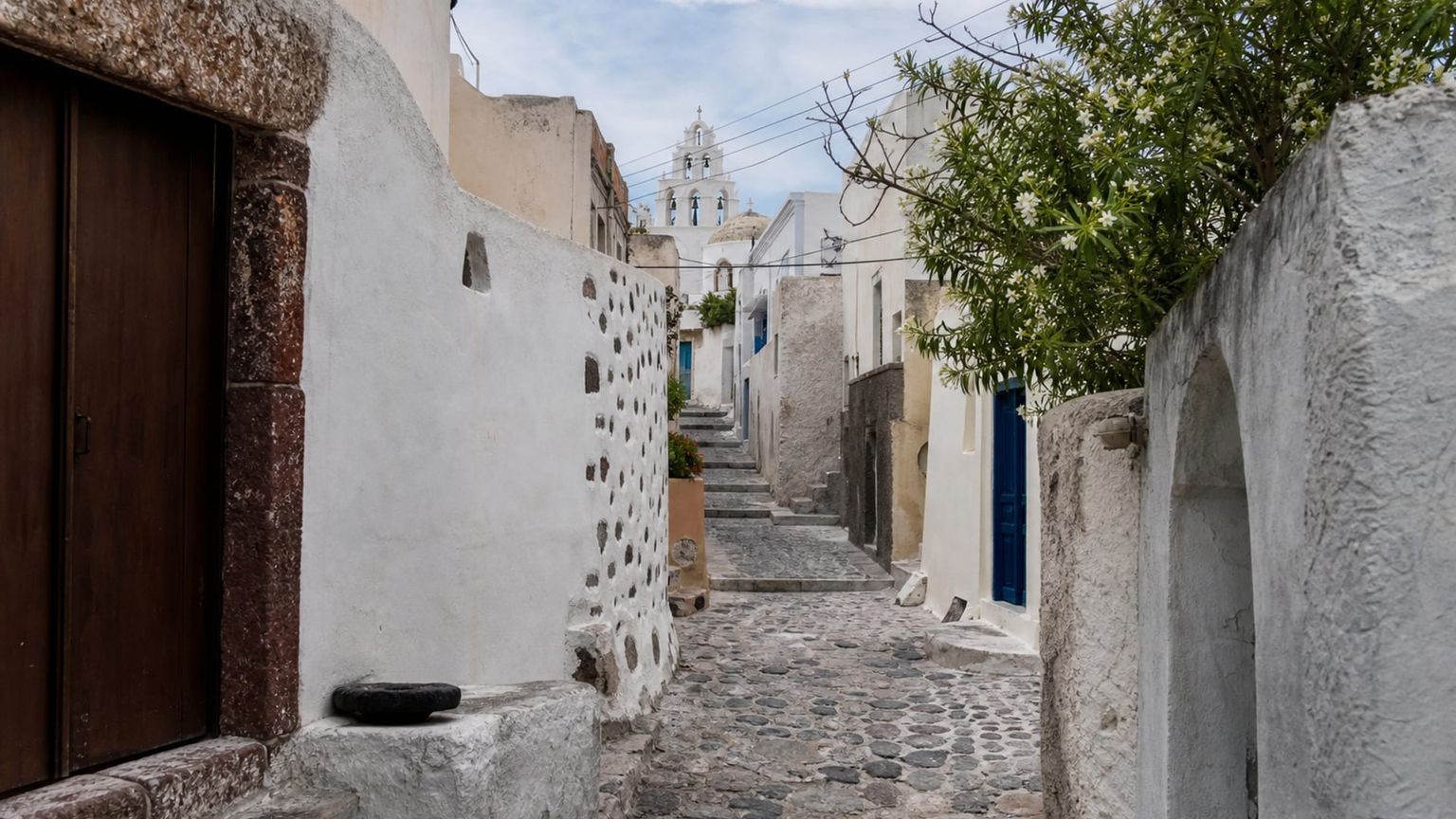
On your last day, keep the pace modest in Firá, starting with any museum or shop you missed near the town center, then spend part of the afternoon browsing the lanes around the main square for ceramics, olive oil, and local wine. If your timing allows, stop for a coffee in Firostefani before heading back downhill toward the port or airport transfer pickup. Staying near Fira town center makes this easiest, since you can pack, walk to one last café, and leave without rushing across the island.
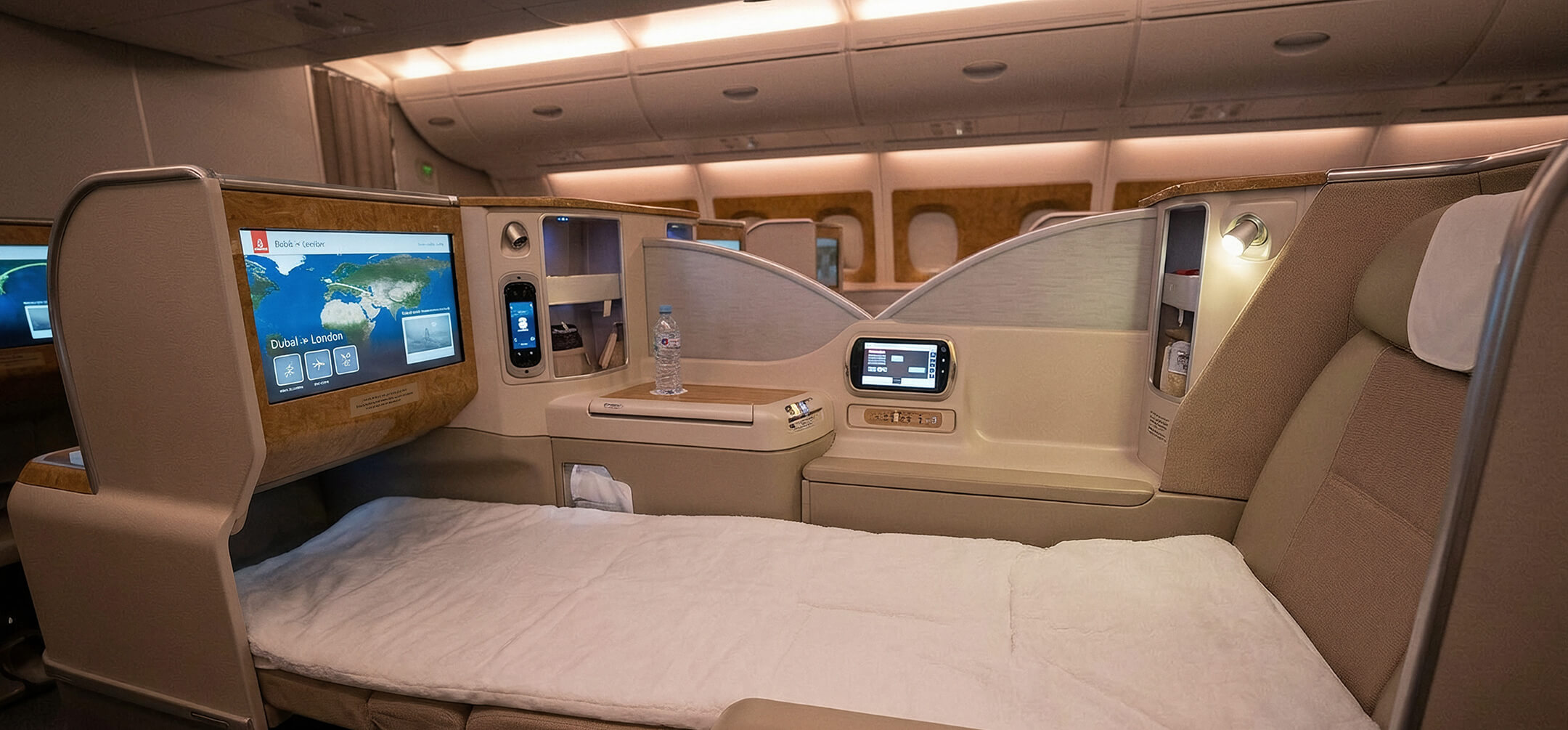
Business-class flights from the US to Firá
Reaching Santorini from the United States usually means a one-stop itinerary, and the useful differences are in layover city, total travel time, and fare range. Here are two business-class examples from each coast.
From New York, Aegean Airlines, Delta Air Lines, Emirates, British Airways, Air France, and Lufthansa all appear in the market, with nonstop travel time about 11 to 12 hours and one-stop options through ATH, DXB, LHR, CDG, or FRA taking about 13 to 18 hours. From about $3,400 round-trip, with nonstop and one-stop options across the market.
Los Angeles itineraries usually run through ATH, LHR, FRA, ZRH, or DXB, and one-stop trips take about 16 to 22 hours. Aegean Airlines, Delta Air Lines, Emirates, British Airways, Lufthansa, and Swiss International Air Lines all show up here, with round-trip fares usually starting near $3,900 and rising to about $7,000, while one-stop options often undercut nonstop pricing when schedules align.
Firá feels different when you slow down
A deliberate stay in Firá keeps the day anchored to the town center, the caldera edge, and one or two clear side trips, such as Firostefani, Imerovigli, or Megalochori. You can move by foot for the lanes, by bus for longer hops, and by taxi when dinner ends late. If you want AranGrant experts to shape a trip around that pattern, start with the views above the square and build from there