

Chapters:

Need help with your trip?
Our support team is available 24/7. Request a callback or call us directly at (833) 619-0908
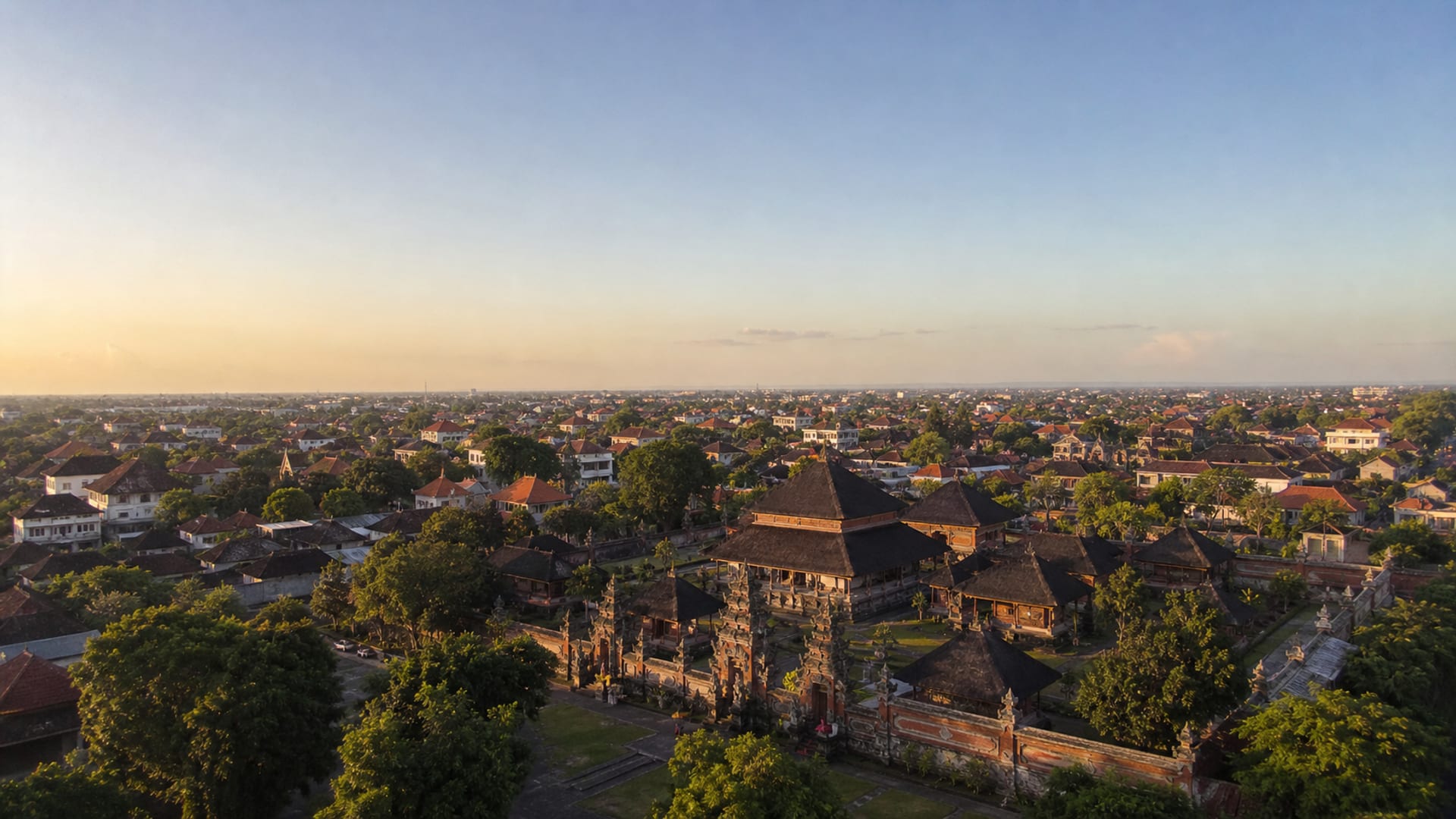
Denpasar rarely starts as a standalone stop, many travelers pass through on the way to beaches or fast boats and miss the city’s own temples, museums, and neighborhood dining. That habit saves little time once traffic and spread-out districts enter the picture.
Sanur, Renon, and central Denpasar sit close enough for short hops, but not close enough to improvise every move on foot. If you map them badly, you spend more time in traffic than at the sites.
This guide keeps the focus on workable bases, short transfers, and a five-day sequence that fits the city’s layout instead of fighting it.
Useful things to know
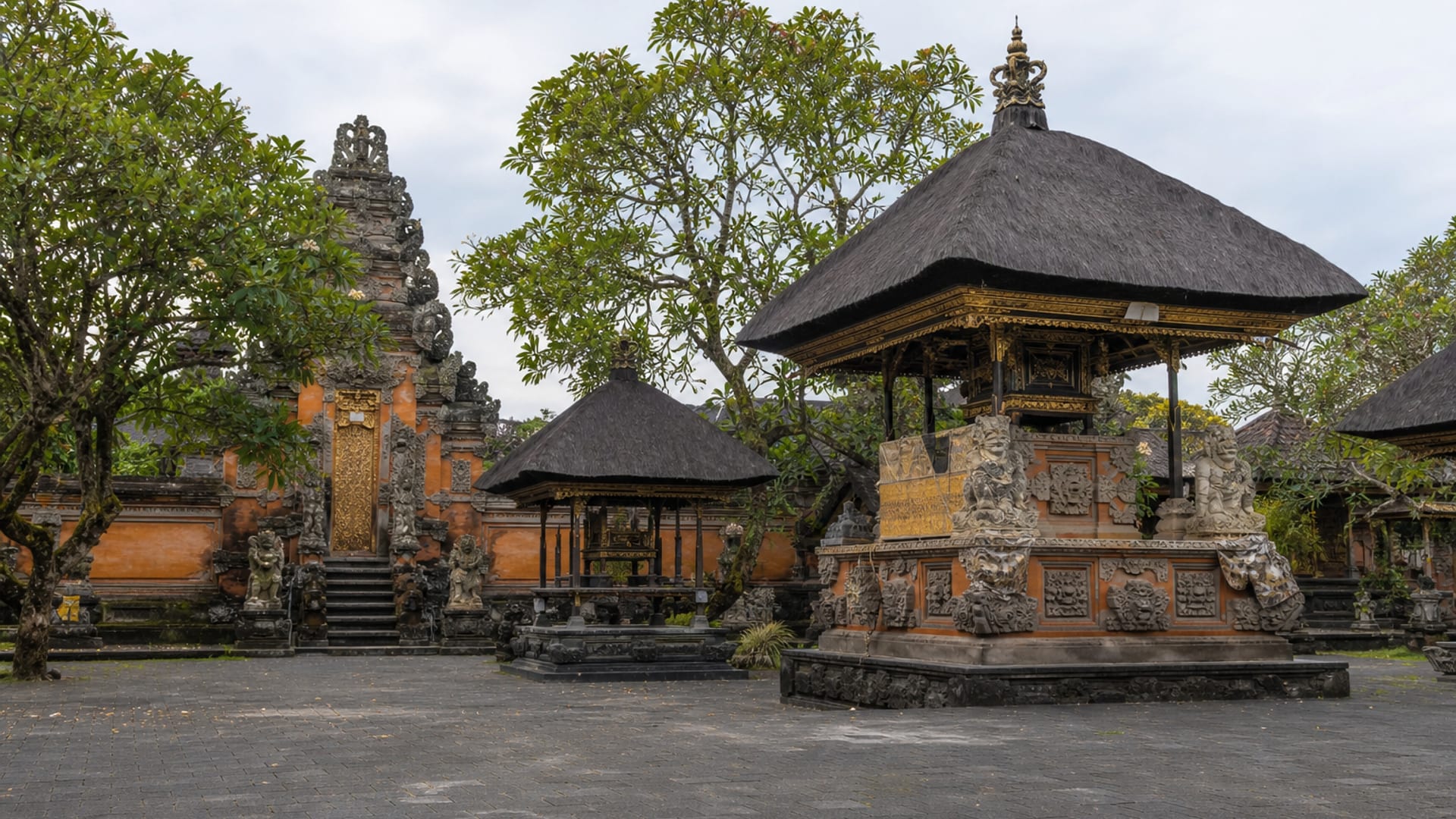

Main language(s): Indonesian
Halo (HAH-loh) – Hello
Tolong (TOH-long) – Please
Terima kasih (tuh-REE-mah KAH-see) – Thank you
Apakah Anda bisa berbahasa Inggris? (AH-pah-kah AHN-dah BEE-sah ber-bah-HAH-sah ING-gris) – Do you speak English?
Berapa harganya? (beh-RAH-pah har-GAH-nya) – How much does it cost?

Currency: The local currency is the Indonesian rupiah (IDR, Rp).

Cash and cards: Cards and contactless are widely accepted; keep about Rp100,000 to Rp200,000 ($6 to $12) for small cash-only purchases.

Tipping: Round up small bills; 5 to 10% is appreciated in nicer restaurants.

Traditional food: Babi guling, ayam betutu, sate lilit, lawar

Water and coffee costs: Water about Rp10,000 to Rp20,000 ($1 to $1.25), bar espresso about Rp25,000 to Rp40,000 ($1.50 to $2

Taxis and ride apps: Grab and Gojek operate here; use airport-approved pickup points.

Plug and voltage: Type C/F socket, 230V

Dining and shop opening hours: Breakfast is usually 07:00-10:00, lunch 12:00-14:00, and dinner 19:00-22:00. Many places stay open later in tourist areas.

Emergency number: Dial 112 for police, fire, and medical emergencies.
Where to stay in Denpasar
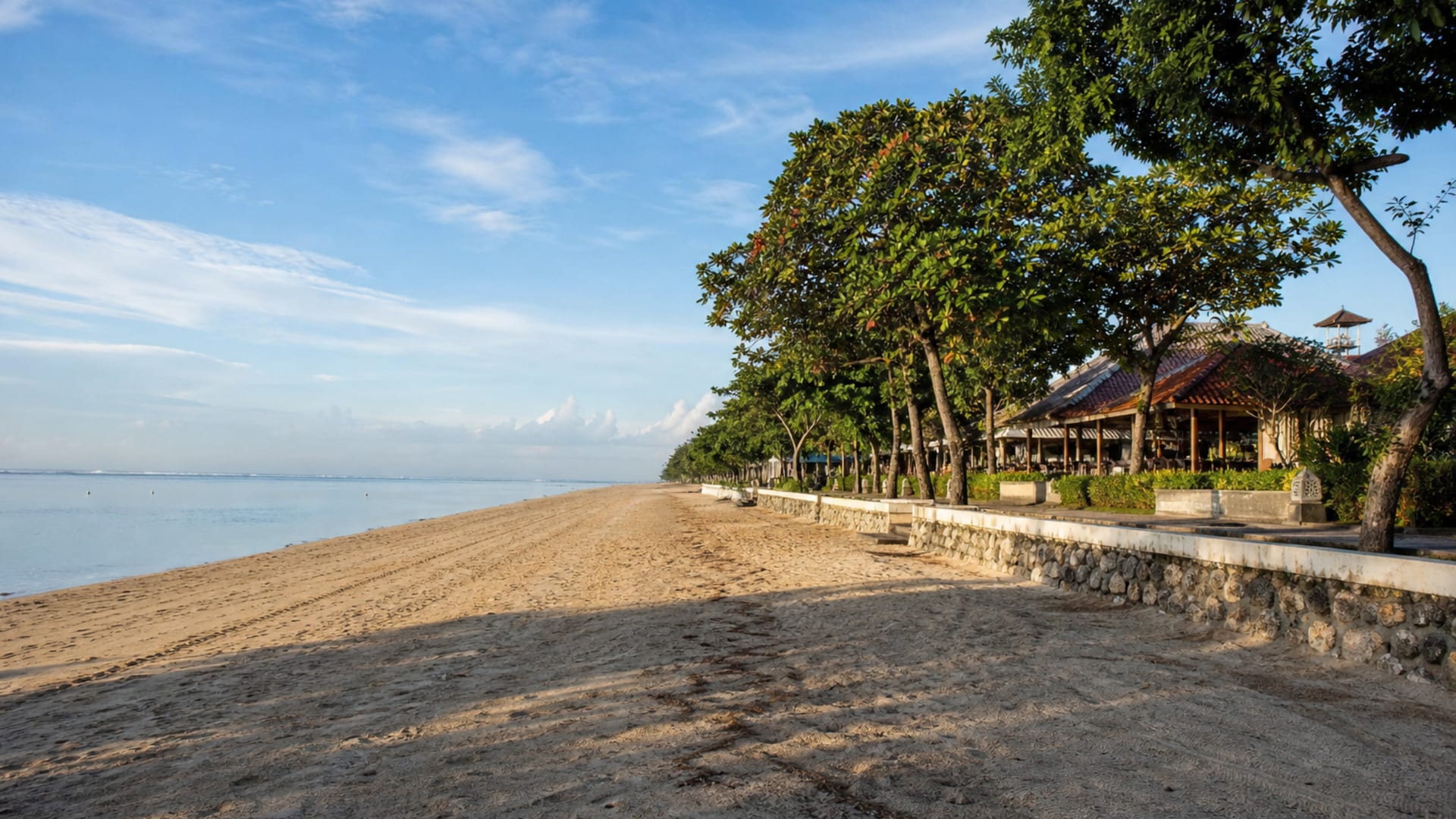
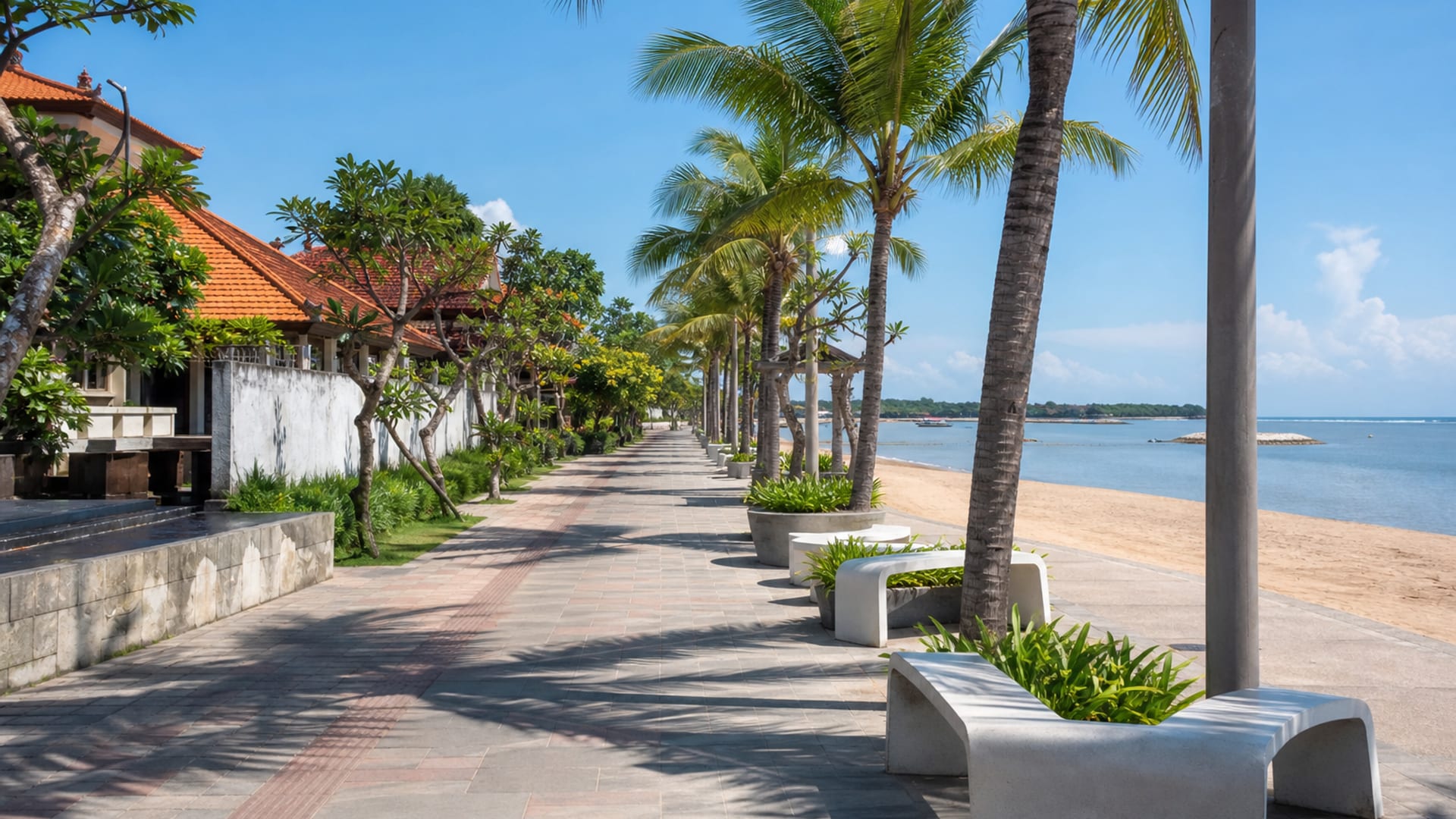
A long beachside strip on Denpasar’s southeast edge, Sanur gives you one of the city area’s easiest stays for sea views, casual dining, and early morning walks. It also puts you close to fast boat departures and a low-key waterfront.
Best for: Beach time, relaxed dining, and travelers who want a calmer coastal base
What to expect: A pedestrian-friendly waterfront, steady cafe traffic, and more families than party crowds.
Hotel prices: Usually about $70 to $180 per night for well-rated stays
Distance to major sights: About 25 minutes by car to Bali Museum and about 30 minutes to Bajra Sandhi Monument
Quietness: Quiet in the morning and evening, with the busiest stretch near the beach path at sunset
Main trade-off: You will be farther from Denpasar’s busiest shopping and nightlife streets, so late-night plans usually need a taxi or ride-hailing trip.
Good to know: If you plan to use the beach path daily, choose a place near the central promenade, since some blocks sit a noticeable walk from the water.
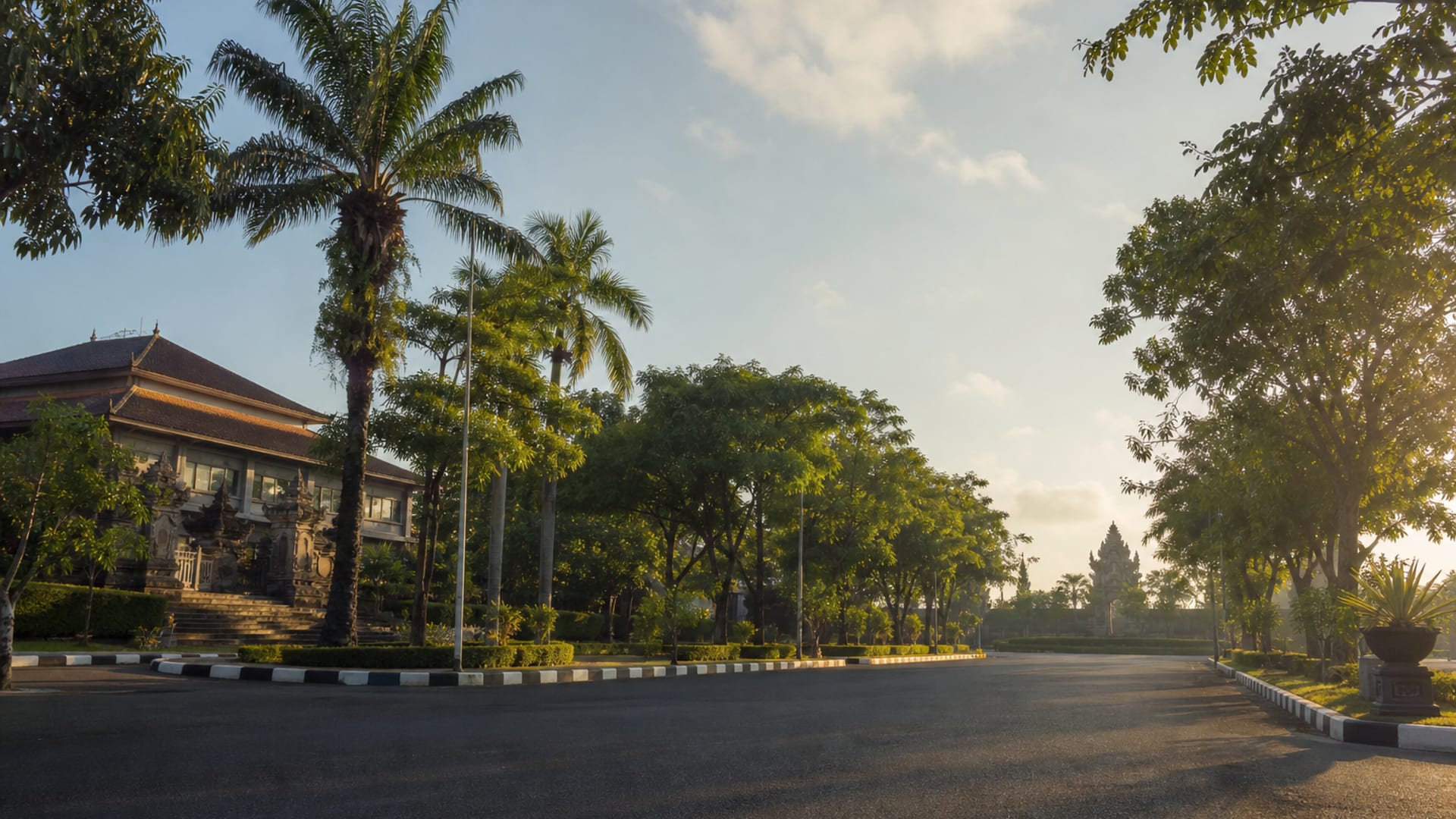
Renon is Denpasar’s government-and-office district, with wide streets, local eateries, and the city’s main monument park. It works well if you want an inland base with easy access to central Denpasar and dependable daytime activity.
Best for: Business trips, local dining, and access to central Denpasar
What to expect: Office workers by day, a moderate evening restaurant scene, and fewer tourists than the beach districts.
Hotel prices: Usually about $35 to $90 per night for well-rated stays
Distance to major sights: About 10 minutes by car to Bali Museum and about 5 minutes on foot to Bajra Sandhi Monument
Quietness: Busy on weekdays, then notably calmer after office hours and later at night
Main trade-off: You give up beach access, and walking between some pockets can feel exposed because the district has broad, traffic-heavy roads.
Good to know: Plan taxi use for dinner if your hotel sits off the main streets, because some blocks have limited evening foot traffic.
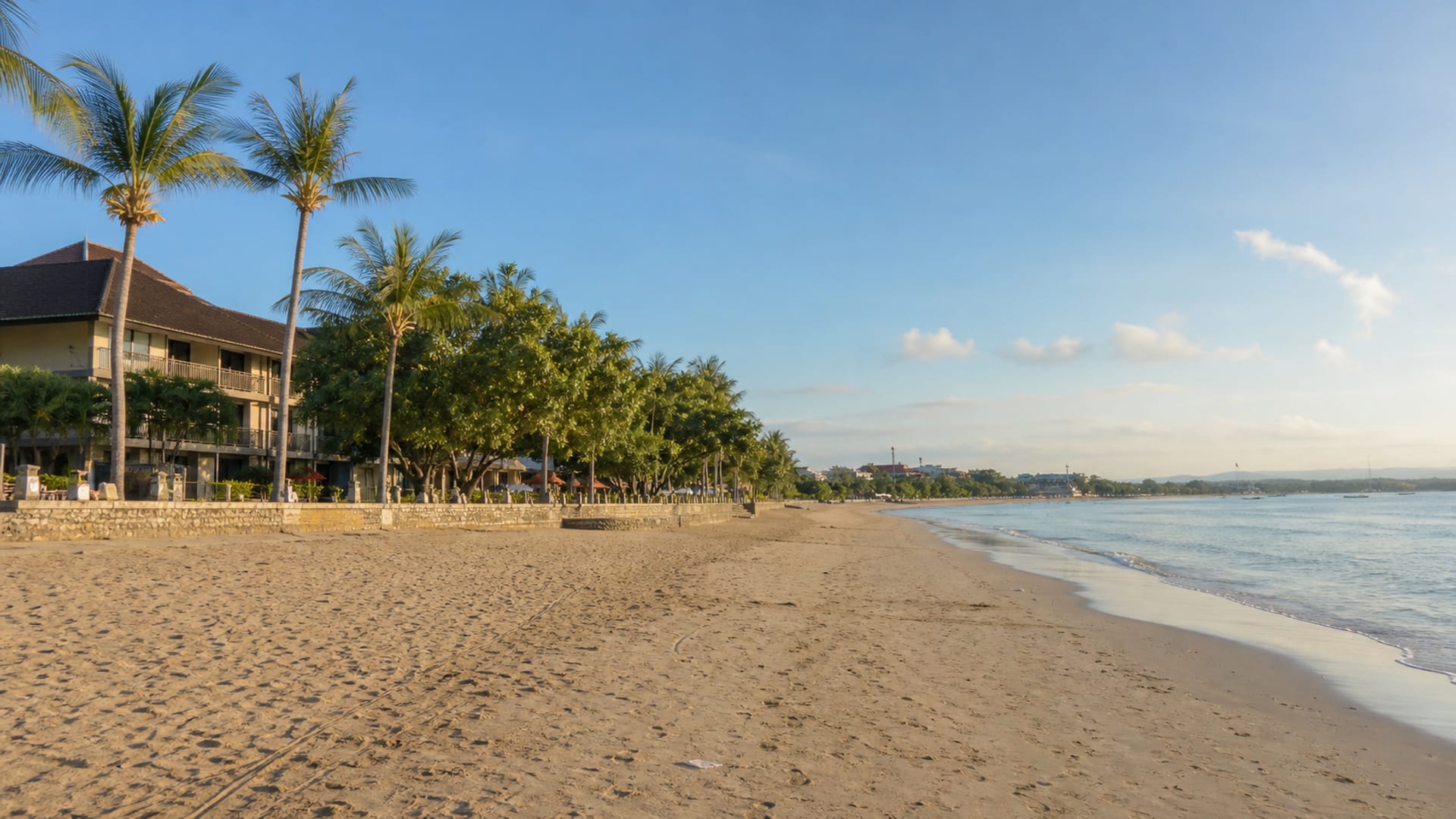
Kuta sits in the wider Denpasar metro and is the most established airport-area stay, with dense hotels, malls, and an active nightlife scene. It suits travelers who want a short transfer from Bali (DPS) and easy access to constant activity.
Best for: Short airport stays, nightlife, and travelers who want constant activity
What to expect: Heavy traffic, busy sidewalks, and a mix of tourists, drivers, and late-night crowds.
Hotel prices: Usually about $40 to $140 per night for well-rated stays
Distance to major sights: About 20 minutes by car to Bali Museum and about 25 minutes to Bajra Sandhi Monument
Quietness: Noisy through the day and still lively late into the night, especially near the main strips
Main trade-off: The tradeoff is crowding and traffic, which can make short cross-town trips slower than the map suggests.
Good to know: If you have an early flight, book a place with airport shuttle or confirm a ride the night before, because traffic can stretch a simple transfer.
Travelers usually avoid staying in Benoa, outside Nusa Dua, because it sits far from Denpasar’s main sights and puts you in a resort strip with limited local dining and shopping. Kuta’s busiest blocks, Tuban near Bali (DPS), and Sanur’s far southern edge are also less convenient for Denpasar-based stays, since they add time to evening travel and sit away from the city center and most of the area’s day-to-day visitor amenities.
Hotel deals
How to get around Denpasar efficiently
Denpasar has no metro, so most visitors combine walking with taxis, ride-hailing, and the limited Trans Sarbagita bus network when they move between Sanur, Renon, and central Denpasar.

Bus
for low-cost trips
Denpasar has no metro or subway network, so visitors usually depend on taxis, ride-hailing, and buses for city trips. The closest public-transport substitute is the Trans Sarbagita bus network, which links parts of Denpasar with surrounding areas, though stops and frequency are limited compared with large cities.

Ride apps
for convenience and late hours
Trans Sarbagita buses cover key corridors in Denpasar and connect into nearby Kuta, Sanur, and other parts of South Bali; fares are typically about $0.30 to $0.60 (about IDR 5,000 to IDR 10,000) and tickets are valid for a single trip. Services are infrequent on many routes, so check timetables before relying on them for airport transfers or evening travel.

Taxi
for convenience and late hours
Licensed airport and street taxis in Denpasar use a mix of fixed airport fares and metered city fares, with short city rides often costing about $3 to $8 (about IDR 50,000 to IDR 130,000) and airport trips to central areas roughly $7 to $15 (about IDR 115,000 to IDR 245,000). Use the official taxi rank at Bali (DPS), ask for the meter when possible, and expect card acceptance to vary, so carry some cash.
*Prices are based on rates updated as of June 2026 and may change at the time of travel.
Use buses for the cheapest cross-town trips, taxis or ride-hailing for point-to-point transfers, and walking for short stretches inside Renon or along Sanur’s promenade.
Iconic landmarks
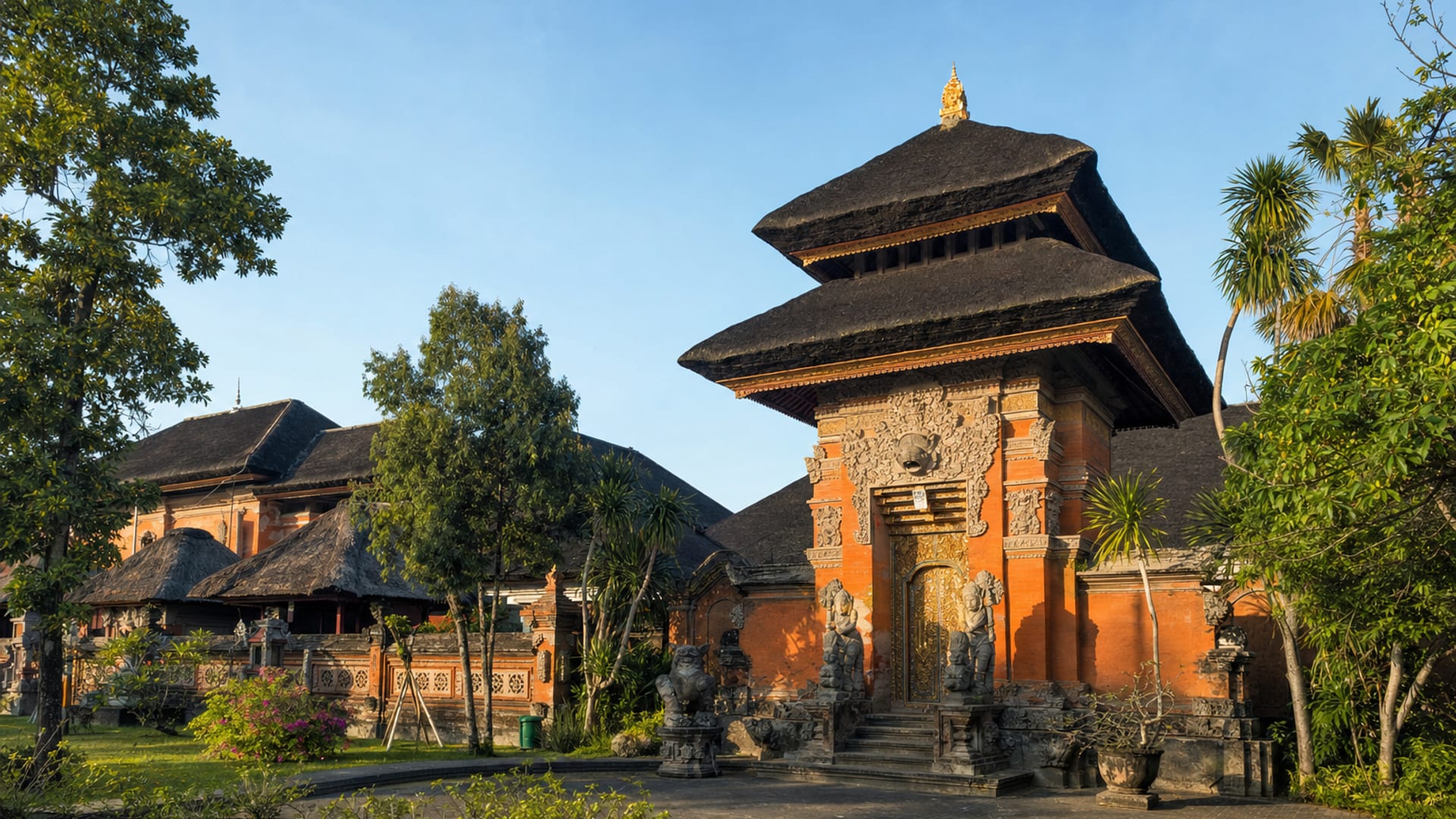
Bali Museum
This museum in central Denpasar displays Balinese sculpture, textiles, ritual objects, and historic photos inside a complex modeled on a royal compound. It gives a clear introduction to the city’s artistic and ceremonial traditions.
Time needed: About 1 to 2 hours
Entry: Admission costs about $2 ($30,000 IDR) for adults, with lower rates for students and children. Special exhibitions may carry separate fees.
Tip: Go in the morning, when galleries are quieter and the courtyards stay cooler.
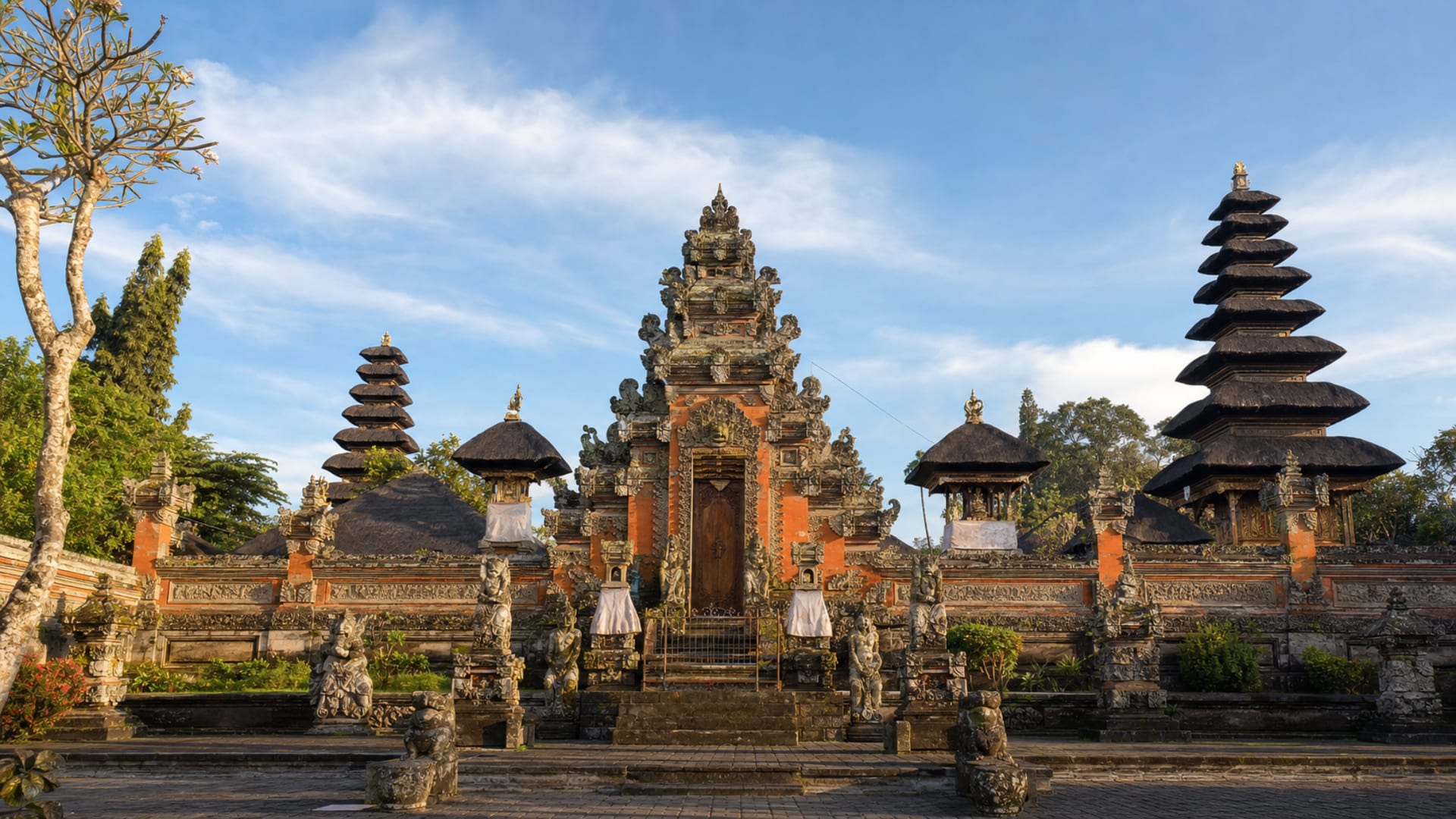
Jagatnatha Temple
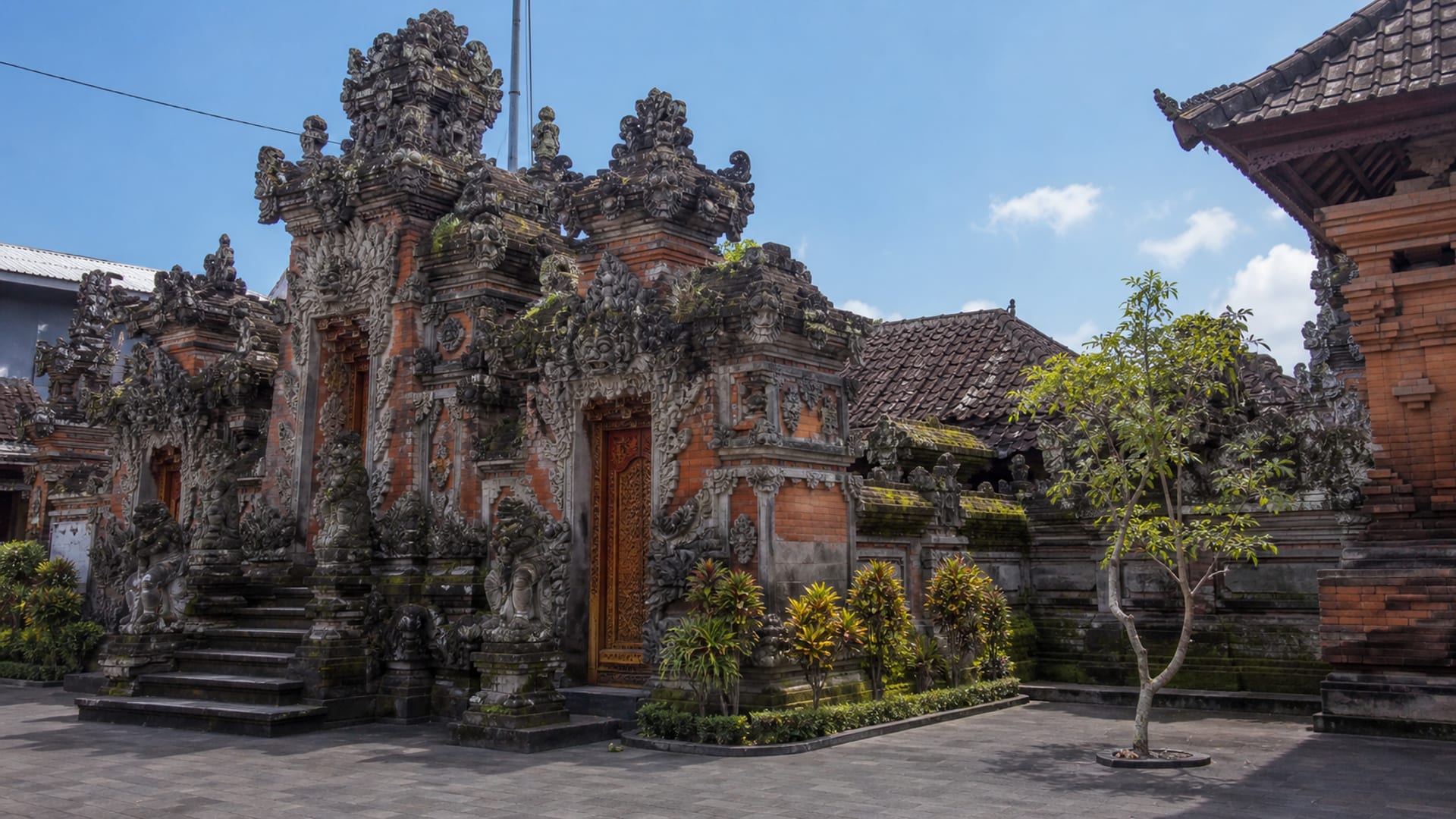
Facing Puputan Square, this Hindu temple centers on a tall white shrine dedicated to Sang Hyang Widhi Wasa. Its carved gates, dragon details, and daily worship rituals make it one of Denpasar’s most visible sacred sites.
Time needed: About 30 to 45 minutes
Entry: Free to access; donations for temple upkeep are welcome, and sarongs may be provided or rented at the entrance if needed.
Tip: Visit outside prayer times and dress modestly, with shoulders and knees covered.
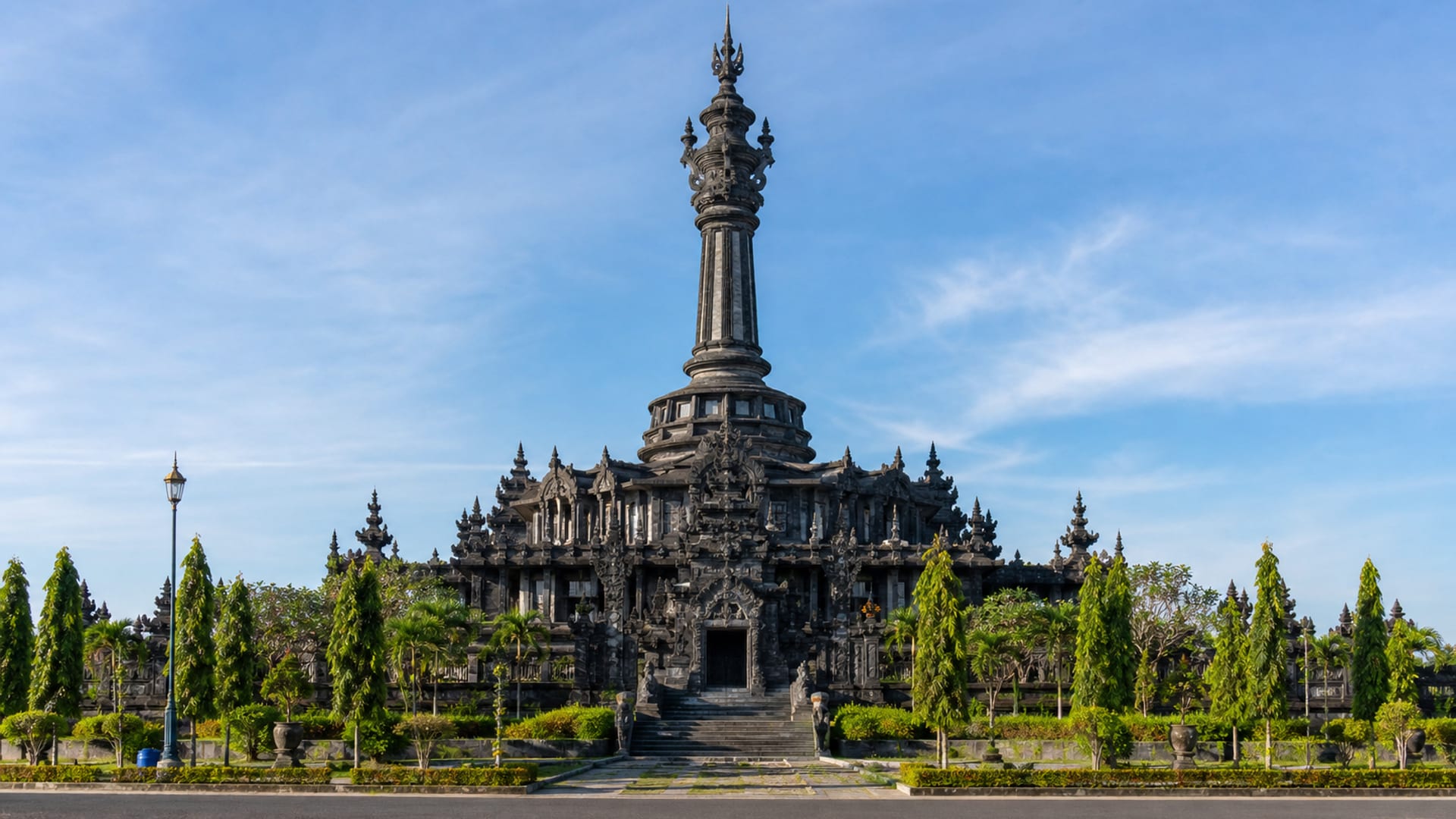
Bajra Sandhi Monument
This war memorial in Renon Park traces Balinese history through dioramas, murals, and a climb to the top gallery. From the upper level, visitors can see the park grid and the broad civic axis that anchors this district.
Time needed: About 1 to 1.5 hours
Entry: Admission costs about $1.50 ($25,000 IDR) for adults, with reduced prices for children. The tower and exhibition hall use the same ticket.
Tip: Arrive late afternoon for cooler air and clearer views from the top gallery.
Overlooked sites worth visiting

Bajra Sandhi Monument
This monument in Renon gives a clear overview of Balinese history through dioramas, a museum hall, and a climbable tower. The grounds also draw joggers and families in the late afternoon.
Time needed: About 1 to 1.5 hours
Entry: Admission is usually about $1 ($15,000) for adults and roughly $0.50 ($7,500) for children; local prices can vary for non-Indonesian visitors and special exhibitions, and the monument sells tickets at the entrance during opening hours.
Tip: Go late afternoon for cooler air and softer light.

Pura Jagatnatha
Set beside the Bali Museum, this central Hindu temple offers a compact stop with carved stone gates, white-sand courtyards, and regular ceremonies. It fits easily into a short city walk.
Time needed: About 30 to 45 minutes
Entry: Entry is free, though you may need to rent or borrow a sarong and sash at the gate if you do not have suitable temple clothing; donations are welcome, and ceremony access can be limited when worship is under way.
Tip: Visit outside prayer times to see the courtyard clearly.
Traditional food
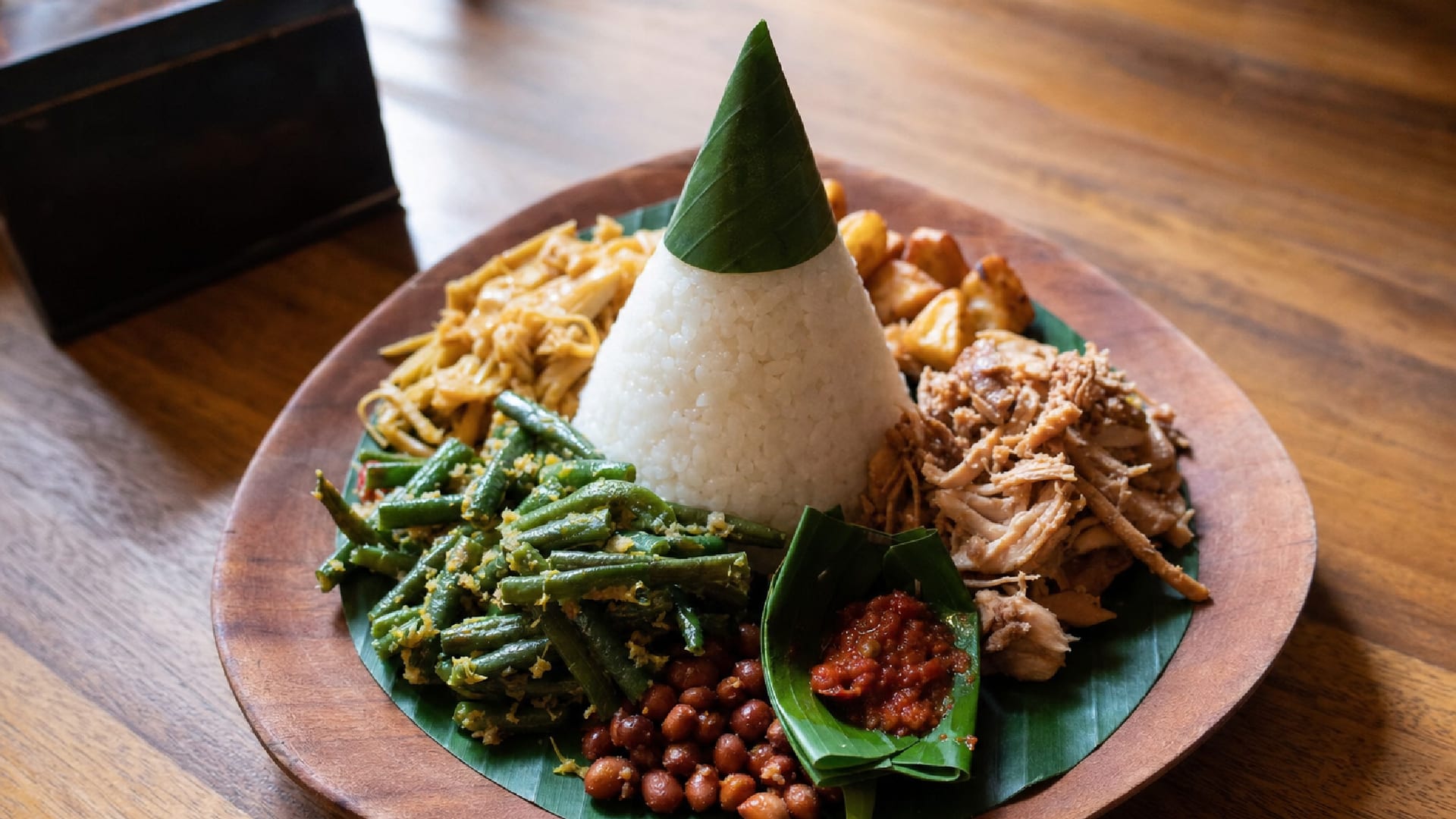
Denpasar cooking leans on pork, chicken, herbs, chili, and grilled or wrapped rice dishes, with babi guling, ayam betutu, sate lilit, and lawar anchoring many menus. Meals often come in modest local warungs, where spice and smoke do most of the work.
Babi guling
Spit-roasted suckling pig, served with skin, meat, rice, and spiced sides, makes one of Denpasar’s signature meals. Warung Nasi Ayam Men Weti in Sanur is a classic place to try it nearby.
Ayam betutu
This slow-cooked spiced chicken comes deeply seasoned and often arrives with rice and vegetables. Ayam Betutu Khas Gilimanuk in Denpasar is one of the city’s best-known stops for it.
Sate lilit
Minced fish or chicken mixed with coconut, herbs, and spice is wrapped around lemongrass or skewers, then grilled. Nasi Ayam Kedewatan Ibu Mangku in the wider Denpasar area serves a widely liked version.
Lawar
A Balinese mix of chopped vegetables, coconut, and minced meat or jackfruit, lawar appears as a side dish or part of a larger set meal. Warung Wardani in central Denpasar is a strong place to order it with rice.
Best time to visit Denpasar
Denpasar stays warm through the year, but the dry months are easier for temple visits and beach-path walks, while the wet season rewards travelers who plan shorter transfers and indoor stops.
Best for: Best for the driest weather and the easiest sightseeing days
What you get: About 78 to 88°F (26 to 31°C), with lower rainfall and stronger visitor numbers in Sanur and central Denpasar
Trade-offs: Popular areas see more traffic at sunset and around dinner
Best for: Best for warm weather with slightly fewer crowds than peak season
What you get: About 79 to 89°F (26 to 32°C), with a mix of dry spells and the first heavier showers as the season turns
Trade-offs: Late-season rain can interrupt longer neighborhood walks
Best for: Best for temple visits, museum time, and slower city days
What you get: About 77 to 87°F (25 to 31°C), with frequent rain and fewer day-trippers in some parts of the city
Trade-offs: Downpours can slow car rides across town
Best for: Best for balancing warm weather, manageable humidity, and lighter crowds
What you get: About 78 to 90°F (26 to 32°C), with improving skies and moderate visitor traffic before the dry season peaks
Trade-offs: Afternoon heat can build quickly on exposed roads and open squares
A realistic 5-day plan in Denpasar
A good five-day stay in Denpasar works best when you give each district a clear role. Sanur covers the coast, Renon handles inland sightseeing, and central Denpasar fills in the museums and temples that tie the city together.
Land at Denpasar (DPS) and take a taxi or hotel car to Sanur if you want an easier first night, or to Renon if you prefer a more central inland base; the ride usually takes about 20 to 30 minutes and costs roughly $8 to $15, depending on traffic and your pickup point. Check in, drink water, and keep dinner close by with a simple meal on Sanur’s beach path or near Renon’s local eateries, so you stay near the hotel after a long flight.
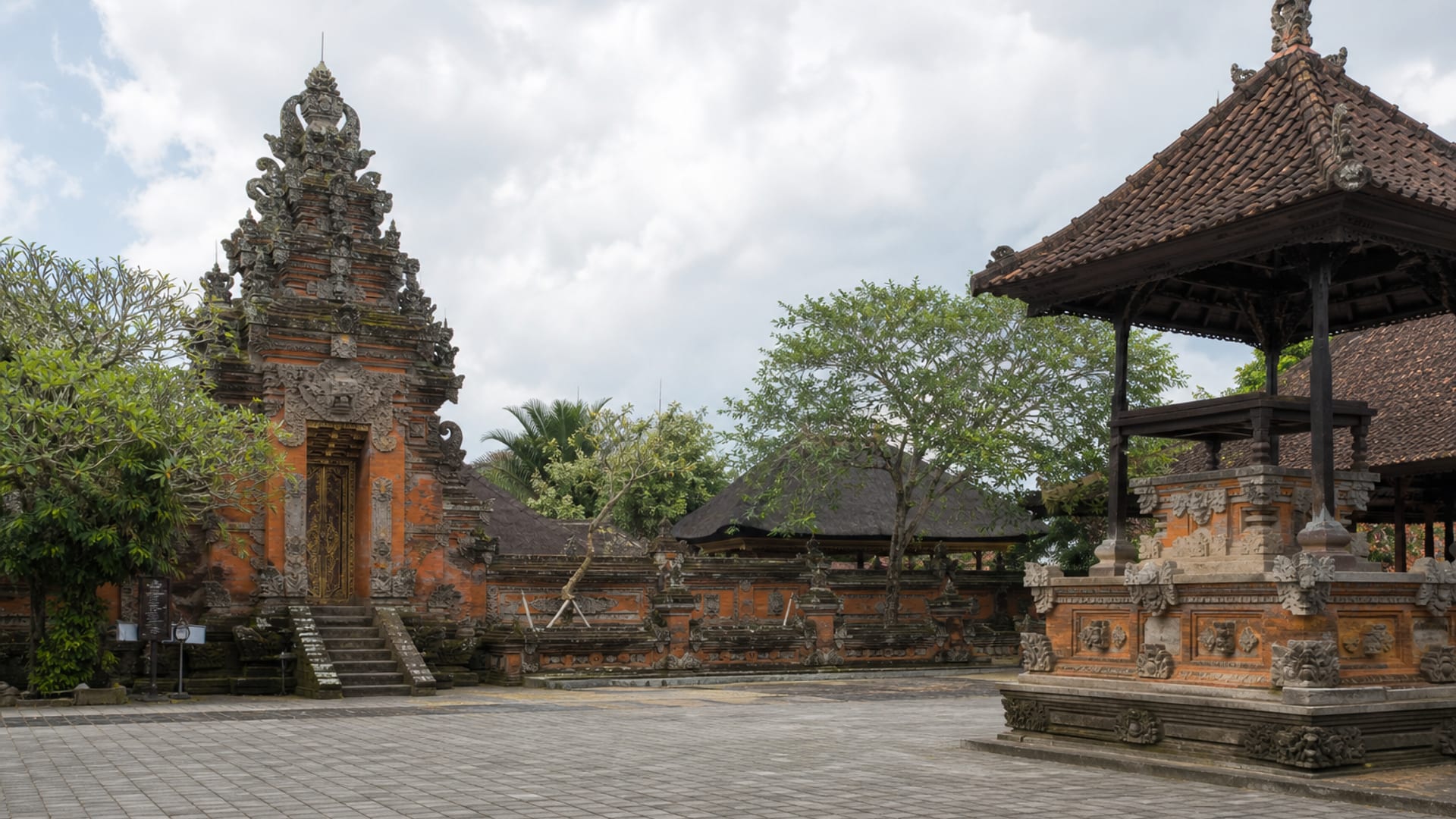
Begin at the Bali Museum in central Denpasar, where admission costs about $2 and a visit takes about 1 to 2 hours, then walk about 10 minutes to Pura Jagatnatha for a short temple stop of 30 to 45 minutes. From there, ride about 5 to 10 minutes to Bajra Sandhi Monument in Renon for the late-afternoon climb and exhibit hall, which usually takes about 1 to 1.5 hours, then finish with an easy dinner in Renon before heading back.
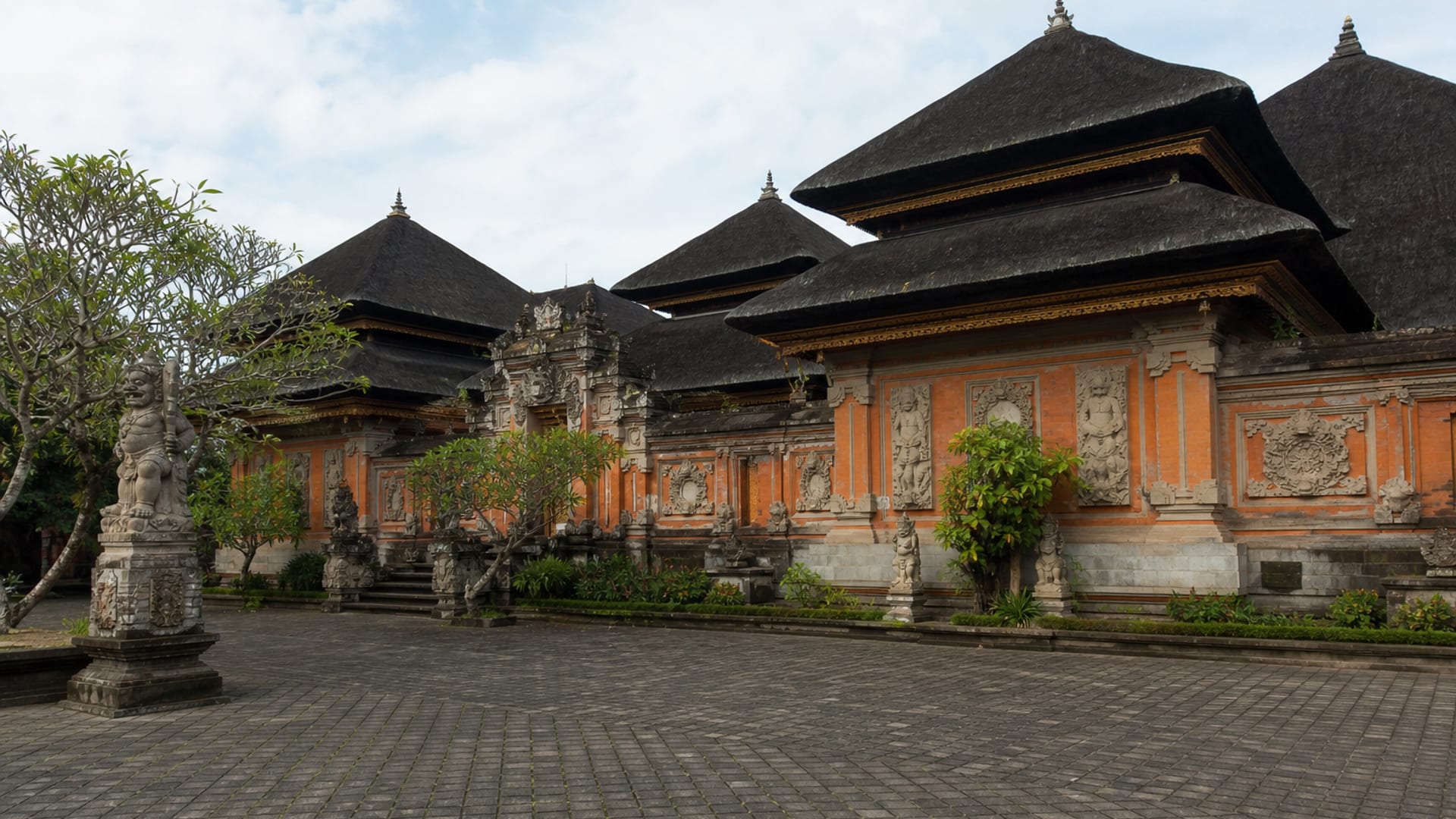
Sanur makes a good coastal day, so start with an early beach path walk and breakfast near the promenade, then spend the rest of the morning by the water or in a cafe close to the shore. In the afternoon, stay in the same district for a slower pace, or take a short taxi ride of about 20 minutes into central Denpasar if you want a second museum or temple stop, then return to Sanur for sunset and dinner by the beach.
Renon gives you the clearest full-day circuit, beginning with Bajra Sandhi Monument if you did not linger there on day 2, then continuing through the surrounding civic streets and park area on foot. After lunch, take a short taxi ride of about 10 minutes to the Bali Museum for a deeper look at Balinese sculpture, textiles, and ritual objects, then finish with coffee or an early evening meal in Renon, where the restaurant scene stays active without the late-night noise of Kuta.
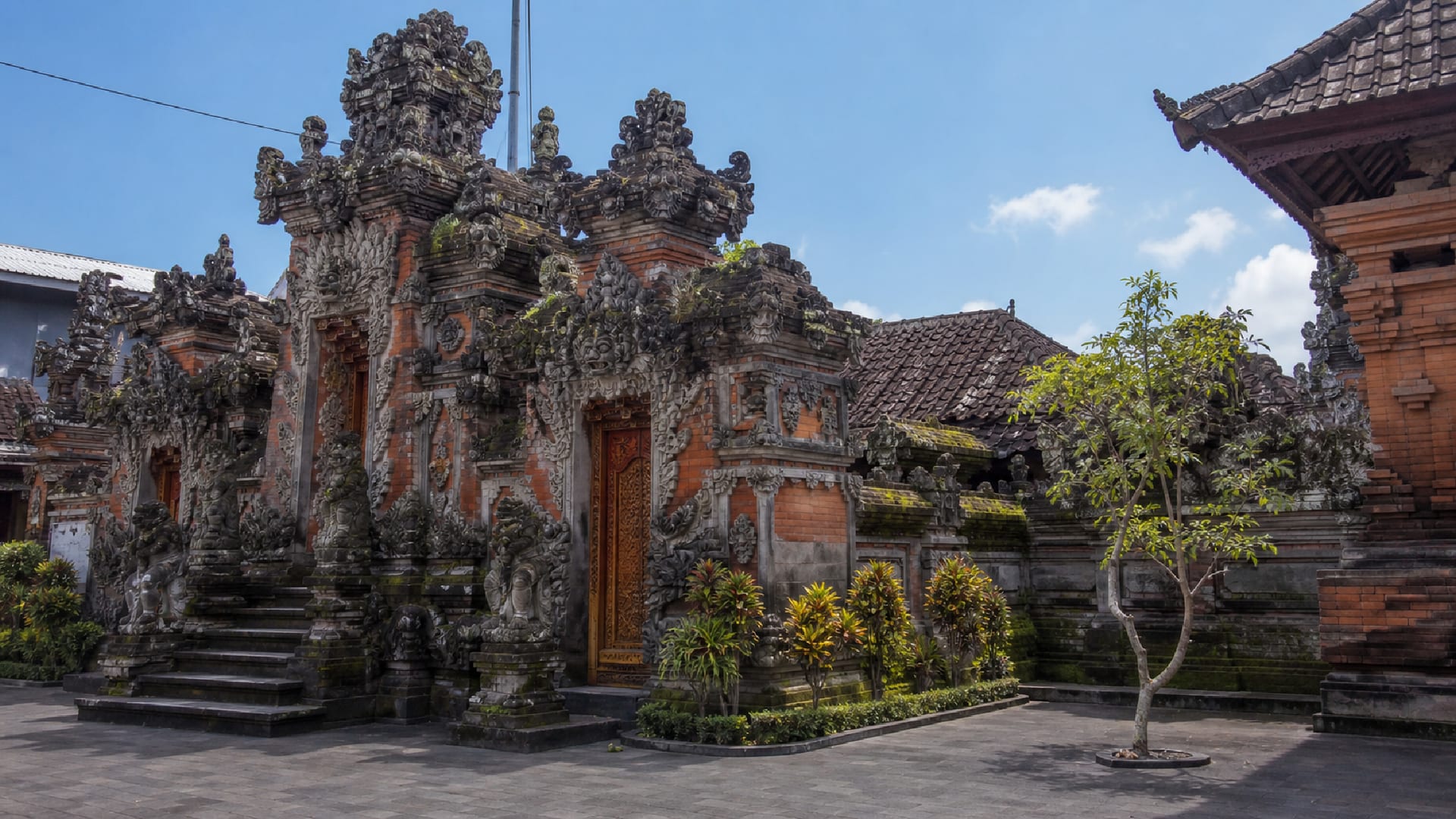
For a departure day, keep the schedule centered on one last easy stop in central Denpasar, then head to shopping or a final coffee near Kuta if your flight leaves later in the day. Bali Museum works well if you missed it earlier, while a short browse in Kuta or a relaxed cafe stop in Sanur gives you a last sit-down before the drive to Denpasar (DPS), which usually takes about 15 to 30 minutes from the main airport-area neighborhoods.
Business-class flights from the US to Denpasar
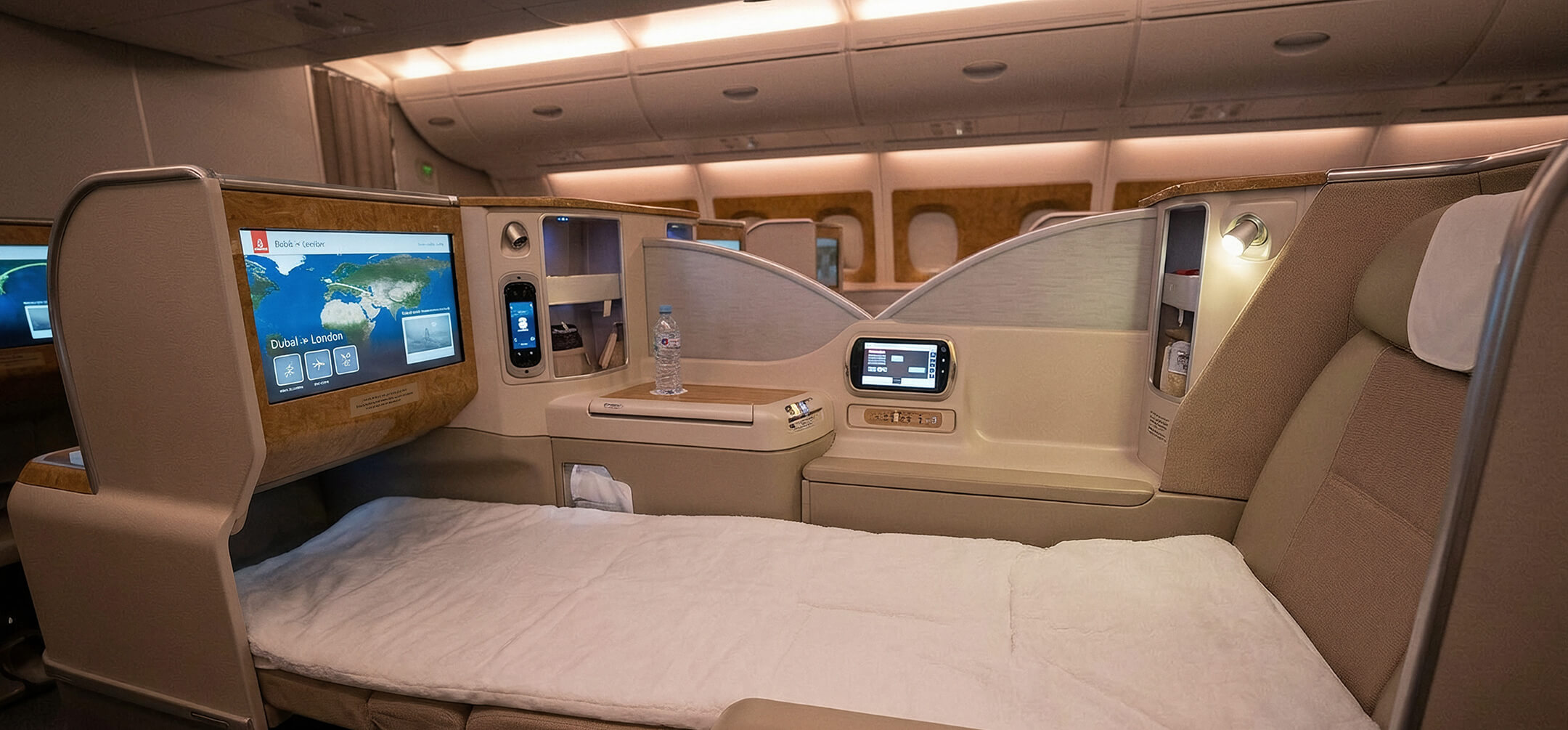
Business-class trips to Denpasar usually connect through major Asian or Middle Eastern hubs, so the best option depends on whether you are leaving from the East Coast or the West Coast. The two sample routes below show how the timing and pricing shift by origin.
From New York (JFK), Qatar Airways, Emirates, Singapore Airlines, Korean Air, Turkish Airlines, and Cathay Pacific all appear among the common options. If you do not mind a layover, routes via DOH, DXB, or SIN usually take 22 to 31 hours and often lower the fare; round-trip prices generally start at $4,200 and can reach $8,500.
Leaving from Los Angeles (LAX), you will usually see Singapore Airlines, Korean Air, Cathay Pacific, Qatar Airways, EVA Air, and Japan Airlines. Round-trip fares generally run from $3,600 to $7,200, with common connections through SIN, ICN, HKG, DOH, TPE, or NRT and total travel times of roughly 18 to 27 hours.
Denpasar feels different when you slow down
A deliberate Denpasar trip gives each district a clear purpose: Sanur for the beach path and an easy first or last night, Renon for Bajra Sandhi Monument and dinner, and central Denpasar for the Bali Museum and Jagatnatha Temple. Taxis and ride-hailing cover the short gaps, while walking fills the quieter blocks. If you want help matching your flight timing and neighborhood base, the AranGrant experts can shape the trip around your route through Denpasar (DPS)