

Chapters:

Need help with your trip?
Our support team is available 24/7. Request a callback or call us directly at (833) 619-0908
Doha often gets treated as a stopover city, with travelers splitting time between a hotel tower and one big market visit, then leaving without seeing how the Corniche, old souq, and new downtown connect.
That pattern misses the distances between districts, the heat that shapes when you move, and the way evenings shift the pace of the city. A quick taxi hop can save an hour, while a bad timing choice can add crowds or glare.
This guide orders the city by area and hour, so you can pair sights with the right transport, meal, and light without filling every day to the edge.
Useful things to know

Main language(s): Arabic
marhaban (mahr-hah-bahn) – hello
min fadlak (min fahd-lak) – please
shukran (shook-rahn) – thank you
hal tatahaddath al-ingliziyya? (hal tah-tah-had-dath al-in-gli-zee-yah) – Do you speak English?
kam al-thaman? (kam al-thah-man) – How much does it cost?

Currency: The local currency is the Qatari riyal (QAR, QR).

Cash and cards: Cards and contactless are widely accepted; keep about QAR 50 to 100 ($14 to $27) in cash for small shops and taxis.

Tipping: Round up small bills; add about 10% at restaurants if service is not already included.

Traditional food: Machboos, harees, thareed, balaleet

Water and coffee costs: Water about QAR 2 ($0.55), bar espresso about QAR 12 ($3.30).

Taxis and ride apps: Uber and Careem operate here; confirm the pickup point at Hamad International Airport.

Plug and voltage: Type G socket, 240V

Dining and shop opening hours: Breakfast is about 7:00-10:00, lunch 12:00-15:00, and dinner 19:00-23:00. Many restaurants pause on Friday midday, and mall eateries often stay open later.

Emergency number: 999 for police, ambulance, and fire.
Where to stay in Doha
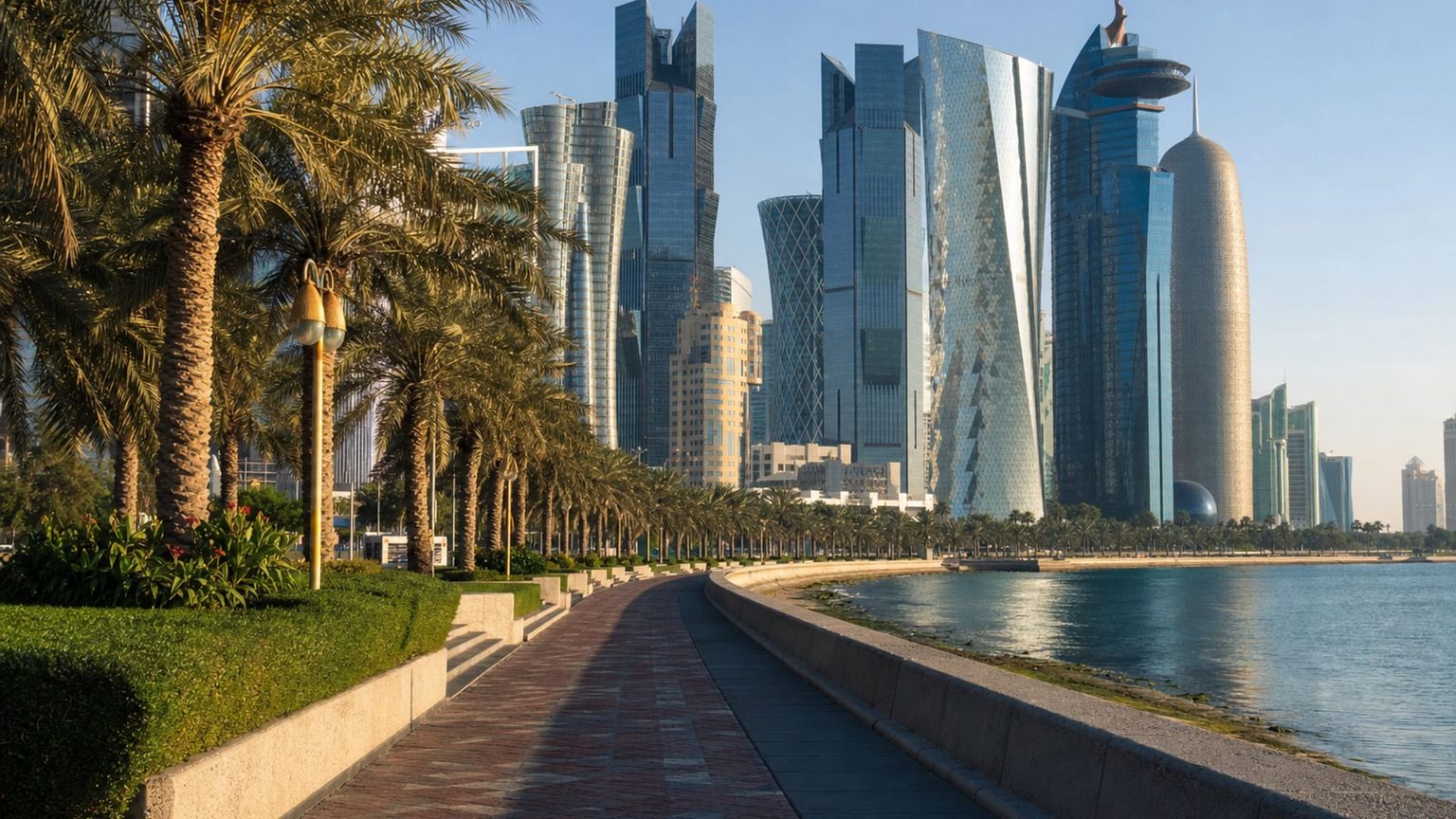
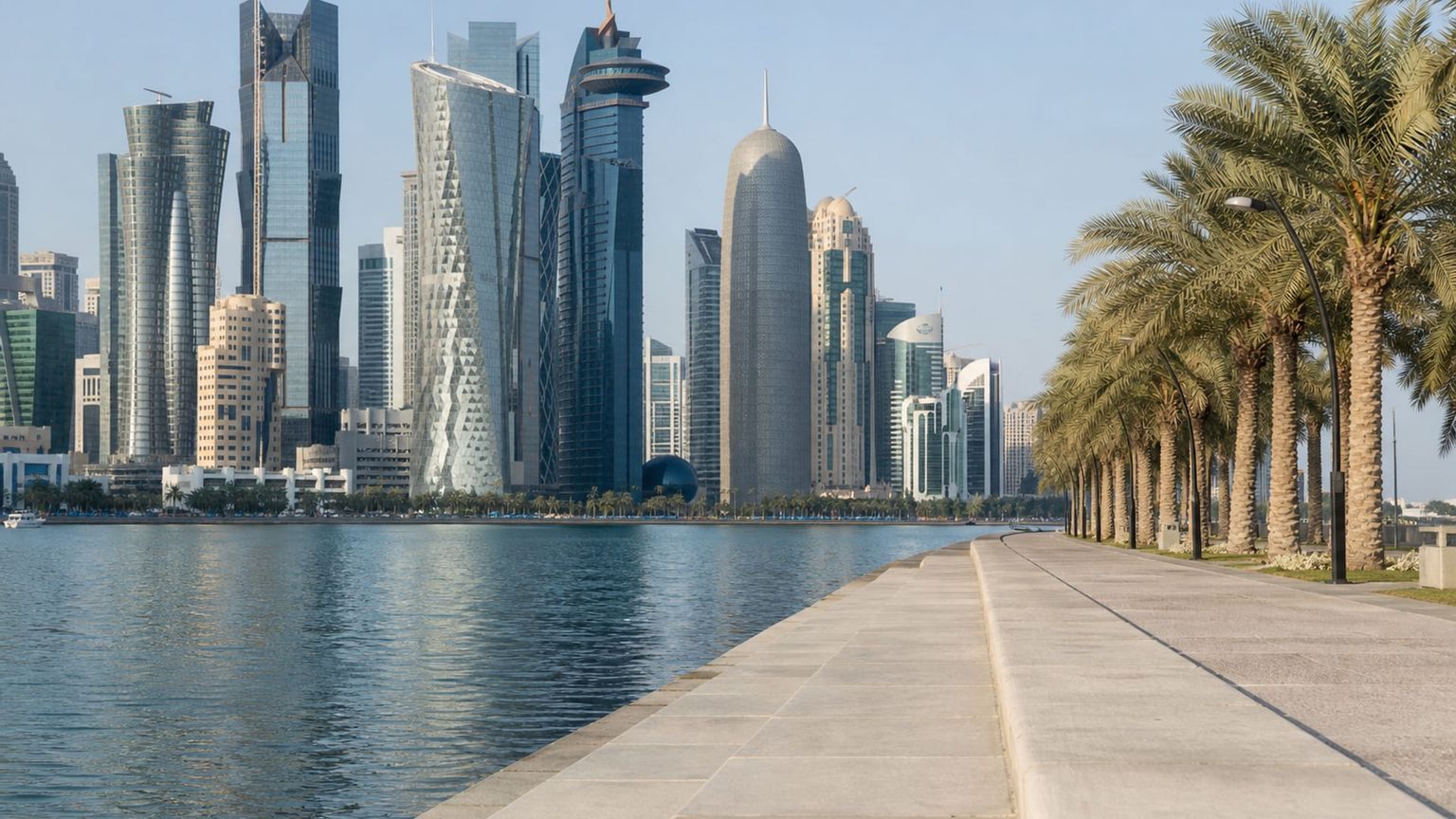
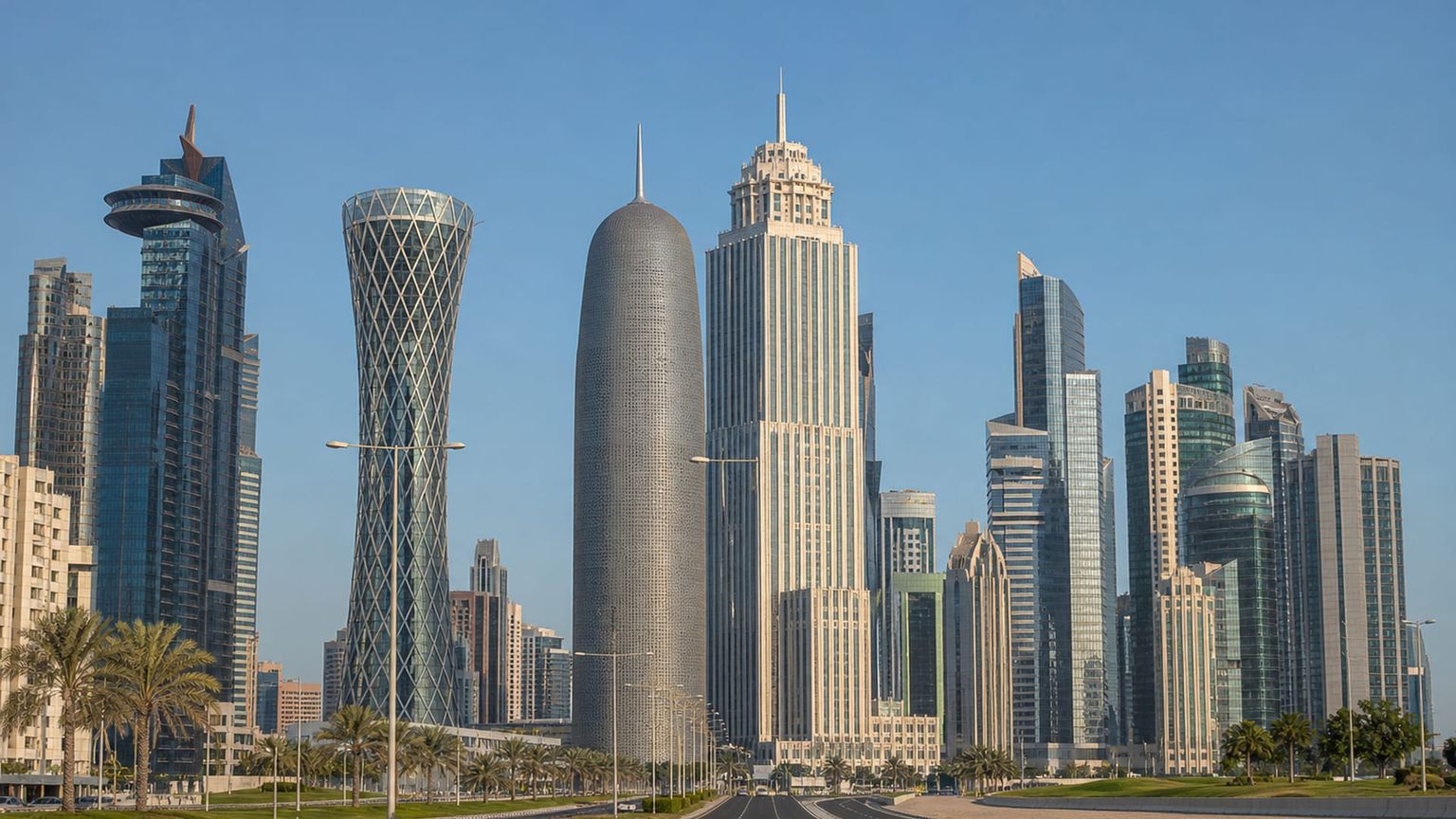
Doha’s glassy business district lines the Corniche with high-rise hotels, embassies, and malls. It suits visitors who want museum access, sea views, and the city’s most concentrated cluster of upscale stays.
Best for: Museum visits, business trips, and travelers who want a central hotel base near the waterfront
What to expect: Wide boulevards, hotel lobbies, office traffic, and a busy daytime pace; evenings are calmer near the towers.
Hotel prices: Usually about 500 QAR to 1,200 QAR (~$137 to ~$329) per night for well-rated stays
Distance to major sights: 10 to 15 minutes by car to the Museum of Islamic Art; about 20 minutes on foot to the Corniche
Quietness: Busier in the day, quieter after office hours, with hotel zones staying active later than the streets outside them.
Main trade-off: Rates climb fast during major conferences and peak season, and many restaurants sit inside hotels rather than on the street.
Good to know: If you plan to move between the airport, museums, and business meetings, this area cuts taxi time without putting you far from the water.
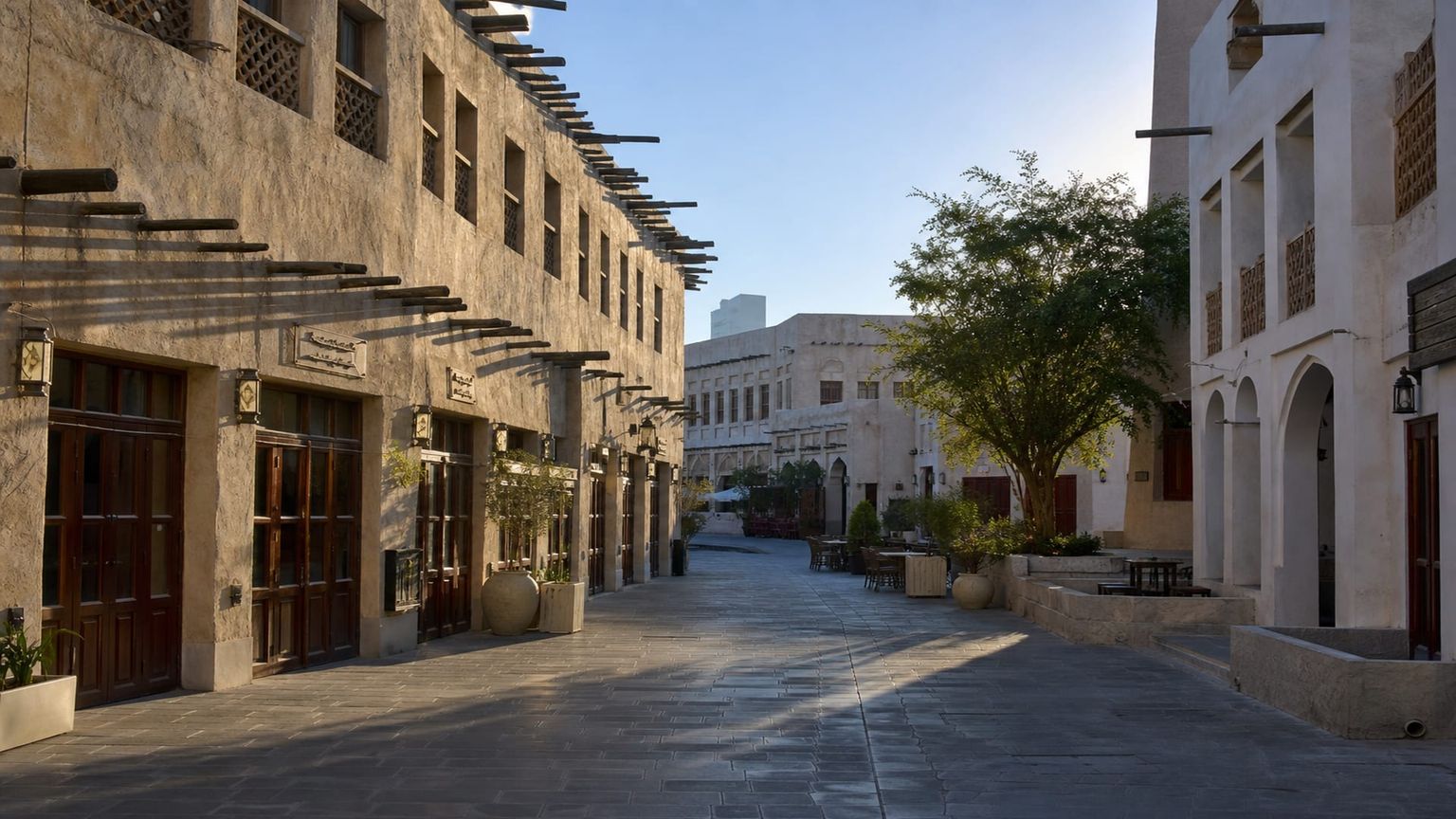
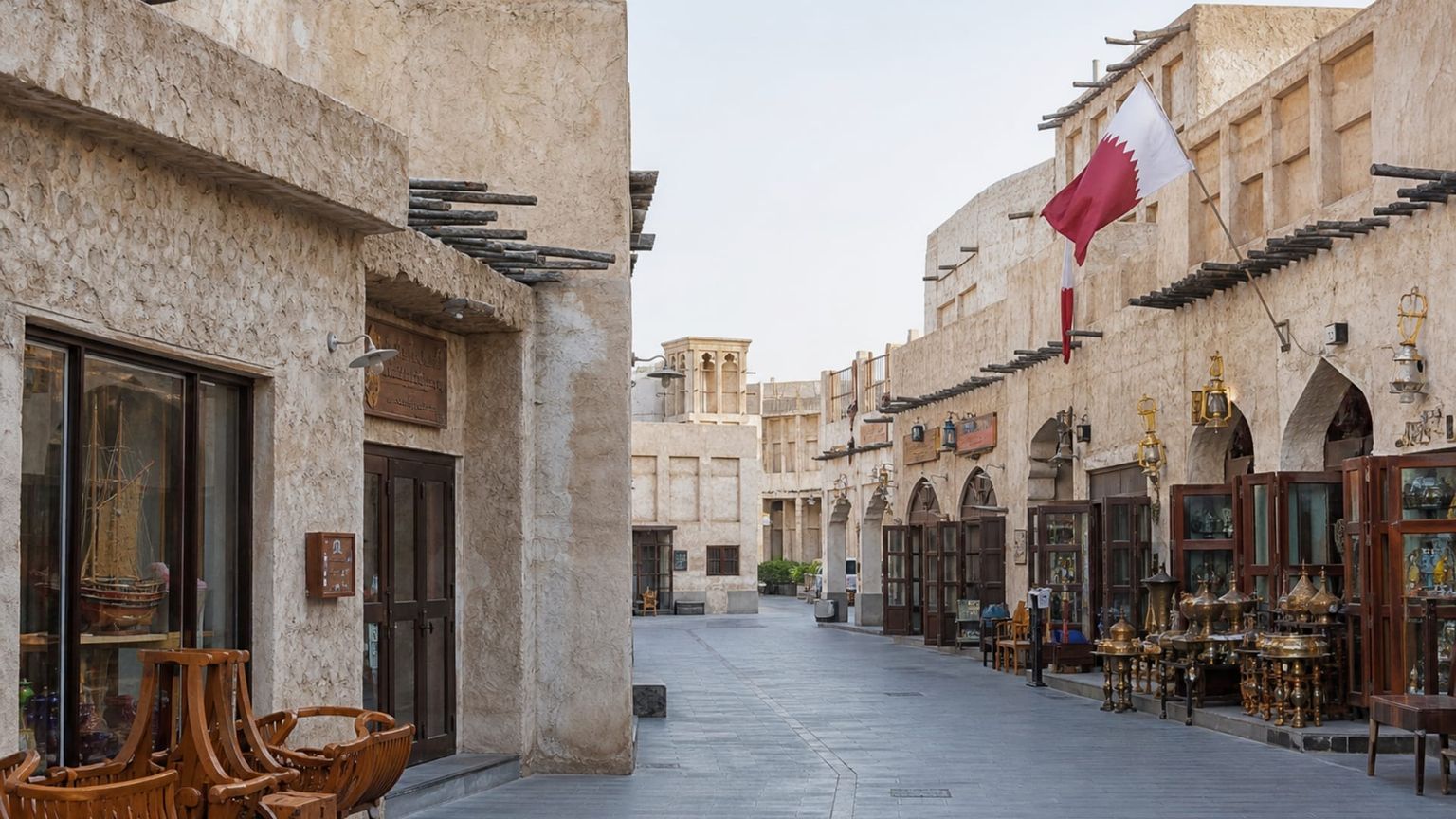
Souq Waqif is Doha’s restored market quarter, with narrow lanes, spice shops, cafes, and low-rise hotels. It matters because it gives you the city’s most walkable old-style setting and easy access to traditional dining after dark.
Best for: First-time visits, dining, and travelers who want a lively heritage setting
What to expect: Crowded lanes, street dining, shisha cafes, and a steady evening pulse that peaks after sunset.
Hotel prices: Usually about 450 QAR to 1,000 QAR (~$124 to ~$274) per night for well-rated stays
Distance to major sights: 5 to 10 minutes on foot to the Museum of Islamic Art; about 15 minutes by car to Hamad International Airport (DOH)
Quietness: Active through the evening, with more movement on weekends and a much softer pace in the morning.
Main trade-off: The central setting brings more noise, and some rooms face alleyways where late-night foot traffic continues.
Good to know: Choose a room away from the main lanes if you want to sleep early, because restaurant and cafe activity can run late.
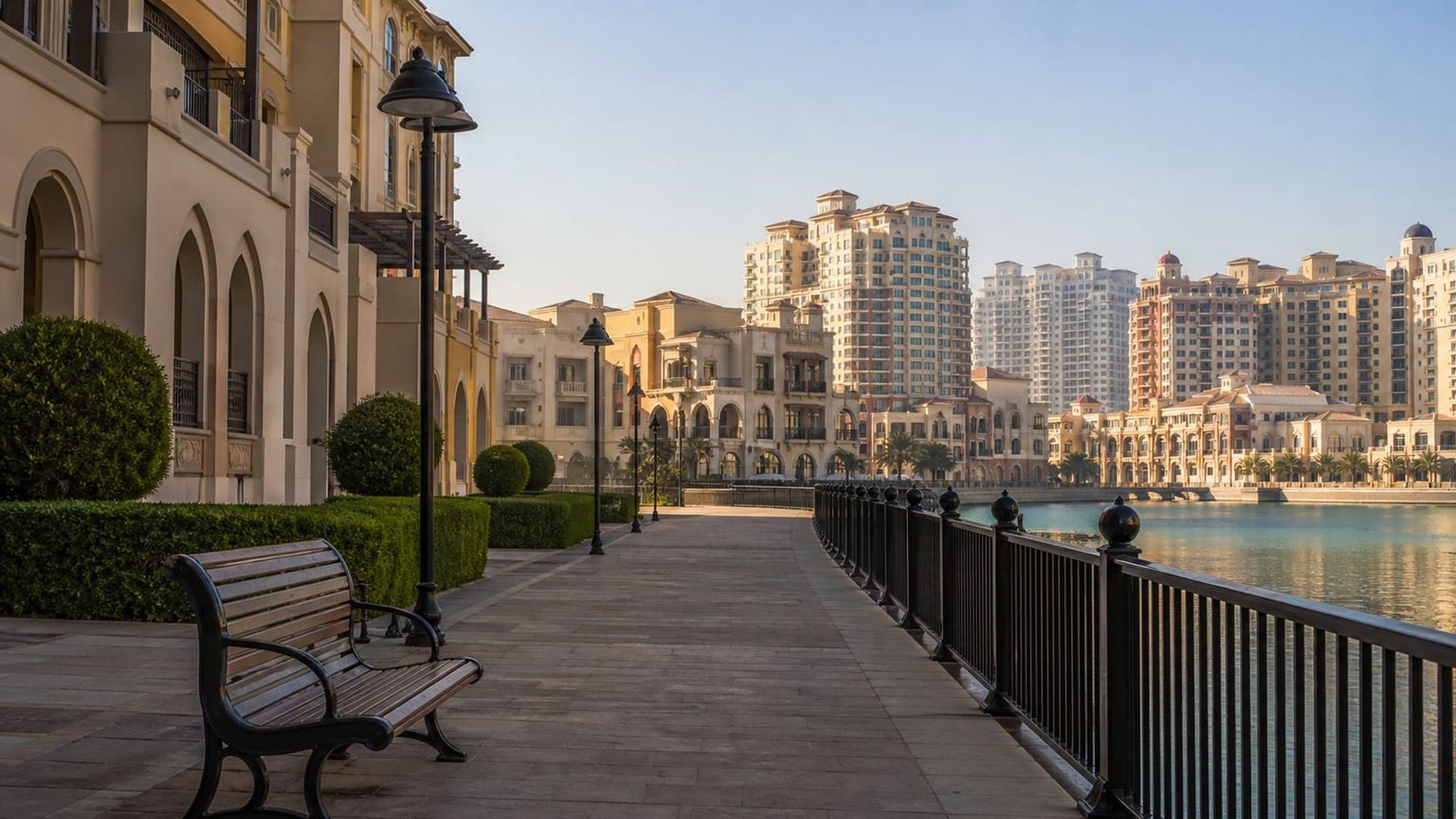
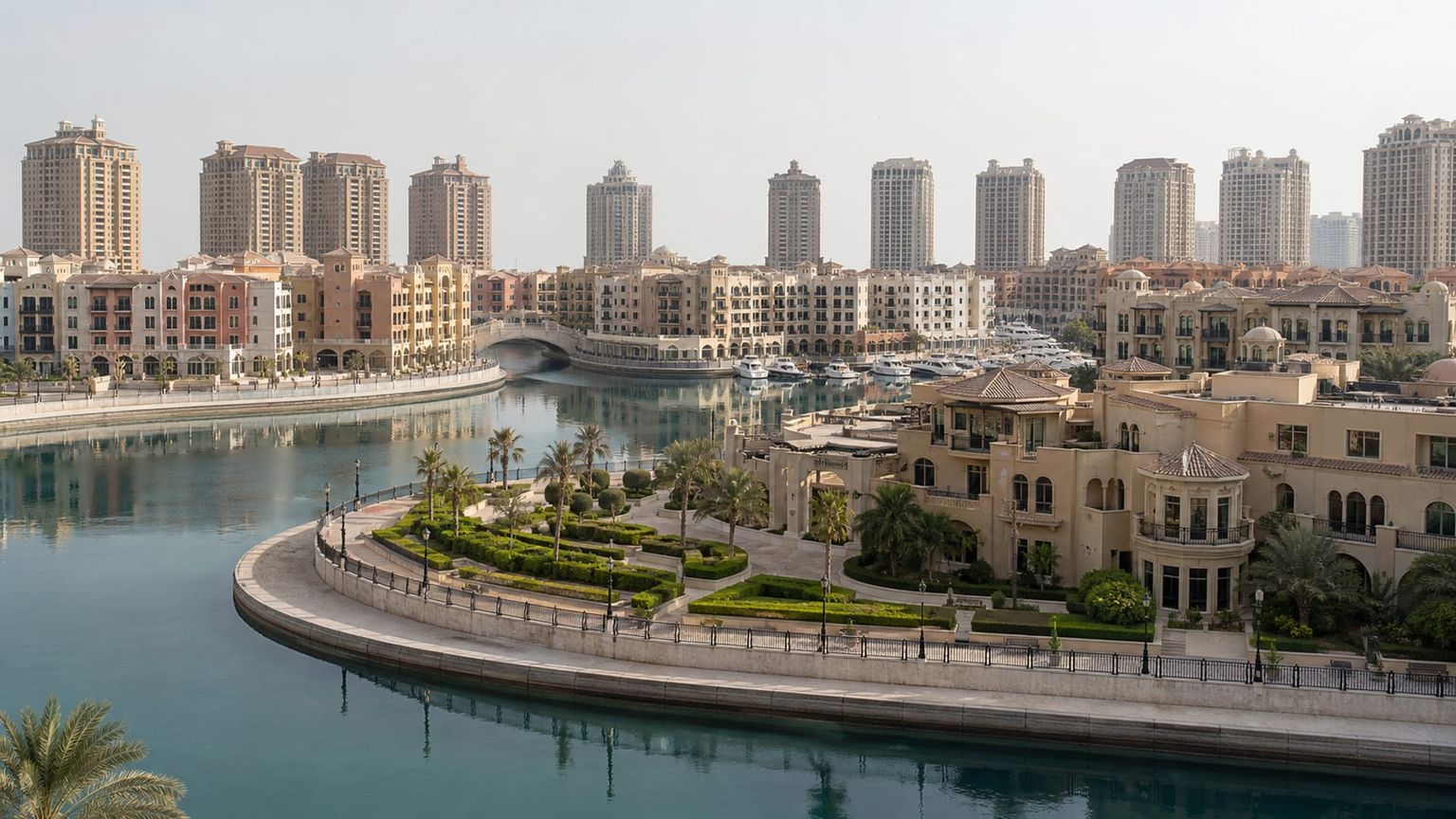
The Pearl-Qatar is an artificial island district of marinas, waterfront promenades, and apartment-style hotels. It matters for visitors who prefer a resort-like stay with dining, shopping, and sea views in one compact area.
Best for: Beach time, longer stays, and travelers who prefer waterfront dining and apartment-style lodging
What to expect: Marinas, landscaped walks, yacht traffic, and a more residential pace than central Doha.
Hotel prices: Usually about 600 QAR to 1,500 QAR (~$165 to ~$412) per night for well-rated stays
Distance to major sights: 20 to 25 minutes by car to the Museum of Islamic Art; about 25 to 30 minutes by car to Doha’s central souqs
Quietness: Calmer in the day than the central districts, with more activity at dinner and around the promenades in the evening.
Main trade-off: You will spend more time in taxis for historic sights and downtown errands, and prices often run higher than in older districts.
Good to know: If you want an easy waterfront base, check how far your hotel sits from the tram or taxi rank, because the island spreads out more than it looks on a map.
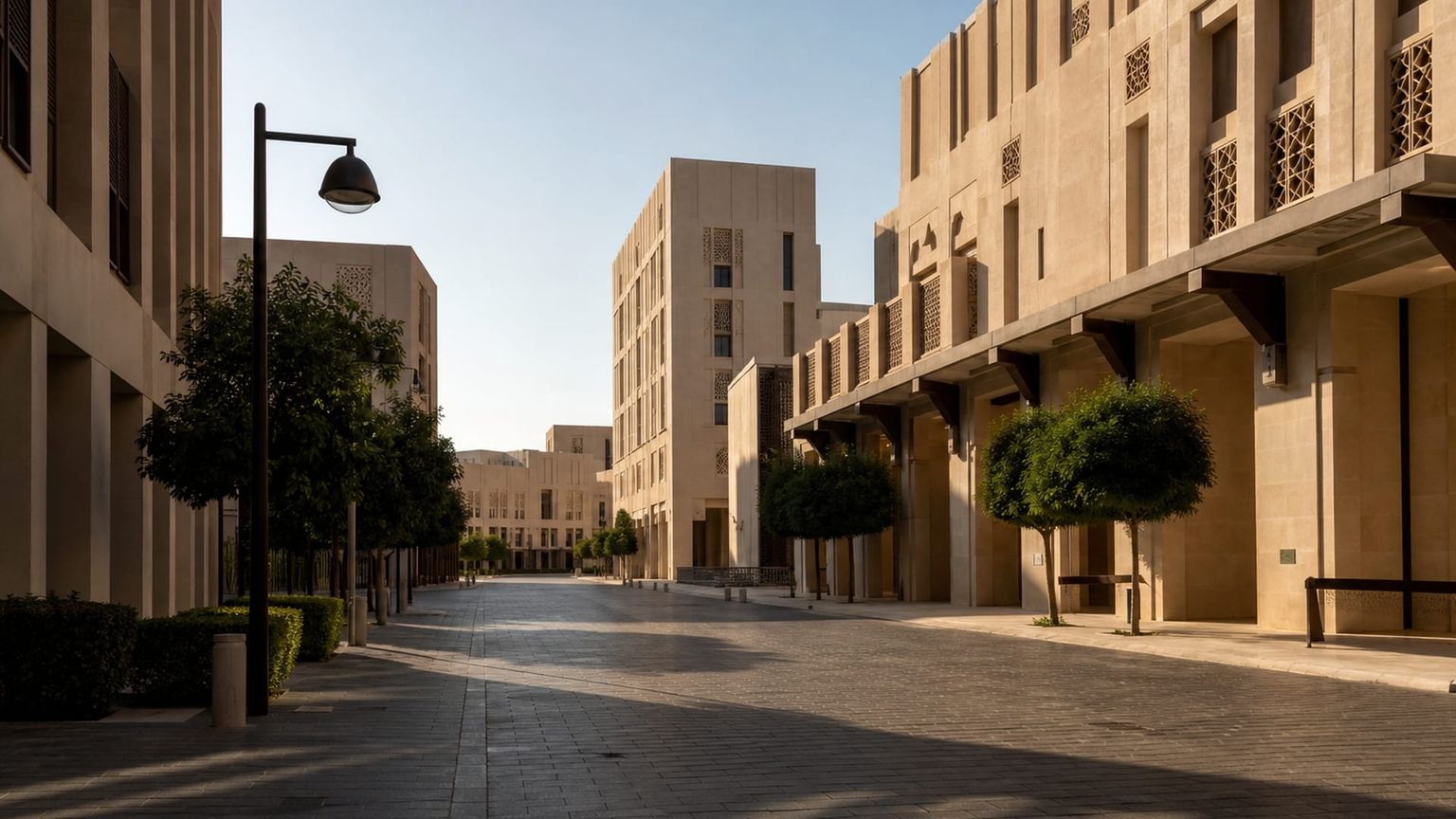
Msheireb Downtown Doha is the city’s new center, with museums, hotels, cafes, and shaded pedestrian streets built on a compact grid. It matters because it gives you one of the easiest bases for moving between Souq Waqif, the Corniche, and metro links.
Best for: Short stays, metro access, and travelers who want a central, walkable base
What to expect: Modern streets, office activity, hotel guests, and steady foot traffic rather than a big neighborhood market scene.
Hotel prices: Usually about 550 QAR to 1,300 QAR (~$151 to ~$357) per night for well-rated stays
Distance to major sights: 5 to 10 minutes on foot to Souq Waqif; about 15 minutes by car to the Museum of Islamic Art
Quietness: Busy in the daytime and fairly subdued late at night, with more movement near hotels than on the internal streets.
Main trade-off: It is one of the pricier central choices, and the atmosphere is more planned than historic.
Good to know: Stay here if you want the metro, museums, and the souq close together, but book ahead because the best-located rooms sell early.
Travelers usually avoid staying in Abu Hamour, Al Meshaf, and Industrial Area, since these districts sit far from the Corniche, Souq Waqif, and West Bay, with fewer visitor-oriented hotels and dining options. Al Wakrah is also less convenient for a Doha base because it is about 20 to 30 minutes south of central Doha in light traffic, which makes evening returns from the city more time-consuming.
Hotel deals
How to get around Doha efficiently
Doha rewards a mixed approach, with the Metro Red Line at Hamad International Airport (DOH), Karwa taxis for cross-town hops, and buses for budget transfers beyond the core.

Metro
for longer distances
Doha Metro covers the city with Red, Green, and Gold lines, and the airport sits on the Red Line at Hamad International Airport (DOH). A standard ride costs $0.55 (QR2) with a 90-minute transfer window, while a day pass costs $1.38 (QR5). Trains run from about 6:00 am to 11:00 pm, with later hours on Friday, and key stops include Msheireb, West Bay Qatar Energy, Katara, and Al Qassar.

Bus and tram
for convenience
Mowasalat’s bus network reaches the airport area through routes such as the 747 to central Doha, which is the main option if your hotel sits beyond the metro grid. Cash fares are about $0.83 (QR3) for a single ride, while a Karwa smartcard lowers the per-trip cost and can be topped up at stations and major bus hubs. Most buses take contactless payment or the travel card, and the Karwa Bus App helps with live departures and route planning.

Taxi
for convenience or late hours
Karwa taxis use metered fares, not flat citywide pricing, with an airport pickup fee of about $5.49 (QR20) plus roughly $0.55 (QR2) per kilometer. A ride from Hamad International Airport (DOH) to central Doha usually costs about $11 to $25 (QR40 to QR90), depending on traffic and distance. You can queue at the official taxi rank, book through the Karwa app, or use ride-hailing apps such as Uber and Careem; cards and cash are both accepted.
*Prices are based on rates updated as of June 2026 and may change at the time of travel.
Use the metro for airport links and central stops, taxis for direct trips to West Bay, the souq, and The Pearl-Qatar, and buses when you do not mind a slower ride and fixed stops.
Iconic landmarks
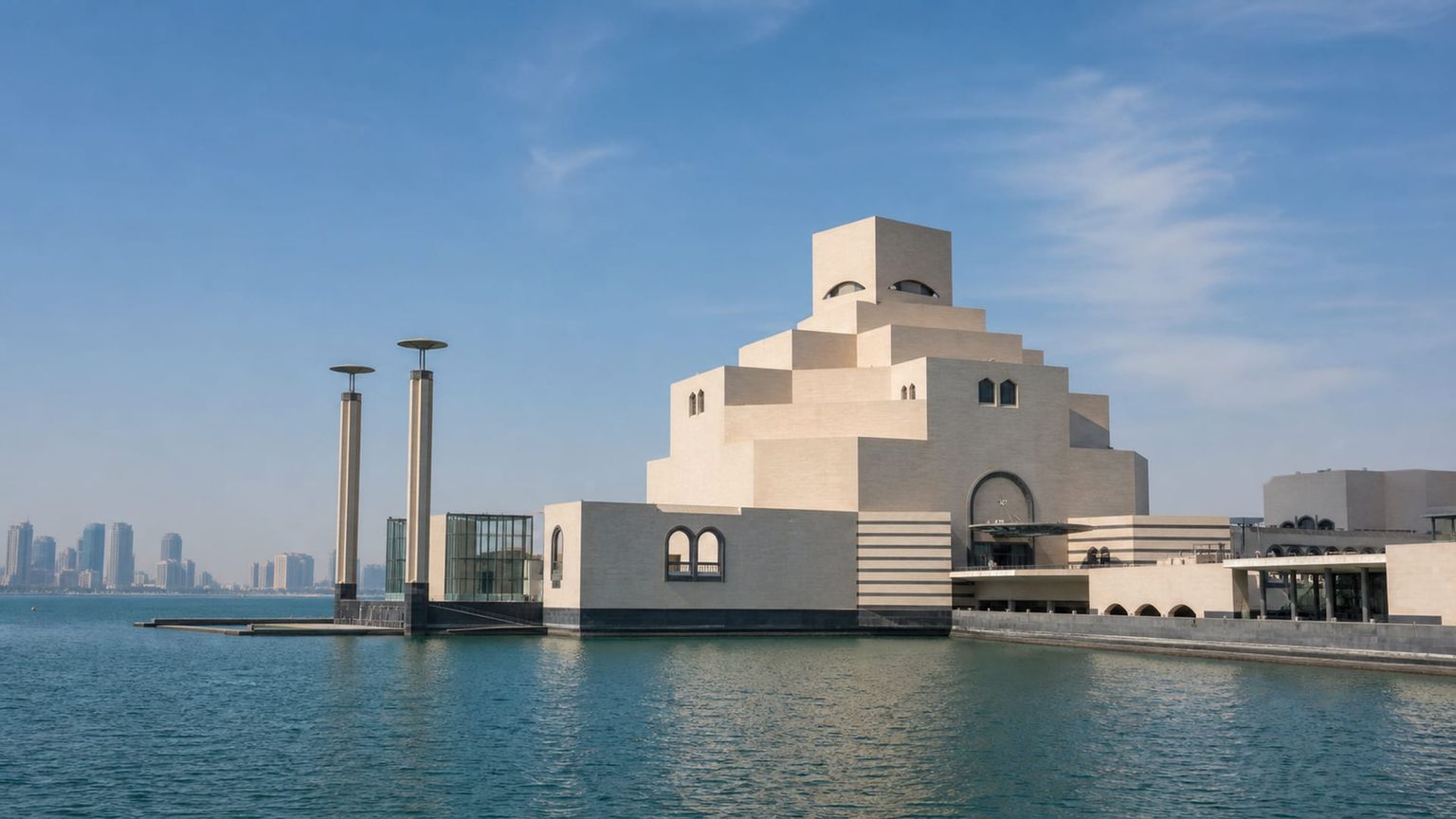
Museum of Islamic Art
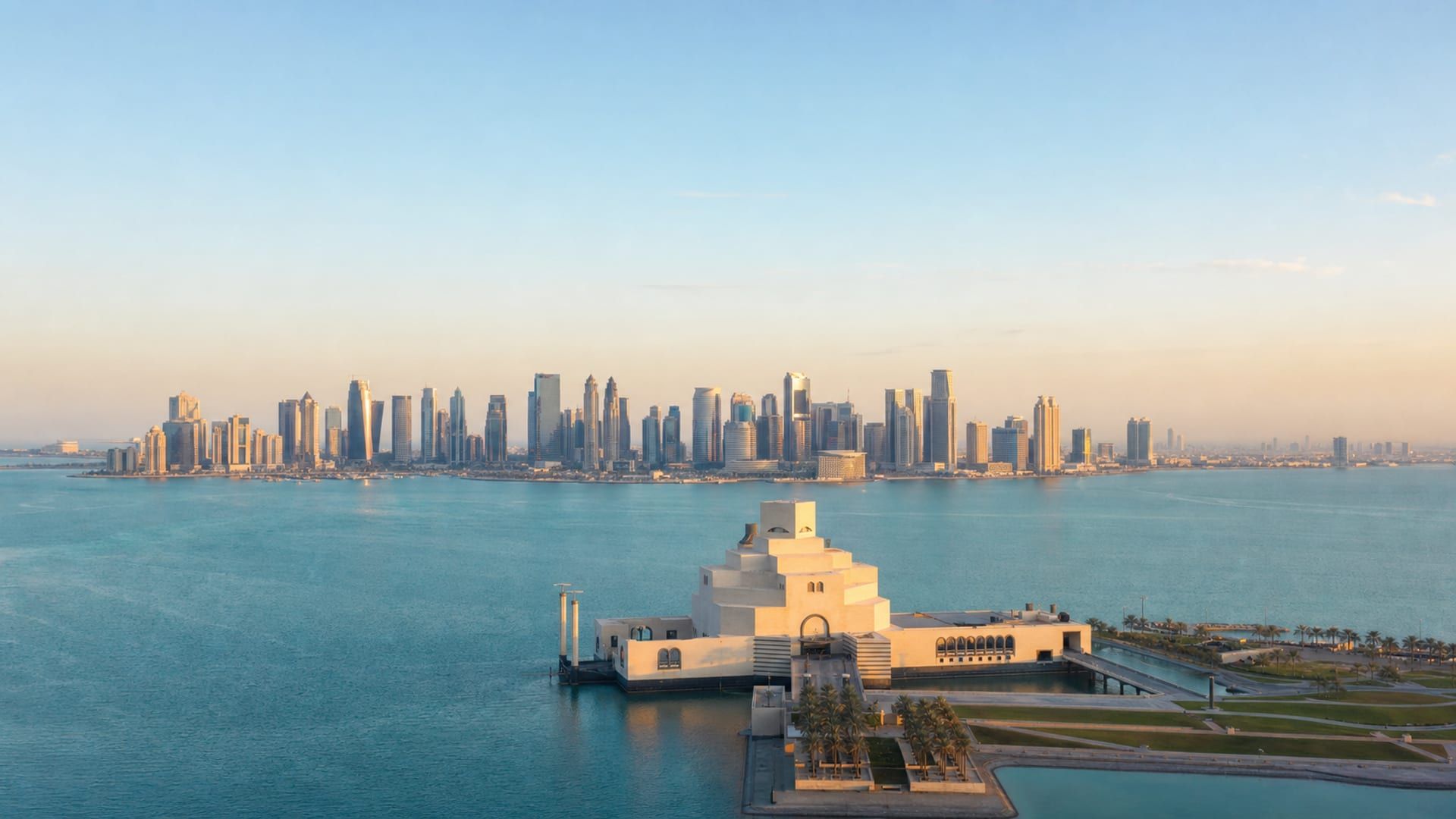
I. M. Pei’s limestone museum sits on its own island on Doha Bay, with galleries spanning 1,400 years of Islamic art. The terrace frames the skyline, and the adjacent park gives clear views across the water.
Time needed: About 2 to 3 hours
Entry: General admission is free; special exhibitions may carry separate ticket prices. Visit the official site for details.
Tip: Go late afternoon for cooler walks and a skyline view after sunset.
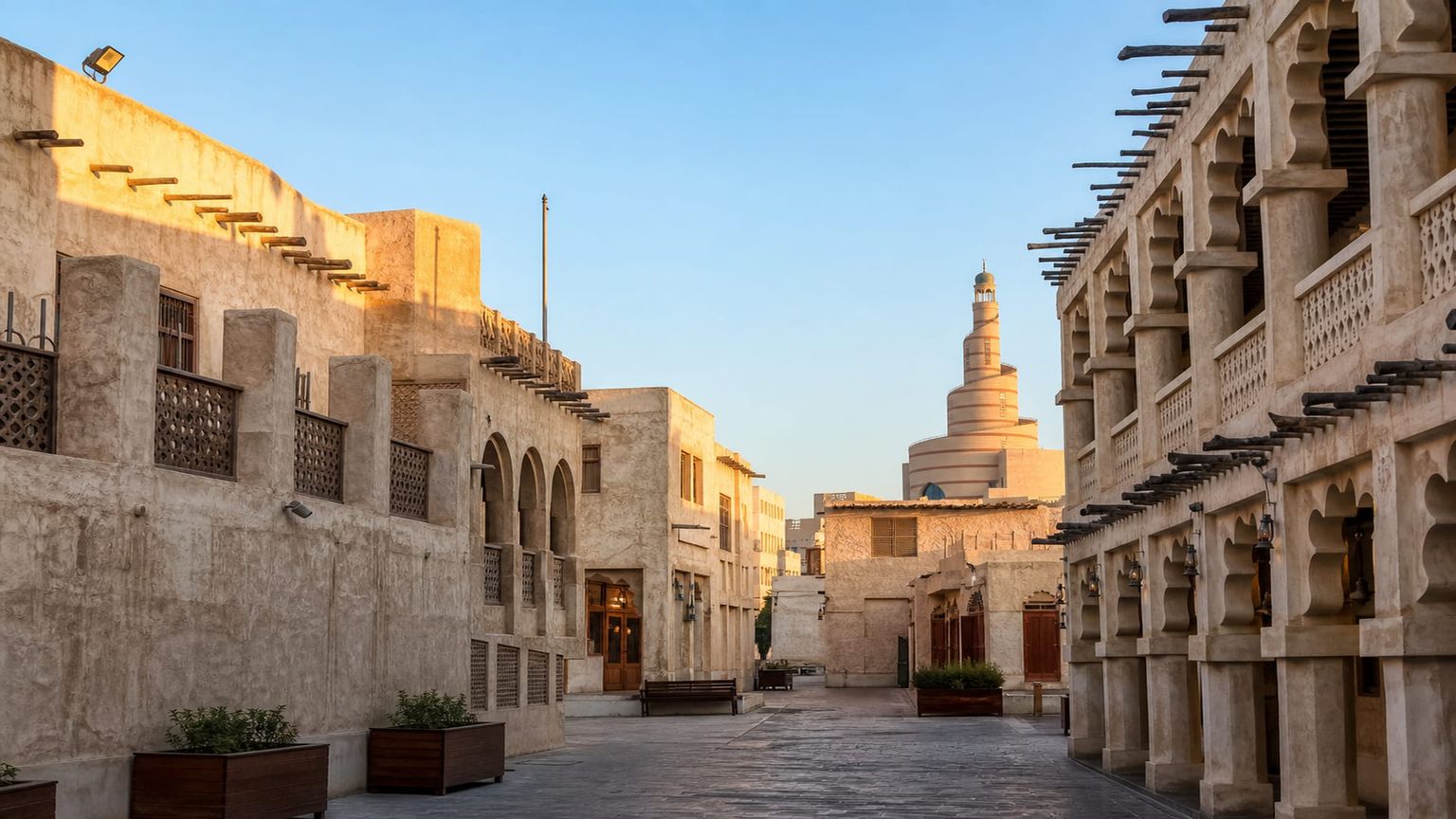
Souq Waqif
This restored market brings together spice stalls, textile shops, falcon stores, and cafés in narrow lanes near the old city center. It also houses the Falcon Souq and several small art galleries.
Time needed: About 2 hours
Entry: Free to enter; purchases, dining, and optional guided experiences are priced separately. Visit the official site for details.
Tip: Visit after 5:00 pm, when the lanes are livelier and the heat eases.
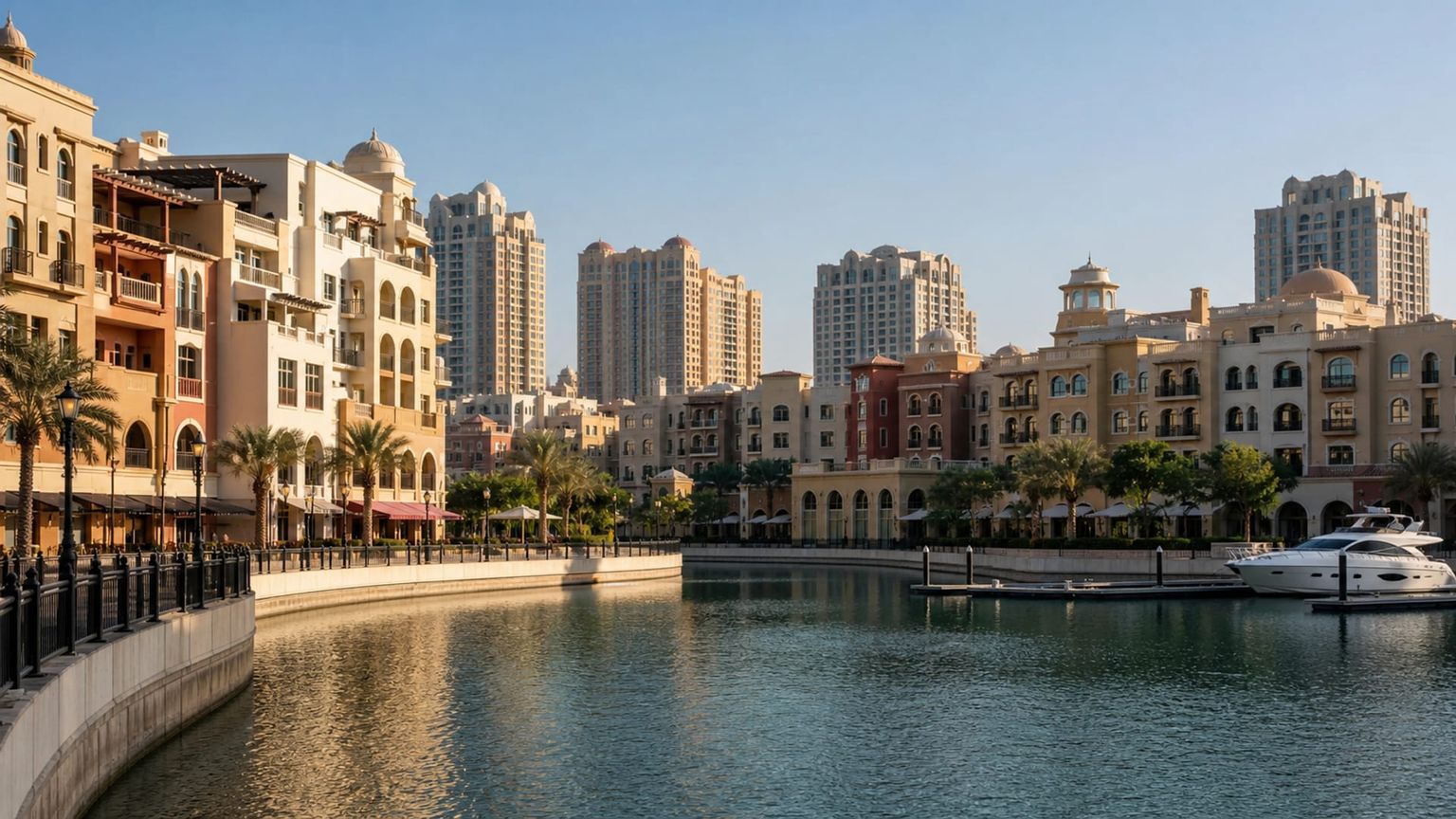
The Pearl-Qatar
This reclaimed island district mixes marina promenades, yacht berths, and low-rise blocks in Porto Arabia and Qanat Quartier. It adds a clean look at Doha’s modern shoreline development and works well for an evening walk.
Time needed: About 2 hours
Entry: Free to access; cafes, parking, and boat trips are charged separately by operator. Visit the official site for details.
Tip: Come at dusk for cooler air and the best light on the marina facades.
Overlooked sites worth visiting

Mina District Waterfront Promenade
A low-key Corniche-side walk with benches, views of dhow traffic, and easy access to cafés and public art. Go at sunset for cooler temperatures and cleaner harbor light.
Time needed: About 1 hour
Entry: Free to access. The promenade is open to the public at no charge, and you can walk the waterfront without a ticket. Paid spend only applies if you stop at nearby cafés or use paid parking.
Tip: Visit near sunset for softer light and lower heat.

Msheireb Museums
Four restored houses in downtown Doha trace slavery, trade, and family life through compact exhibits and original interiors. The rooms are small, so you can see the full complex without rushing.
Time needed: About 1 to 2 hours
Entry: Admission is free for the four-house museum complex, which welcomes visitors during posted hours. Some special exhibitions or guided programs may have separate terms, but the core museum entry costs nothing. Visit the official site for details.
Tip: Start with Bin Jelmood House, then move house by house.
Traditional food
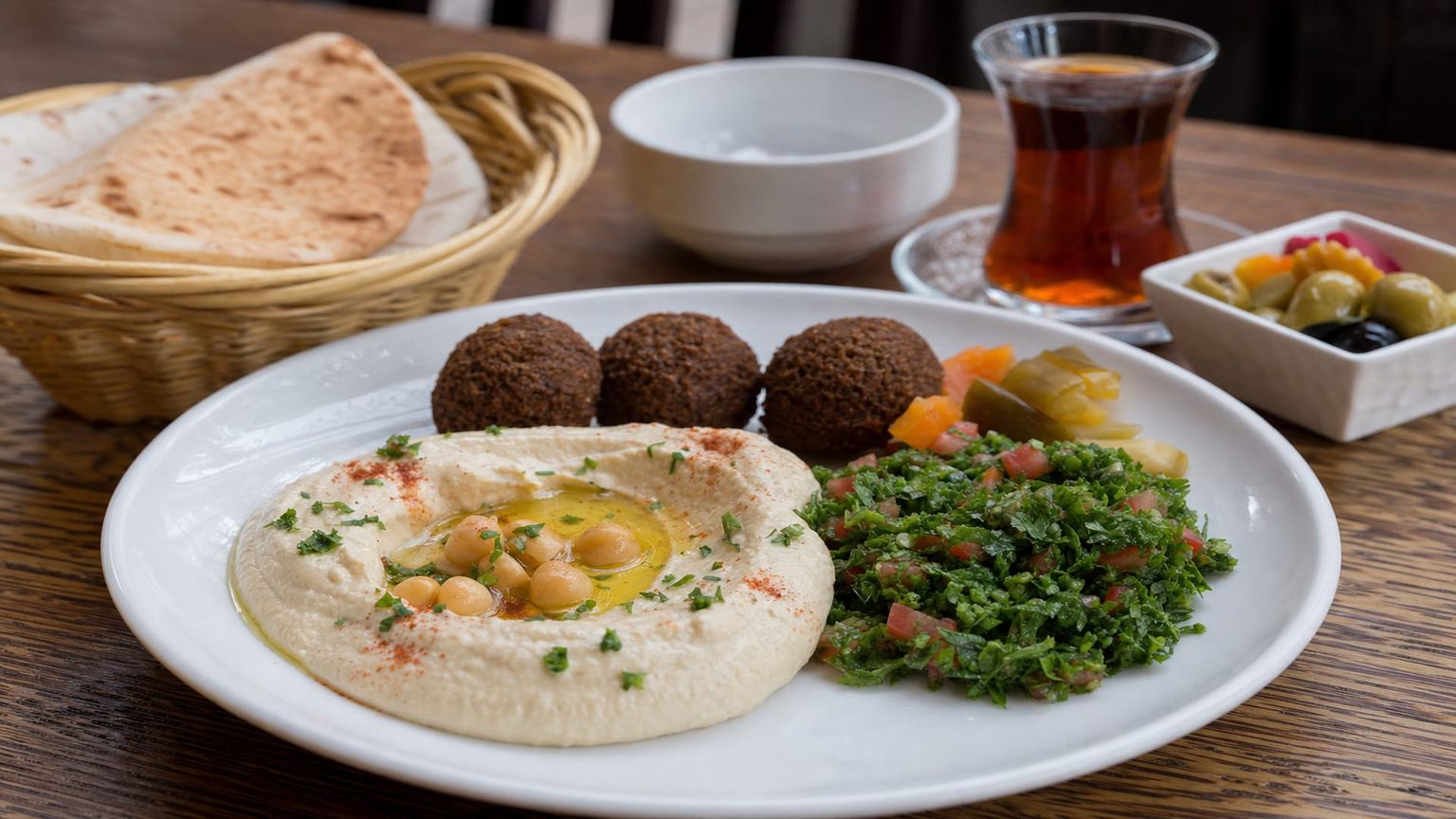
Doha’s cooking leans on rice, slow-cooked meat, dates, and warm spices, with machboos, harees, thareed, and balaleet showing up in both home cooking and restaurant menus. Meals often run on a late schedule, with long lunch pauses and busy evening dining.
Machboos
Qatar’s signature rice dish layers spiced meat or seafood over fragrant rice, often with dried lime and a deeper, savory finish. Al Tawash at Souq Waqif serves a respected version in a setting that matches the dish’s local roots.
Harees
Harees is a slow-cooked wheat and meat dish with a soft, porridge-like texture and a mild, comforting flavor. Parisa in Souq Waqif is a strong place to try it alongside other Gulf and regional classics.
Thareed
Thareed combines bread, broth, vegetables, and meat into a layered bowl that soaks up flavor as it sits. Al Shurfa Arabic Restaurant at Souq Waqif is a fitting place to order it after a market walk.
Balaleet
Balaleet pairs sweet vermicelli with eggs, so you get a breakfast dish that swings between lightly sugary and savory. Shay Al Shomous at Souq Waqif is well known for serving it in a traditional Doha setting.
Best time to visit Doha
Doha is best in the cooler months, when open-air walks and marina evenings stay comfortable, while summer pushes most sightseeing into short indoor bursts and late-day outings.
Best for: Best overall weather for the Corniche, souqs, and marina walks
What you get: About 59 to 75°F (15 to 24°C), with the busiest sightseeing conditions and comfortable evenings
Trade-offs: Hotel rates can rise, and popular districts stay active after dark
Best for: Good for museum days and early-evening walks before the heat builds
What you get: About 68 to 95°F (20 to 35°C), with moderate crowds in March and lighter visitor flow by late May
Trade-offs: Afternoons warm up fast, so midday outdoor plans need restraint
Best for: Best for indoor museums, mall dining, and shorter transfers
What you get: About 88 to 111°F (31 to 44°C), with lighter daytime crowds and strong air-conditioning indoors
Trade-offs: Outdoor sightseeing becomes limited and long walks are uncomfortable
Best for: A good shoulder season for mixed indoor and outdoor planning
What you get: About 77 to 97°F (25 to 36°C), with improving conditions in November and manageable crowd levels
Trade-offs: September and early October can still feel hot in the afternoon
A realistic 5-day plan in Doha
A five-day Doha trip works best when you separate arrival, museum time, market time, and waterfront time instead of trying to cover the city in one sweep. This plan keeps the central districts linked to the Corniche and The Pearl-Qatar without overloading any single day.
Land in Doha (DOH), take a taxi or app car to West Bay or Msheireb Downtown Doha, and plan on about 20 to 30 minutes and roughly 45 to 70 QAR (~$12 to ~$19) depending on traffic and where your hotel sits. Settle in, drink plenty of water, and keep dinner simple near the hotel, either in a West Bay restaurant or at a café in Msheireb Downtown Doha, so the first night stays easy after the flight.
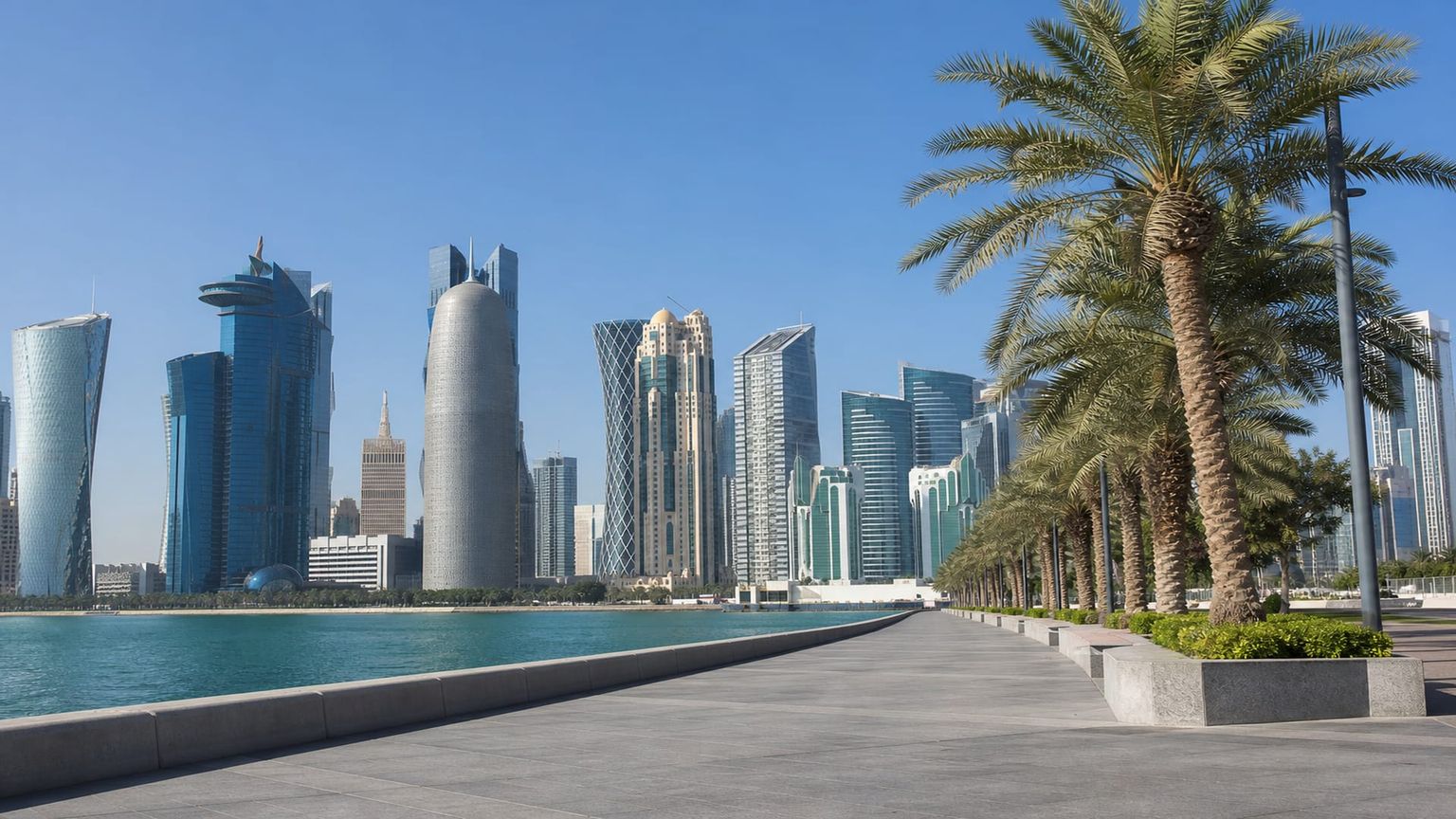
Begin at the Museum of Islamic Art, where you can spend about 2 to 3 hours before stepping onto the terrace for the skyline. From West Bay, the drive takes about 10 to 15 minutes; from Msheireb Downtown Doha, it is about 15 minutes by car. After that, walk about 10 minutes to the Mina District Waterfront Promenade for a slower harbor-side stretch, then head to Souq Waqif, about 10 to 15 minutes away by car, for an evening meal once the lanes come alive after 5:00 pm.
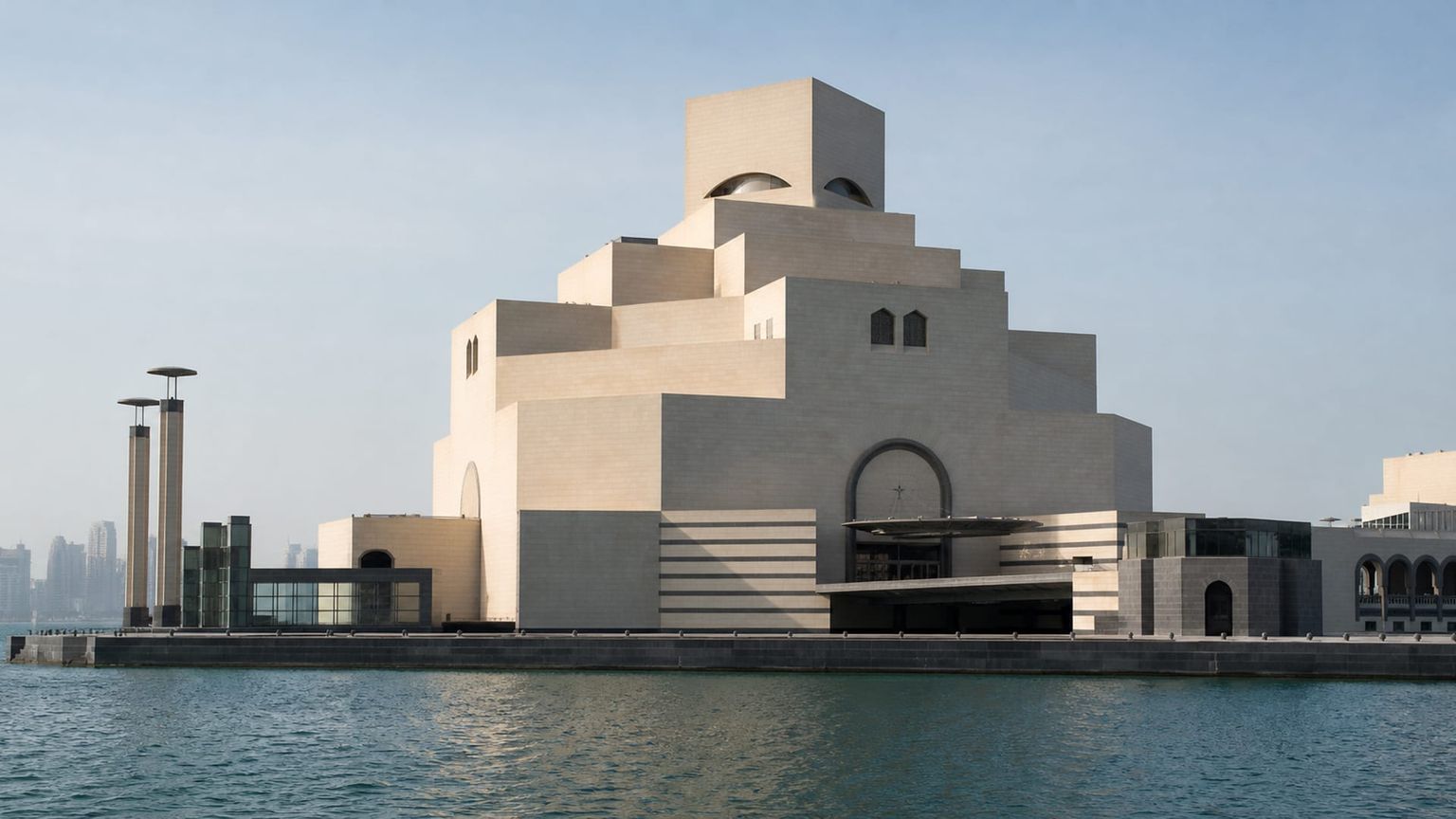
Start the day at Msheireb Museums, then move house by house through the four restored homes in about 1 to 2 hours. Souq Waqif sits about 5 to 10 minutes on foot from there, so you can continue into the market for spice stalls, falcon shops, and lunch without needing a taxi. In the late afternoon, cross to West Bay, about 10 to 15 minutes by car, for a Corniche walk and a skyline view as the office towers begin to thin out after work hours.
The Pearl-Qatar takes the lead today, with a marina walk through Porto Arabia and Qanat Quartier that works best in the cooler part of the day. From West Bay, the drive is about 20 to 25 minutes, and from Souq Waqif it is about 25 to 30 minutes. Linger for lunch or coffee near the waterfront, then return after sunset if you want the facades and yacht berths in softer light.
Before you head to the airport, fit in one last stop at either the Museum of Islamic Art or the Msheireb Museums, depending on whether you want one final major gallery or a shorter downtown visit. If you are shopping for gifts, Souq Waqif gives you the easiest late-trip browse, and it is also a good place to stop for coffee in a courtyard café. From central Doha, leave about 2 to 3 hours before your flight, since the airport transfer usually takes about 15 to 30 minutes depending on traffic and hotel location.
Business-class flights from the US to Doha
Doha usually reaches the United States through one-stop long-haul itineraries, and the two common reference points here are New York and Los Angeles. The routing and price bands differ enough that it helps to compare them separately.
From New York, Qatar Airways, Turkish Airlines, Air France, British Airways, Lufthansa, and Emirates all appear on the route mix, with nonstop flying time at about 12 to 13 hours when that option is available. Otherwise, one-stop trips commonly connect through IST, CDG, LHR, FRA, or DXB, and total travel time often lands at about 15 to 21 hours. Business-class fares from New York start at roughly $5,500 and can reach $9,500.
From Los Angeles, Qatar Airways, Turkish Airlines, British Airways, Lufthansa, Emirates, and KLM are among the airlines used on the route, and nonstop flying time runs about 15 to 16 hours when offered. If you connect, the usual hubs are IST, CDG, LHR, FRA, or AMS, with total time stretching to about 18 to 26 hours. Business-class fares from Los Angeles begin near $5,800 and often run to $10,200.
Doha feels different when you slow down
A good Doha trip is built from specific moves, a morning at the Museum of Islamic Art, lunch or dinner in Souq Waqif, an afternoon in Msheireb Downtown Doha, and a waterfront stretch at The Pearl-Qatar when the light softens. The metro, taxis, and short walks each do a different job, so the city stops feeling like a transfer point and starts reading as a place with clear districts and a usable pace. If you want to match flights, neighborhoods, and timing with less guesswork, the AranGrant experts can help shape the route







