

Chapters:

Need help with your trip?
Our support team is available 24/7. Request a callback or call us directly at (833) 619-0908
Many trips to Chánia start with the Venetian Harbor, a hotel near the water, and one or two long meals that leave the rest of the city unexplored.
That approach can miss the places that give the old center shape, and it can also turn short transfers into repeated detours once you add the airport, museum, monastery, and beach districts.
This guide keeps the plan tighter: where to stay, how to move, what to eat, and how to pace five days without building in unnecessary backtracking.
Useful things to know

Main language(s): Greek
Yassas (YAH-sahs) – Hello / good day
Parakaló (pah-rah-kah-LOH) – Please
Efharistó (ef-hah-rees-TOH) – Thank you
Miláte Angliká? (mee-LAH-teh ahn-glee-KAH) – Do you speak English?
Póso kánei? (POH-soh KAH-nee) – How much does it cost?

Currency: The local currency is the euro (EUR, €).

Cash and cards: Cards and contactless are widely accepted; keep about €20 to €40 ($22 to $44) in cash for small buys and taxis.

Tipping: Round up small bills; leave about 5-10% at restaurants if service was good.

Traditional food: Dakos, Kalitsounia, Gamopilafo, Apaki

Water and coffee costs: Water about €1.50 ($2), bar espresso about €2.50 ($3).

Taxis and ride apps: Bolt and Uber operate here; local taxi apps may be limited.

Plug and voltage: Type C/F socket, 230V

Dining and shop opening hours: Breakfast is about 08:00-10:00, lunch 13:00-15:00, and dinner 20:00-22:30. Some shops and restaurants close in the afternoon, especially outside the center.

Emergency number: 112 for police, fire, and ambulance.
Where to stay in Chánia
Chánia’s historic core wraps the Venetian Harbor, narrow lanes, and restored mansions into the city’s most atmospheric stay. It puts you within easy walking distance of museums, waterfront dining, and the ferry and bus links that matter for short trips.
Best for: First-time visits, car-free stays, and travelers who want museums, dining, and harbor walks nearby
What to expect: Dense pedestrian streets, steady daytime foot traffic, and a lively evening scene along the waterfront.
Hotel prices: Usually about €120 to €260 (~$132 to ~$286) per night for well-rated stays
Distance to major sights: 0 to 10 minutes on foot to the Venetian Harbor and Archaeological Museum of Chania; about 15 minutes on foot to the old market area
Quietness: Busy through the day and active into the evening, then quieter on side lanes late at night.
Main trade-off: Rooms often cost more here, and some streets bring luggage, restaurant, and late-night noise.
Good to know: If you plan to rely on taxis or buses less, book early, since the best-located small hotels sell out first.
Nea Chora sits west of the old town beside a sandy beach and a working waterfront, giving you an easier seaside base without leaving the city. It suits travelers who want to split time between swims, tavernas, and short walks into the center.
Best for: Beach time, casual dining, and travelers who want a lower-key base within walking range of the old town
What to expect: A mixed residential and seaside area with local traffic, beachgoers by day, and relaxed tavernas at night.
Hotel prices: Usually about €90 to €180 (~$99 to ~$198) per night for well-rated stays
Distance to major sights: About 10 to 15 minutes on foot to the Venetian Harbor; about 20 minutes on foot to the Archaeological Museum of Chania
Quietness: Calmer than the old town during the day, with modest evening activity along the beach road and tavernas.
Main trade-off: You trade a little historic atmosphere for better beach access and a slightly longer walk to the core sights.
Good to know: If you want to swim before breakfast, choose a place set just off the seafront, not on the busiest beach road.
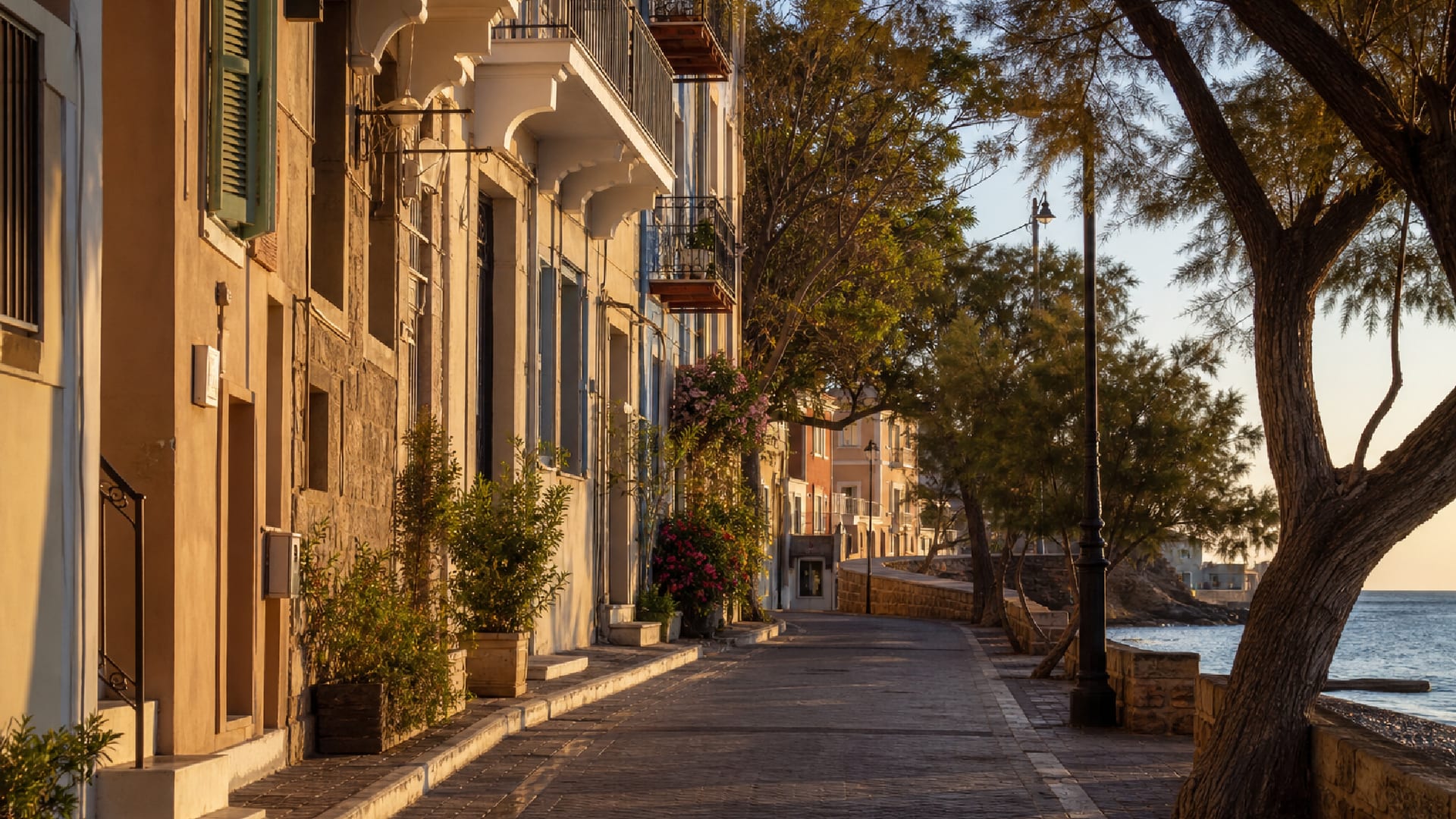
Koum Kapi lies east of the old town along a waterfront lined with cafes, bars, and a small urban beach. It works well for travelers who want easy access to the center but prefer a more lived-in neighborhood with sea views.
Best for: Waterfront stays, evening cafe hopping, and travelers who want close access to the center without staying in the busiest lanes
What to expect: A compact coastal strip with steady local activity, people walking the promenade, and more energy after sunset.
Hotel prices: Usually about €85 to €170 (~$94 to ~$187) per night for well-rated stays
Distance to major sights: About 10 minutes on foot to the old harbor; about 15 minutes on foot to the Archaeological Museum of Chania
Quietness: Active on the promenade in the evening, while side streets stay much calmer overnight.
Main trade-off: The shoreline adds appeal, but some stretches sit beside traffic and can pick up noise from bars and late walkers.
Good to know: Expect some rooms to face the road rather than the water, so check the exact outlook before you book.
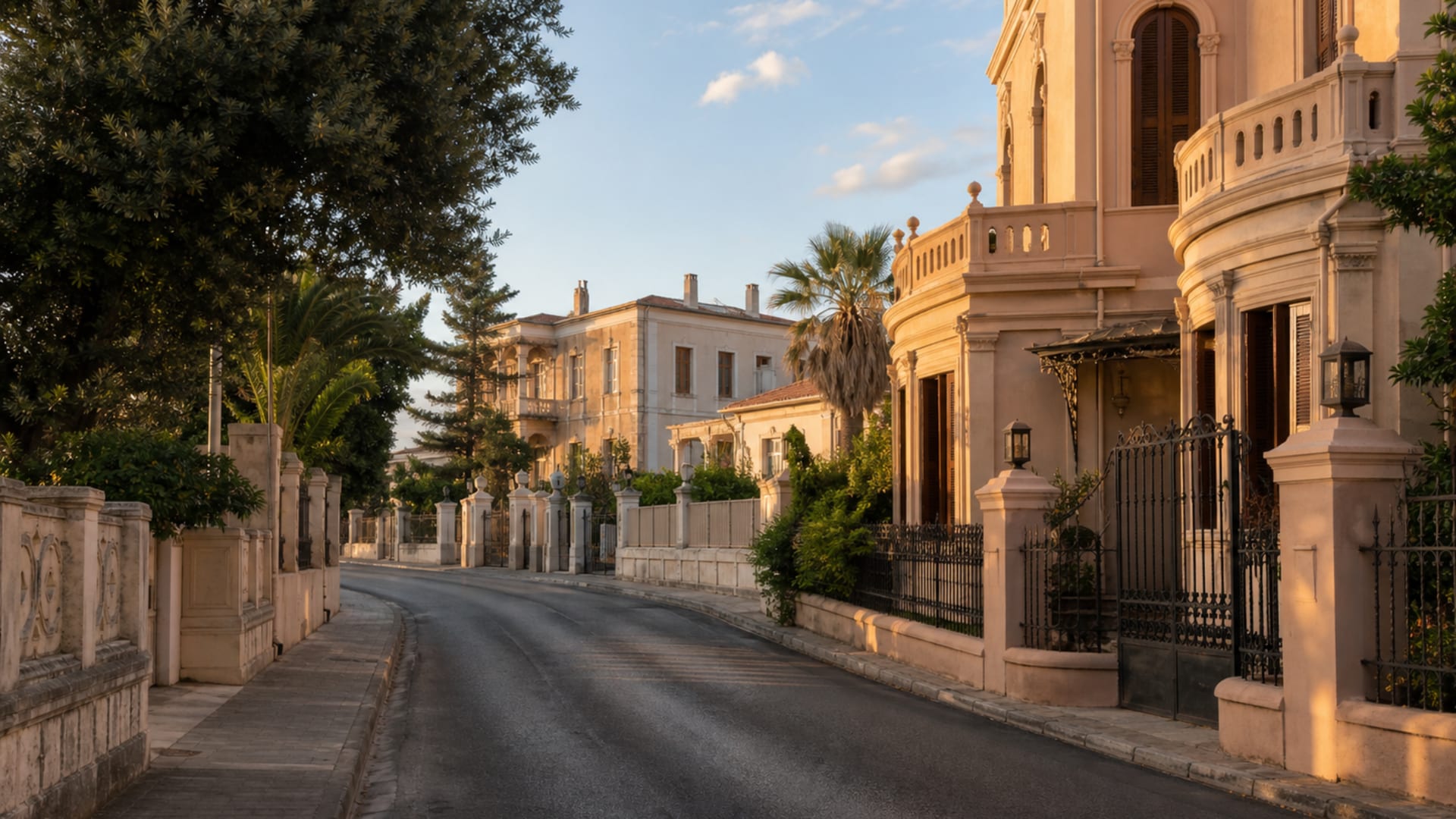
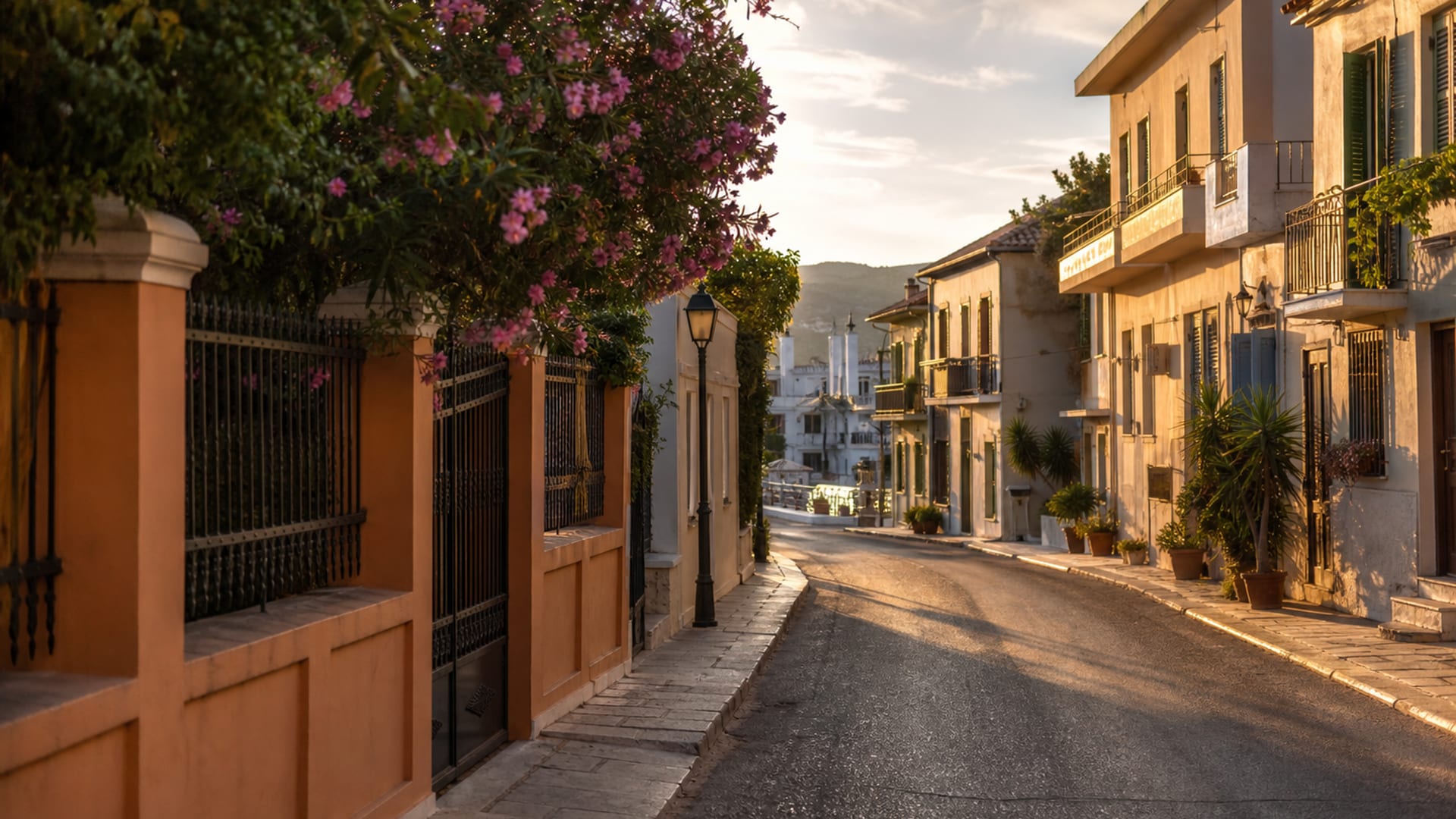
Halepa is an eastern district of villas, embassy buildings, and quieter residential streets overlooking the bay. It suits visitors who want more space and a slower street scene while still staying close enough to reach the old town by bus or taxi.
Best for: Longer stays, quieter nights, and travelers who do not need to be in the old town every hour
What to expect: Residential streets, light foot traffic, and a subdued atmosphere compared with the harbor districts.
Hotel prices: Usually about €80 to €160 (~$88 to ~$176) per night for well-rated stays
Distance to major sights: About 10 to 15 minutes by taxi to the Venetian Harbor; about 25 minutes on foot to the old town edge
Quietness: Quiet most of the day and noticeably calmer at night than the central waterfront areas.
Main trade-off: You give up instant walkability to the main sights, so you will use taxis or buses more often.
Good to know: Check whether your hotel sits uphill, because the slope can add effort if you plan to walk into town often.
Travelers usually avoid staying in Souda, because it sits about 4 miles east of Chánia Old Town and centers on the port and industrial area rather than visitor sights. Kalathas and Stavros on Akrotíri are less convenient for a first visit, because they are well outside the city center, have fewer dining and shopping options, and usually require evening taxi rides back from Old Town. Nea Chora can be workable for beach access, but it is less convenient if your focus is sightseeing, because you will spend more time walking or riding into the Venetian harbor area than in neighborhoods closer to the core.
Hotel deals
How to get around Chánia efficiently
Chánia works best with walking in the center, then buses or taxis for the airport, Akrotiri, and the outlying waterfront districts.

Urban bus
for neighborhoods outside the historic center
Chánia has no metro system. The closest equivalent is the city bus network, which links the airport area, Chánia town, and nearby coastal resorts; for longer hops, intercity buses handle west Crete.

KTEL bus
for trips to the airport and longer journeys
Chánia’s buses center on the KTEL network, with the main hub in Chánia town and frequent links to Chánia Airport (CHQ), Souda, Platanias, and other beach areas. Local rides usually cost about $2 to $5 (€2 to €4), with short validity by ticket type and route; buy on board or at the terminal, and check return times carefully because evening frequency drops.

Taxi
for rides to the airport and at late hours
Licensed taxis use metered fares, with airport trips often quoted at fixed prices rather than by the meter. Expect about $35 to $45 (€32 to €41) from Chánia Airport (CHQ) to Chánia town in normal traffic, and roughly $20 to $30 (€18 to €27) for shorter city rides; late-night trips, luggage, and holidays can raise the total. Taxis line up at the airport rank and main stands, cards are not always accepted, so carry cash or confirm payment before boarding.
*Prices are based on rates updated as of June 2026 and may change at the time of travel.
Use buses for inexpensive longer hops, taxis when timing matters, and walking whenever your day stays inside Old Town, Koum Kapi, or Nea Chora.
Iconic landmarks
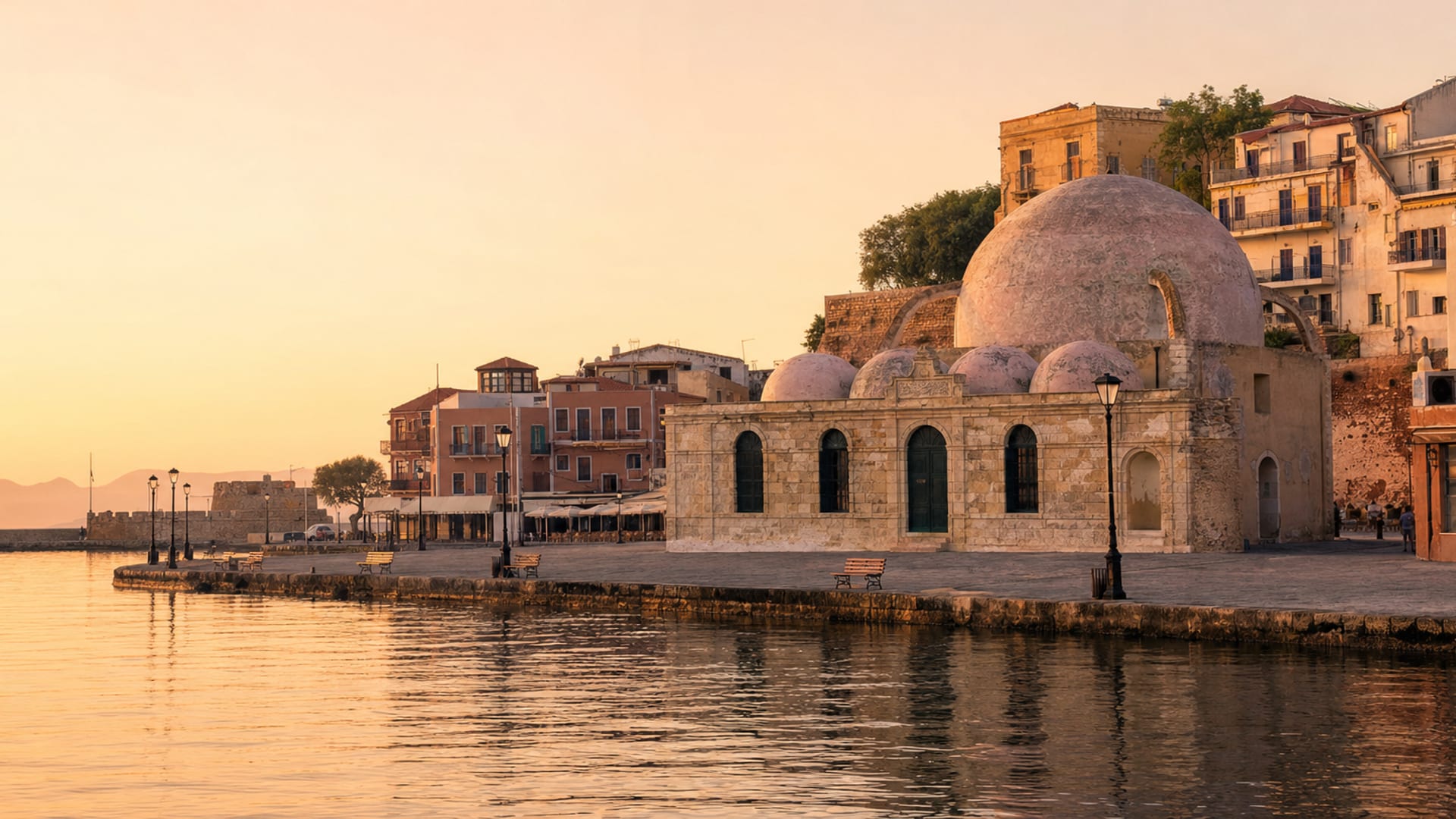
Old Venetian Harbor
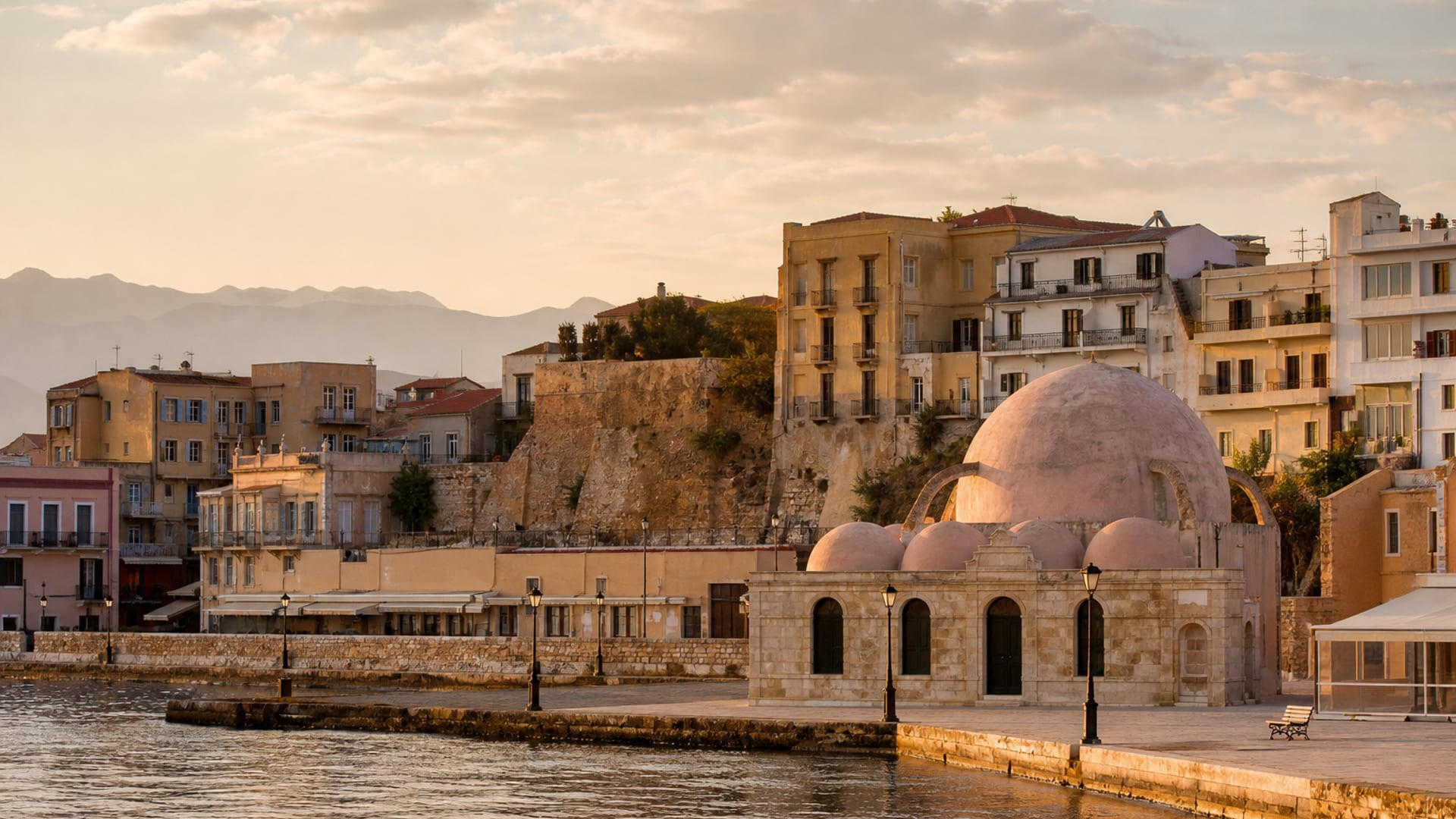
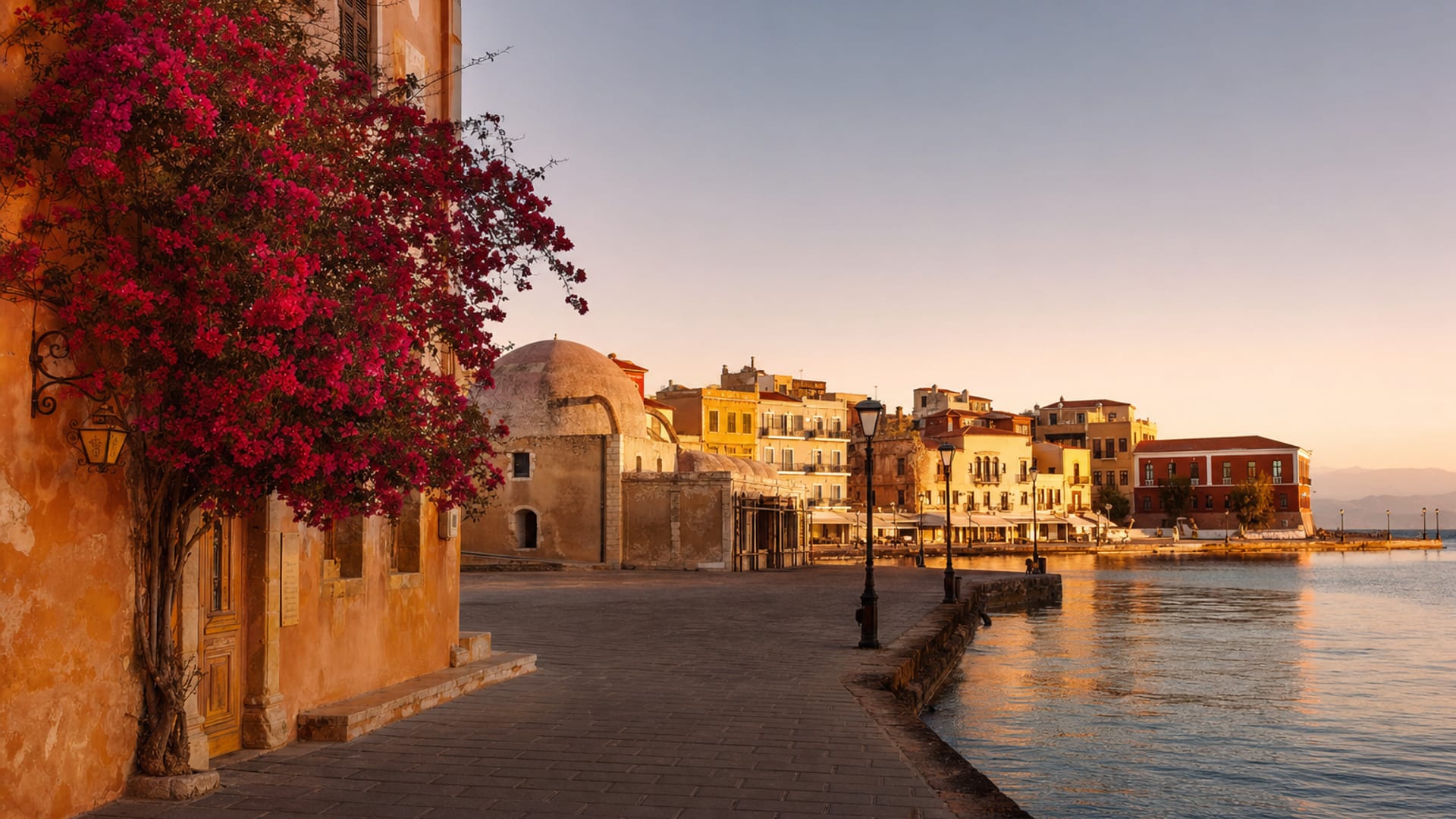
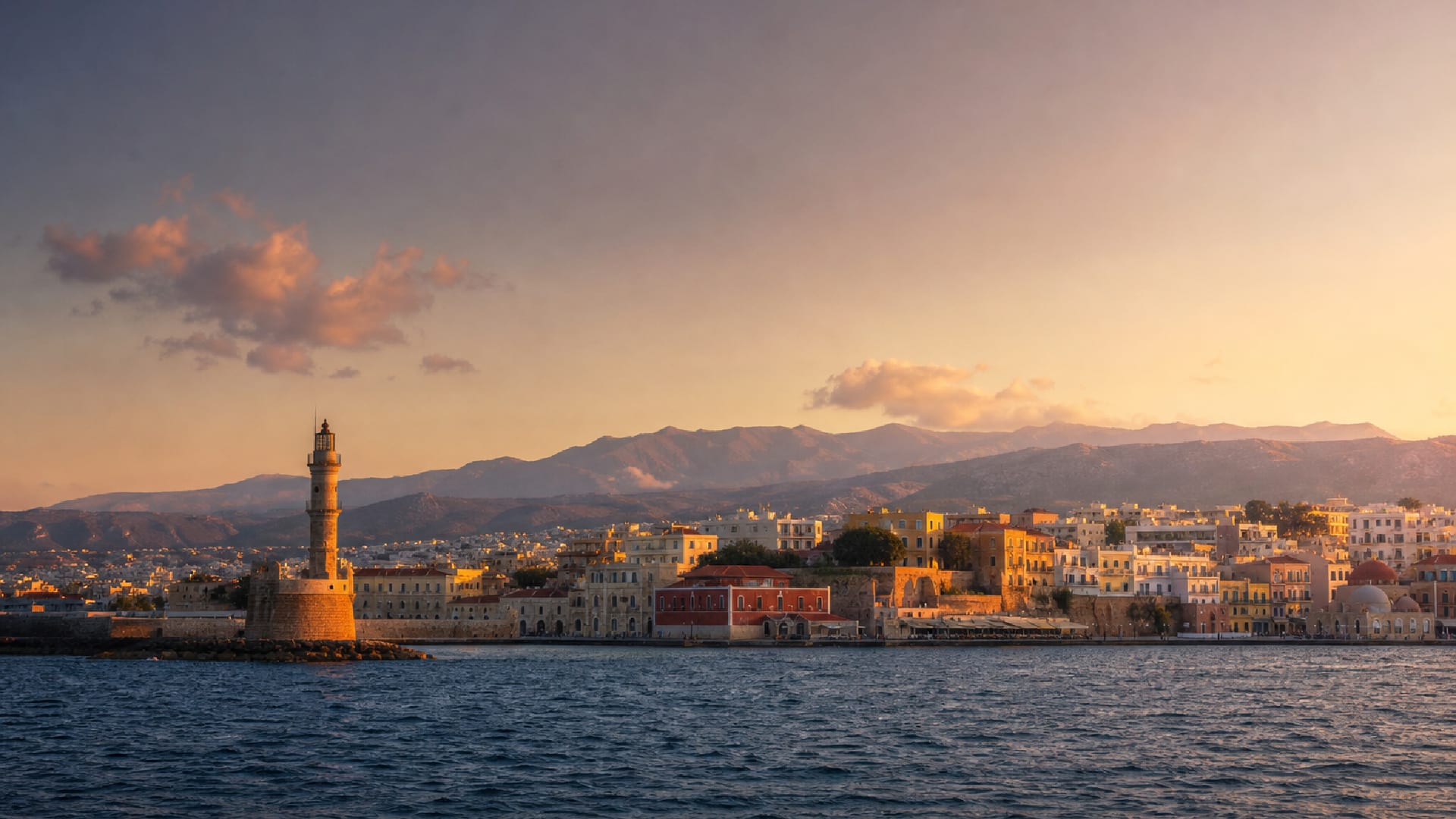
Chania’s waterfront core lines the old Venetian basin with the 16th-century lighthouse at the mouth, a mosque, and restored warehouses. It is the best place to read the city’s Venetian, Ottoman, and Cretan layers in one walk.
Time needed: About 1 to 2 hours
Entry: Free to access, with no ticket required for the harbor walk or waterfront viewpoints
Tip: Go late afternoon, then stay for blue hour when the lighthouse lights up clearly.
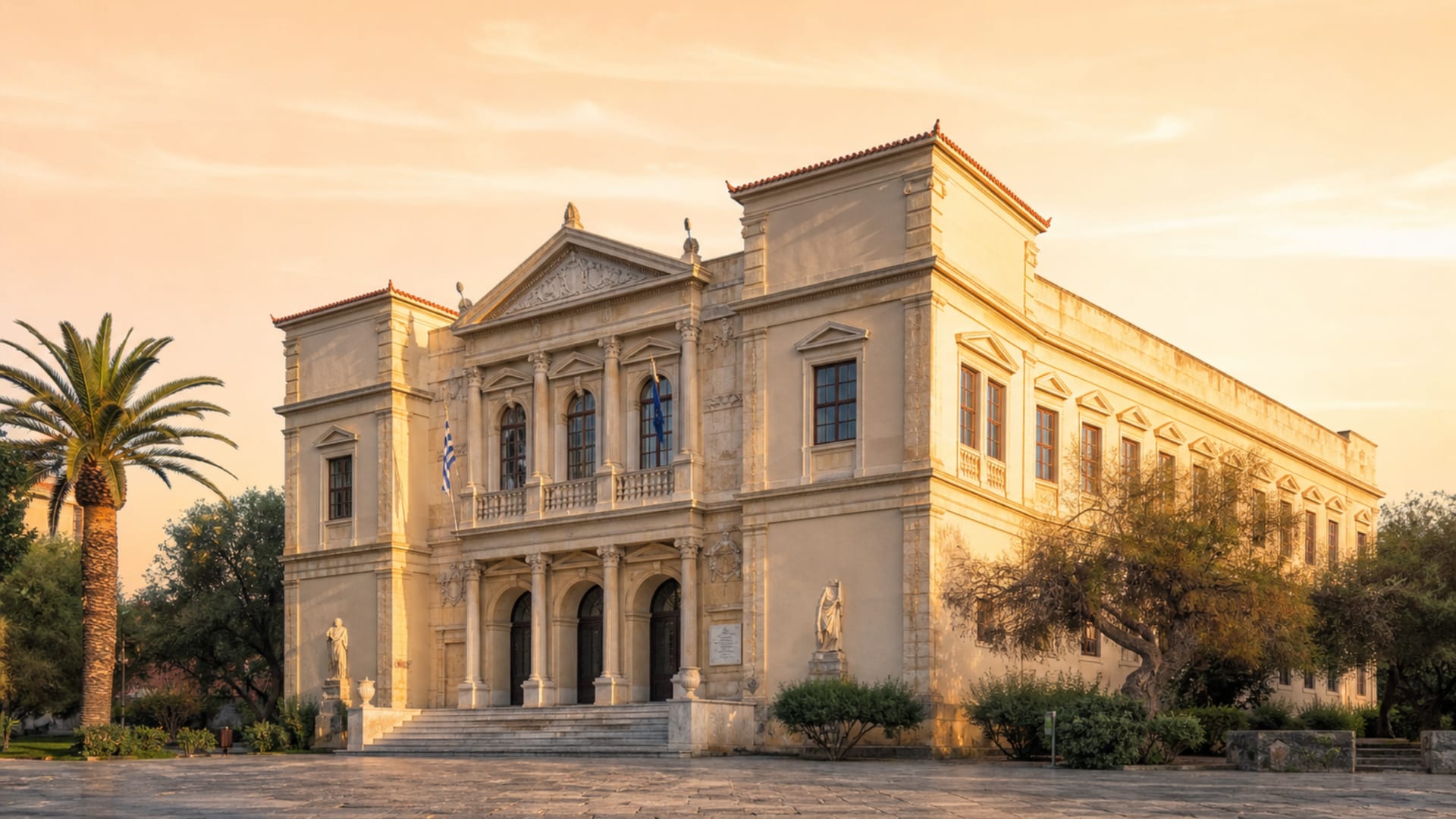
Archaeological Museum of Chania
Set in the former Venetian Monastery of San Francesco, this museum displays Minoan, Roman, and Byzantine finds from western Crete. The building itself adds a major historic layer to the visit, with cloisters, vaults, and a calm courtyard.
Time needed: About 1 to 2 hours
Entry: Tickets cost $6 to $12 (€5 to €10), with reduced admission for eligible visitors Visit the official site for details.
Tip: Visit early in the day, before the galleries and courtyard fill with tour groups.
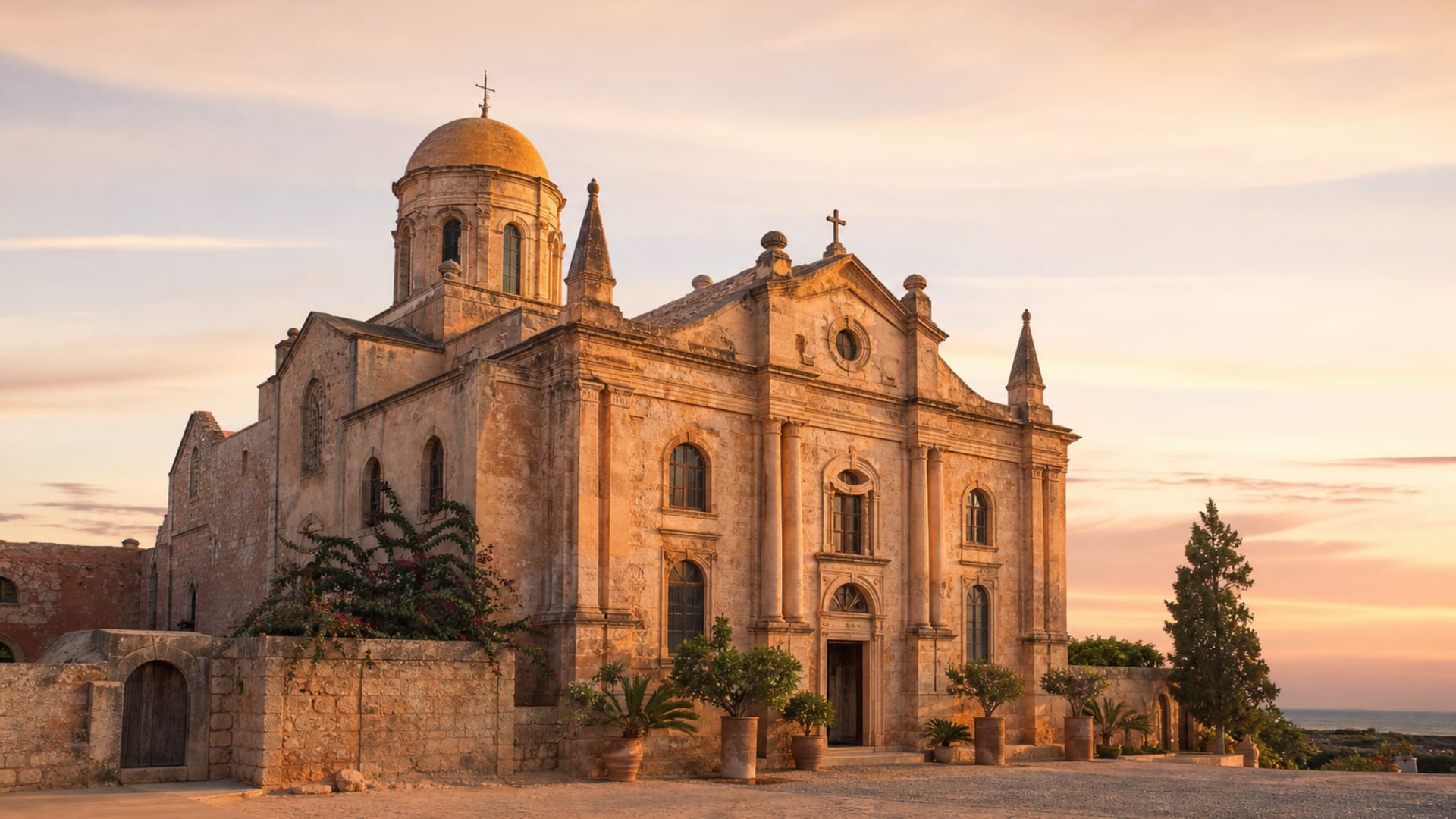
Agia Triada Monastery, Akrotiri
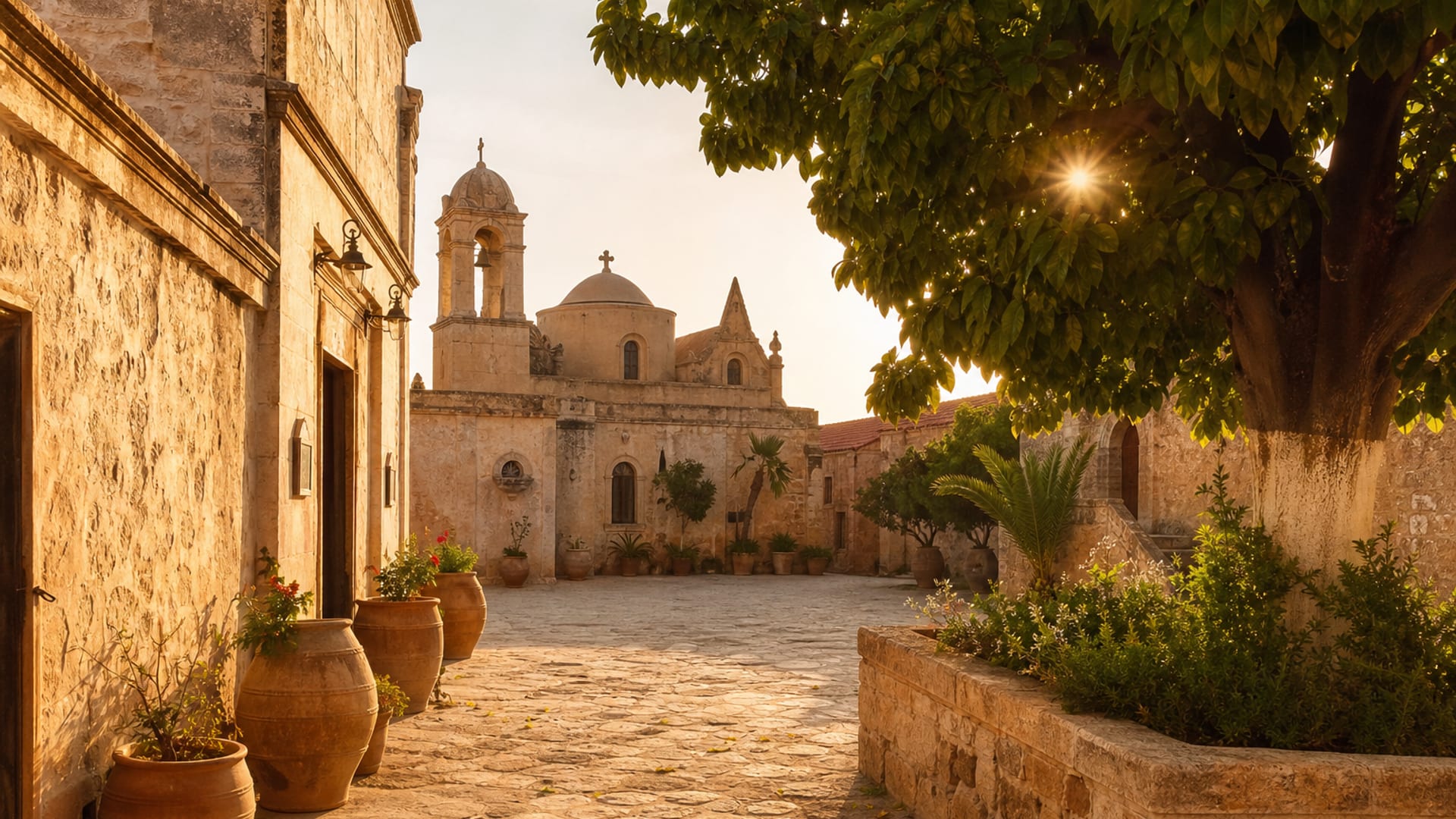
About 15 km northeast of Chania, this 17th-century monastery pairs fortified walls with a rich olive-grove setting and a well-kept courtyard. Its church, archive, and small museum make it one of the area’s strongest historic stops.
Time needed: About 1 to 2 hours
Entry: Admission costs $3 to $5 (€3 to €4), with small extra fees for museum or shop purchases Visit the official site for details.
Tip: Dress modestly, and arrive midmorning when the courtyards are bright and quiet.
Overlooked sites worth visiting

Venetian Neoria
This small row of Venetian ship sheds lines the old harbor edge and gives a close view of Chania’s maritime past. The stone arches make an easy stop between the lighthouse and the fish market.
Time needed: About 30 minutes
Entry: Free to access; visitors can walk the harbor front at any time, and no ticket is needed to view the exterior row of neoria. Access is open from the public promenade, with best viewing from the quay and nearby harbor path.
Tip: Go near sunset for the clearest light on the stone arches.

Izzedin Fortress
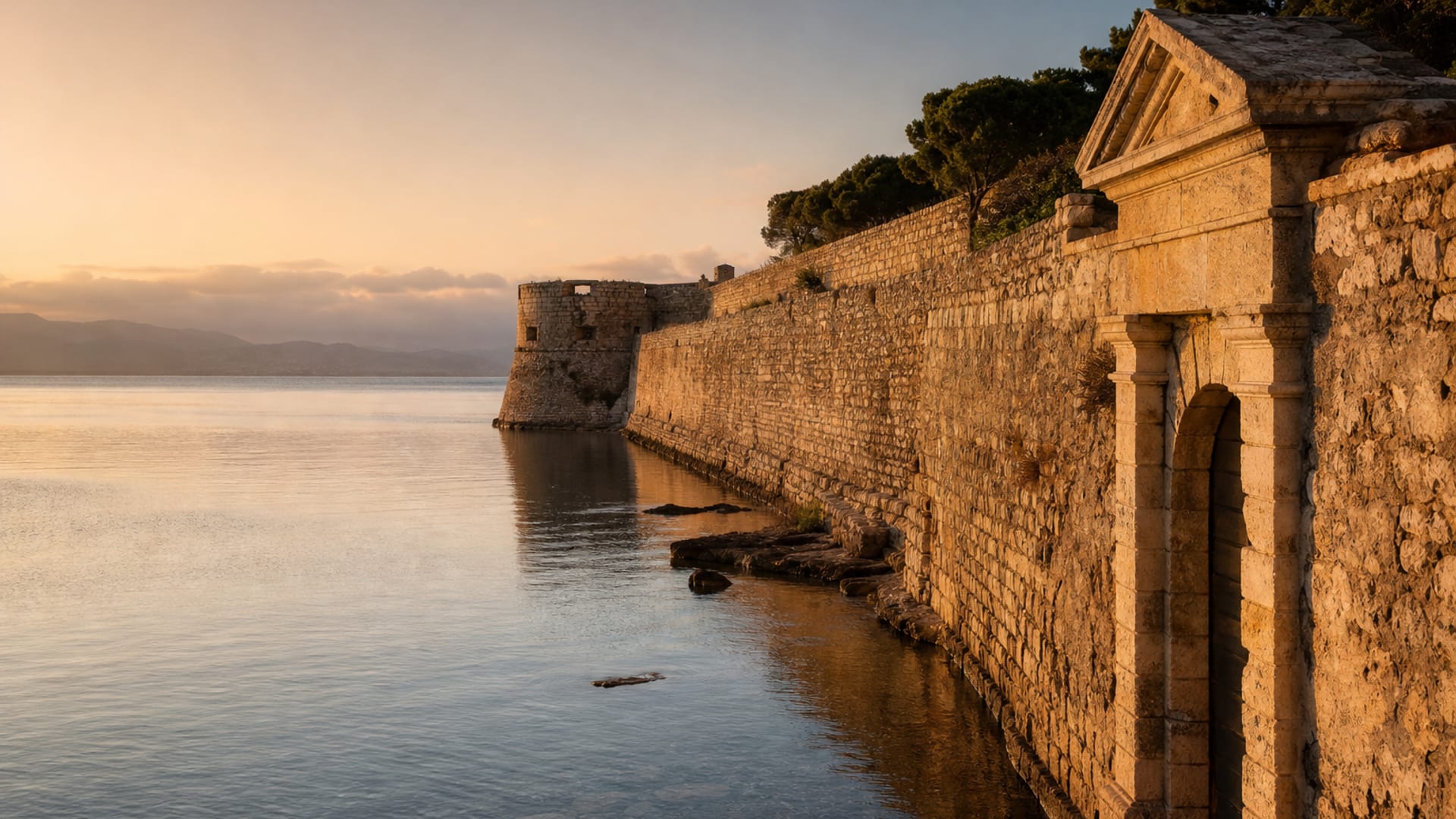
This 19th-century hill fort above Souda Bay has thick walls, dry courtyards, and wide harbor views without the city-center foot traffic. Its scale and isolated setting make it one of Chania’s quieter historic stops.
Time needed: About 1 to 1.5 hours
Entry: Entry is usually free when the site is open, though opening hours can vary and access may be limited during maintenance or private use. There is no standard admission desk or ticket price posted for casual visits to the exterior grounds.
Tip: Wear closed shoes, the ground is uneven inside the fort.
Traditional food
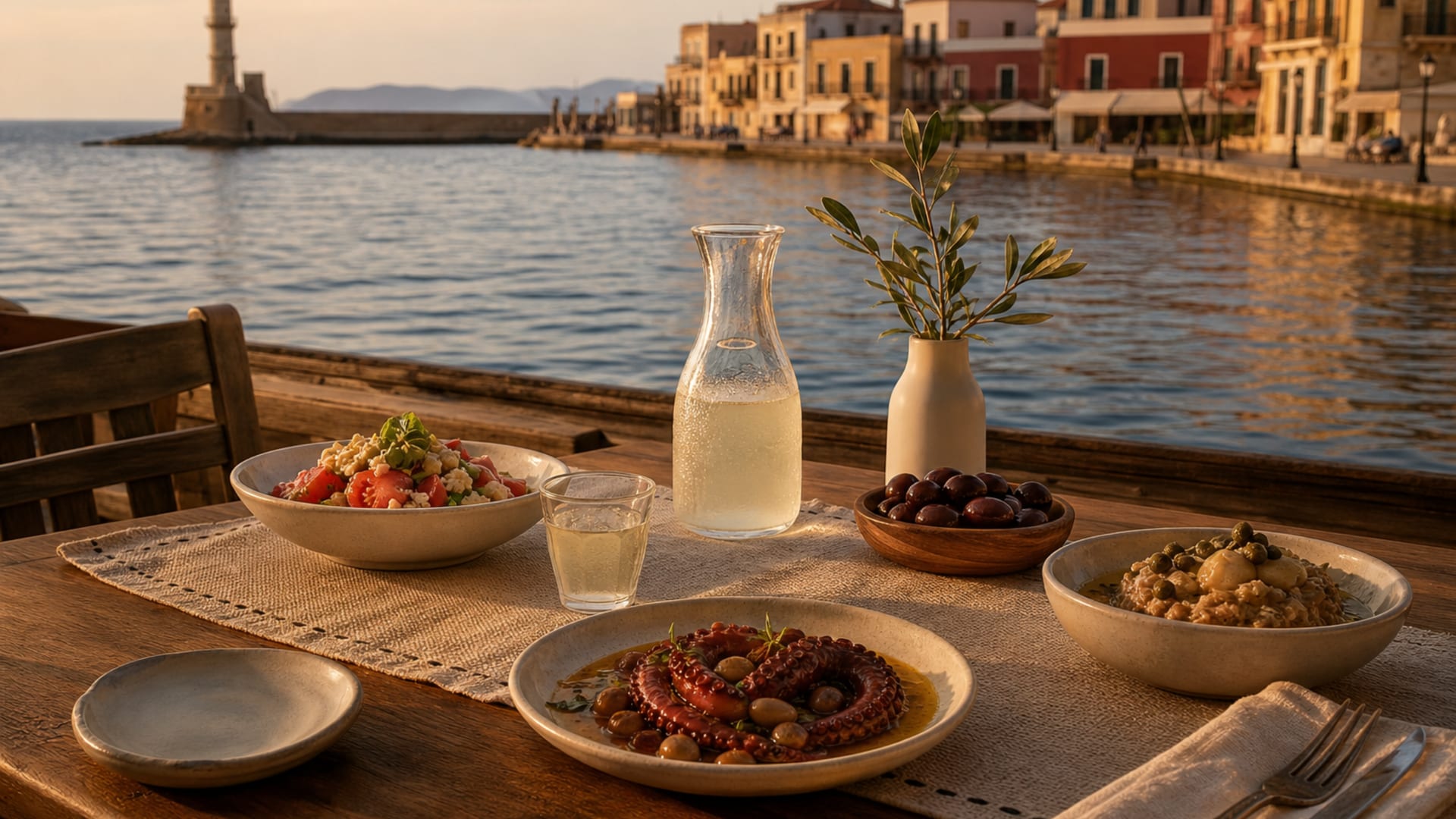
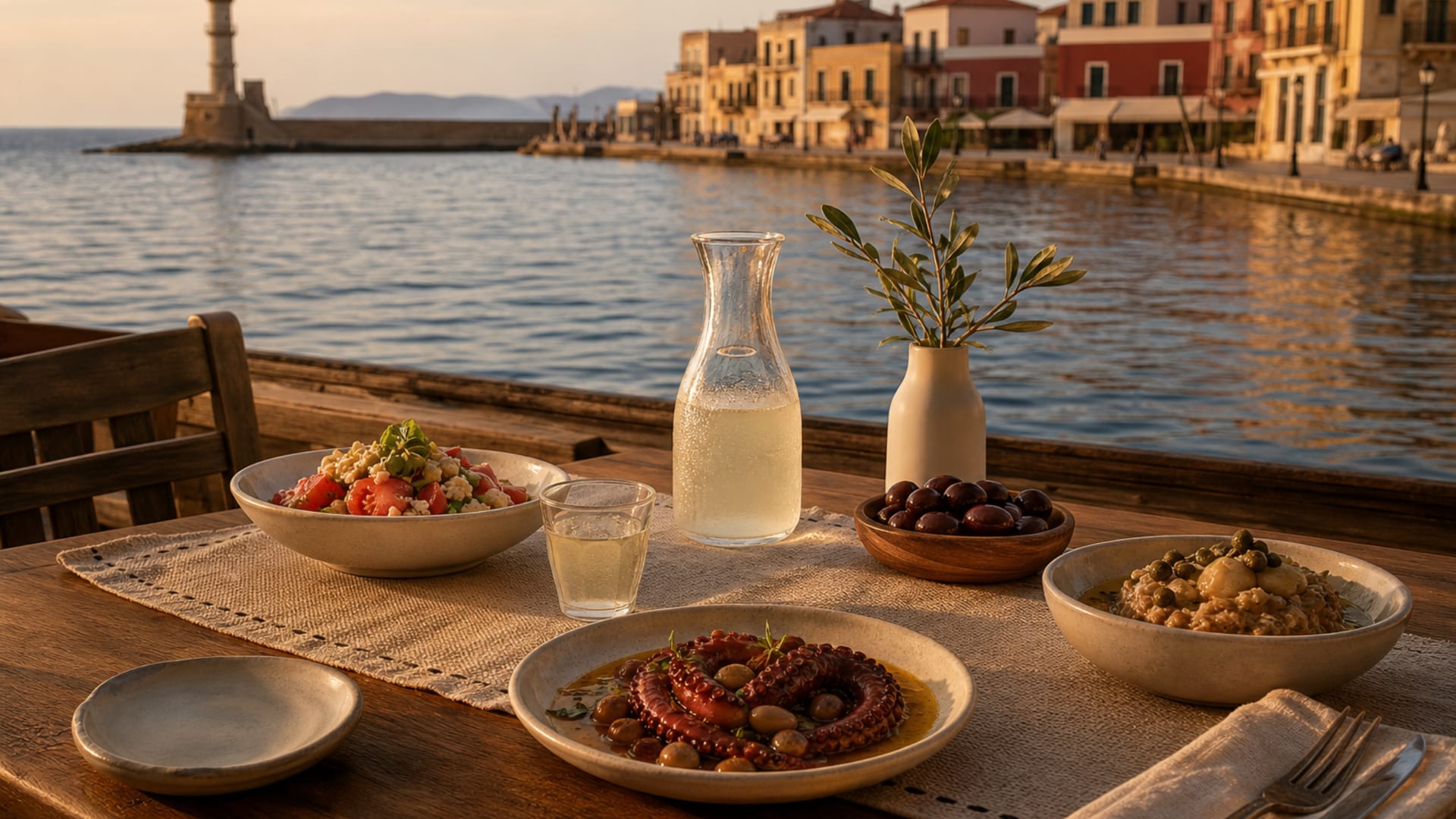
Chánia cuisine leans on olive oil, herbs, seafood, cheese, and slow-cooked meat, with Dakos, Kalitsounia, Gamopilafo, and Apaki showing up in tavern menus that still follow local meal hours.
Dakos
This barley rusk topped with tomato, feta or mizithra, olive oil, and oregano works as a crisp, bright starter. Tamam Restaurant in Old Town serves a strong version in a setting that suits a long waterfront-to-lane dinner.
Kalitsounia
These small cheese or herb pastries appear as a snack or a light first course, often with a savory or sweet filling. To Stachi in Chánia is a well-known place to order them with a broader Cretan vegetarian spread.
Gamopilafo
This wedding rice dish comes enriched with meat broth and lemon, so the texture turns creamy without heavy seasoning. Mon.Es in Chánia is a strong choice when you want a refined version tied to local ingredients.
Apaki
Cured, lightly smoked pork brings a deeper, peppery note and often appears in meze plates or warm dishes. Salis in the old harbor area handles it well, pairing the dish with a focused Cretan wine list.
Best time to visit Chánia
Chánia shifts from warm, busy beach weather in summer to cooler, quieter museum weather in winter, so the best month depends on whether you want swimming, walking, or lower crowd levels.
Best for: Harbor walks, monastery visits, and outdoor dining
What you get: About 59 to 75°F (15 to 24°C), with moderate crowds and long daylight
Trade-offs: Sea temperatures stay cool for early swims
Best for: Beach time, blue-hour harbor walks, and late dinners
What you get: About 72 to 88°F (22 to 31°C), with the highest crowds and the busiest waterfront
Trade-offs: Heat and hotel demand rise quickly
Best for: Swimming in September and relaxed sightseeing later in the season
What you get: About 64 to 82°F (18 to 28°C), with lighter crowds after peak summer
Trade-offs: Rain becomes more likely by late November
Best for: Museums, cafes, and low-key city days
What you get: About 50 to 61°F (10 to 16°C), with the quietest streets and fewer tour groups
Trade-offs: Beach weather is limited and some seasonal spots shorten hours
A realistic 5-day plan in Chánia
The five-day plan follows the city’s natural sequence: the harbor and museum first, then a monastery day, then a split between waterfront neighborhoods and an uphill fort, with one last slow morning before departure.
Land at Chánia (CHQ) and take a taxi into Old Town and Venetian Harbor, which usually takes about 20 to 25 minutes and costs roughly $30 to $40 (€27 to €36). If you are staying in Nea Chora, the ride is usually a few minutes shorter and slightly cheaper, while Koum Kapi and Halepa sit closer to the center but still work well for an easy first night. After check-in, drink water, walk no farther than the harbor front, and settle into a simple dinner at a waterfront taverna near the Venetian Harbor so you can stay close to your room.
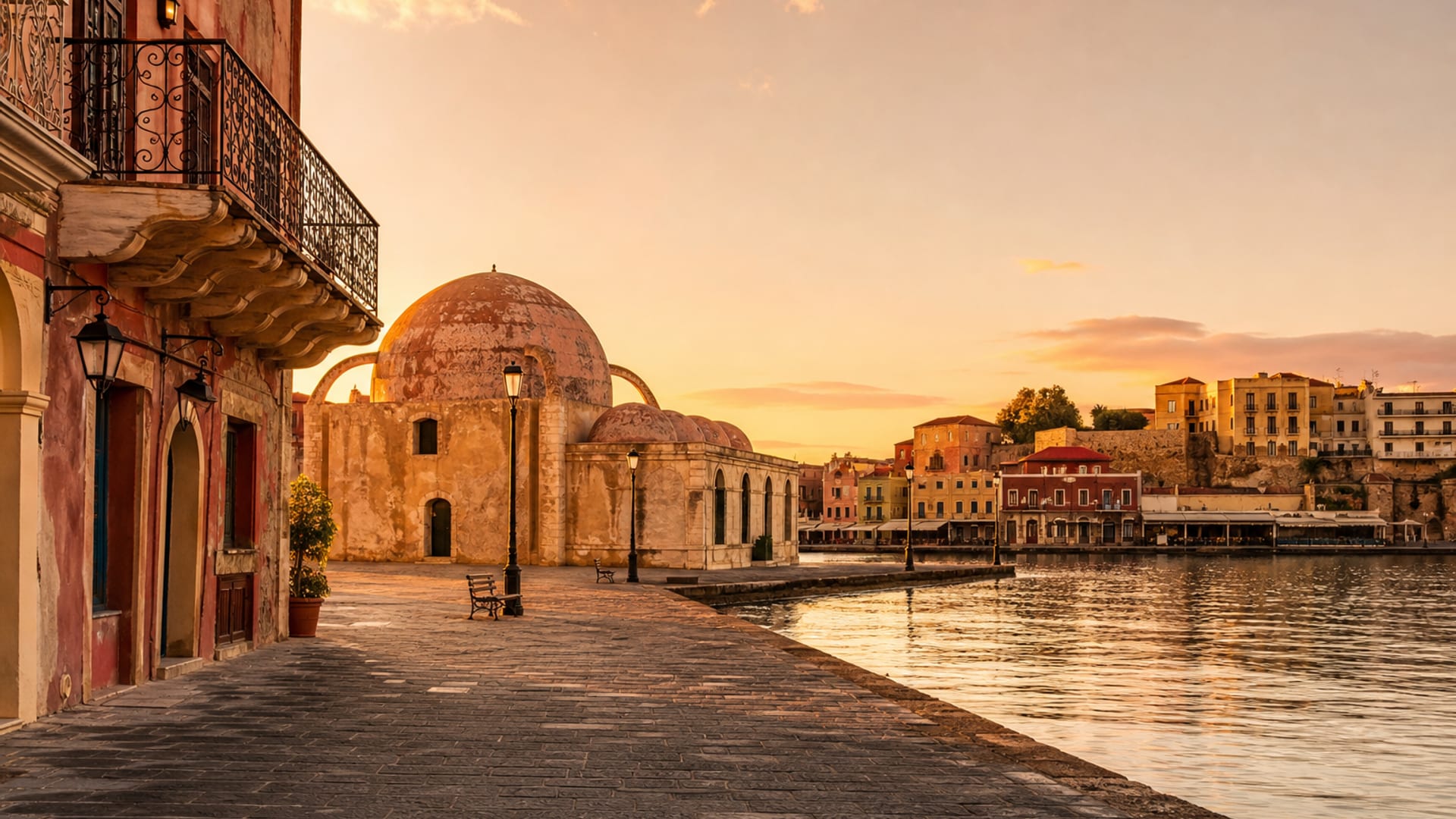
Begin with the Archaeological Museum of Chania, then walk about 5 to 10 minutes to the lanes around the Old Venetian Harbor for a long waterfront circuit past the lighthouse, the Venetian Neoria, and the restored warehouses. Late afternoon suits a slower second pass along the quay, with blue hour bringing the harbor into sharp relief. Finish with dinner in the old town, where you can eat within an easy 5 to 15 minute walk of your hotel if you are based in the historic core.
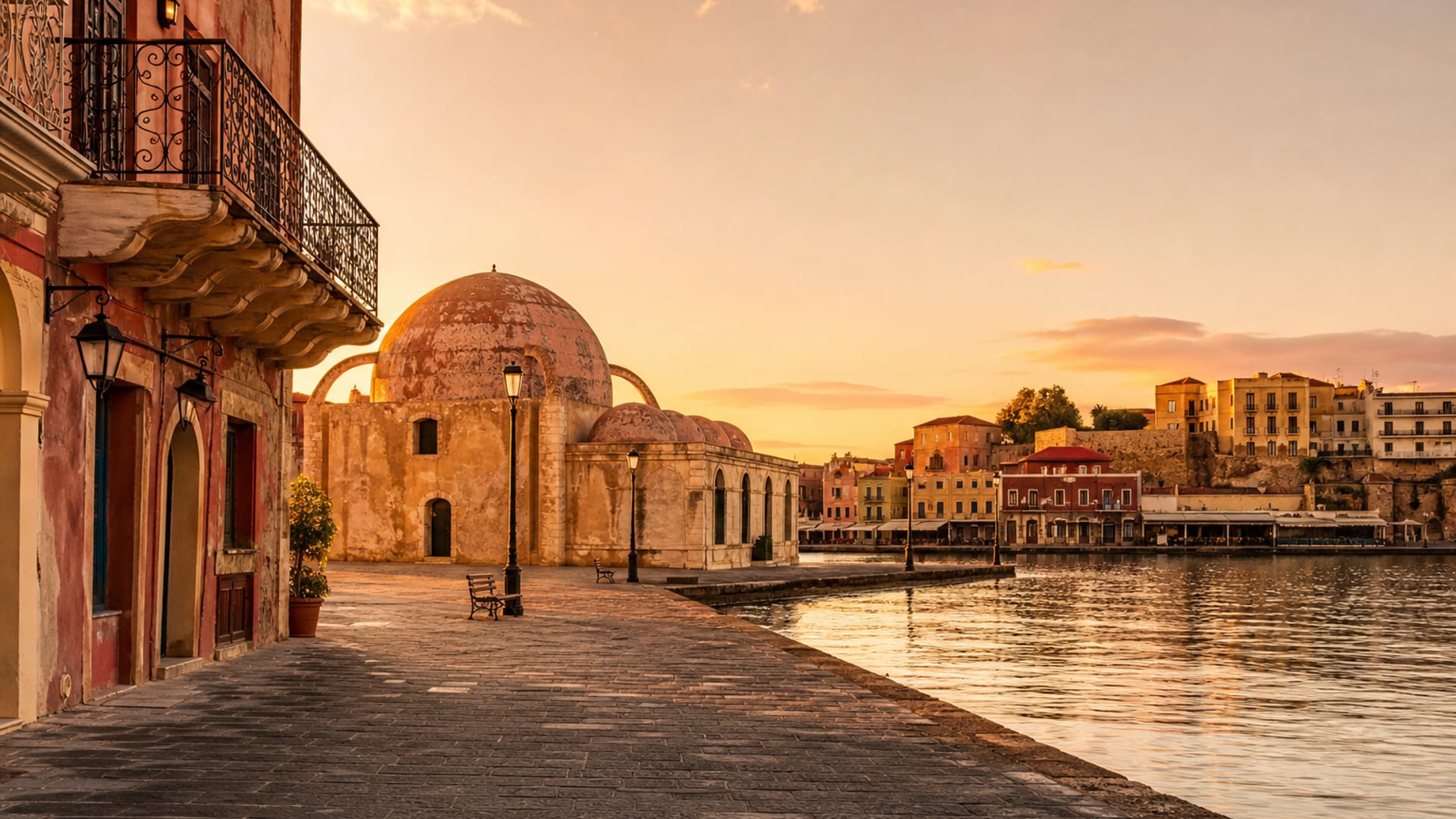
A midmorning taxi to Agia Triada Monastery, Akrotiri usually takes about 25 to 35 minutes from central Chánia, and the quiet courtyard makes the trip worth planning early. After about 1 to 2 hours on site, return to the city and spend the afternoon in Koum Kapi, where the promenade sits about 10 minutes on foot from the old harbor and gives you cafes, sea views, and a lighter pace than the main waterfront. If you still want a final stop, walk back toward Old Town and Venetian Harbor for sunset, which keeps the day centered on places that are close enough to connect without a long detour.
Start uphill at Izzedin Fortress, which takes about 20 to 30 minutes by taxi from the old town, then spend about 1 to 1.5 hours on the grounds before heading back to the harbor. From there, return to Old Town and Venetian Harbor for a second look at the waterfront, then cross to Nea Chora, about 10 to 15 minutes on foot from the harbor, for a late swim or an early evening meal by the beach. The day works well if you want one historic stop outside the center and one seaside stretch without adding a long drive.
On your last morning, keep the pace short with one final visit to the Archaeological Museum of Chania if you want a second look at the collection, or skip it and spend the time in the old market area, about 15 minutes on foot from the harbor, for olive oil, herbs, and small gifts. Then settle into a cafe in Koum Kapi or along the edge of Old Town and Venetian Harbor for coffee and a final waterfront walk before you head to Chánia (CHQ). This is the best day for small purchases, an unhurried lunch, and one last seat outdoors near the sea.
Business-class flights from the US to Chánia
Business fares to Chánia make more sense when you compare routing as well as price, because the East Coast and West Coast travel patterns are not the same. The options below show what typical long-haul trips look like from New York and Los Angeles.
From New York, Air France, British Airways, Lufthansa, Turkish Airlines, and Emirates commonly price round trips from about $2,300 to $5,200. Nonstop flying time usually runs about 11 to 12 hours; if you do not mind a layover, common hubs include CDG, LHR, FRA, IST, and DXB, with itineraries often landing in the roughly 14 to 20 hour range.
Los Angeles itineraries usually run about 15 to 16 hours nonstop, and Aegean Airlines, Lufthansa, Turkish Airlines, Air France, and British Airways all appear on this market. With a stop, common hubs are CDG, LHR, FRA, IST, and ATH, and the trip often stretches to about 18 to 26 hours. Round trips typically cost about $2,500 to $5,800.
Chánia feels different when you slow down
A deliberate Chánia trip gives each district a job: Old Town for the museum and the harbor front, Koum Kapi for a quieter sea walk, Nea Chora for a swim, and Akrotiri for a measured excursion by taxi. That mix keeps the days connected by short rides and clear walking stretches rather than constant hopping. If you want help matching hotels, flights, and neighborhood choices, ask the AranGrant experts for a Chánia plan built around your dates







