

Chapters:

Need help with your trip?
Our support team is available 24/7. Request a callback or call us directly at (833) 619-0908
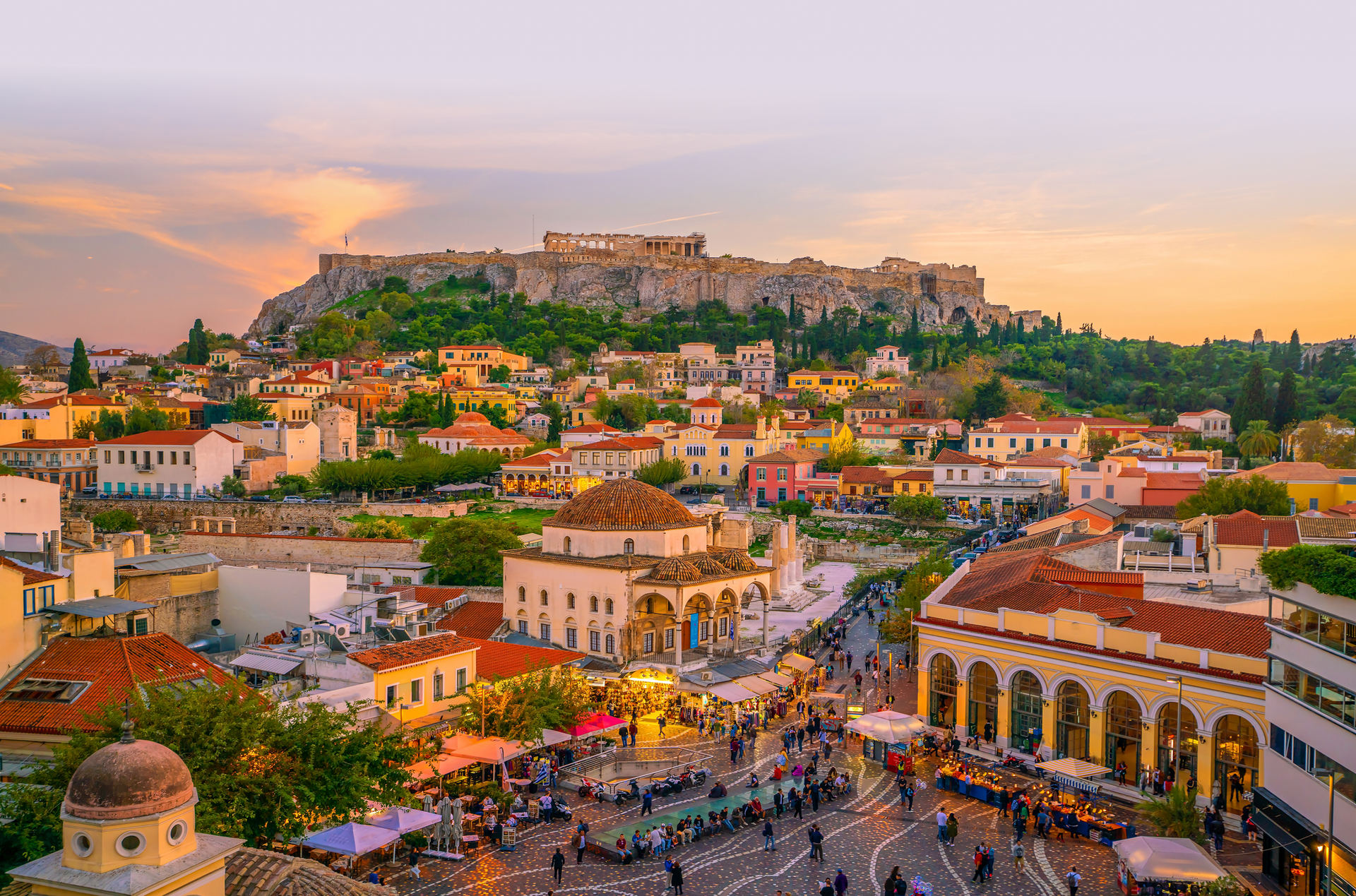
Athens rewards travelers who organize the trip around a few anchor sites and treat neighborhood meals and short transfers as part of the itinerary. The common mistake is treating the city as a single museum district and underestimating how long the Acropolis hill, the streets below it, and the transit connections actually take.
That approach leaves people crossing the same central corridors too often, standing in the midday heat near the Acropolis, or arriving at restaurants after the best lunch window has passed. The solution is to anchor each day to one compact area.
This guide builds that structure from the start: neighborhoods, timed visits, and transit notes that keep every route logical.
Useful things to know

Main language(s): Greek
Γεια σας (YAH sas) – Hello
Παρακαλώ (pah-rah-kah-LOH) – Please
Ευχαριστώ (ef-khah-rih-STOH) – Thank you
Μιλάτε αγγλικά; (mee-LAH-teh ahng-glee-KAH) – Do you speak English?
Πόσο κάνει; (POH-soh KAH-nee) – How much does it cost?

Currency: Euro (EUR, €)

Cash and cards: Cards and contactless payments, including those via Apple Pay and Google Pay, are widely accepted at hotels, restaurants, and most shops in Athens. Keep about $11-$23 (€10-€20) in cash for small cafes, kiosks, and public restrooms.

Tipping: Round up small bills and leave about 10%–15% in restaurants when service is good. Taxis are usually rounded up, and leaving a few euros for hotel staff or guides is common for good help.

Traditional food: Moussaka, souvlaki, spanakopita, and honey-drenched loukoumades are classic dishes worth trying in Athens.

Water and coffee costs: A small bottle of water usually costs about €0.50-€1.50 ($0.55-$1.70), and an espresso at the bar is typically about €2-€4 ($2.30-$4.60).

Taxis and ride apps: Uber, Bolt, and Free Now operate in Athens, and each usually connects you to licensed taxis. Airport taxi queues can be busy, so confirm the meter before you set off and ignore unsolicited drivers outside the terminal.

Plug and voltage: Type C/F socket, 230V

Dining and shop opening hours: Breakfast is served from 7:00 am to 10:00 am, lunch is from 1:00 pm to 4:00 pm, and dinner from 8:00 pm. Many shops close for a midday break; restaurants in central Athens often are open throughout the day.

Emergency number: 112 is the EU emergency number for police, ambulance, and fire services.
Where to stay in Athens
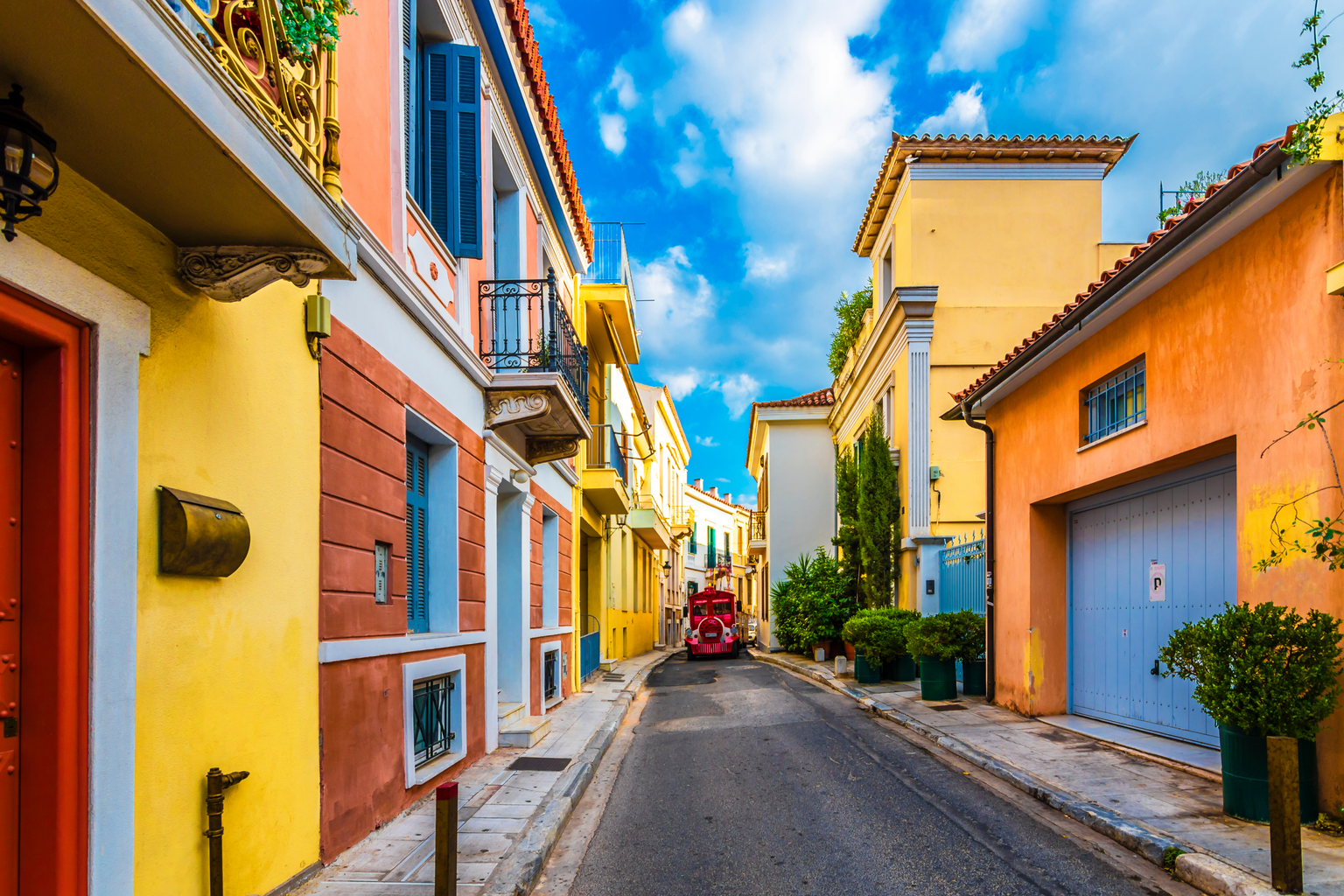
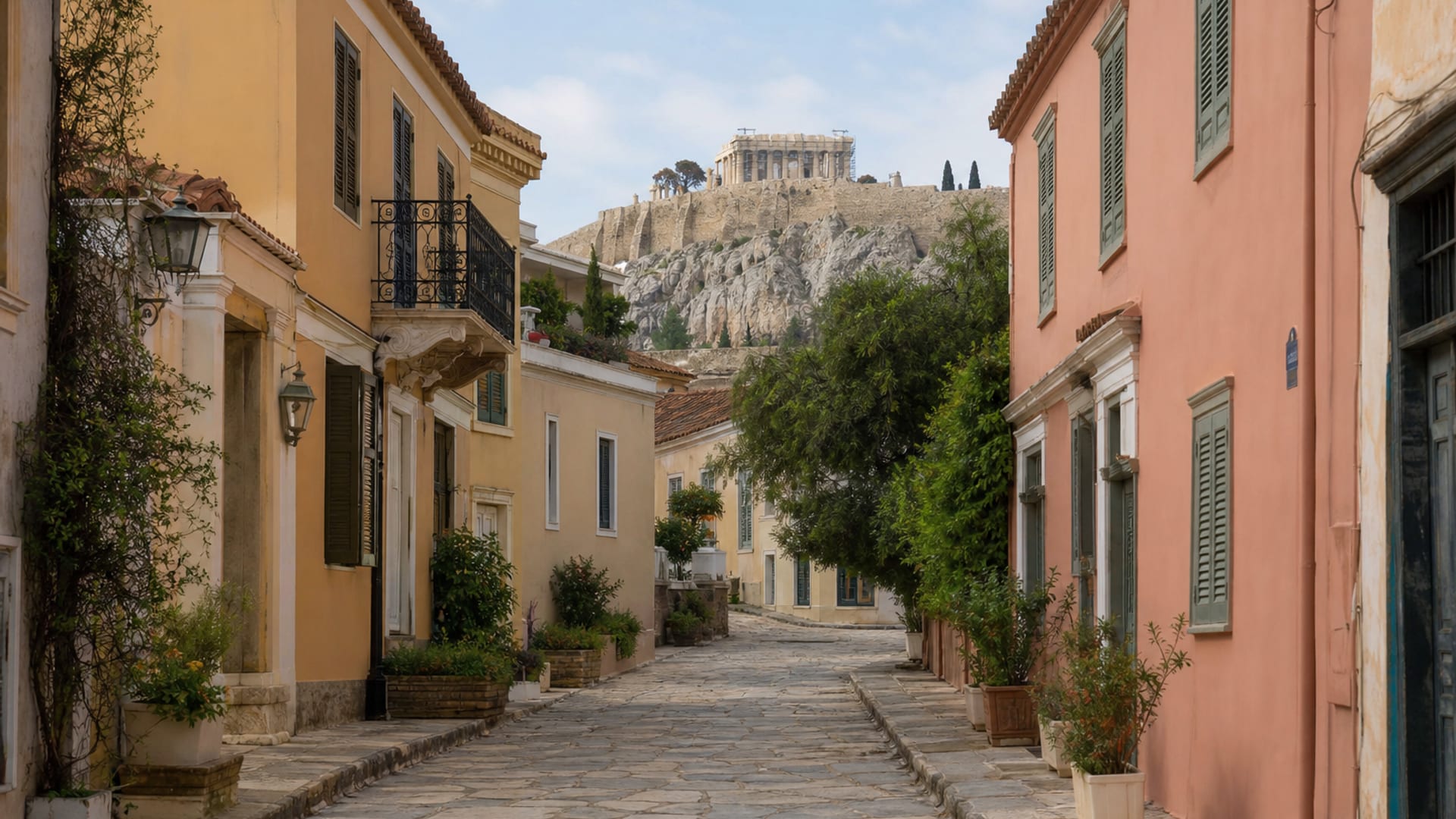
Plaka is situated on the northeastern slope of the Acropolis, with narrow lanes, neoclassical houses, and easy access to Athens’s main ancient sites. The Acropolis and Syntagma are within a short walk, so you spend less time crossing the city.
Best for: First-time visits, sightseeing, and travelers who want to walk to Athens’s main ancient sites
What to expect: Busy pedestrian lanes, restaurant tables, souvenir shops, and heavy visitor traffic from late morning through evening
Hotel prices: Usually about €180 to €320 ($206 to $367) per night for well-rated stays
Distance to major sights: 5–10 minutes on foot to the Acropolis Museum; 15–20 minutes on foot to the Acropolis
Quietness: Lively all day, with some lanes calming after dinner, but little true stillness until late at night
Main trade-off: You pay more for the central setting, and some streets get crowded with tour groups and evening diners.
Good to know: Many streets are pedestrian-only, so taxis may drop you a short walk from your hotel, and luggage can be difficult to carry on uneven paving.
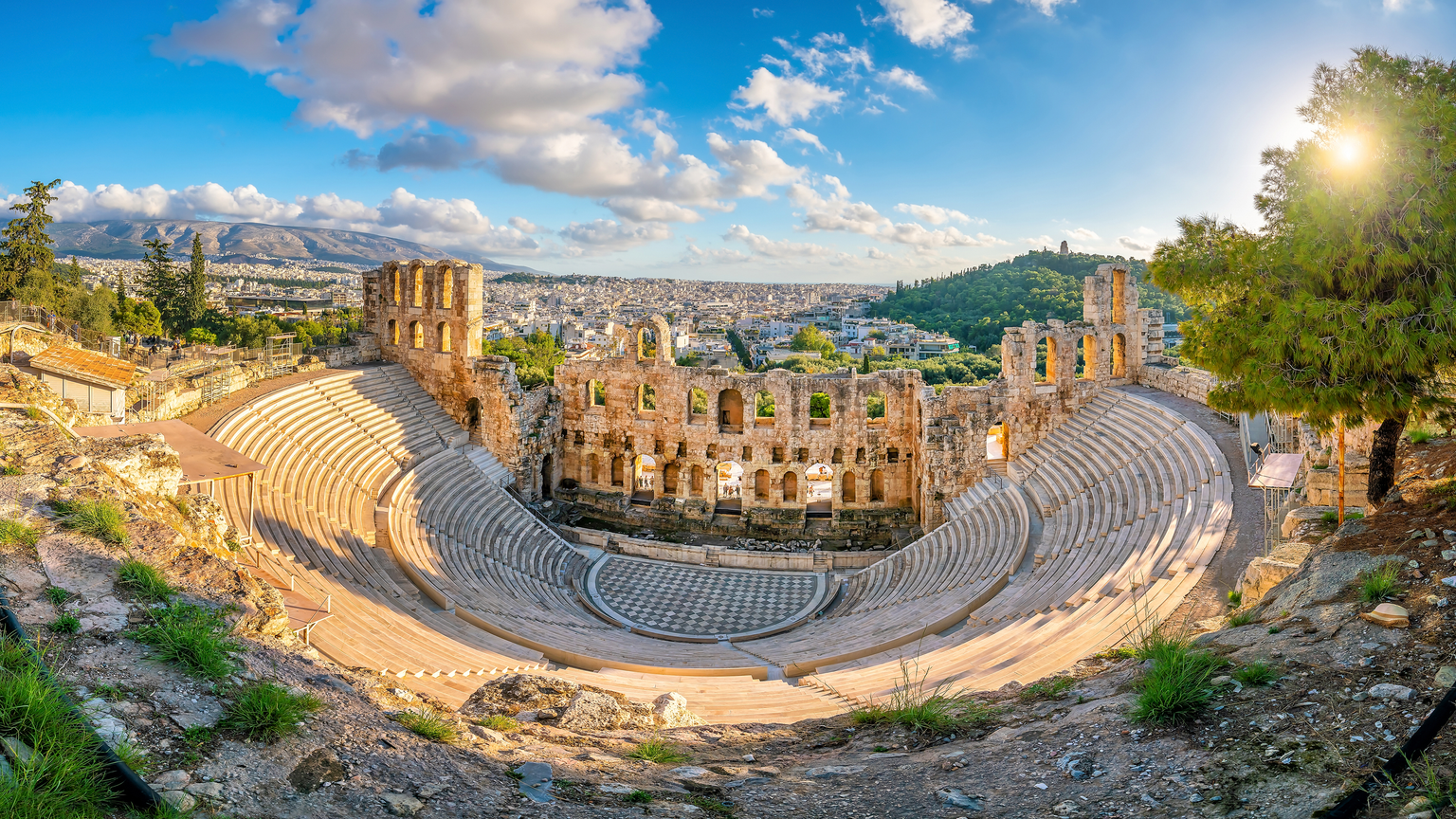
Koukaki is a residential district south of the Acropolis, with cafes, small bars, and apartment-style stays close to the main heritage sites. It gives you a better location for both sightseeing and day-to-day meals without staying in the busiest tourist core.
Best for: Museum visits, couples, longer stays, and travelers who want good access without staying in the busiest tourist lanes
What to expect: Cafe-lined streets, local groceries, light evening dining, and more residents than tour buses
Hotel prices: Ranging from €120 to €220 ($138 to $252) per night for well-rated hotels
Distance to major sights: 10–15 minutes on foot to the Acropolis Museum; 20–25 minutes on foot to the Acropolis
Quietness: Quieter in the daytime than Plaka, with more activity in the evening near the main cafe streets
Main trade-off: You get a more residential setting, but you may walk a bit farther uphill to reach some sights.
Good to know: Check the nearest metro stop before booking, since a few streets sit closer to the station than others.
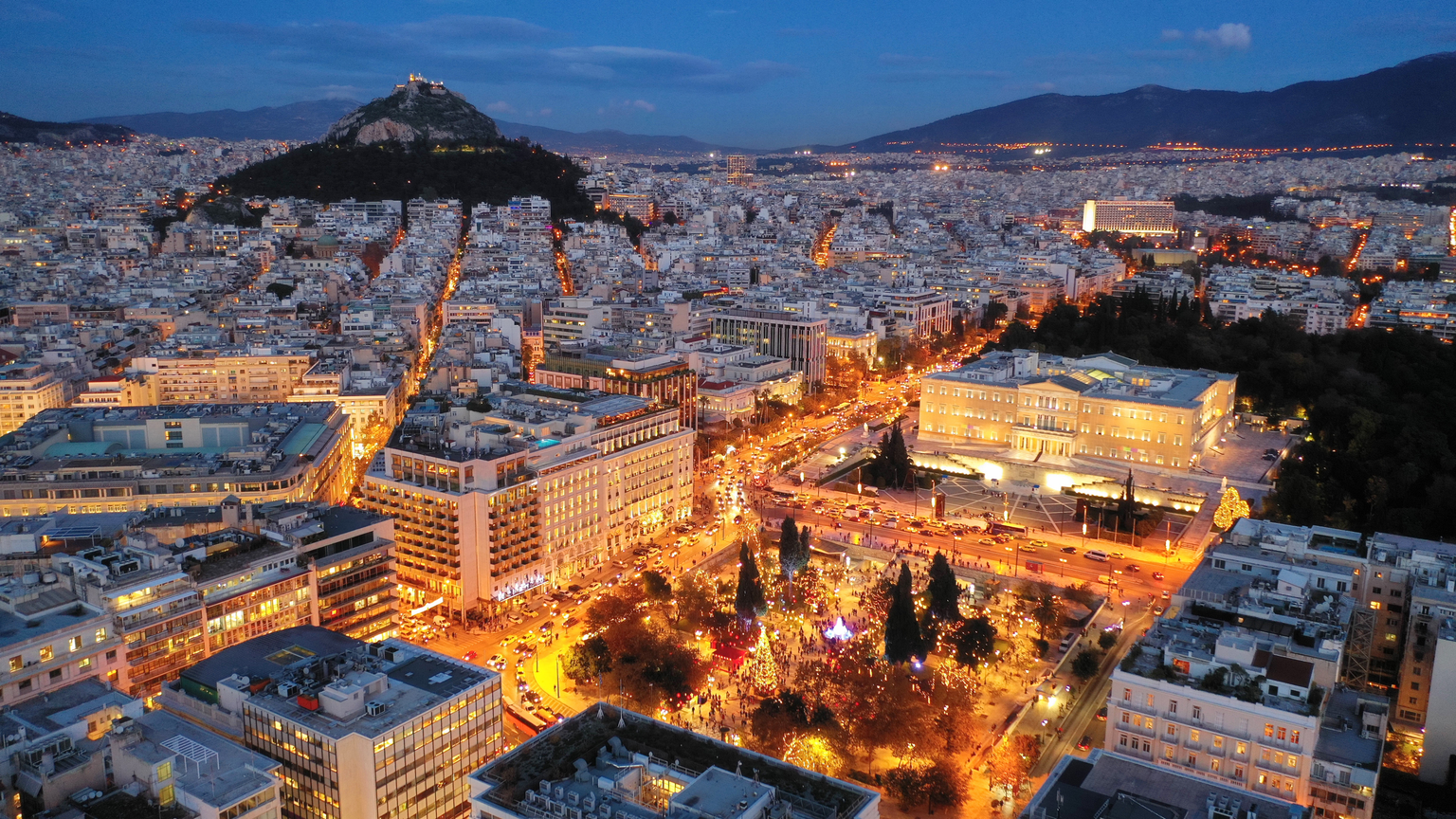
Syntagma is Athens’s central square district, anchored by the parliament, major hotels, and the city’s main transit links. It suits travelers who want fast connections across the metro area and a direct line to shopping, museums, and the airport bus.
Best for: Travelers on business trips, short stays, and those who want easy access to other areas of Athens
What to expect: Heavy foot traffic, frequent demonstrations near the square, and a constant flow of commuters, shoppers, and hotel guests
Hotel prices: Roughly €150 to €280 ($172 to $321) per night for well-rated hotels
Distance to major sights: Up to 5 minutes on foot to the National Garden; 15–20 minutes on foot to the Acropolis Museum
Quietness: Noisy through the day and still active after dark, especially near the square and main roads
Main trade-off: Rooms can cost more than in outer districts, and there might be traffic and protests on busy streets.
Good to know: This is one of the most convenient places for access to airport transfers and metro stations, especially for early departures or late arrivals.
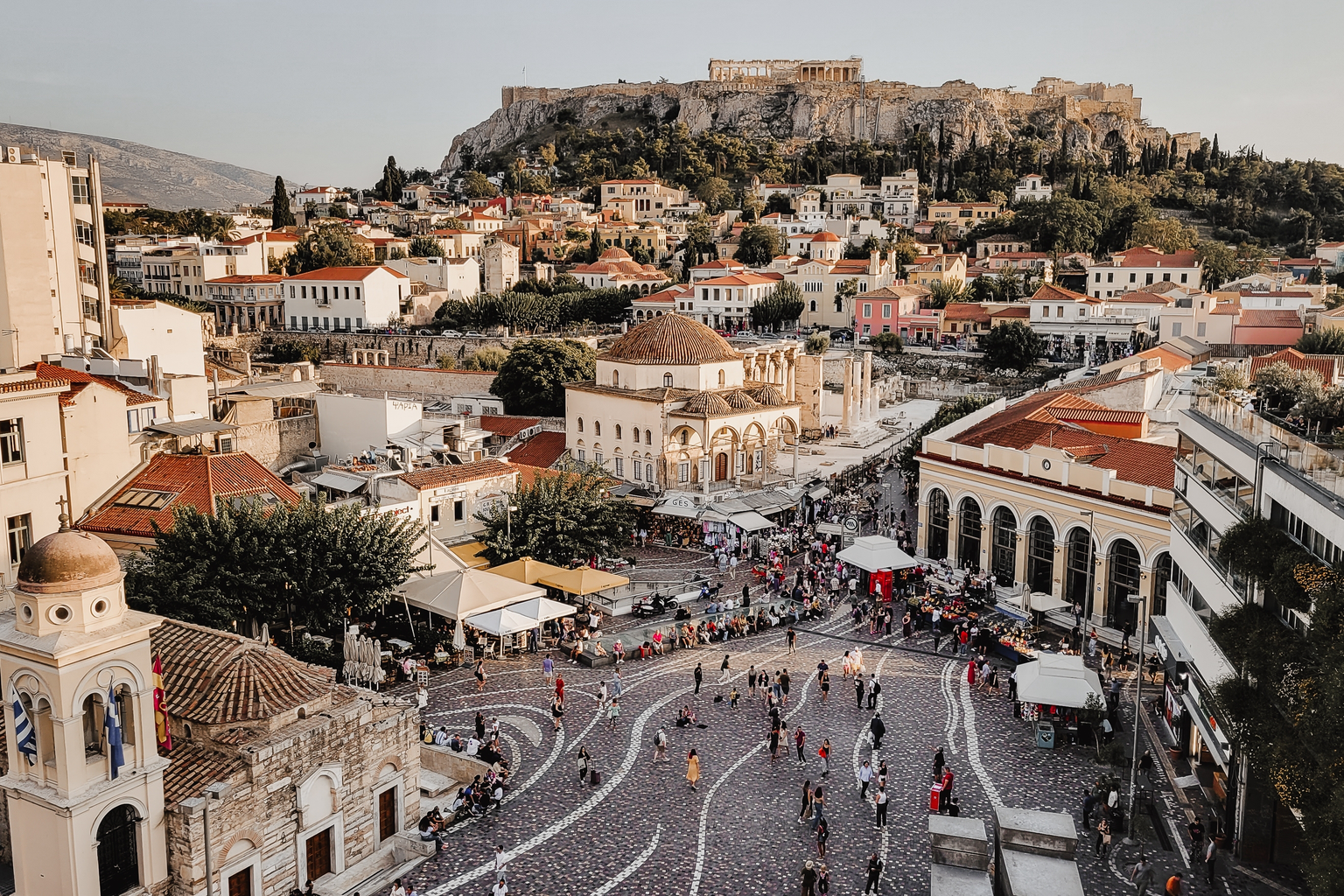
Monastiraki centers on the flea market, historic lanes, and one of Athens’s busiest transport hubs. It is suitable for visitors who want quick access to the Acropolis, the Ancient Agora, and late dining in the same compact area.
Best for: Short city breaks, market browsing, nightlife, and travelers who want a central location with wide access to transportation
What to expect: Dense foot traffic, market stalls, bars, street performers, and a late-night crowd near the main squares
Hotel prices: Usually ranging from €130 to €240 ($143 to $264) per night for well-rated hotels
Distance to major sights: 10–15 minutes on foot to the Acropolis; 5–10 minutes on foot to the Ancient Agora
Quietness: Very lively until late, then quieter on side streets but rarely silent near the square
Main trade-off: The central location brings noise and crowds; some hotels are situated above bars or busy commercial streets
Good to know: Pick a hotel away from the square if you are sensitive to late-night music and early-morning market setup.
Travelers usually avoid staying in Kifisia, Marousi, Piraeus, and the northern suburbs if they plan to sightsee on foot, as they are far from the Acropolis, Plaka, and Syntagma and require longer metro or taxi rides back at night.
Hotel deals
Getting around Athens
Explore Athens on foot and by metro. The airport line, central stations, and short taxi rides connect all the major sights.

Metro
for longer distances
Athens has three metro lines. A standard ticket is €1.20 ($1.35), valid for 90 minutes on the urban network. Trains run every 5–10 minutes in the daytime. The airport ride on Line 3 to Syntagma takes about 40 minutes, with trains departing every 30 minutes.

Bus and tram
for convenience
Blue city buses reach most neighborhoods, while trams cover the coast from Syntagma to Palaio Faliro, Alimos, and Voula. A regular ticket costs €1.20 ($1.35) and is valid for 90 minutes. Airport express buses are about €5.50 ($6.30) each. Buy a ticket before boarding and validate it on entry.

Taxi
for convenience or late hours
Airport rides to central Athens have fixed fares of €40 ($46) by day and €55 ($63) at night. Short city trips cost between €5 and €16 ($6 to $18), depending on traffic and distance. Licensed taxis use meters inside the city. Many cabs now accept cards as well as cash.
*Prices are based on rates updated as of June 2026 and may change at the time of travel.
Use the metro for airport arrivals, buses and trams for rides to the coast or other neighborhoods, and taxis for a direct late-night ride.
Iconic places in Athens
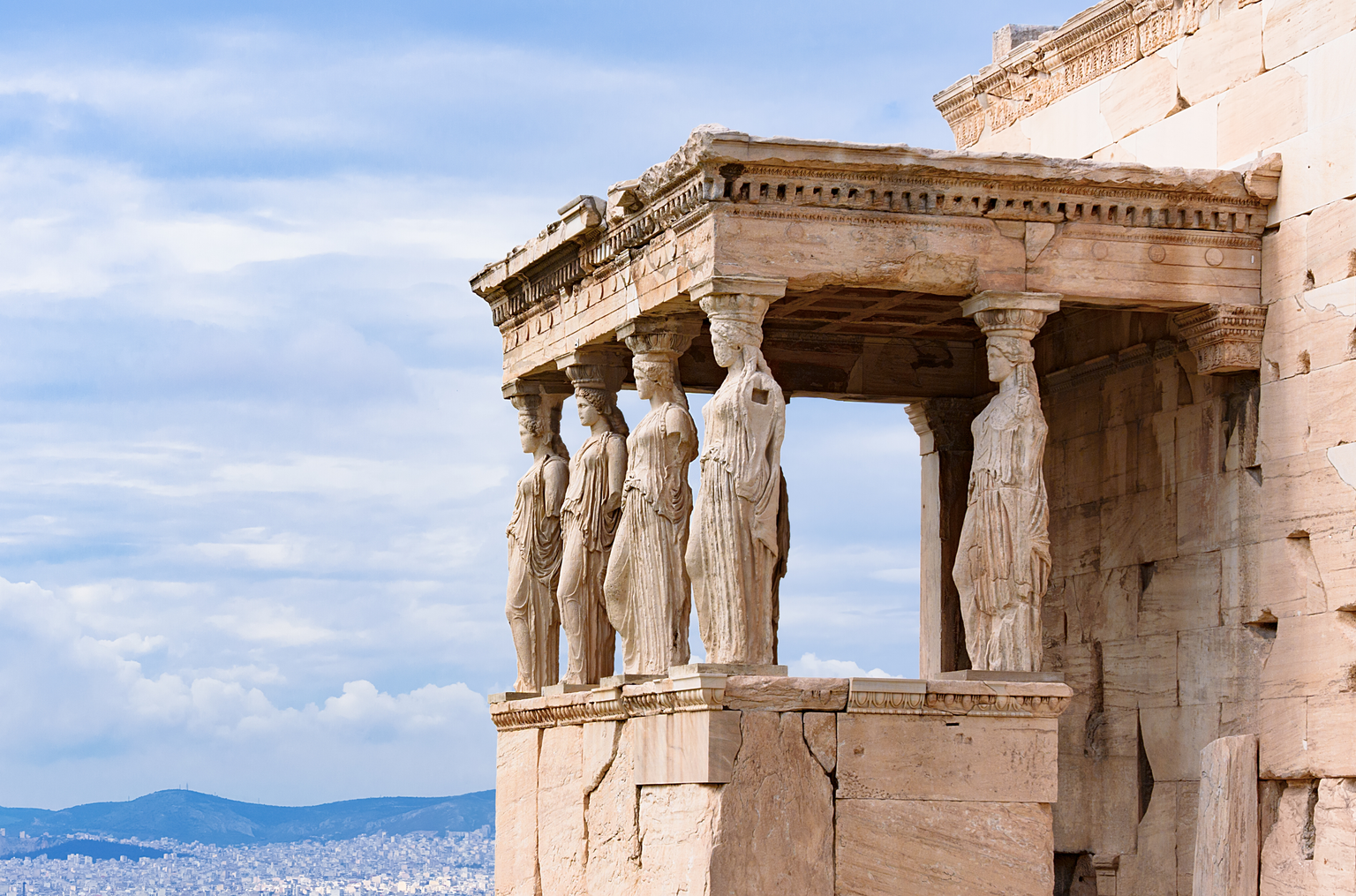
Acropolis of Athens
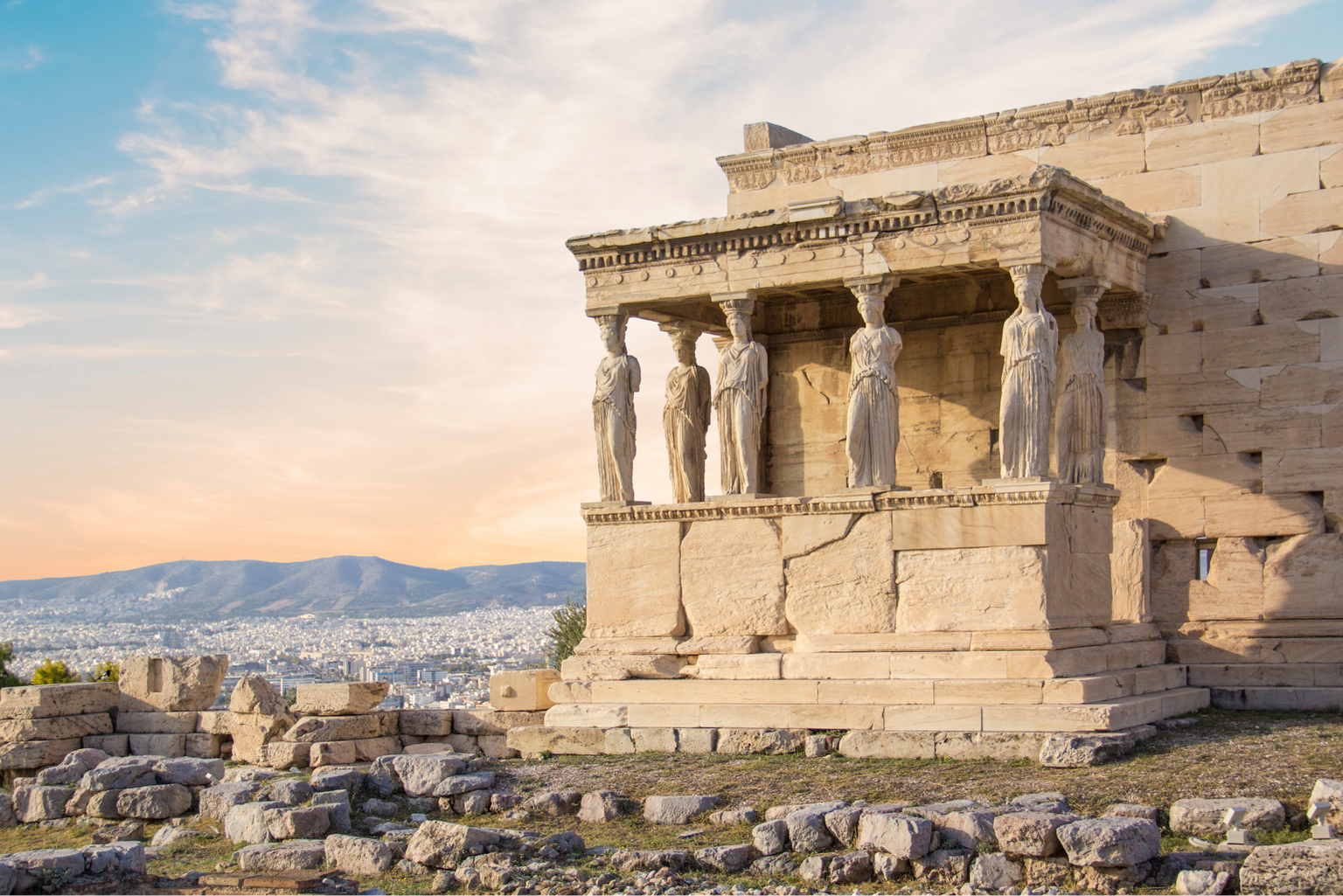
The Acropolis crowns the city on a limestone hill, with the Parthenon, Erechtheion, and Propylaea forming its core. The site pairs classical ancient sculpture and architecture with wide views over Athens and Piraeus.
Time needed: About 2 to 3 hours
Entry: Standard admission costs €30 ($34), and reduced tickets are €15 ($17) for eligible visitors. Time entry is required. Visit the official site for details.
Tip: Arrive at opening for cooler air and shorter queues on the uphill paths.
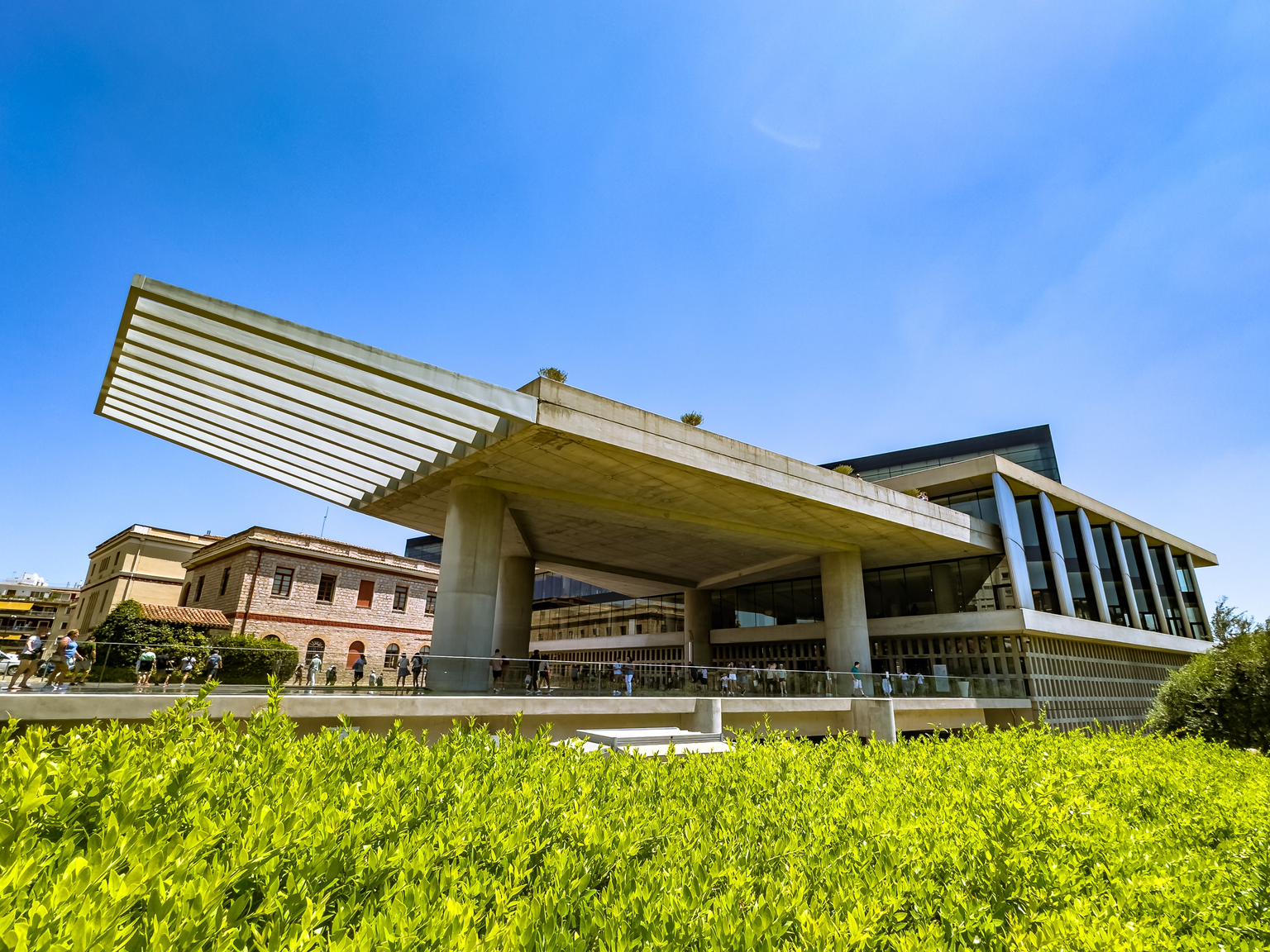
Acropolis Museum
Set below the Acropolis, this museum presents sculptural finds from the hill in a glass-and-concrete building with direct sightlines to the temple above. Highlights include the Caryatids and the Parthenon Gallery.
Time needed: About 1.5 to 2.5 hours
Entry: Standard admission costs €20 ($23), and reduced tickets are €10 ($11) for eligible visitors. Time entry is required. Visit the official site for details.
Tip: Go after the hill visit, then stay for the top-floor Parthenon Gallery light.
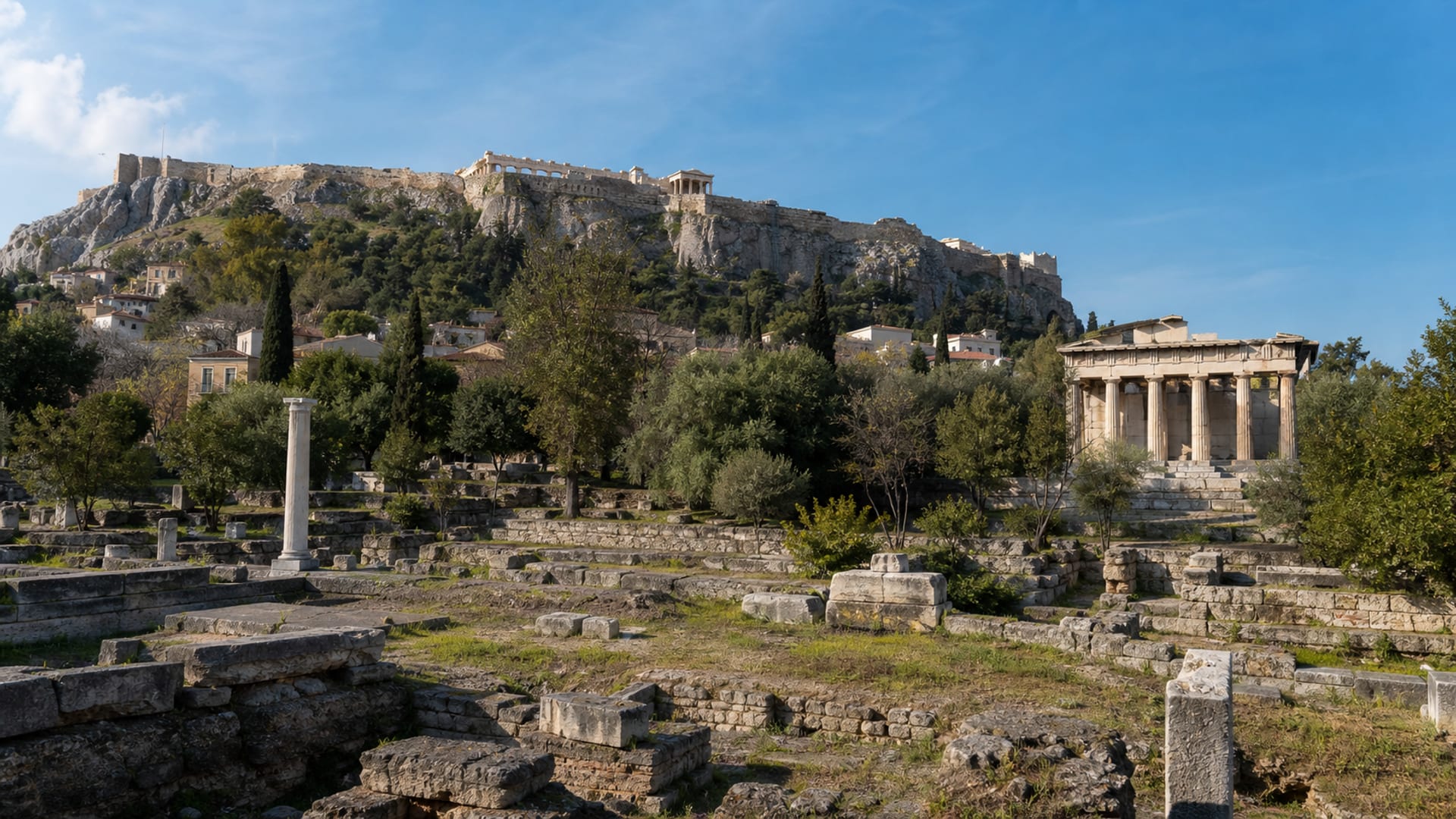
Ancient Agora of Athens
The Ancient Agora preserves the civic heart of classical Athens, with the Temple of Hephaestus, the Stoa of Attalos, and open paths through olive trees. It reflects daily public life in antiquity.
Time needed: About 2 to 3 hours
Entry: Standard admission costs €20 ($23), and reduced tickets are €10 ($11) for eligible visitors. Time entry is required. Visit the official site for details.
Tip: Enter from Adrianou Street early, when the paths are quieter and the light is softer.
Overlooked places in Athens

Philopappos Hill
Stone paths lead to the Philopappos Monument, the Pnyx, and quiet overlooks toward the Acropolis. Go for sunset, then stay for the hillside walk back through pine shade and local dog walkers.
Time needed: About 1 to 2 hours
Entry: Free to access
Tip: Arrive 45 minutes before sunset for softer light and fewer crowds.
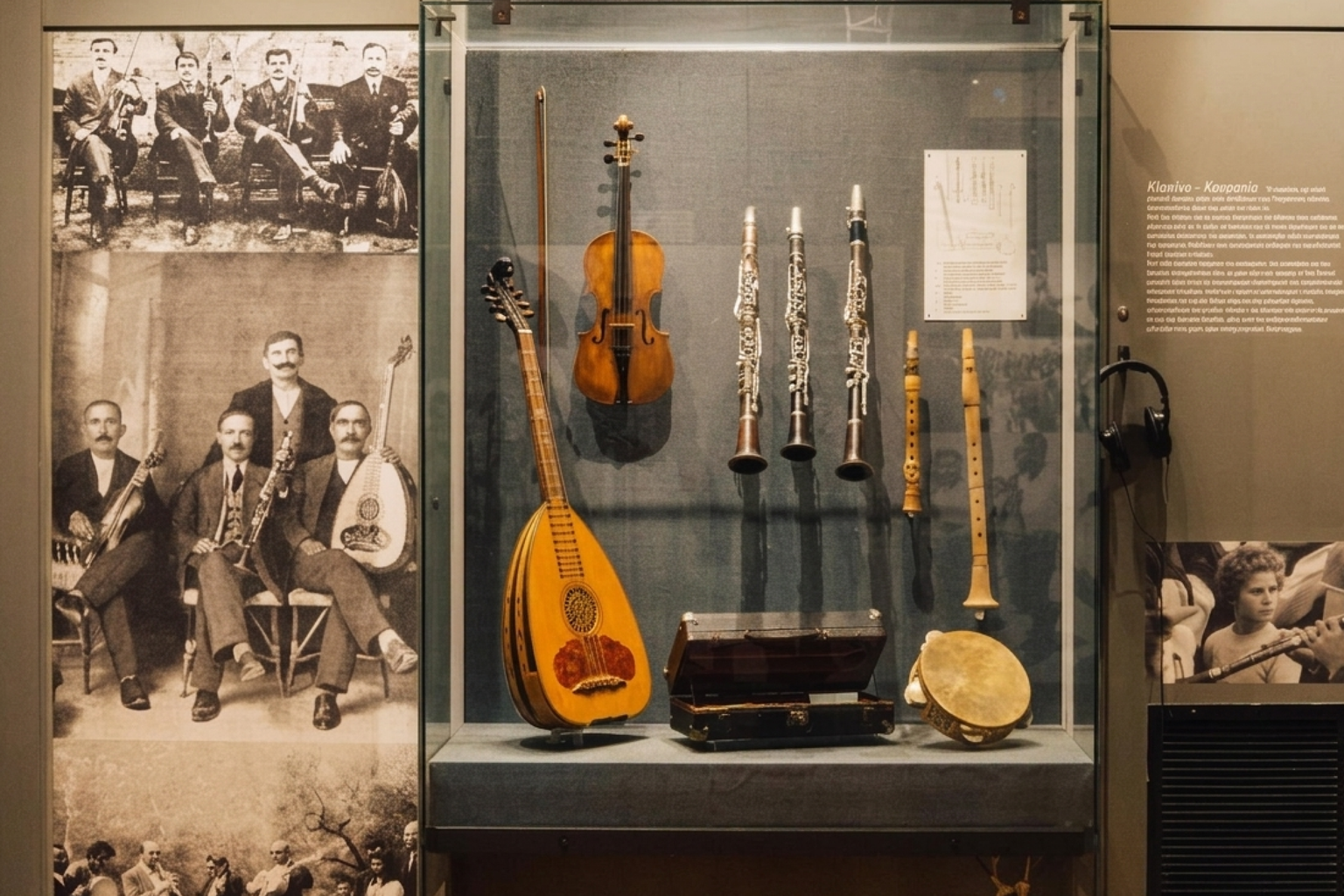
Museum of Greek Folk Musical Instruments
This compact museum near the Plaka displays lyres, lutes, bagpipes, and other instruments from across Greece. Headphones at each display case let you hear how the instruments actually sound.
Time needed: About 45 minutes to 1 hour
Entry: Standard admission costs €5 ($5.7), and reduced tickets are €3 ($3.4) for eligible visitors. Visit the official site for details.
Tip: Pair it with a walk through Plaka before noon, when the streets are quieter.
What to eat in Athens

Athenian cooking centers on olive oil, herbs, feta, phyllo, grilled meat, and slow-baked dishes, with lunch and late dinner both treated as full meals, not afterthoughts.
Moussaka
This baked casserole layers eggplant, minced meat, tomato, and béchamel into a rich main dish with gentle spice. Tzitzikas & Mermigas serves a well-known version in central Athens.
Souvlaki
Grilled pork or chicken skewers often arrive in pita with tomato, onion, fries, and tzatziki, making them one of the city’s fastest meals. O Kostas is a classic stop for it near Syntagma.
Spanakopita
This flaky phyllo pie combines spinach, herbs, and feta in a crisp, salty package that works well in the morning or between visits. Ariston is a long-running bakery in Athens.
Loukoumades
These bite-sized fried dough balls come soaked in honey syrup and often finished with cinnamon or sesame, so they suit dessert or an afternoon pause. Krinos is a classic place to order them.
Best time to visit
Athens changes with the season, so the best time to visit depends on how you balance heat, crowds, and walking comfort.
Best for: Temple visits, long walks, and outdoor dining
What you get: About 59°F to 77°F (15°C to 25°C), with moderate crowds before peak summer
Trade-offs: Popular sites can still build lines by late morning
Best for: Long daylight, sunset views, and late dinners
What you get: About 77°F to 95°F (25°C to 35°C), with the heaviest crowds and the hottest midday conditions
Trade-offs: The Acropolis area can feel punishing in full sun
Best for: Balanced sightseeing, museum visits, and neighborhood meals
What you get: About 63°F to 81°F (17°C to 27°C), with lighter crowds after the August peak
Trade-offs: Rain becomes more likely later in the season
Best for: Quieter museums and lower hotel rates
What you get: About 46°F to 61°F (8°C to 16°C), with the smallest crowds and some wet days
Trade-offs: Shorter days reduce time for hillside walks
A 5-day plan in Athens
Five days give you enough time to see Athens properly. Start with the ancient core, add a museum day, a hillside evening, and a quieter final day before departure. The schedule below keeps each day anchored to one area, so you spend more time inside the city than crossing it.
Land at Athens International Airport (ATH), then take the airport metro into Syntagma in about 40 minutes, or a taxi in roughly 35 to 50 minutes for about €40 to €55 ($46 to $63), depending on traffic and the time of day. Check into Syntagma or nearby Plaka so your first evening stays compact, drink plenty of water, and choose a simple dinner in Plaka or Monastiraki, where you can walk rather than plan another transfer.
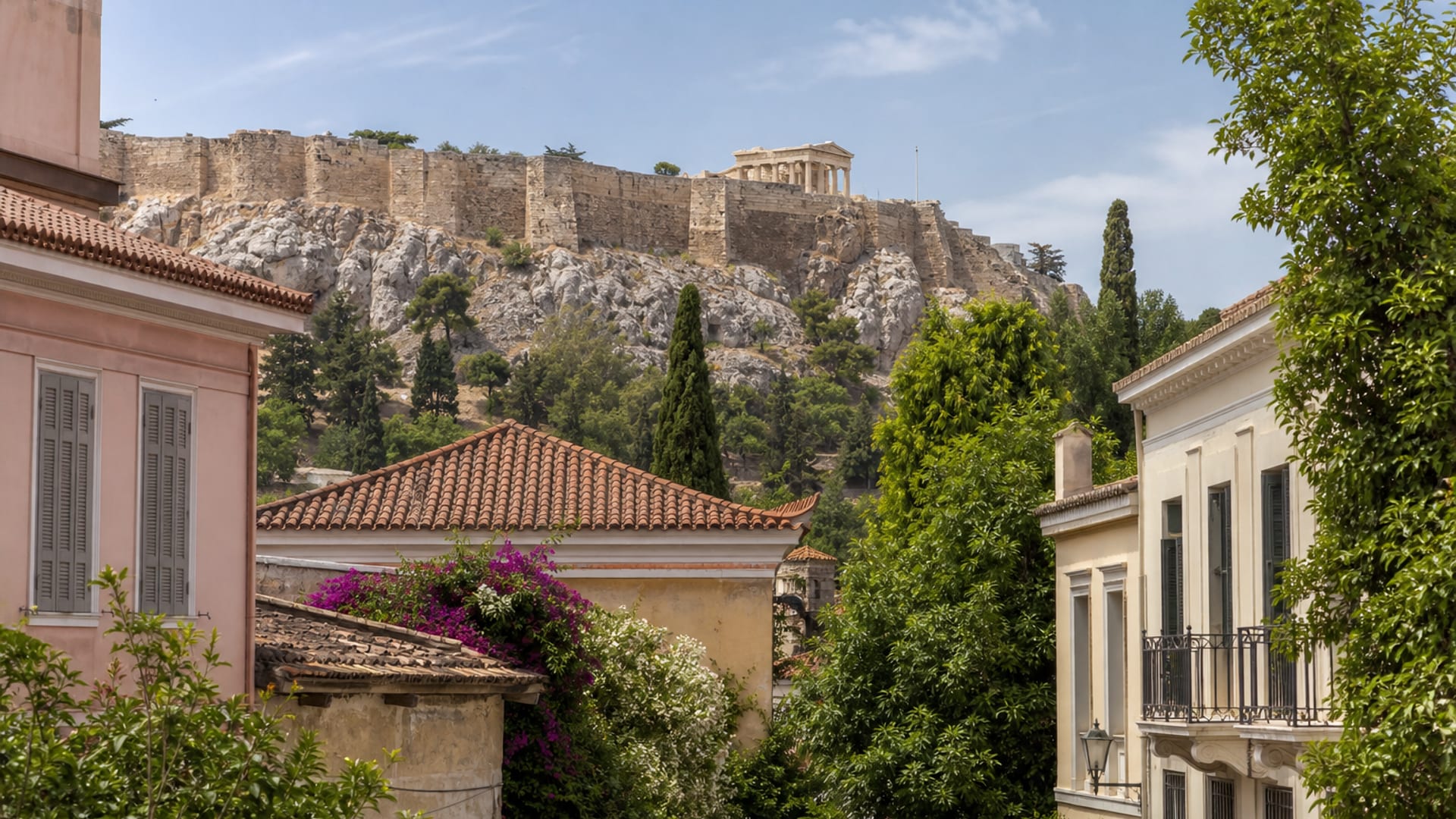
Start early at the Acropolis of Athens, aiming for opening to cut the wait and avoid the hottest uphill climb; from Syntagma or Plaka, expect about a 15 to 25 minute walk to the entrance area, depending on your hotel. Spend about 2 to 3 hours on the hill, then walk about 10 minutes downhill to the Acropolis Museum for another 1.5 to 2.5 hours, where the Parthenon Gallery gives you a clear indoor follow-up to the site above.
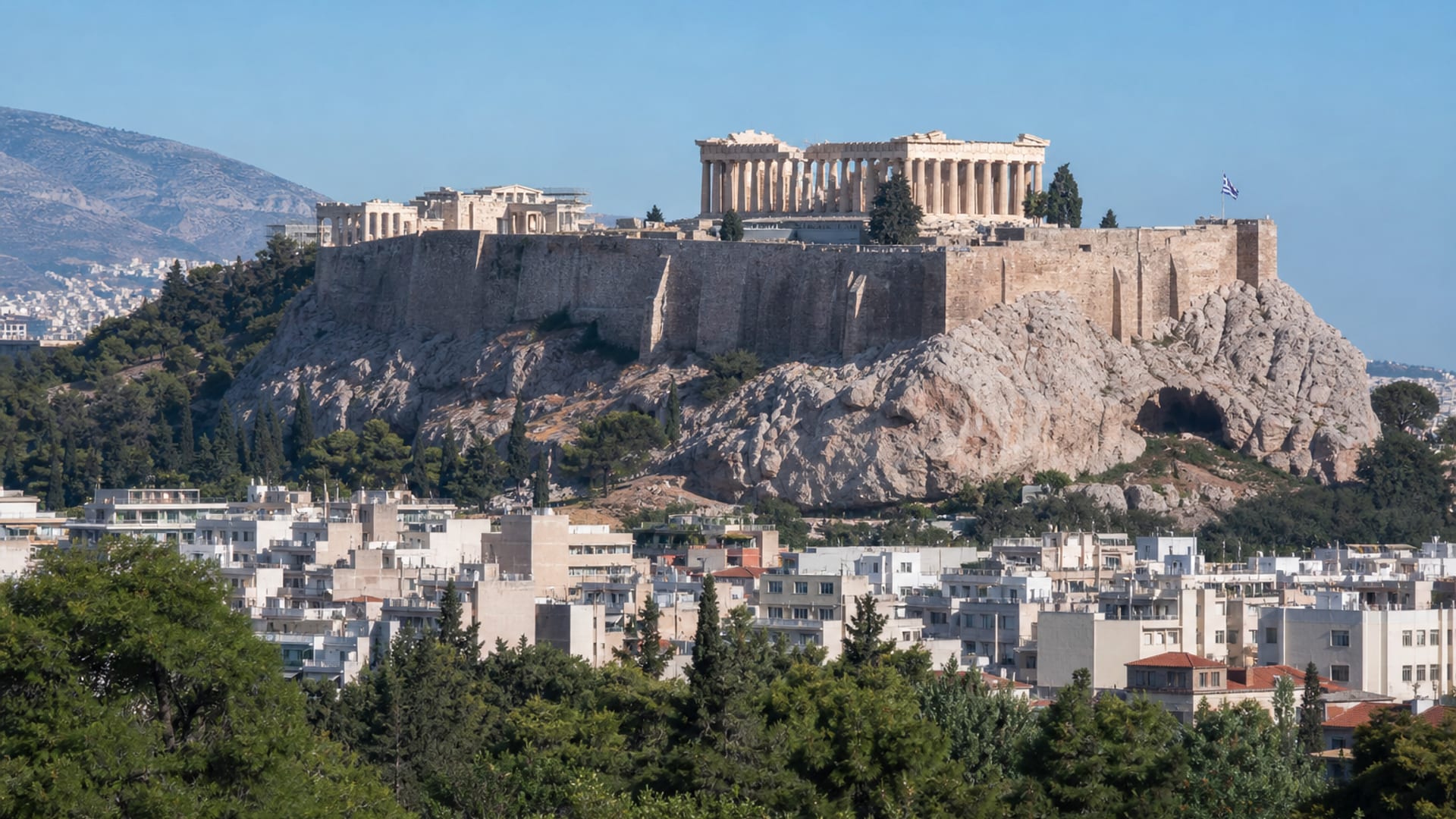
Begin in the Ancient Agora of Athens, which sits about 10 to 15 minutes on foot from Monastiraki and roughly 15 minutes from central Plaka. After 2 to 3 hours among the Temple of Hephaestus, the Stoa of Attalos, and the shaded paths, continue to the Museum of Greek Folk Musical Instruments, a short walk away near Plaka, for about 45 minutes to 1 hour before lunch in the same area.
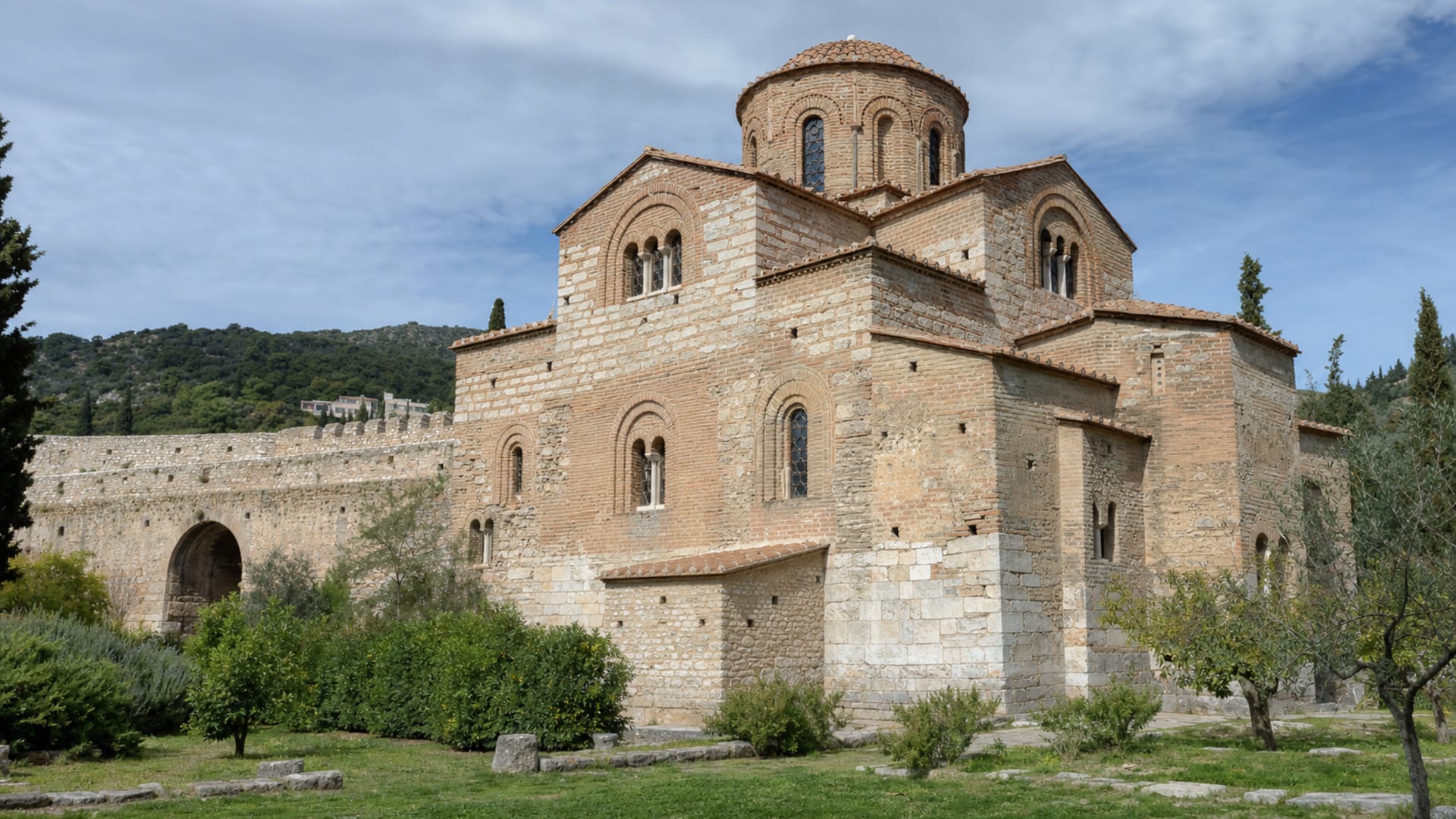
Head to Philopappos Hill about 45 minutes before sunset, and plan on 1 to 2 hours for the monument, the Pnyx, and the walking paths. If you are staying in Koukaki or Plaka, you can reach the trailheads in roughly 15 to 25 minutes on foot, then finish with an easy dinner back in Koukaki or near the Acropolis after the light fades over the hill.
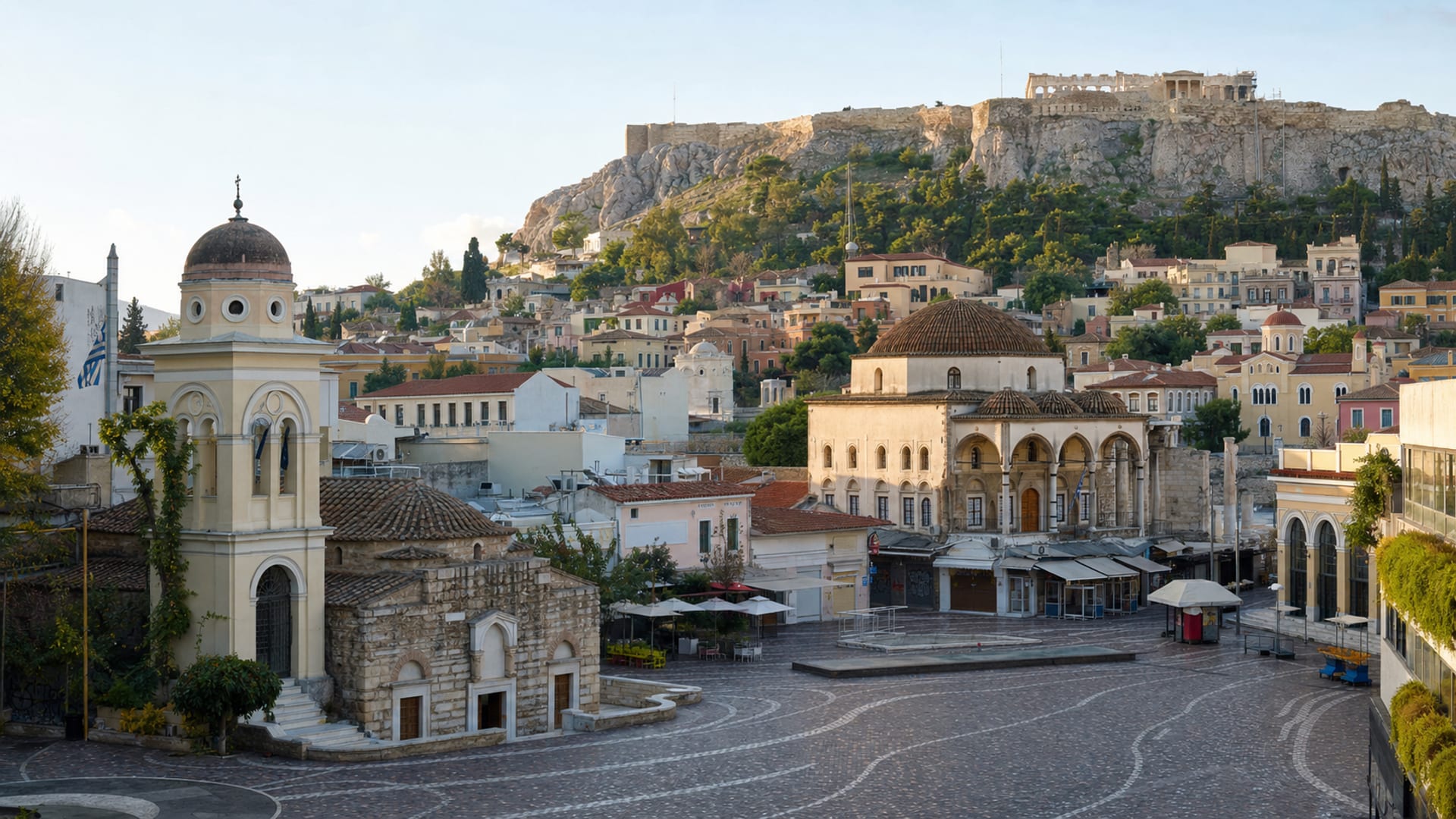
For your last day, stay close to your hotel and keep movement simple, with a final museum stop or a slow walk through Monastiraki’s flea market if your departure comes later in the day. If time allows, sit for coffee in Koukaki or Syntagma, then head back for bags and your airport transfer, either the metro from central Athens or a taxi from the hotel door.
Business-class flights from the US to Athens
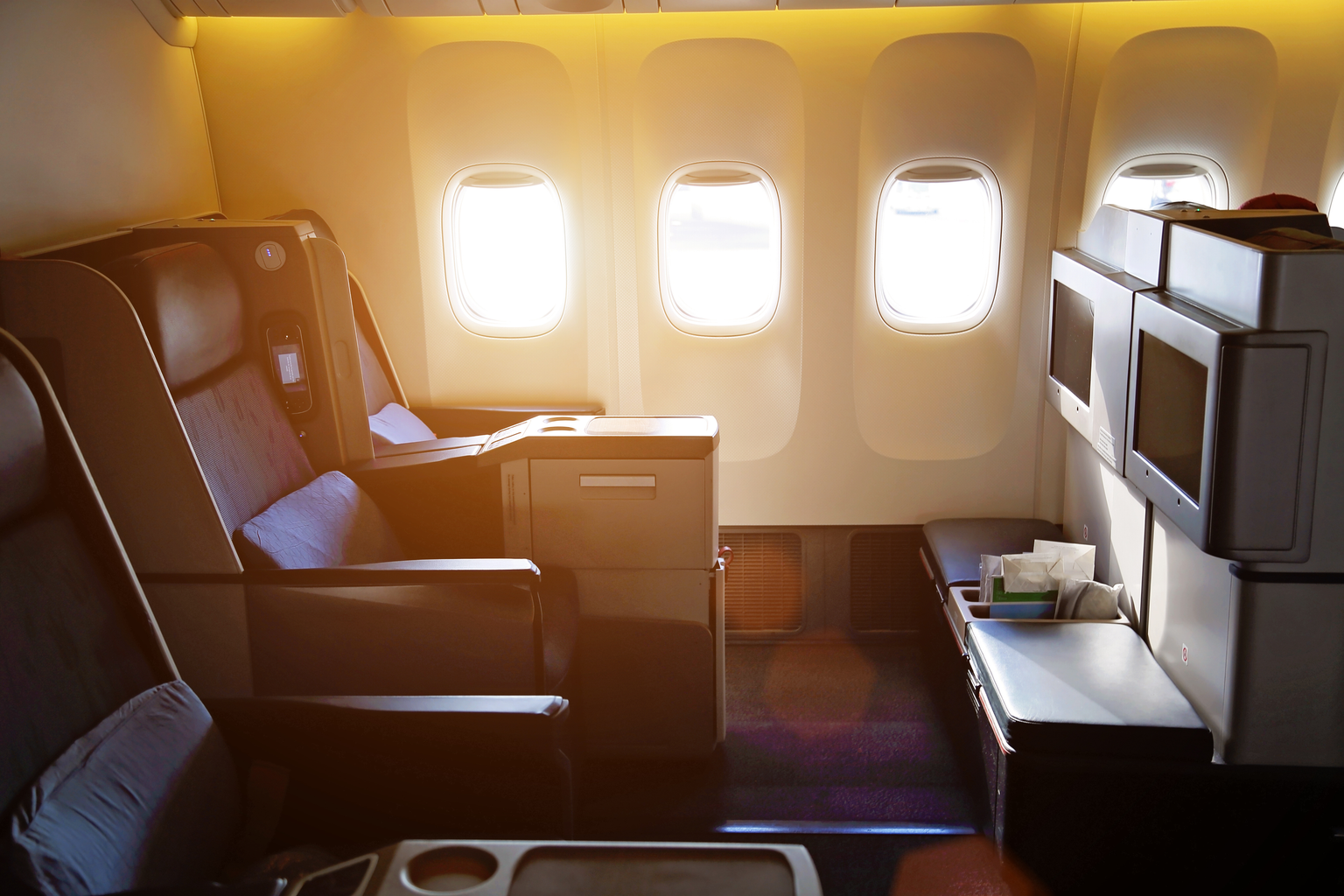
Most US travelers reach Athens with one stop. New York has nonstop options; Los Angeles routes connect through European or Gulf hubs.
New York (JFK) to Athens (ATH)
Delta and American Airlines fly nonstop in about 9.5 hours. Emirates, Lufthansa, Turkish Airlines, Air France, and Qatar Airways connect via Dubai (DXB), Frankfurt (FRA), Istanbul (IST), Paris (CDG), and Doha (DOH), with a total travel time of 13–18 hours. Round-trip business class typically costs $3,200–$8,500.
Los Angeles (LAX) to Athens (ATH)
No major nonstop service from LAX. American Airlines, British Airways, Air France, Lufthansa, Turkish Airlines, and Emirates connect through London (LHR), Paris (CDG), Frankfurt (FRA), Istanbul (IST), and Dubai (DXB). The longer leg is about 13–14 hours; the total trip is typically 15–21 hours. Round-trip business class typically costs $3,800–$9,500.
Athens, planned by district and hour
The right Athens trip uses each area of the city for what it does best: Syntagma as a central arrival point, Plaka for the first walkable evenings, the Acropolis and museum for the core history, Monastiraki for market energy, and Philopappos Hill for sunset. The metro, short walks, and the occasional taxi keep the day moving without a cross-city scramble. If you want help shaping your route to Athens, our experts at AranGrant can build it around your dates and preferences, so you have a pleasant start to the journey.







