


Chapters:

Need help with your trip?
Our support team is available 24/7. Request a callback or call us directly at (833) 619-0908
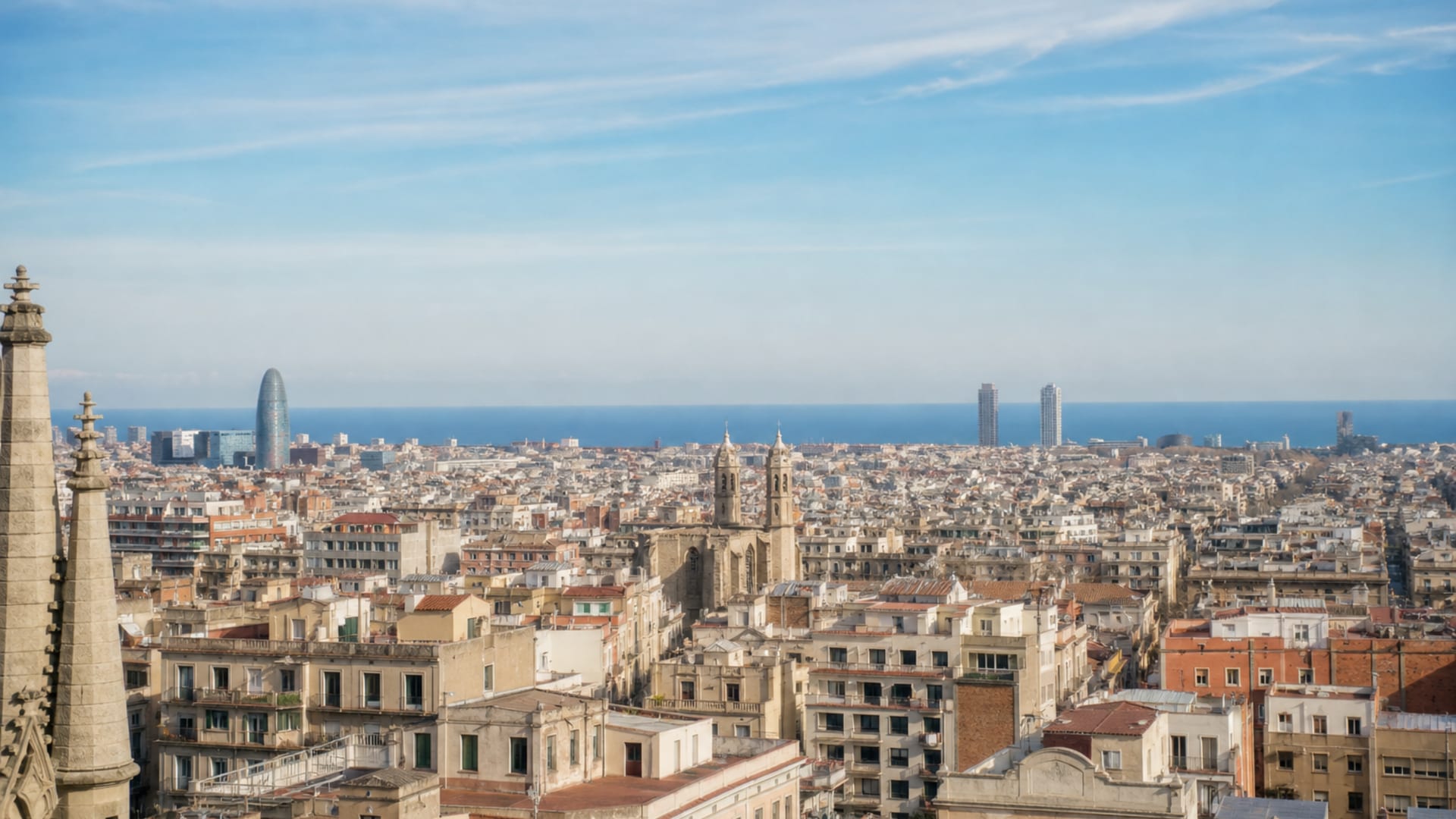
Few cities pack as much contrast into as small a space as Barcelona does. A medieval lane leads to a Modernist facade, which opens down to a Mediterranean beach, all within a single afternoon. The city is genuinely dense with things worth seeing, and the shortlist writes itself: Gaudí in the morning, the Gothic Quarter after lunch, Barceloneta in the afternoon, a late dinner in El Born.
This guide covers the city neighborhood by neighborhood, with the best places to stay, eat, and explore in each one.
Useful things to know

Main language(s): Catalan, Spanish
Hola (OH-lah) – Hello
Si us plau (see oos PLOW) – Please
Gràcies (GRAH-see-uhs) – Thank you
Parla anglès? (PAR-lah ahn-GLEHS) – Do you speak English?
Quant costa? (KWANT KOS-tah) – How much does it cost?

Currency: Euro (EUR, €)

Cash and cards: Cards are accepted at most hotels, restaurants, supermarkets, museums, and larger shops, and Apple Pay and Google Pay work almost everywhere. Keep €20 to €40 ($22 to $43) in cash for small cafés, market stalls, public restrooms, and occasional taxis that do not accept cards.

Tipping: Tipping is not expected but appreciated. Round up small taxi fares, leave 5%–10% in restaurants if a service charge is not already included, and loose change is enough in cafés and bars.

Traditional food: Catalan dishes like pa amb tomàquet, crusty bread rubbed with tomato and olive oil; escalivada, smoky slow-roasted peppers and eggplant; fideuà, seafood noodles with squid and aioli

Water and coffee costs: A small bottle of water costs around €1.50 to €2.50 ($1.60 to $2.70) and an espresso at the bar runs €1.20 to €1.80 ($1.30 to $2.00). Prices at sit-down cafés are higher, particularly in the center of the city.

Taxis and ride apps: Uber, Free Now, and Bolt all operate in Barcelona, alongside the city’s licensed taxis. At the airport and busy tourist areas, use only marked taxis or pre-booked cars and avoid unofficial drivers.

Plug and voltage: Type C/F socket, 230V

Dining and shop opening hours: Restaurants in Barcelona serve lunch from 1:00 pm to 4:00 pm, and dinner from 8:30 pm to 11:00 pm, with kitchens closed in between. Most shops open between 9:00 am and 10:00 am, take a midday break between 1:00 pm and 2:00 pm, reopen around 4:30 pm, and close between 8:00 pm and 9:00 pm. Most shops close on Sundays, except those in tourist areas and shopping malls.

Emergency number: 112 is the Spain-wide number for police, ambulance, and fire services.
Where to stay in Barcelona
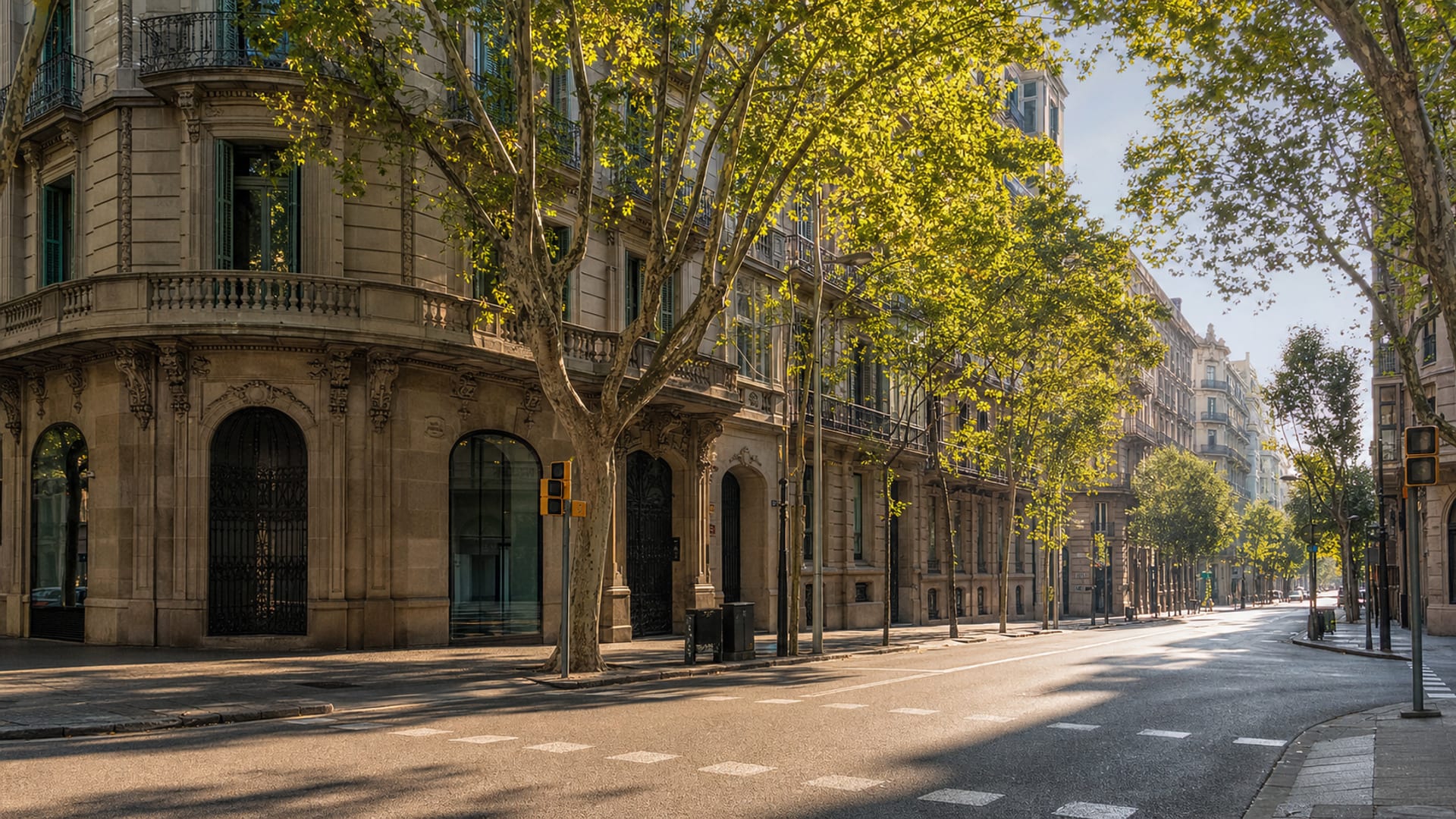
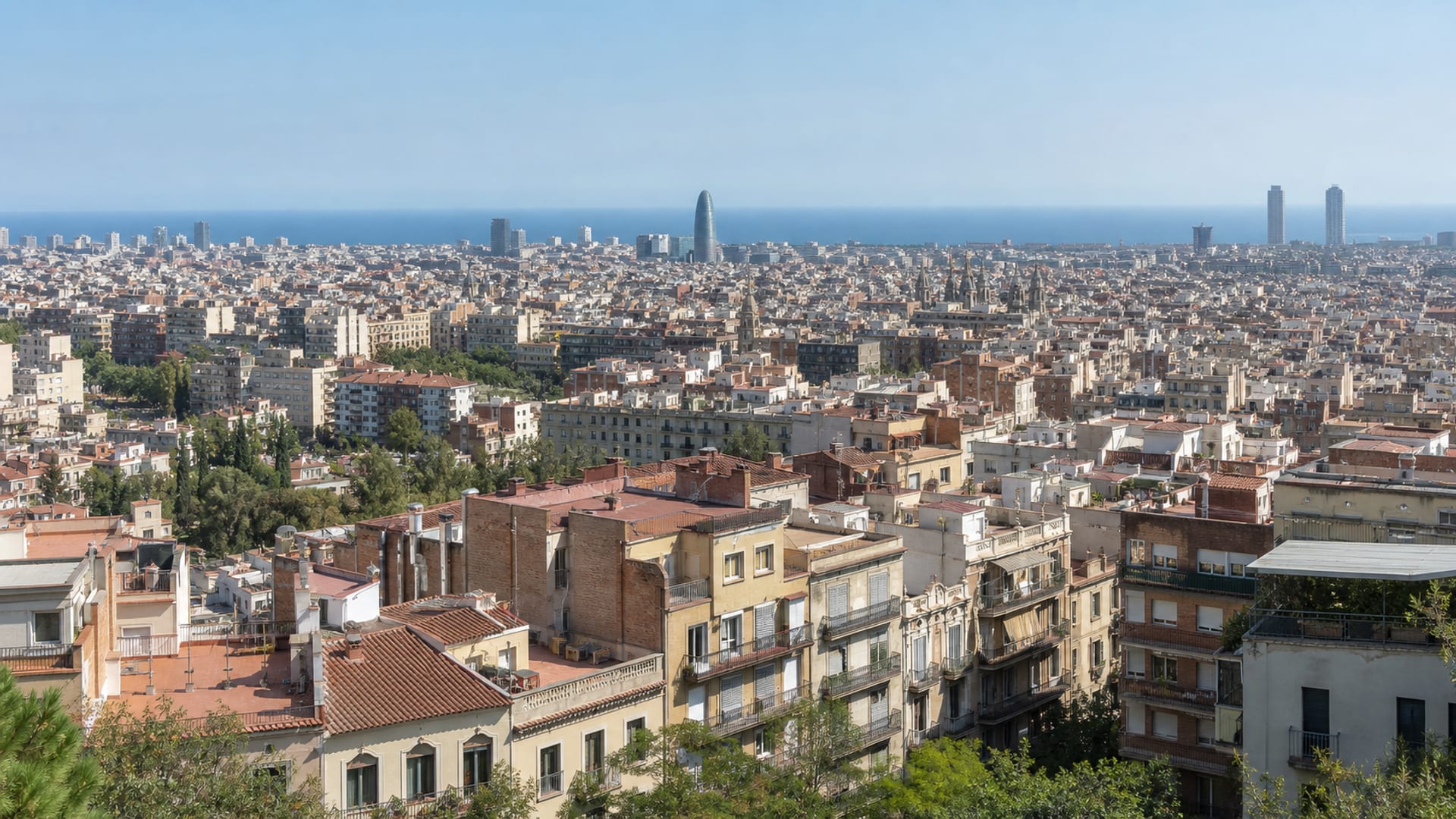
Eixample is Barcelona’s 19th-century grid district, built with wide avenues and chamfered block corners that keep the streets open and bright. Its main boulevard, Passeig de Gràcia, is lined with the city’s most celebrated Modernist buildings, including Casa Batlló, La Pedrera, and Casa Amatller.
Best for: First-time visits and travelers who want to stay close to the main sights, with good metro connections to the rest of the city
What to expect: Wide streets with a lot of people during the day, particularly around Passeig de Gràcia
Hotel prices: Usually about €180 to €320 ($206 to $367) per night for well-rated hotels
Distance to major sights: It takes 10–20 minutes by metro or on foot to reach Plaça de Catalunya, and about 15–30 minutes to reach La Sagrada Família, which is located within the district itself.
Quietness: Quieter on residential streets, louder near major boulevards at night
Main trade-off: Hotels cost more than in outer districts, and the blocks closest to Passeig de Gràcia are busy late into the evening.
Good to know: Book a room on a side street if noise is a concern, as traffic and bars make the main avenues considerably louder at night.
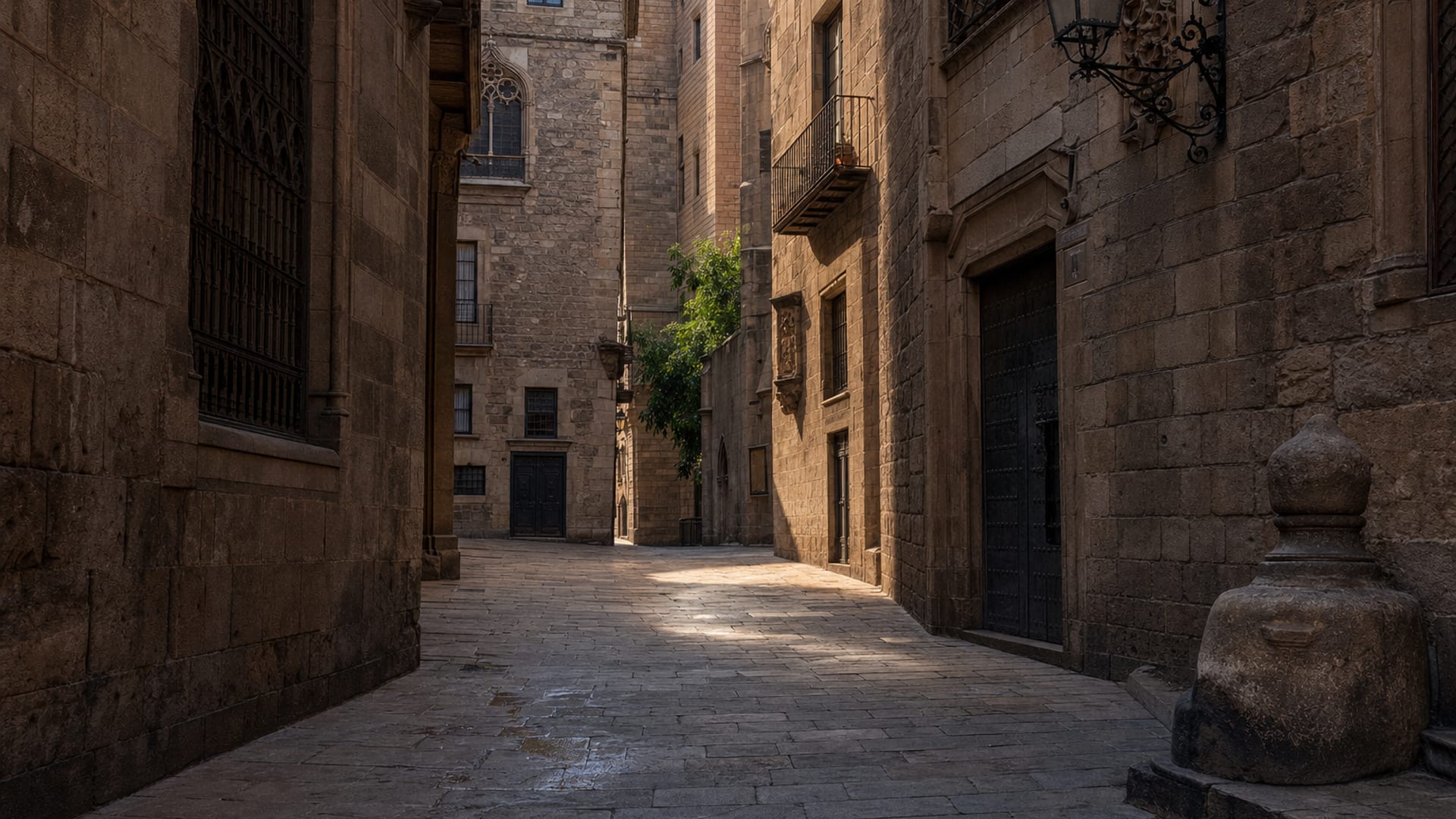
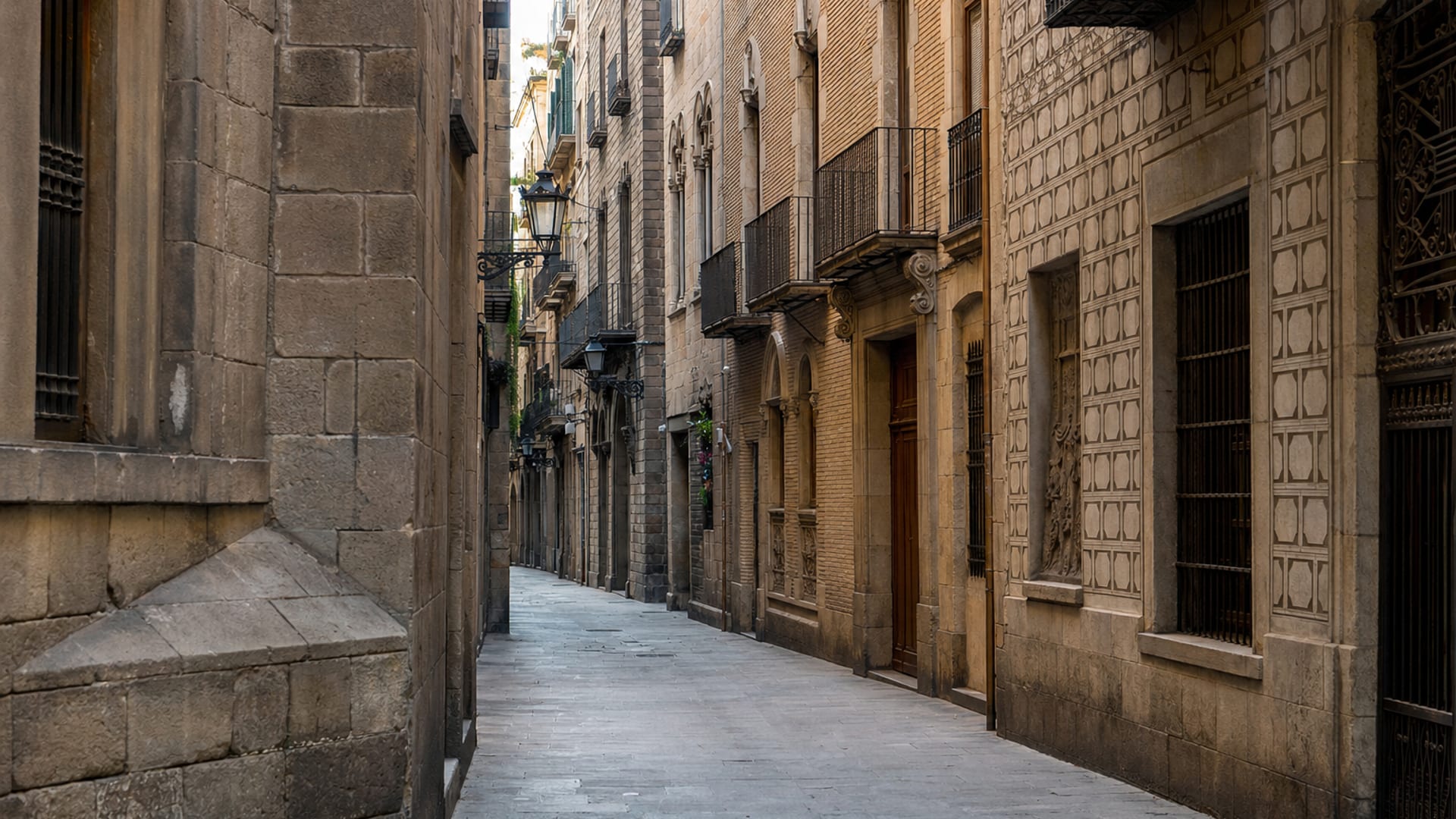
The Gothic Quarter is Barcelona’s medieval core, a dense network of narrow lanes and stone plazas built over Roman foundations. The Cathedral of Barcelona stands at its center, but the streets around it are just as rewarding to explore, still following the layout of the original Roman city.
Best for: Travelers who want to walk to the main landmarks and spend most of their time in the historic center
What to expect: Narrow medieval streets and crowded squares, with open-fronted shops, street food stalls, and bars lining most of the main streets
Hotel prices: Roughly €170–€310 ($195–$355) per night for well-rated hotels
Distance to major sights: On foot, about 5–10 minutes to Barcelona Cathedral and up to 15 minutes to Plaça de Catalunya
Quietness: Busy throughout the day and noisy well into the night on most blocks
Main trade-off: Rooms tend to be smaller than elsewhere in the city and street noise is hard to avoid.
Good to know: If you are sensitive to noise, look for rooms facing an inner courtyard, since many street-facing units sit above late-opening bars.
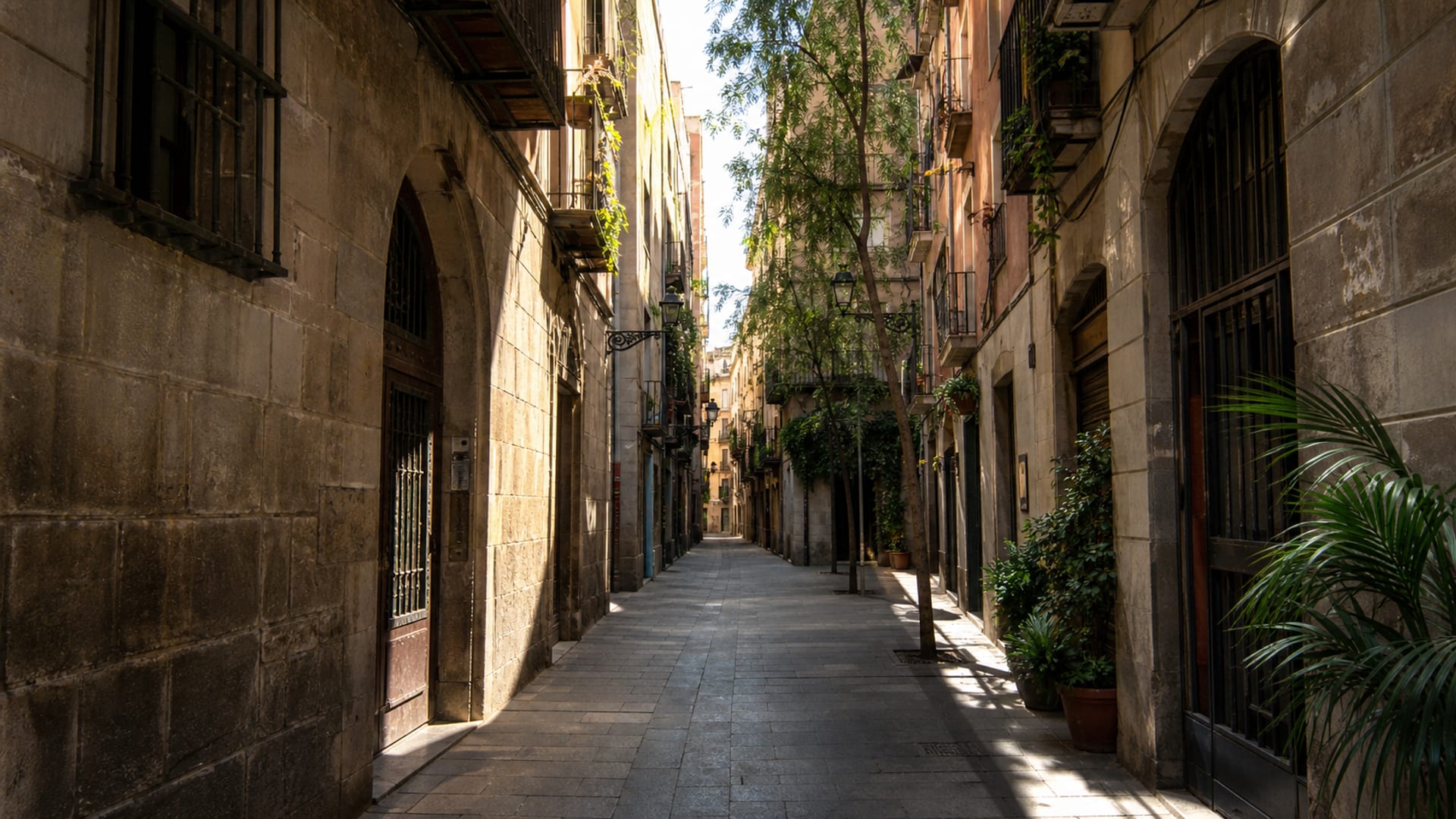
El Born lies just east of the Gothic Quarter, with the Picasso Museum at one end and the Gothic church of Santa Maria del Mar at the other. Between them, the neighborhood is full of independent restaurants, bars, and small shops spread across some of the most pleasant medieval streets in the city.
Best for: Travelers who want to stay close to the Picasso Museum and Santa Maria del Mar, with good restaurants and independent shops on the doorstep
What to expect: Medieval streets lined with restaurants, bars, and independent boutiques, busy from midday until late at night
Hotel prices: From €190 to €340 ($218 to $390) per night for well-rated hotels
Distance to major sights: Roughly 10 minutes on foot from the neighborhood center to the Picasso Museum and Barceloneta Beach
Quietness: Quiet in the morning, noisy after dinner, especially near the bars around Passeig del Born
Main trade-off: Late-night noise and higher hotel prices on weekends
Good to know: Taxis can take longer to reach you through the narrow streets at night, so plan to walk back after dinner.
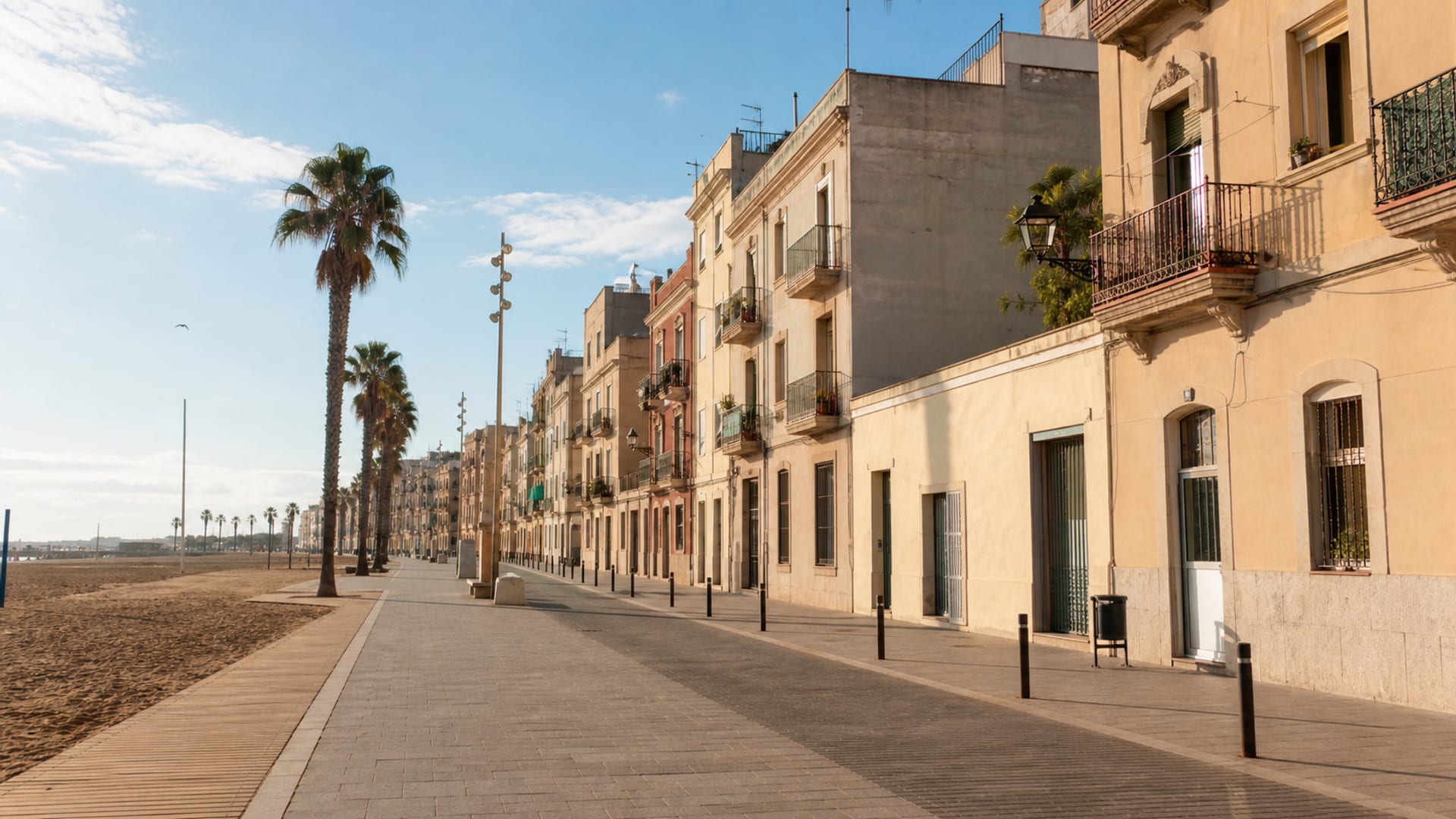
Barceloneta is Barcelona’s old fishermen’s quarter, built on a narrow strip of land between the port and the Mediterranean. Its tight grid of streets runs down to one of Europe’s longest urban beaches, with seafood restaurants lining the blocks closest to the water.
Best for: Travelers who want to enjoy the beach and seafood
What to expect: A narrow grid of streets opening onto a long sandy beach, busy with sunbathers by day and a younger crowd at the waterfront bars after dark
Hotel prices: Ranging from approximately €160 to €300 ($183 to $344) per night for well-rated stays
Distance to major sights: This neighborhood is 5–10 minutes away on foot from the beach, and 10–15 minutes away from the Gothic Quarter.
Quietness: Busy during the day and loud near the beach bars at night, particularly in summer
Main trade-off: Summer demand pushes prices up considerably, and the area gets loud at night near the waterfront bars.
Good to know: Early mornings are the best time to enjoy the beach, before the crowds gather later in the day.
Avoid Zona Franca, the industrial port, and L’Hospitalet de Llobregat, all far from the main sights. Parts of El Raval and the Gothic Quarter are central but noisy at night; light sleepers are better off in Eixample or El Born.
Hotel deals
Getting around Barcelona
Barcelona has good airport connections and a metro system that covers most of the city, with taxis and ride apps filling the gaps for late nights or longer distances.

Metro
for longer distances
Barcelona’s metro covers most of the city, with single rides at €2.90 ($3.20) and a 10-trip T-Casual pass at €13.00 ($14.90). Line L9 Sud connects El Prat Airport to the network with an additional €5.90 ($6.50) charge, reaching central stations in 25 to 40 minutes with one transfer.

Bus and tram
for convenience
The Aerobús runs from El Prat Airport to Plaça de Catalunya every 5 to 10 minutes. The ride takes 35–40 minutes and costs €7.25 ($8.00). Night buses N17 and N18 cover the same route for late arrivals. Bus transfers on a T-Casual pass are valid for 75 minutes.

Taxi
for convenience or late hours
Barcelona’s taxis are black and yellow, available at airport ranks or by app. The fare from El Prat Airport to the center runs €35 to €45 ($40 to $52), rising to €55 ($63) at night or in heavy traffic. Most taxis accept cards.
*Prices are based on rates updated as of June 2026 and may change at the time of travel.
Use the metro for getting around the city day to day, the Aerobús for a direct run to or from the airport, and a taxi when you need to reach somewhere like Eixample or the Gothic Quarter quickly, or when you are coming back late at night.
Iconic places in Barcelona
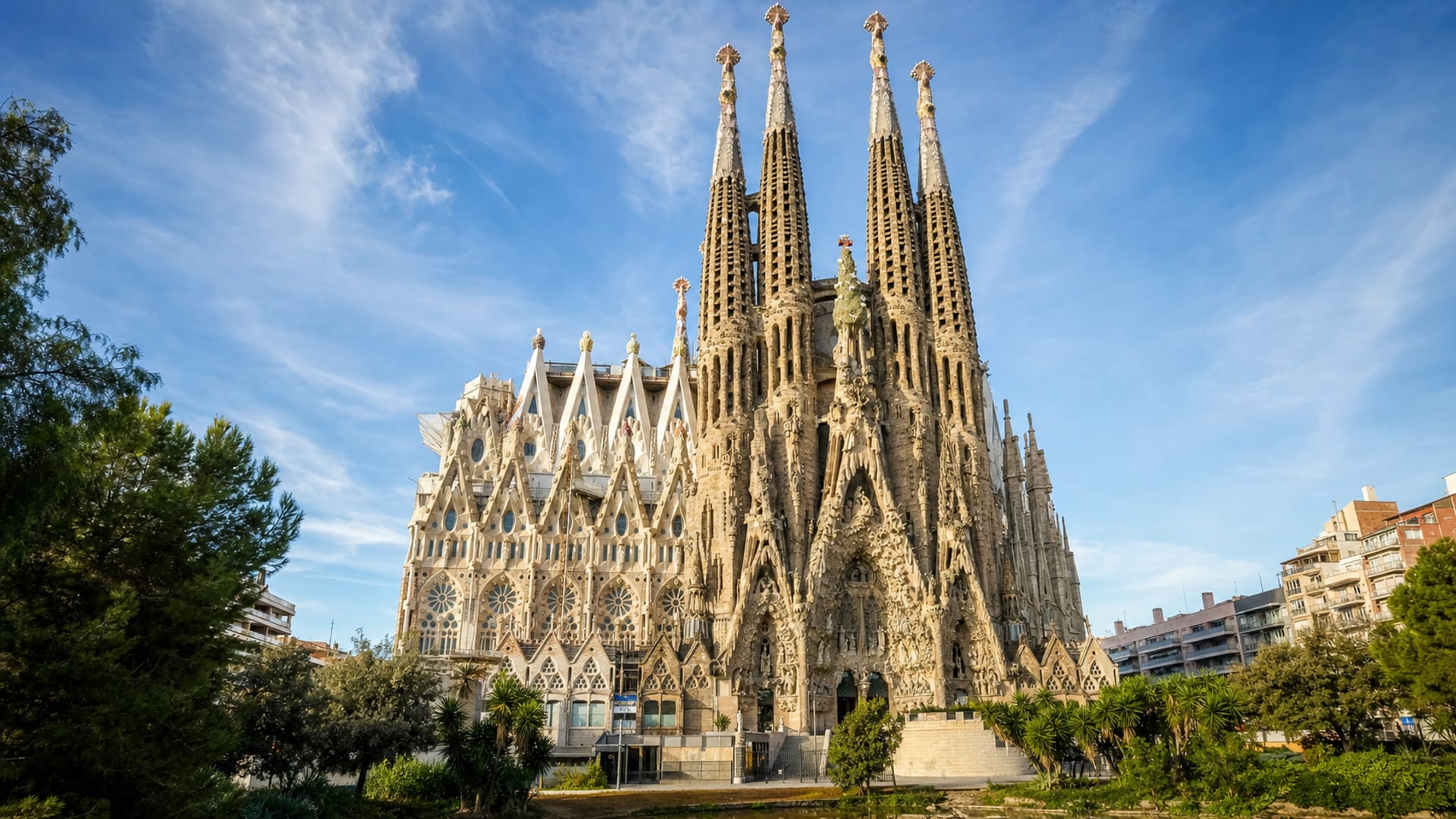
Sagrada Família
The Sagrada Família is the life’s work of famous Spanish architect Antoni Gaudí, under construction since 1882 and still defining the Barcelona skyline. Inside, stone columns branch upward like a forest canopy, and stained glass fills the space with light that shifts from deep blue to warm amber.
Time needed: About 2 to 3 hours
Entry: Timed tickets cost $30 ($26) to $41 ($36) Visit the official site for details.
Tip: Go early for softer light and shorter queues at the main entrances.
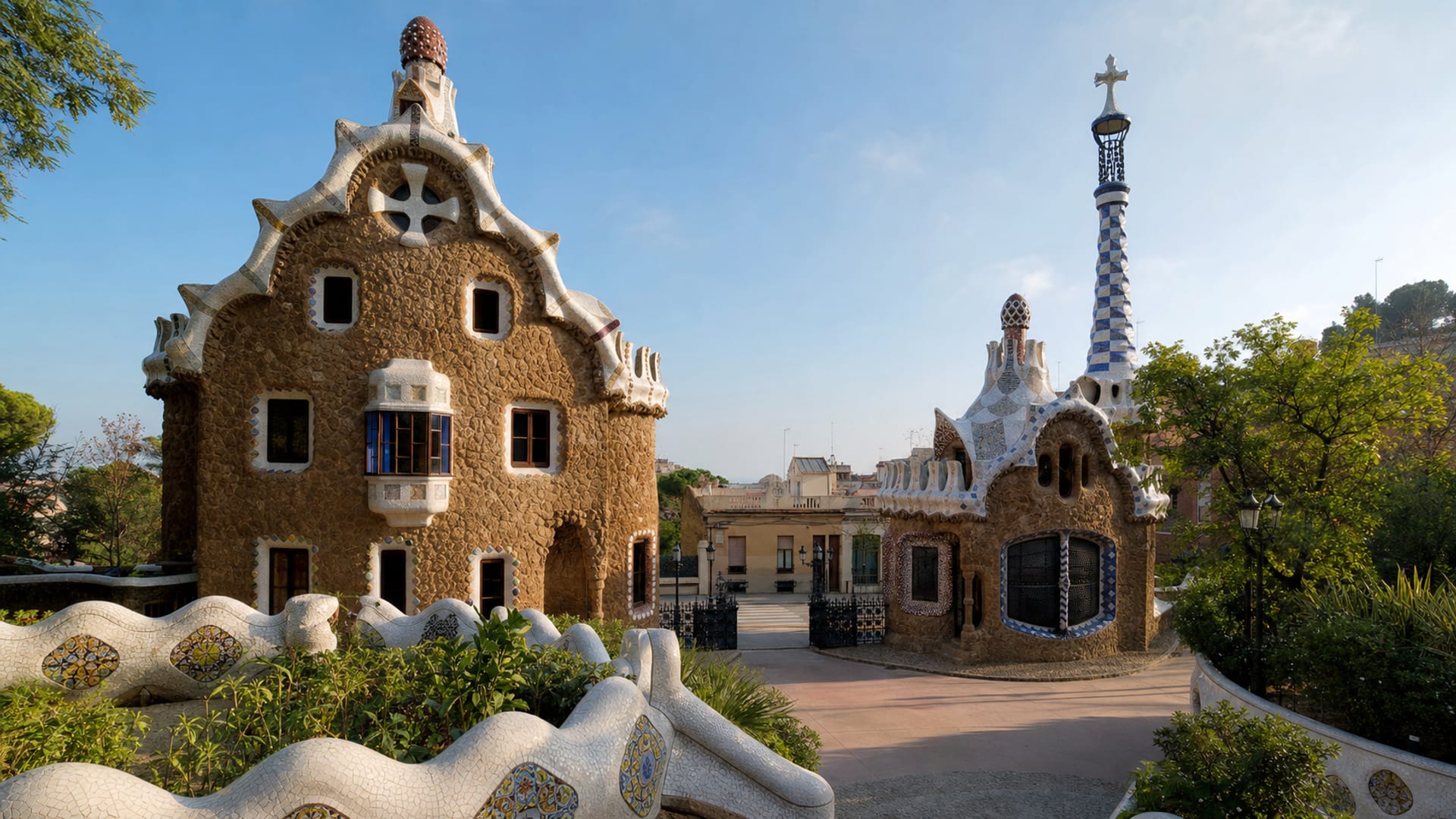
Park Güell
Gaudí designed Park Güell as a hillside garden city. The Monumental Zone holds the mosaic terraces, serpentine tiled bench, and mosaic gate pavilions, while the rest of the park opens into walking paths with views over Barcelona and the Mediterranean.
Time needed: About 1.5 to 2.5 hours
Entry: Monumental Zone tickets cost $21 (€18) for adults. Outer paths are free Visit the official site for details.
Tip: Visit near sunset for city views, then use the upper paths to avoid the busiest gate.
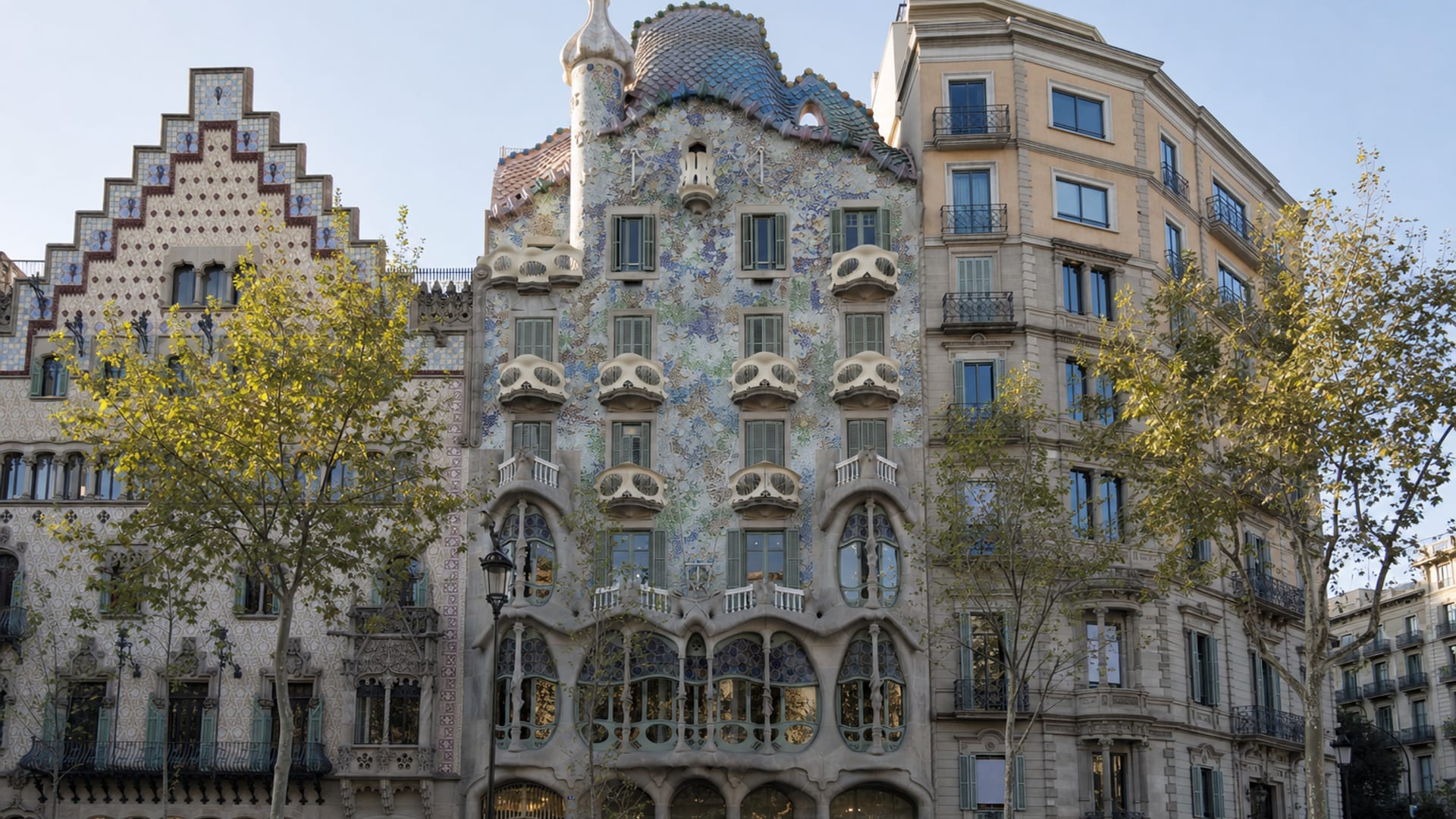
Casa Batlló
Gaudí redesigned Casa Batlló in 1904 into a facade of shimmering ceramic tiles, bone-shaped balconies, and a rooftop of colored scales, with a blue-tiled light well inside that drops through the building like an underwater shaft.
Time needed: About 1 to 1.5 hours
Entry: General admission costs $33 ($29) to $49 ($44), depending on entry time and multimedia or premium access Visit the official site for details.
Tip: Book a late afternoon slot, then stay for the rooftop near dusk and the quieter galleries.
Overlooked places in Barcelona

Jardins de Joan Brossa
Built on Montjuïc’s old amusement park grounds, the Jardins de Joan Brossa have terraced paths, sculptures, and a quiet atmosphere that most visitors miss on their way to the cable car nearby.
Time needed: About 1 to 2 hours
Entry: Free to access, with no ticket or timed entry
Tip: Go near sunset for softer light and longer views.

Bellesguard
Bellesguard is one of Gaudí’s least visited buildings, built on the site of a medieval castle in Sarrià-Sant Gervasi. Gaudí wove his Modernist detail through the original Gothic stonework, producing something that feels older and stranger than his better-known work.
Time needed: About 1 to 2 hours
Entry: Tickets cost €9 ($10) and include an audio guide. Visit the official site for details.
Tip: Book ahead and go early, since time slots are limited and the last entry is at 2:30 pm.
What to eat in Barcelona
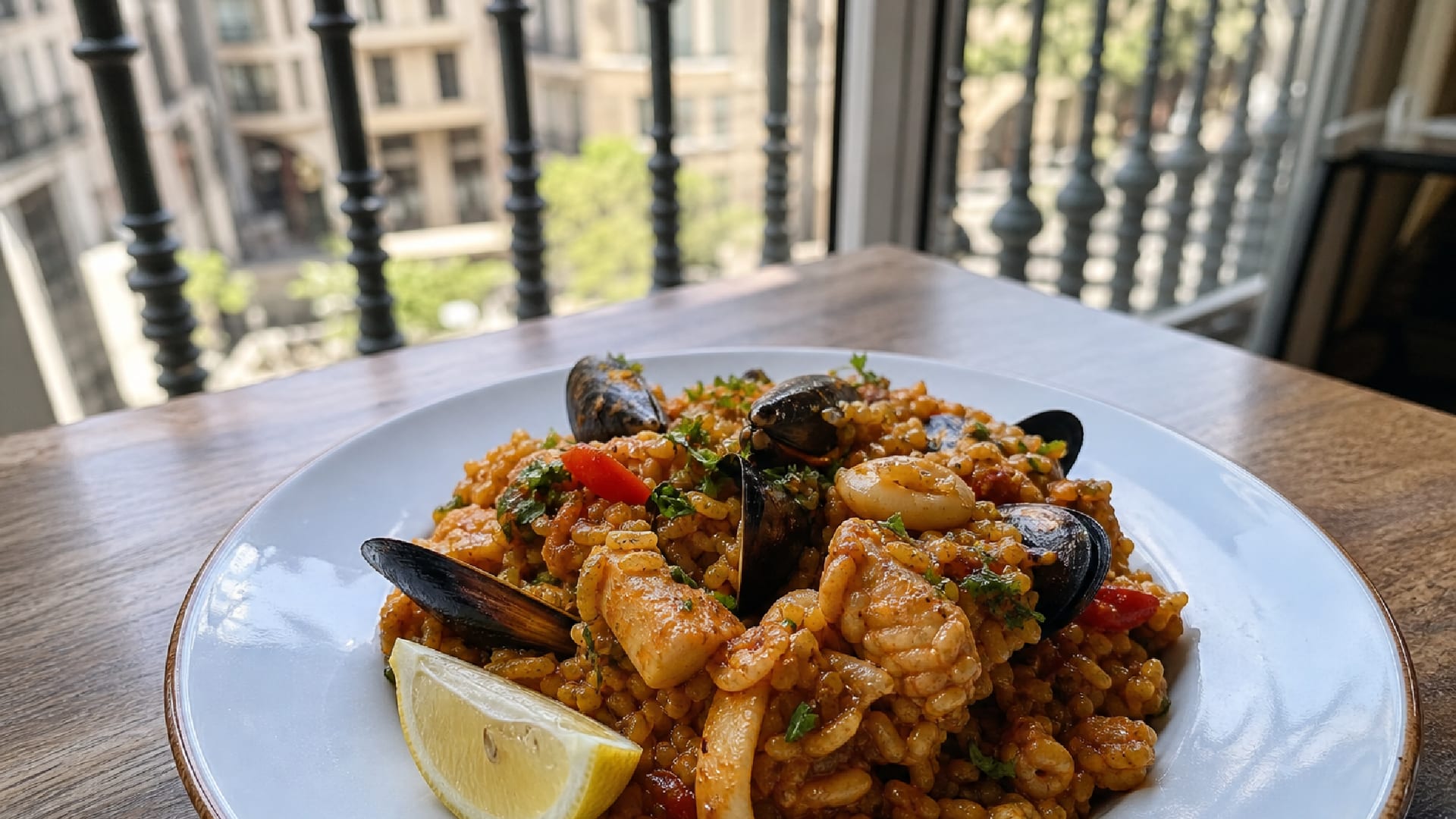
Barcelona’s food is Catalan at its core: olive oil, ripe tomatoes, fresh seafood, and vegetables cooked over fire. The cuisine relies on fresh produce and clean flavors.
Pa amb tomàquet
Crusty bread rubbed with ripe tomato, drizzled with olive oil, and finished with salt, pa amb tomàquet turns up at breakfast and before almost every meal in the city. Bar Celta Pulpería on Carrer de la Mercè serves a classic version.
Escalivada
Slow-roasted peppers, eggplant, and onion dressed with olive oil, escalivada is one of the most distinctly Catalan dishes on any tapas menu, smoky and soft in equal measure. Can Culleretes on Carrer dels Quintana is a good place to order it, being one of Barcelona’s oldest dining rooms.
Fideuà
Toasted noodles cooked in seafood stock with squid, shrimp, and aioli, fideuà is richer and brinier than it looks. 7 Portes on Passeig d’Isabel II has been serving it since 1836.
Crema catalana
Crema catalana is the Catalan answer to crème brûlée and considerably older: custard scented with lemon and cinnamon, topped with a thin layer of caramel that cracks under a spoon. La Pubilla on Plaça de la Llibertat in the old Gràcia market building does it particularly well.
Best time to visit
Barcelona in July and Barcelona in January are almost two different cities. The crowds, the weather, the pace, and the overall feel change dramatically depending on when you arrive.
Best for: Exploring the city on foot, from the Sagrada Família and Park Güell to the Gothic Quarter, El Born, and the waterfront
What you get: Temperatures between 52°F and 72°F (11°C to 22°C), mild enough for long walks, market stops, and terrace lunches
Trade-offs: March and April can bring rain, disrupting outdoor plans.
Best for: Beach time, rooftop bars, open-air concerts, and warm evenings in Barceloneta, El Born, and Poble-sec
What you get: Temperatures often range from 68°F to 86°F (20°C to 30°C), with the city staying lively well into the night.
Trade-offs: Heat and crowds can make midday sightseeing tiring.
Best for: A varied trip with warm early-season days, neighborhood walks, museums, and smaller crowds
What you get: Temperatures usually range from 55°F to 79°F (13°C to 26°C). September still has beach weather on some days.
Trade-offs: Autumn storms are common in September and October, and evenings are cold later in the season.
Best for: A quieter city break built around museums, architecture, food markets, and shopping
What you get: Temperatures between 45°F and 59°F (7°C to 15°C), with shorter queues at major landmarks and a calmer pace across the city
Trade-offs: Shorter days, cool evenings, and occasional rain. The seafront is pleasant on clear days.
A 5-day plan in Barcelona
This five-day itinerary covers Barcelona neighborhood by neighborhood, combining the major sights with walks, markets, and restaurants nearby. Each day focuses on one part of the city, so the trip builds gradually instead of jumping across the map.
Land at El Prat and take the Aerobús for €7.75 ($8.50) or a taxi for €35–€45 ($38–$49) to Eixample, about 20 to 35 minutes from the airport. Check into a hotel near Passeig de Gràcia, walk to a café for coffee and pa amb tomàquet, and keep dinner close to the hotel.
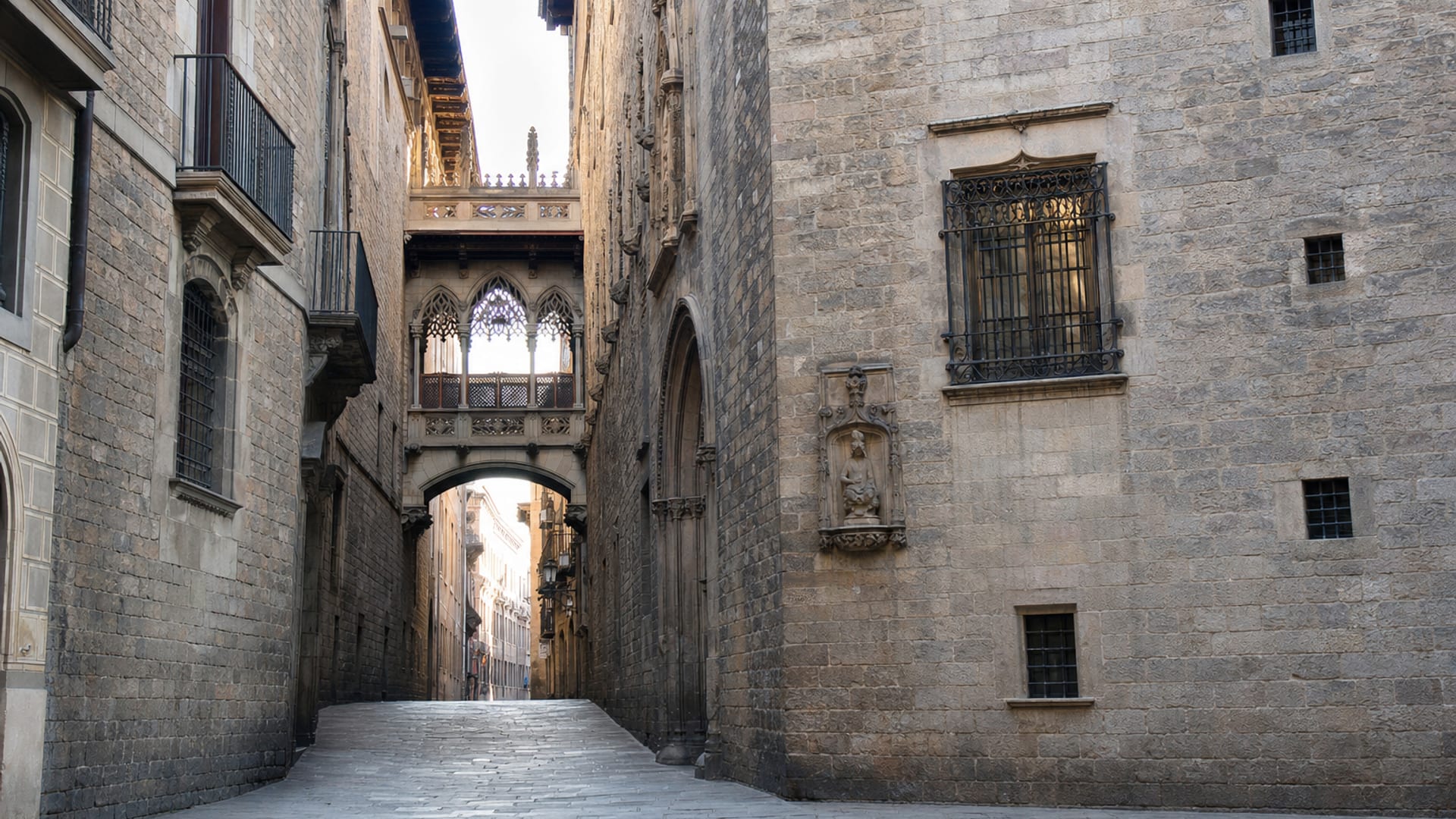
Start the morning at Casa Batlló on Passeig de Gràcia, allowing 1 to 1.5 hours, then take the metro to Sagrada Família for 2 to 3 hours inside. Book tickets in advance and arrive early. After lunch, head to El Born for the Picasso Museum and the streets around Santa Maria del Mar.
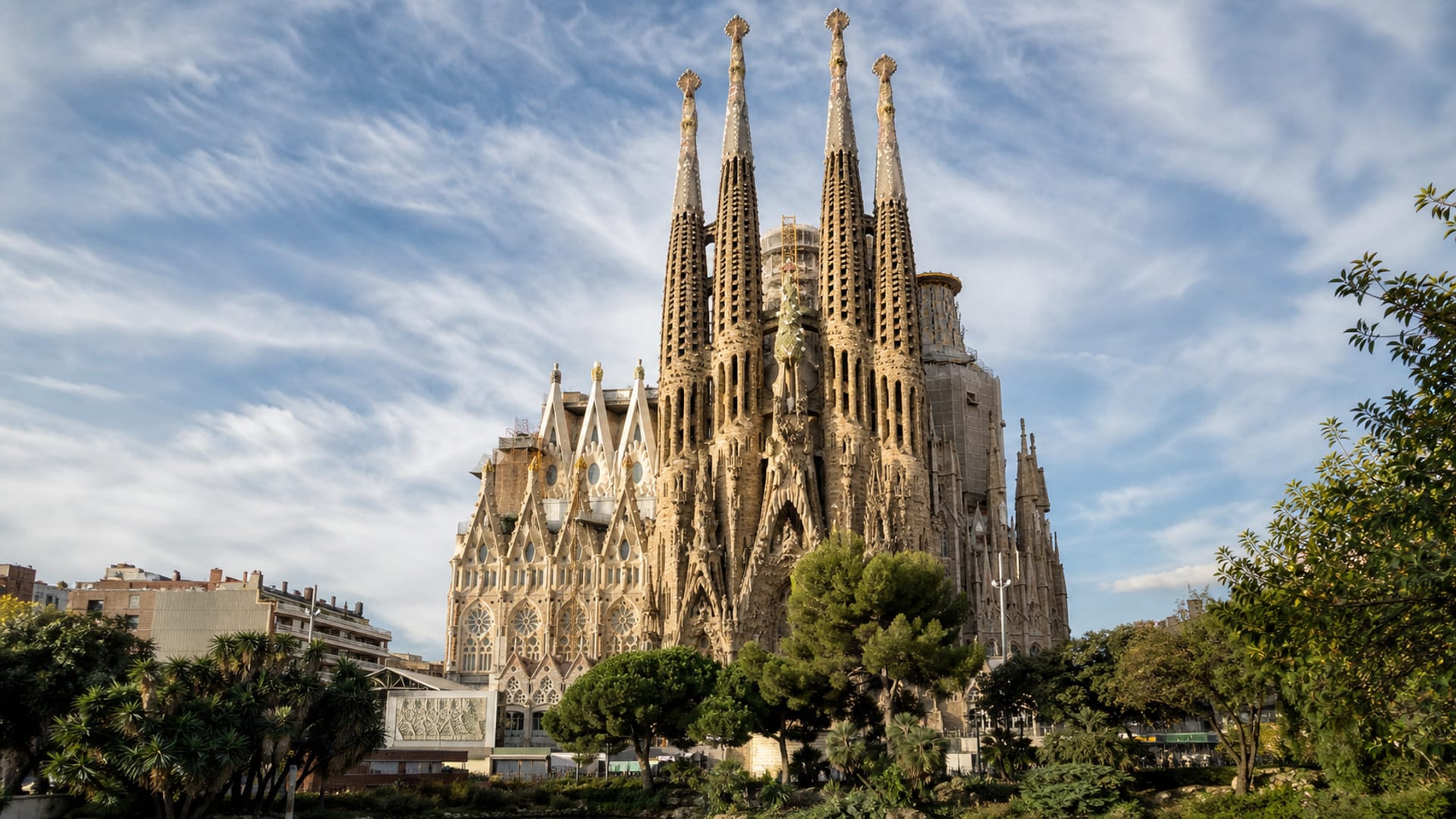
Start the morning at Park Güell, arriving early to beat the crowds in the Monumental Zone. Take the metro down to the Gothic Quarter for the afternoon, walk to the Cathedral of Barcelona, explore the medieval lanes, and finish with lunch in El Born.
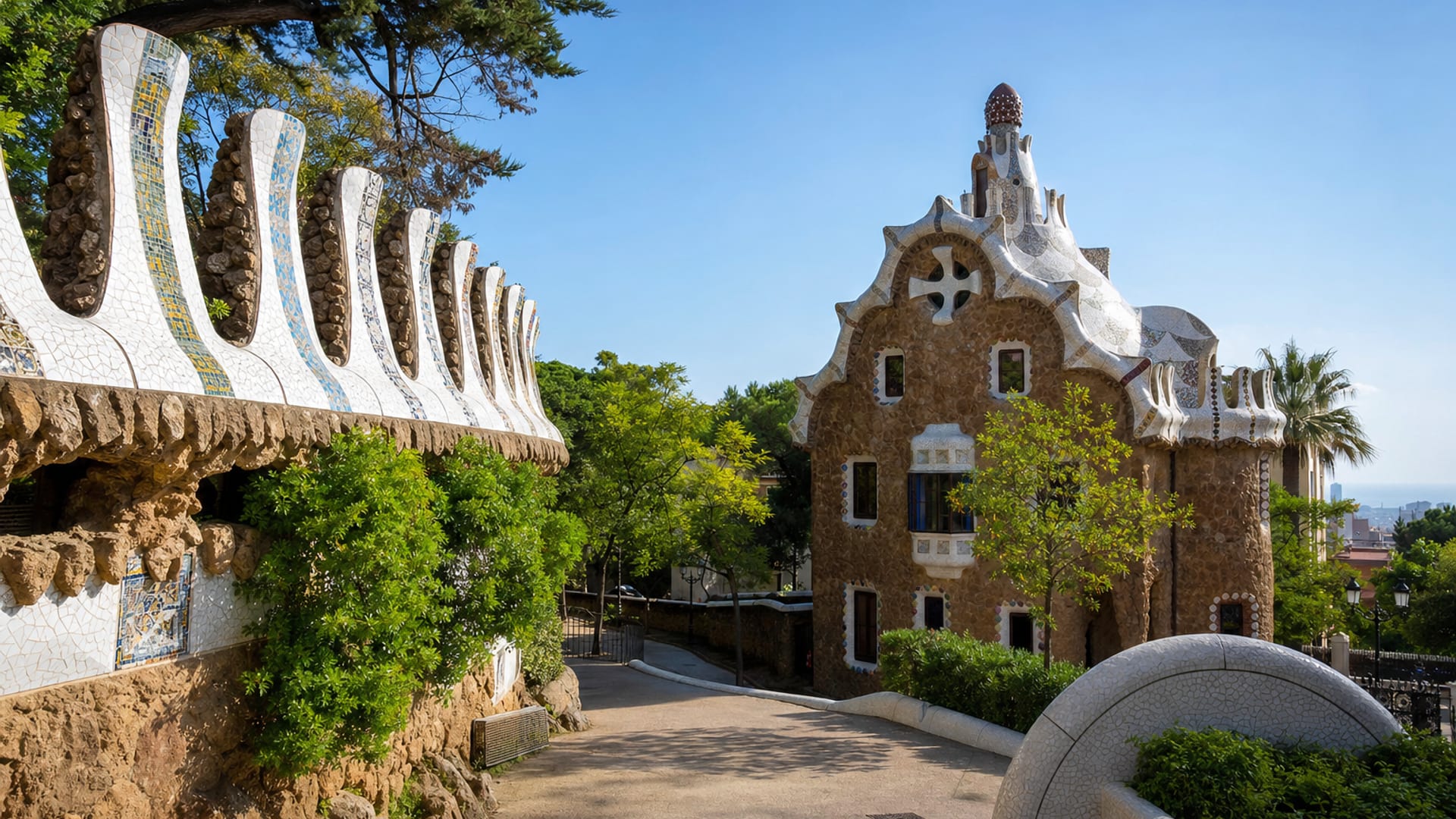
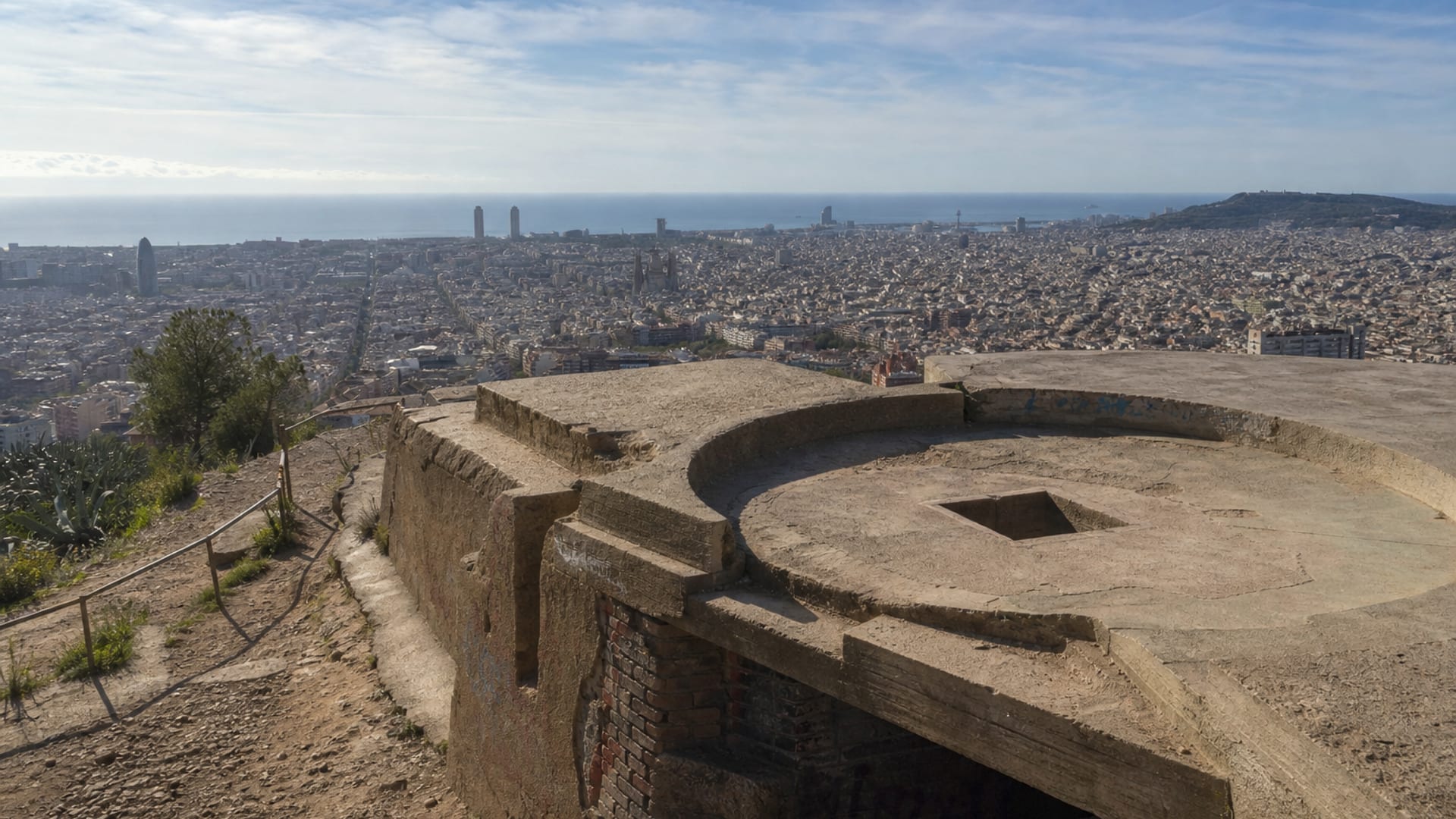
Spend the day on Montjuïc, starting with the Jardins de Joan Brossa for sculptures and hilltop views. Work your way up to the castle for a wider view over the city and the port. Stay for sunset before heading down to Poble-sec for dinner.
Keep the last day close to Eixample, with a slow morning on Passeig de Gràcia and time for any remaining shopping or a final café stop. If you want one last museum visit, Museu Frederic Marès in the Gothic Quarter is 15 minutes on foot. Finish with a long lunch in Eixample before heading to the airport.
Business-class flights from the US to Barcelona
You can find business-class flights to Barcelona from major hubs across the US. The examples below show typical options from both the East Coast and West Coast in 2026.
New York (JFK) to Barcelona (BCN)
Condor operates business-class flights from New York (JFK) to Barcelona (BCN) with a layover in Frankfurt (FRA). The trip takes roughly 11 hours, depending on the layover time. Round-trip business-class fares usually start at $3,700 and can rise to $6,500 for last-minute bookings.
Los Angeles (LAX) to Barcelona (BCN)
Condor also operates business-class flights from Los Angeles (LAX) to Barcelona (BCN) through Frankfurt (FRA). The trip lasts approximately 14 hours. For this route, fares start at roughly $3,100 and can climb to $9,000 when your departure is close.
Barcelona in its right order
Barcelona rewards a trip that takes it one neighborhood at a time, from the medieval lanes of the Gothic Quarter and El Born to the Modernist boulevards of Eixample and the hilltop views of Montjuïc or Park Güell. If you want help finding the right dates or the right departure city for the trip, the AranGrant experts can put your dream trip together for you.







