Africa is home to some of the world’s best safari destinations, each offering a distinct way to experience wildlife in its natural environment. From open savannahs to river systems and private reserves, each setting shapes the type of wildlife you encounter and the way you experience it.
At a glance, many of these destinations can seem similar. In reality, they differ in meaningful ways, from wildlife movement and viewing conditions to the overall pace and structure of the experience.
Choosing the right safari is less about finding a single “best” destination and more about understanding which one aligns with how you want to travel.
Read in this post:
What makes a safari destination “the best”
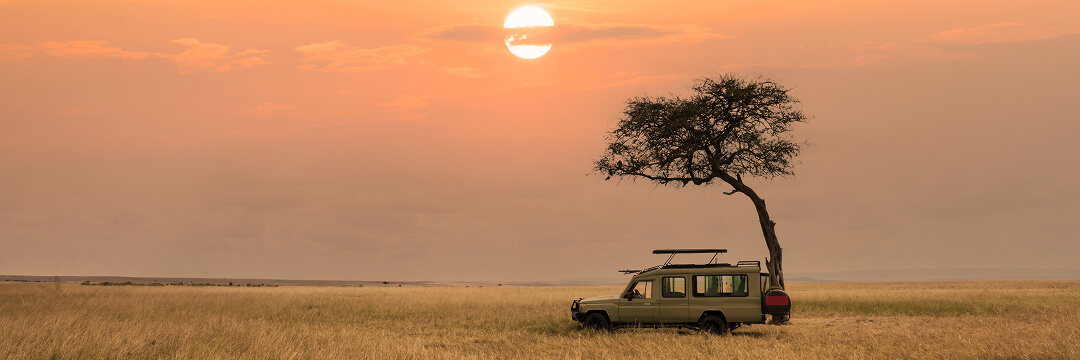
In practice, what makes a safari destination “the best” comes down to four factors: how reliably you can encounter wildlife, how the landscape shapes visibility, how the season affects movement and density, and how much time and effort it takes to reach and explore the area.
- Wildlife patterns shape how you spend your time. In some places, animals return to the same water sources, so you can stay in one area and watch activity build. In others, they move across larger distances, and guides follow tracks or signals like vultures and alarm calls. That difference defines whether your day feels steady or more reactive.
- Landscape controls visibility. On open ground, animals can be spotted from far away. In thicker vegetation or uneven terrain, sightings happen at close range and often without warning. That affects both how long sightings last and how much driving is needed.
- Season changes how easily you can find wildlife. In dry periods, animals gather near water sources, and vegetation is thin. In wetter periods, animals disperse, and visibility drops due to lush vegetation. The same place can feel active in one month and quiet in another.
- Accessibility affects safari trips before they begin. Some safaris involve a long-haul flight and a short transfer. Others require multiple flights and involve small aircraft with strict baggage limits. That difference directly affects how much time you spend traveling instead of being on game drives.
Next in the series: Top 8 Best Places to Visit in Africa in 2026
Best safari destinations by experience
Big Five: Kenya and Tanzania
Best time to visit: June through October
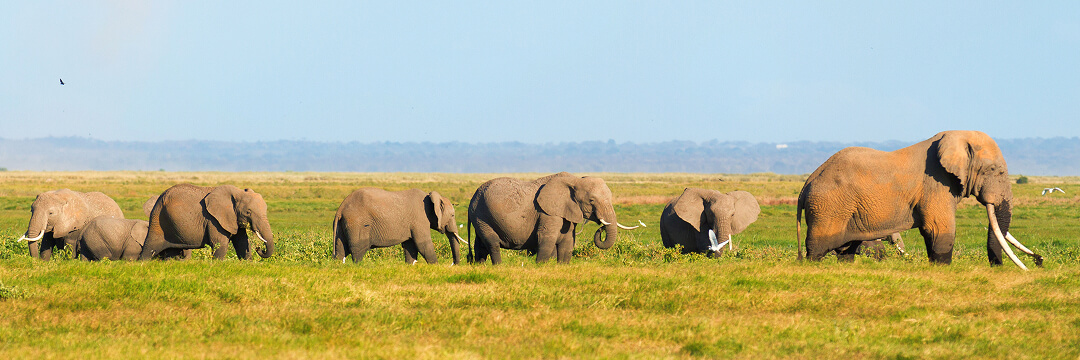
If your goal is to see the Big Five, which are lions, elephants, leopards, buffalo, and rhinos, Kenya and Tanzania are the best places to go. The Masai Mara in Kenya and the Serengeti in Tanzania stretch across vast open savannahs with grasslands, scattered trees, and river systems, which attract the wildlife. Both areas offer similar safari experiences, but the Masai Mara is more compact than the Serengeti, which means shorter drives and easier access to camps.
This openness shapes the entire safari. You do not need to look into dense bush or wait for animals to appear. You scan wide landscapes with your guide, who may spot a distant herd, notice birds circling, or catch movement along a ridge. You then head in that direction before the scene fully develops.
Depending on the time of day, these scenes can be different. You are more likely to spot predators in the morning, since lions are still active, feeding, or moving back toward shade. Closer to noon come the herds: wildebeest and zebras move across the plains in long lines that can stretch very far. Later in the day, you move closer to the water where you can see hippos and crocodiles.
In terms of accessibility, safaris in Kenya and Tanzania pose a moderate challenge. You usually have to fly to Nairobi on an international flight, then board a small aircraft that lands inside the reserve. For Tanzania, you can take a flight to Kilimanjaro International Airport (JRO), which serves as the main gateway for northern parks such as Ngorongoro and Tarangire. From there, you either continue by road to nearby reserves or transfer to Arusha Airport (ARK) and take a small aircraft into the Serengeti, which is the most common option.
Remote luxury: Botswana
Best time to visit: May to October
In Botswana, the Okavango Delta offers one of the most distinctive safari settings. It forms a vast inland system of water channels, islands, and floodplains. Here, safari shifts from how much you see to how you experience it.
All of the big five game animals are present here, but the lush environment makes them harder to spot. You often need more tracking and patience. Animals spread out more, and long stretches of time can pass without major activity.
Getting here is also more complicated than to Kenya’s and Tanzania’s safari regions. Reaching the Delta usually involves a flight into Johannesburg, then onward to Maun, followed by a flight on a small aircraft into camp. These final flights have strict baggage and capacity limits, which keep visitor numbers low.
These constraints are what makes Botswana safaris luxurious. Limited accessibility, small camps, fewer people, and vehicles are benefits when it comes to nature. Even the rhythm of the drives reflects that. You stop more often, pay attention to smaller details, learn the tracking methods from guides, and all of this results in an experience that feels more meaningful.
Botswana suits travelers who value privacy, space, and unhurried experience over constant movement.
Fun fact: The Okavango Delta fills with water during the dry season, not from local rain, but from floodwaters that arrive from Angola. As surrounding areas dry out, animals move toward the Delta, which concentrates wildlife there.
Easy first safari: South Africa
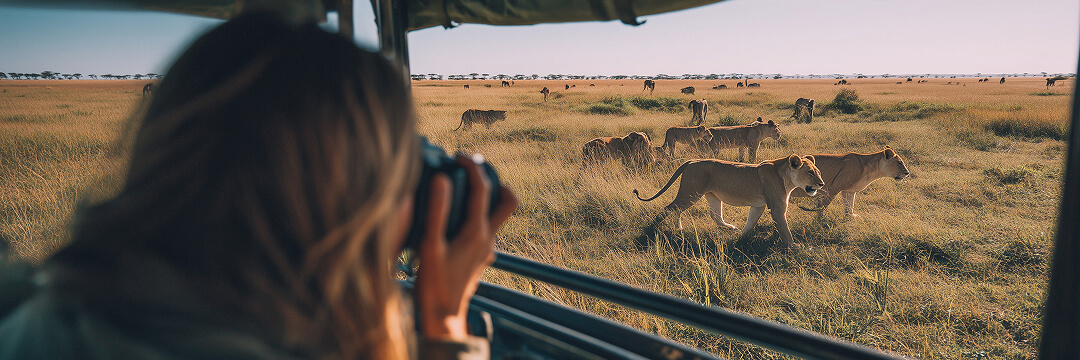
Best time to visit: May to October
South Africa is an excellent place for your first safari. Going on a safari there usually includes visiting Kruger National Park and various private reserves, where bushveld, rivers, and open grassland create an ecosystem that supports a wide range of wildlife.
Safaris in this region differ in their structures and rhythms. Kruger National Park has a vast system of roads that vehicles must travel on. This means that encounters with animals are usually shorter, and there is more pressure on timing and positioning. Once an animal disappears in the bush and is out of view, the sighting ends, and you move on. But this constraint also allows you to cover more ground and see more wildlife.
Kruger National Park is also the most popular destination for self-drive safaris, since it offers the most user-friendly infrastructure for independent travelers. Unlike many other African safari destinations that require specialized 4×4 skills and off-grid equipment, South Africa is accessible to a wide range of visitors, including families and first-timers.
In private reserves such as Sabi Sands and Timbavati, guides can leave the roads and follow animals into the bush, even when they move out of sight. As a result, sightings last longer and reveal more of the animal’s behavior.
Accessibility is also South Africa’s strong point. After a flight to Johannesburg, you proceed to the Kruger area on a short regional flight, which usually takes less than an hour. The process feels closer to a standard travel day than a remote expedition.
Unique landscapes: Namibia
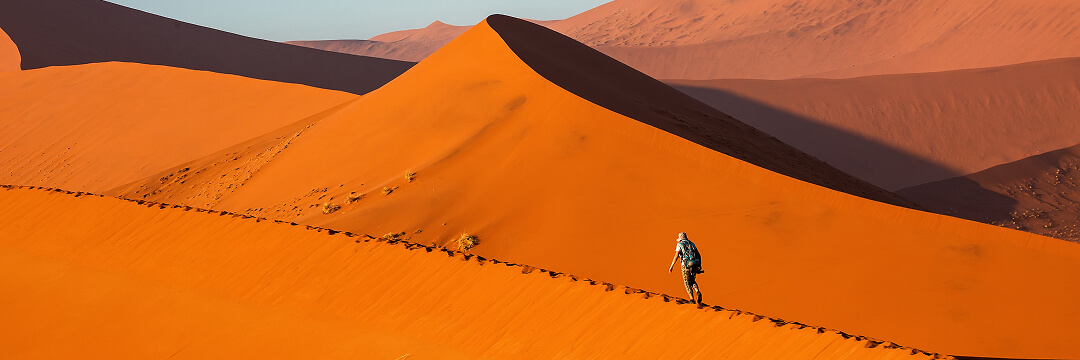
Best time to visit: May to October
Namibia stands apart because its landscape does not support a classic high-density safari. Most of the country is dry, open, and sparsely vegetated. That means animals do not spread evenly across the land. They move between specific points where conditions allow them to survive. In Etosha National Park, those points are waterholes, which become the center of activity in the dry season.
This changes the approach to game drives. You are not constantly on the move trying to locate animals. Instead, you position yourself near the water and wait for the animals to arrive. Such a slower pace allows you to take in and appreciate your surroundings and gorgeous landscapes.
Since landscapes play a large role in how safaris in Namibia unfold and feel, even driving becomes part of the experience. After arriving on a flight to Windhoek, Namibia’s capital, most journeys continue by car to remote lodges or camps. From there, drives often take you through regions such as the Namib Desert with its tall, sharply defined dunes or along the Skeleton Coast’s cold Atlantic shoreline.
Namibia is a good choice if you prefer a safari where the land shapes the experience as much as the animals do.
Next in the series: Celebrating Black History Month: Honoring African American Contributions and Legacy
When to go: timing matters more than location
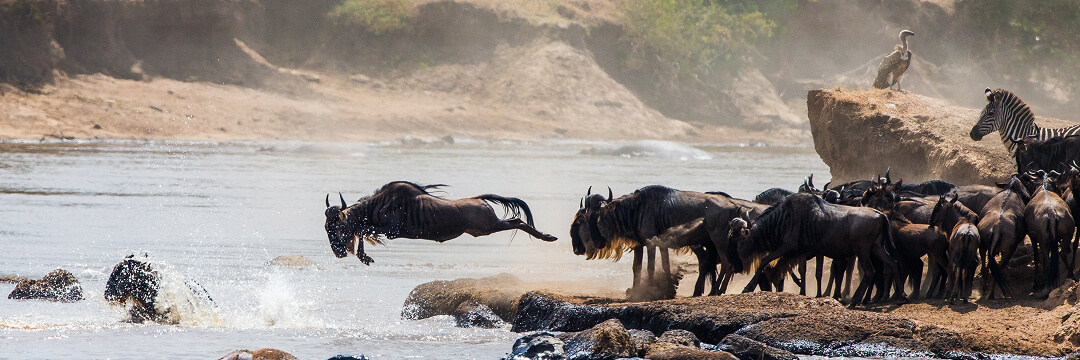
If your priority is consistent wildlife sightings, plan your safari in the dry season. In South Africa, Botswana, and Namibia, it usually lasts from May to October. In East Africa, specifically Kenya and Tanzania, the main dry period is June through October, with a shorter dry window from January to March.
During these months, water becomes scarce. Animals move toward rivers, pans, and waterholes, and stay closer to those areas. Vegetation gets thinner, so visibility improves. You spend less time looking for wildlife and more time watching it.
In the wet season, conditions change. Rains return from November through May in Kenya and Tanzania and from November through April in South Africa, Botswana, and Namibia. Grass grows taller, and animals spread out across a wider area. You cover more ground during drives, but get fewer sightings.
In Kenya and Tanzania, good timing also depends on the movement of large herds of wildebeest and zebras between the Serengeti in Tanzania and the Masai Mara in Kenya, driven by rainfall and fresh grass. From July through October, these herds move north into the Masai Mara and cross the Mara River. From January through March, the herds move back into the southern Serengeti for calving season, which brings large numbers of newborn animals into areas with a high concentration of predators.
If your focus is predator activity, calving season is often more consistent than river crossings. Crossings happen in short bursts at specific points, while calving keeps predators active across a broader area.
Next in the series: A Kaleidoscope of 2026 Luxury Travel Destinations for Every Taste
Safari comparisons: which destination fits you best
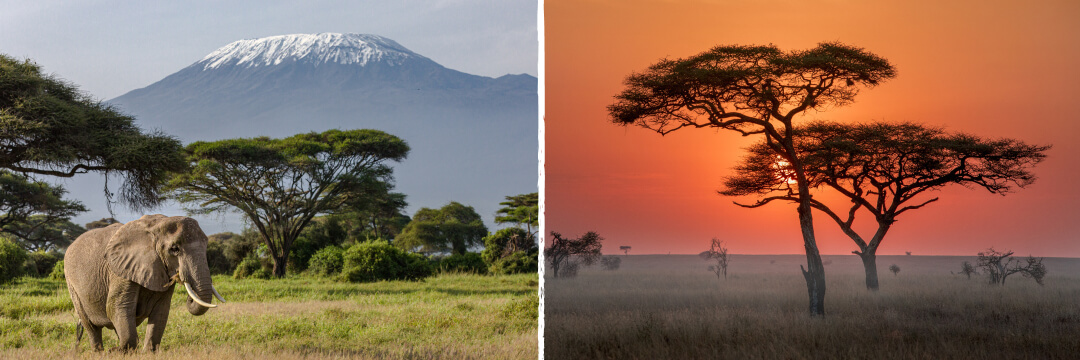
For your convenience, we have compiled a table you can use to decide what kind of safari would fit your preferences.
| Destination | What your days feel like | Strengths | Trade-offs | Best for |
| Kenya (Masai Mara) and Tanzania (Serengeti) | Fast-paced, continuous movement between sightings | High wildlife density, good visibility, easy to follow action | Can feel busy in peak season | First safari, Big Five, active days |
| Botswana (Okavango Delta) | Slow, quiet, more time for sightings | Privacy, low vehicle density, immersive setting | Fewer sightings per day, higher cost | Remote luxury, exclusivity |
| South Africa (Kruger / private reserves) | Structured, consistent, easy to navigate | Reliable sightings, flexible options, easier logistics | Less sense of wilderness in some areas | First safari, shorter trips, flexible budgets, self-drive safaris |
| Namibia (Etosha) | Slow, landscape-driven, observation-based | Unique scenery, quiet roads, and wildlife sightings based around waterholes | Long distances, fewer sightings overall | Landscape-focused travel, slower pace |
A simple way to decide: If you are looking for movement and frequent sightings, start with Kenya or South Africa. If you prefer space, privacy, and a slower rhythm, Botswana or Namibia will fit better.
Next in the series: When Waiting Becomes Travel: A Smarter Layover Guide
How to get there: planning your safari journey
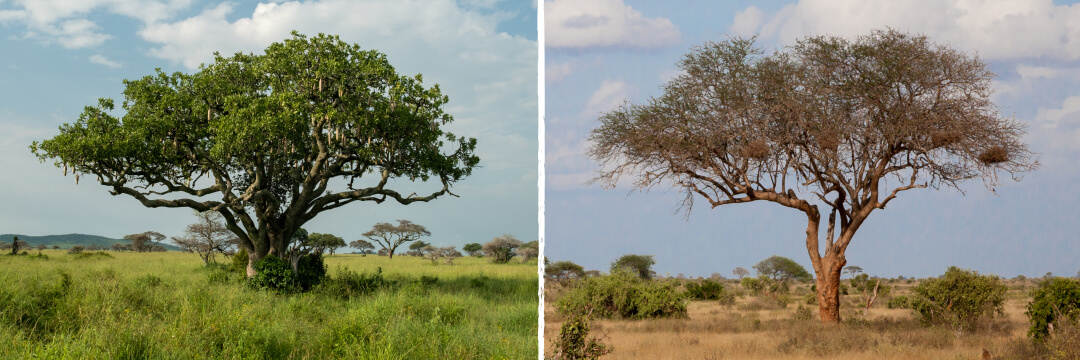
Flights: routes, airlines, and pricing
Getting to a safari destination from the US typically starts with a long-haul flight into the region’s main hub. These are Nairobi, Jomo Kenyatta International Airport (NBO) for East Africa, and O.R. Tambo International Airport (JNB) in Johannesburg for southern Africa. To keep it practical in this guide, we will consider New York as a departure point and look at what typical itineraries for this route look like, although there are flights to Africa from the Midwest and West Coast regions as well.
East Africa (Kenya, Tanzania)
- New York (JFK) → Nairobi (Kenya Airways, nonstop)
Prices start at $4,650 for a round trip in business class. - New York (JFK) → Bahrain → Nairobi (Gulf Air)
One-stop flights to Nairobi through Bahrain usually cost less, with prices starting at $3,500.
Southern Africa (South Africa, Botswana, Namibia)
- Newark (EWR) → Johannesburg (United Airlines, nonstop)
Business class fares for this route typically start at $7,500 but may rise significantly during the summer, reaching $25,000. - New York (JFK) → Abu Dhabi → Johannesburg (Etihad Airways)
Prices on this route are much more stable, starting at $3,800 and reaching $7,700.
Nonstop flights to both of these hubs take about 15 to 16 hours. One-stop routes often extend total travel time to 20 to 25 hours, depending on the length of your layover. These routes are usually more flexible and lower in price.
Hubs: airport quality and connections
Both O.R. Tambo International Airport (JNB) in Johannesburg and Jomo Kenyatta International Airport (NBO) in Nairobi are modern airports that offer a broad selection of amenities you can use to recover after your flight to Africa.
JNB is large and well-equipped, with restaurants, shops, and multiple lounges. For example, South African Airways Lounge or the British Lounge offer hot meals, feature showers, and quiet seating areas. There are also independent lounges here, such as Bidvest Premier Lounge.
NBO offers a more modest selection of amenities, and most safari flights do not depart from this airport. You often need to transfer by road to Wilson Airport, which handles domestic and bush flights. This drive takes about 25 minutes to over an hour, depending on traffic. Before leaving Jomo Kenyatta, you can use the Kenya Airways Pride Lounge or the Aspire Lounge in Terminal 1A. These lounges offer seating, drinks, light meals, Wi-Fi, and shower facilities, but they are smaller and more modest compared with lounges in Johannesburg.
Access: reaching the safari
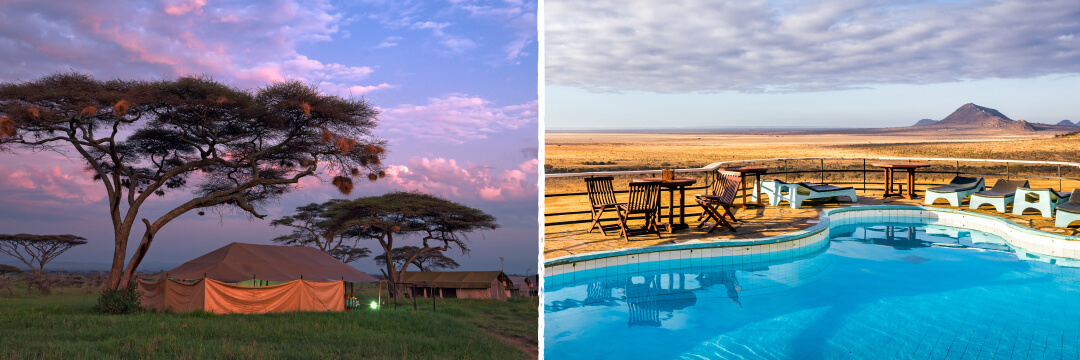
The final stage of a safari journey can differ considerably depending on the destination, influencing travel time, number of connections, and overall ease of arrival.
- Kenya (Masai Mara):
After arriving in Nairobi, you transfer to Wilson Airport (WIL). From there, you take a small aircraft to the Masai Mara (45–60 minutes), followed by a short drive to camp.
Bush flights typically cost $200–$400 one way. - South Africa (Kruger):
From O.R. Tambo International Airport (JNB) in Johannesburg, you fly to Skukuza Airport (SZK) or Kruger Mpumalanga International Airport (MQP) for about 1 hour, then drive 20–90 minutes to your lodge.
Domestic flights usually range from $150–$400 one way. - Botswana (Okavango Delta):
From O.R. Tambo International Airport (JNB), you fly to Maun Airport (MUB) (about 2 hours), then continue by light aircraft (20–60 minutes) directly into camp.
Regional flights cost $350–$700 one way, and bush flights typically range from $250–$600 per leg. - Namibia:
From O.R. Tambo International Airport (JNB) in Johannesburg, you fly to Hosea Kutako International Airport (WDH) in Windhoek (about 2 hours). Flights typically cost $200–$450 one way. From there, travel continues mostly by road. Drives between Etosha, Sossusvlei, and the Skeleton Coast often take 4–6 hours. Car rental typically costs $50–$150 per day, excluding fuel.
Next in the series: Luxury Beach Destinations: Summer 2026
Where to stay + final smart tips
Where you stay affects how much time you spend driving versus watching wildlife, as well as how much energy you have for safari.
In East Africa, camps positioned along migration routes reduce time in transit. For example, in the Masai Mara, camps such as Mara River Camp or Governors’ Camp place you close to river crossings, with prices typically starting at $400–$920 per night, depending on season.
In South Africa, the key choice is between public Kruger and private reserves. Lodges in Sabi Sands, such as Londolozi or Sabi Sabi, allow off-road driving and longer sightings. Prices usually start at roughly $1,000 and can exceed $2,300 per night per person.
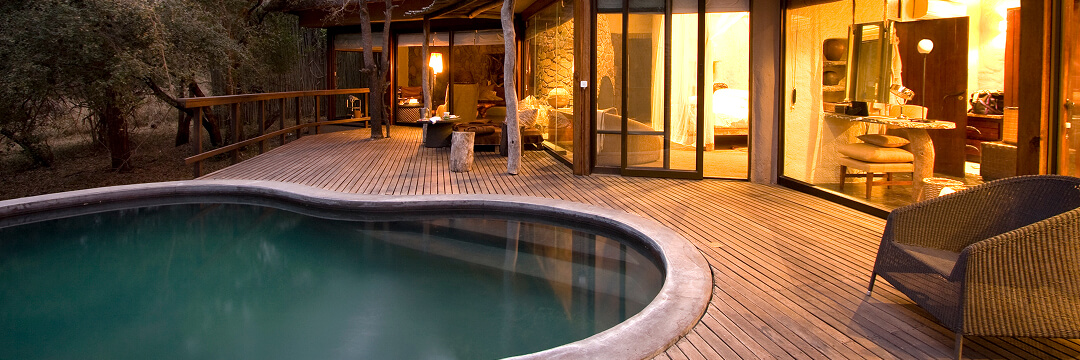
In Botswana, most camps are all-inclusive and located in private concessions. Properties such as &Beyond Nxabega Okavango Tented Camp or Vumbura Plains offer low vehicle density and full-service stays, with rates typically starting at $1,300 to $2,000 and more per night.
In Namibia, lodges around Etosha, such as Onguma or Okaukuejo, position you near waterholes where animals gather, with prices typically starting from $150–$800 per night. In more remote areas like Sossusvlei, properties such as &Beyond Sossusvlei Desert Lodge focus on landscape and isolation, with rates starting at $1,500.
Our hotel finder can help you narrow down the choices and save you time.
There is no single place or country that offers the “best” safari. Wildlife does not stay still, and neither does the experience. What you see depends on what you are looking for, when you go, and how you reach it.