Travelers in their 50s and beyond often face a common dilemma on long flights: Is first class worth the splurge, or is business class comfortable enough? This question looms large as mature travelers plan those big trips, weighing indulgence against practicality.
Such scenarios are increasingly common – after years of saving and sensible travel, many are ready to invest in comfort. Yet the choice between business vs first class for senior travelers isn’t simple. It’s about balancing luxury with value. Fortunately, services like AranGrant specialize in securing affordable business class flights for travelers over 50, making premium comfort a smart— and affordable —choice for mature travelers.
Now, let’s break down the differences with an eye on what matters most to senior travelers. Is first class worth it after 50? Let’s find out.
Read in this article:

Business vs First Class for senior travelers: A Side-by-Side Comparison
Both business and first class offer upgraded comfort, but the experiences have distinct perks. Here’s a side-by-side look at key differences:
Seats
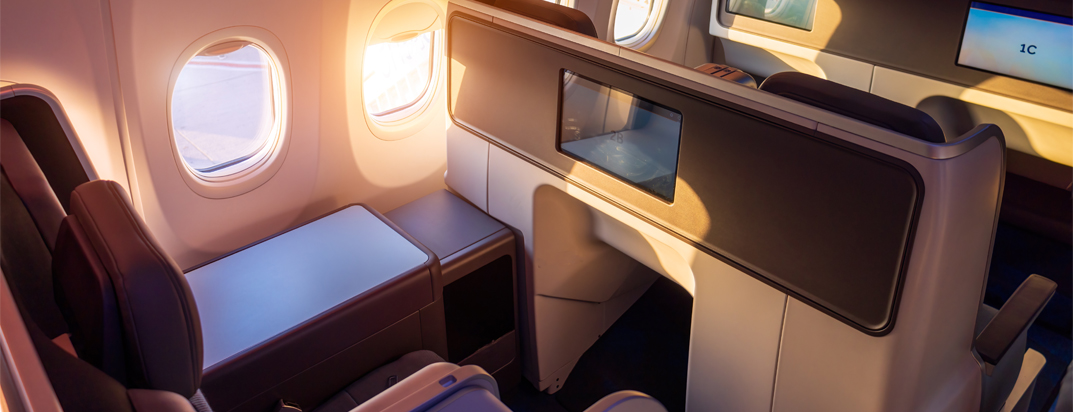
Business class seats are often lie-flat pods that provide a bed-like experience on long-hauls. Top airlines now offer impressive business seats like Qatar Airways’ Qsuite – a fully flat bed with a sliding privacy door. These can even be configured into double beds for couples on some flights. First class, however, takes seating to the next level with extra-spacious private suites. Think of Emirates’ First Class on the A380, where you get a fully enclosed suite (often described as a “private apartment”) complete with doors, a personal minibar, and even access to an onboard shower spa.
Service
In business class you can expect attentive, courteous service – flight attendants will address your needs promptly, though they are serving a larger cabin of passengers. First class ups the ante with ultra-personalized service. With a much smaller passenger-to-crew ratio, crew members often address you by name and anticipate your needs. They might even offer turndown service, preparing your seat as a bed with plush bedding.
Meals
Dining is a highlight of both cabins, but with some differences. Business class meals are high quality and sometimes let you pre-select gourmet entrées. For example, Singapore Airlines offers a “Book the Cook” service in business class where you can choose from a curated menu of chef-designed dishes before your flight. You’ll enjoy multi-course meals with real flatware and a good wine selection. In first class, meal service becomes a truly gourmet, fine dining experience. Celebrity chefs often design menus, and you might find delicacies like caviar and vintage Champagne on offer. First class passengers usually have dine on demand flexibility – eat whatever you want, whenever you want.
Lounge Access
Both business and first class tickets come with lounge access on the ground, but the lounges themselves differ in extravagance. A business class ticket usually grants entry to an airline’s business or premium lounge – a quiet space with comfortable seating, complimentary food and drinks (often a buffet), workstations, and sometimes showers or nap rooms. First class travelers, on the other hand, often have access to exclusive first-class lounges that pull out all the stops. In major hubs, first class lounges might have spa facilities, private cabanas, à la carte fine dining restaurants, and personal concierge services. You may even get driven right to the plane in a luxury car at some airports!

What Matters Most to Travelers Over 50
Choosing between business and first class becomes easier when you consider what seasoned travelers value most. Here are the key factors, especially for the 50+ crowd, and how each class measures up:
- Sleep Quality: On long-haul flights, the ability to sleep comfortably is priceless. Business class lie-flat beds are usually sufficient for a good night’s rest – these seats flatten into beds often over 6 feet long. (For example, Lufthansa’s business class converts into an over 2-meter (6’6”) bed for sound sleep) For most older travelers, that means you can actually get quality shut-eye and arrive far less achy or jet-lagged. First class beds, however, can be even more spacious, sometimes with thicker mattresses or even separate sleeping areas. If you have serious back issues or trouble sleeping on planes, the extra space and cushioning in first class might make a difference.
- Overall Comfort: Business class seats are significantly wider than economy class seats and offer plenty of legroom to stretch out – a big plus for seniors who may become stiff after sitting for too long. You also typically get adjustable lumbar support and footrests. Priority boarding and extra overhead space mean you aren’t wrestling with bags or confined to a tight space. First class, naturally, offers even more room and often a more luxurious seat (plusher padding, larger TV screens, maybe an ottoman). But from a practical standpoint, many mature travelers find business class comfortable enough. You can get up and walk around freely, and you’re not contorting your body to find a tolerable position as in economy.
- Peace of Mind: Travel can be stressful, so perks that streamline the experience are highly valued. Both business and first class come with benefits like priority check-in, priority boarding, and fast-track security in many airports – meaning less time standing in lines. You also get priority baggage handling, so your suitcases are among the first on the carousel after landing. For travelers over 50, these conveniences provide peace of mind and reduce physical strain. Importantly, the airport lounge access that comes with premium cabins offers a calm environment to decompress before boarding. First class may go a tad further – sometimes offering escort services through the airport or even private boarding bridges – but business class covers the essentials.
- Value: Let’s talk dollars (or miles). The price jump from business to first class can be steep – often 2–3 times more expensive for first. While prices vary by route and airline, our analysis found that a typical round-trip business class ticket might cost $2,800–$5,000, whereas first class on the same routes could run $5,000–$10,000. That’s a hefty premium for what might be a marginal gain in comfort. After all, business class itself is already a luxury experience compared to what they’ve flown in the past. The value proposition often leans toward business class as the sweet spot – you get almost all the comfort and perks, for a lot less money than first class. Unless you truly crave the opulence of a private suite or have specific needs that only first class can meet.

When Business Class Is Enough
There are plenty of scenarios where business class will hit the sweet spot of luxury and practicality for older travelers. Here are a few instances when business class is more than enough comfort:
- Long-Haul Comfort Without the Hefty Price: Many airlines now have business class seats and service that rival what first class used to be. For example, Qatar Airways Qsuite and ANA’s “The Room” are often cited as the best business class seats in the world – featuring enclosed suites, lie-flat beds, direct aisle access, and top-notch dining. In fact, Qatar’s Qsuite is so good that some travel experts say the experience even outshines some other airlines’ first class products. For most long-haul trips, especially overnight flights, a lie-flat business seat in a good cabin (think Delta One, United Polaris, JetBlue Mint for US carriers, or Singapore Airlines, Cathay Pacific for international) will provide all the comfort and calm you need.
- Daytime Flights or Short Overnights: If your flight is during the day or a shorter overnight hop, business class is usually more than sufficient. On a daytime flight, for instance, you’re likely to remain awake watching movies, reading, or chatting. A business class seat that reclines deeply (even if you don’t need it fully flat) gives you ample comfort for a daytime rest. Meanwhile, first class on a daytime flight might feel underutilized – sure, you’ll have a private suite, but if you’re not sleeping much, do you really need that enclosed space and perhaps the fancy pajamas?
- Budget-Conscious Luxury: Many seniors seek comfort without compromising financial prudence. Business class frequently hits that balance. Especially if you hunt for deals (or let an expert like AranGrant hunt for you), you can often find business class fares at a fraction of their usual cost. Airlines regularly offer promotional business class sales, and less popular travel times mean lower prices.
When First Class Justifies the Cost
Now, there are times when that extra splurge on first class might make sense even for normally frugal travelers. Here are situations where first class can be worth it – even after 50:
- Ultra-Long Flights: Think marathon journeys of 15+ hours in the air. When you’re facing the world’s longest flights – like New York to Singapore, nearly 19 hours nonstop – the enhanced comfort and privacy of first class can become more than just a luxury; it can preserve your sanity. On ultra-long-haul routes, first class often provides additional perks geared toward endurance: more expansive bedding (sometimes a separate sleeping area or adjustable firmness mattress), the ability to move around in your own space, and maximal privacy for undisturbed rest. For example, on some airlines first class cabins have only 6 suites compared to 40+ in business, meaning a quieter environment.
- Special Occasions: Celebratory trips can tip the scales in favor of first class. If you’re marking a major anniversary, retirement, milestone birthday, or once-in-a-lifetime vacation, upgrading to first class can make the journey as memorable as the destination. In these cases, it’s not solely about rational cost-benefit – it’s about the experience and the memories. Toasting with Dom Pérignon at 35,000 feet, enjoying a double-bed suite (as offered by some airlines like Singapore Airlines Suites class for couples), or simply reveling in the “I can’t believe we’re doing this!” feeling can be worth every penny. These are the trips and stories you’ll reminisce about for years.
- Medical or Mobility Needs: Travelers with health issues or limited mobility might find first class genuinely practical despite the higher cost. For instance, if you have a condition that requires you to elevate your legs, first class suites often have ottomans or even separate beds where you can comfortably do so. If you need to stretch or move around frequently, a near-empty first class cabin gives you freedom to walk without disturbing others. The more personalized service in first can also be beneficial – flight attendants in first class have more time to assist with things like getting your carry-on stowed, fetching items so you don’t have to reach or walk, and generally keeping an eye on your well-being. If you travel with medical equipment or just want peace of mind that you’ll have attentive care en route, first class may well justify its cost. After all, your health and comfort are priceless.
Read also: Airlines’ Reviews

Airlines and Routes Where the Difference Stands Out
Which is better for senior travelers—business or first class—can often depend on the airline and route you’re flying. The gap between business and first varies. Here are some airlines and routes where the differences are most notable:
- Emirates A380 First Class: Emirates is famous for its over-the-top first class, especially on the A380 superjumbo. Here, first class isn’t just a bigger seat – it’s an experience featuring the world’s only in-flight shower spa and an onboard lounge bar. Your suite comes with a door, mini-bar, vanity mirror, and even virtual “windows” in some cases. It’s often cited as one of the most luxurious first class products. Emirates’ business class, while excellent (lie-flats and direct aisle access on newer planes), doesn’t include those jaw-dropping extras. On routes like Emirates’ Dubai-to-Europe or US flights, the choice between first and business class is especially clear for senior travelers: business gives you a lie-flat bed and lounge access, but first offers a private oasis with next-level amenities.
- Etihad Airways “The Residence” and First Apartments: On its A380 aircraft, standard first class is called the First Apartment – an ultra-spacious suite with a reclining lounge chair and a separate bed, plus access to a shower. But Etihad even goes beyond first class with The Residence, a three-room private suite in the sky. The Residence gives you a living room, a private bedroom with a double bed, and an ensuite bathroom with shower – essentially a tiny apartment on the plane, complete with a personal butler! This is, of course, extremely pricey and only on select routes (like London–Abu Dhabi). For most, Etihad’s First Apartment (one notch below The Residence) is already a once-in-a-lifetime treat. By contrast, Etihad’s business class (often called Business Studio) is great but far more conventional – a comfortable lie-flat seat in a shared cabin.
- Qatar Airways Qsuite (Business) vs. First Class: Qatar Airways is an interesting case – it has an outstanding business class (Qsuites) and on many planes no first class at all. In fact, Qatar’s Qsuite is so acclaimed that it arguably diminished the need for first class on that airline. (Their Qsuite business product has been rated the world’s best business class, featuring private doors, double beds for couples, and top-end food and wine – it even includes amenities like pajamas and dine-on-demand service typically associated with first class.) Qatar does offer first class on a few routes (like on its A380 aircraft), but the difference between Qsuite and Qatar’s first is not huge – mainly extra space and an even more exclusive cabin in first. Most travelers find Qatar’s business class so luxurious that first class isn’t worth paying extra. So on routes like Doha to the US (all Qsuite business, no first) or Doha to Paris/London (where an A380 with first might operate), know that Qatar’s business class is already delivering a near first-class experience.
- ANA and Japan Airlines (Tokyo Routes): Known for impeccable service, both ANA and JAL offer top-tier premium cabins on long-haul routes like LAX–Tokyo or JFK–Tokyo. ANA’s “The Room” and JAL’s Sky Suites in business class are among the best in the world for privacy and comfort. First class steps it up with ultra-wide beds, gourmet kaiseki dining, and rare wines—especially ANA’s “The Suite” and JAL’s exclusive champagne service. The gap is real, but business is so impressive that many don’t feel the need to upgrade. If you’re after peak Japanese hospitality, you’ll enjoy it in both—but first class is the full indulgence.
- Transatlantic Flights (e.g., JFK–LHR on British Airways): Certain busy routes like New York to London offer both classes on various airlines, giving a clear compare point. British Airways, for instance, has invested in a new Club Suite business class with privacy doors, a lie-flat 6’6” bed, and improved dining. BA also offers a traditional first class on many long-haul planes. In fact, the seats are somewhat similar in layout and the service, while more personalized, doesn’t hit the pomp of, say, Emirates or Singapore first class. The value question is evident on this route: a BA First ticket might cost double the BA Club Suite, but you may end up thinking the experience wasn’t that dramatically different. Of course, BA First does grant access to the exclusive Concorde Room lounge at Heathrow (with sit-down dining and cabanas), and a slightly bigger seat with more privacy. For a senior traveler flying transatlantic, you might opt for business class on BA or Virgin Atlantic and be perfectly content. In many cases on transatlantic flights, you can arrive well-rested and pampered in business class, and spend the savings on a great hotel or cruise on arrival.
Read also: Why AranGrant Is the Reliable Flight Booking Service: The Real Story of AranGrant’s Reputation

Booking Tips with AranGrant: Secure Cheap Business Class
Ready to book that premium cabin? Here are some savvy booking tips – including how AranGrant can help you land affordable business class deals tailored for senior travelers:
- Leverage Off-Peak Timing: Flexibility is your friend. Aim to travel in periods when fewer business travelers fly – for instance, post-holidays winter (January through March) or late autumn for international routes. Also, choose midweek flights over weekends. Midweek (Tues/Wed) departures often have lower demand, which means lower fares.
- Bid for Upgrades: If you’ve already booked economy or premium economy, you might snag a business or first class seat without paying full fare by bidding for an upgrade. Many airlines now have programs allowing you to make an offer for a last-minute upgrade. For example, Hawaiian Airlines runs a “Bid Up” program where you can bid to upgrade to first/business on eligible flights. Other international carriers (like Qantas, Air New Zealand, LOT Polish, etc.) have similar auction-style or fixed-price upgrade offers.
- Use Loyalty Programs and Credit Card Miles: Don’t forget the power of points. If you’ve accumulated frequent flyer miles or credit card reward points over the years, put them to work for your comfort. Many programs allow you to upgrade using miles or outright book business/first class awards. Also, keep an eye out for airlines offering last-minute cash upgrades at check-in – these can be deeply discounted if seats are unsold.
- Tap into AranGrant’s Expertise (Unpublished Fares): Perhaps the biggest secret weapon is leveraging unpublished fares and consolidator deals. AranGrant, as a specialized business class flights booking service, has access to private fares that you won’t see on airline websites or Expedia. This is exactly AranGrant’s strength. Additionally, AranGrant’s agents can bundle in perks like airport transfers, help you plan around your schedule, and do all the legwork – a boon for those who don’t want the hassle of scouring for deals. Essentially, it’s like having a concierge find you the best route, best seat, and best price.
Travel Smart, Not Lavishly
When it comes to business vs first class for senior travelers, the choice ultimately boils down to personal priorities. For most, business class offers practical comfort: a lie-flat bed to sleep on, attentive service, and the perks that make travel easier – all without veering into excessive cost. First class is the luxury option: unmatched privacy, pampering, and prestige (at a premium price). The savvy traveler over 50 will weigh whether the added frills of first class align with their needs or if business class strikes the perfect balance. Often, the smart move is to aim for business class and use the savings to enhance the rest of your trip – better tours, a nicer cruise cabin, or a longer vacation.
Thanks to services like AranGrant, flying in style doesn’t have to be an unattainable dream. AranGrant helps make luxury more accessible by finding creative ways to get you into business class (or even first class) at much lower costs. So go ahead and indulge wisely.